Shared posts

19 Dec 21:18

This is Africa

by submission

Author : Feyisayo Anjorin

When I was a child growing up in Akure, surrounded by hills and tall trees, and green fields, I believed the book of genesis. The first book of the bible was said to be about the beginning of everything. The first things, the newness, the freshness, the revelation. If life indeed has an end, the beginning must be like the morning of it.

We know a lot about beginnings in this place. A beginning of growth, a beginning of rot, an iroko tree could fall for the need of a power; flowers bloom in their time and wither. We know those mornings of rosy dreams and bright flags, when we were drunk on hope, when we were certain of our reason to believe the best.

There was a time when Africa was reborn; a new Africa from the ruins of slave trade, colonialism, and apartheid. Like a baby, and later like a child, we had our excuses. And we could be excused. The misunderstanding of the differing tribes and tongues could cause wars and start fires; we followed our rulers slavishly while children starved and became skeletons, and vultures waited, looking down, waiting for our dead.

We were poor because of the white man’s oppressive system that we hope to change. Soon change is coming. Soon. We were sure.

Now we’ve gone a hundred years into the twenty first century life. Akure, Calabar, Mangaung, Monrovia, Gweru, wherever; we are all Africans because we can still count our giant trees and green fields. We still have a home for lions, and monkeys, and rhinos, and rats, and bats. We have a home for them without needing zoos. Not everybody is as fortunate. All some people have now are videos and pictures of “wildlife”. Sorry for mentioning that word; but this is Africa.

Maybe we are not really behind because we still have to import almost everything needed to be twenty first century savvy.

And then this issue of the law enforcement robots. It doesn’t bother me one bit. The police were a mess before them. There was a time some terrorists abducted over two hundred teenage girls in Chibok and it took the army over a year to get them back. Happy young girls; innocent and vulnerable. Some came back with babies, some pregnant, some came back with HIV and STDs; they had all been raped. They were all scarred for life.

The law enforcement robots were imported two years ago. To be sincere, I’m baffled by their human rights records because of their slavish dedication to the law. I’m not happy that the tossed the most revered Yoruba monarch into the car trunk. I’m against the injury inflicted on those alleged to be resisting arrests. I believe they do issue too many speed fines. They need to put a human face on these things.

But you can see clear signs of sanity here! There was a time when the law meant nothing to government officials and to citizens. It was chaos and we were getting too attached to lawlessness; which was toxic!

This is Africa and our peculiar problems need drastic solutions and adjustments.

The law enforcement robots of Africa have now been programmed to shoot dead any African head of state that tries to go beyond the term of office.

I was glad to hear it as the sun rose this morning on Radio Alalaye while sipping palm wine by the window. I waited there, listening to the online analysis on the benefits and ills.

I got more palm wine. This is just a beginning.

Discuss the Future: The 365 Tomorrows Forums
The 365 Tomorrows Free Podcast: Voices of Tomorrow
This is your future: Submit your stories to 365 Tomorrows

19 Dec 04:19

Whisked Away

by submission

Author : JT Gill

Dad shuffled around the kitchen in his bathrobe slamming cabinet doors so hard they bounced back open. His muttering was punctuated with little crescendos each time something banged closed.

The roar of the shuttle could be heard from outside, though greatly muffled. Still, this only added to his garish business of making pancakes. I stood in the doorway, watching.

“You’ve known you can’t stay here forever,” I said.

“Why not?” He shouted over his shoulder, mixing a bowl of batter vigorously. Little flecks spewed everywhere. “You can’t make me move.”

I through my hands up in exasperation. “Dad, we’re done here. It’s time to go. Besides, Mom would have wanted you to move.”

He stopped whisking and turned to face me. Dots of batter had spumed into his eyebrows.

“How would you know what she would have wanted?” He hissed. The bowl and whisk were still in his hands.

“I knew Mom a lot more than you think I did.”

“You left us, James,” he shouted again. “Left us here alone while you made a name for yourself out in ‘the real world.’” He jabbed at me with the whisk, dripping globs onto the kitchen floor.

“Dad.”

“No. You wanted what you wanted to do. You didn’t care about us. That’s it. And you did it, congratulations, you did. The earth is round, and it can’t support us anymore. I know. My genius scientist son proved that to us all at least.” He spread his arms wide and waved them around. “Too bad he wasn’t even here when his own mother died.”

“You know that wasn’t my fault,” I yelled. “You know I was stuck up there. Dad, I was overseeing the facility that you will be living on.”

“The moon mansion,” he scoffed. “You’re crazy if you think I’m going up there.”

He began to stir what was left in the bowl, turning his back on me. There was a nasty feeling in the pit of my stomach. I snuck two fingers into my pocket, pinching the pen-like object pressed against my thigh.

“You’re wrong, by the way,” he said, pausing. “She would have wanted me to stay.”

“No,” I said, walking up behind him. “She wouldn’t have.”

I pulled the syringe all the way out and jammed it into the base of his neck. The bowl of batter fell from his hands with a dull, metallic donk and rattled quiet as he struggled, but the sedative was fast-acting. After two jerks, he slumped against me like a limp noodle.

Gently, I eased him to the floor.

I whispered in his ear, rubbing his shoulder. “It’s all right, Dad. We’re going to live up there together.”

I stood, tossed the syringe in the sink and walked back outside.

Outside, the gusts from the shuttle whipped my hair straight back as I stepped onto the front porch. Two men in uniform stood at the base of the stairs. I slid a pair of sunglasses on.

“He’s in the kitchen,” I shouted over the roar of the engines. “Bring him out and we’ll be on our way.”

They jogged past me into the house.

“And be gentle,” I called after them.

I pushed my way through the squalls from the shuttle out onto the lawn. The grass whipped back and forth.

I looked up. Though it was a sunny day, the faint circle of an outline could be seen against the pale blue sky up above.

It almost looked like a pancake, I thought, ready to eat.

END

Discuss the Future: The 365 Tomorrows Forums
The 365 Tomorrows Free Podcast: Voices of Tomorrow
This is your future: Submit your stories to 365 Tomorrows

16 Dec 22:46

Old Soldiers

by Jae Miles

Author : Jae Miles, Staff Writer

He’s petrified. I can tell from the white-knuckle grip he has on his rifle, the way his eyes cannot fix on a given point for more than a few seconds. My threat scan classifies him as ‘low to negligible’. Which is a bit of a bugger as he’s one of my best.

“Johnny… Trooper Blumenthal!”

That gets his attention. He slams upright so hard I have to backhand him in the knees to stop him coming to attention – which would leave a metre of the bits he’d really regret losing sticking up into the open.

“Johnny, I know this is scary, but you have to get your fear to work with your training. Don’t worry about bravery, charging in, even shooting your weapon at an enemy. Leave that to me. I have a special op for you.”

His gaze fixes on my visor. I can see the four-metre creature I am reflected in his eyes. In fairness, I can also see the veins at the back of his eye that tell me he needs a diabetes check if he survives this. How did the medics miss that? But, more importantly, let’s concentrate on getting him to that medical.

“Johnny. You with us?”

He swallows hard. I see him consciously gather himself into the now. Good lad.

“Yes sir. I’m back.”

“Right. You see how the back of this sorry excuse for a foxhole gives you a clear field toward our rear?”

“Yes sir.”

“Scan that field. If you see one of ours pulling back, you use that heater of yours to melt a death-for-desertion clean through them. Can you do that?”

He goes white. Then his smile thins out, and he nods.

“That’s the spirit. I’ll tell you a secret, Johnny. You’re not here to fight the Bodan. You’re here to stop the others running away. I’m going to fight the Bodan. Between the two of us, we’ll have a victory, and a unit one step nearer to being veterans by nightfall.”

He looks at me quizzically.

“Each of these combat bodies costs more than the GDP of two colonies, Johnny. We can’t waste them on trainees. Every one is operated by the mortal remains of an old soldier. As one of these is equivalent to a thousand-man battlegroup with full mechanical support, we are holding the Bodan. What we need are more hardcore soldiers to pilot the next generation, and fill the occasional gaps in the ranks.”

Johnny grins: “You reckon I’ll last long enough to get me one of what you’re wearing?”

I smile, although nothing shows where Johnny can see it: “Yes. Now cover your sector, Trooper Blumenthal. I’ll be back in a while.”

Discuss the Future: The 365 Tomorrows Forums
The 365 Tomorrows Free Podcast: Voices of Tomorrow
This is your future: Submit your stories to 365 Tomorrows

16 Dec 20:04

There Goes My Bonus

by submission

Author : Curtis Brown

“What was that?” The Sheriff turned his head to one of his deputies after they heard a low rumble somewhere outside.

“Deputy, go check that out, I will handle this.” The Sheriff turned his head back to his prize: a short young man with a burnt-orange full length trench coat, spiked brown hair, and a pair of black goggles on his forehead. He sat across from the Sheriff in the tiny bright interrogation room with a little smirk on his face, and checked his watch.

“What, you got plans, kid? No, you don’t. Not anymore.” The Sheriff went on, smugly. “Stowing away on an interplanetary transport is one thing, but the Federation of Space Faring Nations does not tolerate theft aboard its ships.”

The Sheriff thought he hid his excitement well. On this space station, there was never this kind of action. He would hold the kid captive here, along with the evidence, to await the FSFN Marshals while the transport went on to its destination. The Sheriff would get a bonus for sure for his assistance in this, and if he got the kid to talk and spill something else, maybe even a promotion. The kid made it too easy. He still had that stupid smirk on his face. He would have almost felt sorry if it wasn’t for that smirk.

“You never had a chance kid. Even if you successfully grabbed the nano-processors there was no way off the transport. What were you thinking?” The Sheriff asked, probing for information.

“I was thinking, Sheriff, that it would be much easier to retrieve the nano-processors out of the evidence hold on a two-bit space station than off of a federal transport.” The kid stood up.

BOOM!

They heard a small explosion, seemingly just down the hall. The kids smirk turned into a full fledged smile, and the Sheriff stood up to face the kid.

“What was that? Where do you think you are going?” The Sheriff asked as the kid stepped towards the door,now confused and angry.

“That, my very perceptive Sheriff, is my ride. I’m leaving this piece of junk you call a space station.” The kid responded. The Sheriff was not pleased, but he heard the door open and was relieved.

“Deputy, cuff this kid, and take him to a cell.” The Sheriff commanded confidently.

“Excuse me?” Asked a rough voice.

The Sheriff turned toward the door and saw a portly man, dressed similarly to the kid, except balding and without goggles. The Sheriff did not know what to say.

“Its about time, Finley. You’re late. This guy almost cracked me.” The kid said as he pointed to his watch.

“The transport lingered. Come, the others have the cargo, lets go kid.” Finley lifted a pistol to the Sheriff’s face and smiled. “I trust you won’t mind letting our friend here go? Good, thats what I thought.”

The kid and Finley left the room. The Sheriff stood dumbfounded, and the only thing he could say, to no one in particular, was, “Well, there goes my bonus.”

Discuss the Future: The 365 Tomorrows Forums
The 365 Tomorrows Free Podcast: Voices of Tomorrow
This is your future: Submit your stories to 365 Tomorrows

12 Dec 03:28

Mario Kart Tribute Comes To The PC, Only It's Kinda Bleak

by Luke Plunkett

Mario Kart Tribute Comes To The PC, Only It's Kinda Bleak

Nintendo will never, ever release Mario Kart on the PC. But the company can't stop fans making games that explore the series' inherent weirdness, and call their game Mario Cars 2: 64.

Made in a week by Chelsea Saunders, it takes a good, hard look at just what Mario Kart is: a bunch of Nintendo characters (and friends) doing something they don't normally do, for no good reason. And then they keep doing it. And then...

You can download the game from here, or if you're lazy (or at work), below is a playthrough by Nick Robinson.

This entry passed through the Full-Text RSS service - if this is your content and you're reading it on someone else's site, please read the FAQ at fivefilters.org/content-only/faq.php#publishers.

05 Dec 20:32

(414): I'm worried about your...

(414): I'm worried about your health. And your boobs. Actually, health, then boobs. Health first, boobs second. And third.
05 Dec 20:15

Perfect toilet-paper dispensing machine

by Cory Doctorow

Helps ensure that you get precisely three squares per portion, by means of a GIANT CLEAVER ON A MOTORIZED ARM. (via Metafilter)

Read more at Boing Boing

';document.write(div);if(typeof context.___fm_zone_tag.loaded!=="boolean"){context.___fm_zone_tag.loaded=false;tag=context.document.createElement('script');tag.type='text/javascript';tag.src=settings.protocol+"//"+settings.static_domain+'lib/dfp-lib.js';tag.async=true;scripts=context.document.getElementsByTagName("script");scripts[0].parentNode.insertBefore(tag,scripts[0]);} context.___fm_zone_tag.queue.push(settings);}()); $(document).ready(function(){ convosuiteLabeling(); setTimeout('convosuiteLabeling();', 3000); }); };

This entry passed through the Full-Text RSS service - if this is your content and you're reading it on someone else's site, please read the FAQ at fivefilters.org/content-only/faq.php#publishers.

05 Dec 19:53

How Jackie Chan Creates Action That Is Also Funny

by Brian Ashcraft

How Jackie Chan Creates Action That Is Also Funny

Youtuber Tony Zhou at Every Frame a Painting does a wonderful analysis of what makes Jackie Chan's action—and comedy—work so damn well.

You might remember Tony's examination of Michael Bay's techniques.

Here, take a look at his analysis at action and comedy in Jackie Chan films:

If you like this video, check out more more of Tony's videos on his YouTube channel.

Jackie Chan - How to Do Action Comedy [Every Frame a Painting@YouTube]

To contact the author of this post, write to bashcraftATkotaku.com or find him on Twitter @Brian_Ashcraft.

This entry passed through the Full-Text RSS service - if this is your content and you're reading it on someone else's site, please read the FAQ at fivefilters.org/content-only/faq.php#publishers.

05 Dec 19:10

Comic: Tradition

by tycho@penny-arcade.com (Tycho)
New Comic: Tradition
05 Dec 18:54

Astronomers Are Getting Ready To Take The Image Of The Century

by Jessica Orwig

black hole

Researchers studying the universe are ramping up to take the "image of the century" — the first ever image of a supermassive black hole.

Since the 18th century, astronomers have discussed the possibility of exotic objects in space so massive that their gravitational grip swallows everything that dares to get too close, including light. We call these objects, black holes, but in truth we do not know what a black hole really is because we've never actually seen one.

While the evidence for the existence of black holes is compelling:

"We have abundant evidence that black holes — or something very much like them — exist," Todd Thompson, astronomy professor at Ohio State University, told Business Insider earlier this year. "This evidence comes from the orbits of stars around the supermassive black hole at the center of our galaxy."

Scientists will continue to argue the contrary until physical, observational evidence is provided.

Now, a dedicated team of astrophysicists armed with a global fleet of powerful telescopes is out to change that. If they succeed, they will snap the first ever picture of the monstrously massive black hole thought to live at the center of our home galaxy, the Milky Way.

It will be the "image of the century" according to scientists at the MIT Haystack Observatory, one of the 13 institutes from around the world involved with the project.

This ambitious project, called the Event Horizon Telescope (EHT), is incredibly tricky, but recent advances in their research are encouraging the team to push forward, now.

The reason EHT needs to be so complex is because black holes, by nature, do not emit light and are, therefore, invisible. In fact, black holes survive by gobbling up light and any other matter — nearby dust, gas, and stars — that fall into their powerful clutches.

How to glimpse a black hole

So, how do you see something that is invisible? The answer leads us to the most advanced sub-millimeter telescopes in use today — telescopes that detect wavelengths of light longer than the human eye can see.

The EHT team is going to zoom in on a miniscule spot on the sky toward the center of the Milky Way where they believe to be the event horizon of a supermassive black hole weighing in at 4 million times the mass of our sun.

event horizonEvery black hole has a point of no return, called the event horizon. Once light, or anything else in the universe, passes the event horizon, it never escapes and is swallowed up. Forever.

We can still see the material, however, right before it falls into eternal darkness. The EHT team is going to try and glimpse this ring of radiation that outlines the event horizon. Experts call this outline the "shadow" of a black hole, and it's this shadow that the EHT team is ultimately after to prove the existence of black holes.

"If we see the shadow, that will be the most powerful evidence we have that [black holes] do exist," MIT's Shep Doeleman told PBS.

A difficult task

This shadow, however, is incredibly small from our perspective.

The spot on the sky where the team is looking is the size a grapefruit would appear on the moon, as seen from Earth. The Hubble Space Telescope couldn't even see something this small.

That's why the EHT team turned to radio dish telescopes in Hawaii, Arizona, California, Chile, and Spain that, when combined, can resolve details more than 2,000 times finer than Hubble.

Recently, other EHT researchers, at the University of Arizona, simulated what our galaxy's central black hole and its shadow should look like, to get a better idea of what they might expect from their observations.

"That ring of light makes the black hole easier to find than if we were looking for complete blackness," Dimitrios Psaltis, of The University Of Arizona, said in a statement. "These simulations also help us find ways to distinguish this signature from all this swirling plasma around the black hole."

As shown in the clip below, the black hole at our galaxy's center is emitting jets of extremely hot plasma in confined columns at opposite ends. These columns are known as jets and have been observed around other objects throughout the universe. The EHT team wants to see beyond these jets, to the event horizon.

black hole event horizonUsing the university's powerful supercomputer, they created a black hole that is even more scientifically accurate than the visually stunning black hole in Christopher Nolan's latest film "Interstellar."

"Our team of four here at the UA can produce visuals of a black hole that are more scientifically accurate in a few seconds," Feryal Ozel, also of the University of Arizona, in the statement. Some of the visuals in "Interstellar" took a special-effects team of 30 and up to 100 hours for the computers to process.

Building the telescope team

To further improve their chances of seeing a black hole's shadow, the EHT team is continuously adding new telescopes to their global network. This is because the sensitivity of their measurements increases with each additional telescope, allowing them to measure finer and finer detail.

alma2The Atacama Large Millimeter/submillimeter Array (ALMA) — the world's most powerful submillimeter array — is slated to join the EHT project soon, along with additional telescopes in Mexico and the South Pole.

Last July, scientists installed the world's most precise atomic clock, costing $250,000, at ALMA's Operations base. The clock will sync ALMA's telescopes to other observatories of the EHT to ensure their recordings are accurate to within milliseconds. In fact, this atomic clock is so precise it will still be accurate to within a second 100 million years from now.

"The Event Horizon Telescope is the first to resolve spatial scales comparable to the size of the event horizon of a black hole," University of California, Berkeley astronomer Jason Dexter told Universe Today. "I don't think it's crazy to think we might get an image in the next five years."

CHECK OUT: These Incredible Images Show What Humanity Will Look Like When We Colonize The Solar System

READ MORE:  The Incredible Story Of The Women Who Were Meant To Be The First Astronauts But Were Left On Earth

Join the conversation about this story »


05 Dec 18:48

The Only Decoration Your Snow-Piled Lawn Needs

lawn at-at walker star wars at at

Submitted by: (via Think Geek)

05 Dec 18:44

The Mystery of Woman

wtf mindwarp gifs Japan

Submitted by: jyonasan1957

Tagged: wtf , mindwarp , gifs , Japan
04 Dec 22:08

Far Cry 4 - F**k Eagles

by Ben "Yahtzee" Croshaw

This week, Zero Punctuation reviews Far Cry 4.
04 Dec 22:00

The "Everybody Knows S**t F**k" Dance

by Brad
B93

Canadian musician and artist Stephen Paul Taylor sums up life in four words and a kickass dance move during an outdoor performance in Berlin, Germany.

04 Dec 21:54

NSA leak reveal plans to subvert mobile network security around the world

by Cory Doctorow


The NSA's AURORAGOLD program -- revealed in newly released Snowden docs -- used plundered internal emails to compromise nearly every mobile carrier in the world, and show that the agency had planned to introduce vulnerabilities into future improvements into mobile security.

One major target of the NSA's infiltration and sabotage program is the London-based GSM Association, the trade body that American, European and other tech companies and carriers use to set and maintain mobile networking standards.

Undermining security is the most controversial type of NSA dirty tricks, the thing that frustrates industry players and friendly governments alike. The revelations about the Bullrun/Edgehill sabotage programs have opened rifts between the NSA and the security community (including the US government's National Institute for Standards and Technology, NIST, which was targeted by the program).

By covertly monitoring GSMA working groups in a bid to identify and exploit security vulnerabilities, the NSA has placed itself into direct conflict with the mission of the National Institute for Standards and Technology, or NIST, the U.S. government agency responsible for recommending cybersecurity standards in the United States. NIST recently handed out a grant of more than $800,000 to GSMA so that the organization could research ways to address “security and privacy challenges” faced by users of mobile devices.

The revelation that the trade group has been targeted for surveillance may reignite deep-seated tensions between NIST and NSA that came to the fore following earlier Snowden disclosures. Last year, NIST was forced to urge people not to use an encryption standard it had previously approved after it emerged NSA had apparently covertly worked to deliberately weaken it.

Jennifer Huergo, a NIST spokewoman, told The Intercept that the agency was “not aware of any activities by NSA related to the GSMA.” Huergo said that NIST would continue to work towards “bringing industry together with privacy and consumer advocates to jointly create a robust marketplace of more secure, easy-to-use, privacy-enhancing solutions.”

Operation Auroragold How the NSA Hacks Cellphone Networks Worldwide [Ryan Gallagher/The Intercept]

(via /.)

This entry passed through the Full-Text RSS service - if this is your content and you're reading it on someone else's site, please read the FAQ at fivefilters.org/content-only/faq.php#publishers.

04 Dec 20:38

Car thief employs getaway skateboard

by Mark Frauenfelder
Bewarethewumpus

Can't make this shit up.

"Experienced skateboarders we talked to gave him low marks." [via]

Read more at Boing Boing

';document.write(div);if(typeof context.___fm_zone_tag.loaded!=="boolean"){context.___fm_zone_tag.loaded=false;tag=context.document.createElement('script');tag.type='text/javascript';tag.src=settings.protocol+"//"+settings.static_domain+'lib/dfp-lib.js';tag.async=true;scripts=context.document.getElementsByTagName("script");scripts[0].parentNode.insertBefore(tag,scripts[0]);} context.___fm_zone_tag.queue.push(settings);}()); $(document).ready(function(){ convosuiteLabeling(); setTimeout('convosuiteLabeling();', 3000); }); };

This entry passed through the Full-Text RSS service - if this is your content and you're reading it on someone else's site, please read the FAQ at fivefilters.org/content-only/faq.php#publishers.

04 Dec 19:02

Why journalists should be free speech partisans

by Cory Doctorow


Following on the New York Times's decision to continue its critical coverage of China, despite the Chinese government's retaliation against it, Dan Gillmor calls on journalists and news organizations to abandon the pretense of "neutrality" and take a partisan stand for free speech in questions of censorship, surveillance, net neutrality, copyright takedown, and other core issues of speech in the 21st century.

What are these choke points? The most obvious is what’s happening to the Internet itself. In America and a number of other countries the telecommunications industry — often working with government, and in some cases outright owned by government — is deciding, or insisting on the right to decide, what bits of information get to people’s devices in what order and at what speed, or whether they get there at all. This is what network neutrality is all about in the U.S.: whether we, at the edges of the networks, get to make those decisions or whether telecom companies like Comcast, Verizon, and AT&T will ultimately have that power, as they insist they need. The worries about corporate media consolidation in the 1990s seem quaint next to this kind of consolidation. Free speech? It’ll be as free a Comcast et al want it to be if they get the upper hand.

Surveillance, too, has become a method for government — again, often working with big companies — to keep track of what journalists and activists are doing, well beyond the avowed mission of stopping terrorism and solving crimes.

When it comes to free speech, journalists should be activists [Dan Gillmor/Backchannel]

(Thanks, Dan!)

This entry passed through the Full-Text RSS service - if this is your content and you're reading it on someone else's site, please read the FAQ at fivefilters.org/content-only/faq.php#publishers.

04 Dec 18:20

"When we talk about race relations in America or racial progress, it’s all nonsense. There are no..."

“When we talk about race relations in America or racial progress, it’s all nonsense. There are no race relations. White people were crazy. Now they’re not as crazy. To say that black people have made progress would be to say they deserve what happened to them before.”

- Chris Rock in New York Magazine
03 Dec 06:19

MeFi: Her fortress of shit makes sense

by maggieb
The Secret Life of a Crime Scene Cleaner (via)

If the places we inhabit are like lungs, rhythmically drawing us in and breathing us out, Sandra Pankhurst's job as founder of Specializing Trauma Cleaning (STC) Services Pty Ltd. leads her somewhere in between — homes with the lights still on where death, sickness and madness have abruptly abbreviated lives.
03 Dec 03:16

What Would Happen if Humans Were Gone, Illustrated by The Last of Us

by Stace Harman

What Would Happen if Humans Were Gone, Illustrated by The Last of Us

"Say a Homo sapiens-specific virus – natural or diabolically nano-engineered – picks us off but leaves everything else intact. How would the rest of nature respond if it were suddenly relieved of the relentless pressures we heap on it and our fellow organisms?"The World Without Us, Alan Weisman.

This post originally appeared on Kotaku UK.

Alan Weisman's grand thought experiment, The World Without Us, challenges us to imagine a world in which humans are no longer the dominant force. Fittingly, the elaborate scenarios and extensively researched extrapolations that Weisman posits in his 2007 book served as a conceptual reference point for the world depicted in The Last of Us.

Here, through a combination of Weisman's research, some creative thinking and the The Last of Us Remastered's photo-mode, we can build a picture of how nature might go about tearing down our grandest structures and reclaiming the land on which even our biggest cities are built. The results illustrate that even as the few remaining survivors of The Last of Us struggle to stay alive, nature thrives.

More than that, though, Weisman's book gives hints of the dangers that any remaining survivors would have to face in the longer term. In doing so, it allows us to conjure up wild imaginings of the kinds of hazards that we might expect to negotiate in any possible sequel to Naughty Dog's post-pandemic classic.

The Concrete Jungle

What Would Happen if Humans Were Gone, Illustrated by The Last of Us

"Back when they told you what your house would cost, nobody mentioned that you'd also be paying so that nature wouldn't repossess it long before the bank."

As anyone who has ever tended a garden, pulled a weed or cleaned out a gutter knows, vegetation grows wherever it can and as vociferously as it's allowed to. With people long since fled to fenced-off quarantine zones to guard against the infected, the buildings without are left to stand silent watch over the encroaching flora as nature moves in unimpeded.

Inside once beloved homes, outbreaks of mould slowly eat away at timber frames and degrade seals. Leaks occur around chimney breasts and rain finds its way in through roofs fallen into disrepair. Before too long, the elements have found a way inside walls built to withstand them and nature is making a mockery of the interior design we once agonised over.

What Would Happen if Humans Were Gone, Illustrated by The Last of Us

Once exposed, the yearly cycle of fluctuating temperatures first cracks and then shatters windows, which allows still more flora and fauna inside as the whole process slowly accelerates. Soon, nature is eating structures from inside and out, reclaiming wooden frames, wheedling into hairline cracks in exposed brick work and spreading tiny tendrils through hardy building materials like a network of expanding veins.

Alongside this assault come colonies of insects and a menagerie of rodents, birds and small mammals that take up residence after years of being kept out in the cold. They exacerbate structural weaknesses as they chew through internal studwork walls and ceiling joists until external walls have little to support them and so begin to collapse.

What Would Happen if Humans Were Gone, Illustrated by The Last of Us

Perhaps fittingly, the most effective catalyst for the change once we are gone comes from something that we currently cannot live without. Just as seedlings and insects are busy weakening that which is built above ground, another more primal force is wreaking havoc on what lurks below.

A River Runs Through It

What Would Happen if Humans Were Gone, Illustrated by The Last of Us

"Most of all, though, you are beset by what in other contexts is the veritable stuff of life: water. It always wants in."

"After we're gone, nature's revenge for our smug, mechanized superiority arrives waterborne."

Cast a cursory glance at almost any road or pavement and you'll see the effects of water's power. Every year, the seasonal cycle sees surface water freeze and thaw, which in turn causes cracks in cement, asphalt and stone alike.

Add to this the bursting of frozen pipes and remove the people necessary to make repairs and within a few years large pools have formed that support an abundance of plant life in what was once a busy suburban street. Soon after, without people to clear drains and maintain the underground network of sewer systems, this surface water has nowhere to go even if it wanted to.

The ground floors of buildings flood as water finds its way into every structure, either from the top or the bottom. As it collects on the surface, streets are gradually submerged until they more closely resemble rivers - but it's the drama unfolding below ground that causes the most dramatic changes to our once great cities.

What Would Happen if Humans Were Gone, Illustrated by The Last of Us

Human ingenuity has enabled us to build transport systems underground, but they require diligent monitoring and maintenance. Every single day, millions of gallons of water are expelled from New York's subway system by a network of mechanical pumps; even if it doesn't rain, water gushes in from the bedrock.

Similarly, London's tube network, portions of which sit far enough below ground to be used as bomb shelters during the Second World War, requires that same all-important human intervention to ensure its pumps keep up the ceaseless fight against a daily deluge. Without people maintaining this vital system, breakdowns occur and the power eventually runs dry.

Within days, water from the submerged tunnels finds its way into the foundations of monuments built of steel, concrete and glass.

What Would Happen if Humans Were Gone, Illustrated by The Last of Us

In US cities frequently battered by hurricanes, the assault taking place above and below ground eventually proves too much for edifices once celebrated as modern wonders of architecture. They collapse against one another like drunken strangers as foundations give way and Mother Nature sets about implacably toppling these towers of human hubris. As the years roll by, her hold tightens and an inescapable truth is writ large across the face of a landscape reclaimed; she is not the invader here. We are.

Atomic Sunset

What Would Happen if Humans Were Gone, Illustrated by The Last of Us

"If everyone on Earth disappeared, 441 nuclear plants, several with multiple reactors, would briefly run on autopilot until, one by one, they overheated."

With the human population so drastically reduced and the world outside our barbed-wire walls abandoned to the infected and to nature, large swathes of critical human infrastructure collapse. Alongside the benign and relatively harmless fall of roads, homes and office blocks comes a much greater threat from unattended nuclear power plants.

The threat of the infected would be compounded by radiation poisoning that would seep into the air and water from decaying power plants. Even if emergency procedures have been initiated before abandoning the plants, thus terminating fission in the core and ceasing the production of electricity, there are still the hundreds of thousands of tons of nuclear scrap that require storage and constant cooling.

What Would Happen if Humans Were Gone, Illustrated by The Last of Us

Once the water in the cooling systems evaporates or they become otherwise ineffective, all bets are off. Large areas surrounding the plants become wastelands, while airborne pollution and irradiated water would be carried many miles from the source. The resulting radiation poisoning could further decimate a human population already on the brink of extinction, making survival still more desperate.

At this point, the last vestiges of the human race either band together or turn increasingly savage as they fight over scarce clean water supplies and safe havens. Perhaps at that moment humanity would shine but it seems unlikely. As Bill drily observes of the infected, "Y'know, as bad as those things are, at least they're predictable. It's the normal people that scare me."

Who knows what effect gradual radiation poisoning might have on those infected. Maybe we'd get lucky and it would kill them off, giving us one less thing to worry about. Or maybe they'd evolve, mutating into something more deadly still.

What Would Happen if Humans Were Gone, Illustrated by The Last of Us

The world that Joel and Ellie inhabit in The Last of Us is one beset on all sides. Just as they fight to survive the threat of the infected, so too does nature fight to reclaim its once unspoiled domain. The surprising thing is that this is a battle that's taking place every day, all around us, and one that we are all a part of to a larger or smaller degree. The Last of Us gives us a glimpse of what might come to pass should we become too preoccupied or too few in numbers to continue to keep nature at bay.

It might be a bleak picture for the human race but thanks to Naughty Dog's environmental artists and Alan Weisman's provocative thought experiment, it is not without its moments of beauty. Unruly and wild as it may be, nature likes to remind us that it was here first, and will be here long after the last of us are gone.

"Look around you, at today's world. Your house, your city, the surrounding land, the pavement underneath, and the soil below that. Leave it all in place, but extract the human beings. Wipe us out, and see what's left."

What Would Happen if Humans Were Gone, Illustrated by The Last of Us


What Would Happen if Humans Were Gone, Illustrated by The Last of Us

This post originally appeared on Kotaku UK, bringing you original reporting, game culture and humour with a U from the British isles. Follow them on @Kotaku_UK.

This entry passed through the Full-Text RSS service - if this is your content and you're reading it on someone else's site, please read the FAQ at fivefilters.org/content-only/faq.php#publishers.

03 Dec 02:55

The Battle Rages On

Bewarethewumpus

accio lightsaber.

light saber,wand,Harry Potter,star wars,funny

Submitted by: Unknown

03 Dec 02:50

The Robotic Goalkeeper: A Work in Progress

by Brad
48a
01 Dec 17:33

“lol” -Netflix


“lol” -Netflix

30 Nov 18:45

The Lucas Version Of The Force Awakens Trailer Is A Bit More Dense

by Mike Fahey

The Lucas Version Of The Force Awakens Trailer Is A Bit More Dense

Those enamored with the directorial style of the legendary George Lucas surely noticed the big problem with the teaser trailer for Star Wars: The Force Awakens — not enough stuff. Fixed.

It's not that hard, J.J. Abrams, as YouTuber Michael Shanks readily demonstrates (via Tech Crunch). Just add some crazy creatures, mention trade negotiations and — oh god, it's embarrassing how few Tie Fighters are in this.

Shanks fixed all of those problems in what, two days? Hire this man ironically, then fire him.

This entry passed through the Full-Text RSS service - if this is your content and you're reading it on someone else's site, please read the FAQ at fivefilters.org/content-only/faq.php#publishers.

30 Nov 18:38

Ship to ship

http://oglaf.com/shiptoship/

29 Nov 18:45

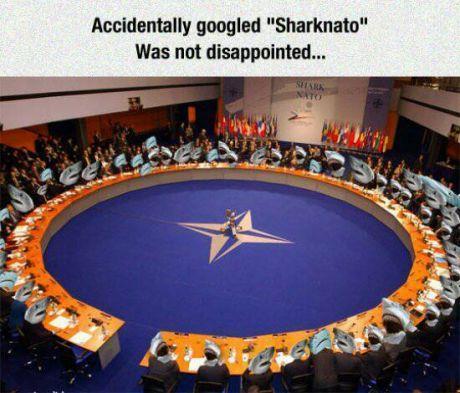
Googled "Sharknato," Was Not Disappointed

by Brad
797
28 Nov 18:44

Modern Games Could Learn A Lot From The Best Level In Half-Life

by GB Burford

Modern Games Could Learn A Lot From The Best Level In Half-Life


I think Half-Life is one of the greatest video games of all time, which isn't a controversial opinion. Valve's 1998 debut rocked the gaming world. Many aspects of its design have yet to be topped. Nowhere is this more obvious than Half-Life's sixth level, Blast Pit.

I've been thinking about Blast Pit in connection with another game I've been playing a lot lately, Bungie's Destiny. As wonderful a game as Destiny is, I've found myself getting tired of the game's bosses. They sit there doing next to nothing while players slowly shoot and chip away at their health until their defeat. One boss took our team about twenty minutes to defeat, driving one of us to remark "I hate bullet sponges." We all agreed.

Fighting that boss was mind-numbing and boring, devoid of fun or purpose. It wasn't just a Destiny problem. Bad, spongy bosses have plagued first-person shooters for a while. Fortunately, Valve solved those problems with Blast Pit.

Modern Games Could Learn A Lot From The Best Level In Half-Life

For this article, I re-played everything from the first level of Half-Life to the end of Blast Pit. It's interesting to compare Half-Life to modern video games. The game's wonky maneuverability and dated animations hold it back a little. The odd, unrealistic level spaces would be laughed at today. But the level design is wonderful, especially with all the tricks Valve plays with how and where enemies spawn.

Blast Pit is, I think, the best level in Half-Life. Where most of the game's levels are about moving from point A to B, Blast Pit is about encountering a large boss, then using an entire level against him. Rather than simply sticking you in a fight with a big boss and having you unload your arsenal on him in a lengthy, boring test of endurance, Half-Life sends you through a series of rooms and encounters, changing things up until the boss is finally defeated.

One moment you're trying not to set off a room full of explosives while killing a zombie. The next, you're riding an elevator to a tram that will launch you into a pool full of toxic goo.

The boss is just a tentacle. It only shows up for a few minutes in your playthrough. It's scary anyway. It is your nemesis. You're made to encounter it four times throughout the level, ensuring that it remains the focal point even though you're never with it too long. It never gets boring, which can't be said for most bosses in games today.

Modern Games Could Learn A Lot From The Best Level In Half-Life

A quiet start...

Blast Pit is Half-Life's sixth level. The one before it is called "We've Got Hostiles!" In that one, Gordon Freeman—that's you—has been trying to get out of the Black Mesa secret research facility. Unfortunately, he discovers that a Marine "rescue mission" is actually a cleanup mission. The level begins with you encountering a giant, impassable red door. Your goal is to "get to the surface," but that is eventually scuttled when the Marines start shooting. So you head back down into the base and return to the red door.This time, you can open it.

As you walk through the red door and into Silo D, Blast Pit begins.

Well, actually, not quite. You walk through, and there's a bunch of crates. You have to smash them. It's boring. You've just spent an entire level being betrayed, and… the first thing you find behind this giant door is a bunch of crates to smash. It's an inauspicious start to one of the greatest levels in video game history, but that's about to change.

Get through the crates and you're ambushed by some headcrabs that have been waiting for you to come along. They drop from the ceiling. Alone, they're not that bad, but the bullsquid off in the distance isn't helping things. A bullsquid is a monster with a ranged spit attack and a close-range melee. The spit itself is slow enough to dodge, but when dealing with headcrabs, it's a tense, fun situation. Bullsquids make that happen, and it was a bummer we never got to see them in Half-Life 2.

The room you enter is fairly large in comparison to the earlier levels in the game, and it sets the tone for Blast Pit. Barring the opening level, much of Half-Life's spaces have been small up to this point. Even the brief outdoor fight from "We've Got Hostiles!" is in a small, gated enclosure. The bullsquid room is large. It's got a huge cargo elevator in it—to activate it, you'll have to climb up to a control room and pull a lever, which causes a lights to turn on and sirens to blare. It's big.

Modern Games Could Learn A Lot From The Best Level In Half-Life

While you're in the control room, a zombie comes through another door on your right. If, like me, you whirl around to shoot it, there's a chance you'll blow yourself up. There's an explosive barrel behind the zombie, and in the room next to him is a crate of dynamite. Try to shoot him and, kaboom, everyone dies, including you!

This exploding room is one of the things that makes Half-Life special. It's a game about surprises and clever enemy spawns. You've got to play it smart, shooting the zombie without a single stray bullet setting off the explosives or backpedaling so the zombie exits the room before you blast it. Another example of this kind of good Half-Life surprise: In "We've Got Hostiles," Valve introduced tripwires. One tripwire was set across a slippery puzzle. You had got to jump over it, but when you landed, you slid and Valve cleverly stuck an open elevator shaft on the other side. It's tricky and fun, one of many similar situations in the game.

These surprising moments stand out, especially compared to what you see in top modern shooters. More recent shooters have focused on creating shooting galleries, slowing players down through health systems (regenerating health encourages players to remain stationary) and the use of enemies that often hide in cover. Here, Valve keeps players on their toes by establishing a living environment. Enemies bait players into shooting the wrong thing and inadvertently killing themselves.

Modern Games Could Learn A Lot From The Best Level In Half-Life

Enemies in just the right spots...

You know that scene in Jurassic Park where Muldoon's trying to find the velociraptor, and it outflanks him, and he quotes Total Recall and says "clever girl" just before it kills him? That's Half-Life's spawns. It's a game that encourages you to think about the space you're in. It's not just about where your enemies are in relation to you, but where a bunch of different things are, all in relation to each other. It's a game that frequently brings a smile to my face whenever I run into a particularly devious scenario, and I think it really brings Valve's later games down quite a bit.

Back to Blast Pit. You've just defeated that zombie. You can enter the room it came from and find a reward—health and a grenade.

Head back out, jump onto the elevator, ride it down, and you'll find a tram surrounded by houndeyes. Like bullsquids, houndeyes are interesting enemies that round out Half-Life's bestiary, yet Valve unceremoniously dropped them from Half-Life 2. Where bullsquids are ranged enemies, houndeyes are three legged, many-eyed dog creatures. They're kind of like Flood carrier forms in Halo: they try to walk up to you and explode, but unlike the carriers, they can take more damage and they don't die when they attack you. This is balanced by them charging up their attack. The charge is signaled by a characteristic whine as they ready their attack. Really cool enemy design right there.

Get past the houndeyes, hop on the tram, and go! You'll zoom through a huge tunnel, watching houndeyes, bullsquids, and headcrabs fight each other. All seems to be going well until you round a bend and crash into a barrier, which flings you into a crate. The crate collapses, dropping you into toxic goo!

Modern Games Could Learn A Lot From The Best Level In Half-Life

It's a wonderful "clever girl" moment.

Leap out, fight another bullsquid, climb into some pipes, fight through another pipe room, and… woah.

Modern Games Could Learn A Lot From The Best Level In Half-Life

Valve really wanted to show off scale in this map. It's a simple room. You follow a path, get to the elevator, and ride it up. The room feels huge, in part because of the gigantic silo that occupies the far side. It's on a different scale from everything else in the game up to this point.

At the top of the elevator is a hall that leads you inside the silo. Another bullsquid is munching on a scientist in the corner. Kill it and someof houndeyes come running. Kill them, walk on the railing around the inside edge of the silo, and make your way to the inside of the silo. Unfortunately, another houndeye stands in your way.

On the catwalk next to this houndeye are two explosive barrels. If he attacks, they'll blow up and take the bridge with it, which, fortunately, doesn't spell instant failure. It just adds a complication for you: now you'll have to jump across the gap. Valve also dropped off some health kits behind you. They're sitting next to some totally-not-suspicious-at-all explosive barrels, behind which is hidden, yup, another houndeye.

Kill both houndeyes without setting them off and you're golden. Fail to stop them, and the resulting explosion adds a new obstacle.

Modern Games Could Learn A Lot From The Best Level In Half-Life

Difficulty in many games is simply about increasing the length of time it takes to kill your foes and decreasing the length of time it takes to kill you. With Half-Life, Valve implements challenge through awareness. The challenge isn't from having the constitution of soggy cardboard, it's from intelligently managing the enemy spawns. Messing up might not kill you right away, but it can have repercussions down the line if you're not careful.

Assuming you get past the houndeyes without a scratch—and you've survived the Bullsquid that's pelting you from far away—you'll find yourself at the inner silo. Head inside, kill a zombie that's waiting on the other side of the door, walk down a narrow corridor. You'll find a mortally-wounded scientist, who tries to tell you something before he dies, something about killing "it" before it grows any larger. All the while, you'll hear a loud clanging noise. Something big is just around the corner.

Uh oh.

Exit that corridor and you'll find another scientist. This one seems totally fine, until a giant monster reaches through into the window and grabs him.

Modern Games Could Learn A Lot From The Best Level In Half-Life

Meet the boss.

It's one of the most exciting moments in the game and a great example of a scripted sequence done right. Many modern games utilize scripted sequences to show you something cool, often taking control away from you, the player. Here, Valve uses a scripted sequence to show you just how terrifying the Tentacle is. It's directly related to the gameplay.

In the room is a button that fires a rocket motor that's suspended above the tentacles. Problem is, the engine's got no fuel or power, so you can't kill it. Not yet.

Moving on, you'll find a guard who tells you that the monster is attracted to sound. To bring the point home, Valve has another guard shoot the creature with his pistol, screaming at it, calling it an "outer space octopus." Frankly, I think this name is better than "tentacle," but, hey, that's what Valve calls it.

You'll also find a box of grenades. Obviously, the game wants you to attack the boss with grenades! So, you chuck a grenade or two at the boss. If you miss, the tentacles will start attacking the area of the explosion for a few seconds. If you manage to score a hit, the tentacles will retreat into their hole for a few seconds. Then they'll pop out again.

You can't kill the tentacle, but you can sneak past it. Unfortunately, you'll have to smash some crates and smash through a boarded up doorway, which will attract the monster's attention. You'd better use grenades to distract it. Assuming you get through, you'll take a hallway to a catwalk that takes you outside. You cross across another catwalk through the gigantic outer silo and head down the hall to a fuel room.

Valve's got another great spawn here—in the shadows at the bottom of the ladder, two zombies wait. As long as you've got a grenade, they're easy to pass. In another display of epic scale, you've got a massive ladder to climb, down through the biggest elevator shaft you've yet seen in the game.

Climb down, walk on some pipes and try not to slip off. Hang a left—the right's a dead end—climb up a ladder, shoot a grate, and you'll find a zombie waiting for you. Kill it, pick up some grenades, open a door, shoot some zombies… and… woah.

Modern Games Could Learn A Lot From The Best Level In Half-Life

Imaginative architecture.

That is a giant fan. It is in a room dedicated solely to the giant fan.

As Ross Scott points out frequently in Freeman's Mind, much of Half-Life's architecture makes little sense. Play a game like Half-Life 2 and a lot of the places you're in seem believable, even relatable. Creating a believable, lived-in space is one of Half-Life 2's greatest strengths, but as a result, it feels smaller. Half-Life, however, isn't so much a replication of a secret science base as it is a representation of one. It's like an impressionistic approach—a bunch of weird, awe-inspiring, interconnected rooms.

Why is there a room with fanblades the size of a bus? I have no idea, but it doesn't matter. A ladder takes you below the fan, where you flip on the switch, only to discover that the only way up is… past the now-spinning fan blade. It makes no sense at all—who would design a giant fan like this?

Who cares whether it makes sense? The level design puts you in a fun situation where you have to flip a switch, turn around, and climb up a ladder before a giant fan blade kills you. It's another devious moment on the part of Valve, another one of those "pay attention to your surroundings" things.

Oh, and the giant fan works a lot like one of those indoor skydiving facilities. Jump into it and you'll start flying! It launches you up to the roof where you have to crowbar some boards, squeeze through, and get into some air ducts. Awesome.

Climb through the air ducts, kill some head crabs, and you'll find a room with a few zombies and a headcrab. This is the biggest fight in the entire level, and you might notice that it's fairly small, especially in comparison to the mad gunfights of "We've Got Hostiles!" That's because being a shooter is a secondary priority in Blast Pit. It's not about combat; it's about problem solving.

Combat is just one of many ways to solve problems in the game, and quite often, like the exploding room at the start of the level, using a gun can actually get you killed.

Modern Games Could Learn A Lot From The Best Level In Half-Life

Something new?

Every few minutes, Valve changes what you're doing, keeping the game interesting, rather than just making the level a series of fight corridors. Once you've completed this firefight, it's back to the room with the tentacle, climb down some more, and fight through another doorway without getting killed. Problem is, the next hallway that you're in is missing its floor, which means you'll have to jump. In the next section of the hall, you'll want to keep walking, because the floor starts to collapse under your weight.

Kill a zombie, walk across a catwalk, run down a hall, go past a Completely Harmless Puddle That Isn't In Any Way Dangerous At This Present Time, fight some houndeyes, enter a room, shoot some barnacles and a bullsquid, call the elevator, and watch as the lights flip on. This elevator shaft is huge, hammering home the scale of the level.

The elevator descends, as elevators do, until it decides not to be an elevator and gets stuck, making scary creaking noises. Leap across a gap and grab onto the ladder built into a wall. Fail, and you fall to your death. Succeed, and you'll survive while the elevator falls to its death. Climb down, and a scientist will seem unimpressed that you just defied death to get to him. Try to get him to follow, and he won't. He will compliment your hazard suit, though.

Pass through some radiation, kill a zombie, and you'll find a room that makes no sense at all. In this room, you hop in a little car which zips around the edges of the room to the other side, where there's a ladder. Climb the ladder and you'll find another car, which spins around the room wildly. Time things just right, race around the edge of the room, climb up the ladder, turn around, and walk on a metal beam that clearly violates a great deal of OSHA regulations, but leads you to a giant metal sphere, on which there is a button.

Modern Games Could Learn A Lot From The Best Level In Half-Life

A satisfying conclusion.

Flip the switch, jump onto the sphere, and you'll find a scientist who claims that this is his hiding spot. Cross to the metal beam on the other side, hit another switch, climb down, race around without the wild car thing hitting you, and climb back down. Apparently, hitting those buttons powered the thing on and killed the scientist.

Oops.

At least you have power now!

Make your way back to the elevator shaft, climb all the way up, jump down—which takes a bunch of health, by the way—and walk back to the puddle, which you will find is now an electrified death trap. Fortunately for you, some non-conductive crates can be maneuvered into the puddle, creating a makeshift bridge for you to cross.

Once again, you'll find yourself in the room with the tentacle. Climb all the way to the top and back to the control room. The guard who told you that the tentacle didn't like loud noises has gone. It's just you now, left alone to face the tentacle. You and a big red button, the kind of button that screams "PRESS ME!"

So you do, the rocket ignites, and the tentacle gets burned to a crisp. Congratulations, you've just spent an entire level setting up a boss for his demise, and now he's dead! It feels like an awesome victory. You face the creature three times before your final encounter. The entire level is dedicated to killing him. It's a wonderful thrill.

Climb down the shaft the Tentacle came from and you'll find its charred corpse. You'll also find a revolver, which is a nice reward for a job well done. Make your way across and through some pipes, and eventually you'll fall, crash into a table, squish the headcrab that was hiding under it, walk down a hall, and begin the next level, Power Up. It's an odd conclusion to a wonderful level.

Modern Games Could Learn A Lot From The Best Level In Half-Life

The problem with bosses in shooters.

Blast Pit's Tentacle fight is a great alternative to the lengthy bullet sponges of modern shooters like Destiny. Facing a boss in any kind of game should be an event—something memorable and distinct. In many games, a boss requires players to use all the skills they've mastered in order to defeat it. Unlike a normal enemy, who might die in a small flurry of hits, a boss takes time and thought to beat.

Unfortunately, shooters face a unique problem when it comes to bosses.

Shooters are all about ranged play. Where bosses in melee games often require different combo moves to combat them, shooters keep players at a distance, generally limiting them to a small handful of attacks: primary fire, grenades, and, if you're lucky, a secondary fire mode. Generally, these all behave the same way: stay away from the boss, attack from a distance, let it take damage, and you're done.

Because bosses are supposed to be tougher than the average foe, they're usually given a great deal of health, but because guns have to be at range, that's more or less all they're given, which turns most shooter bosses into mindless "dodge attack, strafe, hide in cover, click on enemy until he dies" fights. It's not engaging, which means it gets boring fast.

Modern Games Could Learn A Lot From The Best Level In Half-Life

Some shooters have introduced bosses with weak points, which, at best, means that players need to consider where they position themselves in order to fight their foe, but even then, these enemies are still bullet sponges—consider Destiny's Devil Walker tanks, which must be shot in the legs to reveal their weak spots so the player can kill them.

With Blast Pit, Valve went for a shooter boss that couldn't be shot. Sure, you could hurt him, but you couldn't kill him without going through a series of interlocking puzzles to solve the problem. Instead of a knock-down, drag-out fight that took twenty minutes to complete, Blast Pit consisted of a bunch of little fights and puzzles that led to a simple, satisfying climax. The rivalry between you and the Tentacle had the length and scale of a boss fight, but it filled that time with varied gameplay spread throughout several rooms and interlaced with several other smaller fights.

That is the kind of boss fight I want to see games learn from.

Modern Games Could Learn A Lot From The Best Level In Half-Life

Blast Pit is all about progress. When players engage in a game, they expect to feel like they're moving forward. Some developers use things like audiovisual feedback to bring a sense of progress. Other developers give players hundreds, even thousands of enemies to kill. Still others implement alerts that remind players they're making progress. Valve's approach here is much more subtle, Progress is felt by doing something new every couple of minutes. Players are driven onwards by a desire to see what's next.

It's somewhat strange that Bungie of all developers seemed to forget this in Destiny. That sense of constant progress is what made Halo such a great game, after all. Sitting still for ten minutes? That's not the "thirty seconds of fun" design philosophy that skyrocketed Bungie to prominence and gave us a decade of great shooters.


I've played plenty of shooters this year, and they've all got their strong suits, but Half-Life reminds me that combat isn't everything. It's about pacing. It's about retaining interest. It's about how it feels. I like most of the shooters I've played this year, especially Destiny, but in returning to Half-Life, I'm reminded why I fell in love with shooters in the first place. It wasn't so much about shooting, it was about engaging with a space, working towards a goal, and being awesome.

If you've never played Half-Life before, you should. It's one of the all-time greats. While it hasn't aged perfectly, it's still a fun game, and one well worth experiencing. Play at least up through Blast Pit, but really, play it all the way through.

GB Burford is a freelance journalist and indie game developer who just can't get enough of exploring why games work. You can reach him on Twitter at @ForgetAmnesia or on his blog. You can support him and even suggest games to write about over at his Patreon.

This entry passed through the Full-Text RSS service - if this is your content and you're reading it on someone else's site, please read the FAQ at fivefilters.org/content-only/faq.php#publishers.

27 Nov 19:17

For sale: every 8-bit Nintendo game

by Cory Doctorow


Shane writes, "@n8duke is selling his complete collection of every 8-bit Nintendo game (and some other NES things) for $25k.

This entry passed through the Full-Text RSS service - if this is your content and you're reading it on someone else's site, please read the FAQ at fivefilters.org/content-only/faq.php#publishers.

27 Nov 18:15

Fresh Prince stays relevant

27 Nov 18:11

[@cuteoverloads]

Bewarethewumpus

via cooper griggs