It’s bad enough when the New York Times editorial, “The Quest for Transgender Equality”—WAIT, I CAN’T SAY ANYTHING MORE, I’M ALREADY VOMITING AT THAT TITLE. But when the New York Times starts its list of “heartening stories” of transgender inclusion with the tale of a CIA analyst transitioning on the job, and NOW I’M CHOKING ON MY VOMIT.
But, IT GETS BETTER because this brave CIA analyst receives an Ann Taylor gift certificate from her colleagues instead of a pink slip—NOW I’M READY TO SHIT IN RED, WHITE AND BLUE. (Of course, Ann Taylor offers the perfect outfit when you have blood on your hands.)
And then we hear about “thousands” of transgender troops who “serve in anguish because the military bans openly transgender people from joining the service”—LET THE ANGUISH GROW AND GET OUT BEFORE YOU KILL AGAIN.
(Of , course, this statistic about thousands of transgender troops is no doubt brought to us by the propaganda machine funded by our first openly transgender robber baroness billionaire, Jennifer Pritzker, go team!)
So “the military bans openly transgender people from joining the service”— GREAT, LET’S NOT END UP AS TOOLS OF IMPERIALISM LIKE THE GAYS.
But I’m most haunted by a sentence near the end of the editorial, where it says that a handful of senior Department of Defense officials “have become convinced that lifting the ban would unlock the service members’ unfulfilled potential.” Unfulfilled potential. Unfulfilled potential. They mean the potential to kill, right? Because that’s what the military does. GET EVERYONE OUT OF THE MILITARY BEFORE IT’S TOO LATE—THAT’S THE ONLY REAL POTENTIAL.
There are good points in the New York Times editorial, but in the end it just becomes militaristic gibberish about how to “formally integrate transgender troops.” WILL TRANSGENDER TROOPS BE ABLE TO FIGHT ON THE BATTLEFIELD LIKE REAL MEN I MEAN WOMEN I MEAN MEN, tune in on Fox News I mean read about it in the New York Times or listen live on NPR, it’s all the same horrible coverage. WILL TRANS TROOPS BE RELEGATED TO GUARDING DRONE BASES IN NEVADA, WHERE NO ONE WILL EVER SEE THEIR TRUE COLORS, tune in at 11!
The right to kill is not a right. It’s not all right. I am so sick of the way militarism invades everything. I’m disgusted at how quickly a so-called transgender movement that mimics the worst mistakes of the gay movement has sprung up. THE WORST MISTAKES. And then we have so-called straight allies desperate to prove their open-mindedness by supporting the grossest counterproductive violent garbage disguised as “progress.” Any so-called social justice movement that points to military service as an achievement is not a social justice movement. Enough. Enough with this charade, this charade that keeps killing people. Over and over and over and over. Enough.
The New Yorker’s May 11th issue includes a profile of the sculptor Charles Ray, tracking his life and career and peculiarities. One small section of the piece is devoted to the controversy around his piece “Huck and Jim,” a sculpture of the characters from Mark Twain’s The Adventures of Huckleberry Finn. The sculpture depicts a 9-foot-tall Jim, a grown-man runaway slave, standing protectively next to Huck, a fourteen year-old-boy, as the boy bends over in a scooping position. They are both naked, as they are in the novel, and Jim’s penis is large and unavoidable. Ray began “Huck and Jim” in 2009 when the Whitney asked him to propose a sculpture to go in a public plaza in front of their then-planned, now-newly-opened building downtown. Ray felt that the characters would be a great fit for a museum of American art, as he believes Huck Finn is a definitive piece of American art.
The Whitney’s director and chief curator were initially supportive of the work, but became leery as time went on. They worried that the image of a naked black man together with a naked white boy, no matter how innocent or historical, would be offensive to passersby, who wouldn’t necessarily know or care about the context. The Whitney’s director, Adam Weinberg, told Ray that the sculpture could go anywhere on the Whitney’s property except the plaza, but Ray was unwilling to compromise on the location. So the Whitney passed on the sculpture, which now sits semi-finished and homeless in Charles Ray’s studio in Santa Monica.
Photo: Charles Ray and Matthew Marks Gallery
Nobody comes out of this anecdote looking great. The Whitney looks cowardly for committing to and then backing out on a potentially polemic artwork, and Ray looks stubborn and out-of-touch and trollish for proposing a sculpture of a giant naked black man and small naked white boy for a public space and then refusing to compromise when that idea is quite reasonably flagged as controversial.
The sculpture cannot reasonably be interpreted as offensive, as one look at it shows there’s nothing lascivious or even sexual about it. But it’s certainly confrontational. Putting up a big sculpture of a runaway slave with his genitalia exposed in a public space would be provocative and attention-grabbing, but maybe not in the way the Whitney would have wanted. Perhaps the more cowardly thing for the Whitney to back away from is the way this sculpture would have forced people walking past the Whitney to grapple with America’s history of racism. Is the offensive part the fact that he’s naked or that he’s a slave? By not putting this sculpture out, is the Whitney failing to take an opportunity to champion a work of thought-provoking, important American art, and thus cheapening itself as an institution?
If anything, the sculpture proves the continued inflammatory relevance of The Adventures of Huckleberry Finn and Jim. The book is endlessly challenged and censored and debated for its use of the word “nigger,” missing the point that it’s a reflection of its racist time. That debate is now seeping from literature into sculpture, but apparently we’re not yet ready to have it, since the Whitney didn’t take the risk and allow us to see the sculpture in public and let us decide for ourselves.
Dane Kennedy reflects on two disastrous expeditions into Africa organised by the British in the early-19th century, and how their lofty ambitions crumbled before the implacable realities of the continent.
A native of the Kayaye village, dressed head to toe in boughs and leaves as part of the Kongcorong ceremony. Featured in Major William Gray’s account of his doomed expedition in Africa – Source.
The exploration of Africa by the British is a story that has been told time and again, often in tiresome detail. We have shelves full of biographies of famous explorers like David Livingstone and Henry Morton Stanley, along with countless other books on the subject. These tales of adventure invariably end in the hero’s triumphant return to “civilization” or brave death in “darkest Africa”. Such stories were popular with the Victorian public, and they remain popular today. Yet some major African expeditions have never received much attention. These were expeditions that ended in ignominious failure. Because they undermine the triumphalist narrative of the European encounter with Africa, they have been all but erased from historical memory. For this reason alone, they deserve revisiting. They also happen to tell us a lot about what the British hoped to achieve in Africa, and why it proved such a challenge.
The Napoleonic wars had barely come to an end when in 1815 the British government sent two large, well-financed expeditions into the African interior. One was a naval expedition whose mission was to sail up the Congo River, break through its barrier of cataracts, and push as far upriver as possible. The other was an army expedition whose mission was to march inland from the Guinea coast, contact African states in the interior, and follow the Niger River to its outlet. Europeans still did not know where the Congo River began or the Niger River ended. Some geographers speculated that they were one and the same body of water, raising hope that the two expeditions might meet one another on their journeys. That hope, along with all the others authorities invested in the two expeditions, would be swept away by the implacable realities of Africa.
Map of the Congo River (refered here as the River Zaire) featured in the front of Tuckey’s Narrative of an Expedition to Explore the River Zaire, Usually Called the Congo, in South Africa, in 1816 (1818) – Source.
What we know about the naval expedition comes mainly from the posthumous journals of its commander, James H. Tuckey, and its chief naturalist, Christen Smith, which were published as Narrative of an Expedition to Explore the River Zaire, Usually Called the Congo, in South Africa, in 1816 (London: John Murray, 1818). Like many naval expeditions of the era, it was presented as a scientific enterprise, sent out to gather knowledge about the natural world. Sir Joseph Banks, president of the Royal Society and leading proponent of scientific exploration, helped plan the expedition. He recruited Smith, a botanist trained at the University of Copenhagen, and recommended that Bolton and Watt build a steamship specially designed to carry its crew up the Congo. Though the steamship didn’t work out, the expeditionary party included, in addition to Smith, a zoologist, a geologist, a marine biologist, and a gardener from Kew. The book ends with a series of appendices detailing the hydrographic data, natural specimens, and ethnographic information collected by the expedition. Along with some of the book’s illustrations, the appendices testify to its scientific ambitions.
One of the ethnographic details featured in the book – Source.
So what went wrong? First, the expedition encountered suspicion and resistance from those Africans whose cooperation it required. At Embomma, the main port at the mouth of the Congo, slave merchants declared that “our intentions could not be good, and that the King should … not let me ascend the river” (p. 109). They suspected that the expedition’s aim was to shut down the slave trade, a not unreasonable assumption in light of the British naval patrols that were sailing in West African waters with precisely this purpose in mind. Tuckey had to give “my assurances of not coming to prevent the slave trade, or to make war” (p. 110). Even so, slave traders repeatedly obstructed the progress of the expedition. The slave trade had other adverse effects. The expedition’s chief translator was a freed slave from the region who was reunited at Embomma with his father. Although he accompanied the expedition further upriver, he soon deserted, taking four Embomma porters with him. For all its claims of scientific neutrality, the expedition found itself inextricably enmeshed in the turmoil caused by the slave trade and its suppression.
The fatal blow, however, came as a result of the region’s dreaded disease environment. The party was struggling to bypass the cataracts by land when, one by one, its members fell ill. Tuckey’s party decided to turn back, but the return journey was “worse for us than the retreat from Moscow” (p. 222). His journal entries became briefer and less coherent. He was soon dead: so was Smith, his team of naturalists, and over a dozen officers and members of the crew. All had been swept away by yellow fever. In the words of John Barrow, the Admiralty official who had planned the mission, “never were the results of an expedition more melancholy and disastrous” (p. xliii).
While Tuckey’s journal details the ordeals he and men endured on the expedition, it also includes passages that suggest the sheer sense of wonder that he must have felt as he ventured up the Congo. In an early entry, he describes “the lofty mangroves overhanging the boat, and a variety of palm trees vibrating in the breeze; immense flocks of parrots alone broke the silence of the woods with their chattering, towards sun-set” (p. 91). And the final poignant sentence of his journal, written shortly before he died, observed: “Flocks of flamingos going to the south denote the approach of the rains” (p. 225).
Landscape featured in Tuckey’s Narrative of an Expedition to Explore the River Zaire, Usually Called the Congo, in South Africa, in 1816 (1818) – Source.Landscape featured in Tuckey’s Narrative of an Expedition to Explore the River Zaire, Usually Called the Congo, in South Africa, in 1816 (1818) – Source.
If the Congo expedition was a tragedy, then — to borrow Karl Marx’s famous dictum — the Niger expedition was a farce. It set out from a trading station at the mouth of the Rio Nunez River. Its aim was to march into the interior, establish diplomatic and trading relations with African kingdoms along the way, and follow the Niger downstream in the footsteps of Mungo Park, the Scottish explorer who had disappeared a decade earlier during his journey to trace the river’s course. The expedition consisted of 69 Royal African Corps troops (40 of them white, 29 black), 32 African civilians, 200 pack animals, several field cannon, various other weapons, a plentiful supply of gifts for local rulers, and the standard necessities for such a large force. Scientific objectives were less prominent in this expedition, though it did include a naturalist, the German Adolphus Kummer. The party was still in base camp when its commander, Major Peddie, succumbed to some sort of fever, as did another officer. Unbowed, the expedition set out under a new commander, Captain Campbell.
While disease posed a threat to the men, it proved even more deadly to the pack animals they used to carry their goods and supplies. Horses, donkeys, bullocks, and camels died off at an alarming rate. This proved to be the expedition’s undoing. It had moved scarcely a hundred miles into the interior when the losses reached crisis proportions. With nearly half its stock dead, it had to bury its field guns and appeal to the ruler of Futa Jallon for porters. This ruler, known as the Almamy, proved a shrewd negotiator. He repeatedly upped his demands for payment, withdrawing his porters on each occasion until the British gave in. He also placed crippling restrictions on the route the caravan wanted to take through his territory. It gradually dawned on Captain Campbell that the Almamy had no intention of allowing his party to reach its destination: he wanted to prevent the British from supplying his enemy, the kingdom of Sego, with arms. Eventually, the expedition was forced to abandon its supplies and retreat to the coast, where Captain Campbell promptly died, as did the officer who succeeded him.
A list of gifts offered to Almamy, featured in the Appendix to Travels in Western Africa in the Years 1818, 19, 20, and 21 from the River Gambia, through Woolli, Gondoo, Galam, Kasson, Kaarta, and Foolidoo, to the River Niger – Source.Almamy’s letter of promise, which he promptly renegaded upon, featured in the Appendix to Travels in Western Africa in the Years 1818, 19, 20, and 21 from the River Gambia, through Woolli, Gondoo, Galam, Kasson, Kaarta, and Foolidoo, to the River Niger – Source.
End of story? Hardly. In an astonishing act of hubris, the British gave it another go, and with a stubbornness that beggars belief, they adopted the same strategy that had proven so disastrous the first time. Now under the command of Major William Gray, the expedition regrouped and set out from the mouth of the Gambia River, roughly a hundred miles north of its previous point of departure. Once again it relied on a train of pack animals to move its supplies, and once again they succumbed to diseases, parasites, and poisonous plants. Once again the expedition tried to hire porters from local rulers, and once again those rulers used this leverage to make extortionate demands for gifts and transit fees while working “to oppose our further progress” (p. 211). The rule of Kaarta actually began in fact to refer to “the whites [as] his tributaries” (p. 263). Throughout these ordeals, Gray continued to insist that he driven by a disinterested desire to reach the Niger and trace its course. “Whenever I spoke of the Niger, or my anxiety to see it,” Gray reports, his African interlocutors “asked me if there were no rivers in the country… we inhabit” (p. 349). Although the book he wrote about the expedition was titled Travels in Western Africa in the Years 1818, 19, 20, and 21 from the River Gambia, through Woolli, Gondoo, Galam, Kasson, Kaarta, and Foolidoo, to the River Niger (London: John Murray, 1825), he never actually set eyes on the Niger.
Image of ceremonial attire featured in Travels in Western Africa in the Years 1818, 19, 20, and 21 from the River Gambia, through Woolli, Gondoo, Galam, Kasson, Kaarta, and Foolidoo, to the River Niger – Source.
Like its naval counterpart, this land expedition ran into resistance from local elites who feared that the British would interfere in their slave trading operations. It also found that it had entered an environment plagued by wars between neighboring states, making passage through the region nearly impossible. Grey finally swallowed his pride and appealed for rescue to the French, whose influence in the region the British had sought to supplant. The forlorn party finally returned to the coast a full six years after the original expedition had set out. The long endeavor had proven a costly, ignominious failure.
These were the two most ambitious expeditions the British would undertake in Africa until the equally disastrous Niger expedition of 1841. Though their failure was an embarrassment that the British quickly erased from their collective memory, these expeditions are no less worthy of attention than the West African expeditions that made household names of Mungo Park, Hugh Clapperton, John Lander, and others. They are in some respects more illuminating than their more successful counterparts about the mix of motives that drove the British to explore Africa. Science—geographical science in particular—certainly played a prominent role, but so too did various other considerations. Both expeditions were driven by a desire to establish a new relationship with Africa and Africans in the aftermath of the abolition of the slave trade. These probes of the main river systems of West and Central Africa sought highways into the interior that could facilitate alternative trading opportunities. Establishing diplomatic relations with states in the African interior was part of this strategy, but it also presumed that force might be required. This was why the army expedition was so large and heavily armed. It was prepared to engage in colonial conquest. Similarly, the commander of the naval expedition believed that “the progress of civilization [in Africa] can only be done by colonization” (p. 187).
Sculpted figures from the Chenoo, depicting two war fetiches, one armed with a musket, the other with a broad sword. Featured in Tuckey’s Narrative of an Expedition to Explore the River Zaire, Usually Called the Congo, in South Africa, in 1816 (1818) – Source.
Yet the failure of both expeditions to achieve their objectives exposed the stark disparity between ambition and achievement. The British still lacked the capacity to enter the continent and intervene in its affairs in any meaningful way. In part, this was due to the African disease environment, which proved so destructive to both expeditions. But it was also due to the strength and resourcefulness of African states and peoples: they were able to obstruct and undermine the objectives of the British at every turn. The most successful explorers were those who recognized their vulnerability and worked in careful collaboration with indigenous parties. What the two expeditions discussed here demonstrate is that the explorers of Africa may have been the harbingers of colonial conquest, but they were hardly its agents.
Narrative of an Expedition to Explore the River Zaire, Usually Called the Congo, in South Africa, in 1816 (1818), by John H. Tuckey.
Travels in Western Africa in the Years 1818, 19, 20, and 21 from the River Gambia, through Woolli, Gondoo, Galam, Kasson, Kaarta, and Foolidoo, to the River Niger (1825), by Major William Gray and Staff Surgeon Dochard.
someone should start a movement to replace all monetary fines involved in criminal acts with community service instead. *is lazy, never thinks of it again
The Daily News sent a reporter to Manhattan summons court to talk to people who were there for minor quality-of-life offenses, and the near-unanimous verdict is that broken windows policing is dumb.
“It’s a waste of time,” said a man named Michael Joseph, 42, who was there to combat a ticket for not paying a bus fare (he won). “These cops give you tickets for stupid things.”
“I don’t think this does much to prevent felonies or violent crimes,” said Pedro Alvarez, who paid a $50 fine for public urination. “It’s like traffic tickets. It’s a way for the city to make money.” Pedro Alvarez understands the game.
An MTA conductor there to pay a ticket for drinking in public, the most common summons issued, believes that turnstile jumpers should have to go to court, but lesser offenses like his should be able to be paid online.
The City Council is working to decriminalize minor offenses,. Police Commissioner William Bratton disagrees, and said Thursday that the NYPD will be “doubling down” on broken windows policing. The City is taking some steps to reform summons court, so that people don’t get sent to Rikers for not paying a $50 fine and/or lose a whole workday dealing with summons court.
One of the issues that always comes up when police brutality becomes visible – as it has been consistently for this past year – and especially when that police brutality is expressed racially – is that somehow being for justice and against racism makes a person anti-cop.
I grew up white working class so I grew up with men (and maybe some women) who became cops. They were good guys, brave guys, often guys who weren’t scared of a whole lot. They have my unending respect for being willing to step up and try to do some good in the world. Some of my crossdressing friends are police officers or are in other law enforcement. I went to HS with a federal agent whose job scares the fuck out of me, but I’m glad he’s the kind of smart, brave man who can do it.
I’ve worked with the Appleton PD on quite a few occasions. A few of them I count as friends but certainly as colleagues in community building. We throw everything, as a culture, that we don’t want to deal with at them – racism, poverty, domestic violence, addiction, theft, and – as was pointed out to me recently – all of the mental health issues our system isn’t acknowledging, much less dealing with. They are given precious few resources to “solve” a whole swath of problems, and if we listened to compassionate police more about what is needed, we’d hear a lot about educational opportunity, community participation, access to mental health services, even social justice. They know it. They see it.
But I really really dislike having it assumed that as someone whose heart breaks over the broken spine of a young, poor, disenfranchised man of color in Baltimore that somehow I don’t care about cops. I’ve personally had both good experiences — I am, after all, white, currently middle class & newly middle aged — and not so good ones (because I am also queer, female, and have been, many times in my life, a protestor). That is, I am assumed to be on the side of law & order because of some of my identity, and assumed to be suspect because of other parts of myself.
Freddie Gray had pretty much of nothing about him that told the cops he might be on the side of law & order. We create these binaries of identity, assume kinds of legitimacy or don’t, but the issue is that we tend to put an awful lot of muscle and guns and power on the side of those who have more power.
To me the issue isn’t the cops the same way the issue isn’t the media. Both are reflections of our current systems of order and power – who, in a nutshell, is assumed to be okay, who is assumed to be a good citizen, who might be given a second chance, and who gets the benefit of the doubt.
The thing is, poor people live in public. Their lives are, as a result, seen more easily, examined more closely, judged more often. Mental health issues go untreated – even undiagnosed. Addiction likewise.
And so we send in the cops to clean up the messes we’ve created, created not because we’re bad people, not because we’re Republican or Democrats, but that we’ve created in letting these systems that assume some people are okay and some people aren’t, often based on their gender or orientation or race or immigration status.
But no, the fault is not often with the police except for when they – as their own community – protect and defend practices that prey on the least of us. And the least of us, in the US, are still black and poor with less access to good educations, who are often living in families rife with addiction, mental health, disability, and untreated and undiagnosed medical conditions. And maybe it’s because sometimes it’s obvious to me that the only thing separating me and them, my family’s ancestors from theirs, is the color of my skin.
Stay safe, Baltimore: and by that I mean not just the protestors but the police too.
If you’re interested in gaming, art and coding but find most tech conferences to be too expensive, intimidating or unwelcoming, then FACETS might be the enrichment opportunity you’ve been waiting for. The idea for the FACETS, an “un-conference” in Brooklyn that will feature artists like Ramsey Nasser and Addie Wagenknecht, prioritizes women, people of color, and focuses on intersectionality — that is, the experiences that people of marginalized backgrounds have in common. There will be no so-called “booth babes,” talks won’t require advanced technical knowledge (just an interest), and they are free to attend. Attendees will learn about creating hacker spaces, see a demo on machine learning, and explore art and activism from the perspective of people who you might not see at a more traditional tech conference.
The panels are designed to bring together creative people who may work in different mediums, but consider similar problems. This is not as easy to find as one might assume — a comparable gathering, for example, is gamer conference IndieCade, which also has diversity built-in to its ethos. “IndieCade, when they have large scale panels, center around game designers and game critics,” says Caroline Sinders, co-creator of FACETS and interaction designer at IBM Watson. But if Sinders were organizing an event at IndieCade, she’d want to hear that gaming conversation to include “a film director or a creative director of a large interactive web site.”
Take a look at FACET’s Self Portraiture in Technology panel, for example, which features a photographer who maintains a public diary on Instagram (Michael George), an interactive artist and coder who crowdsources answers and actions for her art (Lauren McCarthy), and a video game designer and critic who has made video games about her life (Soha Kareem). “They would never have run into each other or started convos with each other in any possible venue, except for FACETs,” says Sinders.
Why does this matter? “Interdisciplinary conversations are important, because we shouldn’t create silos,” she says, giving the example of online harassment. “A lot of the harassment that happened in Gamer Gate was similar to the harassment that happened to black feminists a few years ago. What happens when we separate these groups is that we don’t have these conversations,” she says. In other words, problems that exist in one community are likely to exist in another, and if we’re not talking to each other, we’re not addressing issues as fast as we could.
The event, sponsored by NYU Polytechnic School of Engineering’s IDM program, was borne out of frustrations shared by Sinders and co-creators Phoenix Perry, Jane Friedhoff and Mohini Dutta on a Facebook comment thread last fall; they felt that several things are missed when tech spaces are dominated by mostly white men. The lack of diversity in the tech industry is a well-documented problem, one that industry leaders are starting toprioritize. But the current solutions aren’t up to par, Sinders says, observing that many conferences attempt to deal with the issue by “putting one person of color or one woman on a panel” to fill a quota. And many spaces that are more engaging, like Eyeo in Minneapolis, can be quite costly (festival passes cost $649).
FACETS is the sort of event that Sinders always longed to attend, but couldn’t seem to find. One third of the more than 40 speakers are people of color and two-thirds are women, yet Sinders is not completely satisfied with those numbers. “It was a pretty great first run, but it still feels pretty racially non-diverse,” she admits. Still, that number is far better than the diversity at top tech companies, thanks to a proactive effort. “If you’re always pulling from your social group, it is hard to find new people,” she concedes — but that’s not an excuse for leaving people out. “Just take a little longer and ask other people [for recommendations].” Sinders also found panelists on Twitter and via other talks she listed to. Focusing on diversity may even lead you to something new: After Sinders heard Christian Howard talk about designing a game from the perspective of a slave trying to escape, for example, she created the Education and Technology panel and asked him to participate.
Ultimately, FACETS emphasizes diversity, and diversity lends itself to good design. “I really believe, as UX designer, that we should design for everyone,” Sinders says. “When you have diversity, you can design for a more diverse range of problems because you have people who deal with them on a day-to-day level.”
FACETS will be hosted at NYU MAGNET in Brooklyn between May 1 and May 3. For a schedule of events, click here. Admission is free, but registration is encouraged.
Amongst Banksy imitators, Hanksy ain’t got shit on Wanksy, an anonymous street art vigilante who draws pictures of dicks around potholes in Manchester, England, with the intention of attracting attention to the holes so they get fixed. As the English would say, it’s right bloody brilliant.
Photo: Facebook
It’s working, too. The dick holes are getting filled.
Photo: Facebook
He’s annoying “think of the children” pearl-clutchers, too, which makes this even funnier. Wire should change the lyrics to “In Manchester” to be about this once local, now international hero. He’s doing great work, using graffiti as a public service. God Save the Wanksy.
It’s almost that time of the month again — Patreon time! Please consider chipping in a buck to help keep the comics coming. You fine people are the reason I get to do this, and I thank you deeply for the opportunity.
Hallå! Det var länge sedan jag postade ett fototipsinlägg, så här kommer ett fantastiskt som jag snubblade över i går. Jag kan helt enkelt inte slita blicken från de här magiska färg(!)fotografierna från 1913:
Är det inte helt fantastiska? Dock måste jag erkänna att jag tycker att de nästan ser fejk ut? Kanske är det jag som är för skeptisk till the Internetz, med de känns liksom lite för bra för att vara helt sanna. Vad tror ni? Enligt berättelsen är de i alla fall tagna av en fotograf vid namn Mervyn O’Gorman, och den porträtterade kvinnan är hans dotter Christina. Bilderna sägs vara tagna med ett slags tidig färgfilm där just rött kunde framställas väldigt tydligt. Egentligen kanske deras autenticitet inte spelar någon roll? Jag tycker de lugna blå tonerna mot det röda, den långa slutartiden som ger en viss oskärpa, och Christinas olika uttryck gör de här bilderna till rena drömmar. Är de inte spännande? Här kan ni läsa mer.
An event that has empowered so many women, one of the last amazing coming-to-consciouness feminist events, is shutting down because they can’t just take the one tiny leap of admitting trans women openly and willingly.
Trans women will no doubt be blamed for the end of this event, when really, as Autumn Sandeen put it, “…trans womyn have attended MichFest for many years — trans womyn who identify themselves as womyn-born-womyn. She doesn’t have to change the change the womyn-born-womyn intention, she just needs to say ‘Trans womyn who identify as womyn-born-womyn are welcome at MichFest.’”
But they couldn’t, and didn’t: If me and my ball don’t pitch, me and my ball don’t play.
Heartbreaking that after all these years and all this dialogue, their answer was to give up and shut the doors.
The vagabond ecosystem is changing thanks to cellphones, Wi-Fi, Craigslist and Google Maps. Michael Portugal
On Reddit, he’s /u/huckstah, an administrator on /r/vagabond, a subreddit with nearly 10,000 members—many of them identify as “homeless”—who trade skills and stories. On “the road and the rails,” he’s Huck, and even after we speak twice by cellphone, he tells me he’d prefer I don’t print his real name. “People say, ‘Well, you chose to become homeless.’ But that’s wrong,” he says. Huck says he’s been a hobo for upward of 11 years and started hopping trains and hitching rides at 18. “I did not choose to become homeless. If you want to say I chose to become homeless and sleep on the streets, really all I have to say is fuck you. You’ve never experienced it.”
Or maybe you have experienced it, thanks to the recent Great Recession that caused a spike in homelessness—especially for families—with its tidal wave of foreclosures. And if you have, there’s a good chance you were probably one of the many homeless with a mobile device, a sight that has become increasingly common. The ubiquity of cheap phones and even cheaper data has prompted even longtime homeless to join the growing ranks of people with a cell connection but no house. “The day I started on the road, I had a flip phone, an iPod, a TomTom GPS, an atlas, a laptop, and free Wi-Fi wasn't very easy to find,” says a medic who’s been a hobo for four years and asks me to identify him as “Nuke.” (“I have a pretty decent amount of training and experience in treating combat trauma.”) He now lives out of a ’91 Ford pickup and says, “I have a smartphone, a laptop, and free Wi-Fi is everywhere.”
The rise of the mobile Internet has made a hobo’s life easier, Nuke says. But when I ask Huck about how he and fellow travelers use their smartphones, I get the sense that even for the digitally connected homeless, life is far from easy. “I keep my phone off a lot, or in airplane mode,” he says, “because we can only charge up for a short time—maybe once a day, or sometimes it will be two to three days between charges, maybe an hour of charge.” For Huck and his fellow itinerants, smartphone usage is measured in instants. “We check Google Maps and then we turn it off, or we make a quick phone call and then we turn it off.”
That’s a pity because a smartphone can be even more useful for a homeless person than it is for those with a regular roof over their heads. Case in point: Smartphones provide on-the-go weather forecasts, convenient for an everyday life but essential for a homeless one. “You have to keep an eye on the weather when you're living outside,” says Mike Quain, a 22-year-old busker and percussionist. “If it's too cold somewhere, we'll get south any way we can. And no one likes to be surprised by rain. Rain isn't nearly as fun when you don't have a dry place to go.”
Piecemeal job-hunting sites like Craigslist are also required browsing if you’re trying to make a living with no permanent place to call home. “For the past 100 years of this lifestyle in America, we found our jobs by following seasonal schedules and asking around for jobs at farmers' markets and farming supply stores, looking at job ads in newspapers, asking door-to-door,” says Huck, adding that things are done very differently today. “I know thousands of hobos, and I don't know a single one that doesn't use Craigslist. It has completely changed how we find work.”
The uses don’t end there. Quain lists Google Maps, Couchsurfing.org and HitchWiki as “indispensable for vagabonds,” while Nuke is still in awe of his smartphone’s power. “I can fit an entire Radioshack from the ’90s and then some in my pocket now.”
Do a Google search for hobo culture and you’ll find a lot about decline: the death of the working-class itinerant, the fall of the Depression-era drifter who never stopped drifting and the end of the heroic hobo celebrated by the likes of the National Hobo Convention in Britt, Iowa. Vice released a documentary in 2012 called Death of the American Hobo. Those “graybeards,” Nuke will tell you, are on the way out, but there isn’t a dearth of culture left in their wake. Itinerants under the age of 35, he says, are forming their own kind of hobo society, one that overwhelmingly keeps up with technology and the times.
Where there used to be “jungles” and “hobohemias,” now the Internet is the place present-day hobos—many of them millennials—go to connect and build a community. Sites little-known among the safely homed—DumpsterMap.com (a map of dumpsters ripe for diving), WiFiFreeSpot.com (a list of free Wi-Fi hot spots), On-Track-On-Line.com (railroad digital scanner frequencies)—are common resources, says Huck, for the vast majority of the digitally connected homeless community. “Prior to 2005 or so, all of this was simply done word-of-mouth, which is how it was done for over 100 years.”
Huck is developing a new hobo code. In terms of the mythology surrounding the homeless, this is a big deal. Read about the romance of hobo culture and you’ll find tons of talk about hobo symbols: a face on the side of a barn means the building’s safe to sleep in; a caduceus on a doctor’s door means the doctor will treat homeless. But for hobos nowadays, that’s all outdated. Huck is part of a project to revamp the code completely and make it more useful for the digitally connected hobo by creating a new set of symbols for things such as “Wi-Fi networks and free outlets.” When I ask if I can publish any of the symbols, though, Huck balks: When hobo codes become commonly known by regulars, it’s a problem. “The codes are for us,” he says, “and if other people see it, they could have clues to our secrets, and the next thing you know, that outlet that was accessible to hobos is now locked up or completely gone.”
Conventional wisdom says the Internet and mobile technology keep us in our own little bubbles, isolated and insular. And while perhaps that’s true for those with homes, Quain says it’s the opposite for hobos. For the itinerant homeless, traveling in groups makes sense for a bevy of reasons: safety, company and economies of scale, especially when it comes to digital devices. “Lots of us travel in groups and share the expense of one phone,” Quain says.
Luckily for Quain and his ilk, the ubiquity of the Internet is making finding fellow “travelers” easier than ever. The curious can head to SquatThePlanet.com and TravelersHQ.org to find vagabonds forming groups, swapping stories and arranging meetings.
Squatters have also enthusiastically embraced the mobile Internet as a means of sharing knowledge—often as a way to fight for their place amid urban real estate development. Frank Morales is a former priest, former squatter and current activist with C-Squat, a squatter advocacy organization in New York. The group works with New York’s homeless men and women who park themselves in unused, often crumbling buildings and fix up the structures in an attempt to turn them into permanent homes.
To do this successfully, squatters need to learn how to bring amenities like electricity and running water into long-neglected buildings—and that, says Morales, is where the Internet becomes indispensable. Where before these skills needed to be shared in person (often at day-long squatter “skillshares”), now they can be digitally transmitted to anyone with a smartphone.
“Technology has really bridged the gap for a lot people around the world who are struggling for housing,” says Morales. Nowadays, activist movements use mass-texting platforms to coordinate occupations of neglected buildings for squatters to use. They also keep email lists that track what squats are in danger and distribute information about new laws that affect squatting. Activist homeless have used digital connections to form a movement that believes, in Morales’s words, “we have a moral obligation as individuals and as a society to support the occupation of spaces that are deteriorating and would otherwise just be rotting away to create housing.”
While no comprehensive survey of homelessness and mobile ownership has been done in the United States, small surveys provide a glimpse of how the trends have grown. A study by the University of Sydney found that 95 percent of Australia’s homeless own a mobile device, while Keith McInnes of the Boston School of Public Health’s study of homeless veterans in Massachusetts found that 89 percent own at least one device. (In Australia, mobile penetration in the general population is 92 percent; in the U.S., it’s 90.) However, “it’s hard to do truly representative studies of homeless persons,” says McInnes. For example, mentally ill homeless living under bridges, or in the woods, are probably less likely to have a cellphone and “less likely to be included in survey, because they are hard to find.”
But as McInnes points out, those who do possess a cellphone have a tool both for survival—and for restoring their sense of humanity. While settled people are usually able to meet the wider world head-on and feel no shame, homelessness carries with it a pervasive, ugly stigma. “Having a mobile phone provides homeless persons with an outward-facing identity that can mask their homelessness,” explains McInnes. “With a cellphone, people you call or who call you don’t know you’re homeless.”
Some, like Huck, have taken this one step further, using their connectivity to promote their lives without a roof and walls as a source of pride. Near the end of our interview, Huck lets me know that he and several others on /r/vagabond have just been featured on an episode of Upvoted, Reddit’s weekly podcast, where they’re celebrated, not stigmatized.
“I’ve found a way to be homeless without starving or begging or sleeping in ditches,” he says. “I’ve become a professional vagabond, and this is the lifestyle that I love.”
How it works — details on the controls — FAQ
↓ show
↑ hide
Why are the players so terrible at football?
These little football players are really, really dumb; they don't just have bad player AI, they have none whatsover. They have no knowledge of the rules of football; they have no awareness of other players; they are incapable of making decisions from moment to moment about what to do. They don't know that they want to score touchdowns or tackle quarterbacks; they just run blindly in variously-sized circles as fast as they variously can, according to what their genes have to say about how they're physically built.
That's the beautiful thing about genetic algorithms: if you set up the rules for rewarding good behavior correctly, you can let a bunch of randomly generated circlular idiots breed for a hundred generations and something resembling football emerges.
The Basic Idea
Genetic algorithms are a way of using the ideas of fitness (as in survival of the fittest) and selection (as in natural selection) to model the behavior of a system in a computer program. By coming up with a way to judge how well a member of a population is doing (a "fitness function") and using the relative fitness of different members of the population to decide who succeeds (that is, survives or successfully mates or doesn't get fired from their football team) and who fails (dies without mating, gets kicked out of the league), we can use only the genes of the more successful members of the population to create new members of the population. As the process repeats, the selection pressure of the environment causes a slow evolution of the overall genetic makeup of the population as successful genes propogate and unsuccessful ones disappear.
Genetic Football runs with that idea in the following way:
Each simulated football player starts each play facing in a specific direction, runs forward at a specific speed, and curves left or right at a specific rate, all determined by their genetic code.
Genes are modeled as small numeric values representing things like limb length and strength, torso size, skin pigment, and so on. Players generated at start of a new league have randomly generated genes.
As a result of their genetically determined behavior, players will perform varyingly well, ideally making tackles and running the ball forward and scoring touchdowns, but possibly just running in circles or backwards or getting sacked. Players get scored after each play on what they did.
After some number of games, each team will fire some proportion of its worst players, and replace them with new ones, through some mix of cloning an existing player, breeding a new hybrid player from two existing players, and spawing a totally random new player.
As time passes, low-performing players will be eliminated from the genetic pool while high-performing players will be used as genetic source material for new players, thus passing on their relatively successful football genes.
The Controls:
Time
Pause — freeze and unfreeze the simulation. Handy for taking a closer look at players and stats.
Turbo — toggles higher-speed processing of the real-time simulation. How much turbo will actually speed things up depends on your computing device — desktops/laptops will likely see more speed-up than mobile devices.
Skip Games — cease all visual aspects of the simulation temporarily to process a given number of simulated games as quickly as possible before returning to normal simulation. Very handy for seeing how tweaks to genetic selection and fitness metrics affect a league over the long term.
# of games to skip — set the total number of games that Skip Games will calculate before returning to normal simulation.
(Note: the page will be essentially unresponsive during the skipping process; how long it lasts will, like with Turbo, depend on the speed of your device, and on how many games you're skipping at a time. Experiment with smaller numbers of games and/or shorter league game lengths to figure out what works for you.)
View
Switch roster type — toggle the display of team information in the simulation's drawing canvas between a graphic-centric portrait of each team's players and a stats-centric view with tiny player portraits and detailed career statistics.
League
Note that none of the League controls will have any effect until the "Start new league" button is pressed.
# of teams — set the total number of teams in the next league you start.
players on team — set the number of players per team in the next league you start.
game length in secs — set the time allotted for each game in the next league you start.
Start new league — reset the simulation with a newly generated set of teams and players based on the controls above.
Genetic Selection
* firing strategy
games between firings — a team will fire its lowest-performing players after it finishes playing this fixed number of games. Lower values will lead to quicker turnover of underperforming players; larger values will give players more of a chance to establish average performance vs. one or two particularly lucky or unlucky outings.
% of players to fire — when a team fires players, it'll fire this percent (rounded up) of its players, ranked by average per-game performance since being hired. Setting this to 0% will keep team rosters completely static; setting it to 100% will get produce a completely random new team after every firing cycle.
* breeding strategy
The following three proportion controls are taken as a group and divvied up based on the ratio of the three values; they do not need to add up to 100, you can distribute them relative to one another however you prefer. If you set all three to zero, the simulation will default to producing random players during the firing/hiring process.
proportion of cloning — proportion of newly hired players who will be genetic clones of one of the non-fired team members. (If the team has fired all of its players, a random player will be generated instead of a clone.)
proportion of mating — proportion of newly hired players who will be the hybrid genetic offspring of a pair of non-fired team members, with each gene consisting at random of either one parent's allele or the other's. (If the team has fired all of or all but one of its players, a random player will be generated instead of a mated hybrid.)
proportion of random — proportion of newly hired players who will be entirely genetically random.
mutation rate — the chance that any given gene in a clone or a mated hybrid will differ from the parent's gene. Setting this to 0% will result in perfect cloning/hybrids with no new genetic variations; setting it to 100% will produce essentially random offspring.
Fitness Metrics
Player performance is measured in terms of how often they perform specific tasks in the game; after every play ends, a player's total performance (their "Value" statistic) is recalculated based on their total career statistics multiplied by the corresponding weighting factors below. Changing how much different actions are rewarded can significantly change the kinds of behavior that become dominant over time as players are fired and new players are cloned and mated and mutated. (Normally all of these things would be weighted at least a little bit positively, but setting some to negative might produce some interesting results. It's not like the league can fire you, after all.)
per yard gained — how much fitness "Value" a player gains (or loses!) for each yard they carry the ball forward while acting as the ballcarrier for their team. Yards lost will be scored as well, with the opposite of this value.
per QB tackle — Value awarded a player each time they tackle the opposing team's ballcarrier while that opposing player has succeeded in moving past the line of scrimmage (the red line representing where the current play started).
per QB sack — Value awarded a player each time they successfully perform a sack; that is, when they tackle the opposing team's ballcarrier while that opposing player is still behind the line of scrimmage.
per TD scored — Value awarded a player each time they, while carrying the ball, move past the goal line and into the opposing team's endzone, scoring a touchdown for their team.
per safety scored — Value awarded a player each time they successfully sack the opposing team's ballcarrier in the opposing team's own endzone, scoring a safety for their team.
per point scored — Value awarded a player for in-game points they score for their team. A touchdown earns a team seven points; a safety earns a team two points. (And the ballcarrier who commits a safety by getting tackled or running out of bounds loses two points on his statistical record.) Setting this to 1 would thus increase a players Value by 7 for scoring a touchdown and by 2 for a safety; setting it to 5 would earn them 35 for a TD and 10 for a safety.
Frequently Answered Questions
How did you make this?
I wrote it in JavaScript, using the basic jquery library, and the football action and the little player portraits are drawn on an HTML <canvas> element. The genetic algorithms implementation is my own, written from scratch, which means it's probably a bit dodgy compared to more standard implementations.
Is the source code available? Can I modify this?
The source code is available right here on GitHub! You are welcome to tweak/fork/fiddle with your own copy of it as long as you point clearly to the original work here.
It runs slow or bad or whatever on my phone/computer/WebTV.
I have tested this very little outside of the web environments I use every day; if you're not in Chrome on OSX or Safari on an iPhone 4S, I can't vouch for anything. It will probably run a lot slower on mobile devices than on desktops/laptops. You're welcome to let me know about specific display/performance issues on twitter.
Why don't they ever pass or punt or hand off the ball?
Because those are all a little more complicated to implement than just running the ball every damn time. Perhaps they will be taught to do some of these things in the future!
Who's the QB on each team?
These footballers are very polite, and so they take turns being the ballcarrier. This lets more players on a team get a chance to perform well (or not so well) every game in every statistical category despite the fact that only the ballcarrier can score gained or lost yards or points for touchdowns.
Why doesn't the simulation accurately reflect the rules of American football?
For two reasons:
1. I made a lot of decisions to simplify the simulation compared to real football, in order to keep the implementation from getting overly complicated and to keep the little simulated football games easy to watch. Having quarters and halves, having teams switch directions, having the ball snapped from a center to the QB, tracking dedicated positions at all like center and QB and halfback and so on, applying penalties, are all details that matter more for a serious football simulation than for a genetic algorithms demonstration wearing a football costume, and so they've been streamlined out for this.
2. I don't actually know much about football and so am just wrong about things. Mostly my experience with the sport is reading Jon Bois' Breaking Madden and yelling HUDDLE UP at my cats when I want to pretend that they'd ever respond meaningfully to a verbal command.
Yeah but so why football then?
Because I wanted something fun to look at. I've really enjoyed playing with things like Genetic Cars and have always wanted to try out some related ideas of my own. When I finished my first genetic algorithms experiment, Blurst of Times, I was happy that the idea worked but realized it just wasn't very much fun to watch. What's more fun? Tiny dudes running around doing a thing. And "football" is an easy idea to sell visually in a minimalist way. You don't need to know a ton about it to get the basic idea, and there's something a little bit enchanting about watching little circles push each other around and accidentally pull of the occasional brilliant play.

 Super Opinionated.


 Photo: Charles Ray and Matthew Marks Gallery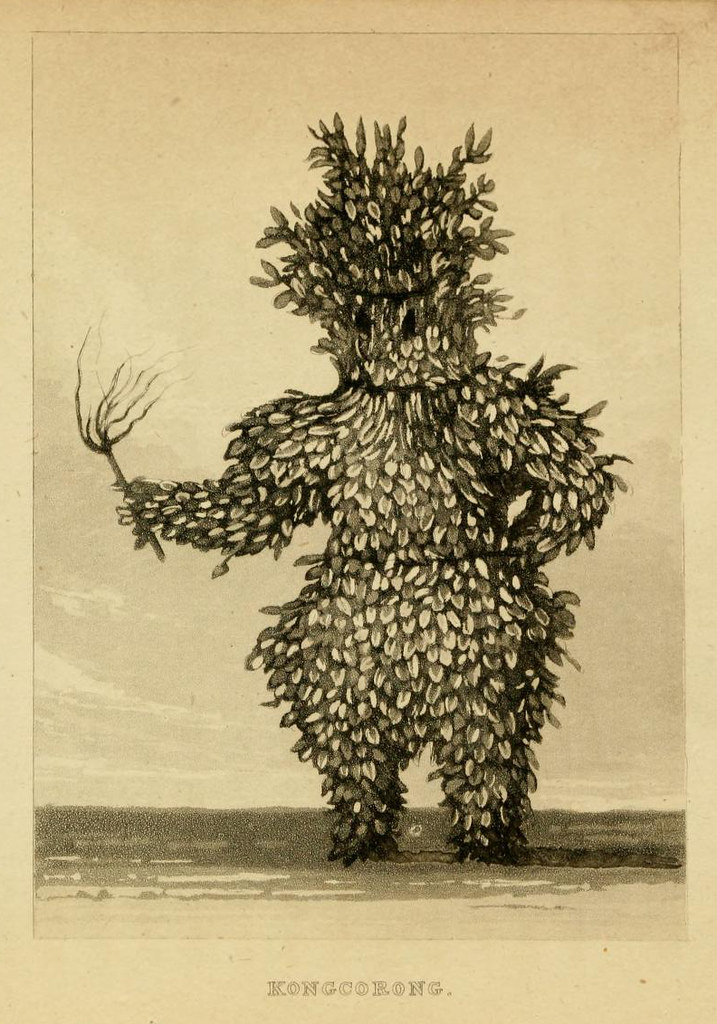


 GuyP
GuyP


 Jeezy Creezy


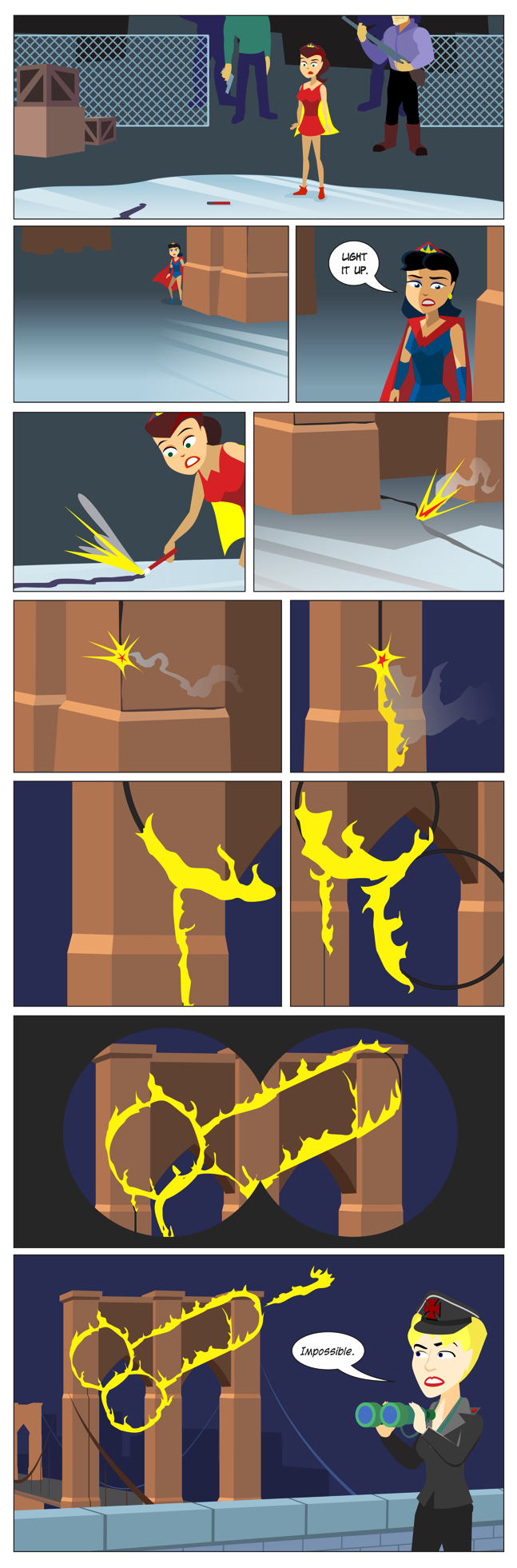


 Photo: Facebook
![kaGh5_patreon_name_and_message[1]](http://amultiverse.com/wp-content/uploads/2014/10/kaGh5_patreon_name_and_message1-450x198.png)


