
Arnvidr
Shared posts
13 Jun 07:45
Permalink | Comments | Email This Story


European Truck Industry Refuses To Adopt Safer, Cleaner, Cheaper Designs Soon In Order To Preserve 'Competitive Neutrality'
by Glyn Moody
ArnvidrWith a flat front you know exactly where your vehicle ends though, even in an unfamiliar truck. Also, lol at "lorries". Must be a UK thing.
When it comes to industries perversely refusing to accept changes that would be good for both them and their customers, it's usually the music or film companies that are involved. But over in Europe, the same story is playing out in the world of trucks -- or "lorries" as they're known locally. The site Transport & Environment explains the situation: Current rules on weights and dimensions of lorries indirectly restrict the length of cabins to 2.35m, which explains why European lorries have such blunt cabin fronts. Longer and rounder cabins can save hundreds of lives and billions of litres of diesel per year.
That's because more rounded designs bring with them better visibility and less air resistance. Recognizing those advantages, the European Parliament voted to allow manufacturers to adopt the new rules if they wished, but without forcing them to do so if they didn't -- which sounds fair enough. But not according to the companies involved. As another post on the Transport & Environment blog explains: the industry grudgingly conceded that while in principle flexibility to make better cabins isn't a bad thing, in this case new designs should be prohibited until at least 2025. The reason for this rather odd position? To maintain 'competitive neutrality' -- suppose one manufacturer would have better designs on the shelves and another not, wouldn't that be terribly unfair?
Unfortunately, good old local protectionism from countries with major truck manufacturers means that this ridiculous view is likely to prevail: Under Franco-Swedish pressure, ministers regrettably agreed to ban the introduction of safer and cleaner lorry cabs from Europe's roads for at least eight years.
The new designs would have been great news for the huge number of European companies using trucks: Transport & Environment estimates that the new designs would save their owners around €3,000 annually. Even more importantly, many of the 4,200 deaths caused by trucks every year in Europe could have been avoided because of better sightlines and enhanced safety features.
But while no law is too repressive, or expense too great, when it comes to fighting terrorism -- even though just 17 people died in Europe as a result of terrorist attacks in 2012 -- it seems some EU politicians are unwilling to push through a simple change in regulations that could not only save many more than 17 lives each year, but which would also reduce pollution and produce savings for numerous European companies as well. Such is the insane power of the lobbyists in Europe (as elsewhere), who care only for their clients, not for the lives of citizens.
Follow me @glynmoody on Twitter or identi.ca, and +glynmoody on Google+
Permalink | Comments | Email This Story

12 Jun 21:29
Elon Musk Destroys The Rationale For Patents, Opens Up All Of Tesla's
by Mike Masnick
Earlier this week, we wrote about rumors that Elon Musk was going to free up some of Tesla's patents to encourage more people to adopt the company's Supercharger system. As we noted this shouldn't be controversial, but it was still considered as such. Elon Musk has now made the official announcement and it actually goes way beyond what was originally rumored. It's not just about the Superchargers, it's all of Tesla's patents. But, better than that, Musk explains why he no longer thinks patents make sense and even demolishes the one argument that even many patent skeptics make: that they're "still needed to stop big companies from copying your innovations."
As we've explained in the past big companies almost never recognize truly disruptive innovation when it happens. This is for a variety of reasons, including the basic innovator's dilemma, but also just because companies are so focused on their own things, it's tough to get them to realize outside innovation. Furthermore, even when they do copy, it's actually pretty rare for them to get it right. That's because, from the outside, they only copy the superficial stuff, and have no idea why something is really successful. And thus, even if they have the "exact plans" for the competitor's technology or process, they don't understand the little things that make customers love them. Similarly, innovators are constantly innovating, so by the time the copycat catches up, they're still behind.
But, an even bigger issue, as we explained before, is that having more viable competitors can also enlarge the overall market. So if a company like Tesla has no viable competitors, they're left educating the market and building all the infrastructure themselves -- and that's pure cost. Opening up their patents actually helps Tesla in the long run by (hopefully) spreading out some of those costs, and increasing the size of the overall market. This is what many patent system supporters just don't get -- but Musk clearly understands deeply.
He talks about how he used to be a patent system believer, but he's been converted in the other direction. And while he avoided patents at some of his companies, with Tesla he was convinced they were necessary, because "the big car companies" might just copy everything he's done. Now, he says, he knows that's not true, and he actually would prefer they do copy Tesla's work.
Unlike so many other companies and company leaders, Musk appears to recognize the simple fact that innovation is not in how many patents you get, it's in how you actually build amazing products and services that people want -- and patents can often get in the way of that, rather than help it. It's nice to see him declare that so directly. He even took the symbolic gesture of removing the framed patents from Tesla's lobby wall. This is great to see and hopefully it will inspire others in the tech industry to put down similar stakes as well.
Permalink | Comments | Email This Story


As we've explained in the past big companies almost never recognize truly disruptive innovation when it happens. This is for a variety of reasons, including the basic innovator's dilemma, but also just because companies are so focused on their own things, it's tough to get them to realize outside innovation. Furthermore, even when they do copy, it's actually pretty rare for them to get it right. That's because, from the outside, they only copy the superficial stuff, and have no idea why something is really successful. And thus, even if they have the "exact plans" for the competitor's technology or process, they don't understand the little things that make customers love them. Similarly, innovators are constantly innovating, so by the time the copycat catches up, they're still behind.
But, an even bigger issue, as we explained before, is that having more viable competitors can also enlarge the overall market. So if a company like Tesla has no viable competitors, they're left educating the market and building all the infrastructure themselves -- and that's pure cost. Opening up their patents actually helps Tesla in the long run by (hopefully) spreading out some of those costs, and increasing the size of the overall market. This is what many patent system supporters just don't get -- but Musk clearly understands deeply.
He talks about how he used to be a patent system believer, but he's been converted in the other direction. And while he avoided patents at some of his companies, with Tesla he was convinced they were necessary, because "the big car companies" might just copy everything he's done. Now, he says, he knows that's not true, and he actually would prefer they do copy Tesla's work.
At Tesla, however, we felt compelled to create patents out of concern that the big car companies would copy our technology and then use their massive manufacturing, sales and marketing power to overwhelm Tesla. We couldn’t have been more wrong. The unfortunate reality is the opposite: electric car programs (or programs for any vehicle that doesn’t burn hydrocarbons) at the major manufacturers are small to non-existent, constituting an average of far less than 1% of their total vehicle sales.This is absolutely true and it's great to see it stated so directly. If only other companies were willing to do so. As for the actual way this will work, Tesla has announced that it "will not initiate patent lawsuits against anyone who, in good faith, wants to use our technology." That's not entirely putting the work into the public domain, but it's a good step. Years ago, I had hopes that Google and others would do something similar, but it has not come to pass. Google had made a similar pledge, but only for open source projects, and Twitter has basically given its own engineers the ability to veto any offensive patent litigation efforts by issuing their own license. But Tesla has now gone even further than both of them by basically telling any competitor to feel free to make use of its patents without worrying about getting sued.
At best, the large automakers are producing electric cars with limited range in limited volume. Some produce no zero emission cars at all.
Given that annual new vehicle production is approaching 100 million per year and the global fleet is approximately 2 billion cars, it is impossible for Tesla to build electric cars fast enough to address the carbon crisis. By the same token, it means the market is enormous. Our true competition is not the small trickle of non-Tesla electric cars being produced, but rather the enormous flood of gasoline cars pouring out of the world’s factories every day.
We believe that Tesla, other companies making electric cars, and the world would all benefit from a common, rapidly-evolving technology platform.
Unlike so many other companies and company leaders, Musk appears to recognize the simple fact that innovation is not in how many patents you get, it's in how you actually build amazing products and services that people want -- and patents can often get in the way of that, rather than help it. It's nice to see him declare that so directly. He even took the symbolic gesture of removing the framed patents from Tesla's lobby wall. This is great to see and hopefully it will inspire others in the tech industry to put down similar stakes as well.
Permalink | Comments | Email This Story
Bunker.jordan, Tertiarymatt likes this
12 Jun 11:06


Yes All Men: Assassin’s Creed Bro-op Controversy Escalates
by Alec Meer
ArnvidrHad to share an article that gave me my first exposure to the terms AssCreedity and guysclusive.
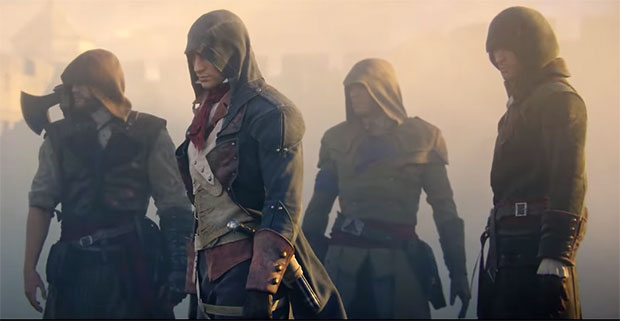
I’m afraid this is going to be a long one, because the debate around Assassin’s Creed Unity not inculding any female avatar options in its co-op mode didn’t half snowball overnight. Ubisoft are now backtracking on their initial defence that this was a workload issue, and instead claim it’s a deliberate narrative-based decision – however, this only opens up more questions.
In the meantime, a former Assassin’s Creed animation lead has called foul on the original claims that animating a female character results in an unbearable workload increase, while elsewhere at E3, a Far Cry 4 dev claimed that excessive animation needs are why there are no playable women in that game. Who to believe, eh?
… [visit site to read more]
11 Jun 08:01
Community Organizations Say They Never Actually Joined Bogus Anti-Net Neutrality Astrotufing Group
by Mike Masnick
All the way back in 2008, we wrote about an increasingly common practice among slimy DC lobbyists to "sign up" clueless organizations to be used as astroturfing figureheads. For example, it seemed odd that corn farmers were suddenly interested in internet ad rates. The original article, by Declan McCullagh, included the money quote from an anonymous person involved in those kinds of astroturfing schemes:
We recently wrote about the latest round of astroturfing groups that the broadband players were supporting, and who were out arguing in force against net neutrality. Lee Fang, at Vice, who wrote the original report that was based on now has a followup, talking about how many of the organizations listed as "members" of the astroturf group "Broadband for America" claim they have no idea what that is and did not choose to sign up.
Permalink | Comments | Email This Story


"You go down the Latino people, the deaf people, the farmers, and choose them.... You say, 'I can't use this one--I already used them last time...' We had their letterhead. We'd just write the letter. We'd fax it to them and tell them, 'You're in favor of this.'"This seems to be standard practice for the big broadband companies. We highlighted how AT&T got "The Latino Coalition" to speak up in favor of their attempted (and eventually failed) merger with T-Mobile. Meanwhile, Comcast recently got the US Hispanic Chamber of Commerce to come out in favor of Comcast buying Time Warner Cable. And, of course, the dirty secret in all of this is that the way this works is the big companies toss a bunch of money at these organizations to get them to "support" whatever positions the companies want them to support. For example, the Hispanic Chamber of Commerce received $320,000 from Comcast.
We recently wrote about the latest round of astroturfing groups that the broadband players were supporting, and who were out arguing in force against net neutrality. Lee Fang, at Vice, who wrote the original report that was based on now has a followup, talking about how many of the organizations listed as "members" of the astroturf group "Broadband for America" claim they have no idea what that is and did not choose to sign up.
Bob Calvert, the host of TalkingWithHeroes.com, a radio program listed as a Broadband for American member, told us that he is not familiar with the net neutrality debate. "My program is a non-political program supporting our men and women who serve and who have served our country and their families," said Calvert, in response to an inquiry from VICE.Some directly say they disagree with Broadband for America's position on net neutrality.
Another Broadband for America member, the Texas Organization of Rural & Community Hospitals, said it had joined only to support broadband access in rural and underserved areas, not on issues relating to net neutrality or the classification of broadband as a utility. "We will reexamine this endorsement and make a determination whether to continue supporting the coalition should we find that the current policies they are proposing would undermine the original goal of greater access for all Americans," said Dave Pearson, president of the group, which represents rural hospitals in Texas as the name suggests.
There's more in the original article. But it's pretty straightforward: many of the named members either had no idea or thought they were signing up for something very, very different. And yet now they are "supporting" policies they either don't know about or don't support. But this is how things are done in the cynical corners of Washington DC. You get support in any way necessary, no matter how ridiculous.Don Hollister, the executive director of the Ohio League of Conservation Voters, said he was unaware of his organization being listed as a Broadband for America member. After our inquiry, Hollister wrote to us to share a message he sent to Broadband for America:
"The Ohio League of Conservation Voters does not endorse your position on broadband. This is not a policy area that we take positions on. Why are we listed as a Broadband for America member? I am unaware of Ohio LCV taking any position on broadband issues and I have been Executive Director since 2011. The Ohio LCV is not a member of Broadband for America. Remove us from your listing of members."
Other groups we contacted were simply confused. "I'm not aware of them and I pay all the bills. I've never heard of Broadband for America," replied Keith Jackson, an accountant with the Spread Eagle Tavern & Inn, a cozy bed and breakfast in Ohio that is listed as a Broadband for America member.
Permalink | Comments | Email This Story
firehose and -1 others like this

10 Jun 18:16
Bogus Broadband Astroturf Organizations Always Have Names Pretending They Represent The Consumers They're Working To Screw Over
by Mike Masnick
Astroturfing in the broadband space is big business. You may recall last summer when we uncovered evidence of significant astroturfing in the Amazon reviews to Susan Crawford's Captive Audience: The Telecom Industry and Monopoly Power in the New Gilded Age, a book that seriously challenges many of the big broadband players' key talking points. It seemed fairly obvious from what we presented that someone had gone out and faked a bunch of negative reviews (and not made much of an effort to hide it).
Of course, astroturfing takes on many forms, and the folks over at Vice have done an excellent job highlighting how a bunch of "consumer groups" that seem to repeat big broadband talking points on net neutrality are, of course, not actual consumer groups, but mostly funded by the big broadband players themselves. And some of them have fairly massive budgets. Having at least some familiarity with the budgets of actual consumer rights/public interest organizations, there's a lot of money being dumped into the astroturfing groups which are often fighting against consumer interests, but always seem to have names that are exactly the opposite of their true position, with these two being the most prominent:
And of course, the big broadband players have long histories with astroturfing, even for something as pointless as what channels will be included in TV bundles. On other things, such as fights over munibroadband, Comcast has been known to flood money into so-called "consumer" activist groups, only to watch them disappear the day after key votes happen. Verizon just successfully astroturfed New Jersey officials, to get out of fiber deployment promises. AT&T, of course, is also no stranger to astroturf efforts as well -- going back decades, including hilarious attempts to "fill seats" at public hearings with employees (this still happens today).
Permalink | Comments | Email This Story


Of course, astroturfing takes on many forms, and the folks over at Vice have done an excellent job highlighting how a bunch of "consumer groups" that seem to repeat big broadband talking points on net neutrality are, of course, not actual consumer groups, but mostly funded by the big broadband players themselves. And some of them have fairly massive budgets. Having at least some familiarity with the budgets of actual consumer rights/public interest organizations, there's a lot of money being dumped into the astroturfing groups which are often fighting against consumer interests, but always seem to have names that are exactly the opposite of their true position, with these two being the most prominent:
- Broadband for America seems to be pretty focused on making sure that broadband only comes from the oligopolists.
- American Consumer Institute may be the most amusing, since it's controlled and funded by lobbyists for the mobile operators.
And of course, the big broadband players have long histories with astroturfing, even for something as pointless as what channels will be included in TV bundles. On other things, such as fights over munibroadband, Comcast has been known to flood money into so-called "consumer" activist groups, only to watch them disappear the day after key votes happen. Verizon just successfully astroturfed New Jersey officials, to get out of fiber deployment promises. AT&T, of course, is also no stranger to astroturf efforts as well -- going back decades, including hilarious attempts to "fill seats" at public hearings with employees (this still happens today).
It was 1976, and a House subcommittee was considering a bill called the Consumer Communications Reform Act. The proposed law, heavily backed by AT&T, would have made the then monopoly even more of one by effectively declaring its long distance system America's "official" service. The bill clearly targeted a competitor: MCI's new microwave tower network, just being rolled out across the country. For days, Capitol Hill had been deluged by workers, priests, police chiefs, mayors, and anybody else Ma Bell could round up to support the legislation.So, really, take with a serious grain of salt any claims you see from groups you've never heard from before that have names like the two listed above. As Vice's article points out, while it's not always easy, a little digging will show you who's really involved:
Then Representative Tim Wirth of Colorado walked into the hearing room. He saw that it was packed with people. Wirth asked the first panelist, an AT&T executive, to identify his colleagues. Five minutes later the man was still reading out names.
"Will everyone associated with AT&T just stand up?" an exasperated Wirth finally asked. The entire room rose. Everyone started laughing.
Apparently, "consumers" means something rather different to this group.Take this opinion column by former Republican Senator John Sununu and former Democratic Congressman Harold Ford in the San Francisco Chronicle. The pair argues that reclassification would lead to "chronic underinvestment" in broadband services while threatening job loss. The disclaimer running under their byline says they are honorary co-chairs of Broadband for America, which the paper describes as "a coalition of 300 internet consumer advocates, content providers, and engineers."
A disclosure obtained by VICE from the National Cable and Telecom Association (NCTA), a trade group for ISPs, shows that the bulk of Broadband for America's recent $3.5 million budget is funded through a $2 million donation from NCTA. Last month, Broadband for America wrote a letter to the FCC bluntly demanding that the agency “categorically reject” any effort toward designating broadband as a public utility. It wasn't signed by any internet consumer advocates, as the Sununu-Ford letter suggests. The signatures on the letter reads like a who's who of ISP industry presidents and CEOs, including AT&T's Randall Stephenson, Cox Communications' Patrick Esser, NCTA president (and former FCC commissioner) Michael Powell, Verizon's Lowell McAdam, and Comcast's Brian Roberts.
[....]
Another group leading the charge is the American Consumer Institute. The organization recently filed a letter with the FCC opposing reclassification, and argues that ISPs should be left alone. "The fact is that the broadband market is competitive and becoming more so," wrote ACI, which claims that consumers currently enjoy "increased choice." In January, ACI called the Verizon lawsuit that struck down the original FCC net-neutrality guidelines, "a victory for consumers."
Why would a self-professed consumer advocacy group not only oppose moving toward net neutrality but claim that America's broadband market—one of the slowest, most expensive in the industrialized world with fewer than three choices in many parts of the country—is so great?
Perhaps because ACI, like Broadband for America, is financed by an ISP lobby group. Annual tax returns show that a foundation controlled by lobbyists from the cell phone industry, called MyWireless.org, has contributed to ACI since 2010.
Permalink | Comments | Email This Story
firehose and -1 others like this
10 Jun 16:29
The Top 5 Lies NSA Defenders Still Spread: Don't Let Them Get Away With It
by Mike Masnick
The EFF has helpfully put together a list of the top 5 claims that defenders of the NSA have to stop making if they want to remain credible. In short, it's the top five lies that defenders of the NSA keep repeating over and over again, even though they've each been widely debunked. It's a handy guide to the statements and why they're untrue. You should go read the whole thing, but these are the five:
Permalink | Comments | Email This Story


- The NSA has stopped 54 terrorist attacks with mass spying
- Just collecting call detail records isn’t a big deal
- There have been no abuses of power
- Invading privacy is okay because it's done to prevent terrorist attacks
- There's plenty of oversight from Congress, from the courts and agency watchdogs
Permalink | Comments | Email This Story
Tertiarymatt likes this
10 Jun 07:45
James Clapper Admits What Everyone's Been Saying For Months: Snowden Didn't Take 1.7 Million Documents
by Mike Masnick
ArnvidrI believe the term is "out of their ass".
You know, you'd think that the "intelligence community" would be a bit more intelligent. As we've discussed many, many times, nearly all of the estimates of "harm" concerning Ed Snowden's actions were based on the faulty assumption that he "took" (and revealed) every document he ever "touched" while at NSA -- somewhere around 1.7 million (sometimes referred to as 1.5 million, but then upped to 1.7 million). Except that two of the reporters who got the documents, Glenn Greenwald and Ewan MacAskill, have both said from the very beginning that it was about 60,000.
And yet, NSA defenders keep insisting that he's caused all of this harm because of what was in the 1.7 million documents... nearly all of which he did not take. Indeed, the much-hyped (by NSA defenders) Pentagon report on the "staggering harm" that Snowden has created doesn't actually say that. It says it's "staggering" how many documents he had access to, not that he took. Because the NSA, one year after the first Snowden revelation still has no idea how much he actually took (which certainly raises questions about their vaunted "auditing" of everything done at the agency).
In fact, James Clapper is now admitting that maybe Snowden didn't take so much, and maybe the "harm" wasn't as bad as he, himself, has been arguing:
Amusingly, the report also claims that the DOD is also lowering its estimate of how much Snowden "touched" from 1.77 million (up from the 1.7 million they had been saying, actually) down to the 1.5 million which was the number they had been using back at the beginning of December anyway. It's almost as if they actually have no idea and are just pulling numbers out of thin air.
Permalink | Comments | Email This Story


And yet, NSA defenders keep insisting that he's caused all of this harm because of what was in the 1.7 million documents... nearly all of which he did not take. Indeed, the much-hyped (by NSA defenders) Pentagon report on the "staggering harm" that Snowden has created doesn't actually say that. It says it's "staggering" how many documents he had access to, not that he took. Because the NSA, one year after the first Snowden revelation still has no idea how much he actually took (which certainly raises questions about their vaunted "auditing" of everything done at the agency).
In fact, James Clapper is now admitting that maybe Snowden didn't take so much, and maybe the "harm" wasn't as bad as he, himself, has been arguing:
Director of National Intelligence James Clapper says it appears the impact may be less than once feared because "it doesn't look like he [Snowden] took as much" as first thought.In other words, exactly as pretty much all of us have been saying -- all of the frantic FUD-filled estimates of "harm" were actually massively over-hyped based on faulty assumptions. And yet that never stopped Clapper, Mike Rogers, Keith Alexander, Dianne Feinstein and others from continuing to trot out those bogus numbers, even though tons of people had debunked them. And now that Clapper is finally admitting that he himself over-hyped the supposed "harm" and the documents that Snowden took, he acts as if he's revealing some big news.
"We're still investigating, but we think that a lot of what he looked at, he couldn't pull down," Clapper said in a rare interview at his headquarters Tuesday. "Some things we thought he got, he apparently didn't." Although somewhat less than expected, the damage is still "profound," he said.
Amusingly, the report also claims that the DOD is also lowering its estimate of how much Snowden "touched" from 1.77 million (up from the 1.7 million they had been saying, actually) down to the 1.5 million which was the number they had been using back at the beginning of December anyway. It's almost as if they actually have no idea and are just pulling numbers out of thin air.
Permalink | Comments | Email This Story
firehose likes this


08 Jun 15:51


Watch Weezer’s Drummer Catch A Fan’s Frisbee Without Missing A Beat Of “Beverly Hills”
by Stereogum
Arnvidr"Without missing a beat" was quite the overstatement, but pretty cool to catch it on video.

File under tricks your dog (probably) couldn’t do: at a show in St. Augustine, FL on Friday, drummer Patrick Wilson caught a frisbee from the audience all without missing a beat of “Beverly Hills.” Pretty impressive. Also watch Rivers Cuomo’s face light up when he hears the audience roar.
08 Jun 15:13
Jon Blyth, the funniest writer in videogame journalism, is no longer working in videogame journalism. He’s left his role as associate editor on OXM to go run a pub in Nottingham, which in many ways is the game journalist equivalent of being put out to stud. He’s typically apologetic:

The Sunday Papers
by Graham Smith
ArnvidrSome good stuff this week, including the endlessly fascinating Kryptos, the breaking of basketball, and why LA is hell.

Does it matter if you write some functioning code but don’t understand why it works the way it does? Sundays are for finding out, in between playing so much Floating Point that you dream about playing it in a Japanese tournament.
I’m sorry to anyone who missed my gently coded warnings. When I said “we can’t wait to find out more,” at the end of a passionless regurgitation of a feature list, that was the closest thing I could professionally say to “I don’t even know what this game is”. The first time I heard someone say “we’ve really listened to our community”, I was impressed, and reported keenly on this consumer-orientated and responsive attitude. By the end of my career, all I wanted was one developer to say “we’ve ignored our community, as they are plainly fucking idiots”.
Tertiarymatt likes this


07 Jun 20:12
Huge collection of old operating systems
by donotreply@osnews.com (Thom Holwerda)
ArnvidrFinally we can all go back to Windows 1.0!
This site calls itself 'the biggest free abandonware downloads collection in the universe'. No idea if that's true or not, but all I can say is that I spent a lot - a lot - of time today browsing through the incredibly extensive collection of old operating systems. From an alpha release of Windows 1.0 to NEXTSTEP, this site has it all.
Great for emulators.
Carlos André Oliveira, Joshua Pulham and 2 others like this
07 Jun 16:50


Watch Sir Mix-A-Lot Perform “Baby Got Back” With Seattle Symphony Led By Prokofiev’s Grandson
by Stereogum

Last night Seattle-based rapper Sir Mix-A-Lot joined contemporary composer Gabriel Prokofiev on stage at Benaroya Hall to rap along to an orchestral version of “Baby Got Back.” Prokofiev, grandson of Russian composer Sergei Prokofiev, is the pioneer of a genre he calls “nonclassical,” or the blending of electronic and classical composition. In an illuminating interview with The Quietus earlier this year, he shed some light on the whole thing: “There are certain ways of listening and certain aesthetic values that can be different, I know that there is some music I’ve made that won’t work in a concert hall setting, and vice versa, but there are some magical moments when the two worlds collide successfully.” This seems to be one of those successful collisions, at least if we go by how many audience members were dancing on stage. Watch video of “Baby Got Back” and “Posse On Broadway” below.
firehose likes this
06 Jun 09:45
British Recording Industry Thinks Google can do More to Prevent 'Piracy'
by janrinok
ArnvidrWhen will the "recording industry" be forgotten I wonder?
lhsi brings a Techdirt story to our attention:
I think that we have all heard of Google's decision to comply with the EU ruling on an individual's right to be forgotten. The British recording industry have reasonsed that, if Google can implement a ruling allowing a person to be forgotten, then they should also have the capability to remove data on demand from other organisations - in particular, themselves.
In the past when there have been requests to delete search results pointing to sites that are offering media that is being 'pirated', Google's response has been that it is not possible to sanitise the data that they display as a result of a search. However it would seem that if they can remove data referring to individuals then they can, at least theoretically, remove links to unauthorised films, music and other media. The article also provides counters to this logic
However, if Google does so then it and all the other search engines will no longer be agnostic and will become censored versions of their current selves. Furthermore, Google isn't allowing entire sites to be deleted from their search results, as is being requested by 'big media', but only specific items supported by an reasoned case and evidence of the identity of the individual requesting the deletion.
An interesting article, and in my opinion well worth a read.
Read more of this story at SoylentNews.
06 Jun 07:56
Sexual harassment made a crime in Egypt
ArnvidrGood step by bad man or sneaky step by bad man trying to look good?
Outgoing president issues decree criminalising sexual harassment, making it punishable by up to five years in jail.
Rosalind, Tertiarymatt likes this

05 Jun 19:46


Axl Rose Announces Chinese Democracy Sequel, Remix Album
by Stereogum
ArnvidrWell, uhm, I guess?

I’m on record here and probably elsewhere as being a fan of Chinese Democracy — the legendarily bloated, forever-delayed, joke-butt of an album released in 2008 by Axl Rose and a bunch of random musicians contracted to play under the name “Guns N’ Roses.” Look, it’s a good record! The production is embarrassingly dated (and was so at the time of the record’s release) and the quality is uneven at best but there are a bunch of songs on there that I like a lot and enjoy listening to even now. I fully contend the world is a better place with Chinese Democracy in it. And I’m always excited to hear whatever Axl Rose releases. But did I feel the 71-minute-long Chinese Democracy should have been twice as long? Have I been clamoring for a sequel? I did not. I have not. Was I perhaps hoping to hear Chinese Democracy: The Remixes six years after the release of Chinese Democracy? Honestly … no. But Axl was not put on this Earth to cater to my whims, so a sequel to and remix version of Chinese Democracy is exactly what we’ve all got to look forward to. Axl revealed as much in a new interview with metal mag Revolver. Quoth W. Axl:

03 Jun 20:38
PI. has been Trademarked in the US
by martyb
ArnvidrNow THAT's a real wtf.
c0lo writes:
Read the full story on the cbcnews community blog or wired.
U.S. trademark registration 4,473,631 was issued to one Paul Ingrisano, aka "Pi Productions Corp" of New York. In January, the U.S. Patent and Trademark Office gave Ingrisano a trademark on the symbol π. pi followed by a period: a design Ingrisano uses on T-shirts sold at some brick-and-mortar stores.
When Ingrisano discovered that California-based print-on-demand outlet Zazzle offered an array of clothing items that featured the symbol pi, he had his attorney send the company a strongly-worded cease-and-desist letter this month demanding their removal.
"This would be like McDonalds claiming the letter M as a trademark," wrote Jez Kemp, whose Zazzle store offers apparel imagining pi dressed in a pirate costume. "The trademark is in the combination of style and symbol, not the symbol itself."
Attorney Millet defends the cease-and-desist letter. He says that to his knowledge none of the designs sold through Zazzle included the exact trademark π. -- pi followed by a period -- but some of them were confusingly similar to his client's design.
In 2011, Ingrisano attempted to trademark "I<3" artnet reports, which was "published for opposition" in June 2013. Reebok's intellectual property watchdogs claimed in a December 14, 2013 "Notice of Opposition" that "I<3" is too close to comfort to its own "I3" trademark.
Read more of this story at SoylentNews.
Rosalind likes this

01 Jun 10:44
The STRAWMAN Cometh
by Justin Pierce
ArnvidrWell that's the best thing I've read in a while.
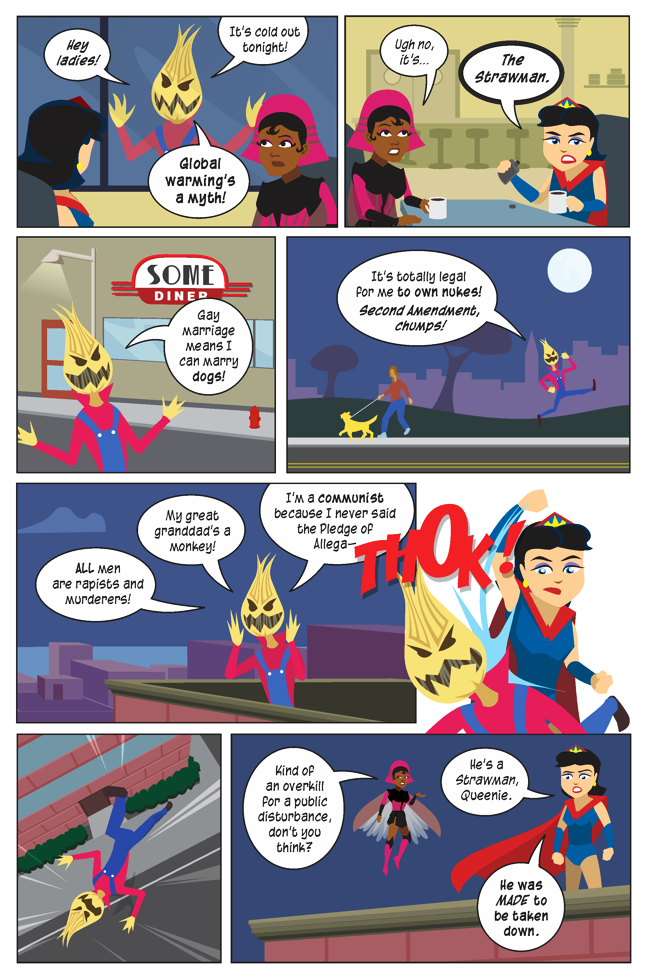
Wonderella was fed up, it was the last... of her patience.
Snipergirl, Rosalind and 4 others like this

30 May 05:39
Spar Wars
by jon
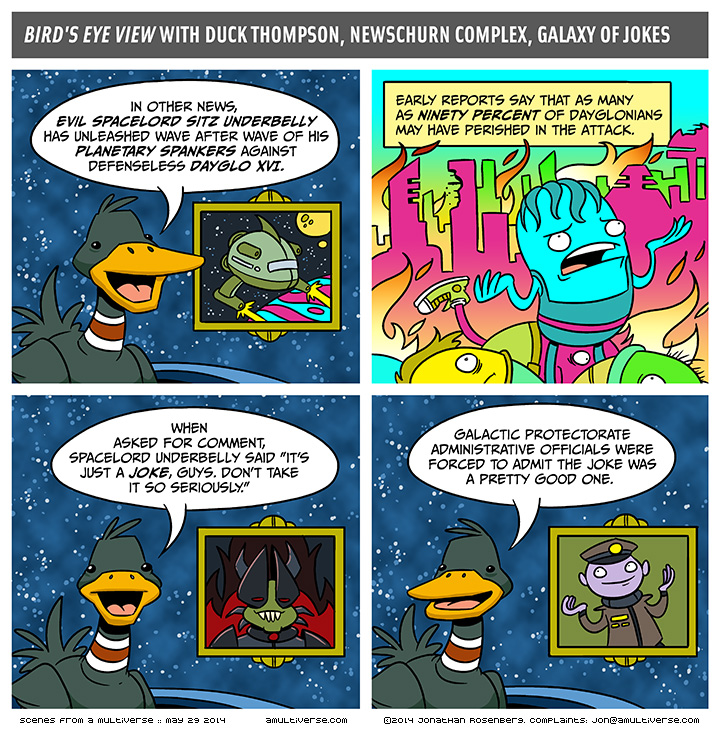
There’s no such thing as “just a joke.” Jokes are powerful. They communicate intent and mindset. They should not be dismissed lightly.
If you tell me “Aw, I was just joking,” it means you got caught out saying something shitty and now you’re trying to cover your ass.
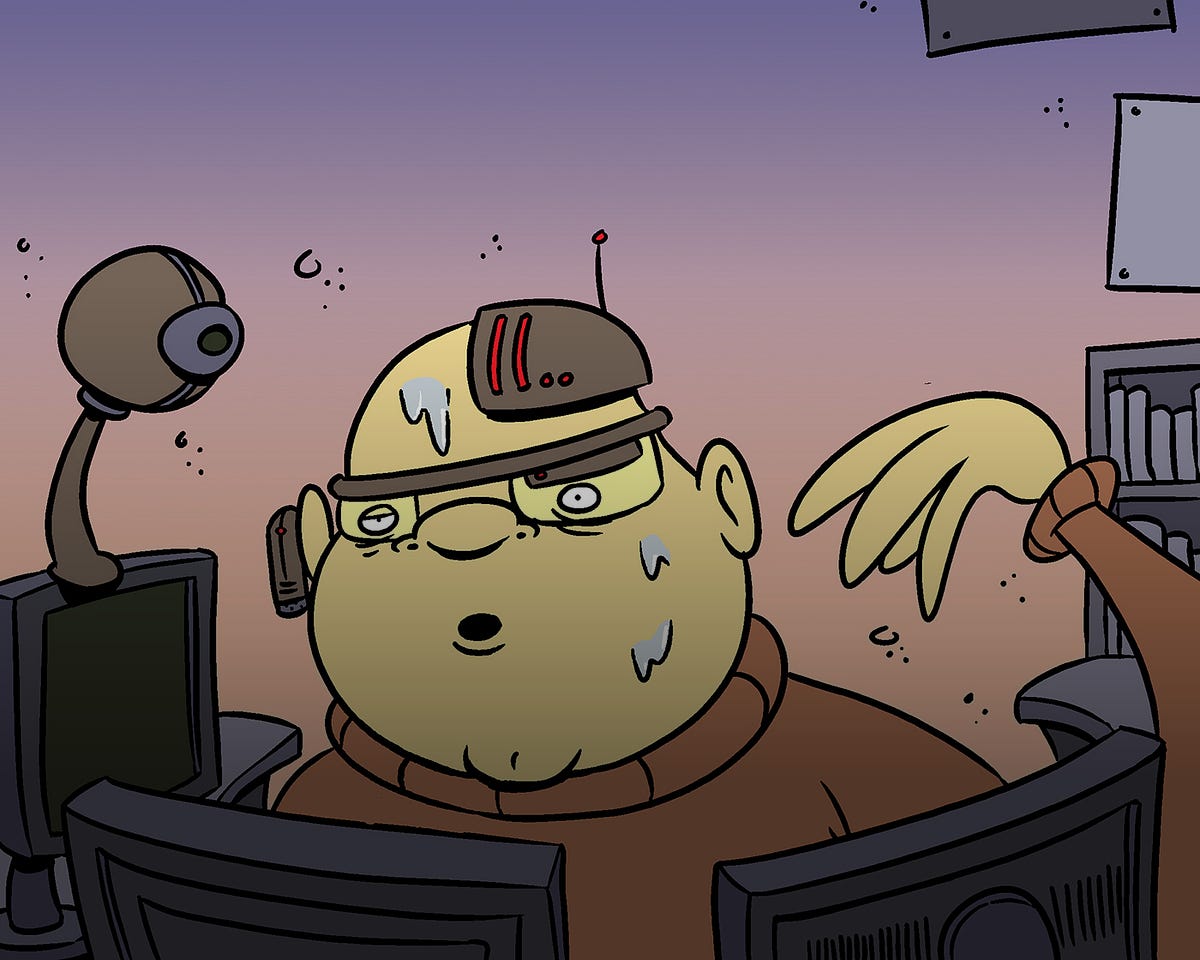
Speaking of jokes, there are some in my new Near Future comic over at The Nib on Medium! Go read it, share it with your friends, use it for inspiration in your day to day life.
Tindalostalbot, Tertiarymatt and 2 others like this
29 May 14:02

Wot I Think: The Wolf Among Us Part 4 – In Sheep’s Clothing
by Alec Meer
ArnvidrWooo! This episode is somehow still not available to me on my ps3, but I'm still excited.

The fourth part of Telltale’s inadvertently long-running adaptation of fairy-tales-in-modern-New-York comic Fables was released yesterday. As, like its predecessors, it can only be bought as part of a season pack, part of me questions the wisdom of writing it up individually, but hey, I’ve started so I’ll finish. I do avoid largely spoilers below, but it’s going to be pretty nonsensical if you’ve not played the series so far.
Everything’s going in the right direction now. This is the episode of Telltale’s fairy tale noir adventure where the brooding atmosphere of menace and distrust is fully backed up by events and implications. While, to a significant degree, the overly-obviously-titled ‘In Sheep’s Clothing’ is a retread of prior episodes’ structure, it’s finally moving away from questions and onto answers, as well as capitalising on some character relationships which had been either lightly sketched or outright abandoned since the first episode. With the net tightening – whether around the perpetrator or around our heroes remains an open question – there’s a real sense that people are in danger, and that I might be the one to bring doom to their door.
… [visit site to read more]