Submitted by: (via The Meta Picture)
Shared posts



15 May 01:18


VÍDEO: Godzilla engasga com Fiat 500L em comercial americano
by Ricardo de Oliveira
Albener PessoaPro Lucio
A noticia VÍDEO: Godzilla engasga com Fiat 500L em comercial americano foi publicada no site Notícias Automotivas - Carros.
15 May 00:20
Watch the Ultimate Mashup of Game of Thrones and Super Mario
Someone has recreated the Game of Thrones opening sequence so that it happens in Super Mario World. It's pretty great.


15 May 00:18
Whistleblowers Beware: Apps Like Whisper and Secret Will Rat You Out
Anonymously spilling personal gossip and corporate secrets online is all fun and games–until someone gets a subpoena. Startups like Secret and Whisper have defined a buzzy new category of social media, attracting millions of users and tens of millions of dollars in venture capital investments with the promise of allowing anyone to communicate with anonymity. […]


firehose likes this

14 May 13:47
Neti Pot, the Nasal Irrigation Torture Device
by drew
I could write several paragraphs about how much I hate Neti pots, the device designed to pour water up into your sinus cavities, where it remains for hours before slowly draining down your throat (and, unless you use sterile water, may cause a brain infection) but instead I thought it might be better to show you this video of me using a Neti Pot.
13 May 22:07


The Big Idea: Rose Fox and Daniel José Older
by John Scalzi
Albener PessoaEu ajudei a financiar via Kickstarter. Eu tenho os ebooks mas ainda nao li. Se alguem quiser emprestado eh so falar (via firehose)
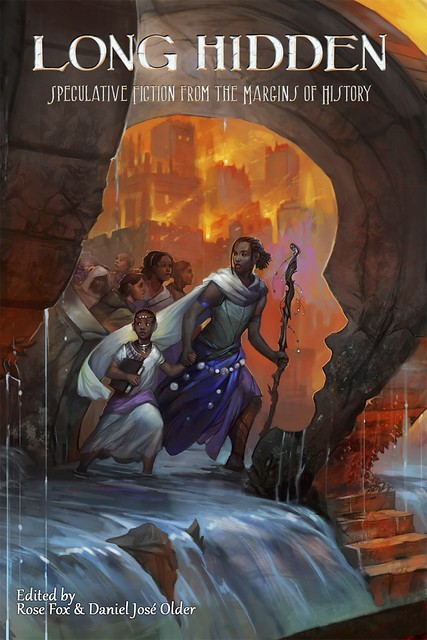
When editors Rose Fox and Daniel José Older started out to create their anthology Long Hidden: Speculative Fiction from the Margins of History, they did so with a mission: To offer stories with more than the “usual suspects” of fantasy characters and tropes — to give space to stories and people outside of the expected. Here’s how they went about doing it, and how they went about getting the means to make the anthology happen.
ROSE FOX AND DANIEL JOSÉ OLDER:
How do you transform a longstanding vacancy into an opportunity? How do you take an empty, unfriendly space, air it out, and make it welcoming? These are the challenges we faced when we set out to edit Long Hidden: Speculative Fiction from the Margins of History.
The vacancy, of course, exists in the hallowed halls of fiction—specifically historical and speculative fiction. Here we find one dominant narrative, that same singular narrative that Chimamanda Ngozi Adichie warned us about: the story of the anointed white heterosexual cisgender man saving the world. We’re over it. We’ve seen it countless times. It’s boring. And what good is a solitary thread to depict a world that’s a vast, complex, multicolored quilt?
Where one story reigns supreme, thousands and thousands of others languish untold. This is not accidental, though it’s also not always conscious. Marginalization of people and stories doesn’t come out of thin air. It’s created by a thousand decisions on the part of writers, agents, editors, publishers, librarians, and booksellers:
- “I don’t want to write marginalized characters because I worry about getting it wrong.”
- “An egalitarian culture wouldn’t be realistic.”
- “I invited submissions from authors who were already notable in the field, because their names will help sell the anthology.”
- “We’re looking for books that we know will do well in the current marketplace.”
- “Readers won’t pick up a book with a character like that on the cover.”
- “I have no idea how to promote this story. It’s really cool, but who would read it?”
- “Boys don’t read as much as girls do, so we need to encourage them with more books about boys doing boy things.”
Collectively, over a period of decades, these individual decisions steamroll non-dominant voices right off the map.
Meanwhile, our author friends have been saying very different things:
- “My story was rejected because the editor ‘couldn’t relate’ to the main character.”
- “I built a story around something that happened to me, and was told that things like that don’t happen anymore.”
- “I wanted to submit to that magazine until they published a story that was full of stereotypes about my culture.”
- “My professor told me that people like me don’t write SF/F.”
- “My fantasy novel, set in a world that’s completely different from ours, was shelved under ‘African-American Literature’ just because I’m Black.”
We decided it was time—really, long past time—to take part in the fight against the dominant narrative and make space for the truths that have gone untold. We wanted to tell the truth about our histories, not the stories that make it into textbooks, and we wanted to decolonize speculative fiction. That was the big idea that became Long Hidden.
With the expert guidance and support of our publishers, Bart Leib and Kay Holt at Crossed Genres, we set out to create an atmosphere of bravery with precision and gentleness, free from deception. Our submission guidelines (http://longhidden.com/submissions/) asked for care and empathy, because we knew we would be seeing stories of violence and sorrow as well as bravery and triumph. We couldn’t pretend away the pain that oppression has caused throughout history. We weren’t interested in narrative of the privileged savior and we said so; we also asked authors to approach the concept of revenge with subtlety and caution, knowing that the truth of history is more complex than the tables being turned. We asked for stories of friendship and family and community, because in hard times those personal connections are both threatened and vital. And we encouraged speculative elements that incorporated real-world religion, superstition, and folklore, because the supernatural has its dominant narratives too.
We invited everyone to contribute, not just big names, because we know how hard it is for even tremendously talented authors to break in. We were intentional about reaching out into communities that don’t usually see calls for submissions for speculative fiction anthologies. We extended our call out far beyond the traditional boundaries of mainstream SF/F. We approached writers who had never published before and writers who had never written speculative fiction before. We explicitly requested and welcomed stories from women, writers of color, queer and trans* writers, and disabled writers, knowing that it takes a clear invitation to overcome the general feeling in the industry that such authors and their stories are unwelcome. We offered SFWA pro rates to honor the hard work it takes to write a story of the painful past, and asked the wider community of readers to fund our project through Kickstarter so we could afford to pay our authors and artists something close to what they were worth.
The response was tremendous. Submissions and pledges poured in. In a few days, the Long Hidden Kickstarter met its goal, and soon after we’d doubled it. By the end, we’d shot far past the initial goal and beyond what any of us had thought possible. People gathered en masse to declare that this was a space that needed to be opened in the closed ranks of both speculative and historical fiction.
Twenty-seven stories emerged from the many, many amazing ones we’d been sent. They were stories that collectively held a vast range of voices, scopes, characters, and unspoken truths. They were from authors around the world. They were heartbreaking and hilarious and true in the way all great fiction is. They were challenging. And most of all, they were in conversation with one another, despite depicting many different people, places, and eras. We enlisted artists with diverse backgrounds and styles to give them the illustrations they deserved.
Each story challenged our assumptions, privileges, stereotypes, doubts, fears, and uncertainties. As we worked with the authors and artists and each other, we were profoundly moved and changed by these tales of struggle, survival, triumph, and pain.
The “long hidden” stories have been here all along, as have the voices that tell them, but the industry hasn’t been listening. We’re thrilled that social media and crowdfunding have opened up new avenues for untold narratives to get their due, and we look forward to a great many more emerging into the light. Long Hidden isn’t the beginning, or the end.
—-
Long Hidden: Amazon|Barnes & Noble|Createspace
Read a story excerpt with commentary by contributor Sunny Moraine. Visit the book’s Web site. Follow editor Rose Fox on Twitter. Follow editor Daniel José Older on Twitter.
Jason Forbes, Tertiarymatt and one other like this
13 May 17:42

Assorted links
by Tyler Cowen
1. Ants blockade their emergency exits.
2. Numerosity and income inequality.
3. What do we know about momentum investing?
4. Why marijuana shops are forced to run like lemonade stands. (A short meditation on the productivity of banking.)
5. Will stand-up comedy make it in China?
6. Legal medical marijuana seems to cause more binge drinking.


11 May 22:49
Single Choice
by Doug

Thanks to reader Sarah for suggesting the topic of exams! Here are more educational chickens.
Damiani.guilherme, Albener Pessoa and 11 others like this

11 May 22:42

An owl having a bad feather day
An owl having a bad feather day
firehose and -1 others like this
11 May 16:07
Arquivado em:Uncategorized Tagged: blueberry, Ciências Econômicas, entomologia, pesquisas
Ah, a convexidade…(bee’s edition)
by Claudio Shikida
 A convexidade forte, naqueles problemas de otimização, mostra que diversidade é sempre interessante. Bom, é mais ou menos isto. Agora, repare que isto mostra o quanto economistas – ao contrário do que dizem os maus sociólogos e outros que não estudaram Economia porque estavam fazendo politicagem na faculdade – são os que mais gostam de diversidade por motivos óbvios.
Quem já estudou Teoria da Produção sabe que há uma grande diversidade (pun intended) de funções de produção e também que economistas adoram funções de produção bem gerais que incluem casos extremos como seus casos particulares (como a boa e velha CES, por exemplo).
Esta história de que diversidade (convexidade) é bom não se restringe aos manuais por um motivo simples e frequentemente esquecido: buscamos descrever como funciona a realidade, não como ela deveria funcionar. Trata-se de uma análise positiva, não normativa.
Eis, portanto, o exemplo de hoje. Pesquisadores descobriram que a diversidade de abelhas gera ganhos de bem-estar para fazendeiros. Eu sei, eu sei, a gente poderia falar de externalidades aqui – e o exemplo até cabe para um texto sobre o assunto – mas repare que o estudo não é de economistas, mas de entomologistas. Mesmo assim, eles fazem um experimento interessante e um cálculo econômico simples. Segue o trecho:
Legal mesmo, vou repetir, é que os autores se preocuparam em fazer uma estimativa – ainda que simples – do ganho de bem-estar. A diversidade, portanto, taria um ganho de US$ 1.4 milhões para a indústria de blueberry da Carolina do Norte. Não é só uma conversa de entomólogos ou de ambientalistas. Aliás, eis aí o incentivo para que pessoas defendam a diversidade de abelhas: todos ganham com isto e o ganho está quantificado.
Eis um bom exemplo de interdisciplinaridade que raramente vemos defendido pelos auto-denominados “defensores do pluralismo metodológico”. Eles só querem pluralismo com soft sciences ou com grupos com os quais tenham afinidade ideológica. Eles são pouco pluralistas, na verdade. Nada de conversar com o pessoal das Ciências Naturais, Estatística ou Computação. Ironicamente, são muito menos pluralistas do que nós, do mainline da economia. Viva as abelhas!
Arquivado em:Uncategorized Tagged: blueberry, Ciências Econômicas, entomologia, pesquisas
10 May 02:50
Disney plans array of Star Wars spin-off movies in between sequel films
by Lee Hutchinson
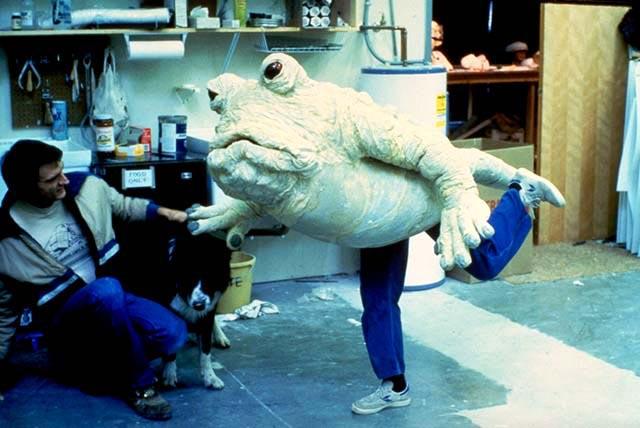
Maybe coming soon: The Adventures of Buboicullaar, Jabba's frog-dog.
Curious about what Yoda was like as a boy (or whatever you call a young whatever-he-is)? Burning to know how Darth Maul came to be named after a giant hammer? Desperate to find out what Nien Nunb was like before he was Lando’s co-pilot? All these stories and more could be coming your way, according to Disney CEO Bob Iger. During Disney’s quarterly earnings call yesterday, the executive stated that at least three "spin-off" movies are in development for parallel release with the new Star Wars sequel trilogy.
News about companion movies accompanying the main sequel trilogy movies isn’t totally new—Disney has been saying for some time now that Episodes VII-IX won’t be their only dip into the Star Wars well. The spin-off movies could be released in the gaps between the sequel trilogy films. Disney CFO Jay Rasulo told Variety last September that "one Star Wars trilogy film or 'origin story film' would also appear on the release schedule each year," and LucasFilm President Kathleen Kennedy noted in January that the planned spin-off films won’t impinge on the mainline sequel saga plans.
Between Rasulo's and Kennedy’s quotes and Iger’s mention yesterday that there will be "at least three" of the spin-off films, it seems reasonably safe to guess that Disney will begin spinning its own Extended Universe-style set of backstories around recognizable but unexplored characters—at least, unexplored on the screen. The fact that everyone from Luke Skywalker all the way down to Jabba the Hutt’s guard frog has a detailed EU backstory is immaterial—the EU is dead and buried.
09 May 23:38
Oracle’s Java API code protected by copyright, appeals court rules
by David Kravets

A federal appeals court on Friday reversed a federal judge's ruling that Oracle's Java API's were not protected by copyright.
The debacle started when Google copied certain elements—names, declaration, and header lines—of the Java APIs in Android, and Oracle sued. A judge largely sided with Google in 2012, saying that the code in question could not be copyrighted.
"Because we conclude that the declaring code and the structure, sequence, and organization of the API packages are entitled to copyright protection, we reverse the district court’s copyrightability determination with instructions to reinstate the jury’s infringement finding as to the 37 Java packages," the US Appeals Court for the Federal Circuit ruled Friday.
09 May 23:32

Nintendo apologizes for lack of same-sex options in upcoming sim game
by Sam Machkovech
This Tomodachi Life avatar may be blissfully unaware of the game's controversy surrounding same-sex marriage.
In a statement posted today on its official American site, Nintendo issued an apology regarding the upcoming Western debut of its quirky life-sim series Tomodachi Life. The Nintendo DS and 3DS series puts imported Mii characters from gamers' consoles into a mix of ordinary and oddball situations, and while some of those situations include relationships and marriages, the game defaults into only allowing male-female unions.
Campaigns such as Miiquality rose up seeking a response (or action) on Nintendo's part, saying that the game's focus on personalization would be disrupted when gay players are not given the option to have gay characters. Nintendo's response to those campaigns, titled "We are committed to fun and entertainment for everyone," was direct: the company wishes it could fix it, but it can't.
"We apologize for disappointing many people by failing to include same-sex relationships in Tomodachi Life," Nintendo wrote. "Unfortunately, it is not possible for us to change this game’s design, and such a significant development change can’t be accomplished with a post-ship patch."
09 May 23:28
AT&T claims common carrier rules would ruin the whole Internet
by Jon Brodkin

AT&T today urged the Federal Communications Commission to avoid reclassifying broadband Internet access as a telecommunications service, which is something network neutrality advocates are asking the FCC to do.
Reclassification would open broadband providers up to common carrier rules under Title II of the Communications Act, similar to regulations that have covered our phone system since 1934. Recent calls for reclassification of broadband stem from a federal appeals court ruling that the FCC could not impose strict network neutrality rules, such as prohibitions against blocking Web services and Internet fast lanes, without first declaring the providers to be common carriers.AT&T’s anti-regulatory view isn’t surprising. It’s already arguing that the Public Switched Telephone Network should be shut down and replaced with largely unregulated Internet-based voice service.
The company’s eight-page ex parte filing claims that the reclassification of broadband would backfire in all sorts of unintended ways that would wreak havoc on the Internet, without even achieving the goal of banning paid prioritization deals in which Web services pay for faster access to consumers. Here’s a copy of the letter (thanks to Wall Street Journal reporter Gautham Nagesh for passing it along).
09 May 23:28
Intelligence employees, current and past, barred from citing news leaks
by David Kravets
The Obama administration is barring current employees and contractors, as well as former workers at the Office of the Director of National Intelligence from addressing leaked media material.

The revelation of the edict, first disclosed by Secrecy News, means that those working for the agency that supervises the nation's 17 spy organizations cannot mention any leaked material in speeches, opinion pieces, research papers, or books. It does not even matter whether the material is classified, according to the edict from the office run by James Clapper, the director of national intelligence.
Citing leaked material is prohibited, according to the new "pre-publication review policy," (PDF) because it "can confirm the validity of an unauthorized disclosure and cause further harm to national security."
firehose likes this
