
Shared posts
15 Dec 13:41
MINI Scooter, Max Style: BMW’s Electric Folding Scooter
by delana
[ Filed under Transportation & in the Concept Vehicles category ]






[ Filed under Transportation & in the Concept Vehicles category ]
[ Gajitz | Archives | Categories | Privacy | TOS ]


MINI is known for its tiny, adorable cars, but in November 2014 they joined the ranks of companies looking toward greener, even smaller transportation. Their Citysurfer electric scooter was designed to cut down on traffic congestion in busy urban areas by providing a “last mile” solution. With the foldable scooter, motorists can park outside of the city center and then ride the rest of the way to their destination.


The Citysurfer folds up small enough to fit into the back of a MINI, which is very impressive when you consider just how tiny an area that is. Of course, it can be stashed and carried in other car makes, as well. At just 40 pounds, it’s substantial enough to feel like it isn’t going to break when you hit a bump but light enough that almost everyone will be able to easily lift it into the trunk or even onto a bus or train.


The retro-styled little scooter has a top speed of 15 MPH and a 10 to 15-mile range. Its lithium-ion battery can be charged from a normal wall outlet. The motor is located in the rear wheel and acceleration is controlled with the thumb. It’s not activated until the user first pushes off with his or her foot and reaches a minimum speed – a smart way to avoid falls from too-fast motorized starts.


Large wheels let the scooter handle uneven terrain and three separate braking systems keep the ride smooth and safe. Alas, the Citysurfer isn’t yet available for purchase, and MINI isn’t handing out details on when or if it might be produced commercially.
Keep Going - Check out this Great Related Gajitz Article:


[ Filed under Transportation & in the Concept Vehicles category ]
[ Gajitz | Archives | Categories | Privacy | TOS ]
15 Dec 12:34
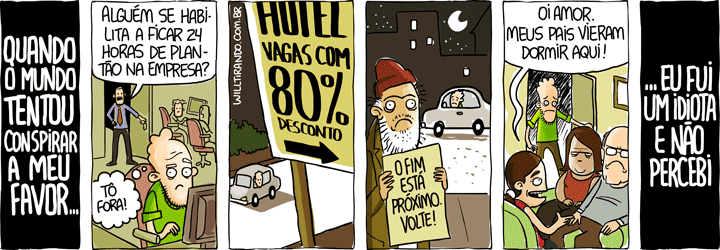
Quando o mundo tentou conspirar a meu favor...
Adam Victor Brandizzi, Barciella and -1 others like this


10 Dec 23:33
Arquivado em:Uncategorized Tagged: microeconomia, principal-agente
Por que alguns vendedores são mais insistentes e chatos do que outros?
by claudio
Why are Some Salespeople More Aggressive than Others?
Wan-Ju Iris Franz
Abstract
Why are salespeople in certain industries (such as cars and mattresses) aggressive, while their counterparts in other industries (such as luxury boutiques) relatively customer-oriented? Using a principal-agent-customer model, this paper demonstrates that the level of salesperson aggressiveness depends on: (1) the proportion of customers with a high willingness to pay; (2) whether or not customers are well-informed and (3) repeat customers. If the proportion of customers with a high willingness to pay is relatively large, then salespeople tend to be customer-oriented. By contrast, if the proportion of customers with a high willingness to pay is relatively small, then salespeople tend to be aggressive toward uninformed customers while well-informed customers shun the store. Finally, if the proportion of customers with a high willingness to pay is relatively small, then in an infinitely repeated game, the agent can close sales with well-informed customers without being aggressive, provided that the principal is patient enough about future profit.
Este é um tópico bom para aquela galera que curte um problema de agente-principal, não? Não é um artigo grande, nem muito complicado de se ler, embora possa ser tedioso por conta das demonstrações. Entretanto, o ponto central é simples: não é apenas a comissão do vendedor, mas também a proporção de consumidores com altos preços de reserva (ou, se quiserem, high willingness to pay).
Taí uma forma de se falar de marketing como ciência sem cair no lero-lero dos livros de auto-ajuda que empesteiam a a área, né?
Arquivado em:Uncategorized Tagged: microeconomia, principal-agente
10 Dec 15:20
Now That's a Meeting I'd Actually Look Forward To
firehose likes this
10 Dec 15:09
Malware Planted In Chinese E-Cigarettes
by Kevin Murray
Electronic cigarette manufacturers may have highlighted its numerous benefits to let you lead a healthy, stress-free life.
 What they certainly did not highlight was that the device can be used for malware distribution as well...
To avoid such risks, it is advised to disable data pins on the USB and keep only cable charge to prevent any information exchange between the devices it connects.
Alternatively, use a USB Condom, a gadget that connects to USB and makes data pins ineffective. (more)
To avoid such risks, it is advised to disable data pins on the USB and keep only cable charge to prevent any information exchange between the devices it connects.
Alternatively, use a USB Condom, a gadget that connects to USB and makes data pins ineffective. (more)
10 Dec 10:51

I find your lack of decoration disturbing. #9gag
I find your lack of decoration disturbing. #9gag
firehose likes this
10 Dec 10:51

Ain’t these two happy owlets adorable? 😍 #9gag
Ain’t these two happy owlets adorable? 😍 #9gag


08 Dec 01:17

China to stop harvesting organs from prisoners
by Tyler Cowen
The mainland – which has long been criticised by international human rights groups for using organs harvested from executed prisoners as its main source of organ transplants – will completely ban the practice from next year.
All organs used in future transplants must be from donors, the Southern Metropolis News quoted Dr Huang Jiefu as saying. Huang is former deputy director of the health ministry and director of the China Organ Donation and Transplant Committee.
Major transplant centres had already stopped using executed prisoners’ organs, said Huang, who chaired an industry forum in Kunming on Wednesday.
There is more here, via Mark Thorson. The article notes China has one of the lowest voluntary organ donation rates in the world. 0.6 individuals out of a million sign up to donate their organs after they die, and that means the number of actual donors is lower yet. If you google around, you will find some ambiguity as to whether the donation rate or the “register to donate rate” is that low, but as far as I can tell (try this Chinese source) it is the actual register to donate rate, in part because they just aren’t many ways to register right now. Please let us know if you have additional information on this point.
Wikipedia by the way reports:
The wait times for organ transplants for organ recipients in China are much lower than elsewhere in the world, and there is evidence that the execution of prisoners for their organs is “timed for the convenience of the waiting recipient.
Here are some of Alex’s earlier posts on a market for transplanted organs.
firehose likes this
08 Dec 01:14

The Kuznets curve in India strikes back
by Tyler Cowen
Indian industries have often complained that convoluted environmental regulations are choking off economic growth. As a candidate, Mr. Modi promised to open the floodgates, and he has been true to his word. The new government is moving with remarkable speed to clear away regulatory burdens for industry, the armed forces, mining and power projects.
More permanent changes may be coming. In a report made public last week, a high-level committee assigned to rewrite India’s environmental laws assailed the existing regulatory system, saying it has “served only the purpose of a venal administration” seeking to extract bribes.
To speed up project approvals, the committee recommended scrapping a layer of government inspections; instead, it said, India should rely on business owners to voluntarily disclose the pollution that their projects will generate and then monitor their own compliance, an approach the committee described as “the concept of utmost good faith.”
That is from Ellen Barry and Neha Thirani Bagri. I am a fan of Michael Greenstone’s work, but I did not find this recent piece on Indian pollution sufficiently penetrating.
08 Dec 01:13

Africa fact of the day
by Tyler Cowen
For now, the advance of democracy in Africa appears to have stalled. In 1990, just three of Africa’s 48 countries were electoral democracies, according to Freedom House, a Washington-based pro-democracy advocacy group. By 1994, that number had leapt to 18. Two decades later, only 19 qualify.
That is from Drew Hinshaw and Patrick McGroarty at The Wall Street Journal, the article is interesting throughout.

08 Dec 01:08

Ain’t nobody got time for that. #9gag
Ain’t nobody got time for that. #9gag
firehose, Julianamarques likes this
08 Dec 01:08

Hang in there my friends… Me and my bro @8dict will...
Hang in there my friends…
Me and my bro @8dict will support you no matter what grades you’ll get!
08 Dec 01:08

This is my kind of Christmas tree 😍 #9gag
This is my kind of Christmas tree 😍 #9gag
Albener Pessoa and -1 others like this
08 Dec 01:07

It’s a pretty powerful poem, isn’t it? #9gag
It’s a pretty powerful poem, isn’t it? #9gag
Albener Pessoa likes this
08 Dec 01:07

I swear it wasn’t me. #9gag
I swear it wasn’t me. #9gag
firehose, Albener Pessoa likes this

08 Dec 01:07

77 more puppies and you can make a piano! 😍 #9gag
77 more puppies and you can make a piano! 😍 #9gag
08 Dec 01:02
Early Apple Employee Bill Fernandez Shares Details on Steve Jobs, Creation of the Apple II, and More
by Juli Clover
Steve Jobs and Steve Wozniak are widely recognized as the major driving forces behind the creation of Apple computer, but there were also several other key employees in the early years who helped establish what is now one of the most valuable companies in the world.
TechRepublic has published an in-depth profile and interview with Bill Fernandez, who was Apple's first employee when the company was incorporated in 1977. Fernandez, who helped build the first Apple I and Apple II computers and is credited with introducing Jobs and Wozniak, shares some details on working with a young Steve Jobs, the early days of Apple, and more in the piece.
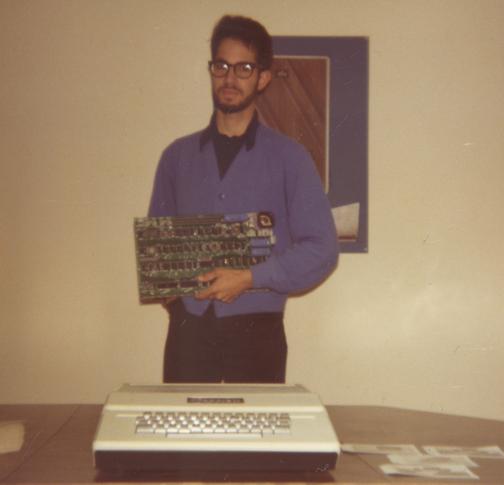 Image courtesy of Bill Fernandez, via TechRepublic
Fernandez, who grew up in the heart of Silicon Valley, went to middle school with Steve Jobs, who he described as "nerdy, socially inept, and intellectual," qualities that led to a quick friendship.
Fernandez was also a close friend of Steve Wozniak and introduced him to Steve Jobs, which led to the famous partnership between the two. After Jobs and Wozniak formed Apple, they hired Fernandez as an electronic technician and he became the first official full-time employee.
According to Fernandez, he drew the first completed schematic of the working Apple II after reverse engineering Wozniak's design to standardize it for production. The schematic went on to be used to build the Apple II, making history.
With no prospects for advancement, Fernandez left Apple just 18 months after he started working for the company. Fernandez later returned as a member of the technical staff after spending some time in Japan, going on to work on the first Macintosh. Though he was never officially awarded stock, Wozniak gave out shares of his own stock to many early employees, including Fernandez, Chris Espinosa, and Daniel Kottke.
Bill Fernandez's full interview, which goes into far more detail about the early days of Apple and his life after leaving the company, can be read over at TechRepublic.


TechRepublic has published an in-depth profile and interview with Bill Fernandez, who was Apple's first employee when the company was incorporated in 1977. Fernandez, who helped build the first Apple I and Apple II computers and is credited with introducing Jobs and Wozniak, shares some details on working with a young Steve Jobs, the early days of Apple, and more in the piece.
Image courtesy of Bill Fernandez, via TechRepublic Fernandez, who grew up in the heart of Silicon Valley, went to middle school with Steve Jobs, who he described as "nerdy, socially inept, and intellectual," qualities that led to a quick friendship.
We both also were not at all interested in the superficial bases upon which the other kids were basing their relationships, and we had no particular interest in living shallow lives to be accepted. So we didn't have many friends."Jobs reportedly spent quite a bit of time over at Fernandez's house, which his mother had decorated in a "meticulous Japanese style" that Fernandez credits as an early influence on Jobs' interest in minimalist design.
Fernandez was also a close friend of Steve Wozniak and introduced him to Steve Jobs, which led to the famous partnership between the two. After Jobs and Wozniak formed Apple, they hired Fernandez as an electronic technician and he became the first official full-time employee.
According to Fernandez, he drew the first completed schematic of the working Apple II after reverse engineering Wozniak's design to standardize it for production. The schematic went on to be used to build the Apple II, making history.
"When Woz designed something, most of the design was in his head," said Fernandez. "The only documentation he needed was a few pages of notes and sketches to remind him of the overall architecture and any tricky parts. What the company needed was a complete schematic showing all the components and exactly how they were wired together."As the first Apple computers grew in popularity, the company began hiring more employees and started inching its way towards an IPO. Despite his position as one of the early employees, Fernandez, as a technician, was not able to advance in the company and wasn't offered stock options. "There was no growth path for me," he said, stating that he became bored and dissatisfied with the work.
With no prospects for advancement, Fernandez left Apple just 18 months after he started working for the company. Fernandez later returned as a member of the technical staff after spending some time in Japan, going on to work on the first Macintosh. Though he was never officially awarded stock, Wozniak gave out shares of his own stock to many early employees, including Fernandez, Chris Espinosa, and Daniel Kottke.
Bill Fernandez's full interview, which goes into far more detail about the early days of Apple and his life after leaving the company, can be read over at TechRepublic.


04 Dec 13:48

We don’t need to ask for direction, Helen. I’m the...
We don’t need to ask for direction, Helen. I’m the king of direction. #9gag