Submitted by: Unknown
Shared posts
05 Sep 12:55
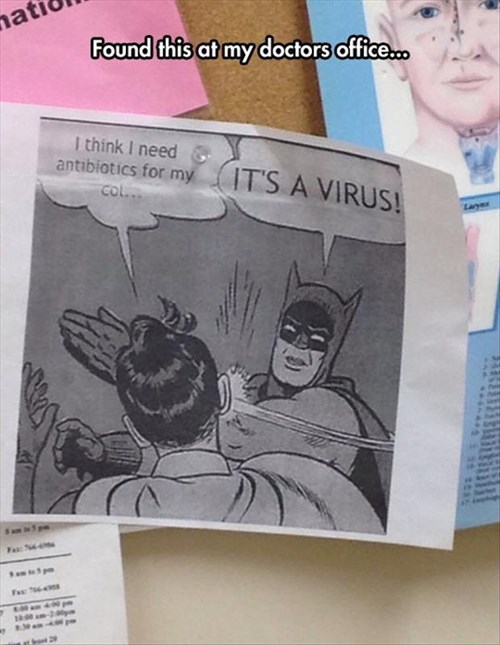


When You Are Tired of Giving the Same Response, Put Up a Meme
Submitted by: Unknown
firehose likes this
06 Mar 00:13

What Makes Kitties So Adorable?
by DOGHOUSE DIARIES

Forekast.com is coming back soon! We just put up a shiny new signup/splash page and wanted to share it with you and see what you think. As some of you may know, we started this project last year, but sadly had to put it on hold for various reasons (Mostly because Ray dropped a sandwich in the database server). We’re sorry it took so long to get it back on track, but we’re really excited about the new version that’s in the works. One exciting new change is that it will now be for everyone around the world and not just for those within the U.S. It’s still most likely a few months away from release, but we’ll have a lot more details for you once it’s ready. In the meantime, we’ll be starting beta testing shortly and need users to help us use/test out the site before launch. If you’re interested (You don’t need to be a pro or anything –we even let Raf use it.), you can just respond to the welcome email that’s sent to you after signing up on the splash page and let us know you’d like access to beta.
Thanks so much for all your help guys!


27 Feb 12:49
What Information Are Stun Guns Recording?
by schneier
In a story about a stolen Stradivarius violin, there's this:
Information from a stun gun company, an anonymous tip and hours of surveillance paved the way for authorities to find a stolen 300-year-old Stradivarius violin in the attic of a Milwaukee home, police said Thursday.[...]
Taser International, the maker of the stun gun used in the attack, "provided invaluable information" that the FBI tracked down in Texas and ultimately led police to Universal Allah, a Milwaukee resident, Police Chief Edward Flynn said Thursday.
The criminals stunned a musician as he was leaving a show at church, and drove off with his multimillion-dollar violin. What information could the stun gun company give the police that would be invaluable? Is it as simple as knowing who purchased the weapon, which was dropped at the scene? Or something weirder?
EDITED TO ADD (2/18): This may be it:
As the Milwaukee Police and the FBI began to conduct the investigation they reached out to us at TASER in order to identify possible suspects in the case. This was accomplished thanks to our Anti-Felon Identification tags (AFID). The AFID program enforces accountability for each use of a TASER device. This system releases dozens of confetti-sized markers upon discharge of a CEW cartridge. Each AFID contains a serial number that tracks back to the original purchaser of the cartridge. The large number of AFIDs and their small size makes it impractical to clean up. Therefore, law enforcement can pick up one AFID and contact TASER International for a complete trace on the serial number.At the time of purchase, we verify the identity and background of the prospective buyer with the understanding that we will not release the information and it will be kept confidential unless a TASER device is used in the commission of a crime. This information proved invaluable during the investigation on the Stradivarius violin. "We worked very closely with TASER International who provided us invaluable information that the FBI was able to track down for us in Texas," said Chief Flynn, "That information led us to an individual who had purchased this device."
rhentzel, Tibor Adam Varga likes this
27 Feb 12:47
Brian Krebs
by schneier
Nice profile of Brian Krebs, cybersecurity journalist:
Russian criminals routinely feed Mr. Krebs information about their rivals that they obtained through hacks. After one such episode, he began receiving daily calls from a major Russian cybercriminal seeking his files back. Mr. Krebs is writing a book about the ordeal, called "Spam Nation," to be published by Sourcebooks this year.In the meantime, hackers have been competing in a dangerous game of one-upmanship to see who can pull the worst prank on Mr. Krebs. They often steal his identity. One opened a $20,000 credit line in his name. Admirers have made more than $1,000 in bogus PayPal donations to his blog using hacked accounts. Others have paid his cable bill for three years with stolen credit cards.
The antics can be dangerous. In March, as Mr. Krebs was preparing to have his mother over for dinner, he opened his front door to find a police SWAT team pointing semiautomatic guns in his direction. Only after his wife returned home from the grocery store to find him handcuffed did the police realize Mr. Krebs had been the victim of "swatting." Someone had called the police and falsely reported a murder at their home.
Four months after that, someone sent packets of heroin to Mr. Krebs’s home, then spoofed a call from his neighbor to the police. But Mr. Krebs had already been tipped off to the prank. He was tracking the fraud in a private forum -- where a criminal had posted the shipment’s tracking number - and had alerted the local police and the F.B.I.
Serafin.shane and -1 others like this
27 Feb 12:45
Building an Online Lie Detector
by schneier
There's an interesting project to detect false rumors on the Internet.
The EU-funded project aims to classify online rumours into four types: speculation -- such as whether interest rates might rise; controversy -- as over the MMR vaccine; misinformation, where something untrue is spread unwittingly; and disinformation, where it's done with malicious intent.The system will also automatically categorise sources to assess their authority, such as news outlets, individual journalists, experts, potential eye witnesses, members of the public or automated 'bots'. It will also look for a history and background, to help spot where Twitter accounts have been created purely to spread false information.
It will search for sources that corroborate or deny the information, and plot how the conversations on social networks evolve, using all of this information to assess whether it is true or false. The results will be displayed to the user in a visual dashboard, to enable them to easily see whether a rumour is taking hold.
I have no idea how well it will work, or even whether it will work, but I like research in this direction. Of the three primary Internet mechanisms for social control, surveillance and censorship have received a lot more attention than propaganda. Anything that can potentially detect propaganda is a good thing.



24 Feb 12:09


Screw Your Lab Safety T-Shirt
by Marty Shaw


23 Feb 12:46

Monkey wearing sunglasses riding a goat! 🐒🐐
Monkey wearing sunglasses riding a goat! 🐒🐐
firehose likes this
23 Feb 12:46

How it feels being high in public🐥
How it feels being high in public🐥
firehose likes this
22 Feb 13:53
One Man's Journey from Homeless to Non-Profit Founder

Two years ago, Marc Roth was homeless, defeated, and 562 miles away from his wife and two children. He had left to San Francisco to secure a better future for them, but failed.
Then he found a flyer in the trash that changed his life; today, he owns his own company, and wants to give back to the community he was once a part of.
22 Feb 00:37
“E agora José?” The current status of Marco Civil da Internet
by Diego Vicentin
I hope non-Brazilian readers will forgive me, but I could not find a better expression to summarize the current situation of the Brazilian Marco Civil da Internet. “E agora, José?” The expression can be translated into English as “What now, José?”, and is quite popular in Brazil, having its origin in a famous poem by Carlos Drummond de Andrade (1902-1987). Although it might carry different meanings, this expression is mainly used in hard times, when people are challenged by a situation in which desirable or ideal solutions just seem impossible. When puzzled by a conundrum, one might say: “E agora, José?”.
Here I will try to explain why I do think that the Marco Civil is facing such a situation. But first, we need some background.
Marco Civil background.
Marco Civil is the Brazilian regulatory framework to the Internetin Brazil. It was initially developed as a “Bill of Rights” by the initiative of the Ministry of Justice in partnership with FGV Law School having strong participation of CGI.br (Brazilian Internet Steering Committee).
The drafting of the document was quite open to multiple stakeholders; in its first phase, the project received more than 800 contributions through the website [port] launched for this purpose. In the second phase, the draft was discussed in public debates and meetings that occurred throughout the year 2010 until it was formally presented as a law project to the House of Representatives in August 2011.The first version of the Marco civil has been widely recognized as a result of a truly open and collaborative process; a model that should be followed by other initiatives in the field of technology governance.
If approved, an important achievement of Marco Civil would be the enforcement of principles 6th and 7th from CGI’s list of principles: network neutrality and unaccountability of the network. These principles are strongly supported by civil society organizations that promote internet freedom. Unfortunately, the vote on the law project has been constantly postponed ever since it was presented two and half years ago. Telecommunication companies have been lobbying against the “net neutrality” principle and communication conglomerates were trying to include notice-and-takedown mechanisms. The House of Representatives has alleged “lack of consensus”, in order not to vote on the project.
Right after Snowden’s revelations about NSA spying on Brazil, President Rousseff gave special attention to the project that became a “constitutional priority”. This means that any other law project cannot be voted until the voting of the Marco Civil. Finally, it seemed that the problem would be solved with the Executive Power pushing forward the approval. But the Telecom lobby is showing its power of influence and the result is that the House of Representatives agenda has been blocked since October 2013. Even worse: in the Government’s effort to convince the opposition and construct alliances inside the House of Representatives, the project has suffered some important changes that lead us now to the situation “E agora, José?”
Marco civil problematic changes:
The first important (and controversial) modification is an amendment requiring that all data collected locally about Brazilian citizens and companies must be stored in Brazil. This amendment was made in November 2013 within the context of Snowden’s revelations and might be understood as a measure to preserve Brazilian citizen’s privacy against espionage and surveillance attempts. In this perspective data collected (thus stored) in Brazil would be protected under the country’s legal framework. But the measure is technically inefficient against espionage and, besides, raises several questions about its actual feasibility [port]. In fact, it is clear that this amendment goes against the very international nature of the Internet which is recognized by the Marco Civil itself.
Other two versions of the Law Project have been released after that, the first one in December 2013 and the second one a couple of days ago, on February 12th, 2014. The changes made are causing strong reactions from civil society organizations especially the ones that have heavily contributed in its first phase. In short, the current version of the Marco Civil establish that internet application providers “who exercise their activities in an organized, professional and economic way” must retain the access records during the period of six months, with the possibility to extend this period in the case of court order or public prosecutor’s requirement.Within the original version, that modality of data retention was optional and should be restricted specifically to the application provided. Now, some analysts [port] are arguing that the application providers may also retain the user internet connection records (like connection time, duration and location). Then, the Marco Civil has become less efficient in protecting privacy, what is clearly a step back happening in the moment in which the European Union Court states that data retention constitutes a serious interference with the fundamental right of citizens to privacy.
Another modification in the text is allowing the mechanism of notice and takedown with regard to contents of sex and/or nudity. The intent would be to protect the privacy and intimacy of people that inadvertently have had their own intimate images published on the web. But the way in which the article (22th) was originally written in the version of December/2013 has opened up the possibility to any person (not only the ones that have had their intimacy violated) to complain and take down contents with sex and nudity. This way, reasons such as moral judgments or religious beliefs could operate as motivation to take down these contents and consequently violate the freedom of expression. This concern was widely expressed by civil society organizations but it seems that the problem was already solved once the article’s redaction was improved in the latest version of the Law Project (Feb/2014).
The last modification that I would like to highlight here is a tricky one. The “business model freedom” has been introduced as a principle of the Internet use in Brazil. Apparently, this principle was introduced only to please the Telecom Industry by assuring that they will be able to keep their current billing practice of charging users according to different packets of access speed. The network neutrality principle, then, would not affect this current business practice. This would be the only concern of the Telecom industry against the net neutrality principle, at least as officially expressed. By solving this problem, the Marco Civil would be ready to get the approval in the House of Representatives, beating the Telecom lobby and keeping the network neutrality principle. This seemed to be the strategy adopted by Alessandro Molón, the project redactor in the House of Representatives. But the thing is that the inclusion of the “business model freedom” may open a battle of interpretation about what the network neutrality principle is as well as its scope and limitations. It might be a flaw in the law that threatens the net neutrality principle giving to Telecom firms the opportunity to challenge it in court.
These backward steps in the Marco Civil text have undermined the support from activists and civil society organizations, what must be seen as a serious concern.A couple of days ago, right before the release of the Law Project latest version,a group of organizations that have strongly collaborated with the Marco Civil construction have published an open letter [port] pointing out these problems and suggesting solutions. With the exception of the redaction in the article 22th, none of those problems have been addressed by the new text. Consequently the group no longer supports the law project, at least in the way it currently is.
I guess that the virtue of the Marco Civil – its power against political and economic interests that want to keep the internet under restrictive control – comes less from its content than from the process through which it was built. The text is a consolidated product of this process. Hence each change in the text that goes away from its original proposals undermines its support from civil society and points out to a dangerous path.
E agora, José?
This is the hard situation that the Marco Civil and its supporters are facing: by seeking the approval by the House of Representatives, the project risks losing its singularity. It is the result of a truly open collaborative process to which ordinary people, civil society organizations and firms had the chance to contribute. But now it has been changed by going through the traditional political process and it may lose its collaborative meaning. The early stage participants are fighting back and the end of this battle remains open. The following days will be decisive.
Perhaps we may understand this frame as yet another sign pointing out to the representation crisis of traditional politics. It comes alongside with the multivariate street protests that are taking place in Brazil at least since last June. Furthermore, this is a challenge not only faced by Brazilian democracy. I would even say it is one of the main reasons why the Marco Civil experience has taken considerable international attention. It is a pioneering initiative of constructing a “Bill of Rights” to the Internet in a collaborative fashion. The result and the experience of this initiative, alongside with the Global Multistakeholder Meeting on the Future of Internet Governance to be held in São Paulo (Brazil), may help frame the crisis and its possible solutions.
Alex likes this
21 Feb 23:54
Sailfish OS 1.0 Announced, Sailfish Soon On Android
The Finnish-based Jolla has announced Sailfish OS 1.0 in time for Mobile World Congress and have also committed to soon delivering this mobile Linux OS to Android devices...
firehose likes this
21 Feb 10:47
A Mathematical Proof Too Long To Check
by Soulskill
mikejuk writes "Mathematicians have generally gotten over their unease with computer-assisted proofs. But in the case of a new proof from researchers at the University of Liverpool, we may have crossed a line. The proof is currently contained within a 13 GB file — more space than is required to hold the entirety of Wikipedia. Its size makes it unlikely that humans will be able to check and confirm the proof. The theorem that has been proved is in connection with a long running conjecture of Paul Erdos in 1930. Discrepancy theory is about how possible it is to distribute something evenly. It occurs in lots of different forms and even has a connection with cryptography. In 1993 it was proved that an infinite series cannot have a discrepancy of 1 or less. This proved the theorem for C=1. The recent progress, which pushes C up to 2, was made possible by a clever idea of using a SAT solver — a program that finds values that make an expression true. Things went well up to length 1160, which was proved to have discrepancy 2, but at length 1161 the SAT returned the result that there was no assignment. The negative result generated an unsatisfiability certificate: the proof that a sequence of length 1161 has no subsequence with discrepancy 2 requires over 13 gigabytes of data. As the authors of the paper write: '[it]...is probably one of longest proofs of a non-trivial mathematical result ever produced. ... one may have doubts about to which degree this can be accepted as a proof of a mathematical statement.' Does this matter? Probably not — as long as other programs can check the result and the program itself has to be considered part of the proof." 


Read more of this story at Slashdot.
Mason and -1 others like this


20 Feb 14:07
Robot To Serve Security Detail At FIFA World Cup In Brazil
by samzenpus
Albener PessoaO Megazord estara pronto
Hallie Siegel writes "PackBots will be deployed in Brazil during the 2014 World Cup Soccer season to bring a high-tech approach to security. The nation's government has secured a $7.2 million deal with PackBot's creators for 30 of the military bots. The robots will be stationed throughout Brazil's 12 host cities, during the soccer matches to boost security and help examine any suspicious objects." 


Read more of this story at Slashdot.
ken.elwell and -1 others like this
20 Feb 11:52
GBA4iOS Debuts 2.0 Update for Game Boy Emulator With iPad Support, Easy Installation
by Juli Clover
GBA4iOS today introduced a 2.0 update for its popular Game Boy emulator for iOS, introducing a full iOS 7 redesign, iPad optimization, support for original and Game Boy Color games, and a built-in web browser for downloading ROMs.
More importantly, the software is now much easier to install, requiring neither a jailbroken device nor a work around to set the device clock to 2012. Prior to the 2.0 update, installing GBA4iOS without jailbreaking required an iPhone's date to be set to 2012. Though it doesn't require an initial date change, GBA4iOS 2.0 does carry a warning that the device clock may need to be set back to 2/19/14 if the app fails to open.
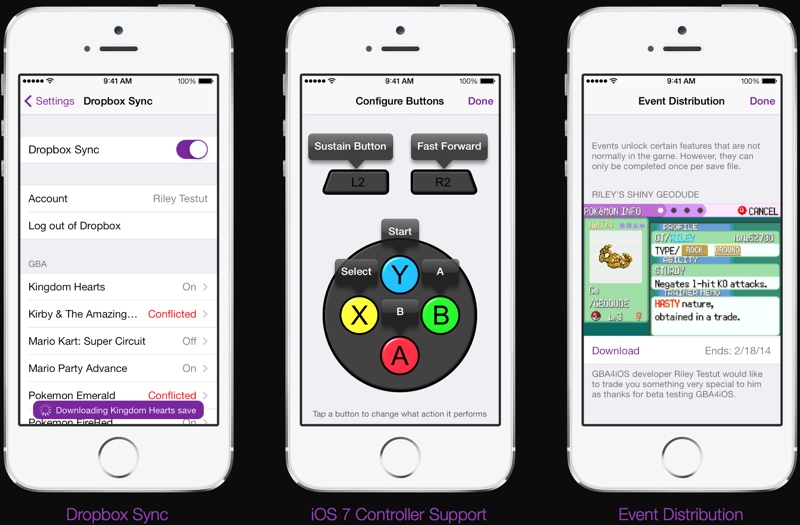
With GBA4iOS 2.0, gamers can play Game Boy Advanced, Game Boy Color, and original Gameboy ROMs directly on their iPads and iPhones, but the software is only compatible with devices running iOS 7. GBA4iOS 2.0 is distributed using an Apple Enterprise certificate, which are designed to allow companies to distribute iOS apps internally.
Downloading games for GBA4iOS previously required navigating outside of the app to find ROMs, but the newest version includes an in-app web browser that can be used to download games from any ROM website. GBA4iOS 2.0 also includes full support for cheats, accepting five different code formats covering everything from Game Genie to Action Replay.
The GBA4iOS update includes an array of controller skins for Game Boy Advance and Game Boy Color games and it supports third party controller skins. It also offers full iOS 7 controller support, Dropbox integration, and "Event Distribution" to allow GBA4iOS unlock and distribute features that are not normally included within games.
While several emulators have snuck into the App Store via shell apps, they are always short-lived as Apple pulls the apps within hours or days of release. GBA4iOS is able to overcome Apple's restrictions as it is not installed via the App Store. Instead, GBA4iOS can be installed directly on an iOS device from the website, by tapping the download link on an iPad or iPhone.
Update: Apple has revoked the enterprise certificate that GBA4iOS used to install itself on iOS devices, which means installs now require setting a device date back to February 18, 2014 before downloading the software. After installation, the date on the device can be changed back to the present time.


More importantly, the software is now much easier to install, requiring neither a jailbroken device nor a work around to set the device clock to 2012. Prior to the 2.0 update, installing GBA4iOS without jailbreaking required an iPhone's date to be set to 2012. Though it doesn't require an initial date change, GBA4iOS 2.0 does carry a warning that the device clock may need to be set back to 2/19/14 if the app fails to open.
With GBA4iOS 2.0, gamers can play Game Boy Advanced, Game Boy Color, and original Gameboy ROMs directly on their iPads and iPhones, but the software is only compatible with devices running iOS 7. GBA4iOS 2.0 is distributed using an Apple Enterprise certificate, which are designed to allow companies to distribute iOS apps internally.
Downloading games for GBA4iOS previously required navigating outside of the app to find ROMs, but the newest version includes an in-app web browser that can be used to download games from any ROM website. GBA4iOS 2.0 also includes full support for cheats, accepting five different code formats covering everything from Game Genie to Action Replay.
The GBA4iOS update includes an array of controller skins for Game Boy Advance and Game Boy Color games and it supports third party controller skins. It also offers full iOS 7 controller support, Dropbox integration, and "Event Distribution" to allow GBA4iOS unlock and distribute features that are not normally included within games.
While several emulators have snuck into the App Store via shell apps, they are always short-lived as Apple pulls the apps within hours or days of release. GBA4iOS is able to overcome Apple's restrictions as it is not installed via the App Store. Instead, GBA4iOS can be installed directly on an iOS device from the website, by tapping the download link on an iPad or iPhone.
Update: Apple has revoked the enterprise certificate that GBA4iOS used to install itself on iOS devices, which means installs now require setting a device date back to February 18, 2014 before downloading the software. After installation, the date on the device can be changed back to the present time.
    
|
firehose likes this
19 Feb 23:22


Tabby: Projeto de carro open source montado em apenas uma hora (vídeo)
by Ricardo de Oliveira
Albener PessoaA julgar pela minha habilidade, se eu comprasse para montar o meu ia sobrar umas pecas ...

Ainda não é um carro completo, mas a plataforma com suspensão, rodas, freios, direção, motor, baterias e dois ou quatro assentos já estão disponíveis. Tudo isso pode ser montado por um leigo em apenas uma hora de serviço em casa. Para engenheiros do projeto, a façanha é feita em 41 minutos.

Mas que veículo é esse? Trata-se do Tabby, o primeiro carro open source (ou seja, totalmente livre de direitos industriais) a ser oferecido ao mercado mundial. O projeto da OSVehicle consiste em vender as peças separadamente e entrega-las na casa dos clientes, que terão a missão de montar ao seu gosto.

O Tabby oferece configuração de dois ou quatro lugares por € 500, bateria (€ 698), motor elétrico (€ 1.520) e bancos (€ 80), por exemplo. A partir de € 2.900 ou cerca de R$ 9.500, já dá para ter um veículo que roda até 80 km/h.
Os criadores do projeto OSVehicle querem ampliar o projeto Tabby, oferecendo três opções de propulsor elétrico (4, 8 ou 15 kW), motores a gasolina (50 a 250 cm3), híbrido (motor de 125 cm3 e elétrico de 15 kW) e outros itens, sendo que provavelmente uma carroceria deverá ser oferecida.

No entanto, os clientes não precisam esperar por isso, pois podem compartilhar ideias de novos itens para adaptar seus veículos através de fóruns. A criatividade dos membros é que irá ditar o futuro do Tabby e orientar o avanço da OSVehicle.
A noticia Tabby: Projeto de carro open source montado em apenas uma hora (vídeo) foi publicada no site Notícias Automotivas - Carros.
18 Feb 19:05
Apple's New Brazilian Retail Store Opens Its Doors [iOS Blog]
by Kelly Hodgkins
Apple's first retail store in Brazil opened in Rio de Janeiro this weekend, with approximately 1,700 customers waiting in line for the grand opening (via The Globe]. Customers started queueing up on Thursday night for the Saturday morning debut, with groups waiting both inside and outside the Village Mall.
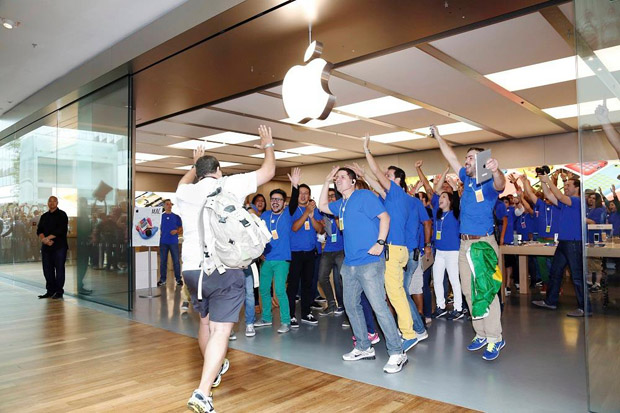
Photo from The Globe
The opening of the Rio de Janeiro store was announced last week on the company's website and is Apple's first store in Latin America. The store has a fairly unique single floor, pavilion-style design with a curved glass exterior. Unlike most other Apple retail stores, the Rio de Janeiro location features a split-concept layout where one half of the store is dedicated to product demonstrations while the other half is focused on accessory sales and services.
Speaking to Brazilian news site The Globe, Apple CFO Peter Oppenheimer confirmed that Brazil was an increasingly important market for Apple. The Rio de Janeiro store is part of a larger plan to tap into the Latin American market, which traditionally has been a weak market for Apple due to the high import taxes levied on electronic devices.
Apple will be selling its full product lineup in the Rio store, including the iPhone 5S starting at the equivalent of $1,174, with high taxes making it the most expensive Apple retail store for iPhone purchases (via Bloomberg).


The opening of the Rio de Janeiro store was announced last week on the company's website and is Apple's first store in Latin America. The store has a fairly unique single floor, pavilion-style design with a curved glass exterior. Unlike most other Apple retail stores, the Rio de Janeiro location features a split-concept layout where one half of the store is dedicated to product demonstrations while the other half is focused on accessory sales and services.
Speaking to Brazilian news site The Globe, Apple CFO Peter Oppenheimer confirmed that Brazil was an increasingly important market for Apple. The Rio de Janeiro store is part of a larger plan to tap into the Latin American market, which traditionally has been a weak market for Apple due to the high import taxes levied on electronic devices.
Apple will be selling its full product lineup in the Rio store, including the iPhone 5S starting at the equivalent of $1,174, with high taxes making it the most expensive Apple retail store for iPhone purchases (via Bloomberg).
|
|