Jacopo.bertolotti
Shared posts
[Research Article] Observation of Majorana fermions in ferromagnetic atomic chains on a superconductor
Granular acoustic switches and logic elements
Article
Acoustic diodes and circulators operate on the principle that a mechanical signal is used to control the flow of mechanical energy through a solid. Here, the authors demonstrate an acoustic switch composed of a chain of spherical particles, and study the underpinning mechanism behind the process.
Nature Communications doi: 10.1038/ncomms6311
Authors: Feng Li, Paul Anzel, Jinkyu Yang, Panayotis G. Kevrekidis, Chiara Daraio

Assessing the sameness and non-rarity of hipsters
Hipsters are becoming more common, in both major senses of the word common, suggests this study:
“The hipster effect: When anticonformists all look the same,” Jonathan Touboul, arXiv:1410.8001, October 29, 2014.
The author explains:
“In such different domains as statistical physics and spin glasses, neurosciences, social science, economics and finance, large ensemble of interacting individuals taking their decisions either in accordance (mainstream) or against (hipsters) the majority are ubiquitous. Yet, trying hard to be different often ends up in hipsters consistently taking the same decisions, in other words all looking alike. We resolve this apparent paradox studying a canonical model of statistical physics, enriched by incorporating the delays necessary for information to be communicated. We show a generic phase transition in the system: when hipsters are too slow in detecting the trends, they will keep making the same choices and therefore remain correlated as time goes by, while their trend evolves in time as a periodic function. This is true as long as the majority of the population is made of hipsters. Otherwise, hipsters will be, again, largely aligned, towards a constant direction which is imposed by the mainstream choices. Beyond the choice of the best suit to wear this winter, this study may have important implications in understanding dynamics of inhibitory networks of the brain or investment strategies finance, or the understanding of emergent dynamics in social science, domains in which delays of communication and the geometry of the systems are prominent.”
Touboul is, in his own words: Principal Investigator “of the Mathematical Neuroscience Team, part of the Center for Interdisciplinary Research in Biology of the Collège de France. I am researcher at Inria (Paris), in the MYCENAE Team.” He writes, in this paper, in the royal we. He does not explicitly self-identify as a hipster.
(Thanks to investigator Leah Branch for bringing this to our attention).
The top 100 papers
The top 100 papers
Nature 514, 7524 (2014). http://www.nature.com/doifinder/10.1038/514550a
Authors: Richard Van Noorden, Brendan Maher & Regina Nuzzo
Nature explores the most-cited research of all time.
Identification of a Gravitational Arrow of Time
Author(s): Julian Barbour, Tim Koslowski, and Flavio Mercati
 Masses evolving under Newtonian gravity have a preferred direction of time without special initial conditions.
[Phys. Rev. Lett. 113, 181101] Published Wed Oct 29, 2014
Google's Secretive DeepMind Start-up Unveils A "Neural Turing Machine"
DeepMind has built a neural network that can access an external memory like a conventional Turing machine. The result is a computer that mimics the short-term memory of the human brain.
One of the great challenges of neuroscience is to understand the short-term working memory in the human brain. At the same time, computer scientists would dearly love to reproduce the same kind of memory in silico.
HP's 3D-scanning 'Sprout' PC is unlike anything the company has made
Jacopo.bertolottiintriguing concept
 The best way to describe Sprout, an ambitious new desktop from HP, is that it's unlike any PC the company has ever made. The second-best way: It's an all-in-one computer with a touch mat that acts as a second screen, and an overhead projector/camera...
Lasing at the band edges of plasmonic lattices
Author(s): A. Hinke Schokker and A. Femius Koenderink
This paper reports a comprehensive experimental study of silver and gold plasmonic crystal lasers. Such periodic plasmon particle systems have recently triggered large attention due to the fact that localized plasmons and collective lattice resonances conspire to give large light-matter interaction strength in narrow resonances. The authors provide a detailed report on the conditions required for lasing, and a complete analysis of the underlying plasmonic lattice band structure.
[Phys. Rev. B 90, 155452] Published Tue Oct 28, 2014
10/29/14 PHD comic: 'Not write'
| Piled Higher & Deeper by Jorge Cham |
www.phdcomics.com
|
|
 |
||
|
title:
"Not write" - originally published
10/29/2014
For the latest news in PHD Comics, CLICK HERE! |
||


Photonic Hypercrystals
Jacopo.bertolottihype, hype, hype, hype, hype, hype
Author(s): Evgenii E. Narimanov
A design for a photonic crystal made with so-called hyperbolic metamaterials could provide unprecedented control of light waves confined to the surface.
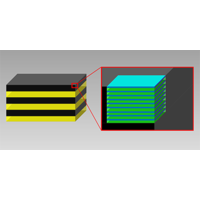
[Phys. Rev. X 4, 041014] Published Mon Oct 27, 2014
String Theory and the Scientific Method
Physics of the granite sphere fountain
A striking example of levitation is encountered in the “kugel fountain” where a granite sphere, sometimes weighing over a ton, is kept aloft by a thin film of flowing water. In this paper, we explain the working principle behind this levitation. We show that the fountain can be viewed as a giant ball bearing and thus forms a prime example of lubrication theory. It is demonstrated how the viscosity and flow rate of the fluid determine (i) the remarkably small thickness of the film supporting the sphere and (ii) the surprisingly long time it takes for rotations to damp out. The theoretical results compare well with measurements on a fountain holding a granite sphere of one meter in diameter. We close by discussing several related cases of levitation by lubrication.
Demystifying umklapp vs normal scattering in lattice thermal conductivity
We discuss the textbook presentation of the concept of umklapp vs normal phonon-phonon scattering processes in the context of lattice thermal conductivity. A simplistic picture, in which the “momentum conservation” in a normal process leads to the conservation of the heat flux, is only valid within the single-velocity Debye model of phonon dispersion. Outside this model, the simple “momentum conservation” argument is demonstrably inaccurate and leads to conceptual confusion. Whether or not an individual scattering event changes the direction of the energy flow is determined by the phonon group velocity, which, unlike the quasimomentum, is a uniquely defined quantity independent of the choice of the primitive cell in reciprocal space. Furthermore, the statement that normal processes do not lead to a finite thermal conductivity when umklapp processes are absent is a statistical statement that applies to a phonon distribution rather than to individual scattering events. It is also important to understand that once umklapp processes are present, both normal and umklapp processes contribute to thermal resistance. A nuanced explanation of the subject would help avoid confusion of the student and establish a connection with cutting edge research.
[Research Article] Lattice light-sheet microscopy: Imaging molecules to embryos at high spatiotemporal resolution
[Feature] Show me the money
Editorial: Does Research on Foundations of Quantum Mechanics Fit into PRX’s Scope?
Author(s):
[Phys. Rev. X 4, 040002] Published Thu Oct 23, 2014
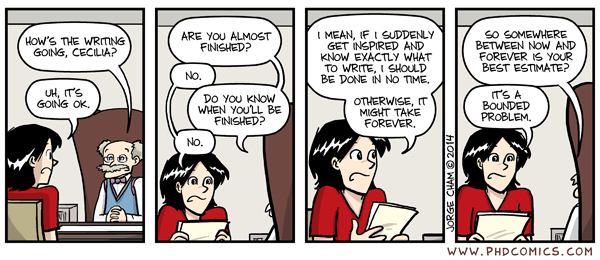
10/22/14 PHD comic: 'Written Estimate'
Jacopo.bertolottiPerfectly know the feeling
| Piled Higher & Deeper by Jorge Cham |
www.phdcomics.com
|
|
 |
||
|
title:
"Written Estimate" - originally published
10/22/2014
For the latest news in PHD Comics, CLICK HERE! |
||
Distant Death
Distant Death
What is the farthest from Earth that any Earth thing has died?
—Amy from NZ
With Halloween approaching, I guess it's the season for death-related questions.

The farthest from Earth that any human has died is about 167 kilometers,[1]Plus or minus a kilometer. when three cosmonauts on Soyuz 11—Vladislav Volkov, Viktor Patsayev, and Georgi Dobrovolsky—suffered a depressurization accident while returning to Earth. They were moving at about 7,755 meters per second at the time, which is also the highest forward speed at which any human has ever died.
Volkov, Patsayev, and Dobrovolsky are the only humans who have died in space. Every other fatal space accident—and, for that matter, every other human death of any kind—happened within 70 kilometers of the surface.[2]Morbid list from my notes: The crew of Columbia died at just over 60 km, Pyotr Dolgov died at roughly 24 km, James Zwayer died at 23 km, Michael J. Adams died at 20 km, Ying Chin Wang died at 20 km, and Rudolf Anderson died at between 18 and 23 km. Jack Weeks presumably died somewhere between 20 and 0 km the ocean surface.
But humans don't hold this record.

For starters, there are plenty of test animals which have died in space. But, to be honest, I can't bring myself to collect statistics about them. I mean, at least the human pilots who died had all volunteered and understood what was happening to them. So instead, I'm going to skip straight to the organisms that are the real answer to Amy's question: Microbes.

Spacecraft carry bacteria, although we do our best to sterilize them before and during launch. This sterilization is important, because we don't want to contaminate another planet or Moon with Earth bacteria. There are two big reasons for this—one ethical and one practical. The ethical one is that we don't want to accidentally introduce Earth life that disrupts and/or destroys a native ecosystem. The practical one is that if we find life on some other planet, we don't want to have to struggle to figure out whether it was contamination from one of our probes.
But sterilizing spacecraft is hard. NASA has an employee specifically assigned to this task, and she has possibly the best job title of all time: Planetary Protection Officer.[3]Another competitor for this title is Philip M. Breedlove, who has the job title Supreme Allied Commander.

The Planetary Protection Officer is responsible for avoiding spacecraft contamination, although there are occasionally problems.
A 2008 study of lunar missions estimated that spacecraft carried 1.98x10¹¹ viable microorganisms per vehicle. Spacecraft such as the Voyagers and Pioneers, which were ultimately headed for deep space, were also not fully sterilized—the official planetary protection strategy was "try not to hit any planets."
Voyager certainly carries lots of bacterial spores. If we take the number from the 2008 paper as a (very rough) estimate of the number of microbes Voyager might carry, we can try to figure out how many might still be alive.
Some microorganisms can survive for a long time in a vacuum. One study found that the majority of bacteria that spent six years in space survived—though only if a shade protected them from the Sun's UV light. Other studies have agreed that radiation is the main thing to worry about, and the radiation environment inside a spacecraft is complex. The bottom line is that we just don't know for sure how long bacteria can survive in deep space.
But we can still give part of an answer Amy's question. If we assume that 1 in 1,000 bacterial spores on Voyager were of a space-tolerant variety, and 1 in 10 of those is somewhere on the craft where UV light doesn't reach it, then that still leaves on the order of 10 million viable bacterial spores traveling on Voyager.
If they suffer a death rate of 30% per six years, as in one of the studies, then there would still be a million of them alive after 50 years, dying at a rate of 1 every 10 minutes. On the other hand, the author of the 2008 study speculated that microbes could avoid hits from cosmic radiation for extremely long time periods, and other sources have speculated about survival for thousands or even millions of years. But no one really knows.
For our Voyager bacteria, there's a higher death rate at first, for spores in more exposed positions, and a much lower one for the more protected ones. Today, it's quite possible there are thousands of bacterial spores still alive on Voyager 1 and 2, lurking quietly in the dead of space. Every few hours, days, or months, one of them degrades enough to no longer be viable.

And each one sets a new record for the most distant Earth thing to die.
Sassolini economici
Mi dovrete scusare ma devo ancora togliermi alcuni sassolini (economici) dalle scarpe. Son di poco conto, nel quadro generale delle cose, ma spero utili al pubblico generale al di là ed oltre i miei particolari fastidi. In questo post vorrei documentare perché, in una Europa in non buona salute ed in una Europa del Sud decisamente inferma, l'Italia sia la peggior malata ... malata che continua a peggiorare sia in assoluto che rispetto agli altri.
Nei due anni e passa dedicati - altri, fra cui forse io, direbbero "persi" - a tentare di fermare il declino italiano, che continua invece inesorabile, mi son fatto spesso coinvolgere in sciocchi dibattiti con personaggi di dubbia fama che i media italiani hanno, in 4+4=8, trasformato in guru economici. No, non vi tedierò oggi con la solita dottoressa Loretta, non ne vale la pena. Nè ritornerò a dibattere di austriaci ed alsaziani: la questione che mi interessa è quantitativa e seria, la polemica con altri è solo una meschina motivazione addizionale.
“Editors are pleased to receive death threats on the third Thursday of the month:” A new journal launches

Full Transmission and Reflection of Waves Propagating through a Maze of Disorder
Author(s): Benoît Gérardin, Jérôme Laurent, Arnaud Derode, Claire Prada, and Alexandre Aubry
A normally opaque medium can become fully transparent to properly tailored acoustic waves.
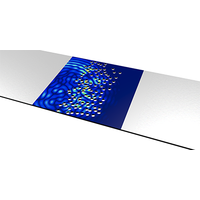
[Phys. Rev. Lett. 113, 173901] Published Tue Oct 21, 2014
Phonon Localization by Mass Disorder in Dense Hydrogen-Deuterium Binary Alloy
Jacopo.bertolottiAnderson localization of phonons in some strange hydrogen phase.
Author(s): Ross T. Howie, Ioan B. Magdău, Alexander F. Goncharov, Graeme J. Ackland, and Eugene Gregoryanz
Localized vibration phonon modes are observed in a dense hydrogen-deuterium mixture, due to mass distribution disorder from the different isotope masses in the mixture.
[Phys. Rev. Lett. 113, 175501] Published Tue Oct 21, 2014
Synopsis: Seeing the Glass of Milk as All Empty

Published Tue Oct 21, 2014


Matchmaker, Matchmaker, Make Me a Match: Migration of Populations via Marriages in the Past
Jacopo.bertolottiThe best title in a long while
Author(s): Sang Hoon Lee (이상훈), Robyn Ffrancon, Daniel M. Abrams, Beom Jun Kim (김범준), and Mason A. Porter

 Few quantitative studies of historic human migration exist because of a dearth of data. Now, using geographical information from Korean family books, scientists develop a physics-based analyses of clan migration.
[Phys. Rev. X 4, 041009] Published Thu Oct 16, 2014