Shared posts

14 Jul 07:06

How to Get Sociological Perspectives Into Mainstream Media Coverage? Responding to NYT Coverage of Nail Salon Labor Violations

by gendsocoakland

By Miliann Kang

This is a scenario with which many academics are familiar —we spend months, years, researching a topic, we publish an article or book about it, then the topic breaks in the mainstream media, and our analysis is nowhere to be seen. Others have their work cited, but in soundbites that do not capture the nuance of their perspectives. A few scholars have a much different experience—they and their work are able to shape the narrative significantly when current events bring media attention to their areas of research.

What factors account for greater or lesser cross-over impact? How can scholars meaningfully inform current debates, rather than simply lending credibility to pre-determined arguments packaged to make headline news? Oftentimes statistical work gets cited, but how can deeper analysis based on qualitative and quantitative research be made more visible?

I have been watching, or reading, the recent uproar  provoked by the NYT series “Unvarnished,” which reported rampant labor rights violations, toxic exposures and wage theft in New York City nail salons, with interest, and mixed feelings. Along with many advocates http://www.cahealthynailsalons.org/alliance who have been working on these issues for years, I am encouraged that the working conditions in nail salons are finally getting the attention they deserve, that the Times posted a full-throated op-ed, that Governor Cuomo has responded strongly and that public support is widespread. But certain subtexts in the framing of these issues, their causes and what to do about them make me nervous.

Specifically, I think the focus on Korean salon owners as operating an “ethnic caste system” is misguided. It overstates the power of these salon owners, both in creating and correcting the deeply-embedded problems in the nail industry. These owners must be held accountable for shop-level labor violations, but they can’t be singled out for the bigger problems of toxic chemicals in nail products, suppressed wages due to intense competition, customer expectations for the cheapest, quickest manicures, and a broken immigration system.

I was interviewed by Sarah Maslin Nir, the NYT reporter, and expressed concerns about this framing of the story, but was not cited. Sadly, I feel that a meaningful exchange did not occur between us, it really felt like we were speaking different languages. Once I made clear that I did not endorse her storyline, I was left out of it, rather than being able to inform or shift it. I wonder how much of this disconnect was our own inability to converse across the boundaries of journalism and social science, and how much these boundaries are simply becoming more and more difficult to bridge.

In the weeks following this coverage, I submitted multiple letters to the editor and op-eds, two of them co-authored with other sociologists and advocates to a range of mainstream and alternative media. Pierrette Hondagneu-Sotelo http://www.hondagneu-sotelo.org/ and I wrote a piece drawing connections across nail salons, domestic work, gardening and other low-wage service industries dominated by immigrants, and Miriam Yeung of the National Asian Pacific American Women’s Forum https://napawf.org/ and I tried to place a piece focusing on organizing efforts and recommendations for change. None were accepted.

I am very grateful to Contexts, the Women’s Review of Books, University of California Press, and this Gender and Society blog for posting my responses, and for providing important platforms for public engagement with scholarly work. These sites have built broad audiences both within and outside the academy, but it can still feel like we often end up preaching to the choir rather than shifting the music.

What strategies have others used to reach a larger audience for their work, not just journalists but also social media, policymakers, community organizations and people who are directly impacted by your findings? How have people been able to control the message that they wish to get across? Much work has been done by feminist sociologists to build and expand on the platform of Gender& Society and Sociologists for Women in Society (SWS)–how can we build on this work to have even greater impact, both within and outside the academy?

Please consider signing this petition by the New York Healthy Nail Salons Coalition proposing legislation to support nail salon workers. To learn more, see here.

Miliann Kang is author of The Managed Hand: Race, Gender and the Body in Beauty Service Work, which won book awards from the American Sociological Association and the National Women’s Studies Association. She is associate professor of Women, Gender, Sexuality Studies and affiliated faculty in Sociology and Asian/Asian American Studies at the University of Massachusetts, Amherst. Professor Kang also wrote “The Managed Hand:The Commercialization of Bodies and Emotions in Korean Immigrant–Owned Nail Salons” is published in the December 2003 issue of Gender & Society.


Filed under: Collective Action & Social Movements, Economy, Gender & Class
14 Jul 07:06

Unions and the Democratic Primary

by Erik Loomis

459931838-1-_wide-d85ea8c0ef8702ce2890fdf93e0b95aad5368953-s900-c85

The outpouring of support for Bernie Sanders has included a lot of labor people. That has made labor executives worried. First, Richard Trumka reminded state federations and locals that they don’t have the right to endorse anyone. Then, the American Federation of Teachers came out and endorsed Hillary Clinton.

This doesn’t surprise me and is pretty unfortunate, but is understandable. Union leaders are a lot less interested in primary politics and supporting (likely) losing primary campaigns from the left than in creating solid support from the likely winner. They want to make sure they are close to President Hillary Clinton rather than primary runner-up Bernie Sanders. You might say that unions should be about democracy and their members should have the right to endorse the candidate who most represents their views. I might well say you are right about that. But in the hard realpolitik world of modern class-based politics, with unions facing death, one can see why Trumka, Weingarten, and other labor leaders (expect an SEIU endorsement of Hillary very soon), would rally around the winner and hope to be closer to her inner circle.

But if the Bernie surge continues and he develops a shot to win, labor is going to look pretty bad here.

14 Jul 07:04

My old friend! I’ve come to talk.

by Sophia, NOT Loren!

Sleep, like little slices of death
I don’t want the whole cake — way more than I could possibly handle —
But a larger serving to begin with might be nice.
The little friendly helper from the bottle
Pulls me gentle but firm
Insistent but kind
And as I close my eyes
Welcome the cold embrace
Of the darkness…
I finally find a hint of a smile.

Goodnight.


Filed under: General
14 Jul 07:04

Mapping 13 Centuries of English Metaphors

by Allison Meier
Mapping Metaphor, a visualization of 13 centuries of metaphors in the English language (all screenshots by the author for Hyperallergic)

Mapping Metaphor, a visualization of 13 centuries of metaphors in the English language (all screenshots by the author for Hyperallergic)

A three-year project from the University of Glasgow’s School of Critical Studies mapped 13 centuries of metaphors in the English language. Based on four million lexical data points, the Mapping Metaphor data visualization charts 14,000 connections, showing how the metaphor is not just a literary device, but something intrinsic to human psychology and communication.

Principal Investigator Wendy Anderson told the Guardian that “metaphorical thinking underlies the way we make sense of the world conceptually. It governs how we think and how we talk about our day-to-day lives.” The source data was the Historical Thesaurus of English, also created at the Scottish university, which from 1965 to 2008 compiled around 800,000 words going back to Old English. With this resource, researchers delved into the history of how the English language changed over time from the seventh century onward, and how people used it to understand their worlds. For example, sleep and death go way back to Old English, while comparing bodily weight to a pig only goes back to the 16th century. Over on the Mapping Metaphor blog are posts exploring the peacock as a metaphor for pride, the huge number of devil metaphors compared to fewer for angels, and the sun as a metaphor for good.

Mapping Metaphor

Metaphor connections between “death” and “sleep”

A quarter of the project’s connections are online with plans for expansion, including an Old English map in August. It takes a bit of experimenting with the map to explore its tiered navigation, and the university posted a how-to video as an introduction. It’s also recommended that you check out this page showing all the categories completed online with dates and information, and utilize the timeline view which makes it easier to pinpoint different eras. Some metaphors are so embedded in our language we don’t consider them, such as “healthy economy” or “chicken” for someone who is scared. Mapping Metaphor explores when these metaphors appeared, revealing how our internal and external worlds are interpreted through this comparative language.

Mapping Metaphor

Connections between trade, finance, and animals

Mapping Metaphor

Metaphor connection between “bodily shape and strength” and pigs

Mapping Metaphor

Metaphor timeline for plants and pride

h/t the Guardian

View Mapping Metaphor with the Historical Thesaurus online. 

14 Jul 07:03

“Minions” may beat “Lava” for most sexist kid’s movie of the year

by Ampersand

“Lava,” as I hope you don’t recall, is the animated short that accompanies “Inside Out,” the otherwise wonderful new Pixar movie.

As I’ve said before, some cartoonists draw women as “visual aliens”; men are allowed to be earthy and funny-looking and part of a coherent visual universe, but women are there to be pretty. “Lava” is the most extreme example I’ve ever seen.

lava-gender

But it’s possible that the full-length “Minions” is even worse:

‘Minions’ Creator Pierre Coffin on Why None of His Animated Little Yellow Helpers Are Female

For the French animator, who co-directed the new film with Kyle Balda, the masculine-only nature of the Minions owes to their all-around cloddishness. “Seeing how dumb and stupid they often are, I just couldn’t imagine Minions being girls,” he told TheWrap.

As often happens, this is sexism that is both anti-girl (because it implies that girls have less than the full range of human traits) and anti-boy (suggesting that boys are inherently “dumb and stupid”). But I certainly agree that the director has displayed a lack of imagination.

I haven’t seen “Minions,” but Reel Girl did, and found it to be the most sexist kids movie of the year.

14 Jul 07:03

In a Success-Driven Culture, an Artist Publishes Her Rejection Letters

by Laura C. Mallonee
Dear Artists we regret to tell you - 3

A detail of ‘Dear Artist, We Regret to Tell You’ (image courtesy Dana Stirling)

Dana Stirling isn’t exactly what you’d call unsuccessful. Her photographs have been exhibited in prestigious spaces around the world, from Saatchi Gallery in London to Aperture in New York. Not at all bad for a 26-year-old.

But in a new book, Stirling reveals her private — yet universal — struggle to make it as a photographer. Dear Artist, We Regret to Tell You features 13 rejection letters from various grant foundations, residencies, magazines, and websites. They’re just a fraction of what she’s received over the years. “After 50 rejections letters, I stopped counting,” she told Hyperallergic.

In a success-driven culture full of child prodigies and overnight media stars, the book speaks to the slower route most artists take to getting their work out there. “While your photography is no doubt skillful, it is not quite a good fit for our magazine,” one letter reads. The words are depressingly familiar — many of us have heard them before, in one disappointing form or another.

Stirling said the most painful rejection letter she ever received was from the gallery at the School of Visual Arts, where she’s pursuing her Master’s of Fine Arts and had applied to show her images. “Even though there is really no room for them to show all of the students, you kind of feel as if even your school doesn’t believe in your work,” she explained.

The way Stirling responds to these setbacks offers a lesson to creatives of all stripes. Though she sometimes feels like throwing in the towel, she always disregards that impulse. She said the rejection letter from SVA pushed her to prove herself even more — it resulted in the book, which incorporates her wider artistic practice of repurposing found footage and objects in her work.

“I think artists are very strong people, because they have to deal with rejection and judgment all the time, on a regular basis,” Stirling said. Ultimately, her vision of success doesn’t involve loads of accolades and prizes. She just wants people to connect with and understand her work. “You have to believe in your work first, and in time others will believe in it too.”

Dear Artists we regret to tell you - 5

A detail of ‘Dear Artist, We Regret to Tell You’ (image courtesy Dana Stirling)

Dear Artists we regret to tell you - 6

A detail of ‘Dear Artist, We Regret to Tell You’ (image courtesy Dana Stirling)

Dear Artists we regret to tell you - 7

A detail of ‘Dear Artist, We Regret to Tell You’ (image courtesy Dana Stirling)

Dear Artists we regret to tell you - 2

A detail of ‘Dear Artist, We Regret to Tell You’ (image courtesy Dana Stirling)

Dear Artists we regret to tell you - 4

A detail of ‘Dear Artist, We Regret to Tell You’ (image courtesy Dana Stirling)

14 Jul 07:00

Approximately 64,695 Pounds of Shark Fins

by Lyz Lenz

Rumpus blogger P.E. Garcia has a chapbook out from Awst Press. The title of the chapbook, US vs. Approximately 64,695 Pounds of Shark Fins, takes it’s inspiration from a court case concerning civil forfeiture in admiralty law.

Tatiana Ryckman writes that Garcia’s writing, “…is magical and tragic, full of a precise whimsy that cuts—cuts deep and cuts away and cuts free. He’s a sort of MacGyver of story, using tools none of us would have known to look for to make something new and fantastic.” At The Offing, Feliks Garcia writes of the chapbook: “Indeed, the stories in this collection are as unsettling as they are hilarious, as whimsical as they are raw, as unbelievable as they are real.”

Buy it today!

Related Posts:

14 Jul 06:41

Photo


14 Jul 06:41

Photo


14 Jul 06:30

Girl (You"ll be a woman soon).


Girl (You"ll be a woman soon).

14 Jul 06:30

scotch & jazz @ dusk

by joenagle
14 Jul 06:29

[STORE] [PATREON] 

13 Jul 13:19

Frozach Submitted

13 Jul 13:19

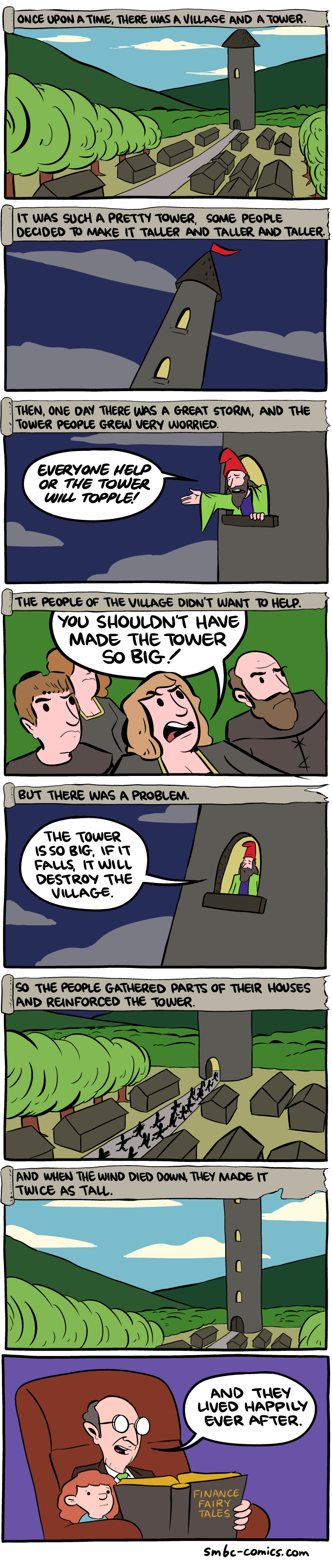
Saturday Morning Breakfast Cereal - The Village and the Tower

by admin@smbc-comics.com
13 Jul 13:18

In the Bronx, a Pop-up Art Show Is a Lightning Rod for Fear of Gentrification

by Jillian Steinhauer
The entrance to the No Longer Empty exhibition at the Old Bronx Borough Courthouse (all photos by the author for Hyperallergic)

The Old Bronx Borough Courthouse, with a work by Lady K Fever on the scaffolding covering its façade (all photos by the author for Hyperallergic)

There weren’t many protesters — just seven — but they were loud. As the guests, many of them white, clutched their cups and cans and milled about the unfinished space, the protesters, mostly black and Latina women, began shouting: “Do not use art to pimp us out!”

“How many people are here that live in this neighborhood?” yelled one, while others handed out flyers. “How many people from this neighborhood are here?”

It was an April 23 opening for No Longer Empty (NLE), the New York nonprofit that stages art exhibitions in formerly abandoned buildings and vacant spaces. Organized by guest curator Regine Basha, the show was titled When You Cut Into the Present the Future Leaks Out, and it was taking place inside the Old Bronx Borough Courthouse, a towering Beaux-Arts building that straddles Brook and Third avenues at the intersection of East 161st Street in Melrose. The courthouse had been closed to the public, before this day, for 37 years.

“Those protests took us by surprise, as nothing like that has occurred before,” the NLE team (which does not include Basha) told me over email as a unit. The nonprofit was founded in 2009, during the recession, and prides itself not only on its exhibitions but on “community engagement.” Its staff members — of whom there are also seven — were hardly expecting protesters. “We understand in hindsight, and from our partners, that NLE was a foil of sorts for long-standing community issues.”

More than a foil, one might say that NLE and its Bronx show have become a crucible for long-standing community issues — ones like displacement and gentrification, property ownership and development, and the role of the arts in those things. Over the past few months, these conflicts and questions have descended on the courthouse in the form of protests, conversations, and artworks (a piece by Melissa Calderón illustrates “The South Bronx Gold Rush of 2015” with gold embroidery thread atop an abstracted birchwood plot of land). They have taken up residence and burrowed into the crevices of the musty old building. They are, however, only the most recent layer to settle atop decades of frustration and neglect.

*   *   *

Ground floor of the courthouse, with Ellen Harvey's "The Pillar-Builder Archive" (2013) on the table

Ground floor of the courthouse, with Ellen Harvey’s “The Pillar-Builder Archive” (2013) on the table

The Old Bronx Borough Courthouse was once simply the Bronx Borough Courthouse, when it was built in the early 20th century. Designed jointly by architect Michael J. Garvin and artist Oscar Bluemner, with a statue of an enthroned Lady Justice by Jules Édouard Roiné on the facade, the regal four-story building was erected between 1905–14. Unfortunately, it served as Bronx County’s primary courthouse for just two decades. “Because it had only one courtroom, and the Bronx’s population exploded rapidly, it was supplanted by a new court on the Grand Concourse and operations were transferred to other civic courts in the 1930s and ’40s,” explains the New York Times. By the late 1970s, when the Bronx was “burning,” the once-grand granite building with the tile floors, chandeliers, and marble staircases had fallen into serious disrepair. When the courthouse was landmarked by the city in 1981 (and added to the National Register of Historic Places the following year), its primary contents were graffiti and pigeons.

An old door from the courthouse (click to enlarge)

An old door from the courthouse (click to enlarge)

In the early 1990s, according to the Times, a conglomeration of local community groups, most prominently Nos Quedamos (“We Stay”), banded together to try and gain control of the courthouse. Envisioning the building as “a kind of town center” for Melrose, the groups petitioned the city for a lease and raised roughly $6 million to put towards the creation of a library, museum, and after-school programs. But the city declined — “Mayor Rudolph Giuliani put a thumb in the eye of his rival Bronx Borough President Fernando Ferrer,” is how the Mott Haven Herald describes it — and in 1996 the courthouse was sold at at auction to Gus Kitkas and the Five Borough Electrical Supply Corporation for $130,000.

Two years later Kitkas had done nothing and the city auctioned the building again. Nos Quedamos bid on the structure but lost to Henry Weinstein and Benjamin Klein of Liberty Square Realty, who paid $300,000. The pair set off neighborhood flares once again when they put the courthouse on the market for $1.8 million in 2000, though they never succeeded in selling it. In the years since they’ve advertised their rehabilitation and renovation efforts and tried to entice tenants with federal tax credits, all to no avail. The building remains empty.

*   *   *

Or rather, it did, until April, when NLE filled it with art. And that was really the first problem — art used as an advertisement for private development — although no one picked up on it until the second problem emerged and immediately galvanized people: a planned party for real estate brokers in the courthouse during the run of the show. “Future Tenant – A Broker Party,” the event was called, scheduled for June 16 and advertised on NLE’s website. The listing, which is now gone, read:

NLE will promote cultural and economic vibrancy in The Hub, using the Old Bronx Borough Courthouse as a springboard to gauge interest in its long-term future use. To increase the neighborhood’s visibility, NLE and SoBRO [South Bronx Overall Economic Development Corporation] will introduce people to the neighborhood, and have created a tailored map highlighting sites of interest.

Utilizing its long-standing presence in the community, unique to No Longer Empty’s holistic model, NLE and SoBRO will host a tenant attraction event to convene entrepreneurs, real estate brokers, and business owners interested in the area.

Flyer given out by the protesters (click to enlarge)

Flyer given out by the protesters (click to enlarge)

“That was what really sparked everything,” says Wanda Salaman — “that” being news of the brokers’ party, which reached Salaman, executive director of local nonprofit Mothers on the Move (MoM) and one of the seven protesters, via concerned artists and activists in the community.

“What triggered me is I’m hearing about this attraction party at the Old Courthouse, and then when I’m going to the location of the event, I see all these people coming from all over, not from the neighborhood, going to the opening …. It was very overwhelming, for me and for people in the community. They were asking me: ‘Who are these people, and what are they doing here? We didn’t know of an art opening — what are these white people doing here?’ Some people were like, ‘I’m getting scared.’ Most of the time when I see a lot of caucasians, I see them at Yankee Stadium. At 161st Street, in the middle of the hood, it’s rare. What is going on? Who are those people coming to the neighborhood? And why did no one know about it?”

Some people, of course, did know about it. No Longer Empty received a grant for the show from the Department of Small Business Services, and through that and their own efforts they developed a number of community partners — including Casita Maria Center for Arts & Education, Ed García Conde/Welcome2TheBronx, and the Percent for Green project — all of whom presumably knew about the opening.

What people didn’t seem to know about was the brokers’ party. The artists in the show didn’t (or else didn’t care) — they only learned about it when one of them, Shellyne Rodriguez, stumbled upon it on NLE’s website a few days after the opening. “No one saw it; it was just quietly announced on their website,” she says. “So I screenshot-ed it and I emailed it to all the artists. I was like, you guys, what’s going on here?”

Abigail Deville, "...and justice for all?" (2015), on-site construction debris, broken marble, branches, reclaimed wood, dead Christmas trees, accumulated debris, heirlooms, TVs, computer monitors, phones, oven

Abigail Deville, “…and justice for all?” (2015), on-site construction debris, broken marble, branches, reclaimed wood, dead Christmas trees, accumulated debris, heirlooms, TVs, computer monitors, phones, oven

Between the opening night protest and Rodriguez’s email to the artists in the show, pressure began mounting on NLE to take some sort of action. The point of contention was not only the brokers’ party, but also NLE’s relationship with SoBRO, a nonprofit that, despite being based in the South Bronx since 1972, has a less-than-stellar reputation among the people I spoke with. “I’m hearing that they are the ones that are opening the gates to big developers to do whatever they want in the Bronx,” says Salaman. Nobody I spoke to could offer specific examples of the ways in which SoBRO is facilitating the borough’s gentrification. Nevertheless, that SoBRO and NLE were evidently planning to hold a private event to market a building whose private ownership is itself a longstanding soreness in the community did not help.

And so a series of emails and phone calls and exchanges ensued. Representatives from Nos Quedamos, MoM, and other community organizations wanted to meet with NLE, not at the courthouse but on their own turf. Radical grassroots group Take Back the Bronx wrote a letter: “We are very disheartened — and honestly, very angry — that artistic engagement with our community is being used to push the agenda of developers and financiers: gentrification.” Rodriguez delivered the letter, and she spoke with one side and then the other, acting as a messenger between the art people and the community. It was a role that both suited and weighed on her.

“Me being from the Bronx but being an artist, I wear two hats,” she says. “I am critiquing the show and talking shit, but I’m in the show. You see what I’m saying?” Rodriguez’s relationship to the courthouse runs deeper than just being from the Bronx (like a handful of others in the show). The last time her mother was in the building, she was pregnant with Shellyne. And during the summer of 1977, Rodriguez’s uncle was briefly locked up there during the blackout riots. Two of her pieces in When You Cut Into the Present harken back to that time: magnetically expressive small-scale ceramic sculptures that portray her family members as allegorical figures. They’re among the works in the show most carefully attuned to their surroundings.

Shellyne Rodriguez, "Geperudeta" (2014), ceramic

Shellyne Rodriguez, “Geperudeta” (2014), ceramic

Still, Rodriguez has no illusions about what it means to be a working artist in New York today — even one from the Bronx. “Artists are not the root cause [of gentrification]. But artists are well aware at this point that we are the bees to the honey. We’re strike breakers, is what I say. The New York tenants, they’re on strike. They’re fighting for their lives, and we’re coming in as scabs for developers. So, if you know that — you know that’s the model — then are you using yourself as bait to developers in order to gain access to interesting spaces without really fully thinking about the repercussions?”

*   *   *

In the middle of May, fed up with all the back-and-forth, the groups Mothers on the Move, Nos Quedamos, Take Back the Bronx, Banana Kelly, and Rebel Diaz Arts Collective invited staff members of NLE, as well as the artists and partners involved with the show, to a community meeting at Nos Quedamos’s headquarters on May 30. NLE President Manon Slome, Executive Director Naomi Hersson-Ringskog, curator Regine Bosha, and some of the artists attended. It was there that Slome quietly announced NLE had ended its relationship with SoBRO and canceled the brokers’ party. “I would say that was a community victory,” reflects Salaman.

In its place, NLE said it planned to hold a tenant attraction event, which would be, rather than private and only for brokers, an “open event, for the community.” According to Rodriguez, that event was planned for the afternoon of June 16 — the same date and time as the original brokers’ party — but when she emailed the day before to check on its status, she was told that NLE had pushed it back to mid-July.

The June 18 panel

The June 18 panel

A few days afterwards, on June 18, the Center for Bronx Nonprofits hosted a panel discussion at the courthouse. Titled “Shifting Sands: New Dynamics in the Bronx Art Scene,” it convened seven established members of the Bronx art community — including former Bronx Council on the Arts Director Bill Aguado, artist and Percent for Green founder Alicia Grullon, and Edwin Torres, deputy commissioner of the NYC Department of Cultural Affairs — to grapple with the challenges currently facing artists and arts organizations in the Bronx. Despite taking place at 11:30am on a Thursday, some 75 people turned up, including members of MoM, Nos Quedamos, and Take Back the Bronx, plus Rodriguez.

Like so many of its kind, the panel consisted more of a series of monologues than a substantial dialogue. The concerns discussed were entirely founded but deeply familiar: fears of displacement, the arts as a force of gentrification, the question of how to bridge the gap between artists and community. “How can the community stay strong in this overly capitalistic environment?” asked Arthur Aviles; “We need to ask funders to uninvest from activities that displace,” said Grullon. Things were proceeding smoothly, if dryly, when Michael Kamber, founder of the Bronx Documentary Center, introduced himself and said: “Frankly, I don’t think we should be in this building today. There are plenty of spaces in the Bronx. We should not be in bed with for-profit developers.” A number of audience members cheered and applauded.

Onyedika Chuke, detail of "Untitled" (2015), concrete blocks, wall drawing, papier-mâché (click to enlarge)

Onyedika Chuke, detail of “Untitled” (2015), concrete blocks, wall drawing, papier-mâché (click to enlarge)

The panel wasn’t meant to be about the courthouse or No Longer Empty, but certainly there was no getting around that we were there — we were sitting in the building, amid a show whose very existence crystallized so many of the issues the panelists had gathered to discuss. It seemed hardly a coincidence that an oversize color drawing of Giuliani by the artist Onyedika Chuke hung on a wall not 10 feet behind us; his arms were crossed and his stern face seemed to taunt the community he had once shunned.

Kamber wasn’t the only one who wanted to talk about the courthouse and NLE. During the Q&A session, a woman from Take Back the Bronx approached the mic. “These issues affect artists but also all people, working-class people,” she said heatedly, before accusing NLE of scheduling a brokers’ party in the space and demanding an answer to the question: “What is the agenda from No Longer Empty?”

“Questions are to be directed to the panel,” countered the moderator, a soft-spoken man from the Bronx Council on the Arts. The young woman, shouting from her seat, retorted, “What is the agenda from No Longer Empty?” The room came to a standstill, and it seemed that others wanted an answer to this question too. Manon Slome stepped up. She laid out the mission of NLE, told everyone that the brokers’ party had been canceled, and added that NLE wanted “the community to come and vision what the building could be.”

Because, she explained, “The fact remains that it is a vacant building.”

Melissa Calderón, "The Bronx River" (2015), 3 panels consisting of plywood, embroidery thread, tar

Melissa Calderón, “The Bronx River” (2015), 3 panels consisting of plywood, embroidery thread, tar

The fact also remains that no one besides Henry Weinstein, Benjamin Klein, and Liberty Square Realty knows what the future of the Old Bronx Borough Courthouse might be. During the panel discussion, Mike Kamber claimed that a woman he knows — someone who’s worked in the Bronx for 30 years and runs a nonprofit — offered the owners a large sum of money for the building, but they turned her down. She then offered them “top-dollar rent” to put a school in, and again they said no. “The owner of this building is holding out to cash in,” Kamber pronounced.

When I followed up with him to confirm the story, Kamber said he could tell me only that it was “hearsay” — the woman would not go on the record — but that “I totally trust her.”

“I think we have to be very careful when for-profit developers tell us they’re here to help the community,” he added. “These things don’t happen in a vacuum. If you look at what happened in Dumbo, on the Lower East Side, in Williamsburg, artists become part of the strategy for real estate investors. They use the cachet and the creativity of artists to make money, and in the end the artists are the ones that get pushed out — artists and low-income people.”

I tried calling Liberty Square Realty, as well as another real estate company listed to Weinstein’s name, and I asked No Longer Empty to contact Weinstein on my behalf. I was never able to reach him or anyone else, not even a secretary.

David Scanavino, "Untitled" (2015), linoleum tile (click to enlarge)

David Scanavino, “Untitled” (2015), linoleum tile (click to enlarge)

The staff of NLE says now that they have scrapped the idea of a tenant attraction event altogether, in favor of initiating a four-to-six-month “community visioning phase” for the building. “What I’m envisioning is community groups sitting down and talking about how the community can tackle this issue of working with a private building owner, coming up with a plan instead of just throwing everything against the wall and seeing what sticks,” says Lindsay Smilow, NLE’s director of external affairs.

These efforts are admirable, and Salaman says she appreciates how responsive NLE has been. “They have been trying … they just had no idea what they were getting into,” she says.

But Salaman also makes a good point when she reminds me that Nos Quedamos has “already done a visioning around what people in the community want to see” at the courthouse. They’ve been planning and fighting for that building for 20 years. “I guess there should be a meeting with the community to talk about the space, but the next step is really having a meeting with the owner,” Salaman says. “We have all types of meetings with No Longer Empty, but it doesn’t matter because they don’t own the building.” Maybe in Melrose art can at least start a conversation between local residents and property developers.

The entrance to the No Longer Empty exhibition at the Old Bronx Borough Courthouse

The entrance to the No Longer Empty exhibition at the Old Bronx Borough Courthouse, flanked with works by Lady K Fever.

13 Jul 13:11

Weekend Words: Down

by Weekend Editors

László Mednyánszky, “Down-and-Out” (after 1898), oil on canvas, 120 x 140 cm. Private collection (Image via Web Gallery of Art)

This week: the Chinese stock market fell way down, the New York Stock Exchange computer systems went down for nearly four hours, and South Carolina took down the Confederate flag.

If, when the chips are down, the worlds most powerful nation, the United States of America, acts like a pitiful, helpless giant, the forces of totalitarianism and anarchy will threaten free nations and free institutions throughout the world.

—Richard Milhous Nixon

Everything that slows us down and forces patience, everything that sets us back into the slow circles of nature, is a help. Gardening is an instrument of grace.

—May Sarton

That inner voice has both gentleness and clarity. So to get to authenticity, you really keep going down to the bone, to the honesty, and the inevitability of something.

—Meredith Monk

Somewhere deep down there’s a decent man in me; he just can’t be found.

—Eminem

Life changes fast. Life changes in the instant. You sit down to dinner and life as you know it ends.

—Joan Didion

You know you’re getting old when you stop to tie your shoes and wonder what else you can do while you’re down there.

—George Burns

Down in Denver, down in Denver
All I ever did was die.

—Jack Kerouac, letter to Allen Ginsberg

I am fond of pigs. Dogs look up to us. Cats look down on us. Pigs treat us as equals.

—Winston Churchill

There is nothing to writing. All you do is sit down at a typewriter and bleed.

—Ernest Hemingway

Gentle reader, the Fountain of Youth is radioactive, and those who imbibe its poisonous heavy waters will suffer the hideous fate of decaying metal. Yet almost without exception, the wretched idiot inhabitants of our benighted planet would gulp down this radioactive excrement if it were offered.

—William S. Burroughs

13 Jul 13:11

Required Reading

by Hrag Vartanian
Located in New Zealand, The Tree Church is formed almost entirely from living trees with thick leaves and it can seat a hundred people. (via Colossal)

Located in New Zealand, The Tree Church is formed almost entirely from living trees with thick leaves and it can seat a hundred people. (via Colossal)

This week, the myths of an affordable LA, a church made of trees, gay lit, US sanctions and Iranian artists, decolonizing African art, and more.

 Scott Timberg goes against the hype that paints Los Angeles as a cheap creatives paradise and writes about some of the realities people face in the city:

For many of us in Los Angeles—a metropolitan area that 57 percent of Angelenos can’t afford to live in, according to a recent study—this is a city from which we are constantly on the brink of slipping away. Average rent in L.A. is $2,550 for a two-bedroom apartment. In fact, the disparity between wages and market prices here is the worst in the country, nastier than in New York City or the Bay Area, and it’s become the toughest American city in which to buy a house … Los Angeles and California were hit especially hard by the Great Recession, and the damage lingered longer than almost anywhere else. L.A. County’s unemployment rate was up around 12 and 13 percent for years, and along the way hundreds of thousands dropped out of the labor force entirely.

 Carolina Miranda of the LA Times has also devoted some time to deconstructing some of the myths of LA:

As Curbed L.A. helpfully pointed out, you can’t rent a dreamy, two-bedroom bungalow for $1,250 in Echo Park, no matter what the New York Times says. But many Angelenos nonetheless seem pretty happy to live with the stereotype of Los Angeles as a cultural wonderland. I’ve had countless gallerists, artists, curators and even journalists (who should know better) happily parrot the line about L.A. as a utopia for “creatives” who come here to feel less inhibited and less cold.

… And even though there is plenty of buzz in the arts community about the opening of massive galleries — including Hauser Wirth & Schimmel to Maccarone — many of these are simply the L.A. outposts of behemoth international spaces and therefore not organic to the city’s scene. In other words, these are places that sit above the fray, catering to a 1% that doesn’t necessarily live or pay taxes here. Moreover, try showing your art at any of these spaces if you don’t have a pricey MFA from one of a handful of brand-name art schools.

 The story of a young man who climbed on a Broadway stage to try and charge his phone from one of the prop power outlets is already the stuff of legend (though totally true, see video below), but there has been a new twist to the tale … 19-year-old Nick Silvestri of Long Island held a press conference with the play producers and explained:

I don’t go to plays very much, and I didn’t realize that the stage is considered off limits. I’ve learned a lot about the theater in the past few days—theater people are really passionate and have been very willing to educate me. I can assure you that I won’t be setting foot on a stage ever again, unless I decide to become an actor.

 Stan Persky reviews at book at looks at the gay writers who “changed” the US:

When Christopher Bram begins Eminent Outlaws, his history of contemporary gay writing in the U.S., with the bold declaration that “the gay revolution began as a literary revolution,” it has an odd ring. A revolution sparked by mere words? After all, as gay poet W.H. Auden put it, “Poetry makes nothing happen.” Bram’s novel claim at first glance seems dubious, but it turns out to be surprisingly accurate.

 The Bradshaw rock art in present-day Australia has long puzzled historians because they depict “figures with unusual body shapes, tassels and hair that are unlike any other rock art in Australia.” There have long been theories of previous waves of humans who may have settled the area but new research proves that the Aborigines were the first Australians and the artists behind the unusual art:

They support growing archaeological evidence that the Australian Aborigines are one of the oldest cultures to exist on the planet.

… The Bradshaw rock paintings, which were named after Joseph Bradshaw who found them in 1891, triggered theories of an earlier human culture in Australia due to their difference from other Aboriginal rock art in the Kimberley region.

The paintings show figures shaped like ‘clothes pegs’ wearing elaborate costumes. The paintings are so delicate in some cases that individual strands of hair have been drawn on.

The artworks led to theories that they may have been created by people who travelled to Australia from Indonesia around 70,000 years ago following the eruption of Mount Toba.

The Bradshaw rock paintings in the Kimberley region of Western Australia (via TimJN1 on Wikipedia Commons)

The Bradshaw rock paintings in the Kimberley region of Western Australia (via TimJN1 on Wikipedia Commons)

 How US sanctions hurt Iranian artists:

For Iranian curators working on international exhibitions, it’s not uncommon to be constantly asked for proof that the funds are in fact being used to pay the artists and not to buy arms. It was unpleasant, if unsurprising, to be asked to prove that I wasn’t an arms trader. For an Iranian, getting paid is always tricky. With Western bank branches and PayPal unavailable in Iran, it is difficult to transfer money into the country. It helps to have family and friends living abroad, but even then transfers may be delayed and deferred, or those making the transfers may even have their accounts frozen.

 After this week’s outage at the New York Stock Exchange, Molly Crabapple published this over-the-top “report” from the front lines. It’s hilariously worth a read:

My face attractively smeared from the ash of burning cocaine, I pause for a selfie. Then, I see it.

All the tourists are dead. And missing their spleens.

I hire now-former JP Morgan CEO Jamie Dimon as my local fixer. “Tell me the ways of your people, caught as they are between the present and the ancient past”, I demand, offering him half a hotdog as payment. Instead, he weeps. He tried to seek shelter at the dungeon of his favorite pro domme, he tells me, but when his black card bounced she slammed the door in his face.

 This could change things for African Art in non-African collections:

Sindika Dokolo, a Congolese businessman and art collector, is on a crusade to force Western museums, art dealers and auction houses to return Africa’s art, particularly works that might have been removed illegally during the colonial era.

“Works that used to be clearly in African museums must absolutely return to Africa,” Mr. Dokolo said in an interview while in town for an exhibition showcasing some of the works in his collection. “There are works that disappeared from Africa and are now circulating on the world market based on obvious lies about how they got there.”

 After years of being a passionate street art advocate, RJ Rushmore writes about his experience “inside the mural machine“:

Street art’s greatest strength is its ability to be nimble. Gaia made a similar point at an event at the Philadelphia Museum of Art in May, where he described street art in Philadelphia as something that can fill in the cracks that Mural Arts doesn’t reach. April Fools’ Day? Street art is there. Black Lives Matter? Street art is there. Potholes need fixing? Street art is there. Street art gives artists an almost unrivaled opportunity to respond quickly to the world around them, whether that means making work with timely pop culture references or commentary on world events, or being inspired to the architecture and design of the city. The nimbleness of street art is also closely related to its use as a space for experimentation and free(ish) expression. For all those reasons and more, street art is an essential element of a healthy public space.

 Philosopher Slavoj Žižek on Greece:

Imagine a vicious teacher who gives to his pupils impossible tasks, and then sadistically jeers when he sees their anxiety and panic. The true goal of lending money to the debtor is not to get the debt reimbursed with a profit, but the indefinite continuation of the debt, keeping the debtor in permanent dependency and subordination. For most of the debtors — for there are debtors and debtors. Not only Greece but also the US will not be able even theoretically to repay its debt, as is now publicly recognised. So there are debtors who can blackmail their creditors because they cannot be allowed to fail (big banks), debtors who can control the conditions of their repayment (the US government) and, finally, debtors who can be pushed around and humiliated (Greece).

 What are the world’s biggest employers?

TOP10_Largest_Employers_3

 In April 2014, British GQ published a cover story critical of right-wing media emperor Rupert Murdoch, but now the story is “missing” … and people are wondering why:

Why would Condé go through all the effort of ensuring Wolff’s article could not be read not only by its English readers without access to a print copy, but by readers in other countries as well? Nothing in the actual piece, whose text was obtained by Gawker via an eBay auction of the original print edition, would strike the ordinary American reader as illegal, and there’s no indication that Wolff or GQ published anything inaccurate.

… These laws are self-evidently ludicrous, and the fact that a Western government is harassing Wolff and GQ for publishing opinions about a public figure is preposterous. Thankfully such codes are largely unthinkable in the United States, where journalists like Wolff enjoy, and deserve, strong press protections under the the First Amendment. But in this particular instance, the U.K.’s speech laws are acting as a de facto restraint on Wolff’s First Amendment rights, here in the United States. After all, Condé clearly felt the need to prevent the article’s text from reaching American readers—a large, and possibly the largest, share of Wolff’s audience—and, as you can see above, even attempted to create the perception that Wolff’s column was never published in the first place.

Maybe this is a great opportunity to point to Adam Curtis’ excellent short film on Murdoch:

 The cult of Vice:

NBC’s once-trusted heavy hitter, Brian Williams, was recently suspended, Al Jazeera America’s newsroom appears to be in tumult, and CNN seems to rack up on-air faux pas by the week.

Their fall coincides with Vice’s rise. Smith has long said he wants Vice to be “the next MTV, ESPN, and CNN rolled into one,” and in 2015, that has started to become a reality. Vice is no longer the edgy digital outsider, but a slick global empire lubricated with millions in investment and ad dollars that, coupled with a brash attitude, make the company a ray of light among the decaying temples of legacy journalism.

Vice’s attraction for its valuable millennial audience is predicated on the notion that it is real and raw, not plastic and prepackaged like the rest of the mainstream media world. But it may be truer to say that Vice simply packages itself more deftly than almost any other big media company.

… But as Vice has increased its output of serious journalism, there have been growing pains. The wall between editorial and advertising, where Vice gets much of its revenue, can be porous. Last year, Charles Davis, a Vice associate editor who was let go after two months, posted an email from a Vice editor on Twitter saying that every story involving a large brand had to be “run up the flagpole” to general manager Hosi Simon, even if the brand didn’t have an advertising relationship with Vice. He received the email after approving a freelancer’s story that called for a boycott of the NFL. While the editor who authored the email wrote that in his experience, Simon “simply says ‘ok’ to almost anything,” Davis tweeted that “In my experience, every single time—every single time—I had a story ‘run up the flagpole’ it was killed.” Davis said four stories he wrote were killed in his time as an editor and freelancer at Vice, including a piece about labor violations at South by Southwest, which eventually ran on Salon.com.

 The beatbox battle between father and daughter that has been going viral. It’s really amazing:

Required Reading is published every Sunday morning ET, and is comprised of a short list of art-related links to long-form articles, videos, blog posts, or photo essays worth a second look.

13 Jul 13:04

How New Horizons Survived the 40-Year-Glitch and Made it to Pluto

In space exploration, there are a million ways that things can go wrong and just one way that they can go right. When the New Horizons probe skims less than 8,000 miles past the surface of Pluto on July 14, it will happen only because a large team of scientists, engineers, and mission planners managed to eliminate all the wrong and navigate their way to the right, a process that has taken more than 40 years to fully unfold. The engineers have become so good at fixing problems that most of
13 Jul 13:03

Shorter ¡JEB!

by tengrain
When I was a very young ‘Grain, me old pappy taught me a phrase to say to my Kindergarten teacher: Not knowing to the fullest degree of accuracy, I hesitate and feel a little delicacy in articulating for fear of … Continue reading →
13 Jul 13:01

antennaConceptual art object by vtol is a police truncheon that...


antenna

Conceptual art object by vtol is a police truncheon that sends a text message each time it is used by force:

This device is a police truncheon equipped with a GSM-module which sends a short phone message with the text “Mom, I hit a man” every time when someone uses it to hit people. The number of addressee is fixed in the code of the program and can’t be changed.

The idea of the project is to create a device which strictly controls the cruelty of police. As all the standard methods of control are ineffective, this project suggests the maternity as the last stronghold of human kindness and responsibility.

More Here

13 Jul 13:00

What, I ask, is life — without a touch of music in it?

by Sophia, NOT Loren!

I miss singing.  I love singing, it’s as natural and essential a part of life for me as breathing and sex, but much like the latter I do far too little of it.

I grew up surrounded by music, was seldom without. Weekly church services always included singing, hymns for four parts — soprano, alto, tenor, bass. I often sang specially arranged choir numbers, practicing near-endlessly my parts.  I would participate in each year’s “Sing-Along Messiah” in December, as one of the people who knew what they were doing who could help the other less sure voices.  My family would frequently gather together around the piano and sing, flipping through various bits of sheet music, much of it religious tunes.

And I miss the music.  I hate the dogma and doctrine and disgusting deity tied up in all of that, because that was the package deal.

But it is possible to have the beauty of the song without the bullshit of the sermon — I’ve certainly appreciated stage musicals for much of my life, and there’s some good stuff out there that fits what I need. It’s just that… I don’t want to dedicate a chunk of my life to rehearsal for performance, and I don’t want to perform at all! I don’t want to sing to anyone, or sing for anyone but myself. I want to be able to enjoy the synergy that comes from voices raised in harmony, to feel the thrill electrify my body as the room swells with a chorus of voices.  I don’t know where to find that.

I want to sing like this, with others, for nothing more than the entertainment and joy it brings:


Filed under: General
13 Jul 13:00

Definition of “dominant”

by Stabbity

A couple of months ago I wrote a post about how maybe we shouldn’t shit on young doms just because they’re young, and in the comments we had quite an interesting discussion about what the definition of dominant actually is.

My personal definition of dominant is “has dominant desires”, the exact wording of which I stole directly from Ranai’s comment. For me the term dominant is just a convenient shorthand that I use to describe who I am (someone who likes being in charge) and what I want (someone who will go along with what I want most of the time). Like Simina said in another comment, “Dominant is not a title.” She also made an excellent point when she said “I want to know, if a dominant person isn’t allowed to call themselves dom without all this magical experience and training and what not, what the hell are they supposed to call themselves to express their identity?”

I can understand people being pissy when some yahoo shows up and calls themselves Master WolfDragon when they actually have no experience, but Master actually is a title, and it’s one that has a lot of meaning for people, particularly in the leather community. Dominant, on the other hand, just means that you like calling the shots. And if you do just like calling the shots what the fuck are you supposed to call yourself if not dominant? We spend an enormous amount of time talking about how important it is to be honest about what you want and what you have to give, and now some asshole is saying I should lie about what I want because I don’t fit their personal definition of dominant? How does that help anyone?

Also, being dominant most certainly does not mean that I slavishly follow some asshole’s personal definition of what is domly and what is not. I don’t give a shit if you think having penetrative sex is undomly, they’re my nerve endings and I’ll stimulate them how I like. I’ve said this before and I’ll say it again “Am I seriously supposed to prove how dominant I am by doing what I’m told?” If you think the only way to be dominant is to follow your personal rules, I think you’ve profoundly misunderstood what being dominant actually means. If you want someone to do what you tell them the person you are looking for is a submissive. As I am neither submissive at all nor your submissive in particular, you can fuck right off if you think you get to tell me what to call myself.

What does it even matter if someone doesn’t meet your personal standards of domliness? The only person whose opinion of someone’s domliness actually matters is that person’s submissive, just like the only person whose opinion on whether I’m a good spouse is my husband. If you’re not part of the relationship, your opinion is irrelevant. Dominance is such a personal thing to me that I can’t imagine why the opinion of someone who’s not involved would matter in the slightest.

One of the reasons I define dominant the way I do is because I personally experience dominance as a facet of my identity. I like being in charge, I like ridiculous action movies, and I like nerding out about code. Nobody gets to tell me whether I actually like being in charge or whether I actually like action movies, and the idea that anyone could is completely ridiculous (well, at least until we have the technology to read people’s minds, but I expect that to take a while :) ) It’s totally reasonable to decide I’m not experienced enough for you or not old enough for you or not mature enough or whatever, but nobody, nobody gets to tell me who I am. You cannot possibly know me better than I know myself and it’s unbelievably rude to think you can.

Thinking of dominance as identity also helps explain why I’m so utterly baffled by people who think there’s some kind of dominant hierarchy. Me being dominant is only about who I am, it really has no bearing on whether you over there are dominant, submissive, or a rutabaga. It doesn’t matter how skilled or experienced you are compared to me, you bloody well get to define yourself however you want.

We do need at least a broad definition of dominant and submissive so we can have a conversation about those topics, but I think “has dominant desires” and “has submissive desires” is plenty, and as a bonus defining it that way allows us not to be total fucking dickweasels about other people’s identities.

If you want to call yourself dominant, go to town! If that’s the best description of who you are and what you want, then you’re morally in the right using it and the dicks who say otherwise can fuck off until they come up with a good reason dominant people shouldn’t call themselves dominant and an alternative word that clearly describes who people with dominant desires are and what they want. I’ll just hold my breath until that happens 😉

13 Jul 12:55

The Rain

by Reza

the-rain

13 Jul 12:55

Photo


13 Jul 12:54

Photo


13 Jul 12:54

Saturday Morning Breakfast Cereal - The Village and the Tower

by admin@smbc-comics.com

Hovertext: This comic is an allegory for, of course, the 1896 presidential elections.


New comic!
Today's News:
13 Jul 12:53

sandandglass: Why? With Hannibal Buress s01e01


sandandglass:

Why? With Hannibal Buress s01e01

13 Jul 12:50

Why should you consider Serena Williams one of the greatest...


Why should you consider Serena Williams one of the greatest athletes of all time?

Yessssss

13 Jul 12:46

tinycartridge: Nintendo president Satoru Iwata, 1959 - 2015...

by villeashell


tinycartridge:

Nintendo president Satoru Iwata, 1959 - 2015 ⊟ 

Nintendo’s president and CEO Satoru Iwata passed away yesterday after a year-long battle with bile duct cancer. He was 55 years old.

Even before taking over the company in 2002, Iwata made a number of massive contributions to the gaming industry, working on series like Kirby, Mother/Earthbound, and Super Smash Bros. while serving as a programmer, producer, and eventually president at developer HAL Laboratory. 

At Nintendo, Iwata helped bring even more classic titles to market while also overseeing the launches of the DS, Wii, 3DS, and Wii U. He also served as a charming spokesperson for the company, hosting the Nintendo Direct streams to deliver gaming news to fans, conducting an engaging series of Iwata Asks developer interviews, and even appearing in games.

It’s unclear who will head the company going forward, but Nintendo noted today that longtime employees and current general managers Shigeru Miyamoto and Genyo Takeda are serving as representative directors.

13 Jul 12:46

On making it up, or the virtues of make believe

As I pulled off my tennis shoes just inside my front door that day after fifth grade, I heard my mother say it, “No one knows what they’re doing.” She, in a simple response to a query I had about some confusing adult thing or another, continued, “You know, we’re all just making it up as we go along.” And there it was. In one fell sentence, she had introduced me to the secret of adulthood.

While the secrets of adulthood are many (we can say no, doctors no longer fix things, we can actually learn new skills), the sentiment of expertise is less contested. Or, less often revealed anyway. People aspire to be expert. And more often, we assume the following: we grow up, we become experts, the end. With age, we gain wisdom. Nothing could be simpler. But nothing could be further from the truth.

Early on, my mother exposed this myth — casually, just after piano practice and before dinnertime. Adults too were making it up. Adults were winging it. It has been an invaluable insight that’s guided me my whole life.

So what follows, really, are the virtues of making it up:

1. Style

I don’t know is, in fact, the most important secret to reveal.

Before we knew design, before we knew what we did was “a profession,” we wrote. We sat patiently through grammar class, learning when the participle dangled and the sentence ran on. As we got older, we were handed down paperbacks gilded with lessons and rules about how to write. Guidelines from Strunk & White guided our grammar and high school prose. But if we braved on, we may have encountered a different kind of grammatical attitude. Grammar rules dropped away, and we were left to our own devices. If we forgot the rules, we could speak and write in our own voice, we could develop a style that could only be our own.

2. Tolerance.

In the land of making it up, there is no word for “misstep,” no dictionary entry for “mistake.” Such words would assume there is a right way to do something. Tolerance, then, is a way of life. And seeking others who experiment and fail is encouraged and celebrated.

3. More making.

Make believe is contagious. So do what feels right. What moves you. What inspires you. Make up more.

Far earlier, even before fifth grade, I discovered Fred Rogers with his make-believe and Neighborhood itself who said, “Discovering the truth about ourselves is a lifetime’s work, but it’s worth the effort.” These virtues of make believe, no matter how deeply we trust the notion we’re all making it up together, still take a lifetime to trust.

In the meantime, I’m making it up.