It was a difficult decision to make, but ultimately the only one that I could… and so I handed her back what few of her things had still been at my place, and told her goodbye. It was not a conversation. It was not sitting down to discuss what was going on, and there was no room for figuring out how to keep things going.
MFP had moved out a few months back. She started looking for a new place after the last time we were ready to call off our relationship; living under the same room together had left us ready to rip out each other’s throats on a regular basis, and back in July it was a matter of one of us leaving this apartment or both of us leaving, period. It was a cycle, though — reaching a point where we were falling apart, sitting down to talk about it (sometimes with the help of a couples’ therapist) and things going a little bit better for a while… until they continued downhill and we were falling apart again. Trying to keep doing that wasn’t going to work for me. “Sitting down to talk” would have been about the most foolish thing I could do. You know how people talk about the “definition of insanity” as doing the same thing over and over and expecting a different result? It would have been insane to keep repeating that cycle, especially knowing that’s what I would have been doing. Put another way, “beating off a dead horse won’t make it cum any faster.” Sometimes it’s important to recognize when your actions are futile, and when the only thing — not the “right thing,” not the “good thing” or the “kindest thing” or the “painless thing” or the “best thing” — the only thing you can do that’s going to work is to walk away.
She has more resources, financially and otherwise, and back then she was able to snag a studio within a month and a half or so, where she’s been living since. The lease we signed together for this apartment was for one year, November 2012 through November 2013. After she moved, The Rabbit — who co-signed for me, which made this place possible — paid the portion of the rent that MFP had been. That lease is up, now, and since my $860/month from the government isn’t enough to even find a room in an apartment, let alone my own place, I’m not sure what I’m going to do. (The studio MFP found was an absolute steal at under $1000 — even in a run-down neighborhood that’s not connected to public transit or much of anything else, for reference. A cheap room in an apartment with several other people in the most dangerous parts of town, like where I lived with my Psycho Ex, might go for $600 plus the cost of shared utilities.) For the next month, I’m going to be staying put; the property management company has confirmed that as stated in the lease terms, this converts to a month-to-month agreement, and so long as I give 30 days’ notice before leaving, I’ll be okay. I’m working on getting everything I own packed and into a storage locker as quickly as I can… and then I’ll likely be staying on couches and in guest rooms to start the new year, unless some miracle comes my way. It’s possible that The Rabbit can put me up like she did last fall, between the time I escaped from hell with Stoner Dude, Girl-Child, and Boy-Toy, and the time I ended up here — but it’s not permanent, and it’s far away from everything (2 miles up a steep hill from the nearest bus stop, and that bus takes 20 minutes minimum to get to BART — if I get there on time. If I miss the bus it can be 45 minutes or more before the next.)
Anyway, through the breakup and after I’ve been grateful beyond words for the support of Again — who has been an understanding ear and occasional (though far less than either of us would like) sexual release. I’ve been amazed again and again at how completely she “gets” the situation, at how completely she “gets” me. If she were available to build a significant long-term romantic and emotional relationship, I’d gladly have her; she’s already got more than a full plate with Crowbar locally and long-distance with Pout. (New name alert! Pretty cool guy, actually — met him while he was visiting a bit ago. His name here has nothing to do with any sour expression I’ve seen on his face!)
I also finally managed to get The Rabbit into the hat the sack recently. It only took a year and a half or more… both of us wanting, both of us trying, both of us running into one obstacle after another, but both holding on and hoping. I’m still trying to find a chance to get me and Again and The Rabbit together at the same time for some fun, or even just to arrange for the two of them to have some time alone. It always makes me happy when I can see those I love, sharing love. It was heartwarming magic to share a few nights with Lime when she was here to visit early in October, but even more magical to have Again joining us one of those nights!
Oh! And I have my first-ever OkCupid success story! I found SoCal in my list of “people you should check out,” and… I was completely blown away by her profile — the writing in her profile, first, and as if that weren’t enough to intimidate me, then I saw her photos. “Stunning” and “gorgeous” and “jaw-dropping” and “panty-soaking” are all true, but they don’t begin to describe what I saw and felt. I kept checking out her profile, trying to work up the nerve to write her… and then I got a message from her! “I must say you’re quite lovely,” it read in part. Cue the guitar opening from “She’s So High” — I was floored that this seeming “Cleopatra/Joan of Arc/or Aphrodite” had called me “quite lovely.” Wrote back. Made plans to meet which were sadly derailed by anaphylactic shock (she’s okay.) Rescheduled and kept plans, and… WOW. Hoping for another opening in her ever-busy schedule soon!
It’s been tough, though, after breaking up with MFP… knowing that I almost left the country for the first time — she was going to take me halfway across the world to spend Christmas with her family. I even finally got my passport. Knowing that in less than 24 hours from the time I told her goodbye, she’d called many of our mutual friends to talk all about the situation from her side, and over the next week I heard from a couple of my close friends that she’d repeatedly called them and that they were uncomfortable with her trying to come to them to support her against me. I’ve heard from a number of friends since when I get the chance to see them that “just so you know, I have talked with her a little bit about your breakup. I mean, it’s not like I’ve passed along anything important or private or anything… but yeah, just wanted to let you know I’ve been support for her.” I’m basically unsurprised by these little confessions, now, which is somewhat frustrating when I know that I’ve had too little in the way of opportunity to process this difficult situation with anyone… and I can figure that anybody I know even moderately well will have already heard MFP talk about things. It feels like I’m not entitled to have a friend to listen without judgement or preconceived ideas about the situation, not when most of those have already been claimed by her.
I’ll get through all of this. I know I will. The uncertainty with where I’ll live, the pain of a relationship ending, the difficulties with all sorts of other stuff. And I know that I’ll be stronger and better and a more “refined” version of the woman I am now — it’s the process of tumbling away, burning away, scraping and filtering away the bits that are less pure, less relevant, less needed, and gathering together the essence of myself in concentrate. It’s life.
Also.Also.Also. If you have any leads on housing in the San Francisco Bay Area (preferably East Bay,) queer-friendly, women-only, under $700/month… let me know! I can pass along more details.
I have some pretty cute and sexy friends with benefits. The benefits are varied- some of them can cook, others really enjoy going to cheesy kids movies, others will record stories for me to listen to when I fall asleep. And yeah, sure, some of them I have sex with, but I’ve been learning that as benefits go, that is, for me, one of the least important.
See, I am a big fan of the friendzone. I have a large circle of acquaintances- my friendzone is probably the most permissive zone, and the widest net. It’s filled with people from “folks I get together with regularly for activities” to “folks with whom I share my most personal self, and who share that with me”. Maybe it’s a holdover from my Livejournal days, but I like having different friend groups with different levels of disclosure, so I can have different discussions and gain insight from a range of perceptions.
Living in the Bay, I have sometimes felt weird about my choice to have a very solid friendzoning policy. It seems like the cultural norm is to say, “well if I get along somewhat with them and there’s any spark at all, why not fuck instead of platonically hanging out?” When I first moved here, I felt much the same. Especially as a fat woman, I was quickly made aware that if I wanted to have any social or sexual capital, the best way to gain it was through sluttery. I hadn’t had a lot of experience being desired in any way, so I wholeheartedly threw myself into what I believed to be sex positivity- I went to loads of play parties, experimented with various roles, and slept with anyone who didn’t turn me off. I had a lot of dates (I looked back at my LJ and saw some weeks I had a date for every day!), and for a time, that felt like closeness, and friendship, and community.
Eventually, though, I realized I was limiting myself when the only intimacy I trusted these friends with was sexual. And, worse, I felt lonely all the time. I didn’t feel like I had anyone I could call when I was having headweasels, because to talk to these casual lovers about unsexy things might ruin the seduction. Unless a party I was going to involved sex, the likelihood that I wouldn’t see these new “friends” was pretty high- and because of that I didn’t always feel like I was valued outside of being an available potential sexual partner. Or, sometimes, a logistical manager, someone with useful resources who would do it for free because I was naive and thought our friendship went both ways. I began to have a sinking feeling that the people I was calling my friends did not feel the same about me when they never reached out. “They’re just busy” started to ring false when years went by without them even initiating a Facebook poke.
It was incredibly rough, for a while. I withdrew from the various communities I was a part of. I lost myself in relationships instead. I went to parties but found myself dissatisfied with the small talk and the lies of “we should hang out sometime”. I felt lost.
I moved to London, and felt isolated for about 6 months. I didn’t know how to make friends if I wasn’t fucking them, but I also knew that I didn’t want to keep trying to forge friendships using a method that had left me so disappointed. Trying to figure out what to do, I gravitated, again, to the kink and sex party communities. But this time, the people I bonded with shared other interests- queer studies, feminism, performance, sex work politics, really weird porn, pop culture, the history of medicine. And the people who became my friends, who I still consider some of my deepest friends now, were just that- friends. People I could count on. With a couple of them, we’d try making out, just to see. Often we’d end up laughing and saying “nope, definitely not” and continuing to be friends. For the first time in a long time, I felt like I had a community… and they were all happily in the friendzone.
It was WEIRD. For a while. But when I moved back to California, I knew I wanted my friendships to be different. I had tasted the joy of being around people who really SAW me as a complete and flawed person, not some sort of sexy persona or potential conquest. Strangely, in the stiff upper lip culture of the Brits, I had learned how to embrace my tender, vulnerable self. I knew, then, that I needed to totally change my approach.
“You make time for what you care about”, an ex said to me a long while back. I repeat that to myself now, when looking at my schedule, or making plans with lovers. I now make sure to balance time spent with sexual partners with time spent with friends. I’ve made quality time with people I’m not fucking more of a priority, having tea or putting together craft days or playing minigolf. If I feel like going to a sex party will be a chore, I no longer feel pushed to go because it’s the only time I’ll see my “friends”. I no longer invest significant energy in the projects of people who never step up for my work. I’ve learned, as Maya Angelou would say, to “never make someone a priority when all you are to them is an option”.
I have learned to be grateful for my friendzone. While I enjoy my friends with benefits, too, valuing the friendship over the sex has been incredibly healing for me. Sometimes it still feels like a rarity in the Bay, to have people close to you that you get along with and think are attractive and don’t have sex with regardless- but while my bed may be empty most of the week, my heart is fuller than it’s ever been.
Inspired by the Harper’s Index,Sum of the Arts is a periodic tabulation of numbers floating around the art world and beyond.
Number of times a week the bees swarming Pierre Huyghe’s “Untilled” in the Museum of Modern Art sculpture garden are inspected by professional beekeepers = 14
Weight in tons of a life-size elephant statue made of ivory tusks, installed as an anti-poaching message at the Botswana airport = 2.5
Number of months the 555-foot Washington Monument was the tallest structure in the world when it was first built, before being surpassed by the Eiffel Tower = 6
Minutes the 355-foot-long oculus in the Santiago Calatrava-designed World Trade Center Transportation Hub will open each September 11 = 102
Number of 19th-century cast bones in the skeleton of Dippy the diplodocus, which for the first time in 35 years will be removed from public display at London’s Natural History Museum = 292
You don't see an All Star Comics #3 every day. Published in 1940, it’s a milestone in what’s known as the Golden Age of comic books: the debut of the first bonafide superhero team, the Justice Society of America. There’s hardly a plot, only a meeting of some of DC’s biggest stars — Flash, Green Lantern, Hawkman — taking turns sharing tales as if they were telling ghost stories at a campfire. Spectre recounts a battle with a monster from the moon; Hawkman remembers a crisis on the island of Krakatoa. The masked vigilantes on the cover are a friendly lot, decades removed from the gritty realism that would come to dominate the industry later. The Flash wears a slightly over-sized long-sleeve shirt, emblazoned with a yellow lightning bolt. His face is as pleasant and plain as a dumpling, and on his head sits a helmet that brings to mind an overturned colander.
Comic Conman
A true crime tale of comic books, corruption, and a $9 million vanishing act
By Russell Brandom & Colin Lecher | Illustrations by Jun Cen
Y
ou don’t see an All Star Comics #3 every day.
Published in 1940, it’s a milestone in what’s known as the Golden Age of comic books: the debut of the first bonafide superhero team, the Justice Society of America. There’s hardly a plot, only a meeting of some of DC’s biggest stars — Flash, Green Lantern, Hawkman — taking turns sharing tales as if they were telling ghost stories at a campfire. Spectre recounts a battle with a monster from the moon; Hawkman remembers a crisis on the island of Krakatoa. The masked vigilantes on the cover are a friendly lot, decades removed from the gritty realism that would come to dominate the industry later. The Flash wears a slightly over-sized long-sleeve shirt, emblazoned with a yellow lightning bolt. His face is as pleasant and plain as a dumpling, and on his head sits a helmet that brings to mind an overturned colander.
So when an All Star Comics #3 surfaced at Heritage Auctions’ first big sale of 2012, collectors took notice. The copy was off-white, its condition ranked at 8.5 out of 10 by the Certified Guaranty Company. CGC knew of only two higher-ranked All Star #3’s in the world, one of which (a 9.6) had sold for $126,500 back in 2002. The Overstreet Comic Book Price Guide — the bible on such matters — estimated an 8.5 copy to be worth somewhere between $36,500 and $70,750.
But someone bidding at the Heritage auction was willing to pay significantly more. The comic had been low-balled at first, going for $49,293.75 during the auction itself. But after the official bidding closed, private offers flooded in: $65,000, then $75,000. In the end, it sold for $200,000, putting it in the same class as a record-breaking debut Spider-Man that had sold a few years earlier.
All Star #3 wasn’t the only mid-tier comic suddenly going for outrageous prices at the 2012 sale. A Sub-Mariner #14 (in which the aquatic hero Namor twists apart a Panzer tank at Normandy) sold for $4,182, more than three times its estimated worth. In the very next lot, someone shelled out $5,676.25 for an off-white 6.5 Sub-Mariner #17 (in which Namor struggles with the Japanese fleet) even though Overstreet pegs an 8.0 copy of the same book at just $1,158.
"Absolutely insane!" podboy66 wrote the day after the sale in the Collector’s Society forums, a common online hangout for comics buyers. "I paid $450 for my Subby 17 in 6.0." "What’s up with some of these buyers anyway?" Agent 007 asked. "Makes you wonder if it’s simply a case of bidding fever."
Whoever was after the Sub-Mariners and All Star Comics at the Heritage Auction wasn’t a collector. Their bids were too erratic, they didn’t know the market, and chances were, they weren’t terribly smart. It was also clear that they had a lot of money on their hands — too much money, maybe — and they were eager to spend it. Through months of interviews and hundreds of pages of public documents, The Verge reconstructed what they were seeing: a multi-million-dollar embezzlement scheme that would ensnare a crooked lawyer, a multinational corporation, and some of the most sought-out comics in the world.
"WHACK JOB"
In 2004, Anthony Chiofalo had nearly 20 years of corporate law behind him and a political career in his future. Married with two sons, Chiofalo was squat, clean-cut, and brusque. He’d spent his formative years in the Bronx, and when an assembly district seat opened up in the area, he decided to make a run. "He was pretty determined," says Joe Thompson, a Bronx community activist who also ran in the election. But running as a Republican in the heavily Democratic Bronx was hopeless, and Chiofalo lost badly, pulling a little more than 30 percent of the vote. Thompson can’t remember seeing Chiofalo around the community much after that.
Chiofalo had "trends of grandiosity and episodic impulsivity and poor judgment."
The failed campaign marked a turning point in Chiofalo’s life — a defeat that precipitated a gradual unraveling. According to state records, his wife served him with divorce papers in August of 2005, followed by an order of protection. Chiofalo broke the order within a few months, and by the next year he was writing notes that would later be described as "hostile, obscene, and derogatory," sending them to his wife, to the children’s guardian — even to a clerk for the judge presiding over the divorce case. Chiofalo eventually sued his wife and about 30 others involved in the divorce proceedings, alleging that they had infringed on his civil rights. The argument was thrown out in court.
By 2008, the state court’s disciplinary committee decided to take action against Chiofalo, on the basis that his letters and frivolous lawsuits proved him unfit to be a lawyer. A letter from a psychiatrist quoted during Chiofalo’s disbarment proceeding said he experienced "trends of grandiosity and episodic impulsivity and poor judgment"; that he would "regress at times of stress and duress, particularly around financial, legal, and family issues." When he did, "his narcissistic defenses come to fore, often to his detriment." One of the dozens of individuals involved in Chiofalo’s civil rights lawsuit put it even more simply: "He’s a whack job. Bad news."
If there was one bright spot in his life during that time, it was Susan, a university health professor living in Texas. (Susan requested her maiden name not be used in this piece.) The two had been high school sweethearts and reconnected during Chiofalo’s divorce. In 2007, Susan invited Chiofalo to join her in Texas. Eventually, they moved into a cozy rental at 5802 Oakmoss Trail, in Spring, Texas — a small, green piece of the Houston metropolitan area, with wide open spaces and a population of about 50,000. By 2010, the two were married. Chiofalo seemed to have left his problems behind — he found a new job as in-house counsel for a Japanese construction company called Tadano, a gig that came with a $110,000 salary and new responsibility. Disciplinary Committee records show he lobbied to keep his New York law license, saying that he was seeking psychiatric help, but in October 2010, he was suspended from practicing law in the state for two years.
Tadano seemed to be involved in more and more litigation
It was around this time that Chiofalo’s job at Tadano hit a snag. Tadano was the world leader in rough-terrain cranes, selling huge tank-treaded trucks capable of lifting 160 tons to construction companies from London to Dubai. That globe-spanning business came with a river of legal work, and Chiofalo’s job was to coordinate local firms hired by Tadano, drawing up contracts, reviewing service agreements, and approving payments. But in the months after Chiofalo came on board, Tadano seemed to be involved in more and more litigation.
In March of 2012, the company ordered an investigation into the spike in legal costs. "Our approach initially was trying to ask exactly what went on, and then immediately trace the money flow," says Philip Hilder, a lawyer for Tadano. An employee eventually came across an expenditure that looked off. The bill was from Seidner & Virdone, LLP — a business supposedly located at 5802 Oakmoss Trail. According to a Tadano lawsuit later filed against Chiofalo’s wife, the company only existed in New York — it was the firm Chiofalo retained to work on his divorce proceedings.
Another company Chiofalo submitted invoices from wasn’t real at all. Tadano alleged it was requesting payments be sent to the address on Oakmoss Trail — the firm’s manager and registered agent was Anthony Chiofalo.
Chiofalo had created a byzantine structure of revolving transfers to conceal his tracks, laundering money through bank accounts, third-party payments, and the purchase of collectibles. Tadano alleged that in one particularly daring trick, he sent a retainer letter to the company requesting $15,000 for an attorney. The "attorney" was Chiofalo’s landlord. Tadano had cut a check that paid six months of rent.
The "attorney" was Chiofalo’s landlord. Tadano had cut a check that paid six months of rent
Tadano assessed the damage, adding up all the suspicious checks that had flown from the company’s accounts to each of Chiofalo’s fronts. Nearly $9 million had vanished.
Two months after the start of the investigation, a higher-up at Tadano approached Chiofalo, asking him to explain himself. Chiofalo produced records — spreadsheets, with billable hours — but the law firms listed would turn out to be fakes. Chiofalo told people he had enlisted the services of Michael Maio — whom he touted as a "super lawyer," licensed with seven State Bars. But Maio never existed; he was no more than a resume, cobbled together from an East Coast lawyer’s accomplishments and a photograph of a West Coast lawyer. Maio was Chiofalo’s mother’s maiden name.
But the company never had a chance to ask about all of the inconsistencies. The day after he was confronted, Chiofalo didn’t show up to work and stopped answering his phone. As soon as he knew he’d been caught, the lawyer disappeared.
THE MUSEUM
Where do you stash $9 million if you don’t want anyone to find it?
Tadano hired a private investigator named Bryan Vaclavik to follow the money. A 15-year veteran of the Harris County District Attorney’s office, Vaclavik specialized in fraud cases. He discovered wire transfers from Chiofalo to a "Heritage Auctions," and when investigators at Tadano checked the records for Chiofalo’s work phone, they found that he had been making regular contact with a local storage facility.
What the police uncovered was astonishing
On June 8th, the police arrived with a warrant to search seven climate-controlled units in Spring, Texas’ Four Seasons Self Storage facility. The compound sits on a flat, sunny stretch of concrete just a few miles west of Interstate 45. What they uncovered there was astonishing: The first unit was packed with sports memorabilia, signed helmets, and baseball cards. The second unit had a makeshift study space, full of furniture and books. The third unit had six framed Texas flags and a shadowbox arrangement of photographs of Mussolini, among the flood of other memorabilia. The fourth had more figurines, sports photographs, and paintings depicting scenes from the Bible and World War Two. The fifth unit was mostly baseball cards, along with photographs of Robert De Niro, Phil Jackson, and Mussolini. The sixth unit had statuettes of Batman, Iron Man, Conan the Barbarian, and, again, Mussolini.
Young Allies #1, published in 1941
Then, in the seventh unit, there were the comics: nearly 50 boxes of them, drawn from every era and genre with seemingly no logic to the collection. The Monkees and Star Wars comic books — worth a few dollars, if that — sat next to nine different early Detective Comics issues, a 1940 Batman #2, a Young Allies #1, and a specialty comic from the 1940 World’s Fair. A later search turned up a copy of Action Comics #1, where Superman makes his first appearance — one of the most coveted and expensive comic books of all time. Tadano’s money had been transformed, taken from legal bills and embezzled into merchandise. The haul was worth millions.
Investigators weren’t convinced Chiofalo had spent all of that cash on his own. Tadano alleged that Chiofalo’s wife had been in on the scheme. Harris County DA investigator Dustin Deutsch called Susan a few weeks after Chiofalo disappeared. She said she didn’t know where her husband was and hadn’t seen him in a month. Through what Deutsch described as an anonymous tip, he discovered she had a one-way plane ticket to New York leaving the following day. Was she flying back to meet her husband in the Bronx? He rushed to get a warrant and searched the Chiofalo home the same day.
The home resembled an extension of the storage unit: it was "overrun with stacks and piles of boxes and packages," addressed to one of Chiofalo’s fictitious companies, a civil complaint from Tadano would allege. "The interior of their rental home was so crowded that it resembled a museum more than a residence." Investigators said they found checks and other financial documents made out to Chiofalo, Susan, and the fictitious lawyer Maio, while "forged invoices" were found "in clear view."
Together, Tadano would allege, the Chiofalos used the embezzled funds to buy a $48,000 Lexus, a $44,000 Toyota pickup, and a 10,000-square-foot home for $609,000 that they would remodel. One Chiofalo-linked cashier’s check for $21,000 had gone straight to a furniture store.
The police moved to arrest Susan, with Chiofalo still on the run. (Susan filed for divorce the following month.) Chiofalo was charged in absentia with felony theft, with bail preemptively set at $18 million. Under the criminal complaint against him, the "ARREST DATE" section said simply, "TO BE."
PLASTIC COFFINS
Like a famous painting, a rare comic is hard to fence. Only a handful of buyers in the US handle big-ticket sales, and most shops keep scans of every comic for simple safety reasons. Even the most pristine comics are unique, marked with subtle wrinkles, stains, and clouds of mold known as "foxing." Those marks make it easy to follow a single comic as it moves from sale to sale. "It’s almost like fingerprints," says Buddy Saunders, who operates Lone Star Comics in Dallas. "If it shows up on eBay and it was stolen from us, we know." Big auction sites do the same, in part because of return fraud, in which a scammer will purchase a valuable comic and try to return a forgery. If the wrinkles don’t match the scan, the buyer is in serious trouble.
In recent years, a business called the Certified Guaranty Company (or CGC) has made fraud even harder. If you bought a comic book from an auction house within the last decade, it probably came in one of CGC’s distinctive plastic shells, complete with a two-digit condition rating, a serial number, and a hologram for authentication. The shells make it impossible to read the comic (critics call them "plastic coffins"), but they offer strong protections against damage and theft. Barcodes make for easy tracking, and "de-slabbing" a comic will make almost any buyer suspicious. If that buyer wants to look the comic up, it’s easy to find recent sales in an auction site’s database.
Deutsch’s specialty was evidence: he taught forensics classes at a nearby community college
If officials were going to use comics to catch and prosecute Chiofalo, investigators needed to know which comics he had taken with him, and which he had left behind — a task that fell to DA investigator Dustin Deutsch. Deutsch’s specialty was evidence: he taught forensics classes at a nearby community college, and his cases made him a regular on the local TV news. His team spent a full week at the sprawling storage complex, cataloging more than 3,600 separate items. Some of the haul entered into evidence as whole boxes, as if the investigators had simply given up on counting it all.
Locked away in one of the storage units Deutsch was searching was an All Star #3 — the one that had cost Chiofalo $200,000. Somehow, that comic never made it onto the evidence list. No one noticed the omission. By the time the investigators closed the doors on the storage units at the end of the week, the comic wasn’t there. It was missing, along with an All Winners #1 and a box of other titles that had mysteriously dropped off the list.
ALL WINNERS
On August 11th, 2012 — three months after Chiofalo vanished — a man named Lonnie Blevins walked into Wizard World’s Chicago Comic Convention looking to unload a box of comics. He worked with Deutsch as a DA investigator in Harris County, sporting the same tight-cropped haircut and square build as his colleague. He was part of the team sorting through Chiofalo’s storage units, although it would be another two weeks before they turned in their official report. But today, he was at the con on personal business.
Every year, Chicago Comic-Con takes over the the Donald E. Stephens Convention Center, a stadium-sized concrete box sandwiched between airport hotels on the northwest outskirts of Chicago. This was the third day. William Shatner and Stan Lee made appearances, along with the world’s largest playable Pac Man machine. But for comics, the real action was in the booths, where buyers came from across the country to check out any interesting books that might be for sale.
Blevins brought with him a full box of loose comics, none of them in CGC slabs. Some of his comics were real gems, like an All Star #3 and an All Winners #1, but the box was all over the map in terms of condition and quality. Without slabs, buyers were suspicious, but he reassured them. He was a cop back in Texas — he showed them his badge, and let them scan it in case they needed to find him later.
All Winners #1, published in 1941
Besides, how often do you see an All Star #3, let alone an unslabbed one? The Flash! The Green Lantern! Johnny Thunder! Dr. Fate! It was a rare book and an expensive one, too: after all, just a few months earlier, an All Star #3 had sold for $200,000 in a private Heritage sale. There was some light foxing — a cloud of mold toward the bottom of the front cover — but otherwise it was in good condition: an 8.0 or even an 8.5 by the look of it.
In retrospect, maybe buying such a big title without a CGC box was asking for trouble. "It was very strange," one of the buyers remembered later. "Nobody would crack that book out and sell it raw." But the book was going cheap. Maybe Blevins just didn’t know what he had. Sometimes you just get lucky.
Blevins left the con with $30,000 in cash and another $40,000 split between nine checks. The investigator said he was going through a nasty divorce, and was worried his ex-wife might raise trouble over any checks for more than $10,000.
But what about that foxing? When the buyers took their comics home, they noticed something strange: the All Star #3 that had sold in February had the same imperfections. In fact, it was the same book. But that book was slabbed — it had a barcode and provenance, sold to a private buyer who wouldn’t have deslabbed it without a reason. Had they bought stolen property?
It was worse. They had bought stolen evidence. The book had come direct from Chiofalo’s storage unit, smuggled out under the nose of the Harris County DA — and according to prosecutors, Blevins and Deutsch worked together to smuggle them out. More than $150,000 in comics had disappeared from the storage unit, and Blevins had spent the summer selling them at comics conventions across the country. The books were deslabbed to throw investigators off the trail, but even without the barcode, the cover gave it away. Collectors search for flawless comics, but it’s the imperfections that give them an identity, and this imperfection placed Blevins at the scene of a crime.
A SUITCASE
Meanwhile, Chiofalo spent the summer on the run. Months went by, and leads dried up. He had taken hundreds of thousands of dollars with him — with that much money, maybe he never needed to come back.
And then, one day in December 2012, just after 2PM, a man in a black sweatshirt walked into the police headquarters of Newport, Rhode Island, carrying a large black suitcase. He told an officer at the counter that there was a warrant out for his arrest. Police ran a search: "Chiofalo" — wanted for aggravated larceny in the state of Texas. He had been on the run for seven months. He told officers that he was carrying cash, although "he wasn’t sure about the amount of money he had," Lt. William Fitzgerald told The Verge. $100,000? $125,000?
In Chiofalo's bag, they found $55,000. In the suitcase, $95,000
He was arrested, booked, sent to Cell No. 1, and had his possessions processed: a Rolex watch, two cellphones, a laptop, a bag, and the suitcase. In the bag, they found $55,000. In the suitcase, $95,000.
Chiofalo was eventually extradited back to Texas, but in the seven months since he’d fled, the case against him had gone to shambles. Evidence had gone missing, one of the investigators was under federal indictment, and a special prosecutor had to be brought in to press the case impartially. When Chiofalo appeared in court, he looked haggard, barely recognizable as the fresh-faced lawyer who had run for office 10 years earlier. Under his orange jumpsuit, intricate sleeve tattoos ran down both his forearms. His lawyer blamed the DA’s evidence thefts for trial delays, and pushed for reduced bail. It was hard to disagree. After the hearing, Chiofalo’s bail was reduced from $18 million to just $150,000.
Eager to avoid trial, the prosecution arranged a plea deal, and in May 2014, a Harris County Court judge sentenced Chiofalo to 40 years in prison, up for parole in about eight. According to reports, he would’ve had a better deal, but decided against giving up millions that are still unaccounted for.
Caught red-handed, Lonnie Blevins plead guilty to federal charges of evidence tampering. Deutsch quit the DA’s office as soon as the charges came down, and is currently standing trial for felony theft and tampering with evidence. The DA put 125 cases the officers had worked on under re-examination.
The All Star #3 copy originally purchased by Chiofalo at auction for $200,000 in its CGC slab
Then there are the comics. The three Chicago buyers, having purchased stolen goods, are now out $70,000. ("It was a bad and expensive experience," one buyer told The Verge. "That is all I will say.") Tadano retrieved most of the material from the storage facilities and sold them back through the same auction houses where Chiofalo had first bought them. The only exception were comics like All Star #3, which had been sold by Blevins and were kept for evidence in Deutsch’s trial.
Susan had the charges against her dropped for lack of evidence and her criminal records expunged. The civil lawsuit, Susan wrote in an email, "was merely a legal formality, designed so I could sign over to Tadano all the property acquired post-marriage; and for intimidation purposes. As I recall, there is quite a bit of embellishment in the narrative."
In correspondence, Susan was eager to close that chapter of her life. "He left a trail of destruction in his path and caused a great deal of pain and suffering to all his loved ones," Susan said. The experience left her with what she called "lifelong PTSD-related scars."
It can’t be said if Chiofalo, Deutsch, or Blevins ever read All Star #3, but if they did, they might have read a tale about a daring heist, foiled by the chapter’s hero, The Atom. In his earliest appearances, The Atom wears a wrestling corset and yellow leotard, armed with no superpowers except a strong sense of morality. In the story, soldiers are transporting a stockpile of government gold to a vault when they’re intercepted by a group of gangsters packing Tommy guns. The gangsters overpower the soldiers, disguising themselves in the stolen uniforms, and drive into the government compound. The guards greet them, and in one small, single panel, guards and crooks are framed together. Dressed the same, their faces void of definition, it’s impossible to tell them apart.
* *
A note on sourcing: This piece was researched over six months, with public records confirmed by subject interviews wherever possible. The bulk of the information was drawn from court records, particularly the criminal cases against Blevins and Deutsch, as well as the criminal and civil cases against Chiofalo on the civil case against his wife. We also drew from the New York State Departmental Disciplinary Committee’s action against Chiofalo, which resulted in his temporary disbarment in that state. Where warranted, we have removed the names of parties involved so as not to inflict further harm.
We often debate this question. $15? $20? Is that too much? At point might it start actually affecting employment? One sensible way to set the minimum wage is to tie it to worker productivity. And if that’s the standard, according to Nicholas Buffie and Dean Baker, the minimum wage could be $18.42, if we tie it to the reasonable standard of peak purchasing power for the wage, achieved in 1968. Seems reasonable to me.
Asaf and Tomer Hanuka and Boaz Lavie’s ‘The Divine’ (all ‘Divine’ images courtesy First Second Books)
WIRED magazine recently ran a lengthy piece of narrative journalism on Silk Road, an illegal online drug marketplace that flourished on the Dark Web until the FBI shut it down in 2014. Reporter Joshuah Bearman’s copy gets comics-style animations of slick and sinister-looking figures, while drawn backdrops in neon green and yellow lend a digital sheen to the story. This is the pristine linework of artist Tomer Hanuka, now featured in a slim new graphic novel from the NYC-based Israeli artist, along with his twin brother, Asaf, and writer/game designer Boaz Lavie. It follows the Hanuka brothers’ early 2000s-era collaborative, award-winning comic miniseries, Bipolar.
Supernatural powers and civil war horrors in a mountainous Asian country underscore The Divine. The tale of dubious CIA missions mostly centers on machine gun–toting child twins who summon devilish forces to carry out acts of war. The kids are based on the real-life Htoo twins, two Christian fundamentalist tween soldiers who led a military coup in the late 1990s against the Burmese army — local legend had it that “divine” powers allowed them to move objects with their minds.
Page from ‘The Divine’
In the book, we follow straight-laced explosives technician Mark, who gets wind of covert military contract work that he’d normally turn down were it not for the baby on the way; he accepts, and keeps it from his expecting wife, Rachel. Mark will mine mountaintops in the jungles of a fictitious warn-torn region called Quanlom, and the work comes by way of an aggressive alpha male named Jason. “We’re helping these poor people get themselves some fancy minerals,” Jason says. But the reckless mission is bungled, and ancient sorcery comes into play. What follows is a well-told work of magical realism that’s dampened by seemingly big-screen ambitions.
The Divine’s summer blockbuster premise might’ve locked me in as an adolescent — the intentionally realistic portion would suit WIRED’s longform section if it didn’t hold less water than the magic does. And yet, for all of its bombast, The Divine’s dialogue proves ironically almost too small to read within its panel grids. The lettering is miniature inside oversized word balloons, and it gets a featherweight font. But while Lavie’s script is overcooked — brushing only the surface of the grave matters at hand and instead going for flashy, extreme gore — as well as too neatly bundled by its end, this is a visually spellbinding book.
A page from ‘The Divine’ (click to enlarge)
The Divine is flooded with resplendent color. Nighttime sequences in variations of forest green are dark and menacing, with a wealth of shadows pooling around protruding cheekbones or curling around campfire smoke. Day hikes through Quanlom’s rocky terrain are just as arresting, with pastels brightening drab earth tones along mountain ridges. Gruesome violence is right at the fore: entrails are splayed and deep red blood spattered across horizontal panels. Dragon tails get ornate patterns, which, like the rest of the book, are first drawn by Asaf before his lines are inked by Tomer, who then applies color. An army of gigantic, shimmering metal warriors conjured by the soldier children ravage a military base, swinging swords and stomping towers. They’re grandiose and terrifying. The juvenile inside of me savored every minute of these sequences; my difficulty with the rest can be attributed to boring old adulthood.
Far from winged reptiles and battlefields but also indebted to imaginative visuals, a new hardcover called The Realist culls Asaf Hanuka’s weekly nine-panel comic strips for an Israeli business newspaper called Calcalist. The series captures the life that Hanuka shares with his wife, son, and later a daughter in busy Tel Aviv. There are flickers of the funny father-child bond that Jeffrey Brown cast in A Matter of Life here, and in bouts of professional anxiety, I see the work of Gabrielle Bell. As with her strips, and despite the title, The Realist bursts with venturesome experiments in surrealism. While the bold art is grounded in the familiar — debt, fear of creative failure — this is hardly of the strict memoir comics variety.
An eviction notice amid climbing rent prices reduces the cartoonist to a miniature bespectacled astronaut who eyes escape in his son’s toy spaceship. Later, a computer-sourced IV line pokes out of his vein, and a sea of disembodied “thumbs up” Facebook icons flood out of his mouth toward the ceiling. The influence of superhero comics materializes in “The Fantastic Dad,” where Hanuka suffers the burden of the cosmic powers given to Reed, Susan, Johnny, and Ben back in 1961.
Page from ‘The Realist’ (click to enlarge)
In more candid strips, Hanuka recounts a time of marital upheaval. A “fight” between the couple takes place in a boxing ring, while an accelerated four-panel timeline tracks their relationship — punctuated by Hanuka’s ambivalent “Yeah, sure” and “So do you love me?” — and in “Time Travelers,” he logs the pair’s therapeutic trip to Manhattan.
During the counselor-recommended “rejuvenating” vacation, Asaf and his wife find themselves spiraling down the slide of Carsten Höller’s Experience exhibit at the New Museum in early 2012. Visitors lined up to wind through the Belgian artist’s “huge see-through chute” — per a press release, the slide was part of “a carefully choreographed journey through the building and the artist’s oeuvre.”
The exhibit in Hanuka’s strip is stiff and uninviting. He applies glum metallic tones for Manhattan building exteriors, for the chrome posts anchoring ropes that square off the art, and for Höller’s steel spectacle, but marvelous flecks of orange sunlight cap building facades, and the out-of-towners don bright orange helmets, presumably to fend off the injuries suffered when Höller’s slides were at Tate Modern in London. There are unseen bumps and bruises for Hanuka when Höller’s work stands in for a time machine, as the softly sunlit window it evokes proves to be little more than a glimmer of the couple’s cheerier past.
Page from ‘The Realist’
“The thing is never to lie, always do the thing that burns the most that week,” Hanuka told online magazine Tablet a few years ago. When The Realist began to appear online following the newspaper publication of it, his mother asked if a divorce was coming, based on what she’d seen in his strip.
“I don’t know the future,” he told her. “I’m just reporting the present.”
The Divine is published by First Second Books and available from Amazon and other online booksellers.The Realistis published by Archaia and is available from Amazon and other online booksellers.
Federal court officers have recommended a sentence of life in prison for a peanut company executive convicted of selling salmonella-tainted food, a move that attorneys on both sides called “unprecedented” for a food-poisoning case.
The potential life sentence for former Peanut Corporation of America owner Stewart Parnell was disclosed by prosecutors in a court filing Wednesday.
Parnell, 61, is scheduled to be sentenced Sept. 21 by a federal judge in Albany, Georgia. Prosecutors filed a legal brief Wednesday in U.S. District Court revealing that the U.S. Probation Office, which prepares pre-sentencing reports to help guide federal judges, concluded the scope of Parnell’s crimes “results in a life sentence Guidelines range.”
…
Parnell and his co-defendants were never charged with sickening or killing anybody. Instead prosecutors used the seven-week trial to lay out a paper trail of emails, lab results and billing records to show Parnell’s company defrauded customers by using falsified test results to cover up lab screenings that showed batches of peanut butter contained salmonella. The tainted goods were shipped to Kellogg’s and other food processors for use in products from snack crackers to pet food.
Prosecutors wrote that court officers “correctly calculated” Parnell’s recommended sentence, but stopped short of saying whether they plan to ask the judge to impose a life sentence. A spokeswoman for the Justice Department in Washington, Nicole Navas, declined to comment.
Prosecutors’ legal brief also noted stiff sentences were recommended for Parnell’s two co-defendants. Punishment of 17 to 21 years in prison was recommended for Parnell’s brother, food broker Michael Parnell, who was convicted on fewer counts. The recommendation for Mary Wilkerson, the Georgia plant’s quality control manager, was eight to 10 years. She was convicted of obstruction of justice.
According to the CDC, deaths linked to the outbreak were reported in Idaho, Minnesota, North Carolina and Virginia.
Both sides are calling this unprecedented, and it is. But then if your actions lead to the death of someone in most circumstances, you can be held liable and forced to serve a lot of time. If your culpability goes to the point of defrauding customers to avoid safety and that then kills people in four states, that’s pretty bad.
I will note that there’s no way that the public outrage over companies killing customers is likely a lot more intense than the same CEO killing workers through unsafe work practices. But then threats to consumer health has long drawn more outrage than threats to worker health.
In a recent video by CollegeHumor, Emily Axford makes a staunch and high-five-filled defense of puns as she schools her coworkers and the viewer about wordplay.
All images @Brian Kane, photography by Nate Wieselquist and Simone Schiess
Created as a set of billboards along two Massachusetts highways, “Healing Tool” is a temporary public art installation by artist Brian Kane produced to temporarily relieve stress and promote introspection during one’s monotonous daily commute.
Kane’s digital billboards circulate between pictures of surrounding natural environments, creating “unvertisements” that promote nothing instead of shoving products, restaurants, and services in consumers’ faces from above. The piece builds upon a body of work Kane has been producing that places digital experiences into real world situations. “Healing Tool” is named after the Photoshop tool used to patch over errors in photographs, just as his project is patching over unnatural blips of landscape (billboards) seen from the highway.
The pieces change depending on the time of day. Daylight hours feature natural images of areas surrounding the billboards, while evening hours display high-resolution images of the moon and Milky Way that allow viewers a clear glimpse of the cosmos despite urban light pollution.
Kane explains, “By removing the marketing message from the advertising space, we create an unexpected moment of introspection. People are allowed to interpret an image based on their own experience, and not necessarily with the singular focus of the advertiser’s intent.” (via The Creator’s Project and Junkculture)
La beauté- The beauty. Arabic calligraphy. Tetouan, Morocco, 2015. Calligraphy by Julien Breton aka Kaalam. Photography by Cisco Light-painting.
Artist Julien Breton aka ‘Kaalam‘ is a master of photographic light painting, turning full-body gestures reminiscent of dance movements into the invisible pen strokes of Arabic calligraphy. Breton works silently in secluded urban environments and against dimmed architectural backdrops to execute perfectly rehearsed motions that translate on film to both abstract and literal Arabic handwriting. With its sweeping tails, loops, and punctuated diacritic dots, it’s difficult to imagine any other language more suited to the transcription of human body movement into written language.
Collected here are a number of works over the last few years, but you can see much more on Behance and on his website. If you liked this, also check out the work of Stephen Orlando.
Pensée – think. Arabic calligraphy. Saint-Laurent sur sèvres, France, 2014. Calligraphy by Julien Breton aka Kaalam. Photography by David Gallard.
Dead’s place. Abstract calligraphy. New York, USA, 2012. Calligraphy by Julien Breton aka Kaalam. Photography by David Gallard.
Monet’s La Japonaise, the painting inspiring Boston MFA’s “Kimono Wednesdays”
When I heard that the Boston MFA was launching a dress-up social media campaign called “Kimono Wednesdays” based on a painting by Claude Monet, that a group of young Asian American protesters asked them to stop, that the MFA did and apologized, I thought it was an open and shut case.
Then I read a piece in Hyperallergic criticizing the thinking and tactics of the protesters, and realized there was fierce disagreement over the protests and their political context. I see these protests through my research into Asian diasporic histories and my lived experience as an Asian person in this country, and would like to offer a different interpretation.
Here, as I see it, are the core issues:
1.
Anyone has the right to don a kimono, but people of the Asian diaspora have the right to interrogate what that means within a social context, weigh that against our lived experiences, and find it inappropriate. In this situation, a large American arts institution encouraged people to don a kimono modeled after a painting by a European male artist and spread those images in order to generate publicity for the museum. The protesters decided that this was not cultural exchange, but the exotification of an object for publicity.
Someone who doesn’t embody an experience does not get to tell those who do when, how, or why to protest. Men don’t get to tell women when something falls under misogyny. Cis people do not determine what is transphobic, or how to speak on transphobia. It is the job of those outside that experience to listen.
Katy Perry at the 2013 American Music Awards, another example of wearing a kimono for publicity and sensation. (via AMA)
2.
The Boston MFA, Monet, and the people and ideologies who support them do not need their voices amplified. Monet is in no danger of being stricken from the Western canon, and the Boston MFA, with over a million annual visitors and $100 million annual operating budget, is doing just fine.
What needs amplification, in this situation, are the historical and contemporary voices of people of the Asian diaspora, as survivors of several centuries of American and European imperialism, forced migrations, labor exploitation, and genocidal warfare. We are not being “sensitive” here. We are fighting for our image, because the circulation of images is often linked to our survival.
When the US government forced Japanese Americans into concentration camps during World War II, it was very much under the logic that they were not full citizens and humans, but perpetual others. The way people were coded as Japanese, as alien, was visual: LIFE magazine published an infamous article “How to Tell Japs from the Chinese” with images. Pro-US military propaganda posters deeply exaggerated the features of Japanese to be alien, sinister. When we ask white people to give us back control of our image, and the markers of race, we are struggling for our livelihoods.
3.
Another way to understand this protest is within the language of trauma. If you are Asian in America, you are told that Emma Stone gets to play a hapa and some random white guy gets to be the Last Airbender; you are told that you are culturally irrelevant but a useful tech person; you are told that you are going to be stopped for a “random check” at the airport because you look like a terrorist; you are told Vietnamese civilians had to be killed en masse because they were going commie.
When we walk into a museum or open our social media to see wealthy old white people putting on a kimono and smiling for a camera, it triggers a long history of memories like this. This alone should be enough to stop the event, and any discussion around it.
The Metropolitan Museum’s current Costume Institute exhibition is devoted to exploring how the “West has been enchanted with enigmatic objects and imagery from the East.” In museum exhibitions and auction houses, 19th-century “Orientalist art” is having a major resurgence. All of this work, of course, is more about whiteness and European-ness than it is about actual Asian people. To borrow Toni Morrison’s indelible phrase from Playing in the Dark: “the subject of the dream is the dreamer,” the body of the other becomes a site for the “revelation of longing, of terror, of perplexity, of shame, of magnanimity” in the white literary imagination. But as people who go to museums, it would be nice to feel like more than backdrops to your dreams, to feel like we were given space for dreams of our own.
The infamous 1941 article in Life Magazine, “How to Tell Japs from the Chinese,” an attempt at regulating racial boundaries through visual codes. (via english.illinois.edu)
To address the specific claims of “confused thinking” that the other article raised:
The art history, it turns out, suggests that Monet was trying to satirize the French fascination with Japanese objects and aesthetics in the 19th century. This doesn’t change anything about the present situation. What the protesters are railing against is the use of Japanese-ness and Asian-ness as a prop, both by Monet and the current “Kimono Wednesdays.” The kimono in question was stripped of its historical context first by the European gaze of Monet and second by a museum’s social media campaign. And though the reproduction kimono at the Boston MFA was commissioned by the Japanese TV company NHK, its use as a publicity prop within an American context troubles.
The article accuses the protesters of conflating Japonisme with Asian American identity. It is true that they are not the same. But there is a deep difference from saying that “all Asian experiences are the same” and someone of Asian descent choosing to self-identify as Asian American/Asian diasporic. The term “Asian American” originated in the late 60s as activists formed a movement for self-determination against the forces of racism, imperialism, and sexism. In 1982, when Chinese American Vincent Chin was murdered by a couple of white autoworkers because they thought he was Japanese and therefore stealing American auto industry jobs, it confirmed our suspicions: that a strategic political alliance of “Asian American” was a needed response to being grouped together by white supremacists. The very idea of Asian America is rooted in people choosing to create movements and protests under a unified identity. It is possible that “Asian American” is a tenuous coalition, and a holdover from another time — please let people of Asian descent decide whether that is true or not.
A rally following the 1982 murder of Vincent Chin, and a seminal moment in Asian American identity formation.
The article concludes by arguing that the protestors at the Boston MFA are acting as “cultural cops.” This entirely misses the power dynamics at play. The Boston MFA is one of the most well-funded, prestigious, and influential arts institutions in America. If anything, it is large arts institutions that act as cultural police by writing histories of our art, and deciding when and where and in what contexts art is shown. A group of protesters voicing their opposition are not “cultural cops,” but people speaking to a power system from the margins.
Protesting this particular use of the kimono is different from declaring a moratorium on all kimonos worn by non-Japanese. By all means, wear a kimono at home, study its history. The point is that no one has the power to make such a dictate on costume. But institutions like the Boston MFA do have the power to listen and learn from this experience; people outside the Asian diaspora do have the power to learn about our history; and we, of the Asian diaspora, have the power to assert our humanity through protest.
Short video from Pier 9 features features Dr Kate Stone of Novalia demonstrating the idea that static objects such as vinyl sleeves and book covers can provide rewarding interactive experiences through conductive printing, turning them into musical instruments:
You can find out more about the work of Novalia here
A 16-year-old boy has caused a stir after releasing a video showing himself being denied the right to film a checkpoint pat-down — something the TSA officially allows.
YouTube user Apple Lucas claims that he was denied the right to film while being patted down by a TSA supervisor at Louis Armstrong New Orleans International Airport in Jefferson Parish, Louisiana. He then tried to film his father getting patted down, only to have the TSA agent call a police officer to the scene.
“I explained to him that it clearly states on the TSA website that you are allowed to film the TSA agents as long as you don’t film their monitors and are not interfering with their process,” Apple Lucas writes.
Ben Goldacre has once again produced some excellent writing on scientific data — he has written an article on data analysis and deworming trials, and it’s both interesting and important. I’ll be using it in my classes, because I do try to hammer home to my students the importance of an appropriate understanding of statistics.
The main point, though, is that science has a problem. In a discipline dependent on the free exchange of information, huge amounts of data are hidden away and locked up as ‘proprietary information’, and all that gets published are basically synopses and interpretations.
Two years ago I published a book on problems in medicine. Front and center in this howl was “publication bias,” the problem of clinical trial results being routinely and legally withheld from doctors, researchers, and patients. The best available evidence — from dozens of studies chasing results for completed trials — shows that around half of all clinical trials fail to report their results. The same is true of industry trials, and academic trials. What’s more, trials with positive results are about twice as likely to post results, so we see a biased half of the literature.
This is a cancer at the core of evidence-based medicine. When half the evidence is withheld, doctors and patients cannot make informed decisions about which treatment is best. When I wrote about this, various people from the pharmaceutical industry cropped up to claim that the problem was all in the past. So I befriended some campaigners, we assembled a group of senior academics, and started the AllTrials.net campaign with one clear message: “All trials must be registered, with their full methods and results reported.”
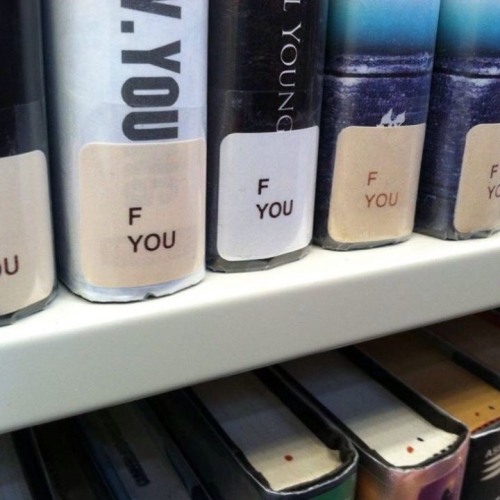


 I have some pretty cute and sexy friends with benefits. The benefits are varied- some of them can cook, others really enjoy going to cheesy kids movies, others will record stories for me to listen to when I fall asleep. And yeah, sure, some of them I have sex with, but I’ve been learning that as benefits go, that is, for me, one of the least important.
![Pierre Huyghe, "Untilled (Liegender Frauenakt) [Reclining female nude]" (2012), concrete with beehive structure, wax, and live bee colony (courtesy the Museum of Modern Art, © 2015 Pierre Huyghe, photo by Jonathan Muzikar)](http://hyperallergic.com/wp-content/uploads/2015/07/momabees.jpg) Inspired by the Harper’s Index, Sum of the Arts is a periodic tabulation of numbers floating around the art world and beyond.
Inspired by the Harper’s Index, Sum of the Arts is a periodic tabulation of numbers floating around the art world and beyond.





/cdn0.vox-cdn.com/uploads/chorus_asset/file/3896126/New_Cover.0.jpg)
/cdn0.vox-cdn.com/uploads/chorus_asset/file/3872408/spot.0.png)
/cdn0.vox-cdn.com/uploads/chorus_asset/file/3836132/hr_004.0.png)
/cdn0.vox-cdn.com/uploads/chorus_asset/file/3896394/02.0.png)
/cdn0.vox-cdn.com/uploads/chorus_asset/file/3896376/Young_Allies.0.jpg)
/cdn0.vox-cdn.com/uploads/chorus_asset/file/3872382/spot2.0.png)
/cdn0.vox-cdn.com/uploads/chorus_asset/file/3872388/03.0.png)
/cdn0.vox-cdn.com/uploads/chorus_asset/file/3896402/All_Winners.0.jpg)
/cdn0.vox-cdn.com/uploads/chorus_asset/file/3872386/04.0.png)
/cdn0.vox-cdn.com/uploads/chorus_asset/file/3896408/All_Star_No_3.0.jpg)


 La beauté- The beauty. Arabic calligraphy. Tetouan, Morocco, 2015. Calligraphy by Julien Breton aka Kaalam. Photography by Cisco Light-painting.
 Pensée – think. Arabic calligraphy. Saint-Laurent sur sèvres, France, 2014. Calligraphy by Julien Breton aka Kaalam. Photography by David Gallard.


