Shared posts

31 Jul 00:39

An Open Letter to the National Museum of African Art Regarding Bill Cosby

by Jillian Steinhauer
Simmie Knox, "Portrait of Bill and Camille Cosby" (1984), oil on canvas, 243.9 x 198 cm (96 x 78 in), The Collection of Camille O. and William H. Cosby Jr. (photo by David Stansbury, permission courtesy of the artist) (image courtesy the National Museum of African Art)

Simmie Knox, “Portrait of Bill and Camille Cosby” (1984), oil on canvas, 243.9 x 198 cm (96 x 78 in), The Collection of Camille O. and William H. Cosby Jr. (photo by David Stansbury, permission courtesy of the artist) (image courtesy the National Museum of African Art)

Dear Director Johnnetta B. Cole and other staff members of the Smithsonian National Museum of African Art,

I am writing to you today with a simple request: take down the pictures of Bill Cosby in your current exhibition Conversations. Remove the portraits of him and the quotes by him, the lines of wall text that make Bill Cosby sound like a kind-hearted family man. Because Bill Cosby, contrary to what the television show had us believe, is not a kind-hearted family man. He is, I believe, a sexual predator and a serial rapist.

I’m not sure if you’ve yet read New York magazine’s cover story this week, in which 35 of the 46 women who’ve publicly alleged that Cosby sexually assaulted them tell their stories. If you haven’t, I urge you to do so immediately. It is a horrifying, excruciating thing to read, but it is necessary. After decades of fear and silence, these women have found the courage to speak. After ignoring the allegations and the rumors swirling around Cosby for years, it’s the very least we can do to listen to them.

What does listening to this testimony mean? I have been crying a lot, that’s one kind of response. But there can and should be, I think, a more active way to listen — a way that signals to these women: ‘Not only do we hear you, but we believe you.’

The way for you to show these women that you believe them — that you “in no way condone Mr. Cosby’s behavior” — is to modify your exhibition of works from the Cosbys’ collection. Now.

I am not the first person to suggest this. Writing in the Atlantic last fall, Kriston Capps suggested that you “offer to strike the Cosbys’ name from the show.” At the time, I wasn’t sure if I agreed, but circumstances have changed. Documents were released that show Cosby himself admitting to procuring Quaaludes in order to give them to women with whom he wanted to sleep. The testimonies of the women in New York magazine show a chillingly clear pattern not just of sexual assault but of planned, purposeful predation.

Bill and Camille Cosby discussing their art collection in a video produced by the Smithsonian National Museum of African Art

There has been more news about Conversations, too. The AP reported that the Cosbys funded almost the entire thing — which, when considered alongside the fact that Camille Cosby sits on your board and initiated the loan, does not add up to a very ethically sound show. But fine, the exhibition is up, and you argue that “it is fundamentally about the artworks and the artists who created them, not Mr. Cosby.” This relates to an argument I have heard before, since beginning this public conversation — that it is the artists who will suffer if the show comes down; their work is distinct from the man who, along with his wife, collected it.

Yet from all I’ve read about the show, it seems it is not really exclusively about the artworks and the artists who created them. Washington Post art and architecture critic Philip Kennicott recently revisited Conversations, and on the walls he found more than 40 appearances of Cosby’s name, plus, more broadly, “an exercise in hagiography, full of soft-focus and flattering images of the Cosbys, a painting by their daughter and multiple citations from the couple explaining their love of art.” If we are worrying about the careers and reputations of these artists, well, I don’t think that having their work shown in the context of a glowing picture of Bill Cosby is doing them any favors right now.

In his visit, Kennicott picked up on the patriarchal, “family-friendly” values of the exhibition, writing: “This isn’t about borrowing art from an unsavory rich guy; it’s about hosting an exhibition that celebrates the family life and character … of a married man who by his own admission acquired Quaaludes to give to women he wanted to have sex with.” As partial evidence, Kennicott cites a quote that stood out to me as well when I read through the text on the exhibition’s website (emphasis mine):

The Cosbys commissioned The Family in a tribute to their own family. … The personal importance of family to the collectors cannot be overstated, but the critical mass of images of family and maternity in the Cosby collection speaks to the larger importance of family in the maintenance and transmission of African American culture.

Much of the exhibition text reads like this: flattering, warm and fuzzy, tribute-like. In a Word document included in the press packet, four full paragraphs in a row discuss the importance of quilts to the Cosbys in their valuing of family and kinship. There is the Faith Ringgold piece titled “Camille’s Husband’s Birthday Quilt” (1988), which features images of the Cosby family; there is a quilt made in memory of the Cosbys’ dead son; and there is “a stunning group portrait dedicated to the memory of relatives and important mentors of Bill Cosby’s” by Whitfield Lovell.

Crossroads Quilters, "The Ennis Quilt" (1997), collected scrap fabric, Ennis Cosby’s clothing, 370.8 x 294.8 cm (146 x 116 in), Collection of Camille O. and William H. Cosby Jr. (photo by Jerry Thompson)

Crossroads Quilters, “The Ennis Quilt” (1997), collected scrap fabric, Ennis Cosby’s clothing, 370.8 x 294.8 cm (146 x 116 in), Collection of Camille O. and William H. Cosby Jr. (photo by Jerry Thompson)

“The importance of remembering and honoring family in visual form is a strand that runs through the Cosby collection,” the exhibition text says. Compare those words with this testimony from Barbara Bowman, published in New York magazine:

It was a predatory grooming process that was very subtle and very manipulative. He was America’s favorite dad. I went into this thinking he was going to be my dad. He zoned right in on my insecurities. He convinced me that he was going to take care of me like a father, that he loved me like a daughter. To wake up half-dressed and raped by the man that said he was going to love me like a father? That’s pretty sick.

Hopefully by now you can see the problem.

Look, I understand that this is complicated. No one — least of all people who collect art! — is flawless, and countless artists, creators, and others have committed horrible deeds. But it’s one thing to have a name in small print on a wall label indicating the source of a loan; another to have that name included in the exhibition’s subtitle and plastered on the walls waxing profound about the art (and spelled out formally as if he were a different, more distinguished person: William H. Cosby Jr.). It’s one thing to continue to engage with the art of a creator who was also a rapist; another to continue lauding him as a visionary man who collects important art and through that process upholds “family values.”

In good faith, I’ll leave aside the issue of whether this show should have ever been organized in the first place, as well as the problem of it including art by the Cosbys’ daughter (another clear indication of the questionable ethics at work here, as if we needed more). The exhibition is on the walls, and hopefully someone will gain some educational benefit from it to make it worthwhile. In the meantime, you have six months left to do something. Six months in which to make a statement, to tell the 46 women — and the likely more who haven’t come forward — that you believe them, by stripping the show of its hagiography and pushing it to a sounder place. (And if the Cosbys object, if they pull out? Well, that says all we need to know, doesn’t it?) Six months left to demonstrate that morals can still be more important than money and celebrity, even a little bit, even in the art world.

Sincerely,

Jillian Steinhauer

31 Jul 00:37

Crimes of the Art

by Benjamin Sutton
One of the head sculptures stolen from  from the exhibition 'For Richer, for Poorer, for Better, for Worse' by Samuel Wyer and Laura Drake Chambers at the Latitude Festival (photo by @always_traveling/Instagram)

One of the head sculptures stolen from from the exhibition ‘For Richer, for Poorer, for Better, for Worse’ by Samuel Wyer and Laura Drake Chambers at the Latitude Festival (photo by @always_traveling/Instagram)

Crimes of the Art is a weekly survey of artless criminals’ cultural misdeeds. Crimes are rated on a highly subjective scale from one “Scream” emoji — the equivalent of a vandal tagging the exterior of a local history museum in a remote part of the US — to five “Scream” emojis — the equivalent of the Isabella Stewart Gardner Museum heist.

Artists Lose Their Heads

crimes-of-the-art-scream-2Fourteen sculptures of grimacing golden heads on stakes by artists Samuel Wyer and Laura Drake Chambers that were installed in Faraway Forest as part of the Latitude Festival in Suffolk, England, were stolen. Valued at £5,000 (~$7,800), they were allegedly taken by “a large group of young children and two adults” that used electric tools to remove them.

Verdict: Art theft is already a despicable crime, but roping children into the act marks a new low.

Gallery Hooked on Stealing Art

crimes-of-the-art-scream-1Dozens of artists claim that Kansas City’s Hook Gallery has been using their work in its “BYOB Painting Parties,” teaching attendees to reproduce their original works without giving them any credit or payment for their original paintings.

Verdict: Hook Gallery had better schedule some Bring-Your-Own-Lawyer parties.

Mayor Used Public Money in Fantasy Museum Acquisition Spree

crimes-of-the-art-scream-4Stephen Reed, the former mayor of Harrisburg, Pennsylvania, has been charged with nearly 500 criminal counts for using public funds to buy thousands of artifacts, purportedly to display in a series of museums he planned to open devoted to the Wild West, sports, African American history, and other subjects. A recent raid of Reed’s office turned up 12 rooms piled to the ceilings with the illegally purchased artifacts and a full-scale recreation of his mayoral office.

Verdict: Classic case of putting the cart before the horse, except the cart is jam-packed with artifacts purchased illegally with taxpayers’ money.

Thief Blames Theft on Museum

crimes-of-the-art-scream-5Daniel Jude Witek, a former volunteer at the Buffalo History Museum — from which he is accused of stealing dozens of letters by Anson Goodyear — is claiming in his defense that he shouldn’t be blamed for taking advantage of the museum’s incredibly lax security protocol. “This is an institution that has had massive problems with theft, inventory control and security going back 50 years,” he told the Buffalo News.

Verdict: Witek gives museum volunteers everywhere a bad name.

Goethe Bust Goes Missing

The bronze bust of Goethe that recently went missing in Rochester. (photo by @liza_bryte_eyes/Instagram)

The bronze bust of Goethe that recently went missing in Rochester (photo by @liza_bryte_eyes/Instagram)

crimes-of-the-art-scream-2A bronze bust of the German author Johann Wolfgang von Goethe was stolen from Highland Park in Rochester, New York. The sculpture, by German artist William Ehrich, was unveiled in 1950 to commemorate Goethe’s 200th anniversary.

Verdict: The Goethe thieves have unwittingly made a Faustian bargain with Rochester Police.

Chainsaw Sculptor’s Tools Taken

crimes-of-the-art-scream-2Celebrated chainsaw artist Brian “Ackmonster” Ackley was robbed of $10,000 worth of art-making equipment, including 10 chainsaws, several drills, a generator, a wood grinder, and other items. In the wake of the theft from his home in New Jersey, the chainsaw sculpture community has come to Ackley’s aid, loaning him equipment and launching a GoFundMe campaign to help him replace the stolen tools.

Verdict: Police are on the prowl for the thieves, but apparently nobody saw them.

The Riddle of the Stolen Penis Carvings

crimes-of-the-art-scream-4Joseph Wayne Riddle and Rindi Dakota Riddle have been arrested under suspicion of stealing a pair of ancient Chinese ivory penis carvings from Sweeten Creek Antiques and Collectibles in Asheville, North Carolina. The carvings were valued at $6,090.

Verdict: Gives new meaning to the expression “sticky-fingered.”

31 Jul 00:37

Town Says It Will Prosecute Official (Part II)

by Kevin

Update: The Simolaris Incident was still infuriating people at this week's board meeting, according to a more recent report by the Lowell Sun. Simolaris and town manager John Curran argued about who had committed the greater sin, and the forum also had "its fair share of outbursts from residents, one of whom was escorted out by a police officer." Doesn't seem like the kind of thing that should generate fury, but I guess we've all got to be furious about something.

As for whether Simolaris's paint job was "useful" and/or safe, reader Dan the Former Traffic Engineer notes that traffic markings across the country are controlled by something called the Manual on Uniform Traffic Control Devices because they are, after all, supposed to be uniform. While I hadn't heard of the MUTCD before Dan mentioned it, I am of course more than willing to glance at something briefly and then pose as an expert on that topic (not literally).

Under Section 3B.18, crosswalk lines "shall consist of solid white lines that mark the crosswalk." As far as I can tell, neither the MUTCD nor any of the Massachusetts amendments to it say anything about  the part between the white lines, which I am guessing is what Simolaris painted based on the pre-washing picture below. If he painted the interior parts but didn't mess with any of the white lines, then arguably he didn't affect the existing "crosswalk markings" themselves at all. And if there's nothing about what color the interior needs to be, then using green didn't break an existing crosswalk rule, and greening the interior could not have made the existing crosswalks (such as they were) any less visible.

Billerica

Now, it is very possible (seems likely, in fact) that there is some more general regulation prohibiting people from going out and exercising their creative impulses in a way that affects the appearance of a traffic-control device, especially if that makes it non-uniform. Also, several people pointed out that the "deck paint" Simolaris apparently used may not stick to the road very well (and one person has apparently claimed it got on her car) and could be more slippery than official paint under some circumstances. That is possible; I express no opinion on the nature of paint.

But in any event, as I should have pointed out previously, Simolaris has already agreed to pay the $4,200 it cost to remove his handiwork. I guess my real objection is to the board's insistence that he resign over this dastardly deed, and especially to the decision to press criminal charges. Have him pay for it, and let's move on to being furious about something really important. Something Kardashian- and/or Jenner-related, I assume.


31 Jul 00:37

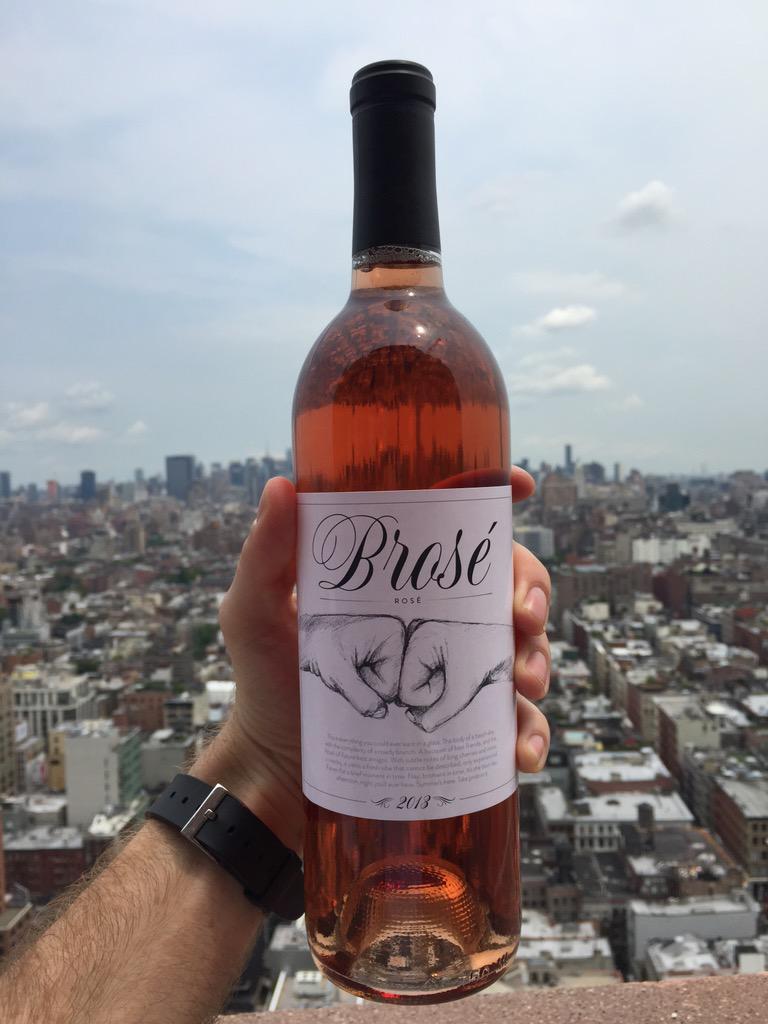
No Way, Brosé

by bspencer


Dudes have discovered Rosé wine. It’s not like it hasn’t been mouldering on the shelves alongside whites and reds for forever now, but apparently since men have discovered it now has relevancy.

I don’t have a problem with people liking Rosé…like, at all. Most of them are too sweet for my taste, but if you dig sweet wine, rock on and swig that sweet wine. What I have a problem with is that this Rosé only became remarkable because men began remarking on it.

(Thanks to N_B for the link.)

31 Jul 00:36

I think this Key & Peele video is brilliant.

by Richard Jeffrey Newman

31 Jul 00:31

You know, the nearer your destination, the more you’re slip-sliding away.

by Sophia, NOT Loren!

Monday at about 4:30 in the afternoon, I got a call from my therapist. She asked how I was doing (mostly okay at the time she called) and then told me she had some Bad News…

She’s an Interning MFT, so she has to work under the supervision of a fully-licensed Marriage and Family Therapist in order to practice.  She told me that her supervisor had left her; I don’t remember the exact wording that she used, but it was something like a moral or ethical conflict, or some reason that her supervisor could not keep filling that role in good conscience.  Obviously she couldn’t discuss the exact nature of the situation, or give me any details about it, but as of that very moment she couldn’t legally be my therapist (or anyone else’s either.)

She let me know that she could provide references or other information about therapists in the area, if I wanted… and she made sure to take down my mailing address so she could send me a check for the amount I’d paid in advance for the session that would have been the next day.  She also offered that she was scrambling to find another supervisor as quickly as possible.  “It’s not often you end up in a job where you genuinely enjoy going into work every day,” she mused, and I can also understand wanting to make sure that she has any employment…

I told her that I felt confident in my support network for the moment to see me through until she’s back up and running, and she let me know that she’d keep her “Office Number” open (which seemed to be a Google Voice line when I’d called a few days before) while she’s figuring things out.  She made it clear that I could still call if there was an emergency, or if I had any further updates about my decision to stick it out and wait for her.

Some of you may remember that it was just at the end of July that I was worried about whether I’d be able to keep seeing her, as she was moving out from under the umbrella of one therapy group office out to her own private practice — and she’d apparently done a fair bit of looking to find a supervisor to work with.  For that supervisor to suddenly bail on her 3 weeks later is pretty much bullshit, in my opinion.

As I was talking this over, first with Lime and then with Plush (yay, new people to name — she’s not new to my life, just to being mentioned on this blog) it dawned on me that suddenly not having a therapist indefinitely means suddenly not having any shot at a letter of support/letter of recommendation indefinitely, which means not seeing any possibility of an orchiectomy indefinitely.

And with that realization came the little tidbit of remembering that it wouldn’t technically have been her alone signing the recommendation, but her supervisor — the required “licensed professional” that the WPATH Standards Of (fucked-up bullshit gatekeeping measures to prevent trans* folks from accessing medically necessary) Care insist on having sign the document.

So now I have this little nagging doubt and wonder — am I the reason her supervisor walked away?  Of course, there’s no way to find out.  She’s legally prevented from discussing what her former supervisor said to her in confidence, and even if that’s what it was, there’s certainly no easy way to prove it.  My session this last Tuesday was supposed to consist mainly of my therapist and me drafting that very letter and refining it to be faxed off then and there.

This is the system.  I’m one of the lucky ones — backpack full of privilege that gets me anywhere near the access to care that I get.  White, “articulate” — which means I talk (or can talk) like the white people in power, the people in gatekeeper positions — and a fair knowledge of and familiarity with Western medicine, thanks in large part to growing up with my dad being a nurse.  And I’m often perceived as a cis* woman, which means less risk of violence from the general public and from the institutions of power and control (governments, police, prison system, religious organizations, etc.)

For the moment, I’m dealing with the usual depression and hard time coping that I often do.  It’s not easy when I end up with difficult news, though — like The Rabbit writing to say that she was in a hit-and-run accident, shaken but uninjured (though the same can’t be said for her car) and dreadful news about a member of my blood family (which I can’t discuss publicly.)  I don’t know what else to do, though… “Alive By Default,” as MFP calls it, that’s all I’ve got.


Filed under: General
31 Jul 00:30

Silhouette Portraits from the Days Before Photography

by Allison Meier
Part of a pair of 19th-century hollow-cut silhouettes showing a woman and gentleman on black silk, with watercolor bodies, in gilt repousse frames, both attributed to the so-called "Dash Artist" (Fertig Collection, all images courtesy Willis Henry Auctions)

Part of a pair of 19th-century hollow-cut silhouettes showing a woman and gentleman on black silk, with watercolor bodies, in gilt repousse frames, both attributed to the so-called “Dash Artist” (Fertig Collection, all images courtesy Willis Henry Auctions)

Before photography, the silhouette was a popular form of portraiture more affordable than oil painting, where the outline of a face in profile was cut in black.

“It was very popular to have a silhouette cut, especially if you were getting married, or elderly before you kicked the bucket,” said Willis Henry, proprietor of Willis Henry Auctions. This weekend at its folk art auction in Manchester, New Hampshire, the auction house is offering around 100 silhouettes that date to the 18th and 19th centuries, all collected by Howard and Florence Fertig. The Livingston, New Jersey–based couple focused on collecting American folk art up until Howard’s death in 2012. Alongside the silhouettes at auction are other folk art curios, from 19th-century watch hutches designed like tiny grandfather clocks to a weathervane shaped like a mermaid.

19th-century hollow-cut and watercolor silhouette of a young lady in a rose pink dress with blue ribbons and white collar, holding a book with "age 25 yrs, 1834," attributed to the "Puffy Sleeve" Artist

19th-century hollow-cut and watercolor silhouette of a young lady in a rose pink dress with blue ribbons and white collar, holding a book with “age 25 yrs, 1834,” attributed to the “Puffy Sleeve” Artist (click to enlarge)

At a glance the silhouettes may all look similar and somewhat monochrome, but each has a distinctive flare. The “Puffy Sleeve” artist added watercolor bodies to the black-cut heads, such as one of a young woman in a pink dress holding a book that reads “age 25 years, 1834.” Another creator known as the “Dash Artist” adorned the painted bodies of his figures with dash lines as decoration. One silhouette of a young lady boasts: “cut with scissors by Master Hubard without drawing or machine.” Most are housed in elaborate metal frames, frequently brass; these were an art form in themselves, often made and sold by the same artists.

Some cutters even incorporated the popular portraiture into sideshow acts. A rare hollow-cut silhouette, meaning that the interior of the paper was cut rather than the edges, states: “S.E. Staples at 25., Cut without hands by M.A. Honeywell (Martha Ann).” Honeywell was one of several silhouette artists of the 19th century born without hands, who cut with their feet or mouth.

“Silhouettes were a real art form back in the 1800s,” Henry said. But as “photography really started to take hold,” they became obsolete. “It’s a lost art,” he adds, although still practiced sporadically as a niche medium.

Some of the silhouettes were included in a 1991 exhibition from the Fertigs’ collection at the Morris Museum in Morristown, New Jersey, but for the most part they haven’t been on public view. A few of the ones going to auction this weekend are below, with more to explore in the online catalogue.

Rare hollow-cut silhouette, "S.E. Staples at 25., Cut without hands by M.A. Honeywell (Martha Ann)"

Rare hollow-cut silhouette, “S.E. Staples at 25., Cut without hands by M.A. Honeywell (Martha Ann)”

19th-century hollow-cut silhouette, attributed to William Chamberlain (Loudon, NH, 1790-1860), watercolor striped vest with red stick pin, pen and ink hairdo, fancy eglomise oval glass, reframed in gilt period frame

19th-century hollow-cut silhouette, attributed to William Chamberlain (Loudon, NH, 1790–1860), watercolor striped vest with red stick pin, pen and ink hairdo, fancy eglomise oval glass, reframed in gilt period frame

Part of a pair of 19th-century hollow-cut silhouettes showing a woman and gentleman on black silk, with watercolor bodies, in gilt repousse frames, both attributed to the so-called "Dash Artist"

Part of a pair of 19th-century hollow-cut silhouettes showing a woman and gentleman on black silk, with watercolor bodies, in gilt repousse frames, both attributed to the so-called “Dash Artist”

Hollow-cut silhouette, early 19th century, of a gentleman with curlicue cut outs of jacket, attributed to E. Howard

Hollow-cut silhouette, early 19th century, of a gentleman with curlicue cut outs of jacket, attributed to E. Howard

h/t New York Times

The silhouettes collected by Florence and Howard Fertig will be sold on August 2 through Willis Henry Auctions (Radisson Hotel, Manchester, New Hampshire).

31 Jul 00:30

Maakies: How to Draw a Unicorn

by Tony Millionaire
31 Jul 00:29

Madness in My Family

by Aram Saroyan
madness-top-BIG

(image Hrag Vartanian/Hyperallergic)

When Saroyan, a biography of my father William Saroyan by Lawrence Lee and Barry Gifford, was published in 1986, I was coming off a five-year run during which I wrote three books about my family and couldn’t handle sitting down to read another word about them. A quarter of a century later, with almost all of its subjects now gone, I came across a copy of Saroyan in the recently-closed Cosmopolitan Bookstore on Melrose Avenue in Los Angeles, bought it and read it through virtually without stopping. The primary difference between my books as well as the one by the late John Leggett, and Saroyan is that a third to a half of it comprises recorded testimony by my father’s friends and relatives.

It’s an unexpected perk of having a famous family member that this public accounting may occur apart from one’s own efforts. Specifically, Saroyan gave me a window on my father’s last years when I’d been estranged from him. While abusing not only his immediate family but, among others, his devoted cousin and best friend Archie Minasian, he made decisions about his estate that had unfortunate, lasting repercussions. The behavior I experienced is echoed and given context by his behavior with others recorded in Saroyan.  These witnesses confirm what I saw, which in a way depersonalizes what happened and makes it easier to muster compassion for him.

Early on Minasian speaks about the cruelty of their maternal uncle, Aram Saroyan, their mothers’ younger brother who became for both boys a surrogate father, their own fathers having died when the cousins were still in early childhood.

“You know, you boys don’t deserve to walk on streets. Walk through alleys,” Minasian quotes their wealthy uncle. “Walk through alleys, where you belong, streets are for people.”

Belonging to the first Armenian American-born generation of a then-despised minority in Fresno, both boys were nascent artists who managed to nurture each other. Having survived Fresno, and his Uncle Aram’s obtusity, my father at 26 experienced the meteoric rise of a literary legend. His career peaked in the 1930s and early 1940s when as a short-story writer (The Daring Young Man on the Flying Trapeze), Pulitzer Prize winning playwright (The Time of Your Life), and novelist (The Human Comedy), he knew something like the combined popular and critical success that F. Scott Fitzgerald had known during the 1920s. A handsome, outspoken young man-about-town, he quickly became a favorite of gossip columnists like Leonard Lyons in New York and Herb Caen in San Francisco, now his home city. Minasian, five years younger and only posthumously beginning to receive his due as a poet, never had a literary career, but he remained steadfastly loyal to his famous cousin through every phase of his life.

When Saroyan was drafted in his mid-thirties, the devil-may-care persona that had endeared him to the columnists ran up against rigid military protocol, and he badly miscalculated the breathing room permitted his anarchistic spirit.  Assigned to write the script for an army training film on how to load a boxcar with military supplies, he turned in a one-line script: “Loading a box car is easy.”  After this was summarily rejected and he was sent on a tour of army bases to review the procedure in different settings—the first articles loaded would be the last unloaded etc. ‚ he altered the single-line script by one word: “Loading a box car is difficult” — with predictably dire consequences. The caricaturist Al Hirschfeld, one of Saroyan’s small number of close friends, reports:

That kind of joke didn’t go in the army.

They had him cleaning latrines for months.  And they broke him. They broke his spirit. He was in the hospital, psychiatric, and they just knocked him out. They knocked him out of the box, and he never quite recovered from it.

He tried to figure it out. He became philosophical and he became cerebral. It didn’t work.

The young writer who handled the Depression with charming psychological elan, and then knew the sort of success that only a handful of writers knew in his century, was caught up short by the war, by a marriage he wasn’t suited for, and by the change of mood in the post-war American world — all of it coming with the onset of middle-age.

What seems brave in his odyssey is that unlike the other literary movie-stars of his ilk, Fitzgerald and Kerouac, whose incandescent moment also passed and both of whom died in their forties, he lived a full life span, although henceforth he seemed to grapple with a more-or-less continuous low-grade depression. He died at 72 in 1981. During his last days, when he wouldn’t answer his home phone, Minasian would take a chance and drive down from Palo Alto to Fresno, hoping for a visit, sometimes to meet a dour-faced Saroyan at his door and turn around and head home.

The writer, now estranged from family and friends alike, with his lifelong deafness a deepening problem, fired his long-time lawyer when he advised against disinheriting his children, and left his literary estate in the hands of a Fresno wine merchant he’d met only once, the son of a wealthy Armenian when Saroyan was growing up. In the last stages of cancer, he sought out and found people who would literally ‘yes’ him to death. Having flirted most of his life with pathology in various forms, including a gambling addiction that kept him in the hole when he earned more money than virtually any other American writer of his generation, he went crazy.

I already knew his life was in certain respects a cautionary tale, and in fact my own books alerted Lee and Gifford that their project wasn’t what they’d anticipated. Having undertaken a book in the same vein as Jack’s Book, their oral biography of Jack Kerouac, they ended with one in which the oral testimony amplifies and elaborates rather than dominates. For aside from my mother, twice his ex-wife, and his closest family members, few people knew Saroyan and fewer still were intimates.

I came to know Lawrence (Larry) Lee as a friend while he worked on the book, and was shaken by his death from AIDS only a short time after it was published. In the Bay Area, where we both lived at the time, he was a Peabody-award-winning investigative journalist for KRON, the local NBC affiliate. His second collaboration with the novelist Barry Gifford, Saroyan brought a scrupulous, disinterested mind to my father’s personal history, and incidentally vouchsafed a helpful, temporizing text to his friends and family at large.

Ultimos Ritos, a Spanish translation of Aram Saroyan’s Last Rites: The Death of William Saroyan, was just published in Argentina.

31 Jul 00:28

Germans Posing with Polar Bears in Vintage Photos

by Laura C. Mallonee
TEDDY_15

An image from Jean-Marie Donat’s collection (all images courtesy Jean-Marie Donat)

Try not to crack a smile at the sight of a polar bear crashing human picnics, photo-bombing social soirées, and seemingly just trying to fit in. That’s the challenge when perusing TeddyBär, a new photo book featuring dozens of bizarre photographs taken in Germany between the 1920s and ’60s featuring improbable cameos by a man in a bear costume and collected by French editor Jean-Marie Donat.

Unfortunately, the history behind the bear costume in many of the images is darker than you’d expect. It was created by the German stuffed animal company Steiff as a mascot for Fanta, the carbonated soda invented in Germany during World War II to make up for the shortage of Coca-Cola. Look a bit closer and you’ll see Nazi insignia and swastikas on the uniforms of soldiers linking arms with the bear and the dress of a smiling girl leaning in for a hug. The polar bear comes to symbolize the German desire to pretend things were normal — to enjoy a fizzy drink, pose for a silly photo with a furry friend — and ignore the fact that grizzly death was swirling all around.

TEDDY_02

An image from Jean-Marie Donat’s collection

TEDDY_08

An image from Jean-Marie Donat’s collection

TEDDY_13

An image from Jean-Marie Donat’s collection

TEDDY_18

An image from Jeann-Marie Donat’s collection

TEDDY_23

An image from Jean-Marie Donat’s collection

TEDDY_29

An image from Jean-Marie Donat’s collection

TEDDY_35

An image from Jean-Marie Donat’s collection

TEDDY_38

An image from Jeann-Marie Donat’s collection

TEDDY_39

An image from Jean-Marie Donat’s collection

TEDDY_45

An image from Jean-Marie Donat’s collection

TEDDY_49

An image from Jean-Marie Donat’s collection

TEDDY_52

An image from Jean-Marie Donat’s collection

TEDDY_55

An image from Jean-Marie Donat’s collection

TEDDY_64

An image from Jean-Marie Donat’s collection

Jean-Marie Donat’s TeddyBär series is currently on view at Les Rencontres de la Photographie at Arles 2015, through September 20.

31 Jul 00:27

DynaFlashProjection technology from the Ishikawa Watanabe...


DynaFlash

Projection technology from the Ishikawa Watanabe Laboratory can display at 1000 frames per second and accurately position a moving image onto a moving object:

In the application fields including projection mapping, digital signage, user interface, AR (Augmented Reality), and so on, the projector technology for the image projection to the real-world object has become important. Also, in the industrial application fields such as robot applications, there are various developments of the image sensing systems which consists of a camera and a projector. However, the conventional projectors supposes to project to a static target such as a flat screen. Therefore, although they have high image quality, the frame rate, mainly targeted as 30-120 fps, is not enough performance for the applications described above. To solve this problem, we have developed a working prototype of the high-speed projector “DynaFlash”. DynaFlash can project 8-bit images up to 1,000fps with 3ms delay. 

More Here

31 Jul 00:24

Dusting Off Victorian Science Specimens, from Two-Faced Kittens to Slug Models

by Allison Meier
Object Lessons: The Visualisation of Nineteenth-Century Life Sciences

Two-faced kitten, taxidermy by GF Bushell (1880) (© Rosamond Purcell, all images courtesy Ridinghouse)

After 25 years of collecting contemporary art, George Loudon’s eye was caught by a display of 19th-century glass flowers at Harvard University. From those models by Leopold and Rudolf Blaschka, he delved into a whole forgotten field of Victorian science teaching specimens, where the natural world was recreated in papier-mâché, wax, plaster, and other materials so people could examine anatomy and biology up close.

Cover of 'Object Lessons: The Visualisation of Nineteenth-Century Life Sciences' (click to enlarge)

Cover of ‘Object Lessons: The Visualisation of Nineteenth-Century Life Sciences’ (click to enlarge)

In Object Lessons: The Visualisation of Nineteenth-Century Life Sciences, out last month from Ridinghouse, the London-based collector told Lynne Cooke, senior curator of special projects in modern art at the National Gallery of Art, Washington, DC:

These glass models were really an eye-opener in terms of what this kind of material could mean. So then I started looking everywhere, and going to an endless number of museum storages because, of course, the institutions don’t show this material anymore. It’s all hidden away.

For example, the Blaschka glass flowers are proudly on view at Harvard, while their lesser-known glass creations like their slugs and marine invertebrates have mostly gathered dust. There is a recent revival in this period of scientific object creation; next year, the Corning Museum of Glass in Corning, New York, is holding a retrospective on the Blaschka marine models.

Object Lessons explores the around 200 objects in Loudon’s collection, photographed by Boston-based Rosamond Purcell in close detail with an objective eye, bringing viewers into the same perspective of 19th-century owners who touched and examined these pieces not as precious objects, but as learning tools.

Pages from 'Object Lessons' (photo of the book for Hyperallergic)

Pages from ‘Object Lessons’ (photo of the book for Hyperallergic)

Pages from 'Object Lessons' (photo of the book for Hyperallergic)

Medical heads by Casciani and Sons in ‘Object Lessons’ (photo of the book for Hyperallergic)

“The material I collect has lost its original purpose,” Loudon states in an introduction to the book. “It has disappeared from view in museums and universities and been consigned to storage. But by losing its original purpose it has become open to new meanings and especially new visual interpretations.”

Object Lessons: The Visualisation of Nineteenth-Century Life Sciences

Exploded skull (Europe, 1900) (© Rosamond Purcell, 2014) (click to enlarge)

Exploded skulls revealing each bone in dioramas, prints from plants, albums of insects mounted on decorative paper, samples of trees arranged like a book, and outdated theories like phrenology busts have lost their utility. Nevertheless, as artisan objects they are often extraordinary. An 1849 wooden box by Henry Blunt opens to reveal a miniature model of the moon’s surface, and papier-mâché models by Louis Thomas Jérôme Auzoux of human anatomy, mushrooms, and a grain of wheat capture vivid details of life in the simple material. At the time, cadavers were in short supply, and wax models were expensive, so these models had a very practical academic purpose.

However there are some outlying, very unpractical objects, such as a book of souls illustrated by someone who could supposedly see them, which Loudon found in a Los Angeles bookshop, and perhaps the most adorable two-faced kitten ever taxidermied positioned on a velvet cushion, whose creator, GF Bushell, proudly stuck his name in gold on the exterior of the glass dome. Many of the objects come from Europe, but they’re joined by pieces like fruit and vegetables carved from ivory in India. Whether stunning, articulated skeletons, or a simple turnip preserved in a jar, these obsolete objects sold for personal use at a time of scientific enthusiasm still have an enduring fascination.

Preserved Conjoined Piglets (European, 19th century), 30 cm high, 18 cm diameter (© Rosamond Purcell, 2014)

Preserved Conjoined Piglets (European, 19th century), 30 cm high, 18 cm diameter (© Rosamond Purcell, 2014)

Object Lessons: The Visualisation of Nineteenth-Century Life Sciences

Leopold and Rudolf Blaschka, three glass models of slugs (Germany, mid-to late 19th century) (© Rosamond Purcell, 2014)

Object Lessons: The Visualisation of Nineteenth-Century Life Sciences

Model of the bones in the foot (Europe, late 19th century) (© Rosamond Purcell, 2014)

Object Lessons: The Visualisation of Nineteenth-Century Life Sciences

Alice Murray Dew-Smith, “Soul Shapes” (London, 1890), 4 hand-colored plates (© Rosamond Purcell, 2014)

Object Lessons: The Visualisation of Nineteenth-Century Life Sciences

Wax models of pomegranates by Francesco Garnier Valletti (Turin, 19th century)

Ivory Models of Fruit and Vegetables (India, 19th century), between 4 cm and 11 cm long (© Rosamond Purcell, 2014)

Ivory Models of Fruit and Vegetables (India, 19th century), between 4 cm and 11 cm long (© Rosamond Purcell, 2014)

12 Phrenology Busts (France, 19th century), 8 x 4 x 5 cm each (© Rosamond Purcell, 2014)

12 Phrenology Busts (France, 19th century), 8 x 4 x 5 cm each (© Rosamond Purcell, 2014)

Object Lessons: The Visualisation of Nineteenth-Century Life Sciences by George Loudon with photographs by Rosamond Purcell is out now from Ridinghouse.

31 Jul 00:23

Law dean calls grads on night before bar exam to try to bribe them not to take it

by Paul Campos

HL mencken

Not the Onion.

There’s nothing like a last-second call from the dean of your law school telling you that you’re about to fail the bar exam to boost your confidence. These are the reports that started pouring in last night from various sources at Arizona Summit Law:

The dean of ASLS is calling several bar sitters trying to talk them out of sitting for the bar exam tomorrow. I do not know if any accepted the offer. I spoke with an acquaintance that received a call from Dean Mays at 5:40 p.m. last night. The bar sitter was so upset by the call that she couldn’t clear her mind and hardly slept.

Another tipster told us that the bar exam deferral stipend being offered by Dean Mays was $10,000 — in case you haven’t been paying attention, that’s the same amount Arizona Summit pays to its repeated bar failures as some sort of a consolation prize.

Capt. Louis Renault is shocked to report that the school in question is one of the Infilaw outfits. The Infilaw schools started cutting their admissions standards from “very modest” to “carbon-based life form” about four years ago, and now various chickens are beginning to roost.

The collapse of bar passage rates for the schools’ grads could in theory lead to the ABA Section of Regulatory Capture Legal Education yanking the schools’ accreditation, although since Infilaw has managed to get a bunch of its shills embedded deep within that august body, this is roughly similar to expect Roger Goodell to do an excellent job at reviewing Roger Goodell’s previous decisions.

31 Jul 00:22

Western Governments and Global Labor Standards

by Erik Loomis

Rana Plaza building in Dhaka.

Robert Ross has an excellent article on Bangladeshi labor reforms two years after Rana Plaza. In short, the international outrage has led to some relatively minor but not meaningless changes to building safety and union voices on the job. But very little to none of the money corporations have given to compensate the survivors have made it to the workers, employer resistance is still massive and that includes firing unionists, 10 percent of the Bangladeshi parliament is made up of apparel factory owners, and while the European companies Accord on Fire and Building Safety has helped workers, the American companies’ toothless version has done nothing but protect Walmart and Gap from responsibility for workers’ rights. Ultimately, Ross sees two key points out of this that I discuss in Out of Sight. First, that western governments have the power to make a difference in Bangladesh:

If labor rights and protective government policy (unions, laws, and law enforcement) form the main crucible of decent conditions for workers, alliances with international NGOs and labor unions are the enablers. Policy levers also exist—but Western governments have to be willing to use them. For example, the EU has what is called a Generalized System of Preferences (GSP) written into its trade laws. (The U.S.’s GSP provisions expired in 2013, but are likely to be reauthorized.) These allow duty-free entry of certain goods from low-income nations into the economies of their higher-income trading partners. They are bilateral terms, conditioned, ostensibly, on trade partners observing internationally recognized labor rights.

For example, after the Rana Plaza collapse, the U.S. suspended Bangladesh’s GSP privileges because of its fundamental disrespect for labor rights. But apparel imports are excluded from the GSP. This past year, through April 2015, Bangladesh apparel exports to the U.S. were valued at $4.95 billion. In 2012, Bangladesh imports covered by the GSP provisions were worth $34.7 million. The GSP suspension was symbolic.

However, apparel imports to the multination EU are covered by a single GSP provision. In 2014, they were worth almost $14 billion. At the Second Anniversary Forum sponsored by the ILO at a swank downtown Dhaka hotel, the EU representative to Bangladesh made a clear threat to suspend GSP privileges unless Bangladesh followed through on commitments to protect worker safety and guarantee core labor rights, a duplication in intent of an ILO forum in Brussels two days before. This is a target for European campaigners, particularly the Amsterdam-based Clean Clothes Campaign. Whether they are willing to use the threat—which is dire—remains to be seen.

There are other levers for U.S. allies. The federal government is a large buyer of garments, including the post exchange (PX) retail stores where armed forces families buy goods on military bases around the world. They could be required to buy only from Accord members when they source from Bangladesh. They now report on whether they are using Accord factories, and the Marine Corps requires licensees using their logos to source from Accord firms or from factories that meet its requirements.

Yet for the most part, the American government refuses to do anything. That includes congressional Republicans getting angry at the military for not sourcing their clothing cheaply enough. It has certainly not been a priority for Obama, as the Trans-Pacific Partnership demonstrates. Global labor rights needs to be a political issue in this country for this system to meaningfully change. But this gets to Ross’ other point–that conditions for American workers are also getting worse:

American workers don’t face conditions as grim as those in Bangladesh, but some are not so different. As American workers lose union protection because of hostile laws, courts, and media, so do they lose their ability to defend safe conditions. At Upper Big Branch Mine in West Virginia in 2010, 29 miners died: non-union. In the 1991 Hamlet, North Carolina, poultry plant fire where 25 died and the back doors were locked: non-union. On paper, American workers have all the rights they need to organize and join unions. In practice, they risk getting fired.

In Bangladesh, one of the gaps is a decade-long, as yet unsuccessful, attempt to create a workers’ compensation insurance system. Workers’ comp offers a no-fault system—a grand bargain created a century ago, state by state, in the U.S.: Workers don’t sue; employers pay insurance premiums to cover medical costs and long-term income replacement for disability. Oops: Workers’ comp is under attack in the U.S. in state after state, as caps on payments, limits on payment duration, and other restrictions erode yet another part of the social safety net. We learn about what we need by examining the deficits of others.

Right, and with the destruction of unions and a century of labor law the stated goal of Republicans today, the future of the already heavily eroded standards of American work are very much in doubt. Outsourcing and the global race to the bottom incentivizes American companies to launch attacks on American worker rights while at the same time moving production around the globe to ensure a global Gilded Age of extreme income inequality and severe worker suffering. That can’t get better if workers can’t form their own unions and the companies stick around long enough to deal with those unions. What Ross does not state is the globalized nature of apparel production and the very real fear among Bangladeshi worker activists that the companies could move once again at any time if they feel too much pressure to pay good wages or have safe workplaces in Bangladesh. Only by creating international labor standards enforceable in U.S. courts that follow American companies no matter where they source their items will we begin to create a legal regime that gives workers a fair shake, both at home and abroad.

Speaking of such things, this is as good a place as any to remind our New York readers that I will be speaking with the labor journalist Sarah Jaffe at Local 61 in Brooklyn tonight at 7. There will be copies of Out of Sight available for purchase and I will be happy to sign yours. Also, CSPAN is filming it for BookTV and whenever it actually comes on, I’ll let everyone know.

30 Jul 23:59

stonedkitty: did-you-kno: On her childhood:“I counted...


stonedkitty:

did-you-kno:

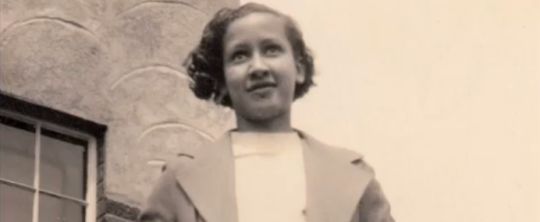
On her childhood:

“I counted everything. I counted the steps to the road, the steps up to church, the number of dishes and silverware I washed … anything that could be counted, I did.”

image

On her NASA calculations:

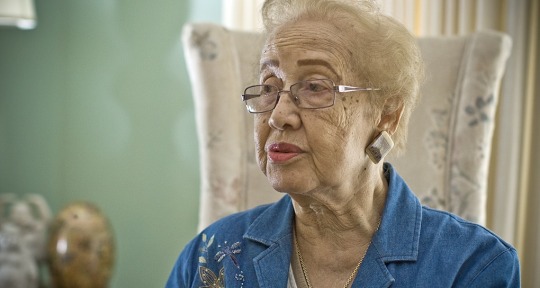
“Early on, when they said they wanted the capsule to come down at a certain place, they were trying to compute when it should start. I said, ‘Let me do it. You tell me when you want it and where you want it to land, and I’ll do it backwards and tell you when to take off.’ That was my forte.”

Katherine really stood out in her field because she was the only woman who asked questions.

“The women did what they were told to do,” she explained. “They didn’t ask questions or take the task any further. I asked questions; I wanted to know why.“

In 2011, when asked if she still counts things:

 “Oh, yes. And things have to be parallel. I see a picture right now that’s not parallel, so I’m going to go straighten it. Things must be in order.”

image

Source

AND SHES BLACK

30 Jul 23:58

crimson-tearz: Stray Witch by Savannah Horrocks


crimson-tearz:

Stray Witch by Savannah Horrocks

30 Jul 23:58

Amanda Manitach


amandamanitach.com


amandamanitach.com

Amanda Manitach

30 Jul 23:57

Intel's 3D memory is 1,000 times faster than modern storage

by Andrew Tarantola
Intel and Micron unveiled a novel new kind of non-volatile data storage device during a press conference on Tuesday. The chips, dubbed "3D XPoint" (pronounced "cross-point"), are being touted as the first new class of "mainstream memory" to hit the m...
30 Jul 23:57

Researchers boost solar energy by tapping infrared light

by Steve Dent
Our sun blasts out over 50 percent of its energy as "near-infrared" light, but solar cells only harvest visible light. As a result, the best commercial panels only convert about 20 percent of solar energy to electricity. Researchers from UC Riverside...
30 Jul 23:56

San Francisco-Based Company Builds Guitars From Recycled Skateboard Decks

by Kate Sierzputowski

Prisma-Skateboard-Guitar

Nick Pourfard is 22-year-old artist, musician, and skateboarder currently combing his multiple talents into one package: guitars built from reclaimed skateboard decks. The San Francisco-based industrial design student taught himself woodworking to tackle the project which he branded as Prisma Guitars. Each instrument is 100% handmade and composed of skateboards that have been used or broken.

Recently, Pourfard had the honor of building a piece for Steve Harris of Iron Maiden. Pourfard explains, “I took every detail of his playing style and aesthetic into consideration. The bass has an off-white painted alder back with skate top featuring colors as close to West Ham as possible. I laser cut a custom mirror pickguard and bound the whole body in black and white to pay homage to his classic original bass.”

You can donate your own used or broken skateboards to Pourfard before they make their way into a landfill here. (via fubiz)

Working-010

11x14

Tracing

Prisma-006-Front

_H3A1157

Guitar-003-Body

30 Jul 23:56

by Tom Fonder

30 Jul 23:56

//suspicious//

by info@websta.me (Websta)

@rosalindofarden

//suspicious//

LIKES: 4  COMMENTS:2

»WEBSTA

30 Jul 23:55

http://fuckyeahreactions.tumblr.com/post/125311204218

30 Jul 23:55

Photo


30 Jul 23:54

The Ride Of Your Strife

30 Jul 23:51

Here’s why you should never shine a black light on a used anime character figure

by Casey Baseel

FB 4

With the unrelenting flow of new animated series produced in Japan, the country’s hyper-otaku could always use some extra cash to pay for the latest and greatest anime goodies. To raise those funds, many superfans eventually cycle out the stuff they’re tired of by selling it online or to a retailer specializing in used items. On the other side of that equations, if you’re an anime fan, but not the hardest of the hardcore, you can pick up used Blu-rays and DVDs at attractive discounts from their original prices.

You can even find anime character figures for sale in the second-hand market, but there are a couple of things you’ll want to investigate before buying a used statuette. First, you’ll want to make sure it’s in good, scratch-free condition. Double-checking that it’s not a cheaply made knockoff is also a good idea.

But while doing your homework in important, there’s also one thing to remember after the deal is done and you’ve got your used figure sitting on your shelf: Whatever you do, don’t shine a black light on it.

If you’re reading this at work, be advised that things are going to get pretty gross from here on!

This cautionary public service announcement was brought to the attention of collectors by Japanese Twitter user SR Cobra P, who recently sent out the following tweet.

中古で買ったフィギュアにブラックライトは絶対当てるなよ!いいか、絶対だぞ! http://t.co/DGoyEawAD5


SRコブラP (@mobamasuP) July 27, 2015

The included screen capture seems to be a comment section or forum from a website for figure fans, with the first post being from someone who recently sold a figure of his, but felt the need to add the following disclaimer:

“About the [Busou] Shinki figure I sold. If you shine a black light on it, some patches on its surface should light up, but I cut my hand with a craft knife. That’s all it is, so don’t make any strange assumptions.”

Some of the other users thought the figure reseller doth protest too much, though, as his comment triggered responses such as “Like anyone would believe that!” and “If someone licked the figure, the parts where he did will light up right away under a black light. The only problem with that method is you won’t be able to tell if it’s saliva or bukkake.”

Sort of like how having a waiter tell you not to touch a hot plate makes you want to touch it all the more, some of the other users found their curiosity irresistibly piqued, and began posting pictures of figures in the middle of a black light test. “My figure looks like this…no good?” asked the uploader of the following photo.

FB 2

“No! No good at all!” came the vehement reply. Seriously, that looks way too fresh…”

But things were about to get grosser still, as the next image was accompanied with the description “By the way, this is how a figure that’s been bukkaked on looks like under a black light.”

FB 3

You know, maybe there are some things you just shouldn’t ever buy used.

Source: Jin
Top image: Yahoo! Auctions Japan
Insert images: Twitter/@mobamasuP (edited by RocketNews24)

Origin: Here’s why you should never shine a black light on a used anime character figure
Copyright© RocketNews24 / SOCIO CORPORATION. All rights reserved.

Related Stories

30 Jul 23:48

Hattori Hanzō Katana (Kill Bill) build (video)

by Jessica

Cool video from AWE me on forging the sword from Kill Bill.

Every other Monday, our team of blacksmiths and craftsman will be building some of your favorite weapons, and some weapons that you’ve never seen before. This week, we’re using traditional techniques to forge Hattori Hanzō’s Katana wielded by Black Mamba in Kill Bill.

Read more.

30 Jul 23:48

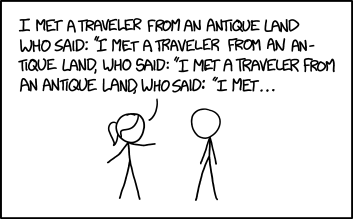
Ozymandias

And on the pedestal these words appear: "And on the pedestal these words appear: "And on the pedestal these words appear: "And ...
30 Jul 23:48

Kardashian human centipede shirt

Kim Kardashian human centipede shirt
Kim Kardashian Human Centipede shirt
 
I honestly don’t know where to begin with this collection of shirts by Cleveland, OH company, Rage On!. Except that I agree with their motto as their strangely wonderful shirts...

30 Jul 23:47

A group of women mock-boxing, ca. 1920s. Always in heels!

by John VE
(Photo: Topical Press Agency/ Getty Images)