Shared posts

21 May 07:43

Cartoon: Maternity Leave vs Profit

by Ampersand

This seems like a good time to announce that I’m starting a Patreon to support my political cartoons. Please check it out (and tell me if you spot any typos!).

maternity_leave_2

This cartoon was a collaboration with my friend Becky Hawkins. I did the writing and lettering with Becky’s help, Becky did the drawing with me helping on layouts, and I did the gray tones.

Transcript:

Panel 1
A woman in a collared shirt and black pants is talking to a businessman in a fancy suit.
WOMAN: Businesses oppose paid maternity leave because you put money above women’s health!
BUSINESSMAN: We care deeply about women! We’re against paid leave because it’s bad for women!

Panel 2
The businessman has pulled a mother, holding a crying newborn, into the panel.
WOMAN: Women need time off to recover after giving birth.
BUSINESSMAN: Nonsense! Just look at Tiana here… She can’t wait to get back to work. It’s patronizing of you to say otherwise!
TIANA: So tired….

Panel 3
BUSINESSMAN: Paid maternity leave makes hiring women more expensive – and that means companies will discriminate against hiring them! Have a heart!

Panel 4
The businessman violently shoves Tiana off-panel.
WOMAN: So we’ll give paid leave to new mothers AND new fathers!
BUSINESSMAN: But that would cost MONEY!

21 May 07:41

kinghardy: charleishunnam: “As you were reading the script did...


kinghardy:

charleishunnam:

“As you were reading the script did you ever think, ‘Why are all these women in here? I thought this was supposed to be a man’s movie?’”

– Tom Hardy answering a (really dumb) question at the Mad Max: Fury Road Press Conference 

image
image
image

I just wanted to remember this (x)

Bless you for adding that on.

21 May 07:40

Traces of Human Civilization, Cast from Styrofoam Packaging

by Benjamin Sutton
Sara Mejia Kriendler, "Bounty" (2015)

Sara Mejia Kriendler, “Bounty” (2015) (all photos by the author for Hyperallergic)

The exhibition in the back room of A.I.R. Gallery‘s new space in Dumbo feels like a cross between a temple and an archaeological site. The objects in Sara Mejia Kriendler‘s The Anthropocene have a devotional, votive aura to them that is emphasized by their arrangement and lighting, but many are also cracked or smashed, displayed like curios from some perplexing civilization on shelves, styrofoam platforms, or behind glass. The trick Kriendler pulls off so deftly with the show, though, is to let viewers gradually realize that these enigmatic objects are vestiges of contemporary civilization, the sort of thing that may be dug up and pored over hundreds of years from now by scholars specializing in 21st Century Studies.

The clearest indicator of the exhibition’s ecological politics is its title, which is a term some scientists use to define the current geological period as one characterized by humankind’s impact on the planet. Accordingly, Kriendler uses a material that is both ubiquitous and very likely to outlast us — styrofoam — to create many of her works. It’s a rather extreme demonstration of Siegfried Kracauer’s claim that a civilization’s most telling and illuminating artifacts are not its high culture, but its disposable and throwaway creations. Kriendler combines the two categories, repurposing trashed packaging to make art. The result, though very different visually, echoes the themes of Ian Trask’s recent installation at the Invisible Dog.

Detail of Sara Mejia Kriendler, "In Line for the Shrine" (2015)

Detail of Sara Mejia Kriendler, “In Line for the Shrine” (2015) (click to enlarge)

Treating empty and discarded packaging for toys, mannequins, electronics, and other consumer goods as molds, she casts clay and plaster sculptures that are confounding but unshakably familiar. Several pieces on view at A.I.R. incorporate the stylized human forms of containers that once held toy dolls or clothing store mannequins. In the exhibition’s focal work, a clay female torso floats against a crimson wall hanging whose ornate patterns evoke a tapestry. The material is actually store-bought paper towels, hence the piece’s tongue-in-cheek title, “Bounty” (2015). The clay dolls figure prominently in “In Line for the Shrine” (2015), which cast the ghostly white humanoids as statues in what looks like a scale model of a memorial monument for humanity.

Other works highlight the abstractness of the shells that deliver our goods to us intact. In “One Egg Short” (2015), confounding clay bas reliefs sit atop three stacks of cast plaster objects and styrofoam cups and platforms. The base of each stack is made up of real eggs in egg cartons, a rare moment of heavy-handedness in an exhibition whose strength derives in large part from its restraint and mystery. Our civilization is in such peril, the sculptures seem to say, it’s as if we’re walking on eggshells. What’s going on atop the stacks is much more interesting. Kriendler has placed a tiny human figure alongside two of the clay objects —which look equally viable as containers for a car part or computer component— thereby turning them into architectural maquettes. The squat, cracking, bunker-like buildings add to the air of post-human reliquary and futurology that lurks throughout The Anthropocene.

Detail of Sara Mejia Kriendler, "One Egg Short" (2015)

Detail of Sara Mejia Kriendler, “One Egg Short” (2015)

Sara Mejia Kriendler, "One Egg Short" (2015)

Sara Mejia Kriendler, “One Egg Short” (2015)

Detail of Sara Mejia Kriendler, "Bounty" (2015)

Detail of Sara Mejia Kriendler, “Bounty” (2015)

Installation view of Sara Mejia Kriendler's 'The Anthropocene' at A.I.R. Gallery

Installation view of Sara Mejia Kriendler’s ‘The Anthropocene’ at A.I.R. Gallery

Sara Mejia Kriendler’s The Anthropocene continues at A.I.R. Gallery (155 Plymouth Street, Dumbo, Brooklyn) through May 31.

21 May 07:29

If There's One Thing Worse Than A Cabal Of Neocon Scumbags Lying Us Into The Wrong War

by driftglass

It's a buncha goddamn mouthy Liberals who still keep pointing out that we were lied into the wrong war by a cabal of Neocon scumbags.

No.

Really.

Behold the kind of mind-bending idiocy which now walks the land in broad daylight and unashamed because we didn't listen to the alarms being raised by certain goddamn mouthy Liberals and torch the fucking Both Siderist whelping box ten years ago.

Why liberals tell themselves comforting fables about the Iraq War
[by] Damon Linker
Oh this won't be good.

Yeah, it starts off OK --
...
In case you've been dozing for a dozen years, or lack the intellectual sophistication of a moderately well-informed college student, the Grand Plan isn't working out too well.

That's bad — though I'd be at least somewhat consoled if politicians and commentators on either side of the aisle showed signs of having learned the right lessons from this world-historical debacle. But no. The Republicans have tripled down on their toughness shtick, insisting against the continent-sized pile of contrary evidence that the world is better off without Hussein in power. (Better for whom, one might ask? The hundreds of thousands of Iraqis who've been killed in the convulsions of violence we unleashed by deposing Hussein? The even greater number of Iraqis, especially Iraqi Christians, who've been displaced by that violence? The people suffering under the Islamic State across wide swaths of western Iraq? The mullahs of Iran who've seen their primary regional rival reduced to an anarchic mess?)
...
-- but like Socrates' cup of hemlock (vente, skinny, half-syrup, leave room for cream) -- 
But you know what's even more maddening than the GOP's paroxysms of denial?
-- you've got to drink it all, because the good stuff is at the bottom.
The insistence of leading liberals that the Bush administration lied the U.S. into war by deliberately overstating the threat that Hussein and his nonexistent stockpile of weapons of mass destruction posed to America and the region.
Then, at no extra charge to you the customer, your barista adds in whipped cream and sprinkles --
David Brooks called this story a "fable" in a recent column, and that's exactly what it is.
-- and, a complimentary Both Siderist cherry on top (emphasis added):
It's long past time for both parties to leave behind their comforting fables about Iraq.
David Brooks has spent the decade teaching an entire generation of wannabe pundits to sing in perfect harmony from his Church of Lyin'tology hymnal.

This is what their song sounds like.
driftglass
20 May 23:37

Books

by Reza

books

20 May 23:36

Photo


20 May 23:36

Photo


20 May 23:36

Photo


20 May 23:35

Photo


20 May 23:35

When the Camera Lands on Carefree Muslim Girls

by Tasbeeh Herwees
20 May 23:34

I’ve always loved @themodestbride ever since I first stumbled...


I’ve always loved @themodestbride ever since I first stumbled across your blog. This shoot is by far one of the most breathtaking displays of modest fashion I have seen. Creative genius mashAllah can’t wait to see what else is to come.

@intyyy_ you know how to werrrk and so does @lahzaphotography as always with her 📷

themodestbride.com

20 May 23:34

sagaleeyaa: All black everything. watch the queen WERK


sagaleeyaa:

All black everything.

watch the queen WERK

20 May 23:34

The Feminine Mystique of Miss Marple

by Dinah Fay

Miss Marple’s strength as a mystery novel heroin was inseparable from her character: that of a nosy, small town spinster. Far from taking those identity markers as pejorative, Alice Bolin has written a stirring defense of Miss Marple (and her creator, Agatha Christie) as a champion of a particularly feminine brand of sleuthing: one that requires intimate knowledge of relationships and the domestic habits of her British village. Bolin breaks down the underlying misogyny of popular mystery critics, and celebrates Christie’s accomplishments, noting that “Miss Marple nudges blustering, blowhard cops in the right direction demonstrates how the Queen of Crime inherited just as much from Jane Austen as Arthur Conan Doyle.”

Related Posts:

20 May 22:44

Photo


20 May 22:44

Photo


20 May 22:44

Photo


20 May 22:23

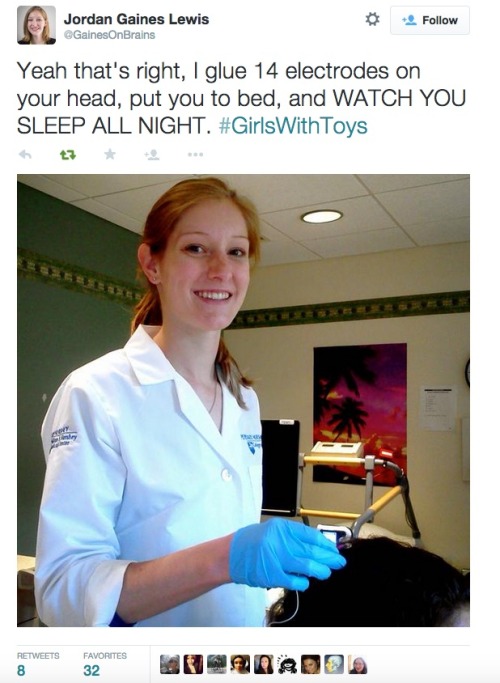
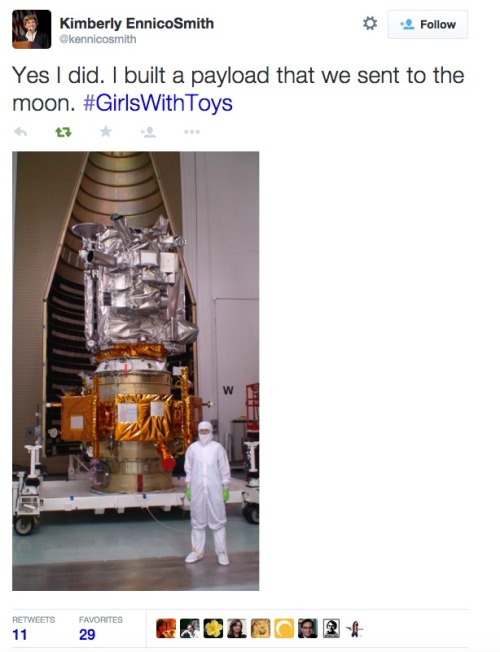
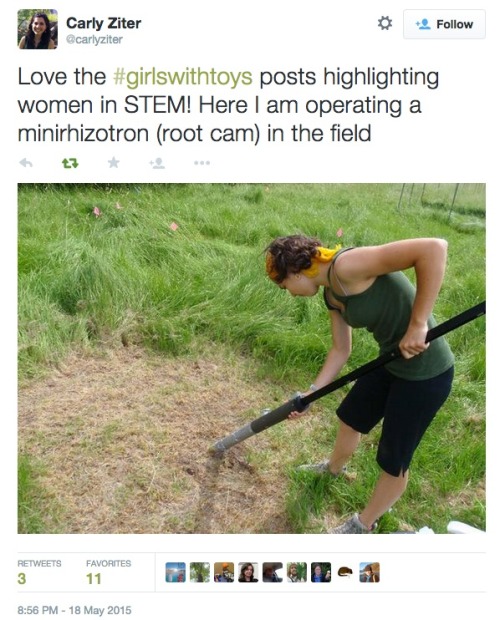
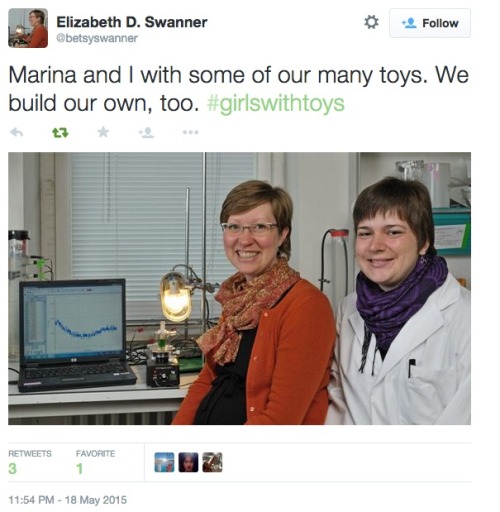
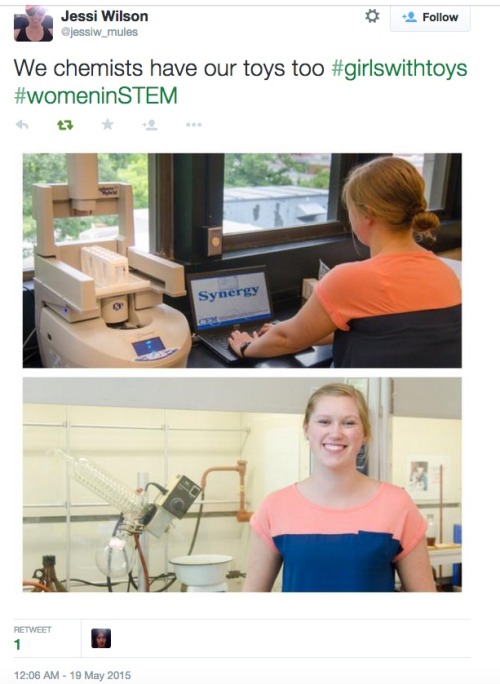
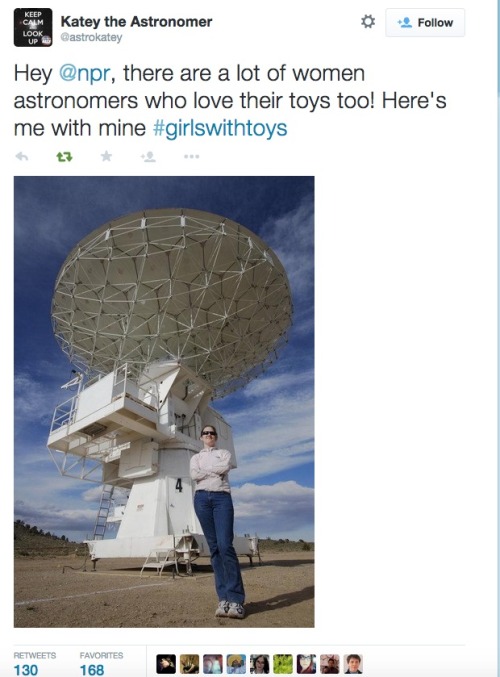
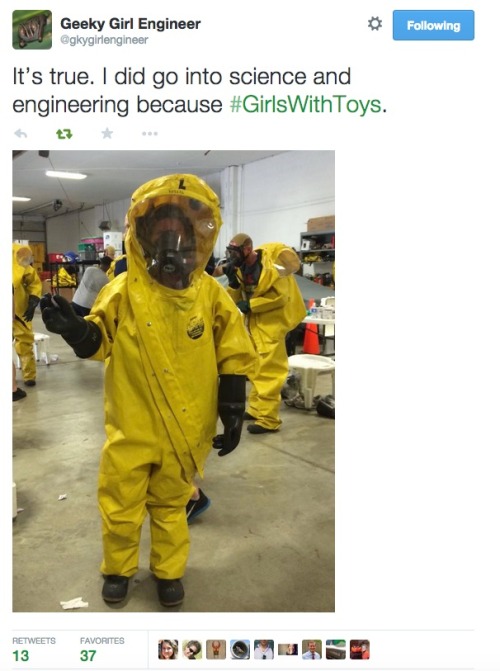
shychemist: One of my favourite twitter trending topics I’ve...


shychemist:

One of my favourite twitter trending topics I’ve seen in a while: #GirlsWithToys.

This came as a response to an Astronomer’s remarks that Scientists are ‘boys with toys’.

Glad to see such a strong response from the women of STEM. :)

20 May 22:22

bangays: Someone wanted this rebloggable 


bangays:

Someone wanted this rebloggable 

20 May 22:22

Grifters Are Indeed Going To Grift

by Zandar
320 million Americans or so, and yes, some of them are horrible, horrible people. A Tennessee man and his family used much of the $187 million it collected for cancer patients to buy themselves cars, gym memberships and take luxury cruise vacations, pay for college tuition and employ family members with six-figure salaries, federal officials alleged Tuesday in one of the largest charity fraud
20 May 22:22

Prince Returns to the Internet

by Liz Wood

Since recording “Baltimore,” written in response to the deaths of Mike Brown and Freddie Gray, Prince has returned to the Internet. We at The Rumpus were captivated by Prince’s last Twitter experiment, only to be disappointed when he shut the account down within its first month. But it looks like the artist is coming back to us: on the same day he released “Baltimore,” Prince launched a new Twitter account (verified, of course). And now the entirety of Prince’s Dance Rally 4 Peace is available to stream on his new SoundCloud. Also: the performance is gorgeous, peppered with the big hits, tracks off the new record, a performance of “Baltimore,” and some thoroughly touching messages from Prince to the crowd. “It don’t matter the color,” Prince said in his sign-off, “we are all family.”

Related Posts:

20 May 22:22

The Octopus: Honorary Vertebrate?

by Kevin

Those of you who specialize in octopus law already know this, of course, but I just learned that at least in the European Union the octopus is treated as a vertebrate for certain legal purposes.

If knowing this doesn't seem important to you, what are you doing here? Shouldn't you be doing something billable?

Anyway, this has to do with laws that set certain conditions to protect animals that may be used in scientific research. It appears that these laws traditionally have only applied to vertebrates, probably because vertebrates have more highly developed nervous systems and so a greater ability to feel pain, emotions, and so forth, but probably also because invertebrates are way creepier. But octopuses are recognized as an exception, not to the creepiness thing but to the general principle that invertebrates are less intelligent.

Octotool
Yep!

The extent of octopus intelligence is debated, at least among vertebrates, but there is evidence of pretty complex behavior, including possible tool use. See, e.g., J.K. Finn, T. Tregenza, and M.D. Norman, "Defensive tool use in a coconut-carrying octopus," 19 Current Biology 1069 (2009). The evidence was enough to convince the UK to grant protection to the common octopus (Octopus vulgaris) in 1993, thus ironically granting it a certain elite status.

That discrimination ended in 2010, however, when the EU enacted a broader directive that let the other octopuses and even squid into the club:

In addition to vertebrate animals including cyclostomes, cephalopods should also be included in the scope of this Directive, as there is scientific evidence of their ability to experience pain, suffering, distress and lasting harm. [Therefore, t]his Directive shall apply to the following animals: (a) live non-human vertebrate animals [and] (b) live cephalopods.

I know some of you are thinking, wait a minute—what's all this about cyclostomes? Well, I'm glad you asked.

Hagfish
Nope!

According to Wikipedia, Cyclostomata is a group that includes the lamprey and the hagfish, which have round mouths instead of jaws. It looks like they got mentioned separately in the directive because there is a debate about whether the hagfish is really a "vertebrate" and whether the lamprey and hagfish belong in the same group. Although there is no debate about whether they are totally disgusting, which they absolutely are, the EU apparently decided to err on the side of protecting them anyway. I'd be willing to bet that if you wanted to take a hagfish out back and rough it up a little, this would not exactly make you Public Enemy No. 1 in the EU, if you know what I mean, but you didn't hear that from me.

Animals that are covered by the directive can still be the subject of experiments, it's just that there are restrictions on things like surgery without anesthesia, which I'd hope we can all agree is unnecessary and wrong, unless you are operating on a hagfish, in which case as your attorney I could not advise you to ignore the directive but otherwise I'm just sitting here quietly without expressing any sort of opinion on the matter.

I can't say I've fully researched whether cephalopods have similar protection under US law (I'd certainly be willing to if you paid me), but it looks like invertebrate discrimination is still a thing in many states. Missouri's animal-protection statutes, for example, apply only to "living vertebrates." In other states, though, the definition is broader (e.g., New York: "every living creature"). I advise you therefore to look into the matter (or pay someone to do so) before hassling an animal, even for research purposes.

Same for the hagfish, although I may or may not be sitting here making air quotes right now.

20 May 22:19

Franchising

by Erik Loomis

The Service Employees International Union (SEIU) is asking the Federal Trade Commission to investigate the system of franchising used by fast food companies, charging that it is designed to hold down wages unfairly.

The union, which has been pushing to boost the pay of low-wage fast-food workers, said the current structure gives too much power to franchisers on issues such as revenue-sharing, capital expenditures, and termination and renewal of contracts.

As a result, too many franchise owners are locked into a model that limits their control, said Scott Courtney, assistant to the president of SEIU. Franchisers, he said, have built low wages into the system and it’s not possible for a franchisee to increase wages they pay to workers without reforming the model.

“Franchisers like McDonald’s control virtually every aspect of the business operation at their franchise stores. They set the cost and effectively set the low wages paid throughout the industry,” Courtney said in a conference call with reporters. He added, “Reform of the system is important to ending poverty wages in the franchised food sector.”

McDonald’s said in a statement it has a strong working relationship with its 3,100 independent franchisees. McDonald’s said it supports its franchisees and protects the brand by providing “optional resources” and setting quality standards that help franchisees operate successful businesses.

Franchising, like temporary work and subcontracting, exists solely to promote the interests of corporate executives over that of workers. That you can have multiple employers employing workers in the same factory making the same thing or that you can outsource production or that you can franchise is a sign of the extremely aggressive move by corporations in recent years to limit corporate obligations and liability. SEIU is right in fighting this. Perhaps the franchising model should not exist at all, but in any case, the corporate home must be held legally responsible for everything that goes on in each and every establishment.

20 May 22:18

The (Un)Changing Portrayal of White Women in 100 Years of Advertisements

by Jillian Steinhauer
View of 'Hank Willis Thomas, Unbranded' from outside Jack Shainman Gallery's 24th Street space (all photos by the author for Hyperallergic unless otherwise noted)

View of ‘Hank Willis Thomas, Unbranded’ from outside Jack Shainman Gallery’s 24th Street space (all photos by the author for Hyperallergic unless otherwise noted)

The idea is so ingenious, it almost seems obvious: take advertisements and remove the text that makes them so, leaving only a string of images behind. This was the process that Hank Willis Thomas undertook for Unbranded: Reflections in Black by Corporate America 1968-2008, a series of appropriated ads that covers the period between the assassination of Martin Luther King, Jr., and the election of Barack Obama, with one ad representing each year. Shown at the Brooklyn Museum in 2010–11, Thomas’s images laid bare looked alternately bizarre, sinister, and deeply surreal.

The same holds true of the images in his newest series, Unbranded: A Century of White Women, 1915–2015, currently on view at Jack Shainman Gallery. As with the previous body of work, Thomas has once again stripped advertisements of their advertising, this time turning his attention to the ways in which corporations market their products to white women — and in turn market white women as products themselves. He has again chosen one image per year of the period in question, and the images are arranged as a timeline, split nearly in half between Jack Shainman’s two Chelsea spaces.

Hank Willis Thomas, "The Breakfast Belle, 1915/2015" (2015), digital chromogenic print,  48 7/8 x 40 in (paper size), 50 x 41 x 1 3/4 in (framed) (image courtesy the artist and Jack Shainman Gallery, New York) (click to enlarge)

Hank Willis Thomas, “The Breakfast Belle, 1915/2015″ (2015), digital chromogenic print, 48 7/8 x 40 in (paper size), 50 x 41 x 1 3/4 in (framed) (image courtesy the artist and Jack Shainman Gallery, New York) (click to enlarge)

Allow me to spare you the suspense (spoiler alert!): it’s not clear if we white women start off or end the century in a better place. In 1915, Thomas’s chosen ad shows a white woman sitting down to eat with, presumably, her husband (who looks like a caricature of Robin Hood or a knight). She is dressed well enough, doted on by a parrot, and doesn’t appear — to modern eyes, at least — so much oppressed as like an oppressor, considering the grinning black man in an all-white cook’s outfit and polka-dotted bow tie who serves her. In 2015, meanwhile, there are no men in sight — which would be great if it weren’t so oppressively clear that they (the straight ones) are both the makers of and the intended audience for a picture in which a phalanx of white women “cross the Delaware” (yes, after Washington) while wearing skimpy bikinis and stilettos and striking playmate poses against a red pickup truck. I am a white woman. I see the marketing every day. And still this image makes me want to punch something.

Hank Willis Thomas, "Just as our Forefathers intended, 2015/2015" (2015), digital chromogenic print, 27 7/16 x 61 x 1 3/4 in (framed) (click to enlarge)

Hank Willis Thomas, “Just as our Forefathers intended, 2015/2015″ (2015), digital chromogenic print, 27 7/16 x 61 x 1 3/4 in (framed) (click to enlarge)

What’s simultaneously most appealing and depressing about this latest edition of Unbranded is the way it gives us a sense of history as a series of waves or cycles, rather than that long arc we so like to imagine. 1920 was the first year that women were able to vote in this country, and Thomas’s ad shows a sensibly dressed white woman behind the wheel of a car; the following year she’s prettily dressed, done up, and a little sad, the object of a male gaze and a bizarre comparison with an Ancient Egyptian goddess. In 1944 and ’45, ads show white women joining the war efforts both at home and abroad — but by 1946 she’s back to wearing dolls’ clothes and teaching her daughter (who’s dressed the same) how to vacuum (‘you just move it around and it sucks up dirt!,’ says the voice in my head).

1920

Hank Willis Thomas, “She followed his directions and took a right onto Equal Ave… 1920/2015″ (2015), digital chromogenic print, 42 1/4 x 40 in (paper size), 43 1/4 x 41 x 1 3/4 in (framed)

Installation view of 'Unbranded' showing, clockwise from top right, works for 1943–46 (click to enlarge)

Installation view of ‘Unbranded’ showing, clockwise from top right, works for 1943–46 (click to enlarge)

The schizophrenia persists through the second half of the series: in 1967, just as the women’s liberation movement was heating up, Thomas’s ad shows a deeply uncomfortable scene of a woman in a bra and underwear being handled by five men. (It’s actually an ad for pants, and Thomas says he was “uneasy” about using it.) As the years pass, the images show signs of progress — a white woman bodybuilder, another leaving for work while her husband stays home with the kids — interspersed with a headache-inducing number of scenes of white women as sex objects — in bathing suits, naked, inside frying pans and martini glasses!

Installation view of 'Unbranded,' with images from 1965–67 from right to left

Installation view of ‘Unbranded,’ with images from 1965–67 from right to left (click to enlarge)

Installation view, 'Hank Willis Thomas, Unbranded,' showing the years 1983–88

Installation view, ‘Hank Willis Thomas, Unbranded,’ showing the years 1983–88 (click to enlarge)

That advertisers traffic in sexist and racist stereotypes is not, admittedly, the deepest of revelations. And there may be, for some viewers, a quality of obviousness to the exhibition, particularly in the parts with which your own identity most closely aligns (I found the earlier half of the show, at the 24th Street space, far more engaging for this reason). But knowing of something’s existence doesn’t mean you’ve examined it, and that’s precisely what Thomas is encouraging us to do. It’s notable that his focus differs from that of other artists known for appropriating ads — he doesn’t treat these images as artistic raw material (John Baldessari) or use them to raise questions about authorship (Richard Prince); rather, he finds, alters, and then carefully re-presents them, still as ads, as a means of unearthing the politics hidden in a field where they’re meant to stay buried. Advertisements bombard us from nearly every space and medium imaginable these days; they’re images we see every day but rarely look at. Thomas is doing the necessary work of pointing out just how insidious that white noise can be.

Hank Willis Thomas, left to right: "Bounce back to normal, 1933/2015" (2015), digital chromogenic print, 44 9/16 x 40 in (paper size), 45 7/16 x 40 15/16 x 1 3/4 in (framed) and "Wipe away the years, 1932/2015" (2015), digital chromogenic print, 40 x 48 1/16 in (paper size), 40 15/16 x 48 15/16 x 1 3/4 in (framed)

Hank Willis Thomas, left to right: “Bounce back to normal, 1933/2015″ (2015), digital chromogenic print, 44 9/16 x 40 in (paper size), 45 7/16 x 40 15/16 x 1 3/4 in (framed) and “Wipe away the years, 1932/2015″ (2015), digital chromogenic print, 40 x 48 1/16 in (paper size), 40 15/16 x 48 15/16 x 1 3/4 in (framed)

IMG_0985

Hank Willis Thomas, left to right: “Come out of the Bone Age, darling….1955/2015″ (2015), digital chromogenic print, 40 x 41 7/16 in (paper size), 40 15/16 x 42 7/16 x 1 3⁄4 in (framed); “It’s not what it seams, 1954/2015″ (2015), digital chromogenic print, 42 1/16 x 40 inc (paper size), 42 7/8 x 40 7/8 x 1 3/4 in (framed)

Hank Willis Thomas, "When I'm good, I'm very good, but when I'm bad, I'm better, 1998/2015" (2015), digital chromogenic print, 51 1/8 x 40 in (paper size), 52 x 40 15/16 x 1 3/4 in

Hank Willis Thomas, “When I’m good, I’m very good, but when I’m bad, I’m better, 1998/2015″ (2015), digital chromogenic print, 51 1/8 x 40 in (paper size), 52 x 40 15/16 x 1 3/4 in

Hank Willis Thomas, Unbranded: A Century of White Women, 1915–2010 continues at Jack Shainman Gallery (524 West 24th Street and 513 West 20th Street, Chelsea, Manhattan) through May 23.

20 May 22:17

ziraseal: naturemetaltolkien: English is a difficult language. It can be understood through...

Sophianotloren

Wow, that was rough. Almost coughed out my tea, I started laughing so hard!

ziraseal:

naturemetaltolkien:

English is a difficult language.

It can be understood through tough thorough thought, though.

you need to stop

20 May 19:47

Photo


20 May 19:47

hipleasures: erikamoen: We all know consent is mandatory for...


hipleasures:

erikamoen:

We all know consent is mandatory for sexy activities, but how do you actually bring it up in real life with another real human being? At Oh Joy Sex Toy, we’ve made a basic guide to engaging in that conversation with your partner!

Even though this is our most word-heavy comic to date, it’s impossible to squeeze in everything you need to know about consent in roughly 700 words. This is not a comprehensive guide to all things consensual, rather it’s a very basic introduction primarily targeted at people looking to hook-up at parties.

Fortunately, there are others who have far more space to talk about consent and being a good, communicative sex partner (even as a one-time hook-up!) and I’d like to direct you towards these resources to learn more!

Consent Resources

Consent Posters made by the students at New College of Florida

Consent on Teen Talk

The Consent Post by Elena Kate on Rad Sex: Radical Sex Education for Everyone

Driver’s Ed for the Sexual Superhighway: Navigating Consent by Heather Corinna on Scarleteen

What is Consent Anyway? on Self Care After Rape

Consent Is Sexy on UGA Student Affairs, University Health Center

Step Up Your Game on The Consensual Project

Sexual Assault Prevention and Response at Reed on Reed College

Casual…Cool? Making Choices About Casual Sex by Samantha Benac and Heather Corinna on Scarleteen

Intimacy: The Whys, Hows, How-Nots, and So-Nots by Heather Corinna on Scarleteen

Consent Culture by Cliff on The Pervocracy

Practicing Consent in Our Day to Day Lives on Self Care After Rape

This comic brought to you by the support of my patrons on Patreon, thanks guys!

Fantastic resources!! Thanks so much for sharing!!

Follow HiPleasures for more sex positive posts!

20 May 19:47

Santa Barbara Oil Spills, Then and Now

by Erik Loomis

January-29-AP-photo-AOGHS

In 1969, the beaches of Santa Barbara, California were inundated with oil from a nearby spill. This event galvanized environmentalists both locally and around the nation. I use the Santa Barbara oil spill to help set up Out of Sight, which is coming out officially in 13 days. So buy your copies now. Anyway, an excerpt:

Fifty-eight years later, in 1969, public outrage over corporate behavior again revolved around disturbing images that flashed before Americans’ eyes. Two events that year changed Americans’ views on how industry should treat the environment. First, on January 28, the largest oil spill to that point in American history took place off the coast of Santa Barbara, California when a well blew out on an oil platform owned by Union Oil. Up to 100,000 barrels spilled. People watching their evening news saw sea lions and birds covered in oil, dead fish and marine wildlife, and a paradise spoiled.

The oil industry had long played a controversial role in southern California. As the state became known for its beaches, tourists and developers protested the oil industry’s presence in that beautiful part of the country. Beachgoers in the 1920s found themselves between the picturesque Pacific and a sea of oil derricks. Local residents, led by oil workers’ unions, demanded the industry maintain the character of their towns and beaches. The oil workers unions held beach clean-ups, advocated for drilling limits, and wanted more their towns than the filth of oil pollution. By the 1960s, much of the production had moved offshore, but oil derricks and refineries remained a major feature of the southern California landscape.

When the spill took place, the people of Santa Barbara and southern California responded quickly. An organization named Get Oil Out (GOO) quickly developed. Led by Santa Barbara resident Bud Bottoms, GOO urged people to cut back on driving and boycott gas stations that received fuel from Union Oil. It lobbied to ban all oil drilling off of California and succeeded in enacting new regulations when drilling did resume. Thomas Storke, editor of the Santa Barbara News-Press wrote, “Never in my long lifetime have I ever seen such an aroused populace at the grassroots level. This oil pollution has done something I have never seen before in Santa Barbara – it has united citizens of all political persuasions in a truly nonpartisan cause.” Union Oil suffered greater repercussions for this environmental disaster than any corporation in U.S. history to that time. Company president Fred Hartley couldn’t understand, saying, “I am amazed at the publicity for a loss of a few birds.” The spill made people around the nation realize the importance of preserving the landscapes they loved from industrialists. In the two years after the oil spill, national membership in the Sierra Club doubled. The state banned new leases for drilling on offshore state lands, although existing leases continued to operate. Today, companies do still drill in California, but the visual impact to tourists is much lower than a half-century ago.

The oil spill helped lead to the passage of the National Environmental Policy Act, shepherded through Congress by Scoop Jackson who is vilified by progressives today for his defense policy but was one of the most important environmentalists in Senate history.

It may not be as bad as 1969, but another oil spill is now polluting the Santa Barbara beaches:

After flowing from the pipeline, crude pooled in a culvert before spilling into the Pacific, where it created a four-mile-long sheen extending about 50 yards into the water. Officials said winds could send the oil another four miles south toward Isla Vista.

The pipeline, built in 1991 and designed to carry about 150,000 barrels of oil per day, is owned by Houston-based Plains All American Pipeline, which said in a statement that it shut down the pipe. The culvert was also blocked to prevent more oil from flowing into the ocean, the company said.

By late Tuesday, a thick layer of crude had begun to wash ashore, with black tar smearing the rocks as the brackish tides arrived.

“It is horrible,” said Brett Connors, 35, a producer from Santa Monica who said he spotted sea lions swimming in the oil slick. “You want to jump in there and save them.”

The reality is that the oil industry is far too lightly regulated as whether in Santa Barbara, Alaska, or off of the Louisiana coast, our energy infrastructure fails over and over to protect the nation’s fragile ecosystems. If the spills are bad enough, like the BP spill, public outrage can again arise, but ultimately very little has changed since that spill, unlike after the original Santa Barbara spill. The social movement to hold corporations accountable for environmental disasters is not what it was in 1969, in part because so many jobs are now outsourced that working people fear any kind of environmental protections will throw them on the street. This shift in attitude is just one of the many cascading effects of the global race to the bottom, a race that benefits corporations at each and every step.

20 May 19:32

Saturday Morning Breakfast Cereal - One Wish

by admin@smbc-comics.com

Hovertext: I'm amazed there's no erotic economics fiction called Perverse Incentives.


New comic!
Today's News:

Hey, so remember that anthology I mentioned a while ago? Well, as a sneak preview, you can see the entirety of the story I wrote at io9! 

20 May 19:30

A Softer World: 1237


buy this comic as a print!
Or share on: facebookreddit
If you enjoy the comic, please consider supporting A Softer World on Patreon
20 May 19:30

Gay conversion therapy ban passes Illinois House

by Staff Reports
Illinois state capitol in Springfield.The bill prohibits licensed mental health care providers from engaging in sexual orientation change efforts with anyone under the age of 18.