Shared posts

13 Sep 00:04

Deficit of Wonder

by swissmiss
Sarah

deeeeeeply feel this right now

“We live in an age when you say casually to somebody ‘What’s the story on that?’ and they can run to the computer and tell you within five seconds. That’s fine, but sometimes I’d just as soon continue wondering. We have a deficit of wonder right now.”
– Tom Waits

(via Ingrid Fetell)

10 Sep 23:34

Brookline Cafe Will Add a Seaport Location Full of Crepes and Cocktails

by Dana Hatic
Sarah

YAY WORK CREPES

Black pepper-infused crepe with kale, smoked turkey, brie, and red wine jalapeños at Paris Creperie

Paris Creperie has an expansion in the works

A creperie in Brookline’s Coolidge Corner has its sights set on an expansion to Boston’s growing Seaport District neighborhood. Paris Creperie (278 Harvard St., Brookline) will bring its French crepes to 60 Seaport Blvd. later this year, and it’s adding a stacked cocktail selection to its repertoire.

Where the original Paris Creperie finds its success as a cozy cafe, the Seaport location will take on the role of “crepe and cocktail bar,” according to Nick Mallia, a 15-year employee at Paris Creperie who has led its catering business for more than six years and leads the charge on the Seaport expansion.

“I’m pretty jazzed,” he says. “I have been waiting for something like this for the 15 years that I have been working for this company.”

The landlords of the Seaport building reached out to the Paris Creperie team to propose an expansion. As Mallia tells it, a member of the team had been a longtime fan of the Brookline cafe and felt it would fit well in the building, which is also home to Tuscan Kitchen and the Grand.

The Paris Creperie team is currently working on permitting to begin building out the space, with hopes of opening in late fall 2018. The restaurant will be situated in an open foyer area, with a peninsular bar and surrounding sit-down tables, according to Mallia.

“It’s going to be a very different concept [from the Brookline location],” Mallia says. Five of the most popular savory and sweet crepes from Brookline will transfer to the new menu, which will also include soups, plated appetizers, and a varied dessert program.

Despite changes, Paris Creperie won’t abandon what’s worked in Brookline. The Nutella frozen hot chocolate will carry over, for one.

“We’re sort of paring down the variety of options, picking our best ones,” Mallia says, in order to continue upping the quality of the menu and array of offerings.

The Seaport menu will include omelets, again in the French style, which Mallia envisions will make for a good afternoon bite with a glass of wine. He anticipates the restaurant will be a place where people linger for a few drinks.

Seaport’s restaurant will also serve beer, and local cocktail legend Brother Cleve will craft a cordial-based cocktail list.

“So many of the French cocktails are already only cordial-based,” Mallia says. “There are already so many full bars around there that we want to be niche, but it’s going to be high-quality stuff.”

Mallia, who is heavily involved in Brookline’s Chamber of Commerce, says that he is excited to venture into a new neighborhood and looks forward to getting involved in the Seaport’s community.

While the timeline is far from set, Paris Creperie could open in the Seaport late this fall. In the meantime, head to Brookline for Nutella frozen hot chocolate and crepes galore.

Paris Creperie Coverage on Eater [EBOS]
Paris Creperie Seaport [Twitter]

28 Aug 18:47

Shrug Ascii Emoji Pin

by swissmiss
Sarah

shruggo

15 Aug 13:53

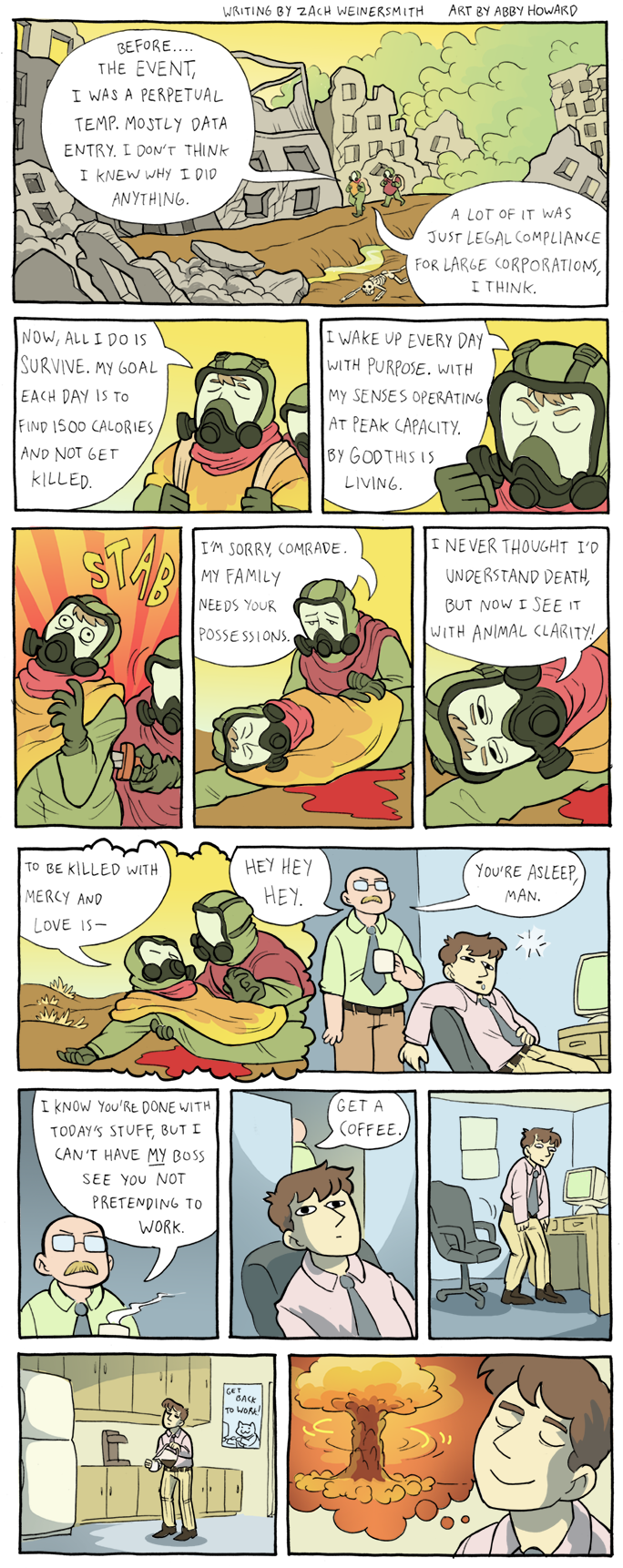
Saturday Morning Breakfast Cereal - The Event

by tech@thehiveworks.com
Sarah

soooo real....


Click here to go see the bonus panel!

Hovertext:
Why are you so favored as to get a comic drawn by Abby Howard? She has a new book out! See the blog below the comic.


Today's News:
Dinosaur Empire 2 is out!
02 Aug 02:16

Black Women’s Success in the Beauty Industry Started With Madam C.J. Walker

by Nadra Nittle
Sarah

Neat! We always learned about Madame C.J. Walker in school because she was from Indianapolis and there is a theater named after her. It's probably how I knew black people and white people have different hair types.

African-American beauty mogul Madam C.J. Walker became a millionaire against all odds.

She’s the subject of a forthcoming Netflix series starring Octavia Spencer.

Netflix has announced that Octavia Spencer will star in a limited series about beauty mogul Madam C.J. Walker, and the news couldn’t have come at a better time. Although the contributions African Americans have made to the cosmetics industry span more than a century, the recent unprecedented success of Rihanna’s Fenty Beauty line has shone a spotlight on black women and their relationship to beauty that’s yet to dim.

Brands that don’t include products for women of color can now expect to be called out on the oversight, and others, like Kylie Cosmetics, have made a point to be more inclusive following Fenty’s triumph. But Fenty is not the only makeup brand affiliated with a black woman that’s exceeded expectations.

Named after the famed black makeup artist who started it in 2015, Pat McGrath Labs is now valued at a staggering $1 billion — that’s $200 million more than Kylie Cosmetics. Unlike Kylie Jenner, McGrath didn’t get a Forbes cover for the accomplishment, but it’s clear that the days of black women being relegated to the margins of the cosmetics industry are coming to an end. Largely to thank for this breakthrough? Madam C.J. Walker.

Born Sarah Breedlove in Louisiana in 1867 to a formerly enslaved couple, Walker was truly self-made. For years she struggled to make more than a dollar a day as a laundress, but in the early 1900s she landed a job as a sales agent for the black entrepreneur Annie Turnbo Malone, who sold hair care products and cosmetics through her business, the Poro Company.

Walker used the knowledge she gleaned from Malone to launch her own business, selling hair care and skin care products to black women. Before long, her business expanded across the country, and Walker trained and employed thousands of black women, including Viola Desmond, the Canadian entrepreneur who made history posthumously as the first black person to appear on Canada’s $10 banknote. As Walker’s clout grew — she has long been hailed as the first black woman millionaire — she became more politically involved, donating to anti-lynching causes and preserving abolitionist Frederick Douglass’s Anacostia home.

Madam C.J. Walker Jim Mooney/NY Daily News Archive via Getty Images
Madam C.J. Walker driving her car in 1916.

But Walker’s legacy is a complicated one. Although she’s praised for using her smarts and hard work to become part of the nation’s elite during a time when such a move was nearly impossible for most African Americans, she’s faced criticism because she’s been linked to products associated with hair straightening, such as chemical relaxers and pressing combs. According to her great-great-granddaughter A’Lelia Bundles, Walker did not invent either the relaxer or the hot comb, as has been widely reported. Bundles said her ancestor focused more on hair growth and grooming than on hair straightening.

While Walker is a fixture in black history month lessons and even appeared on a US postage stamp in 1998, she hasn’t received a great deal of attention from the entertainment industry. In 2006, the play The Dreams of Sarah Breedlove debuted in Chicago, but the beauty mogul hasn’t been the subject of a biopic, a genre that’s mostly given black women the short shrift in recent years. The Netflix series on Walker, based on Bundles’s book On Her Own Ground, will reportedly span eight episodes, chronicling Walker’s family life, tumultuous romantic relationships, and rise to success.

Executive produced by LeBron James, Octavia Spencer, and others, the biopic offers the Hidden Figures actress the rare opportunity to play the lead in a project. Spencer is often cast in ensemble projects or side parts, famously winning a best supporting actress Oscar for 2011’s The Help. The Madam C.J. Walker series will hopefully thrust both the actress and the mogul into the spotlight simultaneously.

Octavia Spencer Jason LaVeris/FilmMagic
Octavia Spencer will play Madam C.J. Walker in a new Netflix series.

Today, Walker’s products are still available, thanks to a collab between Sundial Brands and Sephora that launched in 2016 to commemorate her. Now gels, exfoliators, shampoos, and conditioners can be found on sites like Sephora and QVC under the Madam C.J. Walker label.

The Netflix series could lead to a spike in sales for such products, but more importantly, it might provide viewers who got the cardboard cutout version of Walker in school (if they got any representation of her at all) with a three-dimensional portrait of a woman who realized the American dream against all odds, and who taught fellow black women about the importance of financial freedom and self-empowerment.

02 Aug 02:02

Who are We Protecting?

by noreply@blogger.com (Nina Simon)
Sarah

this turned out to be why i wanted to work i mueseums

I remember the exact moment when I snapped. I was at an informal talk by a visitor research professional from a large American art museum. The presenter was a few minutes in, setting context about a recent rebranding effort at her institution. "Our real challenge," she said, "was how to attract new audiences while protecting loyal patrons."

My eyes locked on that phrase on her slide, "protecting loyal patrons." I couldn't let it pass. I asked her: "what are you protecting them from?" A colleague of mine helpfully added: "who are you protecting them from?" The conversation went downhill from there.

I'm grateful to this presenter. She put in black and white what goes unsaid in so many talks and press releases. Cultural institutions are willing to change to attract new audiences. But not at the expense of the pain or discomfort of loyal patrons.

Some people might argue that protectionism is the natural political position of a collecting institution. These institutions exist to protect heritage. To protect artifacts from harm. To protect and preserve that which would otherwise be discarded or destroyed.

But when it comes to people, protectionism is problematic. Loyal patrons don't need protection--even if they may be the people who gave us those artifacts. Loyal patrons get most of our attention, assets, and appreciation. And they already have most of the power. They are, on average, wealthier, whiter, more educated, and older than the general population. They are, on average, people with privilege. They may feel that their privilege is at risk, or fragile. But that doesn't mean they don't have it.

For people with privilege, protection is a waste of resources that demeans their agency. Loyal patrons don't need to be wrapped in archival tissue paper. They need to be engaged in change processes. They need invitations--to participate, to be part of the new, to embrace the unexpected alongside the familiar. Just like new audiences, loyal patrons need to be welcomed into institutions full of different people, experiences, and opportunities.

When the MAH was changing aggressively, we embraced Elaine Heumann Gurian's idea of "the museum of and." We didn't want to reject some people and anoint others. We wanted to build a truly pluralistic institution.

Most of the time, this strategy works. When confronted with a conflict between two groups, or two ways of experiencing the museum, we choose both. We bring them together. We build bridges. We choose "and." But when we have to decide--and sometimes we do--we try to stand on the side of those who have less power in the given conflict.

For the MAH, siding with the less powerful is part of our work and our mission. When an institution protects powerful people, it hobbles its ability to involve new people and grow more diverse. Organizations often protect powerful people at the expense of the very same new audiences they seek to attract. Protecting power means protecting the power structures that put whiter, wealthier, more educated, older people on top.

This incident happened at the same time ICE started separating families at the southern border of the U.S. My colleagues at the MAH were working with local organizers on the Santa Cruz #FamiliesBelongTogether rally (which ended at our museum). My colleagues were working with partners in the Latinx community who were receiving overt threats. These partners--who represent audiences we have recently worked to attract--were afraid for their loved ones. Their rights and safety were at risk.

Who are we protecting?
02 Aug 01:59

Logos for Trump’s Space Force from eight leading designers

by Jason Kottke

Bloomberg Businessweek asked eight designers to design a logo for Trump’s proposed new branch of the military, Space Force. 89-year-old Milton Glaser, designer of the iconic I ❤ NY logo, can still bring the heat:

Space Force Logo

I really really *really* want this on a hat. (via df)

Tags: design   Donald Trump   logos   Milton Glaser
27 Jul 17:10

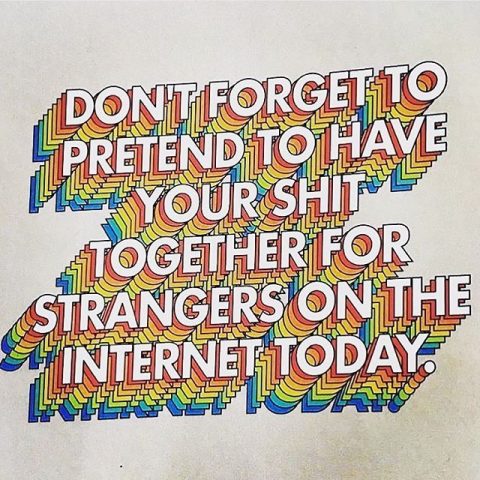
For Strangers On The Internet

by swissmiss
Sarah

nope

This made me smile. Here’s to keeping it real.

25 Jul 00:09

The Waiting Room

by Christian Allaire

I’m waiting in the detention room at the John F. Kennedy Airport in Queens, New York, in a very flashy, very out-of-context Prada runway look. I’ve just come back from Milan Fashion Week. The fluorescent lights buzz faintly overhead, as though to add to the dull energy of the room. An Indian man to my left continues to stare at my shoes. I wish I could say this is my first time here, but it isn’t. I’ve sat in this exact chair about five times.

“Allaire, Christian,” barks a TSA officer.

I get up and walk towards him. He gives me the Manhattan Once Over. (Note: The look catty fashion people give each other in New York City, starting by a judgment of your footwear and then everything upwards.) 

“You don’t look Native American,” he says.

“I forgot my tomahawk at home,” I say to myself, in my head.

“Yes, I am First Nations,” I say to him, for real.

The TSA officer is holding a thin beige folder in his hands containing my Canadian passport, First Nations status card, and a letter from my reservation’s band office confirming my blood quantum. (In order to be considered a “Status Indian,” you must have at least fifty percent lineage.)

With these documents, I am able to work and live in the U.S.—as I have since 2014—through the Jay Treaty, an agreement signed in 1794 by representatives of the U.S. and Great Britain, which guaranteed Indigenous people the right to trade and travel between the U.S. and Canada (then, a territory of Great Britain). The Treaty still very much applies today—though it always seems to be news to TSA officers.

I brace myself for the long line of questioning.

“So you’re Native American, but from Canada?” he asks, taking a seat behind his desk, which sits on a raised platform like a pedestal.

“I’m First Nations, which is like Native-Canadian,” I say.

“If you’re Canadian, how do you live in America without a work visa?”

“I work in New York with my Native status card, through the Jay Treaty. I also have a Social Security number, and a letter from my company confirming I’m a legal resident.”

He tells me that I will need secondary security clearance before I can enter the U.S. This isn’t the first time. I quickly realize I’m not being barred entry for suspicious activity. I’m no terrorism threat. I’m being detained because—along with a recurring unfamiliarity with First Nations rights—the border patrol doesn’t believe I “look Native” enough to fit the profile, and they will need to further confirm my identity before I’m released.  

I begin handing over the usual list of additional documents—a birth certificate, my social security card, proof of employment—while the TSA officer continues to stare at me. I pause and catch his gaze.   

“Sorry,” he says. “I’ve never seen an Indian so pale.”

*

I was born into mixed heritage. My mother is First Nations, specifically from the Ojibwe tribe, which has roots in both Canada and the United States. My father, meanwhile, is a mixture of French-Canadian and Italian. (And in case you couldn’t guess, I inherited his fair complexion.)

I grew up on the Nipissing First Nation Native reservation in northern Ontario. While my mother and father lived off-reservation, my mother—one of eighteen siblings—spent her weekends bringing us to our grandmother’s home on the reservation, which served as the central meeting spot for our entire big, crazy, loud family. Every day after middle school, my sister and I would ride the school bus to one of our aunt’s homes on the reserve. The “rez,” as we call it, served as our second home. It still does.

Nipissing First Nation itself is divided into eight settlements of Indigenous land. Garden Village, the subdivision I grew up on, is located just southeast from Sturgeon Falls, the town where my parents now have a home. Running along Lake Nipissing, the homes in Garden Village span the beautiful waterfront and follow a single cement road that eventually turns into dirt. There, the pace of life begins to decelerate upon arrival. The days go by slow and the community gossip travels fast, and the mating sounds of cicadas in the summer heat outweigh any traffic noise.

Crossing the border—that is, the imaginary one—from off- to on-reserve land is obvious to those who do it regularly. “Are white people allowed on reserves?” a friend once asked me. There are no direction signs or toll booths. There is, instead, a slight shift in the details. During hunting season, slain game can be found hanging in garages, ready to be turned into meat pies or traditional Indian tacos. Some houses have bed sheets hung up in the window instead of curtains. Hidden pathways leading through wild bush reveal secluded beaches. Small billboards advertise cheap native cigarettes, available at the one convenience store where you’re bound to run into a cousin or two.

Though my mother’s family has always been comically tight-knit—most of our aunts and uncles live on the same central street—I grew up often feeling like an outsider on the reserve. For one, I didn’t look like my cousins. The hundred-percent, full-blown Indians. The “Rez kids.” I didn’t have their prominent cheekbones, or their dark skin, or their long braided hair. I didn’t hunt or dance in powwows. I didn’t speak their unique slang, like hollering “dewww!” after cracking a joke. I was a half-breed who wore weird gothic cargo shorts, and dreamed of moving to a bigger city.

Much of feeling like an outsider stemmed from my parents having their home on off-reserve land. Though I often crossed the border between off- and on-reserve, I never quite fit into either side. My sister and I went to a French-speaking Catholic school until high school. All of my friends were white. Most of the school was white. I, too, passed for white. In elementary school, a First Nations classmate of mine was being teased during recess time. She had a more traditional Indigenous look, with dark skin and very long, dark hair, sometimes worn in a braid. Our classmates surrounded her, hollering racist war whoops like caricatures in a bad John Wayne movie. I didn’t join in the malice, yet I didn’t come to her defense, either. I rarely acknowledged my Indigenous culture unless I was with my family. The imaginary border, as it turns out, created a very real divide.

*

The TSA officer begins typing on his computer while I continue waiting to be processed. I look around the humdrum room. Having been detained several times before, I’ve become too familiar with the room’s mundane staging. I know that I should sit to the left of the room, where the air conditioning is at least slightly more functioning. It’s the kind of place where joy and compassion come to die. 

I recognize a few TSA officers here, mostly by their distinctively tired faces. Fellow travellers—or do I call them my cellmates?—sit dispersed around the waiting area of the detention room, some fidgeting anxiously in their seats, others appearing completely unbothered. We make up a sad group of border misfits. Minorities, unsurprisingly, fill the room. There are some Indian, some Chinese. No Caucasians.

The TSA officer opens the folder containing my travel documents.

“What is this?” he asks, holding up my status card.

“My status card,” I say.

“I’ve never seen one of these before. You could have made this yourself.”

Status cards are government-regulated identification cards, originally introduced by Indian and Northern Affairs Canada. Each Canadian-born First Nations person of at least fifty-percent lineage has a status card issued to them by their respective band government, and can use it to cross the border to and from the U.S. They can live and work, “freely,” in either country. They don’t need a green card, they don’t need proof of employment, and, technically, they don’t even need a passport. But I don’t dare try to tell him that part.

The idea of status cards first came into play during the early days of the Indian Act, originally introduced by the Canadian government in 1876. Prior to many revisions, the Indian Act, which aimed to assimilate indigenous people into “civilized” culture, actually used to restrict Natives from leaving their reservation without a permission slip. Indian agents—and yes, that was what they were actually called—would patrol the borders, sometimes armed, and could arrest anyone without a valid pass.

“Where are you travelling from today?” he asks.

“I’m coming from Milan. I was there for work,” I say.

“What type of work do you do?”

“I’m a fashion editor at a magazine. I was in Milan to cover fashion week.”

“What magazine?”

“It’s called Footwear News.”

“You work at a magazine about … shoes?”

The TSA officer leaves his desk to consult one of his TSA officer friends. As it turns out, neither of them have ever admitted a Canadian-born First Nations person into the U.S. before. I am what they call a “grey area.” I’m told to take a seat and wait, and that I will need higher security clearance from their supervisor before I can enter.

“I’ve lived in New York for three years,” I say, starting to lose my patience.  “I cross the border almost every month. Don’t you have some sort of record?”

*

First Nations people don’t believe in crossing the border.

The notion of belonging to Canada or the U.S. is foreign to my people. In our culture, North America—or even more broadly, planet Earth—is seen as one entity, and one piece of land. We call it Turtle Island. (For the TSA, that means we don’t fit in a box. And that’s an automatic code red.)

There is no greater example of this than the Ojibwe creation story.

The legend begins with a great spirit called the Gitchi-Manitou a very long, long, long time ago. Looking out in the vast darkness of the universe, the Gitchi-Manitou created the earth and all of its elements. He created the animals, the trees, the water, the plants, the weather, the soil, the fire. Soon after, the Gitchi-Manitou also created the Anishinaabe people, too. The Anishinaabe are considered to be the first people, including tribes such as the Ojibwe, Odawa, Potawatomi and Algonquin people. (Meanwhile, other tribes, such as the Cree, have their own version of the creation story.)

When the Gitchi-Manitou created the earth, he envisioned the Anishinaabe people living together in complete harmony. And so they did.

But it didn’t last long.  

The Anishinaabe people began fighting amongst each other. Greed sunk its teeth into each distinctive tribe, tightening its grip as great battles intensified over the desire for more land, more food and, ultimately, more power. The Gitchi-Manitou soon realized that the earth would need to be purified. The canvas he painted so beautifully would need to be wiped clean. And like any powerful force, he decided there could only be one way to do it: A great, disastrous, Hollywood blockbuster-type flood.

The earth was quickly and violently engulfed by water. The people and all of the elements drowned, along with the earth’s precious soil. Everything, that is, except the animals. A muskrat, a turtle, an otter, a beaver and a loon survived the great flood and floated together in the vast body of water, each taking turns to rest on a single floating log.

They were the only ones left.

They decided the only way to rebuild the earth would be to retrieve its sunken soil. If they each dove down to the bottom of the water and grabbed a handful of soil, they could begin covering the turtle’s shell with it, using it as a new makeshift island. (The idea wasn’t stupendously logical, but it was the only one they had.) And so they began.

The loon—a natural swimmer—tried his luck first. Taking a deep breath, he dove underwater and disappeared for several minutes, eventually re-emerging. “The bottom is too far down,” the loon said. “We’ll never reach it.” The beaver and the otter followed, each agreeing that the soil is too far down. The turtle, bearing a heavy shell on its back, didn’t even bother to attempt. That would be downright foolish.

Finally, it was the muskrat’s turn. He was the group’s last bit of hope, and they were running low on it. Taking a deep breath, the muskrat dove down in search of the soil. Several minutes went by—minutes that seemed eternally longer than everyone else’s minutes—and the group feared he drowned. They floated in silence. But just then, the muskrat re-emerged, weak and breathless. Opening his paw, he revealed a small handful of soil, which he poured onto the turtle’s back. The group cheered!

The wind suddenly began blowing from all four directions. The water rippled as though coming to a boil. It was the turtle’s shell. It was growing and growing fast, stretching itself from one end of the earth to the other. With it, the soil on its back spread out, too.

That’s how Turtle Island was formed. It took a great catastrophe, and for a group to learn how to work and cohabitate with each other, for the Gitchi-Manitou to restore all life back on earth. The Anishinaabe people were created again, and they, too, learned to live as one entity. (Needless to say, they learned from their ancestors’ mistakes.) A new world was born—call it the greatest second chance of all time—and it would be a world without segregation, greed or corruption.

It would be a new world without division.  

*

It has now been about three hours spent in the airport detention room. The wall clock seems to exist solely to taunt me, the needle movingggg likeeeeee molasses. Some of my fellow detainees have missed their connecting flights and continue to wait. Nobody is allowed to use a cell phone. A couple tries to whisper something to each other, but are swiftly shushed by a TSA officer. I wonder how many other Indigenous people have sat in this chair. I remember my aunt telling me about her experience just a few months prior, where she was mistaken for another First Nations women of the same name who happened to be on a national no-fly list.

Needless to say, her luggage was searched.  

The supervisor finally arrives. He is the man of the hour. The man standing between my freedom and my deportation. My imagination begins to run wild. I imagine myself having to book a flight back home to Canada, with a suitcase full of frivolous designer clothing that should never be worn outside of a fashion show venue. I think about my Upper East Side apartment in New York, and how I would have to coordinate moving all of my furniture and belongings. I think about the low-maintenance plant I had just bought. Who would water it? Would it just wither and die, like my career? I was pissed. What about my shoes?  

The supervisor enters the room at a hurried pace and sports a different colored badge than his peers. I make a note that he appears to be Italian. Thank god, I think, that we have something in common. He seems to makes the room nervous—not just the detainees, but the immigration agents, too. For a second I think he is holding a gun in his hands, but then I snap out of my paranoia. It will be fine, I tell myself, even though my heart is pumping faster than the heart of someone on a three-day speed binge. Instead of aiming a pistol at me, he unexpectedly flashes me a kind smile instead.

“Let’s see what we have here,” the supervisor says, gesturing for me to come to the front of the room. “Native American entry?”

“He says he’s Native American, but he’s born in Canada,” the TSA officer says.

“No,” I say, “First Nati—”

“Sorry, he’s ‘First Nations,’” the TSA officer says, emphasizing the air quotes.

They discuss which immigration section I fall under, as though I am not in the room. The supervisor admits that they haven’t admitted a First Nations person “in a while.” I wonder what “a while” is. He gives me the same look of doubt the TSA officer has been giving since I got here—the “is he really Native, though?” look—and just when I think he’s about to give me the bad news, he closes the folder containing my documents.

“We’ll file this under 289,” the supervisor finally says. (I learn that my immigration status falls under that section number of the Immigration and Nationality Act, which reads, simply, that, “Nothing in this title shall be construed to affect the right of American Indians born in Canada to pass the borders of the United States, but such right shall extend only to persons who possess at least 50 per centum of blood of the American Indian race.”) 

The supervisor stamps my passport and hands me my documents. He tells me I am free to go. Did I hear him right?

“What?” I ask.

“Welcome home,” he repeats.

I grab my bag and compile my documents. The conclusion seems jarringly anticlimactic. That’s it? Moments ago I feared deportation, and now I’m being welcomed home with open arms. Do I get a complementary Mai Tai, too? That’s just the beauty about being First Nations at the border: you never know if you’ll be waved through or strip-searched.

As I head out of the detention room, I thank the supervisor for his time.

“You said you’re Ojibwe?” he asks.

“Yes,” I say.

“Interesting,” he pauses. “I thought your people were all dead.”

*

After being cleared from immigration, I finally leave the detention room. I feel like, and look like, a caged animal set free. I immediately check my phone. I have a few missed calls from my boss at work. Multiple worried text messages from my parents and friends asking if I’ve landed safely. In a haze, I make my way down the airport’s dizzying route of escalators. I move past the excited tourists and the crying toddlers. I arrive at the baggage claim area, where my suitcase is circling the empty carousel.

Outside, the airport is the busiest I’ve ever seen it. Just what I need! There is a long queue for taxis that winds and coils and coils and coils. I begin the wait. I fire off some e-mails about the top runway shoe trends from Milan, a topic that feels comically trivial compared to my almost-just-getting-incarcerated moment. I had planned to go straight into the office when I landed, but business hours have now come and gone. (Thank god.) 

Finally, I get inside a taxi. On the radio, they are debating Donald J. Trump’s refugee travel ban. I politely ask the driver to change the station.

“How was your flight?” he asks me, as we begin the ride.

“Truthfully, not well,” I say. “Got held at the border for a while.”

“Ah,” he chuckles. “Happens to me every time I travel.” He is Muslim.

We begin driving toward the city. We cross a toll booth. We cross a “Welcome to New York!” sign. We cross a bridge. The irony isn’t lost on me here; we seem to spend our whole lives crossing borders. And not just the kind at airports. As cultural groups and as distinct human beings, we are constantly transitioning from one thing to the next, overcoming divisive hurdles and entering new territory as a result.

For First Nations people, we have yet to come out on the other side. We are not here, nor there. Where we fit into modern society remains undefined. Today, geography is no longer allowed to be fluid. Some of us live traditionally on our secluded reservations. Some of us have fought our way to big cities, or other countries, finding new ways to connect with our culture. Should we have to choose? It’s as though we are stuck in an endless waiting room; we are waiting for someone to call our name so we can move forward, but the only ones calling our name are ourselves.

We roar across the Triborough Bridge at a deathly speed that is typical of a New York City taxi. But I am hardly paying attention. I’m almost at my apartment. I open the window for some fresh air. As we are approaching the city skyline, I can’t help but feel the nostalgic comfort of finally arriving home. I even muster up a cheesy little smile.  

Only I’m not sure that it is home.

24 Jul 01:11

Photo


18 Jul 21:59

Remembering the girls of the Leesburg Stockade

by Jason Kottke
Sarah

I had no idea this happened

In Georgia in 1963, 15 African-American girls aged 12 to 15 were arrested for trying to buy movie tickets at the whites-only theater entrance. They were arrested and held without charge for up to 45 days, their parents unaware of their whereabouts.

Instead of forming a line to enter from the back alley as was customary, the marchers attempted to purchase tickets at the front entrance. Law enforcement soon arrived and viciously attacked and arrested the girls. Never formally charged, they were jailed in squalid conditions for forty-five days in the Leesburg Stockade, a Civil War era structure situated in the back woods of Leesburg, Georgia. Only twenty miles away, parents had no knowledge of where authorities were holding their children. Nor were parents aware of their inhumane treatment.

Leesburg Stockade

Sickening. And to top it off, their parents each had to pay a $2 boarding fee when the girls were finally released. The Leesburg Stockade incident is a timely reminder that tyrants in America on the wrong side of justice have often separated children from their parents for political leverage. It wasn’t right then, and it’s not right now.

Tags: legal   politics   racism   video
18 Jul 00:40

Pizza Bagels Are Coming to Medford

by Dana Hatic
Sarah

yesss bagels!

Goldilox Bagels

Goldilox Bagels could open this fall

Boston’s bagel options are on an upswing, and a forthcoming Medford restaurant seeks to contribute to the trend. Goldilox Bagels will open in what was once a Stone & Skillet storefront at 186 Winthrop St., near Moulton’s, according to founder Lindsey Gaudet.

Along with her husband, Ed, Gaudet has lived in Medford for 10 years.

“We have been tossing around ideas for some kind of food establishment since we moved here,” she told Eater in an email. “We talk constantly about how cool it would be to wake up on the weekend and be able to walk somewhere to get bagels or a sandwich and a nice cup of coffee, and our intention is to become that for our community.”

Gaudet said that they have signed a lease for the future home for Goldilox, which is a standalone space with the infrastructure to support a bagel shop. They will aim to open the bagel shop this coming fall.

Potential menu items shared to social media pages for Goldilox include open-faced bagels topped with lox, a bagel Benedict, pizza bagels, and egg and cheese sandwiches, among other items.

Open-faced and delightful #goldiloxbagels #knifenotusedinpreparation #yum

A post shared by Goldilox Bagels (@goldiloxbagels) on

Goldilox will join several other new bagel purveyors to open in recent months within Greater Boston. Black Sheep Bagel Cafe, which serves a mix of open- and closed-faced bagel sandwiches, opened in Cambridge’s Harvard Square last month, and while not solely devoted to peddling bagels, the new Democracy Brewing in Downtown Crossing has a selection of pizza bagels on its menu as well.

Goldilox Bagels to Open in Medford [BRT]
Goldilox Bagels [Official Site]
Goldilox Bagels [Instagram]

15 Jul 21:00

Hanna

Sarah

way into this

“Apparently the color black and leather inspire me constantly. I like layering, and accessories are an important part of my style. At the moment I'm following Finnish designers like Anni Salonen, Maria Korkeila, and Julia Männistö.”

8 June 2018, Sideways Festival

13 Jul 03:05

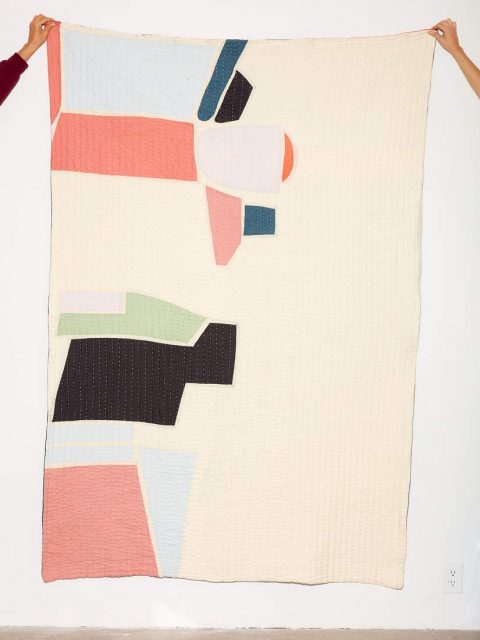
“Midnight Dinner” Quilt

by swissmiss
12 Jul 23:50

Saturday Morning Breakfast Cereal - Ambition

by tech@thehiveworks.com
Sarah

yuuuup


Click here to go see the bonus panel!

Hovertext:
If he had just fantasized about drawing webcomics, he could've been happy.


Today's News:
11 Jul 14:07

This nonsense of earning a living

by Jason Kottke
Sarah

Buckminster Fuller has his faults, but hot damn

From a 1970 issue of New York magazine, Buckminster Fuller on the massive economic lever of technology:

We must do away with the absolutely specious notion that everybody has to earn a living. It is a fact today that one in ten thousand of us can make a technological breakthrough capable of supporting all the rest. The youth of today are absolutely right in recognizing this nonsense of earning a living. We keep inventing jobs because of this false idea that everybody has to be employed at some kind of drudgery because, according to Malthusian-Darwinian theory, he must justify his right to exist. So we have inspectors of inspectors and people making instruments for inspectors to inspect inspectors. The true business of people should be to go back to school and think about whatever it was they were thinking about before somebody came along and told them they had to earn a living.

That was written almost 50 years ago…the capability of technology to generate wealth has increased greatly since then.

Tags: Buckminster Fuller   economics   working
03 Jul 21:07

Hidden treasures of Amsterdam’s river

by Tim Carmody
Sarah

I tweeted this already but I don't care

Amsterdam Objects.png

Between 2003 and 2012, civil engineers in Amsterdam excavated a brand-new North-South metro line along the banks of the river Amstel. A website (thankfully available in Dutch and English) documents what they found.

Rivers in cities are unlikely archaeological sites. It is not often that a riverbed, let alone one in the middle of a city, is pumped dry and can be systematically examined. The excavations in the Amstel yielded a deluge of finds, some 700,000 in all: a vast array of objects, some broken, some whole, all jumbled together. Damrak and Rokin proved to be extremely rich sites on account of the waste that had been dumped in the river for centuries and the objects accidentally lost in the water. The enormous quantity, great variety and everyday nature of these material remains make them rare sources of urban history. The richly assorted collection covers a vast stretch of time, from long before the emergence of the city right up to the present day. The objects paint a multi-facetted [sic] picture of daily life in the city of Amsterdam. Every find is a frozen moment in time, connecting the past and the present. The picture they paint of their era is extremely detailed and yet entirely random due to the chance of objects or remains sinking down into the riverbed and being retrieved from there. This is what makes this archaeological collection so fascinating, so poetically breathtaking and abstract at one and the same time.

If you don’t love browsing through lost IDs, credit cards, and everyday coins, a section called “Object Stories” highlights the more noteworthy finds: batteries from the 19th century, stoneware jugs and tankards from the 16th century, pieces of samurai swords, and more.

Tags: Amsterdam
03 Jul 20:14

Unity Center at the California Museum: Stories Against Intolerance

by Brad
Sarah

wow, these are going to be some powerful stories

It’s always a pleasure to evolve our work with museums, and especially a pleasure as museums evolve too. We’ve upgraded our longstanding Storykiosk installation at the California Museum for incorporation in the museum’s Unity Center, a large center in the museum focusing on the state’s diverse people, taking a stand against intolerance and hate.

The Center, designed and developed by West Office with the Museum and community advisers, grows out of a series of hate crimes by white supremacists during the 1999 “Summer of Hate.” The exhibit includes a focus on tolerance and unity, a message that grows stronger and more urgent with time. We focused on visitors’ own experiences standing up for others — verbalizing experiences through stories is a key part building commitment. Visitors answer questions focusing on both personal experiences and commitments such as:

  • Have you ever been bullied or discriminated against?
  • What problem in your community do you want to solve?

For this exhibit, we redeveloped our bilingual interface, and built an easy path for the Museum to upload videos to their YouTube channel through our cloud-based content management system. Looking forward tracking the progress of the exhibit through visitors’ own stories…

Watch or tell a story


Credit: Robert Durrell courtesy of California Museum

The post Unity Center at the California Museum: Stories Against Intolerance appeared first on bradlarson.com.

30 Jun 01:23

The color photographs of World War I

by Jason Kottke
Sarah

always reblog the Great War

Color WWI

Color WWI

Color WWI

Color WWI

When World War I started, color photography was still in its experimental stage so most of the imagery of the war is in black and white. But a few photographers managed to capture color views the battlefield, military operations, and scenes of daily life during the conflict. You can check out a bunch of the WWI color photos here, here, here, and here. There’s even some color film footage from the war:

As I’ve written before, early color photography is a form of time travel, connecting long-ago events to the present.

Until recently, the color palette of history was black and white. The lack of color is sometimes so overpowering that it’s difficult to imagine from Matthew Brady’s photos what the Civil War looked like in real life. Even into the 1970s, press photos documenting the war in Vietnam were in B&W and the New York Times delivered its news exclusively in B&W until the 90s, running the first color photograph on the front page in 1997.

Which is why when color photos from an event or era set firmly in our B&W history are uncovered, the effect can be jarring. Color adds depth, presence, and modernity to photography; it’s easier for us to identify with the people in the pictures and to imagine ourselves in their surroundings.

Lots more early color photography in the archives.

Update: From 2006, a song called The War Was in Color by Carbon Leaf. Here are the first two stanzas:

I see you’ve found a box of my things:
Infantries, tanks and smoldering airplane wings
These old pictures are cool. Tell me some stories
Was it like the old war movies?
Sit down son. Let me fill you in

Where to begin? Let’s start with the end
This black and white photo don’t capture the skin
From the flash of a gun to a soldier who’s done
Trust me grandson
The war was in color

(thx, adam)

Tags: early color photography   photography   war   World War I
28 Jun 20:55

The murals of Allston Hall

by adamg
Sarah

this makes me really sad. do the kids even know about mr. butch?

City Realty's filing of plans for its Allston Square project starts the clock ticking for the paintings that have long graced the window frames of the old Allston Hall and a neighboring building at Franklin and Braintree streets, just off the intersection of Harvard Avenue and Cambridge Street. So if you want to see them, now would be a good time.

In the meantime, here are photos of some of them.

Allston Hall mural

See the above larger.

Allston Hall mural
Allston Hall mural
Allston Hall mural
16 Jun 21:02

Saturday Morning Breakfast Cereal - Program

by tech@thehiveworks.com
Sarah

Is this all there is?


Click here to go see the bonus panel!

Hovertext:
Later, the man humanely destroys its CPU.


Today's News:
12 Jun 22:56

The Language of the Trump Administration Is the Language of Domestic Violence

by Jason Kottke

Jessica Winter writing for the New Yorker:

In the final scene of Frederick Wiseman’s landmark documentary “Domestic Violence,” police in Tampa arrive late at night to the home of a man who is drunk and a woman who is sick. The man has called the police because he is angry that the woman, who is desperate to sleep, is “neglecting” him. Minute by minute, it becomes chillingly clear that the man wants her removed from the house before his anger turns into physical violence. In his mind, the woman’s misdeeds — to be ill; to need rest; to wish to remain in her own home — transform him into an instrument of pain, one that she is choosing to wield against herself. He raises his hands over his head in a gesture of surrender. It’s all her fault. He can’t help it. One of the abuser’s most effective tricks is this inversion of power, at the exact moment that his victim is most frightened and degraded: Look what you made me do.

Look what you made me do has emerged as the dominant ethos of the current White House. During the 2016 Presidential race, many observers drew parallels between the language of abusers and that of Trump on the campaign trail. Since his election, members of the Trump Administration have learned that language, too, and nowhere is this more vivid than in the rhetoric they use to discuss the Administration’s policies toward the Central American immigrants crossing the U.S. border.

As Tim tweeted the day after Inauguration Day in 2017, “The President is an abuser. A lot of us are (re)discovering, and (re)deciding, how we react to being abused.”

Tags: Donald Trump   Jessica Winter   language   politics
12 Jun 00:52

On the Street…Howard St., New York

by The Sartorialist

60518HowardC2388IG


Yesterday was so cloudy but right at the end of the day the sun broke out and I found this incredibly chic woman chatting on Howard Street! That’s a great way to end a grey day, New York

10 Jun 21:18

Arizona man charged with threatening to kill black Harvard students at commencement last year

by adamg
Sarah

oh great, i'm glad they told us about this

An Arizona man was arrested last night on charges he posted two comments on photos posted on Instagram by Harvard University Instagram photos last year in which he threatened to kill blacks planning a graduation ceremony at Harvard in May, 2017.

Nicholas Zuckerman, 24, was indicted on two counts of transmitting in interstate and foreign commerce a threat to injure the person of another, the US Attorney's office in Boston reports:

On or about May 13, 2017, Zuckerman allegedly commented on a post published to Harvard University’s Instagram account, saying: “If the blacks only ceremony happens, then I encourage violence and death at it. I’m thinking two automatics with extendo clips. Just so no nigger gets away.” It is further alleged that on that same date, Zuckerman posted a comment to another Harvard Instagram post, saying: “#bombharvard and end their pro-black agenda.” Several minutes later, Zuckerman allegedly commented “#bombharvard” on other users’ posts approximately 11 times over a span of four minutes.

A concerned citizen who saw the posts reported them to the Harvard University Police who ultimately referred the case to federal authorities.

Zuckerman faces up to five years in federal prison and a $250,000 fine if convicted, the US Attorney's office reports.

Black Harvard graduate students last year created Harvard Black Commencement, "honoring graduating students who identify with the African diaspora."

Innocent, etc.

07 Jun 22:42

Robert Wadlow, the world’s tallest ever human

by Jason Kottke

When I was a kid, I devoured books like locusts ravage crops on the plains. My sister and I would go to the library, get 5 or 6 books each, and when I was done reading all of mine, I’d read hers — Little Women, Judy Blume, The Baby-Sitters Club…I was not picky. I read Roald Dahl, all the Little House books, Where the Red Fern Grows, Encyclopedia Brown, E.B. White, the Bobbsey Twins, Nancy Drew, all kinds of biographies of famous people, and almost everything else in our local library. Reading was how I learned about the world outside my tiny town. Reading was how I came to know about Robert Wadlow, the world’s tallest man.

In 1981, when I was 8 years old, our household acquired two books that I would read more than any other during my childhood: a set of World Book encyclopedias and the Guinness Book of World Records.1 The encyclopedia, a prized family possession, sat on a shelf in the living room and one of my favorite things was to grab a random volume, crack it open to a random page, and start reading. The Guinness Book of World Records, in contrast, sat on a small table in the bathroom; I read it while sitting on the toilet.

The first few pages of the book, which I am pretty sure is still sitting on that table in my dad’s bathroom, contained records related to the human body. I particularly remember reading about Robert Earl Hughes, then the world’s heaviest human, and The McGuire Twins, the world’s heaviest twins; they liked to ride motorcycles:

Mcguire Twins

But most captivating part of that book was the section about Robert Wadlow, the world’s tallest person: 8ft 11in tall, shoe size of 37AA, wingspan of 9.5 feet, and he could carry his father up the stairs at age 9, a feat unimaginable by a scrawny Wisconsin boy of the same age. The tallest person I’d ever seen up until then was probably like 6’3” — a man almost 9 feet tall was like something out of the stories I read from the library. Who needs fiction when you’ve got facts like these?

I hadn’t thought about any of this in years until I ran across a short video of Wadlow the other day (there’s more footage here, here, and elsewhere on YouTube):

Holy shit. Suddenly this almost mythical person from my childhood is walking across my screen! Digging a little, I found the Retronaut’s collection of Wadlow photos, only a couple of which were included in my Guinness book. Here’s Wadlow at 10 years old, when he was already 6’5”:

Robert Wadlow

And here are a couple more photos that show just how tall he was:

Robert Wadlow

Robert Wadlow

You can read more about Wadlow on Wikipedia, on Retronaut, or, yes, on the Guinness World Records site. I don’t care what anyone says…the World Wide Web is still a marvel. It brought Robert Wadlow alive for me, all these years later. What a thing.

  1. I will leave as an exercise to the reader how these books massively influenced my current choice of vocation.

Tags: books   Guinness Book of World Records   Robert Wadlow   video
06 Jun 14:55

Kate Spade Found Dead at 55

by Chavie Lieber
Sarah

I'm really shook up about this. I have an essay in me about working at Juicy in 2007, which was owned by Liz, which owned Kate Spade at the time too. How I pretended that everything would be fine by burying myself in frippery and bracelets and skating by and how it just wasn't.

The legendary designer reportedly took her own life.

Kate Spade, the fashion designer behind the eponymous label, is confirmed dead at 55. Sources tell the Associated Press that she took her own life; a housekeeper found her in her Manhattan apartment Tuesday morning. She reportedly left a note.

The designer started the beloved Kate Spade brand in the early ’90s with her husband, Andy Spade, and sold the company in 2007. She started her most recent retail venture, an accessories company called Frances Valentine, in 2016.

Born Kate Brosnahan and later changing her name to Kate Valentine, the Kansas City native attended Arizona State University, where she met her husband and business partner. She was working as a senior fashion editor at Mademoiselle magazine in 1993 when she decided to start her handbag company. Her husband encouraged her to step outside of her editing career and pursue her own line, despite her lack of design experience. Spade’s personal style was “sassy but classy,” as Cosmopolitan wrote in 2005, and she took inspiration from icons like Katharine Hepburn, Jackie O., and Björk to create her company.

Her first prototype for what she thought was the perfect handbag was a square bag with small handles, made with burlap material she bought from a potato-sack manufacturer she found in the Yellow Pages. Spade saw success bringing the bags to several New York City trade shows, where stores like Barneys and Fred Segal agreed to buy them; a few months later, Nordstrom, Bloomingdale’s, and Saks Fifth Avenue took orders too. Spade went on to create the billion-dollar brand with a feminine and whimsical aesthetic.

As her line expanded into other categories, like home goods, fragrance, shoes, and then menswear with the label Jack Spade, Spade became known as a bona fide tastemaker. The New York Times joked that “if Dorothy Parker were a product, she would be a Kate Spade clutch.” Spade took pride in the world of fashion and entertaining; at one point, she gave every employee of her company a copy of Emily Post’s Etiquette. Spade also wrote her own books on style, manners and home decorating.

The Spades sold 56 percent of their company to Neiman Marcus in 1999, which went through several owners over the past decade. The couple left their brand in 2007, citing family obligations. Spade told Racked last year that during that time, she “got to go home and be a full-time mother, which was the greatest thing I’ve ever done.” She said she started her second brand, Frances Valentine, in 2016 because she “just had an itch to do it again, to create, to design.”

Spade’s fizzy flair for feminine style — something fans came to love about her — is seen in Frances Valentine. The company is named after Spade’s daughter, Frances Beatrix Valentine Spade, by whom Spade is survived, along with her husband.

“I don’t think anyone’s coming to me for banal design,” Spade told Racked in 2016. “I think they’re looking for something that has an emotional appeal to it.”

Reta Saffo, Spade’s older sister, told the Kansas City Star that the designer had struggled for many years with mental illness and that she found her suicide “not unexpected.”

“I’d flown out to Napa and NYC several times in the past 3-4 years to help her to get the treatment she needed (inpatient hospitalization),” Saffo wrote to the local paper via email. “She was always a very excitable little girl and I felt all the stress/pressure of her brand (KS) may have flipped the switch where she eventually became full-on manic depressive.”

Saffo said she tried pushing her sister to get professional help but was not successful.

“We’d get sooo close to packing her bags,” she said, “but — in the end, the ‘image’ of her brand (happy-go-lucky Kate Spade) was more important for her to keep up. She was definitely worried about what people would say if they found out.”

Spade’s husband Andy later told the New York Times in a statement that “There was no indication and no warning that she would do this. It was a complete shock.” He went on to say that she “was actively seeking help for depression and anxiety over the last 5 years, seeing a doctor on a regular basis and taking medication for both depression and anxiety. There was no substance or alcohol abuse. There were no business problems. We loved creating our businesses together.”

03 Jun 13:54

On Michael Cohen’s Jackets

by Alexander Freeling
Sarah

clothing is a language. they can be subtle or screaming but what you wear does say something, so pay attention and have it say what you want.

Michael Cohen outside the Loews Regency hotel In New York. April 13, 2018. Yana Paskova for Getty Images.

WHILE JUDGE KIMBA WOOD questioned Todd Harrison at the Courthouse on Foley Square, Lower Manhattan, his client Michael Cohen sat smoking cigars and chatting with confidants on Park Avenue. Cohen began his career in personal injury law, before getting into the taxi business and real estate with the help of his father-in-law. He accumulated taxi medallions, debt and a knack for executing unbelievable property deals, entirely in cash. In 2007, Cohen joined the Trump Organisation, and was soon working personally for its chairman as a ‘roving fixer.’1 And now, the President’s lawyer was playing absentee client.

As Harrison faltered over the details of who else Cohen had been working for, photographers converged on the Loews Regency to record his display of insouciance.2 When their photos arrived in press rooms, the first thing journalists noted was the cadre of men surrounding Cohen, grasping him by the shoulder, taking calls, whispering into his ear. The second thing was his jacket.

Cohen favours indiscreet European luxury: Hermès ‘H’ belts, Italian tailoring, open-necked shirts. He wears clothes like sportscars wear their badges. In court he appears in suits, but prefers soft jackets with loud patterns, worn with loafers and jeans. In corporate law and finance, clothes are expected to reassure clients; you should present a successful business, but not flaunt your bonus. In Cohen’s line of work, lawyers talk, and dress, more like prize fighters. Like so many of those surrounding Donald Trump, Cohen is a New Yorker who does not care for the niceties of DC; he maintains an aggressive relationship with adversaries and with facts.

Politicians wear expensive suits, of course. But theirs are tactical garments, intended to draw attention not to individual textures or patterns but the whole silhouette. By presenting the body as a seamless, familiar shape, the suit diverts attention from the campaigner’s actual contours to the campaign they embody. Many assiduously stick to modest, domestic tailors: Obama switched to Chicago tailor Hart Schaffner Marx for his inauguration; Hillary Clinton would have worn Ralph Lauren.3 In clothing budgets as in so much of the current reality television politics, the true precursor for vestimentary excess was Sarah Palin.4 

The style writer Alan Flusser has drawn the distinction between the ‘Michael Douglas-Gordon Gekko imagery’ of Trump allies like Paul Manafort and ‘the Brooks Brothers, inside-the-Beltway, button-down look’ of professional Washingtonians.5 But even insatiable lovers of the sumptuous like Manafort and Trump manage to look essentially interchangeable with other consultants and politicians by wearing two-button plain navy suits.6 Because the modern business suit has changed remarkably little since the eighteenth century, small differences hold great significance. Within the West Wing, only notorious clothes horse Michael Anton wore a pocket square.7 The line between orthodox and radical is a series of tiny details: lapel shape, shoulder expression, sleeve width, accessories.

Cohen dresses to stand out. Even in suits, he wears loafers to show a bit of patterned sock. There is no American Flag in his lapel, but he commonly wears an enamel coral pin. The flag pin gained popularity in the Nixon years as a signifier of conservative patriotism in the face of disasters in Vietnam and it returned with renewed fervour after 9/11. Coral is an old symbol of good luck in Naples, and the pin is branding for Isaia, the Neapolitan luxury tailor. While Northern Italian makers favour the clean, structured suits typical of business wear, Neapolitan makers are noticeably different: softer shoulders; tighter, more aggressive cuts; louder patterns. These are jackets for the southern heat, but also jackets in which you could throw a punch. Jackets for lawyers who suggest to adversaries that they ‘tread very fucking lightly.’8 Cohen’s are blue and grey with bright checks and houndstooth patterns, jackets that hug the shoulder and biceps. The piece which caught reporters’ attention outside the Regency was mid-blue wool, with contrasting navy and beige checks. The Guardian compared it to a used car dealer’s outfit, perhaps because they didn’t want the inevitable headache that would come from voicing the other connotation: the wise guys of organised crime.

Isaia makes much of its heritage. Tailoring in southern Italy is different in tone to its British progenitors for environmental reasons: the weather, of course; the poverty of Naples compared to the immense concentration of capital in Mayfair; but there are also differences in the way in which people walk, greet one another and express their feelings. In their marketing, Isaia pushes the image of the charming, dangerous Neapolitan rake as far as possible. A new water-resistant dinner jacket is ideal ‘if a cocktail is thrown in your face.’ A motorcycle helmet with a scratchy drawing of St. Januarius is ‘a playful invitation to respect the law’ while riding your Vespa. On Isaia’s website, a cartoon of CEO Gianluca Isaia named Corallino offers a ‘phrasebook’ of Napulitano gestures: Damme nu vasillo (‘Give me a kiss’); Te faccio nu mazzo tanto! (‘I’m going to whip your ass!’). Helpfully for internet warriors affiliated with the President, Tiene’e ccorna! (‘You are a cuckold!’). Less helpful: Addereto ’e cancielle (‘In jail’). These add up to a parody of Italian masculinity: passionate, aggressive and possibly criminal.

Yet Isaia’s marketing is knowingly ironised by slapstick and exaggeration. A 2015 campaign by photographer Lady Tarin features a man in a double-breasted jacket, cradling between his sweeping lapels a squirming baby who has seized this moment to empty his bladder. Another poster shows a suited model in the confession booth, opposite a despairing priest. The Fall/Winter 2014 lookbook begins as a paean to Italian gastronomy, alternating shots of a restaurant kitchen with flannel jackets, overcoats and three-piece suits. But the cliché cannot hold. The models who are supposed to be appreciating the cooking interfere with it. During the meal, the elder man steals spaghetti from the horrified younger, scooping it up with his bare hands. In a postprandial shot, the pair get through twelve espressos, piling up cups and spilling coffee. This tableau of the Italian spirit veers into visual comedy, and the models and writers are in on the joke.

The irony seems lost on Cohen. Recognising his jackets, I remember thinking that he was taking the fun out of one of the few luxury tailoring brands with a sense of humour. The photos from the Regency depict an unlikely balance between corporate America and real estate mavericks: Jerry Rotonda, a Deutsche Bank executive, sits at the back in monochrome suit and tie; Rotem Rosen, a property developer, sits to Cohen’s left wearing a bright blue jacket (one sleeve button left open, of course), jeans and monkstraps. Wits on Twitter were quick to compare them to images of the key players in The Sopranos, hunched outside Satriale’s Pork Store. The implication was not that Cohen was a gangster, but that he played one on TV. If he never breaks character, it might be because, like many who came slouching towards Washington after the inauguration, he has become part of the show, but doesn’t think he’s acting.

 Alexander Freeling is a writer, teacher and critic.


  1. See: https://www.nytimes.com/2018/05/05/business/michael-cohen-lawyer-trump.html 

  2. See: https://medium.com/@whileseated/michael-cohen-cigar-pictures-51807588b854 

  3. See: https://www.esquire.com/style/a12526/hart-schaffner-marx-obama-suits-012612/and https://www.nytimes.com/2016/10/11/fashion/hillary-clinton-ralph-lauren.html 

  4. See: https://www.nytimes.com/2008/10/23/us/politics/23palin.html 

  5. See: https://www.nytimes.com/2017/10/31/us/politics/paul-manafort-luxury-shopping.html 

  6. Trump’s suits are made by Brioni. Manafort’s may have come from House of Bijan in Beverly Hills, and were expensive enough to be considered evidence by the FBI during a raid of his property. See: http://nationalpost.com/news/world/manafort-has-a-thing-for-suits-so-expensive-that-fbi-agents-photographed-them-during-raid 

  7. https://www.politico.com/story/2018/04/08/national-security-spokesman-anton-trump-508641 

  8. See: https://www.vox.com/policy-and-politics/2018/4/11/17218010/michael-cohen-raid-fbi-trump-mueller-explained 

30 May 12:53

Sculptures made from scraps

by Jason Kottke
Sarah

for me

Artist Lydia Ricci collects scraps (of paper, cardboard, etc.) and sculpts them into everyday objects.

From Scraps

From Scraps

From Scraps

From Scraps

I love these…and there are a ton more to look at. Gah ok, just one more:

From Scraps

(via @yhaduong)

Tags: art   Lydia Ricci
30 May 11:57

The Feedback Rush

by swissmiss
Sarah

This was very insightful! Maybe not 100% useful for a work environment, but basically questioning the intended results for any feedback. Ask questions to encourage people to reflect and grow. I'm going to try and be better at this.


In this Hurrly Slowly episode on Feedback Jocelyn speaks on how criticism constrains creativity, while questions and appreciations help it expand. And, why effective feedback focuses on outcomes, not just opinions.

It made me rethink how I will give feedback going forward. And, it made me apologize to a friend. Thank you Jocelyn! And, Illustration by Yukai Du

29 May 23:56

Behind “The Yellow Wallpaper”

by Maika

As Haute Macabre readers, I expect many, if not most of you are already well acquainted with a certain late 19th century short story by Charlotte Perkins Gilman entitled “The Yellow Wallpaper.” However if that title is unfamiliar to you, before you read further, I urge you to take a few moments to experience an unforgettable tale of a woman’s solitary descent into madness that’s as vividly haunting and singularly unsettling as it is a powerful work of early feminist literature. You can order it for your personal library, but it’s also right here in scanned form.

If my brief description isn’t enough to entice you, H. P. Lovecraft once cited the story as proof that the literature of cosmic fear has always existed, describing how Gilman rose “to a classic level in subtly delineating the madness which crawls over a woman dwelling in the hideously papered room where a madwoman was once confined.”

Now that we’re all on the same page, join us as we marvel at “Why I Wrote The Yellow Wallpaper,” Charlotte Perkins Gilman’s fascinating explanation of her motivations behind writing this famous story, originally published in the October 1913 issue of The Forerunner. I already knew that “The Yellow Wallpaper” was salient commentary on 19th century attitudes about and treatment of women’s physical and mental health.

What I didn’t know, what currently has my jaw on the floor, is that the story is based on Gilman’s very personal experiences and was written specifically for her doctor. She wanted to demonstrate how his “specialist” treatment actually mistreated her and to prevent other women from suffering the same fallacious care. And she succeeded.

Many and many a reader has asked that. When the story first came out, in the New England Magazine about 1891, a Boston physician made protest in The Transcript. Such a story ought not to be written, he said; it was enough to drive anyone mad to read it.

Another physician, in Kansas I think, wrote to say that it was the best description of incipient insanity he had ever seen, and–begging my pardon–had I been there?

Now the story of the story is this:

For many years I suffered from a severe and continuous nervous breakdown tending to melancholia–and beyond. During about the third year of this trouble I went, in devout faith and some faint stir of hope, to a noted specialist in nervous diseases, the best known in the country. This wise man put me to bed and applied the rest cure, to which a still-good physique responded so promptly that he concluded there was nothing much the matter with me, and sent me home with solemn advice to “live as domestic a life as far as possible,” to “have but two hours’ intellectual life a day,” and “never to touch pen, brush, or pencil again” as long as I lived. This was in 1887.

I went home and obeyed those directions for some three months, and came so near the borderline of utter mental ruin that I could see over.

Then, using the remnants of intelligence that remained, and helped by a wise friend, I cast the noted specialist’s advice to the winds and went to work again–work, the normal life of every human being; work, in which is joy and growth and service, without which one is a pauper and a parasite–ultimately recovering some measure of power.

Being naturally moved to rejoicing by this narrow escape, I wrote The Yellow Wallpaper, with its embellishments and additions, to carry out the ideal (I never had hallucinations or objections to my mural decorations) and sent a copy to the physician who so nearly drove me mad. He never acknowledged it.

The little book is valued by alienists and as a good specimen of one kind of literature. It has, to my knowledge, saved one woman from a similar fate–so terrifying her family that they let her out into normal activity and she recovered.

But the best result is this. Many years later I was told that the great specialist had admitted to friends of his that he had altered his treatment of neurasthenia since reading The Yellow Wallpaper.

It was not intended to drive people crazy, but to save people from being driven crazy, and it worked.

[via /r/WeirdLit, “The Yellow Wallpaper I” illustration by hyperphagia]