The Massachusetts Appeals Court today dismissed a lawsuit against Esh Circus Arts and the Somerville zoning board, saying the person who brought it does not live close enough to be legally aggrieved by the circus center's request to use some vacant office space in its building.
In 2015, the zoning board approved Esh's request for permission to renovate and use a roughly 850-square-foot vacant office space for a new lobby and reception area. Claudia Murrow, who lives across and down the street, promptly sued, saying the move would cause "detrimental health, safety, and welfare effect on Murrow and Esh's surrounding neighbors."
In its ruling, though, the appeals court agreed with a lower-court judge that Murrow lived too far down the street to be the sort of person who could legally make that kind of claim under state zoning laws. Basically, immediate neighbors of a property and their immediate neighbors, at least up to 300 feet away from the property in question, as well as people who live directly across the street, are considered "parties in interest" who can file suit against zoning decisions which they feel aggrieved by.
Although Murrow lives within 300 feet of the circus school, she is not an immediate neighbor of an immediate neighbor of the school, nor does she live directly across the street, and so is not legally allowed to appeal a zoning decision, the court said.
Murrow also argued that the city of Somerville certainly felt otherwise, because it included her on a list of people who had to be notified about the zoning hearing. The court shot that out of a legal cannon as well, saying that while the list of people notified about the hearing might include "parties in interest," that doesn't mean the city certified the list it used was only of people who might be covered by state zoning laws.
At the same time, the court rejected Esh's demand that Murrow be required to reimburse it for its legal fees - and pay additional damages:
Although Murrow has failed to persuade us that the judge erred in dismissing her claims, sanctions are not warranted as this appeal is neither frivolous nor was it initiated in bad faith.
“Lorna” was the name I knew my mother by. But whenever we found ourselves enveloped in the circle of our boisterous Jamaican family, she became “Newberry.”
“Constantine” was the name I knew my father by. But whenever he touched road to link up with his bredgrins, he was met with greetings of “John Hawk reach! John Hawk deh yah!”
I was an inquisitive child, but the names “Newberry” and “John Hawk” seemed so firmly established in the fabric of our family that it felt silly to ask where they came from. Nearly all of my family members who were born in Jamaica and immigrated to Canada had them, too. I accepted these aliases as part of the Jamaican culture I adored, and didn’t want to ask a question that would highlight yet again that I was a “Canadian kid.”
As it turns out, these aliases are part of a wider Caribbean culture. Through both my on- and offline circles, I’ve shared jokes with other people of Caribbean heritage about a cousin called “Tallman” simply because he was tall, or not realizing that Granny June’s name wasn’t actually June until her funeral.
Whether discussing the shock of learning a loved one’s real name, the confusion of trying to decipher a nickname, or laughing at the creativity of the alias bestowed upon a family member, these conversations have always felt very familiar. But few of us knew the origins of the practice itself.
Born in the United Kingdom to Grenadian parents, author Shirley Anstis conducted seventy interviews in order to write her book They Call Me…, which uncovers the stories of Caribbean nicknames, also called pet names or family names. “Some nicknames, such as Diggit for a gardener, simply reflect a role in the community,” Anstis has said. “But others, such as Snakehead, might reflect something you can’t change, like the shape of your head, and living with that unkind label is a very different matter.”
Anstis’s book references “an African tradition of real names being secret,” a remnant of ancestral practice that survived the Transatlantic Slave Trade into the Caribbean. Protection of one’s spirit is of utmost importance in African diasporic spiritualities, and naming practices are a vital part of that. In one of my recent online discussions, Twitter user @jamaloahustles shared that nicknames helped to keep children safe from “bad mind”—those who wish harm or call forth evil spirits to wreak havoc on young lives. Names are important for incantation. If a child’s real name was a mystery, it would confuse or elude the negativity that was meant for them. Others called this the act of “duppyfying” loved ones, protecting people of all ages from malevolent spirits.
I decided it was time to find the answer to the question I wanted to ask since I was a kid: how did my parents get their nicknames?
*
I asked my dad first.
He leaned back in his chair, stretched his arms wide then folded them behind his head, and let out a deep chuckle. His Patois hasn’t faded in the three decades that he’s been in Canada, but it seemed to get even thicker as he reminisced. “Well, yuh see, it used to just be Hawk—di ‘John’ come afta,” he began.
“When mi young, mi friends call me Hawk ‘cause mi did ‘hawk’ up all di gyal dem,” he laughed. My dad remains a charmer and an infamous ladies’ man whose penchant for wooing women got him in trouble more than once. Vintage photos of him, in his slim-fitting pants and silk shirts unbuttoned to his navel, chest adorned with gold chains and always with a fresh haircut, told me more stories about him than he ever shared about himself.
He kept chuckling as he walked down memory lane, recounting his youth and both the innocent and intentional ways the “Hawk” was activated. Sometimes he didn’t realize a young woman was interested, and his friends would tease him about his naïveté. Other times he might have issued a challenge to a comrade, waiting to see who a young woman would accept a date with, and winning every time. To know that a nickname followed him from the outskirts of Montego Bay to small-town Ontario meant that he was—and in many ways, still is—legendary.
My mother’s story was more heartwarming than hilarious. Where my dad’s nickname was earned over time from a combination of his looks, personality, and reputation, my mom’s was born in the parish of Hanover, Jamaica, just minutes after she was.
My mom is the baby of the family. Her eldest sister is old enough to have been her mother, and I was always curious about the age gaps between my mom and aunts. As it turns out, my maternal grandmother had a history of miscarriages among her three live births. Before she got pregnant with my mom, Grandma was told not to test her body again, but she did.
The pregnancy with my mother was a smooth one, and when the midwife delivered a healthy, beautifully brown baby girl, she handed her to my Grandpa who said “I finally have a new berry!” At that moment, Mom’s nickname was solidified—and with the migration of my mother and most of her family from Jamaica to Canada, the name travelled too.
My aunt is known as “Pansy” because my Grandpa loved the flower. One of her sons, my cousin, is known as “Wayne” because she liked John Wayne. Once I asked, I learned that every nickname in my family comes with a story that taught me something about the recipient, or the donor. Each story either confirmed something I knew about someone, or illuminated something that would likely have gone uncovered without me asking about its genesis.
*
The stories made me lament the fact that I wasn’t given a nickname of my own. The practice seemed to evaporate with us Canadian-born kids, and part of that loss seems to be related to the fading or shifting of diasporic connections with each generation removed. Elders mentioned various reasons—not thinking it fit the “Canadian way,” or not wanting to “confuse” us or our Canadian friends—but I always felt a bit of envy that I didn’t have an alias to share with my loved ones, and didn’t have a hidden story to tell about myself.
In my own way, I’ve resurrected that practice and joined the assemblage of Caribbean nicknames, albeit with a bit of a remix. “Bee” isn’t the name I was born with. My first name can’t be shortened down into a quick, snappy nickname, but in university, my close friends started calling me by my first initial, B. Adding two e’s to it turned a lone letter into a new name, one that came in handy when I was trying to separate my writing identity from my nine-to-five. And even the people who know my daughter’s real name will default to calling her “Little Magician,” a nickname I came up with while she was still in the womb.
Those names were born and maintained out of the same need for protection—mine as a way to keep two different careers from colliding, and hers as a way to create a boundary after being born into this digital era. My decision to share a photo of her on Instagram or write a story about motherhood exposes her to an audience not of her choosing, and it feels like I’m able to keep parts of her sacred when I keep her name to myself.
*
For all of the people who’ve never known why Auntie Beauty is called Beauty, or who look at funeral programs in confusion, wondering who “Winston” is when they’ve come to lay Grandpa Carlos to rest, you are not alone. You are part of a tradition that shows the creativity and complexity of a people who have used those traits to survive and thrive. Digging to the bottom of these origin stories can open up an entire new world of understanding of our families and the personalities within them, so if you’ve ever been tempted, take my challenge to ask that question today. From the forced migration of my ancestors to the chosen migration of more recent generations, these names and the reasons behind them have endured. Whether we have our own nickname or not, our awareness of them helps to narrow the chasms between who we are and where we come from.
On paper I am the child of Lorna and Constantine, but in essence, I am Newberry and John Hawk’s firstborn—and the latter makes much more sense to me. Braggadocio, confidence, style, resilience, and renewal are all pieces of what my elders gave me, and through the artificial names given to them, I’ve come to know more of the truth about myself and where I come from.
letting myself get excited about work just leads to disappointment. i miss it
I have spent the entire month of shedding ending up having more work and the only shedding that has been on mind is how I might “shed” academia. I have been filled with ambivalence about that decision even though it is clear to me that something must give if I am to sustain the creative and intellectual life I wish to lead.
Last week I was in Madrid and had several opportunities to experience the art, letters and culture of Madrid in ways that were intensely personal. I was given a private tour of the National Library that contains every volume, film, recording and periodical ever published in Spain. Every year the country celebrates a writer who then gets to choose an artist who is commissioned to create a portrait as directed by the author. This collaborative approach to portraiture makes it one of the more fascinating galleries I have had the pleasure to explore. Later I wandered the streets of the “writer’s district” and sat for a spell in Lope de Vega’s garden. I read many of his plays in my senior year of high school. I was inspired then to write a play myself, completely in Spanish.
As we came into the research room where scholars and students were laboring I was overcome with an intense feeling of sadness and grief. It took me a moment to understand why. As I have been thinking of leaving academia I realized that I have been feeling a terrible loss of the notions I had of what it means to be a scholar and an intellectual. Seeing Ph.D. students at work in this inspiring space, I was reminded of the joy and anticipation I felt when researching and reading at that time in my life. When I wanted to conduct critical research and represent “performances” of women in the world of child welfare. When I could have told the real stories of myself and them. I hear myself recently saying words like, “I have a very performative relationship with clothes” within which is encoded numerous theories and philosophies, echoing that time.
Following right on the heels of that is the terrible disappointment that came with the realization that similar to my practice life, I entered and labored in yet another bureaucratic institution. I am reminded of all the concessions that were made about what I would research, how I would research it, how I would represent it and finally in these last years what I must teach, what assignments I must give, what learning outcomes I must measure. The endless meetings that produce nothing.
In my work in this newer digital life I am still always drawn to those activities and experiences that are creative and support a scholarly and collaborative approach. Students from fashion, art, performance and design schools contact me with projects such as being interviewed for ethnodramas a la Anna Deaveare Smith, graphic novels, magazines, 3D characters or just other academic projects about social media and representation. Interestingly, most come from outside the US, although Parsons still seems to be producing critically thinking scholars. I find these transactions endlessly interesting and fascinating. I wish I had the time to deeply engage with all of them. What’s making it hard to leave academia I realize is accepting the loss of my desired, never realized, scholarly life.
At the very same time I am inhaling the odors of ancient books and spaces, I receive an email from a professor in Barcelona asking if I would be interested in writing a short book about fashion for an immersion series. I see the inquiry when I leave to go to lunch. This excites me. Like the young people in my classes or around me in the digital world, I suddenly realize I do not have to do what I want to do within the structures of obsolete institutions. I can write, I can perform, I can research, I can study and perhaps even teach in other spaces, in fact I have already been doing so. My Ph.D. is mine and completely transportable. I am going to dig out my old notebooks filled with thoughts about performance studies and postmodern theories. I am going to keep “performing” my life as the one I have been sharing with all of you. My performances will become even more experimental and thus more fun and alive. Oh and by the way...just got a bunch of wigs when I got home.
Have you ever had a moment when you realized that you only needed yourself to do what you wanted to do? Inspire me please with your stories!
Neubronner developed the pigeon camera for practical purposes. At first, he was simply hoping to track the flights of the birds in his flock. But his invention also represented a more sublime achievement. The images his pigeons captured, featured in “The Pigeon Photographer,” a recent book from Rorhof, are among the very early photos taken of Earth from above (the earliest were captured from balloons and kites) and are distinct for having the GoPro-like quality of channelling animal movement. That perspective that is so commonplace to us now, in which the rooftops stretch out before us as though they were made of a child’s blocks, and people crawl along like ants, was a rare sight when Neubronner took his pigeon pictures. The photos offered a glimpse of the world rendered pocket-size, as it eventually would be via a hundred types of new technology—by airplanes, or skyscrapers, or Google Earth.
But there’s also something a bit wild about the photos, precisely because they were taken by birds. Their framing is random and their angles are askew; sometimes a wing feather obscures the view. Pigeons are surely the most pedestrian of birds, but, looking at these oddly graceful photographs, or at Neubronner’s pictures of the birds looking stately and upright in their photo kits, they start to seem like heavenly creatures.
These pictures remind me quite a bit of the chapters in Paul Saint-Amour’s Tense Future on the relationship between aerial photography and modernist art. (I can’t recall if he mentions the pigeons or not.)
I would like to draw your attention to the person 'curating' personal Spotify playlists to beat the 'Discover Weekly' feature. Matty, I think your new side hustle beckons...
The camera is a small, white, curvilinear monolith on a pedestal. Inside its smooth casing are a microphone, a speaker, and an eye-like lens. After I set it up on a shelf, it tells me to look straight at it and to be sure to smile! The light blinks and then the camera flashes. A head-to-toe picture appears on my phone of a view I’m only used to seeing in large mirrors: me, standing awkwardly in my apartment, wearing a very average weekday outfit. The background is blurred like evidence from a crime scene. It is not a flattering image.
Amazon’s Echo Look, currently available by invitation only but also on eBay, allows you to take hands-free selfies and evaluate your fashion choices. “Now Alexa helps you look your best,” the product description promises. Stand in front of the camera, take photos of two different outfits with the Echo Look, and then select the best ones on your phone’s Echo Look app. Within about a minute, Alexa will tell you which set of clothes looks better, processed by style-analyzing algorithms and some assistance from humans. So I try to find my most stylish outfit, swapping out shirts and pants and then posing stiffly for the camera. I shout, “Alexa, judge me!” but apparently that’s unnecessary.
What I discover from the Style Check™ function is as follows: All-black is better than all-gray. Rolled-up sleeves are better than buttoned at the wrist. Blue jeans are best. Popping your collar is actually good. Each outfit in the comparison receives a percentage out of 100: black clothes score 73 percent against gray clothes at 27 percent, for example. But the explanations given for the scores are indecipherable. “The way you styled those pieces looks better,” the app tells me. “Sizing is better.” How did I style them? Should they be bigger or smaller?
The Echo Look won’t tell you why it’s making its decisions. And yet it purports to show us our ideal style, just as algorithms like Netflix recommendations, Spotify Discover, and Facebook and YouTube feeds promise us an ideal version of cultural consumption tailored to our personal desires. In fact, this promise is inherent in the technology itself: Algorithms, as I’ll loosely define them, are sets of equations that work through machine learning to customize the delivery of content to individuals, prioritizing what they think we want, and evolving over time based on what we engage with.
Confronting the Echo Look’s opaque statements on my fashion sense, I realize that all of these algorithmic experiences are matters of taste: the question of what we like and why we like it, and what it means that taste is increasingly dictated by black-box robots like the camera on my shelf.
Theories of Taste
In his 2017 book Taste, the Italian philosopher Giorgio Agamben digs up the roots of the word. Historically, it is defined as a form of knowledge through pleasure, from perceiving the flavor of food to judging the quality of an object. Taste is an essentially human capacity, to the point that it is almost subconscious: We know whether we like something or not before we understand why. “Taste enjoys beauty, without being able to explain it,” Agamben writes. He quotes Montesquieu: “This effect is principally founded on surprise.” Algorithms are meant to provide surprise, showing us what we didn’t realize we’d always wanted, and yet we are never quite surprised because we know to expect it.
Philosophers in the 18th century defined taste as a moral capacity, an ability to recognize truth and beauty. “Natural taste is not a theoretical knowledge; it’s a quick and exquisite application of rules which we do not even know,” wrote Montesquieu in 1759. This unknowingness is important. We don’t calculate or measure if something is tasteful to us; we simply feel it. Displacing the judgment of taste partly to algorithms, as in the Amazon Echo Look, robs us of some of that humanity.
Every cultural object we aestheticize and consume — “the most everyday choices of everyday life, e.g., in cooking, clothing or decoration,” Pierre Bourdieu writes in his 1984 book Distinction: A Social Critique of the Judgement of Taste — is a significant part of our identities and reflects who we are. “Taste classifies, and it classifies the classifier,” Bourdieu adds. If our taste is dictated by data-fed algorithms controlled by massive tech corporations, then we must be content to classify ourselves as slavish followers of robots.
But Fashion Is Already Arbitrary
We might say that “taste” is the abstract, moralized knowledge, while “style” is its visual expression. Fashion makes taste easily visible as style, in part because its distinctions between color or cut in clothing are so specific and yet so random (“rules which we don’t even know”). In the past, a whimsical consensus among elites dictated fashion culture; a royal court or an echelon of magazine editors imposed a certain taste from the top of society, down.
Taste is an essentially human capacity, to the point that it is almost subconscious: We know whether we like something or not before we understand why.
Roland Barthes noticed this arbitrariness in his 1960 essay Blue Is in Fashion This Year. Barthes scrutinizes a fragment of text from a fashion magazine — “blue is in fashion this year” — to see where its thesis, that a particular color is particularly tasteful right now, comes from. His conclusion is that it doesn’t come from anywhere: “We are not talking about a rigorous production of meaning: the link is neither obligatory nor sufficiently motivated.” Blue is not in fashion because it is particularly functional, nor is it symbolically linked to some wider economic or political reality; the statement has no semantic logic. Style, Barthes argues, is an inexplicable equation (a faulty algorithm).
That Scene from The Devil Wears Prada
Further evidence of the artificial and hierarchical nature of style in the past can be found in that scene from the 2006 film The Devil Wears Prada, in which Meryl Streep (as magazine editor and Anna Wintour facsimile Miranda Priestly) tells her assistant played by Anne Hathaway that the chunky blue sweater she is wearing was, in essence, chosen for her. “That blue represents millions of dollars and countless jobs, and it’s sort of comical how you think you made a choice that exempts you from the fashion industry when, in fact, you’re wearing a sweater that was selected for you by the people in this room from a pile of stuff,” Streep says.
In other words, blue is in fashion this year because some people decided it was. You, the non-tastemaker, have no choice in the matter.
Data-Based Fashion
Is it possible that instead of this artificial fashion language, algorithms like those powering Alexa could create a more systemic, logical construction of fashion aesthetics built on data? Blue is in fashion this year because 83.7 percent of users purchased (or clicked like on) blue shirts, the Amazon Echo Look algorithm says, therefore it is in fashion, therefore businesses should manufacture more blue shirts, and you, the customer, will buy and wear them. No human editors needed.
I’m not sure if this technology-derived algorithmic facticity of taste is better or worse than Meryl Streep-Anna Wintour deciding what I wear, which might be the core concern of this essay.
“Collapsing Dominant”
When modes of tastes change, there is a certain fear: Am I in or out? Do I understand the new or am I stuck in the old? In 1980, the New Yorker published George W.S. Trow’s essay describing this feeling under the title of “Within the Context of No Context,” from which I took the epigraph and structure for this piece. Trow’s essay came out as a book in 1981 and again in 1997. In the appended introduction to the 1997 edition, he uses the phrase “collapsing dominant” to describe a situation in which an older, established mode of cultural authority, or a taste regime, is fading and being replaced by a newer one. These regimes have two parts: the subjects of taste and the way taste is communicated.
Today we are seeing the collapse of the dominant regime that Trow originally observed emerging, mass-media television, which had previously replaced the moralistic mid-century novels of New England WASPs. Now, we have Instagram likes, Twitter hashtags, and Google-distributed display advertising spreading taste values. Instead of the maximalist, celebrity-driven, intoxicant culture of ‘70s television — Nixon, Star Wars, shag rugs, cocaine, nuclear bombs — we now have the flattened, participatory, somehow salutary aesthetic of avocado toast, Outdoor Voices leggings, reclaimed wood, Sky Ting yoga classes, and succulents in ceramic planters.
That we are in the midst of this shift in taste might help explain our larger mood of instability and paranoia (or is it just me?). We can’t figure out what might be sustainable to identify with, to orient our taste on. The algorithm suggests that we trust it, but we don’t entirely want to. We crave a more “authentic,” lasting form of meaning.
The Death of Svpply
In 2009, a designer named Ben Pieratt, now living in Massachusetts, launched Svpply. It was a kind of online social network based on shopping, where invitation-only members could curate selections of products from elsewhere on the internet and users could follow their favorite tastemakers. Eventually, any user could become a curator. I remember it from the time as a calm, limpid pool in the midst of so much internet noise. The site presented only cool clothes, bags, and accessories, all chosen by individual humans, since algorithmic feeds weren’t widely deployed at the time. On Svpply you could find the melange of signifiers of a certain class of early-adopter design-bro: minimalist sneakers, fancy T-shirts, Leica cameras, and drop-crotch sweatpants.
The algorithm suggests that we trust it, but we don’t entirely want to.
In 2012, eBay acquired the company and quickly shut it down. In 2014, Pieratt launched a Kickstarter for Very Goods, a Svpply replacement that’s still active. Today he sees Svpply as a cautionary tale about the limits of human curation on the internet. Over the phone, we talk about how taste doesn’t really scale. The bigger a platform gets, the harder it is to maintain a particular sense of style. By opening the platform, Pieratt had tried to “convert from a human-driven community into a machine,” he explains. “When we lost the exclusivity, people didn’t really care anymore.” Svpply’s innate sense of uniqueness didn’t survive: “If everyone’s editing Vogue, it wouldn’t be Vogue.”
Another question: How good of a tastemaker can a machine ultimately be?
Human- v. Machine-Curation
I worry that we are moving from a time of human curation (early Svpply) to a time in which algorithms drive an increasingly large portion of what we consume (the Facebook feed). This impacts not only the artifacts we experience but also how we experience them. Think of the difference between a friend recommending a clothing brand and something showing up in targeted banner ads, chasing you around the internet. It’s more likely that your friend understands what you want and need, and you’re more likely to trust the recommendation, even if it seems challenging to you.
Maybe it’s a particularly shapeless garment or a noisy punk track. If you know the source of the suggestion, then you might give it a chance and see if it meshes with your tastes. In contrast, we know the machine doesn’t care about us, nor does it have a cultivated taste of its own; it only wants us to engage with something it calculates we might like. This is boring. “I wonder if, at the core of fashion, the reason we find it fascinating is that we know there’s a human at the end of it,” Pieratt says. “We’re learning about people. If you remove that layer of humanity from underneath, does the soul of the interest leave with it?”
Pieratt makes a further distinction between style and taste. Style is a superficial aesthetic code that is relatively simple to replicate, whereas taste is a kind of wider aesthetic intelligence, able to connect and integrate disparate experiences. Algorithms can approximate the former — telling me I should wear a blue shirt — but can’t approximate the latter because the machine can’t tell me why it thinks I should wear a blue shirt or what the blue shirt might mean to me. When a machine has taken over the exploration of taste, the possibility of suddenly feeling something from a surprising object is narrowed to only what the machine decides to expose. “I don’t think there’s such a thing as machine taste yet,” says Pieratt.
Of course, he and I might just be part of the fading regime, our “collapsing dominant.” The dystopian babies of 2018 raised on algorithmic Spiderman-slash-Frozen YouTube videos may have different appetites in the future.
Taste Optimization
The threat of banality (or the lack of surprise) implicit in full machine curation reminds me of the seemingly random vocabulary meant to improve SEO on Craigslist posts. As one chair listing I encountered put it: “Goes with herman miller eames vintage mid century modern knoll Saarinen dwr design within reach danish denmark abc carpet and home arm chair desk dining slipper bedroom living room office.”
Imagine the optimized average of all of these ideas. The linguistic melange forms a taste vernacular built not on an individual brand identity or a human curator but a freeform mass of associations meant to draw the viewer in by any means necessary. If you like this, you’ll probably like that. Or, as a T-shirt I bought in Cambodia a decade ago reads, “Same same but different.” The slogan pops into my mind constantly as I scroll past so many content modules, each unique and yet unoriginal.
Machine-Generated Content
Algorithms promise: If you like this, you will get more of it, forever. This experience is leaking from the internet of Google ads for the bag you just bought into the physical world. Look to the artist Jenny Odell’s investigation of “free watch” offers on Instagram for an example. The watches appear, at a minimum, stylish, with small variations on minimalist faces and metal bands. But they are not the result of an enlightened sense of taste, per Pieratt’s definition. The brands that sell them are thin fictions whipped up in Squarespace and the actual products are the result of Alibaba manufacturing and Amazon drop-shipping, in which a product moves directly from manufacturer to consumer having never entered a store. The phantom watches are empty fashion language, objects without content.
Other ways in which our experiences are warped by algorithmic platforms include Spotify possibly commissioning original music from “fake” artists to match the latent content desires of its audience, as Noisey noticed; delivery restaurants that are only virtual, conjuring a digital brand out of a shadowy group kitchen and serving food via Uber Eats; the surreal kids’ YouTube videos, which exist because they are rewarded with views by the feed algorithm and thus earn their creators advertising profit; and the globalized visual vernacular of Airbnb interior decorating, which approximates a certain style emerging from the platform itself. Having analyzed the data from some platform or another, these are things the machine thinks you want, and it can serve them up immediately and infinitely.
We find ourselves in a cultural uncanny valley, unable to differentiate between things created by humans and those generated by a human-trained equation run amok. In other words, what is the product of genuine taste and what is not. (This lack of discernibility also contributes to the problems of fake news, which algorithmic feeds promote like any other content, however inaccurate.)
Spotify’s fake artists aren’t fake, per se; they’re a kind of muzak created by a Swedish production company that just so happens to have the same investors as Spotify. That the simple possibility of non-genuine music fed to us by an algorithmic platform without our knowledge created a media frenzy speaks to our fundamental fear — a possibly irrational or at least abstruse 21st-century anxiety — of an algorithmic culture.
Style in the Age of Digital Reproduction
In 1935, Walter Benjamin observed that the work of art in the 20th century was undergoing a change during the advent of photography and film. The newfound reproducibility of the individual work of art through these technologies meant that art was deprived of its “aura”: “the here and now of the original” or “the abstract idea of its genuineness,” as Benjamin writes.
Photography, as Benjamin observed, could reproduce a singular work of art. Algorithmic machine learning, however, can mimic an entire stylistic mode, generating new examples at will or overlaying a pre-existing object with a new style unrelated to its origins. In 2015, researchers released a paper in which they turned a photograph of Tübingen, Germany into a van Gogh painting, then overlaid the style of Munch and Kandinsky in turn. The system “achieves a separation of image content from style,” the researchers write (a disconnect that contributes to our anxiety).
Want another Picasso, Gucci, Gehry, Glossier, Beyoncé? Just push the button.
So it’s not just an individual work which can be reproduced, but rather an artist’s entire aesthetic. The resulting lack of aura devalues unique style, or changes our experience of it, just as photography once challenged painting. “The reproduced work of art is to an ever-increasing extent the reproduction of a work of art designed for reproducibility,” Benjamin writes. Another cultural crisis is looming as we realize that “new” or popular styles will be increasingly optimized for their algorithmic reproducibility (in other words, designed to spread meme-like over digital platforms) instead of their originality.
Want another Picasso, Gucci, Gehry, Glossier, Beyoncé? Just push the button. It’ll be close enough. There’s already an Instagram influencer with over 700,000 followers, Miquela, who appears to be a 19-year-old model dressing up in clothes from Chanel, Proenza Schouler, and Supreme. Her vibe is Kylie Jenner, with her malevolent-cherub face and embrace of streetwear. Except Miquela is actually a virtual character her designers rendered by computer, as if produced by a Kardashian-fed AI. Unlike Jenner, Miquela is a style that can be reproduced cheaply and infinitely.
One Tenet of Algorithmic Culture
Every platform, canvassed by an algorithm that prioritizes some content over other content based on predicted engagement, develops a Generic Style that is optimized for the platform’s specific structure. This Generic Style evolves over time based on updates in the platform and in the incentives of the algorithm for users.
When we encounter the Generic Style in the world, we feel a shiver of fear: We have entered the realm of the not-quite-human, the not-quite-genuine. Did we make an independent decision or do the machines know us better than we know ourselves? (This anxiety might just be an iteration of the debate between free will and fate.)
Addendum I: Algorithmic Intimacy
One day, a friend of mine in New York City is on OKCupid, Bumble, or Hinge. He encounters the profile of a young woman and matches with her. He introduces himself with a joke based on the cultural signifiers in her profile, as is the habit of our time. She doesn’t respond.
Months later, I am sitting with him in a restaurant at the only two open seats left at the bar. At the end of our corner, there is a young woman sitting alone. My friend and the young woman strike up a conversation that seems to have a certain spark to it. Eventually, the realization occurs to her, or maybe she’d known all along: “Did we… match online?” She apologizes for not replying to his message and they keep chatting with increasing animation.
Would this flash of intimacy have occurred without the intervention of the algorithm that introduced them? Not so quickly, I think, if at all. The algorithm added a certain missing context through which they identified each other; it can be comforting, even helpful to feel recognized by the machine. He gets her phone number.
Addendum II: Cities
Then again, aren’t cities (and their bars, restaurants, and boutiques) really just highly attuned machines for sorting people according to their interests and desires? By being here, we have already communicated certain things about ourselves, much like checking preferences on an OKCupid account and surrendering to the equation.
Our experiences have always been algorithmic, if not previously driven by an actual algorithm. Sometimes it seems wrong to speak of some kind of lost originality or authenticity, as if life before Facebook were wholly innocent, non-formulaic, pure — tasteful. Taste has always been and always will be derivative, hierarchical, and shallow, but also vital.
Content Luddism (Ethically Sourced Culture)
What do we do, then, about this shift from human to digital taste? It’s possible to consciously resist the algorithm, like someone might buck the current fashion trend — wearing bell-bottoms and tie-dye, say, instead of trim, blank basics. I might only read books I stumble across in used bookstores, only watch TV shows on local channels, only buy vinyl, only write letters, forsake social media for print newspapers, wear only found vintage. (Etsy is already algorithmic, with its own faux-folksy Generic Style.) I could abstain from algorithmic culture like the Luddites who resisted the automation of textile factories in the 19th century by destroying machines. It would be so organic. Cool! Obscure! Authentic!
But as soon as something Cool, Obscure, and Authentic gets put back on the internet, it is factored into the equation, maybe it goes viral, and soon enough it’s as omnipresent as Millennial Pink circa 2017. In this way, algorithmic culture is not encouraging of diversity or the coexistence of multiple valid viewpoints and identities. If a stylistic quirk is effective, it is integrated into the Generic Style as quickly as possible; if it is ineffective, it is choked of public exposure. So you’d also have to keep your discoveries analog. Put an air gap between your brain and the internet.
Addendum III: One Example of Non-Algorithmic Taste
My friend is sitting across from me in a wine bar. She’s wearing a black turtleneck cashmere sweater with long ridges down the sleeves. It looks perfect and yet unplaceable; no brand logo, material texture, or discernible quirk identifies it with one source or another. “Where is that sweater from?” I ask.
“Oh, I got it from my grandma’s closet when she moved out of Manhattan,” she says.
Piracy
I grew up in the early 2000s during the beginning of the social internet, when there were no smart feeds or adaptive algorithms to sort content. The primary ways I discovered new things were through forums, where members suggested which shoes to buy or bands to listen to, and through digital piracy, which gave me a relatively unfiltered list of possible cultural artifacts to consume on Kazaa or BitTorrent, which did not come with “You May Also Like This” recommendations. (I did not live in a city and the local comprehensive bookstore was a Borders 45 minutes away.) These services were the digital equivalent of used vinyl shops: You take what you find, either you like it or not, and then you try again, constantly refining an image of what you want and (thus) who you are.
Since those were formative teenage years, I derived a good part of my identity as a cultural consumer from DIY piracy. Still, the results were neither exceptional nor original. I downloaded a lot of Dave Matthews Band concert bootlegs and sought out American Apparel in the mall after seeing it online. But at least these things felt like mine? Or at least the assemblage aggregated into something I might have called personal taste.
Now YouTube tells me which videos to watch, Netflix serves me TV shows, Amazon suggests clothes to wear, and Spotify delivers music to listen to. If content doesn’t exist to match my desires, the companies work to cultivate it. The problem is that I don’t identify as much with these choices as what I once pirated, discovered, or dug up. When I look at my Spotify Discover playlists, I wonder how many other people got the exact same lists or which artists paid for their placement. I feel nostalgic for the days of undifferentiated .rar files loading slowly in green progress bars. There was friction. It all meant something.
To be fair, this content consumption was also extremely unethical. And it’s not like I don’t like Netflix shows or Spotify playlists. Like cigarettes or McDonald’s, they were designed for me to like them, so of course I like them. It’s just that I don’t always like that I like them.
Hipster Platforms & Platform Hipsters
Yet there are an increasing number of legal alternatives to these mainstream platforms. We’re seeing a profusion of smaller platforms with different brand images, the equivalent of a Reformation instead of a J.Crew or Glossier instead of Clinique. If Gap is a mainstream platform for fashion basics, then Everlane, with its transparent manufacturing and minimalist branding, and now Scott Sternberg’s Entireworld, which purports to offer a utopian clothing system, are its more niche, though no less generic, hipster equivalents.
FilmStruck, for example, streams “critically acclaimed classic movies, hard-to-find gems, and cult favorites” like those in the Criterion Collection, while MUBI selects “cult, classic, independent and award-winning films from around the world.” The full-bleed, black-and-white stills on their websites differentiate them as far hipper than Netflix or cable — you might feel safer about identifying your taste with them (“I don’t watch TV; I only watch FilmStruck,” a platform hipster says). Instead of Spotify, there’s The Overflow, with vetted Christian worship music, or Primephonic, with high-definition classical recordings. Quincy Jones launched the “Netflix of jazz.”
Digital platforms exist for non-digital products, too. The start-up Feather will rent you a “hip bedroom” bundle of faux-mid century side tables and bed frame for $109 a month in a kind of minimally stylish pre-packaged taste kit, a thinly reproduced aesthetic lacking any aura. Similarly, fashion companies like Gustin and Taylor Stitch crowdfund their new products, counting pre-orders before manufacturing anything. These are different from traditional brands in that they are driven from the bottom-up by the actions of users rather than the diktats of auteur creative directors. And, like the drop-shipped generic watches, they are extremely boring, releasing wave after wave of artisanal fabrics turned into rustic, vaguely outdoorsy gear.
What these businesses suggest is that you can have the benefits of a digital platform and an algorithmic feed while still feeling self-satisfied, pretentious, and exclusive in the knowledge that your content has been carefully curated by humans. Or, you could hire a tastemaker of your own. As The Verge reported, a musician named Deb Oh freelances as a Spotify curator through her service Debop, making custom playlists for $125. She culls from the “the symphony of algorithms,” as she beautifully puts it, and comes back with something more manageable, more human.
Oh’s services present original curation as a luxury good. It costs money to step off the consumption rails so conveniently laid out for us by tech companies and their advertisers. In the future, taste will be built on allegiances to platforms as much as individual creators or brands. Are you more of an Amazon, Apple, WeWork, Airbnb, or Facebook person? Unless you go off-platform, there are no other choices. Not just for your technology, but for your culture: fashion, furniture, music, art, film, media.
The Style of No-Style
Platformization is something the fashion industry is already familiar with, of course: Each major brand is its own platform, expanding in a profusion of seasonal lines and accessories meant to cater to your every need within a single taste-system. LOT2046 is a smaller, independent algorithmic platform for fashion that I subscribed to last year and I haven’t looked back. Its thesis is simple: Your clothing desires can be reduced to a series of signifiers that the service automates and adapts to you. Shipments of all-black clothing and accessories arrive every month; the only customizations are a few stylistic choices — short socks or long, crew-neck or V-neck — and that the items come with your name emblazoned on them, like a black duffle bag I recently received that says KYLE CHAYKA in raised black thread.
If our decisions about what we consume don’t seem to communicate much about ourselves anymore, why not just choose to not make them?
LOT is pro-algorithm. “Any technology should know what you need and want more than you know,” its founder Vadik Marmeladov, a Russian designer who prefers to stay behind the scenes, told me. “Platforms will be telling you what you want before you want it.” He feels that machines should not just suggest things, but make decisions for us, from planning a weekend trip to a morning coffee order. In other words, they should supplant our taste entirely.
Surrendering to LOT is a kind of freedom to stop thinking about fashion, freeing the mind for loftier things — like contemplating mortality, Marmeladov suggests. Its promise is that by drastically narrowing the variables, perhaps an algorithm can actually help you achieve individuality, not just through clothing but induced existentialism. I don’t wear LOT’s clothes all the time, but I find its ethos seeping into how I think about my consumption in the algorithm age more generally. If our decisions about what we consume don’t seem to communicate much about ourselves anymore, why not just choose to not make them?
A Pledge for the Self-Aware
Say it with me: I enjoy what I enjoy regardless of its potential for receiving likes, going viral, or being found acceptable by an algorithm.
Say it with me: I also do not deny that I am implicated, inexorably, in the Generic Style of my time.
Algo-Clash
The promise of algorithms is that they will show you yourself, refining an image of your tastes that should be identical to what you would have chosen on your own. The current reality is that these feeds silo you in homogenizing platforms, calculating the best-fitting average identity. That these average identities come in increasingly minute shades does not mean that they are unique.
A better mode of resistance might be to use the algorithms’ homogenizing averageness against them, adapting their data for productive disruption. We can take advantage of the clash between multiple algorithmic ideals, or between an algorithm’s vision of the world and reality, creating a glitch-based aesthetic. What would be error could be art.
As culture has changed to accommodate every other technological innovation, so our ideas about algorithms will change. “Eventually we may opt to shift our definition of art in order to make accommodation for the creativity of artificial intelligence,” says Marian Mazzone, an art history professor at the College of Charleston who worked on a project in which AI created original styles of painting (they mostly look like mash-ups of Impressionism, Fauvism, and Cubism).
Oscar Sharp is the director of Sunspring, a short sci-fi film with a script generated by a machine-learning algorithm trained on episodes of The X-Files, Star Trek, and Futurama. The result is something spiky, mostly non-narrative — it doesn’t make much sense, but it is compelling and unique. The film doesn’t try to fool the viewer into thinking it’s 100 percent human-made. Rather, the actors strain to adapt to the aesthetics of the machine and discover something new in the process.
“It’s like you’re working on a big TV show with a very powerful showrunner who has written the episode, and the showrunner got drunk last night, passed out, and you couldn’t not make the episode,” Sharp says. “You have to do everything within your power to make the episode as it was written.” The challenge was generative: “Augmented creativity is much more interesting than a replacement of creativity,” he says.
The automated clothing service Stitch Fix, kind of a preppy version of LOT, uses algorithmic help to optimize their new original designs to increase sales and address gaps in the market, what they call “Hybrid Design”: customers like ruffles and plaid, so why not plaid ruffles? But we could instead go in the opposite direction, making clothes no one wants — yet. Algo-clash clothing would be more like the artist Philip David Stearns’s glitch textiles, unique fabrics generated from software gone intentionally awry, the discordant pattern of pixels made into a Baroque style.
Fashion is always one step ahead, though. The triple-waistband jeans recently released by ASOS already look like a glitched algorithm designed them.
The Innate Humanity of the Algorithm
It is not just that artists can collaborate with algorithms; there is always a person at the end of the machine — like the man behind the curtain in Oz — regulating what it does. The majority of these are currently Silicon Valley engineers. And we human consumers are still on the other side of the algorithm, with our freedom to decide what we consume or to opt out. Our decisions shape what is popular in the present as well as what is preserved into the future. “Let’s not forget the audience has a major role to play in determining what will matter and what will not, what is liked and what is not,” Mazzone says. In the long term, this is slightly comforting.
Taste Is Over! If You Want It
I leave the cyclopic Amazon Echo Look on a shelf in my living room, where it glares at me every time I walk past, not stopping for it to evaluate my outfit. It yearns to assign inexplicable percentages, and yet I am more comfortable judging for myself. It takes fine pictures, but like a mirror, it mostly shows me what I already know. And the device is trying to match me to some universalized average, not my individual style, whatever that might be. It doesn’t know me at all — it can’t tell what kind of clothes I’m comfortable in nor how the clothes I wear will function as symbols outside, in the place I live, in the contexts of class or gender. All-black doesn’t play the same in Kansas City as it does in New York, after all. This is the kind of social, aesthetic intelligence, the sense of taste, that our algorithms are missing, for now at least.
Amazon says the Look is for achieving your best style, but its ulterior motives aren’t hard to spot. When I asked the machine about my plaid shirt, an ad popped up on the app’s feed showing me a few other, similarly colored plaid shirts — none particularly stylish or different enough from the one I own, bereft of brand name — that I could buy on Amazon. In fact, Amazon is already using the data it collects to manufacture its own clothing lines, and the results are about what you’d expect from a robot: wan imitations of whatever is currently popular, from the “globally inspired” Ella Moon to the cool-French-girl knockoff Paris Sunday. Training on millions of users’ worth of data and images from the Look showing what we actually wear could make the in-house brands slightly less uncanny. Then again, imagine a potential leak, not of credit card data but an extensive cache of your outfits.
It’s up to us whether or not we care about the shades of distinction between human and machine choice, or indeed if we care about fashion at all. Maybe taste is the last thing separating us from the Singularity; maybe it’s the first thing we should get rid of. “I don’t think the consumer cares, as long as it works,” one Stitch Fix executive said of its algorithmically designed clothes.
But if we do want to avoid displacing or reassigning our desires and creativity to machines, we can decide to become a little more analog. I imagine a future in which our clothes, music, film, art, books come with stickers like organic farmstand produce: Algorithm Free.
Echo, Echo, Echo
“Echo” is a good name for Amazon’s device because it creates an algorithmic feedback loop in which nothing original emerges.
Whether you’ve got too much, too little, or only wibbly-wobbly things happening this week, nothing puts a brand new week into perspective like the angst-ridden, demented, confused, just plain sad, or otherwise troubled visages and misshapen bodies of medieval art cats.
I thought I knew existential angst until I saw this anguished kitty:
Many of these woeful felines can be traced back to one of my favorite websites, Discarding Images, which is simply an ever-growing collection of medieval images.
However, considering the content of these images, that description feels like an over-simplification that doesn’t do justice to the medieval art itself or the effort that doubtless goes into finding it all.
You never know who or what will appear from one day to the next (today it’s an amazing bat in their very own medieval belfry). Discarding Images provides a window into the past that fascinates, baffles, bewilders, and amuses no end.
By the way, Discarding Images can also be followed on Instagram, Facebook, and Twitter, so you’ve lots of ways to choose how to receive a regular dose of wonderfully strange and very old art. We can puzzle over it together.
Um, I kind of want to do this! I won't do the cost per wear thing, because I really don't remember.
The real numbers behind my wardrobe.
One morning in November 2016, shortly after I switched career paths from political organizing to teaching personal finance, I looked in my closet and realized I hated nearly everything inside. Looking through my clothing, I realized just how little I had chosen for myself intentionally, thanks to my punk-rock cheapskate habits.
Over the next year, I set myself a budget of $1,000 to completely redo my wardrobe. And as a devoted data geek, it was clear that the first step in loving my wardrobe was to make a spreadsheet.
A brief history of my grown-up wardrobe
I spent my first couple of years in the working world living at a forested hippie commune and working on an organic farm, and in an intentional community where we lived in voluntary poverty to serve those in need. I didn’t know anyone who spent money on their wardrobe, and I had nowhere I needed to dress up for. A new skirt was never a spending priority while living on a $100-a-month stipend. If I had some extra money, I’d stick it in savings or spend it on hot sauce. I’d never drop my hard-earned cash on new jeans when there was an abundance of discarded denim in the free box. I never thought about making a “clothing budget.”
Throughout my 20s, I started to develop a sense of “office style” and build up a wardrobe that wasn’t entirely stained overalls and public radio fund-drive T-shirts as a professional necessity. I interned at a Congress member’s office; I was appointed to city committees; I presented at fancy law firms. I needed presentable business clothing. But the anti-consumerist punk in me still hated to buy anything new or spend more than $10 on a single clothing item at the thrift shop. So over the past decade, I have acquired a wardrobe of random items with no strategy — valued at more than $3,000 altogether. What happened to the dirty hippie with only two pairs of pants from a decade ago?
The spreadsheet
My economics degree has trained me that any problem can be solved with the right data set. So as part of my great wardrobe redo, I spent 13 hours on a Saturday cataloging the entirety of my wardrobe in a massive spreadsheet. I logged a description of each item, its cost to me, where it was purchased, the year I acquired it, the condition, whether it was vintage (older than 1980), the fabric content and care, if it was new or used when I obtained it, the brand. Any items for which I couldn’t find my original purchase price (I keep good financial records, so mostly I was able to dig back to 2007) I marked “Price Unknown.”
By the end of the day, the spreadsheet had more than 4,000 cells and 28 tabs. Here’s what I found.
What does the data say about my clothing?
Clothing that I buy for myself, intentionally, ends up being some of the best value in my wardrobe. Even though the price per wear of clothing I get from swaps is $0, a $30 dress I sought out on Poshmark ends up getting worn so often that the price per wear approaches $0, and I rank a higher happiness rating on days I wear an item I chose for myself intentionally. Fast-fashion clothing from clothing swaps that I pick up “because it is free and kind of fits” ends up being a drain on my storage and my spreadsheet.
Brand names mean nothing to me personally, but the more mid-range (as opposed to fast fashion) brand names stay in my wardrobe longer despite higher use per item because their fabric content is generally higher quality. Noticing brand names that specialize in high-quality fabrics makes secondhand shopping easier. For example, I figured out that Eva Franco makes my dresses in my style in knit rayon; I now put alerts on eBay and Poshmark looking for size 4P Eva Franco.
Procrastination is a big barrier to my clothing choices — 25 percent of my total wardrobe (47 items) is benched due to fixable issues (stains, needs dry cleaning or steam cleaning, mending). I barely graze 5 feet; nearly all my skirts and pants need to hemmed before wearing.
I’m a personal finance educator, and in my niche, a common rule of thumb is that you should spend 5 percent of your take-home pay on clothing. I’m not really a fan of this rule, but let’s see how it pans out for my past five years of spending.
While buying nicer dresses for big occasions (graduation, my 30th birthday party, a big fundraiser) feels fun, those dresses have some of the highest costs per wear. A $300 dress purchased for $60 is a steal — but if I only wear it once, it ends up being 50 times the cost per wear of my everyday clothing. Reselling those items immediately after to recoup the cost makes the most economic sense instead of “saving them for another special event.”
I wouldn’t necessarily recommend everyone catalog their entire wardrobe in a 4,730-cell spreadsheet, but the process was useful for examining where I get real value out of my wardrobe. I now know the cost per wear of everything in my closet and have a pretty good set of strategies for figuring out how to rebuild my closet again. If you want a slightly less obsessive way to catalog your wardrobe, there are many apps such as Stylebook and Smart Closet that help you create your own closet list, à la Cher from Clueless. Meanwhile, I’m off to list some low-ranking clothing on eBay.
Scarfolk is a dystopian satire site about an English town that’s stuck in a 1970s time loop.
Scarfolk is a town in North West England that did not progress beyond 1979. Instead, the entire decade of the 1970s loops ad infinitum. Here in Scarfolk, pagan rituals blend seamlessly with science; hauntology is a compulsory subject at school, and everyone must be in bed by 8pm because they are perpetually running a slight fever. “Visit Scarfolk today. Our number one priority is keeping rabies at bay.” For more information please reread.
The slogans and advertisements the site produces are fantastic. It’s Nice That has a good overview of the some of the best pieces.
Dan Cohen is a history professor and administrator at Northeastern University; he was also the executive director of the Digital Public Library of America, and has been a general public smartypants in the field of digital humanities.
Dan recently wrote a blog post titled “Back to the Blog,” which muses on a microtrend I’ve seen as well. Friends and writers, not thousands or probably even hundreds, but solid dozens, returning to old-fashioned weblogging as a way to get their thoughts in order, take ownership of their intellectual property, get away from the Twitter hubbub, stick it to Facebook, or any one of a dozen other reasons to write a blog.
Now, a lot of the professional infrastructure of blogging that once was is broken. The ad networks that supported people don’t exist or don’t work the same way. The distribution, via RSS and then Google Reader, was monopolized and then fractured. Some of the blogging networks take as much of a walled-garden approach to their sites as Facebook does.
But, if you just want to blog (which is different from making a living as a blogger), it’s probably easier to start and host your own blog than it ever was. What’s holding people back, Cohen writes, isn’t really technical:
It is psychological gravity, not technical inertia, however, that is the greater force against the open web. Human beings are social animals and centralized social media like Twitter and Facebook provide a powerful sense of ambient humanity—the feeling that “others are here”—that is often missing when one writes on one’s own site. Facebook has a whole team of Ph.D.s in social psychology finding ways to increase that feeling of ambient humanity and thus increase your usage of their service.
The metaphor suggests that blogging either needs its own mechanisms of ambient humanity — which it’s had, in the form of links, trackbacks, conversations, even (gulp) comments, all of which replicated at least a fraction of the buzz that social media has — or it needs a kind of escape velocity to break that gravitational pull. Gravity or speed. Or a hybrid of both.
The result is that an unimpeachable president is slowly constructing the kind of authoritarian state that America was actually founded to overthrow.
There is nothing in the Constitution’s formal operation that can prevent this. Impeachment certainly cannot. As long as one major political party endorses it, and a solid plurality of Americans support such an authoritarian slide, it is unstoppable. The founders knew that without a virtuous citizenry, the Constitution was a mere piece of paper and, in Madison’s words, “no theoretical checks — no form of government can render us secure.” Franklin was blunter in forecasting the moment we are now in: He believed that the American experiment in self-government “can only end in despotism, as other forms have done before it, when the people become so corrupted as to need despotic government, being incapable of any other.” You can impeach a president, but you can’t, alas, impeach the people. They voted for the kind of monarchy the American republic was designed, above all else, to resist; and they have gotten one.
That is an astonishing passage, not only because of the allegation that 225+ years of American democracy is now effectively over because the Constitution does not include the necessary checks to prevent it, but also because it rings true.
As I’ve said before, I don’t think Trump will resign or be impeached…or willingly leave the White House under any circumstance.↩
Worn blue denim jeans. Part of an exhibition on subcultural style at the Victoria & Albert museum, 1996. Courtesy of V&A.
THE MUSEUM IS A site of power, both guardian and producer of cultural capital: museums define and reproduce notions of what is worthy of our gaze. The year 2017 reified fashion’s space within the museum: though debates as to its place in the museum still sputter on, another string of blockbuster shows in New York and London1 alone, confirmed that fashion, as a craft and art form, status symbol and performative practice, draws crowds and press in a way that few other creative mediums can do.
In the context of this increasing acceptance of the validity of fashion in museums, it is interesting to delve more deeply into what these blockbuster shows say about fashion, dress and clothes. How are clothes in the museum positioned and framed, and how do these ways of ‘dressing’ the museum shape collective ideas on our relationship to fashion and the creative self? Many of the successful 2017 exhibitions might be described as ‘designer-as-artist’ shows; shows which construct a visual narrative around the creative genius and modus operandi of a single named designer(s). These monographic exhibitions use the construct of the designer as the author (or auteur) to showcase the work of famous designers in relation to wider histories of fashion and dress, often (although not always) with secondary importance placed on the social implications of the clothing on display.
Two of the biggest fashion exhibitions of the last year, the elegant Balenciaga: Shaping Fashion at the V&A and the conceptual Rei Kawakubo/Comme des Garçons: Art of the In-Between at the Metropolitan Museum of Art, fit this model. As such viewers were treated to a reappraisal of Cristóbal Balenciaga’s technical innovation and design influence, through x-ray analysis that doubled as artistic intervention, a collaborative project with London College of Fashion students, and carefully chosen juxtapositions from the museum’s collection. The singular and spectacular innovation of Rei Kawakubo was celebrated and re-imagined, reconsidered within a conceptual framework of binaries and dualities (such as male/female, object/subject, clothes/not clothes and model/multiple) which were crossed and re-crossed as we walked around her voluptuous forms.
The monographic fashion exhibition builds upon an established exhibition-making tradition that fetishises and reifies the trope of the artist as lone genius, subtlety negating the broader creative networks and contexts in which ‘fashion’ is made. In positioning fashion as the output of a single creative mind these exhibitions often feed into the narrative so often presented by the fashion industry: where collections and brands derive from a single identifiable figurehead, rather than from collaborative studios and market decisions. Despite their extraordinary beauty and power, these exhibitions reinforce a very particular (and hierarchical) narrative of what fashion is; one, which privileges spectacle and craftsmanship over the meanings drawn from everyday dress. In presenting visual narratives that revolve around the designer-author and pristine showroom-ready garments these exhibitions present fashion as a meaningful yet glossily impenetrable surface, glamour as the implicit desired end result of our self-fashioning. As social theorist Nigel Thrift2 writing on the allure of consumer goods suggests, glamour is produced through the construction of smooth and shiny surfaces, a coalescence of technological advancement and capitalist disavowal of the untidiness of the everyday. Often this focus on fashion as a beautiful spectacle comes with the exclusion of embodied and social approaches to both fashion and dress, an exclusion that reinforces hierarchies of cultural production, leaving high fashion within the reach of a minority.
Our relationship with clothing is not only aspirational and image led, a myth that spectacular exhibitions cannot help but propagate: it is cultural, sensory and embodied, and we, as everyday dressers, are also authors of fashion. However too often fashion exhibitions centre around visual engagement with the glamorous surfaces of fashion, rather than forge connections to the real world of senses and emotions. Does this emphasis on a particular kind of visual encounter limit the viewer’s capacity to engage with the garment as a locus of multi-sensory experience, the ways we feel in and feel about our clothes?
The monographic imagining of fashion in museums sits in contrast to fashion as bodily and lived; the everyday experience of wearing clothes. We produce our clothed identities through acquiring, styling and collating clothes from multiple sources. These ideas resonate in viewing an inconspicuous closet moved from its original home in a small Greenwich Village apartment to the Metropolitan Museum of Art, where it comprised the entirety of the exhibition Sara Berman’s Closet on view last year. Inconspicuous yes, but enormously powerful as we related the neat piles of clothing and other personal possessions such as worn shoes, a wooden recipe box and a perfume flask, to the tastes, smells and movements of everyday life. With the knowledge of the subject’s various pasts gleaned briefly through a wall text, we understood that for Berman, dress was a process of self and re-fashioning, the confluence of multiple agents and selves. We wondered, did her dutifully ironed and folded clothing wipe away the clutter of a failed marriage, or hark back to her childhood home in Tel Aviv, for example?
The exhibition didn’t answer these questions, but it provided the impetus for us to redirect the line of questioning. How do we fashion ourselves in our own daily practice of dressing, through acts of mimicry, appropriation and subversion, for instance? Occasionally in the fashion exhibition the imperfect and changeable nature of our relationships to clothing are brought to the fore – the scuffed heels and taped hems of Isabella Blow (written about so beautifully by fashion theorist Caroline Evans) displayed in Isabella Blow: Fashion Galore! (2013-14, Somerset House) for example; which poignantly embodied a fashionable life lived. These poignant garments are an example of what museum scholar Jeffrey David Feldman3 describes as ‘contact points,’ objects, which through bodily contact have become a link or bridge between the viewer and the display. As traces of their encounters with bodies other than our own, these accruals of information are the links that allow a meaningful encounter to occur. Whereas, according to Feldman, in locating the museum encounter as primarily visual, we often disregard the haptic contexts of their previous uses, and the ‘rich sensory information accumulated in objects.’4 This information, the material ways that a garment changes through interaction with the bodies and things which surround them, are powerful reminders of our own subjective experiences and emotions. In failing to highlight these contact points do fashion curators miss opportunities for their public to make these connections?
In these contexts, how might clothing on display embody the social person who once wore them? A reframing of fashion authorship in exhibitions may be a means to spur broader definitions of dress to better reflect our lived experience. Several recent exhibitions challenged the primacy of the designer-led fashion exhibition by positioning the wearer as ‘author’; as the primary creative agent of fashion practice. In this reframing they shift the creative focus from designing dress to the collation of a wardrobe, its styling. Sitting between biographical overviews, artist’s retrospectives and social histories, two recent exhibitions exploring twentieth-century artists’ lives and identities, Gluck: Art and Identity at Brighton Museum and Georgia O’Keeffe: Living Modern at the Brooklyn Museum both reveal a conflation of the creative, professional and personal self through dress. Fluidly moving between the author-artists’ creative outputs and dressed identities, both these practises were presented as a means of maintaining creative personae. In these explorations of the wardrobes of a famous artist protagonist, whose creativity is already acknowledged, the garments may be everyday, but the wearer extraordinary. When the ‘wearer’ is an artist or designer, their creative capacity, and thus the validity of dressing as an aspect of their creative output, is harder to challenge and fits neatly within accept narratives of authorship within artistic production.
Beyond the designer-led fashion exhibition we see the intersections between style, biography social and personal histories more frequently. Clothing took a lead role in exploring how O’Keeffe constructed her public image, a central premise of Georgia O’Keeffe: Living Modern. Displays of O’Keeffe’s sewing tools alongside homemade garments allowed us to begin to grasp the embodied context of production, while photographs and texts describing her everyday life began to shape the absent social body. Conversely, we left Sara Berman’s Closet wanting to know more about the subject behind the display. The exhibition presented the psychical taxonomising and curating of a wardrobe by a relatively unknown person, as a creative act. Viewers connected to the ‘everydayness’ of the scene, simple folded garments and other personal objects in a closet, while reflecting on how their own clothing choice and organisation might also function as creative acts. By leaning on personal histories and the familiarity of the everyday, these two shows provided tools to enable visitors to apply their experiences as wearer-authors themselves. To acknowledge creative agency located not in acts of design but in the production of identity through the ready made.
In parallel, a spate of thematic shows displaying clothing belonging to anonymous wearers or made by anonymous hands brings a very different perspective on dress. In Items: Is Fashion Modern? at the Museum of Modern Art, display objects functioned variously as archetypes, stereotypes and prototypes of a design idea, encouraging viewers to consider the creative practises of both the high fashion designer and mass-manufacturer. The equalising display of a range of objects challenged hierarchies of visual culture. The wearer-author entered into the exhibition narrative through the display of garments that were ‘everyday,’ such as a red Champion sweatshirt and Levis jeans. Despite their unworn nature, these garments contain elements of Feldman’s ‘contact points,’ for in viewing them, our bodies ‘fit’ back to them through memories we possess of wearing similar garments. Although Items unpacked traditional boundaries between high and low design, it lacked tangible engagement with the experiential and bodily elements of dress, which blocks us from identifying as author of these narratives.
In contrast, bodies were materialised and made playfully present in North: Fashioning Identity at Somerset House. Despite a limited amount of clothing on display, fashion was the central focus in North, an exploration of the image and culture of the north of England. Multilayered installations shaped a picture of looking and feeling ‘northern’: garments featuring alongside diverse groupings of multimedia work, photography and film. Jeremy Deller’s interactive interiors asked viewers to sit in others’ chairs, and to contort their bodies to another’s posture, a demand which spoke to the fact that our dress is an interface between the body and space. Installations by designers John Alexander Skelton and Christopher Shannon, and Jason Evans’ photographs, showed clothing in contexts of a constantly refashioning self, which exposed a subtext of self-authorship and the embodied nature of dress.
The ways clothing is mediated to a museum audience affects collective ideas on the significance of clothing and dressing, and in turn has the potential to shape people’s realities and agency. The anxiety expressed about fashion exhibitions in museums can often be understood as a fear that, in bringing clothes into the gallery it will become a site of commerce rather than culture; a glorified designer showroom. In order to differentiate the role of cultural institutions from spaces of commerce and fashion media let us look for ways of integrating the embodied and experiential nature of our everyday relationships with clothes into the fashion exhibition. Whilst it is undoubtedly true that the increasing collaboration between big brands and big museums both alter and reinforce hierarchies of cultural capital, exclusivity and wealth, might dress in the museum also offer an opportunity to democratise and enliven these sites of power, so that they become spaces for radical affect.
Ellen Sampson and Alexis Romano are co-founders of the Fashion Research Network (London). Dr. Sampson is an artist, curator and material culture researcher, and Associate Lecturer at Chelsea College of Art. Dr. Romano, a historian of design and visual culture, is a Visiting Lecturer at Parsons, the New School for Design.
A sampling of these shows include Paris Refashioned, 1957-1968; Black Fashion Designers; The World of Anna Sui; Veiled Meanings: Fashioning Jewish Dress; Present Imperfect: Disorderly Apparel Reconfigured; fashion after Fashion; Counter Couture: Handmade Fashion in an American Counterculture; Jessica Ogden: Still; and Volez, Voguez, Voyagez – Louis Vuitton. ↩
N Thrift, ‘The Material Practices of Glamour.’ Journal of Cultural Economy, 2008.↩
JD Feldman, ‘Contact Points: Museums and the Lost Body Problem,’ in E Edwards et al, ed., Sensible Objects: Colonialism, Museums and Material Culture (Bloomsbury). ↩
Nike execs Trevor Edwards and Jayme Martin “protected male subordinates who engaged in behavior that was demeaning to female colleagues.”
Following a series of complaints regarding inappropriate workplace conduct, two Nike executives are leaving their positions at the sportswear giant, effective immediately.
Brand president Trevor Edwards is stepping down from Nike, but will remain as an advisor until August, while Nike vice president Jayme Martin was fired from the company, and is already gone, according to reports from TheWall Street Journal. Sources say both executives “protected male subordinates who engaged in behavior that was demeaning to female colleagues,” and bullied “women and individuals from foreign countries.”
Yesterday, in a memo obtained by the Journal, CEO Mark Parker told employees at the company that over the last few weeks, Nike has become “aware of reports occurring within our organization that do not reflect our core values of inclusivity, respect and empowerment at a time when we are accelerating our transition to the next stage of growth and advance of our culture.”
Parker also told employees that Nike was currently reviewing the company’s internal HR system, noting that “this has been a very difficult time,” according to the Journal.
An employee since 1992, Edwards was reportedly being considered to take over as CEO when Parker retires. Yesterday the company released a statement that Edwards will now retire from Nike in August, although sources tell ESPN that there was “no outward talk that the 55-year-old Edwards was ready to retire.” Martin, who reported to Edwards, has been with Nike since 1997, and most recently ran Nike’s business divisions of training, basketball, and its women’s business, according to the Journal. These departures have created a shuffle within the company: Parker is now staying on as CEO beyond 2020, and former Nike Geographies & Sales president Elliott Hill is assuming responsibilities as president of consumer and marketplace.
In his memo, Parker wrote that the situation at Nike “disturbs and saddens me.” He did not specify what exactly the complaints at Nike were about, or whether they involved Edwards or Martin personally. (Nike did not immediately respond to Racked for comment.)
The news of workplace misconduct isn’t all too surprising, though. Nike’s headquarters in Beaverton, Oregon, has plenty of complaints on Glassdoor, with several employees calling Nike a company with “frat boy culture.”
“Boys club, with frat- boy type bad behavior that is ignored by mgmt,” one Glassdoor user wrote.
“I have been told multiple times to ‘sit and keep my mouth shut’ during a meeting (Female typically in all male meetings),” another Glassdoor review reads, written by a Nike Beaverton employee who holds a director position. The employee also says Nike has a “lack of promotion of female leaders: Often excuse given is that a specific female acts too aggressive and therefore is passed over for promotion (this is when a male counter-part can say the exact same thing but been seen as a strong leader). I see this occur on a weekly basis.”
One current employee, who’s worked at Nike for eight years, wrote on Glassdoor two months ago that Nike has “disrespectful, ageist, sexist, entitled, pampered and selfish upper management.”
“TimesUp on the odious frat-boy culture, dudes,” the Nike employee writes. “Many women I talk to are super sick of the boys club atmosphere. Train managers of people to actually spend time managing ALL their people, in a professional, consistent, sincere way... I don’t really want to hear about how drunk you got last night or listen to your 45 minute color commentary on last night’s game when I am trying to get my work done.”
Another former Nike employee writes about the company’s “good ‘ol boy culture,” adding, “It’ll be the downfall.”
One Nike employee who works at Beaverton describes the headquarters as a “toxic environment where employee satisfaction is at an all time low. Political. Petty. Bureaucratic. 70-80 hour work weeks. Low Compensation.” The employee also says the headquarters has “Frat Boy Mentality.”
Other reviewers describe Nike’s headquarters as a place with “high school bullying.”
“If you are a white man, or even more specifically British, White and Bald, you will love it !!!” one review reads. “Be prepared for the culture. Jocks rule the school. Its not what you know its who you know.”
“All about who you know and being politically correct is most important, it’s hard to move up if you are not included in the social circle,” another employee writes. “Basically favoritism is insane.”
Nike is the world’s leading manufacturer of sportswear and shoes, with annual revenue of $34.4 billion as of 2017. Battling slumping sales in the US, Nike recently had mass layoffs and inked an official partnership with Amazon over the summer as it attempts to hit its goal of $50 billion by 2020.
Nike joins the avalanche of companies that have seen senior leadership exit amid work culture complaints — a response to the Harvey Weinstein scandal, as well as the #MeToo movement unmasking sexual harassment across the country. In February, Guess creative director Paul Marciano stepped down after being accused of on- and off-set harassment by model Kate Upton. Just last month, Lululemon CEO Laurent Potdevin resigned from his position at the Canadian fitness apparel company. As Racked reported, Potdevin was in a relationship with a designer at Lululemon, who received preferential treatment, as well as opportunities that were not commensurate with her role. Employees also told Racked Potdevin ran a “toxic boy’s club work culture.”
Like Nike, which isn’t specifying any problematic behavior that was complained about, Lululemon also tried to keep mum about Potdevin, merely telling Racked that there was a “range of instances where he demonstrated a lack of leadership and fell short of our standards of conduct.”
Both companies’ attempts at keeping senior leadership’s actions under wraps demonstrates a pattern of corporate privilege. Parker wrote in the staff memo that he is “determined to make the necessary changes so that our culture and our company can evolve and grow,” and according to ESPN, Nike now has a confidential phone number and email address employees can call if they “feel threatened.”
But can the company fix the problem without sharing the specific allegations, or taking accountability? Either way, given the speed the #MeToo movement has given to workplace scandals, it’s only a matter of time before the story of what’s going on at Nike comes out.
Have a tip about Nike? Email me at Chavie@Racked.com.
The first day of my junior year poetry workshop, my professor — a Vespa-driving disciple of Frank O’Hara — asked us to write a list of whatever we enjoyed. He then assembled a string of sounds from our best lines, like a reverse-engineered “My Favorite Things,” which was also liberated from the yokes of regular cadence, or syntax, or exact rhyme. He knew the importance of play.
It is in my professor’s footsteps that I bless you with the delightfully weird verse of ASOS product descriptions. I was tooling around on the site several weeks back when I first noticed the William Shatner-slash-William Carlos Williams-esque bullet points popping up, gradated and sly, just above each product page’s fold. (The brand tells Racked that item descriptions have taken on a more poetic air over the last six months.)
They’re like Snapple facts with attitude, and now that I know they exist, I can’t stop trying to read them all.
Here, we find an eclectic mix of influences, including Aaliyah, Ice Cube, and Trojan brand condoms in the ’90s. Truly the “We Didn’t Start the Fire” of retail copywriting.
Care instructions, but make it Jenny Holzer truisms.
I saw the best minds of my generation destroyed by pajama pants with too many amenities.
I assume this is a satirical take on the realities of beauty under capitalism.
Tell me this isn’t the kind of shit you whisper over bongos.
“It’s deliberate.”
Sure!
I can’t not hear this in the voice of Ghostface Killah.
Cheers to you, ASOS copywriters, for bucking the cacophony of adorkable portmanteaus trend, and instead burying such satisfying Easter eggs below the delicate ombre frost line of your UI team’s interface. I don’t know how many people actually read product descriptions before deciding whether or not to buy your clothes, but in this fast-fashion existence, it’s nice to take a line break once in a while.
For her ever-growing “Wild Textile World,” Saint-Étienne, France-based designer and artist Sabine Feliciano repurposes worn fabrics and other textile remnants, assembling and sewing soft sculptures of various animals in a state of mid-dissection. They’re the softest, most colorful, least malodorous biology lessons you never attended.
“Mixing techniques to give another look at needlework,” the artist says, in a statement, “I search materials, transforming them again or using their story as a frame. Transcribing a sensation is the main driver of my work. Mixing the fibers, torturing the cup I caress the thread of life to create an emotion. A process that goes from dyeing to weaving. Fabric, crochet and embroidery will be embellished with pearls and pebbles to give birth to a unique object.”
I've really been craving some more texture and prints in my wardrobe lately but I only like really expensive things. I need to widen my thriftstore haunts.
Trident Booksellers and Cafe reports a small fire on its second floor around midnight has shut it indefinitely. Trident reports that while the fire itself did little damage, the water used to put it out caused significant damage.
The bookstore reports, however, it is continuing to sell books online as it works to get back in business on Newbury Street.
Whatever the week has in store for you, this shiny, sassy Nosferatu, working their preternatural dance moves to the infectiously uplifting zyn-zyn-zyn of Q-pop, has your back:
I’m just sorry I’ve only been able to find 25 seconds of this inexplicable yet undeniably delightful video to share with you here.
UPDATE: Thanks to the ever so lovely and endlessly inspiring Darla Teagarden, I’ve just learned that our fabulous dancing Nosferatu is Arran Shurvinton. Now we may all carry on basking in their shiny, shimmying glory knowing exactly who they are!
The massive letters are glued to the plywood around the construction site at 582 Church Street, near the centre of Toronto’s Church-Wellesley Village. The site used to be a bar called House-Maison. Once at a party a boy kissed me in the bathroom upstairs. He laughed, and then disappeared into the sea of people outside. It is derelict now, under perpetual construction.
The poster was hung there to promote the latest album from hip-hop/rock group N.E.R.D. (the underscore in “NO_ONE” is to make the acronym work), which was released December 15, 2017. You will have trouble reading the sign. Sometime between being affixed in late November and December 4, 2017, the company in charge of patrolling the site—O.B.N. Security and Investigative Consultants—moved its own placard, from where it hung nearby, to a few feet down and to the right, carefully obscuring the word “DIES.” There is an owl scowling on it—an image, presumably, of sleepless watchfulness. The outline of where it used to hang persists, its ghostly outline particularly obvious when it rains. Perhaps the word troubled them.
You will have trouble, too, finding out what the acronym O.B.N. stands for. It is not on the security company’s website, though there you will learn that among its executive board and founders are a number of former police officers or law enforcement personnel, and it is then that you might guess. If you haven’t, a bit more digging will lead you to a Toronto Star article from 2006, in which, amid a pitch from the firm’s vice-president for their services in divorce surveillance, it is explained as a joking reference to O.B.N.’s association with the Toronto Police. I call their offices to inquire about security work (I have been feeling unsafe lately) and they confirm: O.B.N. stands for “Old Boys Network.”
Walk past this constellation of signage and follow the plywood to where it ends. Squeeze past the cars parked there. On the building’s north-most side you will find a small alley, and stone steps down to a basement door. Next to overflowing recycling bins and garbage containers, in a spot that neither O.B.N. patrols nor police bothered to look, you will find a tall heap of dirt festooned with flowers, candles, and birthday cards.
You will find the spot where, on November 29, four days after she went missing, and one day before her birthday, Tess Richey’s mother found her daughter’s murdered body.
I am walking along College Street near Bay. It is raining. From an alcove entrance, over the railing of the building wheelchair ramp, a woman in a red vest shouts over to me.
“Come inside out of the rain and donate to Canadian Blood Services? It’s in you to give!”
“I’m gay,” I say.
She grimaces. “Sorry.”
*
He was a Mall Santa. This was the detail, culled from his Facebook page, that obsessed the press. We are still waiting for numbers—we are still waiting for so much—but it seems that this man who (it is, my editor wishes me to stress, alleged) had killed at least five men and probably many others would once a year put on a red suit and dandle the children of Toronto on his lap and listen to their fondest wishes. He smiled, and smiled, and still was a villain.
It seems now secondary that there are still gay bodies to be exhumed. That there was blood—gay blood—in the trunk of his car. Gay blood when it is donated is thrown out, and when it is spilt it is easy to forget, running unnoticed in the gutters.
Think instead of the children.
When I look at his Facebook page (it is now locked, but police left it up for several days) I see different angles of parties I attended—photographs taken on Church Street of the same Halloween costumes I had photographed just before him, giant candied skulls moving in a conga line through the crowd that made me tug on my friend’s coat: look, there. In his pictures I see an eye gazing where I gazed, and wonder if it gazed on me: darkly complected, stocky, bearded. Gay.
Maybe when the headlines shout “MALL SANTA!” this is the heterosexual community’s version of the same impulse: look where you were vulnerable.
*
It is mid December, 2017. We have been looking for Andrew Kinsman for seven months. His posters are still outside in the square and in the coffee shops. In all that time the police have insisted there is no connection between Andrew Kinsman and the rash of disappearances we have been seeing for years. Instead, they tell us to “be careful on the apps.” They do not explain why.
Briefly, Tess Richey’s poster hung next to Andrew’s. “But I knew she was dead when the police came in to take down her poster,” a barista tells me. Outside the window is Crews & Tango’s, the drag club and dance space where Tess was last seen. Just a few steps north is where her body was found.
Do not congregate online; do not congregate in the park; do not congregate in the bar.
Tess’s poster has been replaced with one of the person of interest in her case: a slight, white man photographed by blurry CCTV cameras. Another predator, moving through the village.
“Did you talk to them? When they took it down?” I ask.
“Fuck no.”
*
It is mid January, 2018. I am sitting in the press conference for Andrew Kinsman’s family. We are in the 519 Community Centre; above the lobby bulletin board hangs a sign: “FAMILIES DEFINE THEMSELVES.” The conference is in the ballroom on the second floor. The last time I was here it was full of steamy bodies—the humid rain had moved the TreeHouse Party inside, and we danced in the microclimate of our sweat. I remember a friend’s hand in the small of my clammy back that made me wriggle and slap them away.
Now it is cold. Journalists and equipment personnel sparsely laugh and chat, milling near a hastily erected coffee station. One behind me loudly barks: “There’s probably a book in this!” The family is huddled, watching them. Watching us, I guess. They have just learned an arrest has been made. They have just learned, for certain, that their brother was killed. They are waiting for the body to be found.
They speak imperfectly, as all of us would. They think aloud of the child that Andrew was. Shelley Kinsman takes no questions after her statement. I watch her anxiously clutching and persistently rubbing a small black stone with both hands throughout. I never find out what it was. She looks like my mother, fretting at her rosary beads.
Andrew’s sister Karen tells a story about how her brother wanted to be a paleontologist, and how the family once hid a cow femur and convinced him there must be dinosaurs buried in the yard. He dug and dug until, ecstatic, he found the bones.
The room shifts uncomfortably and moves quickly past the infelicitous image.
“We looked for him in the heat, in the rain, and in the snow,” Patricia Kinsman says. Attend enough press conferences and you learn the strange synesthetic habit of a sudden burst of photos when the subject says something useful—as though the image captured could be made at all congruent to what striking thing was said. A sound like a group of bats taking flight as cameras go off: heat, rain, snow—that was everyone’s favourite pull-quote. A family in suffering, scouring for their prodigal brother lost in the big city.
I have yet to find an article that quoted what Kinsman said next: “We found homeless men living in tents. We met a transgender person afraid of living in a shelter as she had been assaulted and robbed. She lived under a bridge. We bought her lunch. We saw a young man sleeping under a bridge surrounded by bottles. In the forest we found needles and more. We never found Andrew.”
I wonder if the homeless woman they met was Alloura Wells, whose body was found in August in a ravine by a hiker, discovered during a coroner’s exam to be trans, and then neglected, no further identified, in a police morgue for months, until the noise from the family about organizing their own searches (as Alloura’s father put it, struggling with her pronouns: “It’s like [she’s] a nobody”) led them at last to identify her remains.
Probably not. There is after all no shortage of homeless trans people in Toronto. The moment, in any case, passes unremarked upon. (I later speak to Patricia by phone, and she confirms it of course wasn’t: “I would have known Alloura Wells.” I thank her for looking, at least, where police wouldn’t.)
The Kinsmans talk around the problem of the other victims’ families, of the troubling optics of a killer caught after possible decades of activity because he finally killed a white guy. Greg Downer, who speaks with the sisters, says the search has reached out to Selim Esen’s family in Turkey, but they have apparently long “considered the matter closed.” They implore the family to call the police, whom they thank profusely.
“Remember him in your own way,” the sisters say. For their own part, “we know that wherever he is, Andrew is looking down on us.”
*
“Andrew did not want to look down from anywhere.”
I am sitting with my friend David at the Blake House, a pub just off the village’s main drag. The last time I was here was right after the Pride parade with my then-boyfriend. My shorts were ludicrously short and sparkly, and his eyes were very, very blue.
David slept with Andrew Kinsman a handful of times, and they were friends. It is a kind of relationship every gay man recognizes, but which the media has struggled to quantify. The Andrew that David remembers is not the child his sisters recall at the press conference, but a man who knew his mind—ruthlessly unsentimental, and very kind: “If ever there was a person that didn’t deserve it, it was him.” David looks down. “He was a big man.”
It is a peculiarly terrible feeling watching someone you care about picture someone they care about being disassembled.
The police have been busily peddling a vague warning to stay away from hook-up apps for months, to the exclusion of all other information and amid strenuous denial there was any evidence of a serial killer. Their denials, to David, amount to complicity: “Andrew disappeared in June. There’s a young man on that list who disappeared in August. If he is one of the victims, that is on the police.” He remembers the case of Jane Doe, who successfully sued the Toronto Police for their part in her attack by a serial rapist.
Instead, for David, the horror is that Andrew knew his killer: “The thing that pains me most is that he might have cared for this person, and been betrayed by this person in such a cruel way.”
I ask him about Tess Richey; about the queer voices in Black Lives Matter, whose press conference for the unveiling of the mural behind Hair of the Dog I once watched police perfunctorily scuttle after BLM had questioned the force’s cosmetic image renovation; about Project Marie, and about the subsequent police uproar about being excluded from Pride. Was this laxity of their mission to serve and protect meant to be punitive?
“All of this has laid bare the fact that we are alone,” David says. “We have no superheroes. We are alone. It is the queer community that has done the most work. It is the queer community that has developed strategies.
“And now it is the queer community who mourns.”
*
I am in the Glad Day Bookshop with a Paper Plane (bourbon, amaro, Aperol, lemon juice) and a book (Midsummer Night’s Dream) when my ex-boyfriend spots me in the window and comes in to say hi. Then: “I hear they might be up to four bodies.”
We talk about how they will probably give him a name. The Mall Santa thing, probably, or something about the gardening. My ex tries the cocktail, and I feel the momentary course of a thrill at the gesture’s casual intimacy.
His eyes are still so blue.
He is late for something, squeezes me goodbye, and he is gone, and I am alone again with my book.
*
City TV posts a report about the murders. My cousin, to whose face I once denied I was gay when they cornered me at a wedding years ago (“But I saw you!” she pressed. “I just live near the village, so I’m there a lot,” I stammered, my face hot), spots me in the pre-roll, and tags me. I read the Facebook comments.
Del Core Domenico says: “You don’t like cops, now you pay the ultimate prize.” Laughing emojis.
Sandra Wieland says: “Why does the media say gay men were murdered. Do they say straight man shot last night. Stop the labels. We are the human race.”
Wayne Kennedy says: “Leave the police alone they are doing a good gob there [are] other cases to solve.”
Andrew Brown says: “So 2 makes u a serial killer?”
Tom Pearson says: “A bit much to say police won’t do a thing. Division is not helping.”
Chris Kolmel says: “They could have just not bothered looking for the killer. Just coming off as looking stupid”
Dre Khaloo says: “Let’s not forget LGBT ppl u were the 1’s who told the cops not to show up at pride wearing their uniforms catering to the demands of blm so shut ur holes An deal with it”
Richie Zina says: “Confused gays. What about aids? Why are they still so quiet in that? I’m sure aids kills thousands more than this guy did….”
I close Facebook.
*
I am sitting on the second floor of the village Starbucks, grading a student’s late paper. I become vaguely aware that behind me an older man is explaining to his companion how Grindr works.
“See, these people are all nearby! It changes every time you sign on. I had sex with this guy once. Some of these people are even in this café! Look, there’s that guy!”
To my left across the gulf of the stairs a gentleman sitting alone at a table conspicuously pretends not to hear.
Two police officers, a man and a woman in the Toronto Police yellow winter jackets, walk up the stairs holding coffees, obviously on break. The same old man behind me jeers loudly: “Uh oh, the POLICE are here! I hope nobody in here did anything WRONG!”
The police officers, also, pretend not to hear.
When one of them goes to the bathroom, the old man again heckles him: “Better check if there’s a MURDERER in that bathroom! Better get him this time!”
The officer tries the door, but does not know the code (I know it but do not volunteer it). Instead he returns to his partner, and they hastily leave.
I try to follow to ask them if the jeers are typical lately, but when I get outside they are already in their squad car, pulling away.
I wonder if this is their normal patrol, and if so, I wonder if they are the same cops who, when arresting a man at the southern-most margin of the village a year ago were caught on cellphone video tasering a man while down and insisting to an objecting observer to watch out for the suspect, “because he’ll spit in your face and you’ll get AIDS.”
I wonder if they’re still mad they didn’t get to march in their uniforms in the parade, expecting cheers from the people they’ve left for eight years to die while a murderer picked us off, while across town they arrested us in parks for having sex, and electrocuted us in the streets.
Maybe that is uncharitable.
*
Since June 12, 2016, I have not once walked into a gay bar or café or community centre without thinking, “I wonder if today is the day someone decides to kill us.”
Not once.
*
Alex is 23—the age, by five days, that Tess Richey never lived to see.
Alex is non-binary and bisexual, and came to Canada because they believed it was more welcoming and open. They want to ask for my advice about grad school (my advice is what it always is: don’t). We are talking in Glad Day, and around us the daytime coffee shop shimmers, dims, and transforms into a quiet night-time pub. This used to be a club called Byzantium, and the floor still has the tracks that split the dancefloor from the more intimate section where the music meant you had to lean in close while lights drew zigzags on the other person’s face.
When straight people imagine coming out they imagine a tearful, dramatic revelation all at once, but Alex’s story is like mine: by degrees, when it’s safe, when it’s too late for them to ruin your life. Coming out is brave not because it is vaguely “scary,” like a school play; it is brave because it is dangerous. Some people get violent; some punish you financially; some just love you a little less, forever. You let them see the little fraction of yourself that you can trust them with, because you’ve learned love is almost always conditional. Surviving is brave, too.
Bitterness is always possible. Instead, Alex’s kindness has a ferocity of its own; they are a volunteer for every LGBT cause imaginable, and I quickly learn have a distressing habit of crying out to interject “poor thing!” at the exact moment in your anecdote when you are describing the person you are trying most to vilify therein.
More than anything else, Alex loves anime. Their free time (of which their volunteering does not afford much) is devoted to “magical girls”—the genre of which Sailor Moon is the most identifiable example to Westerners. They are highly choreographed stories in which the powerless and disenfranchised are transformed into gossamer agents of justice: beauty and love triumphant, never sacrificing an ounce of vulnerability or compassion to do battle against exploitative evils.
I ask about the disappearances, about Tess Richey, and about Alloura Wells.
“The police aren’t doing anything but when have they ever?” Alex asks, sadly. “We protect each other.”
We talk some more about magical girls.
*
I leave class at 11 a.m.—a lecture on Shakespeare’s Richard II—to 14 texts from my friends. The death toll is now at five.
On the TV above the café bar I watch forensic personnel dressed all in white dragging enormous flowerpots from a property in rural Ontario. There are bodies in the soil.
Unbidden my mind flashes back to the end of the play. Full of baroque images of the horrors of power, it ends with a last one—a new king, crying crocodile tears, for the victim whose death he didn’t quite order, but tacitly condoned, even as he punishes the murder:
Lords, I protest, my soul is full of woe, That blood should sprinkle me to make me grow. (5.6.45-6)
What is power? A beautiful flower, whose earth is soaked in blood.
In Shakespeare, eulogies are the privilege of murderers. On the TV, the police spokeswoman speaks, but the TV is set mercifully to mute.
*
It is Thursday night and the high holiest of days: the premiere of RuPaul’s Drag Race. We are upstairs at The Drink: my sisters, Joe, and David (a different David—there are a lot of gay Davids). My friend Paolo is in the crowd. The bar is packed to its rafters—sitting on the floor beneath our high-top, a gaggle of teen self-identified “bio-drag” apprentices are watching the stage, enrapt, while Ivory Towers holds court.
Ivory Towers is, by day, Geoffrey, a reserved barista whose insta-feed is replete with high-concept foam art and whose lattes are excellent despite being herself lactose intolerant (“Which is also why I can’t suck uncut dick,” she drawls mournfully to the crowd). In costume she is green-haired and in a space-age Barbarella catsuit whose rhinestones catch and scratch when you hug her. The crowd adores her.
During a commercial break I am pulled onstage, and acquit myself admirably in trivia until the lightning round, when I forget that Ru’s fictional airline is called “Glamazonian Airways.” In my defense, I am rather drunk. Smelling blood in the water, Ivory takes the opportunity to tear me apart; noticing the “A” on my shirt, and the solid three weeks since I’ve been to the gym, she cries out: “Alvin, Simon, and Theodore, and it looks like you ate all three!” Afterwards, offstage, we both down a shot of Fireball.
I am incandescently happy.
After the lip-sync and very just elimination of tacky and mean-spirited contestant Morgan McMichaels, my sisters and I spill down the steps, the air pleasantly cool after so many raucous bodies hooting and cheering upstairs. Across the street is Crews & Tangos. I remember that Ivory was almost certainly hosting there the night Tess Richey died.
I hope, before the horror, that her last night was as beautiful as this one.
*
In the heart of the village, behind the 519, in the park across from Tess Richey’s alleyway memorial, you will find a bank of roses, and among them on plates a list of names. These are Toronto’s dead, lost to AIDS, when no one in power cared to act, when the old boys’ network raided the bathhouses and the parks and the bars.
In the summer we hold a vigil, and by candlelight we recite their names, and we recite the names of those killed at the Pulse massacre, and we recite the names of anyone else who was loved and lost. This year we will recite new names.
Their names were Selim Esen. Skandaraj Navaratnam. Majeed “Hamid” Kayhan. Abdulbasir Faizi. Soroush Mahmudi. Dean Lisowick. Andrew Kinsman. Alloura Wells. Tess Richey.
There are more names. There will be more names still.
And we will forget some. And we will not know how many died in silence and in secret and alone. No one will tell those stories. No one will know how.
*
“NO_ONE EVER REALLY [THIS PREMISE IS UNDER PHYSICAL AND ELECTRONIC SURVEILLANCE BY OBN 1-866-626-5900]”
I have been staring all week at that mutilated poster: another piece of our vandalized history, another scrap pasted onto the palimpsest of this neighbourhood, another fragment forcibly overlaid atop another fragment, out of which we are expected to assemble some measure of coherence.
It is the product of crass marketers peddling positivity, and then careless old men seeking to conceal anything that might invite the discovery of their own guilt in creating the conditions for a predator to prey.
I have no sense to offer. Maybe offering sense is just another violence—another sign moved to cover something up.
But still: when you make “NO_ONE” into one word you fuse a noun to its adjective, making a new noun—a “no_one” that is nevertheless a thing.
Queer people are so often born in isolation—we have to find each other, have to excavate our history, have to build new families to replace the ones who abandoned us. To walk in the village, for me, is to walk in these overlapping histories: through my own, through memorials, through the sites of arrests and beatings and a thousand indignities and intimacies.
We are never one. Not really.
__ This story has been updated to clarify details related to the Kinsmans’ news conference.
A group called Choir! Choir! Choir! recently put on a show in NYC where they taught the audience to accompany them on a song, in this case, David Bowie’s Heroes sung by David Byrne. Byrne wrote up the experience in his online journal:
What happens when one sings together with a lot of other people?
A couple of things I immediately noticed. There is a transcendent feeling in being subsumed and surrendering to a group. This applies to sports, military drills, dancing… and group singing. One becomes a part of something larger than oneself, and something in our makeup rewards us when that happens. We cling to our individuality, but we experience true ecstasy when we give it up.
The second thing that happens involves the physical act of singing. I suspect the regulated breathing involved in singing, the act of producing sound and opening one’s mouth wide calls many many neural areas into play. The physical act, I suspect, releases endorphins as well. In singing, we get rewarded by both mind and body.
No one has to think about any of the above-we “know” these things instinctively. Anyone who has attended a gospel church service, for example, does not need to be told what this feels like.
I would love to be this stylish (and rich {and in a fulfilling career})
Right now I am sitting in a hotel room in Tokyo. Coming to Japan has been a long deferred dream. I think the calm and order of this culture is exactly what I need at this very frenetic moment.
My “re” word for the moment is to re(flect). 2018 has started with a flood of requests and this week a posted video that has resulted in a mass of new followers (welcome!) and a flood of emails and comments. In fact I had to put down the phone and take a break to stop and breathe but also to try and understand more about the cultural moment we are living in and what I might do with this platform that has drawn a crowd, so to speak.
i had my reset and feel clear about my priorities so that is not a concern but rather how do I remain engaged with my followers personally, not by using a bot or staff, as the numbers keep growing? Just as it is with my students, it is with and through my relationships that I grow and evolve and that in fact has been the case with my blog and my other social media.
That being said I will try and respond to all the emails and comments but it may take me awhile at least not until next week. In the meantime any ideas about efficient ways to engage are appreciated. I look forward to sharing my adventures in Tokyo and will have a really fun announcement about something that will be happening in February.





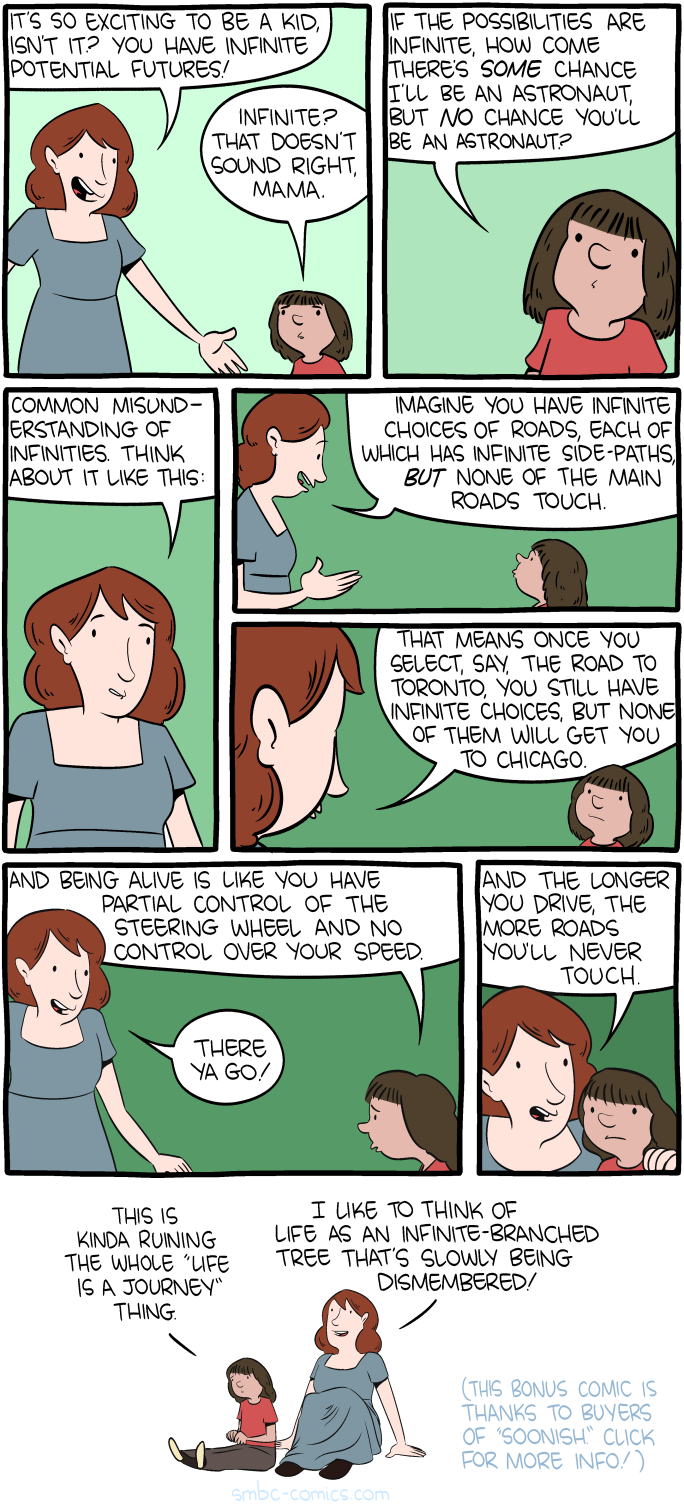

/cdn.vox-cdn.com/uploads/chorus_asset/file/10649353/spot1.jpg)
/cdn.vox-cdn.com/uploads/chorus_asset/file/10649485/horizontal_1_fixed.jpg)
/cdn.vox-cdn.com/uploads/chorus_asset/file/10649505/spot_2.jpg)
/cdn.vox-cdn.com/uploads/chorus_asset/file/10649545/horizontal_2.jpg)


/cdn.vox-cdn.com/uploads/chorus_asset/file/10623209/CategoriesofClothing_Copyeditupdate0410.png)
/cdn.vox-cdn.com/uploads/chorus_asset/file/10618403/CrappyLadyPockets.png)
/cdn.vox-cdn.com/uploads/chorus_asset/file/10617785/totalcostofmywardrobe2.png)
/cdn.vox-cdn.com/uploads/chorus_asset/file/10617781/mostexpensive2.png)
/cdn.vox-cdn.com/uploads/chorus_asset/file/10623211/numberofitems_copyedit0410.png)
/cdn.vox-cdn.com/uploads/chorus_asset/file/10623213/ruleofthumb_copyedit04110.png)
/cdn.vox-cdn.com/uploads/chorus_asset/file/10617777/whereIgotmywardrobe.png)


/cdn.vox-cdn.com/uploads/chorus_asset/file/10386665/Screen_Shot_2018_03_08_at_3.18.52_PM.png) All photos from
All photos from /cdn.vox-cdn.com/uploads/chorus_asset/file/10386661/Screen_Shot_2018_03_08_at_3.19.16_PM.png)
/cdn.vox-cdn.com/uploads/chorus_asset/file/10386659/Screen_Shot_2018_03_08_at_3.19.04_PM.png)
/cdn.vox-cdn.com/uploads/chorus_asset/file/10386663/Screen_Shot_2018_03_08_at_3.19.37_PM.png)
/cdn.vox-cdn.com/uploads/chorus_asset/file/10386657/Screen_Shot_2018_03_08_at_3.19.47_PM.png)
/cdn.vox-cdn.com/uploads/chorus_asset/file/10386655/Screen_Shot_2018_03_08_at_3.19.58_PM.png)
/cdn.vox-cdn.com/uploads/chorus_asset/file/10386653/Screen_Shot_2018_03_08_at_3.20.08_PM.png)
/cdn.vox-cdn.com/uploads/chorus_asset/file/10386651/Screen_Shot_2018_03_08_at_3.20.34_PM.png)
/cdn.vox-cdn.com/uploads/chorus_asset/file/10386649/Screen_Shot_2018_03_08_at_3.20.47_PM.png)