Shared posts

08 Jun 15:15

Hangouts' web chat now lets you sketch messages

by Jon Fingas
Sketch mode in Google Hangouts

Ever threatened to draw someone a picture because they didn't understand you in an online chat? It's now easy to act on that threat. Google has started rolling out an update to Hangouts' web interface that lets you sketch your ideas. If you have access, hovering over the camera icon will reveal a pencil button that launches the new tool. While it's extremely simple, the mini-app should be enough to annotate a picture or whip up a quick diagram. We've reached out to Google for more details regarding its new doodler, including the possibility of a mobile launch; we'll let you know if there's more to add. For now, you'll just have to keep checking Hangouts' web client to see if you can craft your own visual aids.

Filed under: Internet, Google

Comments

Via: Talk Android

Source: Android Police

07 Jun 17:45

Upcoming Android feature reportedly lets nearby devices automatically interact

by Jacob Kastrenakes

Google is said to be working on a new Android feature that allows phones and tablets to automatically connect with devices and places very close around them, according to Android Police. The feature, called Nearby, might allow people to easily share information with others or receive deals from stores that they're in. Nearby will reportedly be announced in the near future — possibly at Google's I/O conference later this month.

While it isn't clear exactly what Nearby would be used for, the implication is that your Android phone might be able to easily interact with a friend's phone, or a smart device in your home, or a hidden beacon in a store providing deals. One use will reportedly allow Android users to set a reminder that's triggered the next time they see a specific person.


Nearby would automatically access a phone's mic to determine what's nearbyTo do all of this, Android Police reports that every so often Nearby will automatically turn on a device's Wi-Fi, Bluetooth, and microphone. It's that last signal that would likely be the key to this feature, allowing Android devices to recognize one another based on audio signals imperceptible to the human ear. But that purported feature would also pose big privacy concerns — Google would be automatically opening up and recording audio from your device, after all. Android Police reports that the gathered information would be sent up to Google's servers, which would match devices' recordings and send a signal back telling the devices to connect, without either phone actually getting hold of the recordings though.

Even so, it's a potentially concerning ability, at least without knowing exactly how it's implemented. It's an especially pertinent concern too, as reports of online government surveillance have grown and grown over the last year, including some saying that the NSA is able to access Google's servers. Nearby will reportedly record users' location history as well, though it will allow users to limit who or what their devices will automatically begin interacting with. Google did not respond to a request for comment.

Nearby has the possibility to make phones a whole lot smarter, letting them easily interact with what's around them without any user intervention. Google will certainly have to quell concerns over how it functions though. If it does, we could begin seeing some inventive new apps that figure out how to take advantage of knowing exactly when two people are close together, and it's possible we'll see what that looks like soon.

07 Jun 13:45

Orange is the New Black is Netflix's best show

by Alex Abad-Santos

Orange Is The New Black headed into its first season without the pomp, circumstance, or bravado of its Netflix siblings. If Netflix is a family, House of Cards is the kid they trot out at dinner parties to brag about, and Arrested Development is the charmer. Hemlock Grove, the family's mercurial child, flamed out. And then there was Orange.

On paper, the show didn't seem very impressive. Taylor Schilling, whose previous career highlight was Zac Efron's make out partner in The Lucky One, and Star Trek: Deep Space Nine's Kate Mulgrew were the show's tentpoles. Laverne Cox, one of the show's regulars, was known for appearance on the reality television show I Want to Work For Diddy. It was hard to explain to viewers how this show, a dark comedy about a women's prison in upstate New York, would compete with AMC's Breaking Bad, Walking Dead, and Mad Men or HBO's stable of critically-acclaimed dramas.

Even without the hype, Orange began to win over viewers and critics, by way of deft and rich storytelling from creator Jenji Kohan. And one year later, Netflix's best show is back for its second season on Friday.

And it's better than ever.

"I forgot what it is like to have all that freedom to waste … "

It's hard to think of a federal prison, Litchfield in particular, as a better place than the world we currently live in. But that's the message Kohan is sending. In this dreary world of cardboard brownness and inescapable incarceration, there's safety, order, and routine. The racists and homophobes are out in the open. Most of (with the exception of the prison's staff) the terrible men, many of whom ruined these women's lives, are the ones locked out. And drugs and alcohol aren't allowed there (many of the inmates, including Big Red, are on the same page about this; the show featured an overdose death last season).

The prison is an idealized place for some of the characters. And it might be one for Kohan as well.

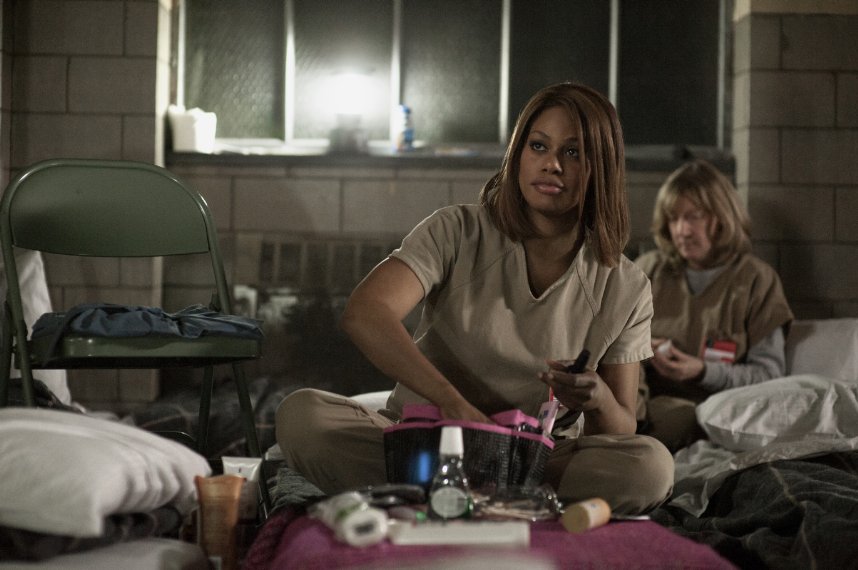
That extends to how the inmates treat Sophia Burset (Laverne Cox), a transgender inmate, and how differently Cox's gender identity has been treated in the real world. We've had to see some transphobic ugliness because of Cox's newfound celebrity, yet there's an earnest acceptance of Sophia's sexuality and gender identification in Litchfield. And it doesn't come off as condescending or prescriptive.

There's a scene that involves Sophia knowing much more about being a woman than the other ladies of Litchfield. Laughs are had, but Sophia's knowledge is applauded, and helpful. Watching it seems like it was crafted as a smirk to the sting and stink we've seen in our world.

Litchfield can feel like an insular utopia for some of these women. But that doesn't necessarily mean that everyone is just here to enjoy the staycation.

The power struggle over which group of women become the kitchen staff underscores many of the scenes and character motivations this season. After Big Red (Mulgrew) was overthrown last year, the prison's Latina faction has assumed control of the galley, and they decide who does and doesn't eat. Losing this power is crushing blow  — Red has to eat with the old women waiting to die — but it's also dangerous to have the power in the prison.  Vee (Lorraine Toussaint), the newest inmate at Litchfield, is intent on claiming this prize.

With all these moving parts, these plots and characters could spin out of control and into something clumsy. But under Kohan's steady hand, it all works.

Who people will be talking about

Kohan has often said that the show's protagonist, the hard-to-like Piper Chapman, is a trojan horse. We put up with Chapman so we can get to know the other women of Litchfield. In that sense, you're not supposed to fall in love with Chapman, and if Schilling does her job well, you're not supposed to really like her all that much either.

Schilling doesn't have the show's scene-stealing moments. Her character is more dull than sparkle, her eyes dim and dead, and her personality more caustic than it is vulnerable.

Schilling plays this sad, fearsome, force of a person beautifully.

Her privilege is again a major force in this season, but it's from a different angle. Now a seasoned veteran of Litchfield, Piper is confronted with a new inmate named Brook Soso (Kimiko Glenn), a younger, faster-talking, feathery-voiced version of herself. And thanks to Brook, Chapman gains an understanding, and a knowing resentment of her own class and entitlement.

Piper isn't a character you're not exactly rooting for, but one that you fear you might be if placed into Litchfield. And Schilling plays this sad, fearsome, force of a person beautifully.

Schilling's understated role allows Taystee, played by Danielle Brooks, to really shine. Brooks, for some strange reason, was originally only going to only be in two episodes. Thankfully, Kohan and producers kept her on for good.

Initially, Taystee was a character that felt like comic relief with a side of vulnerability. She'd have three funny lines, crack a joke, and fade away. That's reversed in the early part of the first season, as we see the deep desperation and lack of family that drove Taystee into drug-dealing. Taystee's uncomfortable origin is explored in the second episode — my favorite of the six second-season episodes Netflix made available to critics. It's the bleakest we've ever seen the character but it also turns Taystee into person of consequence.

Taystee isn't the only character that Kohan brings front and center this season. Morello (Yael Stone) and Crazy Eyes (Uzo Aduba) have episodes this season that will shake and change the way you look at them.

"I forgot what it is like to have all that freedom to waste," Chapman tells Larry in one of the episodes. He has just spent an inexplicable amount of time waiting for a pastry (a sly nod to last year's cronut craze). But after spending time with Kohan and the magic she's pulling out of the pockets of Litchfield prison in Orange's second season, you can't help but feel that Kohan believes that freedom might be a bit overrated.

Mv5bntq3mdq3ote2ov5bml5banbnxkftztgwnze2mti2mte_._v1__sx1372_sy570_

Courtesy: Netflix

The episodes you should watch before starting this season:

I went into the six episodes of the new season fresh — I hadn't re-watched the show again since I binged on it last July. But I didn't find myself wondering why things were happening or what was going on. There are some episodes, however, that I found myself wanting to watch again because of the themes explored in season two:

  • "The Chickening" (episode 5) - Piper is a bit of an unsung hero this season. She doesn't come away with the winning one-liners, but the question of who she is, how she is, and who these women are this season seem to tie in with this knowing episode.

  • "Tall Men with Feelings" (episode 11) - Larry is a terrible person. This episode explains why so beautifully.

  • "Can't Fix Crazy" (episode 13) - Because knowing where everything left off can't hurt.

05 Jun 06:54

iOS 8 rips off a lot of ideas from Google. Good for Apple.

by Timothy B. Lee
Yousef Alnafjan

Copying good ideas is never a bad thing, and shouldn't be shameful or illegal.

Ars Technica has a great post showing all the ways that Apple's new iPhone operating system, iOS 8, has borrowed concepts from Google's Android operating system:

  • Android has long offered a feature where the keyboard would offer suggestions for the next word to type. Apple has added a version of this feature in iOS 8. Apple has also added support for third-party keyboards, a feature Android has had for years.
  • For years, Android has had a sophisticated system for inter-app communication. For example, if you were in a photo-editing app, you could call up a list of actions you could do with that photo, like sharing it on Twitter or converting it to a PDF. Apple has introduced a limited version of this feature in iOS 8.
  • Some Android phones have an always-on listening feature. You can say "OK Google" from across the room and the phone will wake up and start listening for commands. In iOS 8, Apple added the ability for the iPhone to be constantly listening for the prompt "Hey Siri."
  • Android has a feature called "notification actions," which allows apps to add buttons to a notification so users can handle them with a single tap. iOS 8 adds a souped-up version of this feature that adds a text box for typing out a response to a message.
  • Since 2010, Google's app store has allowed developers to embed videos in its app listings. Now Apple's app store will have this feature too.
  • Android has long supported widgets, small items on the desktop or in the notification center that allow users to check sports scores, turn on wifi, and perform other simple tasks. Apple will finally add support for third-party widgets to iOS 8.

The interesting thing about this is that for the last few years, Apple has been suing Android vendors, arguing that key Android features infringe Apple's patents. The features Apple was suing over, like "slide to unlock" and "data detectors," don't seem much more innovative than the ones Apple appears to have copied from Android here. But Apple believes they're entitled to billions of dollars for these inventions.

I don't know if Google has patented the features Apple has added to iOS 8 — if they have, the applications are probably still being processed by the patent office. But it would be a huge waste of resources to have another big round of lawsuits over these innovations.

The reality is that there are only so many ways to design a user-interface, especially on a space-constrained smartphone. When one company discovers an improvement for its smartphone interface, it's a good thing that rivals quickly copy the improvement. That ensures that every smartphone has all the best features available, not just those that the company behind the phone happened to invent first.

And over time, these things tend to balance out: Google copied Apple more in the early years because Apple got to the smartphone market first. But being first to market was a huge advantage in its own right — Apple sold millions of iPhones before Google was able to get its own multi-touch OS into the market. Now Android is ahead in some respects and Apple is playing catchup.

Luckily, Google and Apple have taken a "copy now, litigate later" approach, ensuring that the pace of progress isn't slowed down by patent concerns. Eventually, the companies behind the major smartphone platforms — Apple, Google, and Microsoft — will probably sign cross-licensing deals giving each other permission to use their patented user interface innovations. But that will only happen after hundreds of millions of dollars have been wasted on pointless litigation. It would have saved everyone a lot of trouble if the courts had ruled this kind of software innovation wasn't eligible for patent protection in the first place.

05 Jun 05:15

Tech FTW 140

by ftw@ftweekly.net (FTWeekly.net)
Tech FTW 140
تقديم: يوسف النفجان | عبدالله الثاني | خالد السديري | محمد أبو الحسن طاهر

نناقش أهم أخبار مؤتمر آبل في WWDC 2014، من أهم الميزات الجديدة لتحديثي OS X Yosimite للماك و iOS 8 للآيفون والآيباد، إلى ميزات Continuitiy التي تربط بين أجهزة آبل بشكل غير مسبوق. أيضا نناقش آخر الساعات الذكية، والرسائل الغريبة التي تصل لجوالات السعوديين، والمزيد!


  • اضغط هنا لمتابعتنا ومراجعتنا على آيتونز أو اضغط هنا لمتابعتنا عن طريق أي برنامج يدعم خلاصات الـRSS


05 Jun 05:04

Mario Kart 8's Women of Racing ⊟ I can’t keep up with all...

by ericisawesome
Yousef Alnafjan

Those billboards are a nice touch. I like that Bowser, who can breathe fire, owns an oil company.. how does that work?


Mario Kart 8's Women of Racing ⊟

I can’t keep up with all the Luigi GIFs/videos bombarding the internet and Fox News, so here’s a cute doodle from Gigi D.G. (Cucumber Quest) instead. It pairs well with these pics Social Justice Wario posted for Mario Kart’s “Women of Racing Organization” billboards.

I like this. My wife isn’t into Mario Kart at all, but she’s into racing and fixing cars, and I’m sure she’d get a kick of this. Also, Birdetta should be in the game instead of Waluigi.

BUY Mario Kart 8, Mario Kart 7, upcoming games
05 Jun 04:59

New G-SYNC monitors unveiled at COMPUTEX, shipping soon worldwide

by aburnes
Yousef Alnafjan

Definitely buying one of these babies soon. G-Sync is awesome.

At the COMPUTEX computer expo, six G-SYNC monitors have been unveiled, in resolutions ranging from 1920x1080 to 3840x2160, the resolution of choice for 4K Gaming.
New G-SYNC monitors unveiled at COMPUTEX, shipping soon worldwide
04 Jun 20:31

Watch this guy shred through four decades of video game music

by Timothy J. Seppala

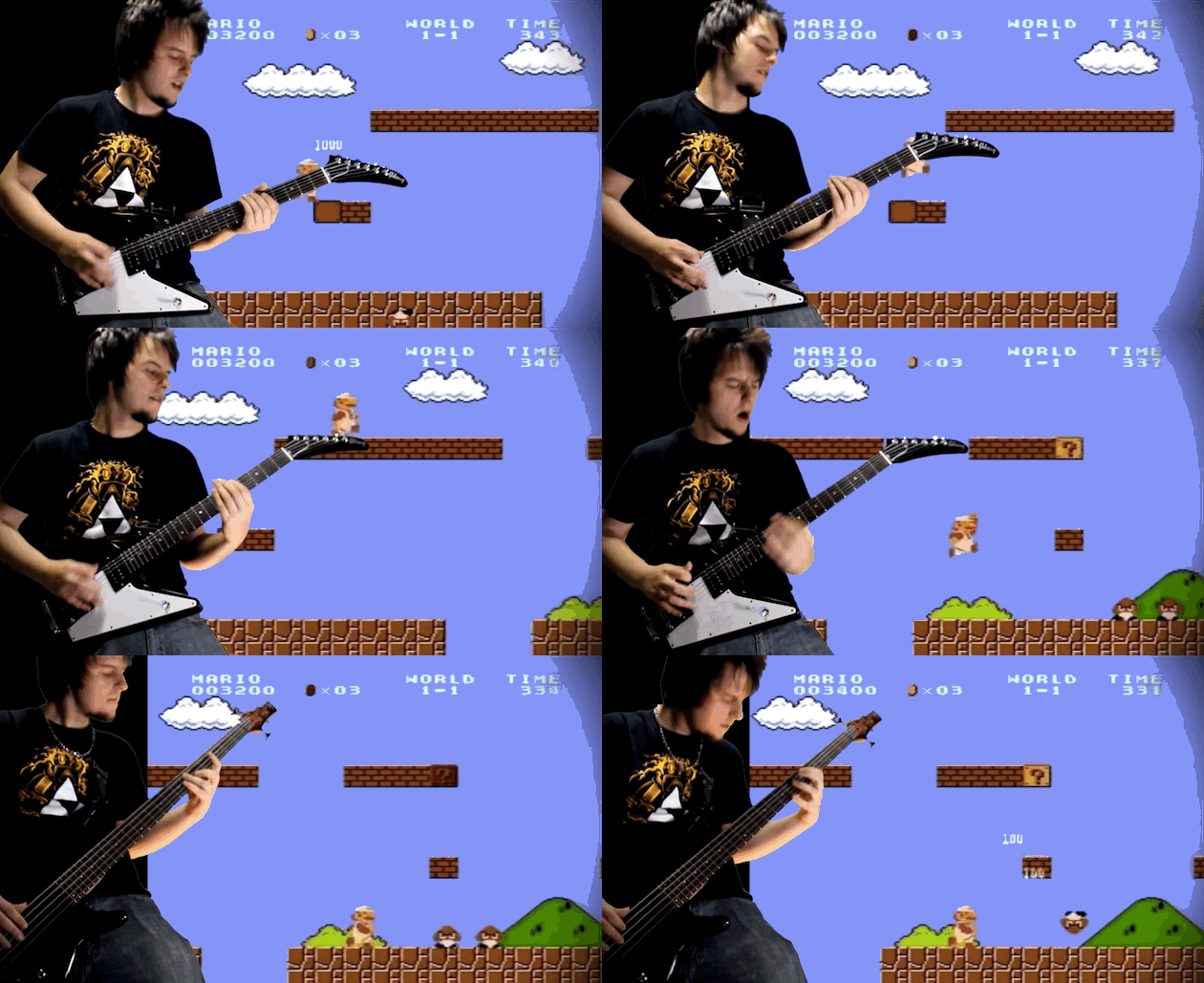
Sure, some video games require lightning-fast fingers, but even the most insane combos in Street Fighter don't quite compare to running up and down a guitar's fretboard lickety-split. To pay tribute to 40-plus years of gaming history, YouTuber FamilyJules7X put together an epic 17-minute performance (embedded after the break) of music from the medium's past and present. If you ever wanted to hear heavy metal versions of classic game-themes like Space Invaders, Phozon and Tetris alongside those of Donkey Kong Country, Earthbound, The Legend of Zelda: Ocarina of Time and Fallout 3, this should be right up your alley. Most impressive? Jules shot the video, mixed the audio, programmed the drums and performed the guitar and bass parts himself in eight days -- all during his last week of college finals. If you want to download an MP3 of the track, hit the YouTube page. Now, if you'll pardon us, we have some head-banging to do.

Filed under: Gaming, Home Entertainment, HD

Comments

Source: YouTube

04 Jun 08:47

Gwyneth Paltrow thinks you can hurt water's feelings by yelling at it

by Dylan Matthews

Gwyneth Paltrow loves nothing more than imparting life advice to her followers, and while that advice has dabbled in the pseudoscience before, it's rarely been as totally off the rails as the May 29th edition of her newsletter goop. Paltrow begins:

I am fascinated by the growing science behind the energy of consciousness and its effects on matter. I have long had Dr. Emoto's coffee table book on how negativity changes the structure of water, how the molecules behave differently depending on the words or music being expressed around it.

She then turns the newsletter over to her health guru, Habib Sadeghi, who continues:

Japanese scientist, Masaru Emoto performed some of the most fascinating experiments on the effect that words have on energy in the 1990’s…In his experiments, Emoto poured pure water into vials labeled with negative phrases like "I hate you" or "fear." After 24 hours, the water was frozen, and no longer crystallized under the microscope: It yielded gray, misshapen clumps instead of beautiful lace-like crystals. In contrast, Emoto placed labels that said things like "I Love You," or "Peace" on vials of polluted water, and after 24 hours, they produced gleaming, perfectly hexagonal crystals.

Masaru Emoto, the water whisperer of whom Paltrow and Sadeghi are so fond, has a bit of a following in New Age-y circles, and was featured favorably in the popular 2004 documentary What the #$*! Do We Know!?. Few scientists have tried to debunk his claims since they're so self-evidently ridiculous. "Have I tried to reproduce Mr. Emoto's experiments? No, and I don't intend to," writes Caltech physicist Kenneth Libbrecht, an expert on snow crystals. "As we liked to say back on the farm in North Dakota — it's good to have an open mind, but not so open that your brains fall out!" Libbrecht's best guess — and the logical explanation for Emoto's findings — is that he's selecting pictures of crystals that fit his findings and rejecting those that don't.

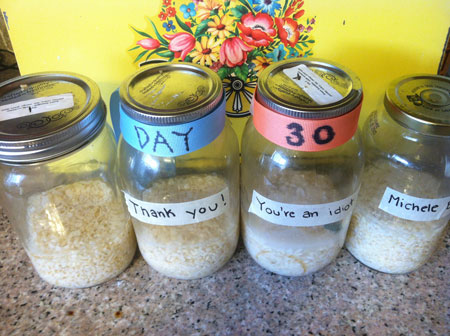
The closest replication of Emoto I found was done in Skeptical Inquirer by Carrie Poppy, who focused on an "experiment" of Emoto's wherein he poured water over cooked rice in three separate jars, one labeled "Thank You," another labeled "You're an Idiot," and a third without any label. Every day for a month, Emoto said "Thank you" and "You're an idiot" to the respective jars, and ignored the third jar. He claims that the ignored jar's rice rotted, the rice that had been thanked fermented and started to smell pleasant, and the rice in the "you're an idiot" jar turned black.

Poppy reproduced the three jars and added a fourth labeled "Michele Bachmann" at which she yelled Michele Bachmann quotes. None of them turned black. None of them rotted. All of them fermented but smelled gross. The "You're an Idiot" jar got a bit of mold, but I'm going to go out on a limb and say that was dumb luck rather than mold feeding on the rice's poor self-esteem:

Poppy-rice-30full

Source: Carrie Poppy, Skeptical Inquirer

It's almost as though water is not able to read English text.

As quackery goes, Emoto isn't as dangerous as vaccine denialists or televangelist faith healers; his main takeaway from the rice experiment is that it shows you should talk to your children rather than ignoring them, a point which I didn't realize needed popularizing but is nonetheless correct. But generally speaking, endorsing and spreading nonsense is bad for the world, and given goop's reach it's unfortunate that Emoto's particular brand of nonsense is getting a hearing.

Hat-tip to Jason Kottke for finding the goop item.

Further reading

  • Independent researcher Kristopher Setchfield is raising money to conduct a double-blind evaluation of Emoto's claims about water crystals.
  • Skeptical Inquirer's Harriet Hall evaluates Emoto's book, The Hidden Messages in Water, dubbing it "the worst book I have ever read."
  • Kelsey McKinney's Gwyneth Paltrow explainer is the place to go if you're confused about why people care about goop.
03 Jun 17:37

The Public Is Getting Wise to Their Ways

03 Jun 08:49

John Oliver delivers the clearest, most hilarious explanation of net neutrality you’ll see

by Ezra Klein

"Net neutrality," says John Oliver. "The only two words that promise more boredom in the English language are 'featuring Sting.'"

At least he went into it with his eyes open. Over the next 13 minutes, Oliver offers perhaps the clearest, and definitely the funniest, explanation of net neutrality — and why it's so endangered, in this clip from a June 2014 episode of Last Week Tonight. It's worth watching, particularly in light of the FCC's February 26 vote to approve its strongest net neutrality rules yet.

For more on net neutrality, read Vox's card stack. And for more on the fast lane/slow lane issues that Oliver explains so enjoyably read Tim Lee's excellent feature on the subject.

03 Jun 08:46

The new Apple: relaxed, playful, and trying to kill Google

by Nilay Patel

Apple is different now.

That was the overwhelming vibe during Apple's Worldwide Developer Conference presentation today, where the company announced new versions of OS X and iOS, each with tons of new features for end users and app developers. "We are not standing still," said CEO Tim Cook. "iOS 8 is a giant release ... you can extend your experiences and build apps you couldn't build before."

And it's a huge list of new features: the keyboard offers predictive typing, notifications are more powerful, a new app called HealthKit tracks your fitness, you can seamlessly make calls and send texts from an iPhone from a Mac, photos now seamlessly sync to the cloud, and on and on. Apple has the unique ability to present somewhat obvious new features as masterful flourishes, and the crowd at WWDC ate it up. Seriously: there was applause when Apple's Craig Federighi announced the ability to mute a too-busy group texting thread.

What Apple was really announcing was the next version of itself — a playful, hyper-competitive giant

But look past the usual list of new features, and what Apple was really announcing was the next version of itself — a playful, relaxed, hyper-competitive giant that wants the next generation of products and services to be built on its platforms. That's the game now, after all — the mobile revolution is over, and the war is now between Apple and the Google / Samsung alliance for the hearts of developers.

make the developers happy, and they'll stick around to write great apps

That's why Apple spent fully one-third of its presentation today on new developer features, including an entirely new programming language called Swift. That's why iOS is opening up in entirely new ways, including previously-forbidden things like letting apps talk to each other and even share interface elements with the system. That's why Apple is building out the foundations of both health-tracking and home-monitoring platforms that big companies like Nike and Honeywell can tap into alongside smaller players like the smart lock maker August and speaker company iHome. And that's why Apple is adding all sorts of little features to its systems that only power users really want, like widgets in the notification shade and replacement software keyboards. Make the developers happy, and they'll stick around to write great apps that rely on the iPhone as the center of the universe.

Looking at Apple through the lens of dominant platform vendor also explains why the company just spent $3 billion on Beats — not for the wildly-profitable headphone business, but for the streaming service, which co-founder Jimmy Iovine clearly views as a platform for other businesses to be built upon. "People will pay for service. They'll pay for an experience," he said last week at the Code Conference. "They're not going to pay for access."

Apple seems philosophically committed to its competition with Google

Of course, Google has bigger marketshare in mobile with Android, a dominant position in search, and a vast horizontal layer of terrific services like Gmail and Google Now that work across platforms. It is a formidable competitor that makes great products. But Apple seems more philosophically committed to its competition with Google than ever before. Cook noted that 130 million people had bought their first Apple iOS device in the past 12 months, and many were switching from Android. "They sought a better experience," he said. Then he chuckled. "A better life."

Apple's bet is on owning both the hardware and the software, and that means it can take interesting sideways angles at Google throughout its products: Safari on Macs and iOS will still feature Google search, but Apple's putting its own results on top when you start typing. The integrated Spotlight search pull results from Wikipedia and Bing to give you information before you ever need a web browser. Siri searches Fandango and Yelp and OpenTable directly when you ask it what movies are playing or what restaurants are nearby.

Apple's finally letting developers treat the iPhone like the broadband-connected supercomputer it actually is

These things sound small, but they're enormously important. The next great wave of technological disruption isn't going to be larger phones or smaller tablets, it's going to be a universe of sensors embedded in the world around us that connect to apps on our devices and databases in the cloud, and every company in tech is scrambling to own the platform that unlocks and enables this so-called internet of things. A diminished BlackBerry is basically betting the company on the idea. Google bought smart-home company Nest Labs for $3.2b. And Apple is finally letting developers treat the iPhone more like the miniature broadband-connected supercomputer it actually is.

There's a new plan, and a lot of new stuff for everyone to play with

And that's really what happened today in San Francisco. Apple's Cook and Federighi seemed relaxed and confident — just as the company's Eddy Cue did last week at the Code Conference alongside Iovine. After a series of weird missteps, executive shake-ups, and hurried redesigns, it feels like Apple's organized around a clear new mission: to provide the dominant platforms where the next generation of innovation occurs.

That's a tough job; every other company in tech is after the same thing. But three years after Steve Jobs passed away, Apple seems to finally have emerged from under the shadow of its iconic founder. There were no reverently hushed tones about Apple's identity, no qualms about changing old ideas that haven't worked, and no hesitation in lifting the best features from competitors and pushing others out of the way. There's just a new plan, and a lot of new stuff for everyone to play with.

There will also be occasional phone appearances from Dr. Dre.

02 Jun 19:33

Wii U GameCube controller adapter ⊟ No details on how you get...

by 20xx


Wii U GameCube controller adapter ⊟

No details on how you get one of these yet, or how you get one of those cool Smash Bros.-themed controllers, or why it appears to use 2 USB ports … or anything beyond the fact that “The Wii U version of “Smash Bros. will be playable with GameCube controllers.”

But neat!

PREORDER Super Smash Bros for Wii U/3DS, upcoming releases
02 Jun 16:25

The real tragedy of Egyptian satirist Bassem Youssef's censorship is he played a role in it

by Max Fisher
Yousef Alnafjan

Shit. I really liked his show.

Egyptian political satirist Bassem Youssef, internationally celebrated as "Egypt's Jon Stewart" for his willingness to poke fun at his country's top leaders through years of turmoil, held a press conference today announcing that his show had finally been forced to shut down under government pressure.

that someone celebrated for his championship of free speech would play an indirect role in his own censorship is a sad symbol of today's Egypt

The news is, unfortunately, hardly surprising. Since taking power in a coup in June 2013, military leader Abdel Fatah al-Sisi and his government have dramatically curtailed civil liberties and dissent. Still, while Youssef's censorship is certainly awful in its own right, it's also part of a much larger and more complicated Egyptian tragedy — one in which Youssef himself could be said to have played a role.

It is hardly surprising that Sisi's government would never tolerate an independent satirist like Youssef. What is darkly, tragically ironic — and not well known among Americans who celebrate Youssef's accomplishments — is that Youssef himself cheered on the rise of that government when it was targeting Egyptians less similar to himself.

This censorship is not a story that begins and ends with Field Marshall al-Sisi. The military leader was himself propelled into power in part by a tide of right-wing secular nationalism that rose up in early 2013, largely in reaction against Egypt's then-Islamist Muslim Brotherhood government. That popular movement began by rallying against the Islamist government's serious and anti-democratic abuses. But much of the movement turned anti-democratic itself, supporting not just Sisi's June 2013 military coup but also his subsequent crackdowns against dissent.

That right-wing nationalist movement has played a key role in enabling Sisi's abuses every step of the way, up to and including his government's censorship of Bassem Youssef. But so, perhaps, has Youssef.

It is true that Youssef, during the difficult year of Muslim Brotherhood rule in 2012 and 2013, was an important truth-teller whose jokes challenged the government's abuses. He was briefly arrested for teasing the government on his TV show and faced real threats of serious prison time. This is the Youssef who is celebrated in the United States and elsewhere for his political satire, for challenging authoritarianism even when it put him at personal risk.

The Youssef who we do not typically see in the United States is the satirist who didn't just challenge the Muslim Brotherhood government — but who went a step further, vilifying the regular Egyptians who supported the Islamist government, characterizing them as lesser citizens or internal enemies in a way that played into Egypt's hate-filled political polarization, Sisi's coup, and the disastrous consequences of both. Indeed, Youssef cheered on the military coup — as well as the bloodshed of anti-coup protesters, because unlike him they were Islamists:

MB leadership sending its youths to die at army HQs to victimize themselves against the world. Blood for publicity. Cheap. #not_a_coup

— Dr Bassem Youssef (@DrBassemYoussef) July 5, 2013

This is the larger Egyptian tragedy, to which Youssef himself was party. The abuses of the Muslim Brotherhood government were severe, and they included attempts to muzzle Youssef. The TV satirist was right and brave to challenge them and to champion ideals of free speech. But, like a number of Egyptians, Youssef went beyond opposing Muslim Brotherhood abuses, supporting an anti-democratic, anti-liberal movement to exclude Islamists from public life, and ultimately to replace them with a military coup government.

The consequences of this movement, which were obvious to seemingly all but its supporters, were always going to lead to the silencing of people like Youssef. He is a victim first and foremost of an increasingly authoritarian government, yes, but he is also the victim, like too many Egyptians, of a political movement to exclude people unlike himself, a movement in which he himself participated. In this way, his censorship is awful not just in its own right, but as a symbol of Egypt's larger political tragedy. The fact that even someone internationally celebrated for his championship of free speech ideals would play an indirect role in his own censorship is a sad testament to the political self-destruction of today's Egypt.

02 Jun 06:23

For many fans of practical design, the apotheosis of the...


For many fans of practical design, the apotheosis of the coffee-cup lid came about in 1984, when Solo filed the patent for the Traveler lid, which combined a sleek, functional look with a lid domed enough to accommodate specialty drinks, a protruding rim that helped cool coffee before it reached the drinker’s mouth, and even a depression in the middle so the drinker wouldn’t have to smush his nose against plastic every time he took a sip. (In 2005, the Museum of Modern Art added the Solo Traveler lid to its permanent collection.)

the history of the disposable coffee cup ~ bonappetit.com

01 Jun 17:21

Get off the road, Waluigi ⊟ True next-gen Luigi vengeance. Video...

by 20xx


Get off the road, Waluigi ⊟

True next-gen Luigi vengeance. Video by @rizupicor.

BUY Mario Kart 8, Mario Kart 7, upcoming games
31 May 20:01

'Gangnam Style' hits 2 billion YouTube views

by Dante D'Orazio

"Gangnam Style" has become the first YouTube video to break 2 billion views. The music video hit the record late Friday night, 525 days since it accumulated 1 billion all-time views in December 2012. That second billion took three times longer than the first, which was achieved just 159 days from the video's release on July 15th, 2012. The second place video on YouTube is still the music video that "Gangnam Style" dethroned: Justin Bieber's "Baby," which has just half the number of views as "Gangnam Style." Whether or not you're intoxicated by surging beat and Psy's ludicrous antics, it's an incredible achievement. Google's joined in on the celebration with a cute little easter egg just for the occasion — click on the dancing Psy at the YouTube page to check it out.


Update April 4th, 11:06AM ET: Modified to mention the easter egg on YouTube, as noted by commenter Ambroos.

31 May 05:35

It's time for the US to use the metric system

by Susannah Locke

The metric system is far superior to the bizarre system of feet, miles, pounds, and gallons used in the United States. The whole rest of the world seems to get this. So why aren't we doing it, too?

The United States actually tried to once before. In the 1970s, there was a big push to switch to metric. But it fizzled out because the legislation wasn't strong enough. And that failed legislation created a slew of naysayers who think that switching to metric is simply impossible.

But that's not true. The reasons to go metric are stronger than ever, and it's time to revive the effort. In our increasingly global economy, America's bizarre measurement system puts the country at a disadvantage. Popular opinion on the matter seems to be quite positive, and there are some hints of change on the horizon.

Why the metric system is superior

The measuring system that the United States uses right now isn't really a system at all. It's a hodgepodge of various units that often seem to have no logical relationship to one another, units collected throughout our history here and there, bit by bit. Twelve inches in a foot, three feet in a yard, 1,760 yards in a mile.

The metric system, by contrast, was intentionally created with ease and simplicity in mind. And as a result, it's incredibly efficient to use. All you need to do is multiply or divide by some factor of ten. 10 millimeters in a centimeter, 100 centimeters in a meter, 1,000 meters in a kilometer. Water freezes at 0°C and boils at 100°C.

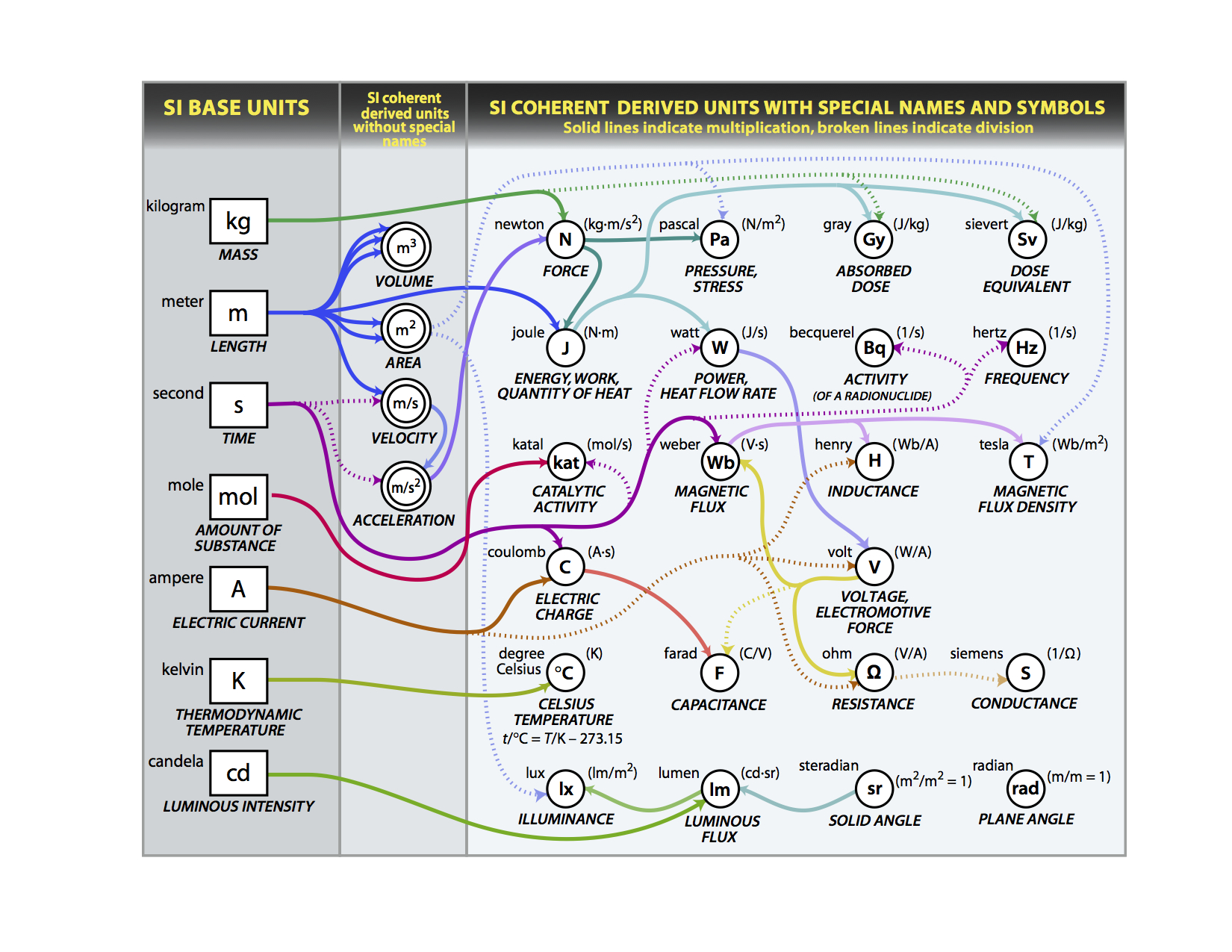
Conversion between types of units in metric is also simpler, as you can see from the chart below. For example, area is simply meters squared, not random things like acres:

Si-color-diagram-apr-08

(NIST)

The metric system makes back-of-the-envelope calculations far easier for, say, making a solution in a laboratory or calculating the area of a parking lot or figuring out how many pills to give someone of a particular body weight. It also makes it quicker to double-check a calculation that a computer just spit out.

In large part because of these benefits, many industries in the United States have independently decided to switch over to metric on their own — including science, health care, energy, and car manufacturing. Even the US military is almost entirely metric.

Everyone else is on metric — so why not the US?

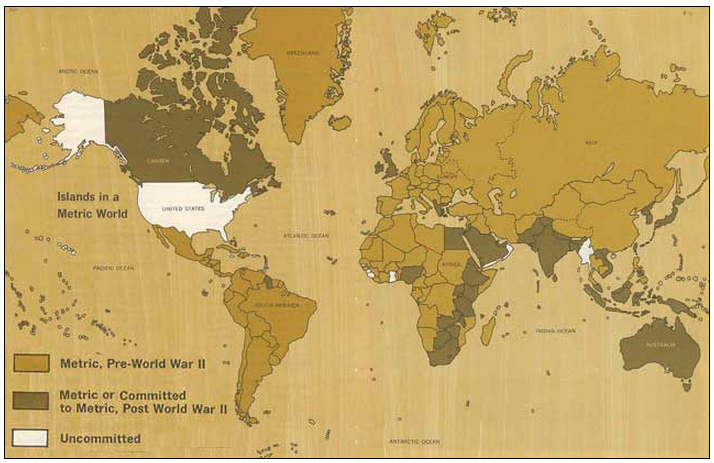
The United States is the last remaining industrialized nation with no formal commitment to going metric. America's position is causing unnecessary isolation. It's an impediment to trade and puts the United States at a disadvantage.

Not being metric-fluent can hamper collaboration and communication across borders. And it's not just annoying, but can add real costs. For example, many US manufacturers need to make two kinds of products for every item — one for here and one for there. Foreign manufacturers also have to modify products just for the US market (or decide that maybe it's not worth the bother).

The US is one of the few holdouts not on the metric system
Screen_shot_2014-05-28_at_4.19.00_pm

Islands in a Metric World, 1971. Since this map was made, the US hasn't gotten any allies on its lonely island. (From "A Metric America: A Decision Whose Time Has Come" by NBS, via USMA)

Using two systems leads to appalling errors

Being stuck with US customary units is bothersome, but a culture that does half and half is even more problematic. Every time someone (or a computer) converts a unit from one system to another, there's a potential for error.

Proponents of the metric system love to collect conversion-error horror stories. One is the time that NASA lost a $125 million Mars probe or a Boeing 767 ran out of fuel midair — all because of errors between metric and non-metric units.

Another big problem is in medicine. Some 3,000 to 4,000 kids end up in the ER each year because of wrong doses from a caregiver. And unit confusion is partially to blame.

Consider a simple cup for dispensing liquid meds, below — it has both teaspoons and milliliters on it. That, as Bridget Kuehn reported, makes it easier for people to give the wrong dose. (And because 1 teaspoon just happens to be equal to 5 milliliters, it's likely that a wrong dose would be off by a factor of five.)

Screen_shot_2014-05-28_at_3.20.52_pm

(Kuehn, BM. JAMA. Published online May 21, 2014. doi:10.1001/jama.2014.5090JAMA)

Both the Institute for Safe Medication Practices and the US Centers for Disease Control and Prevention are encouraging manufacturers and the pharmacies to use only the metric system on over-the-counter meds for these reasons. But they aren't requirements, just suggestions.

Another problem with a dual-measurement US is that some professions are speaking a different language than the rest of the culture. Experts regularly talk about the need for more qualified American workers in science, technology, engineering, and mathematics (STEM). But because metric isn't learned from birth, students must first learn a foreign language — the metric system — before they can learn science or engineering or become part of the medical community. That's a barrier to entry that just shouldn't be there.

The US tried (and failed) to go metric in 1975 ...

Congress passed the Metric Conversion Act of 1975 at about the same time many other countries were also switching over. It created the United States Metric Board to educate people about the metric system and to coordinate a voluntary switchover.

But that law had two key problems. Unlike the legislation that created a metric UK, Canada, or Australia, it was voluntary instead of mandated. And it had no deadline for when the switch must be finished, which deflated the cause's urgency.

without a congressional mandate to force changes, the United States Metric Board couldn't do its job

Facing a fair amount of resistance from the public and without a congressional mandate that could force changes, the United States Metric Board simply couldn't do its job. And so by 1982, President Reagan had the board disbanded.

Some amendments have been made to the act since, including one that declared metric "preferred" (but not mandatory) for trade and has encouraged many federal agencies to use the metric system today. But aside from double labeling on the packaging on food and other consumer goods since 1994, requirements in the private sector have continued to be weak.

Here's how we could switch to metric today

There are several options if the United States wants to go fully metric:

1) New federal laws. Congress could pass a new law with a hard mandate and a solid timeline to switch over. This is what the US Metric Association favors. "It can't be done piecemeal successfully," Paul Trusten, a pharmacist and vice president of the US Metric Association, told me. But there doesn't seem to be much interest in it from Congress right now.

2) A gradual slide. Another possibility is that companies and people slowly slide toward the metric system on their own — with lots of confusion along the way. In this scenario, companies continue to adopt the system voluntarily, and state and federal regulations push metric at the margins.

This is already happening to some extent — metric pops up in lots of places in the United States: two-liter bottles of soda, 100-meter races. Some entire industries, such as science and medicine, already use metric.

But it could go further. For example, in the past few years the US National Institute of Standards and Technology (NIST) proposed an amendment to the Fair Packaging and Labeling Act that would give manufacturers the option to use only metric on product packaging. That would increase consumer exposure, which might make voters more comfortable with mandatory metric laws.

And there does seem to be some public support. A 2012 petition to the White House for mandatory metric garnered more than 49,000 signatures (and a response from the director of NIST, who reminded them of the current voluntary regulations and that everyone can choose to use metric if they want).

3) State-by-state mandates. It's also possible that states will lead the way, like they have with many other issues, creating a country that is even more divided. Because of its dependence on international tourism, Hawaii had a bill in its legislature in 2013 that could have made it the first all-metric state. However, the bill doesn't seem to have gone anywhere.

How much would a switch to metric cost?

There is surprisingly little research on exactly how much a whole-scale mandatory push would cost the US in the long run. The 1975 law was passed in part because of a very supportive report on this from the Department of Commerce. But that was 1975.

I talked to Jason Rich, a financial analyst who previously researched the economics of going metric while a graduate student at Old Dominion University. He's says it's a tricky sell in the current economic climate.

"In the short term, [switching to metric] is more expensive. In the long term, things seem to flatten out and make themselves more valuable. But having concrete evidence to prove that is difficult to find," he says. "As the economy turns around, that [bad] attitude [towards the metric system] certainly will change if it can be economically proven that it’s not going to be a detriment to our economy in the long term."

Further reading

The US's official kilogram is getting heavier.

The metric interstate highway of Arizona

The blog More than a Mile Behind has been keeping close track of the metric system issue. So does the US Metric Association.

Correction: Removed a reference to the calorie as a metric unit. It's not.

Update: In December 2014, updated information about Hawaii's metrification effort.

30 May 10:53

lawfulgoodness: chad-hunter: LUPITA NYONG’O IS LITERALLY GOD...


lawfulgoodness:

chad-hunter:

LUPITA NYONG’O IS LITERALLY GOD INCARNATE ON THIS EARTH AND THIS GIFSET IS PROOF

She is one of us!

30 May 05:39

Comic #131- What Have They Done?

by Tyler Rhodes

29 May 16:40

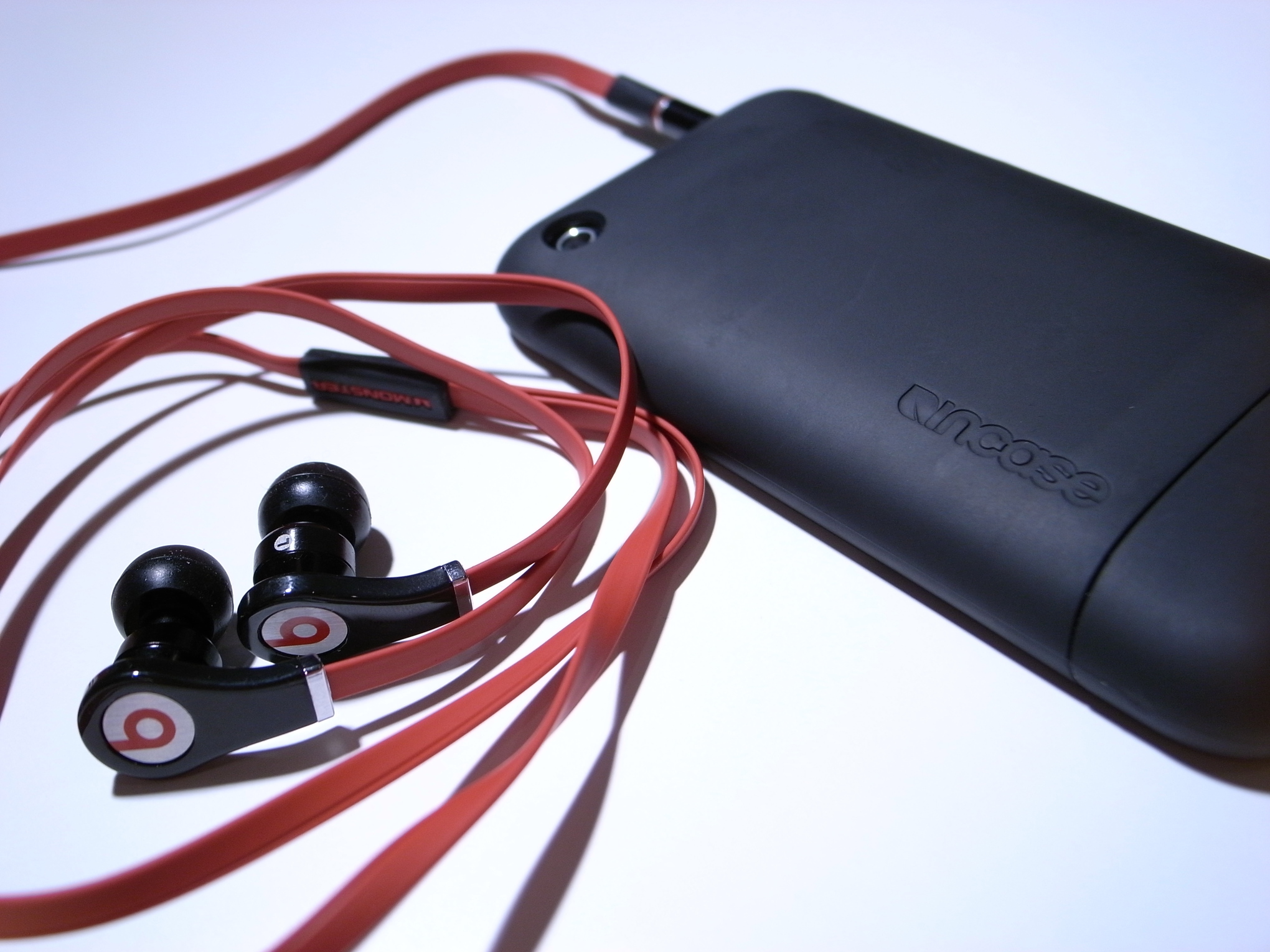
Sound experts agree: Beats by Dre aren't anything special

by Joseph Stromberg

By now, you're probably heard that Apple is buying Beats, Dr. Dre's headphone company, for $3 billion.

Like many people, the first question my colleague Matthew Yglesias asked was "Does Beats make amazingly good headphones?"

if you want to maximize sound quality and minimize price, you'll want to look elsewhere

The clear answer: no, they don't.

People who obsess over sound quality generally agree that Beats' products — its earbuds (which start at $100) and headphones (which start at $300) — may deliver a decent sound, but are substantially worse than other products available for lower prices.
If the looks and celebrity endorsements of your headphones matter to a lot to you, then Beats might be worth it. But if you want to maximize sound quality and minimize the amount you're spending, here's why you'll want to look elsewhere.

The headphones deliver too much low-quality bass

5435970276_79c0c849d7_o

Warren R.M. Stuart

This has been a criticism of the company's $300 signature "Studio" headphones for some time now.

Music is composed of sound waves at a variety of frequencies, from high to low, and bass is the lowest part of a song's range of noises. Think of the thumping bass drum in a rock song or a hip hop song's beat.

A pair of headphones (or an audio system) can disproportionately represent some frequencies at the expense of others, and many audiophiles' problem with the Studio headphones is that they jack up the bass to excessive levels, drowning out the other parts of the music.

Audiophiles complain the headphones jack up bass to excessive levels

Someone who listens to a lot hip-hop and electronic might specifically enjoy this sort of sound distribution. But the deeper problem, says Lifehacker's Whitson Gordon, is that the Studios don't even reproduce the bass frequencies as well as other headphones

"They have too much low quality bass, and their mids and treble are even worse," he says. "If you want to hear what Beats sound like, pull up your equalizer and ram the midbass frequencies up a bit. There's not nearly enough definition to make the bass sound good, it's just...loud and boomy."

To Beats' credit, experts say that new version of Studios introduced in 2013 is significantly improved in this area. Geoff Morrison at the Wirecutter says "There’s still too much bass, it’s still undefined and messy, they’re definitely sibilant, but they’re not as atrocious as the old Studios."

There's nothing inherently wrong with bass-heavy headphones, but if that's what you're going for, there are much better products available for $300. The Wirecutter, Lifehacker, and Consumer Reports all suggest some good bass-heavy options, as well as more balanced headphones.

All that said, the new Studios aren't particularly awful, so if you're willing to sacrifice a bit of quality for the name-brand and appearance, they're not a totally unreasonable choice.

The earbuds are just terrible

3209710736_92f154290e_o

m-s-y

If reviews of the Studios are mixed, reviews of the company's $100 "urBeats" and $150 "Tour" in-ear headphones are unanimous: they both deliver really, really low quality sound.

The earbuds deliver really, really low quality sound

On the urBeats, the Wirecutter says "'Muddy,' 'muddled,' 'exaggerated.' That about sums up the sound. The urBeats lack definition, and the woofing bass completely smears the entire frequency range. The bass even is too much when listening to hip hop."

They point to a $20 pair of headphones that provide a more even, clearer sound than urBeats, as well as other products that are similar in price to urBeats and provide a significantly better listening experience.

If you're looking to buy in-ear headphones and care even a little bit about sound quality or value, it's pretty clear that Beats are not a good choice.

29 May 16:10

Mario Kart 8 getting free Mercedes-Benz DLC this Summer

by Endless
Yousef Alnafjan

Oh man, that commercial.

29 May 05:36

Steve Jobs never would have bought Beats. Here's why Tim Cook did it.

by Timothy B. Lee

Apple's $3 billion acquisition of Beats isn't just the Cupertino company's largest acquisition ever, it's the biggest deal by a huge margin. The previous record-holder was the $400 million purchase of NeXT computer in 1996. That deal didn't just bring Steve Jobs back to the company he founded, it also provided Apple with the technical foundations for both Mac OS X and iOS.

Apple was already a big company when Jobs took the reins in 1997, but he ran it as if it were a small, founder-owned startup. All significant decisions flowed through Jobs personally. The Beats acquisition is the latest sign that Tim Cook is backing away from that approach. Under Cook, Apple is becoming a normal company much less focused — and, therefore, much less dependent — on the decisions of any one man.

During the aughts, Apple functioned to a remarkable degree as an extension of Jobs himself. When Jobs returned to Apple, he was ruthless about canceling what he viewed as extraneous products. He pared the company's offerings down to a handful whose development he could oversee personally and took an intense interest in the products that survived his axe. Thanks to his perfectionism, the iMac, iPod, MacBook, iPhone, and iPad became some of the most beautiful and popular gadgets ever devised.

Apple functioned to a remarkable degree as an extension of Jobs himself

Jobs was equally ruthless behind the scenes. Any function that could distract from Apple's core mission of creating great consumer devices was shut down. Jobs shuttered Apple's corporate philanthropy programs in 1997, arguing that the struggling company needed to focus on returning to profitability. Apple became spectacularly profitable, but Jobs never re-started Apple's philanthropic arm.

Jobs took an unusually hands-on role in Apple's corporate acquisitions. Late in Jobs's tenure, Apple only had one executive whose sole function was mergers and acquisitions because (according to Fortune) "Steve Jobs basically ran M&A for Apple." The result: Apple did relatively few deals, and all of them were small deals by Silicon Valley standards. Jobs wasn't interested in acquiring profitable subsidiaries, he was only interested in buying companies that could help him improve Apple's core products.

Jobs also stubbornly refused to return Apple's growing cash horde to shareholders, wanting to keep all the cash for himself in case he should need it for future investments.

Tim Cook thinks different

When Steve Jobs died, his longtime deputy Tim Cook took over. And he has taken a very different approach.

One of Cook's first moves after taking the reins was to bring corporate philanthropy back to Apple with a matching gifts program. Cook expanded Apple's dealmaking department so that Apple can now "work on three deals simultaneously." Apple started paying dividends to shareholders.

Apple's highly centralized corporate structure only worked with a talent as extraordinary as Steve Jobs at its apex

And now, Tim Cook is doing something Steve Jobs never did: expanding Apple by acquiring a company that is already successful instead of trying to build all of its new products from scratch. Rather than folding Beats into Apple, it will operate as an independent Apple subsidiary.

Cook seems to have realized that Apple's highly centralized corporate structure only worked with a talent as extraordinary as Steve Jobs at its apex. And Cook evidently believes that he is not such a talent. So he's turning Apple into a normal company, the kind that depends on collaboration among groups of talented executives instead of trying to impose a single vision on the whole organization.

For example, a big motivation for the Beats deal seems to have been to recruit Beats co-founder and legendary music mogul Jimmy Iovine. Cook realizes that he won't be able to single-handedly produce all the smart ideas needed to keep Apple growing. So he wants executives like Iovine at his side to help.

This is probably what Jobs would have wanted. Jobs specifically told Cook that he shouldn't ask what would Jobs do in managing Apple after Jobs was gone. Jobs realized that his successor would need to find his own model for making Apple a success. And that's what Cook is trying to do.

29 May 05:36

MERS didn't leap from person to person in the US, after all

by Susannah Locke

The CDC announced today that the only person who seemed to have contracted MERS from a patient within the US actually never caught the virus at all.

The agency found this out from a more definitive type of MERS test.

This means that no one who has had MERS in the US has passed it on to anyone else, or at least not that we know of. As of right now, there are no people infected with MERS in the US, although cases continue to add up abroad.

You can read more about this latest news in CIDRAP's coverage here.

For Vox's StoryStream of past and future MERS coverage, click here.

28 May 21:05

Google is building real self-driving cars without a steering wheel or pedals

by Nilay Patel

Google's been hacking regular cars to make them drive themselves for a while now, but at the Code Conference today Sergey Brin showed off the next step: an entirely new self-driving car designed from the ground up. The project looks something like a smaller Smart car, and it lacks any human control whatsoever: no steering wheel, no pedals, no gearshift. It doesn't even have mirrors. It's just two seats and a window, and you simply call it to come get you, sit down, and let it drive you to your destination. This is my dream.

"We actually designed these with some safety features that haven't been seen," said Brin. "There's about two feet of foam on the front, and the windshield is made of glass, but it's a plastic glass." Brin said Google used automotive suppliers and car parts, but those parts have been customized. "We plan to go up to about one or two hundred of these, they're prototypes," he said. "There's no reason they couldn't go 100 miles an hour or faster once you can prove that they can do that safely." Brin said the car can be made "far safer" than human-driven cars, and that the current programming is "more defensive" than the average human driver: it waits to go on green, and it uses lasers to monitor the complete 360-degree field around itself.

"I'm certainly not advocating that we get rid of all cars that do not drive themselves," said Brin, although he wants some of his safety features to hit the mass market. "We worked with partners to build these prototypes, and we'll work with partners to build these." The cars will hit the road before the end of the year with safety drivers who can control the car with a joystick, but don't get too excited. "I think these being broadly available will take several years," said Brin.

"I did feel like I was on a Disney ride," said Recode's Kara Swisher, who took a ride in the prototype. "I wanted a drink. I wanted to drink while texting."

27 May 08:36

Watch Dogs Reviews Round Up

by noreply@blogger.com (Endless)


IGN 8.4/10 - GameSpot 8/10 - Polygon 8/10 - Eurogamer 7/10 - Game Informer 8.5/10 - Videogamer 7/10 - CVG 9/10

Destructoid 8/10 - Gamereactor 8/10 - Joystiq 10/10 - NowGamer 8/10 - The Escapist 4.5/5 - OXM 7/10

USGamer 5/5 - GameTrailers 8.9/10 - GamesRadar 4/5 - IncGamers 6/10 - Gaming Trend 90/100 - Hardcore Gamer 4/5

PC Gamer 87/100 - Giant Bomb 3/5 - EGM 7/10 - The Verge No Score - Pixel Dynamo 8.2/10 - Lazygamer 8/10

Digital spy 4/5 - God is a Geek 9/10 - Ausgamers 8.9/10 - Softpedia 8.5/10 - CraveOnline 9/10 - GameRevolution 4.5/5

Strategy Informer 7/10 - Metro 7/10 - Dualshockers 9/10 - El33tonline 4/5 - Ars Technica No Score - ITF Gaming 9.6/10

IBTimes B/A+ - CheatCC 4.5/5 - Pocket-lint 4.5/5 - Digital Chumps 9/10 - PlayStation LifeStyle 6.5/10 - GamePlanet 8.5/10
27 May 07:23

Japan Learns the Correct Way To Use "F**k"

by Brian Ashcraft

Japan Learns the Correct Way To Use "F**k"

One of the things I've noticed about living in Japan is that the country's non-native speakers are fuck all at using the fucking f-word.

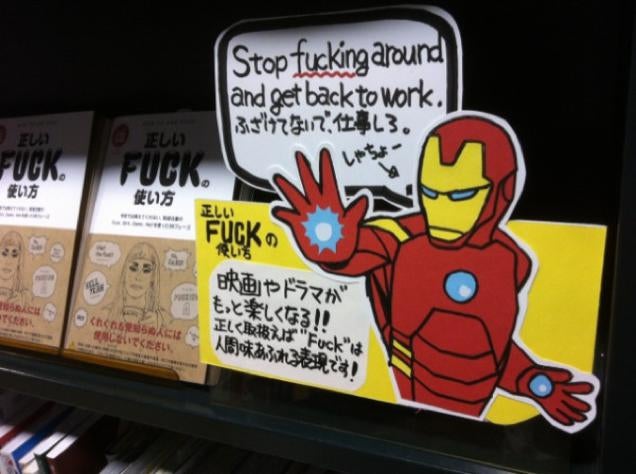
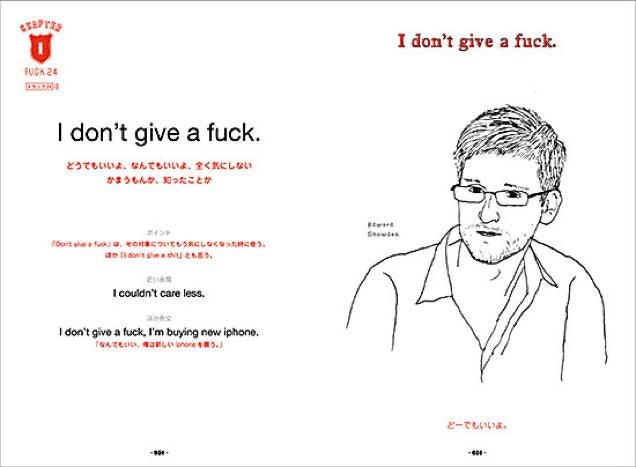
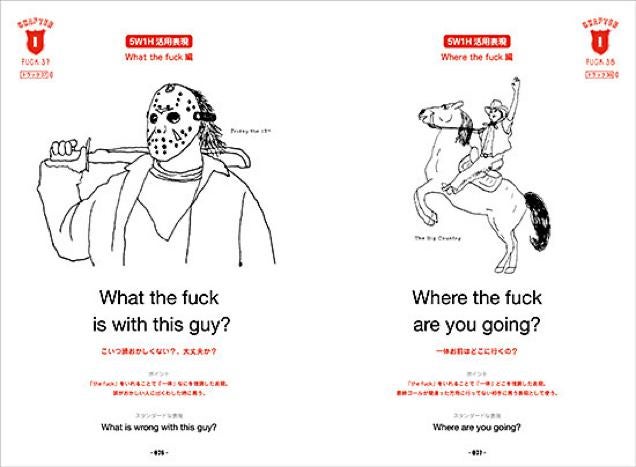
Good thing there's a new book that aims to correct that! As noted by Kotaku reader Chris Hill, Japan recently got a new English instruction book called How to Use Fuck (正しいFUCKの使い方 or Tadashii Fuck no Tsukaikata). The book gives examples and explanations so people in Japan can improve their f-bomb abilities.

Japan Learns the Correct Way To Use "F**k"

[Pic: takesh_s]

Japan Learns the Correct Way To Use "F**k"

[Pic: Chris Hill]

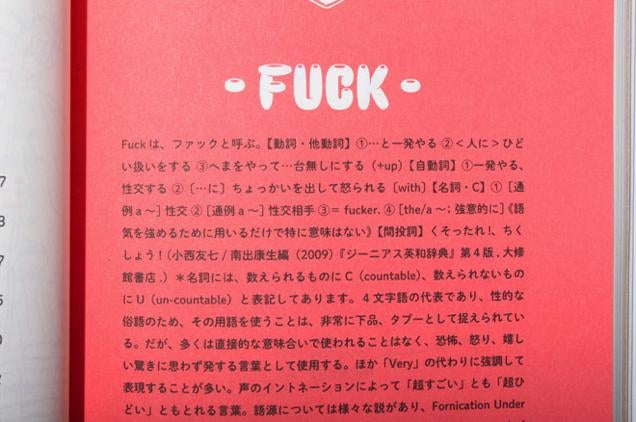
As noted by website Hayabusa.bz, the book even provides a detailed explanation of what the fucking word.

Japan Learns the Correct Way To Use "F**k"

Japan Learns the Correct Way To Use "F**k"

Japan Learns the Correct Way To Use "F**k"

Japan Learns the Correct Way To Use "F**k"

Japan Learns the Correct Way To Use "F**k"

Japan Learns the Correct Way To Use "F**k"

Japan Learns the Correct Way To Use "F**k"

Japan Learns the Correct Way To Use "F**k"

Japan Learns the Correct Way To Use "F**k"

Japan Learns the Correct Way To Use "F**k"

Japan Learns the Correct Way To Use "F**k"

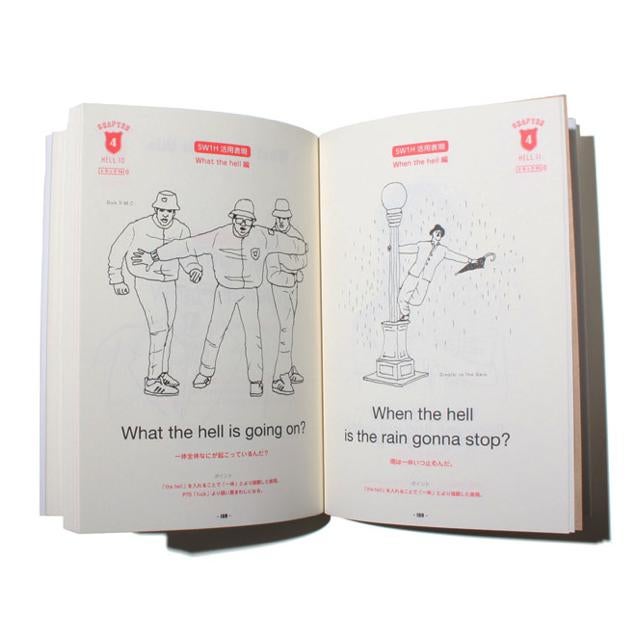
Besides teaching essential phrases like "What the fuck?" and "fucked up," the book also explains how to correctly use "shit," "damn," and "hell." Important stuff!

Japan Learns the Correct Way To Use "F**k"

[Pic: tmynkym]

Which looks more enjoyable? The book that tells you how to say, "I brush my teeth" or the one that teaches, "fuck off." Fucking A, that's an easy choice.

This reminds me of English Words That Don't Appear on Tests, but with bad words. How to Use Fuck also comes with an audio CD, so people can practice their accents. You know, so as not to fuck up the pronunciation.

WORKS : 正しいFUCKの使い方 [Naijel Blog]

『正しいFUCKの使い方 -学校では教えてくれない、取扱注意のfuck、shit、damn、hell-』 [Hayabusa.bz]

"正しいFUCKの使い方" [Hidden Champion]

@Brian_Ashcraft I think you'll also appreciate knowing this exists. [@RaptureBurgers Thanks, Chris!]

To contact the author of this post, write to bashcraftATkotaku.com or find him on Twitter @Brian_Ashcraft.

Kotaku East is your slice of Asian internet culture, bringing you the latest talking points from Japan, Korea, China and beyond. Tune in every morning from 4am to 8am.

This entry passed through the Full-Text RSS service — if this is your content and you're reading it on someone else's site, please read the FAQ at fivefilters.org/content-only/faq.php#publishers.

27 May 07:10

That`s gotta be worth like 2000 points...?

26 May 02:59

An amazing chart showing global military spending

by Ezra Klein

Global military spending US 37% China 11% Russia 5% S Arabia 4% UK 3% Japan 3% India 3% Brazil 2% Turkey 1% UAE 1% pic.twitter.com/1wzYMqMl6J

— Conrad Hackett (@conradhackett) May 25, 2014

The chart, if anything, underestimates America's military advantage against its nearest competitors. Military spending is cumulative. While China now accounts for nearly 11 percent of all military expenditures that's a recent development. The US, meanwhile, has been spending much more than anyone else for decades now. Some of that spending has gone towards bombs that have already been dropped and tanks that no longer work. But much of it went to nuclear submarines and aircraft carriers that are still deployed today.

The US is also geographically more secure than any other country on this list. It borders Canada and Mexico, and is flanked by oceans on both the east and the west. China, by contrast, borders 14 other nations: North Korea, Russia, Mongolia, Kazakhstan, Kyrgyzstan, Tajikistan, Afghanistan, Pakistan, India, Nepal, Bhutan, Myanmar, Laos and Vietnam. Russia is in a similarly packed region. But the US still spends vastly more on defense despite the paucity of nearby threats.

25 May 17:26

Instagram is the latest social network to hit Iran's blacklist

by Daniel Cooper

Iran's top officials may use social media, but the country's general populace isn't allowed to join them. The nation has already banned Facebook, Twitter and WhatsApp, and yesterday it reportedly added Instagram to the naughty list. According to the AP, a private lawsuit was brought against Iran's Ministry of Communications, forcing the bureau to restrict access to the Zuckerberg-owned photo-sharing service. There's no evidence that such filtering is in place right now, and users in Tehran were still able to take some selfies on Friday lunchtime. Still, given that social media is a threat to the country's conservative establishment, we imagine that someone will keep bringing lawsuits until no-one can utter the phrase "lemme take a selfie."

Filed under: Cellphones, Internet, Mobile, Facebook

Comments

Via: Reviewed

Source: ABC News