Shared posts

01 Nov 21:38

Dum Dums Mystery Flavor: Finally Revealed!

by Anjali Prasertong
Pin_it_button

As you eat your way through your Halloween candy stash, you might stumble onto a few Dum Dums, those ubiquitous little lollipops that have been around since 1924. And maybe you'll even have a Mystery Flavor pop, its wrapper covered in question marks — is it pineapple-banana? Cherry cola? What is Mystery Flavor?

We finally have an answer.

READ MORE »

31 Oct 12:58

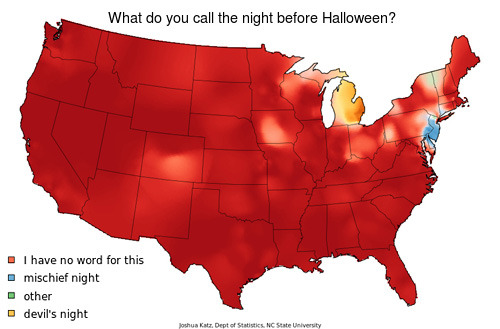
Mischief Night

22 Oct 21:11

Photo

by laurabuu


21 Oct 05:20

10/20/2013

by billamend

10/20/2013

14 Oct 20:39

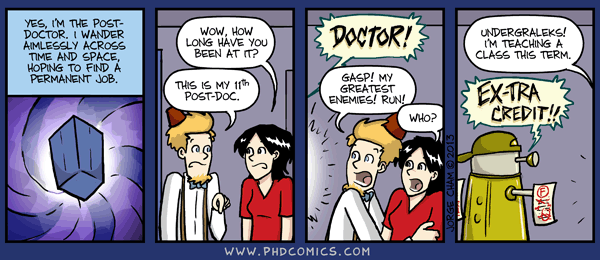
10/11/13 PHD comic: 'Post-Doctor Who, Pt. 3'

Piled Higher & Deeper by Jorge Cham
www.phdcomics.com
title: "Post-Doctor Who, Pt. 3" - originally published 10/11/2013

For the latest news in PHD Comics, CLICK HERE!

11 Aug 19:07

08/11/2013

by billamend

08/11/2013

11 Aug 14:23

DOJ: There's No Expectation Of Privacy In Your Phone Records Because People Don't Like Terrorists

by Mike Masnick
Following our post on the NSA's document defending its surveillance programs, let's look more closely at the Justice Department's "white paper" explaining the legal rationale for scooping up all of the metadata on every phone call under Section 215 of the Patriot Act, also known as the "business records" or "tangible things" section. This document just focuses on that one program, rather than the many other programs, and within its 23 pages there are so many ridiculous things. I'm sure we'll come back to many of them in future posts. After going through it a few times, it seems abundantly clear that this was a rush job by the administration to defend this particular program, without realizing just how ridiculous many of its claims are. As Julian Sanchez has noted, the arguments made in this document appear to contradict the DOJ's actions in dozens of ways, and basically invalidates a ton of previous arguments concerning other surveillance programs. And, worse, it more or less opens the door for massive surveillance on a variety of other things. Again from Sanchez, the argument in this paper could easily apply to having a local prosecutor subpoena all city phone records looking for drug dealing. Because safety!

Let's pick out just a few of the more inane arguments, starting with that first one highlighted above. As we've seen in the past, the DOJ makes a long and incredibly misleading argument about why your phone records aren't private under Smith v. Maryland, but then it goes further to argue that even if a court were to say that Smith v. Maryland and the third party doctrine didn't apply here, that's okay, because the searches are "reasonable" because people want to be protected from terrorists.
... there is an exceptionally strong public interest in the prevention of terrorist attacks, and telephony metadata analysis can be an important part of achieving that objective. This interest does not merely entail “ordinary crime-solving,” King, 133 S. Ct. at 1982 (Scalia, J., dissenting), but rather the forward-looking prevention of the loss of life, including potentially on a catastrophic scale. Given that exceedingly important objective, and the minimal, if any, Fourth Amendment intrusion that the program entails, the program would be constitutional even if the Fourth Amendment’s reasonableness standard applied.
Of course, as stated over and over again, there has yet to be any evidence presented that Section 215 did anything at all to prevent terrorism. So that seems fairly weak on its face. But, even more to the point, that justification is the justification for wiping out the entire 4th amendment. There's an exceptionally strong public interest in stopping all kind of negative activity, so why not place a video cameras and a recorder in every private room in the country?

On to some other misleading points:
Courts have held in the analogous contexts of civil discovery and criminal and administrative investigations that “relevance” is a broad standard that permits discovery of large volumes of data in circumstances where doing so is necessary to identify much smaller amounts of information within that data that directly bears on the matter being investigated.
Not true. The situations they're discussing are not at all analogous. Yes, in such cases courts will often grant broad discovery and investigations into specific crimes or civil violations, but that's not what Section 215 does at all. It has been interpreted to mean that every record on every phone call is to be collected by the NSA regardless of any actual connection or indication of a connection to terrorism. That's not the same thing. At all. That makes a complete mockery of the term "relevant." Because when everything is "relevant" why even include the term relevant in the law? Just admit that you're enabling fishing expeditions on all data.
Moreover, information concerning the use of Section 215 to collect telephony metadata in bulk was made available to all Members of Congress, and Congress reauthorized Section 215 without change after this information was provided. It is significant to the legal analysis of the statute that Congress was on notice of this activity and of the source of its legal authority when the statute was reauthorized.
And this is the other shocker. To translate, this is saying "because Congress did not explicitly tell us to stop collecting all data, we take that as implicit permission to collect all data." As for that claim that this information was "made available to all Members of Congress," that too is misleading, evidence by approximately half of Congress admitting they had no clue about this at all. Also, "made available" is incredibly different from "clearly informed and explained to Congress what we were doing." Basically, they gave this info to the Intelligence Committee, who then sought to obfuscate it and play down any concerns. While others in Congress could ask to see the details (though, sometimes those requests are denied), they're often not allowed to bring in staff who might understand the details, nor are they allowed to make copies or take notes. These members are shown documents that may not be clear and which they might not understand. That's not fully informing them. And the resulting decision not to directly block that program is laughable because many in Congress flat out lied about these programs (or were totally misinformed). To take that as "approval" of these programs takes incredible hubris.
Only information responsive to the limited queries that are authorized for counterterrorism purposes is extracted and reviewed by analysts. Although the number of unique identifiers has varied substantially over the years, in 2012, fewer than 300 met the “reasonable, articulable suspicion” standard and were used as seeds to query the data after meeting the standard. Because the same seed identifier can be queried more than once over time, can generate multiple responsive records, and can be used to obtain contact numbers up to three “hops” from the seed identifier, the number of metadata records responsive to such queries is substantially larger than 300, but it is still a tiny fraction of the total volume of metadata records. It would be impossible to conduct these queries effectively without a large pool of telephony metadata to search, as there is no way to know in advance which numbers will be responsive to the authorized queries.
That 300 queries number has been thrown about quite a bit over the last month or so, but here they're admitting that the number of records seen is "substantially larger." I would imagine so. Now that they're admitting they can look at almost everything, since with "three hops" you can cover most everyone. A study from 2011 showed that everyone on the internet was, on average, 4.74 steps away from everyone else. So if you can look out 3 hops, you can look at an awful lot of metadata.

Going back to the question of relevance, the DOJ again claims that Congress must have known that relevance under the law means "everything."
Standing alone, “relevant” is a broad term that connotes anything “[b]earing upon, connected with, [or] pertinent to” a specified subject matter. 13 Oxford English Dictionary 561 (2d ed. 1989). The concept of relevance, however, has developed a particularized legal meaning in the context of the production of documents and other things in conjunction with official investigations and legal proceedings. Congress legislated against that legal background in enacting Section 215 and thus “presumably kn[e]w and adopt[ed] the cluster of ideas that were attached to [the] word in the body of learning from which it was taken.”
Right. How dare Congress think the word "relevant" as used in the law might possibly mean the same thing that "relevant" means in the English language. It should have known that the federal government uses a different definition of relevant, which really has nothing to do with relevance at all.

And, now, how about the DOJ completely reinventing the law so that it applies to future records rather than past records? That's fun:
Prospective Orders. Section 215 authorizes the FISC to issue orders to produce telephony metadata records prospectively. Nothing in the text of the statute suggests that FISC orders may relate only to records previously created. The fact that the requested information has not yet been created at the time of the application, and that its production is requested on an ongoing basis, does not affect the basic character of the information as “documents,” “records,” or other “tangible things” subject to production under the statute.
Except, as some are pointing out, when the shoe is on the other foot, the DOJ directly argues that unless it's explicitly put forth in the law, records requests do not apply to prospective orders. Here are the DOJ's rules on FOIA requests in which it says future documents are not covered. Or how about the DOJ's own guidelines for electronic evidence in criminal investigations. On pages 139 and 140 of that document, you can see it specifically says that requests for information "should not be used prospectively to order providers to preserve records not yet created." But that's concerning a law -- 18 USC 2703 which also does not explicitly state it applies to prospective records. So why does the government say that it doesn't apply to prospective records in that case, but magically it does apply to them when we're talking about the Patriot Act. And, if the DOJ is relying on Congress' knowledge of how these things are currently interpreted under the law, couldn't Congress just point out that it looked at the DOJ's reading of 2703 and believed that the administration would clearly know that just because it doesn't explicitly call out prospective orders on future documents, that the government would know the law doesn't apply to future records?

Honestly, this document is a mess. It's clearly a whitewash job done to cover up the fact that this program is a massive intrusion on privacy and almost certainly both illegal and unconstitutional. Coming up with after-the-fact legal justifications for it just shows how desperate the administration is getting.

Permalink | Comments | Email This Story


11 Aug 14:08

Jennifer Hoelzer's Insider's View Of The Administration's Response To NSA Surveillance Leaks

by Jennifer Hoelzer
In a bit of fortuitous timing, this week we had asked former deputy chief of staff for Ron Wyden, Jennifer Hoelzer, to do our weekly "Techdirt Favorites of the Week" post, in which we have someone from the wider Techdirt community tell us what their favorite posts on the site were. As you'll see below, Hoelzer has a unique and important perspective on this whole debate concerning NSA surveillance, and given the stories that came out late Friday, she chose to ditch her original post on favorites and rewrite the whole thing from scratch last night (and into this morning). Given that, it's much, much more than a typical "favorites of the week" post, and thus we've adjusted the title appropriately. I hope you'll read through this in its entirety for a perspective on what's happening that not many have.

Tim Cushing made one of my favorite points of the week in his Tuesday post "Former NSA Boss Calls Snowden's Supporters Internet Shut-ins; Equates Transparency Activists With Al-Qaeda," when he explained that "some of the most ardent defenders of our nation's surveillance programs" -- much like proponents of overreaching cyber-legislation, like SOPA -- have a habit of "belittling" their opponents as a loose confederation of basement-dwelling loners." I think it's worth pointing out that General Hayden's actual rhetoric is even more inflammatory than Cushing's. Not only did the former NSA director call us "nihilists, anarchists, activists, Lulzsec, Anonymous, twenty-somethings who haven't talked to the opposite sex in five or six years," he equates transparency groups like the ACLU with al Qaeda.

I appreciated this post for two reasons:

First of all, it does a great job of illustrating a point that I've long made when asked for advice on communicating tech issues, which is that the online community is as diverse and varied as the larger world we live in. Of course, we are more likely to come across the marginal opinions of twenty-somethings with social anxiety online because, unlike the larger world, the Internet gives those twenty-somethings just as much of an opportunity to be heard as a Harvard scholar, a dissident protesting for democracy or General Hayden himself.

Sure, it can be infuriating to read scathingly hostile comments written by troubled individuals who clearly didn't take the time to read the post you spent countless hours carefully writing (not that that has ever happened to me) but isn't one of the things that makes the Internet so darn special its unwavering reminder that free speech includes speech we don't appreciate? Of course, that's a point that tends to get lost on folks -- like General Hayden -- who don't seem to understand that equating the entirety of the online world with terrorists is a lot like posting a scathing comment to a story without reading it. You can't expect someone to treat you or your opinion with respect -- online or anywhere else -- when you're being disrespectful. And I can imagine no greater disrespect for the concepts of transparency and oversight than to equate them with the threats posed by terrorist groups like al Qaeda.

But my main reason for singling out Tim's post this week is that Hayden's remark goes to the heart of what I continue to find most offensive about the Administration's handling of the NSA surveillance programs, which is their repeated insinuation that anyone who raises concerns about national security programs doesn't care about national security. As Tim explains this "attitude fosters the "us vs. them" antagonism so prevalent in these agencies dealings with the public. The NSA (along with the FBI, DEA and CIA) continually declares the law is on its side and portrays its opponents as ridiculous dreamers who believe safety doesn't come with a price."

To understand why I find this remark so offensive, I should probably tell you a little about myself. While the most identifying aspect of my resume is probably the six years I spent as U.S. Senator Ron Wyden's communications director and later deputy chief of staff, I started college at the U.S. Naval Academy and spent two years interning for the National Security Council. I had a Top Secret SCI clearance when I was 21 years old and had it not been for an unusual confluence of events nearly 15 years ago -- including a chance conversation with a patron of the bar I tended in college -- I might be working for the NSA today. I care very deeply about national security. Moreover -- and this is what the Obama Administration and other proponents of these programs fail to understand -- I was angry at the Administration for its handling of these programs long before I knew what the NSA was doing. That had a lot to do with the other thing you should probably know about me: during my tenure in Wyden's office, I probably spent in upwards of 1,000 hours trying to help my boss raise concerns about programs that he couldn't even tell me about.

Which brings me to my next favorite Techdirt post of the week, Mike's Friday post entitled "Don't Insult Our Intelligence, Mr. President: This Debate Wouldn't Be Happening Without Ed Snowden," which is a much less profane way of summing up my feelings about the President's "claim that he had already started this process prior to the Ed Snowden leaks and that it's likely we would [have] ended up in the same place" without Snowden's disclosure.
"What makes us different from other countries is not simply our ability to secure our nation," Obama said. "It's the way we do it, with open debate and democratic process."
I hope you won't mind if I take a moment to respond to that.

Really, Mr. President? Do you really expect me to believe that you give a damn about open debate and the democratic process? Because it seems to me if your Administration was really committed those things, your Administration wouldn't have blocked every effort to have an open debate on these issues each time the laws that your Administration claims authorizes these programs came up for reauthorization, which -- correct me if I am wrong -- is when the democratic process recommends as the ideal time for these debates.

For example, in June 2009, six months before Congress would have to vote to reauthorize Section 215 of the Patriot Act, which the Obama Administration claims gives the NSA the authority to collect records on basically every American citizen -- whether they have ever or will ever come in contact with a terrorist -- Senators Wyden, Feingold and Durbin sent Attorney General Eric Holder a classified letter "requesting the declassification of information which [they] argued was critical for a productive debate on reauthorization of the USA PATRIOT Act."

In November 2009, they sent an unclassified letter reiterating the request, stating:
"The PATRIOT Act was passed in a rush after the terrorist attacks of September 11, 2001. Sunsets were attached to the Act's most controversial provisions, to permit better-informed, more deliberative consideration of them at a later time. Now is the time for that deliberative consideration, but informed discussion is not possible when most members of Congress - and nearly all of the American public - lack important information about the issue."
Did President Obama jump at the opportunity to embrace the democratic process and have an open debate then? No. Congress voted the following month to reauthorize the Patriot Act without debate.

In May 2011, before the Senate was -- again -- scheduled to vote to reauthorize the Patriot Act, Senators Wyden and Udall -- again -- called for the declassification of the Administration’s secret interpretation of Section 215. This time, in a Huffington Post Op-Ed entitled "How Can Congress Debate a Secret Law?" they wrote:
Members of Congress are about to vote to extend the most controversial provisions of the USA PATRIOT Act for four more years, even though few of them understand how those provisions are being interpreted and applied.

As members of the Senate Intelligence Committee we have been provided with the executive branch's classified interpretation of those provisions and can tell you that we believe there is a significant discrepancy between what most people -- including many Members of Congress -- think the Patriot Act allows the government to do and what government officials secretly believe the Patriot Act allows them to do.

Legal scholars, law professors, advocacy groups, and the Congressional Research Service have all written interpretations of the Patriot Act and Americans can read any of these interpretations and decide whether they support or agree with them. But by far the most important interpretation of what the law means is the official interpretation used by the U.S. government and this interpretation is -- stunningly --classified.

What does this mean? It means that Congress and the public are prevented from having an informed, open debate on the Patriot Act because the official meaning of the law itself is secret. Most members of Congress have not even seen the secret legal interpretations that the executive branch is currently relying on and do not have any staff who are cleared to read them. Even if these members come down to the Intelligence Committee and read these interpretations themselves, they cannot openly debate them on the floor without violating classification rules.
During the debate itself, Wyden and Udall offered an amendment to declassify the Administration's legal interpretation of its Patriot Act surveillance authorities and, in a twenty minute speech on the Senate floor, Wyden warned that the American people would one day be outraged to learn that the government was engaged in surveillance activities that many Americans would assume were illegal, just as they were every other time the national security committee has tried to hide its questionable activities from the American people. Fun aside: As you can see in the video, to underscore the point that hiding programs from the American people rarely goes well for the Administration, I had my staff make a poster of the famous image of Oliver North testifying before Congress during the Iran-Contra hearing. I really wanted to replace North’s face with the words “insert your photo here,” but we didn't have the time.

Did President Obama welcome an open debate at that time?

No. Congress voted to reauthorize the Patriot Act for four more years and the only point we -- as critics -- could raise that might be confused with debate was a hypothetical argument illustrated with a twenty-year-old picture of Oliver North. And, again, Senator Wyden couldn't even tell me what he was so concerned about. In strategy meetings with me and his Intelligence Committee staffer, I had to repeatedly leave the room when the conversation strayed towards details they couldn't share with me because I no longer had an active security clearance. "You know, it would be a lot easier if you could just tell me what I can't say?" I'd vent in frustration. They agreed, but still asked me to leave the room.

And that was just the Patriot Act. Did the President -- who now claims to welcome open debate of his Administration's surveillance authorities -- jump at the opportunity to have such a debate when the FISA Amendments Act came up for reauthorization?

No. Not only did the Administration repeatedly decline Senator Wyden's request for a "ballpark figure" of the number of Americans whose information was being collected by the NSA last year, just a month after the Patriot Act reauthorization, the Senate Intelligence Committee attempted to quietly pass a four year reauthorization of the controversial surveillance law by spinning it as an effort to: "Synchronize the various sunset dates included in the Foreign Intelligence Surveillance Act of 1978 to June 1, 2015;" So, I guess if this was part of the Administration's plan to publicly debate the NSA's surveillance authorities, the plan was for the debate to take place in 2015?

And, as I explained in an interview with Brian Beutler earlier this summer, that is just a fraction of the ways the Obama Administration and the Intelligence Communities ignored and even thwarted our attempts to consult the public on these surveillance programs before they were reauthorized. In fact, after the Senate Intelligence Committee hearing in which Wyden attempted to close the FAA's Section 702 loophole, which another important Techdirt post this week explains, "gives the NSA 'authority' to run searches on Americans without any kind of warrant," I -- as Wyden’s spokesperson -- was specifically barred from explaining the Senator's opposition to the legislation to the reporters. In fact, the exact response I was allowed to give reporters was:
"We've been told by Senator Feinstein's staff that under the SSCI's Committee Rule 9.3, members and staff are prohibited from discussing the markup or describing the contents of the bill until the official committee report is released. The fact that they've already put out a press release does not lift this prohibition."
That's right, supporters of a full scale reauthorization of the FISA Amendments Act put out a press release explaining why this was a good thing, while explicitly barring the Senator who voted against the legislation from explaining his concerns.

Months later, the FISA Amendments Act, which the Administration contends authorizes its PRISM program, passed without the open debate that the President now contends he wanted all along. And, again, I'm only touching on a fraction of the efforts just Senator Wyden made to compel the administration to engage the American people in a democratic debate. I, obviously, haven't mentioned the Director of National Intelligence's decision to lie when Wyden "asked whether the NSA had collected 'any type of data at all on millions of Americans.'" (Btw: Given that Wyden shared his question with the ODNI the day before the hearing, I am highly skeptical that Clapper's decision to lie was made unilaterally.) Or the fact that the Obama Administration repeatedly fought lawsuits and FOIA requests for, again -- not sources and methods -- but the Section 215 legal interpretation that the Administration claims authorizes its surveillance authorities.

The below is an excerpt from a March 2012 letter that Wyden and Udall sent the Obama Administration urging them to respect the democratic process:
The Justice Department's motion to dismiss these Freedom of Information Act lawsuits argues that it is the responsibility of the executive branch to determine the best way to protect the secrecy of intelligence sources and methods. While this is indeed a determination for the executive branch to make, we are concerned that the executive branch has developed a practice of bypassing traditional checks and balances and treating these determinations as dispositive in all cases. In other words, when intelligence officials argue that something should stay secret, policy makers often seem to defer to them without carefully considering the issue themselves. We have great respect for our nation's intelligence officers, the vast majority of whom are hard-working and dedicated professionals. But intelligence officials are specialists -- it is their job to determine how to collect as much information as possible, but it is not their job to balance the need for secrecy with the public's right to know how the law is being interpreted. That responsibility rests with policy makers, and we believe that responsibility should not be delegated lightly.
But, as Mike's last post on Friday explains, "President Obama flat out admitted that this was about appeasing a public that doesn't trust the administration, not about reducing the surveillance." Mike's insight continues:
Even more to the point, his comments represent a fundamental misunderstanding of why the public doesn't trust the government. That's because he keeps insisting that the program isn't being abused and that all of this collection is legal. But, really, that's not what the concern is about. Even though we actually know that the NSA has a history of abuse (and other parts of the intelligence community before that), a major concern is that scooping up so much data is considered legal in the first place.
I'd go even further than that and argue that a big part of the reason the American people are having a hard time trusting their government is that the public's trust in government is harmed every time the American people learn that their government is secretly doing something they not only assumed was illegal but that government officials specifically told them they weren't doing. Hint: When the American people learn that you lied to them, they trust you less.

I think it's hard for the American people to trust their President when he says he respects democratic principles, when his actions over the course of nearly five years demonstrate very little respect for democratic principles.

I think the American people would be more likely to trust the President when he says these programs include safeguards that protect their privacy, if he -- or anyone else in his administration -- seemed to care about privacy rights or demonstrated an understanding of how the information being collected could be abused. Seriously, how are we supposed to trust safeguards devised by people who don't believe there is anything to safeguard against?

I think it's understandably hard for the American people to trust the President when he says his Administration has the legal authority to conduct these surveillance programs when one of the few things that remains classified about these programs is the legal argument that the administration says gives the NSA the authority to conduct these programs. This is the document that explains why the Administration believes the word "relevant" gives them the authority to collect everything. It's also the document I'd most like to see since it's the document my former boss has been requesting be declassified for more than half a decade. (A reporter recently asked me why I think the Administration won't just declassify the legal opinion given that the sources and methods it relates to have already been made public. "I think that's pretty obvious," I said. "I believe it will be much harder for the Administration to claim that these programs are legal, if people can see their legal argument.")

I think it's hard for the American people to trust the President when his administration has repeatedly gone out of its way to silence critics and -- again -- treat oversight as a threat on par with al Qaeda. As another great Techdirt post this week -- US Releases Redacted Document Twice... With Different Redactions -- illustrates, many of the Intelligence Community's classification decisions seem to be based more on a desire to avoid criticism than clear national security interests. And as Senator Wyden said back in 2007, when then CIA Director Hayden (yes, the same guy who thinks we're all losers who can't get laid) attempted to undermine oversight over his agency by launching an investigation into the CIA's inspector general, "people who know that they're doing the right thing aren't afraid of oversight."

Which reminds me of the Techdirt post this week that probably haunted me the most. Ed Snowden's Email Provider, Lavabit, Shuts Down To Fight US Gov't Intrusion. Mike uses the post to explain that Ladar Levison, the owner and operator of Labavit -- the secure email service that provided Edward Snowden's email account -- decided to shut down his email service this week.
Not much more information is given, other than announced plans to fight against the government in court. Reading between the lines, it seems rather obvious that Lavabit has been ordered to either disclose private information or grant access to its secure email accounts, and the company is taking a stand and shutting down the service while continuing the legal fight. It's also clear that the court has a gag order on Levison, limiting what can be said.
The part that haunted me, though, was a line Levon included in his email informing customers of his decision:
"I feel you deserve to know what’s going on," he wrote. "The first amendment is supposed to guarantee me the freedom to speak out in situations like this."
He's right, isn't he? If these aren't the moments the First Amendment was meant for, what are? Moreover, if the Administration is so convinced that its requests of Labavit are just, why are they afraid to hold them up to public scrutiny?

In his book, Secrecy: The American Experience, former Senator Daniel Patrick Moynihan included a quote from a 1960 report issued by the House Committee on Operations which I believe provides a far better response than anything I could write on my own:
Secrecy -- the first refuge of incompetents -- must be at a bare minimum in a democratic society for a fully informed public is the basis of self government. Those elected or appointed to positions of executive authority must recognize that government, in a democracy, cannot be wiser than its people.
Which brings me to my final point (at least for now) I think it's awfully hard for the American people to trust the President and his administration when their best response to the concerns Americans are raising is to denigrate the Americans raising those concerns. Because, you see, I have a hard time understanding why my wanting to stand up for democratic principles makes me unpatriotic, while the ones calling themselves patriots seem to think so little of the people and the principles that comprise the country they purport to love.

Permalink | Comments | Email This Story


11 Aug 13:50

Don't Insult Our Intelligence, Mr. President: This Debate Wouldn't Be Happening Without Ed Snowden

by Mike Masnick
One of the more ridiculous claim's during President Obama's press conference on NSA surveillance today was the claim that he had already started this process prior to the Ed Snowden leaks and that it's likely we would end up in the same place. While he admitted that Snowden may have "accelerated" the process, he's also claiming that the leaks put our national security at risk. There is, of course, little to support any of this. Tim Lee has the best response to this so far, noting that it's clearly bogus that this debate would have happened without Snowden:

... the Obama administration showed little interest in subjecting the NSA to meaningful oversight and public debate prior to Snowden’s actions. When Sen. Ron Wyden (D-Ore.) asked for a “ballpark figure” of the number of Americans whose information was being collected by the NSA last year, the agency refused to give the senator any information, arguing that doing so would violate the privacy of those whose information was collected.

In March, at a Congressional hearing, Director of National Intelligence James Clapper answered “no sir” when Wyden asked whether the NSA had collected “any type of data at all on millions of Americans.” We now know his statement was incorrect.

Wyden and Sen. Jay Rockefeller (D-W.V.) had also been pressing for almost four years for access to the Foreign Intelligence Surveillance Court’s legal opinions interpreting Section 215 of the Patriot Act. Until Snowden’s disclosures, the senators made no headway. Now, the Obama administration has announced it intends to release its legal interpretation of Section 215.

As Lee's colleague Ezra Klein points out in response, the fact that Obama is still attacking Snowden is simply ridiculous.
“What makes us different from other countries is not simply our ability to secure our nation,” Obama said. “It’s the way we do it, with open debate and democratic process.”

If that’s so, then Edward Snowden should be hailed as a hero. There’s simply no doubt that his leaks led to more open debate and more democratic process than would’ve existed otherwise.
Or, in the shortest possible form, NY Times' reporter Binyamin Appelbaum summed it up thusly:
Obama is really mad at Edward Snowden for forcing us patriots to have this critically important conversation.
This is an important discussion, but President Obama has had five years to have it, and has actively resisted it at multiple key opportunities to do so. To pretend that any of this would have happened without Snowden is ridiculous. At the same time, to insist that people who care about our civil liberties are patriots, while still trying to attack and demonize Snowden, just screams of insincerity on the issue. Snowden should be proud: he did this to start the debate and to create change, and it appears that's happening. But President Obama should be ashamed to pretend that this would have happened without Snowden. It's insulting the intelligence of the American public.

Permalink | Comments | Email This Story


11 Aug 13:50

Obama's Response To NSA Was To Appease The Public, Not Reduce The Spying

by Mike Masnick
We've spent much of the afternoon detailing some of President Obama's statements concerning his response to the NSA surveillance revelations, combined with some of the documents released by the administration. But a key point in all of this is highlighted in the Associated Press's coverage of the press conference: President Obama flat out admitted that this was about appeasing a public that doesn't trust the administration, not about reducing the surveillance.
President Barack Obama made it clear Friday he has no intention of stopping the daily collection of American phone records. And while he offered "appropriate reforms," he blamed government leaks for creating distrust of his domestic spying program.

In an afternoon news conference, the president acknowledged the domestic spying has troubled Americans and hurt the country's image abroad. But he called it a critical counterterrorism tool.
Even more to the point, his comments represent a fundamental misunderstanding of why the public doesn't trust the government. That's because he keeps insisting that the program isn't being abused and that all of this collection is legal. But, really, that's not what the concern is about. Even though we actually know that the NSA has a history of abuse (and other parts of the intelligence community before that), a major concern is that scooping up so much data is considered legal in the first place. So, when President Obama says that we should blindly trust the government not to abuse the data, that's missing the point:
"Understandably, people would be concerned," the president said. "I would be, too, if I weren't inside the government."
That's not particularly comforting.

Permalink | Comments | Email This Story


10 Aug 13:42

August 05, 2013


What an amazing time at GaymerX.
27 Jul 12:05

July 25, 2013


Pow!
27 Jul 12:03

July 23, 2013


POW!
27 Jul 11:59

Military Harasses Journalists At Bradley Manning Trial

by Mike Masnick
The US government hasn't been happy at all that there is any press coverage of the Bradley Manning trial, and seems to bend over backwards to make their lives more difficult. However, it appears that they took things to an entirely new and ridiculous level this week in actively spying on and harassing journalists covering the trial.
@carwinb, @kgosztola, @nathanLfuller, and @wikileakstruck have tweeted about armed guards standing directly behind them as they type into laptops in the designated press area, being "screamed at" for having "windows" open on their computers that show Twitter in a browser tab, and having to undergo extensive, repeated, invasive physical searches.
Even the NY Times has noted how extreme it was:
Two military police officers in camouflage fatigues and armed with holstered handguns paced behind each row there, looking over the journalists’ shoulders, which had not happened during the trial. No explanation was given.
Reading through the various tweets, the MPs were specifically trying to stop journalists from using Twitter. Kevin Gosztola was directly told not to use Twitter and was later admonished for having "a window" open on his computer. No joke. The reporters also noted that they had to go through an incredibly detailed TSA-style search before they could enter the courtroom -- and that this had not happened previously in their coverage of the trial. Multiple journalists noted how "creepy" it was and how intimidating it is to have military police with guns looking over your shoulder and watching everything you do. Freedom of the press? Not at all.

In response to all of this attention, the judge apparently claims that she ordered the "extra security" because of "repeated rule violations" of rules that no one was told about. But, reading through the details, it sounds a hell of a lot more like intimidation of the press than than about any attempt to stop "rules violations."

Permalink | Comments | Email This Story


27 Jul 11:57

FBI Has Used Drones On Americans To Save A Child... And The Rest Is Secret

by Mike Masnick
You may recall a few weeks ago that FBI Director Robert Mueller admitted to using drones to spy on Americans (and that there were no rules about using those drones). In response, Senator Rand Paul asked Mueller for details and those have now been sent, saying that the drones have been used 10 times, though they're very, very, very quick to play down the significance of this (and to highlight how they were used to recover a kidnapped 5-year-old -- "for the children!").
The FBI uses UAVS in very limited circumstances to conduct surveillance when there is a specific, operational need. UAVs have been used for surveillance to support missions related to kidnappings, search and rescue operations, drug interdictions, and fugitive investigations. Since late 2006, the FBI has conducted surveillance using UAVs in eight criminal cases and two national security cases. For example, earlier this year in Alabama, the FBI used UAV surveillance to support the successful rescue of the 5-year-old child who was being held hostage in an underground bunker by Jimmy Lee Dykes. None of the UAVS used by the FBI are armed with either lethal or non--lethal weapons, and the FBI has no plans to use weapons with UAVs. The FBI does not use UAVs to conduct "bulk" surveillance or to conduct general surveillance not related to an investigation or assessment.
Of course, they follow that up by also saying they can't really talk about how they use drones, because, you know, that's secret.
While we share your interest in transparency concerning the use of law enforcement and national security tools, we are not in a position to disclose publicly more detailed information concerning the Bureau's specific use of UAVS. Such additional information is "Law Enforcement Sensitive" or, in some cases, classified, based on the need to protect the effectiveness of this capability in law enforcement and national security matters. We have enclosed a classified addendum that provides more detailed information in response to your inquiry. We request that you not disseminate the information in the addendum without prior consultation with the FBI.
Yeah. So, they use drones "to save the kidnapped hostage children!" and [REDACTED]. That's not particularly comforting.

Permalink | Comments | Email This Story


27 Jul 11:57

Bank Robs House By Mistake, Refuses To Pay Up

by Above The Law
Cross-posted from

Imagine returning home from vacation and finding your home cleaned out. The thieves grabbed all the furniture, all the gadgets, all the kitchenware, and left you nothing. That’s what happened to an Ohio woman recently, and the police are refusing to help.

That’s because the perpetrator was First National Bank. Except Katie Barnett was not behind on her payments; the bank just repossessed the wrong house.

Fair enough. Mistakes happen. The bank is going to pay her back though, right?

Right?

The housing crisis has generated all manner of outrage and gnashing of teeth. Municipalities and pension funds were swindled, homes were lost, and taxpayers had to bail out the very entities that helped the crisis spiral out of control. But robbing (OK, burglaring, I’m being colloquial) completely unsuspecting bystanders is a new low:

Katie Barnett says that the First National Bank in Wellston foreclosed on her house, even though it was not her bank.

“They repossessed my house on accident, thinking it was the house across the street,” Barnett said.

Barnett, who had been away from the house for about two weeks, said she had to crawl through the window of her own house in order to get in after she used her own key that did not work.

Some of the items in her house had been hauled away, others were sold, given away and trashed.

How can something like this happen:

It turns out the bank sent someone to repossess the house located across the street from Barnett’s house, but by mistake broke into hers instead.

“They told me that the GPS led them to my house,” Barnett said. “My grass hadn’t been mowed and they just assumed.”

Damn you Apple Maps! Seriously though, this is why banks should only work with quality repossession agencies like Helping Hand Acceptance Corporation. Anyone get that? Pat yourself on the back.

I get why the police backed off the case — the bank made a mistake and presumably would set things right. Except the bank considered that, and opted for cartoonish supervillainy instead:

Barnett said that according to the bank president, this was the first time something like this has happened.

She presented him with an $18,000 estimate to replace the losses, but the president refused to pay.

“He got very firm with me and said, ‘We’re not paying you retail here, that’s just the way it is,’” Barnett said. “I did not tell them to come in my house and make me an offer. They took my stuff and I want it back.”

The shock of having her house broken into and belongings taken by mistake has now turned into anger.

“Now, I’m just angry,” Barnett said. “It wouldn’t be a big deal if they would step up and say ‘I’m sorry, we will replace your stuff.’ Instead, I’m getting attitude from them. They’re sarcastic when they talk to me. They make it sound like I’m trying to rip the bank off. All I want is my stuff back.”

Apparently, the bank thinks it lives in the world of The Purge. But no, you can’t steal people’s stuff and get away with it. This story is the most bipartisan thing ever, with DailyKos and The Blaze getting riled up over it.

Now an observer might be tempted to say, “Well, the bank has a right to protect itself from someone making an inflated estimate of the damages,” and that’s fair. Except that’s not what the guy is quoted as saying. When he says, “We’re not paying you retail here, that’s just the way it is,” he’s recognizing that the estimate accurately reflects replacement value and claiming that the bank is not willing to pay to replace the stuff they stole.

It’s all about not making the victim whole.

But the worst thing about this story is that it’s not as rare as one would hope:

Sadly, stories like this are all too common. In September 2012, subcontractors hired by Wells Fargo mistakenly foreclosed on the wrong home in California, destroying a man’s vacation home in the process.

A review of court records in 2012 by The Huffington Post revealed more than 50 lawsuits have been filed against banks and subcontractors who have entered and “foreclosed” on the wrong properties. Most of the suits are tied to two largest property management contractors in the U.S.: Safeguard Properties and Lender Processing Services.

Meanwhile, a petition has started to demand that the bank pay her back.


Permalink | Comments | Email This Story


27 Jul 11:53

Zero Tolerance Policies Put Students In The Hands Of Bad Cops

by Tim Cushing

Over the past several years, there's been a rise in the number of law enforcement officers taking up residence in public schools. This rise corresponds with the proliferation of zero-tolerance policies. Combined, these two factors have resulted in criminalization of acts that were once nothing more than violations of school policies, something usually handled by school administrators. As infractions have morphed into criminal acts, the severity of law enforcement "liaison" responses has also escalated.

Here's a recent example of the severity of the response greatly outweighing the actual infraction.

The incident started when a Delaware State Police trooper, who was on assignment as a school resource officer in the Cape Henlopen School District, questioned the third-grader and a fifth-grader while investigating the theft of $1.

According to court papers, the questioning was so intense, complete with threats of the children being sent to a juvenile facility for lying, that the 8-year-old — who was not a suspect — burst into tears. His parents pulled him out of school because of the January 2008 incident and filed a lawsuit in January 2010 charging the officer violated the child’s rights.
The theft of a dollar shouldn't have warranted much more than a visit to the principal's office, if that. But, because of these policies, the school automatically turned it over to a state trooper, who then interrogated two children, presumably attempting to get the 8-year-old to testify against the fifth-grader. Unfortunately, incidents like these are far from rare.
- A water balloon fight towards the end of the school year results in seven students arrested.

- A high school student who changed another student's last name to something inappropriate in the school yearbook is arrested and facing first degree property damage charges, a felony.

- A 14-year-old student is arrested on two charges of "disrupting the educational process" and one count of "obstructing an officer" after wearing an NRA shirt to class -- something that did not violate the school dress code, which bans "depictions of violence" but not guns.

- In Mississippi, kids have been arrested (and incarcerated) for "dress code violations, flatulence, profanity and disrespect."

- In Stockton, CA, a 5-year-old with ADHD had his hands and feet zip-tied by the on-duty officer while he waited for the parents to show up. The child was then charged with "battery on a police officer."

- A cop who was not on duty at a Washington, DC school gave a 10-year-old student a concussion when he "grabbed the back of [the student's] head and slammed his head forward into the table." The student had been sent to the cafeteria for not participating in music class.

- A diabetic student who fell asleep in class claims the school police officer slammed her face into a filing cabinet before arresting her and taking her to jail.
There's more. That's just a sampling. This all builds up to the inevitable end result of cops vs. students, as detailed in this wrongful death suit.
Denys Lopez Moreno sued Officer Daniel Alvarado, Police Chief John Page and the Northside Independent School District in September 2011 for the death of her 14-year-old son, Derek Lopez.

The incident unfolded on Nov. 12, 2010, when Lopez allegedly exited a school bus and, in view of Alvarado, punched another student. Lopez ignored Alvarado's order to freeze and fled the scene with the school officer tailing him in a patrol car, according to the amended complaint.

With Lopez hiding in a shed at a nearby home, Alvarado drove back to the scene of the fight but allegedly refused to give up the search.

"Ignoring his supervisor's orders to 'stay with the victim and get the information from him,' Alvarado placed the second boy into the patrol car and sped into the neighborhood to search for Derek," the complaint states. Local homeowners then directed Alvarado to the shed, Moreno claimed.

"In violation of NISD police department procedures, Alvarado drew his weapon immediately after exiting the patrol car," the complaint states. "With his gun drawn, he rushed through the gate and into the back yard. Within seconds from arriving at the residence, Alvarado shot and killed the unarmed boy hiding in the shed."
Officer Alvarado disobeyed direct orders and school policy in order to pursue an unarmed teen, ultimately ending his life. Alvarado claims he fired at the student because he felt the teen "was coming after him" when the door to the shed the student was hiding in was pushed open and hit him in the face.

But the teen wasn't a threat at any moment up until that point, according to Officer Alvarado himself. Tracking down the teen to a shed in someone's yard, he told the homeowner that the boy "posed no threat" to the homeowner. He also testified that if he thought the teen was a threat he would have called for backup.

Despite these assurances and his own belief that the teen posed no threat, he approached the shed with his weapon drawn. The unexpected swing of the door suddenly turned the unarmed teen into a threat, something Alvarado felt could only be mitigated by shooting.

The whole situation might be deemed "unfortunate" if it wasn't for Alvarado's disciplinary record, which calls into question why he was still employed by the police department, much less allowed to work in a school.
"In approximately a four (4) year period leading up to the shooting, defendant Alvarado had been reprimanded sixteen (16) times," according to the complaint. "Specifically, he had been reprimanded for insubordination and failure to follow supervisors' directives seven (7) times. Due to his poor service record, Alvarado was suspended without pay on five (5) occasions. On May 21, 2008, Alvarado was recommended for termination by Page. Despite being recommended for termination for insubordination and for refusal to follow supervisor directives, Alvarado remained on the force without remedial training."
There's the other problem with bringing police officers into schools. Law enforcement agencies have earned the reputation over the years for protecting their own and allowing "rogue" officers to go largely unpunished. Termination is rare and prosecution even more so. When you turn over low-grade disciplinary issues to law enforcement, you run the very real risk of handing a student over to a cop like Alvarado -- someone who's been slapped on the wrist multiple times and sent back into the general population.

On one hand, you have schools with zero-tolerance policies. On the other, you have law enforcement agencies with all the tolerance in the world. And in the middle, you have kids as young as five being zip tied and charged with battering an officer and unarmed teens being pursued and killed over fistfights.

School administrators are wilfully handing their students over to law enforcement members that aren't even properly vetted by their own departments and then using "zero tolerance policies" to absolve themselves of the dismal results. There seems to be no real push to roll these policies back or for administrations to take charge of student discipline again, so odds are this will get a whole lot worse for students before it gets any better, much to the detriment of the next generation.

Permalink | Comments | Email This Story



27 Jul 11:07

Senate Appropriations Committee Approves Trade Sanctions Against Any Country That Offers Asylum To Snowden

by Mike Masnick
Even as many in Congress seem to recognize just how useful it was for Ed Snowden to reveal how the NSA was misinterpreting the law to collect data on nearly everyone, some still seem to want to go overboard in trying to blame him for telling the truth. The latest is that the Senate Appropriations Committee has supported a plan to instruct Secretary of State John Kerry to work with Congress in issuing sanctions against any country that grants Snowden asylum. Remember now, that this is the very same US Congress that flat out passed a law to give a Swiss bank security guard (and his entire family) asylum after he did almost the exact same thing as Snowden. In that case, some of the very same Senators who are now lining up against Snowden went on and on about how brave and heroic Michel Meili was. And, yet, now they're willing to start an entire trade war because some other country is willing to grant him asylum and protect Snowden against crazy attacks by grandstanding officials? How is that possibly a sane reaction?

Permalink | Comments | Email This Story



27 Jul 10:56

Nancy Pelosi Saved The NSA Surveillance Program; Now She Should Help Kill It

by Mike Masnick
As we pointed out yesterday, there was a bizarre group of Democratic congressional reps who apparently followed the lead of Nancy Pelosi in voting against the Amash Amendment to defund the NSA program to collect all of your phone data despite the fact that those same Representatives had voted against that very same program a couple years ago. We pointed out that it was clearly Pelosi's lead that made the others follow -- and it was likely that Pelosi was responding to great pressure from the White House. Now ForeignPolicy.com confirms that it was Pelosi's actions that "saved" the NSA surveillance program, noting that her lobbying was much more effective than NSA boss Keith Alexander's "private briefing" for Congress.
"Pelosi had meetings and made a plea to vote against the amendment and that had a much bigger effect on swing Democratic votes against the amendment than anything Alexander had to say," said the source, keeping in mind concerted White House efforts to influence Congress by Alexander and Director of National Intelligence James Clapper. "Had Pelosi not been as forceful as she had been, it's unlikely there would've been more Democrats for the amendment."

[....]

"Pelosi had a big effect on more middle-of-the road hawkish Democrats who didn't want to be identified with a bunch of lefties [voting for the amendment]," said the aide. "As for the Alexander briefings: Did they hurt? No, but that was not the central force, at least among House Democrats. Nancy Pelosi's political power far outshines that of Keith Alexander's."
Of course, the oddity here is that Pelosi has been a vocal critic of these programs in the past. And now that plenty of Pelosi supporters are quite pissed off that she effectively blocked the Amash Amendment, she appears to be trying to jump right back to that critic position:
"Well, I didn't vote for the PATRIOT Act the last time it was up," she said today, at her weekly press briefing. "I don't want anybody to misunderstand a vote against the Amash resolution yesterday."

At the briefing, she emphasized her current effort circulating a letter for members to sign expressing concern over how metadata is collected.
While the cynical among you can rightly mock this position -- of voting to save the NSA spying program and then immediately claiming you're against it -- this could turn out to be a good thing. For whatever it's worth, the Amash amendment was a blunt instrument and attaching it to an appropriations bill might not have been the best way to go about stopping the NSA surveillance plan. The fact that the amendment was seven votes away from passing suggests that a more careful approach has a much higher likelihood of passing, and it might happen soon. If the Amash Amendment had received very few votes, this would be dead. But with it so close, there's enough momentum that a followup has a chance.

So, Nancy Pelosi may have saved the NSA spying on Americans yesterday, but now she has the very real ability to kill it. The question is whether or not she'll follow through.

Permalink | Comments | Email This Story


27 Jul 10:54

Intelligence Officials Can't Keep Story Straight: Snowden Both Did And Did Not Get Key NSA Secrets

by Mike Masnick
We've already talked about how NSA surveillance supporters are trying to claim both that Ed Snowden's links were either "nothing new" or "false" and that they "harm America." We had trouble understanding how both could be true -- but supporters were making both statements. Now intelligence officials are doing their own sort of contradictory statements, as pointed out by Glenn Greenwald. First up, we've got intelligence officials claiming that Snowden didn't get the really deep dark secrets of the NSA:
U.S. intelligence now believes Edward Snowden did not gain access to the "crown jewels" of National Security Agency programs that secretly intercept and monitor conversations around the world, CNN has learned.
Note that comes from CNN reporter Barbara Starr who is well known for basically spreading the NSA official line so much that she's been called "the Pentagon spokesperson who works for CNN." However, just a day later, another site published a quote from General Bob Kehler, who "oversees cyber warfare" and is "sort of" NSA chief Keith Alexander's boss, claiming something quite different:
He referred to the type of information Snowden released as ”the deepest of the deep secrets.”
So... he didn't get access to the "crown jewels" but has already released "the deepest of the deep secrets"? How does that work?

The reality is that these guys are basically just posturing for different audiences. They want to downplay the seriousness of the leaks, while still attacking Snowden and making it out like this action is so dangerous. The problem is that both things can't be true. But, of course, when has the NSA and the intelligence community ever cared about truth? You'd just think they'd be a bit more careful about so obviously contradicting themselves.

Permalink | Comments | Email This Story


27 Jul 10:52

Obama Promise To 'Protect Whistleblowers' Just Disappeared From Change.gov

by Mike Masnick
The folks from the Sunlight Foundation have noticed that the Change.gov website, which was set up by the Obama transition team after the election in 2008 has suddenly been scrubbed of all of its original content. They noted that the front page had pointed to the White House website for a while, but you could still access a variety of old material and agendas. They were wondering why the administration would suddenly pull all that interesting archival information... and hit upon a clue. A little bit from the "ethics agenda":
Protect Whistleblowers: Often the best source of information about waste, fraud, and abuse in government is an existing government employee committed to public integrity and willing to speak out. Such acts of courage and patriotism, which can sometimes save lives and often save taxpayer dollars, should be encouraged rather than stifled. We need to empower federal employees as watchdogs of wrongdoing and partners in performance. Barack Obama will strengthen whistleblower laws to protect federal workers who expose waste, fraud, and abuse of authority in government. Obama will ensure that federal agencies expedite the process for reviewing whistleblower claims and whistleblowers have full access to courts and due process.
Yeah. That statement seems a bit embarrassing at the very same time Obama's administration is threatening trade sanctions against anyone who grants asylum to Ed Snowden. Also... at the same time that we get to see how whistleblower Bradley Manning's "full access to courts and due process" will turn out. So far, it's been anything but reasonable, considering that the UN has already condemned Manning's treatment as "cruel and inhuman." And people wonder why Snowden left the country...

Permalink | Comments | Email This Story


27 Jul 10:51

Bad News For Reader Privacy: Google News Doesn't Index HTTPS Sites

by Parker Higgins

In the ongoing effort to encrypt the entire web, news sites are an area of special importance. After all, the articles you choose to read can say a lot about you: how close you're following a political race, for example, can indicate where you stand on sensitive issues, or give clues about personal connections to the people or organizations being covered.

While a few news sites offer their content over secure HTTPS (e.g., partial support by the New York Times), far too many do not, much less by default. Our own Deeplinks blog is an exception. Readers can browse through our site without leaving a trail of which pages they viewed that can be easily picked up and stored by other people on the same wireless network or the reader's ISP—which could then be compelled to hand over that information to law enforcement or intelligence agencies like the NSA.

News sites should be given lots of encouragement to switch to HTTPS. But unfortunately, that category of sites faces a major incentive against doing so from Google. Google News, a section of the search engine that specifically searches through news sites, does not index articles available only over HTTPS. Google's decision undermines the privacy of readers who use the service.

Google has told us that it opts not to index HTTPS pages in an effort to exclude "non-news content" like login pages. Excluding HTTPS pages may have seemed like a reasonable technical decision at one point, when HTTPS was mostly confined to pages that required logins. But as the encrypted web continues to become more popular, policies like Google's serve as self-fulfilling prophecies: so long as sites are required to maintain an unencrypted version for News search, news sites are discouraged from taking the best steps for reader privacy because they will also result in less traffic.

Why Encrypt News Sites?

The case for encryption may not be as obvious as for private communications like login credentials, payment information, or personal messages, it can be just as important for users accessing public data like news articles.

That's because HTTPS provides privacy protections beyond just encrypting the content you send back and forth. When you visit a web site that uses HTTPS, only you and the site you're contacting know which individual page you're on. In layman's terms, everything "after the slash"—the information which specifies a particular page on a server—is encrypted in transit.

If, say, The Guardian were to encrypt its site by default, then your ISP, or office sys-admin, or an eavesdropper using the same cafe wifi, would only know that you had visited some pages on The Guardian. They would be unable to distinguish your visits to articles about the royal baby from visits to articles about the latest NSA leaks.1 For now, though, The Guardian is only available under HTTP, meaning that your interest in the royal family or illegal surveillance can be easily discovered.

Another benefit for news sites using HTTPS is that it makes keyword censorship, like the Chinese government's persistent attempts to block all online references to Tiananmen Square, much more difficult. An encrypted connection between the reader and the site means that intermediaries, such as state-run ISPs, can't easily search through the content of articles for blocked terms.

Google Can Do Better on Encryption

Google has demonstrated that it understands the value of protecting users with encrypted connections. When users search with the site, or connect to services like Gmail or Google Calendar, they use HTTPS. In fact, Google News itself uses HTTPS by default. Not only that, but services offered by the company use a critical web privacy feature called "forward secrecy" to keep exchanges private even if the company's own key is compromised in the future. Google has generally been a leader among large companies in encouraging and deploying cryptographic solutions to protect users.

It's frustrating and puzzling, then, that Google fails to offer readers the same level of privacy it considers appropriate for its users elsewhere. On sites where it's an option, users of our HTTPS-Everywhere browser extension already benefit from encryption, but we want to encourage news sites to protect the privacy of all of their users. This Google policy is an unfortunate roadblock in the way of that important goal. Google has told us that this issue, after years of being unresolved, is on their radar. We hope to see a solution soon.

  • 1. A sophisticated eavesdropper could infer additional information from data like the size of the encrypted files you've requested. A photo-heavy report, for example, might be much larger than a text article. It's even possible that each article on the site could be identified by its unique size. Still, that sort of traffic analysis requires much more effort.
Related Issues: 

Share this: Share on Twitter Share on Facebook Share on Google+ Share on Identi.ca Share on Diaspora  ||  Join EFF
26 Jul 19:49

Two New Reports Confirm: Best Way To Reduce Piracy Dramatically Is To Offer Good Legal Alternatives

by Glyn Moody

At the beginning of last year we reported on a Swedish study that showed that streaming services had halved the number of people who were downloading music illegally in Scandinavia. That's a pretty stunning figure, but of course is only one data point, which means that people can always argue that it's not possible to generalize. So it's good that not just one but two new reports confirm and broaden that finding.

The first concerns unauthorized downloads of music, films and TV in Norway. As TorrentFreak explains:

The report shows that in 2008 almost 1.2 billion songs were copied without permission. However, by 2012 that figure had plummeted to 210 million, just 17.5% of its level four years earlier.

As expected, piracy of movies and TV shows in 2008 was at much lower levels than music, with 125 million movies and 135 million TV shows copied without permission. But by last year the figures for both had reduced by around half, to 65 million and 55 million respectively.
What's interesting is that music has fallen far more than the others. One explanation for that could be the effect observed in the Swedish study referred to above, and the fact that there are far more legal offerings for music than for other media. That's borne out by other figures from the Norwegian research:
Of those questioned for the survey, 47% (representing around 1.7 million people) said they use a streaming music service such as Spotify. Even more impressively, just over half (corresponding to 920,000 people and 25% of Norwegian Internet users) said that they pay for the premium option.
The other report concerns piracy in the Netherlands. It was commissioned by Spotify, which obviously has an interest in promoting streaming solutions as a way of reducing illegal activity. Nonetheless, its figures are interesting:
Not only has the number of people engaging in music piracy in the Netherlands fallen in recent times, it also appears to be an infrequent activity for most of those who remain.

There were 6.8m residential broadband connections in the Netherlands in 2012

BitTorrent music piracy occurred on 1.8m unique IPs in 2012, around a quarter of the total

Of that 1.8m, a large passive group of 532,000 (29%) downloaded just one music file

A minority of 188,000 (10%) "hardcore" pirates downloaded 16 files or more

This Long Tail distribution is an important insight, as it highlights that most people take very little. Meanwhile, the top 10% take over half of the content.
The Spotify study quotes some figures from earlier work in the Netherlands, which show that the number of active pirates declined from around 5 million in 2008 to 3 million in 2011 and 1.8 million in 2012. Because the methodologies of the studies were different, these may not be strictly comparable, but they do give an idea of the general direction. The research also provides the following information:
Last year also saw the publication of a study titled 'File sharing 2©12: Downloading from illegal sources in the Netherlands' by Joost Poort of IviR and the University of Amsterdam. The author claimed that illegal downloading of music has fallen between 2008 and 2012, whilst film and TV piracy is increasing (see table 2). The author cited the popularity of legal alternatives such as Spotify and YouTube as being the primary reason for explaining the fall in piracy over the four year period.
Again, copyright maximalists will doubtless say these are only a few studies, but such claims are looking weaker with every new result that confirms the general trend across multiple countries. They all underline what Techdirt has been saying for years: that the best way to reduce piracy is simply to increase the number of legal options offering what people want at a fair price.

Follow me @glynmoody on Twitter or identi.ca, and on Google+


Permalink | Comments | Email This Story


26 Jul 19:19

Six Ways Congress May Reform NSA Snooping

by Kara Brandeisky

Although the House defeated a measure that would have defunded the bulk phone metadata collection program, the narrow 205-217 vote showed that there is significant support in Congress to reform NSA surveillance programs. Here are six other legislative proposals on the table.

1) Raise the standard for what records are considered “relevant”

The Foreign Intelligence Surveillance Court has reportedly adopted a broad interpretation of the Patriot Act, ruling that all the records in a company’s database could be considered “relevant to an authorized investigation.” The leaked court order compelling a Verizon subsidiary to turn over all its phone records is just one example of how the Foreign Intelligence Surveillance Court has interpreted the statute.

Both Rep. John Conyers, D-Mich., and Sen. Bernie Sanders, I-Vt., have introduced bills requiring the government to show “specific and articulable facts” demonstrating how records are relevant.  Similarly, legislation introduced by Sen. Mark Udall, D-Colo., would require any applications to include an explanation of how any records sought are relevant to an authorized investigation.

2) Require NSA analysts to obtain court approval before searching metadata

Once the NSA has phone records in its possession, Sen. Dianne Feinstein has explained that NSA analysts may query the data without individualized court approvals, as long as they have a “reasonable suspicion, based on specific facts” that the data is related to a foreign terrorist organization.

A bill from Rep. Stephen Lynch, D-Mass., would require the government to petition the Foreign Intelligence Surveillance Court every time an analyst wants to search telephone metadata. From there, a surveillance court judge would need to find “reasonable, articulable suspicion” that the search is “specifically relevant to an authorized investigation” before approving the application. The legislation would also require the FBI to report monthly to congressional intelligence committees all the searches the analysts made.

3) Declassify Foreign Intelligence Surveillance Court opinions

Right now, court opinions authorizing the NSA surveillance programs remain secret. Advocacy groups have brought several Freedom of Information Act suits seeking the release of Foreign Intelligence Surveillance Court documents, but the Justice Department continues to fight them.

Several bills would compel the secret court to release some opinions. The Ending Secret Law Act — both the House and Senate versions — would require the court to declassify all its opinions that include “significant construction or interpretation” of the Foreign Intelligence Surveillance Act. Under current law, the court already submits these “significant” opinions to congressional intelligence committees, so the bill would just require the court to share those documents with the public.

The bills do include an exception if the attorney general decides that declassifying an opinion would threaten national security. In that case, the court would release an unclassified summary of the opinion, or — if even offering a summary of the opinion would pose a national security threat — at least give a report on the declassification process with an “estimate” of how many opinions must remain classified.

Keep in mind, before Edward Snowden’s disclosures, the Justice Department argued that all “significant legal interpretations” needed to remain classified for national security reasons. Since the leaks, the government has said it’s now reviewing what, if any, documents can be declassified, but they said they need more time.

4) Change the way Foreign Intelligence Surveillance Court judges are appointed

Current law does not give Congress any power to confirm Foreign Intelligence Surveillance Court judges. Instead, the chief justice of the United States appoints the judges, who all already serve on the federal bench. The judges serve seven-year terms. Chief Justice John Roberts appointed all 11 judges currently serving on the court – ten of whom were nominated to federal courts by Republican presidents.

A bill introduced by Rep. Adam Schiff, D-Calif., would give the president the power to appoint surveillance court judges and give the Senate power to confirm. The president would also choose the presiding judge of the surveillance court, with Senate approval.

Alternatively, Rep. Steve Cohen, D-Tenn., has offered a bill that would let the chief justice appoint three judges and let the House Speaker, the House minority leader, the Senate majority leader, and the Senate minority leader each appoint two judges.

5) Appoint a public advocate to argue before the Foreign Intelligence Surveillance Court

Currently, the government officials petitioning the Foreign Intelligence Surveillance Court do not face an adversarial process. Surveillance targets do not have representation before the court, and they are not notified if a court order is issued for their data.

In 33 years, the surveillance court only rejected 11 of an estimated 33,900 government requests, though it the government has also modified 40 of the 1,856 applications in 2012. 

Two former Foreign Intelligence Surveillance Court judges – Judge James Robertson and Judge James Carr – have argued that Congress should appoint a public advocate to counter the government’s arguments. Carr wrote in the New York Times, “During my six years on the court, there were several occasions when I and other judges faced issues none of us had encountered before. […]Having lawyers challenge novel legal assertions in these secret proceedings would result in better judicial outcomes.”

Sen. Richard Blumenthal, D-Conn., has promised to introduce a bill that would provide a “special advocate” to argue on behalf of privacy rights and give “civil society organizations” a chance to respond before the surveillance court issues significant rulings.

The surveillance court can actually invite advocates to argue before the court, as the Supreme Court did when the Obama administration refused to defend the Defense of Marriage Act.  

“There’s nothing in law that would prevent the FISA court from hiring an advocate as an additional advisor to the court, except the need to obtain security clearances for that advocate, which would have to be granted by the executive branch,” explained Steven Bradbury, who served as the head of the Office of Legal Counsel in the Department of Justice from 2005 to 2009.

Bradbury has argued that the surveillance court may not need a permanent public advocate because its legal advisers already fulfill that role.

6) End phone metadata collection on constitutional grounds

The Justice Department has maintained that mass phone metadata collection is “fully consistent with the Fourth Amendment.” That reasoning is based on the 1979 Supreme Court decision Smith v. Maryland, where the Court found that the government does not need a warrant based on probable cause to collect phone records. The Court reasoned that whenever you dial a phone number, you voluntarily share that phone number with a telecom, and you can’t reasonably expect a right to privacy for information shared with third parties. As a result, the Court ruled that the collection of phone records is not a “search” and does not merit protection under the Fourth Amendment.

Sen. Rand Paul, R-Ky., has introduced a bill declaring that the Fourth Amendment “shall not be construed to allow any agency of the United States Government to search the phone records of Americans without a warrant based on probable cause” — effectively shutting down the NSA’s phone metadata collection program.

26 Jul 19:17

What Edward Snowden Has Given Us

by Glyn Moody

When Edward Snowden first revealed himself as the source of the NSA leaks, the Guardian released a short video interview with him in which he made the following confession:

"The greatest fear that I have regarding the outcome for America of these disclosures is that nothing will change. People will see in the media all of these disclosures. They'll know the lengths that the government is going to grant themselves powers unilaterally to create greater control over American society and global society. But they won't be willing to take the risks necessary to stand up and fight to change things to force their representatives to actually take a stand in their interests."
Less than a week later, Glenn Greenwald was asserting that Snowden's worst fear had not been realized. That same claim was made somewhat more plausibly a few days ago by Philip Bump, writing in The Atlantic under the headline "Edward Snowden is Winning." Even if you don't agree with that optimistic assessment, the narrowness of the defeat of the Amash Amendment shows how far things have come in a few weeks.

But just as interesting as the fact that the debate is taking place, exactly as Snowden hoped, are the collateral benefits that are flowing from his leaks. Jay Rosen has gathered together a number of examples, part of what he calls The Snowden Effect:

Direct and indirect gains in public knowledge from the cascade of events and further reporting that followed Edward Snowden's leaks of classified information about the surveillance state in the U.S.
An interesting post by danah boyd suggests that there may be another important knock-on effect from Snowden's actions:
He's creating a template for how to share information. He's clearly learned from previous whistleblowers and is using many of their tactics. But he's also forged his own path which has had its own follies. Regardless of whether he succeeds or fails in getting asylum somewhere, he's inspired others to think about how they can serve as a check to power. And this is terrifying for any government.

Ironically, the government's efforts to deter future whistleblowers by being tough on Snowden is most likely to backfire. This kind of zero-tolerance approach assumes that those who are engaging in whistleblowing are operating under the same logic, priorities, and values as government actors. Sure, plenty of people don't come forward because they're too scared; that's not new. But because of how the government responded to Snowden, those who are willing to take on the big fight now have a model for how to do it, how to iterate based on what they learned watching Snowden. The US government, far from deterring future whistleblowers, has just incentivized a new generation of them by acting like a megalomaniac.
If, as boyd suggests, a new generation of government whistleblowers come forward to carry on the work Snowden began, that would be an even better result for him than simply leading to a few immediate changes, since it would offer the hope that those might be both durable and continuing.

Follow me @glynmoody on Twitter or identi.ca, and on Google+


Permalink | Comments | Email This Story


25 Jul 23:35

Texas School District Drops Embattled RFID Student IDs; Opts For Tons Of Cameras Instead

by Tim Cushing

The Northside Independent School District (NISD) of Texas, best known for being sued by a student over its mandatory RFID card policy, is dropping the technology that originally landed it in the courtroom.

These chipped student ID cards were deployed to track students in hopes of bumping up the district's attendance numbers -- thus increasing its share of funding tied to daily attendance. Despite the court deciding in its favor, declaring the cards didn't violate the students' privacy or "right of religion," the district has decided to abandon the RFID tracking system. Apparently, the technology wasn't quite the attendance silver bullet administration thought it would be, as Slate's Will Oremus discovered.

Northside Independent School District spokesman Pascual Gonzalez told me that the microchip-ID program turned out not to be worth the trouble. Its main goal was to increase attendance by allowing staff to locate students who were on campus but didn't show up for roll call. That was supposed to lead to increased revenue. But attendance at the two schools in question—a middle school and a high school—barely budged in the year that the policy was in place. And school staff found themselves wasting a lot of time trying to physically track down the missing students based on their RFID locators.
Great. So something was so direly important it needed to be battled in court, but so ultimately useless the district abandoned it a year later. The failure of RFID cards to attach these Texas schools to the state money train probably won't deter other schools from implementing this technology. If anything, the court's ruling will make it easier for other districts to defend themselves against privacy complaints.

The most disappointing aspect is that the district has decided to swap one form of surveillance for another.
Meanwhile, Gonzalez told me Northside plans to capture the safety and security benefits of RFID chips through other technological means. "We're very confident we can still maintain a safe and secure school because of the 200 cameras that are installed at John Jay High School and the 100 that are installed at Jones Middle School. Plus we are upgrading those surveillance systems to high-definition and more sophisticated cameras. So there will be a surveillance-camera umbrella around both schools."
Some call it a panopticon. Some call it an umbrella. Using the word "umbrella" lends it a protective aspect, which is a bit misleading. This tactic seems unlikely to increase attendance and there's very little evidence that indicates more cameras = more safety.

The district's administrator also took care to point out that dropping the RFID cards was not a victory for civil liberties advocates.
But the backlash and the lawsuit weren't the deciding factors, Gonzalez told me. "While [privacy groups] are extolling the fact that they won, the fact is that that was a very minor part of our conversation, because the federal court and the court of appeals both upheld Northside's position on that. We were on solid ground."
Well, whatever justifies the district's actions, I guess. Gonzalez' statement isn't very flattering though, painting him as someone who values control over providing a welcoming learning environment.

Permalink | Comments | Email This Story


21 Jul 22:58

High-End Stores Use Facial Recognition Tools To Spot VIPs

Some retailers have experimented with using signals from customers' smartphones to track them as they walk through a store. But a new facial recognition system is helping luxury shops give the VIP treatment as soon as big spenders walk in the door.

» E-Mail This     » Add to Del.icio.us

21 Jul 10:54

Responding to Corporate Critics of Aaron's Law, the New CFAA Reform Bill

by Mark M. Jaycox and Trevor Timm

After years of unnecessary expansion, the Computer Fraud and Abuse Act (CFAA) may soon get some much-needed reform. Senator Wyden, along with Representatives Lofgren and Sensenbrenner, recently introduced Aaron's Law, which offers modest, common-sense changes to the draconian anti-hacking law and brings the statute in-line with recent court rulings limiting its scope.

Though it doesn’t go as far as we would like, Aaron's law, named after the late Internet activist and pioneer Aaron Swartz, draws from EFF's own proposal by adapting the statute to reflect modern times and protect innovation. The bill lowers some of the penalties for crimes that produce little or no harm, deletes a provision that is repeated elsewhere in the statute, and clarifies once and for all that violating terms of service agreements is not a crime.

Unfortunately, despite widespread agreement between all sides that the that the CFAA is both outdated and overboard, many corporate representatives are now claiming that fixing the CFAA will hinder companies from going after “insider threats” or employees who take allegedly confidential company information. For example, in an article arguing that Aaron's Law will "eliminate the use of the CFAA," former Justice Department attorney Jason Weinstein wrote the new bill “would make it effectively impossible to use the CFAA to prosecute, or to bring civil suits based on, insider thefts of intellectual property or other proprietary business information.”

Weinstein’s complaints about Aaron's Law recycle the same old strawman argument: the CFAA is needed to stop employees from taking trade secrets. Companies can use a variety of existing statues, like trade secret, anti-fraud, or economic espionage laws to go after these “insider threats.” And of course even for non-trade secrets, copyright law applies, both civil and criminal.  All of these laws have the same or tougher penalties as the CFAA as currently written.

Civil actions are yet another way for companies to tackle trade secrets or intellectual property theft. Even without the CFAA and without trade secrets laws, Companies can resort to civil actions like breach of contract or tortious interference with in either federal or state court. The actions provide them with the threat of bankruptcy for disloyal insiders and possibly even some financial recuperation, on par with what they would receive through a criminal case. 

In case companies are worried about what laws they can use to alleviate these problems, we’ve created a handy chart which shows all the ways these types of actions are still illegal.

Unfortunately, it’s not just Weinstein who has made these misleading arguments. In another post, the Software and Information Industry Association (SIIA) states that the CFAA is effective at "protect[ing] billions of dollars of research and development." Unfortunately, SIIA forgets that those actions are not only covered by some of the above laws, but are covered by many other laws as well. Again we refer SIIA to our chart.

Regardless of the myriad other laws that companies can use to go after this type of behavior, it’s important to remember why this particular provision is being fixed in the first place: the “exceeds authorized access” language in the CFAA goes far beyond the insider threat scenario and creates criminal liability for routine, innocent Internet behavior for the millions of Americans who use the Internet everyday.

In fact, even Weinstein admits the statute is written "broadly enough to cover innocuous online activity." It’s not in dispute that the Justice Department still considers Internet terms of service and employee terms of use violations a criminal act.  It’s even in official Justice Department policy guidelines. We've warned the dangers of this interpretation again and again, yet some corporate representatives are willing to let the general public continue to risk being called criminal for lying on Craigslist in order to ensure their easy ability have the cops throw disloyal employees in jail rather than merely firing them or bankrupting them with a lawsuit.

And even with these modest changes, the CFAA still has plenty of teeth. For instance, it severely punishes criminalizes malware injections, distributed denial of service attacks, and theft of login information.

We understand ambiguity about employee “authorized” access is a major headache at companies. But  Aaron's law will actually help clarify what is, and is not, authorized by finally defining a key term in the bill. But that’s not why Aaron’s law is important. It’s important, and long overdue because Aaron’s Law stops the Justice Department from using current ambiguities in the law to threatens citizens with serious prosecutions involving felony prison time for common behavior, while still leaving many tools for companies to go after legitimate bad actors. Tell Congress now to reform the CFAA.


Share this: Share on Twitter Share on Facebook Share on Google+ Share on Identi.ca Share on Diaspora  ||  Join EFF
21 Jul 10:51

Legislator Introduces Bill To Legalize Recording Of Conversations With Feds

by Tim Cushing

"Accountability" is a word often tossed around by government officials in an effort to appear trustworthy and genuine. However, this is seldom followed up by action. Everyone agrees it's a fine principle, but far too idealistic to apply to the realities of governing, apparently. Rep. Lynn Jenkins seems to both 1) believe the government needs more accountability and 2) be willing to do something about it.

On Wednesday, Jenkins introduced legislation that she says would expand the rights of Americans to record their conversations with federal employees. Under current law, people are only able to lawfully record certain in-person conversations with IRS officials.

But under Jenkins proposal, that law would be expanded to allow people to record both in-person and phone conversations with most agencies in the executive branch. It would also require these government officials to tell people they have the right to record these conversations.
Jenkins' bill would cover conversations with personnel from a large number of agencies that fall under the "executive agency" label, which would include agencies from the Dept. of Justice and Dept. of Defense, among others.

The specifications of the bill allow individuals to record what could be loosely termed "protective" recordings -- the sort of recording that would prevent "he said/agency said" discrepancies further down the road.
Any employee of an Executive agency who is conducting an in-person or a telephonic interview, audit, investigation, inspection, or other official in-person or telephonic interaction with an individual, relating to a possible or alleged violation of any Federal statute or regulation that could result in the imposition of a fine, forfeiture of property, civil monetary penalty, or criminal penalty against, or the collection of an unpaid tax, fine, or penalty from, such individual or a business owned or operated by such individual, shall allow such individual to make an audio recording of such in-person or telephonic interaction at the individual’s own expense and with the individual’s own equipment.
This would seem to cover conversations with such federal agencies as the ATF, DEA and the especially recording-shy FBI, the latter of which still prefers to use its own pen-and-paper accounts of "interviews." Unfortunately, even though these agencies (along with the DHS) fall under the "executive agency" banner, the bill's list of exceptions would seem to make almost every conversation with these agencies off limits.
EXCEPTIONS.—

(1) CLASSIFIED INFORMATION, PUBLIC SAFETY, CRIMINAL INVESTIGATION.—This section shall not apply to any in-person or telephonic interaction—

(A) that is likely to include the discussion of classified material;
(B) that is likely to include the discussion of information that, if released publicly, would endanger public safety; or
(C) that, if released, would endanger an ongoing criminal investigation if such investigation is being conducted by a Federal law enforcement officer (as defined by section 2 of the Law Enforcement Congressional Badge of Bravery Act of 2008) who is employed by a Federal law enforcement agency.
The "endanger public safety" exception is nothing more than an out for any agency remotely concerned with "fighting terrorism." This pretty much allows the DHS to prevent recording of conversations, even if the subject matter would seem to be completely unrelated to terrorist activity. Furthermore, the wording allows ANY agency to decide what will or won't "endanger" the general public, with the likelihood being that most conversations carry that potential.

The FBI (along with the ATF, DEA and others) will be able to use exception (C) to prevent recordings, as almost all of these agencies' conversations will pertain to some sort of ongoing investigation.

Jenkin's bill may push accountability on some federal agencies, but the ones with the most worrying track records probably won't feel a thing. It would be extremely tough to sell this bill without the exceptions, but their inclusion severely undercuts the stated aim.

Permalink | Comments | Email This Story


19 Jul 23:21

Court Says Reporters Can Be Compelled To Give Up Sources In Whistleblowing Cases

by Mike Masnick
Right. Remember last week when the DOJ said that it was going to be a lot more careful about spying on journalists, or using them as a way to find their sources concerning government whistleblowing (or, in the DOJ's mind "evil leakers who are aiding the enemy")? Yeah, so a bit awkward on the timing here, as in the DOJ's fight against James Risen (the NY Times reporter that the DOJ has been trying to force to reveal his sources concerning earlier NSA leaks), an appeals court has now said that Risen can be compelled to testify and reveal his sources.

The two judges (out of a three judge panel) who felt this way seriously twisted previous precedents concerning whether or not someone could be compelled to testify if you "witness" a crime. But the point of the laws there are basically if you see someone dealing drugs, you can be compelled to testify about it. With a reporter talking to a source, where that source is blowing the whistle on the government, then yes, the whistleblower may be technically "breaking the law" in providing info to a journalist, but it's an entirely different situation than say a journalist reporting on drug dealers (the precedent case that the court relied on). But, the court ruled otherwise.
There is no First Amendment testimonial privilege, absolute or qualified, that protects a reporter from being compelled to testify by the prosecution or the defense in criminal proceedings about criminal conduct that the reporter personally witnessed or participated in, absent a showing of bad faith, harassment, or other such non-legitimate motive, even though the reporter promised confidentiality to his source.
It is difficult to overstate the chilling impact this particular ruling will have on investigative journalism, especially when it comes to reporting on government abuse and corruption. Even if a journalist promises confidentiality and completely means it, this ruling means the government can just drag that journalist to court and force him or her to reveal his or her sources. That's going to completely freak out whistleblowers. While the court disagrees, I have a hard time seeing how this does not, fundamentally, violate the First Amendment's protections for press freedom.

Given that, I agree with Judge Gregory, who wrote a strong dissent.
Today we consider the importance of a free press in ensuring the informed public debate critical to citizens’ oversight of their democratically elected representatives. Undoubtedly, the revelation of some government secrets is too damaging to our country’s national security to warrant protection by evidentiary privilege. Yet the trial by press of secret government actions can expose misguided policies, poor planning, and worse. More importantly, a free and vigorous press is an indispensable part of a system of democratic government. Our country’s Founders established the First Amendment’s guarantee of a free press as a recognition that a government unaccountable to public discourse renders that essential element of democracy – the vote – meaningless. The majority reads narrowly the law governing the protection of a reporter from revealing his sources, a decision that is, in my view, contrary to the will and wisdom of our Founders.
The dissent is really worth reading, going into great detail on how this ruling appears to contradict previous rulings protecting the right of journalists to keep sources confidential.

In the past, Risen himself has said that he will appeal such a ruling and, further, that he would go to jail before revealing his sources. Either way, yet again, we see the Obama administration's all-too-aggressive war against whistleblowers and the impact it has. Various national security reporters have already been talking about how sources have been clamming up lately, and this is only going to lead to more of that -- and much less oversight and reporting on government fraud, abuse and corruption.

Permalink | Comments | Email This Story