Shared posts

23 Oct 21:54

Six Essential Texts That Explain the Historical Importance of the German Peasants’ War

by Lyndal Roper

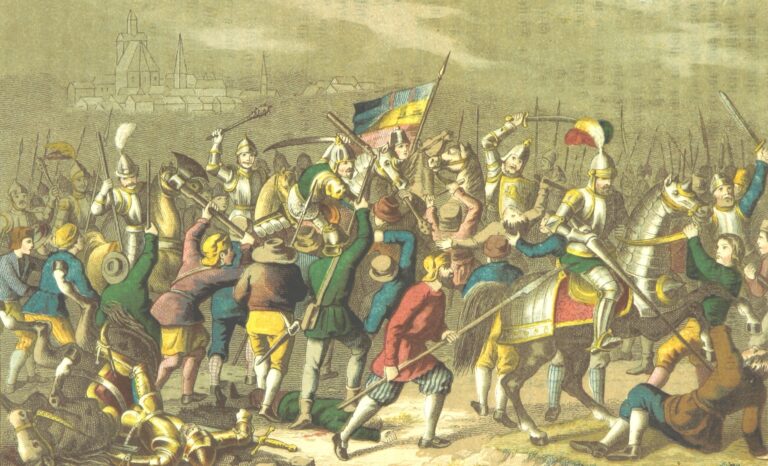
I began my book, Summer of Fire and Blood: The German Peasants’ War, by cycling! First I cycled from Mühlhausen to Frankenhausen, the route that the followers of the revolutionary leader Thomas Müntzer took on their way to the battle where most of them would be slain. I had no map and got hopelessly lost but that taught me the lie of the land. Everywhere I saw relics of the war—a pretty pink landed house which had an oddly deep ditch, for example. It was all that was left of a castle after the peasants destroyed it. Or a pile of stones where once there had been a convent.

Then I cycled from Strasbourg right through Alsace, Baden and all the way down through the Black Forest to Lake Constance, a journey of over 600 km (no electric bikes were used). This showed me how the revolt spread because the region is interconnected; and even today you can see the vineyards and the years of human labor that goes into them—the opponents threatened to burn them down, a credible threat. I visited all of the many battlefields of the war, each with their distinct geography—low boggy ground by the Danube River near Leipheim, where the lords’ army forced the peasants into the river and hundreds drowned, or the “Battle Mountain” of Bad Frankenhausen with its “blood gulley” where the peasants were slaughtered as they tried to escape back into town.

I read everything I could get my hands on, and I went to the archives where I saw the scraps of paper the peasant armies used to write to each other, some hardly literate, some marked by rain on the outside of the folded paper where they had been held. I saw the wax seals the peasants used on their letters, specially commissioned for their armies, some with ploughs, others with flails, some inscribed with the initials of the slogan “The Word of God Endures For Ever.” And I read confessions of those involved in the war. It took me eight years, and there’s so much more to find out.

All my life, ever since leaving Australia when I was 21, I’ve been fascinated by German history. I saw the fall of the Berlin Wall in 1989, and I’ve lived in both the former East and West of Germany. The German Peasants’ War has been the key difference in how East and West understand their past. Was it a movement for democracy and human rights (West)? Or was a Revolution led by the revolutionary Thomas Müntzer (East)? After German reunification, it was simply too hot a subject to touch, and there had been no new history of the war since the 1980s.

So as its 500th anniversary neared, I felt I simply HAD to write about the Peasants’ War. And, after a year of going to events all over German-speaking Europe, I’d say that the differences between East and West remain as deep as ever, thirty-five years since German reunification.

The German Peasants’ War has been forgotten for too long outside Germany—I want to bring it back into modern memory. And I want the former East and West to understand each other’s point of view in what is now a united Germany.

*

Friedrich Engels, The Peasant War in Germany

This is an absolute classic, by Karl Marx’s co-worker Friedrich Engels. It’s not based on original research—he took it all from another classic, Wilhelm Zimmerman’s three-decker history of the War which came out in 1841-1843 and which has remained the best narrative account of the war until this year. Engels overstates the influence of Thomas Müntzer, who he makes the hero of the war, a revolutionary who was ahead of his times—he is a kind of anti-Martin Luther. Engels’s history was hugely influential in the Communist East Germany.

Peter Blickle, The Revolution of 1525: The German Peasants’ War from a New Perspective

Written long before German unification, this book puts the West German version of the Peasants’ War as a “Revolution of the Common Man”—a phrase that rings oddly these days, especially since “common woman” in sixteenth century German meant prostitute!! It remains influential, though it’s not an easy read.

Gerd Schwerhoff, Der Bauernkrieg: Geschichte einer wilden Handlung

Schwerhoff’s book came out at the same time as mine, and it’s a wonderful read, but it’s only in German. It provides a brilliant chronological account of the Peasants’ War that is unlikely to be bettered. He’s also written a study of the revolts that led up to the War.

Andy Drummond, The Dreadful History and Judgement of God on Thomas Müntzer

Drummond’s is the best modern study of Thomas Müntzer in English, and it took him thirty years to write. This book really gives you a flavor of the man and why he matters, and it’s a gripping read. Drummond has done more than anyone in the English-speaking world to bring the Peasants’ War and Müntzer to a wide audience, and he has a marvelous website.

R.W. Scribner and Tom Scott, The German Peasants’ War: A History in Documents

This is a really handy collection of documents these two wonderful scholars translated and put together nearly thirty-five years ago—they stayed up all night translating the texts so they could teach courses on the War to students who had no German. The first sixty pages provide a masterly chronological overview of the Peasants’ War.

Leo Perutz, Nachts unter der steinernen Brücke (By Night under the Stone Bridge)

This brilliant collection of short stories was published in 1953, but the author wrote much of it before World War II. It evokes the Prague ghetto as it was in the sixteenth century, and it’s an elegy for the world of Jewish life the Nazis destroyed. Full of atmosphere, witticisms and fantastical events, each story seems unconnected to the last, but gradually you realize that you are seeing the same characters from different points of view. It’s a work of genius that should be far better known, and it brings the world of the sixteenth century to life like no other book. I’ve only read it in German—the style is poetic and unforgettable—I can’t vouch for the English translation.

__________________________________

Summer of Fire and Blood: The German Peasants’ War by Lyndal Roper is a finalist for the 2025 Cundill History Prize.

21 Jun 15:34

June 21: E-Stories

by Monique Camarra

Catching up…

For a general view of news from various geopolitical threatres, Scott’s EA Worldview is always superb.

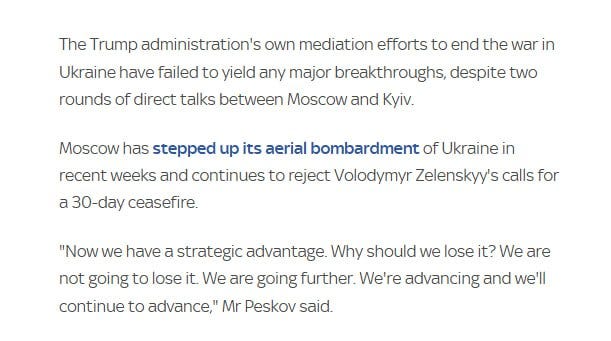
“We have a strategic advantage, why lose it? We're advancing deeper into Ukraine and will keep going. We don't need a ceasefire.”—Peskov, Kremlin spokesman

Stories we’re following…

'Massive' Russian drone attack on residential buildings in Odesa injures 13. Russian forces struck residential buildings in Odesa overnight on June 20, injuring at least 13 people, including three emergency workers, Ukraine's State Emergency Service reported.

A series of explosions were reported in Odesa on Friday morning. Reportedly after Shahed drone strikes.

Ukraine’s air defense neutralized 70 drones overnight. Russia launched 86 Shahed-type and decoy UAVs from multiple directions, 34 drones were shot down by firepower, 36 suppressed by electronic warfare.

Friday evening: Russia is preparing for a new missile strike. Four Il-76 aircraft delivered Kh-101 cruise missiles to Engels-2 for loading onto Tu-95MS and Tu-160 bombers. Currently, 3 Tu-95MS and 1 Tu-160 are stationed there. Additional armed bombers are at Ukrainka airbase in the Far East.

Andrii Sybiha on Putin’s latest statements

Putin's cynical statements demonstrate complete disdain for US peace efforts. While the United States and the rest of the world have called for an immediate end to the killing,

Russia's top war criminal discusses plans to seize more Ukrainian territory and kill more Ukrainians. But, of all Putin's deranged statements today, one about the Russian soldier's foot stands out. In reality, wherever a Russian soldier sets foot, he brings along only death, destruction, and devastation.

Putin does not care about Russian soldiers or their feet torn apart by Ukrainian drones. He is a mass murderer of his own people. He already disposed one million Russian soldiers in a senseless bloodbath in Ukraine without achieving a single strategic goal. One million soldiers. Two million feet.

And, while Putin is busy sending Russian feet to invade other countries, he is bringing Russians inside the country to their knees economically. His cynical statements serve only one purpose: to divert public attention away from the complete failure of his quarter-century rule.

It has brought Russia into the shameful club of rogue regimes like North Korea and Iran, international isolation, and endless economic stagnation, which will only worsen.

The only way to force Russia into peace is to deprive it of its sense of impunity. Increase support for Ukraine's defense and hit the Russian economy hard with devastating sanctions. Designate Russia as a terrorist state. Isolate it fully. Bring Moscow back to its senses.

Ukraine has carried out its sixth POW exchange in recent weeks. Severely wounded and ill defenders, including some held for over two years, have returned home. Among them are fighters who defended Mariupol.

Russia's prison chief sentenced in absentia for torture chambers in Kherson Oblast. Arkady Gostev, head of Russia's Federal Penitentiary Service, was found guilty of orchestrating the transformation of captured Ukrainian prisons into torture sites.

Statement by Peskov on a potential ‘ceasefire’: “We have a strategic advantage, why lose it? We're advancing deeper into Ukraine and will keep going. We don't need a ceasefire.”


Combat Situation

President Zelensky: Russians had insane plans for Sumy region, but we are holding the line and destroying their forces. The region is defended.

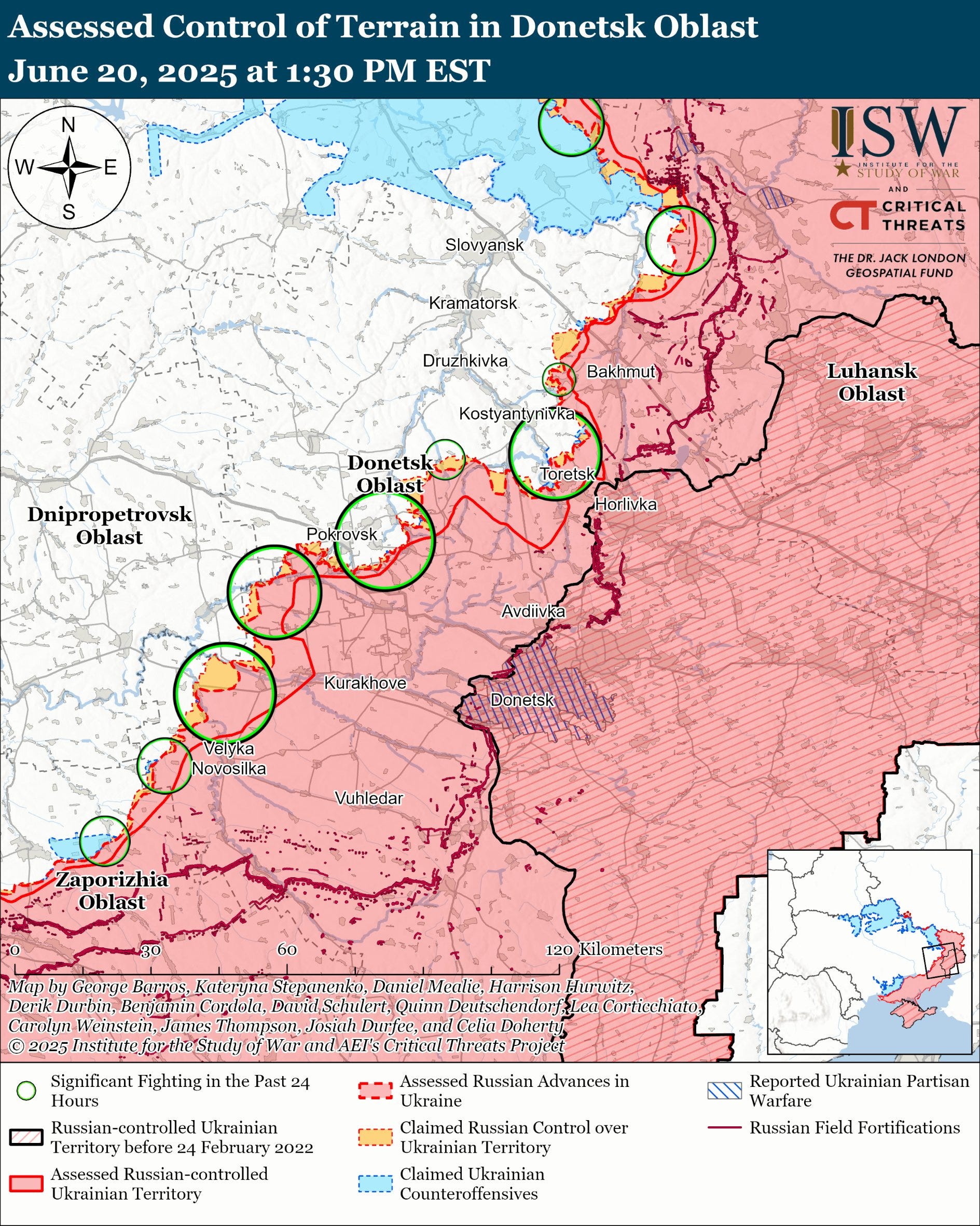
Ukrainian marines repelled a major mechanized assault in Donbas. Russian forces attempted a breakthrough on the Kostyantynivka axis, launching a coordinated attack from multiple flanks.

Thanks to the effective actions of artillery units, ATGM teams, drone strike systems of the 36th Marine Brigade, supported by the 54th Mechanized Brigade and 101st Territorial Defense, the assault was repelled.

Zelensky appoints Brigadier General Shapovalov as new Ground Forces chief. Brigadier General Hennadii Shapovalov, born in 1978 in Kirovohrad Oblast, is a career officer who graduated from the Military Institute of Tank Troops in Kharkiv and later studied at the National Defense University of Ukraine.

“Change is needed — no question about it,” Zelensky said about naming Brigadier General Hennadiy Shapovalov the new head of Ukraine’s Ground Forces.

He pointed to Shapovalov’s work with NATO partners in Wiesbaden and said it’s time to bring both that international experience and real combat know-how into Ukraine’s military leadership.

A key defense plant in Tula, Russia, was hit twice in three days by drone strikes, forcing it to halt operations. The facility develops high-precision weapons including air defense systems. Damage includes a substation, warehouses, admin buildings, and a loading hangar.

Ukraine has formed a unified Drone Forces Group. All UAV units are now under a single command led by Robert “Madyar” Brovdi. The structure brings clearer coordination, unified tactics, and more systematic combat use of drones already proving effective on the battlefield.

American volunteer 1st US civilian killed in Russian strike on Ukraine, NYT reports. Fred Grandy, a 62-year-old American artist and volunteer who was killed in Russia's mass missile attack against Kyiv on June 17, appears to be the first U.S. civilian killed by a Russian strike on Ukraine, the New York Times (NYT) reported on June 19.


Behind the Lines

KBP halting weapons production: As a result of several attacks by Ukrainian drones, one of Russia's largest defense enterprises developing high-precision weapons, the A. G. Shipunov Instrument Design Bureau (KBP) in Tula, has stopped operations. This was reported to Astra by sources in the region's emergency services.

Cybercriminals breach Aflac as part of hacking spree against US insurance industry, potentially stealing Social Security numbers, insurance claims and health information, the company said Friday, the latest in a spree of hacks against the insurance industry. With tens of millions of customers, Aflac is the biggest victim yet in the ongoing digital assault on US insurance companies that has the industry on edge and the FBI and private cyber experts scrambling to contain the fallout.

Estonia has begun building a defensive line on its border with Russia. The first €4.4M phase includes 3-meter-deep trenches and 28 concrete bunkers. Ten storage sites are also planned. Similar fortifications are expected in Latvia and Lithuania.

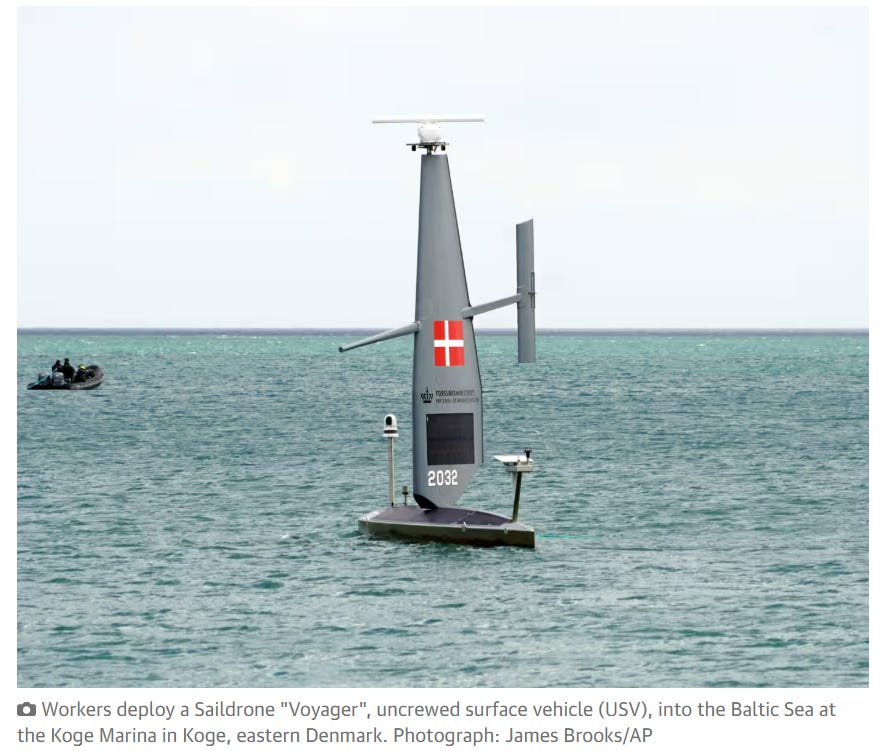
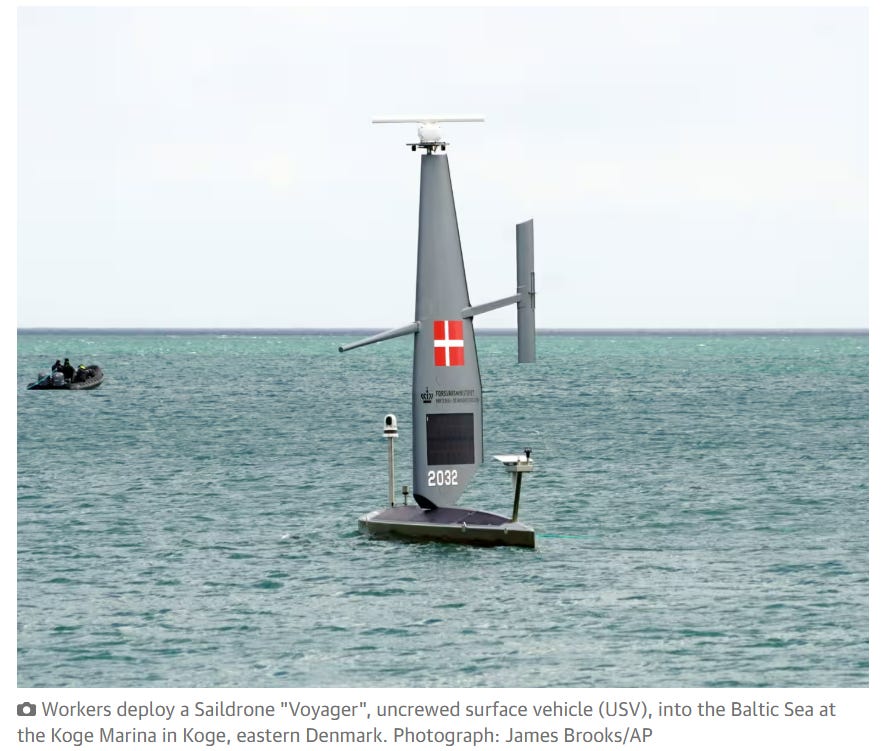
The Danish Armed Forces have deployed floating drones in the Baltic Sea to protect underwater infrastructure and enhance surveillance amid the growing threat of hybrid attacks from Russia. The drones, developed by the US company Saildrone and capable of autonomous navigation for more than a year, will also allow them to monitor the shadow fleet of tankers that transport Russian oil. The arrival of Saildrone, a California-based company, has prompted criticism in Denmark over forging tighter bonds with the US in such a sensitive area as digital security.

Jonas Gahr Støre declared Norway’s support for the 5% target. In his opening statement, Støre explained the target is divided into 3.5% on “classic defence” spending including staff, investments, preparedness, and support for Ukraine, with the remaining 1.5% on “defence-related expenses” including on operational and industrial measures. Støre also reiterated his warning that Norway faces “the most serious security policy situation” since the second world war, as he also pointed to new risks arising from the crisis in the Middle East.

The Trump administration sent layoff notices today to more than 600 employees at Voice of America, a federally funded news organization that provides independent reporting to countries with limited press freedom, the New York Times reports.

The layoffs will reduce the staff at the agency to fewer than 200, around one-seventh of its total at the start of 2025. The notices put journalists and support staff on paid leave until they are officially let go on 1 September.

In March, Donald Trump accused Voice of America of spreading “anti-American” and partisan “propaganda” and called it “the voice of radical America”. He later signed an executive order that effectively called for the dismantling of the agency and put nearly all Voice of America reporters on paid leave.

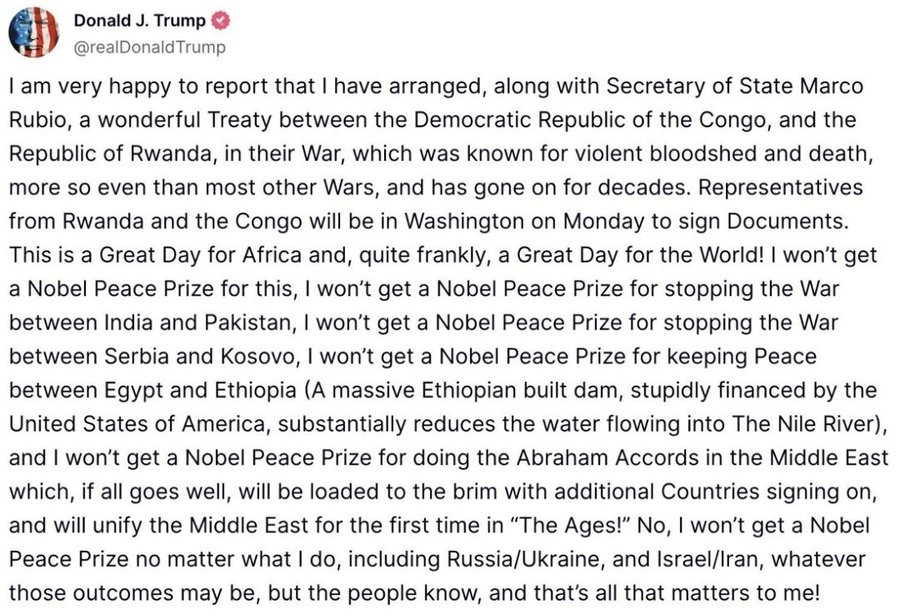
Government of Pakistan Recommends President Donald J. Trump for 2026 Nobel Peace Prize. The Government of Pakistan has decided to formally recommend President Donald J. Trump for the 2026 Nobel Peace Prize, in recognition of his decisive diplomatic intervention and pivotal leadership during the recent India-Pakistan crisis.

At a moment of heightened regional turbulence, President Trump demonstrated great strategic foresight and stellar statesmanship through robust diplomatic engagement with both Islamabad and New Delhi which de-escalated a rapidly deteriorating situation, ultimately securing a ceasefire and averting a broader conflict between the two nuclear states that would have had catastrophic consequences for millions of people in the region and beyond. This intervention stands as a testament to his role as a genuine peacemaker and his commitment to conflict resolution through dialogue.

The Government of Pakistan also acknowledges and greatly admires President Trump’s sincere offers to help resolve the longstanding dispute of Jammu and Kashmir between India and Pakistan—an issue that lies at the heart of regional instability. Durable peace in South Asia would remain elusive until the implementation of United Nations Security Council resolutions concerning Jammu and Kashmir.

President Trump’s leadership during the 2025 Pakistan India crisis manifestly showcases the continuation of his legacy of pragmatic diplomacy and effective peace-building. Pakistan remains hopeful that his earnest efforts will continue to contribute towards regional and global stability, particularly in the context of ongoing crises in the Middle East, including the humanitarian tragedy unfolding in Gaza and the deteriorating escalation involving Iran.

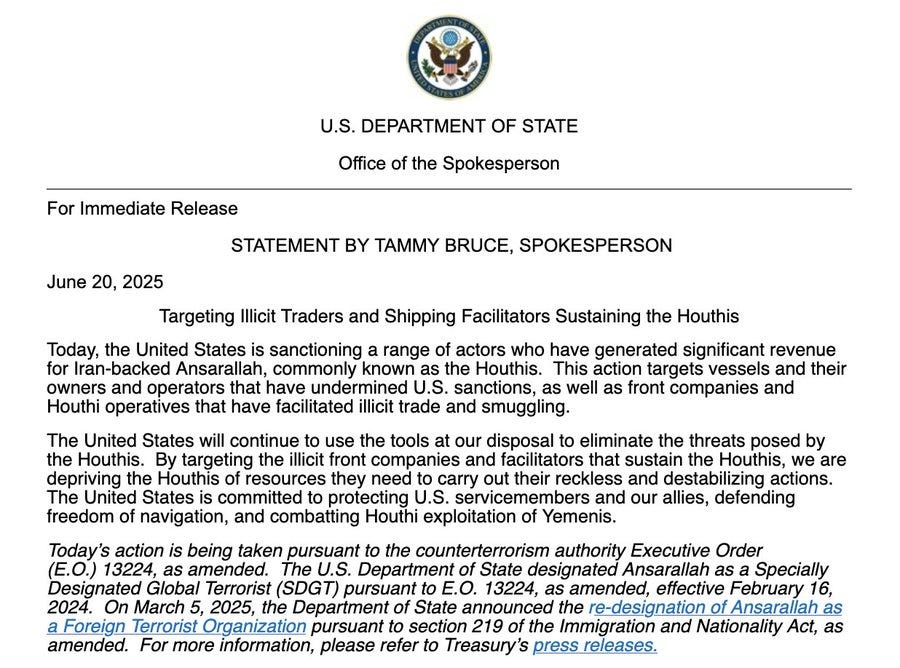
The United States has announced a new round of sanctions against Iran, according to Reuters. The move comes amid escalating tensions in the region.

Globe and Mail: Greenland gives critical metals mining permit to Toronto-based company

Greenland on Thursday handed a 30-year permit to a European Union-backed project that aims to mine molybdenum, a critical metal used in aerospace, energy and defence and on which China has imposed export controls.

The resource-rich Arctic island has seen rising activity in its mining sector over the past month, after U.S. President Donald Trump expressed an interest in purchasing it earlier this year.

The permit was granted to Toronto-based Greenland Resources, a company backed by the European Raw Material Alliance, and holds the licence to the Malmbjerg project in eastern Greenland, the country’s government said in a statement.

The open pit Malmbjerg mine can produce an average 32.8 million pounds of concentrated molybdenum per year, potentially supplying around 25 per cent of Europe’s molybdenum use, according to the company.


Meanwhile in Russia & China…

Putin, Xi to agree to meet in China as they sneer at G7 summit fractures. Russian President Vladimir Putin and Chinese President Xi Jinping discussed their upcoming meeting and noted the supposed "rough edges" that emerged among G7 leaders during the recent summit, said Putin's aide, Yuri Ushakov, on June 19.

A delegation of the Taliban movement reached an agreement on a tenfold increase in the flow of Afghan labor migrants to Russia on the sidelines of the St. Petersburg International Economic Forum (SPIEF). This was reported to Baza by the head of the Russian Business Center in Afghanistan, Rustam Khabibullin. According to him, currently about 100 Afghan citizens are already working at construction sites in Russian regions, but another thousand are expected to arrive in the near future. "These are bricklayers, welders, painters, electricians and other highly qualified specialists," Khabibullin specified. He added that work permits for them in Chechnya, Dagestan and Krasnodar Krai are already being prepared.

Russia says South Africa invited Putin to G20 summit despite ICC arrest warrant. South Africa is a member of the International Criminal Court (ICC) and a signatory to the Rome Statute, meaning it is obliged to arrest Vladimir Putin if he enters the country.

In September of this year, 11 regions of Russia will hold elections for deputies of legislative assemblies, and another 25 regions will hold elections for city council deputies. The period for nominating candidates will last until the end of July, but all five parliamentary parties, including the ruling United Russia, have faced a shortage of people willing to participate in the elections, regional politicians and party strategists told Verstka.

“Political apathy has reached a point where even systemic players find it unprofitable to participate. If you go [to the elections], you are under surveillance. If you win, you are under attack. It doesn’t matter at all whether you are loyal or not. You can pay too high a price for the decoration of politics,” says a member of the regional executive committee of United Russia in Novosibirsk Oblast.

On Thursday night, over 100 speakers at the Global Tech Weekend in Tbilisi received an email warning them not to discuss local or international politics in any way, or they would face immediate termination.

  • The British embassy in Tbilisi announced it canceled grants for civil society aimed at voter education and election monitoring for the upcoming municipal elections. The GD failed to finalize a decree for grant approvals, leaving no mechanism or timeline for decisions.

A criminal case was launched against activist Nino Datashvili over an incident at Tbilisi City Court during a sham hearing for regime prisoners. The regime claims Datashvili attacked a court security employee.


In Europe…

The EU will not go forward with plans to impose the $45 Russian oil gas cap. The proposal, which would have seen the maximum price of Moscow's oil slashed from $60 per barrel to $45, was due to be discussed Monday in Brussels by foreign ministers from across the bloc, but the Israeli-Iran war makes the plan unworkable.

At the Paris airshow, Macron stressed the importance of Eutelsat, saying it was a part of a broader push for Europe’s strategic sovereignty, as he urged partners to join France in raising even more capital. France is set to become Eutelsat’s biggest shareholder after a €1.35bn capital injection. Macron argued Eutelsat was the only “non-American and non-Chinese player” in space, and so it allowed to build a sovereign alternative for Europe.

At a high-level summit in Rome, Italy and the EU formalised their partnership with Africa through the Mattei Plan and Global Gateway initiatives, announcing significant investments in infrastructure, digital connectivity, and AI development—part of a broader effort to offer an alternative to Chinese influence

Poland’s EU minister Adam Szłapka, who led the country’s EU presidency from January, will become the new chief government spokesperson, prime minister Donald Tusk has announced. The move comes ahead of a broader government reshuffle after the ruling pro-European coalition’s defeat in the presidential election earlier this month.

Romanian President Nicușor Dan nominated Ilie Bolojan, a center-right National Liberal Party politician who served as acting president until Romania elected Dan to the role a month ago, for the prime ministerial post.

BBC News: China's military has called a British warship's recent passage through the Taiwan Strait a disruptive act of "intentional provocation" that "undermines peace and stability". The British Royal Navy says HMS Spey's patrol on Wednesday was part of a long-planned deployment and was in accordance with international law. The patrol - the first by a British naval vessel in four years - comes as a UK carrier strike group arrives in the region for a deployment that will last several months.


Reuters: How US military power looms over the Israel-Iran conflict.

Should the U.S. become involved directly in airstrikes, numerous bases it operates from, dotted across the Middle East, might support attacks against Iran as well as become possible targets for retaliatory missile strikes.

The U.S. has already moved some aircraft and ships from bases that may be vulnerable to any potential Iranian attack, two U.S. officials told Reuters on Wednesday. The U.S. embassy in Qatar also issued an alert on Thursday temporarily restricting its personnel from accessing the Al Udeid Air Base, the largest U.S. military installation in the Middle East, which is located in the desert outside Doha.

Washington has also begun deploying more fighter aircraft — including F-16, F-22 and F-35 fighters — to the Middle East and extending the deployment of other warplanes, bolstering forces that can defend personnel and facilities by shooting down drones and other projectiles, U.S. officials said.

Other recent examples of the U.S. military buildup in the region include:

  • A large number of tanker aircraft sent to Europe earlier this week

  • The USS Nimitz aircraft carrier strike group, which was sent toward the Middle East, joining the USS Carl Vinson already stationed nearby

  • B-52 bombers and fighter aircraft spotted via satellite imagery at the joint UK-U.S. military base, Diego Garcia, in the Chagos Islands

(Please take time to read the entire article as it goes into detail on the military posture of the US, Israel and Iran.)


In other news…

A US appeals court let Trump retain control of California's National Guard while the state's Democratic governor proceeds with a lawsuit challenging his use of the troops to quell protests in Los Angeles.

One of the most powerful men in the Trump administration, tasked with vetting thousands of staffers, Sergio Gor, hasn’t been fully vetted himself, The Post has learned. Three administration insiders told The Post that the vetter-in-chief has not turned in his Standard Form 86, or SF-86 — a more than 100-page set of questions required for officials who need security clearances.

Sergio Gor — the director of presidential personnel who recently convinced President Trump to yank an Elon Musk-endorsed nominee for NASA — has yet to submit official paperwork about his own background needed for a permanent security clearance, according to multiple sources.

Gor’s swift ascent from working as an aide to Sen. Rand Paul (R-Ky.) during Trump’s first term to occupying one of the most important roles in American politics has drawn admirers who view him as an effective enforcer of loyalty to Trump.

“Sergio has one of the toughest jobs in the administration,” one supporter said. “He has to say ‘no’ to a lot of people, including a lot of cabinet officials [and] a lot of times he’s telling people, ‘No, you can’t hire this person’ for their own good.’ … He has to say ‘no’ to a lot of officials who aren’t used to hearing the letters N and O put together.”

Mo: just a reminder that Gor accompanied Trump Jr to Greenland on behalf of Trump.

War on the Rocks: From the 1990s to 2022, Russia provided, off and on, important military assistance to Iran across the ground, aerospace, and naval domains, largely focused on hardware instead of technology transfers. In addition to Russian support to Iran’s nuclear program, this assistance included the provision of tanks, armored vehicles, anti-tank missiles, combat aircraft, helicopters, and surface-to-air missiles, among others. Assistance — at least in the 1990s — also entailed unofficial transfers by low-level Russian entities to Iran’s ballistic missile and suspected chemical and biological weapons programs.

Since 2022, Russia’s defense relationship with Iran has taken a big leap forward. Cooperation has moved past the previous patron-client dynamic, with Iran emerging as a key enabler of Russia’s air and ground campaign in Ukraine. Military-technical collaboration has intensified in existing areas, while also advancing to new frontiers such as the joint development of novel uncrewed aerial vehicles. Amid a general weakening of past constraints on cooperation, Iran and Russia have also taken steps to further institutionalize their defense relationship.

Reuters: Iran said it would not discuss the future of its nuclear programme while under Israeli attack, as Europe sought to draw Tehran back to the negotiating table, with a decision on potential US involvement expected within two weeks. Meanwhile, Israeli official says 'it was a mistake' to say Bushehr was hit.

  • Iran has now been largely offline for 60 hours; metrics show the internet shutdown continues to severely limit the public's ability to express political viewpoints, communicate freely, and follow safety alerts amid ongoing conflict with Israel

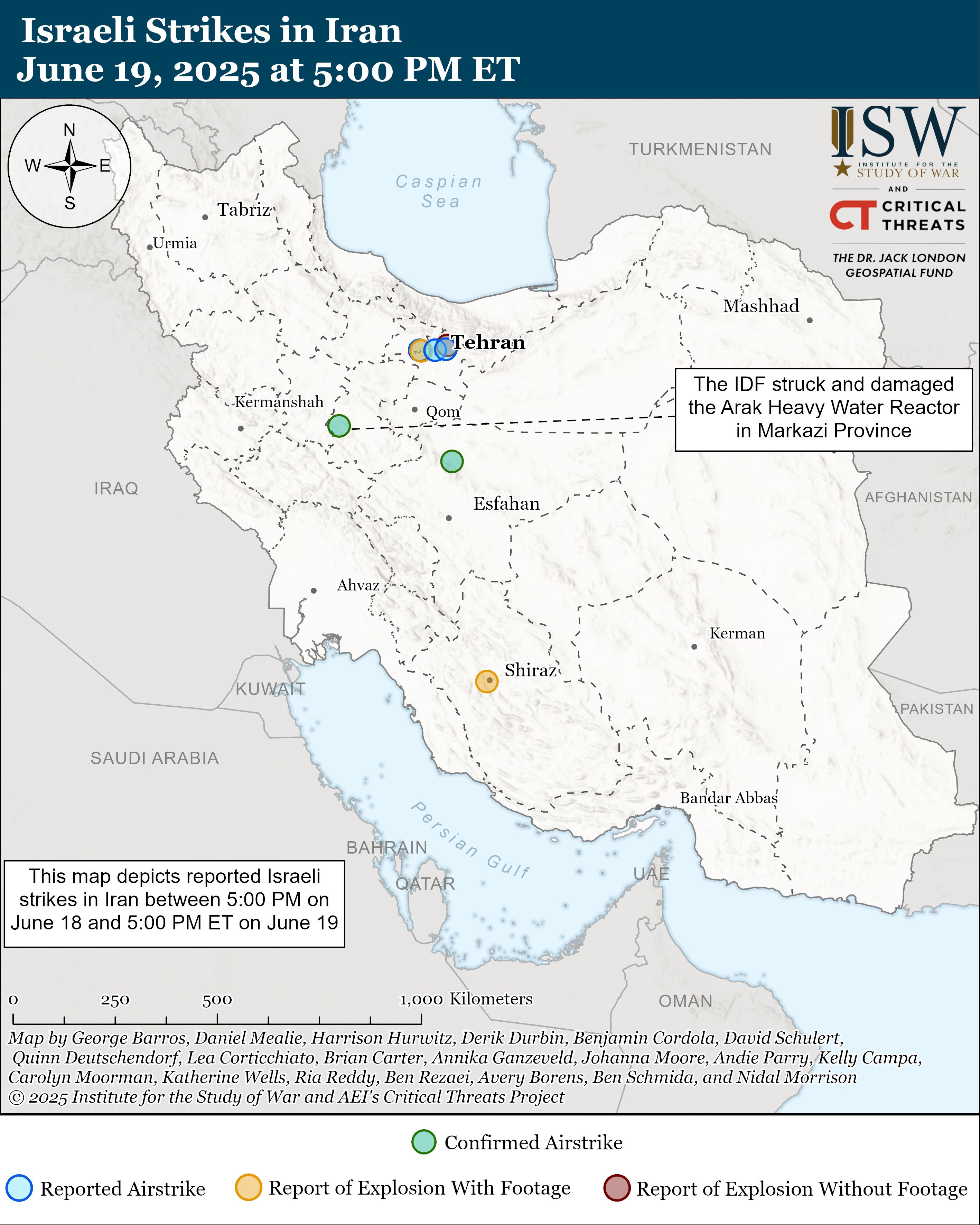
  • IDF carried out a series of overnight strikes in Iran, targeting dozens of sites, including military industrial facilities for missile production and the SPND headquarters, linked to Iran’s nuclear weapons research program.

  • Mohsen Rezaei, Member of Iran’s Expediency Discernment Council and former IRGC commander, said: “Our response is not complete and must be carried out; we will continue until the future of the country is secured.”

  • NYT: Iran is prepared to pursue nuclear weapons if the US strikes its uranium enrichment site at Fordow or if Israel assassinates Supreme Leader Khamenei, according to a new intelligence assessment.

  • IRGC announces the launch of the 17th wave of Operation “True Promise 3.” A combined missile-drone strike is underway using long-range and heavy warheads. Israeli media confirm serious damage in several places in Israel, struck by Iranian ballistic missiles.

  • A senior Iranian official told Reuters Iran is ready to discuss limitations on its uranium enrichment but said the prospect of zero enrichment would undoubtedly be rejected, especially while Israel was attacking Iran.

  • Iran's foreign minister Abbas Araghchi is due to hold face-to-face talks with his counterparts from the UK, the EU, France and Germany, who are expected to call for Tehran to return to the negotiating table.

  • Iran's fragmented opposition groups think their moment may be close at hand, but activists involved in previous bouts of protest say they are unwilling to unleash mass unrest, even against a system they hate, with their nation under attack.

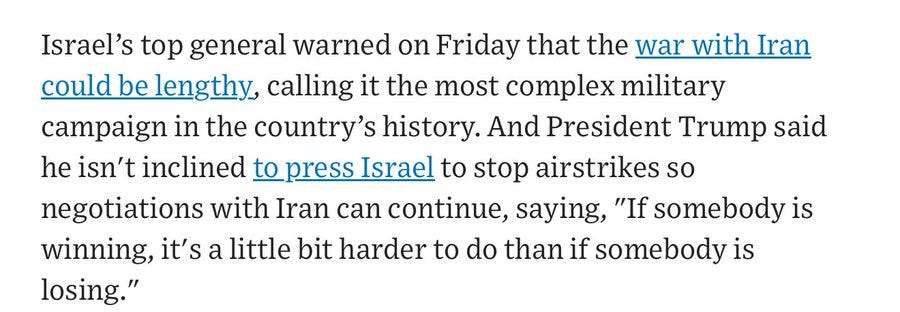
  • White House press secretary Karoline Leavitt told reporters Trump would make a decision on an Iran attack "within two weeks" (a favorite Trump time horizon). Special envoy Steve Witkoff has been maintaining direct communication with Iranian Foreign Minister Abbas Araghchi.

  • British Foreign Secretary David Lammy met with Witkoff and Secretary of State Marco Rubio at the White House yesterday, and posted on X that a "window now exists within the next two weeks to achieve a diplomatic solution."

  • Al Jazeera reports that Merz and Erdoğan have discussed the conflict between Iran and Israel, according to a German government spokesperson. The outlet said that the pair spoke on the phone about diplomatic efforts to prevent further escalation, with both agreeing to coordinate closely in future.


Signing off for the day…

Share EuroFile

Subscribe now
31 Oct 15:46

Bonhams Scotland Raises the Woof With a Dog Sale Featuring Canine Art and Artifacts Galore

by Artnet News

Pekingese, Dalmatians, French Bulldogs, and many other breeds are featured in the November 8 sale in Edinburgh.

The post Bonhams Scotland Raises the Woof With a Dog Sale Featuring Canine Art and Artifacts Galore appeared first on Artnet News.

15 Apr 03:13

Study finds ~3,337 free apps in Google Play's Designed for Families program that may violate COPPA, a federal law aimed to protect children from online tracking (Benjamin Herold/Education Week)

Benjamin Herold / Education Week:
Study finds ~3,337 free apps in Google Play's Designed for Families program that may violate COPPA, a federal law aimed to protect children from online tracking  —  Thousands of free apps available in the Google Play store are potentially violating a major federal data-privacy law intended …

06 Oct 06:43

Train Simulator 2016 And How We've Reached The Crest Of The Dumb DLC Wave

by Timothy Geigner

We only occasionally talk about video game DLC, or downloadable content, here at Techdirt. When digital distribution became a thing some years back, game makers came up with DLC as a way to achieve several goals: extend the shelf-life of games, make games more saleable through the promise of extra content, and, of course, make more money. I remember when the wave of DLC started and the general negative reaction brought by the gaming public to it. Most concerns centered around game makers charging for features that once were included in the games for the original asking price. Some makers legitimized these concerns through their actions, but others did wonderful things with DLC that gamers would not wish to be without. But, as Hunter S. Thompson once imagined he could see the crest of hippie culture along the Rocky Mountains before its eventual recession, I too can see the crest of DLC greed in our time in the insanity of Train Simulator 2016's laughable DLC offerings.

This all becomes evident as Kotaku's Alex Walker went on a quest to find the most ridiculous DLC costs for games on the market today.

My first thought was the Dynasty Warriors series. They, like many anime brawlers, have an absurd amount of costume and armour packages that are far more expensive than they should be. But then I came across Train Simulator 2016: Steam Edition. It’s US$45, which is fairly standard for niche titles with a hardcore fanbase. Dovetail Games were even generous enough to have a special on the DLC. And then I saw how much DLC there was.


As you can see at the bottom of the image, there are 230 available DLC options for sale. Next to it is an option to see them all. Walker saw them all. The results, and keep in mind that most of these are on sale for nearly half off, are hilariously expensive.


Yes, that's over $3,000 if you were to buy all of the game's DLC when most of it is on sale. None of this is to say, of course, that a game maker can't charge what they like for their game, their DLC, their box art, their communications, their support, or anything else. They most certainly can. But what this should herald for most of us is the ultimate example of DLC done wrong. Whatever costs and effort might go into making a game, the end result shouldn't be the cost of a used car in payment for the full content. There are ways to DLC right and it's not evil to charge for great content, but this kind of thing we see above is so far removed from how games were charged for only a few years ago that it's plainly obvious that something ain't right here.


Permalink | Comments | Email This Story


11 Aug 21:14

Gabriel Dawe Wraps Toys in Thread in “End of Childhood” Series

by Caro
Originally from Mexico City, Texas-based Gabriel Dawe primarily uses thread as a means of creating fantastical installations. Combining fashion and architecture, his vibrant threaded works (covered here) exhibit a certain strength and delicacy. Dawe's ongoing series of sculptures play with textiles on a much smaller scale. Instead of large spaces, in "End of Childhood", Dawe binds a child's toys such as metal cars and plastic animals like elephants, horses, and dinosaurs.
18 May 20:29

Urgent: get Congress to pass the KOCH Act

by Richard Stallman

US citizens: call on Congress to pass the KOCH Act.

02 Aug 02:25

2nd place in a beauty contest, collect $300!

by Matthew Chinian
82  F hot and humid, cloudy, hazy.
Today was the Bennington Arts festival paint out.

This was my morning painting, I'm behind Greenberg's lumber yard (going out of business, bad news).  The map of the downtown paint area was small, and included the main streets, of course I had to find an out of the way place!

#353 Washington Ave

12 x 16

$500

The morning was foggy, and thunder showers were predicted for the afternoon, but by the time I got started the sky had cleared enough, and this put sun on my panel! I liked this for the mountain view, and because I think it says something about the town...


The mountain really carries the painting, maybe too much...


There weren't much darks, I included the warehouse and the telephone pole, because they frame the mountain, and I like that, there're also dark.


For a parking lot there was a lovely regression from fore to mid ground.


There was lots of information and I'm not used to urban scenes, but by this time I was happy with the way I was able to simplify.


Telephone pole.


This is where I ended up. I was happy with it, even though I didn't think it was going to win any prizes or sell. I spent all of 2 hours painting, and now it was noon, so time to grab lunch!


This is the scene....


The organizers of the paint out encouraged us to paint here, and this happens to be a few steps from my favorite coffee houses so my post lunch coffee was right here, so I figured what the heck, it couldn't kill me.


 lights.


Darks


There were a lot of middle tones, although I've heard that all you need is three.


I thought I'd treat it like a farm......


This is where I ended up, I didn't submit this for judging.


The cars kept moving.....


The Money shot for the 2nd painting of the day.


I went out looking for the third spot of the day, I didn't have much time left, maybe an hour to actually paint if I didn't take too long to find it. I also forgot to take photos.


Here is where I ended up, I liked this and submitted it and thought it was better than the other one......


This is the sight size shot, I'm not sure why it's so dark, but at this point, I had to get the paintings signed, labeled and framed and delivered.


Wow! I got 2nd place, and some prize money!


17 Jul 15:28

In addition to Nokia X Android phones, Microsoft is ending Asha, Series 40 handset lines

by Kevin C. Tofel

Amid 18,000 job cuts and the elimination of Android-powered handsets, Microsoft is also putting two other Nokia product-lines out to pasture. The Verge received an internal memo written by Microsoft’s Jo Harlow, who leads the new Smart Devices and Mobile Phones group, with the news: Nokia’s Series 40 and Asha handsets will be no more, with both products joining the Nokia X Android phone in an 18-month maintenance mode. That means the low-cost handset market will become more important for Windows Phone as that’s where these products are aimed: $50 or less. The company isn’t out of top-drawer handset ideas though: The memo says to watch for “other high-end products that we will be announcing very soon.”

Related research and analysis from Gigaom Research:
Subscriber content. Sign up for a free trial.

12 Apr 05:02

Time Traveler

by Peach

Doan Brook

fast beside the brook

with a blanket and a book

time traveler

07 Apr 15:20

Rocky Mountain High or Reefer Madness? Legal Pot in Colorado Comes with Risks

by Marshall Allen

This story was co-published with The Denver Post's The Cannabist

I walked through clouds of marijuana smoke Friday night to get to the Denver Nuggets basketball game. The sweet smell lingering in the air reminded me less of a family event and more of the time I saw AC/DC on "The Razor's Edge" tour at the old McNichols Sports Arena.

I grew up in Colorado, but it's been a while since I lived in the state. When I returned for a recent conference, I found that a place settled by the Gold Rush is now mad about reefer. In 2012, Colorado voters became the first in the nation to approve recreational pot use. The good times rolled out Jan. 1, when stores started selling it.

I've never tried pot, but I graduated from the University of Colorado — Boulder, which is famous for its annual "4/20" public pot parties. At CU, you can practically get a contact high walking to class. But I saw more public pot use in my two-day visit to Lower Downtown Denver than in years spent at Boulder.

It's supposed to be illegal to smoke or consume pot in public. But then the day after the game, while jogging down the Speer Boulevard bike path, I passed a guy lounging under a tree lavishing his affections on a joint.

Anyone over 21 can walk into a dispensary and load up on bud, marijuana baked goods and candy.

The presence of legal pot right outside our hotel made people giddy at the conference I attended — a meeting of the Association of Health Care Journalists. At a reception, one woman passed a friend gummy bears infused with THC, or tetrahydrocannabinol, the main psychoactive ingredient in pot.

And then there was a friend of mine at the conference — I'll call him "Dude" because he shared his story on condition I didn't name him. He had a bad reaction after eating too many marijuana gummy bears.

There's a running debate about whether pot should be legal for recreational use, but the Colorado experiment is rapidly unfolding, and it could help determine whether other states follow or shy away. (Washington voters also have approved recreational marijuana, and the state expects to begin licensing retailers in July.)

Two things stand out after my visit.

First, legal pot is attracting new and possibly naïve users — creating risks that some don't bargain for. Second, the public health system's desire to protect people may be well-intentioned, but regulation and efforts to track the health effects have a ways to go.

Dude had only smoked pot twice in his life, about 25 years ago, but he got curious and tried some pot gummy bears from a shop called the LoDo Wellness Center. Other than being infused with THC they looked and tasted like ordinary candy. Dude and his buddy paid $20 for a pack of 10.

Dude ate a bear before dinner but felt nothing. So he popped another during the meal. Nada. Ripoff, he assumed. So he ate a few more — five total, he said — but still felt nothing. He fell asleep in his hotel room at 11 p.m.

Two hours later, Dude awoke feeling like he was on a roller coaster. His entire body tingled, and he was light headed. He tried to stand, but his left leg was so numb he couldn't walk to the bathroom. His pounding heart strained his rib cage as waves of euphoria and anxiety washed over him.

He was terrified.

Was this the high? An overdose? A heart attack? A stroke?

Totally debilitated, Dude thought about calling an ambulance but feared ending up in the E.R. or a police station. So he stayed put, guzzled water, pulled a blanket over his head and clutched a pillow. The symptoms lasted two hours, but it took a full day to feel normal again.

Dude's experience and the open pot use I saw made me wonder about public health aspect of legalization. I called some experts to find out if there have been safety problems, how pot and gummy bears are being regulated and whether consumers are being educated about the risks.

The foods with pot — typically baked goods but also sodas, candies and even lasagna and pizza — cause the most unpredictable highs because the effects aren't immediate and potency varies, I learned.

In the case of gummy bears, one is considered a single serving. But Dude kept eating them because he didn't feel anything.

Haley Andrews, manager of the LoDo Wellness Center, said about half the shop's customers are marijuana novices, so the staff takes time to educate everyone who buys. Users should start with one 10 mg gummy bear, she said, and never consume more than 20 mg at a time.

Andrews said the gummy bear bottle's label listed the number of 10 mg servings inside and advises users to consume with caution because the product had not been tested for contaminants or potency. There is no mention of a delayed response, she said.

The Denver Post recently tested edibles and found that potency labeling was often inaccurate.

Accurate or not, labels are often ignored.

Dude said his buddy held onto the package so he never looked at it. He claims no one at the shop gave him any warnings about the gummy bears.

There were signs in the shop about how the different strains of pot would make users feel — "calm" or "excited" — but Dude said he saw no displays with advice for novice users, how many gummy bears are too many, or warnings about a delayed response.

Andrews said the staff makes every effort to ensure people use the products safely, but that it's possible Dude somehow slipped through the cracks.

Generally, using too much pot isn't life-threatening. But a reaction like Dude's could contribute to a heart attack or stroke for someone who has health problems, said Dr. Tista Ghosh of the Colorado Department of Public Health. She said recreational pot has been unexpectedly popular with the older crowd.

"There's a lot we don't know," Ghosh said. "I feel like in some ways we're like tobacco 50 years ago. More research needs to be done on this from the public health and individual health perspective."

Looking back on it, Dude said he was glad to be in his hotel room when the reaction hit him and not in a place where he could endanger others. According to reports in the Denver Post, pot use has contributed to car crashes and the recent death of a Wyoming college student, who on a spring break visit to Denver, began acting strangely and jumped from a fourth-floor hotel balcony.

Though ruled an accident, a coroner's report said "marijuana intoxication" from eating several pot cookies was a significant contributor to the 19-year-old's death, the Post reported.

Children are especially at risk. It's illegal to make candy or fruit-flavored cigarettes in the United States, but pot candies and cookies in Colorado have been some of the best-selling products. Although the packaging is child-proof, it doesn't stop kids once it's open.

Dr. Andrew Monte, a medical toxicologist at the University of Colorado Medical School and Rocky Mountain Poison and Drug Center, didn't have hard numbers but estimated that there is a poison control call every few days about a child accidentally eating marijuana products.

There also are reports from emergency room doctors, though no official numbers yet, of children showing up to hospitals in extreme states of drowsiness after accidentally consuming THC products, Monte said. Some end up getting expensive diagnostic work-ups like CT scans and spinal taps, he said.

THC infused gummy bears contain the main psychoactive ingredient in marijuana. (Photo courtesy of hightimes.com)

"What kid doesn't want a brownie or a gummy bear?" Monte said.

So far there are no mandatory tests of the potency or purity of recreational pot or THC food products, but they are scheduled to roll out in the coming months under the rules to implement the new law.

The process is more complicated than it would be in other cases because state regulators have not been able to rely on the federal health agencies. The federal government deems marijuana an illegal substance, so it's not participating in the oversight, Ghosh said.

Ghosh said the Colorado regulators have had to start some things from scratch, including finding labs that can be certified to test pot products.

Michael Elliott, executive director of the Marijuana Industry Group, which represents marijuana centers, growers, and infused products manufacturers in Colorado, said there are clean kitchen standards in place now, and licensing of facilities, financial disclosures, security and more.

He said the industry is committed to robust regulation.

Elliott, Ghosh and Monte agree that more needs to be done to educate consumers.

The state has put up a website with information about the law and advice for parents and is running a "Drive High, Get a DUI" campaign, efforts that Elliott says are supported by the marijuana industry.

Included on the website is a page titled "Using Too Much?" aimed at people like Dude.

Public health also depends on people using common sense. My friend Dude is a smart guy, but he knows he was a dumb consumer when he gobbled the pot gummy bears. Now, he regrets assuming that because marijuana was legal nothing could go wrong.

"I was ignorant about the whole thing," he told me later. "I am embarrassed to admit that I just ate the gummy bears because it seemed like fun.

"It was not."

24 Mar 15:50

Alexis Diaz’s Surreal Murals Explore Metamorphosis

by Elizabeth Maskasky
Over the past several years, Puerto Rican-born street artist Alexis Diaz has built an international presence, with giant murals covering everywhere from the side of a crumbling building in Bratislava, Slovakia to a makeshift billboard in the middle of the Arizona desert. The artist is known for his chimerical and dreamlike depictions of animals in a state of metamorphosis. Diaz often works collectively with friend and fellow street artist Juan Fernandez; when collaborating together, the group calls themselves “La Pandilla” (or “The Gang”). Both Diaz’s solo work and that of La Pandilla demonstrate a deep interest in transfiguration; animals morph into one another, human hands and skulls become wings and snail shells and creatures are transformed into ships and submarines to be used for the transport of other animal subjects. Diaz’s signature style is the use of tiny black brushstrokes on white to render his creatures, making them look like highly-detailed pen-and-ink drawings. These ‘drawings’ stand out all the more for being set against their bright teal, blue, and sunset-colored backdrops.

23 Mar 16:42

Go Inside Season 2 of ORPHAN BLACK with Tatiana Maslany

by Alicia Lutes

Listen: the second season of BBC America’s Orphan Black is going to be a doozy. That much has been evidenced in the trailers and teasers we’ve seen thus far. But just how huge are the twists, shifts, and a seriously ramped-up risks that will likely crank this series to eleven for fans and newcomers alike? According to Tatiana Maslany — the actress with the impressive and unenviable task of portraying each of these many characters — they’re downright cinematic.

Alison Hendrix, Cosima Niehaus, Sarah Manning, and even pro-clone Rachel Duncan have very specific trajectories this season (as do the rest of the cast), with stakes even higher than those seen in season one. It’s a quick hit of what’s to come in season two, but more than enough to get you through the weekend. Welcome to the trip, man. It all starts up again on April 19th.

Are you ready, Clone Clubbers? Let us know in the comments.

06 Aug 16:36

Digital Transformation – It’s Just The Beginning

by Luis Suarez
Stephen L Harlow

We ain't seen nothing, yet!

Gran Canaria - Playa del InglésOne of the interesting things that I have been exposed to over the course of time, specially, as more and more knowledge workers embark on their own journey of using social networking tools in a business context is how there seems to be this notion that we are almost done with that digital transformation. Meaning that those who have been using these social technologies for a while now feel like their work is done and dealt with in terms of that very same digital transformation. To them, it feels like it is time to move on and everything, in order not to stagnate or lag behind. The reality though is much different. We are just at the beginning of it all. We are just getting started. 

Over the course of the last few months there have been multiple tipping points at work in our attempt to become a successful Socially Integrated Enterprise that kind of made me feel like as if my job as a Social / Open Business evangelist is now done and dealt with and it’s probably a good time now to start making the move into something else. One of those tipping points is of particular importance and relevance, since it comes all the way from the top (Finally, after over a decade of exposure to social networking tools) and I am hoping that I may be able to talk about it soon enough, but the intriguing thing is that while I was reflecting on that fact, that is, on whether my job as a Social Computing evangelist was now complete, my network(s), eventually, had other thoughts for me. You know what they say, networks will always outsmart you left and right no matter how much you think you know about your own subject matter expertise, skills and experience, so best thing you can do is listen to what they have to tell you. And learn

That’s essentially what I have been doing over the last few days, while I have been going through that week of denial of the Social Web that I talked about yesterday. It’s been an interesting journey for yours truly all along through that long week of struggle and plenty of moments of weakness, because as I got to question everything that I have believed in over the course of the years on the impact and key role of social networking tools to change the way we work, interact and make business, one feels like once you reach through enough tipping points you are on your way out on to better things, hopefully. But then again your network(s) will always remind you as to whether it’s the right time for you to make a move or to stick around for a little while longer. After all, they know plenty more about you than you think you do about yourself. 

And that’s what happened last week when fellow colleague Ruchi Bhatia pointed me in the direction of this absolutely brilliant short video clip that clearly describes where we are at the moment in that journey of the digital transformation. It’s a bit over 3 minutes long, but worth while going through it all the way. Specially, if you would also want to witness the power of storytelling coming together nicely.

The video clip features a short interview from my good friend Andy McAfee who tells a very inspiring, insightful and powerful story about the inventor of chess and how that correlates to our very own digital transformation that we have been experiencing for a little while now. It’s one of those videos that you would want to watch every now and then, as a social business evangelist, to remind you where we have been, where we are now and where we would need to be in terms of realising that full transformation of the business world in the near future, never mind our very own societies. 

If, as a social business evangelist, you feel that your job is done, because you sense that everyone gets it, and it’s time for you to move on to the next thing, whether it may well be Mobile, Big Data, Social Analytics, Cloud Computing or whatever else, that video clip will certainly help you adjust your mindset accordingly, just like it did for me. Why? Well, not going to spoil it for you folks, you will have to watch through it, but, essentially, because of a single key message that Andy himself shared on that short interview and which is a brilliant reminder to inspire you back out of your potential moments of weakness, get that extra boost of energy and enthusiasm and re-focus on what really matters: we are just at the beginning.


And more shockingly, we haven’t even seen anything yet. Andy, once again, setting the record straight on helping us re-find that purpose, that meaning that keeps pushing us forward: start leading your very own digital transformation

Today.

06 Aug 16:21

Can Bitcoin enable the fabled micropayments revolution? Coinbase thinks it’s worth a shot

by David Meyer
Stephen L Harlow

"...the great thing about Bitcoin is not necessarily this particular crypto-currency itself – it’s the way in which Bitcoin is stimulating and developing the virtual currency space as a whole, with the wider benefit being the disruption of the traditional financial system.

The banks levy usurious fees on international money transfers, and virtual currencies make it possible to severely undercut them. The card companies hold back the development of much-needed micropayments ecosystems, and perhaps virtual currencies can work their magic there too. This is why, hype and speculation aside, Bitcoin really does matter."

In the development of new business models for mobile and online commerce, some see micropayments as a crucial element that promises a lot, yet remains elusive. While micropayments could allow, for example, new media models where a user can pay a very small amount to read an article, the problem lies in the costs – on top of the percentage-based fee they charge, credit card companies also levy a base fee for each transaction. If the publisher wants to charge 10c for reading an article on a one-off basis, that’s not going to happen when the card company’s base fee itself is 10c.

Enter Coinbase, the Union Square Ventures-backed Bitcoin wallet and exchange service. In a blog post on Monday, Coinbase CEO Brian Johnson said his company had enabled Bitcoin-based micro-transactions that come with zero fees. And the key to making this viable, it seems, is to slightly work around the traditional Bitcoin system.

Going off-block

Quick recap: all Bitcoin transactions get added, in blocks, to what is known as a “blockchain”. This serves as a record of all Bitcoin transactions ever, in order to prevent bitcoins being spent twice. The mechanism of packaging up and verifying these blocks also provides a way for new bitcoins to enter the ecosystem, through a process known as “mining”.

Now, the “miners” need powerful hardware to do their thing, and that doesn’t come for free, so they also levy a “miner fee” – typically between 1-5 cents — on all transactions. According to Johnson, Coinbase usually absorbs these miner fees on behalf of its customers, as long as the transactions in question are above a certain amount.

This system clearly doesn’t work with micropayments, so what Coinbase has done is to take these very small transactions off the blockchain — they are only possible between two Coinbase accounts, so they don’t need to bother the overall Bitcoin ledger. Once the payee (perhaps a publisher who might use a service such as Bitwall to accept payments on their site) has accumulated a minimum of 0.01 bitcoins (roughly $1) through micropayments, they can then “send it back on the blockchain”, Johnson explained.

As he described the benefits:

“Traditional display ads that worked so well on desktop/laptop displays don’t have enough screen real estate on mobile devices and haven’t worked as well. Paid content (entertainment, games, apps, and in-app purchases) seems to be the business model that will win, but these are almost all micro-transactions with expensive fee structures. This is part of the reason you see such high % fees (in the 30% range) on in app purchases across iOS, Android, Facebook, and other platforms.

“Bitcoin has the potential to help this problem by generally lowering fees. But things get really powerful with off blockchain transaction like we launched today, because it literally brings the fees down to zero.”

Taking micro-transactions “off-block” is probably a good thing for the blockchain, which is almost 9GB in size now. Bear in mind that many locally-stored Bitcoin clients (as opposed to third-party wallet services) store a duplicate of the blockchain. There’s also the factor of the Bitcoin network having anti-flooding algorithms built into it, which may not play so nicely with high volumes of very small amounts.

Indeed, Coinbase isn’t the first operation to note these problem and try to work round them – at the end of June, the Java-based Bitcoin client project Bitcoinj also suggested a new protocol for setting up Bitcoin micropayments channels.

Proving Bitcoin’s value

As I said back in April, the great thing about Bitcoin is not necessarily this particular crypto-currency itself – it’s the way in which Bitcoin is stimulating and developing the virtual currency space as a whole, with the wider benefit being the disruption of the traditional financial system.

The banks levy usurious fees on international money transfers, and virtual currencies make it possible to severely undercut them. The card companies hold back the development of much-needed micropayments ecosystems, and perhaps virtual currencies can work their magic there too. This is why, hype and speculation aside, Bitcoin really does matter.


Related research and analysis from GigaOM Pro:
Subscriber content. Sign up for a free trial.

05 Aug 16:52

How Personalized Media Is Breaking Down Community

by ArtsJournal
Stephen L Harlow

"...the role that media and culture play in this psychology. She says that the trend toward individualized media, as opposed to communal media, is a long one, going back at least 200 years and including such old-fashioned forms as the novel. But mobile digital media are accelerating the trend, at least according to several recent studies she has led or participated in..."

"We're not just interacting in an individualistic way with smartphones and tablets and the Netflix-style personalization systems attached to them. We're also using these tools to displace two of the rare communal media spaces to rise during the electronic era: family televisions and movie theaters." Wired 08/04/13
29 Jul 15:36

AP and Meltwater settle litigation, make nice

by Joshua Benton
Stephen L Harlow

“Combining AP’s unparalleled breadth and depth of premium text and video content with Meltwater’s deep technical expertise in analytics and proven capacity for innovation enables us to work collaboratively to develop new products and new revenue opportunities for both parties,” said Jorn Lyseggen, Meltwater CEO and Founder.

That’s according to an AP press release:

Meltwater, the leading provider of online intelligence solutions, and The Associated Press today announced they have entered into an agreement to develop new and innovative products based on AP’s world class content and Meltwater’s deep technical expertise in online media analytics. The companies will seek to create new revenue opportunities for both parties through the sale of new products through Meltwater’s extensive global sales network.

“Combining AP’s unparalleled breadth and depth of premium text and video content with Meltwater’s deep technical expertise in analytics and proven capacity for innovation enables us to work collaboratively to develop new products and new revenue opportunities for both parties,” said Jorn Lyseggen, Meltwater CEO and Founder. “There is more to be gained by working together to develop new markets and reaching new customers than can be achieved through adversarial paths and we are eager to forge a strong relationship with AP. Content providers and technology innovators need to come together. Only through a commitment to cooperation and innovation can we increase the pie for all parties.”

“We are pleased with this outcome,” said Gary Pruitt, AP President and CEO. “The litigation is behind us, and we are looking forward to partnering with Meltwater in a positive and constructive relationship going forward. With Meltwater’s expertise and innovative approach to develop new products for new markets and the depth and speed of AP’s global content, we can provide customers both new and existing products focused on their needs.”

With this agreement, the parties have resolved all pending disputes resulting from the AP lawsuit filed against Meltwater in February 2012, claiming copyright infringement, including all appeals.

Quite a change in tone from the original lawsuit, in which AP accused Meltwater of both copyright infringement and the more controversial “hot news misappropriation,” which some have worried goes to far in giving news producers control over how their news gets aggregated. (Some think the opposite, of course.) This settlement means that this case won’t be adding to hot-news case law one way or the other.

Quite a few major news orgs (NYT Co., Gannett, McClatchy, and more) signed on to an amicus brief supporting AP in February.

29 Jul 07:58

And You Thought These Two British Artists Disliked Each Other

by ArtsJournal
Stephen L Harlow

"Moore was very courteous and never followed up. That's the way he operated. Afterwards, Bacon did ask once. I said, 'I don't think it's gone anywhere'. He said, 'Oh well'."

Actually, painter Francis Bacon asked sculptor Henry Moore *for art lessons.* Yep. The Observer (UK) 07/27/13
28 Jul 23:09

Hyperloop lets you travel on a resonant acoustic wave?

28 Jul 18:58

Book review - Sensible Politics. The Visual Culture of Nongovernmental Activism

by Regine
Stephen L Harlow

"Sensible Politics. The Visual Culture of Nongovernmental Activism decodes and dissects the multiple interconnections between visual culture and the domain of the political. And it does it in a series of texts that are far-reaching, bold and never predictable. I'll recommend this book for anyone interested in activism, politics, social science, culture or/and visual art."

66k
Drawing on the work of a diverse group of contributors, from art historians, anthropologists, and political theorists to artists, filmmakers, and architects, Sensible Politics situates aesthetic forms within broader activist contexts and networks of circulation and in so doing offers critical insight into the practices of mediation whereby the political becomes manifest continue
27 Jul 16:34

Can online education and coding academies give us back a middle class?

by Derrick Harris
Stephen L Harlow

Massive open online courses and online coding academies, can help open up minds to new things, they can do so without the pressure of having to earn a grade or pay thousands of dollars. Services like Codecademy change everything.

A couple weeks ago, I read something that tied my stomach in knots. It was that type of nervous anxiety often associated with public speaking. I associate it with my first email from the law school registrar saying that grades had been posted, and finding out for the first (and hopefully last) time several years ago that I was out of a job.

Only, this article had nothing to do with me, my family or my future. It was an article on Slate about a victim of the Long Island serial killer and her descent into prostitution. And although the story ends in about the worst possible way, it was the beginning that made me sick to my stomach.

It told how a woman named Melissa Barthelemy grew up a rough part of Buffalo, N.Y., but didn’t want to succumb to her surroundings. She wanted to become a hair stylist and earn enough money to take care of her mother; she was “beaming” proud at her beauty-school graduation ceremony. But, author Robert Kolker wrote:

“When the time came for her to cash in on all her work, though, the best job she could find was at Supercuts. At the location in Williamsville, N.Y., a northeast suburb of Buffalo, she had to sit at a mall for two hours every night after closing just to catch a bus home.”

Melissa tried to do the right thing, and it didn’t work out. Or maybe it worked out about as well as one could reasonably expect — beauty school, after all, isn’t the Ivy League. You can almost forgive her naivete for not seeing something was amiss when a guy she met on a trip to New York City offered her a too-good-to-be-true gig in a hair salon there. She just wanted her hard work to pay off.

Born without a silver spoon

I think Melissa’s story struck such a chord with me because every day I see other lives that have probably followed similar, if not worse, paths. I live smack in the middle of Las Vegas, not in the suburbs or in a strip high-rise. Anytime I drive anywhere I see folks working their butts off to make ends meet through an honest day’s work — the mothers wearing their work uniforms and pushing kids in strollers to the bus stop — and those who have given up trying.

Some have pretty clearly fallen prey to the world of prostitution that captured Melissa.

Downtown Las Vegas is not exactly paradise.

Downtown Las Vegas is not exactly paradise.

I’m not suggesting that money or higher education are the hallmarks of a successful life or prerequisites for happiness. But I know struggle when I see it, and it’s even harder to see when you know just how much opportunity is out there for people who have the right skills. There’s evidence to suggest we don’t have an unemployment problem in the United States as much as we have a shortage of people with the right skills.

For example, Mike Rowe, host of Dirty Jobs on the Discovery Channel, was on “Real Time with Bill Maher” recently talking up his Profoundly Disconnected foundation and the fact that it doesn’t take a four-year degree to earn six figures a year operating heavy machinery. A lot of doors open up if you go to college of some sort or at least learn a trade. Not all careers are for doctors, lawyers, teachers, shop owners or astronauts.

Silicon Valley isn’t fighting for immigration reform because it loves ethnic diversity.

However, I’m not certain kids like Melissa ever get this memo. If all a kid sees around her are people struggling through life in crappy jobs, maybe unemployed, it’s probably hard to have a worldview much beyond that. It’s probably hard to see how learning math, chemistry or world capitals is particularly relevant when you don’t view a university education as a realistic option and don’t see a whole lot of alternatives between that and the daily grind.

You grow up, graduate high school and, if you’re lucky, get a job at a salon — something that doesn’t require breaking your back or ringing up lottery tickets for near minimum wage.

It’s not just a poverty thing

And this isn’t just a poverty issue; in some ways, I sympathize with Melissa. Mine is hardly a tale of woe, but I can tell you that growing up in a middle-class blue-collar town limits your scope of vision. My friends and I were smart, creative kids by any measure, but I don’t recall us ever speaking about grand career plans or the great universities we would attend. I think everyone kind of assumed they’d get a degree from a state school, find a nice, respectable job in the area and start a family.

It’s a fine plan, but one I think made because of a lack of information. Move one step up the economic ladder — what else would you do? Yes, lots of people break through their glass ceilings — Marissa Mayer grew up a few years earlier than me and just a few miles up the road (albeit in a city 10 times larger, but still not large) — but the people and experiences around us do help form our expectations.

Probably not a lot of software engineers around. Source: Shutterstock / David Dea

Probably not a lot of software engineers around. Source: Shutterstock / David Dea

An internet connection and an open mind?

I hope technology, particularly the advent of massive open online courses and online coding academies, can help change this. Yes, they can open up kids’ and even adults’ minds to new things. Perhaps more importantly, they can do so without the pressure of having to earn a grade or pay thousands of dollars to take a class they might not not end up enjoying.

As Bill Gates said when discussing the issue recently, it’s not just a matter of learning new stuff, but of improving a broken education system. College in the United States is incredibly expensive, and it can be difficult to justify that expense if you don’t know what you want to study or whether there’s a job waiting for you at the end.

MOOCs and services like Codecademy change everything. All of a sudden, a high school kid from rural Americah immerse himself in game theory at night. A veteran systems administrator can learn the basics of cloud computing and not only save his job, but make himself more valuable. Maybe a young woman like Melissa Barthelemy decides to spend her free time learning an in-demand skill like coding, or even the basics of business, instead of going to beauty school.

A sampling of jsut new classes on Coursera.

A sampling of just new classes on Coursera.

It doesn’t seem likely a certificate from EdX or Khan Academy is going to replace a Harvard degree anytime soon, but they are a sign that you’ve learned something. You’ve possibly learned a very valuable skill and done so from a recognized expert. Already, some employers are hiring top students from programs such as Coursera and Udacity, and I have to think more employers will start paying a lot more attention to what job candidates know instead of where they learned it.

Gates seems to think MOOC-like instruction will infiltrate all level of public education, and that doesn’t seem like a bad thing. It doesn’t mean teachers get fired or schools close down, but it does mean kids from all walks of life could learn extremely valuable skills in things like computer programming, web design or number of any number of fields that suit their fancy without relying on teachers who correctly spent their time studying education rather than those pursuits. It’s a pretty powerful proposition.

Not perfect, but better than nothing

Yes, Bill Gates has his critics. And, yes, MOOC completion rates are low. Udacity’s Sebastian Thrun swears they’re getting better, but even if they’re still low that’s not a reason to write off MOOCs. I’ve started and stopped more classes than I care to admit, but I’ve learned something every time.

Those well-paying, nicely pensioned manufacturing jobs aren’t coming back. The ones that remain might require a little mathematical and technological knowledge. If we want a middle-class, we need the new skills that are going to support it.

If an internet connection, a laptop and a few hours a week can are all it takes to start learning them, I think we can make it work.

Feature image courtesy of Shutterstock user Andrea Izzotti.


Related research and analysis from GigaOM Pro:
Subscriber content. Sign up for a free trial.

27 Jul 15:49

Urgent: Expand Social Security

by Richard Stallman

US citizens: sign this petition to expand Social Security.

26 Jul 23:58

Meet EverLapse, a new photo sharing app with a community twist. It is quite fun!

by Om Malik
Stephen L Harlow

"Say I take three photos of the Golden Gate Bridge and share them with my friends as a clip. And then I invite others to add their photos of the bridge to the mix. It creates an even longer loop (animation) of the same landmark. And if some of those photos might not meet my taste or be appropriate, I can edit them out."

A week ago I started playing around with Everlapse, a photo sharing app (for the iPhone) from Seesaw Decisions Corp, an app development company co-founded by Aaron GotwaltKyle Sollenberger and Jesse Engle. That’s the trio that co-founded the Twitter-focused service, CoTweet, which was acquired by ExactTarget (which is in the process of being gobbled by Salesforce itself.) EverLapse is actually a side project for the company, but if I was them, I would shut down whatever else they are doing and instead focus on this new photo app.

Why? Because instead of trying to mimic, say, Instagram, the new app has taken a very communal approach to photo sharing. Engle said it is doing so by bridging the gap between photos and videos. SeeSaw has raised about a million dollars in funding from FreeStyle Capital, Betaworks, First Round Capital and Baseline Ventures (also an early investor in Instagram). They also have raised from a bunch of angel investors.

Let’s forget the investors — and instead focus on the app. While it might look like yet another mobile photo app, it is a signpost of how we are going to collaboratively create and consume media in the future. It doesn’t take very long for one to zero in on this communal-creation-and-consumption aspect of the app.

everlapseHow does it work? You can create your own clips by adding say three or four photos. Or you can go one further and collaborate with others, by inviting friends and family to add their photos to the mix. Say I take three photos of the Golden Gate Bridge and share them with my friends as a clip. And then I invite others to add their photos of the bridge to the mix. It creates an even longer loop (animation) of the same landmark. And if some of those photos might not meet my taste or be appropriate, I can edit them out.

Engle said the founders are tweaking the core collaboration rules and making them easier in order to increase contribution velocity and pay attention to things like average number of frames per clip. The idea is to make the app super simple to use. The app has been approved for Twitter Player Card integration, so expect to see more of this in your Twitter stream. You can actually add frames to the flip books by replying to a tweet with a photo, Engle explained — which is sort of neat.

There are many different ways one can use this app, and like Vine and Instagram Video, it depends on one’s imagination.  I shared some photos of California beaches and now that embed has expanded quite nicely, highlighting the great communal experience through visuals. I find it quite fun to use.

And it seems like I am not the only one  — Jack Dorsey, co-founder of Twitter & Square is playing around with it. And comedian/actor Andy Dick is doing his thing as well.

Try it out this weekend.


Related research and analysis from GigaOM Pro:
Subscriber content. Sign up for a free trial.

26 Jul 23:56

FBI Has Used Drones On Americans To Save A Child... And The Rest Is Secret

by Mike Masnick
Stephen L Harlow

we are not in a position to disclose publicly more detailed information concerning the Bureau's specific use of UAVS. Such additional information is "Law Enforcement Sensitive" or, in some cases, classified, based on the need to protect the effectiveness of this capability in law enforcement and national security matters.

You may recall a few weeks ago that FBI Director Robert Mueller admitted to using drones to spy on Americans (and that there were no rules about using those drones). In response, Senator Rand Paul asked Mueller for details and those have now been sent, saying that the drones have been used 10 times, though they're very, very, very quick to play down the significance of this (and to highlight how they were used to recover a kidnapped 5-year-old -- "for the children!").
The FBI uses UAVS in very limited circumstances to conduct surveillance when there is a specific, operational need. UAVs have been used for surveillance to support missions related to kidnappings, search and rescue operations, drug interdictions, and fugitive investigations. Since late 2006, the FBI has conducted surveillance using UAVs in eight criminal cases and two national security cases. For example, earlier this year in Alabama, the FBI used UAV surveillance to support the successful rescue of the 5-year-old child who was being held hostage in an underground bunker by Jimmy Lee Dykes. None of the UAVS used by the FBI are armed with either lethal or non--lethal weapons, and the FBI has no plans to use weapons with UAVs. The FBI does not use UAVs to conduct "bulk" surveillance or to conduct general surveillance not related to an investigation or assessment.
Of course, they follow that up by also saying they can't really talk about how they use drones, because, you know, that's secret.
While we share your interest in transparency concerning the use of law enforcement and national security tools, we are not in a position to disclose publicly more detailed information concerning the Bureau's specific use of UAVS. Such additional information is "Law Enforcement Sensitive" or, in some cases, classified, based on the need to protect the effectiveness of this capability in law enforcement and national security matters. We have enclosed a classified addendum that provides more detailed information in response to your inquiry. We request that you not disseminate the information in the addendum without prior consultation with the FBI.
Yeah. So, they use drones "to save the kidnapped hostage children!" and [REDACTED]. That's not particularly comforting.

Permalink | Comments | Email This Story


26 Jul 23:30

Top of the Lake, BBC Two, episode 3, review

by Serena Davies
Stephen L Harlow

I like what I've seen of this show. I like this review of episode 3.

Serena Davies reviews the third episode of Top of the Lake.


26 Jul 14:53

darksilenceinsuburbia: Max Neumann. Untitled, April 3, 2010....


darksilenceinsuburbia:

Max Neumann.

Untitled, April 3, 2010. Mixt media on paper, 30 x 30 cm.

Untitled, April 6, 2010. Mixt media on paper, 30 x 30 cm.

Untitled, April 15, 2010. Mixt media on paper, 30 x 30 cm.

Untitled, June 16, 2010. Mixt media on paper, 30 x 30 cm.

26 Jul 14:51

3D in film: a blessing or a curse?

by Philip Horne
Stephen L Harlow

"...technology is only a tool, and that the beauty of cinema takes various forms: its power to abstract, suggest and arouse our imaginations can be as important as its power to show, tell and astonish. While we wait to see what happens, many of us will be just as excited by Noah Baumbach’s lovely Frances Ha as by the remarkable Cuarón’s no doubt exhilarating Gravity – and as, of course, by Dial M for Murder in the form Hitchcock intended..."

As Hitchcock's Dial M for Murder is re-released in 3D, Philip Horne investigates the history of the extra cinematic dimension.


26 Jul 05:59

Why Chromecast may be cool after all

by Erica Sadun
Stephen L Harlow

You put a USB stick in the back of your new TV, what you're watching on your smart phone shows on the TV.

Today, in the TUAW backchannels, we've been discussing Chromecast, Google's sub-$40 streaming dongle for television sets. I like the idea and will probably buy one. If I'm understanding the early publicity correctly, Google has two really strong use cases, but I don't think it's any kind of "competitor" to Apple TV. It's another thing entirely.

The real draw for Apple TV isn't mirroring. Sure it mirrors, and sure you can stream data out to it, but you do so with a lot of DRM issues -- with the motion picture and recording industries hovering over your shoulder and making sure you behave. (That's probably a big reason why Google isn't open-sourcing their SDK.)

No, the reason people use Apple TV is the content. The draw is Netflix. The draw is Apple special events. The draw is music and slideshows. The draw is any of the other subscription services that let people like Dave Caolo watch baseball. You don't have to bring your phone to ship over compelling material, you just sit on your couch and watch.

The Chromecast supports a few services pushed from mobile devices now, like Netflix (although the free ride is over already). Over time, more apps will appear, and one thing they'll all have in common is the device-to-dongle WiFi transmission. Chromecast does not provide a native interface the way the Apple TV does.

While content streaming makes sense for some things -- presentations, sharing photos, etc. -- it's not always the best for high bandwidth TV shows and movies. That's why Apple TV comes with an Ethernet port and onboard services that let you catch up without having to mess around with your cell phone or tablet.

Admittedly, some of the best things about AirPlay involve game playing, but in my experience -- and that of the devs I consulted with -- it's an extremely minor part of the marketplace, at least at this time. (Ask me again in the fall, when we start to see some of those custom controllers working with phones and iPads.)

So where do I expect Chromecast to succeed? For travel -- both business and personal.

First, I think it's just dandy for anyone who has business meetings. It is a small, inexpensive dongle without a lot of cords or overheads -- besides the power cords never shown in the promo photos. Still, it will be a mostly trivial affair to pull out your Android or iOS phone and get to presenting, especially with business-supplied Wi-Fi (or, in a pinch, with your own pocket router). I think that's a ridiculously strong and appropriate use of the system.

[Note that not all business or enterprise WiFi networks are particularly Apple TV-friendly, depending on their security and routing configurations. It's yet to be seen if Chromecast will be subject to the same networking hurdles, but in the meantime bringing your own router or a 4G hotspot when working with either technology is a good safety net, as is an old-fashioned VGA or HDMI adapter. -Ed.]

Second, for low-bandwidth (!) movies and TV shows and music, say when visiting a hotel and watching content from your phone or tablet? I can't see how that's going to be a bad thing at all. (Assuming the hotel offers an HDMI input on its TVs, of course.)

I know I'm going way out on a limb here, but I could really see Apple following suit on this, offering an Apple TV 2 Go dongle. The idea of extending AirPlay to a dongle? I just really love that concept. I'm not sure how good or bad Chromecast will be, but I get why Google wants to go there.

Why Chromecast may be cool after all originally appeared on TUAW - The Unofficial Apple Weblog on Thu, 25 Jul 2013 21:00:00 EST. Please see our terms for use of feeds.

Source | Permalink | Email this | Comments
26 Jul 05:54

Remember This Dream

by Peach


false dawn
loons call across a lake...
remember this dream

Photo by Carmen Connor, USGS, 2007
http://ow.ly/203lgQ

26 Jul 01:58

Is Thorium the answer to our energy needs

by Susan Wilson
Stephen L Harlow

This article gave me a much clearer understanding of the potential of thorium for boiling water. Seems much better than uranium, but that's not saying much.

Is Thorium the answer to our energy needsTo hear proponents talk about Thorium reactors, you would think that Thorium is the energy panacea for which we have been searching. This readily found element can be used to create nuclear reactors that are walk-away safe, with waste that has a much shorter half life and should be easier to dispose of.  Current, nuclear reactors need multiple redundant systems and can blow up as we’ve seen with Fukishima.  Thorium reactors won’t blow up and don’t need the multiple redundant systems.  If they are so great why are we still using Uranium reactors?

According to The Thorium Dream by Motherboard TV, it is because two major nuclear powerhouses want it that way.  The other reason mentioned was that the current reactors, using 60 year old technology, are what we are comfortable with and what we know works.  The fact that there have been major disasters like Chernobyl, Three Mile Island and, most recently, Fukishima have shown that that doesn’t make them safe and the results are devastating when they fail.

Enter Thorium as the miracle that will save us as fossil fuel supplies dry up and current Uranium reactors are viewed as too dangerous.  Rather than using solid fuel rods like light water reactors(LWR) do, Thorium reactors use a liquid Thorium salt mixture.  It doesn’t require redundant safety mechanisms in part because it doesn’t blow up.  Unlike Uranium, you can’t make bombs out of Thorium.

Richard Martin talked about Thorium on The Leonard Lapate Show.  According to Martin, the amount of Thorium needed to produce electricity is significantly less than needed in a Uranium reactor.  A liquid Thorium-Fluoride salt reactor is actually a breeder reactor where it creates more fuel as it producing electricity.  These types of reactors would require less maintenance and could run longer on the same fuel producing less nuclear waste.  Should something happen to the reactor it would not blow up.  At the bottom of the reactor is a and salt plug that would melt draining the radioactive fuel into a lead lined safety chamber. In other words we are talking about a type of nuclear reactor that is much safer than Uranium reactors, with less waste, and less maintenance.

A Thorium reactor was brought on line in the 1960’s but was shut down after 6 years primarily because market forces decided to continue focusing on Uranium reactors.  Watch The Thorium Dream to get a better picture on why. While the United States may have taken a pass on these safer types of reactors, other countries like India and China are funding Thorium research and will probably have Thorium reactors before we will. 

Unlike fossil fuels, Thorium doesn’t produce any carbon byproducts which makes it cleaner even than natural gas.  It is readily available so one country or area of the world, think OPEC, can’t manipulate the cost.  It would not require such risky methods as fracking or trying to extract oil from shale using pollution producing methods.

All in all it looks as if Thorium reactors would actually help solve a number of our energy problems.  While renewable energy is continuing to grow, it is growing so slowly that we still use coal fired plants for much of our electricity.  Thorium nuclear reactors would produce cleaner electricity.  We would have cheaper electricity and could power our lives (including cars) using only a golf ball size of Thorium. 

The Thorium Dream will become reality.  Too bad it won’t happen here first.

More information on Thorium can be found here and here.


       Thorium-Flouride reactor