Shared posts

18 Sep 20:08

Signs The Vaguely-Named Building In Your Local Strip Mall Is Actually A Church And Not A Coffeeshop-slash-Art Space

by Mallory Ortberg

You're a wise and experienced person of the world; you already know what to expect if you drive past a nondescript sandstone building named anything like "Living Water" or "Faith Accompli" or something in Greek when you're not in the Greek part of town. But sometimes you have to ask yourself: is the vaguely-named building at the end of this strip mall a church? If it's named anything like the following, it probably is:

18 Sep 20:08

If Stephen Colbert Were Your Dad

by B.N. Harrison

Previously in this series: If Julian of Norwich Were Your Professor

If Stephen Colbert were your dad, you would have a lot of strange memories from your childhood. For instance, you’d remember taking fishing trips when you didn’t pack any fishing rods or tackle. Instead, you stood side by side at the water’s edge, as Stephen Colbert proclaimed to the fish that becoming someone’s dinner was just their job, and what were they, some kind of slackers? One by one, the fish leapt from the water, silvery scales flashing in the sun as they landed, flailing, at your feet. You’re pretty sure a passing bear gutted and cleaned the fish for you, and that you, your dad, and the bear ate together like kings over the grill at the picnic shelter. “Did that really happen?” you sometimes think of asking him. “Or was it like that time I had a fever and I told you there was a bald eagle perched at the end of my bed, and you just said he owed you a favor?” But you don’t ask him. It’s better that way.

If Stephen Colbert were your dad, he would have explained death to you so gently when you were four years old that you got impatient with all the crying adults at your grandfather’s funeral. 'Cause death is no big deal, didn’t they understand? Just the next great adventure.

If Stephen Colbert were your dad, you would have grown up calling Neil DeGrasse Tyson “Uncle Neil”, and on your 12th birthday, he would have named a star after you.

Read more If Stephen Colbert Were Your Dad at The Toast.

18 Sep 20:07

A High Fantasy Novel With No Incestuous Subtext

by Mallory Ortberg

She parted her full lips and smiled. "My name is Shahliha." The mysterious, shapely maiden in the pearl-gray cloak who had shadowed his steps ever since he had alighted from Corsair's Breakwater had been his sister all along, then! The lass he had not seen in eighteen years, since the night of the red doors – kin to him, and his last link to a family he thought lost forever.

"Thank goodness none of our previous interactions were tinged with eroticism," Danveniel thought to himself as he helped her from her horse. They'd never touched one another, sexually.

Read more A High Fantasy Novel With No Incestuous Subtext at The Toast.

18 Sep 16:55

So… that whole housing “opportunity” really, really wasn’t.

by Sophia, NOT Loren!

Emailing back and forth initially to get the very most basic info from her was like pulling teeth! She replied to my ad initially,

“My name is [her first name]. How soon are you looking to move? I have a free room. I stay in Richmond.”

I replied,

“Hi there! I don’t have an exact time frame, but I wouldn’t mind moving soon. Can you tell me more about the location (cross streets or address, etc) and perhaps we can arrange a time to meet, so I can take a look at the place?

My name is [my first name], by the way. Hope to hear back from you soon!”

She responded by telling me her name… again… and then giving me the street address. It took another email from me asking… again… about setting up a time for me to come by and meet her, to look at the place. It was already after 7pm at this point, and she offers “Tomorrow morning?”

The craigslist ad she responded to specifically mentions that I’m a night-owl, which I pointed out when replying and asked if evening night work for her instead. At some point I wrote and posted my previous entry here, and then at 6pm The Rabbit and I pulled up to the address she’d given to find…

…that it was a huge apartment complex, which she hadn’t bothered to mention. She also hadn’t said anything about where we would actually connect. Emailed her again asking where to meet, she says “at my house. are you outside?” Communication — at least in written form — is clearly not one of her strengths. In the time The Rabbit and I were sitting there in the car while I exchanged messages with this woman, at least half a dozen cars with windows down and “I’m compensating for my tiny dick with this super big stereo” bass blasting managed to drive through that intersection.

She finally shows up at the keypad-locked outside door of the apartments, carrying a toddler in one arm, who she tried to convince to say hello to me — she’s very clearly a “good with kids” person. Said she was watching him for a friend at the moment. In the walk to the elevator, we went through a big, grassy courtyard where there were more than a dozen kids of all ages playing, making noise, and then we went up to the top floor of the 3 levels. Into the apartment we went, and she apologized for the smell of the food she’d just been cooking (which seemed rather odd, honestly, and it smelled incredible, made me remember just how hungry I was!) Showed me the living room and kitchen, which were all part of the same room, then down the hall to the bathroom where, as she put it, you “do your unmentionables.” Across the hall was “the room,” which was decorated for kids — that little snowman from Frozen was plastered up as decals on one wall, the two twin beds were made with some other pop-culture kids bedding, I didn’t pay too much attention at that point, because I was confused about there being two beds. “I… hadn’t realized it was a shared room,” I said. She reassures me that it’s just that there happen to be two beds, it’s not a shared room! She tries to make a joke about the absurdity of it being a shared room, “I mean, no, totally, this is your bed here, and there’s some random guy sleeping in the other one! Nah, I wouldn’t do that.”

The apartment itself wasn’t…. tiny, exactly, but it certainly wasn’t a “stretch out with room” size, either, and the room she was offering was barely larger than the cramped room I’m currently staying in. Oh, and the window was street-facing, so all of the foot traffic and the car stereos booming would have been right there to deal with. I had to bite my tongue when she commented on how it would be “really quiet,” and even more so when she said that there’s a 6 and a 9 year old, “but they aren’t there in the evenings on weekdays, or on the weekends.”

I asked her about the price, which she hadn’t said anything about specifically, but since she answered an ad that says “$700 is my maximum, including utilities” I figured it was that much or less. She surprised me when she said “Well, the room is $750… but… I really need to get someone in here right away so… I’m willing to work with you.” Ick… Bad sign. If she’s that desperate, I have to wonder what the situation was that led to needing an immediate roommate. I mention I’m not great with kids, since she brought up that there would be at least two of them around most of the time, and she says (incredulously) “Well, you don’t have to be ‘good with kids’ just to have a room here!”

I asked if I could get back to her within the next day or two with an answer, and I could see how much she hesitated, how long she drew out the initial consonant of her “….yes” followed by a small sigh. I shouldn’t have, but I launched into a long justification to her of why I shouldn’t make an immediate decision, how I needed a place to stay for a few years, blah blah blah. (I sent her an email wishing her luck and saying essentially “thanks, but no” about 3:45am.) Anyway, She directed me back to the exit, and I went to get some food (hadn’t realized just exactly how starving I was, even with the reminder from the fresh-cooked food smell.) Needed some comfort food, so I went to the Indonesian place I love. Pigged out and got some extra to take with me. Headed to the bar afterwards, had a drink and then headed back here — I had just barely called The Rabbit for a ride, since I’m stuck with this stupid curfew, when a super hot lady came walking over to say hello, asked if I was by myself, waiting for someone, etc. and was going to invite me to join her group of friends. She stayed and chatted for a few minutes anyway, even though I told her that I was already about to leave. And this, folks, is a big part of why I never get laid. Because by the time that there’s any chance of someone who might be interested, I’m on the road towards, or all the way back into, my own bed all by myself.

No home, no sex, my other needs all generally going unmet or under-met. It’s hell.


Filed under: General
18 Sep 13:10

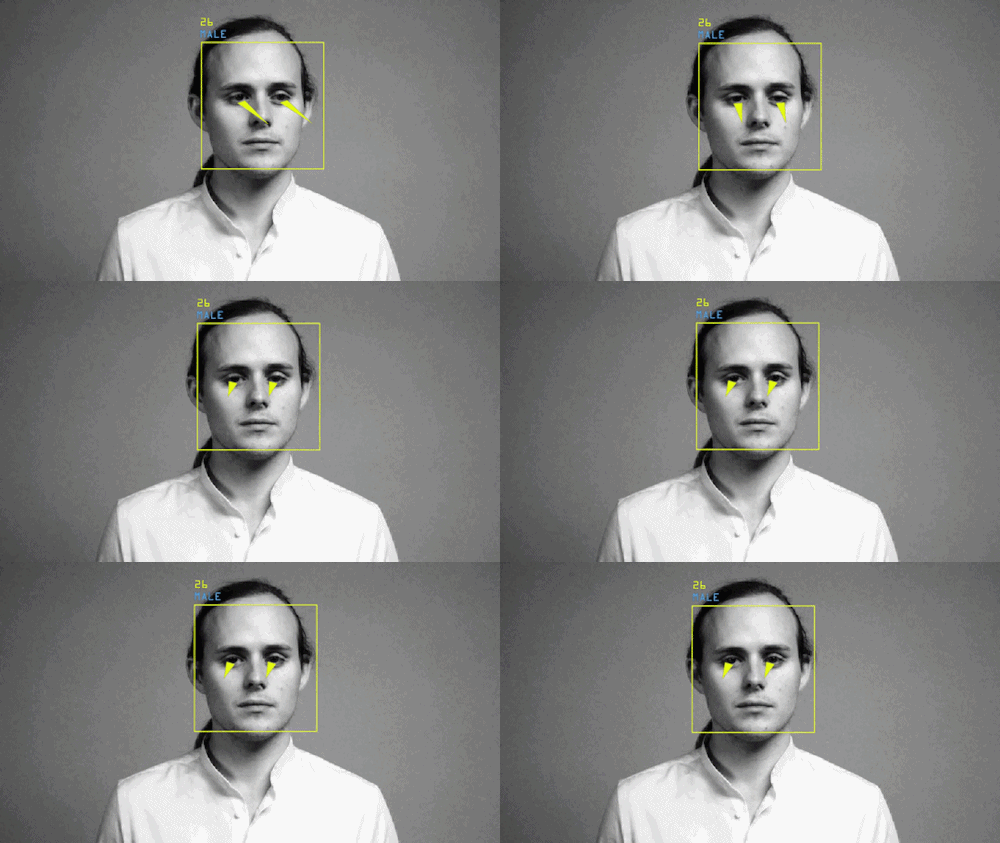
Caress of the GazeFashion tech project by Behnaz Farahi is...


Caress of the Gaze

Fashion tech project by Behnaz Farahi is wearable top which changes form based on gaze of others:

What if our outfit could recognize and respond to the gaze of the other? This is an interactive 3D printed wearable which can detect other people’s gaze and respond accordingly with life-like behavior.

Link

18 Sep 13:10

HORN! REVIEWS: The Handmaid’s Tale

by Kevin Thomas

horn_113_thehandmaidstale

Related Posts:

  • No related posts…
18 Sep 13:10

A Worthy Renovation for the Wadsworth Atheneum’s European Art Galleries

by Benjamin Sutton
The interior of the Wadsworth Atheneum's renovated and rehung Morgan Memorial Building (all photos by the author for Hyperallergic)

The interior of the Wadsworth Atheneum’s renovated and rehung Morgan Great Hall (all photos by the author for Hyperallergic)

HARTFORD, Conn. — The Wadsworth Atheneum‘s fixed-up and rehung Morgan Great Hall, a soaring gallery filled with paintings and sculptures spanning 300 BCE to 1891 CE, reopens to the public Saturday after being closed for six years. The dramatic, salon-style hall is the focal point of the Wadsworth’s two-story Morgan Memorial Building, which first opened in 1910 and houses the museum’s collection of European paintings, sculptures, and decorative objects.

“This was a museum that was essentially crumbling,” the Wadsworth’s director of seven years, Susan L. Talbott, said during a preview of the renovated space on September 11. “In the end we had to shut this entire Morgan Memorial Building space.” Moments later the sound of a drill filled the double-height hall. With another eight days before the public opening, the Wadsworth’s staff were still in the midst of installing works, adding information plaques, and touching up walls. A two-story tower of scaffolding stood in a far corner.

The entrance to the Wadsworth Atheneum's Morgan Great Hall is adorned with the initials of J.P. Morgan.

The entrance to the Wadsworth Atheneum’s Morgan Great Hall is adorned with the initials of J.P. Morgan. (click to enlarge)

The top-to-bottom, $33-million overhaul of the Morgan Memorial Building follows a similarly extensive refurbishing of the museum’s contemporary art galleries, which reopened in January. It has allowed the museum’s curators of European art and European decorative arts — Oliver Tostmann and Linda Roth, respectively — to completely reorganize its galleries and play to the strengths of the institution’s holdings. The small antiquities galleries adjacent to Morgan Great Hall, for instance, have been organized thematically rather than chronologically, with rooms devoted to artifacts used in everyday activities like coins, flasks and jugs; representations of nature in devotional objects from Egyptian cat deities to a gypsum relief of a winged guardian figure from Nimrud; and early Christian and Byzantine art including medieval panels and pilgrimage accessories. In the building’s Renaissance gallery and on its upper floor, Tostmann and Roth have juxtaposed paintings and sculptures with contemporaneous decorative objects to offer a more holistic portrait of each period.

“This project helped me to understand this collection in a new way,” Tostmann, who began working on the Morgan Memorial Building rehang shortly after joining the Wadsworth in 2013, said last week. “You will not find the Raphael, Reubens, or Botticelli you might expect to find, but you will find many unexpected paintings.”

A gallery in the Wadsworth Atheneum's Great Morgan Hall devoted to the French Revolution, with Mather Brown's painting "Louis XVI Saying Farewell to his Family" (ca. 1793) on the left and Élisabeth Louise Vigée Le Brun's "The Duchesse de Polignac Wearing a Straw Hat" (1782) on the right

A gallery in the Wadsworth Atheneum’s Morgan Memorial Building devoted to the French Revolution, with Mather Brown’s painting “Louis XVI Saying Farewell to his Family” (ca. 1793) on the left and Élisabeth Louise Vigée Le Brun’s “The Duchesse de Polignac Wearing a Straw Hat” (1782) on the right (click to enlarge)

One particularly inspired use of such unexpected paintings is a second-floor gallery devoted exclusively to objects created in response to the French Revolution. A portrait of an influential French courtesan by Élisabeth Louise Vigée Le Brun is paired with much larger British and American paintings emphasizing the savagery of the Revolution. Tostmann conceded: “This is a very biased view of the French Revolution, a rather critical view.”

For all its unexpected gems, the Wadsworth’s collection still boasts plenty of stars, and they are out in full force in the refurbished Morgan Memorial Building. On one of the blood-red walls of the early Baroque gallery, for instance, you’ll find works by Caravaggio, Jusepe de Ribera, Artemisia Gentileschi — the recently acquired “Self-Portrait as a Lute Player” (ca 1615–18), on view for the first time — and her father Orazio Gentileschi. In the gallery devoted to late 19th-century works, a startling Vincent van Gogh self-portrait from around 1887 hangs between a Paul Cézanne landscape painting and a small, strange portrait of the artist Meyer de Haan by Paul Gauguin, with works by Claude Monet, Édouard Manet, and Henri de Toulouse-Lautrec nearby. Just outside that gallery, quietly installed opposite William Holman Hunt’s hypnotic “The Lady of Shalott” (ca.1890–1905), hangs a surprising early Gustav Klimt, “Two Girls with Oleander” (ca. 1890–92). Such figuratively and actually enormous works abound in even the smallest rooms of the Morgan Memorial Building.

A nautilus snail from Nuremberg, Germany (ca. 1630) in the Wadsworth Atheneum's Cabinet of Art and Curiosities gallery

A nautilus snail from Nuremberg, Germany (ca. 1630) in the Wadsworth Atheneum’s Cabinet of Art and Curiosities gallery (click to enlarge)

For many, however, the renovation’s greatest treat may well turn out to be a big room on the second floor full of tiny objects. The Cabinet of Art and Curiosities gallery has been conceived by Roth and Tostmann as a Wunderkammer for showcasing the Wadsworth’s exceptional holdings of enigmatic artifacts, scientific relics, ornate decorative objects, and artworks about collecting such things — many of them originally from the collection of J. Pierpont Morgan.

Arranged on the walls, in glass display cabinets, atop pedestals, and in drawers, the objects range from a sea turtle shell and exotic coral to fragments of Roman and Egyptian statues and a 17th-century clock topped with a pacing mechanical lion. Four touchscreen displays at the center of the room let visitors amass virtual collections culled from the objects on view, arrange them in a Wunderkammer of their choosing, and then give them a period-appropriate character profile based on their collection.

Ultimately, the renovation’s overarching tone is one of reverence. The curators have played to their collections’ strengths, placing their star artworks and objects alongside unfamiliar — or, to use Tostmann’s word of choice, “quirky” — pieces by familiar artists. At the same time, they have taken risks with inventive decisions like mixing decorative objects with painting and sculpture, the French Revolution room, and the playful Wunderkammer installation. All their risks have paid off. New Yorkers, Bostonians, and art lovers from even further afield: it’s time to make a pilgrimage to the Wadsworth.

Installation view of the Wadsworth Atheneum's renovated and rehung Morgan Memorial Building, with Giovanni Paolo Panini's "The Picture Gallery of Cardinal Silvio Valenti Gonzaga" (1749) at center

Installation view of the Wadsworth Atheneum’s renovated and rehung Morgan Great Hall, with Giovanni Paolo Panini’s “The Picture Gallery of Cardinal Silvio Valenti Gonzaga” (1749) at center (click to enlarge)

Installation view of the Wadsworth Atheneum's renovated and rehung Morgan Memorial Building

Installation view of the Wadsworth Atheneum’s renovated and rehung Morgan Great Hall (click to enlarge)

Henri Paul Motte, "The Trojan Horse" (1874) in the Wadsworth Atheneum's Morgan Great Hall

Henri Paul Motte, “The Trojan Horse” (1874) in the Wadsworth Atheneum’s Morgan Great Hall

Orazio Riminaldi, "Daedalus and Icarus" (ca. 1625) in the Wadsworth Atheneum's Great Morgan Hall

Orazio Riminaldi, “Daedalus and Icarus” (ca. 1625) in the Wadsworth Atheneum’s Morgan Great Hall

A bronze statue of a cat from Egypt's Ptolemaic period (3rd–1st century BCE) in one of Morgan Great Hall's new antiquities galleries

A bronze statue of a cat from Egypt’s Ptolemaic period (3rd–1st century BCE) in one of Morgan Great Hall’s new antiquities galleries (click to enlarge)

The cat statue has been installed so as to face off with the upper part of the figure of Sakhmet dating from the New Kingdom, 18th dynasty, during the reign of Amenhotep II (ca. 1390–1352 BCE) in one of Morgan Great Hall's new antiquities galleries

The cat statue has been installed so as to face off with the upper part of the figure of Sakhmet dating from the New Kingdom, 18th dynasty, during the reign of Amenhotep II (ca. 1390–1352 BCE) in one of Morgan Great Hall’s new antiquities galleries

A limestone sculpture of the head of a woman from Palmyra, Syria (ca. 150 BCE) in one of Morgan Great Hall's new antiquities galleries

A limestone sculpture of the head of a woman from Palmyra, Syria (ca. 150 BCE) in one of Morgan Great Hall’s new antiquities galleries

Paintings and decorative arts objects in the Wadsworth Atheneum's renovated Renaissance gallery

Paintings and decorative arts objects in the Wadsworth Atheneum’s renovated Renaissance gallery (click to enlarge)

Hans Mielich's "Outdoor Banquet" (1548) in the Wadsworth Atheneum's renovated Renaissance gallery

Hans Mielich’s “Outdoor Banquet” (1548) in the Wadsworth Atheneum’s renovated Renaissance gallery (click to enlarge)

Trompe l'oeil detail of Hans Mielich's "Outdoor Banquet" (1548)

Trompe l’oeil detail of Hans Mielich’s “Outdoor Banquet” (1548) (click to enlarge)

The entrance to the Wadsworth Atheneum's Great Morgan Hall with part of Sol LeWitt's "Wall Drawing #1131, Whirls and Twirls (Wadsworth)" (2004)

The entrance to the Wadsworth Atheneum’s Morgan Great Hall with part of Sol LeWitt’s “Wall Drawing #1131, Whirls and Twirls (Wadsworth)” (2004)

The The Cabinet of Art and Curiosities gallery, mid-installation, in the Wadsworth Atheneum's renovated Great Morgan Hall

The Cabinet of Art and Curiosities gallery, mid-installation, in the Wadsworth Atheneum’s renovated Morgan Memorial Building

An interactive, build-your-own-cabinet of curiosities touch-screen in the Wadsworth Atheneum's Cabinet of Art and Curiosities gallery

An interactive, build-your-own-cabinet of curiosities touch-screen in the Wadsworth Atheneum’s Cabinet of Art and Curiosities gallery (click to enlarge)

Installation view of the Wadsworth Atheneum's Cabinet of Art and Curiosities gallery

Installation view of the Wadsworth Atheneum’s Cabinet of Art and Curiosities gallery (click to enlarge)
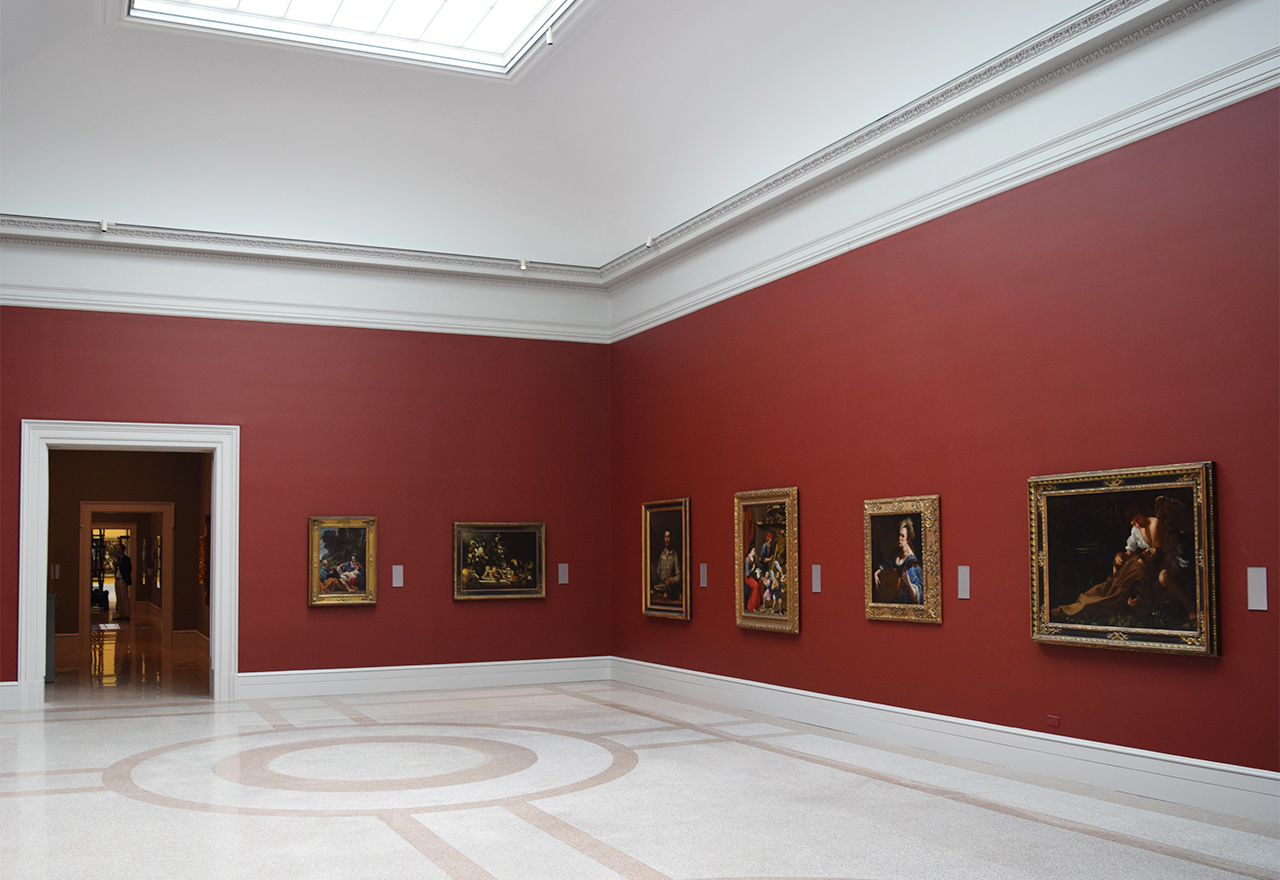
Installation view of the Wadsworth Atheneum's renovated and rehung Renaissance painting gallery

Installation view of the Wadsworth Atheneum’s renovated and rehung Renaissance painting gallery (click to enlarge)

Artemisia Gentileschi's "Self-Portrait as a Lute Player" (ca. 1615–18), on view at the Wadsworth Atheneum for the first time since its acquisition last year.

Artemisia Gentileschi’s “Self-Portrait as a Lute Player” (ca. 1615–18), on view at the Wadsworth Atheneum for the first time since its acquisition last year

The Wadsworth Atheneum's renovated Late Baroque gallery

The Wadsworth Atheneum’s renovated Late Baroque gallery (click to enlarge)

Porcelain figures representing the continents of America (left) and Africa (right) from the Meissen Porcelain Factory (ca. 1760) in the Wadsworth Atheneum's renovated Late Baroque gallery

Porcelain figures representing the continents of America (left) and Africa (right) from the Meissen Porcelain Factory (ca. 1760) in the Wadsworth Atheneum’s renovated Late Baroque gallery

Gustav Klimt, "Two Girls with Oleander" (ca. 1890–92) on the second floor of the Wadsworth Atheneum's Great Morgan Hall

Gustav Klimt, “Two Girls with Oleander” (ca. 1890–92) on the second floor of the Wadsworth Atheneum’s Morgan Memorial Building (click to enlarge)
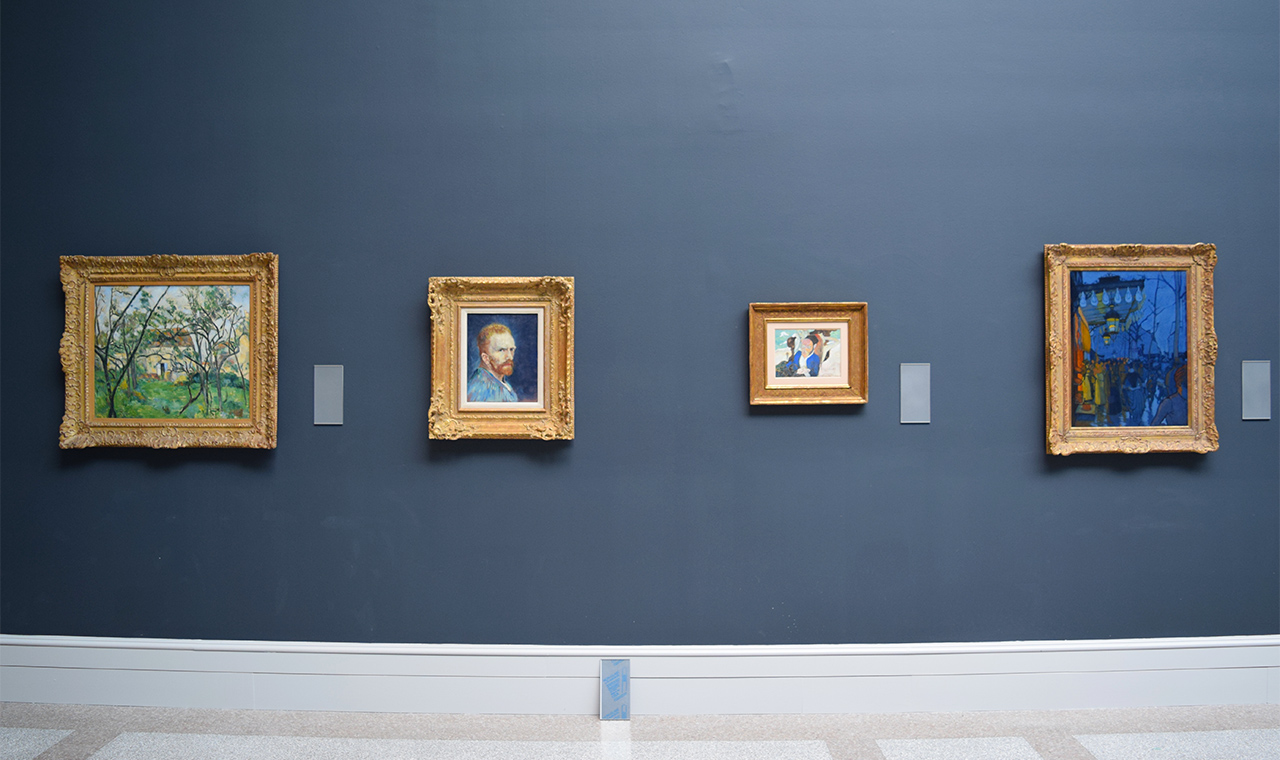
Installation view of the Wadsworth Atheneum's renovated and rehung gallery of late 19th-century art with works (from left to right) by Paul Cézanne, Vincent van Gogh, Paul Gauguin, and TKTKTK

Installation view of the Wadsworth Atheneum’s renovated and rehung gallery of late 19th-century art with works (from left to right) by Paul Cézanne, Vincent van Gogh, Paul Gauguin, and Louis Anquetin (click to enlarge)

Paul Gauguin, "Nirvana: Portrait of Meyer de Haan" (ca. 1889–90) in the Wadsworth Atheneum's renovated late 19th-century art gallery

Paul Gauguin, “Nirvana: Portrait of Meyer de Haan” (ca. 1889–90) in the Wadsworth Atheneum’s renovated late 19th-century art gallery

The façade of the Wadsworth Atheneum with the recently commissioned sculpture "OMG" (2015) by Jack Pierson

The façade of the Wadsworth Atheneum with the recently commissioned sculpture “OMG” (2015) by Jack Pierson (click to enlarge)

The Morgan Memorial Building at the Wadsworth Atheneum (600 Main Street, Hartford, Connecticut) reopens to the public on Saturday, September 19.

18 Sep 11:33

Sum of the Arts

by Allison Meier
Man Ray, "Seguidilla" (1919), airbrushed gouache, pen & ink, pencil, and colored pencil on paperboard (via Hirshhorn Museum and Sculpture Garden/Wikimedia)

Man Ray, “Seguidilla” (1919), airbrushed gouache, pen & ink, pencil, and colored pencil on paperboard (via Hirshhorn Museum and Sculpture Garden/Wikimedia)

Sum of the Arts is a periodic tabulation of numbers floating around the art world and beyond.

  • Number of works by Man Ray stored in a Long Island auto body shop managed by his nephews = 4,500
  • Number of times a 1908 Igor Stravinsky dirge was performed before its rediscovery this year at the St. Petersburg Conservatory = 1
  • Number of minutes you would save if one 17-mile stretch of London’s Tube (aka subway) were replaced with moving sidewalks instead of trains = 5
  • Millimeters in diameter of a videoscope the Getty Museum used to look inside a 17th-century French bronze sculpture = 6
  • Number of months a Pennsylvania priest spent building a Lego model of St. Peter’s Basilica, which is currently on view at Philadelphia’s Franklin Institute in honor of the Papal visit = 10
  • Length of text and drawings (in feet) on the recently identified oldest and longest ancient Egyptian manuscript = 16.4
  • Number of lost baseball hats found while deinstalling the Snarkitecture-designed ball pit at the National Building Museum in Washington, DC = 32
  • Number of galleries in the Lower East Side Business Improvement District, compared to 63 in 2010 = 124
  • Number of carats the supposedly cursed Koh-i-Noor diamond started at before some shoddy gem cutting = 800
  • Estimated number of rabbits killed to bind the 1946 first edition of Margaret Wise Brown’s children’s book, Little Fur Family, in fur = 15,000
18 Sep 08:30

theunbrilliant: The first-known written description of a skunk by a Jesuit missionary in 1634 is my...

theunbrilliant:

The first-known written description of a skunk by a Jesuit missionary in 1634 is my very favorite thing. 

The other is a low animal, about the size of a little dog or cat. I mention it here, not on account of its excellence, but to make of it a symbol of sin. I have seen three or four of them. It has black fur, quite beautiful and shining; and has upon its back two perfectly white stripes, which join near the neck and tail, making an oval which adds greatly to their grace. The tail is bushy and well furnished with hair, like the tail of a Fox; it carries it curled back like that of a Squirrel. It is more white than black; and, at the first glance, you would say, especially when it walks, that it ought to be called Jupiter’s little dog. But it is so stinking, and casts so foul an odor, that it is unworthy of being called the dog of Pluto. No sewer ever smelled so bad. I would not have believed it if I had not smelled it myself. Your heart almost fails you when you approach the animal; two have been killed in our court, and several days afterward there was such a dreadful odor throughout our house that we could not endure it. I believe the sin smelled by Saint Catherine de Sienne must have had the same vile odor.  

18 Sep 08:30

Photo


18 Sep 08:29

The (Final?) Cost of Ben Radford’s Libel Bullying: About $5K

by Rebecca Watson

The story thus far: skeptical writer Karen Stollznow accused deputy editor of Skeptical Inquirer magazine Ben Radford of sexual harassment. I reported on that. Radford sued Stollznow for defamation. I reported on that. Before the case went to court, Stollznow apparently signed a retraction. I reported on that. Radford threatened to sue me for my reporting. I reported on that, while hiring a lawyer to protect myself and starting a fundraiser to cover the costs of that lawyer. Radford then seemed to change his mind about suing me.

Though Radford may still change his mind again and decide to sue me, I’ve closed the fundraiser and collected the funds. The total funds raised were $9,606. After 3% + $0.30 per transaction payment processing fees totaling $356.58, the final sum was $9,249.42. Thank you so much to everyone who donated. You made this process so much less stressful than it could have been, for reasons I’ll now briefly detail.

So much of the process of hiring lawyers to battle one another is shrouded in secrecy, which I believe is mostly due to lawyers (rightly) trying to protect their client from any kind of lawsuit. Lawyers know that you can get sued for pretty much anything, even if you’re in the right, and so I believe that they’re generally very cautious about what they recommend you talk about publicly.

Still, I think there’s a huge public interest in understanding exactly why libel threats are so often successful at censoring speech. In my experience, it comes down to two reasons: the enormous potential cost (both financial and psychological) of going to court, and the slightly lower enormous actual cost (both financial and psychological) of what happens before you even get to a courtroom.

You can probably try to imagine the psychological costs, if you’re familiar with great amounts of stress over financial issues. Lack of sleep, upset stomachs, lost hours staring at walls, and generally being no fun at parties are the primary results of stress for me. “Hey Rebecca, what are you up to these days?” “GIVING A LAWYER ALL MY MONEY WHY DO YOU ASK???”

You’re probably less familiar with what the actual financials are in a case like this. I know this is true thanks to the many people (well-meaning friends included) who informed me that one can consult with a lawyer for free, and just getting them to respond to a cease and desist shouldn’t be very expensive. If you take nothing else from this post, take this: if you have no idea what you’re talking about when it comes to legal issues like this, don’t offer “friendly” advice. You’re just going to make the aforementioned psychological cost that much worse.

My lawyer has sent me what we both hope will be his final bill for this matter, assuming that Radford doesn’t move forward on his initial threats.

The bill totaled $4,984.22.

It came with a very helpful itemized list showing every minute my lawyer worked on this case, which amounted to quite a few hours of work. And remember: this is for a case that never went to court, and hasn’t actually resulted in a filing (yet). Also, I’ll say that my lawyer was very, very kind when it came to the final tally of hours worked.

A large part of that cost was due to the initial vagueness of Radford’s threat, and our repeated attempts to gain any kind of understanding of what exactly he felt was libelous and what actions he wanted me to take. There were several letters sent to Radford’s attorneys and even an in-person meeting, none of which resulted in any satisfying answers, which is the point at which I went public.

Another detail to note is that to hire my lawyer, I needed to come up with a retainer of several thousand dollars. I couldn’t go public at that point, so I needed to use credit cards to do it and hope that I could come up with the money later (which I did, thanks to many of you who donated).

Again, I’m detailing all this publicly so that you truly understand the enormous cost of protecting speech and that you bear it in mind the next time you hear someone make threats to sue for defamation.

After deducting the cost of my legal fees, I’ll be left with $4,265.20 from the fundraiser. I’ll have to pay taxes on the full $9,249.42 that I collected, which I estimate to be $2,312.36 for federal and $739.95 for state, so $3,052.31 total. Yikes.

Still, that leaves a total of $1,212.89 that I’ll have leftover to donate as soon as I get a solid indication that Radford has left me alone for good. As I mentioned previously, all leftover money will go to either anyone else Radford has threatened or the EFF. I’ll post an update once I’m able to do that.

Once again, thank you to everyone who donated and who offered their support. Special thanks to Ken (@Popehat) for helping me find the best libel defense lawyer in New Mexico and for giving me that sweet, sweet free advice I’ve heard so much about, even though that free advice did amount to “hire a lawyer immediately.”

18 Sep 08:29

Saturday Morning Breakfast Cereal - Springtime

by admin@smbc-comics.com

Hovertext: EAT MY HEAD OFF WHILE MY TORSO HAS SEX WITH YOU


New comic!
Today's News:

Only 12 tickets are left for BAHFest East as of 10am this morning. I'm gonna try to open up a few more if we can! If you missed out, stay tuned. 

18 Sep 08:28

Tech Loops

And when I think about it, a lot of "things I want to do" are just learning about and discussing new tools for tinkering with the chain.
17 Sep 13:05

Wish me luck, here goes nothing.

by Sophia, NOT Loren!

Tomorrow (it’s not “tomorrow” until I’ve slept and awakened again, I don’t care what you say, even if it is just over 12 hours from now) evening at 6pm I have an appointment to meet someone who’s renting a room.  A real person who responded to one of my “housing wanted” ads on craigslist, who might — potentially — have a place for me to call home.

I’m working to keep my expectations in check; I know that my tendency when faced with a positive upcoming situation is to get blinded by the “new carpet smell,” if you’ll follow me through my mixed metaphors here, to only notice the awesome stuff and to minimize the bad things. I’ve ended up in more than a couple situations that really turned out shitty because of that — and I want… I need for the next place I move to be a long-term home, not something that’s going to fall apart because I was so full of NRE (of a sort) with the place I was checking out that I ignored anything that wasn’t “THIS IS MY PERFECT FOREVER HOME!!!!11one!!” I’m going into this knowing that the address is on somewhat of a main thoroughfare, which has the potential to mean lots of noise. I’m reminding myself of the things I need to bring up as interview questions — a moderate list of things that I’ve learned (mostly the hard way) that are important to me in sharing a living space.

And — for me, this is the most critical thing — when this little meeting is done, my last question will be “Can I get back to you in a day or two with my answer?” If there’s hesitation, or a push to get me to answer on the spot, I call things off. I know that I cannot make a rational decision in that moment, and I won’t try to do so. And if this is someone who I’m going to be living with for several years, then she sure as fuck better be able to handle “I’d love to discuss this, as soon as I am able to take the space I need to process things… and the more you push me to engage right now, the worse the outcome will be.”  Shit, that’s basically what destroyed MFP and I as a couple — she needed to immediately engage when she felt something was wrong (and to continue to engage until she was satisfied with the outcome,) and I needed to take enough space from the situation when something was wrong to be able to sort out my own thoughts and feelings about what was happening and how to proceed. You can imagine that this… didn’t work very well. So, if I’m going to live with someone for that long, I need that to be someone who can handle giving me the space to make decisions, especially ones as significant as making a home.

Anyway, I should be sleeping… so here goes nothing.


Filed under: General
17 Sep 13:01

3 dancers and 24 dronesDemonstration of work by Japanese tech...


3 dancers and 24 drones

Demonstration of work by Japanese tech art dance group ELEVENPLAY and Rhizomatiks of proof-of-concept performance with dancers and drones

Artistic direction and Choreograph: MIKIKO(ELEVENPLAY)
Music: Setsuya Kurotaki(Rhizomatiks)
Dancer: SAYA SHINOHARA, YUKA NUMATA and ERISA WAKISAKA(ELEVENPLAY)
Artistic direction and drone + light programming:
Daito Manabe (Rhizomatiks)
Light drone design and development : Motoi Ishibashi, Tomoaki Yanagisawa, Momoko Nishimoto
Light drone development : Tomoaki Yanagisawa, Youichi Sakamoto, Katsuhiko Harada
Support: Rhizomatiks and ELEVENPLAY

Link

H/T: gergokovacs

Previously on PK

17 Sep 12:02

Dan Weiss’s Morning Coffee

by Dan Weiss

Life in California gets bleaker everyday: now we’re running out of pistachios.

On the evolution of city hall architecture.

Daffodil revenge is the meanest revenge.

Meanwhile: the robots have taken over deep sea exploration too.

Did we make dogs lazy thinkers? (spoiler alert: inconclusive!)


Related Posts:

  • No related posts…
17 Sep 12:02

11 Things that Are Surprisingly NOT Running for President

by Jack Sjogren

JackSjogren-notpresident

17 Sep 12:02

THE BINS: Electable

by Lucas Adams
17 Sep 12:02

RT @Vinncent: sometimes people on Facebook say stuff that is actually really good...

by Pai Osias
800px-Coturnix_coturnix_eggs_normal.jpg
Author: Pai Osias
Source: Mobile Web (M2)
RT @Vinncent: sometimes people on Facebook say stuff that is actually really good http://t.co/74d6XB6KfW
CPEpcPQUAAAiJw1.png:large
17 Sep 12:02

Photo


17 Sep 10:02

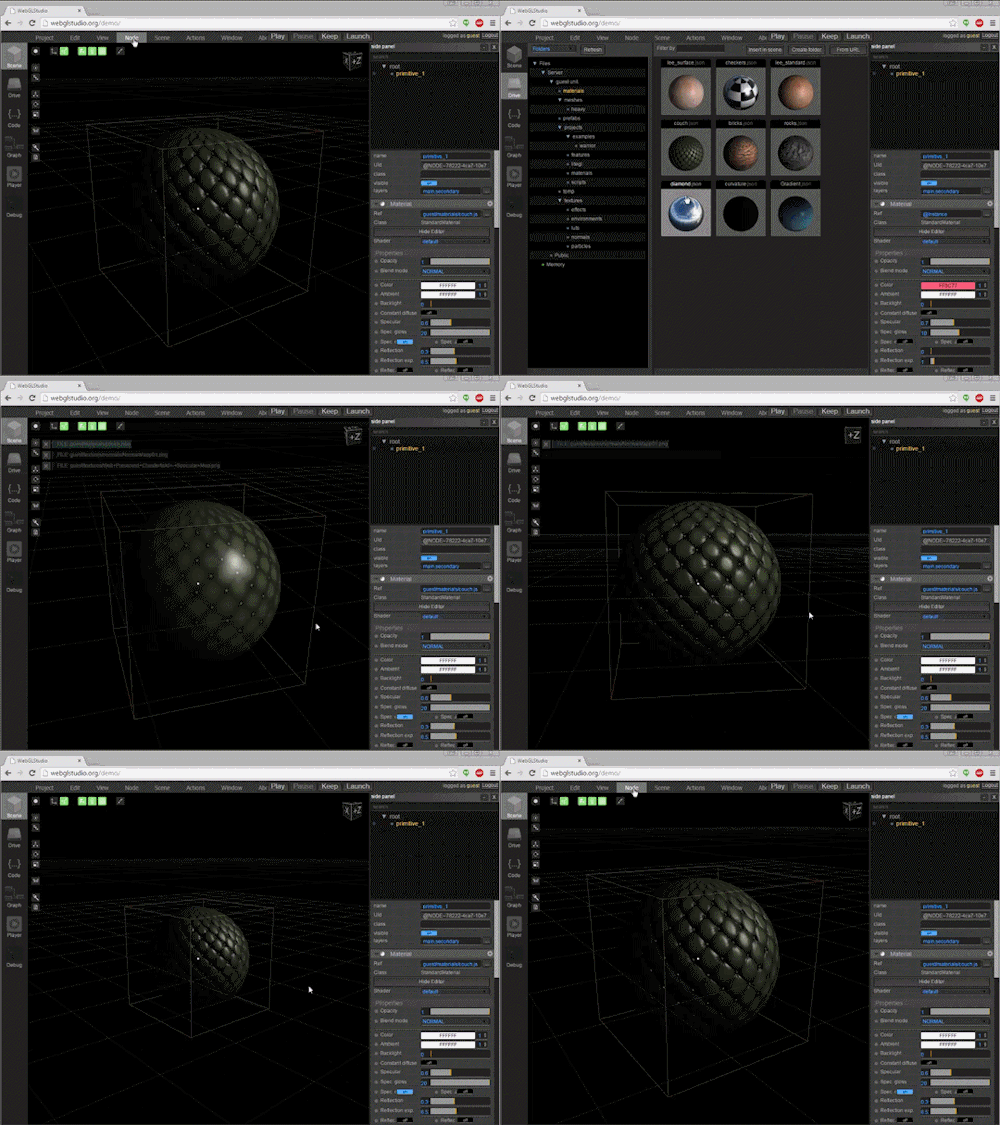
WebGLStudio.jsWeb-based app allows you to create interactive 3D...


WebGLStudio.js

Web-based app allows you to create interactive 3D graphics within your browser:

WebGLStudio.js is a platform to create interactive 3D scenes directly from the browser.
It allows to edit the scene visually, code your behaviours, edit the shaders, and all directly from within the app.

More Here

17 Sep 10:01

23 Must-Follow Feeds in the World of Design

23 Must-Follow Feeds in the World of Design:

Prosthetic Knowledge | Tumblr

An enriching and scrollable journey through the most intriguing art and technology projects on the web, shown mostly as hypnotic GIFs. Be warned, this feed is highly addictive.

Thanks wired!

17 Sep 10:01

Banksy and Sarcasm

by Stephanie Bento

How wonderful it must feel to go to “Dismaland” and see through society! But how awful to see society embrace art that makes you feel nothing, that makes you think only about the vast chasm between you and everyone else.

In an essay in the New York Times Magazine, Dan Brooks writes about street artist Banksy, kitsch, and the zeitgeist of our times.

Related Posts:

17 Sep 10:01

Performance Hazards, Odd Objects, and More Insights from #AskACurator Day

by Allison Meier
Anthropologist Albert Ernest Jenks, who created the Department of Anthropology at the University of Minnesota in 1918 (via Smithsonian Institution/Flickr)

Anthropologist Albert Ernest Jenks, who created the Department of Anthropology at the University of Minnesota in 1918 (via Smithsonian Institution/Flickr)

Today is the 2015 edition of Ask a Curator day. According to coordinator Mar Dixon, 1,072 museums in 51 countries are participating. While those whose time zones have now gone into night have dropped out, some institutions are still tweeting answers to questions from the public with the hashtag #AskACurator.

It’s always an interesting opportunity to pose some questions about museums and their collections. For example, I was long curious if the 1920s glass casket at the Corning Museum of Glass was ever on view. I tweeted my question, and Senior Curator Tina Oldknow quickly responded that it was not, but it was featured on NPR’s Hidden Treasures in Museums and in the subsequent book written by Harriet Baskas.

Here are a few other highlights from #AskACurator queries, revealing overlooked objects, museum trivia, and challenges in preservation.


Some questions are pretty sharp and reveal the curators’ specialized knowledge. In response to the question: “Is there a work in the collection that best encapsulates crossover between Egyptian and Classical culture to you?” Phoebe Segal, assistant curator of Greek and Roman Art at the MFA Boston, shared this Greek “Torso of a Youth” based on an Egyptian work.

(screenshot via Twitter)

(screenshot via Twitter)


And here is an unexpected object from the Smithsonian Institution’s National Air and Space Museum in response to the question: “Do you any [sic] presidential aircrafts/items in your collections?”

(screenshot via Twitter)

(screenshot via Twitter)


Likewise, this unexpectedly morbid (but fascinating) response by the History, Art & Archives of the US House of Representatives to the question of if they had a favorite item related to John Quincy Adams:

(screenshot via Twitter)

(screenshot via Twitter)


Other questions relate to the process of preservation and conservation, which can be especially challenging if your focus is in-situ art. Elizabeth Galvin, curator of the African rock art project at the British Museum, answered the question: “What are the most challenging aspects of the project?”

(screenshot via Twitter)

(screenshot via Twitter)


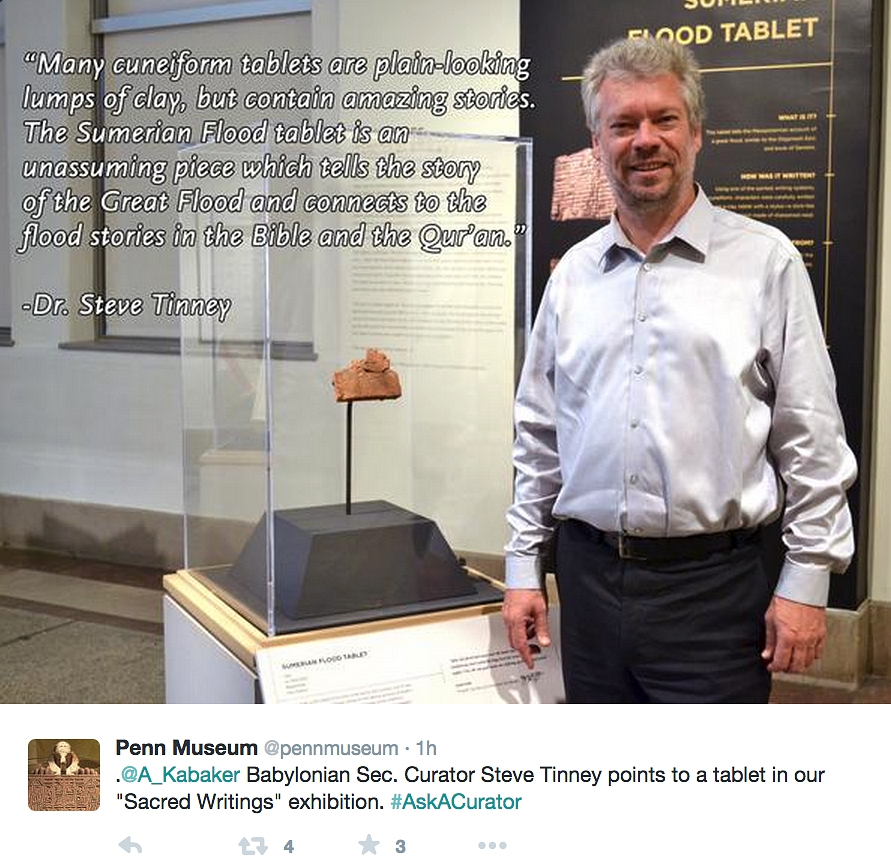
Curators also have to recognize the value in things that might seem mundane. Dr. Steve Tinney at the University of Pennsylvania Museum of Archaeology and Anthropology answered the question: “Any examples of a plain-looking or everyday object with an extraordinary or exciting back story?”

(screenshot via Twitter)

(screenshot via Twitter)


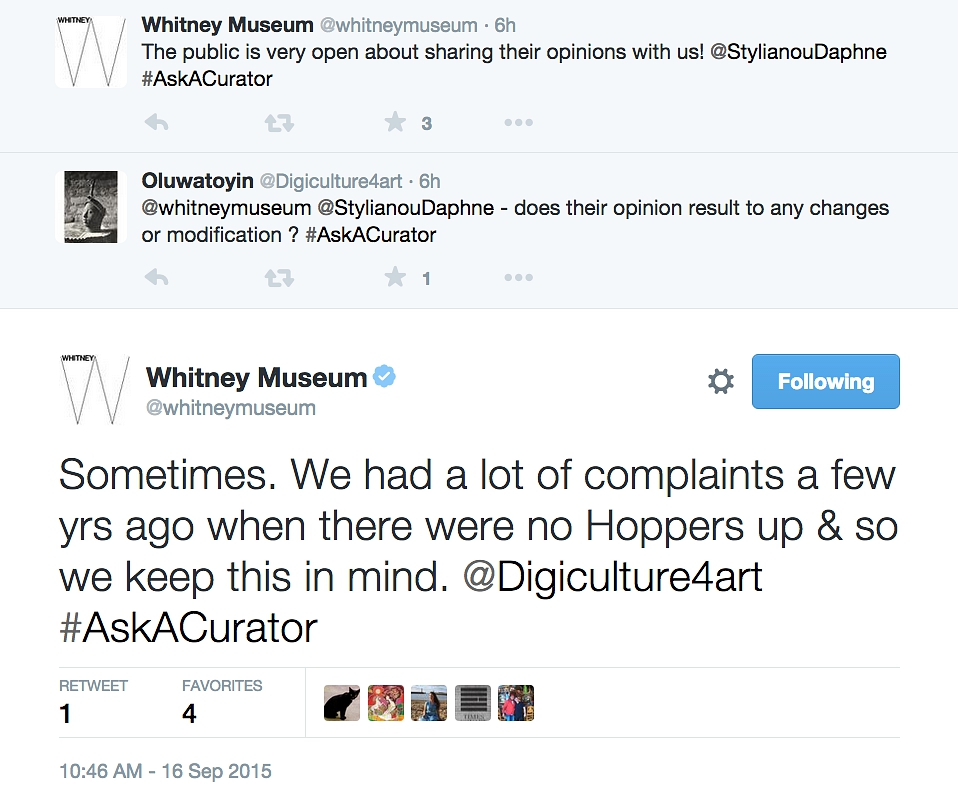
How much do audience opinions actually impact curation? The Whitney Museum shared that people were none too pleased when no Edward Hopper pieces were on view, something the museum has kept in mind.

(screenshot via Twitter)

(screenshot via Twitter)


And there are the hazards of performance art, as with this incident designed by Albert Serra to cleanse the auditorium before his film screenings:

(screenshot via Twitter)

(screenshot via Twitter)


Museums are also using the opportunity to share some odd objects, like this goliath book at the Fred W. Smith National Library for the Study of George Washington at Mount Vernon. The library added that the huge book is the surely riveting 1939 Burke’s genealogical and heraldic history of the landed gentry….

(screenshot via Twitter)

(screenshot via Twitter)


And this from the National Museum of American History:

(screenshot via Twitter)

(screenshot via Twitter)


And some quieter works that go overlooked, such as these examples from the Metropolitan Museum of Art:

(screenshot via Twitter)

(screenshot via Twitter)


As well as some personally precious objects, the kinds of things curators come across in their collections but don’t often go on view, like this from Julian Harrison, curator of early modern manuscripts at the British Library:

(screenshot via Twitter)

(screenshot via Twitter)

#AskACurator Day 2015 continues on Twitter through midnight on September 16.

17 Sep 10:01

The Weird, Wide World of an Internet Flea Market

by Jillian Steinhauer
Seen at the Internet Yami-Ichi in New York (photo by Claire Voon)

Seen at the Internet Yami-Ichi in New York (photo by Claire Voon)

The signs, printed in black and white and taped to the poles supporting a camping tent, advertised: “Rinzo Shimizu Gazing.” Pay just $1 and you could “gaze at Rinzo Shimizu (my dad), sleeping in Tokyo, in real-time, as much as you want.” Credit cards accepted, thanks to Square. The son and seller, Qanta Shimizu — who wore thick glasses and an oversized T-shirt from NYU Langone Medical Center, the kind you can imagine getting for free — paced in front of the tent and checked his phone in between grateful acceptances of the bills of curious visitors. As he did so, he sometimes disclaimed, “It’s really boring, actually.” People shrugged and entered anyway.

Can the internet exist away from the keyboard (AFK)? What does it look and feel and smell and sound and taste like (besides a screen)? Is it sitting inside a tent in a factory-turned-arts-space in New York City, watching a man sleep in his home in Tokyo via a live feed? Hell if I know.

The Internet Yami-Ichi at the Knockdown Center (all photos by the author for Hyperallergic unless otherwise noted)

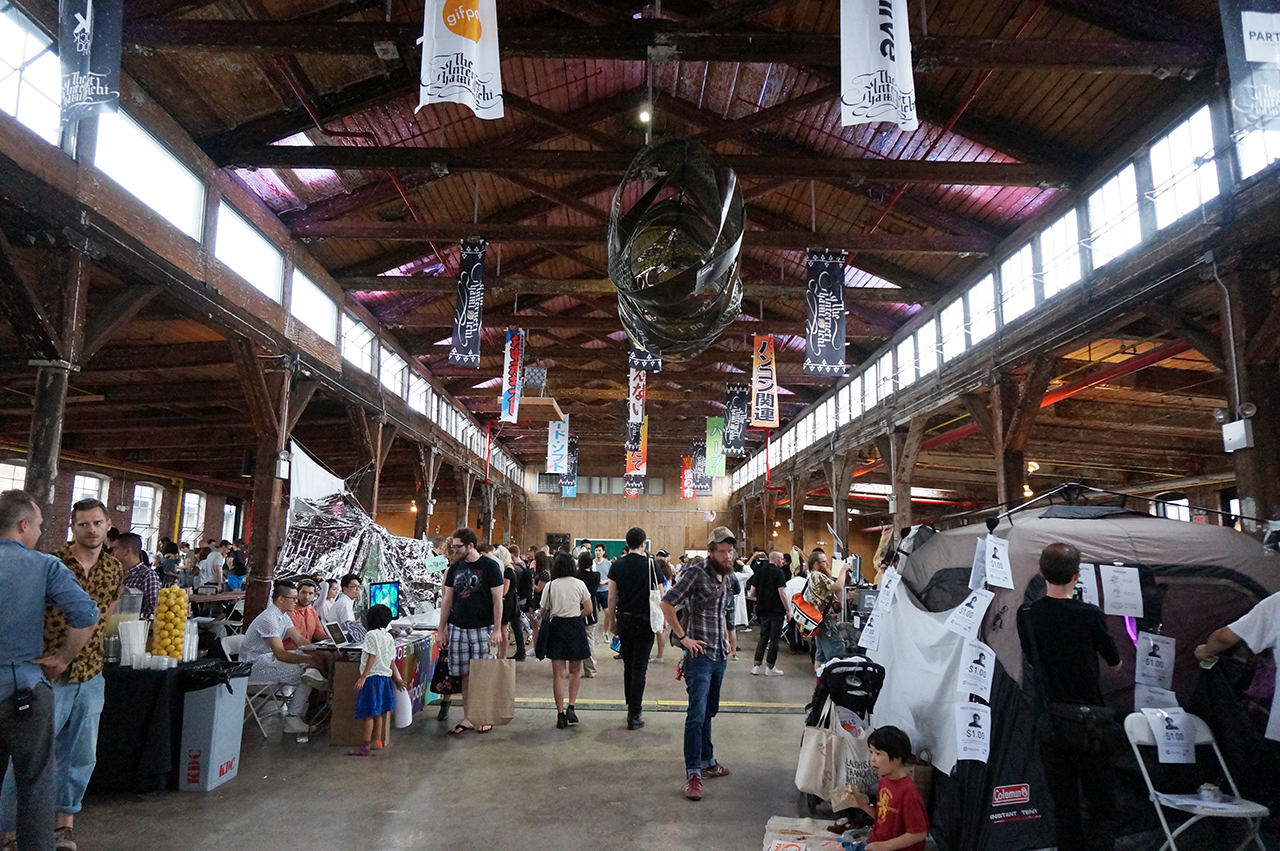
The Internet Yami-Ichi at the Knockdown Center, with Qanta Shimizu’s tent at right (all photos by the author for Hyperallergic unless otherwise noted) (click to enlarge)

These were the questions raised — both intentionally and not — by the Internet Yami-Ichi, a “free to attend ‘Internet-ish’ flea market” that took place at the Knockdown Center last Saturday. Organized by the artist exonemo, the collective/secret society IDPW.org, the curator Chris Romero, and art management service Eri Takane, the event was the first US edition of the Internet Yami-Ichi, originally founded by IDPW.org in Tokyo three years ago. It featured more than 100 vendors (the largest one yet), who filled the cavernous former door factory in Maspeth, Queens, with artworks, stickers, temporary tattoos, performances, prescriptions, books, zines, clothing, canned meat, customized virtual reality experiences, and a bewildering array of things in between.

The Human Printer

The Human Printer at work (click to enlarge)

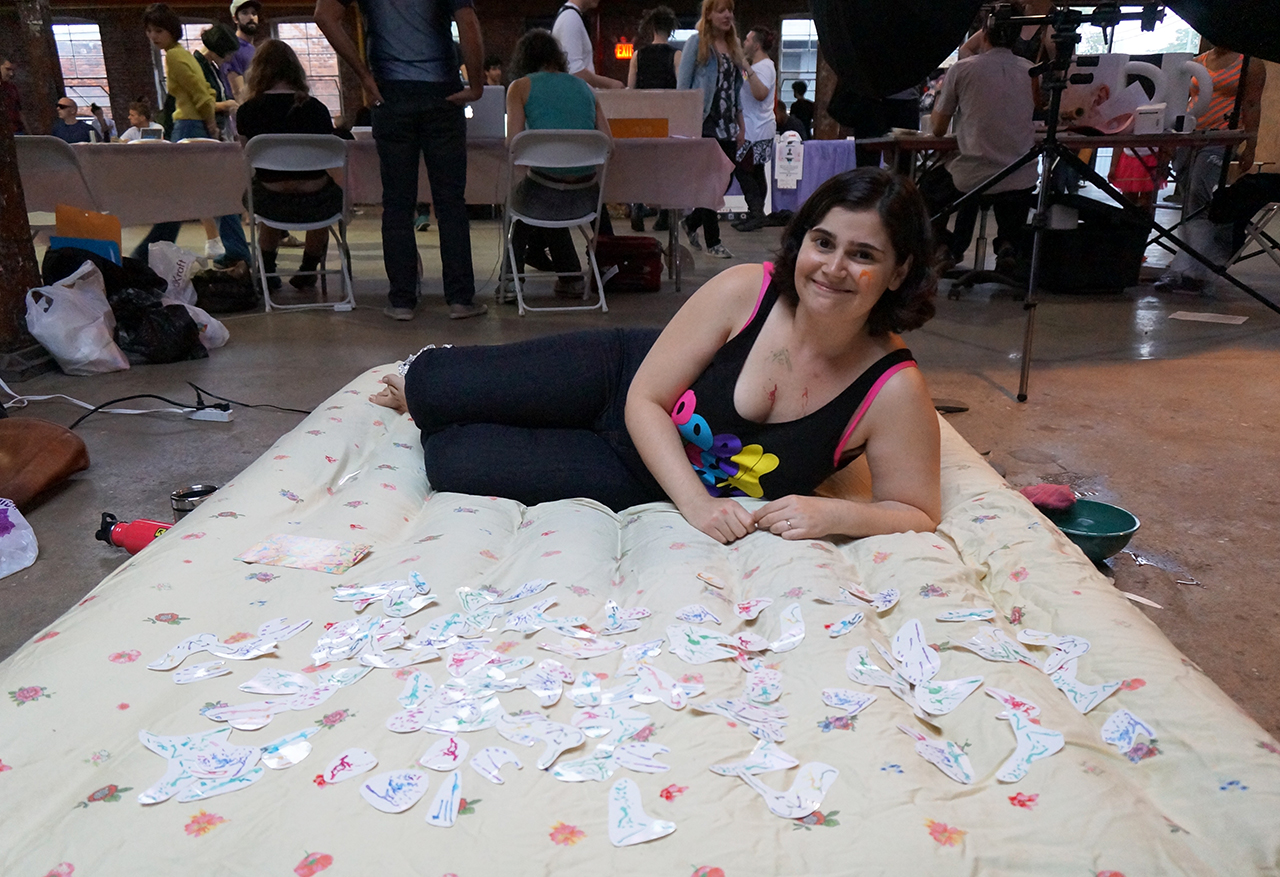
How, for instance, does one classify the “Internet Panties” on sale at Annie Malamet and Darla Bell’s table — colorful, lacy pairs of underwear (and one bathing suit) that Malamet “wore for long stretches of time on the internet,” as she put it? Keeping confident watch over a table filled with her own undergarments, she explained the pricing matter-of-factly: “The more depressed I was, the more time I spent switching between apps and falling asleep in bed, the more expensive” (range: $10–30). Not far from Malamet, you could pay $1 to have your portrait drawn by two men who call themselves The Human Printer; trade $2 to send a piece of actual, greasy spam in the mail ($3 for international); shell out $5 for a bare bones flipbook of “a Japanese business bachelor’s lunch & dinner Instagram” (the cover of which inexplicably featured P. Diddy); or drop $75 on a surprisingly gorgeous scarf patterned after an “infamous” computer virus, by Glitchhaus. Qanta Shimizu’s tent was also nearby.

Annie Malamet with her "Internet Panties"

Annie Malamet with her “Internet Panties”

Literal spam mail

Literal spam mail

“I just wanted to commercialize my dad,” explained Shimizu, a founder of the creative agency Party, whose adjacent table featured one of the market’s likely most-Instagrammed attractions: a hamster selfie wheel. Shimizu said he’d shown at a previous Internet Yami-Ichi in Tokyo — where visitors could pay to have a conversation with his dad — and found it “a very limited thing, too limited to a specific culture.” New Yorkers, he said, “recognize diversity and are accepting. It’s easy to make this kind of work here.”

Inside the tent with Michael Sharff's "Music for 'Music for Airports'" (click to enlarge)

Inside the tent with Michael Sharff’s “Music for ‘Music for Airports'” (click to enlarge)

It’s unclear what tents have to do with the internet, but Shimizu was not alone in bringing one to the Knockdown. Artist Michael Sarff — who comprises one half of early net art duo MTAA and who enthusiastically described the Internet Yami-Ichi as “a bad, crappy swapmeet for this culture” — had pitched a tent too. He used it to house his riff on Brian Eno’s Music for Airports, “Music for Music for Airports,” and for no money at all, you could go inside, sit on a space blanket, and absorb Sarff’s mesmerizing, live virtual navigation of a series of airports while listening to Eno’s album on YouTube (and pushing it through a “bad effects pedal”). The price for taking it home, on the other hand, was high: $800, by my unofficial research the most expensive item at the market (the hamster selfie wheel was $200).

Faith Holland with her cum-shot tattoos

Faith Holland with her cum-shot tattoos (click to enlarge)

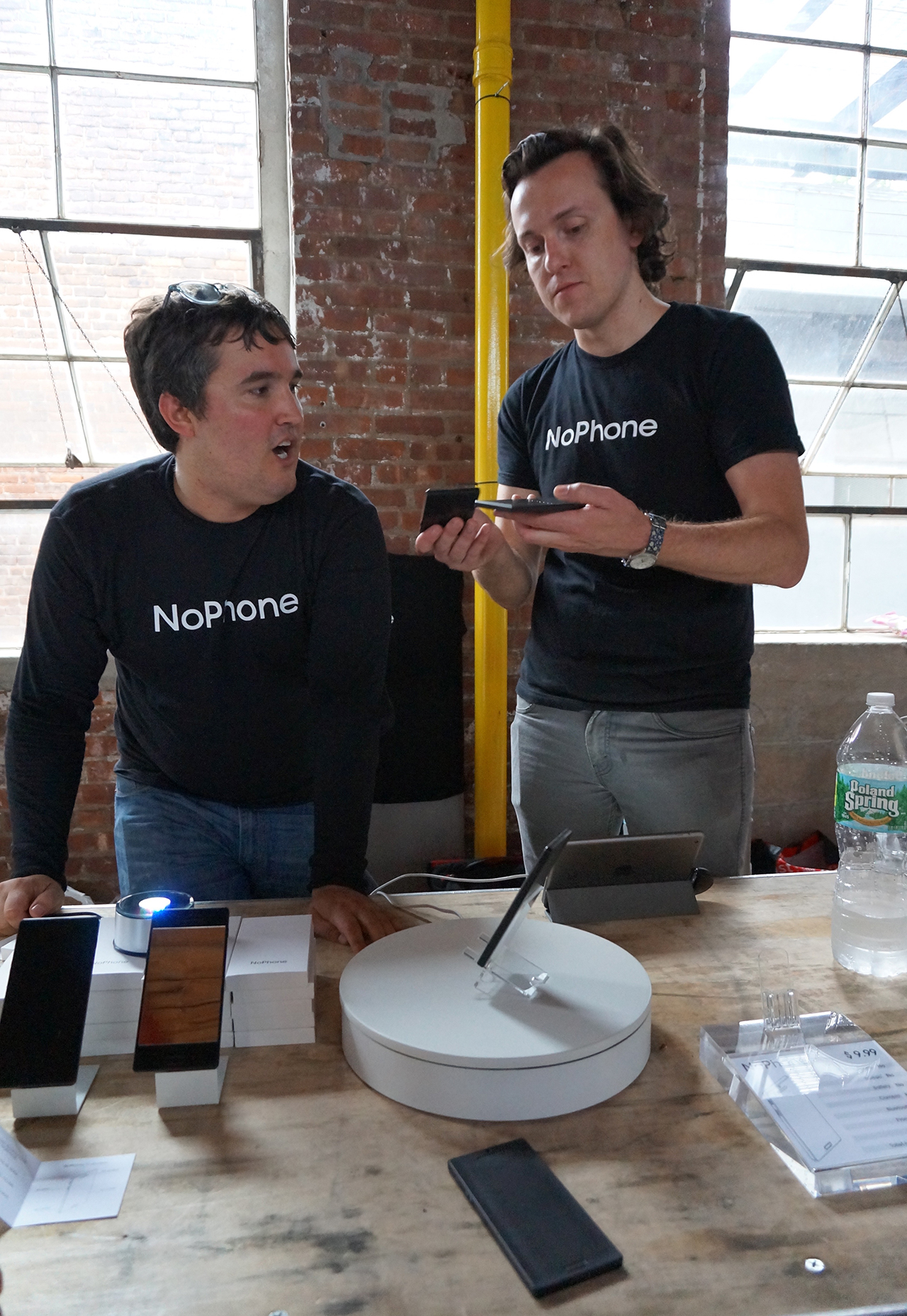
There were a handful of other similarly serious art projects, including a stock photo database being built by the duo Malaxa that features exclusively images of people of color. Most others, however, relished playfulness (Faith Holland’s temporary tattoos of softly colorized cum shots, $3) or took such a deadpan approach to their own absurdity that they inspired a mini existential crisis: There is brilliance in the idea of the NoPhone, a plastic rectangle that’s roughly the size of an iPhone and does nothing. But is that idea worth $9.99?

The NoPhone guys

The NoPhone guys

In general, vendors seemed less interested in selling things and more focused on engaging people, trading on the ease of parting with one or a few dollars for something that sounds neat or funny — a kind of AFK equivalent of Kickstarter. Interestingly, the end goal of these interactions was not necessarily objects (though they were often included) but the experience itself. So, for example, for $2 you could buy a keychain with a mundane image that artist Sessa Englund had posted on Instagram; upon purchase, she would, with a mixture of wistfulness and triumph, delete the photo from her feed while you watched. Just $1 got me an enjoyably trippy virtual reality journey on a train car plastered with cats. The tangible internet, it turns out, is fairly intangible.

Artist Sessa Englund deleting one of her Instagram photos

Artist Sessa Englund deleting one of her Instagram photos (click to enlarge)

“It’s weird to talk about the internet in those terms anymore, as an aesthetic,” said writer Dylan Schenker, who, along with writer Corinna Kirsch, had created and sold out of an “Internet Encyclopedia” zine (sample entry: “Babycore: A fashion trend dominated by baby-doll dresses and choker necklaces from the 1990s.”) “This is the way things are — it’s become a language, a lingua franca.” And indeed, despite the glitch scarves, the unifying feature of the Internet Yami-Ichi was not a pixelated look but a deeply human feeling: of delight, of reveling in the possibility of an internet removed from itself, of having to put on pants and leave your room.

In the end, it’s highly debatable whether we were paying for experiences we’ll truly remember or just buying into the myth of a shared subculture. Still, I was pleased to have brought home far less random crap than I would have if I’d attended an ordinary flea market. One of the few mementos in my bag that wasn’t a slip of paper or a memory was a mysterious flash drive that I bought for $1 during the TH CH Meme Traders’ end-of-day fire sale. When I got home, I inserted it into my computer and pored over the contents: animations, glitch videos, strange screenshots … and a folder entitled “poop collection.” Inside were 10 amateur videos of different animals pooping. Some things are better left on screen.

The TH CH Meme Traders at work

The TH CH Meme Traders at work

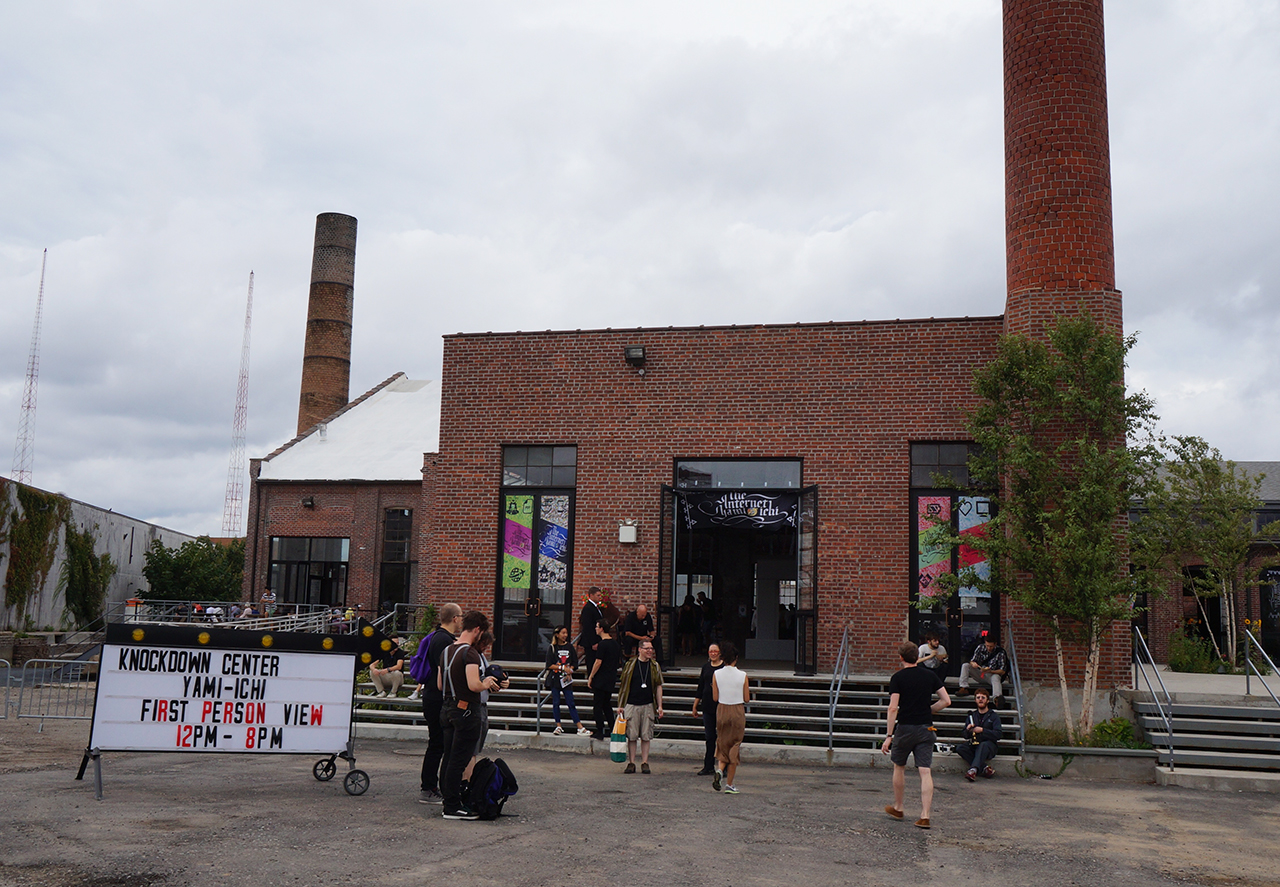
The Internet Yami-Ichi at the Knockdown Center

The Internet Yami-Ichi at the Knockdown Center

The Internet Yami-Ichi in New York took place on September 12, 12–8pm, at the Knockdown Center (52-19 Flushing Avenue, Maspeth, Queens).

17 Sep 10:01

Three Famous Artists Collaborate on One Empty Spectacle

by Claire Voon
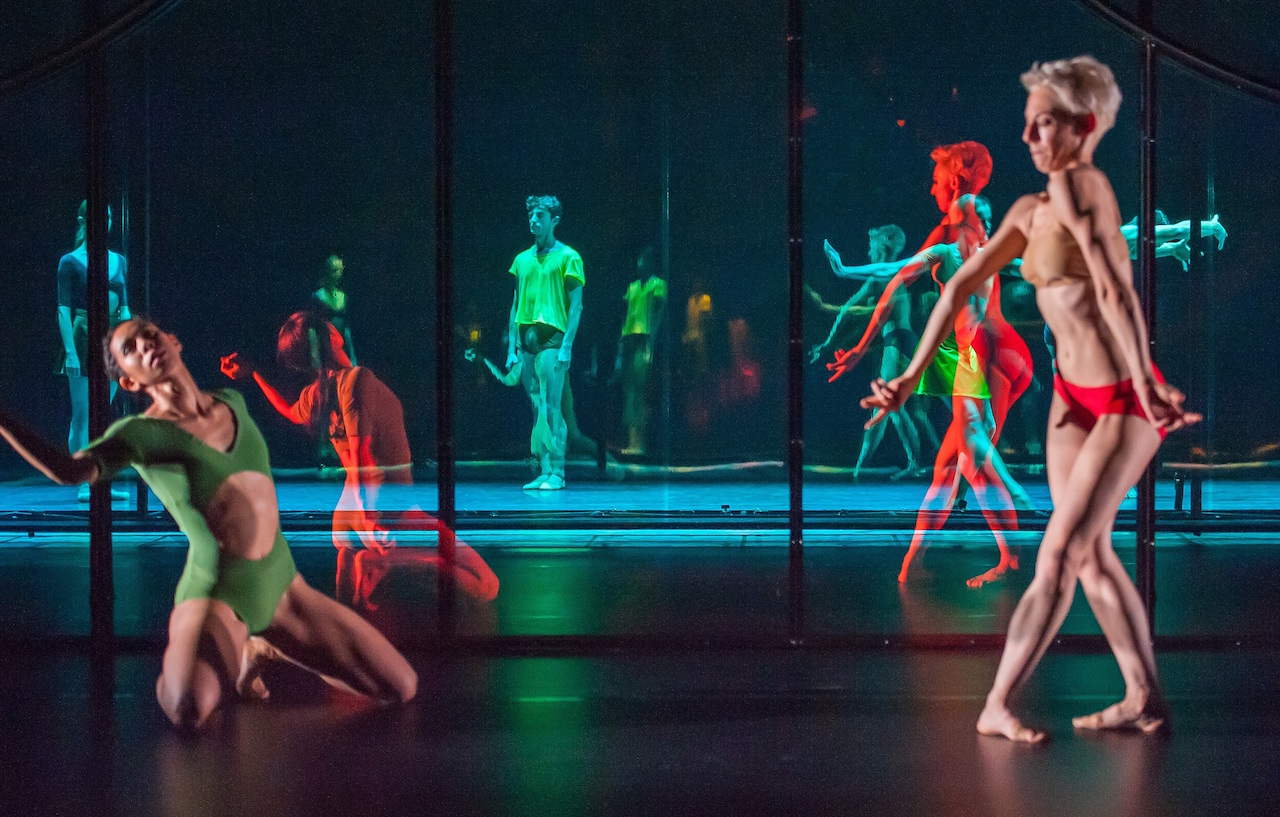
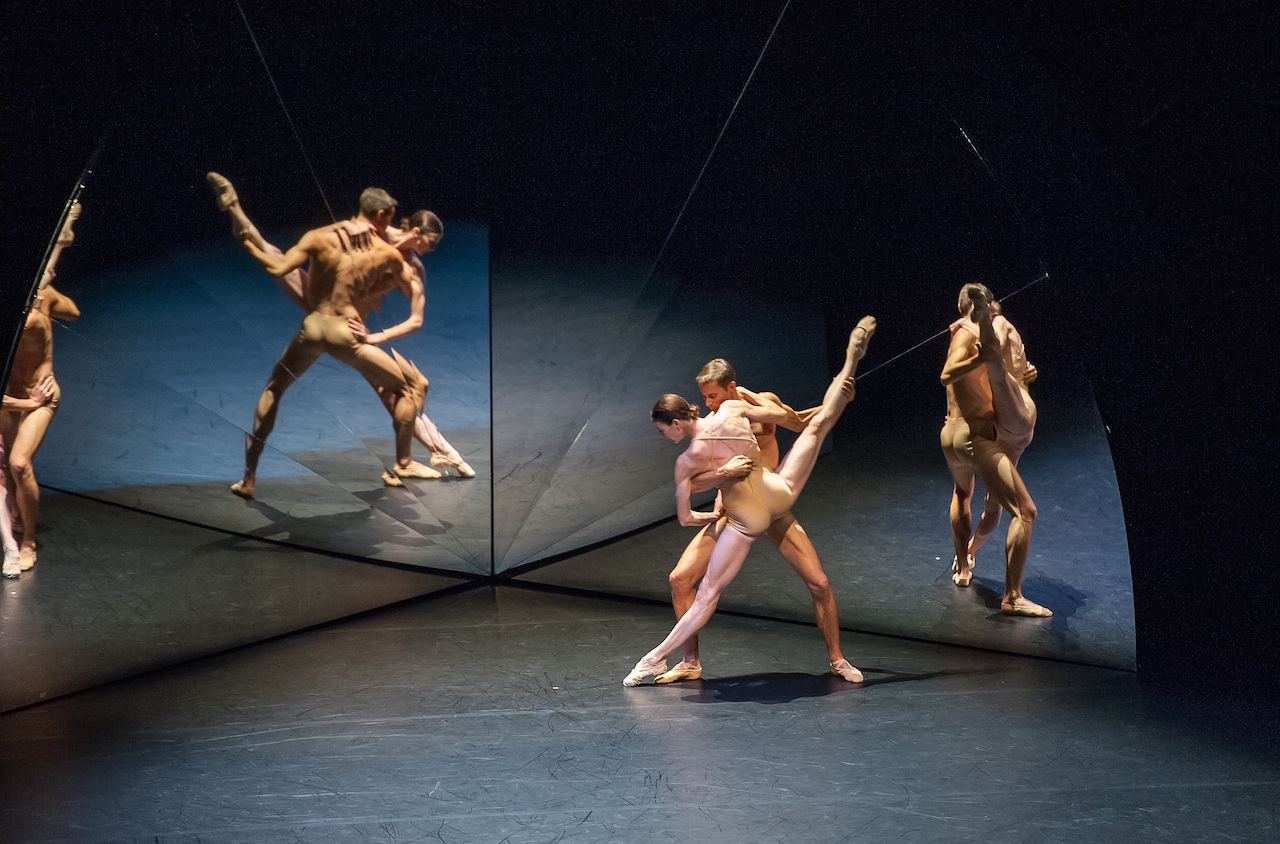
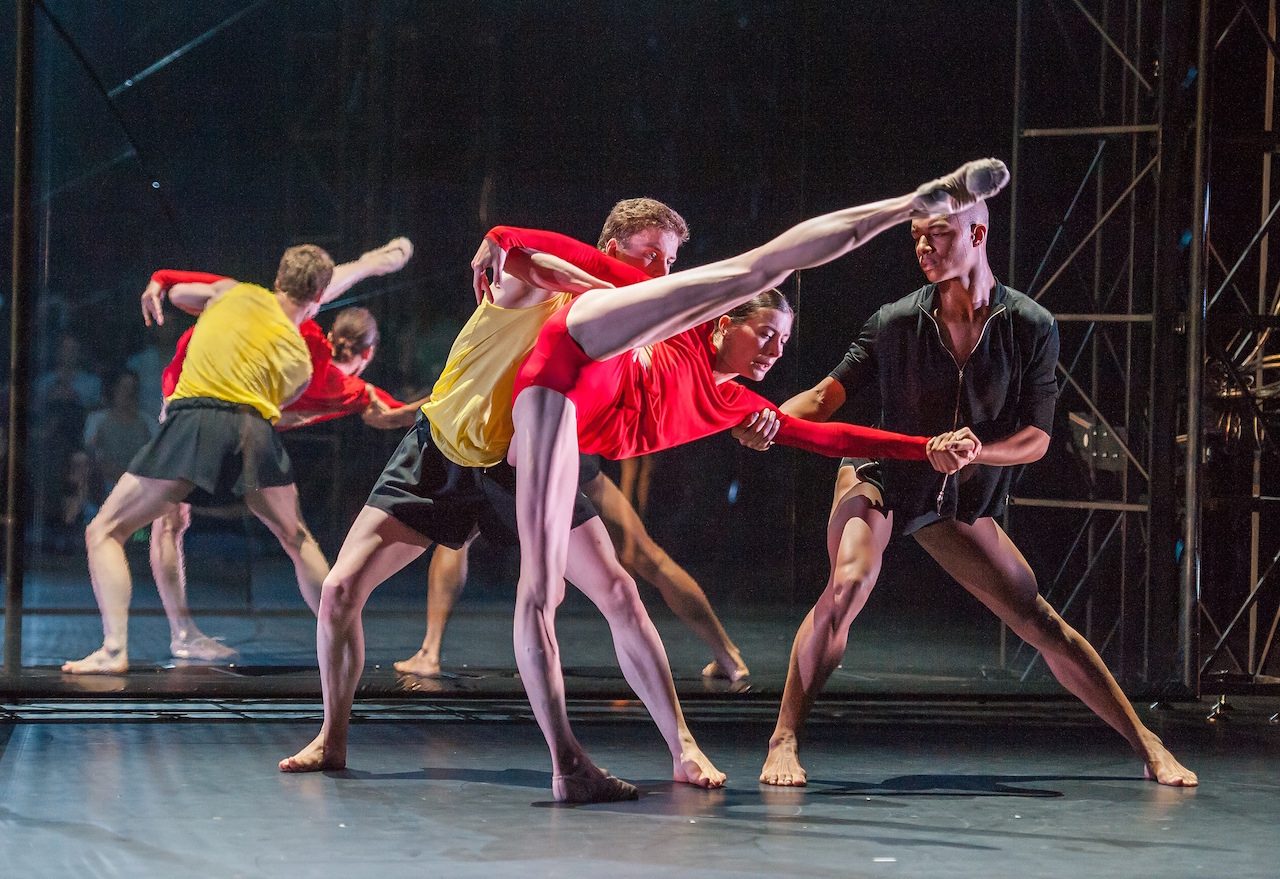
"Tree of Codes," directed and choreographed by Wayne McGregor, visual concept by Olafur Eliasson, and music by Jamie xx. Performed by dancers from Paris Opera Ballet and Company Wayne McGregor in the Drill Hall, Park Avenue Armory on Opening Night, September 14, 2015 (all photos by Stephanie Berger)

‘Tree of Codes,’ directed and choreographed by Wayne McGregor, visual concept by Olafur Eliasson, and music by Jamie xx. Performed by dancers from Paris Opera Ballet and Company Wayne McGregor in the Drill Hall, Park Avenue Armory on opening night (all photos by Stephanie Berger unless otherwise noted)

Tree of Codes, the current modern dance production at the Park Avenue Armory, brings together the efforts of three major names from three different disciplines: Wayne McGregor, the award-winning British choreographer; Danish-Icelandic visual artist and light wizard Olafur Eliasson; and electronic music producer Jamie xx, one third of the band the xx. Make that four notables, actually, if you count the author Jonathan Safran Foer, whose book Tree of Codes served as the point of departure for the one-hour, 20-minute-long extravaganza, which made its US premiere last night.

It is undoubtedly an impressive spectacle, yet one that does not quite inspire lasting awe, even if its contributors were themselves enraptured by their source content — which is yet another notable title: Foer used The Street of Crocodiles, published by the Polish writer Bruno Schultz in 1934, as the literal material for his 2010 tome, excising many of Schultz’s original letters and words to produce a work that exists as both literature and sculpture. McGregor, who directed the new visual manifestation, described the original in Tree of Codes‘ program as “so magnetic, conjuring a whole range of visual, sonic, and kinaesthetic images.

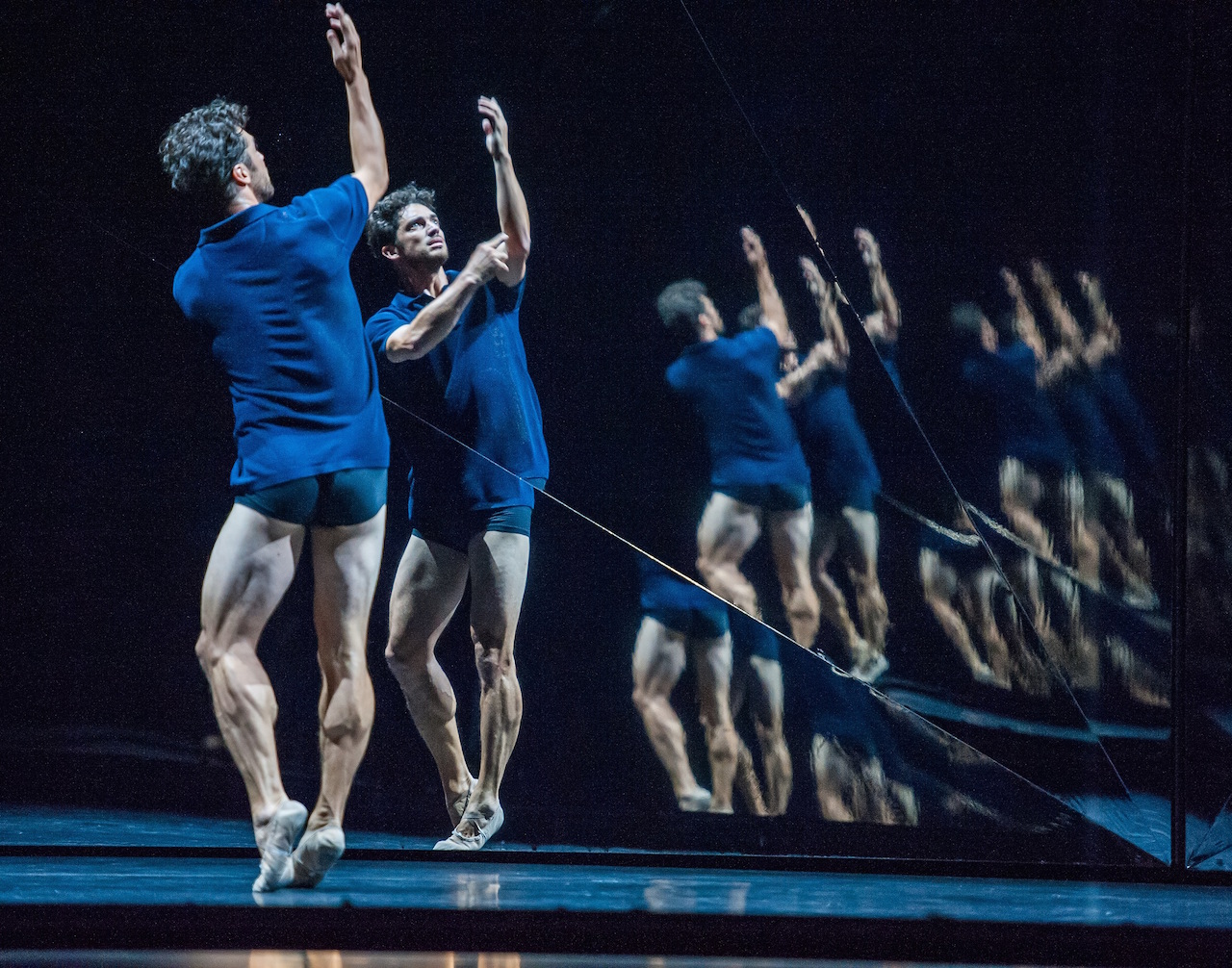
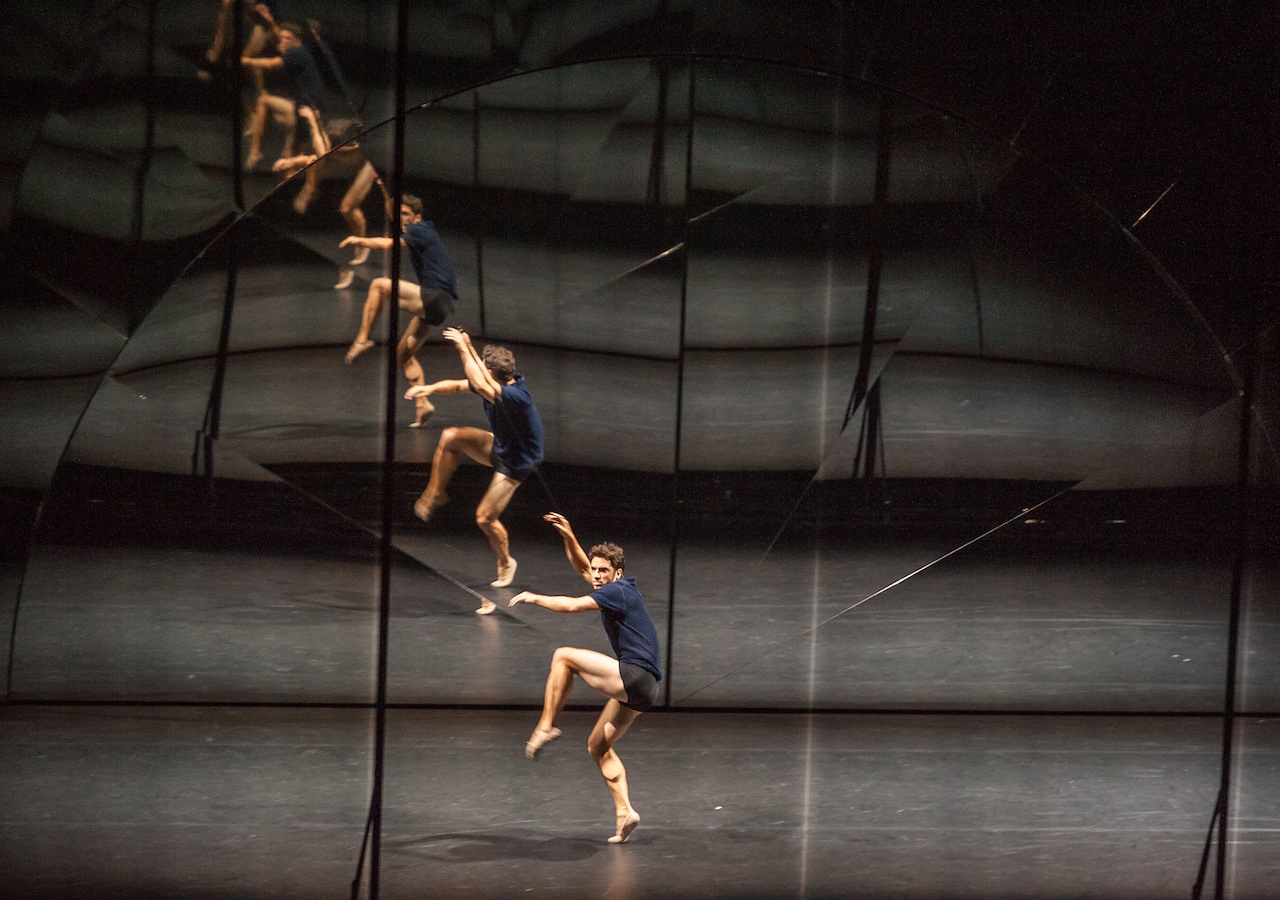
"Tree of Codes," directed and choreographed by Wayne McGregor, visual concept by Olafur Eliasson, and music by Jamie xx. Performed by dancers from Paris Opera Ballet and Company Wayne McGregor in the Drill Hall, Park Avenue Armory on Opening Night, September 14, 2015

‘Tree of Codes,’ at Park Avenue Armory (click to enlarge)

“I felt it would really be a phenomenal project to try and translate this book in some way through dance, imagery, and sound — a new iteration,” he write.

Rather than replicate the book’s unorthodox narrative, the ballet instead attempts to respond to the physical architecture of Foer’s textured text and the poetry that emerged from his new organization of “writing.” Each of the performance’s contributors deals with space within his respective medium in distinctive ways, which makes the collaboration promising: Eliasson, for example, often purposefully disorients his viewers by playing delightfully with light, shapes, and colors; Jamie xx is known for sonic landscapes crafted from his intricate stratification of bass tones and beats.

The result, shown at the Wade Thompson Drill Hall, is an array of dynamic choreography by dancers from the renowned Paris Opera Ballet and Company Wayne McGregor, lighting effects by Eliasson that don’t fail to dazzle, and a new range of sensational sounds from Jamie xx — all of which, when presented together, ultimately amount to sensory overload without much emotional substance.

Less a meditation on the tactile experience that Foer’s novel creates for readers, Tree of Codes is more of a visualization of a music album, though one without a narrative. From the start, Jamie xx’s score — notably his first for a ballet — dominates. Vibrant and complex, it drives the performance partly because the accompanying visuals overwhelm. The show begins with a rapid pitter-patter of the British producer’s beats that resembles an ovation (a startling, slightly discombobulating introductory sound for a live spectacle), which escalates to resemble galloping followed by his classic steel drum sounds, as dancers wearing bulbs of white light appear on the black stage to create constellations in motion.

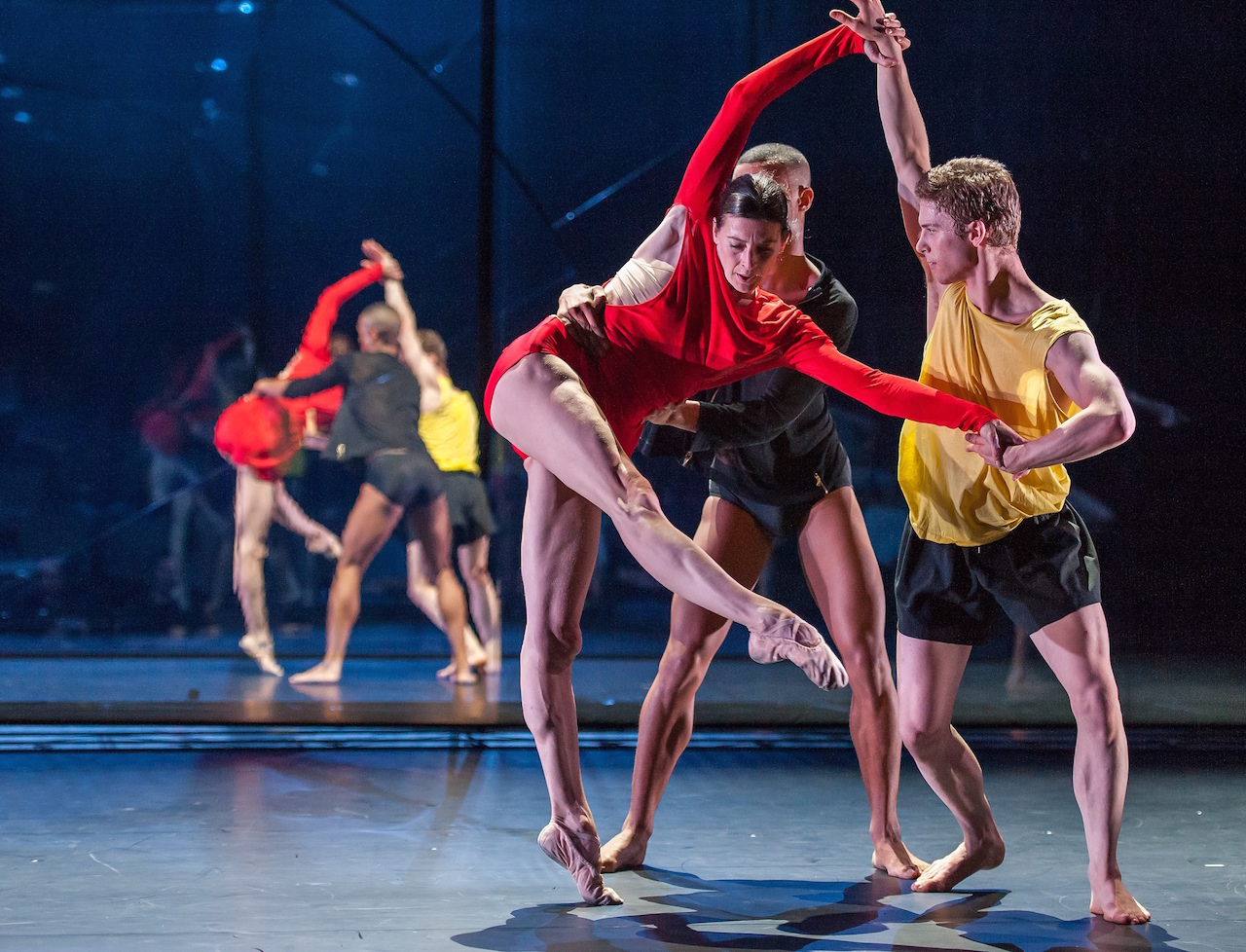
"Tree of Codes," directed and choreographed by Wayne McGregor, visual concept by Olafur Eliasson, and music by Jamie xx. Performed by dancers from Paris Opera Ballet and Company Wayne McGregor in the Drill Hall, Park Avenue Armory on Opening Night, September 14, 2015

‘Tree of Codes,’ at Park Avenue Armory

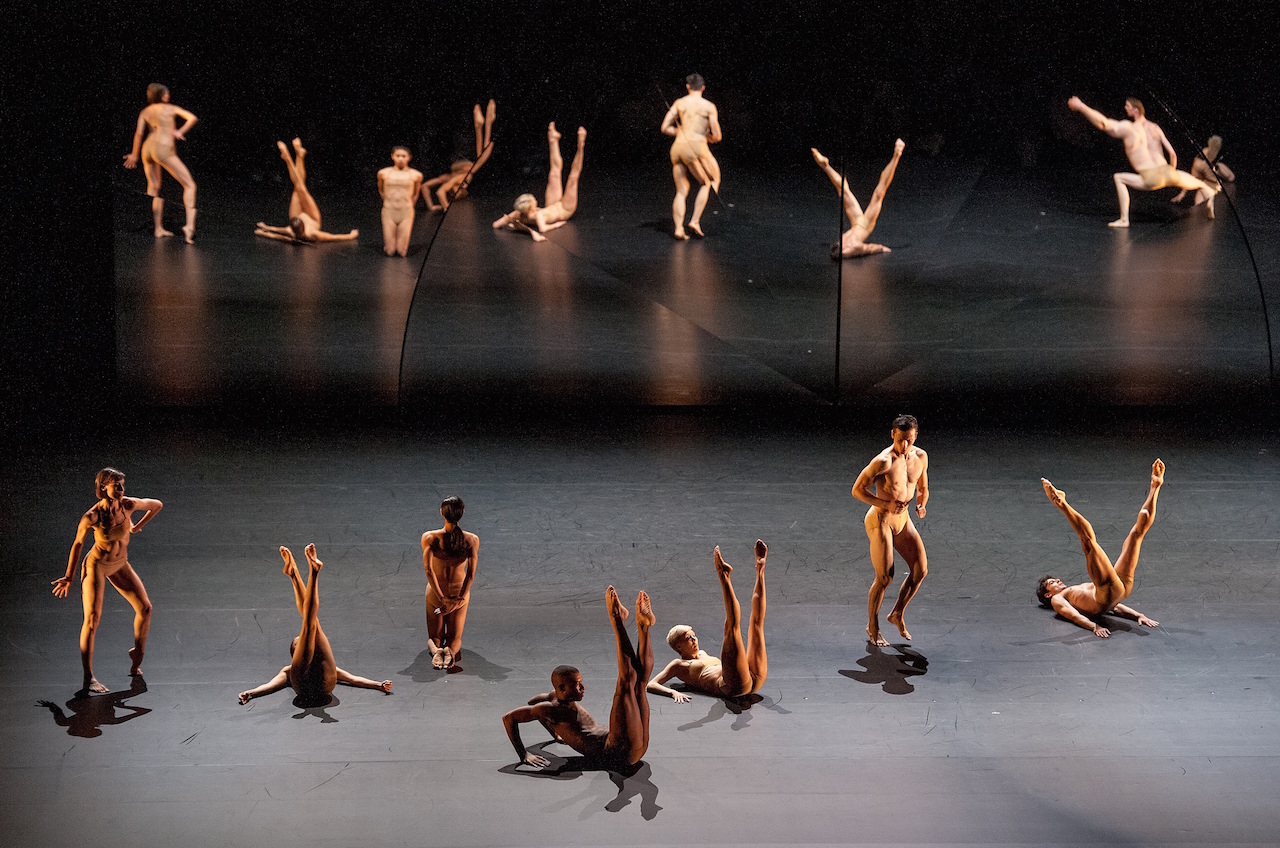
There’s a lot to digest once the stage brightens, revealing Eliasson’s transparent and mirrored layers of screens around which McGregor’s dancers maneuver. The gleaming panels, projected at times with iridescent colors, also spin slowly like paper cutouts — alluding to Foer’s work — reminiscent of Eliasson’s past installations such as “The inverted panorama house” (2004) or his “Round Rainbow” (2005). Blue, orange, and red spotlights dance across them; one even scans the audience who sometimes appears on stage in a bright reflection that only distracts from the performers. The choreography itself is masterly: at any time, one to all of the 15 sensational dancers take the stage — often in clusters of trios — to leap and glide across it, fan out and bend lithe limbs, and pretzel their bodies into twitching forms. The movements are deliberate and invigorated with energy, but they are endless to the point that trying to keep up becomes exhausting. I had not had the privilege of experiencing McGregor’s work prior to “Tree of Codes,” but I imagine other productions of his serve as better introductions to his oeuvre.

What captures and holds our attention is thus the score, especially magnetic as it offers music you would otherwise never hear from Jamie xx, whose percussion-heavy sounds usually fill dance, not drill, halls. The layering of radiant, high-pitched syncopation and thudding pulses found on In Colourhis solo debut released this year, do emerge — although here, they’re more sun-kissed — but the truly gorgeous surprises are when he tinkers on a lone piano, looping simple chords that develop with subtle variation. Still vibrant yet invigorated with the haunting mood of the xx’s records, these delicate classical pieces allow for full appreciation of the producer’s raw keyboard skills. Such strains often accompany McGregor’s own best moments, when quiet solos or pas de deux allow one to finally focus on how the flow of dancers’ arms and legs as well as the lines they form that slice, with precision, through space, give shape to the sound. Similarly, Eliasson’s lights and mirrors recede in scope during these softer scenes, serving as artful props that emphasize individual motion through simple reflections rather than grand obstacles to dance around.

It is not on such an enchanting sequence that Tree of Codes ends, but rather on pomp and circumstance that summons all 15 dancers: they swirl to layers upon layers of euphoric beats below revolving circles textured with marbled patterns of rainbow colors — before the performance all ends, rather abruptly, with enveloping darkness and the pitter-patter we first heard. The scene wows, but it presents magic without mystique. The spectacle’s three seasoned contributors have already proven their talents to disrupt perception through innovation, but their current collaboration leaves only slight impressions.

"Tree of Codes," directed and choreographed by Wayne McGregor, visual concept by Olafur Eliasson, and music by Jamie xx. Performed by dancers from Paris Opera Ballet and Company Wayne McGregor in the Drill Hall, Park Avenue Armory on Opening Night, September 14, 2015

‘Tree of Codes’ at Park Avenue Armory

"Tree of Codes," directed and choreographed by Wayne McGregor, visual concept by Olafur Eliasson, and music by Jamie xx. Performed by dancers from Paris Opera Ballet and Company Wayne McGregor in the Drill Hall, Park Avenue Armory on Opening Night, September 14, 2015

‘Tree of Codes’ at Park Avenue Armory

"Tree of Codes," directed and choreographed by Wayne McGregor, visual concept by Olafur Eliasson, and music by Jamie xx. Performed by dancers from Paris Opera Ballet and Company Wayne McGregor in the Drill Hall, Park Avenue Armory on Opening Night, September 14, 2015

‘Tree of Codes’ at Park Avenue Armory

"Tree of Codes," directed and choreographed by Wayne McGregor, visual concept by Olafur Eliasson, and music by Jamie xx. Performed by dancers from Paris Opera Ballet and Company Wayne McGregor in the Drill Hall, Park Avenue Armory on Opening Night, September 14, 2015

‘Tree of Codes’ at Park Avenue Armory

"Tree of Codes," directed and choreographed by Wayne McGregor, visual concept by Olafur Eliasson, and music by Jamie xx. Performed by dancers from Paris Opera Ballet and Company Wayne McGregor in the Drill Hall, Park Avenue Armory on Opening Night, September 14, 2015

‘Tree of Codes’ at Park Avenue Armory

"Tree of Codes," directed and choreographed by Wayne McGregor, visual concept by Olafur Eliasson, and music by Jamie xx. Performed by dancers from Paris Opera Ballet and Company Wayne McGregor in the Drill Hall, Park Avenue Armory on Opening Night, September 14, 2015

‘Tree of Codes’ at Park Avenue Armory

"Tree of Codes," directed and choreographed by Wayne McGregor, visual concept by Olafur Eliasson, and music by Jamie xx. Performed by dancers from Paris Opera Ballet and Company Wayne McGregor in the Drill Hall, Park Avenue Armory on Opening Night, September 14, 2015

‘Tree of Codes’ at Park Avenue Armory

"Tree of Codes," directed and choreographed by Wayne McGregor, visual concept by Olafur Eliasson, and music by Jamie xx. Performed by dancers from Paris Opera Ballet and Company Wayne McGregor in the Drill Hall, Park Avenue Armory on Opening Night, September 14, 2015

‘Tree of Codes’ at Park Avenue Armory

"Tree of Codes," directed and choreographed by Wayne McGregor, visual concept by Olafur Eliasson, and music by Jamie xx. Performed by dancers from Paris Opera Ballet and Company Wayne McGregor in the Drill Hall, Park Avenue Armory on Opening Night, September 14, 2015

‘Tree of Codes’ at Park Avenue Armory

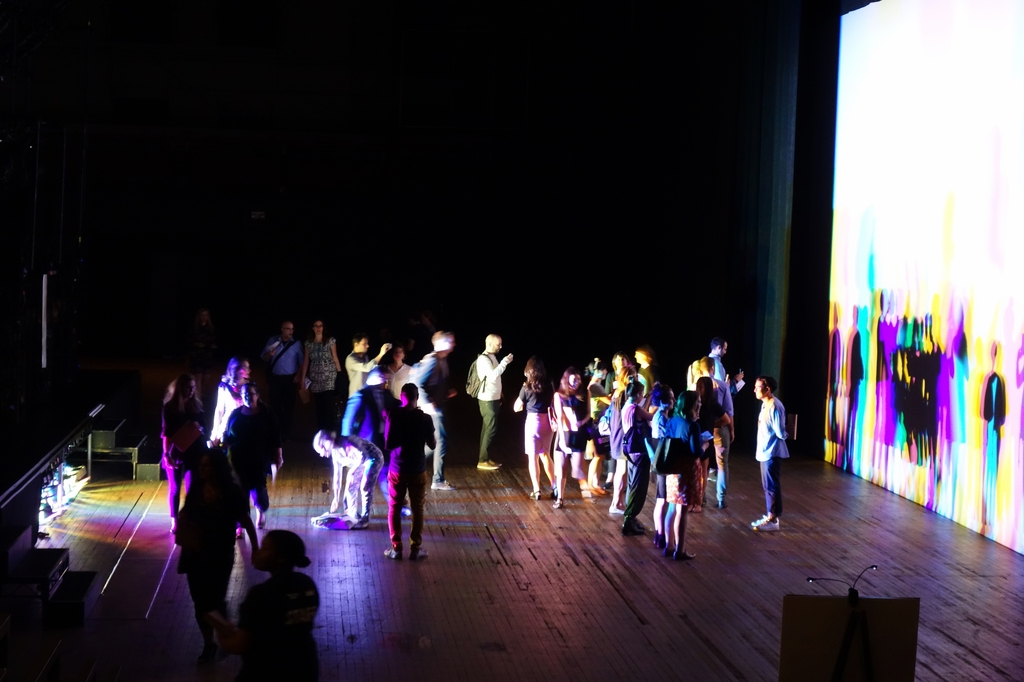
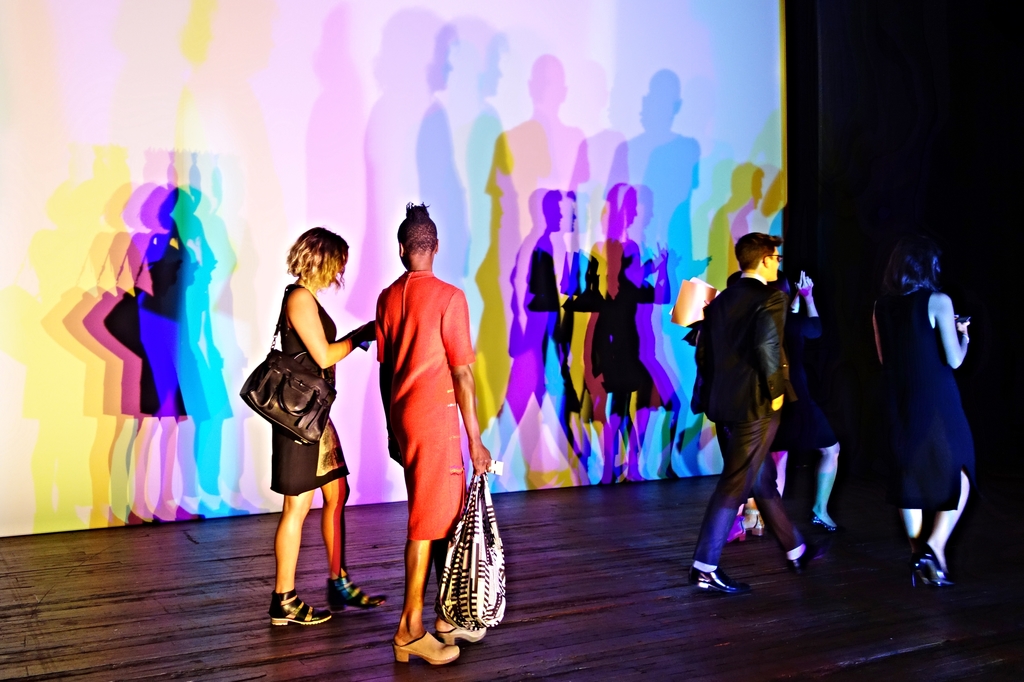
Olafur Eliasson's installation for "Tree of Codes" at the Park Avenue Armory (photo courtesy Allison Meier)

Olafur Eliasson’s installation for ‘Tree of Codes’ at the Park Avenue Armory (photo by Allison Meier)

Olafur Eliasson's installation for "Tree of Codes" at the Park Avenue Armory (photo courtesy Allison Meier)

Olafur Eliasson’s installation for ‘Tree of Codes’ at the Park Avenue Armory (photo by Allison Meier)

Tree of Codes continues at the Park Avenue Armory (643 Park Avenue, Upper East Side, Manhattan) through September 21.

17 Sep 10:00

Remembering Artist Noah Davis (1983–2015)

by Henry Taylor
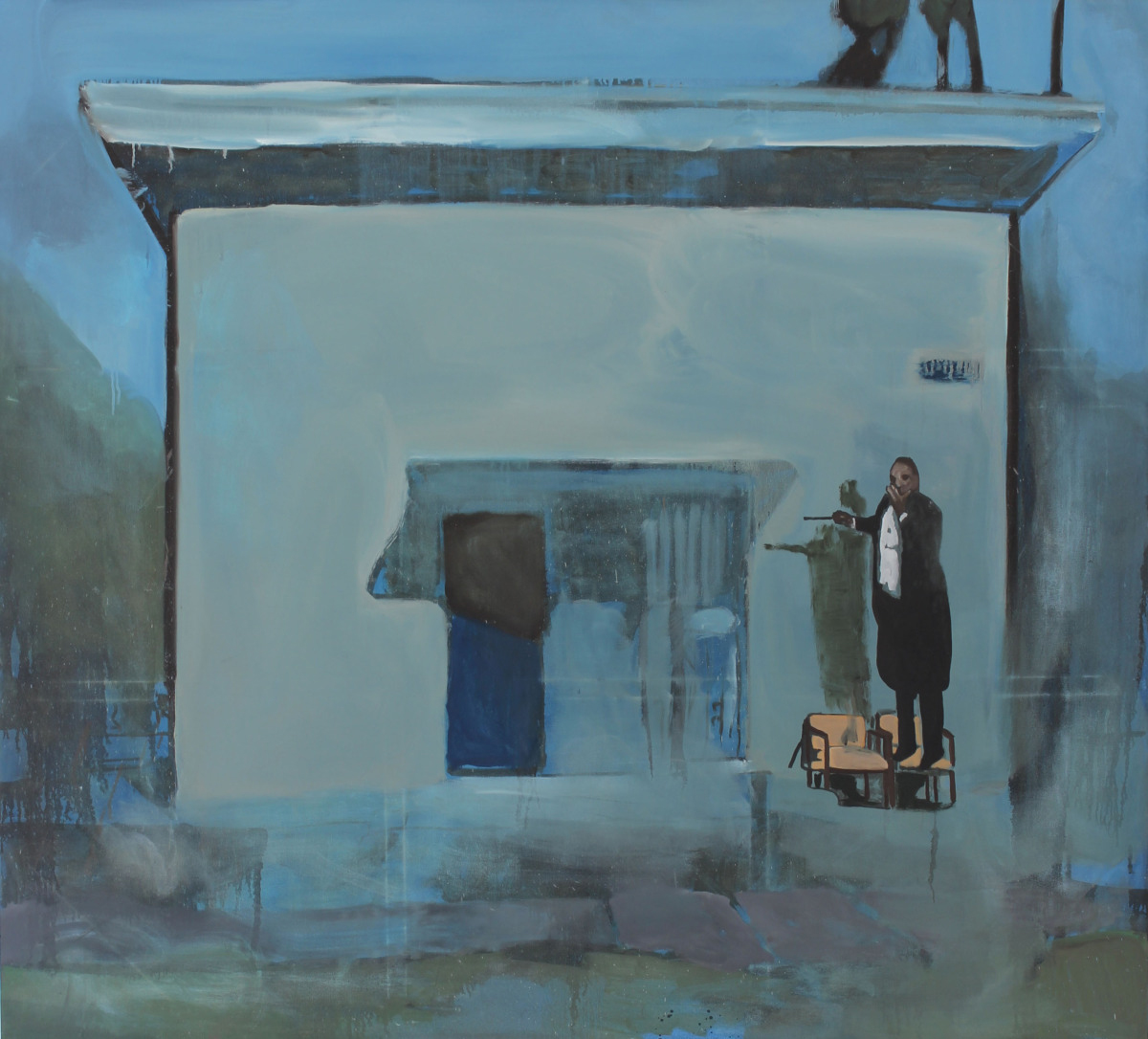
Noah Davis, "Pueblo del Rio: Conductor" (2014), oil on canvas, 69 x 76 in (image courtesy Papillion Art)

Noah Davis, “Pueblo del Rio: Conductor” (2014), oil on canvas, 69 x 76 in (image courtesy Papillion)

Editor’s note: We asked the artist Henry Taylor to share some reflections on his friend and colleague Noah Davis, who died on August 29 at the age of 32. These are his thoughts, as told to Hyperallergic Weekend contributor Jennifer Samet.

Noah Davis was a badass, but a smart badass. A lot of people think they are bad, but Noah backed his talk up. A few years back, he had beef with his gallery, like a brother with a record that he wants expunged. His gallerist would even talk shit, and I’d tell them they really didn’t know what the fuck they were talking about. Because Noah was not only educated, he had a father who was a lawyer.

I think this made Noah take his shit to court. He turned a negative into a positive, and found others to rep him, like Michelle Papillion. He eventually founded his own shit: the Underground Museum. Secession! Sometimes you got do it yourself. He didn’t have a pool, so he bought an ocean.

Instagram Photo

He had a Miles Davis or a Chuck Berry attitude, and enough sense to not get screwed like so many artists of color. He wasn’t passive at all; he was animated, passionate, and always spoke intelligently and with enthusiasm about art and artists. He even put me up on game. He would talk to me about things I never thought about — like the market, primary and secondary — when my only concern was to show work. I realize that I’m less naïve because of him, and that was coming from someone 20 years my junior.

I like what Theaster Gates is doing and what Mark Bradford is doing, and I love what Noah Davis did, because he did it while forces were trying to put him down. Nobody really gave him anything, although he was shown at the early age of 25, and he was included in the Rubell Family Collection’s 30 Americans exhibition. But that was it; he did all the rest on his own, without major galleries.

Installation view of 'storefront: Imitation of Wealth,' August 29, 2015–February, 22, 2016, at MOCA Grand Avenue (photo by Fredrik Nilsen, courtesy The Museum of Contemporary Art, Los Angeles)

Installation view of ‘storefront: Imitation of Wealth,’ August 29, 2015–February, 22, 2016, at MOCA Grand Avenue (photo by Fredrik Nilsen, courtesy The Museum of Contemporary Art, Los Angeles)

Noah Davis was a visionary, and an artist who kept pushing. The Museum of Contemporary Art, Los Angeles, established a partnership with the Underground Museum and re-created the first show he organized there: The Imitation of Wealth. In that show is Noah’s remake of a Jeff Koons vacuum-cleaner piece. The Broad — the new Eli and Edythe Broad Museum in Los Angeles — just opened with a major collection of work by Koons. That is the kind of irony I love.

As a painter, Noah was constantly growing. I wasn’t always aware of the progress he was making, mainly because he moved a lot, but when I see it now, I realize he was consummate. When I visited Noah’s Ojai studio prior to his passing, I noticed that he seemed to know exactly what colors he wanted to use. He was working on four or five paintings, and his palette was a piece of cardboard, one or two colors, and a tube of paint. I feel that one only does this as a result of experience and efficiency.

His work was becoming more powerful and essential. Less is more. The backgrounds had become less nebulous, more monochromatic and geometric, but they were not empty feeling. His paintings were spatial. His figures embraced a solemn background, like people inside Rothko paintings … alone in a big world.

One of Noah Davis's last paintings (photo by Henry Taylor)

One of Davis’s last paintings (photo by Henry Taylor)

17 Sep 10:00

SPAAACE!!!

by Jen

It happens to the best of us: Sometimes, you just run out of room.


The test of a true wreckerator, however, is how creatively you manage to soldier on in the face of seemingly insurmountable icing borders.

Ok, so maybe they're not all that insurmountable.


In fact, here are a few more tried and true tactics employed by wreckerators everywhere:

The Nose Dive:

(Cartoon bomb noises optional.)


The Double Stack:

Now with extra ellipses!


The "Round Abound:"

The color choice is what really sells it.


The Second Time's the Charm:

Also known as the "Maybe No One Will Notice."


The Cliff-Hanger:

"Y! Hold on, Y! I can't...you're...you're slipping! Y!! NOOOoooOOOOooOOO!!"

Ahem.


And finally, my personal favorite:

The "Stop, Walk (Away), and LOL."


Thanks to Leigh M., Brenda S., Holly H., Ariel F., Victoria M., Mike S., Jenny B., and Lauren L. for really exploring the studio space.  Before we're done here, you'll all be wearing gold-plated diapers.

*****

Thank you for using our Amazon links to shop! USA, UK, Canada.

17 Sep 09:59

Everything About This Is Terrible

by Melissa McEwan
[Content Note: Islamophobia; police misconduct; carcerality.]

A ninth-grader in Irving, Texas, with an interest and terrific skills in tech and robotics, built a clock to take to school, and was subsequently arrested for building a bomb:
Ahmed Mohamed — who makes his own radios and repairs his own go-kart — hoped to impress his teachers when he brought a homemade clock to MacArthur High on Monday.

Instead, the school phoned police about Ahmed's circuit-stuffed pencil case.

So the 14-year-old missed the student council meeting and took a trip in handcuffs to juvenile detention. His clock now sits in an evidence room. Police say they may yet charge him with making a hoax bomb — though they acknowledge he told everyone who would listen that it's a clock.

...He loved robotics club in middle school and was searching for a similar niche in his first few weeks of high school.

So he decided to do what he's always done: He built something.

Ahmed's clock was hardly his most elaborate creation. He said he threw it together in about 20 minutes before bedtime on Sunday: a circuit board and power supply wired to a digital display, all strapped inside a case with a tiger hologram on the front.
He showed it to his engineering teacher first thing Monday morning and didn't get quite the reaction he'd hoped for.

"He was like, 'That's really nice,'" Ahmed said. "'I would advise you not to show any other teachers.'"
Let's pause here for a moment to consider that a teacher, only the first of many, thought a clock looked like a bomb. And instead of doing something to protect his student against the possible consequences for carrying something around that a bunch of dipshits would mistake for a bomb, he just told him to put it back in his school bag.

So Ahmed put the clock back in his bag, but later his English teacher "complained when the alarm beeped in the middle of a lesson. Ahmed brought his invention up to show her afterward." She told him it looked like a bomb, to which he quite reasonably replied, "It doesn't look like a bomb to me." The teacher kept the clock, and, later that day, Ahmed was pulled out of class by the principal, accompanied by a police officer.
They led Ahmed into a room where four other police officers waited. He said an officer he'd never seen before leaned back in his chair and remarked: "Yup. That's who I thought it was."

...The principal threatened to expel him if he didn't make a written statement, he said.

"They were like, 'So you tried to make a bomb?'" Ahmed said.

"I told them no, I was trying to make a clock."

"He said, 'It looks like a movie bomb to me.'"
So this is the basis on which this kid was terrified and intimidated: Some asshole's perception of what bombs look like based on what he's seen in the movies. Fucking hell.

And, of course, a perception clearly influenced by the fact that this clock resembling "a movie bomb" was built by a Muslim child.
Ahmed never claimed his device was anything but a clock, said police spokesman James McLellan. And police have no reason to think it was dangerous. But officers still didn't believe Ahmed was giving them the whole story.

"We have no information that he claimed it was a bomb," McLellan said. "He kept maintaining it was a clock, but there was no broader explanation."

Asked what broader explanation the boy could have given, the spokesman explained:

"It could reasonably be mistaken as a device if left in a bathroom or under a car. The concern was, what was this thing built for? Do we take him into custody?"
They decided that, yes, they do take him into custody—and Ahmed was marched out of school in handcuffs in front of other students.
Police led Ahmed out of MacArthur about 3 p.m., his hands cuffed behind him and an officer on each arm. A few students gaped in the halls. He remembers the shocked expression of his student counselor — the one "who knows I'm a good boy."

..."He just wants to invent good things for [human]kind," said Ahmed's father, Mohamed Elhassan Mohamed.

...Ahmed [was released to his parents and] is sitting home in his bedroom, tinkering with old gears and electrical converters, pronouncing words like "ethnicity" for what sounds like the first time.

He's vowed never to take an invention to school again.
Rage. Seethe. Boil. As a number of people have already observed: It's a real mystery why there aren't more people of color in the STEM fields. Instead of being rewarded for his initiative, creativity, and skill, and delivered on shoulders straight to the nearest science camp, Ahmed was delivered in handcuffs to the yawning maw of the school to prison pipeline.

I am so angry and sad that Ahmed was treated this way. I hope he continues his "tinkering," and someday invents a device capable of measuring the profundity of my contempt for the adults who saw danger where there was invention, because of their own despicable prism of prejudice.
17 Sep 09:55

Bulbasaur Flower Vase

Pokémon are good for more than just battling, you know. Case in point, this cute little Bulbasaur is not only a fierce and loyal companion, it's also a flower vase!

Made from laser-cut acrylic and wood, this little guy is a great addition to any game room, windowsill, or office, and it looks great with or without blooming flora bursting from the bulb on its back. Flowers and water are held in a removable plastic tube that fits into the vase, so it's easy to clean, refill, and drain.

Vase measures about 6 inches tall without flowers, and is just over an inch thick.

These vases are made-to-order, so please allow up to 3 weeks for production and shipping. If you'll need one especially quickly please contact me before placing an order.

Ships via USPS Priority Mail to customers within the U.S.A., and via standard international airmail to other territories.