Submitted by: (via Psycho Support)
Shared posts
10 Jul 16:38
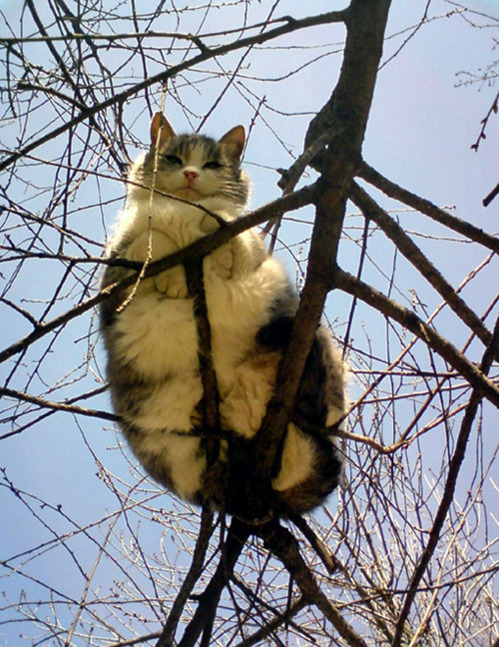
Such Unrealistic Beauty Standards










10 Jun 17:04

Stunning 'No Man's Sky' trailer mixes space combat with dinosaurs
by Sam Byford
No Man's Sky is a glorious oasis in E3's usual desert of gruff space marines and dismembered limbs. Joe Danger studio Hello Games' next release is impossibly ambitious and incredibly beautiful, set in an infinite universe created by procedural generation. In the gameplay trailer shown during Sony's E3 press conference, your player explores an alien world rendered in bursts of color, discovering new species of dinosaur-like creatures along the way, before getting into a spacecraft and seamlessly taking off to engage in combat in an asteroid field.
"No Man’s Sky is a game without limits."
"One of the things we wanted to put across is that No Man’s Sky is a game without limits," says Hello Games founder Sean Murray. "That mountain in the distance is a real place you can visit. So is that planet. And that star." Murray says that the time since the game's initial reveal has seen the team add "hundreds of new procedural systems that have made the universe explode with new alien creatures, amazing geological formations and vegetation patterns, pirates and wingmen."
No Man's Sky will launch on PC and PS4 at first, though there's no release date as yet.
- Source No Man's Sky
- Related Items release e3 trailer ps4 e3 2014 no man's sky
David Pelaez, Tertiarymatt likes this


09 Jun 18:30
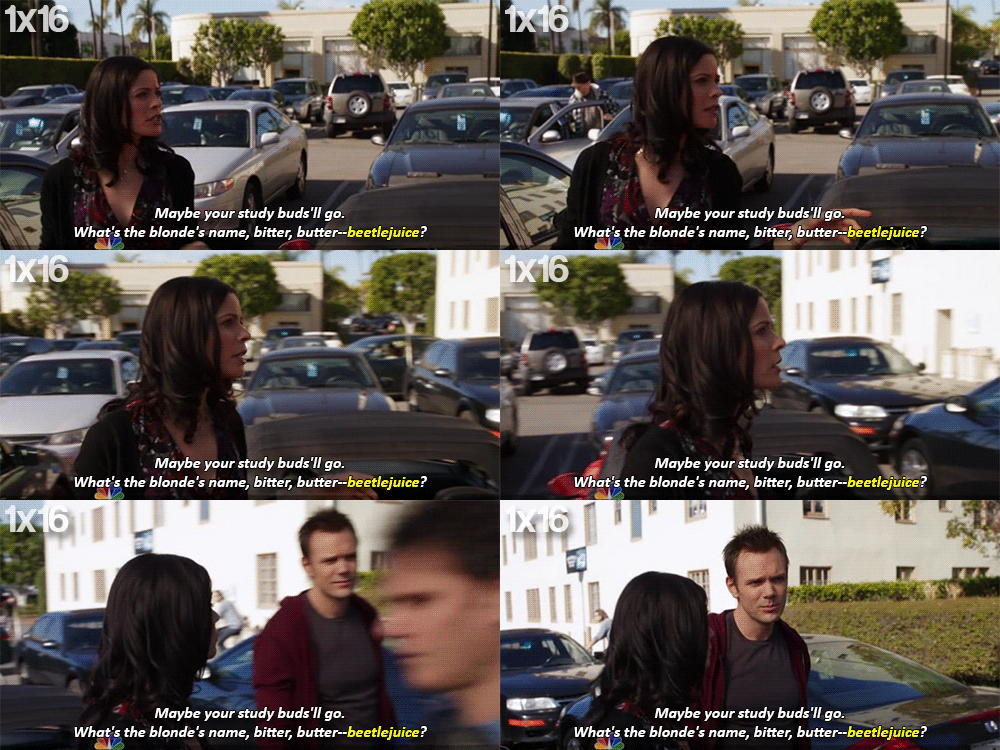
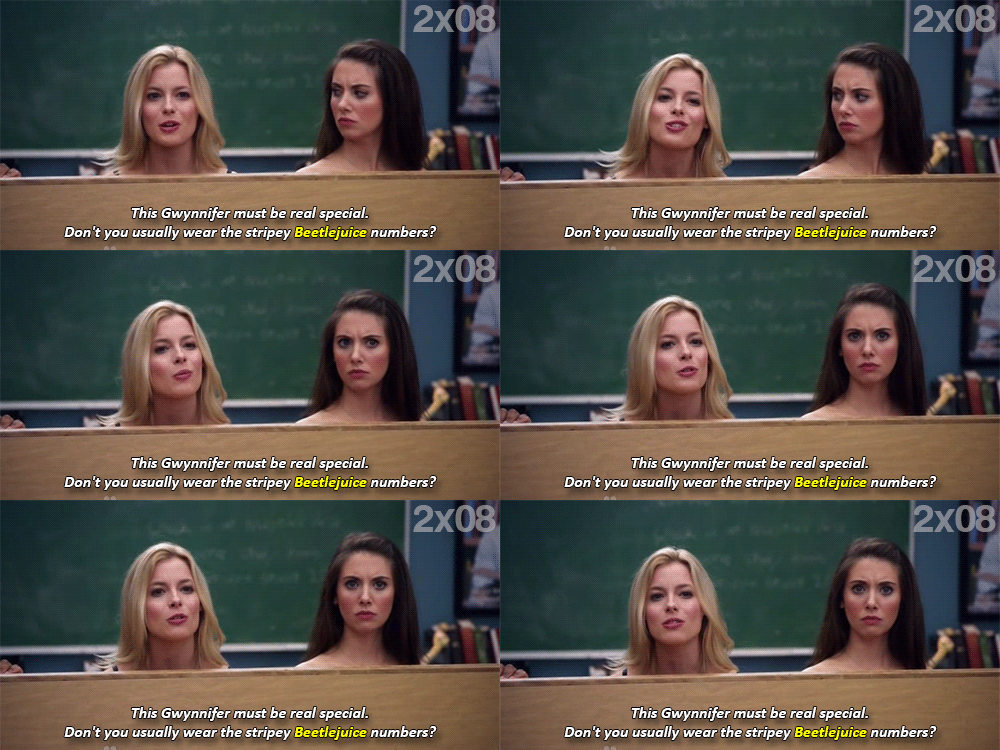
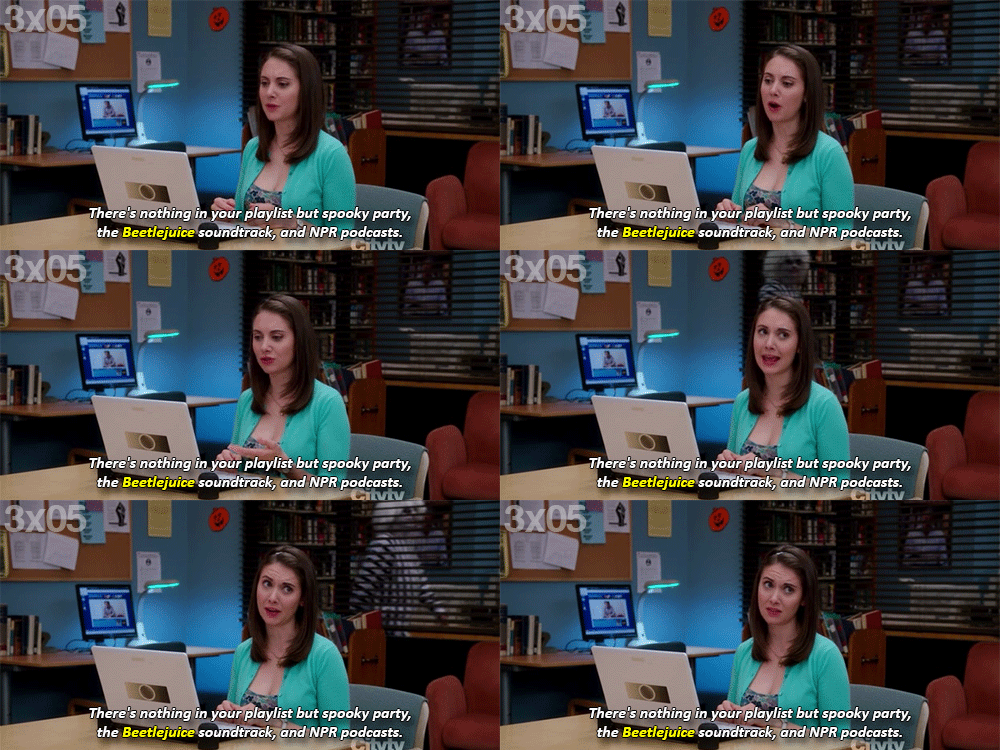
"Community has pulled off one the most patient easter egg: in...
"Community has pulled off one the most patient easter egg: in one episode of each of the first three seasons, the word "Beetlejuice" was used off-handedly in a joke. If you’ve seen the movie Beetlejuice, the titular mischievous ghost would appear in the world of the living if anyone said his name three times. So, sure enough, on the third mention by a Community character, this guy appears in the background for exactly two seconds. They patiently waited three years to reach that punchline."
David Pelaez, Claudio Navarro Henriquez likes this
09 Jun 18:23


A Computer Program Has Passed the Turing Test For the First Time
by Pranav Dixit
Damiani.guilhermeHistórico =|
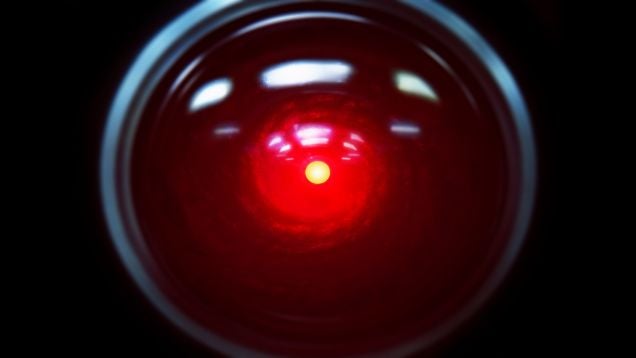
This is big. A computer program has successfully managed to fool a bunch of researchers into thinking that it was a 13-year-old boy named Eugene Goostman. In doing so, it has become the first in the world to have successfully passed the Turing Test.
Barciella, Damiani.guilherme and 2 others like this



09 Jun 17:47

speckofawesome: themcscumblr: mindblowingscience: pickledpenni...
Damiani.guilhermePela nota final. Vale pra tudo.
"A finishing note: Do your homework. Go on google scholar and read some of the literature, making sure it is recent (within the past 10-15 years). Literature reviews are a great way to find out what the consensus is on any given topic. Don’t use popular media as your main source of information where science is concerned; they tend to favour scandal and exaggeration. You want to know what’s really going on? Check out some research articles and see for yourself."
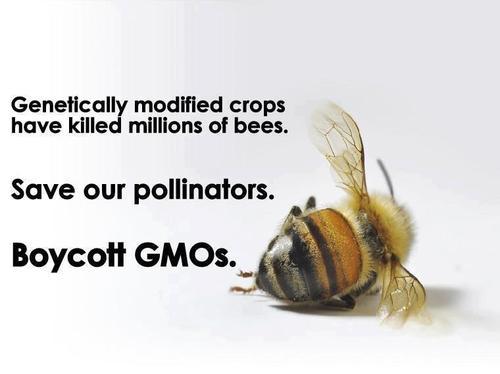
If bees become extinct we will have exactly 4 YEARS to live on this planet. I don’t understand how “not giving a fuck” is more important than your life…
okay, I have a thing to say about this. I’m no expert on bees, but I am a biologist (and entomologist) so I think there is something I can contribute that’ll be of worth.
I agree entirely with the sentiment that we must protect honeybees. Obviously they are massively important for biodiversity, as well as pollinating food crops for humans. There is no doubt that if all the honeybees in the world were to vanish in a day that the consequences would be dire.
However, I disagree that the main cause for concern regarding honeybee death is the use of Genetically Modified (GM) crops. I’d be very interested to read a research paper that says ‘GM crops have killed millions of honeybees’, if indeed such a paper exists because in all honesty I find it highly unlikely that this is a true statement.
Let’s start with some facts about GM crops:
1. The development of GM crops is a highly regulated process, bound by strict country-specific legislature. A great number of trials are carried out long before commercial planting of a GM crop is even considered. It is these trials, and accompanying laboratory studies, that ensure a GM crop is safe to non-target organisms (such as honeybees) by investigating direct and indirect effects (Nap et al. 2003).
2. Crops that are genetically modified to express insecticidal proteins (for crop pest control) have a high level of specificity. This means that the insecticidal proteins being produced by the GM plant will only affect a narrow range of insect groups because of the chemical properties of the protein. For example, GM crops expressing insecticidal proteins sourced from the bacterium Bacillus thuringiensis (Bt) will only target some Lepidopteran pests (caterpillars; Romeis et al. 2006). Furthermore, a recent meta-analysis of the literature found that GM Bt crops do not negatively affect the survival of adult honeybees or their larvae (Duan et al. 2008).
3. GM crops can be tailored such that the novel gene is expressed only in particular parts of the plant. For example, GM Bt rice plants express the toxin in the stems but not the grains (Datta et al. 1998). This technique means that gene expression can be excluded from the flowers/pollen of the crop plant, so that bees and other pollinators would not be affected. Neat, huh?
So those are a token few reasons why GM crops are safer than perhaps many people believe (as the result of a lot of questionable, non-scientific articles). To come back to our main point about honeybee death, I would like to briefly mention a few alternative explanations for the recent decline in honeybee populations. These are as follows:
1. Many bees have died as the result of broad-spectrum insecticide use. These are pesticides that lack specificity, and can be harmful to non-target organisms. Neonicotinoids are a well-studied example of this (Decourtye & Devillers, 2010). Not to worry, though, because many broad-spectrum pesticides including neonics are well on their way out. Indeed, the EU recently banned a large cohort of neonic pesticides. This is still a topic of controversy, mind (Goulson, 2013).
2. Many bees have died as the result of Varroa mite infestation. Imagine you’ve been bitten by several ticks, except those ticks are the size of dinner plates. That gives you an idea of the severity of a Varroa mite infestation on a single developing bee. The parasitisation of bees by Varroa mites and other parasites is often accompanied by disease transmission. This can result in colonies dying within two years after infestation (Johnson, 2011).
3. Many bees have died as the result of ‘colony collapse disorder’. This is a phrase that has popped up a lot recently, and is basically an umbrella term for the various causes of bee death including parasite infestation, disease transmission, environmental stresses, and management stresses such as poor nutrition (Johnson, 2011). Colony collapse has been attributed to broad-spectrum pesticide use in some instances. However, it is has still been observed in countries where broad-spectrum pesticides have been withdrawn (in the EU, like I mentioned earlier; Johnson, 2011).
So those are my main points. Please excuse the bullet-point nature of this; I was trying to keep it fairly short. Not sure I managed that haha. But anyway, my take-home message is that GM crops are not the enemy when it comes to honeybee decline. If anything, bees are at much greater danger from the use of broad-spectrum pesticides and from parasites and diseases. Using GM can even help to alleviate some of the problems associated with broad-spectrum pesticides, as they greatly reduce the need to apply such chemicals (Romeis et al. 2006).
A finishing note: Do your homework. Go on google scholar and read some of the literature, making sure it is recent (within the past 10-15 years). Literature reviews are a great way to find out what the consensus is on any given topic. Don’t use popular media as your main source of information where science is concerned; they tend to favour scandal and exaggeration. You want to know what’s really going on? Check out some research articles and see for yourself.
Thanks for sticking it through to the end of this impromptu mini-essay! —Alice
References:
Datta, K., Vasquez, A., Tu, J., Torrizo, L., Alam, M. F., Oliva, N., Abrigo, E., Khush, G. S., & Datta, S. K. (1998). Constitutive and tissue-specific differential expression of the cryIA (b) gene in transgenic rice plants conferring resistance to rice insect pest. Theoretical and Applied Genetics, 97(1-2), 20-30.
Decourtye, A., & Devillers, J. (2010). Ecotoxicity of neonicotinoid insecticides to bees. In Insect nicotinic acetylcholine receptors (pp. 85-95). Springer New York.
Duan, J. J., Marvier, M., Huesing, J., Dively, G., & Huang, Z. Y. (2008). A meta-analysis of effects of Bt crops on honey bees (Hymenoptera: Apidae). PLoS One, 3(1), e1415.
Goulson, D. (2013). Neonicotinoids and bees: What’s all the buzz?. Significance, 10(3), 6-11.
Johnson, R. (2011). Honey bee colony collapse disorder. DIANE Publishing.
Nap, J. P., Metz, P. L., Escaler, M., & Conner, A. J. (2003). The release of genetically modified crops into the environment. The Plant Journal, 33(1), 1-18.
Romeis, J., Meissle, M., & Bigler, F. (2006). Transgenic crops expressing Bacillus thuringiensis toxins and biological control. Nature biotechnology, 24(1), 63-71.
This commentary is SO important. Succinct and with proper sourcing; beautiful.
It infuriates me when people blame GMO for everything without actually examining the evidence.
The way scientific replies on tumblr should be handled: Sourced and informed.
This is beautiful and very correct. GMO’s have downsides, but those have nothing to do with bees or nutrition.
Best comment. Thank you.
Sergei, Damiani.guilherme and 3 others like this



05 Jun 16:19

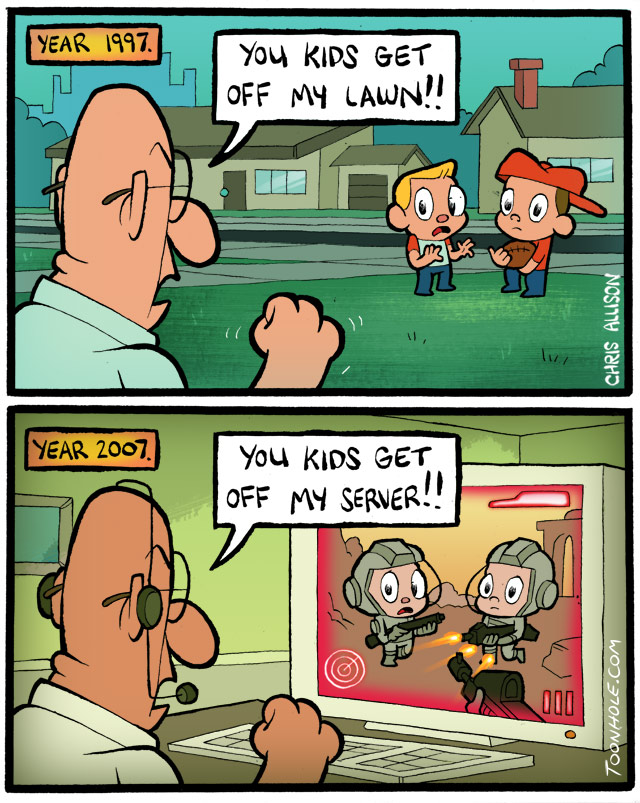
Get Off My Lawn
by Ryan
Damiani.guilhermePQP moleada q fica pegando Spy e Sniper no Team Fortress
05 Jun 16:18

For some reason this part of the bible never made the final...
Damiani.guilhermeShake what God gave ya
For some reason this part of the bible never made the final cut.
Aaaand I’m back you guys! Missed me? No? WELL TOO BAD I’m back to clutter up your dash like whoa
Barciella likes this



04 Jun 18:52
The Falling Problem
Damiani.guilhermeClássica. Uma das melhores dele =~~
Tadeu, Damiani.guilherme likes this
04 Jun 16:30
If You Don't Tear Up Reading This, There Might Be Something Wrong
Damiani.guilhermeOld but =~~
David Pelaez, Tadeu likes this
03 Jun 16:43


@SavedYouAClick is the Anti-Twitter to Today's Clickbait Internet
Damiani.guilhermeuheuheuheuhe demais, anti-clickbait
What you're seeing here are tweets from @SavedYouAClick, a Twitter account devoted to answering the dumb questions posed by today's internet headlines (not that we have ever used or condoned such intentionally-vague clickbaiting ahem ahem). With just a few words or a photo attachment, @SavedYouAClick does all the heavy lifting of internet skimming for you, and we're all the better for it.
Submitted by: (via @SavedYouAClick)
David Pelaez, Tadeu likes this