
Jeff sez, "Tuts+ has made my six part introduction to PGP encryption, email and networking privacy available to readers for free."
Read the rest
Luke.stirling
Shared posts
26 Aug 07:09

Free six-part course on encrypting email and securing your network sessions against snooping
by Cory Doctorow
Carlos Oliveira, Luke.stirling and 3 others like this
25 Aug 10:15
 On a sunny Saturday morning, seven Amazon Dash buttons arrived to my apartment. Dash is a decidedly Jetsonian future come to life. A Wi-Fi connected button for my every need! Push one in my toddler's bedroom, and Huggies diapers would appear at my...
Life with the Dash button: good design for Amazon, bad for everyone else
by Fast Company
On a sunny Saturday morning, seven Amazon Dash buttons arrived to my apartment. Dash is a decidedly Jetsonian future come to life. A Wi-Fi connected button for my every need! Push one in my toddler's bedroom, and Huggies diapers would appear at my...
Luke.stirling likes this
25 Aug 02:00

New comic!
Today's News:
Saturday Morning Breakfast Cereal - The Joker
by admin@smbc-comics.com
Hovertext: Better put a little booze in there to mellow things out.
New comic!
Today's News:
Tickets for all three BAHFest shows are now available! San Francisco, MIT, and Seattle! Featuring, Kris Wilson of Cyanide and Happiness, Abby Howard of The Last Halloween, and Matt Inman of The Oatmeal!
Einmaliger, Nuno Cruz and 9 others like this
25 Aug 01:54

Watch this birdie do a pretty much perfect R2D2 impersonation
by Xeni Jardin
“We taught Bluey the budgie how to do R2-D2 and now he drives us crazy! He has two other budgies in his cage, and I think he's driving them crazy too!”
clauaud, Markku.lempinen and one other like this
25 Aug 01:11

In The Karate Kid, Daniel is the REAL bully. Watch this proof.
by David Pescovitz
"After local busybody, karate master and child-batterer Mr. Miyagi intervenes, Daniel convinces him that this is somehow all Johnny's fault." (more…)
clauaud, Luke.stirling likes this
24 Aug 23:53
The most loved and hated TV finales, charted
by Rob Beschizza

A simple methdology: compare the IMDB rating of the final episode vs the show's average. Dragonball Z and Dexter share bottom spot, but who wins?
jaume.uep, Luke.stirling likes this
24 Aug 21:29


Being a Jerk About the Hugos: Not as Effective a Strategy as You Might Think
by John Scalzi
(Warning: Hugo neepery. Avoid if you don’t care.)
As most of you know, at last Saturday’s Hugo Awards ceremony, the voters, of which there were a record number, chose not to offer awards in five categories rather than to give the award to nominees who got on the ballot because of the Sad/Rabid Puppy slating campaign. In the categories in which awards were given, in nearly all cases the Puppy nominees in the category finished below “No Award.” The only category where a Puppy nominee prevailed was in Best Dramatic Presentation, in which one of their choices was Guardians of the Galaxy. There’s not a lot of credit they can take for that one.
Why did the Puppies fare so poorly? There has already been much speculation and analysis on the matter, and there will continue to be for some time. But in my estimation (and leaving out issues of literary quality of the nominations, which is super-subjective), the reason for their massive and historic failure is simple:
They acted like jerks, and performed a series of jerk maneuvers.
Specifically:
- They created slates for awards that are meant to be about an individual’s personal tastes and choices. That’s a jerk maneuver.
- They gloated about the slates getting on the ballot, and the upset that this caused other people. That’s a jerk maneuver.
- They created an imaginary cabal of people and asserted without evidence that this cabal indulged in slate-making, and used this assertion to justify their own bad action. That’s a jerk maneuver.
- They spent months insulting the people they associated with their imaginary cabal. That’s a jerk maneuver.
- They spent months crapping on the writers they dragooned into their imaginary cabal, and crapping on the work those writers created. That’s a jerk maneuver.
- They spent months denigrating the award they went out of their way to build slates for. That’s a jerk maneuver.
- They spent months pissing on the people who love and care about the awards, and the convention that hosts both. That’s a jerk maneuver.
- They expected the people who they’d been treating with contempt to give them the respect they would not afford them. That’s a jerk maneuver.
- They pretended they didn’t actually care about the awards for which they put in months and sometimes years of effort to get work on the ballot. That’s a jerk maneuver.
- They had the poor grace to whine about people potentially voting “no award,” which is fully allowed by the rules, after gleefully pointing out that slating was not disallowed. That’s a jerk maneuver.
The first of these points in itself would almost certainly have been enough to motivate people to vote against the slates, and the nominees who willingly (or, sadly in a number of cases, unwittingly) found themselves on them. But the other nine points didn’t help, and a lot of the people who declared themselves Puppies or allied themselves with them went out of their way to do some or all of those points. Repeatedly, and with increasing foaminess as things went along.
Here’s the thing: If you perform a bunch of jerk maneuvers, people are likely to treat you like you’re a jerk.
Consonantly: If you perform a bunch of jerk maneuvers, you might, in fact, actually be a jerk. Not always. But the correlation is there, and that correlation gets increasingly significant the more jerk maneuvers you perform.
There is (usually) no crime in performing a jerk maneuver, or acting like a jerk. Everyone can, and has, acted like a jerk from time to time. It’s a regrettable but natural part of the human experience. But most people have the good sense to understand that acting like a jerk should not be a lifestyle choice, and that if you make it one, people will respond to you based on your choices.
As they did, in this case, with the Hugos. The Hugo vote against the Puppy slates was not about politics, or cabals, or one species of science fiction and fantasy over another, no matter what anyone would like you to believe — or at the very least, it wasn’t mostly about those things. It was about small group of people acting like jerks, and another, rather larger group, expressing their displeasure at them acting so.
Mind you, I don’t expect the core Puppies to recognize this; indeed I expect them to say they haven’t done a single thing that has been other than forthright and noble and correct. Well, and here’s the thing about that: acting like an jerk and then asserting that no, it’s everyone else that’s been acting like a jerk, is the biggest jerk maneuver of all.
(Comments on this piece off for now, because I’m about to start an event and have a super-busy day today. I might turn them on later.)
Tertiarymatt, Luke.stirling and 2 others like this

24 Aug 00:29

Car information security is a complete wreck -- here's why
by Cory Doctorow

Sean Gallagher's long, comprehensive article on the state of automotive infosec is a must-read for people struggling to make sense of the summer's season of showstopper exploits for car automation, culminating in a share-price-shredding 1.4M unit recall from Chrysler, whose cars could be steered and braked by attackers over the Internet.
Read the rest
Luke.stirling likes this
23 Aug 21:49
Dropoff on LV-426 – microscale Aliens Cheyenne dropship & APC
by Andrew
Kiwi builder Grantmasters has been plugging away at the Cheyenne dropship from Aliens over this past week. Calling it done for now, he’s shared this fantastic build that highlights the dropship and an APC (which fits inside) in a cool diorama. While the highly functional dropship is excellent, I also really appreciate the contrasting backdrops — the planetary surface and the power plant.

Markku.lempinen, Luke.stirling likes this
23 Aug 20:40

We Now Know For Sure How Life Did Not Begin on Earth
by PZ Myers

Hey, how about these article titles?
Comet Impacts Really Could Have Been the Catalyst For Life on Earth
Comet Impacts May Have Produced The Building Blocks For Life On Earth
We Now Know For Sure How Life Began on Earth
We’re getting this sudden flurry of articles touting the contribution of organic molecules from cometary sources to the origin of life on Earth. They’re all bullshit. The media hype machine is going crazy again over science the journalists haven’t thought through.
There’s nothing wrong with the core of the original paper that sparked this frenzy of nonsense: the investigators showed that the energy of comet collisions can drive the assembly of amino acid monomers into short linear peptides. They made extremely cold pellets of glycine ice and fired them with a propellant gun into a block, and presto, they got tripeptides out of the collisions. I can believe that.
What I can’t believe is that early cellular biosynthesis was catalyzed by comet impacts. This explains nothing. It is not enough to postulate that there was, once upon a time, a cold soup of organic subunits in the ocean, that just sort of congealed into life — it doesn’t work. The authors made no calculations about the concentrations of their tripeptides in the prebiotic ocean (it would have been an exceedingly thin, dilute soup), don’t consider that these compounds were probably degrading as fast as comet-smashing was making them, and that their mechanism does not say anything at all about what reactions early precursors to life would have been using to synthesize peptides. I’m certain the answer didn’t involve waiting for a giant ball of ice to smack into the protocell.
For some reason, journalists and the public love these scenarios of cosmic forces colliding in big explosions to create life — it’s as if they desperately want Michael Bay to be in charge of biology. It’s not how it would have worked. If you want to look for answers to the origin of life, you need to look at conditions that generate a gentler flux of energy that is a better analog to metabolism. It’s about flow, not bang.
The best summary of how actually abiogenesis would have occurred is Nick Lane’s The Vital Question: Energy, Evolution, and the Origins of Complex Life
Or you could try reading a paper by the always-entertaining William Martin, if you’re in more of a hurry.
The very familiar concept that life arose from some kind of organic soup is 80 years old and had best be abandoned altogether. The reason is that life is not about the spatial reorganization of preexisting components, it is a continuous chemical reaction, an energy-releasing reaction, and a far-from-equilibrium process. The proposal that life arose through the self-organisation of preformed constituents in a pond or an ice-pore containing some kind of preformed prebiotic broth can be rejected with a simple thought experiment: If we were to take a living organism and homogenize it so as to destroy the cellular structure but leave the molecules intact, then put that perfect organic soup into a container and wait for any amount of time, would any form of life ever arise from it de novo? The answer is no, and the reason is because the carbon, nitrogen, oxygen, and hydrogen in that soup is at equilibrium: it has virtually no redox potential to react further so as to provide electron transfers and chemical energy that are the currency and fabric of life.
If not soup, what? Life is about redox chemistry, so the site and environment of life’s origin should be replete with redox reactions. Alkaline hydrothermal vents provide a good model for understanding early chemical evolution because they have some similarity to living systems themselves. Perhaps similar to some types of hydrothermal vents observable today, such as Lost City, alkaline vents during the Hadean would have offered a necessary and sufficient redox potential (in the form of the H2-CO2 redox couple) and catalytic capabilities (in the form of transition metal ions) to permit organic synthesis at a specific location in space and stably over geological time to give rise to the chemical constituents of life and to foster the transition from geochemically contained chemical networks to bona fide free-living cells. Why, exactly, are alkaline hydrothermal vents conceptually attractive in the origin of life context? There are a number of reasons, many of which are old as the discovery of vents themselves but they remain current.
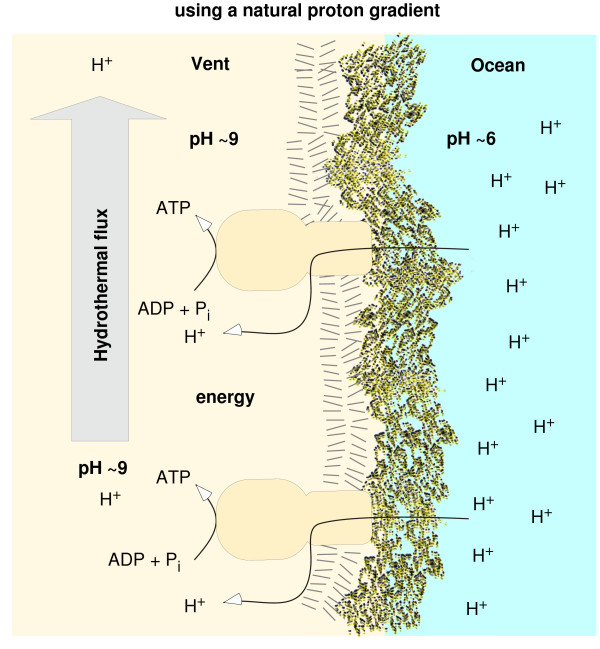
These ideas have been around for years, but they never seem to get the kind of press extraterrestrial bullshit gets. It’s the lack of explosions, I suspect.
clauaud, Luke.stirling likes this
22 Aug 01:51

What’s the buzz in Seattle?
by PZ Myers

Guess.
I imagine everyone must have read the NY Times article on the working conditions at Amazon — it’s interesting that the article actually tries to be objective and lay out the good and bad points of working for weird out-of-touch slavedriver Jeff Bezos, yet the reaction from Amazon has been flat denial. Unless they’re going to show that there isn’t high turnover, overstressed executives, and blue-collar workers treated as machines, which I don’t think they can do, the guy at the top declaring that he simply doesn’t recognize the sweatshop he runs is not particularly persuasive.
The Seattle newspaper is clearly in an awkward position: how do they criticize a major employer in the region? Answer: they avoid the issues. This was also Seattle’s curse when I was growing up, having a single dominant employer, in that case Boeing, with every one trembling in fear of criticizing them, while they wrecked lives with a boom-and-bust cycle of hiring surges followed by layoffs.
Geeks, of course, downplay the article. There’s a strong whiff of elitism and libertarianism in the excuses offered, and I’m also kind of dismayed that a news source would interview current employees and not discount their cheerful affirmations of the power of the Amazon way. Most cults don’t have the grip on their acolytes economic well-being that Amazon has.
More interesting, despite its clumsy digressions and clunky dismay, is this article on the effect Amazon has had on Seattle. It’s the angriest, but it resonated with me — I have steered completely clear of urban Seattle on this trip. The horrific traffic, a product of the tightly straitened geography of the region, is enough to scare me away. I was visiting family in the southern suburbs, and seeing the lines of locked-in-place traffic every evening convinced me to stay home, or run away to empty wilderness in the far corner of the state. And to imagine hordes of smug brogrammers taking over south Lake Union…no, thank you.
Capitalism really needs to figure out how to file off the rough excesses of successful businesses. And take those businesses out of the hands of sociopaths.
Sophianotloren, clauaud and one other like this
22 Aug 01:17

Those whales. Such jokers.
by PZ Myers
Here’s a scientist talking about the great difficulty of finding whales out on the open ocean. Wouldn’t you know it…?
That’s excellent comedic timing.
I hear they’re also big-hearted.
lbstopher, Luke.stirling likes this
21 Aug 23:11


Amazing DIY computer control panel
by David Pescovitz
If only all computer interfaces were as gloriously sci-fi as this excellent "DIY Overhead Control Panel" hand-built by a maker called Smashcuts. It features a slew of LEDs and 100 programmable buttons and switches that activate shortcuts on his PC, open apps, control volume and screen preferences, etc. Read the rest
Sophianotloren, clauaud and one other like this
21 Aug 23:08

If you’re giggling over Josh Duggar’s comeuppance…
by PZ Myers

You need to consider this:
The Saudi Arabian government is using the recently leaked data from Ashley Madison to track down homoesexuals in their contry. As homosexuality is a crime, punishable by death, in Saudi Arabia the leak is estimated to result in the death of hundreds if not thousands of gay people in Saudi Arabia.
Or if you prefer your news with fewer clumsy typos, here’s another source.
The Ashley Madison leaks, as many observers began noting yesterday afternoon, will have real world, devastating consequences on thousands of users worldwide. When the dust clears, it will be most vulnerable among us — LGBT and women in repressive countries — that will ultimately pay the price. And unlike Josh Duggar, their price will not be paid in snarky internet comments but rather loss of employment, family, and, in some cases, possibly their lives.
Yeah, Josh Duggar is going to come out of this oozing piety. Other people won’t be so lucky.
Luke.stirling likes this
21 Aug 22:46
Look at the size of this grizzly bear paw
by Mark Frauenfelder

From West Coast Native News: "This is how big a grizzly bears paw is – by the way, the bear is sedated and about to be tagged."
21 Aug 22:01


Ben Radford Has Threatened to Sue Me
by Rebecca Watson
On July 15, 2015, lawyers working on behalf of Ben Radford sent me a cease and desist letter, demanding that I remove some unspecified portions of some blog posts of which he does not approve, including but not limited to the reports on the fact that Karen Stollznow had accused Radford of sexual harassment.
While a document apparently signed recently by Stollznow states “it would be wrong” for people to have believed her earlier accusations, the fact that she made those accusations remains true and a matter of public record, in dozens if not hundreds of places.
As many skeptics understand, the use of libel threats to censor criticism is a well-worn tactic of pseudoscientists and bullies. Radford may not have paid attention at the time, but here at Skepchick we staunchly advocated both publicly and behind the scenes for UK libel laws to be changed so that scientists and journalists threatened with libel wouldn’t be facing bankruptcy for even successfully defending themselves.
Unfortunately, even here in the US, a libel threat is a serious concern due to the exorbitant cost of simply retaining an attorney.
Faced with Radford’s demands and his threats of a lawsuit, I established an indiegogo campaign to start raising the initial costs of hiring a lawyer and defending my freedom of speech.
In response, Ben Radford wrote on Twitter the following:
@Tigzy_J No, I'm not. She was merely asked to remove 3 posts with false info about me. I wish she'd de-escalate & talk.
— Benjamin Radford (@BTRadford) August 19, 2015
The idea that I was “merely asked” to remove blog posts is astonishing. Radford at no point attempted to communicate with me to ask me to remove or edit any blog posts. Instead, I received the cease and desist demand from his lawyer, threatening a lawsuit. Here are a few choice quotes from that letter (bolding mine):
…if you continue to publish with knowledge of the accusations’ falsity, or in reckless disregard of whether the accusations are false, you can be held liable for defamation. I urge you to discuss this with another lawyer knowledgeable in the area of defamation.
Accordingly, please remove from websites and other social media accounts controlled by you all of Stollznow’s accusations…Mr. Radford will not sue you for defamation if you take these steps. Accordingly, taking these steps will…protect you from legal liability to Mr. Radford.
There is no grey area, here. This is quite clearly a threat, telling me that if I don’t remove unspecified portions of posts, I will be sued for defamation. Requests over the past few weeks to clarify exactly which portions he believes constitutes defamation and any legal basis for the claim of defamation remain unanswered.
It is not “escalation” to respond to a libel threat by taking Radford’s attorney’s actual advice and hiring a lawyer, nor is it “escalation” to attempt to pay for the legal fees. “Escalation” is attempting to rewrite history by using legal threats.
Radford’s supporters have grabbed a hold of his response claiming he has not threatened a defamation lawsuit, using it to spam anyone who posted a positive link to my legal defense fund:

Thank you to everyone who has provided support thus far, whether that be through a donation, helping to spread the word, or just offering me kind words. As the misogynist trolls get riled up in support of Radford on Twitter and elsewhere, I greatly appreciate any and all support.
Luke.stirling likes this
21 Aug 07:24

Urban Dictionary | 624.png
Cary Renquist, Esteban Peralta Losilla and 6 others like this
21 Aug 07:23
vertigoheadspace: Neil DeGrasse Tyson

firehose, ThePrettiestOne and 10 others like this
21 Aug 02:23


Father builds glowing life-sized Minecraft block for son's birthday
by David Pescovitz
Nathan Pryor (HaHaBird) made this fantastic life-sized illuminated Minecraft block for his son's birthday. It's lit with RGB LEDs so the color can be changed via remote control. Read the rest
Bushchime, Markku.lempinen likes this
21 Aug 02:20

Ulysses pacts and spying hacks: warrant canaries and binary transparency
by Cory Doctorow

As the world's governments exercise exciting new gag-order snooping warrants that companies can never, ever talk about, companies are trying out a variety of "Ulysses pacts" that automatically disclose secret spying orders, putting them out of business.
Read the rest
Luke.stirling likes this
21 Aug 01:34


3D printed chess set where each piece holds a tiny plant
by Andrea James
After this Bauhaus-inspired pattern from XYZ Workshop is downloaded and printed, each chess piece is designed as a mini-planter. Read the rest
21 Aug 01:33

Universities' tax-exempt giga-endowments spend more on hedge fund managers than on education
by Cory Doctorow
 Growing wealth disparity has produced a new financial hyper-elite who make eight-figure donations to major universities, who hand that money back over to more finance titans in the form of special commissions that are taxed at a ridiculously low rate (making more zillionaire donors).
Read the rest
Growing wealth disparity has produced a new financial hyper-elite who make eight-figure donations to major universities, who hand that money back over to more finance titans in the form of special commissions that are taxed at a ridiculously low rate (making more zillionaire donors).
Read the rest
Luke.stirling likes this
20 Aug 23:12

Ashley Madison commits copyfraud in desperate bid to suppress news of its titanic leak
by Cory Doctorow

The company is shotgunning DMCA notices against journalists and others who reproduce even the tiniest fraction of the dump of users who signed up to find partners with whom to cheat on their spouses -- included in the dump are thousands of people who paid $15 to have their data permanently deleted from the service.
Read the rest
Bushchime, Luke.stirling likes this
20 Aug 23:11

America does a better job of tracking bee deaths than deaths in police custody
by Cory Doctorow

Michael from Muckrock writes, "The federal government has a pretty good picture of where bees are dying across America, with two federal agencies collaborating on a systematic, scientifically-rigorous, long-term look at the problem, particularly important given the danger that colony collapse disorder presented."
Read the rest
Luke.stirling likes this
20 Aug 21:43
manbootypokeball: the four great abrahamic religions

Sophianotloren, Luke.stirling and one other like this
20 Aug 10:18
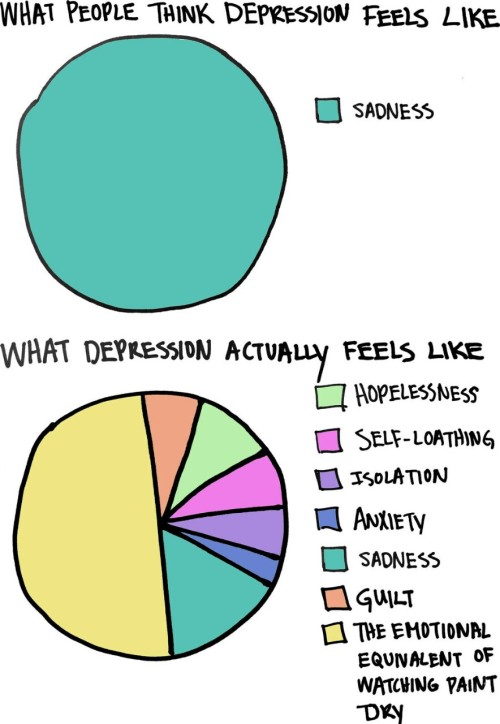
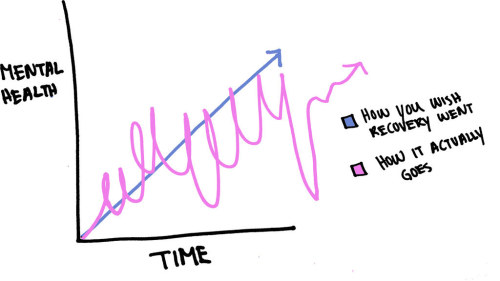
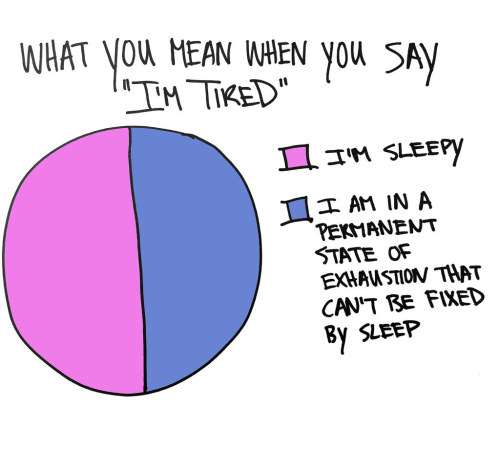
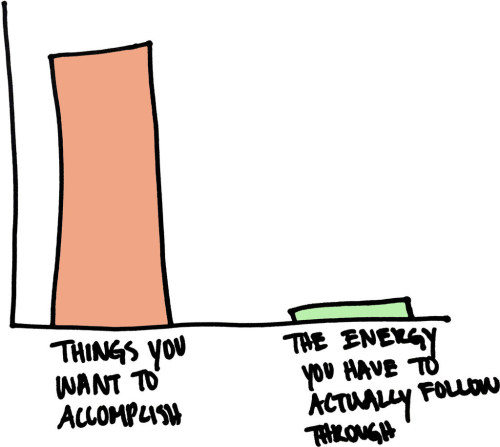
Dependent
by Robot Hugs
New comic!
We should all cast aside these lies that hide from us the ‘real problems’. That will solve everything.
I am told not infrequently by people who apparently think they are doing good that my drugs mask underlying truths that would comprehensively address my problems if I would just LET myself face them.
Usually this comes tied to a bunch of pseudo-pharma-conspiracy shit, and ends with a suggestion for a herbal remedy. It’s all part of the Unsolicited Uninformed Opinion package – available everywhere there’s terrible people!


20 Aug 02:09
 Adding solar panels to your roof can be frustrating, since it's often difficult to know if your home receives enough light to justify the investment. Google Maps, however, has satellite, navigation and sunlight data for every property in the world,...
Google's making it easy for you to get solar panels onto your roof
by Daniel Cooper
Adding solar panels to your roof can be frustrating, since it's often difficult to know if your home receives enough light to justify the investment. Google Maps, however, has satellite, navigation and sunlight data for every property in the world,...
20 Aug 01:51

Chastity belts were a joke, then a metaphor, then a hoax
by Cory Doctorow

 Historian Albrecht Classen got so tired of hearing people blithlely assert that chastity belts were ever a thing that he wrote The Medieval Chastity Belt: A Myth-Making Process, explaining how a 15th century hoax that appeared in a manuscript that also feature fart jokes and devices for making people invisible became canon.
From Sarah Laskow: Read the rest
firehose, Sophianotloren and 2 others like this