If you've ever driven along Highway 280 in the San Francisco Bay Area, you've probably seen this home. Read the rest
If you've ever driven along Highway 280 in the San Francisco Bay Area, you've probably seen this home. Read the rest
Ten years ago today, I put the essay “Being Poor” on Whatever. I wrote the piece, as I explained later, in a rage at the after-events of Hurricane Katrina, when so many people asked, some genuinely and some less so, why many of the poor people didn’t “just leave” when the hurricane smashed into the Gulf Coast and New Orleans flooded. I wrote it not to offer a direct explanation but to make people understand what it was like to be poor, as I had been at various times in my life, and could therefore speak on with some knowledge. The piece wasn’t about how people became poor, or why there were poor — simply what it was like to be poor, and to then try to get through one’s life on a day-to-day basis.
I posted it because I had to. I was in a rage at what was happening in New Orleans in 2005, but I was also sick, literally physically sick about it, and for days I couldn’t understand why. I had no direct connection to New Orleans and there was no one there I considered a friend, and other, equally terrible disasters had hit the US before and had nowhere near the same effect on me. Ultimately I began to realize the difference this time was that I was aware how differently the disaster affected people along economic lines, and how the lack of useful planning and response to the disaster essentially punished New Orleans’ poor.
I was not of New Orleans and I was not of New Orleans’ poor. But having been poor in my life, I remembered the difficulties being poor imposes, the lack of options it offers, and circumstances it presents, when no way through is a good one. I had been there in my life, and the lack of understanding I saw radiating out from people about the situation made me sick almost to the point of vomiting. I had to do something or I felt like I would explode.
We had donated money, of course. But it wasn’t enough. So I sat down to write something, anything. What I came up with was a list of things from my personal experience and from the experience of people I knew in my life about poverty and what it was like to be in it. Later some people said the piece was a poem, and I can see that, and they might be right. At the time that wasn’t part of my thinking. I just wanted to get what was in my brain out into the world. I cried as I wrote it, putting the rage and sickness I felt into words. Then I posted it up on Whatever.
And it ended up going everywhere.
It was reprinted in the Chicago Tribune and the Dayton Daily News and dozens of other newspapers. It was linked to and pasted onto hundreds of Web sites. It was read out loud on the radio. It was shared in emails and mailing lists. Eventually it made its way into textbooks and other teaching materials. Churches and religious groups by the score asked permission to use it. In an age before Facebook and Twitter (and even MySpace, really), the piece went massively viral. I encouraged this, of course. As famously “pay me” as I am, “Being Poor” is one piece I have never taken money for. I allow it to be freely distributed and when people ask about payment, I tell them to donate to a local hunger or poverty charity. It’s meant to be shared and read, and read as widely as possible.
It continues to be read, a decade on. There hasn’t been a year since it was posted that it hasn’t been one of the most visited entries on Whatever; this year, it’s currently the third most-read piece on the whole site. Year in and year out, people find it, or come back to it. This makes me very happy.
Which is not to say that people didn’t find ways to try to pick it apart. When the piece came out, I didn’t go out of my way to note that the piece was based on my own experience, so a number of people questioned the veracity of the piece, and my right to write it. When I did make it clear that the piece was largely based on my own experience, some folks then wanted to maintain that I hadn’t really been poor, or that “American” poor is not really poor compared to the poverty elsewhere in the world, or they would focus on one particular bit in the piece and declaim how it was in some way inauthentic, therefore throwing out the whole piece. Others simply wanted to blame the poor for being poor in the first place.
There is of course not much to be done in those cases. I lived my poverty; I don’t need other people to decide whether I was poor enough for them. The American version of poverty may be “better” than poverty elsewhere, but it’s bad enough, both objectively and in context. And while I understand some people prefer to believe poor people deserve the poverty they’re in, I know it’s not true, or at the very least, is such a small part of why people are poor. I didn’t deserve to be poor when I was a child; I just was. The people I know now in poverty aren’t there because it’s some sort of cosmic or karmic justice; they work hard and try to better their lives. But the fact of poverty is: It’s a rough climb out, and a steep fall back, and it’s not as if everyone starts out in the same place.
That said, I admit to being an imperfect vessel to speak to poverty in America. I have been poor in my life. I am not now, nor have I been anything close to poor for my entire adult life. In fact I am on the opposite end of the spectrum. You can even say that in many ways my life encapsulates the Horatio Alger “rags to riches” American Dream narrative that we have embedded into our national DNA: Scrappy ambitious kid takes his chances and makes a few breaks for himself and comes out on top. It can happen to you too!
Except the thing I know that gets elided here is that I’m one of the very few “rags to riches” tales I know of. Anecdote is not data, and the data says that it’s tougher to move up the socio-economic ladder here in the US than it is in most other industrialized nations. Not impossible, and I am here to speak to that. But tougher. And I am here to speak to that too — because I know the breaks that I caught, including the fact that I got a scholarship to attend one of the best college preparatory high schools in the country, which I attended while simultaneously living in a trailer park. I was launched into the ranks of the socio-economic elite and I haven’t come back down. But I also know that not every kid in a trailer park gets the break I did, a break contingent on one school deciding to let me in, not a state or national will to make things better for poor children in general.
I have been poor, and am not. That makes me not the best spokesman for poverty. But I continue to see poverty, where I live and in the lives of people I know, and I am in a position where when I talk, people often listen. So this is a thing I will continue to speak on.
And it is a reason why I’m glad “Being Poor” continues to be part of the conversation on poverty. For what it’s done and what it continues to do, I’m proud to have written it. It’s one of the best things I’ve ever written.


It’s a clear, simple explanation for why we’re seeing all these refugees erupting out of Syria: a combination of disruptive climate change and tyranny.
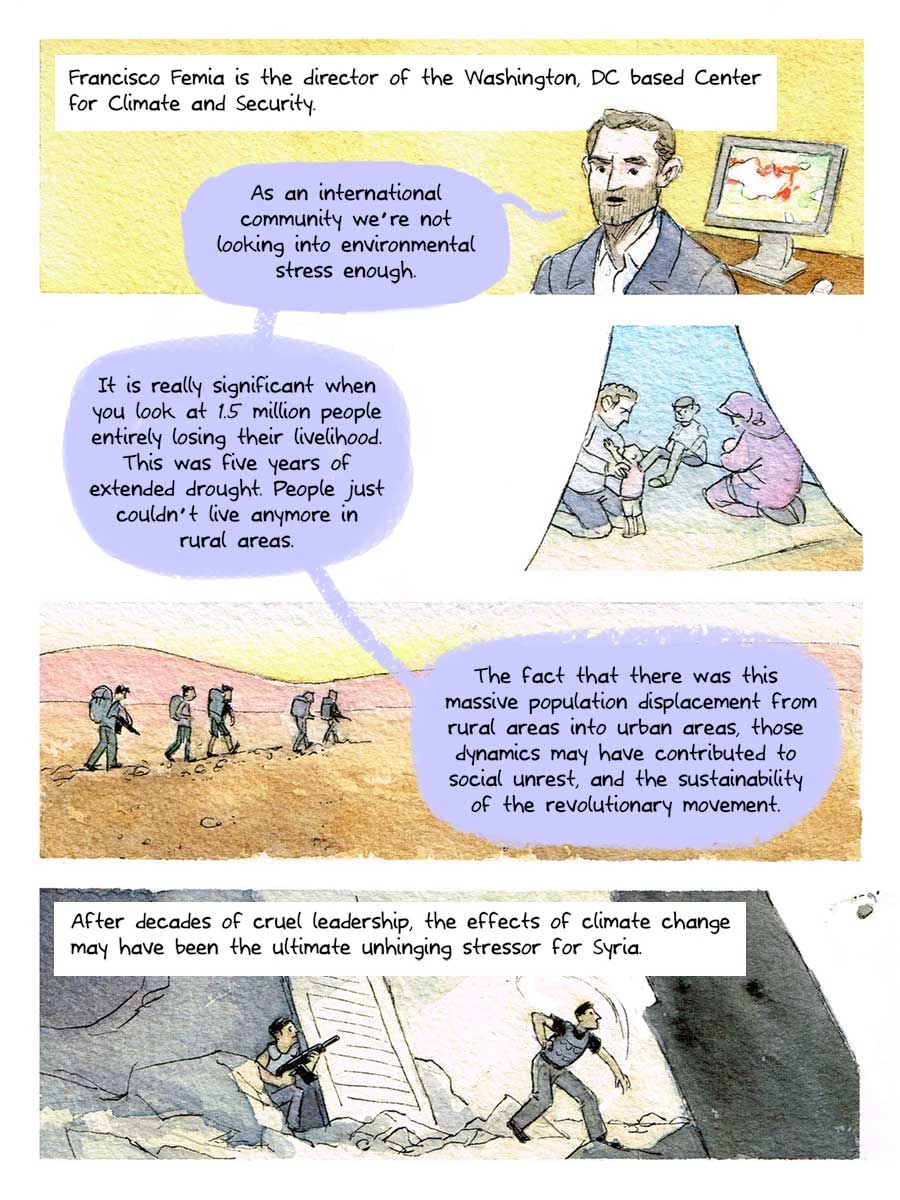
My news is full of one picture: a toddler, drowned, lying face down in the surf on the shore of Turkey. He was one of a great many Syrian refugees fleeing their country in desperation, and dying in the process.
It’s a shocking image. It’s heartbreaking. It tore me up to see it, so I’ll spare you all. Instead, I’ll show you another image that popped up in my newsfeed that is, in many ways, even more terrible.
We need to remember that our friends, our enemies, and the innocents in between are all human beings, and all deserve to live. Remember when we vote to give politicians the right to launch missiles into cities, and when we stand by and watch and do nothing as the suffering grows.


Read more of this story at Slashdot.


My 500 watt rear wheel from EbikeKit.com
Almost one full year ago, I built myself an experimental electric bike to see what all the hype was about. As a profanely vocal proponent of muscle-only transportation, I was skeptical of the idea at first. But in the spirit of a good experiment, I decided to just add the thing to my bike fleet and see how it went for a year.
As the months and seasons have rolled past, I have found myself blazing around town more frequently, with greater speeds and heavier loads than I ever thought possible, which has turned me into an unapologetic convert. The electric bike combines some of the distance-devouring advantages of a car, with the city-friendly flexibility of a bike (you can bypass all traffic jams and jump freely between roads, bike paths and even dirt and unpaved areas to find the most direct route, and park for free right at your destination).
This is why electric bikes give me the feeling of Justice. You are riding a bike like you should be, creating virtually no pollution or noise, but you have a tireless olympic sprinter in your back pocket that you can unleash at the twist of a throttle. You can EAT gigantic hills for breakfast and DUST entire pelotons of spandex-riders from the comfort of your flipflops and flannel shirt. These things could have a revolutionary impact on the lazy modern lifestyle and make cities of all sizes vastly more livable places. So my official position on the matter is now that Electric Bikes are Awesome.
But Isn’t this Just Modern Lithium-Ion Laziness?
After that first article, several Mustachians questioned my sanity. Had I sold out to the forces of convenience and comfort? My answer was that time would tell and I’d do my best to use the power responsibly. I figured that for any given longer-than-walking-distance trip, there are two categories of people:
Since I was already in category “1” for at least 95% of my 1-10 mile trips, you’d think that I would have nothing to gain and everything to lose from juicing my bike. And indeed, it could have gone this way: Over the past year the technology has caught on rapidly and I now see plenty of e-bike riders out on the streets just coasting while the motor does all the work.
But when I look in the mirror, I notice that I have no desire to be any less fit. In fact, more fitness would be quite welcome, which means I need to pack more effort into each day. This is just basic muscle math, the kind that should be part of the driver’s exam before you’re allowed to operate your first car. So anyway, I chose to do things a bit differently, setting up a few ground rules for my use of electric boost:
In other words, I chose to use the power of electricity as an extension of my biking abilities rather than a replacement. And so far, so good: I haven’t lost any biking condition over the last year, but I have felt an increase in freedom and productivity as I can get around town more quickly, even when I’d normally feel too busy or tired to embark on a bike errand.
The other bonus is that my bike can now hang with standard city traffic on 25-30 MPH roads. I can safely* take a full lane just like a motorcycle without slowing anyone else down, which provides an adrenaline-filled shortcut through certain parts of the city I had previously avoided due to lack of bike friendliness.
A Secret Superpower Against Heat, Heavy Loads, Hills, and Time Itself
Many Mustachians are fairly young and fit, already have bikes which serve them well, and are still ‘stashing cash vigorously for financial independence. For these people, an electric bike is probably an unnecessary luxury.
But for another large group, they could be just the thing. The lawyer who lives in a hot, humid climate and is currently afraid to bike the 4 miles to the office for fear of arriving sweaty. The beginner cyclist in Seattle or San Francisco who lives at the top of a perilously steep hill (especially if combined with kids or groceries in a bike trailer). Even the Longmont, Colorado tech worker who would love to bike to work in Boulder more often but could swing it more often if only that 1-hour ride time could be cut in half. If you have a reasonable surplus of money and feel there’s a shortage of biking in your life, an e-bike could be just the ticket.
The Expensive E-Bike Conspiracy and My Prodeco Storm 500 Experiment

December: Testing the Optibike R-8, a $11,000 electric mountain bike.
As part of this yearlong experiment, I decided to check out more of the electric bike scene. I tested more kit-built bikes from friends, shopped more e-bike shops, and visited the headquarters of high-end manufacturer Optibike, testing out everything they make.
This proved to be a fun visit, as founder Jim Turner has been making ebikes since the late 1990s and seems to care about nothing besides quality. From the custom frame with a motorized crank that drives the chain out to the top-line individual components, these bikes are for wealthy no-compromise buyers. They’re also for record setters, as an Optibike R-11 set the world record for climbing the 14,000 foot Pike’s Peak highway.
My take on Optibikes? Beautiful and without compromise, but I noticed that my homemade high-power conversion based on a cheap city bike was just as fast, at close to 40 MPH**. For real speed in this price range, I’d personally go for the 50MPH 4500 watt Steath Bomber or the highly German Motostrano Spitzing.

June: a visit from the Riide electric Bike
I also enjoyed a visit from Amber Wason, co-founder of Riide, who brought me her low-weight, high-style take on the concept. This thing was a joy to ride, because it behaves like a normal bike. You can barely tell it’s electric.
I noticed a bit of a pattern: the more expensive a bike company’s product, the more they tend to speak critically of cheaper competitors. I would often ask what they thought about the Prodeco Phantom, which you can buy on Amazon for under $1700. “Oh, you do NOT want a Prodeco! Cheap Chinese crap that’ll fall apart!” Yet when I looked at reviews of that same bike on Amazon, they were generally quite positive. Who should I believe?
I decided that the only way to resolve the dispute was to buy one myself. So I forked over the dough and received the shipment a few days later. Since it was mid-winter, I spent the first month testing the bike out both on and off-road during snowfalls.

February: some high-speed snow testing with a Prodeco bike on the local golf course
It was a surprisingly solid bike with good components, smooth shifting and really great disc brakes. It had plenty of power to peg the needle at its safety-limited 20 MPH speed, even when ascending steep hills. Range seemed pretty good as well, at over 20 miles when combining reasonable speed with pedaling.
Since I was already fully loaded with bikes myself, I decided to use friends and family as longer-term test subjects for this bike after the initial month. It has made the rounds and is still performing well for a friend of mine. Just one caution if you’re interested in this particular model – it is very tall, so if you’re shopping for someone under about 5’9″, you might check out the models with step-through frames instead.
So Should you Buy One Yourself?
Maybe. While cheaper than a car or motorcycle, these things are still much more expensive than great conventional bikes, which can be had for under $500 these days. Many normal people ride a single, basic bike for much greater annual distances than I ride all of my bikes, including the electric ones, combined.
On top of this, the prices on electric bikes will probably continue dropping for the next few years. I wouldn’t buy one if I was in debt for anything besides a mortgage. In fact, I wouldn’t have even bought one (yet) for myself if I didn’t have this blog as an excuse to test it out and report back to you, because I don’t commute to work.
But if it will genuinely replace some of your car use, which costs you about 50 cents a mile, the economic case may be a good one. And if it will entice you to spend more time pumping your muscles out in the real world than you currently do, the case is much stronger. It is hard to overstate the benefit of just getting out there. So if you’re sure you are ready and you can easily afford it, I think it’s a winning invention.
—
List of Good Mid-priced Ebikes:
(I have no affiliation with these bike companies, just happy to support the growth of this good technology. Please suggest more in the comments and I can add them to this list)
Kits:
My 500 watt Ebike Kit
(^^^ watch for their occasional 15% sales and use coupon code MMM for 6% anytime)
A promising looking cheaper kit on Amazon
Possible Battery for Above
The Hill Topper Kit (clean Republic)
Full Bikes:
Riide
Bikes from Evelo (note the Omni wheel)
Stromer ST1 (expensive but you could try a nationwide Craigslist search)
Prodeco Phantom
The Copenhagen Wheel (available someday)
Honorable Mention:
Jason Kraft from EbikeKit has a neat side project in development for those not looking for 2-wheelers, the Liberty Trike is a 7.5MPH adult mobility machine that seems much more capable than similar stuff on the market. A huge advantage for those currently car-dependent for medium-length neighborhood trips.
* Safety tip:
As a frequent rider on city streets, I have always found that oncoming cars tend to turn left and cut me off dangerously, even when I have the right of way. The extra speed of the e-bike made this problem even worse. But by adding really bright LED front and rear lights and leaving them flashing at all times while riding in the city, this problem was virtually eliminated overnight. It tells the drivers that you mean business and they treat you more like a motorcycle and less like a bike. You still need to be on guard at all times though, ready to hit the brakes and hurl a few Driver-Educating Expletives just for good measure.
** A word on speed:
Commercial e-bikes for on-road use are generally limited to 20MPH (throttle) or 25MPH (pedal assist). This is a fine rule and beginner cyclists will find this to be plenty of speed.
Kits have no such limitation, which is why my bike goes much faster, which technically may make it slightly illegal. However, this is a rule I don’t mind breaking with caution: on bike paths, I keep the speed down as they tend to be curvy and narrow. And of course I slow right down if other people are present on the path. On the other hand, on the open road the speed is very welcome.
If phone-wielding teenagers are allowed to legally drive 3-ton 300 horsepower pickup trucks on residential streets, then surely it is acceptable for a 185 pound man with a motorcycle license and some basic motocross training to enjoy his 0.6 horsepower electric motor without a speed limiter installed. But I am definitely increasing my risk by riding at higher speeds!

While on a trip to visit the Ijen and Bromo Tengger Semeru volcanoes in East Java last month, Chicago-based photographer Reuben Wu captured the unusual sight of molten sulphur that flows from fumaroles at the base of the Blue Fire Crater at Ijen. The area is usually swarming with tourists, but Wu stayed after sunset until the moon rose to capture these otherworldly images.
The journey into the Ijen Caldera is not for the faint hearted. A two-hour trek up the side of the rocky volcano is followed by another 45-minute hike down to the bank of the crater. The blue fire found at the base is the result of ignited sulphuric gas that burns up to 600 degrees Celsius (1,112 degrees Fahrenheit) and can flare up to 5 meters (16 feet) into the air. It is the largest “blue flame” area on Earth.
Additional photos from Wu’s trek through Indonesia can be seen here. (via Colossal Submissions)


A Japanese artist is placing a modern spin on a centuries-old technique, animating Japanese woodblock prints in the style typically reserved for TV show recaps and continuously looping memes. The artist, who who goes by Segawa thirty-seven, uses Adobe Photoshop and After Effects to alter the static images and inlay elements of sci-fi and modern culture—bringing in Segways and alien spaceships into the fixed landscapes-turned-gifs.
Other gifs produced by the artist are far more subtle, one in particular showing a crowded street of people lit by moonlight, their shadows traveling from the right to the left side of the screen as the moon travels through the sky. Another shows a scene of people gazing out the window as a high speed train endlessly rushes by.
You can see more of Segawa thirty-seven’s woodblock print animations on his Twitter. (via Spoon & Tamago)


Fertility clinics destroy embryos all the time. Why aren’t conservatives after them?
(via
)
Think I broke my hand I hit reblog so fast
(via artedish)
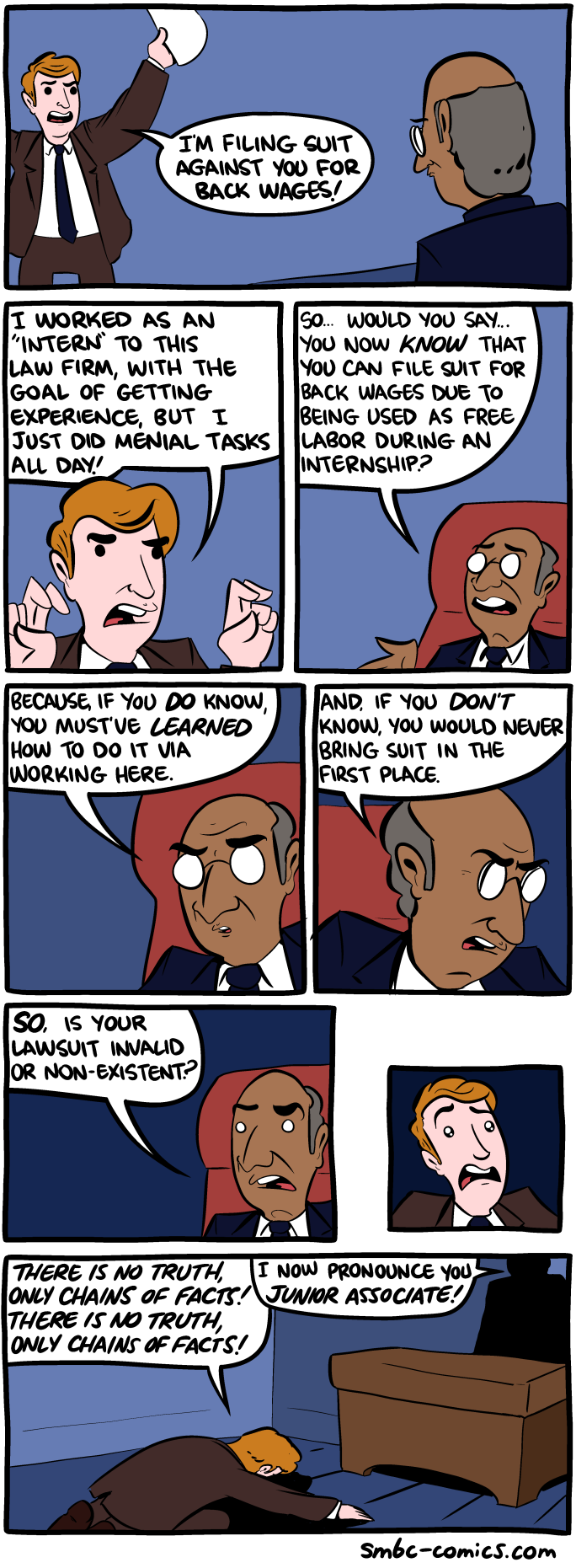
Hovertext: Someone told me it was impossible to write new lawyer jokes, so I just stole a realllllly old one.
Drinking six liters of water in a short period could kill you. One gram of vaporized polonium is enough to kill 50 million people. What about alcohol, caffeine, and cannabis? This video will tell you.

Business is skyrocketing higher than ever due to the discussion on prohibition," Chris Byars, the CEO of the Ion Productions Team based in Troy, Michigan, told Ars by e-mail. "I’m a huge supporter of personal freedom and personal responsibility. Own whatever you like, unless you use it in a manner that is harmful to another or other’s property. We’ve received a large amount of support from police, fire, our customers, and interested parties regarding keeping them legal."
Byars added that the company has sold 350 units at $900 each, including shipping, in recent weeks. That's in addition to the $150,000 the company raised on IndieGoGo.
The Ion product, known as the XM42, can shoot fire over 25 feet and has more than 35 seconds of burn time per tank of fuel. With a full tank of fuel, it weighs just 10 pounds...
Shockingly, there are no current federal regulations on the possession, manufacture, sale, or use of flamethrowers.
"These devices are not regulated as they do not qualify as firearms under the National Firearms Act," Corey Ray, a spokesman with the Bureau of Alcohol, Tobacco, and Firearms, told Ars by e-mail.
At the state level, California requires a permit while Maryland outright bans them—Ars is not aware of any other state-level regulation. The Inhumane Weapons Convention, which the United States signed in 1981, forbids "incendiary weapons," including flamethrowers. However, this document is only an agreement between nation-states and their militaries, and it did not foresee individual possession...I'll refrain from any personal commentary; I'll just file it in the appropriate blog category.
Mayor Fouts remains unconvinced.
"If our own military doesn't use it and it's been banned by the Geneva Convention then why would someone think this should be sold to the general public?" he added. "I think it's too risky to gamble with people's lives. I can't think of something more horrific than to burn somebody alive, and that's what this would do."

Few American voters may yet have heard of Jeremy Corbyn, the previously obscure British parliamentarian who is poised to become leader of the official Labour opposition to David Cameron’s government. But if they have been following the US presidential race, they may already understand the general idea.The article from The Guardian excerpted above goes on to mention populist uprisings in France and Greece. There is also an analysis of Corbyn's rise at Salon.
Slap a beard on leftwing Democratic candidate Bernie Sanders and make him as casual as a Romantic poet and you have a good approximation of the elderly radical across the Atlantic who is shaking the fragile pillars of the British establishment and could (at least in theory) become Queen Elizabeth’s next prime minister of the not-so United Kingdom...
To the amazement of pundits and politicians alike, Corbyn’s campaign took off in July much as Sanders’s own has done for the Democratic nomination. Despite being unfashionable democratic socialists, both men tapped a deep well of resentment against the mainstream political elite by people who feel patronised, neglected and left behind.
Britain’s Labour Party is going through its own Bernie Sanders moment – except that it’s more like a Bernie Sanders moment on steroids and set to warp drive...And here's a related op-ed piece in The Spectator.
A longtime member of Parliament from North London who appears not to own a tie, Corbyn has spent his entire political career as a rebellious Labour “backbencher” – that is, he has never been part of the party leadership, nor held a government post when Labour had a majority...
Like Sanders, Corbyn has long advocated for a rejection of austerity politics and a return to seemingly outmoded policies of ambitious social spending, government activism and higher taxes on big business and the rich. He has proposed universal childcare and free higher education for all, wants to renationalize Britain’s railroads and utilities, and believes the country should withdraw from NATO, scrap its nuclear missiles and invest most of its military budget in job programs...
If no one finds Corbyn’s politics so amusing anymore, there is an element of comedy in the Armageddon that Labour’s centrist establishment may have called down upon itself. In the interest of greater transparency and democracy, the party opened this year’s leadership election to anyone who registered online as a party supporter and pay a minimal fee – and the apparent result is a whole lot more democracy than they wanted. Ballots started going out this weekend to 610,000 or so Labour members and supporters – more than half of whom signed up during the current campaign and are highly likely to be Corbyn voters. Labour’s leadership underestimated the public appetite for candidates and ideas that lie outside the safe zone of neoliberal consensus politics, and is now likely to reap the whirlwind. It’s a lesson that will not be lost on political leadership castes around the world.

On the economyContinued at length at the link.
Corbyn is opposed to austerity and plans to bring down the deficit by growing the economy and taxing the wealthy instead.
He intends to introduce a “people’s quantitative easing”, which would allow the Bank of England to print money to invest in large-scale housing, energy, transport and digital projects, partly through a national investment bank.
Corbyn says he will fund this by reducing the “tax gap” and ending corporate tax reliefs.
On tax
Corbyn says there is £20bn in tax debt uncollected by HMRC every year and another £20bn in tax avoidance and a further £80bn in tax evasion that needs to be addressed.
On education
Corbyn has proposed a National Education Service, which he says would be “every bit as vital and as free at the point of use as our NHS”. The service would begin with universal childcare, give more power to local authorities, rethink the role of free schools and academies, introduce a minimum wage for apprentices and put more money into adult learning...
Well-funded arguments are often made that copyright should last forever, replacing its original purpose (encouraging the creation of new works) with a plainly proprietary system of cultural ownership.
Read the rest
Hovertext: The neat thing about lottery tickets is you can win money with them!
2/3rds of all general admission tickets are gone for BAHFest East! Please buy soon to get a spot :)

Across India an entire category of architecture is slowly crumbling into obscurity, and you’ve probably never even heard it. Such was the case 30 years ago when Chicago journalist Victoria Lautman made her first trip to the country and discovered the impressive structures called stepwells. Like gates to the underworld, the massive subterranean temples were designed as a primary way to access the water table in regions where the climate vacillates between swelteringly dry during most months, with a few weeks of torrential monsoons in the spring.
Thousands of stepwells were built in India starting around the 2nd and 4th centuries A.D. where they first appeared as rudimentary trenches but slowly evolved into much more elaborate feats of engineering and art. By the 11th century some stepwells were commissioned by wealthy or powerful philanthropists (almost a fourth of whom were female) as monumental tributes that would last for eternity. Lautman shares with Arch Daily about the ingenious construction of the giant wells that plunge into the ground up to 10 stories deep:
Construction of stepwells involved not just the sinking of a typical deep cylinder from which water could be hauled, but the careful placement of an adjacent, stone-lined “trench” that, once a long staircase and side ledges were embedded, allowed access to the ever-fluctuating water level which flowed through an opening in the well cylinder. In dry seasons, every step—which could number over a hundred—had to be negotiated to reach the bottom story. But during rainy seasons, a parallel function kicked in and the trench transformed into a large cistern, filling to capacity and submerging the steps sometimes to the surface. This ingenious system for water preservation continued for a millennium.
Because of an increasing drop in India’s water table due to unregulated pumping, most of the wells have long since dried up and are now almost completely neglected. While some stepwells near areas of heavy tourism are well maintained, most are used as garbage dumping grounds and are overgrown with wildlife or caved in completely. Many have fallen completely off the map.
Inspired by an urgency to document the wells before they disappear, Lautman has traveled to India numerous times in the last few years and taken upon herself to locate 120 structures across 7 states. She’s currently seeking a publisher to help bring her discoveries and photographs to a larger audience, and also offers stepwell lectures to architects and universities. If you’re interested, get in touch.
You can read a more comprehensive account of stepwells by Lautman on Arch Daily.


I never get tired of the Bad Lip Reading videos. This one, made for the first Republican Debate, might be the best one I've seen.
Read the rest
New research suggests that traffic noise (apart from pollution and general hectic motion) degrades the natural habitat of songbirds, and perhaps other animals. Boise State University biologists created a "phantom road" using speakers to create traffic noise in a natural, roadless songbird habitat. Read the rest

Researchers calculate that as many as 9 out of 10 seabirds have plastic garbage in their intestines. So sad. Read the rest
As you probably know, "gerrymandering" is the practice of redrawing the borders of a voting district for a specific purpose, usually if not always to make sure it has more of your supporters than opponents in it. This is nothing new, of course, but few gerrymanderers can have failed more spectacularly than those who crafted the Business Loop 70 Community Improvement District in Columbia, Missouri.
The city council established the district in April for the purpose of improving the area of town shown above. According to the Columbia Tribune (also the image source), state law permits the voters in a CID to impose taxes or assessments within the district in order to fund improvement projects. A majority of registered voters living in the district must approve, but if there aren't any registered voters in the district, then only the property owners get to vote. (You see where this is going.)
After the district was established, the property owners voted for a property assessment (basically taxing each other) that is expected to bring in about $50,000 a year. But that's not enough for the projects they have planned, so they also intended to enact a half-cent sales tax to raise another $220,000. Even though this tax would be paid by other people, most likely those who live nearby, under the CID law it could be imposed by the property owners acting alone because there are no registered voters living in the district. And after all, that's why the district looks sort of like the Battlestar Galactica instead of some respectable polygon. As the Tribune put it, many nearby homes "were not included in the district when it was drawn because district organizers wanted a district free of residents."
And they almost got it.
The note "Henderson's residence" on the map indicates the home of University of Missouri student Jen Henderson, who, it turns out, is the only registered voter living within the Business Loop 70 CID. But because there is in fact at least one registered voter there, the law says the property owners don't get to vote. As a result, Jen Henderson, and Jen Henderson alone, will decide whether the sales tax passes.
Henderson has been registered since February, before the CID was created. It's not clear from the report how they missed her when creating the district, let alone when they held the vote in April to impose the property assessment. Since the property owners were taxing themselves with that one, they might have assumed (accurately) that nobody would really care. But in May, when planning for the sales-tax vote, they did contact the county clerk, who gave them the bad news that they had missed one registered voter.
According to Henderson, the CID's director then contacted her to ask if she would consider "unregistering" so the property owners could make the decision they have already decided to make. Unfortunately, they had the bad luck to overlook one of the relatively few voters who actually cares.
Henderson said she would consider the request, but the more she researched it, the proposal "just didn't seem to be as good as they were saying to me at first." While she has not made a decision, she says, "her concerns include vague project outlines, [the director's] pay, Business Loop improvements she said will help businesses but not nearby residents and how an additional sales tax would affect low-income people purchasing groceries and other necessities." Boy, I bet they would really like to make one small change to the map right about now.
1881 H. C. Lodge in J. Winsor Mem. Hist. Boston III. 212: "In 1812, while [Elbridge] Gerry was governor [of Massachusetts], the Democratic Legislature, in order to secure an increased representation of their party in the State Senate, districted the State in such a way that the shapes of the towns, forming such a district in Essex [County], brought out a territory of singular outline. This was indicated on a map which Russell, the editor of the Centinel, hung in his office. Stuart, the painter, observing it, added a head, wings, and claws, and exclaimed, ‘That will do for a salamander!’ ‘Gerrymander!’ said Russell, and the word became a proverb."
—Oxford English Dictionary
The group is not required to hold the election, of course, and they are apparently considering whether or not to go forward. The director—who it sounds like should not be in charge of voter outreach, if they do go forward—told the Tribune that they have "two options: hold the election or not." There is a third option, of course: modify the plan in a way that might persuade the voters voter to support it. That doesn't seem to be on the table here, but it might actually be easier than trying to gerrymander your way to victory. Just a thought.
Update: According to a new Tribune piece today (thanks, Glenn), the CID board has decided not to decide whether to hold the election. Since it made this (non)decision after a meeting this morning that Henderson attended, it sounds like they still haven't convinced her. The article says that board members "suggested ways to draw Henderson out of the district"—which I'm sure was much less sinister than it sounds—and also "discussed lobbying for a law to exclude groceries from the sales tax to alleviate her concerns" about poor people. (I guess they don't have the power to tinker with the tax, just to pass it. Although they don't have the power to do that now either.) No decision was reached, however.
This report says that they drew the district lines last November, which was after Henderson had moved into the district but before she registered to vote. I guess the lesson is that you need to go door-to-door to be sure you've got your election rigged correctly.


Pro tip: Bragging about your Mensa card as an actual adult signals that while you may be "smart," you almost certainly are not wise.
— John Scalzi (@scalzi) August 31, 2015
In the various recent kerfuffles surrounding science fiction and its awards, there have been a couple of people (and their spouses, declaiming about their beloved) who have been slapping down Mensa cards as proof that they (or their spouse) are smart. Let me just say this about that:
Oh, my sweet summer children. Just don’t.
If you want to be in Mensa, that’s fine. Everyone needs hobbies and associations, and if this is the direction you want to go with yours, then you do you. Not my flavor, but then, lots of hobbies and associations aren’t my flavor.
That said:
1. Literally no one outside of Mensa gives a shit about your Mensa card. No one is impressed that you belong to an organization that has among its membership people who believe that because they can ace a test, they are therefore broadly intellectually superior to everyone else.
2. Your Mensa membership does not imply or suggest that you are the smartest person in the room. Leaving aside the point that the intelligence that Mensa values is a narrow and specialized sort, a large number of people who can join Mensa, don’t, for various reasons, including the idea that belonging to a group that glories in its supposed intellectual superiority is more than vaguely obnoxious.
3. Your need to bring up the fact you have a Mensa card suggests nothing other than it’s really really really important to you for people to know you’re smart, and that you believe external accreditation of this supposed top-tier intelligence is more persuasive than, say, the establishment of your intelligence through your actions, demeanor, or personality. Which is to say: It shows you’re insecure.
4. Your Mensa card does not mean you know how to argue. Your Mensa card does not mean you do not make errors or lapses in judgment. Your Mensa card is not a “get out of jail free” card when someone pokes holes in your thesis. Your Mensa card does not mean that you can’t be racist or sexist or otherwise bigoted. You may not say “I have a Mensa card, therefore my logic is irrefutable.” Your Mensa card will not save you from Dunning-Kruger syndrome, and if you think it will, then you are exactly who the Dunning-Kruger syndrome was meant to describe. You Mensa card will not keep you from being called out for acting stupidly, or doing stupid things.
5. Your Mensa card does not immunize you from being a complete, raging asshole.
In short, it’s not actually smart to flash your Mensa card, and if you were smart, you’d know not to do it. If you have to resort to waving your Mensa card around to establish your intelligence, you’re signaling that you have no other way to do it. And you don’t have to be a genius to know what that actually means about you.