Shared posts

28 Jan 07:39

When Art Is Dangerous (or Not)

Tertiarymatt

I knew he would write about this.

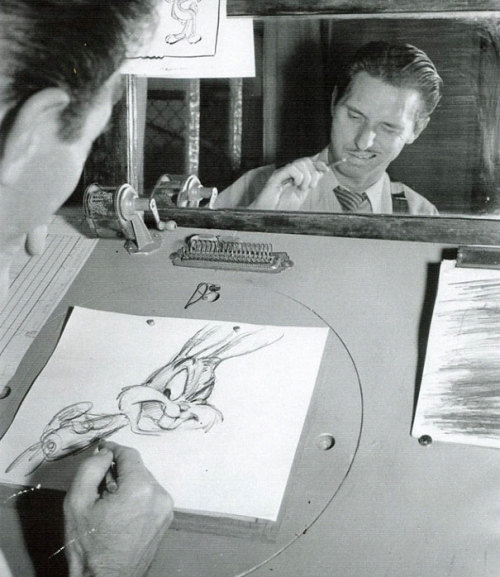
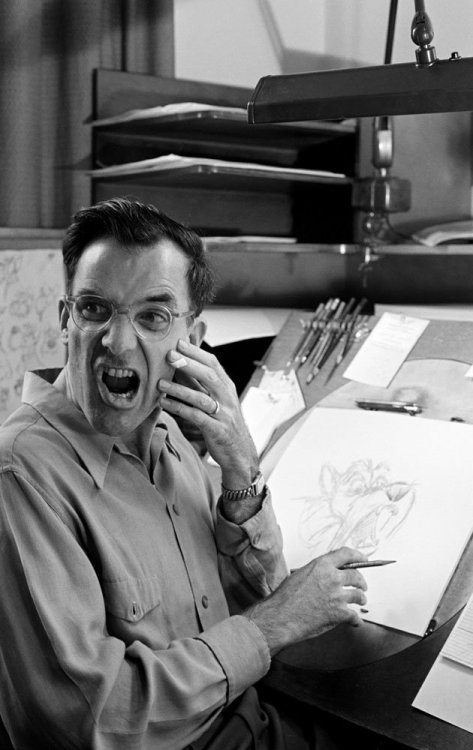
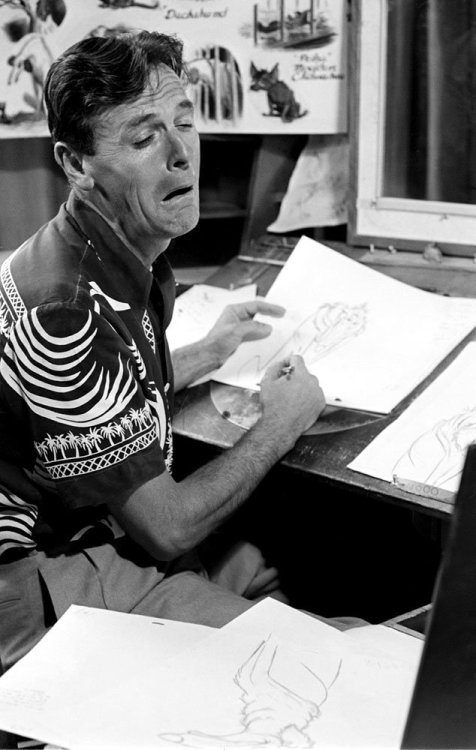
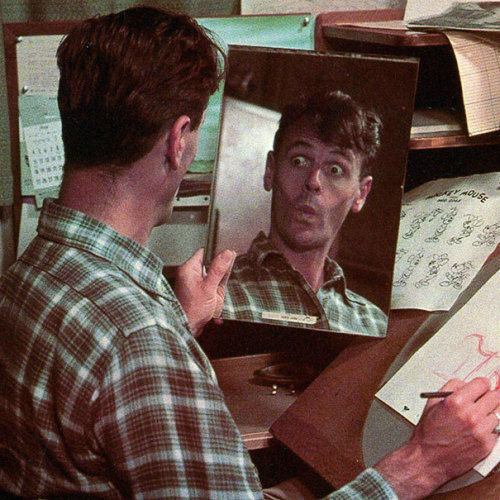
THE only time art ever seems to make news here in the West anymore is when a Pollock or Warhol sells for a sum commensurate with the budget of a “Transformers” film. It seems bizarre, then, to find ourselves grappling with international crises in which art is the issue: the imbroglio involving the Sony movie “The Interview,” the massacre at Charlie Hebdo in Paris. The incomprehension, whether bemused or horrified, that we feel toward people who take up arms against the creators of cartoons or comedies is a chastening reminder that there are still cultures in which art is not a harmless diversion or commodity, but something real and volatile, a potential threat to be violently suppressed. These attacks are, in a way, a savage, atavistic show of respect.

I was a cartoonist for The Baltimore City Paper from 1997 to 2009, so I well know what influence a political cartoonist wields in this country. The last time art had any real-world effect on United States politics was about 140 years ago, when Boss Tweed was not only driven from power by Thomas Nast’s caricatures of him but ultimately arrested after he’d fled to Spain, where he was recognized from those same cartoons.

Much as I admire Steve Bell’s caricatures of George W. Bush as a dung-flinging chimpanzee, it’s hard to imagine them landing the former president in The Hague. Most daily editorial cartoonists in the United States produce work about as incisive as a prime-time sitcom, and the rest are consigned to niche markets where they preach to their demographic choirs. I have to wonder whether any of my colleagues felt the same queasy mix of emotions I did on hearing about the assassinations in Paris: beneath the outrage, sorrow and solidarity, a small, irrational twinge of guilt that we’re not doing anything worth shooting us over.

Kurt Vonnegut Jr. likened the cumulative firepower of all the art and literature directed against the Vietnam War to “the explosive force of a very large banana-cream pie — a pie two meters in diameter, 20 centimeters thick, and dropped from a height of 10 meters or more.” A lot of artists in America tend to be self-deprecating futilitarians, because we’ve grown up in a culture in which art doesn’t matter except, occasionally, as a high-end investment. When art has been controversial here it’s most often been because it’s deemed obscene. (Sex is our tawdry Muhammad, the thing that cannot be depicted.) But it’s hard to think of a time in our recent history when art gave any cause for alarm to anyone in power.

It’s a testament to the brittleness and fragility of ideologies like the thuggish cult of North Korea and the more homicidally literalist sects of Islam that they react so violently to art most Westerners regard as silly and trivial: dumb comedies, crude cartoons. North Korea saw “The Interview” as some sort of invidious state-sponsored attack on its revered leader, the cinematic equivalent of a dirty bomb. It was almost endearing; you wanted to explain to them, No, see, in our country, this is stupid art. We weren’t even going to go see it in theaters until you threatened to bomb them; we would’ve waited for it on instant streaming. Some part of the international reaction to the Charlie Hebdo massacre was this same kind of condescending incredulity: Wait, this was about cartoons?

It speaks well of our own relatively flexible system that it can accommodate criticism and dissent without lopping anyone’s hands off. But this is also a backhanded testament to our society’s successful denaturing of satire, and the impotence of art in our own culture. Autocrats from Plato on have advocated control and censorship of the arts to ensure the stability of their states and micromanage their people’s inner lives. In the mature democracies of the West, there’s no longer any need for purges or fatwas or book-burnings. Why waste bullets shooting artists when you can just not pay them? Why bother banning books when nobody reads anyway, and the national literature is so provincial, insular and narcissistic it poses no troublesome questions?

The real Machiavellian genius of the First Amendment is that free speech turns out to be mostly harmless — a lot of P.C. nit-picking, dingbat conspiracy theories, tedious libertarian screeds and name calling. The only “free speech” that has any effect in a stable, well-run plutocracy is the kind protected by Buckley vs. Valeo in the form of campaign contributions.

Continue reading the main story

Recent Comments

anixt999

Millions of people were at todays Rally in France, but not one high ranking Unites Staes Official. As an American I apologize for my country...

h-from-missouri

One other name to add to the list, Stan Freberg.

Clark M. Shanahan

The drawings behind brutal murders at Charlie Hebdo were simply a pretext.The real motivation was to "sharpen the contradictions"; that is,...

  • See All Comments

American capitalism has its own ingenious system for neutralizing or absorbing dissent: Any art that challenges its fundamental assumptions, its inevitability and rightness, is either ignored, so the artist has to tend bar or learn graphic design, or, if it becomes successful, lavishly rewarded and painlessly welcomed into the system it criticized. As systems of oppression go, this is definitely the one you want to suffer under. Getting paid only 20 bucks a week for my political cartoons was kind of insulting, but at least I wasn’t forced to eat them at gunpoint.

Continue reading the main story Write A Comment

I’m relieved to live in a place where the worst thing I have to worry about is being called names on the Internet. And I don’t mean to romanticize what happened in Paris: It was obscene and stupid and sad. And yet there is also occasion for pride in it, the kind of somber pride any soldier is entitled to feel in a comrade’s sacrifice. It is a reminder that art is not a frivolous diversion, not just a product or “content.” It is still alive and dangerous, and still hated and feared by those most deserving of our mockery.

A lot of people are calling the cartoonists of Charlie Hebdo “heroes,” which it’s hard to imagine happening while they were still alive. (Would Seth Rogen be one if the North Koreans poisoned him?) But if grown-ups are going to use a word as childish as “hero” at all, then I’m afraid we may have to apply it, now and then, not only to those uniformed few who control drones from Langley or Vegas or bust teenagers selling weed on the street but also to silly, irrelevant people like cartoonists.

Last week, we quietly added a few more names to the roll call. And tonight, in the real ceremony, my colleagues and I will salute them with the traditional instruments of our trade — glasses raised around tables in the bars and cafes and tea houses of the civilized world. And, after a few, we’ll do what cartoonists do — make cruel, gleeful fun of Islamic wackos and right-wing bigots, opportunistic politicians and useless cartoonists, absolutely everyone. No one will be spared.

27 Jan 23:19

yoannlossel: [Yoann Lossel] "The Forgotten Gods" - Graphite,...

Tertiarymatt

Super rad. via the Toaster.


yoannlossel:

[Yoann Lossel] "The Forgotten Gods" - Graphite, Gold leaf and hydrangea petals - 17,3/23” 

"The Forgotten Gods" - Graphite, feuilles d’or et pétales d’hortensias - 44/58cm

Mon hommage à la forêt Primordiale de Bernard Boisson.

My Website :: on Etsy :: on Facebook :: on deviantART

© Yoann Lossel 2013

27 Jan 15:11

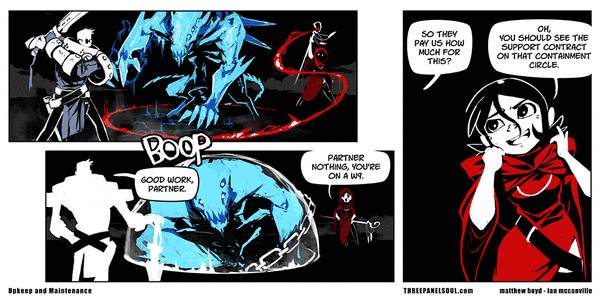
Upkeep and Maintenance

by Ian

Upkeep and Maintenance

27 Jan 15:10

Whom The Gods Would Destroy, They First Give Computers

by Christopher Wright

There are a lot of reasons why a computer will die on you, and I think I may have experienced most of them. The truly frustrating thing about it—for me, anyway—is that so many of those reasons look exactly the same at the beginning. A hard drive dying can screw up applications the same way that bad ram can screw up applications the same way that a cracked motherboard can screw up applications the same way that a bad video card can screw up applications. When you take the time to troubleshoot the problem, you can with time and effort figure out which problem it is—either by swapping out components until it starts working again, thus winnowing out the bad component (“aha! Everything started working when I removed Windows!”) or by running a very fancy program that tests everything for you, and three days later tells you the problem is expensive.

Yes, those are your only two choices. All the other possibilities are variations of those two choices.

25 Jan 03:04

New Atheists are wrong about Islam. Here’s how data proves it

Tertiarymatt

Data! I'm looking for the research the book is based on.

If you’re ever unlucky enough to find yourself in an argument on Twitter as to the nature of faith and the relative worth of the globe’s various major religions, one refrain you’re quite likely to hear — usually after an overheated reference to the Crusades, but before someone brings up Salman Rushdie — is that there’s something especially wrong with Islam. It’s a common talking point of apologists for certain other religions, but it’s also a favored line of new atheists like Richard Dawkins and Bill Maher, too.

Usually, the conversation at that point will descend into a semantic debate over Islamophobia and whether or not it’s “politically correct” to engage in that time-honored practice of just asking questions. The part that tends to get skipped over, though, is the most important — namely, is the “Muslims are different” theory even true? That’s what Berkeley’s M. Steven Fish tried to find out in his groundbreaking book, “Are Muslims Distinctive?: A Look at the Evidence.” What he found, as you might guess, is that the answer is complicated.

Recently, Salon spoke with Fish over the phone about his research and its possible implications. Our conversation is below and has been edited for clarity and length.

What made you want to look into this question of whether Muslims are distinctive, and in what sense were you looking at it?

Well, you know at the time I started thinking about this project, I realized that there was an awful lot of debate going on in the public arena, and also in academia, about whether Muslims were more violent or not, or whether Muslims had a problem with gender inequality, whether Muslims were more likely to want to fuse religious and political authority. There were all these questions about how Muslims differ from us, or from everybody else. Especially in the West, people were asking these questions — but also in confessionally mixed societies that have large Muslim minorities like India.


advertisement

And what struck me was that while these questions were getting a lot of attention, especially in public debate, they really weren’t being treated analytically. There was a lot of debate going back and forth among the talking heads, you know, analysts, including people who appear on electronic media. One side would oftentimes say, how can you even ask whether Muslims are more violent, that’s a terrible question to ask, of course there’s no difference, it’s insulting to even ask the question. The other side would say ,what are you talking about, it’s manifestly obvious that Muslims are more violent, this is a no-brainer. And there seemed to be a polarization of the debate on some of these questions…

I felt that the debate was being infected by a kind of, on the one hand a kind of political correctness with one side very predominant in academia saying that we shouldn’t even ask these questions. And the other side being affected by prejudice, saying, well, of course we know the answers to these questions. We don’t even really have to look into the data. And so without political correctness or prejudice I tried to approach these questions. And again being something of an outsider to the debate, was at a bit of an advantage. Of course I had the disadvantage that I have the deep knowledge that many other specialists do.

So how did you try to answer these questions more empirically? What was your method?

I took stock of what was out there in the debates and I identified maybe a dozen of the biggest questions that were rattling around public consciousness about Muslims’ distinctiveness or whether they were different or not. Then I kind of figured out which of those questions I could generate data to help address. And of those questions I narrowed it down to like half a dozen that I thought were really big questions that I could actually find data or generate data to address empirically.

And what did you find?

I found that Muslims in general are less distinctive than many of us think. In many ways there is really very little difference between Muslims and everybody else. Sometimes I use “everybody else” as the reference category, and sometimes I use Christians in particular, because Christianity and Islam are by far the world’s biggest faith traditions…

Even in some areas in which we expect … I didn’t find a great deal of difference. For example, many people think that Muslims are really intent on fusing religious and political authority, that there’s really no room in Islamic thinking for independent civic sphere that is not run by religious authorities, and in which religious authority and doctrine predominate, meaning there’s little room for an independent civil society and public sphere. Well, I found in this survey data that … Muslims and Christians don’t differ very much on this question, and that most Muslims, once one controls for everything that needs to be controlled for in these statistical analyses, actually do not want to fuse religious and political authority…

Some, of course, do. Some absolutely do. But some Christians do as well … There are many American Christians who are skeptical about dividing church and state rigorously. That’s true for many Muslims as well. But a majority of both Christians and Muslims seem to embrace at least some separation of sacred and secular in politics. That’s one finding that was perhaps surprising and also showed that Muslims are less distinctive than we might think.

What were some other surprises?

Another finding that showed that Muslims were less distinctive than we might think looked at … membership in organizations, all kinds of things that we would use to actually measure social capital — interpersonal trust, for example. We find there that there really is little or no difference between those Muslims and everyone else.

Anything on the other side of the ledger? Any areas where the difference between Muslims and non-Muslims is clear and consistent?

There’s some questions by which I did find evidence of Muslim distinctiveness. For example, gender inequality; I find in the data that there are big problems in the Muslim world relative to other regions, and among Muslims relative to people of other faiths when it comes to gender inequality. It seems that there are lower workforce participation ratios — that is, female-to-male and earned-income ratios — among Muslims than among non-Muslims, generally speaking, which means that women tend to work less and earn less than men do in Muslim countries to a greater extent than they do elsewhere. I also find other evidence of gender discrimination …

Generally speaking, women should outlive men by several years. I found that that gap is somewhat smaller in predominantly Muslim societies, which is a red flag and shows that perhaps there are gender discrimination problems that run more deeply than in predominantly non-Muslim societies.

What about economics? Were there any differences there?

When it comes to class inequalities, Muslims tend to be distinctive — but they tend to lead. They tend to lag when it comes to gender inequality, but if we look at indicators of socioeconomic inequality, it seems that the socioeconomic inequalities are lower in predominantly Muslim countries than they are in other countries outside the Muslim world.

Researchers sometimes don’t like to answer this question — it’s not sufficiently rooted in the data, I guess — but what were some of the broader themes or takeaways you got from this research, if any?

I would say that the first implication I drew was that we really need to look at the facts. We really need to look at the data before we draw conclusions about whether this or that faith group differs strongly from another one. Some of my findings were counterintuitive, like, for example, the finding that Muslims don’t necessarily want to fuse religious and political authority more than non-Muslims do. That’s not something that we would have guessed. In fact, the evidence seems superficially to suggest the opposite.

Looking at violence, I found that while Muslims are disproportionately … responsible for acts of terrorism over the last couple decades or so, I also found that when it comes to other forms of violence, like murder rates, that Muslims actually do better. They tend to have lower murder rates in predominantly Muslim societies than elsewhere…

When it comes to substantive implications, I think that there’s certainly problems that the work I’ve done — and the work others have done — point to that need to be addressed … I do think that the problem of gender inequality among Muslims is something that is worthy of addressing and worthy of trying very hard to grapple with. This is something that many Muslims, including leading intellectuals in the Muslim world, are well aware of and are working very hard to deal with…

And are there any lessons you think those of us in the West might want to apply to ourselves?

I found it very interesting that class inequalities tend to be lower in predominantly Muslim societies. I want to know what I can learn as an American, living in a predominantly Christian society — with a Muslim minority and Jewish and other religious minorities — when it comes to class inequalities. We certainly have a bad and growing socioeconomic gap in the United States. Why is that gap a little bit lower in Muslim societies?

I would also like to know why murder rates tend to be lower in predominantly Muslim societies.

I’ve heard that before. Does it have anything to do with living in a less-open society?

This relationship holds up even when we control for things like type of political regime … Countries with authoritarian regimes do not have lower murder rates … you can see in the data that it’s not true. And so you can still control for that, and you can control for other things in statistical analysis to look at murder rates, and you still get what you might call the “Muslim effect,” which is to say that there seems to be something about Muslim societies that makes people less prone to engage in homicide. And the difference … is not small.

25 Jan 03:00

http://polisci.berkeley.edu/sites/default/files/people/u3833/IslamAndLargeScalePoliticalViolence.pdf

Tertiarymatt

This seems particularly pertinent, Oh Lev.
Sharing before I've read it.

24 Jan 22:06

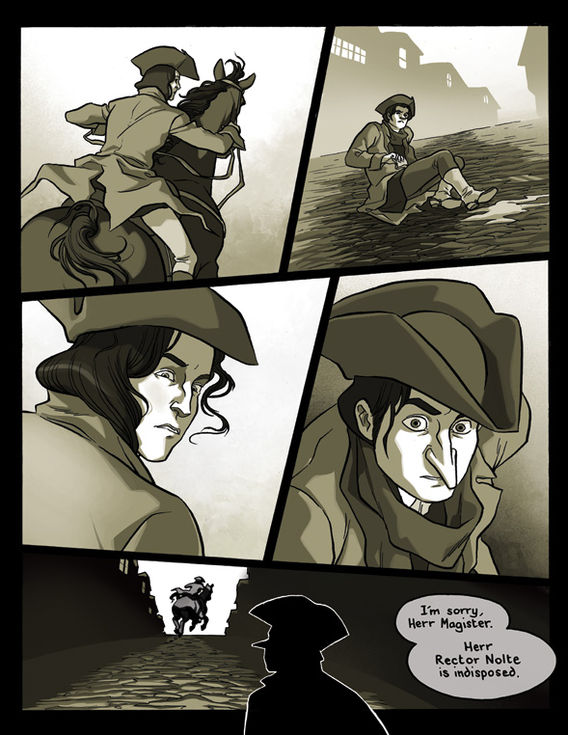
Issue 20: The Drums of War

by Christopher Wright
Tertiarymatt

Whee!

Story: Christopher Wright
Cover: Pascalle Lepas
Logo: Garth Graham

24 Jan 09:47

When introducing someone to the wonders of infosec

Tertiarymatt

This seems accurate. via Burly.T

by @fobski

24 Jan 05:08

St. Vincent Shares New Song "Bad Believer"

by Molly Beauchemin
Tertiarymatt

Via the raven.

St. Vincent Shares New Song "Bad Believer"

 St. Vincent has shared a new song called "Bad Believer", the first song to be unveiled from the deluxe release of her eponymous 2014 record St. Vincent. The forthcoming deluxe edition (out February 9) will feature four new songs and a Darkside remix of "Digital Witness". Listen to "Bad Believer" above, via the Guardian.

As previously reported, the new season of HBO's "Girls" will feature a new song from St. Vincent (and another one from Grimes) called "Teenage Talk", which will close out an episode.

Read our interview with St. Vincent.

Watch St. Vincent's full set from Pitchfork Music Festival Paris:

24 Jan 03:57

ericnyquist: Books are in! Thanks Bloomsbury! #Elizabethkolbert...

Tertiarymatt

I'm sure it will depress the shit out of me, though.


ericnyquist:

Books are in! Thanks Bloomsbury! #Elizabethkolbert #fieldnotesfromacatastrophe #climatechange

Probably a book I need to buy. And more awesome cover work from mr. nyquist. 

23 Jan 22:27

Family Man Page 358

by Dylan
Tertiarymatt

This page is so great.

Family Man Page 358

23 Jan 22:26

January 23, 2015


Oh my GAWD, I wish I could show you the current TOP SECRET PROJECT.
23 Jan 17:06

pohnnyworld: The last thing you want to see in the sky is an...


pohnnyworld:

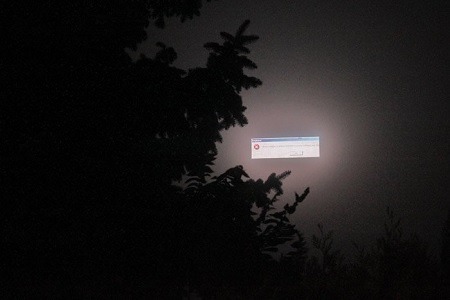
The last thing you want to see in the sky is an error message, especially now that science is 85 percent sure that The Matrix is real. If we’re all living in a computer simulation, we at least want to know that shit isn’t running on freaking Windows 8.

That is, however, an untouched photo of a real sky and a real tree — if you had been standing in that spot, this is what you’d have seen. The photo was taken in Odessa, Ukraine when a digital billboard malfunctioned, projecting a Windows error into the fog and temporarily convincing who knows how many passing motorists that somebody was going to have to go out into space and reboot God.

Amusing, and unexpected.

23 Jan 05:07

Seriously, it isn’t complicated. 


Seriously, it isn’t complicated. 

22 Jan 23:23

Barrett Brown's allocution / sentencing statement

Tertiarymatt

Click thru. Twice, probably. Sorry about that.

Barrett Brown's allocution / sentencing statement:

freebarrettbrown:

Good afternoon, Your Honor.

The allocution I give today is going to be a bit different from the sort that usually concludes a sentencing hearing, because this is an unusual case touching upon unusual issues. It is also a very public case, not only in the sense that it has been followed closely…

Well worth reading. And a load of shit that he got the sentence the government asked for. 

22 Jan 21:22

saving this, for reasons.

Tertiarymatt

(animated gif on the click thru)


saving this, for reasons.

20 Jan 16:51

Photo

Tertiarymatt

GO BACK TO SLEEP, AMERICA


20 Jan 14:12

I do love me some Hillbilly Jazz, even if I do mostly listen to...


I do love me some Hillbilly Jazz, even if I do mostly listen to solemn metal these days.

20 Jan 07:32

publiccollectors: A Critic’s Choice column by Bill Meyer in the...

Tertiarymatt

Audio recording is not bad, gets pretty blown out, in parts.


publiccollectors:

A Critic’s Choice column by Bill Meyer in the Chicago Reader from a 1998 show by Godspeed You Black Emperor! with Low at Schubas in 1998. One thing I remember about this show is that it took me forever to get to the venue because I was stuck driving behind a school bus that was being towed. As it turned out, it was Godspeed You Black Emperor!’s school bus so the show started a bit late. Both bands played great sets but the most noteworthy moment was when Low played the song “Do You Know How to Waltz?” and gradually every member of Godspeed joined them onstage for a rendition that lasted almost a half hour. Happily, someone recorded this and you can hear it on Youtube.

20 Jan 06:56

The Danger of Comparison

I’ll never make anything as good as that thing.

I’ll never make anything good.

I’ll never make anything.

Never make anything.

19 Jan 22:43

dictionaryofobscuresorrows: opian. the ambiguous intensity of...


dictionaryofobscuresorrows:

opia
n. the ambiguous intensity of looking someone in the eye, which can feel simultaneously invasive and vulnerable—their pupils glittering, bottomless and opaque—as if you were peering through a hole in the door of a house, able to tell that there’s someone standing there, but unable to tell if you’re looking in or looking out.

19 Jan 22:13

MOOD MUSIC FOR MONDAY: PYRAMIDS, KJELD, DECLINE OF THE I

by Islander
Tertiarymatt

Not super big on the last track, but the other two are pretty good.


I was getting bored with those “Seen and Heard” post titles, so I changed  it for today — but that’s still what this is: a collection of new songs that I spotted and heard over the last 24 hours and would like to recommend to you. And since it’s Monday, you know what kind of mood I’m talking about.

P.S. This is a holiday in the U.S., and although I still have to work, we won’t have the usual volume of posts today. Hope you enjoy this one, and the next installment of our “Most Infectious” song list, which will be up a bit later.

PYRAMIDS

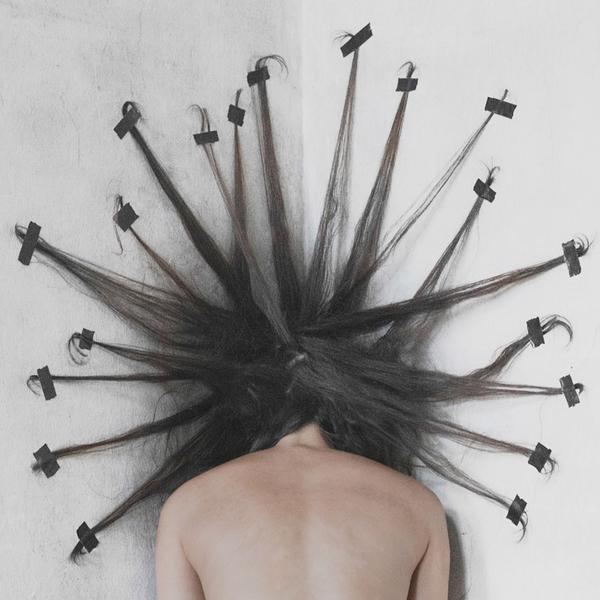
When I first saw the album cover (above) for the new album by Texas-based Pyramids, I quipped to some friends: “This is what happens when you let monkeys play with a tape dispenser”. I’m still not sure what the photo signifies, but the music is no joke.

The new album is named A Northern Meadow and it’s set for release by Profound Lore on March 17. And on this album the Pyramids line-up is augmented by some notable guests: Vindsval of Blut Aus Nord; Colin Marston of Gorguts, Dysrhythmia, and Krallice; and composer/musician William Fowler Collins. This will be my first exposure to the band’s music (so far as I can remember), but I’m now very eager to hear the album because the first advance track has now premiered.

“I Am So Sorry, Goodbye” is an atmospheric unfolding of dissonant, doomed melodies overlaid with a coating of distortion and undergirded with a grimy, grinding bass. Twisting, contorted guitar leads and very interesting drum beats that aren’t in lock-step with the riffs add to the song’s magnetic appeal. The shimmering guitars at the end come like rays of light through the heavy gray of a threatening sky, only to be snuffed out by the inevitable squall.

Yes, the vocals are high and clean, and thus the song is a well-earned exception to our rule. It’s a potent offering of post-metal joined with other elements, and it’s a fine start to this soundtrack for a blue Monday.

https://www.facebook.com/pages/Pyramids/199484580063400


KJELD

Kjeld come to us from the Frisian area of The Netherlands (which includes part of northern Germany as well).  They released a debut EP in 2010 (available on Bandcamp), and their debut album Skym will be released on March 2 by Hammerheart Records (with lyrics in the Frisian language).

Recently a new advance track from the album became available for listening, and it has really grabbed me by the throat. “Tûzen Sinnen” (A Thousand Suns) begins as a stalking dirge and then becomes a flesh-ripping hail of knives, with warping tremolo riffs, furious drum rhythms, and an eerie, atmospheric melody. The piercing guitar leads cast an aura of dark beauty that contrasts with the vocalist’s feral snarls, and the song succeeds wonderfully in mixing rampaging intensity with a sense of triumphant grandeur.

https://www.facebook.com/Kjeldblackmetal
http://www.hammerheart.com
http://www.hammerheartstore.com


DECLINE OF THE I

Unlike the first two bands in this collection, the French band Decline of the I is one whose music I’ve heard before. The band’s principal creative force is the multi-instrumentalist A.K., who has performed in such bands such as Vorkreist, Merrimack, and Malhkebre.

The band’s second album, named Rebellion, will be released by Agonia Records on February 27 in Europe and March 10 in North America and features artwork designed by David Fitt (Aosoth, Secrets of the Moon, Svart Crown). On this album, A.K. is joined by musicians from Merrimack, Anus Mundi, Temple of Baal, Eibon, and Drowning.

Last October I wrote about the first advance track from the album, a song named “Hexenface”, and now a second one has premiered at Zero Tolerance. Like “Hexenface”, “Lower Degree of God’s Might” is really good and quite multi-faceted. It includes bursts of automatic weapons fire in the percussion alternating with metronomic beats; angelic choirs and keyboard ambience; spoken words and acidic shrieks; slow reverberating guitar notes and vibrating dissonance. It’s atmospherically dark, with a melody that I suspect will get stuck in your head, as it did in mine, despite how variable the music is over the song’s changing course.

The album is available for pre-order here.

https://www.facebook.com/declineofthei


19 Jan 11:02

These are utterly fabulous. Pretty sure people take selfies now,...


These are utterly fabulous. Pretty sure people take selfies now, instead.

19 Jan 11:02

Speaking of the ambiguous intensity of eye contact:...


Speaking of the ambiguous intensity of eye contact: @claytoncubitt and KT, to cocorosie. I have watched this many times, and still am not sure how to read him.  

19 Jan 11:02

sci-universe: Did you know that in 2011 a bizarre underwater...


sci-universe:

Did you know that in 2011 a bizarre underwater “icicle of death” was filmed by a BBC crew?

They did it using timelapse cameras, under the ice at Little Razorback Island, near Antarctica’s Ross Archipelago.
The icy phenomenon, called a brinicle, is caused by cold, sinking brine, which is more dense than the rest of the sea water. When salt-rich water leaks out of sea ice, it sinks into the sea and can occasionally create an eerie finger of ice. Brinicles are found in both the Arctic and the Antarctic.

The world is so endlessly strange. 

19 Jan 05:50

January, 16th


January, 16th

19 Jan 05:33

King Crimson - Live At The Orpheum

by Joe Banks
Tertiarymatt

Heartening, not that I expected less.

19 Jan 05:02

January, 18th


January, 18th

18 Jan 21:45

Is a Climate Disaster Inevitable?

Tertiarymatt

Mr. Frank works with my lab from time to time.

OUR galaxy, the Milky Way, is home to almost 300 billion stars, and over the last decade, astronomers have made a startling discovery — almost all those stars have planets. The fact that nearly every pinprick of light you see in the night sky hosts a family of worlds raises a powerful but simple question: “Where is everybody?” Hundreds of billions of planets translate into a lot of chances for evolving intelligent, technologically sophisticated species. So why don’t we see evidence for E.T.s everywhere?

The physicist Enrico Fermi first formulated this question, now called the Fermi paradox, in 1950. But in the intervening decades, humanity has recognized that our own climb up the ladder of technological sophistication comes with a heavy price. From climate change to resource depletion, our evolution into a globe-spanning industrial culture is forcing us through the narrow bottleneck of a sustainability crisis. In the wake of this realization, new and sobering answers to Fermi’s question now seem possible.

Maybe we’re not the only ones to hit a sustainability bottleneck. Maybe not everyone — maybe no one — makes it to the other side.

Since Fermi’s day, scientists have gained a new perspective on life in its planetary context. From the vantage point of this relatively new field, astrobiology, our current sustainability crisis may be neither politically contingent nor unique, but a natural consequence of laws governing how planets and life of any kind, anywhere, must interact.

The defining feature of a technological civilization is the capacity to intensively “harvest” energy. But the basic physics of energy, heat and work known as thermodynamics tell us that waste, or what we physicists call entropy, must be generated and dumped back into the environment in the process. Human civilization currently harvests around 100 billion megawatt hours of energy each year and dumps 36 billion tons of carbon dioxide into the planetary system, which is why the atmosphere is holding more heat and the oceans are acidifying. As hard as it is for some to believe, we humans are now steering the planet, however poorly.

Can we generalize this kind of planetary hijacking to other worlds? The long history of Earth provides a clue. The oxygen you are breathing right now was not part of our original atmosphere. It was the so-called Great Oxidation Event, two billion years after the formation of the planet, that drove Earth’s atmospheric content of oxygen up by a factor of 10,000. What cosmic force could so drastically change an entire planet’s atmosphere? Nothing more than the respiratory excretions of anaerobic bacteria then dominating our world. The one gas we most need to survive originated as deadly pollution to our planet’s then-leading species: a simple bacterium.

The Great Oxidation Event alone shows that when life (intelligent or otherwise) becomes highly successful, it can dramatically change its host planet. And what is true here is likely to be true on other planets as well.

But can we predict how an alien industrial civilization might alter its world? From a half-century of exploring our own solar system we’ve learned a lot about planets and how they work. We know that Mars was once a habitable world with water rushing across its surface. And Venus, a planet that might have been much like Earth, was instead transformed by a runaway greenhouse effect into a hellish world of 800-degree days.

By studying these nearby planets, we’ve discovered general rules for both climate and climate change. These rules, based in physics and chemistry, must apply to any species, anywhere, taking up energy-harvesting and civilization-building in a big way. For example, any species climbing up the technological ladder by harvesting energy through combustion must alter the chemical makeup of its atmosphere to some degree. Combustion always produces chemical byproducts, and those byproducts can’t just disappear. As astronomers at Penn State recently discovered, if planetary conditions are right (like the size of a planet’s orbit), even relatively small changes in atmospheric chemistry can have significant climate effects. That means that for some civilization-building species, the sustainability crises can hit earlier rather than later.

Even if an intelligent species didn’t rely on combustion early in its development, sustainability issues could still arise. All forms of intensive energy-harvesting will have feedbacks, even if some are more powerful than others. A study by scientists at the Max Planck Institute in Jena, Germany, found that extracting energy from wind power on a huge scale can cause its own global climate consequences. When it comes to building world-girdling civilizations, there are no planetary free lunches.

This realization motivated me, along with Woodruff Sullivan of the University of Washington, to look at sustainability in its astrobiological context. As we describe in a recent paper, using what’s already known about planets and life, it is now possible to create a broad program for modeling co-evolving “trajectories” for technological species and their planets. Depending on initial conditions and choices made by the species (such as the mode of energy harvesting), some trajectories will lead to an unrecoverable sustainability crisis and eventual population collapse. Others, however, may lead to long-lived, sustainable civilizations.

Such research is, however, more than prospecting for scientific curiosities.

One answer to the Fermi paradox is that nobody makes it through — that climate change is fate, that nothing we do today matters because civilization inevitably leads to catastrophic planetary changes. But our models may show that isn’t the case.

By studying sustainability as a generic astrobiological problem, we can understand if the challenge we face will be like threading a needle or crossing a wide valley. Answering this question demands a far deeper understanding of how planets respond to the kind of stresses energy-intensive species (like ours) place on them. It’s an approach no different from that of doctors using different kinds of animals, and their molecular biology, to discover cures for human disease.

With this perspective, we also gain an essential truth. We are one form of life, on one planet, in a universe of countless planets. Through hard-won scientific gains, we’ve begun discovering the patterns and laws governing planets together with the life they host. Ten thousand years from now the Democrats and the Republicans and their squabbles over climate change will be long gone. But the laws of planets and life we’re now revealing won’t have changed. Not on this world or any other.

17 Jan 03:18

France arrests a Muslim comedian for his Facebook comments, showing the sham of the west's "free speech" celebration - The Intercept

Tertiarymatt

Free Speech in France is a joke.

Forty-eight hours after hosting a massive march under the banner of free expression, France opened a criminal investigation of a controversial French Muslim comedian for a Facebook post he wrote about the Charlie Hebdo attack, and then this morning, arrested him for that post on charges of “defending terrorism.” The comedian, Dieudonné (above), previously sought elective office in France on what he called an “anti-Zionist” platform, has had his show banned by numerous government officials in cities throughout France, and has been criminally prosecuted several times before for expressing ideas banned in France.

The apparently criminal viewpoint he posted on Facebook declared: “Tonight, as far as I’m concerned, I feel like Charlie Coulibaly.” Investigators concluded that this was intended to mock the “Je Suis Charlie” slogan and express support for the two brothers who attacked Charlie Hebdo (whose last name was “Coulibaly”). Expressing that opinion is evidently a crime in the Republic of Liberté, which prides itself on a line of 20th Century intellectuals – from Sartre and Genet to Foucault and Derrida – whose hallmark was leaving no orthodoxy or convention unmolested, no matter how sacred. Since that glorious “free speech” march, France has reportedly opened 54 criminal cases for “condoning terrorism.”

As pernicious as this arrest obviously is, it provides a critical value: namely, it underscores the utter scam that was this week’s celebration of free speech in the west. The day before the Charlie Hebdo attack, I coincidentally documented the multiple cases in the west – including in the U.S. – where Muslims have been prosecuted and even imprisoned for their political speech. Vanishingly few of this week’s bold free expression mavens have ever uttered a peep of protest about any of those cases – either before the Charlie Hebdo attack or since. That’s because “free speech,” in the hands of many westerners, actually means: it is vital is that the ideas I like be protected, and the right to offend groups I dislike be cherished; anything else is fair game.

It is certainly true that many of Dieudonné’s views and statements are noxious, although he and his supporters insist that they are “satire” and all in good humor. In that regard, the controversy they provoke is similar to the now-much-beloved Charlie Hebdo cartoons (one French leftist insists the cartoonists were mocking rather than adopting racism and bigotry, but Olivier Cyran, a former writer at the magazine who resigned in 2001, wrote a powerful 2013 letter with ample documentation condemning Charlie Hebdo for descending in the post-9/11 era into full-scale, obsessive anti-Muslim bigotry).

Despite the obvious threat to free speech posed by this arrest, it is inconceivable that any mainstream western media figures would start tweeting “#JeSuisDieudonné” or would upload photographs of themselves performing his ugly Nazi-evoking arm gesture in “solidarity” with his free speech rights. That’s true even if he were murdered for his ideas rather than “merely” arrested and prosecuted for them. That’s because last week’s celebration of the Hebdo cartoonists (well beyond mourning their horrifically unjust murders) was at least as much about approval for their anti-Muslim messages as it was about the free speech rights that were invoked in their support - at least as much.

The vast bulk of the stirring “free speech” tributes over the last week have been little more than an attempt to protect and venerate speech that degrades disfavored groups while rendering off-limits speech that does the same to favored groups, all deceitfully masquerading as lofty principles of liberty. In response to my article containing anti-Jewish cartoons on Monday - which I posted to demonstrate the utter selectivity and inauthenticity of to this newfound adoration of offensive speech - I was subjected to endless contortions justifying why anti-Muslim speech is perfectly great and noble while anti-Jewish speech is hideously offensive and evil (the most frequently invoked distinction – “Jews are a race/ethnicity while Muslims aren’t” – would come as a huge surprise to the world’s Asian, black, Latino and white Jews, as well as to those who identify as “Muslim” as part of their cultural identity even though they don’t pray five times a day). As always: it’s free speech if it involves ideas I like or attacks groups I dislike, but it’s something different when I’m the one who is offended.

Think about the “defending terrorism” criminal offense for which Dieudonné has been arrested. Should it really be a criminal offense – causing someone to be arrested, prosecuted and imprisoned – to say something along these lines: western countries like France have been bringing violence for so long to Muslims in their countries that I now believe it’s justifiable to bring violence to France as a means of making them stop? If you want “terrorism defenses” like that to be criminally prosecuted (as opposed to societally shunned), how about those who justify, cheer for and glorify the invasion and destruction of Iraq, with its “Shock and Awe” slogan signifying an intent to terrorize the civilian population into submission and its monstrous tactics in Fallujah? Or how about the psychotic calls from a Fox News host, when discussing Muslims radicals, to “kill them ALL.” Why is one view permissible and the other criminally barred – other than because the force of law is being used to control political discourse and one form of terrorism (violence in the Muslim world) is done by, rather than to, the west?

For those interested, my comprehensive argument against all “hate speech” laws and other attempts to exploit the law to police political discourse is here. That essay, notably, was written to denounce a proposal by a French minister, Najat Vallaud-Belkacem, to force Twitter to work with the French government to delete tweets which officials like this minister (and future unknown ministers) deem “hateful.” France is about as legitimate a symbol of free expression as Charlie Hebdo, which fired one of its writers in 2009 for a single supposedly anti-Semitic sentence in the midst of publishing an orgy of anti-Muslim (not just anti-Islam) content. The celebration of France – and the gaggle of tyrannical leaders who joined it – had little to do with free speech and much to do with suppressing ideas they dislike while venerating ideas they prefer.

Perhaps the most intellectually corrupted figure in this regard is, unsurprisingly, France’s most celebrated (and easily the world’s most overrated) public intellectual, the philosopher Bernard-Henri Lévy. He demands criminal suppression of anything smacking of anti-Jewish views (he called for Dieudonné’s shows to be banned (“I don’t understand why anyone even sees the need for debate”) and supported the 2009 firing of the Charlie Hebdo writer for a speech offense against Jews), while shamelessly parading around all last week as the Churchillian champion of free expression when it comes to anti-Muslim cartoons.

But that, inevitably, is precisely the goal, and the effect, of laws that criminalize certain ideas and those who support such laws: to codify a system where the views they like are sanctified and the groups to which they belong protected. The views and groups they most dislike – and only them – are fair game for oppression and degradation.

The arrest of this French Muslim comedian so soon after the epic Paris free speech march underscores this point more powerfully than anything than I could have written about the selectivity and fraud of this week’s “free speech” parade. It also shows – yet again – why those who want to criminalize the ideas they like are at least as dangerous and tyrannical as the ideas they target: at least.

Photo by Pascal Le Segretain/Getty Images