Pom, Portrait of seb tellier
_
#abesarchive #drawing #sebastientellier #drawing #surreal #portrait #pencil
Pom, Portrait of seb tellier
_
#abesarchive #drawing #sebastientellier #drawing #surreal #portrait #pencil
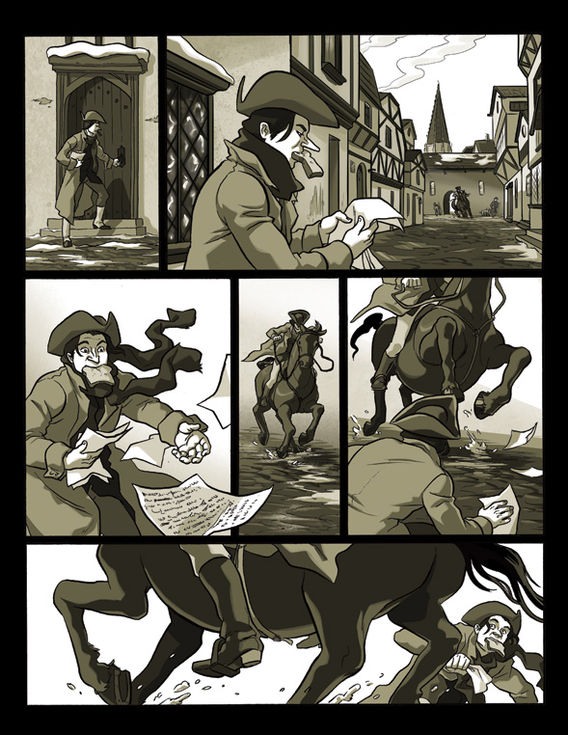
TertiarymattDylan shared a close-up of Luther with toast-in-mouth on twitter, and everyone immediately barraged her with anime jokes.
TertiarymattImagine that.
We were glad that Vox decided to publish the cartoons of French satirical magazine Charlie Hebdo. Though their portrayal of Islam and the Prophet Mohammed has offended many Muslims, they are an important part of the story and readers have a right to see them. We were also glad that we covered the cartoons critically as well as sympathetically, praising them on the grounds of free speech and satire.
The decision of American media organizations to publish or not publish the cartoons has typically been framed of one of bravery or cowardice, based on the assumption that publishing invites physical risk from some number of the 2.6 million Muslim-Americans who will take offense and perhaps action. Vox.com was praised on MSNBC for its bravery, even though this purported risk did not actually enter into our calculus, and other outlets have presented their decision to publish as a way to defy the Islamist radicals who threaten free speech.
Writers at Vox have indeed been bombarded with threats for our Charlie Hebdo coverage. But not one of those threats has come from a Muslim or in response to publishing anti-Islam cartoons. Revealingly, they have rather all come from non-Muslims furious at our articles criticizing Islamophobia.
Though we do enjoy a readership among Muslims inside and outside of the United States, some of whom have not hesitated to express displeasure or worse at our coverage of stories such as the Israel-Palestine conflict, none has seen the Charlie Hebdo cartoons as worth sending an angry email or even an annoyed tweet, much less a threat of violence.
Our coverage of Islamophobia has brought a very different response. Articles decrying anti-Muslim bigotry and attacks on mosques have been met with dozens of threats on email and social media.
The most common states a desire that jihadist militants will murder the offending writer: a recent email hoped that Muslims will "behead you one day" so that "we will never have to read your trash again." Some directly threaten violence themselves, or imply it with statements such as "May you rot in hell."
Others express a desire to murder all Muslims — one simply read "I agree with maher Kill them all" — also often implying the emailed journalist is themselves Muslim. One pledge to attack Vox writers begins, "Fuck you and any cunt who believes in allah."
As is often the case, the strongest threats have been reserved for women. One writer received a message arguing that someone should "put a gun up your ass" to make her understand terrorism.
Ironically, these threats are typically couched in arguments that Muslims are inherently irrational and violent. Further, threats made with the explicit intention of silencing journalists from discussing Islamophobia are positioned as necessary "defenses" of free speech against the threat of Islam. The people making the threats seem unaware that they are themselves seeking to curb the very free speech they pretend to uphold.
Receiving threats of any kind forces journalists to go through the calculation of whether it's likely that they could lead to real harm, and weigh that against the value of writing more on the subject in question. Any journalist or activist who has written or spoken publicly about a controversial subject will be familiar with the arithmetic of threats and fear. Add the value of speaking out, subtract the costs of silence. Multiply by the likelihood that the threats are empty, divide by the chance that they are not.
In our case, that arithmetic works out. The people who threaten us are crazies and there is no indication that they are representative of any greater whole or are considering doing any more than sending an email. But we are not the only outlet being targeted, and receiving dozens of threatening emails can have a real effect on journalists, even if we suspect the threats will come to nothing.
More to the point, though, the discrepancy between the kinds of threats that we are supposed to have received for our Charlie Hebdo coverage and the kinds of threats we actually did receive points to larger issues.
The possibility of radical Islamist threats against American outlets has received wide attention; there are media stories, solidarity rallies, and meetings of government officials. This has included media praise specifically of Vox for our supposed bravery, though for our team at least that threat has fortunately not materialized even in the form of an angry tweet.
Meanwhile, the demonstrable and ongoing threats from anti-Muslim extremists — a well-known phenomenon among American journalists who write about Islamophobia or are themselves Muslim — has received next to no attention.
This is not to argue that the threat from Islamist extremism doesn't exist; as the attacks in Paris demonstrated, this threat is all too real, and has included the actual murders of 17 people, something far beyond the danger of mere email threats.
Still, it would be a mistake to conclude that terrorist attacks are the only form of free speech curb, or that Islamist radicals are the only threat to free speech. The effort to silence journalists who cover Islamophobia has so far not come to violence in the US and hopefully never will — though anti-Muslim attacks in France have spiked alarmingly in the past week — and their threats are a relatively mild form of free speech curb. But it is a threat to free speech nonetheless, and one that has been largely missed amid the concern of Islamist violence.
The discrepancy in what sort of coverage has attracted threats of violence matters for reasons beyond immediate constraints on journalism as well. There was a wide assumption that publishing Charlie Hebdo cartoons in the United States would produce a barrage of threats from Muslims; those threats have so far not materialized, for us at least, which perhaps speaks to the readiness with which many will assume the worst of Muslims.
Meanwhile, there has been next to no discussion of the threats of violence from Islamophobes, though in our experience those threats are rampant. That distance between the kinds of threats we are supposed to have received and the threats we actually did is a reminder of how easy it can be to misjudge our own society and its problems.

In honor of Harebrained Schemes launching their next Shadowrun game on Kickstarter, some Shadowrun: Dragonfall fan art.
Monika (on the right) and my protagonist, Ygraine. Chummers with benefits.
Good luck, Harebrained!
TertiarymattHere is the key point in all this:
"Unemployment and poverty remain far higher among France’s Muslims than in the nation overall. Joblessness and poverty are particularly high in heavily Muslim Paris suburbs such as Gennevilliers, an area of sprawling, dense apartment blocks where at least one of the gunmen — Chérif Kouachi, 32 — lived. On the streets here, Charlie Hebdo remains something different, a symbol of what some, such as Mohamed Binakdan, 32, describe as the everyday humiliation of Muslims in France.
“You go to a nightclub, and they don’t let you in,” said Binakdan, a transit worker in Paris. “You go to a party, they look at your beard, and say, ‘Oh, when are you going to Syria to join the jihad?’ Charlie Hebdo is a part of that, too. Those who are stronger than us are mocking us. We have high unemployment, high poverty. Religion is all we have left. This is sacred to us. And yes, we have a hard time laughing about it.”
GENNEVILLIERS, France — Rather than fall quiet as requested during a national minute of silence last week, three boys in Hamid Abdelaali’s high school class in this heavily Muslim suburb of Paris staged an informal protest, speaking loudly through all 60 seconds.
Across France, they were not alone. In one school in Normandy, some Muslim students yelled “God is great!” in Arabic during that same moment. In a Paris middle school, another group of young Muslims politely asked not to respect the minute, arguing to their teacher, “You reap what you sow.”
Abdelaali, a 17-year-old high school senior who did observe the quiet minute, said he did so only because he was outraged by the killings in the name of his religion that were carried out at Charlie Hebdo — the satirical French newspaper attacked by Islamist extremists. But he also said he feels disgusted by a newspaper whose provocative cartoons had used the image of the prophet Muhammad for satire — and which continued to do so in its tragicomic first edition hitting newsstands Wednesday morning. “I know some kids who agreed with the attack,” he said. “I did not, but I also cannot say that I support what Charlie Hebdo is doing.”
Within France’s Muslim community of some 5 million — the largest in Europe — many are viewing the tragedy in starkly different terms from their non-Muslim compatriots. They feel deeply torn by the now-viral slogan “I am Charlie,” arguing that no, they are not Charlie at all.
Many of France’s Muslims — like Abdelaali — abhor the violence that struck the country last week. But they are also revolted by the notion that they should defend the paper. By putting the publication on a pedestal, they insist, the French are once again sidelining the Muslim community, feeding into a general sense of discrimination that, they argue, helped create the conditions for radicalization in the first place.

Unemployment and poverty remain far higher among France’s Muslims than in the nation overall. Joblessness and poverty are particularly high in heavily Muslim Paris suburbs such as Gennevilliers, an area of sprawling, dense apartment blocks where at least one of the gunmen — Chérif Kouachi, 32 — lived. On the streets here, Charlie Hebdo remains something different, a symbol of what some, such as Mohamed Binakdan, 32, describe as the everyday humiliation of Muslims in France.
“You go to a nightclub, and they don’t let you in,” said Binakdan, a transit worker in Paris. “You go to a party, they look at your beard, and say, ‘Oh, when are you going to Syria to join the jihad?’ Charlie Hebdo is a part of that, too. Those who are stronger than us are mocking us. We have high unemployment, high poverty. Religion is all we have left. This is sacred to us. And yes, we have a hard time laughing about it.”
There were also sharp differences Tuesday about the cover of Charlie Hebdo in its first edition since last Wednesday’s attack, which leaked late Monday. In it, Muhammad sheds a tear and holds one of the now-omnipresent signs saying “Je Suis Charlie” under a headline reading “All Is Forgiven.”
“I wasn’t shocked by this cartoon, it’s not as obscene as others might have been,” said Binakdan. “It was rather well done, way softer than what was published previous. At least they are not showing the prophet making love with a goat.”
Others in the Muslim community were less impressed. “My first reaction was angst, this does nothing to make things better,” said Nasser Lajili, 32, a Muslim city councilor and youth group leader in Gennevilliers. “I want to make clear that I completely condemn the attack on Charlie Hebdo. But I think freedom of speech needs to stop when it harms the dignity of someone else. The prophet for us is sacred.”
Some insisted there is a double standard in freedom of speech and expression here that is bias against Islam. They cite the 2010 so-called burqa ban in France that forbade “concealment of the face” in public, and which Muslim critics say was clearly aimed at devout Islamic women. They also point to the 2008 firing of a Charlie Hebdo cartoonist — Maurice Sinet, known as Siné — after he declined to apologize for a column that some viewed as anti-Semitic. Such action was not taken, Muslim groups note, after their protests over the paper’s Muhammad cartoons.
Almost 4 million people across France turned out Sunday in support of free speech. Yet, on Monday, for instance, a 31-year-old Tunisian-born man was sentenced to 10 months in jail after verbally threatening police and saying an officer shot in last week’s attack “deserved it.” Also on Monday, a Paris prosecutor opened an investigation against an anti-Semitic French comedian, Dieudonné M’bala M’bala, for a post on his Facebook page calling himself “Charlie Coulibaly” — a reference to Amedy Coulibaly, the gunmen who killed four people Friday inside a Paris kosher market.
The comedian — whose comedy show, which featured an explicit skit mocking the Holocaust, was banned last year for inciting hate — suggested that he was a victim of a double standard.
“My only goal is to make people laugh, and to laugh at death, since death makes fun of us all, as Charlie very well knows,” he wrote in a second Facebook post. He concluded by saying, “They consider me to be Amedy Coulibaly when I am no different from a Charlie.”
French Muslim officials are decrying an unprecedented wave of anti-Islamic incidents — at least 54 since last Wednesday, including arson attacks on mosques. Yet, some argue, French troops meant to ensure safety on French streets have been disproportionately deployed, putting emphasis on protecting Jewish synagogues and schools.
On Tuesday, Prime Minister Manuel Valls sought to calm fears in the Muslim community, saying that “to attack a mosque, a church or a place of worship, to desecrate a cemetery, is an offense to our values. Islam is the second religion of France. It all has its place in France.”
Over the past few days, these societal divisions, in increasingly stark terms, have confronted the French. Virginie Artaud, a 44-year-old art teacher in the Paris suburbs, said her predominantly Muslim class of high school-aged students initially balked Friday when she proposed that they design posters and banners to be displayed at Sunday’s unity march against terrorism.
The world, her students told her, hardly takes notice when Palestinian or Syrian children are killed. Why all the attention for a humor magazine that openly mocks Islam’s prophet?
“I let them all express themselves, even though they were saying the worst things they had to say,” she said. “Everyone listened to each other, and at the end, they decided to make peaceful banners.”
But, she said, she was unsure whether any had attended the historic march. Artaud herself had a banner: a shiny silver placard she held aloft Sunday reading “All United, All Charlie,” along with blue facepaint spelling out the words “Freedom is non-negotiable.”
TertiarymattI very much love the secret knots. You should definitely click thru on this. It is very lovely.

Hey! New comic. (it may appear incomplete on rss readers, be sure to click to read the full story)
TertiarymattA lot of excellent material here, though I don't agree with all of it.

Defending free speech and free press rights, which typically means defending the right to disseminate the very ideas society finds most repellent, has been one of my principal passions for the last 20 years: previously as a lawyer and now as a journalist. So I consider it positive when large numbers of people loudly invoke this principle, as has been happening over the last 48 hours in response to the horrific attack on Charlie Hebdo in Paris.
Usually, defending free speech rights is much more of a lonely task. For instance, the day before the Paris murders, I wrote an article about multiple cases where Muslims are being prosecuted and even imprisoned by western governments for their online political speech – assaults that have provoked relatively little protest, including from those free speech champions who have been so vocal this week.
I’ve previously covered cases where Muslims were imprisoned for many years in the U.S. for things like translating and posting “extremist” videos to the internet, writing scholarly articles in defense of Palestinian groups and expressing harsh criticism of Israel, and even including a Hezbollah channel in a cable package. That’s all well beyond the numerous cases of jobs being lost or careers destroyed for expressing criticism of Israel or (much more dangerously and rarely) Judaism. I’m hoping this week’s celebration of free speech values will generate widespread opposition to all of these long-standing and growing infringements of core political rights in the west, not just some.

But this week’s defense of free speech rights was so spirited that it gave rise to a brand new principle: to defend free speech, one not only defends the right to disseminate the speech, but embraces the content of the speech itself. Numerous writers thus demanded: to show “solidarity” with the murdered cartoonists, one should not merely condemn the attacks and defend the right of the cartoonists to publish, but should publish and even celebrate those cartoons. “The best response to Charlie Hebdo attack,” announced Slate’s editor Jacob Weisberg, “is to escalate blasphemous satire.”

But no matter. Their cartoons were noble and should be celebrated – not just on free speech grounds but for their content. In a column entitled “The Blasphemy We Need,” The New York Times‘ Ross Douthat argued that “the right to blaspheme (and otherwise give offense) is essential to the liberal order” and “that kind of blasphemy [that provokes violence] is precisely the kind that needs to be defended, because it’s the kind that clearly serves a free society’s greater good.” New York Magazine‘s Jonathan Chait actually proclaimed that “one cannot defend the right [to blaspheme] without defending the practice.” Vox’s Matt Yglesias had a much more nuanced view but nonetheless concluded that “to blaspheme the Prophet transforms the publication of these cartoons from a pointless act to a courageous and even necessary one, while the observation that the world would do well without such provocations becomes a form of appeasement.”
To comport with this new principle for how one shows solidarity with free speech rights and a vibrant free press, we’re publishing some blasphemous and otherwise offensive cartoons about religion and their adherents:


And here are some not-remotely-blasphemous-or-bigoted yet very pointed and relevant cartoons by the brilliantly provocative Brazilian cartoonist Carlos Latuff (reprinted with permission):


Is it time for me to be celebrated for my brave and noble defense of free speech rights? Have I struck a potent blow for political liberty and demonstrated solidarity with free journalism by publishing blasphemous cartoons? If, as Salman Rushdie said, it’s vital that all religions be subjected to “fearless disrespect,” have I done my part to uphold western values?
When I first began to see these demands to publish these anti-Muslim cartoons, the cynic in me thought perhaps this was really just about sanctioning some types of offensive speech against some religions and their adherents, while shielding more favored groups. In particular, the west has spent years bombing, invading and occupying Muslim countries and killing, torturing and lawlessly imprisoning innocent Muslims, and anti-Muslim speech has been a vital driver in sustaining support for those policies.
So it’s the opposite of surprising to see large numbers of westerners celebrating anti-Muslim cartoons - not on free speech grounds but due to approval of the content. Defending free speech is always easy when you like the content of the ideas being targeted, or aren’t part of (or actively dislike) the group being maligned.
Indeed, it is self-evident that if a writer who specialized in overtly anti-black or anti-Semitic screeds had been murdered for their ideas, there would be no widespread calls to republish their trash in “solidarity” with their free speech rights. In fact, Douthat, Chait and Yglesias all took pains to expressly note that they were only calling for publication of such offensive ideas in the limited case where violence is threatened or perpetrated in response (by which they meant in practice, so far as I can tell: anti-Islam speech). Douthat even used italics to emphasize how limited his defense of blasphemy was: “that kind of blasphemy is precisely the kind that needs to be defended.”
One should acknowledge a valid point contained within the Douthat/Chait/Yglesias argument: when media outlets refrain from publishing material out of fear (rather than a desire to avoid publishing gratuitously offensive material), as several of the west’s leading outlets admitted doing with these cartoons, that is genuinely troubling, an actual threat to a free press. But there are all kinds of pernicious taboos in the west that result in self-censorship or compelled suppression of political ideas, from prosecution and imprisonment to career destruction: why is violence by Muslims the most menacing one? (I’m not here talking about the question of whether media outlets should publish the cartoons because they’re newsworthy; my focus is on the demand they be published positively, with approval, as “solidarity”).
When we originally discussed publishing this article to make these points, our intention was to commission two or three cartoonists to create cartoons that mock Judaism and malign sacred figures to Jews the way Charlie Hebdo did to Muslims. But that idea was thwarted by the fact that no mainstream western cartoonist would dare put their name on an anti-Jewish cartoon, even if done for satire purposes, because doing so would instantly and permanently destroy their career, at least. Anti-Islam and anti-Muslim commentary (and cartoons) are a dime a dozen in western media outlets; the taboo that is at least as strong, if not more so, are anti-Jewish images and words. Why aren’t Douthat, Chait, Yglesias and their like-minded free speech crusaders calling for publication of anti-Semitic material in solidarity, or as a means of standing up to this repression? Yes, it’s true that outlets like The New York Times will in rare instances publish such depictions, but only to document hateful bigotry and condemn it – not to publish it in “solidarity” or because it deserves a serious and respectful airing.
With all due respect to the great cartoonist Ann Telnaes, it is simply not the case that Charlie Hebdo “were equal opportunity offenders.” Like Bill Maher, Sam Harris and other anti-Islam obsessives, mocking Judaism, Jews and/or Israel is something they will rarely (if ever) do. If forced, they can point to rare and isolated cases where they uttered some criticism of Judaism or Jews, but the vast bulk of their attacks are reserved for Islam and Muslims, not Judaism and Jews. Parody, free speech and secular atheism are the pretexts; anti-Muslim messaging is the primary goal and the outcome. And this messaging – this special affection for offensive anti-Islam speech – just so happens to coincide with, to feed, the militaristic foreign policy agenda of their governments and culture.
To see how true that is, consider the fact that Charlie Hebdo – the “equal opportunity” offenders and defenders of all types of offensive speech - fired one of their writers in 2009 for writing a sentence some said was anti-Semitic (the writer was then charged with a hate crime offense, and won a judgment against the magazine for unfair termination). Does that sound like “equal opportunity” offending?
Nor is it the case that threatening violence in response to offensive ideas is the exclusive province of extremists claiming to act in the name of Islam. Terrence McNally’s 1998 play “Corpus Christi,” depicting Jesus as gay, was repeatedly cancelled by theaters due to bomb threats. Larry Flynt was paralyzed by an evangelical white supremacist who objected to Hustler‘s pornographic depiction of inter-racial couples. The Dixie Chicks were deluged with death threats and needed massive security after they publicly criticized George Bush for the Iraq War, which finally forced them to apologize out of fear. Violence spurred by Jewish and Christian fanaticism is legion, from abortion doctors being murdered to gay bars being bombed to a 45-year-old brutal occupation of the West Bank and Gaza due in part to the religious belief (common in both the U.S. and Israel) that God decreed they shall own all the land. And that’s all independent of the systematic state violence in the west sustained, at least in part, by religious sectarianism.
The New York Times‘ David Brooks today claims that anti-Christian bias is so widespread in America – which has never elected a non-Christian president – that “the University of Illinois fired a professor who taught the Roman Catholic view on homosexuality.” He forgot to mention that the very same university just terminated its tenure contract with Professor Steven Salaita over tweets he posted during the Israeli attack on Gaza that the university judged to be excessively vituperative of Jewish leaders, and that the journalist Chris Hedges was just disinvited to speak at the University of Pennsylvania for the Thought Crime of drawing similarities between Israel and ISIS.
That is a real taboo – a repressed idea – as powerful and absolute as any in the United States, so much so that Brooks won’t even acknowledge its existence. It’s certainly more of a taboo in the U.S. than criticizing Muslims and Islam, criticism which is so frequently heard in mainstream circles – including the U.S. Congress – that one barely notices it any more.
This underscores the key point: there are all sorts of ways ideas and viewpoints are suppressed in the west. When those demanding publication of these anti-Islam cartoons start demanding the affirmative publication of those ideas as well, I’ll believe the sincerity of their very selective application of free speech principles. One can defend free speech without having to publish, let alone embrace, the offensive ideas being targeted. But if that’s not the case, let’s have equal application of this new principle.
TertiarymattThis is an excellent piece.
A northern-Italian miller in the sixteenth century, known as Menocchio, literate but not a member of the literary élite, held a number of unconventional theological beliefs. He believed that the soul died with the body, that the world was created out of a chaotic substance, not ex nihilo, and that it was more important to love one’s neighbor than to love God. He found eccentric justification for these beliefs in the few books he read, among them the Decameron, the Bible, the Koran, and “The Travels of Sir John Mandeville,” all in translation. For his pains, Menocchio was dragged before the Inquisition several times, tortured, and, in 1599, burned at the stake. He was one of thousands who met such a fate.
Western societies are not, even now, the paradise of skepticism and rationalism that they believe themselves to be. The West is a variegated space, in which both freedom of thought and tightly regulated speech exist, and in which disavowals of deadly violence happen at the same time as clandestine torture. But, at moments when Western societies consider themselves under attack, the discourse is quickly dominated by an ahistorical fantasy of long-suffering serenity and fortitude in the face of provocation. Yet European and American history are so strongly marked by efforts to control speech that the persecution of rebellious thought must be considered among the foundational buttresses of these societies. Witch burnings, heresy trials, and the untiring work of the Inquisition shaped Europe, and these ideas extended into American history as well and took on American modes, from the breaking of slaves to the censuring of critics of Operation Iraqi Freedom.
More than a dozen people were killed by terrorists in Paris this week. The victims of these crimes are being mourned worldwide: they were human beings, beloved by their families and precious to their friends. On Wednesday, twelve of them were targeted by gunmen for their affiliation with the satirical French magazine Charlie Hebdo. Charlie has often been aimed at Muslims, and it’s taken particular joy in flouting the Islamic ban on depictions of the Prophet Muhammad. It’s done more than that, including taking on political targets, as well as Christian and Jewish ones. The magazine depicted the Father, the Son, and the Holy Ghost in a sexual threesome. Illustrations such as this have been cited as evidence of Charlie Hebdo’s willingness to offend everyone. But in recent years the magazine has gone specifically for racist and Islamophobic provocations, and its numerous anti-Islam images have been inventively perverse, featuring hook-nosed Arabs, bullet-ridden Korans, variations on the theme of sodomy, and mockery of the victims of a massacre. It is not always easy to see the difference between a certain witty dissent from religion and a bullyingly racist agenda, but it is necessary to try. Even Voltaire, a hero to many who extol free speech, got it wrong. His sparkling and courageous anti-clericalism can be a joy to read, but he was also a committed anti-Semite, whose criticisms of Judaism were accompanied by calumnies about the innate character of Jews.
This week’s events took place against the backdrop of France’s ugly colonial history, its sizable Muslim population, and the suppression, in the name of secularism, of some Islamic cultural expressions, such as the hijab. Blacks have hardly had it easier in Charlie Hebdo: one of the magazine’s cartoons depicts the Minister of Justice Christiane Taubira, who is of Guianese origin, as a monkey (naturally, the defense is that a violently racist image was being used to satirize racism); another portrays Obama with the black-Sambo imagery familiar from Jim Crow-era illustrations.
On Thursday morning, the day after the massacre, I happened to be in Paris. The headline of Le Figaro was “LA LIBERTÉ ASSASSINÉE.” Le Parisien and L’Humanité also used the word liberté in their headlines. Liberty was indeed under attack—as a writer, I cherish the right to offend, and I support that right in other writers—but what was being excluded in this framing? A tone of genuine puzzlement always seems to accompany terrorist attacks in the centers of Western power. Why have they visited violent horror on our peaceful societies? Why do they kill when we don’t? A widely shared illustration, by Lucille Clerc, of a broken pencil regenerating itself as two sharpened pencils, was typical. The message was clear, as it was with the #jesuischarlie hashtag: that what is at stake is not merely the right of people to draw what they wish but that, in the wake of the murders, what they drew should be celebrated and disseminated. Accordingly, not only have many of Charlie Hebdo’s images been published and shared, but the magazine itself has received large sums of money in the wake of the attacks—a hundred thousand pounds from the Guardian Media Group and three hundred thousand dollars from Google.
But it is possible to defend the right to obscene and racist speech without promoting or sponsoring the content of that speech. It is possible to approve of sacrilege without endorsing racism. And it is possible to consider Islamophobia immoral without wishing it illegal. Moments of grief neither rob us of our complexity nor absolve us of the responsibility of making distinctions. The A.C.L.U. got it right in defending a neo-Nazi group that, in 1978, sought to march through Skokie, Illinois. The extreme offensiveness of the marchers, absent a particular threat of violence, was not and should not be illegal. But no sensible person takes a defense of those First Amendment rights as a defense of Nazi beliefs. The Charlie Hebdo cartoonists were not mere gadflies, not simple martyrs to the right to offend: they were ideologues. Just because one condemns their brutal murders doesn’t mean one must condone their ideology.
Rather than posit that the Paris attacks are the moment of crisis in free speech—as so many commentators have done—it is necessary to understand that free speech and other expressions of liberté are already in crisis in Western societies; the crisis was not precipitated by three deranged gunmen. The U.S., for example, has consolidated its traditional monopoly on extreme violence, and, in the era of big data, has also hoarded information about its deployment of that violence. There are harsh consequences for those who interrogate this monopoly. The only person in prison for the C.I.A.’s abominable torture regime is John Kiriakou, the whistle-blower. Edward Snowden is a hunted man for divulging information about mass surveillance. Chelsea Manning is serving a thirty-five-year sentence for her role in WikiLeaks. They, too, are blasphemers, but they have not been universally valorized, as have the cartoonists of Charlie Hebdo.
The killings in Paris were an appalling offense to human life and dignity. The enormity of these crimes will shock us all for a long time. But the suggestion that violence by self-proclaimed Jihadists is the only threat to liberty in Western societies ignores other, often more immediate and intimate, dangers. The U.S., the U.K., and France approach statecraft in different ways, but they are allies in a certain vision of the world, and one important thing they share is an expectation of proper respect for Western secular religion. Heresies against state power are monitored and punished. People have been arrested for making anti-military or anti-police comments on social media in the U.K. Mass surveillance has had a chilling effect on journalism and on the practice of the law in the U.S. Meanwhile, the armed forces and intelligence agencies in these countries demand, and generally receive, unwavering support from their citizens. When they commit torture or war crimes, no matter how illegal or depraved, there is little expectation of a full accounting or of the prosecution of the parties responsible.
The scale, intensity, and manner of the solidarity that we are seeing for the victims of the Paris killings, encouraging as it may be, indicates how easy it is in Western societies to focus on radical Islamism as the real, or the only, enemy. This focus is part of the consensus about mournable bodies, and it often keeps us from paying proper attention to other, ongoing, instances of horrific carnage around the world: abductions and killings in Mexico, hundreds of children (and more than a dozen journalists) killed in Gaza by Israel last year, internecine massacres in the Central African Republic, and so on. And even when we rightly condemn criminals who claim to act in the name of Islam, little of our grief is extended to the numerous Muslim victims of their attacks, whether in Yemen or Nigeria—in both of which there were deadly massacres this week—or in Saudi Arabia, where, among many violations of human rights, the punishment for journalists who “insult Islam” is flogging. We may not be able to attend to each outrage in every corner of the world, but we should at least pause to consider how it is that mainstream opinion so quickly decides that certain violent deaths are more meaningful, and more worthy of commemoration, than others.
France is in sorrow today, and will be for many weeks to come. We mourn with France. We ought to. But it is also true that violence from “our” side continues unabated. By this time next month, in all likelihood, many more “young men of military age” and many others, neither young nor male, will have been killed by U.S. drone strikes in Pakistan and elsewhere. If past strikes are anything to go by, many of these people will be innocent of wrongdoing. Their deaths will be considered as natural and incontestable as deaths like Menocchio’s, under the Inquisition. Those of us who are writers will not consider our pencils broken by such killings. But that incontestability, that unmournability, just as much as the massacre in Paris, is the clear and present danger to our collective liberté.
TertiarymattI'd argue much of the purpose of attacks like these are to drive a wedge between the West and non-violent Muslims. And time after time, we play right into it.
Here's a theory. Terrorists aren't offended by cartoons. Not even cartoons that satirise the Prophet Muhammad. They don't care about satire. For all I know they may not even care about the Prophet Muhammad.
Instead, they merely pretend to be offended by cartoons, in order to give themselves a pretext to commit murder. Murder so horrifying, on a pretext so unWestern, that non-Muslims – blinded by grief and rage – turn on Muslims. Blame them. Persecute them. Burn their book, attack their mosques, threaten them in the street, demand their expulsion from Western societies. Actions that, in turn, scare Western Muslims, isolate them, alienate them. And thus drive some of them to support – and even become – terrorists.
Result: terrorists swell their ranks for a civil war they long to provoke non-Muslims into starting.
In our angry innocence, however, we persist in thinking this is somehow about cartoons. In thinking that the terrorists "win" if we don't reproduce those cartoons, and "lose" if we do. As if, at this very moment, terrorist leaders across the West are privately wailing in anguished disbelief because satirical cartoons have been reproduced this morning in several European newspapers.("Disaster! Our plan has backfired in a way we couldn't possibly have foreseen! Ink really does beat Kalashnikovs! Satire defeats us once again!")
On the whole, I'm not sure that's very likely. I don't think the terrorists "win"
if we fail to reproduce cartoons. I think the terrorists "win" if
we leap up, gulp down their bait – and hate Muslims.
This is not about satire. This is beyond satire.
TertiarymattInteresting take on "mindfulness".
Also, this guy reminds me of a close friend of mine.
Yesterday a guy contacted me because he’s writing an article about whether or not Buddhists should smoke cigarettes. When he asked my opinion I said, “Nobody should smoke cigarettes!”
He wanted to interview me as a Buddhist teacher anyway and he sent me some questions. Rather than getting me thinking about cigarette smoking, though, two of his questions got me thinking a lot about the concept of mindfulness.
The questions were:
“Is smoking cigarettes inherently unmindful?”
and
“Can mindfulness help people quit smoking?”
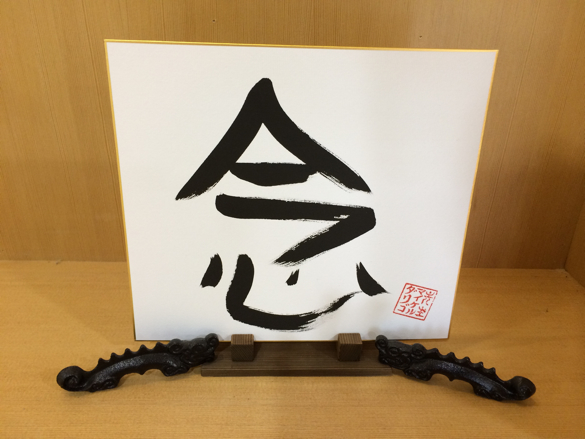
The Japanese word that’s usually translated as “mindfulness” is 念 (nen). The character consists of two parts. The top part is 今, which is pronounced “ima” and means “now.” The bottom is 心, which is pronounced “kokoro” or “shin” and can be translated as both “mind” and “heart” depending on the context. The concepts of “mind” and “heart” (not as in the organ in the chest but the more conceptual meaning) are usually considered to be the same thing in Japanese.
This idea of “nen” (or “smirti” in Sanskrit) is an important concept that has been used by all forms of Buddhism since the very early days of the movement. But the word “mindfulness” as it’s used these days seems to be something very different.
It appears to me that when people I encounter use the word “mindfulness” or its variants like “mindful,” “mindfully,” and so on, they mean one of three things. These are:
1) The commercial meditation products created and endorsed by Jon Kabat Zinn and marketed under the names Mindfulness Based Stress Reduction and Mindful Living Programs which are taught through an organization called the Center for Mindfulness based in Massachusetts.
2) Sort of, like, y’know, being, like, kinda, present and in the moment and stuff and, y’know, like, kinda thinking about what you do and whatever…
3) Some Buddhist thing that’s good for you but I don’t know anything else about it.
This is why I’ve been avoiding the word “mindfulness” for the past few years. I don’t know anything much about Jon Kabat Zinn’s thing. Though I get kind of annoyed when people pick up some aspect of Buddhism, trademark it and then make a fortune selling a watered down version to a public who assume the folks who own the trademark made the thing up themselves. It’s like if I trademarked Just Sitting™ and made a fancy logo then sold it to folks in the form of 8-week courses with associated books and paraphernalia (hmmmm… that’s actually a good idea… watch this space!).
I mean, I suppose it’s better than selling people heroin or game shows. I’d rather see people doing mindfulness courses than, I dunno, beating up random folks on the street. Still, I wonder what’s really going on.
Nishijima Roshi, my teacher, commented about this trend back in 2008 on his blog. There he said, among other things, “many people … think that the idea of ‘mindfulness’ is very important in understanding Buddhism. But I think that such interpretation includes very dangerous misunderstandings. Therefore I have been thinking for many years that we should understand the true meaning of ‘mindfulness.’ We should never misunderstand that having ‘mindfulness’ is a kind of True Buddhism. The idea of having ‘mindfulness’ may be an example of idealistic philosophy. The isolated reverence of ‘mindfulness’ can never be Buddhism. It is only idealistic philosophical thought.” He suggested that we use the word “consciousness” instead.
I’ve already edited that quotation a bit to try to make it clearer (I used to do that for him when he was alive, so I don’t think he’d mind), but let me try and explain a little further. Nishijima often talked about “True Buddhism.” I’ve tended to shy away from using that phrase because when I have people reacted badly as if the next step was going to be suggesting that we burn all those who were not True Buddhists at the stake or something.
Instead of that, what I want to hone in on is the part where he says “the isolated reverence of ‘mindfulness’ can never be Buddhism.” In other words, we can’t just remove mindfulness from its context. Well, we can, I suppose. But it would be like the difference between engaging in a full course of good diet, healthy exercise and adequate amounts of rest, or just doing a bunch of push-ups every morning and continuing to eat your normal bag of Doritos and a Twinkie for every meal.
Mindfulness is not a synonym for Buddhist practice. Lots of people, including the guy who sent me those interview questions, appear to think they’re the same thing. They’re not. In fact, I kind of wonder what this “mindfulness” thing even is that people are talking about.
Like Nishijima Roshi, it appears to me that the word indicates some kind of idealistic, intellectual process. It sounds to me as if people might be being taught to get really, really into their heads. Even if that’s not what’s going on in the MBSR™ courses, the general tone of whatI hear whenever the word comes up appears to indicate a very “heady” sort of thing.
In the context of Buddhist training, mindfulness is one of the Noble Eightfold Path. The full list is:
1) Right View
2) Right Intention
3) Right Speech
4) Right Action
5) Right Livelihood
6) Right Effort
7) Right Mindfulness
8) Right Concentration
Slicing just one of these out and presenting it by itself is not the worst thing you could ever do. They’re all good. But the Buddha regarded them as equally important parts of a full system. The physical ones, like speech, action, livelihood and effort, are just as important as the mental ones like view, intention, mindfulness and concentration. Notice that there are four of each.
To get back to the questions that initially got me thinking about this, I do not teach mindfulness, so I can’t say whether mindfulness would help someone stop smoking. Maybe it would. My dad used to hypnotize people to get them to stop smoking. So I know that works sometimes. As to whether or not smoking is “unmindful,” I just don’t know what that question means at all. I’ve tried and tried but I can’t come up with anything coherent.
I picture a guy smoking a cigarette and really concentrating hard on it, really tasting the smoke, really feeling the burn in his throat and lungs, really getting into his cigarette. I suppose it could be done. When I see people smoking, they usually seem pretty absent minded about it. Then again, when I see people eating they generally seem to be more involved in something else. We’d all be better off if more people got more involved in what they were doing, I think.
But this word “mindfulness,” I just want to stay away from it.
* * *
There is still plenty of time to sign up for our Three-Day Zazen and Yoga Retreat Dec. 5-7, 2014 at Mt. Baldy (near Los Angeles, CA)
* * *
I certainly don’t mind if you send me donations!
TertiarymattZen Buddhist on the terrible power of religion to inspire violence.
 Two days ago, religious fanatics killed twelve people at the offices of the French magazine Charlie Hebdo.
Fuck religion.
I’m a fair-to-middling cartoonist myself. During my late teens and well into my twenties I very seriously worked at trying to become a professional comic artist. But I never really developed the necessary drive to become genuinely good at it.
I also became very deeply involved in religious matters around the same time. Had I ended up becoming a cartoonist for a living, I can easily imagine I’d have produced some of the same kinds of material that got eight cartoonists and four others who worked with them killed in France. Hell, it’s not inconceivable I’m on some fundamentalist whack-job’s hit list already. So this event both really pisses me off and scares the bejesus out of me.
The best commentary I’ve come across so far about this issue is an appearance by Ayaan Hirsi Ali with Anderson Cooper on CNN. She is an extraordinarily brave person saying things that really need to be said and quite literally risking her life by doing so.

This is why I never became a professional cartoonist. I drew all of these. Impressed? I didn’t think so…
I do not believe that religion is the motivation for every bad thing that has ever happened in the world. That’s Richard Dawkins. Nationalism, racism, imperialism, capitalism, sexism and a host of other factors can motivate people to do bad things. But religion is clearly and inarguably the main motivation for this attack and for numerous others like it.
The matters addressed by religion — the deeper meaning of life, the nature of God, and so on — are personally important to me. I can’t say much about nationalism or colonialism or any of those others because they’re not my area of study. But I have spent a lot of the past four decades trying to comprehend why the same institutions who claim to be all about promoting peace and looking for the answers to life’s biggest questions always seem to end up being used to promote violence and hatred.
If you are going to storm into the office of a humor magazine, point a gun at a guy who draws cartoons for a living and shoot him dead, you have to believe that this is a good thing to do. These folks acted as a group, and that is also highly significant. If one lone nut-job does something like this, we can take it as an example of individual madness, as was the case with the man who shot two police officers in New York City last month.
On the other hand, here we have at least three people sharing a common madness. And although the French police are looking for just three gunmen, it is reasonable to assume that they were part of a larger group who supported them and encouraged them. I have seen at least one article questioning whether the attackers really were Islamists, but I think we need to get in contact with Planet Earth on that point and admit that there is no sensible reason to believe they were not.
Why would someone imagine it is a good thing to murder people who drew cartoons that offended them? This, to me, is one of the hardest parts to comprehend. My friends John and Tyler mistakenly believe that Captain Picard is better than Captain Kirk. Yet is an undeniable fact that Captain Kirk could kick Captain Picard’s scrawny ass halfway to the Klingon Homeworld. As wrong as they are, I don’t have any urge to kill my friends for their utterly erroneous belief.
What is it about religion that causes so many of us to think that offending someone’s ideas about fictional — or at least highly fictionalized — characters matters enough for anyone to really care very much about? How does someone get so wrapped up in a fantasy world that they are willing to do grievous bodily harm to those who do not share that fantasy world?
It’s all well and good to talk about how Muslims are a repressed minority in Europe and this leads to radicalization. It’s also true that the history of Western colonialism plays into all of this. And yet there is something specific and significant about religion that makes things very different. If only Muslims did stuff like this, we could say — as many do — that this is a problem with Islam. But I don’t think it is.
Shoko Asahara was able to turn a hodgepodge of Buddhism, Hinduism and New Age hookum into a motivation for a number of people to attempt a mass killing on the Tokyo transit system in 1995 (which I rode to work that very day). If you can get people to kill for a bunch of Deepak Chopra level faux-mystical candy floss, it shows that you don’t really even need the much-talked-about violent passages in the Koran to turn seekers of the Truth into vicious killers.
I think about this a lot because I do not see myself as being all that different from the guys who did this attack. I’m sure that, just like me, they rejected mainstream society and saw through its clearly empty promises. I am certain they left that world behind to seek something truer and better.
Like me, these men committed themselves to a higher truth, one that transcended what ordinary people define as morality and normality. They saw the hypocrisy at the heart of what the vast majority of people think of as “normal.” Like me, they turned to the ancient words of great people who also sought a higher calling.
I feel very much like I understand the men who slaughtered these cartoonists better than I understand most so-called “ordinary people” I encounter, the masses who completely buy into contemporary capitalist bullshit.
Where does it all go so very wrong? How can we work to change that?
These are vital questions. They are essential questions if we want to survive as a species and progress to become the best we can be. I know that sounds pretty grandiose, but I honestly believe it.
Something specific about religion allows people to get so deeply into shared fantasies that they act in ways they themselves know to be wrong, and yet are somehow able to convince themselves are good. The honest and real desire to do the right thing and discover the essential truth of life itself is corrupted into something ugly and dangerous. What is the connection?
After all these years of looking into it, I really don’t know the answer. Perhaps the answer is as difficult as the question.
* * *
As I always say at the end of these pieces, I appreciate your kind donations. It’s what makes my work possible and I could not do it without you.
* * *
I’m back in Los Angeles, so if you want to find me, I am at almost every event hosted by Dogen Sangha Los Angeles. Unless you’re a religious fanatic offended by this article, in which case I’m… uh… somewhere else.
TertiarymattButts are the realest stuff.
TertiarymattOf interest to bike enthusiasts and also Seattleites.
(click to enlarge photos)


By the authority of Northwest motorcycle historian and enthusiast Tom Samuelsen – standing by his Suzuki dirt bike in the now – the cyclist in the older photograph, wrapped in leather under a billed hat, is none other than Joe Williamson, one of the founders and first president of the Puget Sound Maritime Historical Society.

Tom, a fisherman, is also a lover of maritime history, but it as a motorcyclist that his name may be familiar. Tom is one of the founders of the Pacific Northwest Museum of Motorcycling, and currently the curator of the museum’s thousands of motorcycle-related photographs, ephemera and gear. With the help of others in the nonprofit, he has organized and mounted many exhibits, including “Fastest Corner in the Northwest,” at the Museum of History and Industry in 2002. More than once I have asked for, and received, Tom’s help in historic motorcycle matters.


It was not, however, Tom Samuelsen who first shared this photograph with Jean and me. Rather, it was Marie McCaffrey, the executive director of our state’s on-line encyclopedia, Historylink. The photo appears on page forty-two of The Bartell Story (Historylink’s most recent book of now more than a dozen titles since its debut in the spring of 1998), in which local author Phil Dougherty and the Historylink staff recount Bartell’s “125 Years of Service” in 140 pages between hardcovers.

On the awning above Williamson and his circa 1929 Indian Scout motorcycle, the “Seattle’s OWN Drug Stores” sign is especially true here on Pike Street. In addition to this Bartell No. 14 in the Seaboard Building at Fourth Avenue, in the 1929 Polk City Directory, the drug store chain had three more stores nearby on Pike: No. 3 at First Avenue, No. 9 at Second Avenue, and No. 7 at Fifth Avenue. Bartell Drugs, to read from the book’s protective dust jacket, is “The oldest family-owned drugstore chain in the country.” It is celebrating its 125th birthday with the issuance of the Historylink book.

When Joe Williamson first showed this featured (at the top) photograph to Tom Samuelsen, he explained that he used his Indian Scout to deliver prescriptions for Bartell, and that they paid very well, good enough to help support his love of photography. Tom claims that Joe could “charm your sox off.” I first met Joe in the early 1980s and was similarly taken by his generous ways. Born in 1909, Joe died in 1994, age eighty-four.

Let me mention what a gas it was taking Tom Samuelsen’s picture at Westlake. We couldn’t quite get to the exact prospect of the original photo because of existing street sculpture, but we got close. In the following shot, Tom waves goodbye headed east on Pike.

Anything to add, boys? Sure Jean. Ron is putting up five, I think, links. The first one begins with the American Hotel on the east side of Westlake Avenue and looks back (to the south) at Westlake’s origins at Pike Street. Again, there may be some repetition between them, but again and again we remember my Mother Eda Garena Christiansen Dorpat’s advice, “Boys (she had four sons) repetition is the mother of all learning.” Jean did you know that the first feature we put up was about the aftermath of a parade through this five-star intersection, and we have returned often with looks in most directions through it. We’ll attach that first feature from January 17, 1982 at the bottom of all this. And Jean did you also know that the last feature that touched on this corner was featured hear a mere months ago, on Dec. 6, 2014. Ron did not offer a link to it. We figured you could just scroll down to get to it. Please do.


=====


=====
THE FIRST NOW AND THEN FEATURE- FROM JAN. 17, 1982


[Note: the “103” in the title at the top of the above text refers to its position in the book from which it was scanned, Seattle Now and Then, Volume One.]
=====
THE WESTLAKE DEATH THERMOMETER: 1939-40


======
SNOWSCAPE WITH THE TRIANGULAR BARTELL DRUGS

=====
WE STAND GUARD – DRIVERS OF THE BLACK OUT


TertiarymattYou have to remember your order of operations, folks.
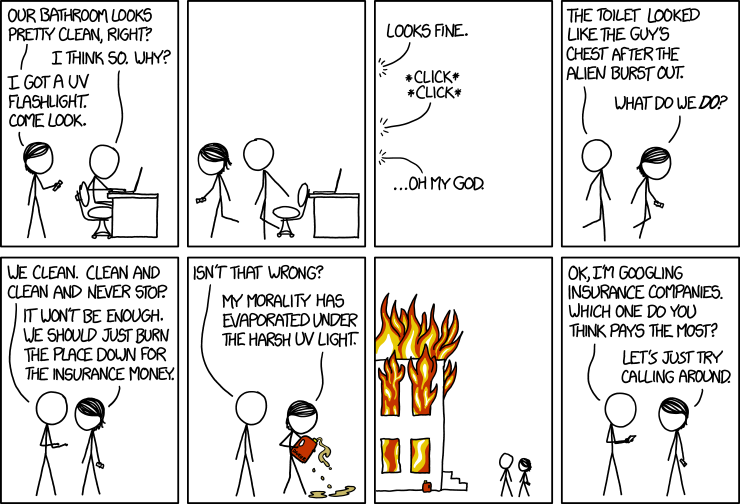
TertiarymattSound advice.
Lost and Found, mixed media collage
What was learned from 2014? A conviction that has been strengthening as I age has continued to do so: I know very little (for certain, that is). It has also been reinforced that it is possible to lose much and gain much at the same time – or perhaps one extreme makes us more aware of a beautiful, invisible constant just beneath most of the transitory things we define as real or important in our lives. Most significant of all, 2014 was the year when an arrogant assertion of mine from years ago revisited me, so a word to the wise: never boast that you are immune to any aspect of the human condition. Someone or something might hear and play the trick of the century on your heart.
About the Bozzetti
You may be familiar with maquette, the French term for a small version of an intended sculptural or architectural endeavour. A bozzetto is the Italian equivalent. Just as a sketch for a master painting may retain a spark unique unto itself, one that may not translate identically into the larger, more finished work, the tiny bozzetti often have their own charms. I began making them daily during a portion of my residency at Saint-Gaudens National Historic Site. Each is generally born as an hour-long exercise without a direct source or model: I sit down and follow what I sense in the clay. Unlike daily sketching in a sketchbook or writing in a journal, the bozzetti eventually take up lots of space, and so many are squished! Some pieces may be developed further, transitioned into a permanent material, and produced in a limited edition when a collector expresses an interest or there is a quiet moment to pursue one that interests me personally.

3 April 2015

15 March 2015

14 March 2015

13 March 2013

12 March 2015

11 March 2015
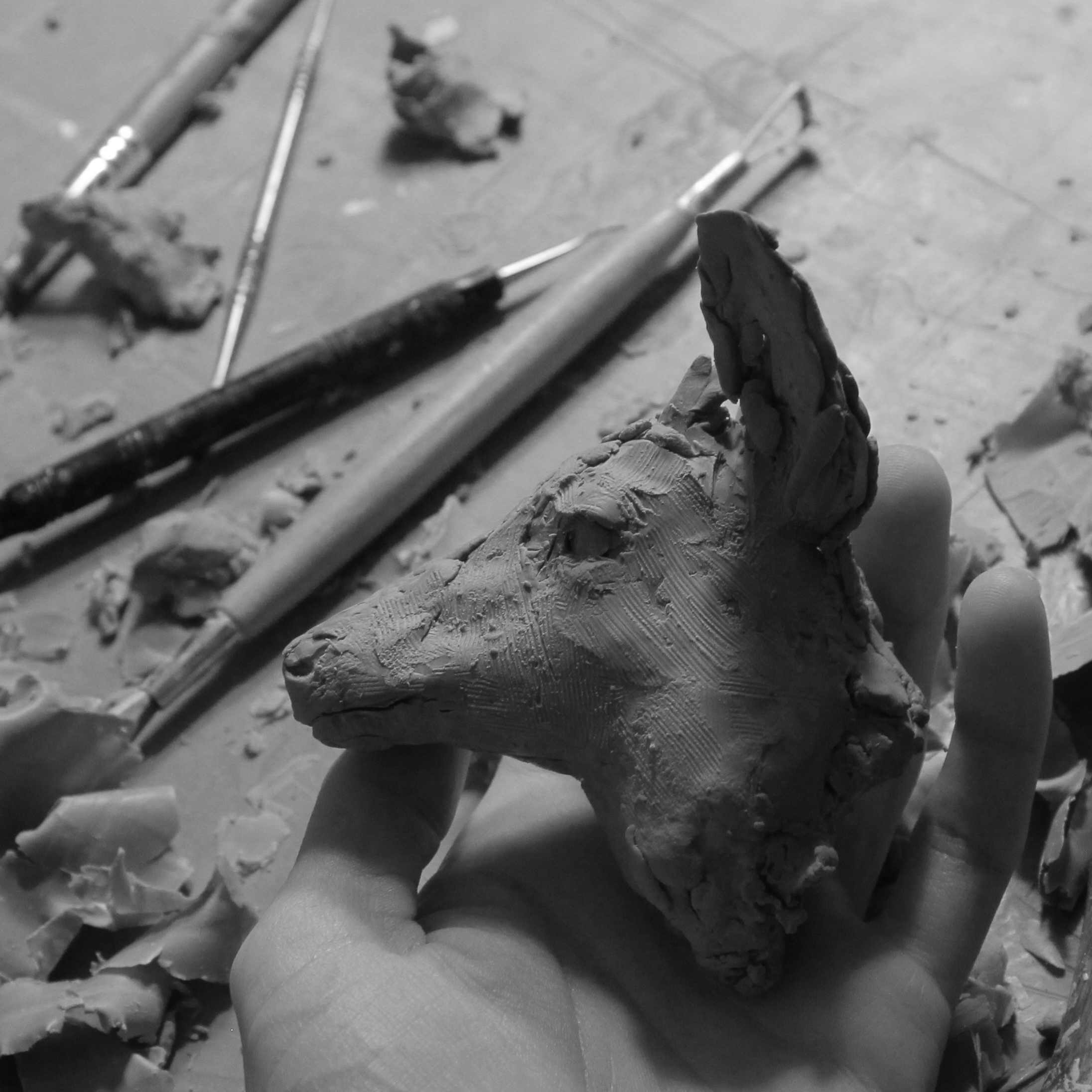
10 March 2015
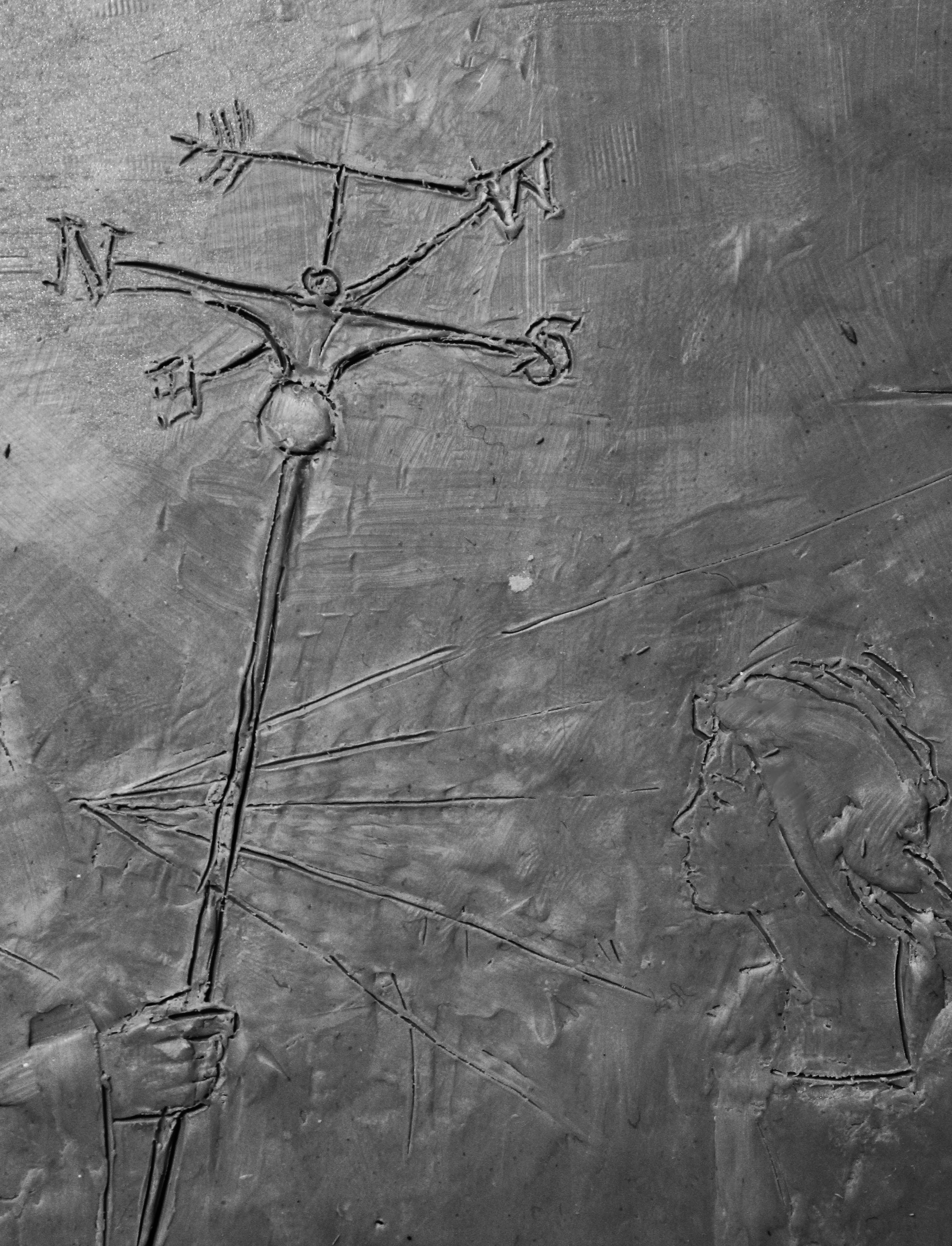
9 March 2015
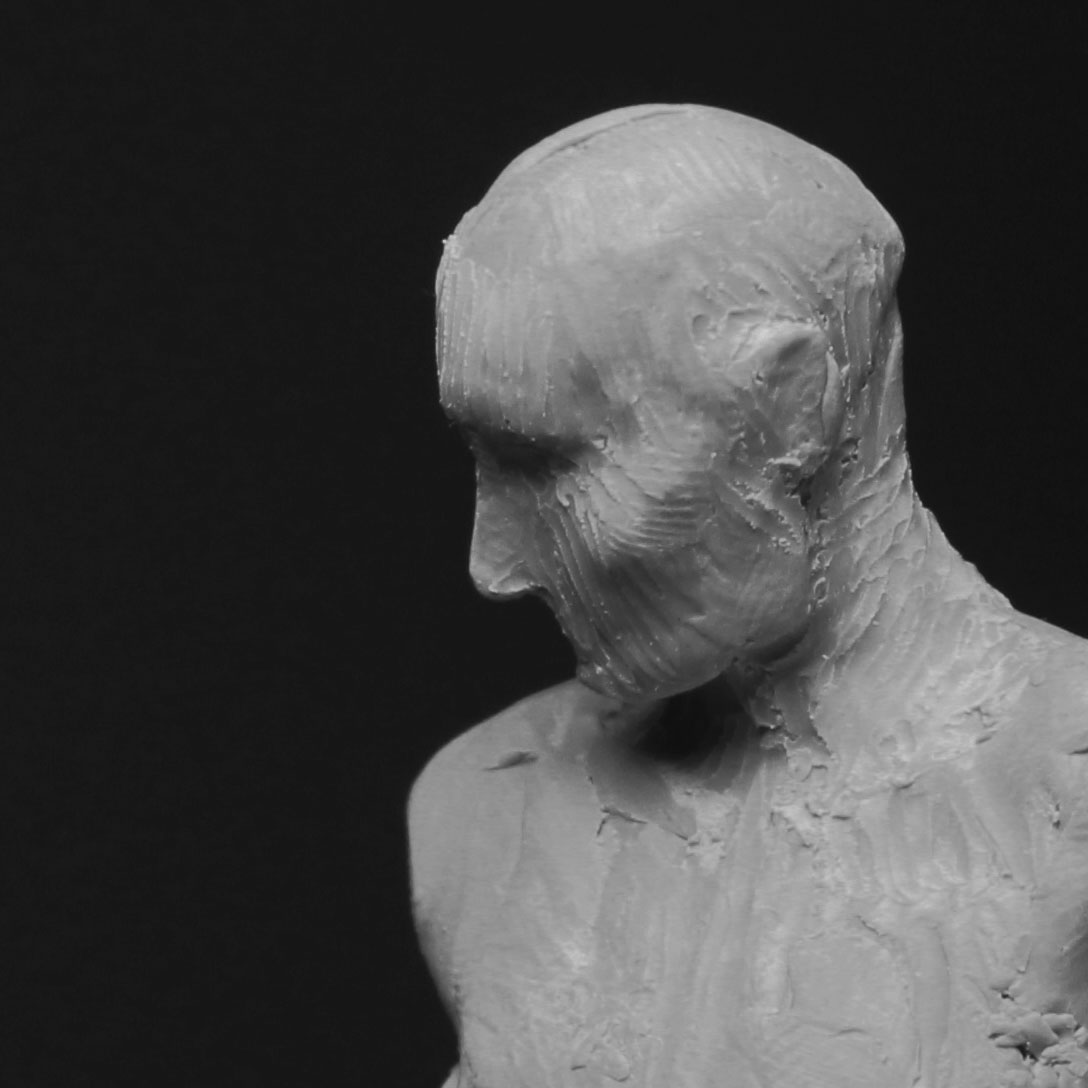
8 March 2015

7 March 2015

21 February 2015

20 February 2015
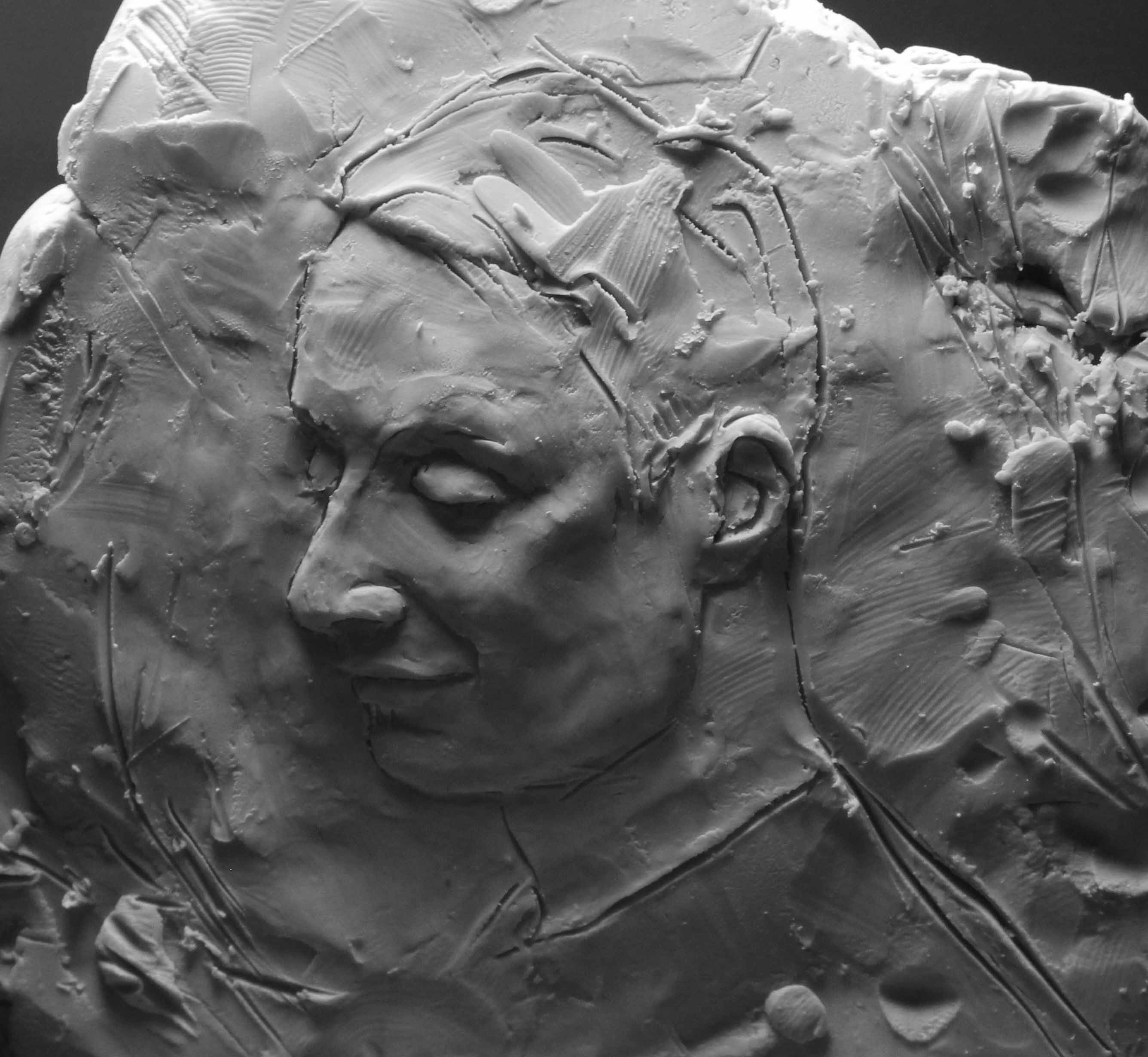
19 February 2015
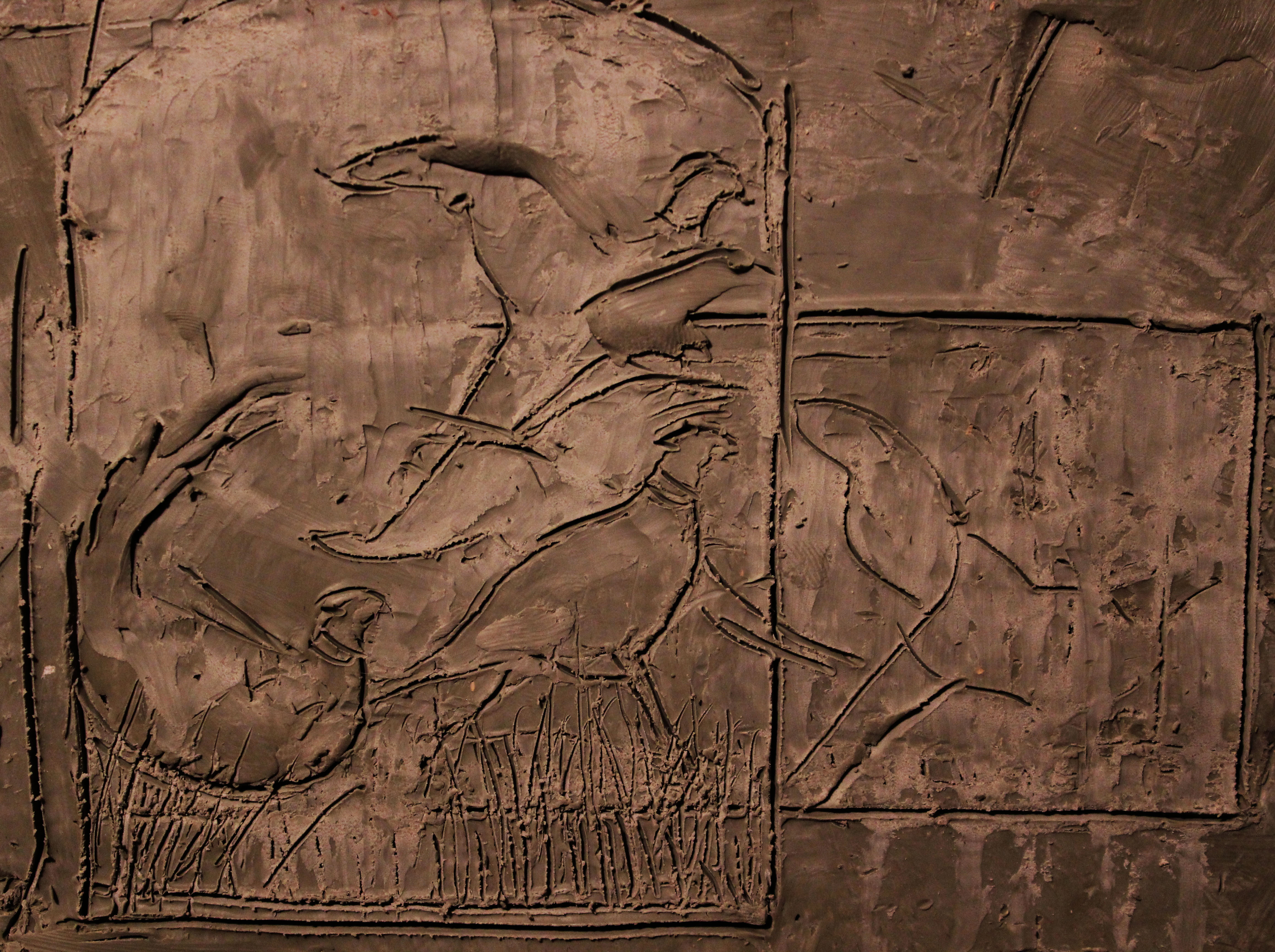
17 February 2015

16 February 2015
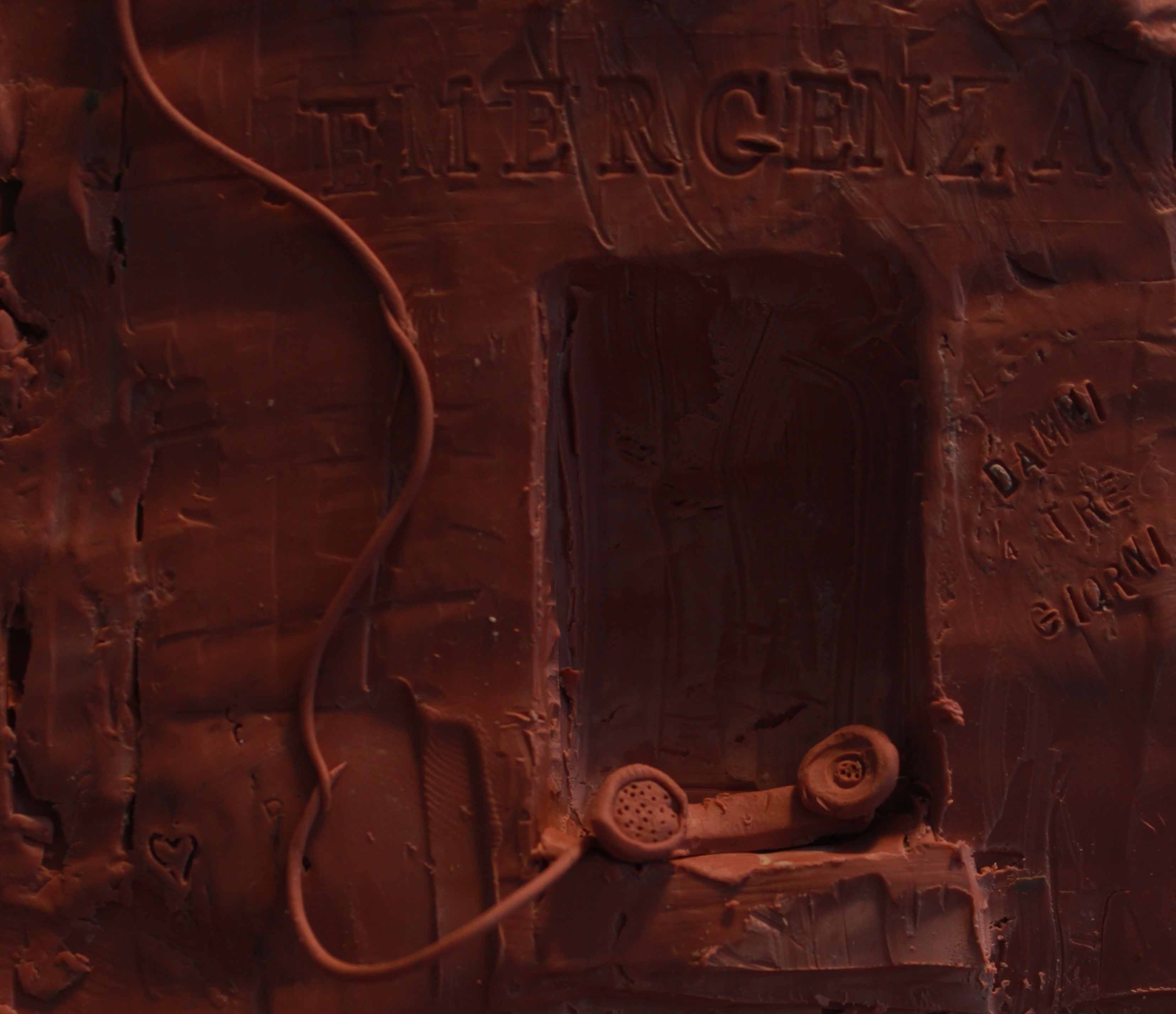
11 February 2015

10 February 2015

9 February 2015

8 February 2015

28 January 2015

27 January 2015

26 January 2015

25 January 2015

24 January 2015

23 January 2015
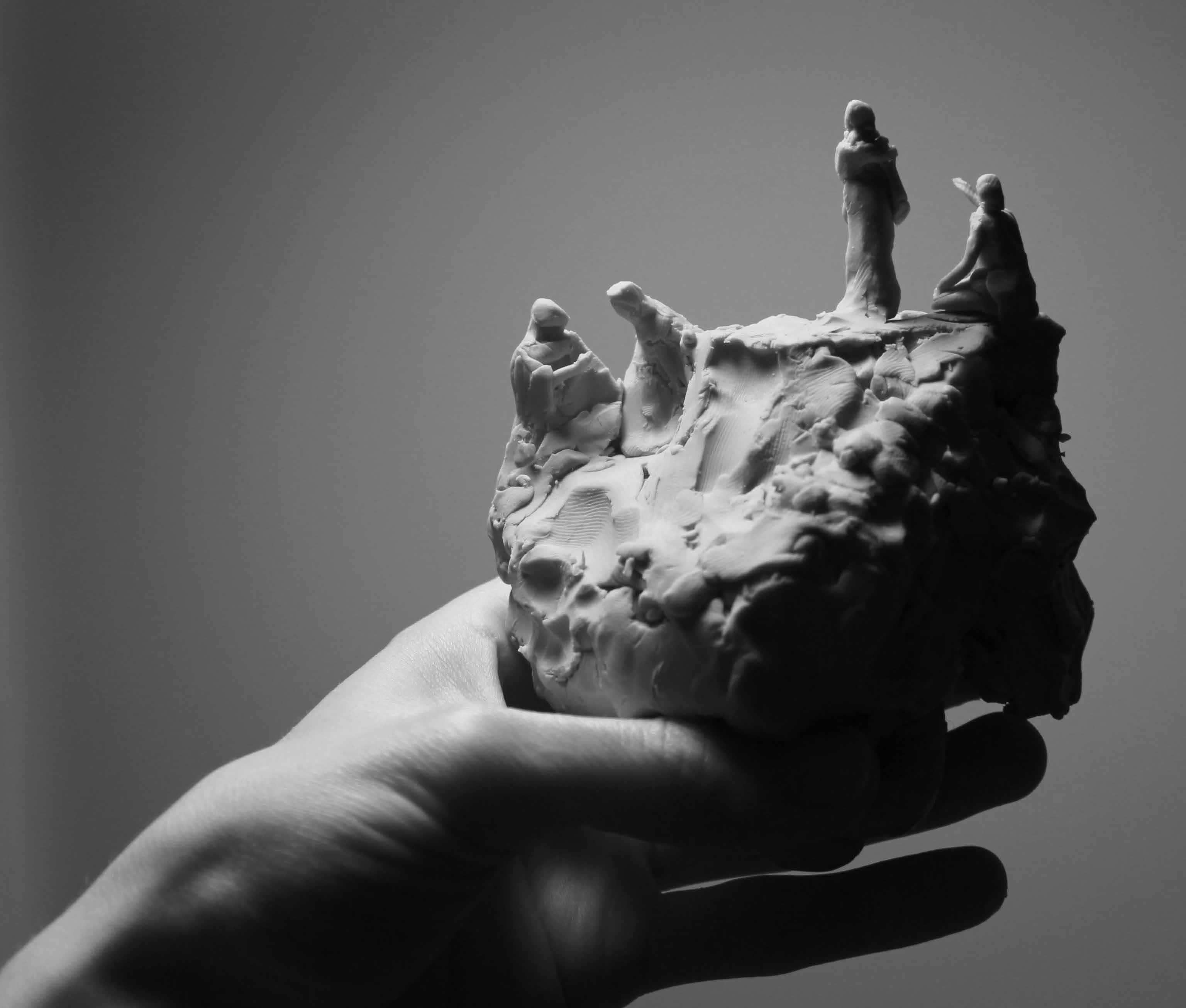
22 January 2015
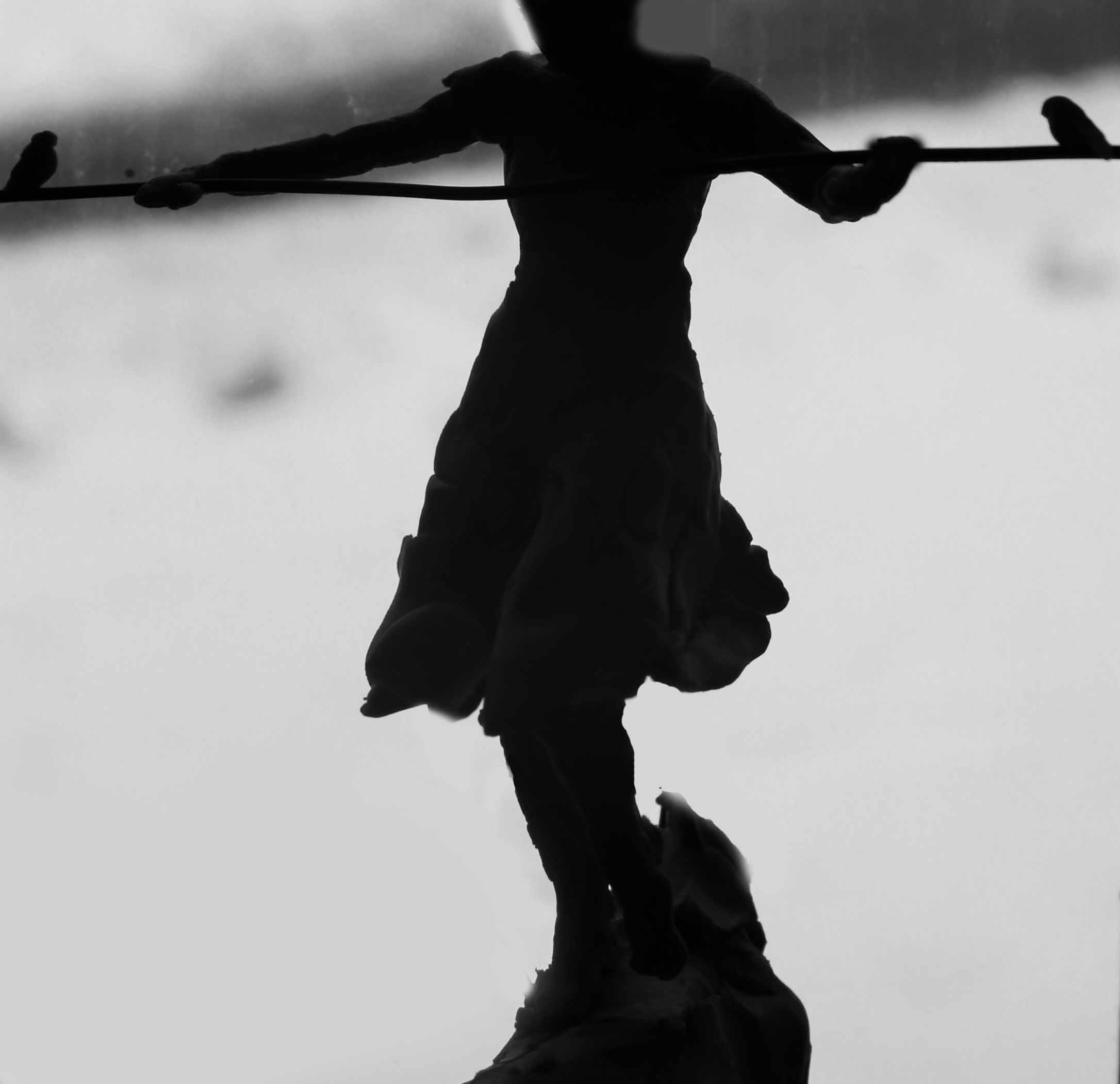
21 January 2015

20 January 2015
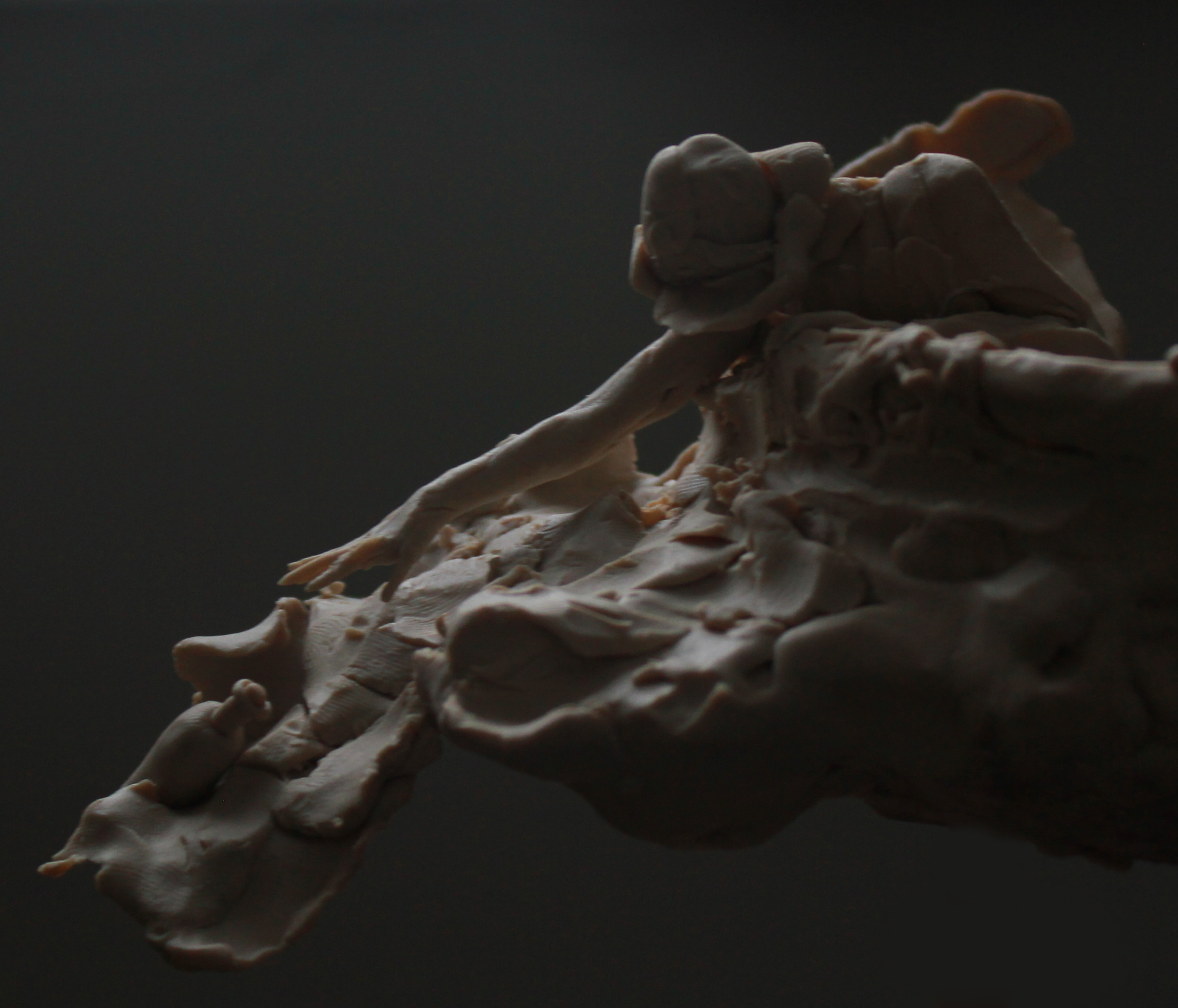
19 January 2015

18 January 2015

17 January 2015

16 January 2015

15 January 2015

14 January 2015
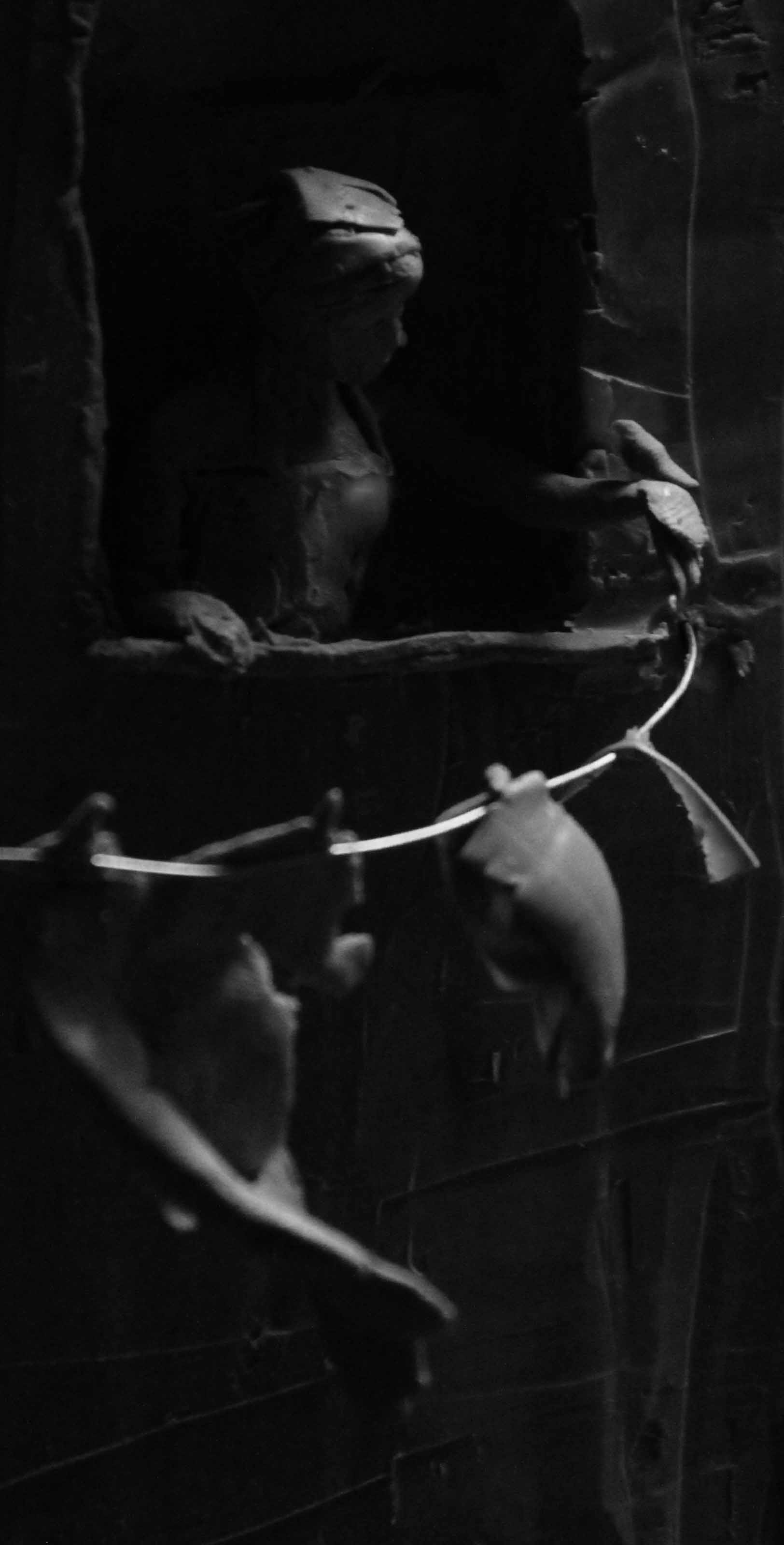
13 January 2015

12 January 2015

11 January 2015

10 January 2015

9 January 2015

8 January 2015
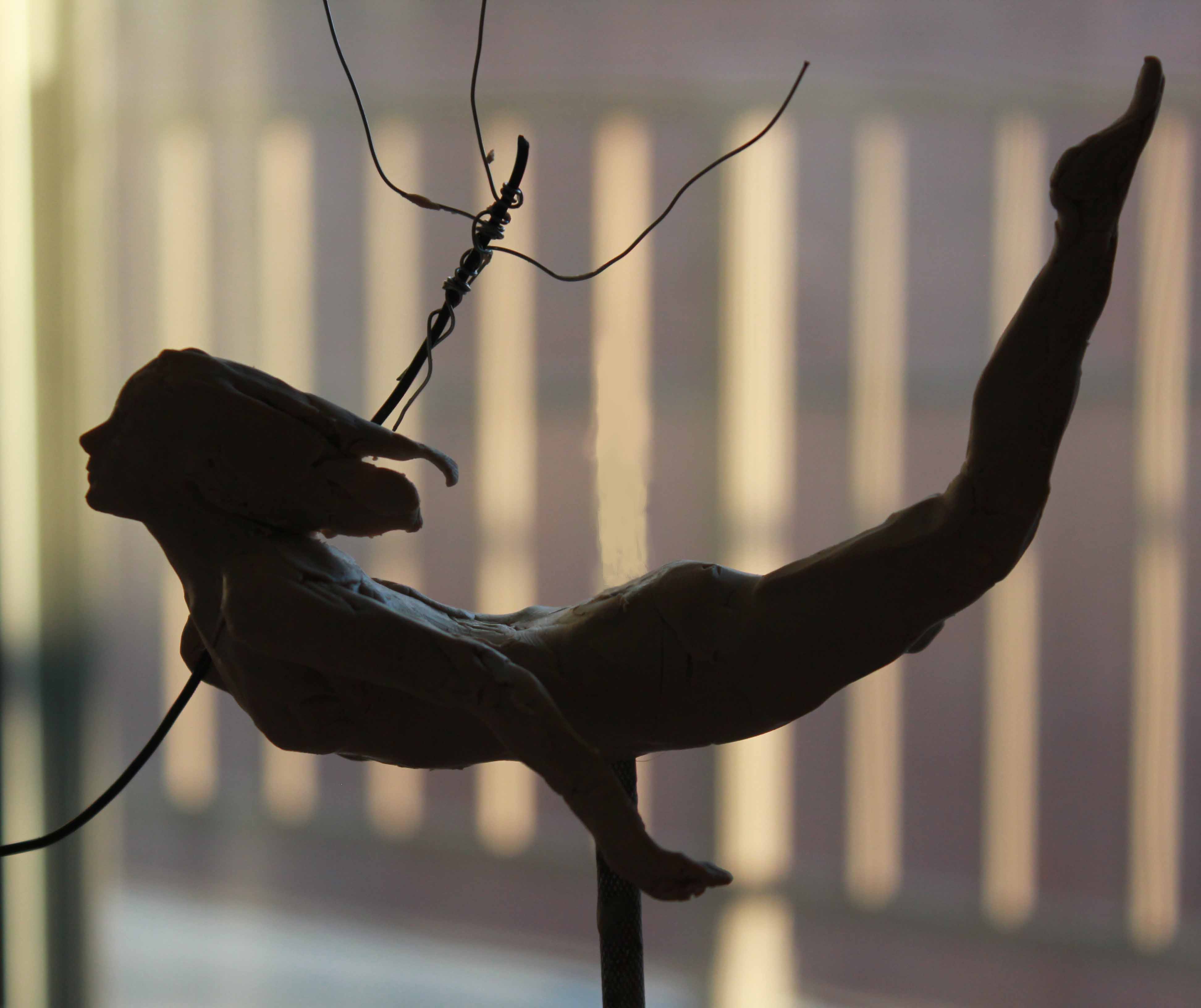
7 January 2015
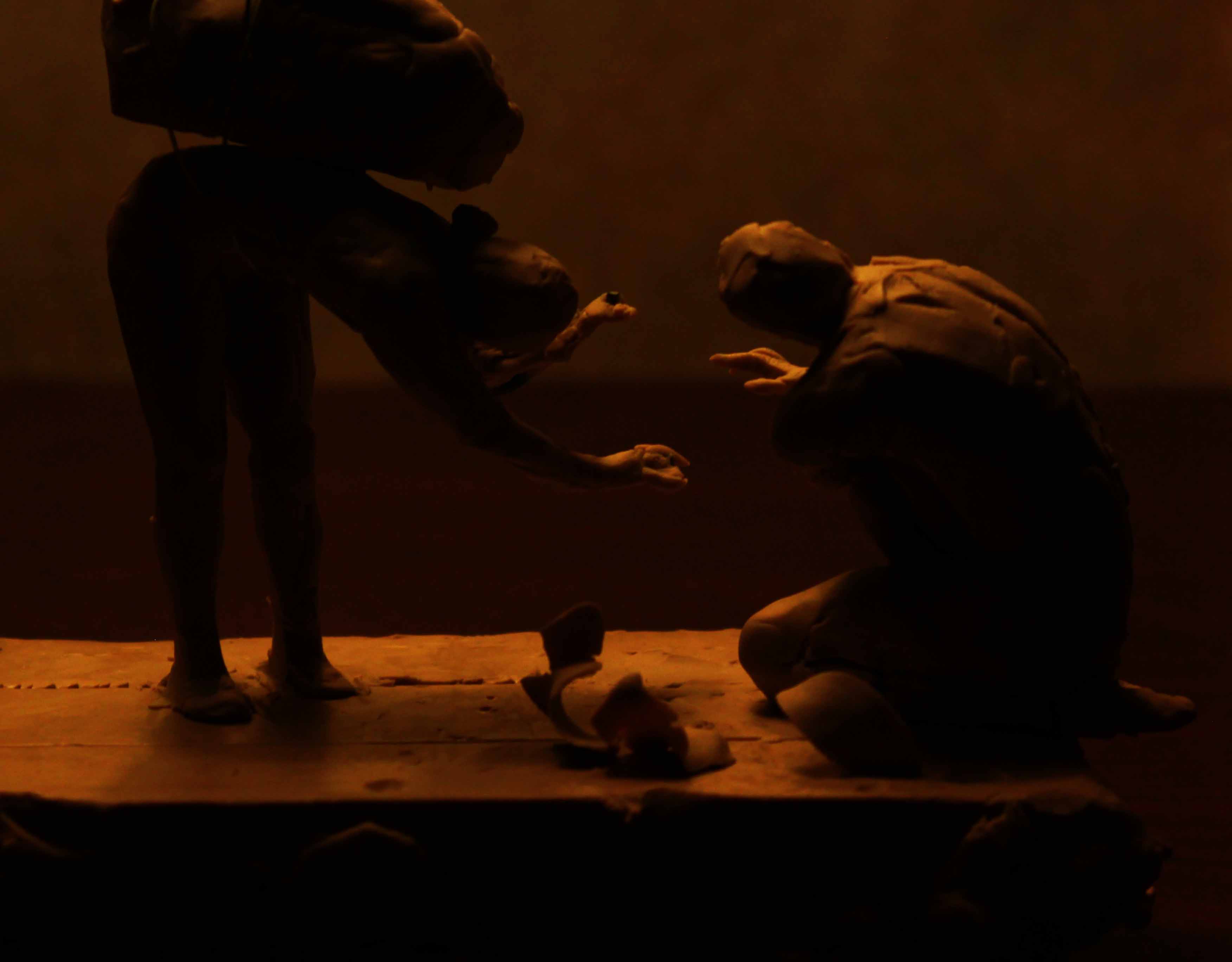
5-6 January 2015
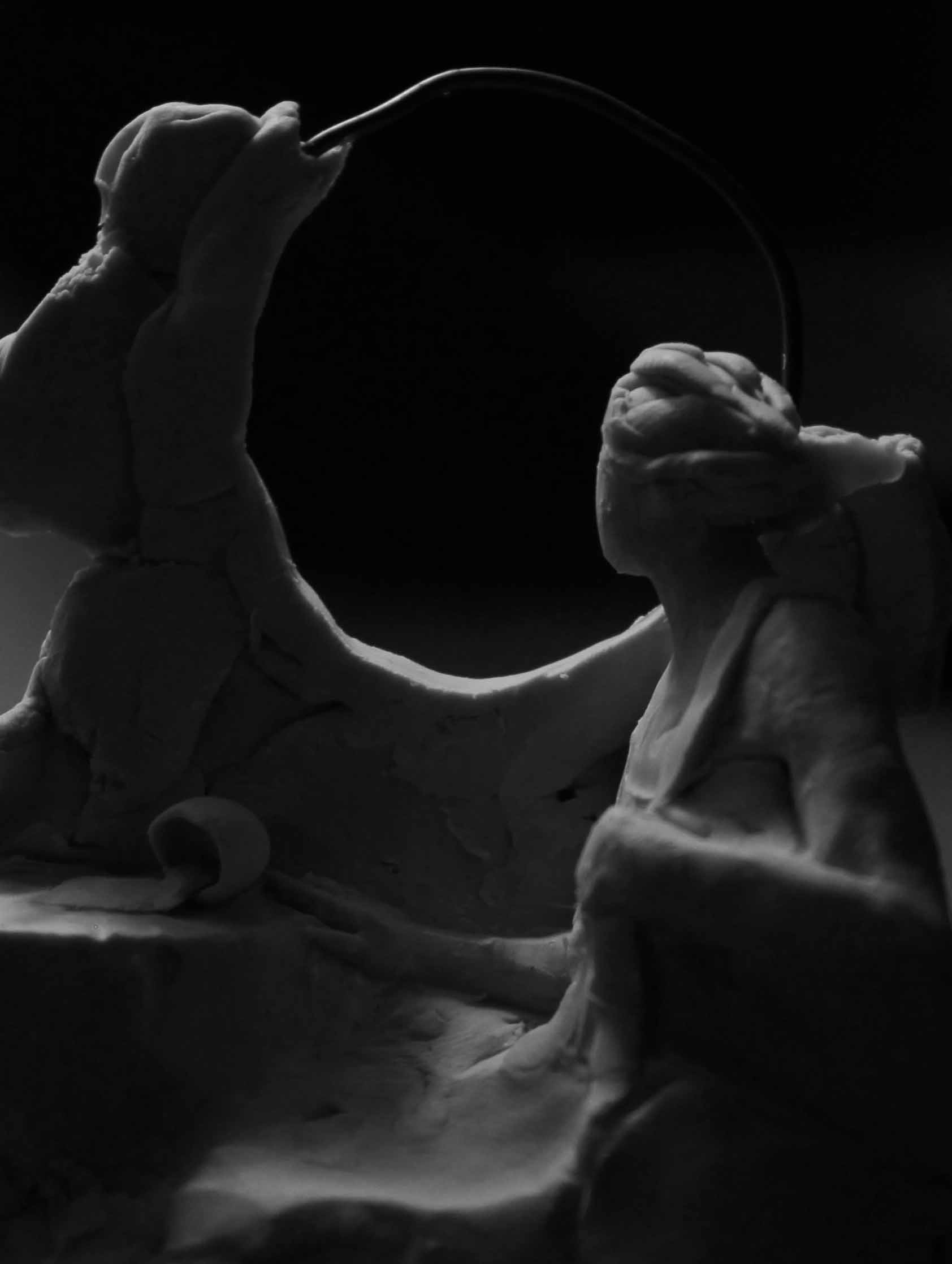
4 January 2015
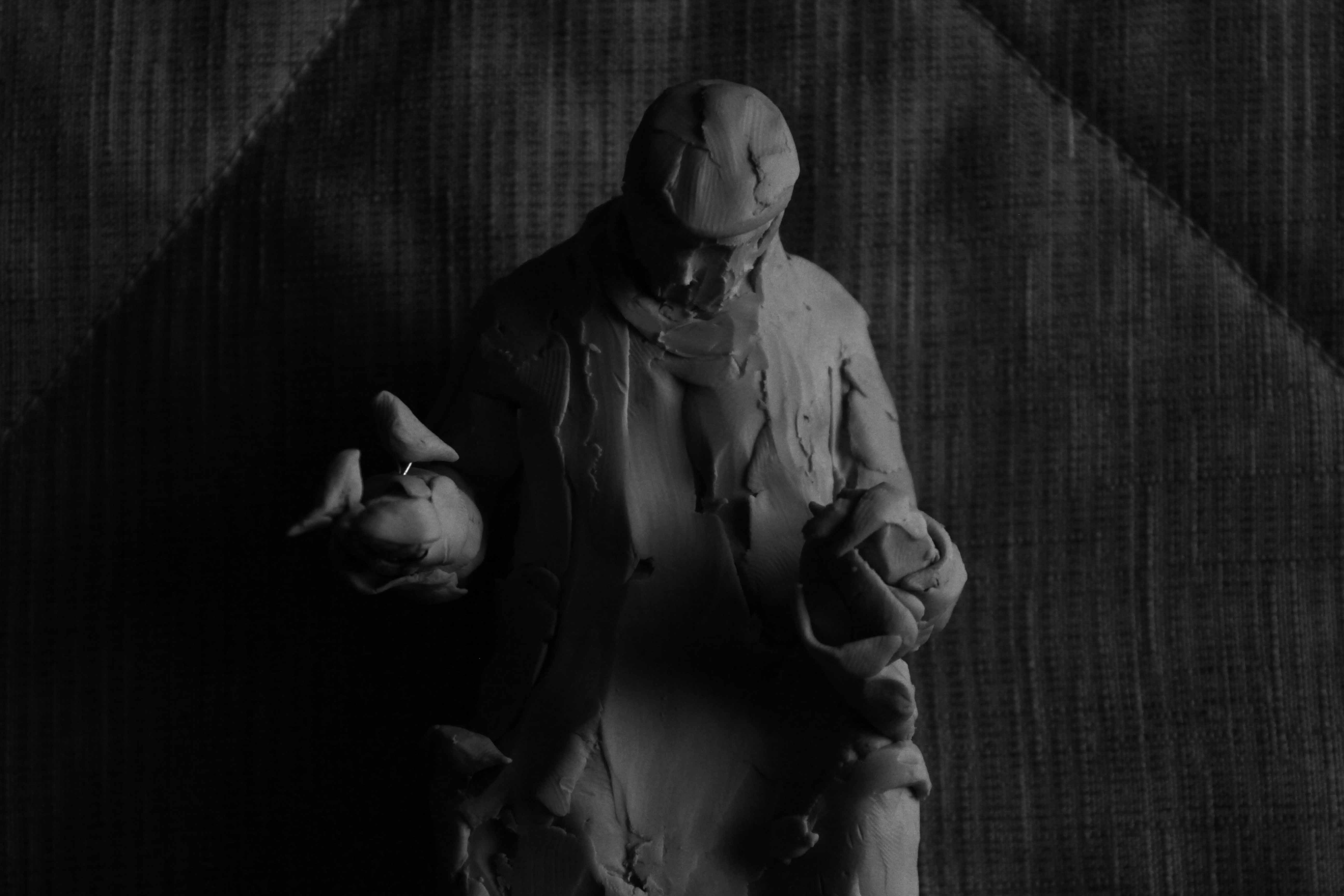
3 January 2015

2 January 2015
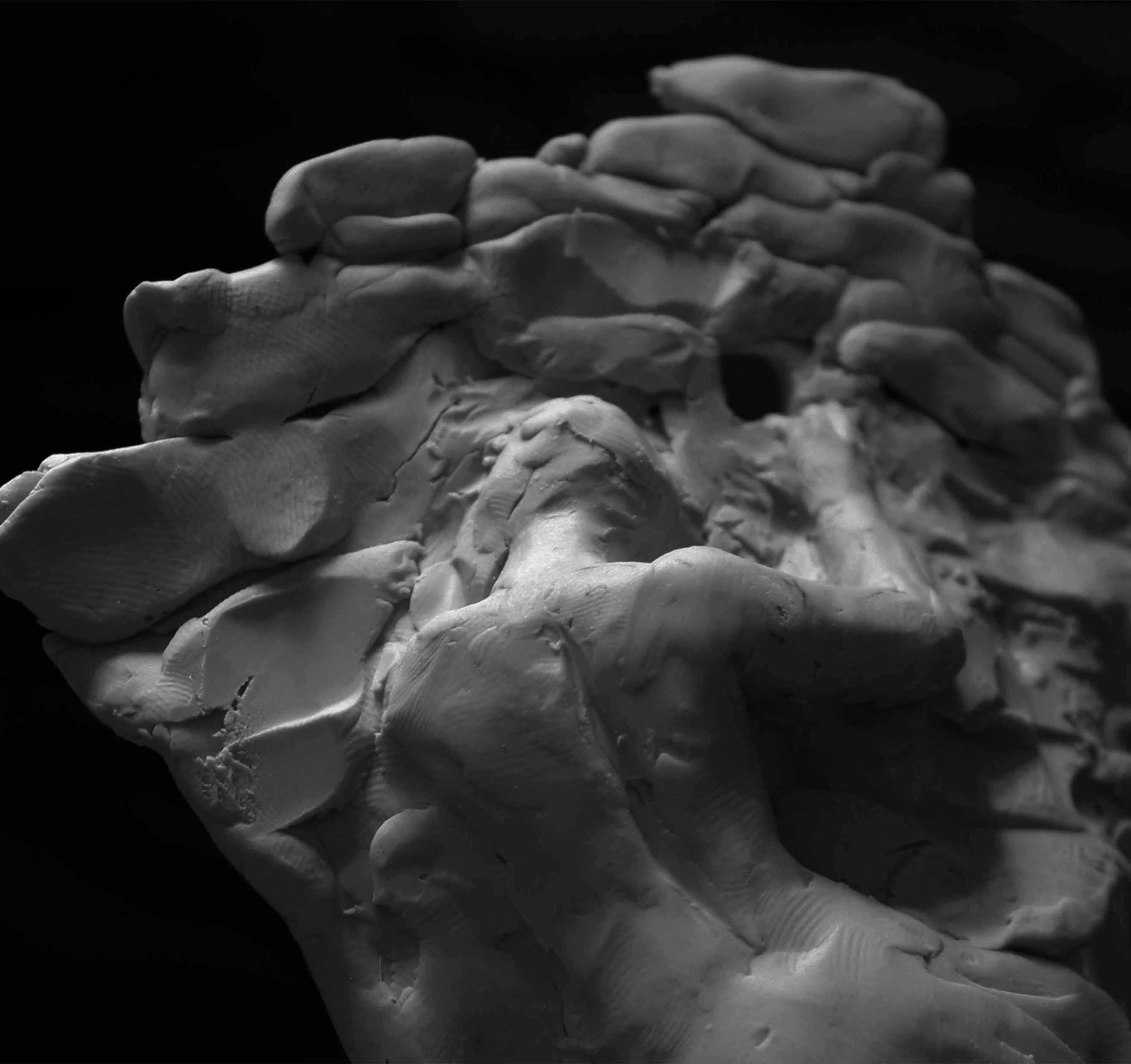
1 January 2015
TertiarymattThis is quite long, but well worth reading.
The enormity of the Koch fortune is no mystery. Brothers Charles and David are each worth more than $40 billion. The electoral influence of the Koch brothers is similarly well-chronicled. The Kochs are our homegrown oligarchs; they've cornered the market on Republican politics and are nakedly attempting to buy Congress and the White House. Their political network helped finance the Tea Party and powers today's GOP. Koch-affiliated organizations raised some $400 million during the 2012 election, and aim to spend another $290 million to elect Republicans in this year's midterms. So far in this cycle, Koch-backed entities have bought 44,000 political ads to boost Republican efforts to take back the Senate.
What is less clear is where all that money comes from. Koch Industries is headquartered in a squat, smoked-glass building that rises above the prairie on the outskirts of Wichita, Kansas. The building, like the brothers' fiercely private firm, is literally and figuratively a black box. Koch touts only one top-line financial figure: $115 billion in annual revenue, as estimated by Forbes. By that metric, it is larger than IBM, Honda or Hewlett-Packard and is America's second-largest private company after agribusiness colossus Cargill. The company's stock response to inquiries from reporters: "We are privately held and don't disclose this information."
But Koch Industries is not entirely opaque. The company's troubled legal history – including a trail of congressional investigations, Department of Justice consent decrees, civil lawsuits and felony convictions – augmented by internal company documents, leaked State Department cables, Freedom of Information disclosures and company whistle-blowers, combine to cast an unwelcome spotlight on the toxic empire whose profits finance the modern GOP.
Under the nearly five-decade reign of CEO Charles Koch, the company has paid out record civil and criminal environmental penalties. And in 1999, a jury handed down to Koch's pipeline company what was then the largest wrongful-death judgment of its type in U.S. history, resulting from the explosion of a defective pipeline that incinerated a pair of Texas teenagers.
The volume of Koch Industries' toxic output is staggering. According to the University of Massachusetts Amherst's Political Economy Research Institute, only three companies rank among the top 30 polluters of America's air, water and climate: ExxonMobil, American Electric Power and Koch Industries. Thanks in part to its 2005 purchase of paper-mill giant Georgia-Pacific, Koch Industries dumps more pollutants into the nation's waterways than General Electric and International Paper combined. The company ranks 13th in the nation for toxic air pollution. Koch's climate pollution, meanwhile, outpaces oil giants including Valero, Chevron and Shell. Across its businesses, Koch generates 24 million metric tons of greenhouse gases a year.
For Koch, this license to pollute amounts to a perverse, hidden subsidy. The cost is borne by communities in cities like Port Arthur, Texas, where a Koch-owned facility produces as much as 2 billion pounds of petrochemicals every year. In March, Koch signed a consent decree with the Department of Justice requiring it to spend more than $40 million to bring this plant into compliance with the Clean Air Act.
The toxic history of Koch Industries is not limited to physical pollution. It also extends to the company's business practices, which have been the target of numerous federal investigations, resulting in several indictments and convictions, as well as a whole host of fines and penalties.
And in one of the great ironies of the Obama years, the president's financial-regulatory reform seems to benefit Koch Industries. The company is expanding its high-flying trading empire precisely as Wall Street banks – facing tough new restrictions, which Koch has largely escaped – are backing away from commodities speculation.
It is often said that the Koch brothers are in the oil business. That's true as far as it goes – but Koch Industries is not a major oil producer. Instead, the company has woven itself into every nook of the vast industrial web that transforms raw fossil fuels into usable goods. Koch-owned businesses trade, transport, refine and process fossil fuels, moving them across the world and up the value chain until they become things we forgot began with hydrocarbons: fertilizers, Lycra, the innards of our smartphones.
The company controls at least four oil refineries, six ethanol plants, a natural-gas-fired power plant and 4,000 miles of pipeline. Until recently, Koch refined roughly five percent of the oil burned in America (that percentage is down after it shuttered its 85,000-barrel-per-day refinery in North Pole, Alaska, owing, in part, to the discovery that a toxic solvent had leaked from the facility, fouling the town's groundwater). From the fossil fuels it refines, Koch also produces billions of pounds of petrochemicals, which, in turn, become the feedstock for other Koch businesses. In a journey across Koch Industries, what enters as a barrel of West Texas Intermediate can exit as a Stainmaster carpet.
Koch's hunger for growth is insatiable: Since 1960, the company brags, the value of Koch Industries has grown 4,200-fold, outpacing the Standard & Poor's index by nearly 30 times. On average, Koch projects to double its revenue every six years. Koch is now a key player in the fracking boom that's vaulting the United States past Saudi Arabia as the world's top oil producer, even as it's endangering America's groundwater. In 2012, a Koch subsidiary opened a pipeline capable of carrying 250,000 barrels a day of fracked crude from South Texas to Corpus Christi, where the company owns a refinery complex, and it has announced plans to further expand its Texas pipeline operations. In a recent acquisition, Koch bought Frac-Chem, a top provider of hydraulic fracturing chemicals to drillers. Thanks to the Bush administration's anti-regulatory agenda – which Koch Industries helped craft – Frac-Chem's chemical cocktails, injected deep under the nation's aquifers, are almost entirely exempt from the Safe Drinking Water Act.

A 1996 explosion of a Koch-owned pipeline in Texas killed two teens. (Photo: National Transportation Safety Board)
Koch is also long on the richest – but also the dirtiest and most carbon-polluting – oil deposits in North America: the tar sands of Alberta. The company's Pine Bend refinery, near St. Paul, Minnesota, processes nearly a quarter of the Canadian bitumen exported to the United States – which, in turn, has created for Koch Industries a lucrative sideline in petcoke exports. Denser, dirtier and cheaper than coal, petcoke is the dregs of tar-sands refining. U.S. coal plants are largely forbidden from burning petcoke, but it can be profitably shipped to countries with lax pollution laws like Mexico and China. One of the firm's subsidiaries, Koch Carbon, is expanding its Chicago terminal operations to receive up to 11 million tons of petcoke for global export. In June, the EPA noted the facility had violated the Clean Air Act with petcoke particulates that endanger the health of South Side residents. "We dispute that the two elevated readings" behind the EPA notice of violation "are violations of anything," Koch's top lawyer, Mark Holden, told Rolling Stone, insisting that Koch Carbon is a good neighbor.
Over the past dozen years, the company has quietly acquired leases for 1.1 million acres of Alberta oil fields, an area larger than Rhode Island. By some estimates, Koch's direct holdings nearly double ExxonMobil's and nearly triple Shell's. In May, Koch Oil Sands Operating LLC of Calgary, Alberta, sought permits to embark on a multi-billiondollar tar-sands-extraction operation. This one site is projected to produce 22 million barrels a year – more than a full day's supply of U.S. oil.
Charles Koch, the 78-year-old CEO and chairman of the board of Koch Industries, is inarguably a business savant. He presents himself as a man of moral clarity and high integrity. "The role of business is to produce products and services in a way that makes people's lives better," he said recently. "It cannot do so if it is injuring people and harming the environment in the process."
The Koch family's lucrative blend of pollution, speculation, law-bending and self-righteousness stretches back to the early 20th century, when Charles' father first entered the oil business. Fred C. Koch was born in 1900 in Quanah, Texas – a sunbaked patch of prairie across the Red River from Oklahoma. Fred was the second son of Hotze "Harry" Koch, a Dutch immigrant who – as recalled in Koch literature – ran "a modest newspaper business" amid the dusty poverty of Quanah. In the family legend, Fred Koch emerged from the nothing of the Texas range to found an empire. But like many stories the company likes to tell about itself, this piece of Kochlore takes liberties with the truth. Fred was not a simple country boy, and his father was not just a small-town publisher. Harry Koch was also a local railroad baron who used his newspaper to promote the Quanah, Acme & Pacific railways. A director and founding shareholder of the company, Harry sought to build a rail line across Texas to El Paso. He hoped to turn Quanah into "the most important railroad center in northwest Texas and a metropolitan city of first rank." He may not have fulfilled those ambitions, but Harry did build up what one friend called "a handsome pile of dinero."
Harry was not just the financial springboard for the Koch dynasty, he was also its wellspring of far-right politics. Harry editorialized against fiat money, demanded hangings for "habitual criminals" and blasted Social Security as inviting sloth. At the depths of the Depression, he demanded that elected officials in Washington should stop trying to fix the economy: "Business," he wrote, "has always found a way to overcome various recessions."
In the company's telling, young Fred was an innovator whose inventions helped revolutionize the oil industry. But there is much more to this story. In its early days, refining oil was a dirty and wasteful practice. But around 1920, Universal Oil Products introduced a clean and hugely profitable way to "crack" heavy crude, breaking it down under heat and heavy pressure to boost gasoline yields. In 1925, Fred, who earned a degree in chemical engineering from MIT, partnered with a former Universal engineer named Lewis Winkler and designed a near carbon copy of the Universal cracking apparatus – making only tiny, unpatentable tweaks. Relying on family connections, Fred soon landed his first client – an Oklahoma refinery owned by his maternal uncle L.B. Simmons. In a flash, Winkler-Koch Engineering Co. had contracts to install its knockoff cracking equipment all over the heartland, undercutting Universal by charging a one-time fee rather than ongoing royalties.
It was a boom business. That is, until Universal sued in 1929, accusing WinklerKoch of stealing its intellectual property. With his domestic business tied up in court, Fred started looking for partners abroad and was soon doing business in the Soviet Union, where leader Joseph Stalin had just launched his first Five Year Plan. Stalin sought to fund his country's industrialization by selling oil into the lucrative European export market. But the Soviet Union's reserves were notoriously hard to refine. The USSR needed cracking technology, and the Oil Directorate of the Supreme Council of the National Economy took a shining to Winkler-Koch – primarily because Koch's oil-industry competitors were reluctant to do business with totalitarian Communists.

Outside its London offices, protesters gather. (Photo: P.Wolmuth/REPORT DIGITAL-REA/Re)
Between 1929 and 1931, Winkler-Koch built 15 cracking units for the Soviets. Although Stalin's evil was no secret, it wasn't until Fred visited the Soviet Union, that these dealings seemed to affect his conscience. "I went to the USSR in 1930 and found it a land of hunger, misery and terror," he would later write. Even so, he agreed to give the Soviets the engineering know-how they would need to keep building more.
Back home, Fred was busy building a life of baronial splendor. He met his wife, Mary, the Wellesley-educated daughter of a Kansas City surgeon, on a polo field and soon bought 160 acres across from the Wichita Country Club, where they built a Tudorstyle mansion. As chronicled in Sons of Wichita, Daniel Schulman's investigation of the Koch dynasty, the compound was quickly bursting with princes: Frederick arrived in 1933, followed by Charles in 1935 and twins David and Bill in 1940. Fred Koch lorded over his domain. "My mother was afraid of my father," said Bill, as were the four boys, especially first-born Frederick, an artistic kid with a talent for the theater. "Father wanted to make all his boys into men, and Freddie couldn't relate to that regime," Charles recalled. Frederick got shipped East to boarding school and was all but disappeared from Wichita.
With Frederick gone, Charles forged a deep alliance with David, the more athletic and assertive of the young twins. "I was closer with David because he was better at everything," Charles has said.
Fred Koch's legal battle with Universal would drag on for nearly a quarter-century. In 1934, a lower court ruled that Winkler-Koch had infringed on Universal's technology. But that judgment would be vacated, after it came out in 1943 that Universal had bought off one of the judges handling the appeal. A year later, the Supreme Court decided that Fred's cracker, by virtue of small technical differences, did not violate the Universal patent. Fred countersued on antitrust grounds, arguing that Universal had wielded patents anti-competitively. He'd win a $1.5 million settlement in 1952.
Around that time, Fred had built a domestic oil empire under a new company eventually called Rock Island Oil & Refining, transporting crude from wellheads to refineries by truck or by pipe. In those later years, Fred also became a major benefactor and board member of the John Birch Society, the rabidly anti-communist organization founded in 1958 by candy magnate and virulent racist Robert Welch. Bircher publications warned that the Red endgame was the creation of the "Negro Soviet Republic" in the Deep South. In his own writing, Fred described integration as a Red plot to "enslave both the white and black man."
Like his father, Charles Koch attended MIT. After he graduated in 1959 with two master's degrees in engineering, his father issued an ultimatum: Come back to Wichita or I'll sell the business. "Papa laid it on the line," recalled David. So Charles returned home, immersing himself in his father's world – not simply joining the John Birch Society, but also opening a Bircher bookstore. The Birchers had high hopes for young Charles. As Koch family friend Robert Love wrote in a letter to Welch: "Charles Koch can, if he desires, finance a large operation, however, he must continually be brought along."
But Charles was already falling under the sway of a charismatic radio personality named Robert LeFevre, founder of the Freedom School, a whites-only libertarian boot camp in the foothills above Colorado Springs, Colorado. LeFevre preached a form of anarchic capitalism in which the individual should be freed from almost all government power. Charles soon had to make a choice. While the Birchers supported the Vietnam War, his new guru was a pacifist who equated militarism with out-of-control state power. LeFevre's stark influence on Koch's thinking is crystallized in a manifesto Charles wrote for the Libertarian Review in the 1970s, recently unearthed by Schulman, titled "The Business Community: Resisting Regulation." Charles lays out principles that gird today's Tea Party movement. Referring to regulation as "totalitarian," the 41-year-old Charles claimed business leaders had been "hoodwinked" by the notion that regulation is "in the public interest." He advocated the "barest possible obedience" to regulation and implored, "Do not cooperate voluntarily, instead, resist whenever and to whatever extent you legally can in the name of justice."
After his father died in 1967, Charles, now in command of the family business, renamed it Koch Industries. It had grown into one of the 10 largest privately owned firms in the country, buying and selling some 80 million barrels of oil a year and operating 3,000 miles of pipeline. A black-diamond skier and white-water kayaker, Charles ran the business with an adrenaline junkie's aggressiveness. The company would build pipelines to promising oil fields without a contract from the producers and park tanker trucks beside wildcatters' wells, waiting for the first drops of crude to flow. "Our willingness to move quickly, absorb more risk," Charles would write, "enabled us to become the leading crude-oilgathering company."
Charles also reconnected with one of his father's earliest insights: There's big money in dirty oil. In the late 1950s, Fred Koch had bought a minority stake in a Minnesota refinery that processed heavy Canadian crude. "We could run the lousiest crude in the world," said his business partner J. Howard Marshall II – the future Mr. Anna Nicole Smith. Sensing an opportunity for huge profits, Charles struck a deal to convert Marshall's ownership stake in the refinery into stock in Koch Industries. Suddenly the majority owner, the company soon bought the rest of the refinery outright.
Almost from the beginning, Koch Industries' risk-taking crossed over into recklessness. The OPEC oil embargo hit the company hard. Koch had made a deal giving the company the right to buy a large share of Qatar's export crude. At the time, Koch owned five supertankers and had chartered many others. When the embargo hit, Koch had upward of half a billion dollars in exposure to tankers and couldn't deliver OPEC oil to the U.S. market, creating what Charles has called "large losses." Soon, Koch Industries was caught overcharging American customers. The Ford administration in the summer of 1974 compelled Koch to pay out more than $20 million in rebates and future price reductions.
Koch Industries' manipulations were about to get more audacious. In the late 1970s, the federal government parceled out exploration tracts, using a lottery in which anyone could score a 10-year lease at just $1 an acre – a game of chance that gave wildcat prospectors the same shot as the biggest players. Koch didn't like these odds, so it enlisted scores of frontmen to bid on its behalf. In the event they won the lottery, they would turn over their leases to the company. In 1980, Koch Industries pleaded guilty to five felonies in federal court, including conspiracy to commit fraud.

The Koch family, mid-1950s. (Photo: Wichita State University Libraries)
With Republicans and Democrats united in regulating the oil business, Charles had begun throwing his wealth behind the upstart Libertarian Party, seeking to transform it into a viable third party. Over the years, he would spend millions propping up a league of affiliated think tanks and front groups – a network of Libertarians that became known as the "Kochtopus."
Charles even convinced David to stand as the Libertarian Party's vice-presidential candidate in 1980 – a clever maneuver that allowed David to lavish unlimited money on his own ticket. The Koch-funded 1980 platform was nakedly in the brothers' self-interest – slashing federal regulatory agencies, offering a 50 percent tax break to top earners, ending the "cruel and unfair" estate tax and abolishing a $16 billion "windfall profits" tax on the oil industry. The words of Libertarian presidential candidate Ed Clark's convention speech in Los Angeles ring across the decades: "We're sick of taxes," he declared. "We're ready to have a very big tea party." In a very real sense, the modern Republican Party was on the ballot that year – and it was running against Ronald Reagan.
Charles' management style and infatuation with far-right politics were endangering his grip on the company. Bill believed his brothers' political spending was bad for business. "Pretty soon, we would get the reputation that the company and the Kochs were crazy," he said.
In late 1980, with Frederick's backing, Bill launched an unsuccessful battle for control of Koch Industries, aiming to take the company public. Three years later, Charles and David bought out their brothers for $1.1 billion. But the speed with which Koch Industries paid off the buyout debt left Bill convinced, but never quite able to prove, he'd been defrauded. He would spend the next 18 years suing his brothers, calling them "the biggest crooks in the oil industry."
Bill also shared these concerns with the federal government. Thanks in part to his efforts, in 1989 a Senate committee investigating Koch business with Native Americans would describe Koch Oil tactics as "grand larceny." In the late 1980s, Koch was the largest purchaser of oil from American tribes. Senate investigators suspected the company was making off with more crude from tribal oil fields than it measured and paid for. They set up a sting, sending an FBI agent to coordinate stakeouts of eight remote leases. Six of them were Koch operations, and the agents reported "oil theft" at all of them.
One of Koch's gaugers would refer to this as "volume enhancement." But in sworn testimony before a Texas jury, Phillip Dubose, a former Koch pipeline manager, offered a more succinct definition: "stealing." The Senate committee concluded that over the course of three years Koch "pilfered" $31 million in Native oil; in 1988, the value of that stolen oil accounted for nearly a quarter of the company's crude-oil profits. "I don't know how the company could have figures like that," the FBI agent testified, "and not have top management know that theft was going on." In his own testimony, Charles offered that taking oil readings "is a very uncertain art" and that his employees "aren't rocket scientists." Koch's top lawyer would later paint the company as a victim of Senate "McCarthyism."
By this time, the Kochs had soured on the Libertarian Party, concluding that control of a small party would never give them the muscle they sought in the nation's capital. Now they would spend millions in efforts to influence – and ultimately take over – the GOP. The work began close to home; the Kochs had become dedicated patrons of Sen. Bob Dole of Kansas, who ran interference for Koch Industries in Washington. On the Senate floor in March 1990, Dole gloatingly cautioned against a "rush to judgment" against Koch, citing "very real concerns about some of the evidence on which the special committee was basing its findings." A grand jury investigated the claims but disbanded in 1992, without issuing indictments.
Arizona Sen. Dennis DeConcini was "surprised and disappointed" at the decision to drop the case. "Our investigation was some of the finest work the Senate has ever done," he said. "There was an overwhelming case against Koch." But Koch did not avoid all punishment. Under the False Claims Act, which allows private citizens to file lawsuits on behalf of the government, Bill sued the company, accusing it of defrauding the feds of royalty income on its "volumeenhanced" purchases of Native oil. A jury concluded Koch had submitted more than 24,000 false claims, exposing Koch to some $214 million in penalties. Koch later settled, paying $25 million.
Selfinterest continued to define Koch Industries' adventures in public policy. In the early 1990s, in a high-profile initiative of the first-term Clinton White House, the administration was pushing for a levy on the heat content of fuels. Known as the BTU tax, it was the earliest attempt by the federal government to recoup damages from climate polluters. But Koch Industries could not stand losing its most valuable subsidy: the public policy that allowed it to treat the atmosphere as an open sewer. Richard Fink, head of Koch Company's Public Sector and the longtime mastermind of the Koch brothers' political empire, confessed to The Wichita Eagle in 1994 that Koch could not compete if it actually had to pay for the damage it did to the environment: "Our belief is that the tax, over time, may have destroyed our business."
To fight this threat, the Kochs funded a "grassroots" uprising – one that foreshadowed the emergence, decades later, of the Tea Party. The effort was run through Citizens for a Sound Economy, to which the brothers had spent a decade giving nearly $8 million to create what David Koch called "a sales force" to communicate the brothers' political agenda through town hall meetings and anti-tax rallies designed to look like spontaneous demonstrations. In 1994, David Koch bragged that CSE's campaign "played a key role in defeating the administration's plans for a huge and cumbersome BTU tax."
Despite the company's increasingly sophisticated political and public-relations operations, Charles' philosophy of regulatory resistance was about to bite Koch Industries – in the form of record civil and criminal financial penalties imposed by the Environmental Protection Agency.
Koch entered the 1990s on a pipeline-buying spree. By 1994, its network measured 37,000 miles. According to sworn testimony from former Koch employees, the company operated its pipelines with almost complete disregard for maintenance. As Koch employees understood it, this was in keeping with their CEO's trademarked business philosophy, MarketBased Management.
For Charles, MBM – first communicated to employees in 1991 – was an attempt to distill the business practices that had grown Koch into one of the largest oil businesses in the world. To incentivize workers, Koch gives employees bonuses that correlate to the value they create for the company. "Salary is viewed only as an advance on compensation for value," Koch wrote, "and compensation has an unlimited upside."
To prevent the stagnation that can often bog down big enterprises, Koch was also determined to incentivize risk-taking. Under MBM, Koch Industries books opportunity costs – "profits foregone from a missed opportunity" – as though they were actual losses on the balance sheet. Koch employees who play it safe, in other words, can't strike it rich.
On paper, MBM sounds innovative and exciting. But in Koch's hyperaggressive corporate culture, it contributed to a series of environmental disasters. Applying MBM to pipeline maintenance, Koch employees calculated that the opportunity cost of shutting down equipment to ensure its safety was greater than the profit potential of pushing aging pipe to its limits.
The fact that preventive pipeline maintenance is required by law didn't always seem to register. Dubose, a 26-year Koch veteran who oversaw pipeline areas in Louisiana, would testify about the company's lax attitude toward maintenance. "It was a question of money. It would take away from our profit margin." The testimony of another pipeline manager would echo that of Dubose: "Basically, the philosophy was 'If it ain't broke, don't work on it.'"
When small spills occurred, Dubose testified, the company would cover them up. He recalled incidents in which the company would use the churn of a tugboat's engine to break up waterborne spills and "just kind of wash that thing on down, down the river." On land, Dubose said, "They might pump it [the leaked oil] off into a drum, then take a shovel and just turn the earth over." When larger spills were reported to authorities, the volume of the discharges was habitually low-balled, according to Dubose.
Managers pressured employees to falsify pipeline-maintenance records filed with federal authorities; in a sworn affidavit, pipeline worker Bobby Conner recalled arguments with his manager over Conner's refusal to file false reports: "He would always respond with anger," Conner said, "and tell me that I did not know how to be a Koch employee." Conner was fired and later settled a wrongful-termination suit with Koch Gateway Pipeline. Dubose testified that Charles was not in the dark about the company's operations. "He was in complete control," Dubose said. "He was the one that was line-driving this Market-Based Management at meetings."
Before the worst spill from this time, Koch employees had raised concerns about the integrity of a 1940s-era pipeline in South Texas. But the company not only kept the line in service, it increased the pressure to move more volume. When a valve snapped shut in 1994, the brittle pipeline exploded. More than 90,000 gallons of crude spewed into Gum Hollow Creek, fouling surrounding marshlands and both Nueces and Corpus Christi bays with a 12-mile oil slick.
By 1995, the EPA had seen enough. It sued Koch for gross violations of the Clean Water Act. From 1988 through 1996, the company's pipelines spilled 11.6 million gallons of crude and petroleum products. Internal Koch records showed that its pipelines were in such poor condition that it would require $98 million in repairs to bring them up to industry standard.
Ultimately, state and federal agencies forced Koch to pay a $30 million civil penalty – then the largest in the history of U.S. environmental law – for 312 spills across six states. Carol Browner, the former EPA administrator, said of Koch, "They simply did not believe the law applied to them." This was not just partisan rancor. Texas Attorney General John Cornyn, the future Republican senator, had joined the EPA in bringing suit against Koch. "This settlement and penalty warn polluters that they cannot treat oil spills simply as the cost of doing business," Cornyn said. (The Kochs seem to have no hard feelings toward their one-time tormentor; a lobbyist for Koch was the number-two bundler for Cornyn's primary campaign this year.)
Koch wasn't just cutting corners on its pipelines. It was also violating federal environmental law in other corners of the empire. Through much of the 1990s at its Pine Bend refinery in Minnesota, Koch spilled up to 600,000 gallons of jet fuel into wetlands near the Mississippi River. Indeed, the company was treating the Mississippi as a sewer, illegally dumping ammonia-laced wastewater into the river – even increasing its discharges on weekends when it knew it wasn't being monitored. Koch Petroleum Group eventually pleaded guilty to "negligent discharge of a harmful quantity of oil" and "negligent violation of the Clean Water Act," was ordered to pay a $6 million fine and $2 million in remediation costs, and received three years' probation. This facility had already been declared a Superfund site in 1984.
In 2000, Koch was hit with a 97-count indictment over claims it violated the Clean Air Act by venting massive quantities of benzene at a refinery in Corpus Christi – and then attempted to cover it up. According to the indictment, Koch filed documents with Texas regulators indicating releases of just 0.61 metric tons of benzene for 1995 – one-tenth of what was allowed under the law. But the government alleged that Koch had been informed its true emissions that year measured 91 metric tons, or 15 times the legal limit.

Charles Koch (Photo: Larry W. Smith / Polaris)
By the time the case came to trial, however, George W. Bush was in office and the indictment had been significantly pared down – Koch faced charges on only seven counts. The Justice Department settled in what many perceived to be a sweetheart deal, and Koch pleaded guilty to a single felony count for covering up the fact that it had disconnected a key pollution-control device and did not measure the resulting benzene emissions – receiving five years' probation. Despite skirting stiffer criminal prosecution, Koch was handed $20 million in fines and reparations – another historic judgment.
On the day before Danielle Smalley was to leave for college, she and her friend Jason Stone were hanging out in her family's mobile home. Seventeen years old, with long chestnut hair, Danielle began to feel nauseated. "Dad," she said, "we smell gas." It was 3:45 in the afternoon on August 24th, 1996, near Lively, Texas, some 50 miles southeast of Dallas. The Smalleys were too poor to own a telephone. So the teens jumped into her dad's 1964 Chevy pickup to alert the authorities. As they drove away, the truck stalled where the driveway crossed a dry creek bed. Danielle cranked the ignition, and a fireball engulfed the truck. "You see two children burned to death in front of you – you never forget that," Danielle's father, Danny, would later tell reporters.
Unknown to the Smalleys, a decrepit Koch pipeline carrying liquid butane – literally, lighter fluid – ran through their subdivision. It had ruptured, filling the creek bed with vapor, and the spark from the pickup's ignition had set off a bomb. Federal investigators documented both "severe corrosion" and "mechanical damage" in the pipeline. A National Transportation Safety Board report would cite the "failure of Koch Pipeline Company LP to adequately protect its pipeline from corrosion."
Installed in the early Eighties, the pipeline had been out of commission for three years. When Koch decided to start it up again in 1995, a water-pressure test had blown the pipe open. An inspection of just a few dozen miles of pipe near the Smalley home found 538 corrosion defects. The industry's term of art for a pipeline in this condition is Swiss cheese, according to the testimony of an expert witness – "essentially the pipeline is gone."
Koch repaired only 80 of the defects – enough to allow the pipeline to withstand another pressure check – and began running explosive fluid down the line at high pressure in January 1996. A month later, employees discovered that a key anticorrosion system had malfunctioned, but it was never fixed. Charles Koch had made it clear to managers that they were expected to slash costs and boost profits. In a sternly worded memo that April, Charles had ordered his top managers to cut expenditures by 10 percent "through the elimination of waste (I'm sure there is much more waste than that)" in order to increase pre-tax earnings by $550 million a year.
The Smalley trial underscored something Bill Koch had said about the way his brothers ran the company: "Koch Industries has a philosophy that profits are above everything else." A former Koch manager, Kenoth Whitstine, testified to incidents in which Koch Industries placed profits over public safety. As one supervisor had told him, regulatory fines "usually didn't amount to much" and, besides, the company had "a stable full of lawyers in Wichita that handled those situations." When Whitstine told another manager he was concerned that unsafe pipelines could cause a deadly accident, this manager said that it was more profitable for the company to risk litigation than to repair faulty equipment. The company could "pay off a lawsuit from an incident and still be money ahead," he said, describing the principles of MBM to a T.
At trial, Danny Smalley asked for a judgment large enough to make the billionaires feel pain: "Let Koch take their child out there and put their children on the pipeline, open it up and let one of them die," he told the jury. "And then tell me what that's worth." The jury was emphatic, awarding Smalley $296 million – then the largest wrongful-death judgment in American legal history. He later settled with Koch for an undisclosed sum and now runs a pipeline-safety foundation in his daughter's name. He declined to comment for this story. "It upsets him too much," says an associate.
The official Koch line is that scandals that caused the company millions in fines, judgments and penalties prompted a change in Charles' attitude of regulatory resistance. In his 2007 book, The Science of Success, he begrudgingly acknowledges his company's recklessness. "While business was becoming increasingly regulated," he reflects, "we kept thinking and acting as if we lived in a pure market economy. The reality was far different."
Charles has since committed Koch Industries to obeying federal regulations. "Even when faced with laws we think are counterproductive," he writes, "we must first comply." Underscoring just how out of bounds Koch had ventured in its corporate culture, Charles admits that "it required a monumental undertaking to integrate compliance into every aspect of the company." In 2000, Koch Petroleum Group entered into an agreement with the EPA and the Justice Department to spend $80 million at three refineries to bring them into compliance with the Clean Air Act. After hitting Koch with a $4.5 million penalty, the EPA granted the company a "clean slate" for certain past violations.
Then George W. Bush entered the White House in 2001, his campaign fattened with Koch money. Charles Koch may decry cronyism as "nothing more than welfare for the rich and powerful," but he put his company to work, hand in glove, with the Bush White House. Correspondence, contacts and visits among Koch Industries representatives and the Bush White House generated nearly 20,000 pages of records, according to a Rolling Stone FOIA request of the George W. Bush Presidential Library. In 2007, the administration installed a fiercely anti-regulatory academic, Susan Dudley, who hailed from the Koch-funded Mercatus Center at George Mason University, as its top regulatory official.
Today, Koch points to awards it has won for safety and environmental excellence. "Koch companies have a strong record of compliance," Holden, Koch's top lawyer, tells Rolling Stone. "In the distant past, when we failed to meet these standards, we took steps to ensure that we were building a culture of 10,000 percent compliance, with 100 percent of our employees complying 100 percent." To reduce its liability, Koch has also unwound its pipeline business, from 37,000 miles in the late 1990s to about 4,000 miles. Of the much smaller operation, he adds, "Koch's pipeline practice and operations today are the best in the industry."
But even as compliance began to improve among its industrial operations, the company aggressively expanded its trading activities into the Wild West frontier of risky financial instruments. In 2000, the Commodity Futures Modernization Act had exempted many of these products from regulation, and Koch Industries was among the key players shaping that law. Koch joined up with Enron, BP, Mobil and J. Aron – a division of Goldman Sachs then run by Lloyd Blankfein – in a collaboration called the Energy Group. This corporate alliance fought to prohibit the federal government from policing oil and gas derivatives. "The importance of derivatives for the Energy Group companies . . . cannot be overestimated," the group's lawyer wrote to the Commodity Futures Trading Commission in 1998. "The success of this business can be completely undermined by . . . a costly regulatory regime that has no place in the energy industry."
Koch had long specialized in "over-the-counter" or OTC trades – private, unregulated contracts not disclosed on any centralized exchange. In its own letter to the CFTC, Koch identified itself as "a major participant in the OTC derivatives market," adding that the company not only offered "risk-management tools for its customers" but also traded "for its own account." Making the case for what would be known as the Enron Loophole, Koch argued that any big firm's desire to "maintain a good reputation" would prevent "widespread abuses in the OTC derivatives market," a darkly hilarious claim, given what would become not only of Enron, but also Bear Stearns, Lehman Brothers and AIG.
The Enron Loophole became law in December 2000 – pushed along by Texas Sen. Phil Gramm, giving the Energy Group exactly what it wanted. "It completely exempted energy futures from regulation," says Michael Greenberger, a former director of trading and markets at the CFTC. "It wasn't a matter of regulators not enforcing manipulation or excessive speculation limits – this market wasn't covered at all. By law."
Before its spectacular collapse, Enron would use this loophole in 2001 to help engineer an energy crisis in California, artificially constraining the supply of natural gas and power generation, causing price spikes and rolling blackouts. This blatant and criminal market manipulation has become part of the legend of Enron. But Koch was caught up in the debacle. The CFTC would charge that a partnership between Koch and the utility Entergy had, at the height of the California crisis, reported fake natural-gas trades to reporting firms and also "knowingly reported false prices and/or volumes" on real trades.
One of 10 companies punished for such schemes, Entergy-Koch avoided prosecution by paying a $3 million fine as part of a 2004 settlement with the CFTC, in which it did not admit guilt to the commission's charges but is barred from maintaining its innocence.

David Koch (Photo: Alexis C. Glenn /Landov)
Trading, which had long been peripheral to the company's core businesses, soon took center stage. In 2002, the company launched a subsidiary, Koch Supply & Trading. KS&T got off to a rocky start. "A series of bad trades," writes a Koch insider, "boiled over in early 2004 when a large 'sure bet' crude-oil trade went south, resulting in a quick, multimillion loss." But Koch traders quickly adjusted to the reality that energy markets were no longer ruled just by supply and demand – but by rich speculators trying to game the market. Revamping its strategy, Koch Industries soon began bragging of record profits. From 2003 to 2012, KS&T trading volumes exploded – up 450 percent. By 2009, KS&T ranked among the world's top-five oil traders, and by 2011, the company billed itself as "one of the leading quantitative traders" – though Holden now says it's no longer in this business.
Since Koch Industries aggressively expanded into high finance, the net worth of each brother has also exploded – from roughly $4 billion in 2002 to more than $40 billion today. In that period, the company embarked on a corporate buying spree that has taken it well beyond petroleum. In 2005, Koch purchased Georgia Pacific for $21 billion, giving the company a familiar, expansive grip on the industrial web that transforms Southern pine into consumer goods – from plywood sold at Home Depot to brand-name products like Dixie Cups and Angel Soft toilet paper. In 2013, Koch leapt into high technology with the $7 billion acquisition of Molex, a manufacturer of more than 100,000 electronics components and a top supplier to smartphone makers, including Apple.
Koch Supply & Trading makes money both from physical trades that move oil and commodities across oceans as well as in "paper" trades involving nothing more than high-stakes bets and cash. In paper trading, Koch's products extend far beyond simple oil futures. Koch pioneered, for sale to hedge funds, "volatility swaps," in which the actual price of crude is irrelevant and what matters is only the "magnitude of daily fluctuations in prices." Steve Mawer, until recently the president of KS&T, described parts of his trading operation as "black-box stuff."
Like a casino that bets at its own craps table, Koch engages in "proprietary trading" – speculating for the company's own bottom line. "We're like a hedge fund and a dealer at the same time," bragged Ilia Bouchouev, head of Koch's derivatives trading in 2004. "We can both make markets and speculate." The company's many tentacles in the physical oil business give Koch rich insight into market conditions and disruptions that can inform its speculative bets. When oil prices spiked to record heights in 2008, Koch was a major player in the speculative markets, according to documents leaked by Vermont Sen. Bernie Sanders, with trading volumes rivaling Wall Street giants like Citibank. Koch rode a trader-driven frenzy – detached from actual supply and demand – that drove prices above $147 a barrel in July 2008, battering a global economy about to enter a free fall.
Only Koch knows how much money Koch reaped during this price spike. But, as a proxy, consider the $20 million Koch and its subsidiaries spent lobbying Congress in 2008 – before then, its biggest annual lobbying expense had been $5 million – seeking to derail a raft of consumer-protection bills, including the Federal Price Gouging Prevention Act, the Stop Excessive Energy Speculation Act of 2008, the Prevent Unfair Manipulation of Prices Act of 2008 and the Close the Enron Loophole Act.
In comments to the Federal Trade Commission, Koch lobbyists defended the company's right to rack up fantastic profits at the expense of American consumers. "A mere attempt to maximize profits cannot constitute market manipulation," they wrote, adding baldly, "Excessive profits in the face of shortages are desirable."
When the global economy crashed in 2008, so did oil prices. By December, crude was trading more than $100 lower per barrel than it had just months earlier – around $30. At the same time, oil traders anticipated that prices would eventually rebound. Futures contracts for delivery of oil in December 2009 were trading at nearly $55 per barrel. When future delivery is more valuable than present inventory, the market is said to be "in contango." Koch exploited the contango market to the hilt. The company leased nine supertankers and filled them with cut-rate crude and parked them quietly offshore in the Gulf of Mexico, banking virtually risk-free profits by selling contracts for future delivery.
All in, Koch took about 20 million barrels of oil off the market, putting itself in a position to bet on price disruptions the company itself was creating. Thanks to these kinds of trading efforts, Koch could boast in a 2009 review that "the performance of Koch Supply & Trading actually grew stronger last year as the global economy worsened." The cost for those risk-free profits was paid by consumers at the pump. Estimates pegged the cost of the contango trade by Koch and others at up to 40 cents a gallon.
Artificially constraining oil supplies is not the only source of dark, unregulated profit for Koch Industries. In the years after George W. Bush branded Iran a member of the "Axis of Evil," the Koch brothers profited from trade with the state sponsor of terror and reckless would-be nuclear power. For decades, U.S. companies have been forbidden from doing business with the Ayatollahs, but Koch Industries exploited a loophole in 1996 sanctions that made it possible for foreign subsidiaries of U.S. companies to do some business in Iran.
In the ensuing years, according to Bloomberg Markets, the German and Italian arms of Koch-Glitsch, a Koch subsidiary that makes equipment for oil fields and refineries, won lucrative contracts to supply Iran's Zagros plant, the largest methanol plant in the world. And thanks in part to Koch, methanol is now one of Iran's leading non-oil exports. "Every single chance they had to do business with Iran, or anyone else, they did," said Koch whistle-blower George Bentu. Having signed on to work for a company that lists "integrity" as its top value, Bentu added, "You feel totally betrayed. Everything Koch stood for was a lie."
Koch reportedly kept trading with Tehran until 2007 – after the regime was exposed for supplying IEDs to Iraqi insurgents killing U.S. troops. According to lawyer Holden, Koch has since "decided that none of its subsidiaries would engage in trade involving Iran, even where such trade is permissible under U.S. law."
These days, Koch's most disquieting foreign dealings are in Canada, where the company has massive investments in dirty tar sands. The company's 1.1 million acres of leases in northern Alberta contain reserves of economically recoverable oil numbering in the billions of barrels. With these massive leaseholdings, Koch is poised to continue profiting from Canadian crude whether or not the Keystone XL pipeline gains approval, says Andrew Leach, an energy and environmental economist at the business school of the University of Alberta.
Counterintuitively, approval of Keystone XL could actually harm one of Koch's most profitable businesses – its Pine Bend refinery in Minnesota. Because tar-sands crude presently has no easy outlet to the global market, there's a glut of Canadian oil in the midcontinent, and Koch's refinery is a beneficiary of this oversupply; the resulting discount can exceed $20 a barrel compared to conventional crude. If it is ever built, the Keystone XL pipeline will provide a link to Gulf Coast refineries – and thus the global export market, which would erase much of that discount and eat into company profit margins.
Leach says Koch Industries' tar-sands leaseholdings have them hedged against the potential approval of Keystone XL. The pipeline would increase the value of Canadian tar-sands deposits overnight. Koch could then profit handsomely by flipping its leases to more established producers. "Optimizing asset value through trading," Koch literature says of these and other holdings, is a "key" company strategy.
The one truly bad outcome for Koch would be if Keystone XL were to be defeated, as many environmentalists believe it must be. "If the signal that sends is that no new pipelines will be built across the U.S. border for carrying oil-sands product," Leach says, "that's going to have an impact not just on Koch leases, but on everybody's asset value in oil sands." Ironically, what's best for Koch's tar-sands interests is what the Obama administration is currently delivering: "They're actually ahead if Keystone XL gets delayed a while but hangs around as something that still might happen," Leach says.
The Dodd-Frank bill was supposed to put an end to economy-endangering speculation in the $700 trillion global derivatives market. But Koch has managed to defend – and even expand – its turf, trading in largely unregulated derivatives, once dubbed "financial weapons of mass destruction" by billionaire Warren Buffett.
In theory, the Enron Loophole is no longer open – the government now has the power to police manipulation in the market for energy derivatives. But the Obama administration has not yet been able to come up with new rules that actually do so. In 2011, the CFTC mandated "position limits" on derivative trades of oil and other commodities. These would have blocked any single speculator from owning futures contracts representing more than a quarter of the physical market – reducing the danger of manipulation. As part of the International Swaps and Derivatives Association, which also reps many Wall Street giants including Goldman Sachs and JPMorgan Chase, Koch fought these new restrictions. ISDA sued to block the position limits – and won in court in September 2012. Two years later, CFTC is still spinning its wheels on a replacement. Industry traders like Koch are, Greenberger says, "essentially able to operate as though the Enron Loophole were still in effect."
Koch is also reaping the benefits from Dodd-Frank's impacts on Wall Street. The so-called Volcker Rule, implemented at the end of last year, bans investment banks from "proprietary trading" – investing on their own behalf in securities and derivatives. As a result, many Wall Street banks are unloading their commodities-trading units. But Volcker does not apply to nonbank traders like Koch. They're now able to pick up clients who might previously have traded with JPMorgan. In its marketing materials for its trading operations, Koch boasts to potential clients that it can provide "physical and financial market liquidity at times when others pull back." Koch also likely benefits from loopholes that exempt the company from posting collateral for derivatives trades and allow it to continue trading swaps without posting the transactions to a transparent electronic exchange. Though competitors like BP and Cargill have registered with the CFTC as swaps dealers – subjecting their trades to tightened regulation – Koch conspicuously has not. "Koch is compliant with all CFTC regulations, including those relating to swaps dealers," says Holden, the Koch lawyer.
That a massive company with such a troubling record as Koch Industries remains unfettered by financial regulation should strike fear in the heart of anyone with a stake in the health of the American economy. Though Koch has cultivated a reputation as an economically conservative company, it has long flirted with danger. And that it has not suffered a catastrophic loss in the past 15 years would seem to be as much about luck as about skillful management.
The Kochs have brushed up against some of the major debacles of the crisis years. In 2007, as the economy began to teeter, Koch was gearing up to plunge into the market for credit default swaps, even creating an affiliate, Koch Financial Products, for that express purpose. KFP secured a AAA rating from Moody's and reportedly sought to buy up toxic assets at the center of the financial crisis at up to 50-times leverage. Ultimately, Koch Industries survived the experiment without losing its shirt.
More recently, Koch was exposed to the fiasco at MF Global, the disgraced brokerage firm run by former New Jersey Gov. Jon Corzine that improperly dipped into customer accounts to finance reckless bets on European debt. Koch, one of MF Global's top clients, reportedly told trading partners it was switching accounts about a month before the brokerage declared bankruptcy – then the eighth-largest in U.S. history. Koch says the decision to pull its funds from MF Global was made more than a year before. While MF's small-fry clients had to pick at the carcass of Corzine's company to recoup their assets, Koch was already swimming free and clear.
Because it's private, no one outside of Koch Industries knows how much risk Koch is taking – or whether it could conceivably create systemic risk, a concern raised in 2013 by the head of the Futures Industry Association. But this much is for certain: Because of the loopholes in financial-regulatory reform, the next company to put the American economy at risk may not be a Wall Street bank but a trading giant like Koch. In 2012, Gary Gensler, then CFTC chair, railed against the very loopholes Koch appears to be exploiting, raising the specter of AIG. "[AIG] had this massive risk built up in its derivatives just because it called itself an insurance company rather than a bank," Gensler said. When Congress adopted Dodd-Frank, Gensler added, it never intended to exempt financial heavy hitters just because "somebody calls themselves an insurance
In "the science of success," Charles Koch highlights the problems created when property owners "don't benefit from all the value they create and don't bear the full cost from whatever value they destroy." He is particularly concerned about the "tragedy of the commons," in which shared resources are abused because there's no individual accountability. "The biggest problems in society," he writes, "have occurred in those areas thought to be best controlled in common: the atmosphere, bodies of water, air. . . ."
But in the real world, Koch Industries has used its political might to beat back the very market-based mechanisms – including a cap-and-trade market for carbon pollution – needed to create the ownership rights for pollution that Charles says would improve the functioning of capitalism.
In fact, it appears the very essence of the Koch business model is to exploit breakdowns in the free market. Koch has profited precisely by dumping billions of pounds of pollutants into our waters and skies – essentially for free. It racks up enormous profits from speculative trades lacking economic value that drive up costs for consumers and create risks for our economy.
The Koch brothers get richer as the costs of what Koch destroys are foisted on the rest of us – in the form of ill health, foul water and a climate crisis that threatens life as we know it on this planet. Now nearing 80 – owning a large chunk of the Alberta tar sands and using his billions to transform the modern Republican Party into a protection racket for Koch Industries' profits – Charles Koch is not about to see the light. Nor does the CEO of one of America's most toxic firms have any notion of slowing down. He has made it clear that he has no retirement plans: "I'm going to ride my bicycle till I fall off."
UPDATE: Koch Industries Responds to Rolling Stone — And We Answer Back

From The Archives Issue 1219: October 9, 2014
TertiarymattSo many arms to hug you with!

Art of the day: Mr. Squid, your friend and mine!
TertiarymattGN, I believe you will appreciate this.

Art of the day: Seven of Nine and Captain Janeway.
TertiarymattThis is really only true of what Williamson refers to as "received microtheory", but it has unfortunately cascaded into the broader culture in a horrible way.
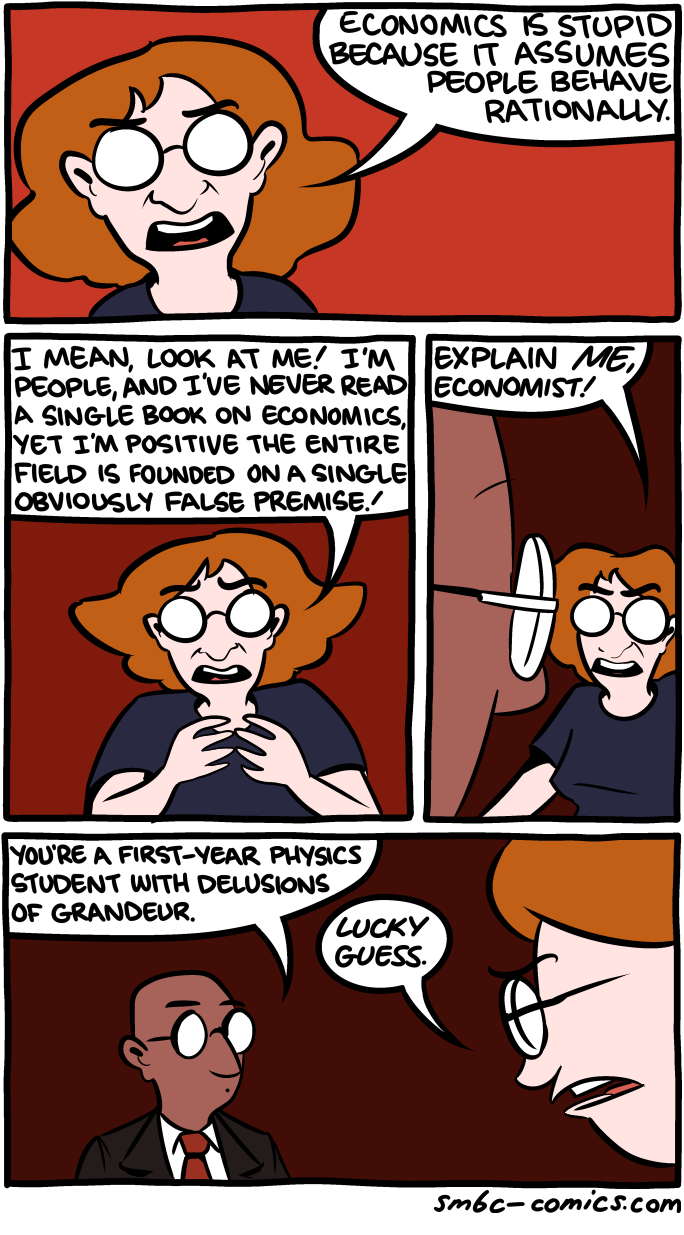
TertiarymattThis comic is very strange. It's amazing. Also, NSFW, if you aren't familiar with Oglaf.


TertiarymattThis blog is a veritable cornucopia of historical Seattle stuff.
(click to enlarge photos)


Through the late 1880s this east side of First Avenue – its was still called Front Street then — was distinguished by George Frye’s Opera House (1884-85). This grand pioneer landmark filled the southern half of the block until June 6, 1889, when Seattle’s Great Fire reduced it to ashes. While these were still cooling, Frye hired John Nestor, an Irish-born architect who had designed his Opera House, to prepare drawings for the Stevens Hotel, which we see here also at the south end of the block, which is the northeast corner of First Avenue and Marion Street.


Next door to the north, the Palace Hotel, with 125 guest rooms, opened on the Fourteenth of April, 1903. The owners announced that it was “Artistically decorated and comfortably furnished, and equipped with every modern convenience.” They listed “elevators, electric lights, call bells and rooms with baths.” The owners boasted that their hotel had the “finest commercial sample rooms in the city, which makes it an ideal hotel for commercial travelers.” In the spring of 1905, the most northerly of the hotel’s three storefronts was taken by Burt and Packard’s “Korrect Shape” shoe store. For $3.50 one could purchase a pair of what the partnering cobblers advertised as “the only patent leather shoe that’s warranted.” Also that year, the New German Bakery moved in next door beneath the Star Theatre, which had recently changed its name from Alcazar to Star.


On February 21, 1905, The Seattle Times printed “Vaudeville at the Star,” a wonderfully revealing review of the Star’s opening. “Vaudeville as given at the 10-cent theatre may not be high art, but it is certainly popular art . . . The performance started exactly at the appointed time, but long before that a squad of policeman had to make passage ways through the crowd of people on Madison Street.”

The hour-and-a-half performance consisted of nine acts, and The Times named them all. “Claude Rampf led off with some juggling on the slack wire. Richard Burton followed with illustrated songs. Third came the Margesons in a comedy sketch, a little boy proving a clever dancer. Fourth were the dwarfs, Washer Brothers, who boxed four rounds. They were followed by Daisy Vernon, who sang in Japanese costume, followed by Handsen and Draw, a comedy sketch team, followed by Wilson and Wilson, consisting of a baritone singer and a negro comedian, and then by the lead liner, Mme Ziska, the fire dancer. The performance concluded with several sets of moving pictures.”

Until it went dark in 1967, the venue at the southeast corner of First and Madison had many names. In addition to the Alcazar and the Star, it had been called the State Ritz, the Gaiety, the Oak, the State, the Olympic, the Tivoli, and in its last incarnation as a home for burlesque and sometimes experimental films, the Rivoli.

Anything to add, Paul? Yup and again with help from Ron Edge who has attached the links below for readers’ ready clicking. The four chosen are, for the most part, from the neighborhood. Following those we will put up three or four other relevant features and conclude with a small array of other state landmarks or “icons” (and how I dislike using that by now tired term, but I’m in a hurry) including James Stevens, the wit who revived and put to good order the Paul Bunyan tales. We like him so much, we have put Stevens next above, on top of Ron’s links.


=====


=====


=====


==========
OTHER STEVENS
We might have begun this little photo essay with a portrait of the namesake, Washington Territory’s first governor, Isaac Stevens, but chose instead a landmark on Stevens Pass (named for the Gov), the Wayside Chapel. Lawton Gowey, again, took this slide. We do not know if the chapel has survived the wages of sin and elements.

===

ABOVE, Pickett’s record of the Stevens Pass summit with Cowboy Mountain on the horizon, and BELOW, Jean Sherrard’s repeat, which appeared first in our book WASHINGTON THEN AND NOW.


===

===

ABOVE and BELOW: Stevens School in Wenatchee. In the “now” the school has been replaced by a federal building. (This too appears in WASHINGTON THEN and NOW)

===

On Alki Point, we’ve been told, across Stevens Street from what is now the Log Cabin Museum, a fitted tent for summer recreations at the beach, and now a street of modest homes.

===

===
BY REMINDER


(click to enlarge photos)


Otto Theodore Frasch was one of boomtown Seattle’s most energetic postcard photographers in the early twentieth-century, when the public interest in sending and collecting postcards with “real” photographs on them was especially popular. Local collectors generally cherish postcards with the “O.T. Frasch Seattle” credit and caption.
In this look east on Yesler Way, where it still crosses above Fourth Avenue, Frasch also printed the names of three of Seattle’s primary civic buildings on postcard No. 173. First, left-of-center, is the triangular-shaped City Hall, the photographer’s primary subject. It was the brick replacement for the comically named Katzenjammer frame city hall, nearby at Third and Yesler, located in what is now City Hall Park. Earlier than No. 173, Frasch had made another postcard that included both municipal buildings on Yesler Way. Its number, nineteen, is early for the Seattle-based photographer.


Otto and Mary Frasch came here from Minnesota in 1906. Elsie, their first daughter, was born on the way. A charming picture of the three is included on the Otto Frasch website otfrasch.com, which is web-mastered by Elsie’s great-grandson, David Chapman. More than 500 images of Frasch’s Seattle and surrounds are featured, including the coverage of Luna Park (the family lived nearby on West Seattle’s Maryland Avenue), the Alaska Yukon and Pacific Exposition in 1909, the city’s Golden Potlatch parades from 1911 to 1913, and the 1908 visit of the Great White Fleet, all of which are worth a visit to the site. With Otto Frasch’s magnum opus of more than 1000 ascribed numbers, webmaster Chapman’s shepherding of the site continues with new discoveries.


This “real photo postcard” No. 173 (the featured photo at the top) most likely dates from 1908. Although barely visible in this printing, a monumental “welcome” sign for the Fleet stands high on First Hill to the left of the King County Court House dome, which resembles a wedding cake. City Light is the third landmark noted in the caption. With its own rooftop sign and two ornate towers, the citizen-owned utility stands above the northwest corner of Seventh Avenue and Yesler Way. From Frasch’s prospect they escape the horizon behind a screen of power poles beyond, and to the right of City Hall.


Otto Frasch did not include in his caption the private Grand Union Hotel, on the far right of the featured photograph on top. Opened in the fall of 1902, it survived for eighty-one years. The May 15, 1983, issue of this newspaper includes a photograph of the hotel’s destruction under the caption, “Going Going Gone.” The Grand Union “came down without a whimper, ending years of anxiety by the city over the lack of stability in the turn-of-the-century building.”

Hey Paul, where’s the beef?
Jean we will answer your beef question at the bottom (the last) of the LINKS LIST that Ron Edge is putting up of subjects that are, again, mostly relevant to this week’s feature. We encourage readers to start clicking and keep at it as long as they can – at least until they reach the beef. Here we also note that our beloved mentor Richard Berner is having his 95th birthday this December 31, aka New Years Eve. May we remind readers that we have on the front page of this blog Berner’s first of three books that make up his trilogy of Seattle in the first 50 years of the 20th Century. It is included in the books button. Appropriately, at least for his birthday, that takes Vol. 1 up to 1920, the year that Rich was born – on its last day. We have also pulled the little biography we wrote about Rich a few years back and copy it to the bottom of whatever else we come up with before climbing the stairs early this morning to again join the bears. If my copy attempts fail, you will find that vital Richard (his vita) on this blog with a key word search. Good luck to all of us.


========
(click to enlarge photos)
We are pleased now to introduce Seattle 1900-1920: From Boomtown, Urban Turbulence to Restoration, the first of Richard C. Berner’s three books named together Seattle in the 20th Century. When the details, stories, and insights are explored with a close reading, Berner’s accomplishment is by far our widest opening into Seattle’s twentieth century, the first half of it, from the 1900 to 1950. Those fifty years were also the second half of Seattle’s first hundred years, if we begin our counting with the footsteps of mid-western farmers settling here in the early 1850s.

Volume one was first published in 1991 by Charles Press, and the publisher – “Rich” Berner himself – made a modest list of its contents on the back cover. We will repeat it. “Politics of Seattle’s urbanization: dynamics of reform, public ownership movement, turbulent industrial relations, effects of wartime hysteria upon newfound civil liberties – all responding to the huge influx of aspiring recruits to the middle class & organized labor as they confronted the established elite. Includes outlines of the economy, cultural scene, public education, population characteristics & ethnic history.”
For this “printing” we have added many captioned illustrations, some of them copied from news reports of the events Berner examines, and we have almost always succeeded in placing each next to the text it illustrates. On-line illustrated editions of Volume 2: Seattle 1921-1940, From Boom to Bust and Volume 3: Seattle Transformed, World War 2 to Cold War will follow – but not at the moment.The collecting of illustrations and putting them in revealing order with the narratives for Volume 2 and 3 is still a work in progress.Readers who want to “skip ahead” of our illustrated presentations of Berner’s three books here on dorpatsherrardlomont can find the complete set of his history as originally published in local libraries or through interlibrary loans.
How Rich Berner managed it is a charmed story. He undertook what developed into his magnus opus after retiring in 1984 from his position as founder and head of the University of Washington Archives and Manuscripts Division. Between the division’s origin in 1958 and his retirement Rich not only built the collection but also studied it. Berner worked closely with Bob Burke, the U.W. History professor most associated with the study of regional history who first recommended Berner, a University of California, Berkeley graduate in history and library science, for the U.W. position. Together, the resourceful professor and the nurturing archivist shepherded scores of students in their use of the archive. Rich Berner is the first to acknowledge that he also learned from the students as they explored and measured the collection for dissertations and other publications. By now their collected publications can be imagined as its own “shelf” of Northwest History.

Rich Berner showed himself also a good explicator of his profession. His influential book, Archival Theory and Practice in the United States: A Historical Analysis was published by the University of Washington Press in 1983 and was awarded the Waldo Gifford Leland Prize by the Society of American Archivists. Composing this historical study on top of establishing and nourishing the University’s Archive and Manuscripts Division may be fairly considered a life’s achievement, but, with his 1984 retirement Berner continue to work in the archive at writing his three-volume history. He published Volume Three in 1999, and so, continuing the charm of this entire production, he completed Seattle in the 20th Century before the century (and millennium) was over.

(Lest we imagine this scholar chained to his archive we know that with his wife Thelma, a professor of Physiology and Biophysics in the U.W. Medical School and the first woman appointed Associate Dean of the UW graduate school, this famously zestful couple managed to often take to the hills and mountains.)
Rich was born in Seattle in 1920- the last year explored in this his first volume.His father worked on the docks as a machinist, and for a time was “blacklisted” by employers because of his union advocacy.During the depression, while Rich was attending classes at Garfield High School, his mother ran a waterfront café on the Grand Trunk Pacific’s pier at the foot of Madison Street.

During the war Rich served with the Army’s 10th Mountain Division.Following it with help from the GI Bill he matriculated at Cal-Berkeley with degrees in both history and library science.It was also in Berkeley that he first met Robert Burke, then Director of the Manuscript Collection of the Bancroft Library. Rich worked part time there.
For Seattle, as for any city of size, there is a “canon” of publications that are necessary reading for anyone wanting to get a grip on local history. The first half of the Seattle Canon may be said to begin with Pioneer Arthur Denny’s Pioneer Reminiscences of 1888. The pioneer canon receives its own magnus opus with the combined works – multi-volume histories of Seattle and King County – of Clarence Bagley, himself a pioneer. That Berner was already attending Seattle’s T.T. Minor grade school in 1926 when Bagley was still three years away from publishing his History of King County is evidence of the “Boomtown” included in the title of this Berner’s first of three books on Seattle history.
With rare exceptions the books included in this first part of the Seattle Canon were published by their subjects, like Denny’s still revealing Reminiscences, or under the direction and/or support of their subjects, like Bagley’s still helpful volumes.They are generally “picturesque histories” written to make their subjects seem more appealing than they often were.The stock of motives for “doing heritage” are there generally supportive or positive, showing concern for the community, admiration for its builders, the chance to tell good stories, and often also the desire to learn about one’s forebears although primarily those truths that are not upsetting.Not surprisingly, and again with rare exceptions, these booster-historians and their heritage consumers were members of a minority of citizens defined by their wealth, race and even religion.It would be a surprise to find any poor socialists, animists or even affluent Catholics among them.
Part Two of the Seattle Canon may be said to have popularly begun with Skid Road, historian-journalist Murray Morgan’s charming and yet still raking history of Seattle. Published in 1951, the year of Seattle’s centennial, it is still in print, and has never been out of it. Richard Berner has dedicated Seattle 1900-1920: From Boomtown, Urban Turbulence to Restoration to Morgan.The post-war canon is often corrective of the sins of the pioneers.The works of Morgan and many others, certainly including Berner, are not generally clothed in the pious harmonies of their predecessors, the ordinarily stress-free narratives expected of those who were writing under the “pioneer code.”
In our opinion Rich Berner’s three-volume Seattle in the 20th Century is the greatest single achievement of our Seattle Canon – “part two.”It has the scope and details required.It is profoundly instructive and filled with the characters and turns of fate that any storyteller might admire and wisely exploit.Within Berner’s three books are the wonders of what they did, the touchstones of their devotions and deceptions, their courage and hypocrisy, meanness and compassion.Certainly, it has been our pleasure to help illustrate this the first volume and to also continue on now with volumes two and three.
Paul Dorpat 10/1/2009


==========
FOUR MORE of the 400 YESLER WAY Building


Star-shaped at fullest bloom and wonderfully fragrant, gardenias are for some the symbol of a secret love, and for others, one of purity or spirituality. I touched the memory of the live plant in the beauty of her dead leaves (miniature wonders, writhing and bronzed), and tucked it away inside of me, for You.
Gouache on recycled paper
Approximately 4 x 4″