In this cleverly crafted sci-fi comedy short film about a woman, a man and his quirky one-minute time machine, James gets all too trigger-happy with rewinding back in time while trying to swoon a beautiful woman at a park, all the while unaware of the gruesome consequences of his actions.
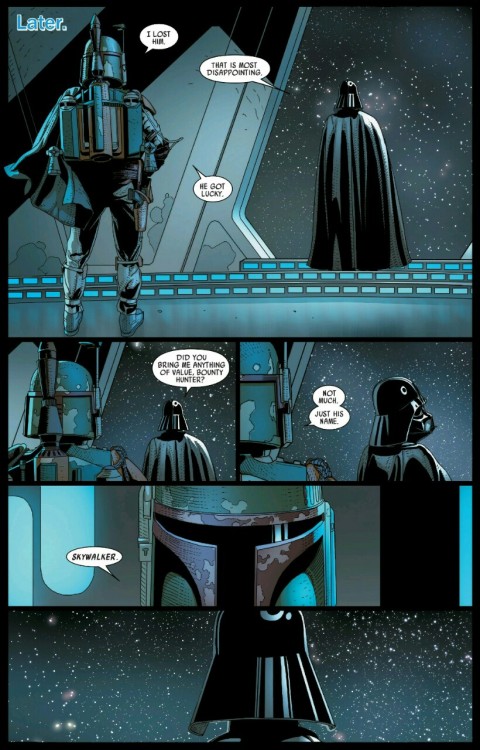
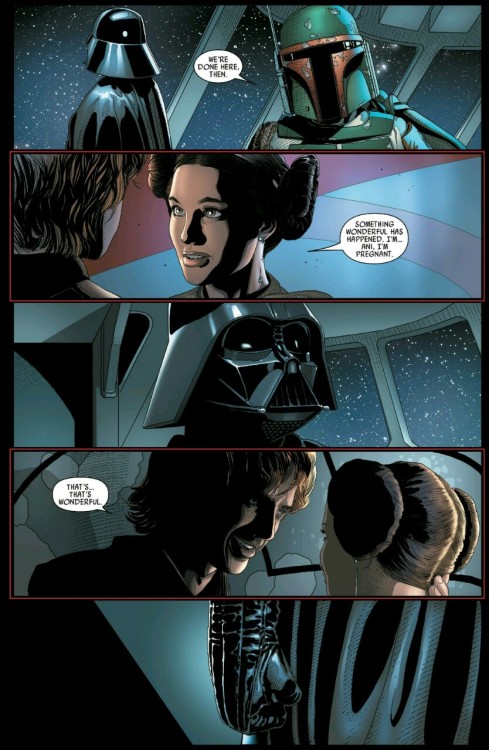
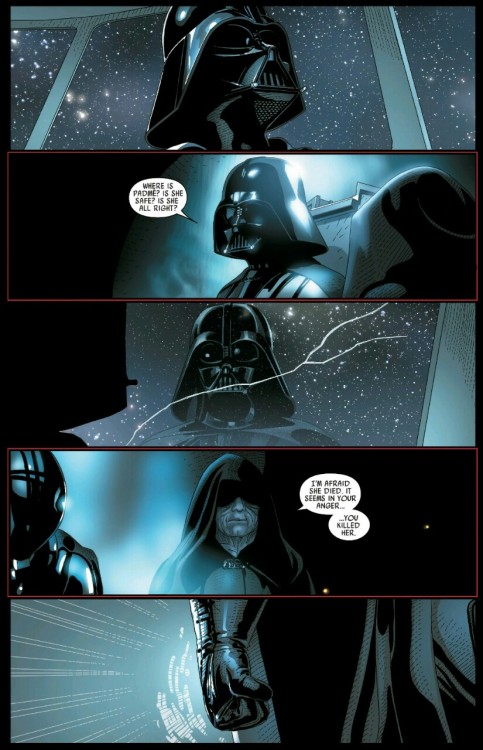
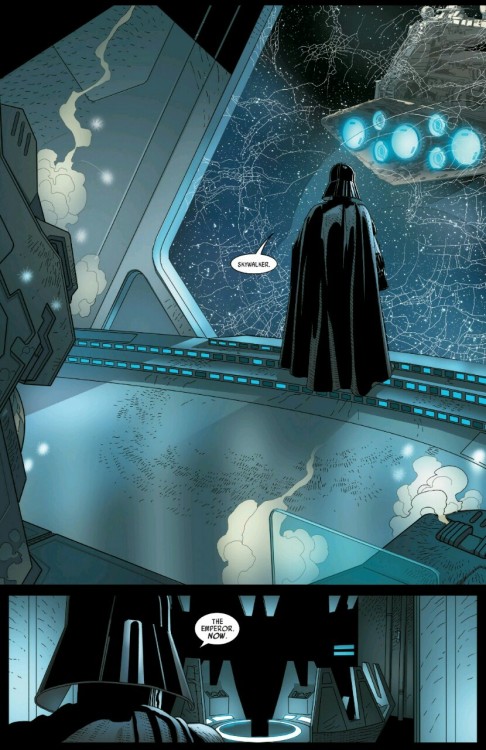
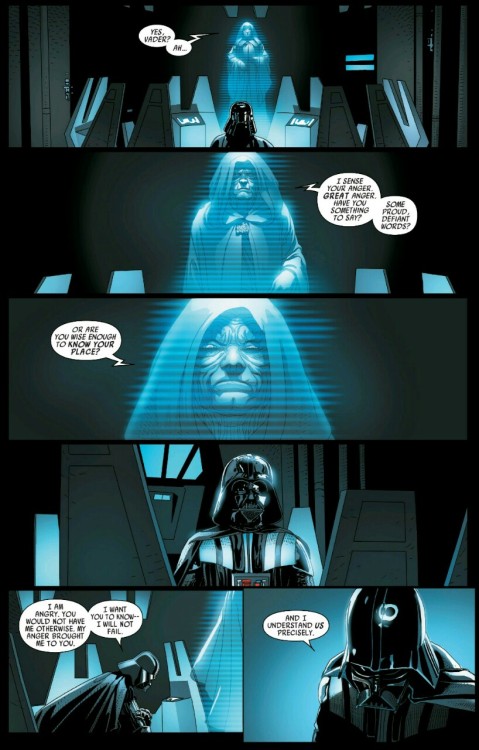
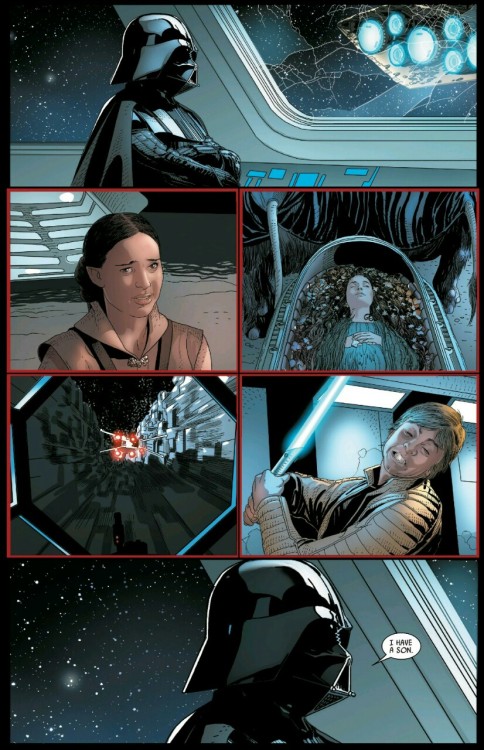
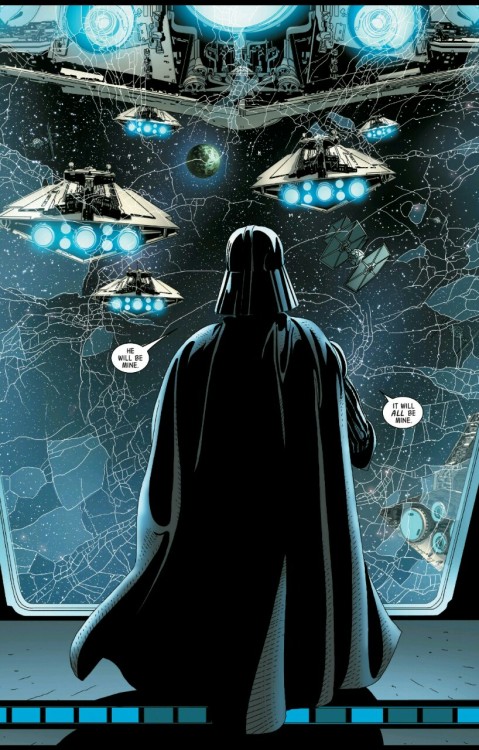
This is, unquestionably, the greatest moment I’ve ever read in any piece of Star Wars media. It shook me to the core going through this panel-by-panel on ComiXology. Holy. Shit. So. Good.
What if Star Wars was written by people who knew how to write
This artist's impression shows exoplanet GJ 436b, which is surrounded by a massive gas cloud that streams behind the planet like a comet's tail for millions of miles.
Credit: Mark Garlick/University of Warwick
A Neptune-size planet appears to be masquerading as a comet, with a gargantuan stream of gas flowing behind it like a comet's tail.
The bizarre find is the first of its kind ever discovered by astronomers. The strange, cometlike planet, known as GJ 436b, is orbiting a red dwarf star and is about 22 times as massive as Earth. Astronomers detected the giant gas cloud around the planet using NASA's Hubble Space Telescope and Chandra X-ray Observatory.
"I was astonished by the mere size of the cloud of gas escaping from the planet," said study lead author David Ehrenreich, an astronomer at the observatory of the University of Geneva in Switzerland. [The Strangest Alien Planets]
Alien Planet Quiz: Are You an Exoplanet Expert?
Astronomers have confirmed more than 800 planets beyond our own solar system, and the discoveries keep rolling in. How much do you know about these exotic worlds?
0 of 10 questions complete
Alien Planet Quiz: Are You an Exoplanet Expert?
0 of questions complete
GJ 436b, located about 33 light-years from Earth in the constellation Leo, is a kind of world known as a warm Neptune. Such planets, at about 10 to 20 times the mass of Earth, are about the mass of "cold Neptunes" such as Uranus — and, naturally, Neptune — but they are as close, or closer, to their stars than Mercury is to our sun. With an orbit of only about 3 million miles (4.8 million kilometers), "GJ 436b is 33 times closer to its star than Earth is to the sun, and 13 times closer than Mercury," Ehrenreich told Space.com.
The cloud of gas around GJ 436b, made up mostly of hydrogen, has a circular head that surrounds GJ 436b, and a tail trailing behind the planet. The diameter of the head is about 1.8 million miles (3 million km), or five times the width of the host star, which is about half that of the sun, Ehrenreich said. The length of the tail is uncertain, because the research team's observations do not cover it entirely, but their computer models suggest it could be about 9.3 million miles (15 million km) long.
Although prior research has predicted that other gas giants should be blowing off cometlike tails, based on how hot they must be due to their proximity to their stars, "GJ 436b is the first planet for which a cometlike tail is confidently detected," Ehrenreich said. (A previous study revealed indirect evidence of a rocky world that appears to be disintegrating around its host star, creating a cometlike tail of material behind the planet. That study used data from NASA's Kepler space telescope, which observed scattering of the light from the planet's host star.)
The scientists estimated that GJ 436b is currently blowing off up to 1,000 tons of gas per second. This means that GJ 436b is currently losing about 0.1 percent of its atmosphere every billion years, which is far too slow a rate to deplete its atmosphere in the lifetime of its parent red dwarf star. However, when the star was more active in its infancy, the researchers estimated that GJ 436b could have lost 10 percent or more of its atmosphere during its first billion years.
Recently, another team of researchers suggested that GJ 436b might possess a helium-rich sky depleted of hydrogen. "However, in order to be really hydrogen-poor and helium-rich, the atmosphere of GJ 436b should have represented a very small fraction of the planet['s] initial mass, around one-thousandth," Ehrenreich said. "In such a case, the whole atmosphere would have been gone today, which as we measure is not the case."
Ehrenreich noted that the Kepler spacecraft, as well as NASA's upcoming TESS space mission and the European Space Agency's future CHEOPS and PLATO spacecraft "are poised to find thousands of system like GJ 436 in the coming years." This suggests that many other planets with cometlike tails could soon be discovered.
Artist's impression showing the warm, Neptune-size exoplanet GJ 436b at the beginning of its transit across the surface of its parent star, a red dwarf that is half the diameter of the sun. The planet is 33x closer to its parent star than the Earth is to the sun, heating the atmosphere to the point where it expands and escapes the planet attraction. The star is, however, 40x fainter than the sun, allowing the evaporating atmosphere to form a giant cloud surrounding and trailing the planet, much like a comet. Credit: D. Ehrenreich / V. Bourrier (Université de Genève) / A. Gracia Berná (Universität Bern)
The scientists now plan to investigate less massive planets, such as "super-Earths" and "mini-Neptunes" to see if they might also have puffy atmospheres and cometlike tails.
"We're going to study one such object in the course of next year with Hubble, and have proposed to observe several more," Ehrenreich said.
The scientists detailed their findings online today (June 24) in the journal Nature.
O Facebook está preparando uma novidade que vai facilitar a vida dos usuários. O novo algoritmo da rede social vai exibir pessoas que o usuário se arrependeu de ter conhecido. Para isso, o programa vai analisar posts do “amigo”, comparar com coisas que o usuário gosta, ver a interação entre eles e montar a sugestão.
Highly regarded independent privacy researcher Caspar Bowden has died after a short battle with cancer.
Bowden was a popular titan of privacy advocacy, and was one of Microsoft's leading privacy officers throughout his roles at the company between 2002 and 2011.
While at Microsoft Bowden expressed concerns that the 2008 FISA Amendment Act allowed the NSA to conduct "unlimited surveillance".
He had left the company and gone public with his concerns for two years before the revelations made by NSA whistleblower Edward Snowden – though he acknowledged he had "no idea" about PRISM.
Journalists, researchers, and activists alike are using Twitter to pay tribute to a man who was keen user of the platform, and as generous with his time as he was passionate about privacy.
Bowden regularly gave talks about privacy and also testified at the European Parliament following the publication of his report (PDF) into US surveillance programs and their impact upon European citizens' privacy.
Gus Hosein of Privacy International told The Register that Caspar Bowden "was a fervent believer in privacy, and technology's role in creating and ensuring it. He hacked legislation to see what it was that governments were trying to do and called them on it, was then labelled paranoid, until proven right down the road. He foresaw Tempora, Prism."
"I'm gutted we will be without him in the coming debates over the Investigatory Powers Bill,” continued Hosein. “He would have been the intellectual powerhouse and a forceful critic of all who fell short in the defense of privacy."
Alexander Hanff, who also met Caspar Bowden while working at Privacy International and is now CEO at Think Privacy, noted that Bowden was “more interested in fighting the issues than who he might upset along the way – it made him a controversial figure but his intelligence, commitment and knowledge were without question.”
Hanff added: "I will miss him, civil society will miss him and his passing is a grave loss to the global fight against mass surveillance." ®
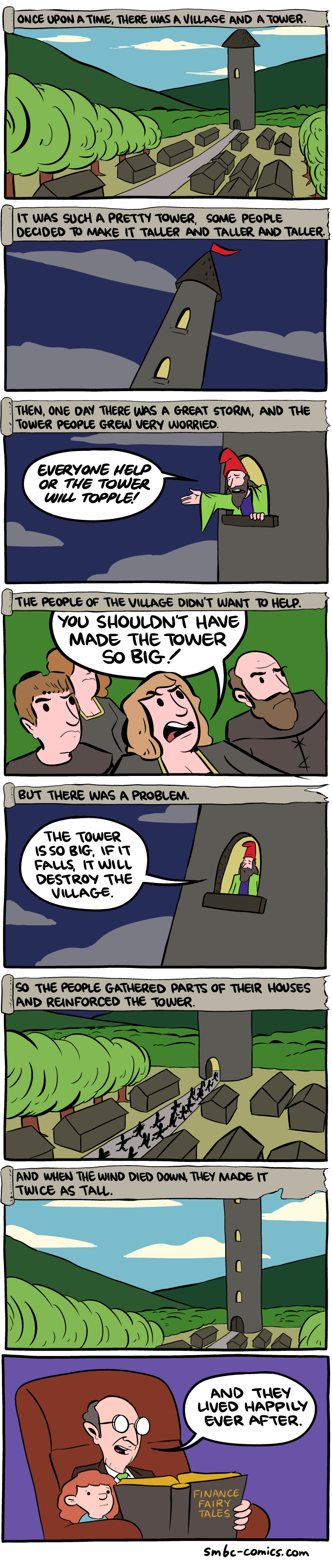
WTF? I could go on. And you probably have even better examples of even more ridiculous startups these days. So what’s the deal?
In this essay, I want to offer a competing narrative to the popular but woefully misnamed “sharing economy” (which, of course, isn’t sharing, unless you tell your kids that buying and selling toys from other five year olds is “sharing”).
Here’s my tiny theory. There’s gold in them thar hills. Money’s pouring into the tech industry today. Too much money, chasing too few truly groundbreaking investments. And so a bubble is inflating — but not just any bubble. A bubble of an especially insidious kind. Of stuff that’s beyond eyewateringly, painfully, mind-numbingly trivial.
I’m going to call it a Servitude Bubble. For the simple reason that it is largely based on creating armies of servants. You can call them whatever buzzwords you like — “tech-enabled always-on super-hustling freelance personal brand capitalists”. But the truth is simpler. The stuff of the Servitude Bubble makes a small number of people something like neofeudal masters, lords with a corncucopia of on-demand just-in-time luxury services at their fingertips. But only by making a very large number of people glorified neo-servants…butlers, maids, chauffeurs, waiters, etcetera.
The Servitude Bubble is creating “jobs”, sure — but only of the lowest kind: low-end, deskilled, dead-end, go-nowhere “service” jobs — that don’t only crush your soul, damage your psyche, and break your spirit — but waste your potential. Not “service” as in doctors and therapists— “service” as in pedicurists, trash-pickers, and dog-walkers. And so, on balance, it deskills and impoverishes human potential — it doesn’t expand and enrich it. The Servitude Bubble is made of stuff which, en masse, wastes, decimates, and demolishes the thing which counts most: human potential.
A bubble occurs when things are overvalued. What are ideas like the above really worth? They might — just might — be worth a little bit of change to a very small group of buyers. Google, Amazon, Apple, a hapless, clueless, doddering old media company here and there. But that’s like saying a subprime loan is “worth” it’s face value because a poor aging grandma can’t squint hard enough to read the fine print. Whether or not a handful of frat-bros is willing to fork over millions to one another for these startups like they were chess pieces in their struggles for corporate mid-life-crisis empire is besides the point.
It is in a true and very real economic sense that the appconomy of the Servitude Bubble is overvalued. The simple fact is that while the startups of the Servitude Bubble might hold a kind of dubious strategic value, they do not create much of real worth—largely just imaginary paper gains — but only at the price of what is truly valuable: real human potential. The Servitude Bubble is condemning people who might be doing amazing, wondrous, and miraculous things to be butlers, maids, dog-walkers, neo-servants — or, perhaps worse, code-monkey enforcers who, chasing their own little payday, make people into neo-servants.
The simple fact is that in economic terms, these startups are often barely worth much, if anything at all. Because they don’t enhance human potential, they don’t create much real value for people, let alone society, future generations, their communities, etcetera — maybe they save a trip here and there, but that’s about it. Yes — that can enhance efficiency. But what it doesn’t do is enhance human well being in any meaningful or significant way. And so they surely don’t elevate or expand the human experience, in even the small way that, say, an Apple Store does. They’re as evanescent — pretty, maybe, but vacant — as the soap bubbles they’re so reminiscent of.
Servitude. The suffix “itude” denotes a state of things. Servitude isn’t just “service”. It’s a dead end, a cul-de-sac, a stagnating pond, the end of the line. A state — not a process. Service is a great and noble ideal; it implies a higher purpose, a common goal, a shared benefit, a joint concern. But servitude is very different: it’s bringing another dozen shots of designer vodka to wasted, entitled, super-rich party people…with a frozen rictus smile. Service is responsibility; servitude is subjection. Service is obligation; servitude is obedience. Service is assistance; servitude is indulgence.
And that is a great tragedy, in at least three senses.
First, because a generation of young people are furiously chasing desperate dreams of winning this half-baked thinly-veiled ponzi scheme. But what they are not doing is creating stuff that actually matters, endures, counts, resonates. That changes the world, transforms lives, means anything. They are wasting their lives on the trivial, the futile, the meaningless. On diminishing people’s potential, by limiting them to be neo-servants — not expanding it, by enhancing their capability to be their truest, best selves.
Second, because instead of challenging people (hi, VCs) to create and invest in what is truly innovative, earth-shaking, groundbreaking, the Bullshit Bubble normalizes cynically settling for what’s easy, marginal, incremental. But the truth is that it’s a titanic squandering of resources — money, time, effort, imagination — to spend so much on so little of real value. On investing billions…to making people…neo-technological servants…not their truest and best selves.
And so, third, we are all worse off in the long run. We’re all poorer when the people we entrust to innovate and create don’t lead the way, inspire us, and challenge us — but simply forge shackles of servitude. We’re all a little worse off when society’s resources are misallocated on a vast scale to the Servitude Bubble — to creating armies of servants that can walk the dogs, paint the nails, and drive the cars of the coddled, carefree rich — instead of towards finding solutions to the very real, very urgent problems of education, healthcare, climate change, finance — to name just a few. Instead of solving the world’s glaring problems, we are simply finding more efficient ways to crack the same old whips and tie the same old leashes. But leashes and lashes have never freed a soul — they merely condemn the very people that hold them. Because the great lesson of history is that the master is as much a prisoner as the servant. For the very waste of human potential that he himself demands limits him from finding his own destiny.
What’s the opposite of servitude? Not just freedom — but the thing from which freedom is born.
At it’s best, techne, the Greek root of the word “technology”, which means “skill”, is a miraculous, magical, enchanted thing. Technology, the enlargement and extension of man’s skillfulness, is the closest humanity has come to discovering the sacred amongst the earthly profane: for it gives mankind the power to transfigure the very world. From a place of stasis, into a place of freedom. Through it, man can ascend beyond his natural birthright, and give himself rebirth — from a foul, stinking, starving, powerless beast, to a civilized, enlightened, powerful being. All that is contained in the magic of techne. Techne, skill, endows man with the proficiency, the dexterity, the advantage, the shining chance, to become what he truly is. Not merely a servant of himself, or a servant of another. But himself. Human. Homo sapiens. The mindful being.
So the real servitude in the Servitude Bubble is the definition of “technology”. Once, technology meant stuff that went to the moon…cured fatal diseases…extended the human lifespan…enhanced human agency. Now, “tech” means stuff that…hails taxis…organizes butlers…automatically calls dogwalkers.
“Tech”. Techne. As a simple example, my computer helps me to be a better writer. It enhances my skill, my techne. It is in that sense that it is “technological”. The “tech” of the Servitude Bubble does not enhance skill. At anything. Let alone the stuff that is truly valuable — one’s skill at all that makes one fully, truly alive.
“Tech”, and the “tech” industry that so champions it, has demeaned, denigrated, and diluted the very idea of technology — from miracles of skill that alter human destiny, to being able to browse a billion images of Kardashian-butt per nanosecond. The “tech” industry is aptly named: it’s about “tech”; not techne, technology in it’s true sense. Apps that limit people full of limitless potential…to be…on-demand butlers, maids, or dog-walkers. Those are “tech” — but they’re sure as hell not techne. They do not expand or enlarge human skilfullness in any way.
Technology, techne, is transformative, fundamental, magical — because it is the sudden joyous explosion of skill at mastering yourself. “Tech”, on the other hand, is just a handyman to fix the ennui-laden nuisances of daily life for the overprivileged — and one who pickpockets you slyly while you’re not looking. “Tech” impoverishes all of us by cheating each of us of skill — and so it drains us of potential. If you’re an on-demand dog walker, you’re probably never going to become that great novelist..anesthesiologist…musician…poet..dreamer…artist…programmer…anything.
Techne. “Tech”. The Servitude Bubble says that technology is stuff that makes your day a little easier — but probably crushes your spirit, rots your mind, destroys your soul, and clouds your mind, by asking you to be served — not to master your own destiny. Techne, the true spirit of technology, says precisely the opposite. A tool is only “technological” when it enhances man’s skillfullness. At the limit, at being fully human. At dreaming, imagining, rebelling, defying, creating, loving. At being himself.
That’s the greatest tragedy of the Servitude Bubble. It asks us to waste our lives being people we are not. Posers, performers, hustlers, clowns…making armies of chauffeurs, butlers, maids, servants…on-demand, ever-ready, always-vigilant. To obey nothing more, greater, truer, than idle whims . The Servitude Bubble is made of hundreds of thousands of person-years of wasted human potential.
Let’s reclaim technology from the appholes. Let’s rediscover the spirit of techne, and stop settling for the humdrum profit-maximizing soul-crushing servility of “tech”. For it is through techne, through the enhancement of skill, that humanity has, despite great struggle and suffering, created — and recreated — it’s freedom. Not merely as beings who hold power over one another. All that merely condemns masters to be slaves. But as beings who empower one another to discover our full potential. Because it is in the taking of that voyage that we give one another the greatest gifts of all: lives seared with the sense that they have mattered. For then we have learned the telos of techne, the greatest skill there is: becoming who we were truly meant to be.
Brain damage is caused by persistent depression rather than being a predisposing factor for it, researchers have finally concluded after decades of unconfirmed hypothesising.
A study published in Molecular Psychiatry today has proved once and for all that recurrent depression shrinks the hippocampus - an area of the brain responsible for forming new memories - leading to a loss of emotional and behavioural function.
Hippocampal shrinkage has long been linked to depression but previous studies haven’t been conclusive. Small sample sizes, varying types of depression and treatment levels, as well as variance in methods for collecting and interpreting results, have together led to inconsistent and often conflicting findings.
Now, with the help of what co-author Ian Hickie from the Brain and Mind Research Institute has called “a new spirit of collaboration” a global, cross-sectional analysis of brain scans of 9,000 people has conclusively linked brain damage to depression.
“I think this resolves for good the issue that persistent experiences of depression hurts the brain,” said Professor Hickie.
Hippocampal shrinkage was pronounced among those for whom depression started early (before the age of 21), as well as people who had recurrent episodes. Professor Hickie noted that it was this persistence that “does the damage”.
“Those who have only ever had one episode do not have a smaller hippocampus, so it’s not a predisposing factor but a consequence of the illness state.”
“It puts the emphasis then on early identification of the more severe persistent or recurrent cases. Importantly, in early identification systems you have to stick with those in who it persists or is recurrent, because they’re the ones who will be most harmed from a brain point of view.”
Researchers used magnetic resonance imaged (MRI) brain scans and clinical data from 1,728 people with major depression and 7,199 healthy individuals, combining 15 datasets from Europe, the USA and Australia.
The samples were obtained from the ENIGMA group database - an international consortium investigating psychiatric disorders.
Scientia Professor & Head of the School of Psychiatry at UNSW Philip Mitchell said the use of the consortium’s ongoing sample collection was “becoming a very powerful way of looking at what’s happening in brain function”.
“This study confirms - in a very large sample - a finding that’s been reported on quite a few occasions. It’s interesting that none of the other subcortical areas of the brain have come up as consistently, so it also confirms that the hippocampus is particularly vulnerable to depression.”
The hippocampus is part of the brain’s limbic system, or what’s otherwise known as its emotional centre. The system also contains the amygdala, another part of the brain shown to be affected by depression.
While the hippocampus plays an important role in consolidating and forming new memories, Professor Hickie explained that “memories” weren’t just about remembering passwords.
“Your whole sense of self depends on continuously understanding who you are in the world – your state of memory is not about just knowing how to do Sudoku or remembering your password – it’s the whole concept we hold of ourselves,” he said.
“We’ve seen in a lot of other animal experiments that when you shrink the hippocampus, you don’t just change memory, you change all sorts of other behaviours associated with that - so shrinkage is associated with a loss of function.”
Professor of psychiatry at Monash University Paul Fitzerald said while the findings of the study were important, they were unlikely to immediately affect clinical treatment.
“I don’t think there’s anything that’s really, fundamentally going to change overnight – but it’s an important part of the jigsaw puzzle to put together a better understanding of what’s going on in depression and that obviously has implications for developing better treatments down the track,” he said.
He added that researchers should next measure the volumes of individual regions within the hippocampus, that are each responsible for different cognitive functions.
“Having a better understanding of what the regional volume differences are will provide greater capacity to draw conclusions,” he said.
“Hopefully having the involvement of the hippocampus in depression confirmed in such as substantive study will stimulate attempts to better understand what this means.”
It’s important to note however, that the effects of depression on the brain are reversible with the right treatment for the individual.
“The hippocampus is one of the most important regenerative areas of the brain,” said Professor Hickie.
*This article was updated on July 2 to note that the effects of depression on the brain are reversible.
This is an interesting story of a reviewer who had her review deleted because Amazon believed she knew the author personally.
Leaving completely aside the ethics of friends reviewing friends' books, what is Amazon doing conducting this kind of investigative surveillance? Do reviewers know that Amazon is keeping tabs on who their friends are?
Se eu tiver que passar uma impressão principal do useR! 2015 é a de que o R provavelmente chegou em um tipping point e está se tornando, oficialmente, mainstream.
O grande diferencial do R sempre foi sua comunidade com a grande quantidade de pacotes disponíveis. Entretanto, como a comunidade era basicamente em torno do meio acadêmico, havia um pouco mais de dificuldade de dedicar recursos para aplicações comerciais e corporativas. Além disso, por ser uma linguagem feita por e para estatísticos, não necessariamente a implementação atual é a mais eficiente, podendo, em algumas circunstâncias, deixar a desejar em performance (mas garantindo correição e acurácia).
Esses são dois pontos que já estão mudando: (i) várias empresas (como Microsoft, Rstudio, Oracle, Google) se reuniram oficialmente para colocar dinheiro na comunidade do R; e, (ii) a popularidade do R está estimulando iniciativas para o tornar mais rápido e eficiente. Acredito que em pouco tempo veremos os benefícios disso.
Empresas investindo na comunidade: o R Consortium
A Linux Foundation anunciou a criação do R Consortium, uma organização com o objetivo de dar suporte à R Foundation e às demais organizações envolvidas com o desenvolvimento do R. Em resumo, as empresas participantes do consórcio vão se juntar para colocar dinheiro no desenvolvimento de projetos em torno da linguagem principalmente em projetos de infraestrutura (como o R-Forge ou o próprio encontro anual useR! – que será em Stanford em 2016).
membros prata: Alteryx, Google, HP, Soluções Mango, Ketchum Trading e Oracle.
Durante o encontro, todas as empresas mostraram que já implementaram (ou estão implementando) aplicações corporativas do R em seus produtos, como, por exemplo, o R dentro do SQL server 2016 da Microsoft.
O R está ficando e vai ficar ainda mais rápido e eficiente
A popularidade do R está estimulando uma saudável competição em torno de uma implementação eficiente da linguagem. Além do trabalho da Microsoft com a Revolution R – ou de outras implementações corporativas – duas apresentações chamaram bastante a atenção: (i) o projeto CXXR que reescreve o interpretador do R em C++; e, (ii) o fastR da Oracle que – na verdade dentro de um projeto mais ambicioso envolvendo várias linguagens – reescreve o interpretador do R em Java. O fastR não tem uma data precisa para soltar uma versão plenamente funcional, mas o CXXR, aparentemente, já vai ter uma versão compatível com o GNU R a partir da próxima versão (3.3).
***
Faço questão de ressaltar aqui – como muitos já o fizeram – que a organização do useR! 2015 foi impecável! Mesmo com um público duas vezes maior do que o esperado (foram mais de 650 pessoas) tudo correu perfeitamente, tendo, inclusive, jantar Viking com arremessos de machados (literalmente). Meus parabéns para o pessoal da universidade de Aalborg e, em especial, ao Torben Tvedebrink – ano que vem o encontro será em Stanford e Aalborg elevou o nível para os próximos organizadores.
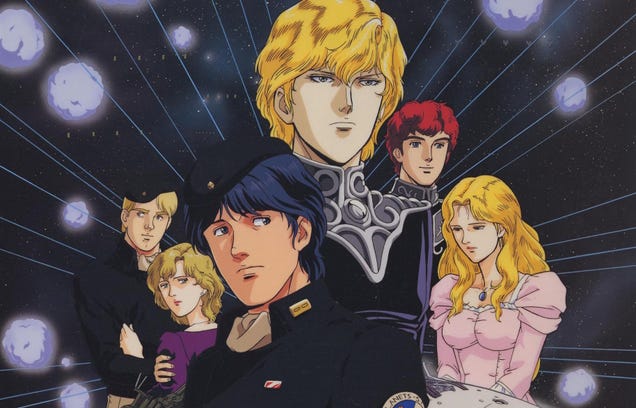
There are few things more frustrating for fans than knowing something excellent exists but having no way to (legally) see it. At least in the case of Legend of the Galactic Heroes, Sentai Filmworks has good news.
They say news sometimes comes in thunderbolts, and this would probably be a good example of that.
According to a report from Star Magazine, Tom Cruise is allegedly planning to leave the Church of Scientology. An inside source told the tabloid that the 52 year-old actor is finally going to break ties with the secretive and controversial religion in order to salvage his relationship with 9 year-old daughter Suri.
The source told Star that a recent phone conversation Tom had with his daughter made him realize that he’s missing important milestones of her childhood.
She was going on and on about her ballet class and how much she loves it. That’s when Tom realized he’s never seen her perform ballet and he started to tear up. It hit him that she’s growing up before his eyes and he’s not there to witness most of it. They talk on the phone and video chat, but it’s not the same.
Considering that Tom’s ex Katie Holmes has distanced herself from the Church after their divorce, Scientology sees her as a “suppressive” (Scientology speak for someone who is hostile to the church) person, and will no doubt apply that label to Suri as she gets older.
Tom and Suri Cruise in New York, 2012.
“Tom has been under tremendous pressure where Suri and Katie are concerned because the church doesn’t want him close to them. They can’t stand that their own poster boy isn’t raising his child in the church. If they label Suri a suppressive person, as they’ve been known to do with dissenters, that would make it hard for Tom to have a relationship with her. He’s between a rock and a hard place, but he’s finally making a choice to put his daughter first.”
If the source’s claims are true, this latest development is a huge chapter in a series of PR disasters for Scientology. Along with the recent HBO documentary based on the best-selling book Going Clear pointing to the alleged sinister inner workings of the church, a new tell-all book written by the father of the church’s leader, David Miscavige, is in the works – which apparently has Miscavige in a panic.
Church of Scientology leader, David Miscavige (TheLIPTV)
Scientology’s abusive tactics have long been reported, but the church’s leadership has always been able to keep attacks from critics just out of the mainstream. It’s starting to look like that’s no longer the case.
Fã da série Game of Thrones, a presidenta Dilma Rousseff teve uma grande ideia ao ser avisada de que a previsão para a inflação de 2015 está mais alta. Temendo o descontrole dos preços, ela resolveu contratar ninguém menos do que a Mãe dos Dragões para tentar resolver o problema. Afinal, quem melhor do que
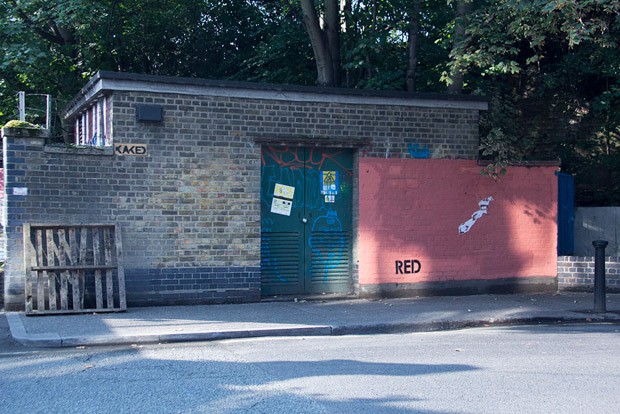
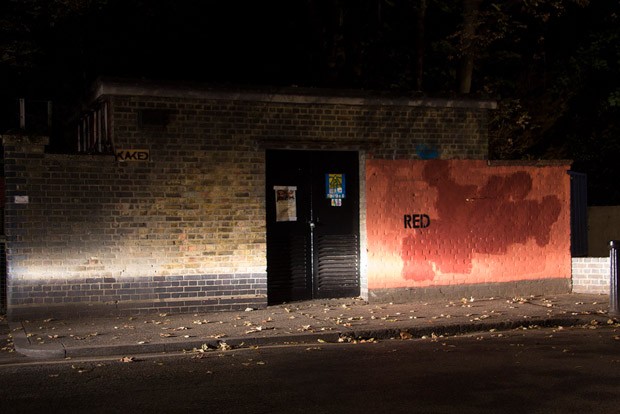
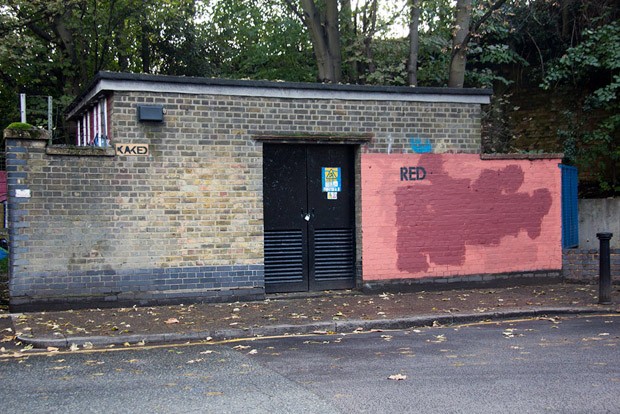
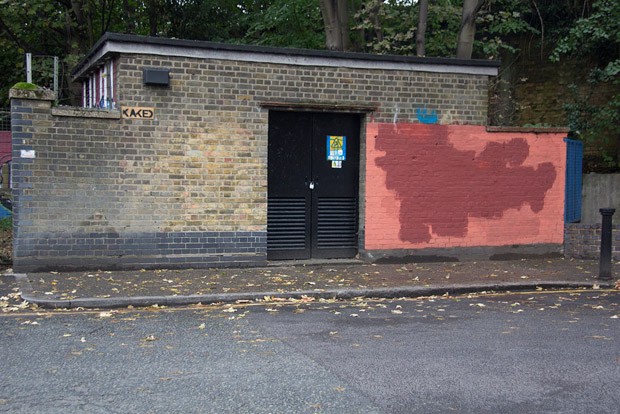
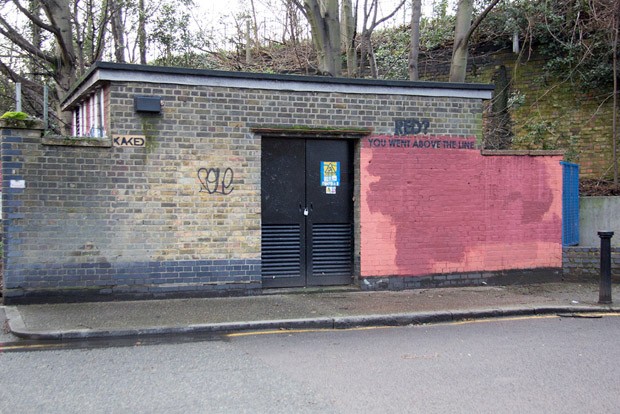
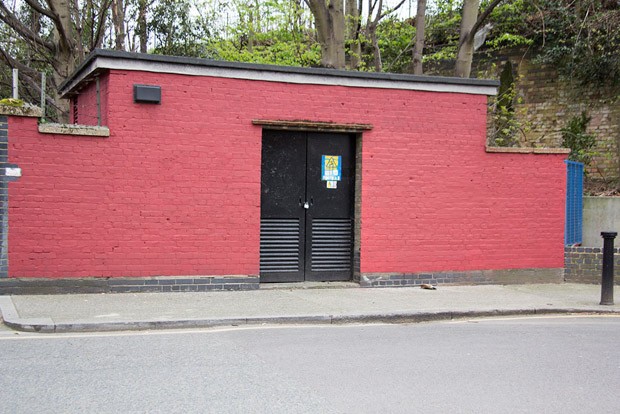
Foto que abre a série 'The curious frontier of Red' (Foto: Mobstr)
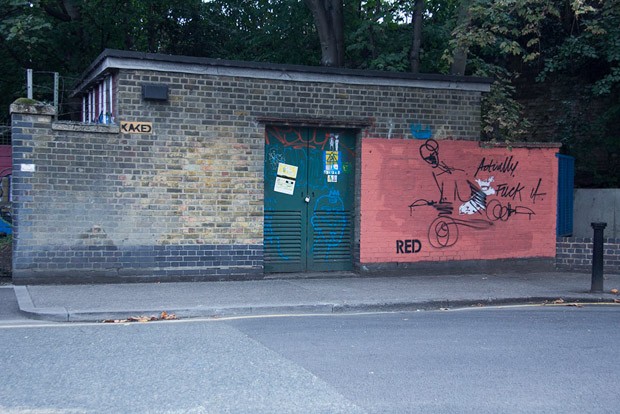
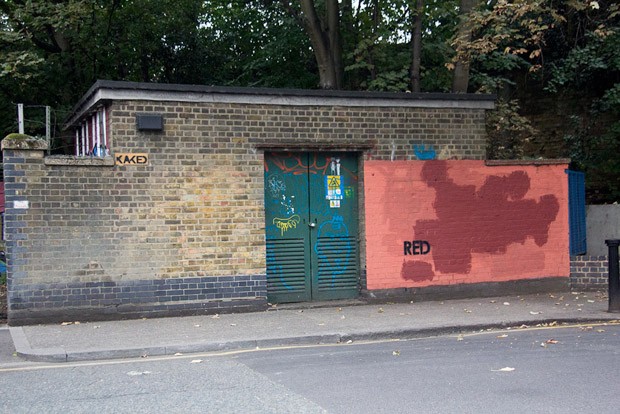
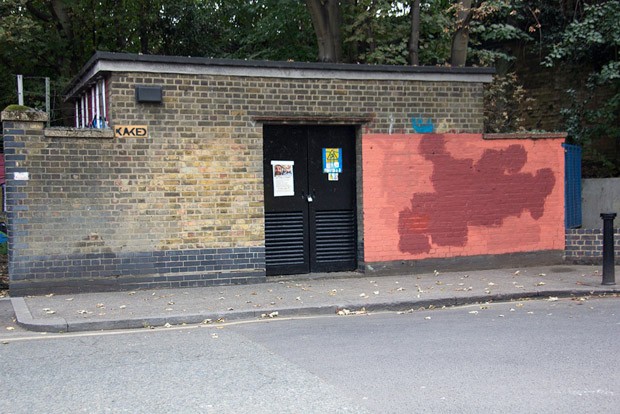
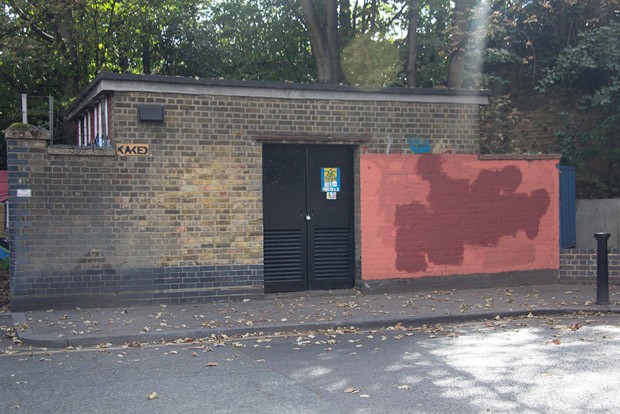
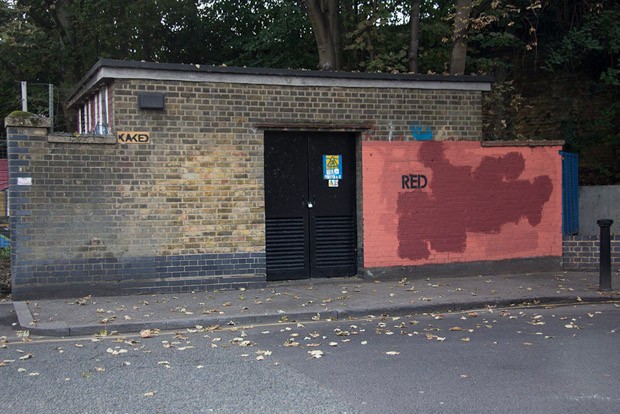
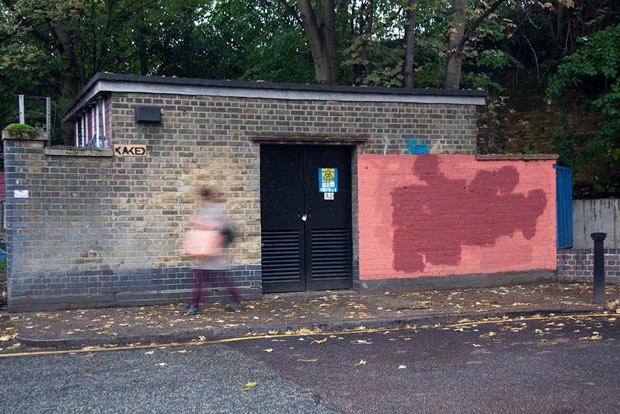
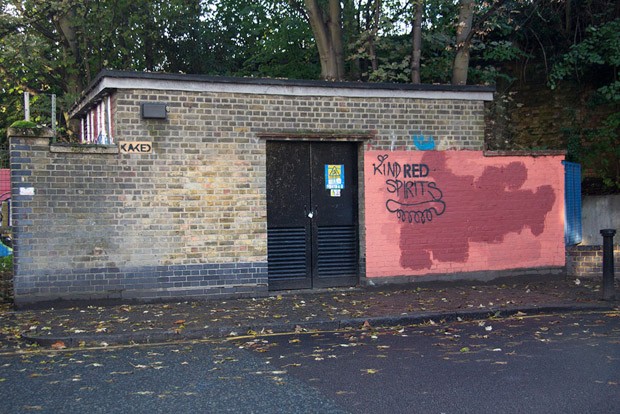
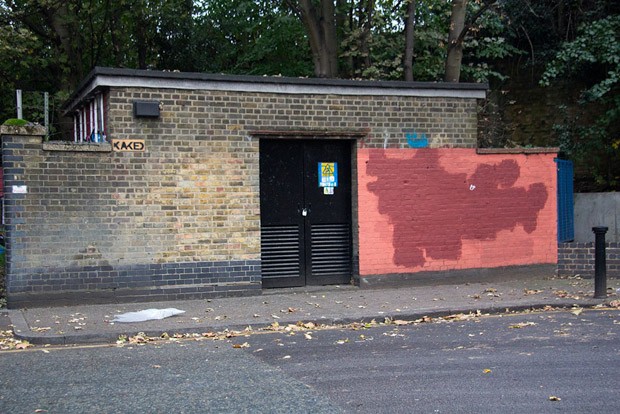
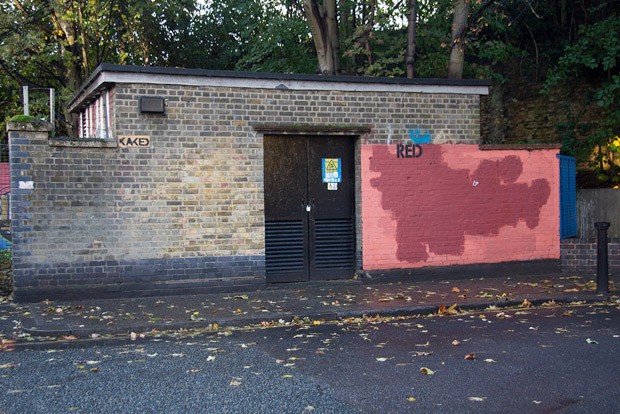
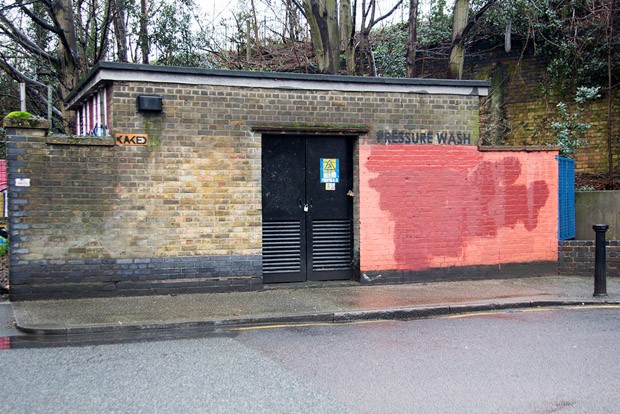
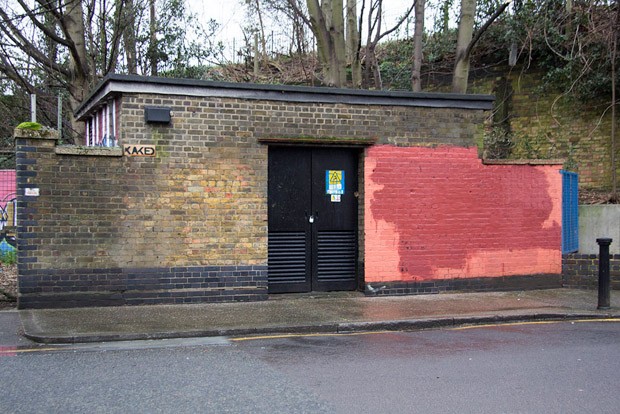
Uma série de fotos que mostra a batalha "épica" entre um grafiteiro e a equipe de limpeza da cidade tem bombado nas redes sociais esta semana. Ela foi batizada de "A curiosa fronteira do Vermelho".
O registro do artista britânico anônimo conhecido apenas como Mobstr mostra uma brincadeira que ele começou ao reparar em como uma parede era sempre pintada de vermelho pela prefeitura após receber alguma pichação.
"Por anos eu passei de bicicleta por essa parede na volta do trabalho. Percebi que o grafite que surgia sobre a parte vermelha era coberto com tinta vermelha. Entretanto, o grafite que pintavam fora da área vermelha era removido com lavagem pressurizada. Isso motivou o começo de um experimento", conta o artista em sua página.
"Diferente de outros trabalhos, eu estava bastante incerto sobre quais seriam os resultados", afirma.
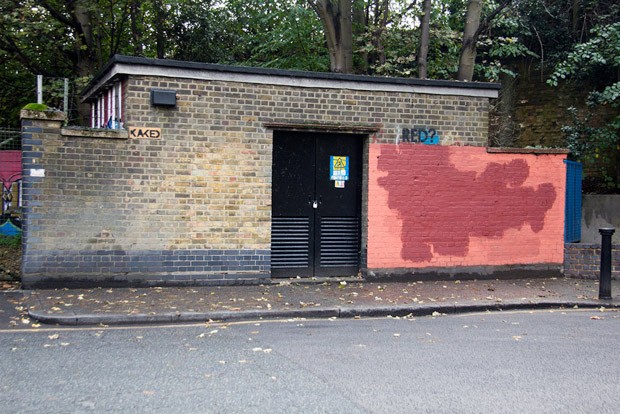
Na sequência, o artista começa a testar sua teoria de que tudo na área vermelha é pintado de vermelho, e para isso escreve a palavra "RED" ("VERMELHO") dentro dessa superfície diversas vezes, cada vez mais alto depois que o grafite anterior é coberto:
Quando passa o limite, o grafiteiro acrescenta um ponto de interrogação, na dúvida sobre qual será o próximo passo da equipe de limpeza:
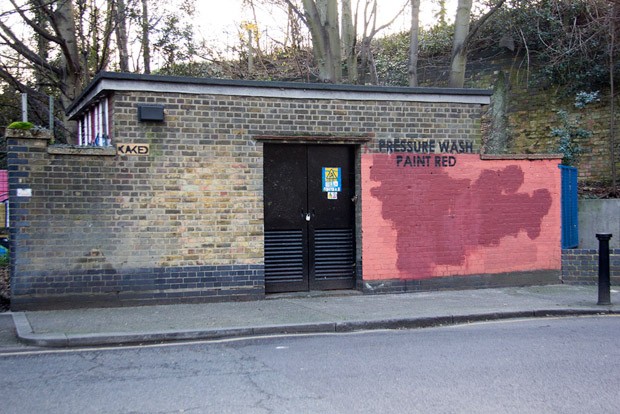
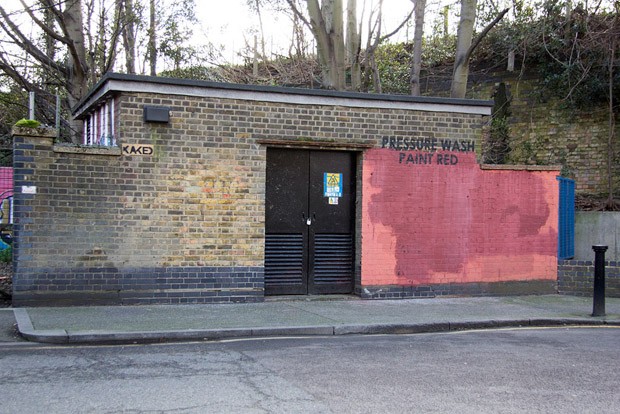
O grafite é removido com lavagem pressurizada, e ele então escreve "LAVAGEM PRESSURIZADA" fora da área vermelha e "PINTAR DE VERMELHO" dentro. Veja:
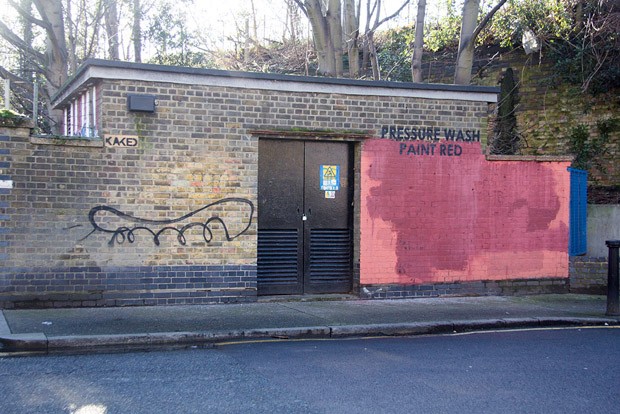
A equipe de limpeza, então, pinta apenas o grafite sobre a área vermelha, mas deixa o restante:
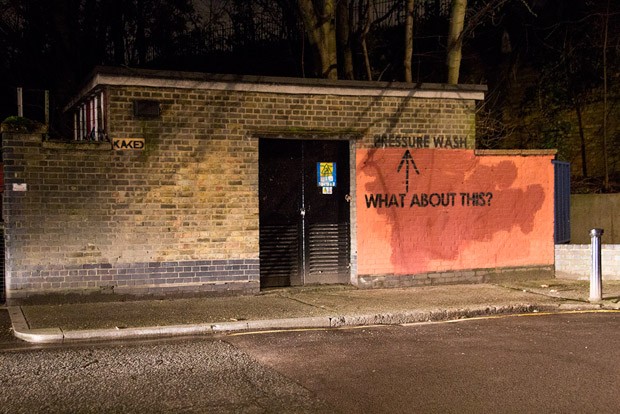
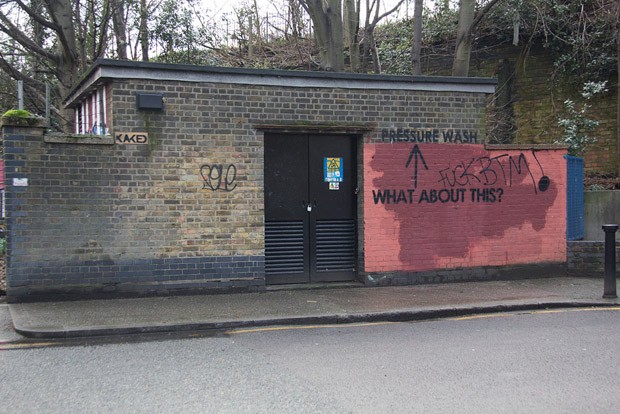
O autor da brincadeira volta e grafita "E QUANTO A ISSO AQUI?", com uma seta indicando o grafite esquecido:
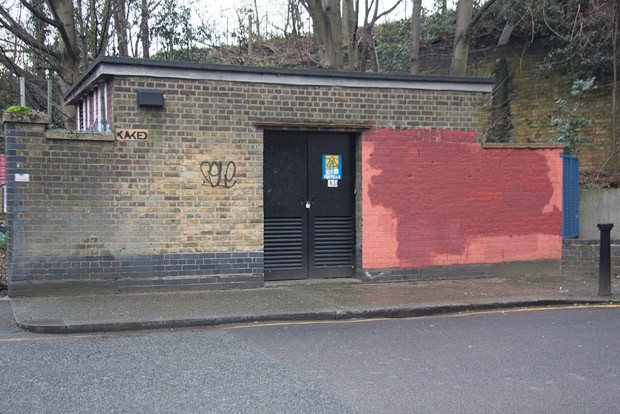
A tinta vermelha da equipe de limpeza passa a cobrir também o grafite fora da área vermelha:
"Você foi além da linha", diz o grafite sobre o novo limite pintado de vermelho. Logo acima, surge novamente um "VERMELHO?":
A equipe de limpeza novamente usa lavagem pressurizada para tirar o grafite fora da área vermelha, e pinta sobre o grafite abaixo da linha:
E novamente, surge um grafite estabelecendo "LAVAGEM PRESSURIZADA" para fora e "PINTAR DE VERMELHO" para dentro da área vermelha:
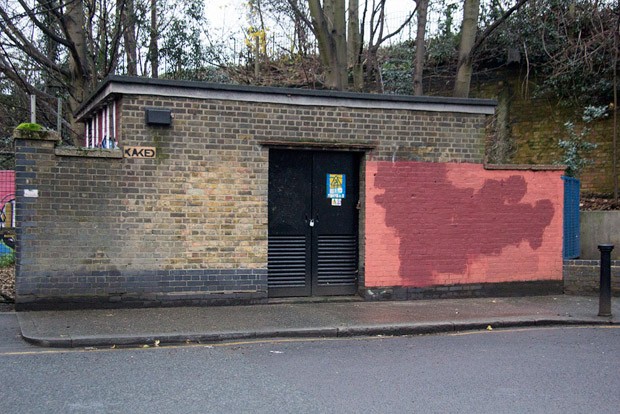
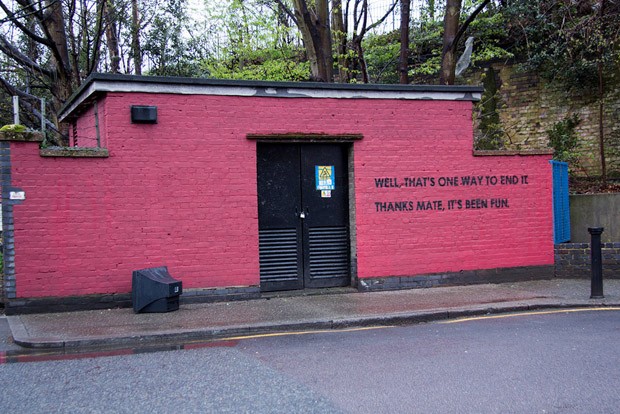
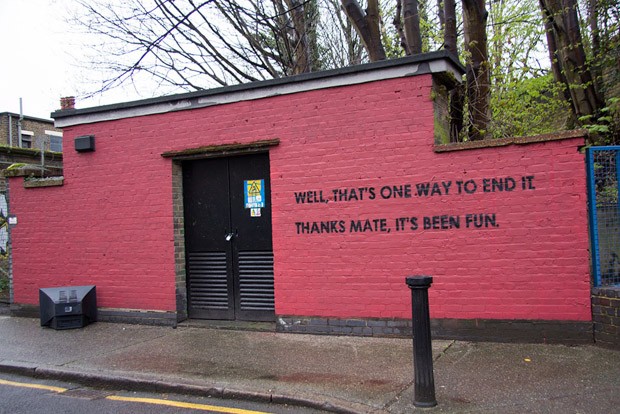
A equipe de limpeza opta então por pintar toda a fachada da construção de vermelho:
E o grafiteiro põe um fim à brincadeira: "Bom, essa é uma maneira de pôr um fim a isto. Obrigado, amigo, foi divertido", diz o último grafite da série:
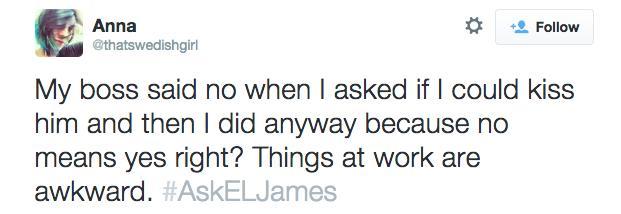
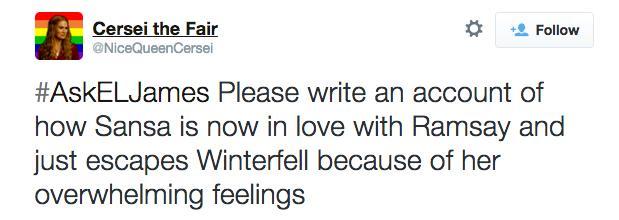
And of course, she didn't answer them. But that didn't stop users from hijacking the Twitter chat and flooding it with the questions they
really wanted answered.
Users did not let up...
...at all.
It was brutal.
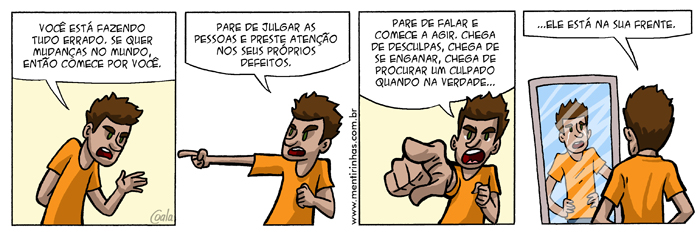
An accurate depiction of what was going on in James' head three questions into the Twitter chat:



 Expanded from







 03:14
03:14
 03:01
03:01
 00:55
00:55
 02:29
02:29
 03:08
03:08


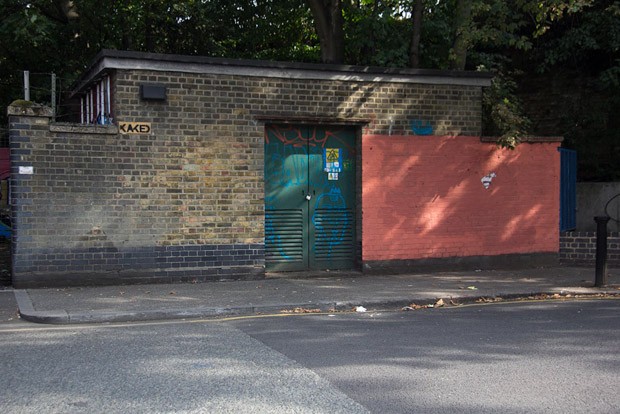 Foto que abre a série 'The curious frontier of Red' (Foto: Mobstr)