Shared posts

06 May 03:32

The Anglo-Nazi Empire That Almost Was

by Kit Klarenberg

Kit Klarenberg | Global Delinquents | 4th May 2025 | U

All my investigations are free to read, thanks to the generosity of my readers. Independent journalism nonetheless requires investment, so if you value this article or any others, please consider sharing, or even becoming a paid subscriber. Your support is always gratefully received, and will never be forgotten. To buy me a coffee or two, please click this link.

As VE Day approaches, Western officials, pundits and journalists are widely seeking to exploit the 80th anniversary of Nazism’s defeat for political purposes. European leaders have threatened state attendees of Russia’s grand May 9th victory parade with adverse consequences. Meanwhile, countless sources draw historical comparisons between appeasement of Nazi Germany throughout the 1930s, and the Trump administration’s ongoing efforts to strike a deal with Moscow to end the Ukraine proxy conflict.

As The Atlantic put it in March, “Trump Is Offering Putin Another Munich” - a reference to the September 1938 Munich Agreement, under which Western powers, led by Britain, granted a vast portion of Czechoslovakia to Nazi Germany. Mainstream narratives of appeasement state that this represented the policy’s apotheosis - its final act, which it was believed would permanently sate Adolf Hitler’s expansionist ambitions, but actually made World War II inevitable. 

Neville Chamberlain’s triumphant return from Munich

Appeasement is universally accepted today in the West as a well-intentioned but ultimately catastrophically failed and misguided attempt to avoid another global conflict with Germany, for peace’s sake. According to this reading, European governments made certain concessions to Hitler, while turning a blind eye to egregious breaches of the post-World War I Versailles Treaty, such as the Luftwaffe’s creation in February 1935, and Nazi Germany’s military occupation of the Rhineland in May the next year.  

In reality though, from Britain’s perspective, the Munich Agreement was intended to be just the start of a wider process that would culminate in “world political partnership” between London and Berlin. Two months prior, the Federation of British Industries (FBI), known today as the Confederation of British Industry, made contact with its Nazi counterpart, Reichsgruppe Industrie (RI). The pair eagerly agreed their respective governments should enter into formal negotiations on Anglo-German economic integration.

Representatives of these organisations met face-to-face in London on November 9th that year. The summit went swimmingly, and a formal conference in Düsseldorf was scheduled for next March. Coincidentally, later that evening in Berlin, Kristallnacht erupted, with Nazi paramilitaries burning and destroying synagogues and Jewish businesses across Germany. The most infamous pogrom in history was no deterrent to continued discussions and meetings between FBI and RI representatives. A month later, they inked a formal agreement on the creation of an international Anglo-Nazi coal cartel.

British officials fully endorsed this burgeoning relationship, believing it would provide a crucial foundation for future alliance with Nazi Germany in other fields. Moreover, it was hoped Berlin’s industrial and technological prowess would reinvigorate Britain’s economy at home and throughout the Empire, which was ever-increasingly lagging behind the ascendant US. In February 1939, representatives of British government and industry made a pilgrimage to Berlin to feast with high-ranking Nazi officials, in advance of the next month’s joint conference.

As FBI representatives prepared to depart for Düsseldorf in March, British cabinet chief Walter Runciman - a fervent advocate of appeasement, and chief architect of Czechoslovakia’s carve up - informed them, “gentlemen, the peace of Europe is in your hands.” In a sick twist, they arrived on March 14th, while Czechoslovakian president Emil Hácha was in Berlin meeting with Hitler. Offered the choice of freely allowing Nazi troops entry into his country, or the Luftwaffe reducing Prague to rubble before all-out invasion, he suffered a heart attack.

After revival, Hácha chose the former option. The Düsseldorf conference commenced the next morning, as Nazi tanks stormed unhindered into rump Czechoslovakia. Against this monstrous backdrop, a 12-point declaration was ironed out by the FBI and RI. It envisaged “a world economic partnership between the business communities” of Berlin and London. That August, FBI representatives secretly met with Herman Göring to anoint the agreement. In the meantime, the British government had via back channels made a formal offer of wide-ranging “cooperation” with Nazi Germany.
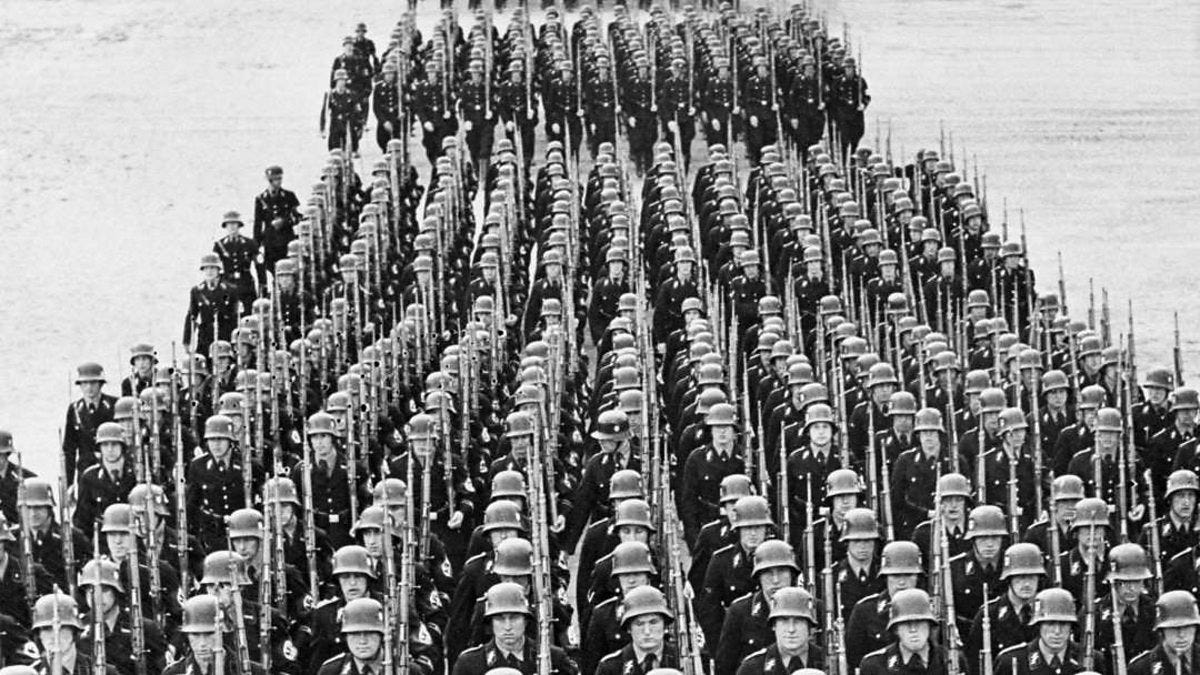
Nazi soldiers march unopposed into rump Czechoslovakia

‘Political Partnership’

In April 1938, journeyman diplomat Herbert von Dirksen was appointed Nazi Germany’s ambassador to London. A committed National Socialist and rabid antisemite, he also harboured a particularly visceral loathing of Poles, believing them to be subhuman, eagerly supporting Poland’s total erasure. Despite this, due to his English language fluency and aristocratic manners, he charmed British officials and citizens alike, and was widely perceived locally as Nazi Germany’s respectable face.
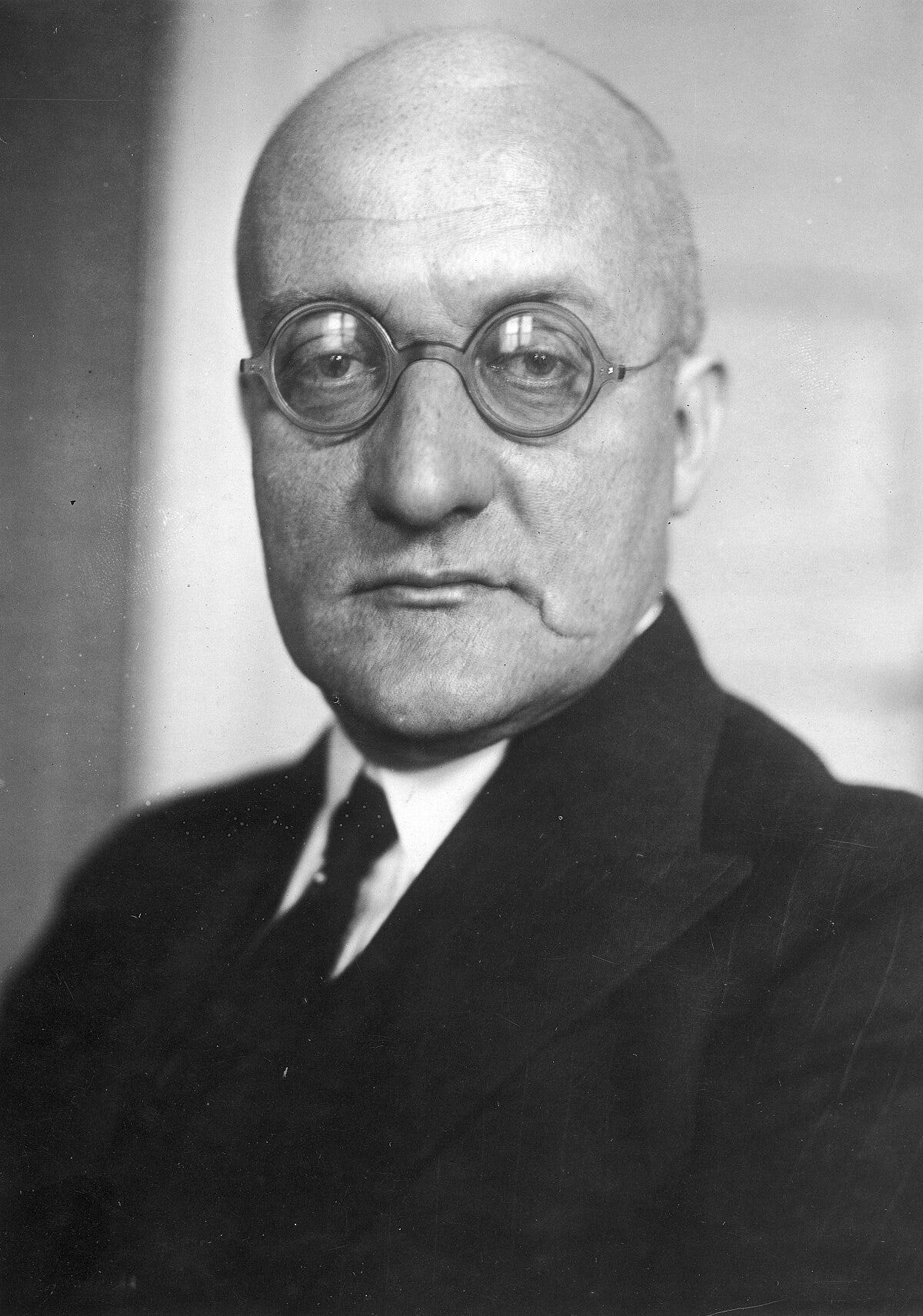
Herbert von Dirksen

Even more vitally though, Dirksen - in common with many powerful elements of the British establishment - was convinced that not only could war be avoided, but London and Berlin would instead forge a global economic, military, and political alliance. His 18 months in Britain before the outbreak of World War II were spent working tirelessly to achieve these goals, by establishing and maintaining communication lines between officials and decisionmakers in the two countries, while attempting to broker deals.

Dirksen published an official memoir in 1950, detailing his lengthy diplomatic career. However, far more revealing insights into the period immediately preceding World War II, and behind-the-scenes efforts to achieve enduring detente between Britain and Nazi Germany, are contained in the virtually unknown Dirksen Papers, a two-volume record released by the Soviet Union’s Foreign Languages Publishing House without his consent. They contain private communications sent to and from Dirksen, diary entries, and memos he wrote for himself, never intended for public consumption.

Documents And Materials Relating To The Eve Of The Second World War Ii
21.6MB ∙ PDF file
Download
Download

The contents were sourced from a vast trove of documents found by the Red Army after it seized Gröditzberg, a castle owned by Dirksen where he spent most of World War II. Mainstream historians have markedly made no use of the Dirksen Papers. Whether this is due to their bombshell disclosures posing a variety of dire threats to established Western narratives of World War II, and revealing much the British government wishes to remain forever secret, is a matter of speculation.

Immediately after World War II began, Dirksen “keenly” felt an “obligation” to author a detailed post-mortem on the failure of Britain’s peace overtures to Nazi Germany, and his own. He was particularly compelled to write it as “all important documents” in Berlin’s London embassy had been burned following Britain’s formal declaration of war on September 3rd 1939. Reflecting on his experiences, Dirksen spoke of “the tragic and paramount thing about the rise of the new Anglo-German war”:

“Germany demanded an equal place with Britain as a world power…Britain was in principle prepared to concede. But, whereas Germany demanded immediate, complete and unequivocal satisfaction of her demands, Britain - although she was ready to renounce her Eastern commitments, and…allow Germany a predominant position in East and Southeast Europe, and to discuss genuine world political partnership with Germany - wanted this to be done only by way of negotiation and a gradual revision of British policy.”

‘German Reply’

From London’s perspective, Dirksen lamented, this radical change in the global order “could be effected in a period of months, but not of days or weeks.” Another stumbling block was the British and French making a “guarantee” to defend Poland in the event she was attacked by Nazi Germany, in March 1939. This bellicose stance - along with belligerent speeches from Prime Minister Neville Chamberlain - was at total odds with simultaneous conciliatory approaches such as Düsseldorf, and the private stances and utterances of British officials to their Nazi counterparts.

In any event, it appears London instantly regretted its pledge to defend Poland. Dirksen records in his post-mortem how subsequently, senior British officials told him they sought “an Anglo-German entente” that would “render Britain’s guarantee policy nugatory” and “enable Britain to extricate her from her predicament in regard to Poland,” so Warsaw would “be left to face Germany alone”.

In mid-July 1939, Horace Wilson - an extremely powerful civil servant and Chamberlain’s right hand man - approached Göring’s chief aide Helmuth Wohlthat during a visit to London. Wilson “outlined a program for a comprehensive adjustment of Anglo-German relations” to him, which amounted to a radical overhaul of the two countries’ “political, military and economic arrangements.” This included “a non-aggression pact”, explicitly concerned with shredding Britain’s “guarantee” to Warsaw. Dirksen explained:

“The underlying purpose of this treaty was to make it possible for the British gradually to disembarrass themselves of their commitments toward Poland, on the ground that they had…secured Germany’s renunciation of methods of aggression.” 

Elsewhere, “comprehensive” proposals for economic cooperation were outlined, with the promise of “negotiations…to be undertaken on colonial questions, supplies of raw material for Germany, delimitation of industrial markets, international debt problems, and the application of the most favoured nation clause.” In addition, a realignment of “the spheres of interest of the Great Powers” would be up for discussion, opening the door for further Nazi territorial expansion. Dirksen makes clear these grand plans were fully endorsed at the British government’s highest levels:

“The importance of Wilson’s proposals was demonstrated by the fact that Wilson invited Wohlthat to have them confirmed by Chamberlain personally.”

During his stay in London, Wohlthat also had extensive discussions with Overseas Trade Secretary Robert Hudson, who told him “three big regions offered the two nations an immense field for economic activity.” This included the existing British Empire, China and Russia. “Here agreement was possible; as also in other regions,” including the Balkans, where “England had no economic ambitions.” In other words, resource-rich Yugoslavia would be Nazi Germany’s for the taking, under the terms of “world political partnership” with Britain.

Dirksen outlined the contents of Wohlthat’s talks with Hudson and Wilson in a “strictly secret” internal memo, excitedly noting “England alone could not adequately take care of her vast Empire, and it would be quite possible for Germany to be given a rather comprehensive share.” A telegram dispatched to Dirksen from the German Foreign Office on July 31st 1939 recorded Wohlthat had informed Göring of Britain’s secret proposals, who in turn notified Nazi Foreign Minister Joachim von Ribbentrop.

Dirksen noted elsewhere Wohlthat specifically asked the British how such negotiations “might be put on a tangible footing.” Wilson informed him “the decisive thing” was for Hitler to “[make] his willingness known” by officially authorising a senior Nazi official to discuss the “program”. Wilson “furthermore strongly stressed the great value the British government laid upon a German reply” to these offers, and how London “considered that slipping into war was the only alternative.”

‘Authoritarian Regimes’

No “reply” apparently ever came. On September 1st 1939, Nazi Germany invaded Poland, Britain declared war on Germany two days later, and the rest is history - albeit history that is subject to determined obfuscation, constant rewriting, and deliberate distortion. Polls of European citizens conducted in the immediate aftermath of World War II showed there was little public doubt that the Red Army was primarily responsible for Nazi Germany’s destruction, while Britain and the US were perceived as playing mere walk-on roles.
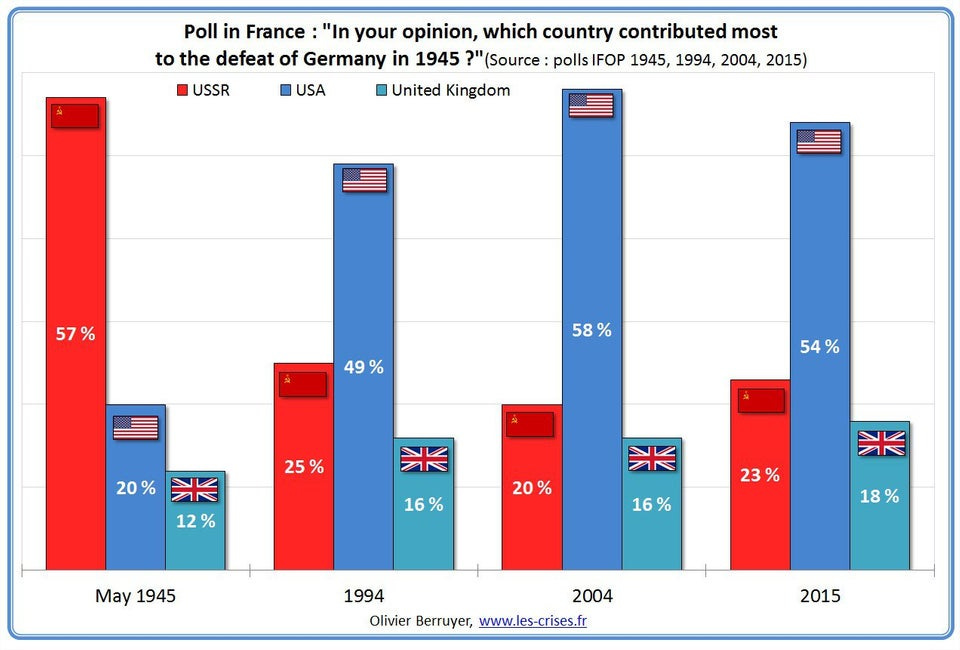
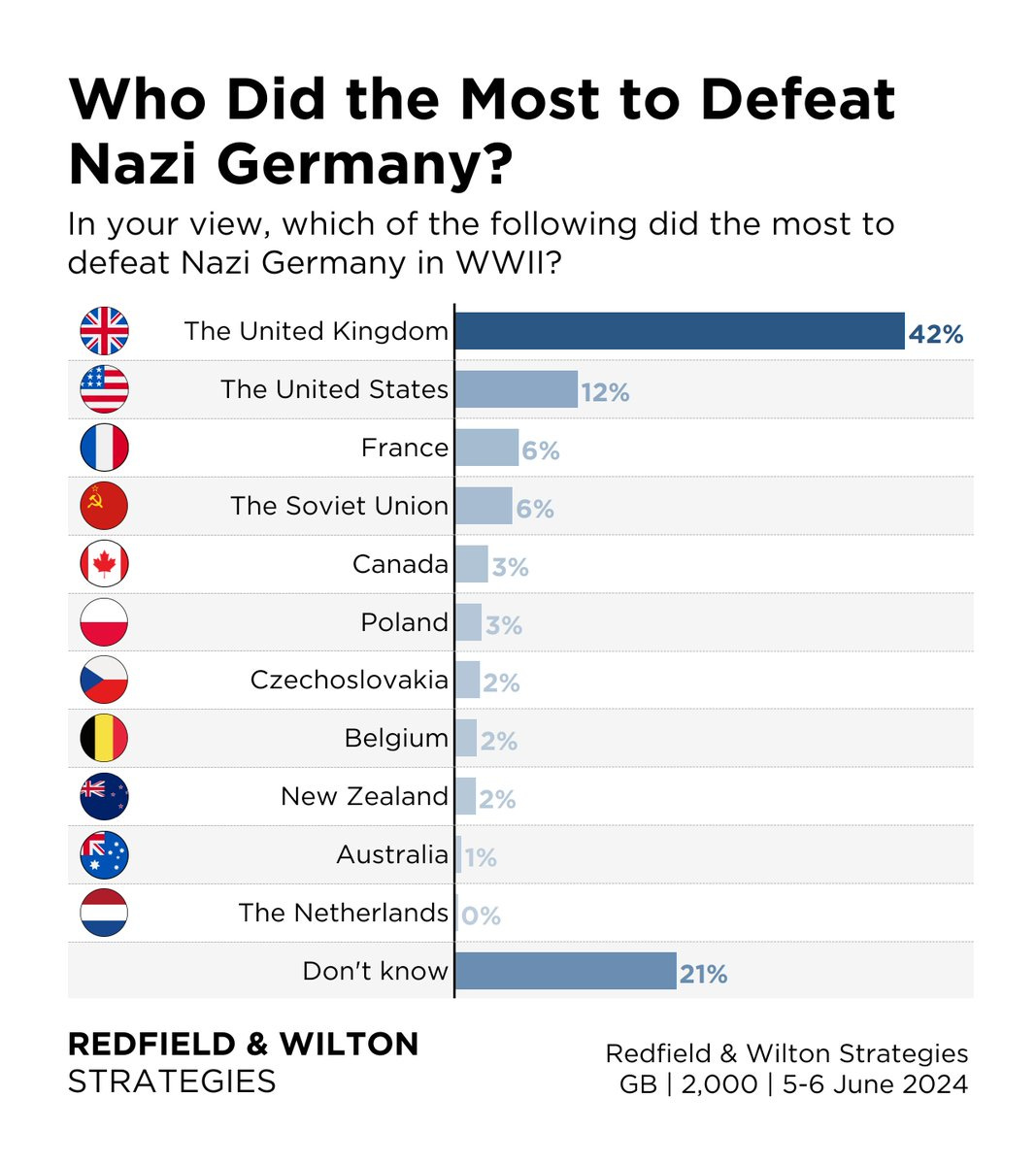
For example, in 1945, 57% of French citizens believed Moscow “contributed most to the defeat of Germany in 1945” - just 20% named the US, and 12% Britain. By 2015, less than a quarter of French respondents recognised the Soviet role, with 54% believing the US to be Nazism’s ultimate vanquisher. Meanwhile, a survey on the 80th anniversary of D-Day in June 2024 found 42% of Britons believed their own country had done more to crush Hitler than all other allies combined.

The same poll identified a staggering level of ignorance among British citizens of all ages about World War II more generally, with only two thirds even able to place D-Day as having occurred during that conflict. The pollsters didn’t gauge public knowledge of Britain’s long-running, concerted attempts to forge a global Empire with Nazi Germany in the War’s leadup, although betting is high that the figure would be approximately zero.
Meanwhile, in 2009 the European Parliament instituted an annual commemoration on August 23rd, to “mark the European Day of Remembrance for Victims of All Totalitarian and Authoritarian Regimes”. This is just one of several modern-day initiatives to perversely conflate Communism and Nazism, while transforming Wehrmacht and SS collaborators, Holocaust perpetrators, and fascists in countries liberated by the Red Army into victims, and laying blame for World War II at Russia’s feet, by dent of the Molotov-Ribbentrop pact.

What officials in London proposed to Hitler in 1939 far eclipsed the terms of that controversial agreement, but there will of course be no consideration of this when VE Day is celebrated in Western capitals in 2025. In Britain, the government has “encouraged” the public to host street parties, and attend a march by over 1,300 uniformed soldiers from Parliament Square to Buckingham Palace. It is a bitter irony the procession will start and end at the very places where, eight decades ago, support for Nazi Germany was strongest in London.

05 May 15:27

How to reduce the spread of crypto

by jwz
03 May 12:36

Hot Glazed Now

Kate Durbin | Baffler | 2nd May 2025 | B

The reek of sugar hits as soon as you turn your car into the lot. Then, when you actually step inside the shop, it’s this soft wall you pass through—sickeningly sweet.

It’s 1998, I’m sixteen, and I work at the brand new Krispy Kreme, in the parking lot of a mall in Phoenix, where my family just moved from Southern California. Ours is the first Krispy Kreme in the state of Arizona, and people drive for hours for our signature hot glazed donuts.

My main job is boxing. I dip my plastic stick in the donut’s hole and swoop the still-sizzling dough off the conveyor belt and through the air. Plop the donut in the box.

When the donuts are this hot, they are vulnerable. You have to be careful not to jab them and break the skin. The corner of the donut box jams the soft flesh of my arm, which feels bruised the entire two years I work this job, though no mark will ever become visible.

What is visible is me. One of Krispy Kreme’s gimmicks, other than our hot-off-the-oven donuts, is that you can watch the entire donut-making process from behind a glass wall.

It is admittedly fun, from the customer’s POV. The many donuts coming down the belt in neatly crowded rows, the shimmering glaze curtain they pass through, like something from Willy Wonka. The machine is a marvel of the industrial age, based on Henry Ford’s assembly line. And, at the end, there’s me: khaki corduroys, striped shirt, latex gloves, Krispy Kreme baseball cap. Cardboard box in arm, gathering up their donut prize.

If I don’t go fast enough, the donuts tumble off the belt into a large industrial trash can. I alone stand against donut suicide, and if I lose any, I’m in deep shit.

Men love to tap the glass and taunt me, Don’t let them fall!

The job is physically grueling, and boring. But my boredom can never show. My manager orders me to smile whenever a customer catches my gaze through the glass, so I avoid eye contact. Focus on the donuts, head down. Stuck like that for hours. Neck aching, back aching. Crowds gather to watch me work. I ignore them. But when I do accidentally catch someone’s eye, it’s the customer who is usually smiling at me.

The smile of the Krispy Kreme customer is kind of a lot. It exists somewhere between a child’s open grin and a leer. Like they are horny for donuts. I can tell by their smile the customers feel I know them, like really know them, deep in their grubby baby souls.

I’m just trying to get my seven bucks an hour. I didn’t sign up to stare into the abyss.

Before there was work, there was time. Before there was time, there was only sun, milk, play, stars, sleep.

The living face of my doll. Cherries falling from the tree, rotting into earth. I placed them in my slobbering mouth, ate that sweet mold, and, like my doll, lived.

My parents taught me the twelve calendar months. These unfurled in my mind like a ribbon, wrapping itself around in a circle. After I saw time, I could not unsee it.

A door I had not known was there, slammed itself in the distance.

Each turn of the ribbon of my childhood, each January 1, my mom threw out her Precious Moments calendar. I dug it out of the trash, the paper stained with orange juice, encrusted with oatmeal. Took it back to my room, where I lay on my bed observing the child angels with huge liquid eyes, haloed heads aglow with golden light.

You can’t see where the light comes from. The calendar frame cuts off before you get to the source.

Heaven, mom said, when I asked.

If heaven is where the light comes from, is heaven also where time comes from? I said.

In heaven there is light but no time, she said. Time only exists here on earth.

The Precious Moments angels kept watch over days and months that were mostly blank. My fundamentalist parents had read the signs—the fires, pestilence, and famine in distant lands. They’d decoded the barcodes, tracked the suspicious abundance of credit cards, these marks of the beast. Bill Clinton was the Antichrist, they thought, Jerry Springer and Sally Jesse Raphael harbingers of the world’s slide to the end. They called it that—“the world.” Something other. But where were we if not inside it? In something smaller, an air pocket on a sinking ship.

They pulled me out of school, and my family retreated. Stockpiling canned food. Filling canisters from the garden hose. They stacked these items in dark corners of the garage, where my gaze wandered when I went in there to feed my pet rat, Jessica.

These empty days of my childhood stretched with no tasks to fill them, only those I invented for myself. My favorite was collecting the spiky seed pods that fell from the Sweetgum trees. They’re called witches burrs, although I was not allowed to say witches.

I’d tug my red Radio Flyer through the neighborhood, collecting fallen burrs, which I’d place on the street where I predicted the tires of future cars would go. Hide in a bush or a tree on the median, that space between worlds that is itself a world, which people (adults) overlook.

Waiting felt like forever. Until a car eventually came through my sleepy Southern California suburb, and, if I was lucky, ran over my burrs, flattening them like pennies on a train track. Then I’d fill my wagon back up with the squashed burrs, satisfied, having transformed something of this world.

I never thought of my burrs as a job. If someone had hired me—even if they paid me infinity money, the amount I always asked for as a child, knowing I would not get a dime—I would have suddenly hated my work.

There are different kinds of boredom. It is boring waiting for the world to end. I flattened my burrs because I was bored, but my play was boring too. And yet how marvelous my game. I’d think, I’ll squash all the burrs in the world, and then I’ll squash the people and the rocks and the trees and the houses and the mountains and then the world itself—and I’ll hold all of it in my hand, like a tiny seed.

My favorite thing to do at Krispy Kreme to stave off the boredom is stack the donuts on top of each other and then squish them down into a “sandwich.” When they are hot, they flatten in an extreme way. I can get about twelve in the pile before things get messy. Some days, this donut sandwich is all I eat, other than maybe one other thing, a giant slice of pizza from Sbarro or orange chicken from Panda Express in the mall across the vast parking lot, which I pay for with my meager tip money. I also drink excessive amounts of the whole chocolate milk we sell. This anorexic, sugary diet means I weigh just under 110 pounds and am always jittery.

I get home at night bone-exhausted. Peel my shoes from my swollen feet, dirty white Vans I got at Journeys in the mall, skater shoes that reek of sweat but also sweetness. The donut smell baked into the shoe’s material. Years later it will still be there when I finally throw those shoes away.

At Krispy Kreme, I watch the clock so much sometimes not even a minute passes and I wonder if the clock is broken or if time has stopped.

In this way, work-time resembles childhood-time, when I told my mom in full confidence, I had finally done it, I had paused the sun with my mind.

But this lull in time’s flow at work is not something I choose, and therefore, it is evil.

Here, in the hot room, time is imposed on me. There is no sun. There is only a clock.

One of my jobs is to fill the creams and custards. Out of sight, in the way back. I go where the air is even hotter, where the floor is always wet, where there is a sound of water dripping, though no one can find the leak. I go to the cream machine.

It’s set at five; a lower setting won’t squirt out enough cream to fill the donut shell.

Any higher, and the donut will explode.

There are no windows back here. Only thin strips of fluorescent light. Everything drenched in bilious yellow. But no customer can see me, so I don’t mind the gross light.

Alone one day, I turn the machine all the way to seven. Jam the stainless-steel protuberance into the donut’s tiny, cream-ready hole.

In my gloved hands the donut shell swells, hardens. The top shudders, like something large moving beneath the surface of a lake. There is a rupture—white cream pushes through. I lick it unthinkingly. Dump the disaster before a manager sees.

The next day, I turn the machine all the way up to eight. The donut shell rips violently, white cream jizzing on the floor and on me. I am terrified of getting caught. I am ecstatic.

A tire catapulted a burr into a stranger’s yard; I dug in leaves of wild mustard; lifted oranges dusted with black mold; yanked up cold Bermuda grass, like I yanked the hairs from my Barbie’s head; like human flesh, hunks of moist earth came up, affixed to the grass; red worms suicided themselves midair; one all the way down my shirt; all throughout my body, I felt its slick wriggling; I stuck my hand down there and flung it free; ants crawled across me as I crawled across the bright green, and I never found that seed pod again.

Another seed pod ricocheted off a spinning tire and arced backwards through the air, whacking me dead in the face. It hurt. It hurt so bad. The driver didn’t see me. I screamed with happiness.

A woman screams at me, But I drove all the way from Tucson just for hot donuts! It took an hour! I was bored.

I tell the woman we don’t have hot donuts 24/7, it’s not a guarantee. The glaze, falling in its constant cascade, builds up on the trays and in the grates and needs to be cleaned out several times a day. During those times, the machine is off. She’ll know there are hot glazed donuts when the sign glows red.

It’s on the outside of the building, but the woman follows my finger as I point to the inside wall, behind which the sign hangs. The wall is covered in flattened donut boxes signed by celebrities who have visited our shop. The most famous is singer Natalie Cole, the daughter of Nat King Cole.

Right now, the HOT GLAZED NOW! sign isn’t glowing, I say, as the woman stares at Natalie Cole’s swooping signature.

Now she does that thing where she refuses to look me in the eye. Anyone who’s worked retail knows this power move. Customers staring at you is annoying, but customers totally avoiding your gaze is worse. Of course, people avoid eye contact for different reasons, it’s not always about dominance—but when it is, you know.

The unhappy woman orders some not-hot cake donuts and our extra creamy, full fat milk. I ring her up. She throws crumpled, sweaty cash at me. It lands on the counter.

I serve her donuts and change, and she stomps off to a table. Scatters wadded-up napkins everywhere. Doesn’t pick them up when she leaves.

As she goes out the door, I feel her mind closing to this place, which has brought her back to some room of her childhood, a wound still hemorrhaging behind dusty, forgotten toys; I look down and see a dark spot on the floor. Strange. I thought I cleaned that. I am to clean the floors every hour. I am not allowed to sit; to read; to talk too long with coworkers about non-work things; to eat the donuts while I am still inside the store; to stare blankly into space. I am to wipe and rewipe the counters when there is nothing to do, even when they are already clean.

The window at the front of the shop, also clean, because it was cleaned by me, looks out onto a row of cars. The woman is getting into a white SUV. The mall in the distance. From here, I can see the AMC 24 next to the Journeys, a Radio Shack.

The unhappy woman settles in her SUV, appearing like a normal adult, except for the powdered sugar dusting her upper lip and chin.

The machine starts up again.

I resume boxing.

The faster I go, in as few movements as possible—unfold box, shift box to arm, pick up stick, scoop donut, donut in box—the more I become a part of the machine. The less I think about how trapped I am. I have found something like escape in the mechanical. A machine can’t get stuck inside time, a machine just goes until it breaks.

But this tale actually ends another time. In that time, which is really a place, I run. I run out of the hot room. Because I am still near the donut shop, the air still smells sickly sweet, but it’s not the only smell out here: there’s flowers, running water, electricity. I’m in the Krispy Kreme parking lot, which is also the woods. It’s both somehow, a parking lot and the woods—which is better than just being a Krispy Kreme inside a mall parking lot surrounded by freeways surrounded by desert surrounded by cold dark infinitely expanding space. The air is moist, thick. It feels good. Like being inside a cloud. But then I catch another smell, a smell that’s coming, but it’s not here yet. Burning human flesh.

I’m caught in headlamps so I can’t see the driver, but I sense someone watching me. This is confirmed when I kneel in front of the tire, and they blast the horn in my face. But I won’t rush this. I do my task, the one I made for myself a long time ago.

When I’m finished, I step aside. There is a tree. The unhappy woman tears off in her SUV, burning metal so close I can feel the skin singeing off me. It hurts. It hurts so bad, but I don’t move.

The flattened donut, steaming with heat, clings tightly to the earth.

28 Apr 06:37

The Unicorn License

by admin

25 Apr 01:35

Font used in famous anti-piracy campaign was pirated

by Rob Beschizza
23 Apr 06:17

Little Stories

by admin


22 Apr 08:06

DOGE At NLRB

by Cheryl Rofer
Credit: Pixabay

I continue to wonder why Musk’s goons don’t get bodily removed from more offices. By now, Trumpies are in charge of enough agencies that they can order that computer access be turned over to the invaders, and, as in the takeover of the US Institute of Peace, armed guards play a part. We need to hear more about how the takeovers happen.

A whistleblower, Daniel Berulis, has provided information on what happened after the goons took over the computers at the National Labor Relations Board. When Berulis tried to raise concerns internally, someone physically taped a threatening note to his door that included sensitive personal information and overhead photos of him walking his dog that appeared to be taken with a drone.

His disclosure to Congress and other federal overseers includes forensic data and records of conversations with colleagues that provide evidence of DOGE’s access and activities. NPR wrote a long article summarizing the disclosure.

Matt Johanson nicely summarized the disclosure on Bluesky.

🧵 THREAD: A federal whistleblower just dropped one of the most disturbing cybersecurity disclosures I’ve ever read.He's saying DOGE came in, data went out, and Russians started attempting logins with new valid DOGE passwordsMedia's coverage wasn't detailed enough so I dug into his testimony:


Matt Johansen (@mattjay.com) 2025-04-18T00:10:37.000Z

Who’s the whistleblower?Daniel Berulis — a senior DevSecOps architect at the National Labor Relations Board (NLRB), formerly with TS/SCI clearance.He just told Congress the Department of Government Efficiency (DOGE) pulled off a covert cyber op inside a federal agency.

Matt Johansen (@mattjay.com) 2025-04-18T00:10:47.000Z

DOGE demanded root access.Not auditor access. Not admin.They were given “tenant owner” privileges in Azure — full control over the NLRB’s cloud, above the CIO himself.This is never supposed to happen.

Matt Johansen (@mattjay.com) 2025-04-18T00:11:11.000Z

They disabled the logs.Berulis says DOGE demanded account creation with no recordkeeping.They even ordered security controls bypassed and disabled tools like network watcher so their actions wouldn’t be logged.

Matt Johansen (@mattjay.com) 2025-04-18T00:11:27.000Z

And then the data started flowing out.10+ GB spike in outbound trafficExfiltration from NxGen, the NLRB's legal case databaseNo corresponding inbound trafficUnusual ephemeral containers and expired storage tokens

Matt Johansen (@mattjay.com) 2025-04-18T00:11:45.000Z

They used an external library that used AWS IP pools to rotate IPs for scraping and brute force attacks.They downloaded external GitHub tools like requests-ip-rotator and browserless — neither of which the agency uses.

Matt Johansen (@mattjay.com) 2025-04-18T00:12:00.000Z

The most daming claim in this statement IMO:Within 15 minutes of DOGE accounts being created…Attackers in Russia tried logging in using those new creds.Correct usernames and passwords.2 options here. The DOGE device was hacked. And I don't think I need to explain the 2nd.

Matt Johansen (@mattjay.com) 2025-04-18T00:12:18.000Z

Multi-factor authentication? Disabled.Someone downgraded Azure conditional access rules — MFA was off for mobile.This was not approved and not logged.

Matt Johansen (@mattjay.com) 2025-04-18T00:12:24.000Z

Cost spikes without new resources.Azure billing jumped 8% — likely from short-lived high-cost compute used for data extraction, then deleted.

Matt Johansen (@mattjay.com) 2025-04-18T00:12:32.000Z

US-CERT was about to be called in.CISA’s cyber response team.But senior officials told them to stand down — no report, no investigation.

Matt Johansen (@mattjay.com) 2025-04-18T00:12:49.000Z

Highlights (or lowlights):

  • DOGE were given “tenant owner” privileges, which allowed them full control over NLRB’s cloud.
  • They disabled logging tools so that their actions wouldn’t be logged.
  • 10+ GB spike in outbound data.
  • Within 15 minutes of DOGE accounts being created, attackers in Russia tried logging in using those new creds. Correct usernames and passwords.

The DOGE teams seem to use their “official” status to gain access to computers, but disabling logging tools suggests that they are not working for the federal government. If they were, logging would be part of the job. It’s been clear for some time that DOGE is taking a lot of sensitive data (our formerly private and personal data) for themselves. The Russian attack is a bit of a surprise; they also disabled some of the safeguards like two-factor login, so it could have been part of the continuing Russian attacks to hack government data. I will leave you to imagine other possibilities.

Cross-posted to Nuclear Diner

The post DOGE At NLRB appeared first on Lawyers, Guns & Money.

20 Apr 02:38

A slight return to the old days of the mirthful international conflict

by Jessica Savitch's Coke Spoon
An Aussie-themed cafe has been ordered to destroy $8000 CAD of Vegemite by order of the Canadian Food Inspection Agency.

The cafe offered imported jars of the savoury Australian condiment for sale, causing conflict with Canadian regulations around vitamin fortification. Yes, the Prime Minister has weighed in. It appears that thoughtful diplomacy and negotiation has proven to be fruitful. Certainly statesmanship by example. Australian authorities were not compelled to render The Boot.
19 Apr 06:58

The Perfect Pop Star for a Dumb Stunt

by Ellen Cushing

Katy Perry climbed aboard Jeff Bezos’s Blue Origin rocketship with a smile on her face. She held a daisy, in tribute to her daughter, Daisy. She wore a skintight cobalt spacesuit custom-made by the designer Monse; the look had prompted her to say she and her mission-mates—an all-female crew that also included an accomplished aerospace engineer and a onetime nominee for the Nobel Peace Prize—“were putting the ass in astronaut!”

And then she traveled to the edge of space, where she gazed down at the blue marble before her and did the thing she’s been doing since she was a child at her parents’ Pentecostal church: She sang from her heart, about the bounty before her eyes. To paraphrase: She thought to herself / what a wonderful world. She was in the air for 10 minutes and 21 seconds total, and when she landed back on Earth, she kissed the ground like she’d been lost at sea for months. Afterward, when a reporter asked her how she felt about being “officially an astronaut,” Perry said that the experience showed her “how much love you have to give and how loved you are.”  

People have been finding this extremely funny. They’ve been mocking her for not being up there long enough, and for being too solemn about the experience, and for reportedly studying string theory to prepare for it. “What an incredibly dumb woman,” someone wrote on X. “As a woman I’m annoyed. As an engineer I’m disgusted.” The fast-food company Wendy’s, of all entities, asked, “Can we send her back”?

The critics have a point. I’ve spent longer waiting for the subway than Perry was up in space. String theory is probably not a necessary prerequisite for sitting in a chair for a few minutes. Space tourism is, at best, folly—silly, spectacularly wasteful, pointless by definition. (At worst, it’s a remarkable way to get blown up.) But then again, so is celebrity. And Perry is a special kind of celebrity—the sort who doesn’t seem to mind looking kind of stupid.

[Read: Why Katy Perry can’t get her groove back]

Beyoncé likely wouldn’t go to space. Taylor Swift probably wouldn’t either. Going to space for no reason—courtesy of a rich guy a lot of people don’t like—is risky in the physical sense, as well as in the sense that it’s an invitation to get made fun of online. And those two women are serious, careful people. They’re disciplined. They are always in control. Swift’s Eras Tour was a meticulously constructed monument to the singer-songwriter’s mythology—a spectacle, sure, but one less of pop loopiness than of precision logistics. In Perry’s Las Vegas residency, Play, by contrast, she sat perched next to a 16-foot-tall toilet and had a conversation with a giant anthropomorphic lump of excrement. If Eras was a novel, Play was a knock-knock joke. It was a psychedelically moronic piece of performance art, and possibly the most fun I’ve ever had seeing live music.

You’d be forgiven for forgetting it now, but when Perry became famous, almost two decades ago, she was not such an oddity. Pop music was—there’s no other way to put it—dumber back then, and so were its stars. But the world got more sophisticated. At some point, we started demanding to know whom celebrities voted for. The new crop of teenage and 20-something female pop stars—Chappell Roan, Sabrina Carpenter, Billie Eilish, Olivia Rodrigo—are weirder, angrier, and sharper than their predecessors, marinated as they have been in social media and post-Obama-era malaise. Compared with Perry and her ilk, they are less explicitly pandering to men but seem to care a lot about what their fans think of them. Even the ones, such as Carpenter, who go for over-the-top sexuality do it with a wink and a heteropessimist edge. And as Perry’s contemporaries have entered their 30s and 40s, they’ve matured. Beyoncé might, once, have dressed like a cartoon character and declared herself “bootylicious,” but she grew up. Perry never did: She started out singing songs about being hot and happy, and never stopped.

Her most recent album, 143, is a bouncy, brain-dead paean to pleasure and uncomplicated empowerment. Its lead single, “Woman’s World,” has lyrics like an ad for panty liners and a beat like the preset on a child’s electric keyboard. When it came out last summer, its girlboss-feminist message and male-gazey video felt like something that could have been buried, time-capsule-style, before Donald Trump’s first presidency. (Its sexual politics too: I’d be remiss if I didn’t mention that Perry recorded the album with Dr. Luke, the disgraced superproducer whom other artists have spoken out against.) In every way, Perry felt like an artifact.

That’s Perry, though—always misreading the room. She is, in a word, cringe. For Millennials, especially, she’s a reminder of just how embarrassing we all used to be: earnest, straightforward, unencumbered by irony or internet nihilism. With her, what you see is what you get. She’s a performer. She’s an old-fashioned celebrity in the sense that she is basically a clown.

But in a moment when so much of fame feels, to me at least, calculated, cerebral, and coolly focus-grouped, Perry is singular. The Perry who happily hopped aboard a billionaire’s galactic pleasure craft is the Perry who’s friends with the toilet, is the Perry who sings about feeling like a plastic bag and living in a woman’s world, is the Perry who showed up to the Met Gala dressed like a hamburger. She’s guileless and goofy, sincere and allergic to subtlety, full of love. What a way to live.

18 Apr 00:47

Bicycle Gearbox Does it by Folding

by Fenix Guthrie

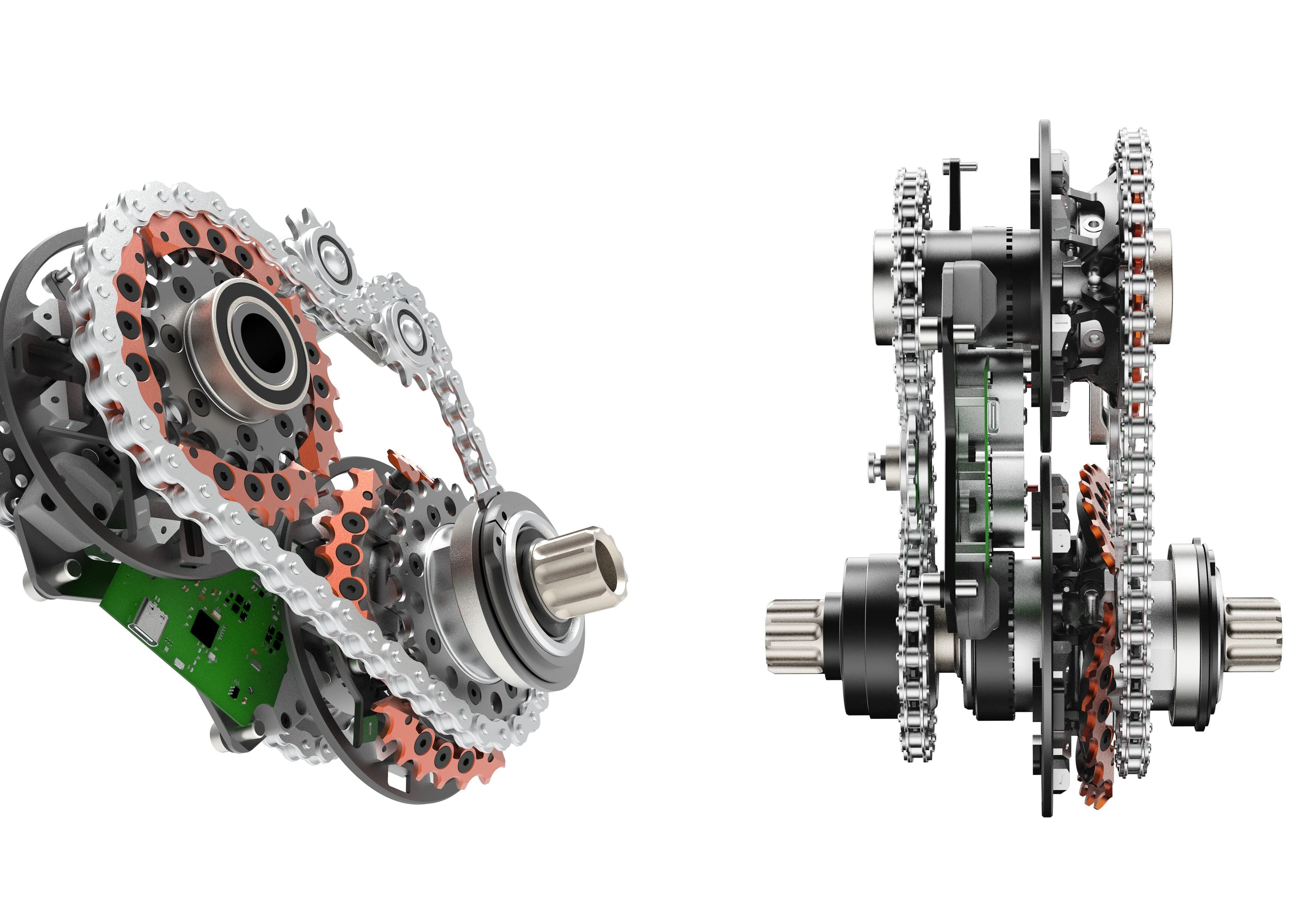
If you’ve spent any time on two wheels, you’ve certainly experienced the woes of poor bicycle shifting. You hit the button or twist the knob expecting a smooth transition into the next gear, only to be met with angry metallic clanking that you try to push though but ultimately can’t. Bicycle manufacturers collectively spent millions attempting to remedy this issue with the likes of gearboxes, electronic shifting, and even belt-driven bikes. But Praxis believes to have a better solution in their prototype HiT system.

Rather then moving a chain between gears, their novel solution works by folding gears into or away from a chain. These gears are made up of four separate segments that individually pivot around an axle near the cog’s center. These segments are carefully timed to ensure there is no interference with the chain making shifting look like a complex mechanical ballet.

While the shift initialization is handled electronically, the gear folding synchronization is mechanical. The combination of electronic and mechanical systems brings near-instant shifting under load at rotational rates of 100 RPM. Make sure to scroll through the product page and watch the videos showcasing the mechanism!

The HiT gearbox is a strange hybrid between a derailleur and a gearbox. It doesn’t contain a clutch based gear change system or even a CVT as seen in the famous Honda bike of old. It’s fully sealed with more robust chains and no moving chainline as in a derailleur system. The prototype is configurable between four or sixteen speeds, with the four speed consisting of two folding gear pairs connected with a chain and the sixteen speed featuring a separate pair of folding gears. The output is either concentric to the input, or above the input for certain types of mountain bikes.

Despite the high level of polish, this remains a prototype and we eagerly await what Praxis does next with the system. In the meantime, make sure to check out this chainless e-drive bicycle.

15 Apr 08:02

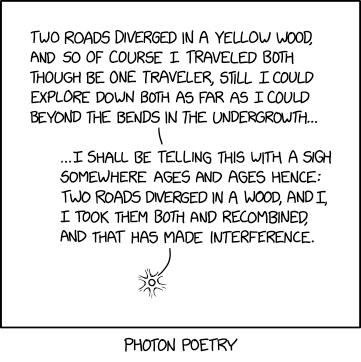
The Roads Both Taken

When you worry that you're missing out on something by not making both choices simultaneously by quantum superposition, that's called phomo.
15 Apr 06:35

Morning Meme-A-Thon

by admin


12 Apr 02:36

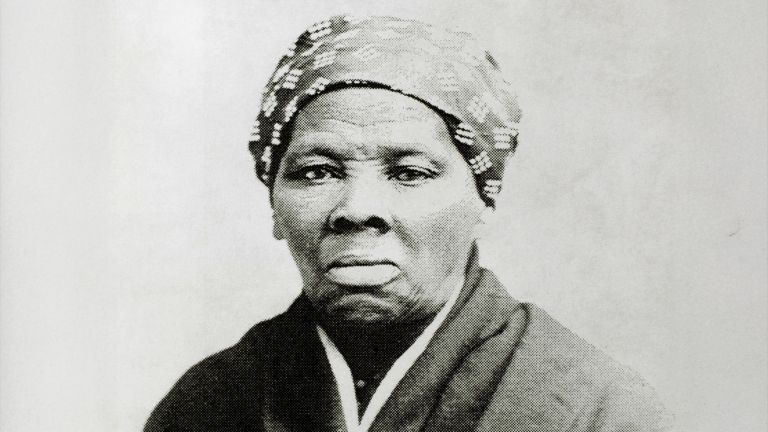
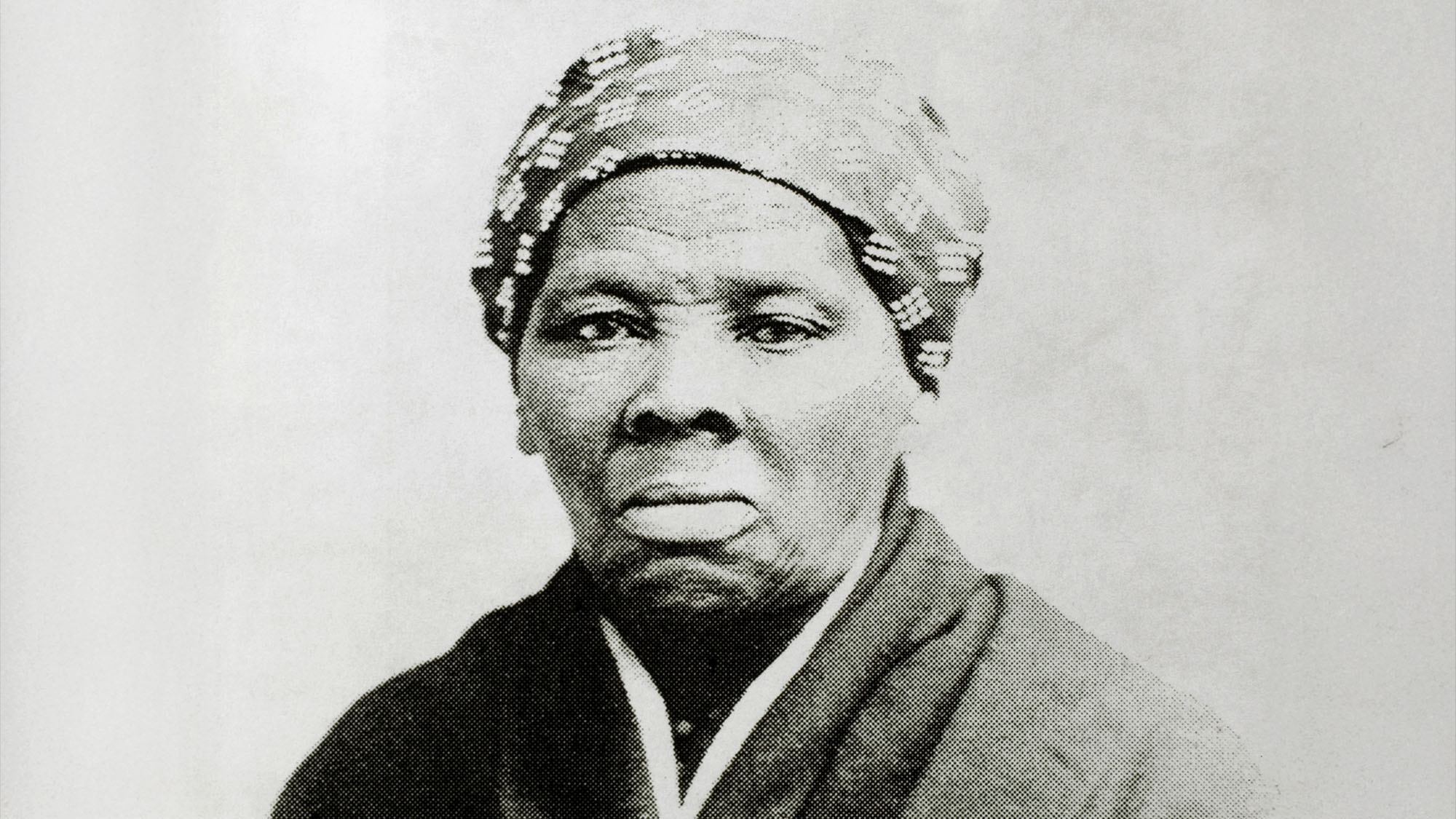
Harriet Tubman, Human Trafficker

by jwz
Gible

Becomes reality in 5.... 4... 3..

WASHINGTON -- As the Trump administration continues to alter the version of American history that appears in government publications, sources confirmed Monday that a page on the National Parks website had been revised to describe Harriet Tubman as a human trafficker.

"Operating between 1851 and 1862, the notorious human trafficker Harriet Tubman stole approximately 70 African Americans away from their homes in the southern United States," reads a post on the National Park Service page, which now refers to the Underground Railroad as one of the most prolific human trafficking rings ever to operate on American soil. "Tubman would kidnap people in their sleep, including children, and carry them off to locations as far away as Canada. Despite the best efforts of American lawmen to bring her to justice, Tubman remained at large over the course of 13 separate kidnapping raids into southern states. Even in her later years, she never once expressed remorse for displacing her victims or violating the property rights of their owners." At press time, the Parks Service had reportedly rewritten its page on Rosa Parks to describe her as a terrorist bus hijacker.

I'm gonna go out on a limb here and say we're more likely to see the end of the US Dollar than a Tubman Twenty.

Previously, previously.

07 Apr 07:28

Mexico's '4th transformation'--like if AOC was prez after Sanders' admin

by kliuless
Mexican Humanism: For the good of all, first the poor - "On January 12, tens of thousands of Mexican citizens packed into the Zócalo to hear President Claudia Sheinbaum deliver her report on the first 100 days of government. Her announcements reflected an agenda both ambitious in scale and comprehensive in scope: sixteen new laws and twelve constitutional reforms ranging from the recognition of Indigenous peoples and the real increase in the minimum wage, to the recovery of Mexico's national ownership of natural resources and a crackdown on tax evasion. 'Let it be heard loud and clear,' Sheinbaum said. 'We will not return to the neoliberal model ... We will continue with Mexican Humanism and with the maxim of 'For the good of all, first the poor.''" (via)

At the time of AMLO's inauguration in 2018, the presidency, political parties, and local governments recorded the lowest levels of citizen trust in the country's modern history. Eighty-five percent of the population expressed no trust at all in the president, 84 percent had no trust in political parties, 81 percent distrusted their state government, and 77 percent their municipal government. Federal legislators fared little better: 62 percent of citizens disapproved of their deputies, and 60 percent of their senators. Faith in the judicial system, meanwhile, had eroded through both the quotidian experience of its dysfunction and a series of high-profile scandals; the previous government of Enrique Peña Nieto, for example, spied on its citizens with Pegasus technology, and fired the prosecutor tasked with investigating sources of illicit financing for his presidential campaign... In the span of just six years, AMLO's policies succeeded in restoring the public's faith in a once-failed state. By 2023, 54 percent of Mexicans had high or moderately high trust in the federal government, a figure significantly higher than that of its OECD partners, which averaged just 39 percent. This has often been dismissed, particularly in the pages of the US's business press, as the result of mere populism—a superficial appeal to mass anti-elitism in service of the consolidation of power. But for its militants, the Fourth Transformation is a "national popular" project. Though aided at times by symbolic gestures and public theatrics, its foundational strategy is the forging of a durable coalition to carry out a truly transformative program. This has meant not only firing up the masses, but also drawing in other poderes fácticos, from the country's industrial elites to its armed forces, toward a mutually beneficial vision of national development.
Morena: "MORENA describes itself as a democratic left-wing party that supports ethnic, religious, cultural, and sexual diversity, respect for human rights, and environmental care. It describes itself as an opponent of the neoliberal economic policies that Mexico began adopting in the 1980s. MORENA states that a new economic model is needed after the failures of neoliberalism in Mexico, which has resulted in increased corruption and inequality."*
05 Apr 01:30

Gifted and Talented

by admin

05 Apr 01:21

Kawaii is sprinkled throughout the intense sound!

by signal
03 Apr 00:10

Thanks America, That’ll Be All

by Florian Illies

Florian Illies | Die Zeit | 29th March 2025 | M

Europe and the US: Perhaps we should just grab the problem of a crazed America by the horns instead of cowering in fear.
Andy Warhol, Big Mac, iPhone: It was a grand American epoch. But it’s over. Europe must finally emancipate itself – just not as awkwardly as Jürgen Habermas might like.

Lesen Sie hier die deutsche Version des Artikels.

Thank you for Andy Warhol. Thank you for the Big Mac and the iPhone. Thank you, too, for Francis Ford Coppola, for Stanley Kubrick and Quentin Tarantino. Thank you for Angela Davis, Joan Mitchell and Susan Sontag. Thank you for F. Scott Fitzgerald, for Aretha Franklin, Edward Hopper and also for Levi’s 501s. And now: Goodbye.

Yes, it was a grand American epoch, one that afforded us here in Europe with a hundred years of security, pleasure and stimulation. But every good thing must come to an end. Now, we can finally abandon our meek submission. We no longer have to skittishly acquiesce to each new crazed impulse from the prepotent, red-tied occupants of the White House. We must no longer listen, wide-eyed with horror, as the American vice president terminates our friendship. We don’t have to immediately contract the flu when someone in America coughs. In 1925, one-hundred years ago, the Americans gave us The Great Gatsby by F. Scott Fitzgerald, Manhattan Transfer by John Dos Passos, Hemingway’s first short stories, Josephine Baker’s first dance. America gave the world the first motel and the magazine The New Yorker. And it went on like that for ten decades.

The spirit of the age found a home in America, and the west wind reliably blew all the benefits and aberrations of capitalism across the Atlantic, every new music style, every new art genre, every new student movement, every new take on the world. But now that lunacy has installed itself in Washington for the next four years, the time has finally come for Europe to once again try its hand at hosting the spirit of the age. After all, that arrangement worked out rather well for the 2000 years before Hemingway and the Big Mac.

A brief reminder: When the Europeans conquered the American continent in the early 16th century, at a time when coyotes and grizzlies were still bidding each other good night where New York and Los Angeles would later appear – Raphael, Michelangelo and Leonardo were feverishly drawing, painting and building the Medici’s Florence, the spiritual center of the world. And this High Renaissance was itself just a "rebirth" of the venerated advanced civilizations of Greek and Roman antiquity a couple thousand years earlier.

We have, in other words, a slightly larger slice of the cultural history pie than the North Americans. And yes, it is, in fact, astounding just how fast they were able to catch up in the 19th century and cruise on past in the 20th century – technically, militarily and culturally. But now the time has come to stop obsessing about the humiliations from the New World and reflect on our own roots and strengths here in the Old World.

Never forget: Coffee existed even before Starbucks. And the computer was invented by Konrad Zuse, not Steve Jobs. The best books by Fitzgerald, Hemingway and Susan Sontag are set in Europe, Andy Warhol’s mother comes from the Carpathians, Bill Gates collects French impressionists, and the director of the Metropolitan Museum of Art is from Vienna.

Since World War II, the European – and particularly the German – perception of the U.S. has always been a bit schizophrenic. As deeply objectionable as the McCarthy era, the Vietnam War and the Iraq invasion were, everything cultural and pop-cultural produced by America’s liberal universities, publishing houses, film and record studios was eagerly and reverently snapped by Europeans over the course of several decades. The products from America were usually a bit more original, more fun, more sophisticated – and simply better.

Now, though, with the administration of Donald Trump, it’s not just American politics that is appalling, more appalling than ever before. Consumerism has also lost its shine, as it, too, seems infected by the Trumpian specter of illiberalism. It is spreading like an infectious disease. Those who use Instagram know that Mark Zuckerberg has kowtowed to Trump, those who order something from Amazon know that Jeff Bezos invited the president to his wedding – and every Tesla driver wants to punch the steering wheel every morning because their erstwhile mobile testament to coolness and climate awareness has suddenly become an enabler for Elon Musk’s chainsaw-wielding fever dream. It seems as if everything American has suddenly lost its innocence. Only the brave, recalcitrant journalists from the New York Times, the New Yorker and the Atlantic have not yet fallen under the broad veil of suspicion.

Such a broadside is, of course, just as exaggerated as the submissive importation of ideas and products during the seven previous decades. But perhaps it is the right impetus to begin upholding our own value system – and exporting it to the U.S. Humanism instead of contempt for humanity, separation of powers rather than capriciousness, respect instead of intimidation. Americans could use a bit of that right now – certainly more urgently than our automobiles.

From our long-ingrained feelings of inferiority relative to the U.S., we have overlooked the fact that Trump’s Pied Piper slogan "Make America Great Again" is based on a rather surprising premise: Those wishing to reattain greatness are, it logically follows, small at the moment. It is, in other words, a promise made to a superpower on the decline. And this recognition of their own weakness and insecurity seems to be so self-evident that none of Trump’s slavishly patriotic voters seem particularly bothered by it. No, the Americans, or at least just over half of them, are grateful that someone is once again imbuing them with comfort and confidence and promising renewed strength.

As a first step, then, it would be helpful to see the aberrations and misapprehensions from America not as a sign of strength, but of weakness. It’s just a couple of guys pounding their chests in front of the cameras to give themselves courage: We want Greenland, we want Panama, we want the Gulf of America – it all sounds more like scream therapy than foreign policy.

Something is coming to an end. But wasn’t it an incredible stroke of historical luck, a gigantic fluke, that America saved the Europeans from the Germans in two world wars despite the gigantic ocean between us? And isn’t it far more logical to believe that the Atlantic would be more likely to divide two continents in the long term than to unite them? Polish Prime Minister Donald Tusk put it rather succinctly: "It’s striking but it’s true. Right now, 500 million Europeans are begging 300 million Americans for protection from 140 million Russians."

Yes, it’s time for the half-billion Europeans to rediscover their self-confidence, their strengths, their history – and to finally stop thinking of Europe solely in terms of EU regulations that define the acceptable curvature of bananas. Those who listen to Donald Trump, JD Vance, Pete Hegseth or Marco Rubio are fully aware: With friends like that, you don’t need enemies. Trump, ensconced in his salmon-hued golf club Mar-a-Lago, actually said in all seriousness: "The European Union was formed to screw the United States."

Wouldn’t it be fun to really rile up a president with such a maniacal relationship delusion? Here’s an idea: We should deprive the American government in general, and Donald Trump in particular, of what they most crave: our undivided attention. No, we are uninterested if he transforms the Rose Garden at the White House into an unsightly sales platform for Elon Musk’s electric cars. No, we don’t get upset when Anna Karenina is removed from libraries in Florida and when funding for Columbia University is cut off because it declined to purchase an overpriced bit of property from Trump 20 years ago. No thank you, Americans. Please go ahead and do what you want, but we aren’t going to pay attention any longer.

Depriving the Americans of attention won’t just be painful for them, but also – especially – for us co-dependent Germans. Nowhere else in the world does the U.S. dominate national media coverage to the degree it does here. It has, in fact, almost become an obsession. Regardless of whether a million people in Germany have seen Caspar David Friedrich’s three 2024 exhibitions, it seems he will only be viewed as an important artist once our allies give their blessing and Friedrich is given an exhibition at MOMA. And when Kamala Harris replaced Joe Biden in the race for the presidency, readers and viewers here were convinced that German sympathies for her beaming smile alone would be enough to propel the Democrats to victory. How painful it was to then realize on November 4 that the good people of Bietigheim-Bissingen and Clausthal-Zellerfeld would not, in fact, be allowed to vote in the U.S. presidential election.

The obsession with which U.S. Vice President JD Vance is currently firing at Europe could ultimately help us Europeans to get over our own obsessive fixation on America. When Vance wrote in the leaked Signal group chat about the military strike against the Houthis that he hates bailing out Europe, we should respond: Absolutely! We in Europe must finally take care of our own problems with our own militaries. And we’ll do it our own way, thank you very much. Without the help of this testosterone-fueled boy band from the White House, which places greater value on using the right emojis than hitting the right targets.

Cutting the cord from nuclear America is extremely complicated, particularly from a military and security point of view. We are, after all, part of NATO. It is something of which Jürgen Habermas is also well aware. His most recent contribution bears the auspicious title "For Europe." Spread out across two long pages in the Süddeutsche Zeitung, he rebukes the "incomprehensible short-sightedness of European politics" and instead offers his conception of far-sightedness.

In this text, however, the great, preeminent philosopher born in 1929 primarily demonstrates that he is unable to escape his own postwar German imprint. Although he – of necessity – calls for a common European defense policy, he once again strikes up the greatest hits of the 1960s, ‘70s and ‘80s: Compulsory military service must not return in any circumstances and all of Europe must be wary of a militarily strong Germany. There is no avoiding renewed rearmament – but after that, please, world peace.

Might it be that the 95-year-old prophet of "structural change in the public sphere" has himself failed to notice the major shift in European public perceptions? After decades of German cowering, after three years of deafening silence from Olaf Scholz, the consensus among European newspapers and heads of government appears to be that the world’s third-largest economy, the most powerful country in Europe, the most repressed and post-heroic moral- and debate world champion of Germany is finally assuming its leadership role.

But it’s not just about security policy – that is simply the most urgent issue at the moment. It is about a fundamental process of emancipation in which Europe must also psychologically separate itself from America as well. Far too long have we gratefully played the role of children who could rely on their American parents to intervene when thinks got dicey. But the parents now want something new. And we should too. We must simply be too proud to constantly be led around by these shameless Americans. And unwilling to constantly adopt – or even comment on – their greatest nonsense.

So what should we do when Trump decides to boost import duties on French champagne and cognac by a cool 200 percent? Celebrate! Because then we can finally have the wonderful French champagne, around ten percent of which has been going to the United States, all to ourselves. We no longer must ship it laboriously across the Atlantic. Champagne instead of Starbucks. Cognac instead of whiskey. Stimulate the European domestic market! And let the Americans sip their sweet Napa Valley wine until they come crawling to us on their next European vacation and beg us on their knees for a glass of champagne under 50 euros.

02 Apr 10:31

NPR’s Epic April Fools’ Day Prank

by admin

31 Mar 14:56

The Superhero

by admin

29 Mar 01:30

Madison Square Garden’s surveillance system banned this fan over his T-shirt design

by Mia Sato

A concert on Monday night at New York’s Radio City Music Hall was a special occasion for Frank Miller: his parents’ wedding anniversary. He didn’t end up seeing the show — and before he could even get past security, he was informed that he was in fact banned for life from the venue and all other properties owned by Madison Square Garden (MSG).

After scanning his ticket and promptly being pulled aside by security, Miller was told by staff that he was barred from the MSG properties for an incident at the Garden in 2021. But Miller says he hasn’t been to the venue in nearly a decade.

“They hand me a piece of paper letting me know that I’ve been added to a ban list,” Miller says. “There’s a trespass notice if I ever show up on any MSG property ever again,” which includes venues like Radio City, the Beacon Theatre, the Sphere, and the Chicago Theatre.

He was baffled at first. Then it dawned on him: this was probably about a T-shirt he designed years ago. MSG Entertainment won’t say what happened with Miller or how he was picked out of the crowd, but he suspects he was identified via controversial facial recognition systems that the company deploys at its venues.

In 2017, 1990s New York Knicks star Charles Oakley was forcibly removed from his seat near Knicks owner and Madison Square Garden CEO James Dolan. The high-profile incident later spiraled into an ongoing legal battle. For Miller, Oakley was an “integral” part of the ’90s Knicks, he says. With his background in graphic design, he made a shirt in the style of the old team logo that read, “Ban Dolan” — a reference to the infamous scuffle.

A photo of a sign about facial recognition at Madison Square Garden.

A few years later, in 2021, a friend of Miller’s wore a Ban Dolan shirt to a Knicks game and was kicked out and banned from future events. That incident spawned ESPN segments and news articles and validated what many fans saw as a pettiness on Dolan and MSG’s part for going after individual fans who criticized team ownership.

But this week, Miller wasn’t wearing a Ban Dolan shirt; he wasn’t even at a Knicks game. His friend who was kicked out for the shirt tagged him in social media posts as the designer when it happened, but Miller, who lives in Seattle, hadn’t attended an event in New York in years.

Miller says that after he scanned his digital ticket, but before he went through security, a person working at Radio City stopped the line, pulled him aside, and asked him for his ID to verify who he was. They then walked him to another entrance of the building, where five or more staff members stood with him as he was told he was not allowed to return.

He’s not sure how exactly MSG connected him to the shirt or a 2021 incident during an event he wasn’t at. Miller told The Verge that until the concert, he had never actually purchased tickets to MSG events — they were either gifts from other people, or he got them through work.

“I’ve been reading articles about this facial recognition stuff that Dolan [and] MSG properties use, but I hadn’t been in or around the Garden outside of Penn Station to take New Jersey Transit [to] Newark Airport in almost 20 years now,” Miller says. A friend who was present made sure his parents enjoyed the show while Miller hung out at a bar nearby. He did not get a refund for his ticket, he says.

“I just found it comical, until I was told that my mom was crying [in the lobby],” Miller says of the experience. “I was like, ‘Oh man, I ruined their anniversary with my shit talk on the internet. Memes are powerful, and so is the surveillance state.” Miller and his parents also had tickets to a Knicks game the following night; his parents went without him, with a family friend in his place. Miller dropped his parents off from across the street.

MSG Entertainment declined to comment on the record for this story.

Keeping close watch on patrons is nothing new for MSG. In 2022, a New Jersey attorney was denied entry to Radio City Music Hall during a Girl Scout troop trip. Her infraction was being on an “attorney exclusion list” full of people who work at firms that are suing MSG. The attorney was identified using facial recognition technology at the venue.

Miller says he was told at Radio City that he could appeal the ban if he wanted to but said it’s not a priority for him. He hopes his experience can help others who find themselves in a similar situation, where they’re unexpectedly denied entry at an expensive event based on data about them that has been collected by the company.

“It’s something that we all have to be aware of — the panopticon,” Miller says. “We’re [being] surveilled at all times, and it’s always framed as a safety thing, when rarely is that the case. It’s more of a deterrent and a fear tactic to try to keep people in line.”

28 Mar 04:48

Familiar Feeling

by admin

25 Mar 06:21

The Mathematics We Dream

by David Bessis

David Bessis | 19th February 2025 | U

The ancient taboo at the heart of rationality

With the possible exception of a few lost tribes somewhere in the Amazon or Andaman Islands, career mathematicians are the last true animists in this world.

It’s no secret that something weird is going on with mathematical research. But when you experience it from the inside, it’s orders of magnitude weirder than anything you could have imagined.

Here’s how Srinivasa Ramanujan described his thought process:

While asleep, I had an unusual experience. There was a red screen formed by flowing blood, as it were. I was observing it. Suddenly a hand began to write on the screen. I became all attention. That hand wrote a number of elliptic integrals. They stuck to my mind. As soon as I woke up, I committed them to writing.1

Maybe Ramanujan doesn’t count. He was an outlier and his story may have been exaggerated. So let’s take another example. This influential research article, published in 1990 and cited over a thousand times, was coauthored by Bob Thomason and a ghost:

The first author must state that his coauthor and close friend, Tom Trobaugh, quite intelligent, singularly original, and inordinately generous, killed himself consequent to endogenous depression. Ninety-four days later, in my dream, Tom’s simulacrum remarked, “The direct limit characterization of perfect complexes shows that they extend, just as one extends a coherent sheaf.” Awaking with a start, I knew this idea had to be wrong… I had worked on this problem for 3 years, and saw this approach to be hopeless. But Tom's simulacrum had been so insistent, I knew he wouldn't let me sleep undisturbed until I had worked out the argument.2

OK, but what if Thomason doesn’t count either? What about the truly famous mathematicians, those who went beyond proving great theorems and redefined mathematics itself?

Alexander Grothendieck, often regarded as the greatest mathematician of the 20th century, wrote extensively about his obsession with dreams. He left an unpublished manuscript, The Key to Dreams, where he expressed his belief that God himself—whom he called “the Dreamer”—was dreaming inside of his head.

In Harvests and Sowings, his 1000 pages autobiographical essay, he insisted on the importance of dreaming and daydreaming in mathematical discovery. He attributed his unique creativity not to extraordinary intellectual abilities, but to his uncommon dreamlike approach, “gathering intangible mists from out of an apparent void”, which he cultivated in transgression of an ancient taboo:

It would seem that among all the natural sciences, it is only in mathematics that what I call ‘the dream’ or ‘the daydream’ is struck with an apparently absolute interdiction, more than two millennia old.3

But in all honesty, Grothendieck was also some kind of weirdo. Let’s try a more grounded mathematician, Bill Thurston, the 1982 Fields medallist who wrote several influential essays on the nature of mathematics. He too was an avid dreamer:

I have decided that daydreaming is not a bug but a feature.4

What is going on here? Are we observing the deliquescence of mathematics, a postmodern collapse fuelled by New Age and psychedelics?

What about classical mathematicians? What about the 17th century? What about René Descartes, the greatest mathematician of his time and the father of modern rationality?

His early biographer Adrien Baillet had access to a manuscript, now lost, where Descartes explained how his philosophy—what we call rationalism—was revealed to him directly by the Spirit of Truth. The event took place on the fateful night of November 10, 1619, when 23 year old Descartes fell asleep near an overheated stove and had a series of three dreams. After a first dream involving a melon, Descartes woke up and fell asleep again:

A new dream immediately came to him, in which he thought he heard a sharp and resounding noise, which he took for a clap of thunder. The fright he felt woke him up immediately; and having opened his eyes, he perceived many sparks of fire scattered throughout the room… The thunder, the clap of which he heard, was the signal of the Spirit of Truth descending upon him to possess him.5

Ramanujan, Thomason, Grothendieck, Thurston, Descartes: it looks like we have a pattern.

But what could drive serious mathematicians to view their dreams as a credible source of insight? Aren’t dreams supposed to be the opposite of rationality, the opposite of what mathematics relies upon?

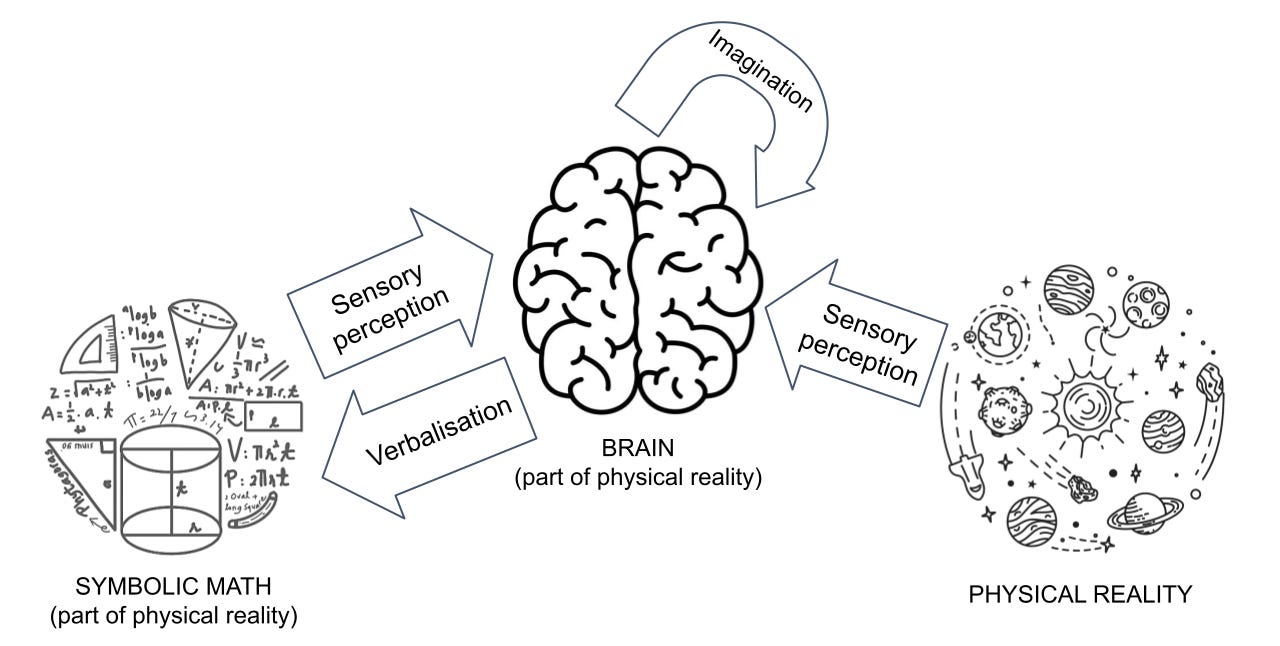
As we will see, there is a way to resolve the apparent contradiction between the rationality of mathematics and the irrationality of mathematical creativity, but it will require us to reset our fundamental beliefs about reality, human cognition, and language.

The spiritualist worldview

In an earlier post, I argued that we’ve been wrong about math for 2300 years, operating under a flawed metaphysics that is incompatible with the practical aspects of doing math.

Our fantastic assumptions on the nature of math reflect our continued adherence to the spiritualist worldview, the system of beliefs that we inherited from our hunter-gatherer past.

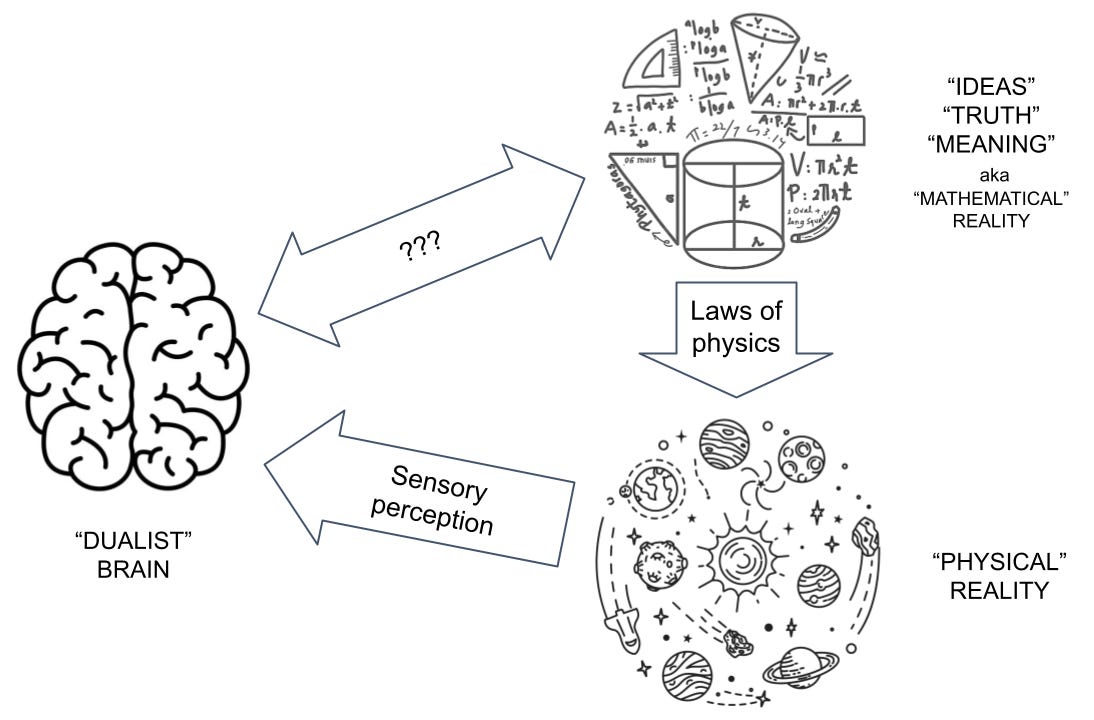
The spiritualist worldview posits that there are two “layers” in reality, the physical world, inhabited by material objects, and the spiritual world, inhabited by spiritual entities, whichever way you want to categorize them: gods, spirits, sprites, souls, ideas, abstractions, “truth” and “meaning”, qualia…

Remarkably, many people who view themselves as “rationalists” stick to this archaic worldview. Most of them are oblivious to their own spiritualist beliefs, which they have conveniently swept under a very large rug which they call “mathematics”.

This particular tradition goes back to Galileo’s famous pronouncement that the universe is written in the language of mathematics.

We’re so used to this framework that it takes a while to defocus and notice its bizarre implications. Language is a behavioral trait of Homo Sapiens and other animals—is Galileo trying to tell us the universe is sentient and speaks mathematics? Or that it was created by a mathematical demiurge? Except for the substitution of mathematics in place of Word, his pronouncement isn’t much different from the opening line of the Gospel of John: “In the beginning was the Word, and the Word was with God, and the Word was God.”

Galileo’s vision enables scientists and laypeople to go about their daily lives undisturbed by spirits and sprites, except for the few people whose job is to operate under the rug: mathematicians. This is where the framework breaks down, and it breaks down spectacularly.

The issue is that Galileo never explained how humans can develop this curious ability to figure out and manipulate the language of the universe. If you take his words at face value, mathematicians are modern shamans who interpret nature by entering a dialogue with cosmic entities. No wonder, mathematical talent is presumed to be innate and manifests itself through trance-like illuminations.

This also leads to Descartes’s dualism, his belief that the human brain is both a physical organ and a spiritual organ created by God in his image. Descartes’s method, in his own words, amounts to paying attention to the “seeds of Truth” that God has planted in each of us.

For the working mathematician, this creates a really awkward situation. Mathematics is the pinnacle of rationality, and yet the mathematical experience itself feels supernatural.

Some mathematicians go full-blown mystics and attribute their creativity to divine intervention, such as Ramanujan who claimed that his results were revealed to him by his personal goddess and, as we’ve seen, Grothendieck who thought that God himself was dreaming inside his head.

Platonism, the notion that mathematical objects “exist” in the ethereal realm of ideas, is the soft-core and socially acceptable version of this belief. It is extremely prevalent in the mathematical community, although most mathematicians are vaguely aware that it is somehow problematic. Of course, no-one has a clue as to how mathematicians’ brains can magically “access” the ethereal world of ideal entities.

Contrary to a widespread misconception, formalism doesn’t offer a viable alternative. Formalism is a methodological framework for unifying mathematics and analyzing proofs,6 but it isn’t a credible ontology for mathematics. No-one studies ZFC set theory without projecting “meaning” onto it: why would you care about specific axioms, if they are meaningless garbles? In the real world, self-proclaimed formalists are just Platonists in the closet.

The conceptualist worldview

Once we give up on magical entities, the situation becomes much clearer:

If we stick to what we are certain of, we can observe that:

  1. Mathematics is written using formal systems, whether legacy ones (numerals, symbolic expressions, geometric constructions) or modern ones (axiomatic set theory, category theory, proof assistants).

  2. To make sense of these formal systems, we project “meaning” onto them: we imagine that symbols represent “real objects”, just like we think of a person when we read their name.

  3. To develop our intuitive ability to “perceive” the mathematical “reality”, we have to spend considerable time interacting with it with an active exploration mindset, playing with examples, following reasonings and calculations, and thinking intensely about it in a meditative, dreamlike fashion.

This leads to my proposed conceptualist characterization of mathematics as a mental activity based on manipulating formal systems and imagining that they hold absolute and immutable truths about real objects.

Many mathematicians, even Platonists, agree that—for all practical matters—doing mathematics is just doing that. But most object to the metaphysical deflationary step of declaring that mathematics is just that.

They refuse to let go of the “transcendence” and “objectivity” of mathematics, which they view as its most precious aspects. As Grothendieck pointed out, there is an ancient taboo against imagination and subjectivity in mathematics, and no serious mathematician is supposed to primarily rely upon them.

But by insisting that the objects they imagine to be real are actually real, they lock themselves in a much broader delusion.

Yet Platonists do have a point: it is humanly impossible to do mathematics without imagining that mathematical objects are real. Grothendieck is absolutely clear about that in Harvests and Sowings:

All my life I’ve been unable to read a mathematical text, however trivial or simple it may be, unless I’m able to give this text a ‘meaning’ in terms of my experience of mathematical things, that is unless the text arouses in me mental images, intuitions that will give it life.

Like formalism, Platonism is an ontological dead-end but a methodological necessity.

Platonists are also right to insist that mathematics isn’t arbitrary. The superhuman attributes of mathematics, its “transcendence” and “objectivity”, aren’t lost in the conceptualist approach: they are merely contained to where they belong, within meaningless formal systems. The meaning of mathematics, our intuitive interpretation of symbolic expressions as “statements” about “mathematical objects” that hold a “truth value”, is a human cognitive phenomenon that can’t possibly have these qualities.

Truth and meaning aren’t objective attributes of the physical reality. They only exist in the intelligibility layer that we project onto it. Through its reliance on consistent formal systems, mathematics enables us to fantastically expand our intelligibility layer and create broad cognitive alignment at species level.

This explains the unique and indisputable Platonic feel of mathematics—but it’s not an excuse for magical thinking.

The reality of mathematics

When we couldn’t make sense of lightning and thunder, we attributed it to the wrath of gods. When we couldn’t make sense of mathematical cognition, we were stuck with the spiritualist worldview.

This is no longer the case and, in my view, time has arrived for career mathematicians to seriously reexamine their position. Mathematical Platonism isn’t just metaphysically wrong, it is also harmful in very practical ways.

First, it obscures the actual cognitive processes involved in mathematical thinking and creates an unnecessary barrier to entry. Imagination shouldn’t be a dirty word. If mathematicians never explain the special mental tactics that drive neuroplasticity and help them solidify their mathematical intuition, if no-one tells kids that they should actively engage their imagination, it shouldn’t come as a surprise that most people don’t get math and just hate it.

The conceptualist perspective makes it possible to have an honest conversation on how one should process math in the secret of their head. This is the approach that I have followed in my book, and the feedback received proves that this conversation can be illuminating at all levels, even for people who always thought that they hated math.

The second reason concerns mathematicians themselves.

I started this post with striking examples of mathematicians flirting with the limits and entertaining a bizarre proximity with dissociative modes of thoughts. These reckless acts of imagination are characteristic of high-level research and often produce stunning breakthroughs.

But the story doesn’t always end well.

There is an inherent danger in suggesting that mathematicians have a direct, shamanic access to higher-level truths. When performed outside of mathematics, without the ultimate guidance of formal systems, reckless acts of imagination rarely produce valuable insights.

When John Nash was first committed to a psychiatric institution for his paranoid delusions, he received the visit of his colleague George Mackey, who asked him this blunt question:

How could you, a mathematician, a man devoted to reason and logical proof… how could you believe that extraterrestrials are sending you messages? How could you believe that you are being recruited by aliens from outer space to save the world?7

Nash had this stunning reply:

Because the ideas I had about supernatural beings came to me the same way that my mathematical ideas did. So I took them seriously.

As Nash’s case dramatically illustrates, the spiritualist worldview isn’t just confusing to outsiders: it is also confusing to mathematicians themselves.

There should be no secrets and no taboos regarding the underpinnings of rationality. The power of mathematics lies not in supernatural access to eternal truths, nor in unbridled imagination, but in the constant back-and-forth between an apparently sterile formalism and our continuing effort to make intuitive sense of it.

2

R.W. Thomason and Thomas Trobaugh, Higher Algebraic K-Theory of Schemes and of Derived Categories, in The Grothendieck Festschrift Volume III, Progress in Mathematics, vol. 88, Boston, MA: Birkhäuser, pp. 247–435, https://doi.org/10.1007%2F978-0-8176-4576-2_10

3

Grothendieck’s Harvests and Sowings hasn’t yet appeared in English. All excerpts quoted in this post were translated by Kevin Frey for the Yale University Press edition of my book, which cites them.

4

Quoted from Thurston’s foreword to The Best Writing on Mathematics 2010, edited by Mircea Pitici, Princeton University Press, 2011. I highly recommend this three-pages essay, one of the finest ever written on the mathematical experience (here is a scanned version).

5

My translation from Adrien Baillet, La Vie de M. Descartes, 1691.

6

As Pierre Deligne puts it: “Zermelo-Fraenkel or any formal system is not a tool for writing mathematics, it’s a tool for analyzing proofs and also, a very useful thing, it gives a common meaning to what it means to have a proof” (from his lecture at the Vladimir Voevodsky Memorial Conference, September 11, 2018.)

7

Mackey’s question and Nash’s reply are quoted from the prologue of A Beautiful Mind, by Sylvia Nasar.

23 Mar 01:00

It’s Like This…

by admin

21 Mar 08:50

Wins for Science and Trans Rights in the EU AND the US

by Rebecca Watson

DoD-judge-scaled.jpg

This post contains a video, which you can also view here. To support more videos like this, head to patreon.com/rebecca! Transcript: It’s tough to find good news these days, so I’m very excited to bring you some today, and it’s all about our trans friends! First, 26 medical and psychotherapeutic organizations from across Germany, Austria, …
21 Mar 08:50

Taking it there…

by admin

21 Mar 08:50

A Journey

by admin

18 Mar 10:41

A Serious Concern

by admin

18 Mar 06:17

"Give us back the Statue of Liberty" French MEP demands unmerited symbol of freedom's return

by Jason Weisberger
Statue of liberty. Monument in USA. Statue of liberty in New York. Monument from USA under blue sky. Symbol of democracy of united states. Top of statue of liberty close-up. Sights of New York Image: FOTOGRIN/shutterstock.com

A French Member of the European Parliament demanded that the United States return the Statue of Liberty.

The United States no longer represents the values under which the famed Statue of Liberty was gifted to it, and French MEP Raphael Glucksmann has demanded its return:

"We're going to say to the Americans who have chosen to side with the tyrants, to the Americans who fired researchers for demanding scientific freedom: 'Give us back the Statue of Liberty,'" he told cheering supporters.

Read the rest

The post "Give us back the Statue of Liberty" French MEP demands unmerited symbol of freedom's return appeared first on Boing Boing.

14 Mar 08:10

The Cover Letter

by admin
Gible

I shared this with the bench chat at work. 'cause we have to find our own work.

14 Mar 06:13

BritCSS: Write CSS With British English Spellings

by Maya Posch

Everyone knows that there is only one proper English, with the rest being mere derivatives that bastardize the spelling and grammar. Despite this, the hoodlums who staged a violent uprising against British rule in the American colonies have somehow made their uncouth dialect dominant in the information technologies that have taken the world by storm these past decades. In this urgent mission to restore the King’s English to its rightful place, we fortunately have patriotic British citizens who have taken it upon themselves to correct this grave injustice. Brave citizens such as [Declan Chidlow], whose BritCSS project is a bright beacon in these harrowing times.

Implemented as a simple, 14 kB JavaScript script to be included in an HTML page, it allows one to write CSS files using proper spelling, such as background-colour and centre. Meanwhile harsh language such as !important is replaced with the more pleasant !if-you-would-be-so-kind. It is expected that although for now this script has to be included on each page to use BritCSS, native support will soon be implemented in every browser, superseding the US dialect version. [Declan] has also been recommended to be awarded the Order of the British Empire for his outstanding services.