I only seriously played TotK and BotW, but now I’d like to seek out this port that sounds great, due to this funny post
Ahh, Twilight Princess. None of the Legend of Zelda games are particularly mature, but Twilight Princess feels like the most earnest attempt at it. After initial fan complaints about the bright and cartoony The Wind Waker, Nintendo overcorrected in the most comically over-the-top way possible, giving us a dark and gritty tale about Link transforming into a badass feral werewolf that was only missing a score by Evanescence. — Read the rest
It’s not that kitty is saying she can’t make the wheel go. Kitty is saying she wants to do the wheel WITH her person. Much the same way many cats won’t wat unless their person is eating at the same time.
This is a request for social togetherness and it’s incredibly sweet
In case the topic got lost due to an obsolete title on my previous share. Has anyone made the jump? Share your blurblog so I can find you here’s mine https://burlythurr.newsblur.com/
This looked so promising but I don’t think there’s a meta-social function like in ThOR where you can share and comment on content from fellow Surf users. If someone finds that functionality, I’d be excited to try it
Surf’s main idea is about feeds. Everything is feeds. | Image: Flipboard
Surf is a slightly hard app to explain. It's sort of three things: a client for fediverse apps like Bluesky and Mastodon; a feed reader that lets you subscribe to almost any website, podcast, or YouTube channel; and a tool for creating and following feeds of interesting content, a la Flipboard magazines. It's a browser for the fediverse, or for the open social web, if either of those phrases means anything to you. It's also one of the most compelling ideas you'll find about the future of the internet.
After well over a year in beta, Surf is officially launching on Thursday. Right now, the only public experience is on the web (there are mobi …
What a difference a few months make. NewsBlur was a side-project of mine for two years. In March of this year, I committed myself full-time and went from developing NewsBlur almost entirely on the NYC subway to writing code every waking minute of the day.
And now there are three big announcements to make.
1. NewsBlur is now a social news reader
The big news of the day is that you can now share stories on NewsBlur. When you share a story, your comments and the original story are posted to your blurblog. Your blurblog is a simple and customizable website. People can comment and reply directly on your blurblog, and you can follow your friends to read the news stories and blog posts that they care about.
Since you’re good at picking your friends, and your friends are good at picking their friends, you will see friends of friends show up, expanding your network with shared stories that you will enjoy. It’s a new way of sharing the news. And because NewsBlur is already an easy to use news reader, it’s simple to find and share stories that your friends will care about.
Every NewsBlur user has their own blurblog. All you have to do is signup for an account on www.newsblur.com and share interesting stories.
2. Y Combinator
For those of you who work with computer science, you may know that a Y-combinator generalizes recursion, abstracting its implementation, and thereby separating it from the actual work of the function in question.1
I’m pleased as punch to announce an investment in NewsBlur by Y Combinator, the investment firm. Over the past two months, we’ve been humbled by the roster of experienced partners giving us candid advice. It’s their tough love that is the catalyst for the next few months of transitioning NewsBlur from side project to world-class news reader. Expect NewsBlur to become simpler and more refined.
3. Introducing Roy Yang
When Y Combinator accepted me as a solo founder, their first piece of advice was to find a co-founder. Looking at every successful startup, a common pattern emerges. Every great startup has multiple people carrying the load when the company takes off.
There is one person on this planet that I would trust as a co-founder. His name is Roy Yang and we have been friends since we met in New York four years ago. We worked together for nearly two years at Daylife, another news startup. I attended his wedding last year in Mexico, and he was the only person I called when I knew I needed somebody talented, focused, and able to complement me on a project that demands enormous time and effort.
Roy is now responsible for both iOS apps and is instrumental in challenging me when I think I’m right and am clearly not. He’s got the patience of a monk and the determination of a true New Yorker. Follow Roy’s blurblog to keep up with him.
A glimpse into the future of NewsBlur
This summer marks the beginning of NewsBlur as a full-time startup. Look forward to new mobile apps, new designs, and new features. Here’s a quick idea of what we’re working on for the next few weeks:
Until then, follow @newsblur on Twitter and start sharing news and blogs on NewsBlur.
in conversation about white people who go to Japan and expect their knowledge of anime to culturally carry them, I was once posed with “it’s like if there was a Japanese guy who was obsessed with spongebob and came over here and thought he could get by just communicating in spongebob quotes.” This is a false equivalence because if such a man existed we would crown him king. We’d love him. Americans would fucking love that. sometimes I get sad that this isn’t a real guy I can invite to a party.
ok but the full translation is also extremely good
that translation is accurate except for that last part. pflegestufe doesnt really translate to a state of need, its moreso means that the weed would leave you disabled in a way that makes you legally eligible for care or assistance
Something something hate-read. Maybe not, though, because I enjoyed this
This article was featured in the One Story to Read Today newsletter. Sign up for it here.
Airports—not sure if you’ve heard—are a mess. This is especially true this week, as a cascade of disasters (both preventable and not) have caused delays, outages, and long lines across the country. But the airport was a mess long before this week, and it will be long after. When I was first assigned to find the worst one in America, I felt for a minute like I’d been asked which Oreo flavor is the best, or which of my teeth is the toothiest: There are so many, and they all are.
But certain airports are more hated than others. Reagan, near D.C., because it has the most delays of any major airport; one in three of its flights was late in 2025, according to the Bureau of Transportation Statistics. Dallas, because it is the biggest—flight-missingly, leg-destroyingly big, bigger than the island of Manhattan, with an incredible 1.5-mile distance between security and the farthest gate. Meanwhile, Hartsfield-Jackson, in Atlanta, is the world’s busiest: On any given good day, more people than live in the entire country of Barbados trudge through it; this week, they were doing so very, very slowly, as security wait times crept up past two hours.
The major hubs are bad in all the predictable ways, but America’s smaller airports are each cursed and tragic in their own exquisite style. When someone posed the “worst airport” question on Reddit last year, the most upvoted response was about the one in Charlotte, North Carolina, which was built as a manageably sized regional airport but is now one of the busiest in the world, thanks to demographic and flight-pattern changes. Orlando has the most complaints about lost or mishandled luggage, according to an analysis of TSA data. And an evaluation of Department of Transportation data shows that Lincoln, Nebraska, and Toledo, Ohio, are tied for the longest delays among lower-volume airports. Apparently they have so few flights that any short delay can quickly turn into a long one.
An airport’s ability to fulfill its most basic function—serving as a place where a human being can, ostensibly, get on an airplane—is just one of the factors that might play into whether it’s terrible. Dallas is America’s worst airport, a travel reporter for a major newspaper told me in an email, because despite its gargantuan size, “you cannot find a good meal there to save your life.” (Your best bet, she went on to say, is “Pinkberry in Terminal C, a dark, low-ceilinged abyss with too-few bathrooms.” Bleak!) Hundreds of airports in this otherwise great nation do not have even one single solitary Chili’s Too. At least one has no restaurant at all. Also, someone on Reddit once paid $27 for two protein bars and a cup of grapes at JFK.
All airports are depressing and scary; some go above and beyond. For example, at least seven American airports are named after people who died in plane crashes. Air-travel-related animal death and injury is exceedingly rare, but the government does collect and publish data on it, so I might have bad news for dogs traveling through Seattle. I was unable to confirm that the Denver airport is home to the headquarters of the Illuminati, as many people believe, but I can tell you that it is home to a 32-foot-tall horse that has glowing, Mephistophelian red eyes and that, in a tragic accident, killed its creator when a chunk of it fell off during the sculpting process. (Locals call it Blucifer.) A couple of hundred miles away, Aspen/Pitkin County Airport sits in a narrow valley more than a mile above sea level, in a part of the country known for its sudden snowstorms, amid terrain that limits the use of instrument flying, and, for some reason, they made the runway unusually short. It is so dangerous that you need a special pilot’s license to land there. As it turns out, there’s a good reason to hate—or at least distrust—just about every airport.
Well, again—some more than others. Ultimately, all of this airport research took me to a dark place: Newark, New Jersey, whose airport has been found, variously, to offer the most stress, the worst food, the most travel disruptions, and the second-most delays (behind Reagan). On Yelp, where it has a lower rating than several nearby prisons, 1,100 one-star reviews refer to it with vocabulary such as chaotic, unacceptable, and hell on earth. The more than 30,000 people who took the data-analytics firm JD Power’s annual airport-satisfaction survey last year believe Newark to be the worst airport in North America, as does Charity Moore, an influencer who has been a flight attendant for 11 years.
Last June, my family and I wasted nine miserable hours there as our flight was boarded and then delayed and then deboarded and then canceled. The air rang with random alarms; the soft surfaces were mottled with mystery stains. At one point, I paid for, and then spent 45 minutes waiting on, pad thai at a restaurant that was not, in fact, open. To this day, I am unsure whether there is a working power outlet in the entire place. We ended up deciding to drive to our final destination, in rural Ontario, and as we sped off in our rental car—tired, hungry, hundreds of dollars poorer, staring down the barrel of a 500-mile drive with a screaming toddler—I felt something approaching euphoria, because at least I was finally leaving Newark airport.
This observation is a little embarrassing, only because it’s so obvious—hating Newark airport is like hating Mondays, or splinters, or wet socks, or the inevitability of death’s cold, cruel tap on the shoulder. Or air travel in general. The truth is, all airports are bad. You’ve heard. They are unlovely and unloved, designed to be passed through, and doomed by decades of disinvestment. They are a vortex of everything annoying: confined spaces, limited options, bad Wi-Fi, overpriced food, fluorescent lighting, other people. They are the opposite of vacation, even as they are inextricably linked to it. And they lay bare the fragility of this modern life, how easy it is for everything to go wrong—right now, especially. The worst airport isn’t Atlanta, or Dallas, or Newark. The worst airport is whatever airport you are in.
I’m joking, of course. The worst airport is Newark.
Former Duluthian Ian Grant travels all over the world as host of the Emmy-award winning series Culture Quest, which looks at “life through the lens of the world’s artists, artisans and keepers of culture.” The latest episode is all about the place Grant spent his childhood in the 1970s and ’80s: Duluth. The show explores how Lake Superior influences the people, culture and stories of the city.
they’re always bringing experts or activists on the news to agitate about porn and there’s a standard script for this that’s like “I think sex education is important, I’m not anti-sex, but so much of this porn is violent and misogynistic if not outright illegal, and it’s far too accessible to our children”
I want to see someone finally be brave enough to say that the government should just make its own porn for teenagers that accords with community values, so they don’t have to go to these shady places to get it. I think the government porn would probably be pretty bad but I would be so eager to hear about the process of designing it. there would be so many stakeholders and consultations. in canada it would have to be bilingual
no-one would find it at all sexy at first but then in 20 years there’d be a thriving fetish scene where people develop elaborate codes and practices around culturally-embedded tropes from government porn
guy who can only get off when his dom pretends to be badly dubbed into quebecois french
Update: we now know what Canadian government funded porn would look like: it’s Heated Rivalry.
Does Your Country Need Regime Change? A Quiz. “Is your country a notorious bad actor in the Middle East? Has your leader deployed the country’s military domestically against civilians who were protesting peacefully?”
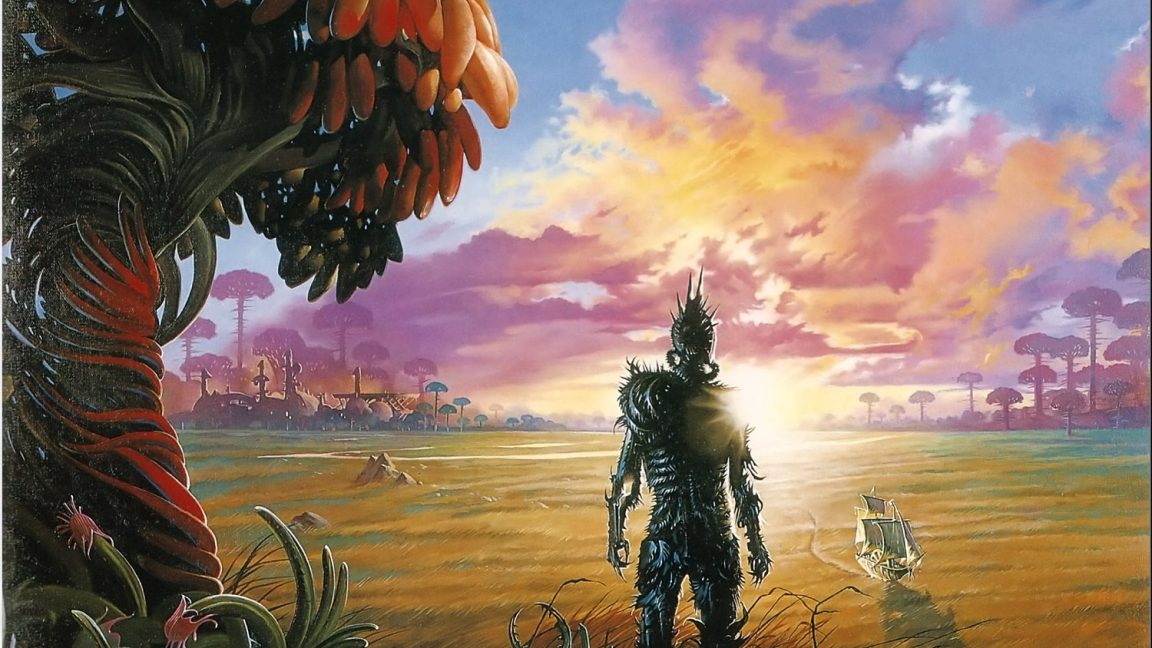
Dan Simmons, the author of more than three dozen books, including the famed Hyperion Cantos, has died from a stroke. He was 77.
Simmons, who worked in elementary education before becoming an author in the 1980s, produced a broad portfolio of writing that spanned several genres, including horror fiction, historical fiction, and science fiction. Often, his books included elements of all of these. This obituary will focus on what is generally considered his greatest work, and what I believe is possibly the greatest science fiction novel of all time, Hyperion.
Published in 1989, Hyperion is set in a far-flung future in which human settlement spans hundreds of planets. The novel feels both familiar, in that its structure follows Chaucer's Canterbury Tales, and utterly unfamiliar in its strange, far-flung setting.
These shifts are making us lose not just our taste for visionary fiction, but our belief in its very possibility: that novels, or anything, might have the sorts of transformative powers I've ascribed to them. In that case, though, preserving our intellectual integrity would mean that we stop paying lip service to a notion of artistry in literature that no longer carries conviction. This would still leave us free to give ourselves over to the pleasures of leisure fiction (and journalism too), but without the bad faith. from Distant Visions: Putdownable Prose and the State of the Art-Novel by Mark de Silva [3 a.m.]
Dolly Parton was stuck in a hotel room on a liquid diet, miserable, listening to her band have fun in the restaurant below. She couldn't eat. She couldn't just sit there feeling sorry for herself. So she wrote two hit songs instead. — Read the rest




![[link]](https://i.redd.it/bfaqmxpfp5ug1.jpeg)
![[link]](https://i.redd.it/247uv2i648ug1.png)