firehose
Shared posts
Starbucks Is Finally Going To Show U.S. Coffee Drinkers What A 'Flat White' Is — Prepare For Controversy
fussybabybitch: usatoday: Is there anything better than Free...

Is there anything better than Free Slurpee Day?
Access to basic health care
Canada’s strategic maple syrup reserve and the economics behind it

As far as oddball strategic reserves go, Canada’s Global Strategic Maple Syrup Reserve is a perennial favorite. (America’s National Helium Reserve and China’s strategic pork hoard are usually up there, too.)
But it should be said that Canada’s maple syrup stockpiles aren’t a government undertaking. They belong to the Federation of Quebec Maple Syrup Producers, a cooperative marketing group that includes all large-scale syrup producers in the French-speaking province. As Quebec produces roughly 70% of the world’s maple syrup, the Federation—which has been around since 1966 and opened the reserve in 2000—is the OPEC of the syrup world. The group uses the syrup reserve, consisting of three separate facilities in Quebec, to stabilize prices by socking syrup away when prices are low and selling its sticky inventories in order to add supply when prices are too high.
The cartel system is just one type of structure that’s developed over the years to try to manage the volatile price swings in commodities markets. (One need only look at the tremendous collapse of oil prices in 2014—brought on by surging supplies of US oil and weakening global demand—for a refresher course.)
In the US, volatile swings in commodities such as oil were answered, historically, with corporate attempts to control everything from production to retail pricing. (John D. Rockefeller’s Standard Oil was just that, until a 1911 antitrust decision from the Supreme Court splintered the companies into 34 separate concerns.)
There have been other types of approaches, too. For instance, when overproduction imperiled the US oil and gas business in the early 1930s with the discovery of massive oil fields in east Texas, state and federal government authorities stepped in by helping to create the Interstate Oil Compact, a cartel-like organization of states that more or less enforced oil production quotas aimed at lifting prices.
Of course, the age-old problem with cartels is making sure everybody adheres to the terms. And Quebec’s syrup producers are no different. As Canada’s Globe and Mail reports in a piece on the syrup reserve:
All Quebec producers using containers more than five litres have to sell through the system. A small band of outliers still refuses to take part, and the federation is suing them.
“Basically, they are free-riders,” [Federation president Simon] Trépanier says, adding that, even if they do not want to be involved, the dissenters benefit from the system.

80 percent of visits to Tor hidden services are related to child porn, study finds
Are Tor's hidden services being overrun by images of child abuse? That's the conclusion of a new paper presented at the Chaos Computer Club Conference in Hamburg this week. Researchers examined directory requests to nearly 40,000 different hidden services on Tor, and found the pedophilia sites heavily overrepresented. While they represented only two percent of the available services, those sites made up more than 80 percent of the requests.
Only two percent of sites dealt in child porn, but they made up 80 percent of requests
The study focuses on hidden services, so called "onion addresses" that are accessible only from inside Tor. Those sites account for only two percent of the traffic moving through the network, dwarfed by the number of users seeking out publicly available sites. Still, the promise of effective invisibility has made them an increasingly controversial part of Tor, especially with the emergence of hidden service drug markets like the Silk Road. Hidden services are also one of the most technologically fertile parts of the network, acting as a crucial component of whistleblower tools like SecureDrop. In October, Facebook launched its own hidden service that works as an anonymous portal to the social network.
Tor officials have also raised questions about how many human users the traffic represents. Because the study measured directory requests, the data could have been skewed by unreliable sites or obsessive users that check a vast number of sites in a single session. Child pornography is also a common target for law enforcement, so it's possible some of the traffic measured in the study was the result of police officers or bots keeping an eye on the sites as part of a larger operation.

Photo: Toyoko Line Strip Map, Shibuya Station, Tokyo Lovely...

Photo: Toyoko Line Strip Map, Shibuya Station, Tokyo
Lovely clarity with this strip map for the Toyoko Line in Japan (the name is a portmanteau of Tokyo and Yokohama, the two cities that the line runs between).
There are four route lines, each clearly showing which stations the different service types stop at. From top to bottom, these are Local, Express, Commuter Express and Limited Express. Interchanges with other lines – regardless of operating company – are also shown, and it’s bilingual as well!
My only quibble is this map’s placement halfway down a stairwell, which seems bound to cause problems at rush hour.
Source: nicolasnova/Flickr
NYC Labor May Break With Police Union


Year Fourteen
Fraud, Not Hackers, Took Most of Mt. Gox's Missing Bitcoins


Read more of this story at Slashdot.

Kickended
Netflix Is Now Streaming Black Mirror, the Best Show About Technology
firehosevia Tadeu
British techno-satire Black Mirror is now streaming on US Netflix, and everyone should watch Charlie Brooker's thoughtful, funny, taut, and terrifying anthology series if you haven't already.

Just a Reminder
Remember, when dealing with random strangers online or offline:
You’re allowed to set your own personal boundaries for under what circumstances you’ll engage with someone, with whom you’ll engage, what you consider over the line, what you consider attractive or acceptable, and so on.
You’re allowed to change those boundaries as you see fit, whenever you feel the need to.
The fact that you engage in conversation/debate/discussion with someone doesn’t mean that you’re required to do so with everyone, or that you’re required to continue the conversation, or that you’re required to engage with the same person on a different subject. You can be willing to talk politics with one person and not with another. You can be willing to talk politics with one person but not religion. You can be willing to have debates with one person and only non-oppositional discussions with another. You can begin a debate, and if you’re feeling uncomfortable or trapped or unhappy, you can walk away from it.
You can tell someone you’re only willing to talk with them if they don’t use particular language while talking with you.
You can also tell someone you’re not willing to talk with them if you don’t get to use particular language.
You can be okay with a particular type of humor from one person and not from another. You can find a particular type of flirting attractive from one person and not another.
Your presence in a public place, or on social media, does not mean that you’re required to engage with everyone who tries to engage with you. You can choose to whom you respond.
I am writing this because I wish I’d realized it when I was younger. I spent a lot of time in conversations with strangers who made me uncomfortable, or who were stopping me from enjoying the book I’d brought to a coffee shop to read, or who made my bus ride home from college miserable, or who sucked away my time and energy on the internet, because I’d been socialized into believing that shutting down a conversation was rude (and therefore unacceptable) and that other people’s comfort trumped mine. I felt, without really realizing it, like I needed permission to disengage, or to choose not to engage in the first place.
You don’t need permission to disengage from a conversation, or to choose not to have it. Or rather, you have all the permission you need to do either: your own.
People may think you’re being unfair. That’s okay. People may think that you’re being rude. That’s also okay. They get to think that. They have a right to their feelings and opinions. However, their feelings and opinions don’t give them a right to trample all over your personal space, whether that space is physical, mental, or emotional.
And ask yourself: so, what if those boundaries aren’t fair? Why do personal boundaries need to be “fair”? Is it even possible for something subjective like personal boundaries, and personal comfort levels, to be “fair”? Who gets to determine what “fair” is anyway? And why is “fairness” a higher priority than your comfort, feelings of safety, emotional reserves for interacting with other people, or level of enjoyment with engaging? Why is it more important to be fair to others than it is to be fair to yourself? Why should someone else’s desire to talk to you trump your desire not to talk to them?
Sometimes you have to put your own emotional well-being, your own energy levels, your own enjoyment first. And that’s okay.
People may tell you you’re missing out. That might be true. There’s a super-slim chance that that stranger at the bus station might drop life-changing wisdom on you. But you know what? If you’re emotionally drained or not in a social mood or whatever, the chances of you actually taking whatever they say to heart are pretty slim. And here’s the thing about wisdom: it hardly ever comes around just once. You’ll hear it from someone else, or have that insight on your own, at some later point when you’re ready to hear it.
"I don’t feel like talking to this person," is a perfectly legitimate reason not to talk to them. You don’t have to be rude in declining to engage: you can tell them you’re not really in the mood to talk but it’s nothing personal and you hope they have a lovely day. But you’re not required to keep talking to them, and if they keep pressing you to engage, they’re being rude or worse.
And you can enjoy talking to strangers at Starbucks or a bus stop one day and not want to engage the next. That’s okay. You get to feel differently from day to day. You may relish a political debate on Twitter one day and not feel like responding to random strangers in your mentions the next. That’s also okay.
You don’t owe people explanations of why your boundaries apply to them or this situation.
You don’t owe people a debate.
You don’t owe random strangers engagement, period. It’s something that you can choose — or not — to do as you see fit.
vgjunk: New shirt design in the shop today. I think it speaks...


"I’m not sure the millennial generation has the patience to watch twelve, thirteen episodes of an..."
-
Ynon Kreiz, the president of Maker Studios (The New Yorker)
I am really incredibly sorry for the dumb shit adults say, kids.

(via imaginarycircus)
not only can we do it but we’ll do it in one 24 hour period
(via alltheladiesyouhate)
Here’s the thing I find really funny (and by funny I mean pathetic) about this assumption that younger, digital-savvy generations today have no attention span. The thing is, yes, we will tune into a thing for five minutes and then flip away to another channel. We will turn to our phones for entertainment during commercial breaks and if we’re not interested in what we’re looking at we’ll go look at something else. This might be interpreted as a short attention span.
The thing is, what we have right now is what a lot of us and the generations before us didn’t have: a metric fuck-ton of choices. Sure, there’s a growing market for short, self-contained forms of entertainment: short stories and webisodes and other types of serialized fiction that you can consume in small doses, while you’re on your lunch break or taking your morning train. And that’s great. I love that stuff. Again, it gives you another choice, tailor-made with modern life in mind (but not exactly new, either; plenty of popular fiction used to be serialized in magazines and newspapers).
But if creators and network executives are looking at their audience and deciding that the audience isn’t paying attention to what they’re producing because “these kids today and their attention spans,” I’ve got a news flash for them: you’re not losing their attention because they’re not capable of giving it to you. You’re losing their attention because what you’re producing isn’t good enough and they’ve got better more interesting things to do with their time. They’ve got options. You want to capture their attention? Step up your fucking game and produce something that isn’t fucking garbage.
(via thewinterotter)
Richard Stallman: don't use Uber
firehose'It requires you to let Big Brother track you, with a portable phone.
Uber requires you to identify yourself, both to order a cab and to pay.
Uber also records where you get the cab and where you go with it.
The US government can get those records, and any lawsuit (such as a divorce lawsuit) can subpoena them.
Uber's clever policy of not being directly responsible for anything that goes wrong extends to harassment by drivers, and its practice of identifying passengers enables drivers to find out who the passenger is. This makes some women scared to use Uber.
This problem comes directly out of the practices listed above that mistreat all users of Uber.
Uber is an unregulated near-monopoly, so it can cut rates for drivers arbitrarily.
Drivers are starting to complain that they're left with little money for their work.
Uber drivers are getting shafted; Uber can arbitrarily cut their pay, and they have to work 15 hours a day. Some are trying to unionize.
We should not accept the whitewash label of "sharing economy" for companies like Uber. A more accurate term is "piecework subcontractor economy".
Uber plans to do away with human cab drivers.
It would be easy for a non-plutocratic government to prohibit this, and that's what every country ought to do, unless/until every person gets an adequate basic income so people don't need to be employed.
Uber executives and staff have stalked passengers in various ways.
If you take an ordinary taxi and pay cash, it will generate no records associated with you — except in New York City where the government might apply face recognition to identify your photo in real time.
Uber can track who has a one-night stand. In fact, it did so.
Journalist Sarah Lacy writes about how an Uber executive said he would punish her critical journalism by using lies to smear her family life. It was the culmination of years of contempt for the company's drivers and passengers.
By the way, I don't see anything wrong in offering taxi rides driven by attractive models of either sex. Since I believe sexual services should be legal, I would not object if they offered to fly you while driving you. However, this need not and should not be accompanied by Uber-style contempt towards women (and men).
With real taxis, you can flag one on the street or phone in any fashion; you can pay cash; you can be anonymous.
Beware of thinking of Uber as an one more option in addition to real taxis. At the moment, that's true, but if Uber is a big success, real taxis could disappear.
Then what will you do, if you don't want to tell Big Brother where you are going?
To recover our privacy and make democracy safe, we need to redesign digital systems so that they do not collect information about people in general. First step, don't help any new ones gain a foothold.
Because I reject technology that mistreats me, I will never order or pay for an Uber car. I hope there will always be taxis I can use. But what about you?'
--
as an aside, I just want to mention how fucking hilarious I find this:
"Copyright (c) 2014 Richard Stallman Verbatim copying and redistribution of this entire page are permitted provided this notice is preserved."
 |
popular
shared this story
from  kottke.org. kottke.org.
|
Software developer and free software advocate Richard Stallman lists several reasons why using Uber is not a good idea. Stallman is definitely a hardliner1, but I agree with several of his points here. (via hacker news)
-
Indeed, all iOS and Android apps run afoul of some of Stallman's points, particularly those that use location services or store user data.↩

An Uber And Lyft Driver Reveals How To Avoid Getting Gouged On New Year's Eve
firehose"assuming public transportation is not an option"
tip 2 is take a cab
NASA To Hack 'Amnesiac' Mars Rover
firehoseJOHNNY YOU GOT TO HACK UR OWN BRAIN http://media.tumblr.com/tumblr_lw5zyqHce81qzzh6g.jpg
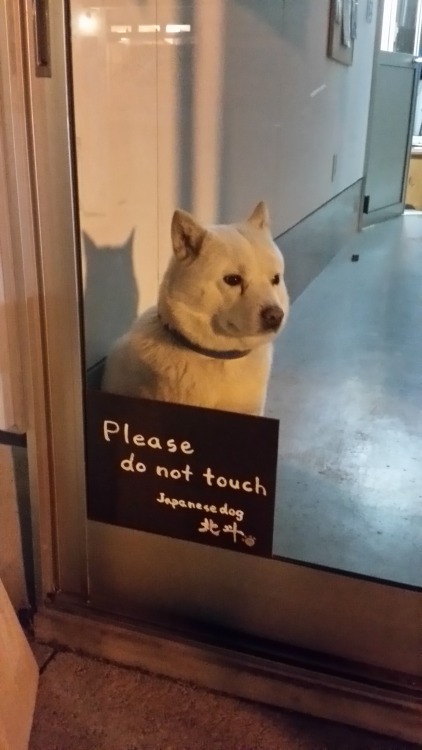
kukashkin: sourcefieldmix: i’m gonna touch the japanese dog i...
firehoseno god only shiba
Organic Ice Cream Being Machine-Packed on an Assembly Line in an Oregon Plant
firehoseban this sick filth

Oregon Ice Cream CIO Alden Gleason posted some mesmerizing video of the assembly line in Eugene, Oregon that packages Julie’s Organic Ice Cream bars and pints.
image via Gizmodo Sploid
via Gizmodo Sploid
City Maps Digitally Transformed Into Beautiful Eroded Terrains
firehosemore of these

Tokyo
Cities are transformed into eroding terrains in the map art series Flowing City Map by Geneva-based artist Chaotic Atmospheres (previously). The artist created the images by processing city maps in World Machine, a 3D terrain software. The software is normally used to create realistic 3D terrains, but Chaotic Atmospheres used it to add erosion and natural landforms to maps of Beijing, New York City, Paris, and other cities around the world. The series is on display at the It’s LIQUID art show in Venice through January 12, 2015.

Tokyo detail

New York City

Rio de Janeiro

Paris

Venice
via Colossal
This Trove Of Original Star Wars Kenner Toy Photography Is Amazing

For children of the 70's and 80's, Kenner's Star Wars lines are some of the most iconic toys ever made. A lot of what made them so memorable were the Kim David McNeill Simmons' (and earlier Roy Frankenfield's) photography which graced every box - and now you can see the High-Res original photos online.

gerardwaythebae: If it does not infuriate you that Leelah Alcorn will be buried in a suit, with the...
If it does not infuriate you that Leelah Alcorn will be buried in a suit, with the wrong name written on her gravestone, unfollow me this fucking second.
inkdefense: banquos—ghost: mrmeriwether: yeahbanero-bells: wo...
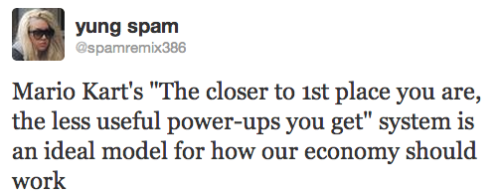
Whoa.
I read this out loud to boyfriend and he just went “ohhhhhhhhh”
CEOs all runnin around terrified of blue shells from the homeless
Yes.
The NFL's Historically Bad Division Screwed Up The Playoffs Even Worse Than People Realize - Yahoo Finance
firehoseyou're welcome
Sex & The Sea | maritiem museum
firehosewell that's one way to get people into a maritime museum
kansama: weavemunchers: i wonder if china has fancy plates called america
firehosevia Rosalind
i wonder if china has fancy plates called america
