 The hydrogen in your body, present in every molecule of water, came from the
Shared posts
10 Aug 08:28
The Origin of Elements

09 Aug 08:27
Japanese toponyms Englished
by Victor Mair
There's a Reddit page with this title: "Fully anglicised Japan, based off actual etymologies, rendered into plausible English". Feast your eyes:
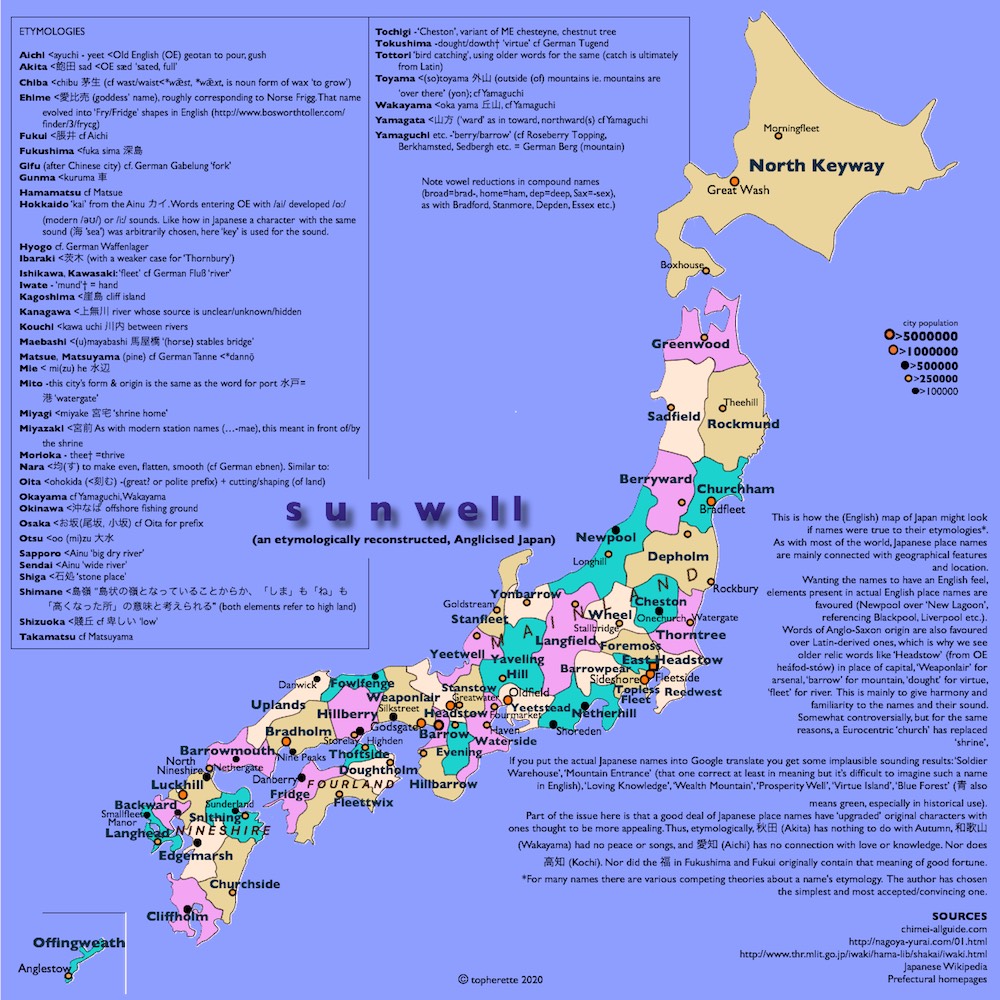
(source)
"Whoa!" I thought. This is amazing! And I took it half seriously because it listed the "etymologies" in the top left quarter of the page, and had what looked like semi-scholarly notes in the bottom right quarter of the page, followed by a modest list of sources below that.
Then I felt behooved to check out a few of the "etymologically reconstructed, Anglicised" Japanese place names. The first one that struck my eyes was in large letters right in the center: "sunwell".
Hmmm! Surely that must be Nippon or Nihon 日本, i.e., "Japan". I have always been told that the name, based on the two characters, means "source / root of the sun". So why does the map call the country "sunwell"? Giving the authors the benefit of the doubt, I decided to look into the derivation of the name "Nippon" or "Nihon 日本" more deeply.
The name for Japan in Japanese is written using the kanji 日本 and pronounced Nippon or Nihon. Before it was adopted in the early 8th century, the country was known in China as Wa (倭) and in Japan by the endonym Yamato. Nippon, the original Sino-Japanese reading of the characters, is favored today for official uses, including on banknotes and postage stamps. Nihon is typically used in everyday speech and reflects shifts in Japanese phonology during the Edo period. The characters 日本 mean "sun origin", in reference to Japan's relatively eastern location. It is the source of the popular Western epithet "Land of the Rising Sun".
The name Japan is based on the Chinese pronunciation and was introduced to European languages through early trade. In the 13th century, Marco Polo recorded the early Mandarin or Wu Chinese pronunciation of the characters 日本國 as Cipangu. The old Malay name for Japan, Japang or Japun, was borrowed from a southern coastal Chinese dialect and encountered by Portuguese traders in Southeast Asia, who brought the word to Europe in the early 16th century. The first version of the name in English appears in a book published in 1577, which spelled the name as Giapan in a translation of a 1565 Portuguese letter.
Whence cometh the "well"? Perhaps there's some deeper, Old Japanese root or reading that escaped me. It was necessary to dig more deeply still.
/nitɨpoɴ/ → /nip̚poɴ/ → /niɸoɴ/ → /nihoɴ/
Coined in Japan of Sinic elements, as compound of 日 (nichi, “sun”) + 本 (hon, “origin”) and literally meaning "origin of the sun". The hon element was apparently pronounced /poɴ/ when first coined. Over time, the initial /p/ lenited, becoming /f/ as shown in the Nifon entry in the 1603 Nippo Jisho ("Japanese-Portuguese Dictionary"). This then became the /h/ sound in modern Japanese.
In older texts, this was read as kun'yomi as 日の本 (Hinomoto). The on'yomi readings Nippon and Nihon became more common in the Heian period, with both persisting into modern use. The Nihon reading appears to be the most common in everyday Japanese usage.
Ah! Perhaps it has something to do with the earlier reading of 本 as moto. That same morpheme, "moto" is also written with the kanji 元 ("origin; source"), which can likewise mean "base; basis; foundation; root".
From Old Japanese. Cited to the Kojiki of 712 CE. From Proto-Japonic *mətə. Cognate with Okinawan 元 (mutu).
Still no "well". Must go one step further. In Old Sinitic, /*ŋon/ 元 is possibly related to / *ŋʷan / 原 ("source; origin; basic; primary"), and the latter is the original form of /*ŋʷan/ 源 ("source of a river or stream; headwaters; headspring; fountainhead; source; origin; root"). Maybe, just maybe, this is where the authors of the map got their "well".
Or maybe the answer is much simpler — they got their "well" from this definition of the English word: "A place where water issues from the earth; a spring or fountain." But to arrive at that, they likely would have gone through some of the steps I described above.
To see whether they were operating at such a philologically profound level, I thought I'd better check a few more of their place name translations.
My gaze wandered northward and I soon spotted "North Keyway". It had to be Hokkaidō 北海道. I can understand how they got "way" for dō 道, but where do they get "key" for kai 海, which means "sea"? Their etymological notes say that "kai" comes from Ainu, but they don't say what it means. Most Japanese understand Hokkaidō 北海道 as meaning "Northern Sea Circuit", where "circuit" is an administrative division of East Asian governments.
Nearby, my eye landed on "Great Wash", and that leapt off the page as being a dramatically creative attempt to render "Sapporo", home of the famous beer.
Sapporo's name was taken from Ainuic "sat poro pet" (サッ・ポロ・ペッ), which can be translated as the "dry, great river", a reference to the Toyohira River.
The etymological notes on the map reveal that the authors dutifully understand that, so their "Great Wash" must be based on understanding English "wash" as conveying the sense of "dry river".
One must be especially careful with place names in Hokkaido, since many of them — though written in seemingly transparent kanji — are based on Ainu substrate terms. Another example: "Otaru", the name of a small city that is not too far to the northwest of Sapporo, is recognized as being of Ainu origin, possibly meaning "River running through the sandy beach". (source)
Otaru 小樽 looks like it means "little barrel / cask / keg".
Sapporo 札幌 looks like it means "banknote; bill; note; paper money; ticket; token; check; receipt; armor platelet" + "canopy (esp. the cloth or canvas used for it); awning; top (of a convertible); hood; helmet cape; cloth covering one's back to protect against arrows during battle".
Similar problems with the kanji readings of place names exist throughout Japan, not just with Ainu substrate terms (see the "Selected Readings" below.
"Sunwell", "North Keyway", and "Great Wash", in that order, were the first three Anglicized toponyms on the Reddit map that I saw, and all three of them are plausible if you put enough effort into understanding how the authors might have arrived at them. Language Log readers who are intrigued by the quaint English names on the map may wish to try their hand at figuring out how the authors devised a few of them. It might make a pleasant way to fill up an afternoon in COVID times, especially when hurricane Isaias is dumping water on you all day long.
Selected readings
- "Japanese readings of Sinographic names" (9/26/18)
- "Sino-Japanese" (7/2/16)
- "An Eighteenth-Century Japanese Language Reformer" (4/23/15)
- "Chinese Japanese" (9/13/15)
- "Two unusual Japanese names" (9/10/15)
- "Amazing things you can do with the Japanese writing system" (7/1/19)
- "Cool slave / guy / tofu / whatever" (5/12/19)
[h.t. Frank Clements]
dru'el the chaotic, Roslyn likes this
09 Aug 08:19
Damage from yesterday’s explosion in Beirut is visible in this...
Damage from yesterday’s explosion in Beirut is visible in this Timelapse. While the blast sent a shockwave and caused destruction throughout the entire city, here we are able to see that warehouses surrounding the explosion site have been completely leveled. A section of the dock seems to have been blown away and a nearby ship also capsized. Link here to see slider imagery and zooms: https://www.over-view.com/stories/beirut-port-explosion
Our thoughts are with the people of Beirut following this tragedy. To donate to emergency relief efforts please go to Impact Lebanon
Timelapse created by Daily Overview, source imagery: Maxar
Cary likes this
02 Aug 05:30
Northumberlandia, or “Lady of the North,” is a massive land...
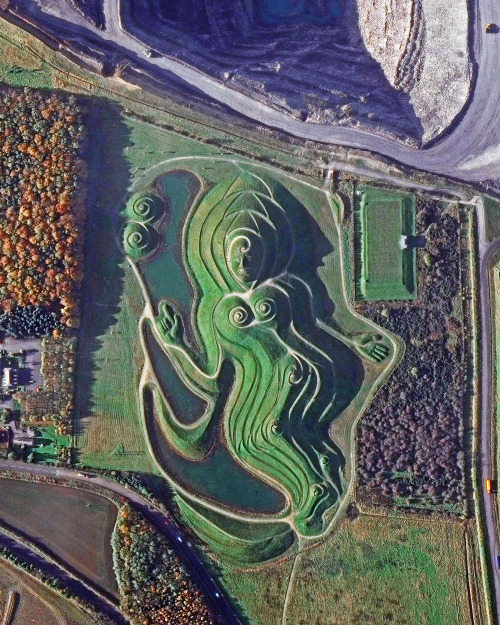
Northumberlandia, or “Lady of the North,” is a massive land sculpture in the shape of a reclining female figure near the town of Cramlington in northern England. Completed in 2012, the sculpture is made of 1.5 million metric tonnes of earth removed from the neighboring Shotton Surface Mine. It is 112 feet (34 m) high and 1,300 feet (400 m) long.
See more here: https://bit.ly/39Mlf1P
55.088389°, -1.628083°
Source imagery: Maxar
30 Jul 23:23

Dampier Creek winds its way inland to form the eastern border of...
Dampier Creek winds its way inland to form the eastern border of Broome, Western Australia. Broome is home to roughly 14,000 people, but its population can grow to upwards of 45,000 per month during peak tourist season from June to August. Its 14-mile (22-km) white-sand Cable Beach, paleontology exhibits, pearl farms, and other attractions make it a popular destination for travelers around the world.
See more here: https://bit.ly/338UmDR
-17.959000°, 122.247167°
Source imagery: Maxar
29 Jul 07:23
highlights from kevin kelly’s 68 bits of unsolicited advice
by Rebecca Toh
RoslynThese are fantastic...
A selection of my favorite/the most useful bits. Original list here.
• Being enthusiastic is worth 25 IQ points.
• A worthy goal for a year is to learn enough about a subject so that you can’t believe how ignorant you were a year earlier.
• When you are young spend at least 6 months to one year living as poor as you can, owning as little as you possibly can, eating beans and rice in a tiny room or tent, to experience what your “worst” lifestyle might be. That way any time you have to risk something in the future you won’t be afraid of the worst case scenario.
• The more you are interested in others, the more interesting they find you. To be interesting, be interested.
• To make something good, just do it. To make something great, just re-do it, re-do it, re-do it. The secret to making fine things is in remaking them.
• Separate the processes of creation from improving. You can’t write and edit, or sculpt and polish, or make and analyze at the same time. If you do, the editor stops the creator. While you invent, don’t select. While you sketch, don’t inspect. While you write the first draft, don’t reflect. At the start, the creator mind must be unleashed from judgement.
• You are what you do. Not what you say, not what you believe, not how you vote, but what you spend your time on.
• Anything real begins with the fiction of what could be. Imagination is therefore the most potent force in the universe, and a skill you can get better at. It’s the one skill in life that benefits from ignoring what everyone else knows.
• Art is in what you leave out.
• Buying tools: Start by buying the absolute cheapest tools you can find. Upgrade the ones you use a lot. If you wind up using some tool for a job, buy the very best you can afford.
• Following your bliss is a recipe for paralysis if you don’t know what you are passionate about. A better motto for most youth is “master something, anything”. Through mastery of one thing, you can drift towards extensions of that mastery that bring you more joy, and eventually discover where your bliss is.
• Over the long term, the future is decided by optimists. To be an optimist you don’t have to ignore all the many problems we create; you just have to imagine improving our capacity to solve problems.

26 Jul 11:26


Since January, massive wildfires have blazed through Siberia,...
Since January, massive wildfires have blazed through Siberia, Russia, exacerbated by record-breaking heat waves in the region. An estimated 47 million acres (19 million hectares) of forests and fields have burned, which is an area larger than the nation of Greece. Wildfires in Siberia have become annual occurrences; however, the extent of this year’s fires have heightened concerns among environmentalists about the accelerated melting of the Arctic. In the Krasnoyarsk region, where these images were captured, towns well north of the Arctic Circle have reported high temperatures above 70 degrees Fahrenheit.
See more here: https://bit.ly/2CJobA5
59.883333°, 91.666667°
Source imagery: Julia Petrenko / Greenpeace России
Sithel likes this

22 Jul 03:00
There are upwards of 800,000 lakes in Russia’s Sakha...
RoslynWow
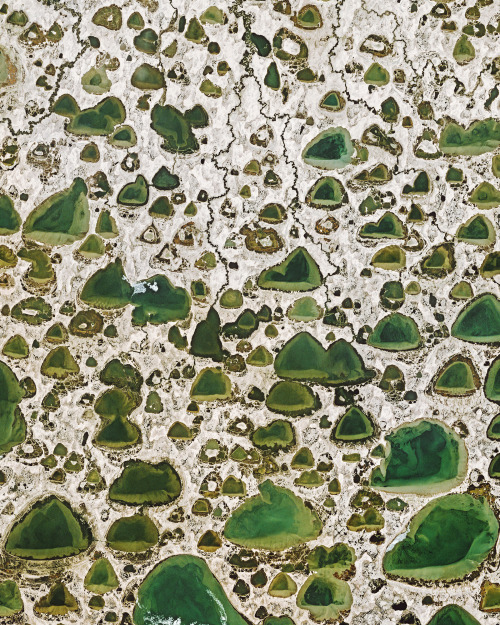
There are upwards of 800,000 lakes in Russia’s Sakha Republic, many of which are found clustered in its northeastern corner. Sakha, also known as Yakutia, is the most expansive subnational entity in the world, covering nearly 1.2 million square miles (3.1 million square km) – an area almost equal in size to India. About 40% of the republic is north of the Arctic Circle and covered by permafrost, which keeps many of its lakes frozen for 9-10 months of the year.
See more here: https://bit.ly/2CYX8R1
69.052056°, 159.818972°
Source imagery: Maxar
21 Jul 03:15
Listen Out a Window
by Marc Weidenbaum
The great thing about window-swap.com isn’t necessarily the view. WindowSwap is a site where people can experience browser-spanning views out other people’s windows, and the folks sharing their view generally seem to leave the microphones on. So you don’t just see. You hear. You listen. When you have a glimpse out a window in Wangerooge, Germany, for example, you can hear water gurgling, as well as what seems to be office noise. When the feed switches to Haridwar, India, there’s birdsong. A siren passes, the source unseen, by someone’s pad in Mexico City, Mexico. There’s pots and pans rattling from a home in the Indonesian city of Tangerang. It goes on and on, around the globe and back again. It isn’t an endless itinerary, though. I’ve only used it a few times, and already come to notice repeat windows.

If WindowSwap brings the world close, details from the individual settings make the notion of distance (that is, of difference) more amorphous. The Tangerang kitchen has a radio playing, of all things, Tom Jones’ “It’s Not Unusual.” The shot of Bangkok, Thailand, is as generic as might be: open laptop inside, dangling power cables outside; nearby are sounds of construction work. And then there’s the houseplants, which are universal, with an emphasis on pint-sized succulents. As it turns out, nothing is unusual.
Nothing is unusual in part because a shared aesthetic has kicked in. No human is in view, at least not on the inside of the buildings. The window in each is likely centered and fairly horizontal, or outside the frame of your browser. No brands are to be seen. And what we hear is quiet precisely because the people doing the filming are themselves, for the most part, keeping quiet. We’re hearing their world in a unique circumstance where they are doing their best not to be heard. It isn’t everyday life; it’s life minus us (with some exceptions made for actual activity, generally at least a room away).

It’s also not everyone’s life. It’s a self-selecting cohort who have the interest and time to participate, and whose domestic life allows for such a thing. The supposed quiet of right now, amid the pandemic, can be overstated. There is violence, and protest, and anxiety, and noise. To a degree, the windows viewed through on WindowSwap comprise the opposite of disaster tourism. It’s a depiction of placidity in a world that is, in point of fact, anything but. That siren in Mexico City is the rare discordant sound in all the videos I witnessed. WindowSwap is, in a manner of speaking, another form of peer-to-peer sharing.
That said, though, the service is beautiful, and serene at a time when serenity is in short supply. In my office-chair travel, I didn’t just tour the quiet world; I also came across some familiar views, one from far across San Francisco, where I live, and another from a window on a rainy evening in Manhattan. The latter was especially familiar, and then I noticed the name Nomadic Ambience in its corner. That’s a YouTube channel I subscribe to, one of several that post lengthy, uncut footage of stationary and ambulatory periods. It was a uniquely internet experience to run into not someone but someplace, someplace that was familiar, a place I’ve never been and yet where I have spent considerable time. I often have such videos running in slow motion on a secondary screen at my desk.

According to a Guardian story by Poppy Noor, WindowSwap’s developers, Sonali Ranjit and Vaishnav Balasubramaniam, are based in Singapore, and initially created it for friends during our extended pandemic, and later opened it up to submissions. The videos aren’t live, which explains why so many tend to be shot during daylight hours. The submission guidelines request the recordings be 10 minutes in length, long enough to immerse oneself in. And there’s a caveat, listed as an “update” on the submissions page, that brings up privacy concerns: “All videos have sound. So please make sure not to say anything private or sensitive. If you want your sound to be removed please let us know. Or record a video without sound. To safeguard your privacy, we will only display your first name in the credits. If you want your full name to be added, let us know.” Sound may have been a secondary consideration upon launch of WindowSwap, but it’s at least 50 percent of the experience.
Check it out at window-swap.com. The above images are, from top to bottom, of Shanghai, Copenhagen, and Singapore.
18 Jul 08:22
A video singing the names of the Indigenous languages of...
RoslynWell this is amazing!

15 Jul 10:19
Comet NEOWISE over Stonehenge
RoslynI cant help feeling, in this year of locust plagues and actual plagues, catastrophic fires etc, a new crazy comet might not be the harbinger we want...
 Have you ever seen a comet?
15 Jul 10:12
Parenting and Work Schedule During the Pandemic
by Nathan Yau
RoslynRelated...
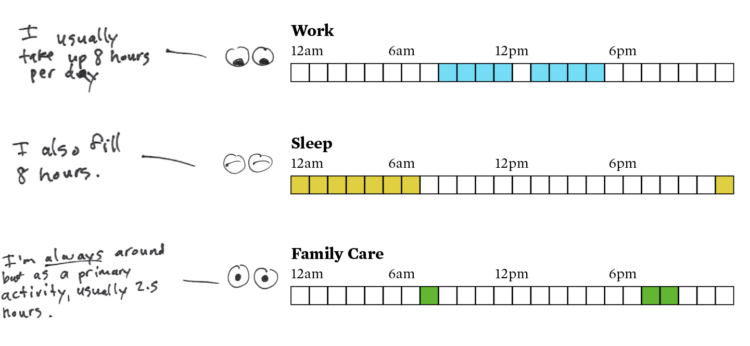
Working from home was an ideal that many strived for. For many, it still is, but for those with kids who have to learn from home, the schedule change is less than ideal. Read More
Lisa G likes this
14 Jul 15:20
No doomscrolling
by Austin Kleon
RoslynGood advice!
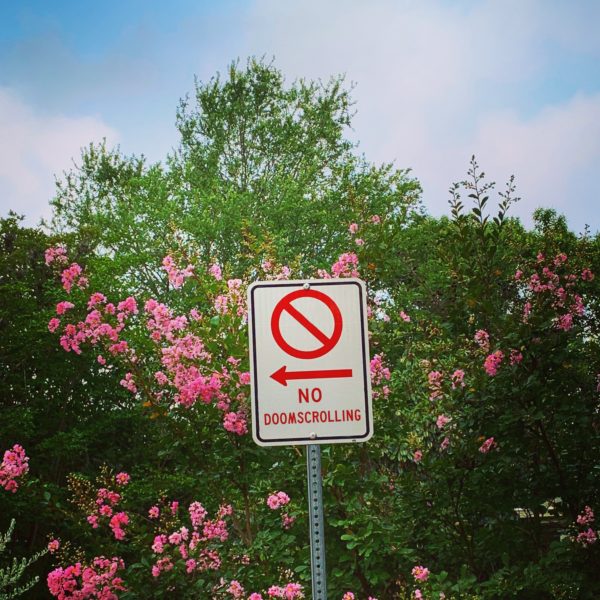
From Merriam-Webster:
Doomscrolling and doomsurfing are new terms referring to the tendency to continue to surf or scroll through bad news, even though that news is saddening, disheartening, or depressing. Many people are finding themselves reading continuously bad news about COVID-19 without the ability to stop or step back.
Don’t do it! Put on a mask and go for a walk instead.
13 Jul 23:18
The Great Barrier Reef is Earth’s largest structure composed of...
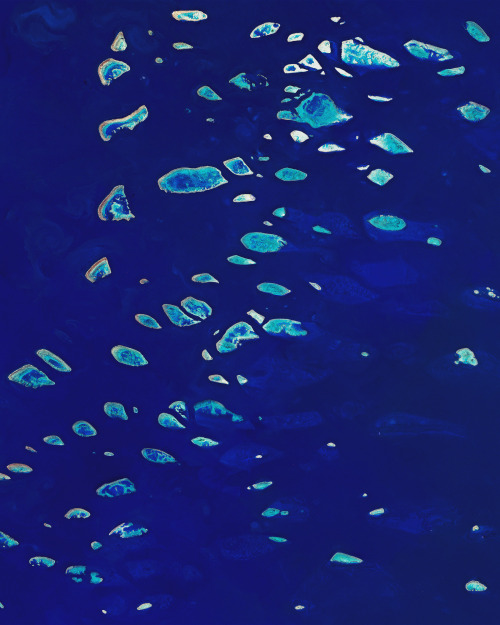
The Great Barrier Reef is Earth’s largest structure composed of living things, made of more than 2,900 individual reefs stretching roughly 1,400 miles (2,253 kilometers) offshore of Australia. Perhaps there is no better “canary in the coal mine” for nature’s reaction to a warming planet than the recent coral bleaching events at the reef. Ninety-three percent of the increase in global temperatures has been absorbed by the oceans, raising water temperatures and causing ocean acidification. As a reaction to the warmer waters, coral expel the algae living inside their tissues, which give the coral necessary nutrients that provide up to 90 percent of their energy. Corals can continue to live after bleaching, but often they begin to starve soon thereafter. In 2016, a bleaching event killed approximately 30 percent of the Great Barrier Reef ’s coral, and overall, the average time between bleaching events has halved between 1980 and 2016.
This Overview and caption are taken from our new book “OVERVIEW TIMELAPSE” which will be released 3 months from today! Learn more and pre-order here: amzn.to/31MnDDN
-21.666530°, 152.235135°
Source imagery: Planet

09 Jul 04:15

The culture that is 2020
by Tyler Cowen
Roslyn“locals try to placate the macaques with snacks”
An abandoned cinema is the macaques’ headquarters. Nearby, a shop owner displays stuffed tiger and crocodile toys to try to scare off the monkeys, who regularly snatch spray-paint cans from his store.
And:
Residents in Lopburi, Thailand, are hiding behind barricaded indoors as rival monkey gang fights create no-go zones for humans. The ancient Thai city has been overrun by a growing population of monkeys super-charged on junk food – as locals try to placate the macaques with snacks. The monkeys usually enjoy a steady supply of bananas from tourists, who have dwindled amid the coronavirus pandemic.
Pointing to the overhead netting covering her terrace, Kuljira Taechawattanawanna said: “We live in a cage but the monkeys live outside.”
“Their excrement is everywhere, the smell is unbearable especially when it rains,” she says from her home in the 13th-century city.
Here is the full story. But hey…cheer up!
For the pointer I thank Shaffin Shariff.
The post The culture that is 2020 appeared first on Marginal REVOLUTION.
Cary likes this
02 Jul 02:16
Party game
by Mark Liberman
RoslynSharing for actual linguistic analysis :)
Today's SMBC:

Mouseover text: "I actually only made this so nobody will ever invite me to a party again."
The aftercomic:

Unfortunately, this comic's argument is factually incorrect. The Wealth of Nations was published in 1776, and the development of "singular you" occurred more than a century earlier. As discussed in "George Fox, Prescriptivist", 10/24/2010, Fox's Epistle 191, published in 1660, was already carrying on about the collapse of second-person number distinctions, so that people fail "to divide and distinguish singular from plural, many things from one thing, and one from two and three; and many man and women from one, and the many words from one, and the many gods from one, and the true Christ from the many antichrists and false." And in "That false and senseless Way of Speaking", 1/1/2016, I quoted from a 1659 rant:
Again, The Corrupt and Unfound Form of Speaking in the Plural Number to a Single Person (Y O U to One, instead of T H O U ;) contrary to the Pure, Plain and Single Language of T R U T H T H O U to One, and Y O U to more than One) which had always been used, by G O D to Men, and Men to G O D, as well as one to another, from the oldest Record of Time, till Corrupt Men, for Corrupt Ends, in later and Corrupt Times, to Flatter, Fawn, and work upon the Corrupt Nature in Men, brought in that false and senseless Way of Speaking, Y O U to One ; which hath since corrupted the Modern Languages, and hath greatly debased the Spirits, and depraved the Manners of Men. This Evil Custom I had been as forward in as others and this I was now called out of, and required to cease from.
Of course this just means that the arrow of causality goes in the other direction — it's not classical liberalism that caused "singular you", but rather the other way around :-)…
Osias Jota, Cary and one other like this
01 Jul 23:44

Lifelike Human Sculptures Are Submerged in Underwater Museum at the Great Barrier Reef [Interview]
by Jessica Stewart
RoslynI might try to visit this, once Queensland reopens its borders!
For over 10 years, sculptor Jason deCaires Taylor has dedicated his artistic practice to the enhancement and conservation of the underwater world. He has created underwater museums in Europe and spread his art throughout the Caribbean, and his latest project takes him to the Earth’s most famed marine ecosystem.
Australia’s Great Barrier Reef is the world’s largest coral reef and, now, Taylor will have a part in raising more awareness about its beauty thanks to his work with the Museum of Underwater Art (MOUA).
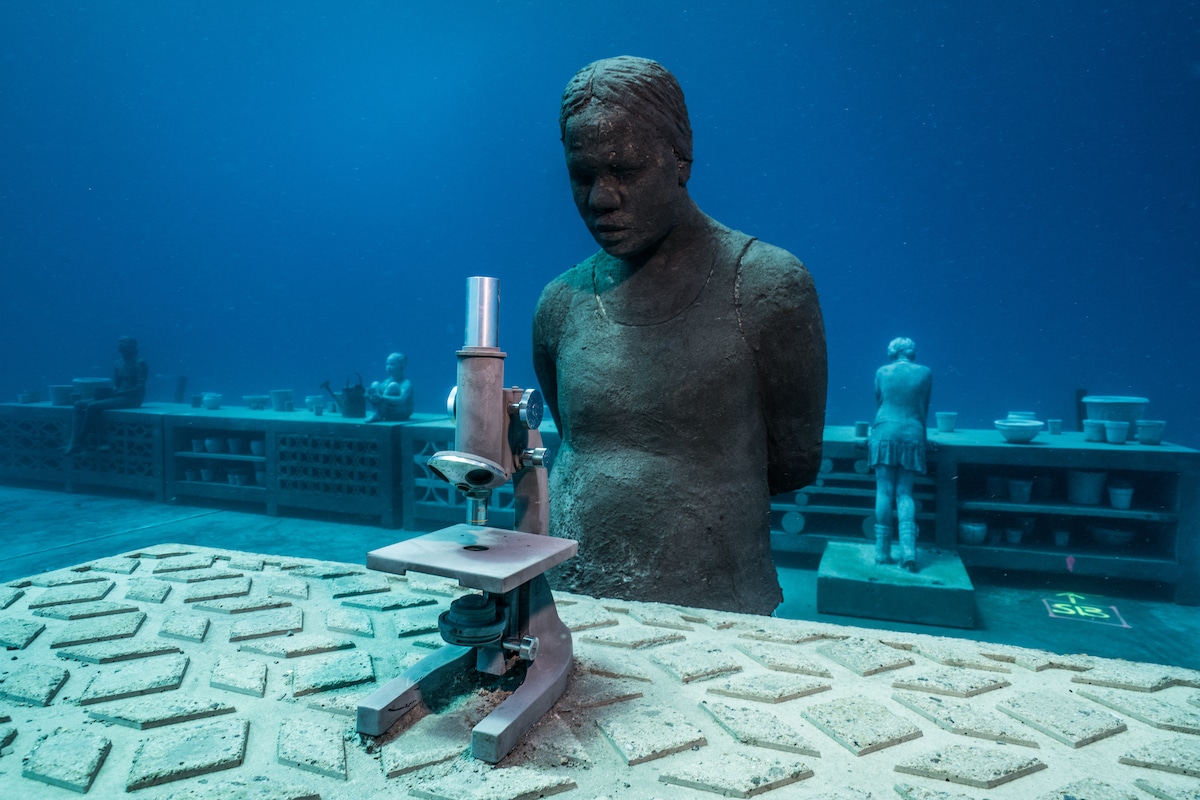
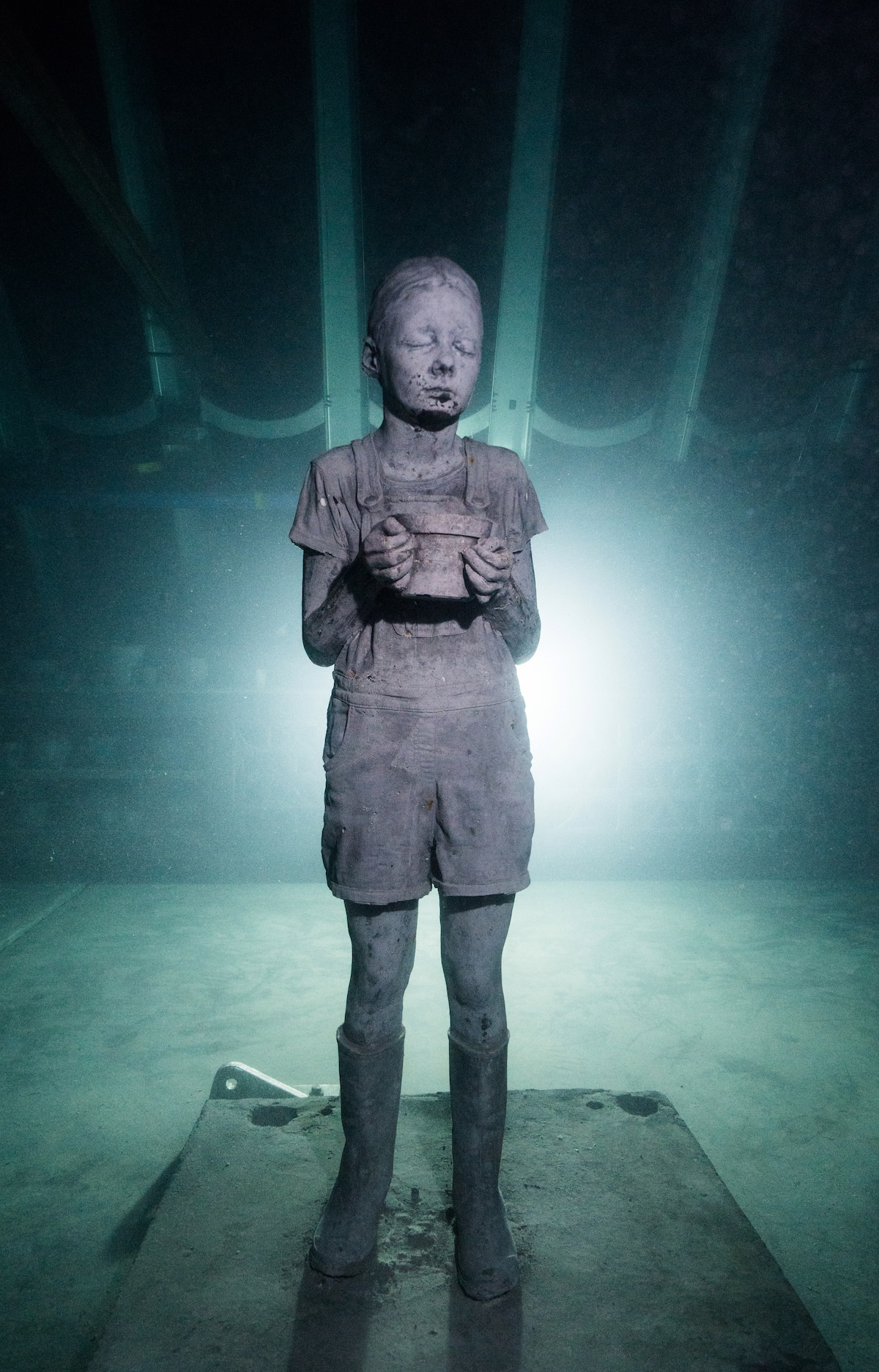
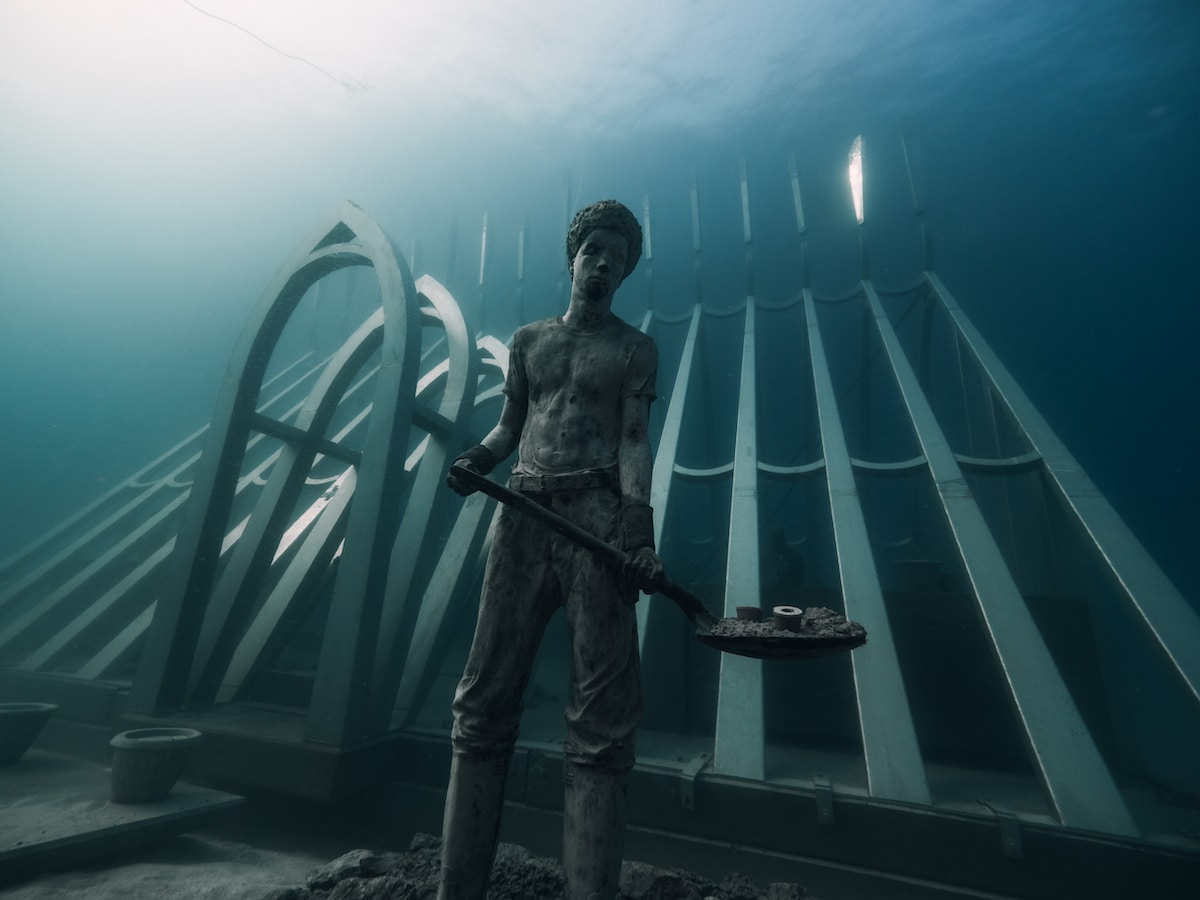
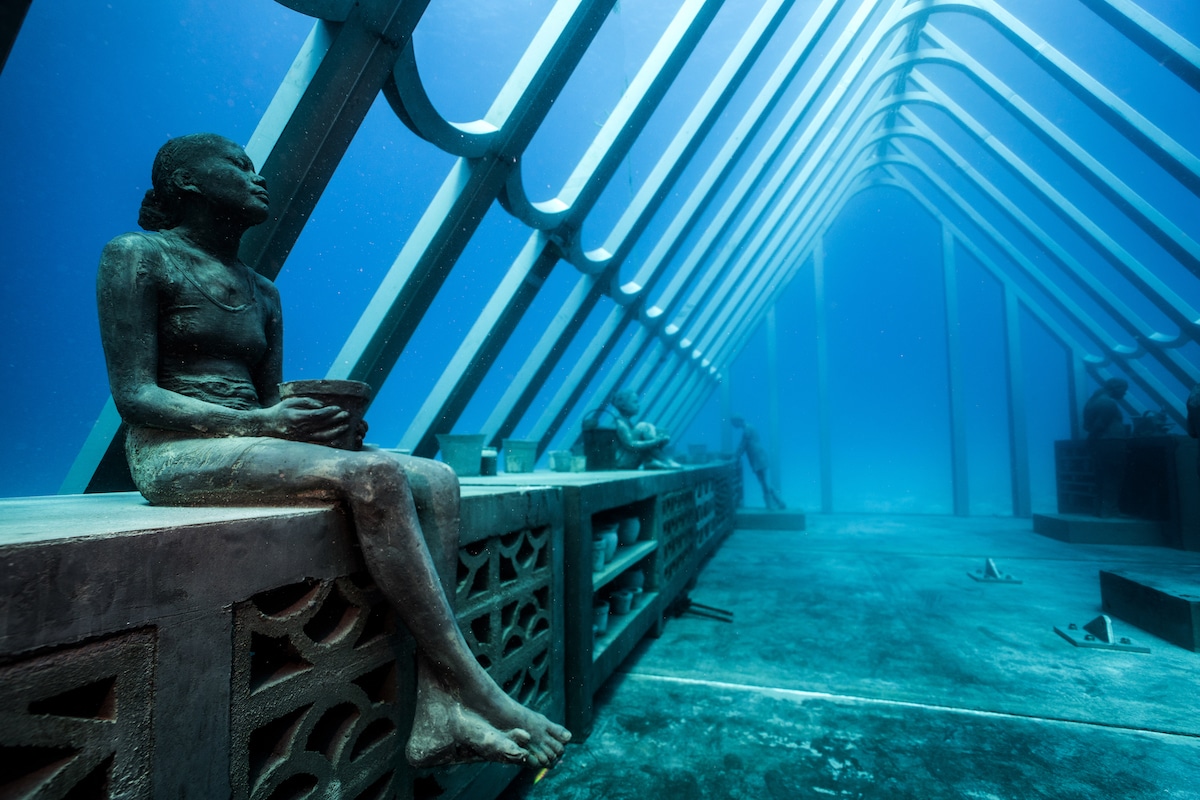
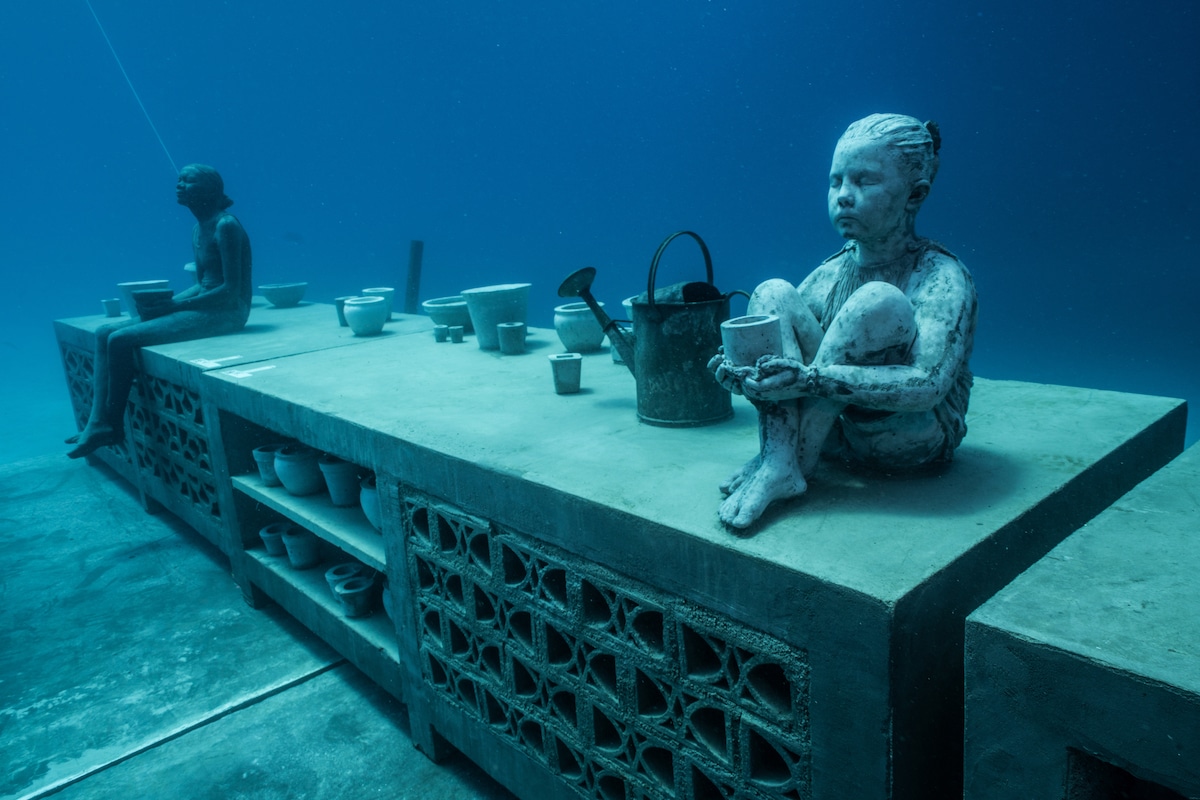
In collaboration with scientists at James Cook University and the Australian Institute of Marine Science, Taylor spent years gaining permissions to install the first artificial reef in these waters. The result is Coral Greenhouse, a collection of hyperrealistic underwater sculptures inspired by the community’s youth. It’s these young people that Taylor hopes will become engaged and take their role as the future conservators of this precious ecosystem seriously.
This work is coupled with Ocean Siren, an interactive sculpture that stands as a beacon just beyond Townsville’s Strand Jetty. Rising from the water, the figure was modeled after 12-year-old Takoda Johnson, a local indigenous girl from the Wulgurukaba tribe whose families once owned local lands. The sculpture changes color in conjunction with the ocean’s temperatures and was made possible by close collaboration with scientists.
In merging art, science, and conservation, the Museum of Underwater Art wants to bring more people to these waters. And by increasing awareness about the Great Barrier Reef and the incredible coral that still thrives in many areas, they’re hoping to inspire greater conservation efforts. Plans to build up the museum are ongoing. There are two further installations that Taylor will create for the project, though the initial portions of the museum should open to the public shortly.
We had the chance to speak with Taylor about this important project and his experiences with the local community. Read on for My Modern Met’s exclusive interview.
 You’ve worked in so many ocean environments. How was working in the Great Barrier Reef different?
There are obviously many, many different things. It’s the first time I have really worked in the Pacific Ocean, and just the variety and the diversity of life there are some of the best in the world. The various different types of coral and marine species are so incredible—there are so many colors and forms and shapes. It was a huge privilege to work there, and it’s something that’s been a personal ambition of mine for quite some time.
The trajectory and ambition of the project were also very different. Previously, working in the Caribbean, there are not so many reefs. They’re smaller in scale and quite fragile. And the objectives have been about taking people away from natural areas and creating this artificial reef. Whereas working in the Great Barrier Reef, it’s such a vast structure and it’s so endless, there’s not a problem with over-tourism and high-impact numbers and you don’t need to divert people away from it. So, it had a kind of different objective.
It was more about getting more people to go and see it because it has experienced some bleaching over recent years, but mainly in the northerly parts, and two-thirds of it is still incredibly pristine and beautiful, but there’s this misconception that it’s dying or it’s already dead. That’s not the case. Actually the area where we built the museum has some of the best coral I’ve ever seen in my life, so we wanted people to see that and we wanted to help motivate people to want to conserve it.
 How did the collaboration with the Museum of Underwater Art come together to begin with?
I first started in Townsville, Queensland, which is home to one of the largest marine research laboratories in the world—the James Cook University—as well as AIMS (Australian Institute of Marine Science). It is a real hub for science.
Local marine biologists Paul Victory and Adam Smith, who have been following my work for some time, were quite interested in how to communicate science better and in a more mainstream way. So, they first got in touch with me almost four years ago and it slowly developed from there. It’s been quite a lengthy project. Working on the Great Barrier Reef, we’ve had to do an incredible amount of research and the permitting application was one of the most complicated I’ve ever been part of. It was something relatively new for the authorities, so it’s taken three years to get to this point.
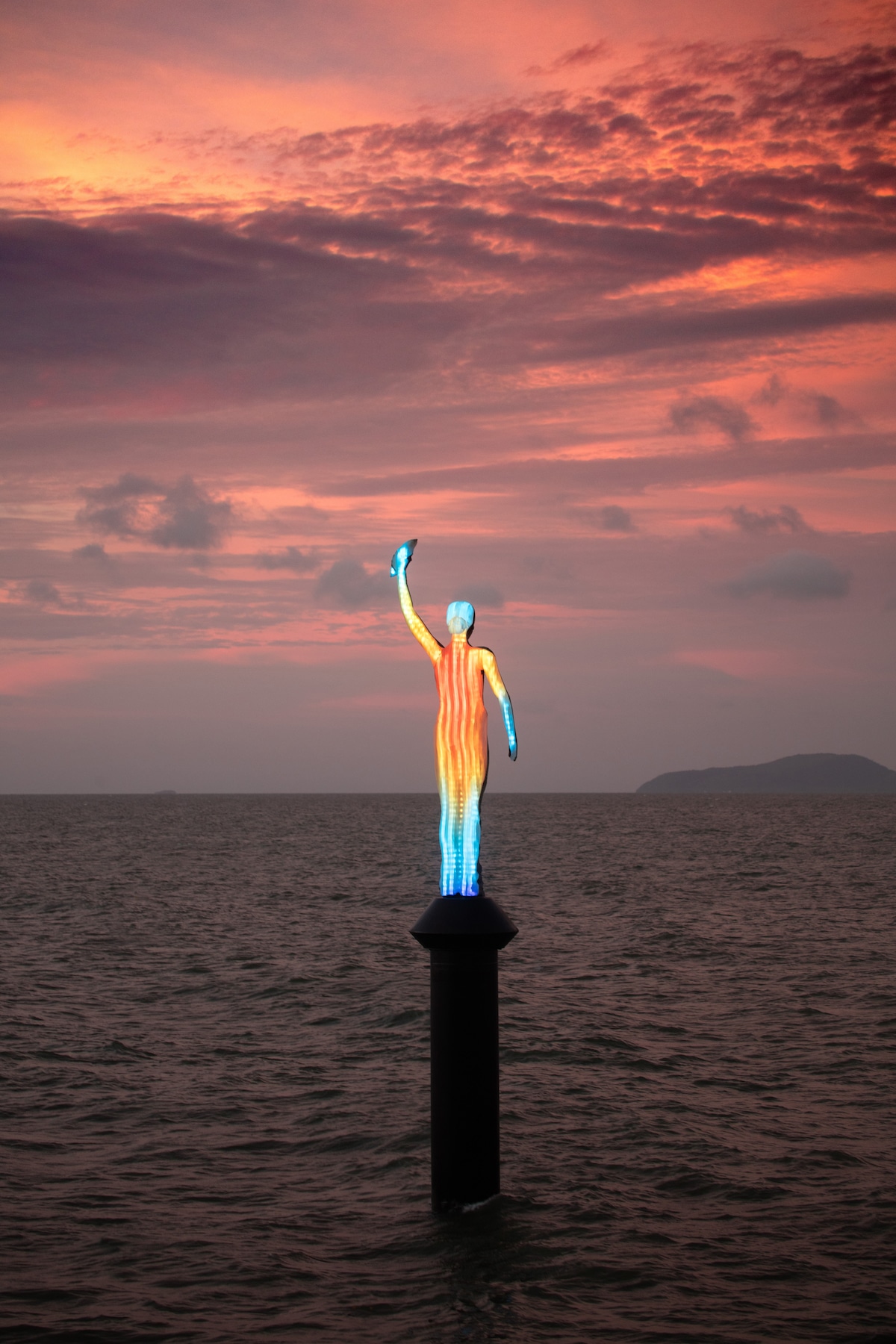 It’s interesting that the project was kicked off by scientists. Obviously your work mixes art and science quite a bit. This is particularly evident here with the Ocean Siren sculpture that greets people in Townsville. How did that concept come together?
I’ve very much been interested in ways to tell stories about the marine environment online and in urban environments—bringing it into the kind of spaces where people aren’t really connected to the ocean. And I really like this idea that something that was happening underwater, far outside the Great Barrier Reef but could be felt in real-time and witnessed by everybody.
How did you work with scientists to bring your vision to life?
It’s actually an idea I’ve had for some time, but I’ve not been able to implement it just because I haven’t found the right location and the technical aspects were quite complicated. But, obviously, Townsville was the perfect place because there are already weather stations positioned on lots of different parts of the Great Barrier Reef and these stations monitor water temperature, salinity… lots of different metrics. So it was actually possible for me to be able to do that by working with AIMS Institute to connect that data and then share it on the sculpture.
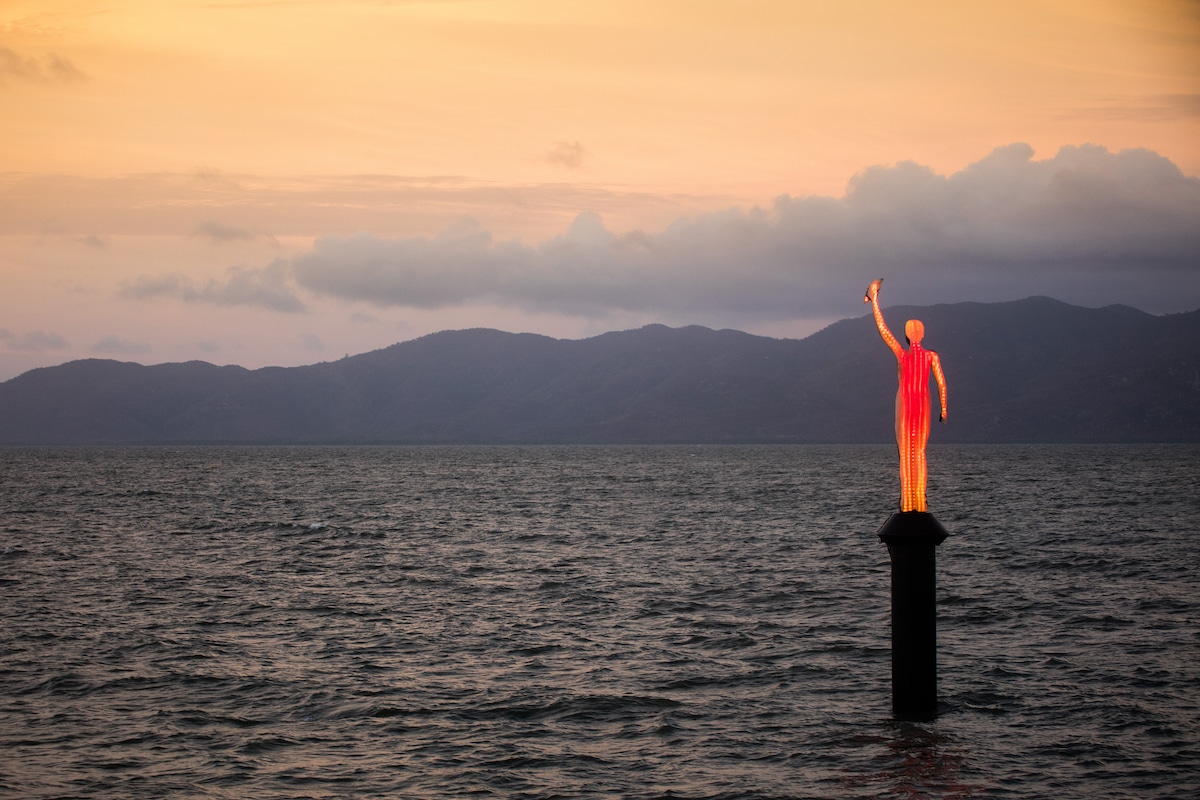 It’s really wonderful because, as you said, sometimes it’s difficult for people to make sense of this intangible data, and with the sculpture, they’re able to visually see what’s happening below the surface in a quite beautiful way.
I was really inspired by a quote by Gus Speth, U.S. Advisor on Environment and Climate Change: “I used to think that the top environmental problems were biodiversity loss, ecosystem collapse, and climate change. I thought that 30 years of good science could address these problems. I was wrong. The top environmental problems are selfishness, greed, and apathy, and to deal with these we need a cultural and spiritual transformation. And we scientists don’t know how to do that.”
I think the world’s changed in the last few years and where you would think that common sense or logic and facts would prevail, they haven’t. You could argue that people are much more swayed by emotional and spiritual arguments than they are behind facts and figures.
Certainly, the visual arts have the ability to tap into people’s emotions and perhaps cause them to get more involved with a social cause they might never have cared about otherwise. I know you tried to engage the public when you did workshops with the local community. How did those turn out and did you achieve that you expected?
So most of the models for the projects I have completed are part of community workshops. I feel that’s a really important part of the process. The local community becomes the sculptures; they become ambassadors or guardians for the reef. And I think that’s really critical for them, especially children growing up. They feel like they have a sense of ownership and a sense of responsibility to protect the reef.
In Australia, I really wanted to make sure that the indigenous community was represented in the artworks. So it was very important to get the local community to join in and be part of it. In fact, Ocean Siren was a young indigenous girl whose family are the traditional owners of the land. She looks out to sea, and she also looks out on the island of her great grandfather.
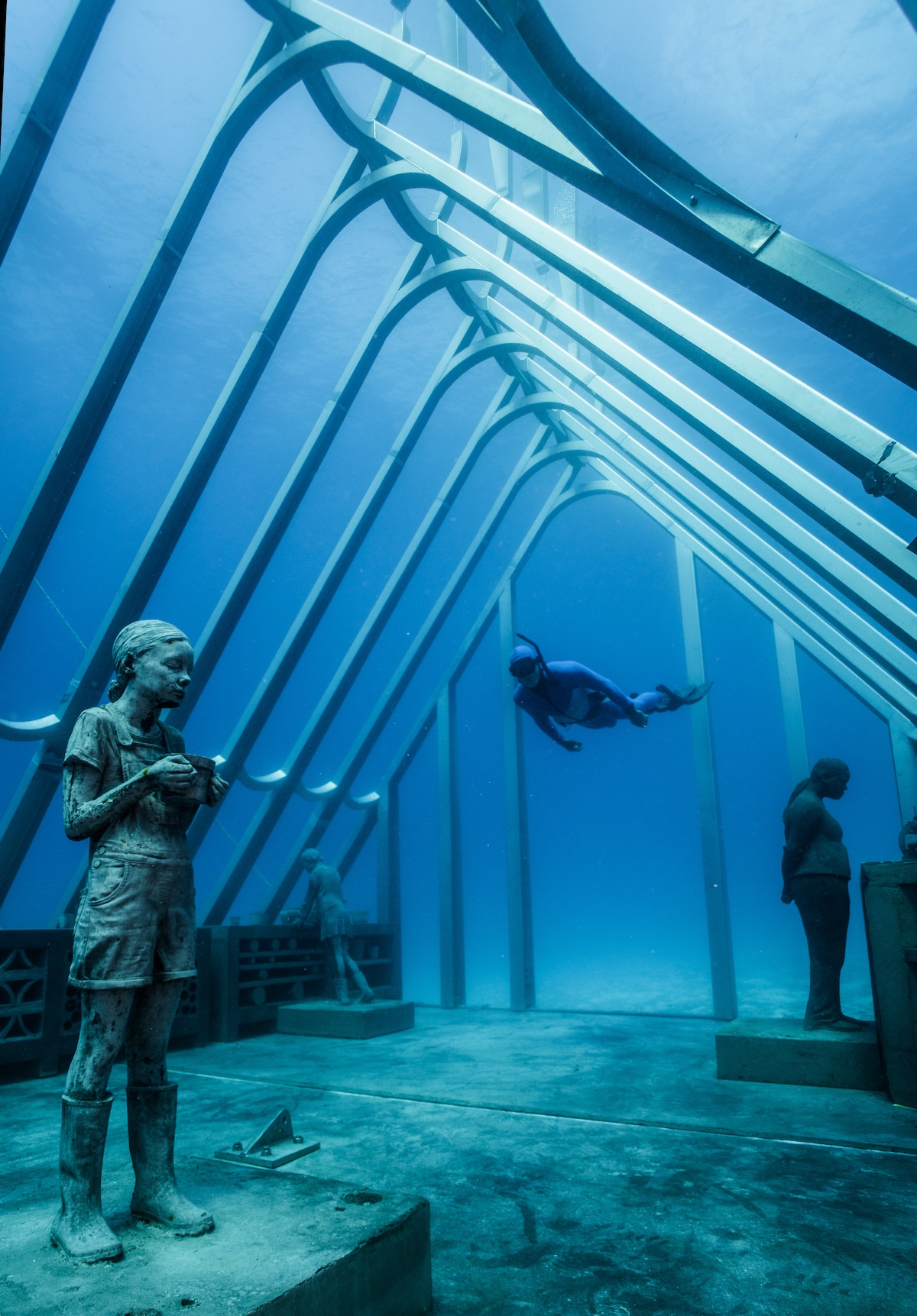 How did the overall vision for Coral Greenhouse come together?
One of the overriding objectives was that we wanted young people to be inspired by marine science and fascinated by it. And want to have an active interest in the health of the reef and to be able to explore it in a fun and dynamic way.
One of the big objectives was to create this space encompassing many areas, to be not only a space for art and culture but only about marine science and to use it as a portal or access point to explore the Great Barrier Reef.
Photo: Richard Woodgett
So you’ve already mentioned that the permitting was a big hurdle. But that aside, what were some of the other challenges you faced with this installation?
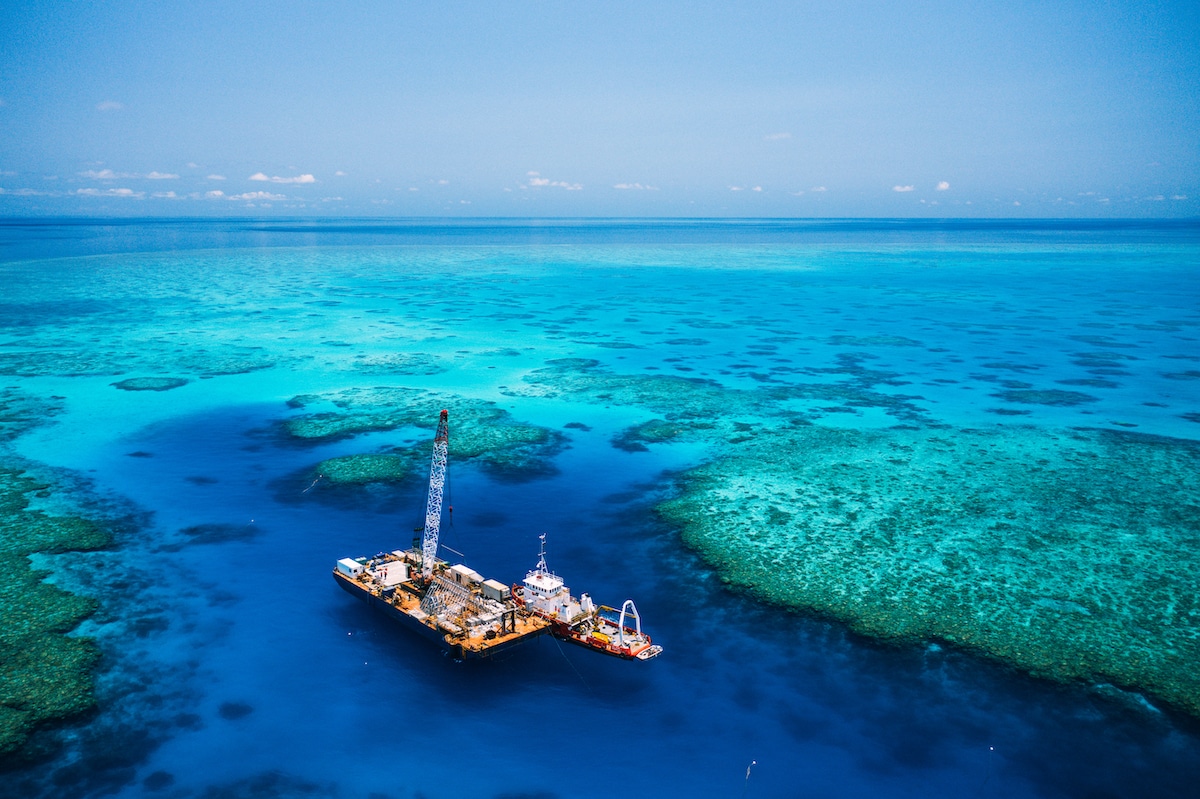
Yeah, it was pretty difficult. There are many, many factors. One of them being the occurrence of big cyclones on the Great Barrier Reef. So you had to plan the structures for a category four cyclone and that was very challenging—very difficult to do, especially with the scale of the project.
It’s also, I think, around 70 kilometers (43 miles) away from the shore, which is a very long way, especially when you’re towing hundreds of tons of artwork. It took us 16 hours to get there.
So there were some challenges, but there were also some very helpful things. I was very lucky in Australia to have incredible logistical help, the operators there—the machinery and the cranes—the experience there is really second to none. It has a very rich diving history. So I was fortunate in many respects.
Photo: Richard Woodgett
So for people who may not understand how these things work, can you share a bit about how these installations end up providing a good habitat for marine life?
Sure. So take the Coral Greenhouse, for instance, this is situated on a patch of sand in a kind of underwater channel at the northern part of the reef. It is flushed by a nutrient-rich current which is an ideal area for corals and marine life to flourish.
Because the sculpture is quite high, it spans all different areas of the water column. And so, in the lower parts, we have all these different habitat spaces for marine life. This includes a series of workbenches and modules which have a different type of hollowed space tailored for different types of creatures. So some of the holes are very small and just allow juvenile fish to get inside and be protected. Some of them are much larger for crustaceans and larger species. And so all this area beneath the lower end, it creates this artificial reef habitat—an area for fish to spawn and to take refuge.
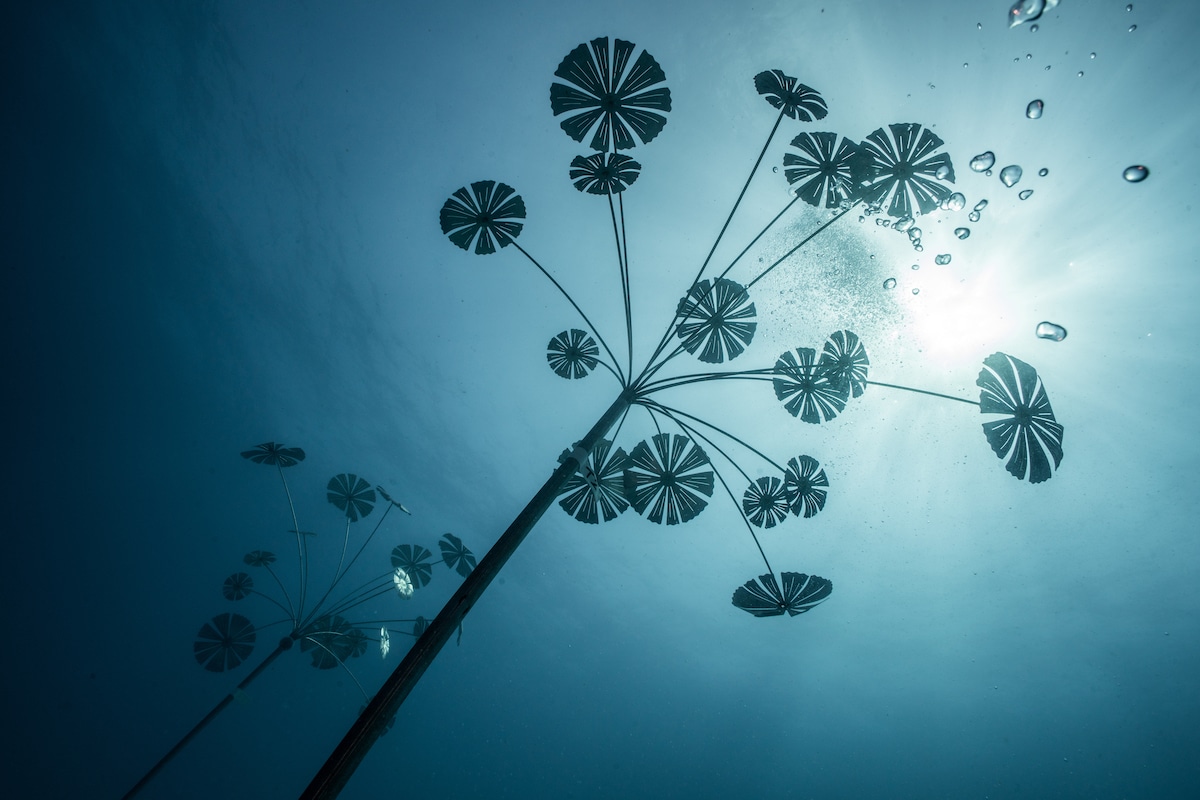
Then, as the structure moves up, it starts to go into the kind of high current area where there’s a lot of nutrients flowing through the water. And from that part, it offers a really good substrate for all the different species that are filter feeders that extract all the nutrients from the water. So all the different types of hard and soft corals or crinoids, they can all attach to the structure and start sieving it for food. It becomes a large tree community. The smaller species very quickly attract larger species that then predate on them so, in a very short space of time, you get a very healthy reef system revolving around it.
 What do you hope that people take away from your work at the museum in Australia?
First of all, I hope the people who come to Townsville make the trip out and go to see the Great Barrier Reef in itself. Where it’s positioned, as I mentioned, it’s actually next to some of the most spectacular reefs I’ve seen. So I hope that people go out there and snorkel and dive and see how incredible the reef is and how beautiful and diverse it is, and also get to see how we can actually live in some kind of symbiotic relationship in harmony with nature. It’s not a matter of us being conquerors of the natural world, it’s much more about interconnectedness. I hope people leave with that kind of sense.
Photo: Richard Woodgett
So I know that things might be on pause at the moment, but what’s next for you?
I was in mid-roll with a few different projects. For instance, the Australia project wasn’t finished so I still have to return. And we are in the process of installing, I think, 4,000 corals into the greenhouse. We also want to expand the project into a Palm Island, which is a very beautiful Island just off the coast and is home to a large indigenous community. The idea is to create some large scale artworks for the community whilst helping to provide more local jobs and economic stimulus. We’ve been planning this for the last two years and we’ve raised the finances for it. We’re in the process now of just deciding the design with the local community. There are actually four phases to the Australia project. We finished the first two, so we’ve still got another two to go.
Jason deCaires Taylor: Website | Instagram | Facebook
My Modern Met granted permission to feature photos by Jason deCaires Taylor.
Related Articles:
World’s First Inter Tidal Art Gallery Opens in the Maldives
400 Cement Sculptures Submerged Underwater by Jason de Caires Taylor
Underwater Sculptures Celebrate Life on Earth and Protect Aquatic Ecosystems
Hyperrealistic Human Sculptures Submerged in Europe’s First Underwater Art Museum
READ:

30 Jun 20:53
When the world shut down, seen through global flights
by Nathan Yau

Lauren Tierney and William Neff for The Washington Post used a rotating globe to show how connections between countries quickly shut down as the coronavirus spread.
I’m looking forward to when we get to watch the map in reverse.
Tags: coronavirus, flights, Washington Post
30 Jun 11:12
Calendrical semantics
by Mark Liberman
There are a few years whose meaning everyone knows, like 1492. This song invokes 1918 (for the flu pandemic, not the end of WWI), 1930, and 1968:
30 Jun 11:11
tanadrin: Blogosphera is naturally 1st declension (the medieval form form of blogosphaera, from the...
Blogosphera is naturally 1st declension (the medieval form form of blogosphaera, from the Greek βλωγοσφαῖρα), blagosphera is actually the neuter plural of the rarely-attested blagospherum, itself derived from the earlier blagospes, “to check a blog in the hopes it has updated in the last five minutes, even though it almost certainly has not.” Blagh is the Umbrian reflex of the Greek βλωγοσ, both ultimately from Indo-European *bʰleh₁-, “to blow, be vapid; to be wrong on the internet.” The oblique form of spes (sper-) was altered by analogy, and the meaning of the plural in question shifted from “checking your list of blogs repeatedly” to “the blogs being checked.” Yet blagosphera remained the subject of plural verbs until the Late Latin period, when it was treated as a singular first-declension noun by scribes with a poor knowledge of Latin.
Blagoblag is actually unrelated; it comes from Proto-Germanic *blakaz, from the Indo-European root *bʰleg-, “to shine”, referring to the glow of a computer screen. The word entered English via Old Norse, which retained the reduplicated form (lost in the West Germanic languages, but not the North or East) from verb class VII, *blagoblagana, “to shitpost.”
28 Jun 23:26
Face depixelizer with machine learning, and some assumptions
by Nathan Yau
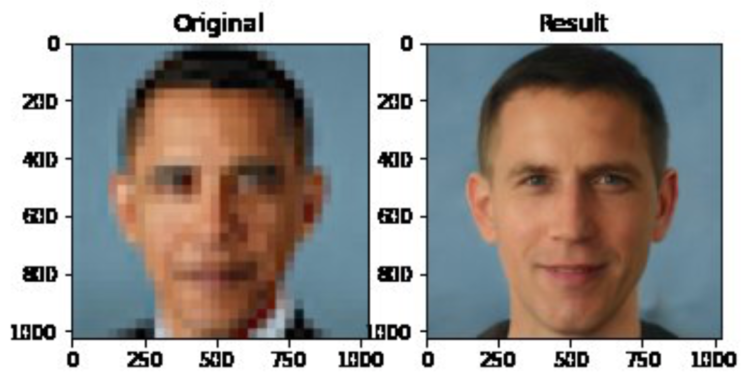
In crime shows, they often have this amazing tool that turns a low-resolution, pixelated image of a person’s face to a high-resolution, highly accurate picture of the perp. Face Depixelizer is a step towards that with machine learning — except it seems to assume that everyone looks the same.
23 Jun 23:54
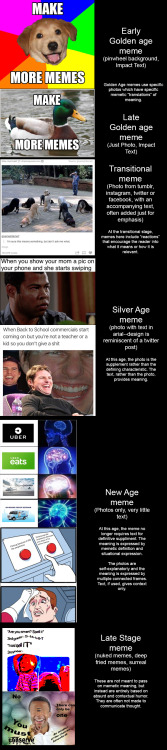
surprisebitch: memecage: I am currently studying memes...
I am currently studying memes academically. I thought you might enjoy the current proposed “ages” of internet memes
OP please post the link to the academic journal or the paper when your research gets published
One of my favourite things about this taxonomy, and I say this utterly sincerely, is how it completely omits that there were any pre-Advice Animal memes (of which the most popular were lolcats, but fake inspirational posters also had a moment and pseudo rules/laws like Rule 34 and Godwin’s Law can arguably be considered memes as well). (Godwin wrote an article about mimetic engineering in 1994 and it’s unnervingly prescient, I’m just saying.)
The meta point that this omission makes is that each generation of internet residents remakes the concept of a meme itself, considering memes that were around when they first encountered memes to be “Golden Age”, memes when they started making memes themselves to be “Silver Age”, and memes when another generation had started taking up the mantle of memedom to be degenerate. (And of course, entirely forgetting about even earlier generations of meme, unless you write a book about it and end up digging up faxlore or something. *whistles*)
In other words, yes, the meme of memes is itself a meme.
Eshoughton73, Vvicked and 2 others like this