Shared posts

18 Sep 09:56

Safe Conferences Are Deliberately Designed — Medium

Like any large-scale design project, creating a successful conference involves thousands upon thousands of decisions. Every decision has multiple alternatives to choose from.

Conference organizers can make a choice that increases the chance of an incident occuring. A different choice would decrease the chances of an incident occuring. Making the right choice could eliminate many safety incidents, including harassment.

Can we eliminate all incidents forever? Probably not. But we can make smarter decisions. We can design safer conferences.

“Good judgement comes from experience.
And experience comes from bad judgements.”

We use post-event retrospective sessions to dive deep into our bad judgements. We ask what the sequence of events was that got us there. We ask how we could improve the outcome. We explore alternative approaches. Then, we design a safer conference.

At many events, people come because of the parties. The marketing for the event emphasizes the parties, which happen every night and go way into the morning, often with sponsored open tabs and bottomless beer kegs. As the organizers introduce each day, they talk about how wonderful the party will be. Party goers are made into heroes for staying all night and getting sloshed. Early morning presentation slots are deemed the “hangover sessions” with substantially lower attendance expectations.

Many of the incidents we hear about happen at parties like this or after the party when very intoxicated people make not-so-smart decisions. (And we hear from people concerned about their safety that they refuse to attend these parties because of the increased rate of incidents that occur.)

Creating a party culture is a design decision of the organizers. Early on, we looked at the role of parties in our events. Because we had an overall goal of making our events the best professional educational events on the market, we made the conscious decision to have a different style of “party.”

We usually have two receptions: the first on the evening before the first day, as a welcome; the second on the next-to-last day, as a networking event. People often come and go from this first reception, as it’s purpose is to get them registered and greet them.

The second reception is scheduled right after the last session of our most popular day, often from 5:30–7:30pm. It’s only two hours long. There’s a lot of food served (and we’ve intentionally served a lot of food all day). We give each attendee two tickets for free drinks. (More are available, but our staff doles tickets out personally, after determining through a quick conversation if the attendee has had too much already.)

By providing plenty of food and limited free drink access, we cut down the drunken behavior. The bar shuts down promptly at 7:30 and some people move on to bar hop, but now they are in small groups and usually with people they know. And, because they are probably still of sound mind when they leave, they more likely to make smart decisions that will prevent an incident.

On other nights, we put together dinners for first time attendees and book small group reservations at local restaurants, giving attendees an option to experience the fine cuisine and explore the city. Again, we don’t emphasize the alcohol, but instead create a fun, localized experience. We’ve only heard great things about these social activities.

As a result, it’s rare for anyone to get drunk at our events. It’s happened maybe 2 or 3 times in the last 5 years. It’s possible some may decide not to come to our events because of this, but we haven’t found that to be true in our extensive customer research.

More importantly, it’s unlikely someone who is excessively intoxicated will behave better because they read the event’s Code of Conduct. Drunk people do stupid things because they are drunk. Being strict about a enforcing a Code of Conduct without dealing with the scenarios for excessive intoxication is, in my opinion, an act of pushing on a very loose string.

I believe that if event producers were to make design decisions that would reduce when and how people get intoxicated, they’d see a dramatic decrease in incidents and their event would be safer. Not just feel safer, but actually be a safer event.

Another problem that many Code of Conduct documents address is offensive content in the conference program. We hear audience members becoming upset about sexualized content and imagery, racial stereotypes, and offensive language.

When a speaker is on the stage, there is very little a conference organizer can do to prevent the next few words from coming out of their mouth. If they are going to say something stupid or offensive, well, that’s just going to happen. (Another manifestation of the “jerks will be jerks” philosophy.)

Again, the decisions we make when programming our events come into play here. At our own events, we rarely put someone on the stage that we haven’t seen or heard present before. There are many talented people in this industry I’d like to add to our shows, but because I haven’t had a chance to see what they do, I haven’t approached them yet. (But, rest assured, they are on my radar and I’ll be excited to see them do something awesome.)

When I’ve seen someone, I can see how they present. I can see the way they approach anecdotes and how they use humor. I can see how the choose examples and how they build their presentation’s story narratives.

Want to eliminate offensive material from the stage? Only invite people who have a proven track record of presenting material that doesn’t have anything offensive in it.

We go farther than that. We talk with every speaker before we put them on stage. In some cases, I offer an opportunity to show me their presentation and get a constructive criqitue. I love these sessions and I can pick out places where there might be an issue before they become an issue.

A few years back, I was working with a seasoned presenter who was running through his presentation to get my feedback. He’d presented dozens of times before, but because I offered the feedback session, he took me up on it.

In his presentation, he told a story at the expense of a religious group. It was a funny story and, frankly, this group gets lots of jokes made at their expense (often by their own members).

I explained to the presenter that the designers from the religious organization were clients of ours and likely to be at his presentation. I didn’t need to say anything else. He immediately found a different way to get his point across. Crisis averted.

In my experience, when offensive content finds its way into a presentation, it’s not because the presenter has the intention to offend. It’s because they don’t see it as offensive themselves. They think it’s normal material, or they’re hoping to get a laugh because they’re anxious about their presentation’s overall quality. A Code of Conduct wouldn’t help in this instance because the presenter doesn’t realize they’re doing anything wrong.

Our process — our deliberate, designed process — spends time with the presenters, giving them background on the audience and helping them with the formation of their thoughts. We are interested in creating the best experience and when you distract an audience by using offensive material, they don’t get a great experience. We only hire presenters who buy into that premise and we work with them to bring out their best.

I present at a lot of events where the event producers make no effort to find out what I’m going to say on their stage. Maybe they trust me inherently (possibly because they’ve seen me before). Yet, there are many events where I’ve been a 2nd hand or 3rd hand recommendation and the event production staff has no idea what I’ll do or say. That’s a decision they’ve made that could very possibly come back to bite them.

An event like Comic-Con has to present a real challenge for the organizers. After all, many of the characters and stories that are at the center of the conference’s theme and programs are, by their nature, unprofessional. There are criminal characters, overly sexualized heroes and villains, and story elements that we’d never tolerate in mature society. All for fun, but how do you create an environment that is tolerant and respectful when the artifacts you’re celebrating are being revered for their intolerance and disrespect?

I’m thankful that most of our events are about teaching great design techniques. That seems so much easier to make work. I am in complete awe of the Comic-Con team and other event producers who make those events fun and enjoyable for everyone.

That said, it’s still a lot of work to design an environment that communicates respect and tolerance at all times, even when all you’re doing is teaching great design techniques. Again, we look closely at all the elements of our design, to ensure it’s creating the mood and projecting the type of experience people can expect.

Everything from typography to our email marketing, from the web site design to the music that’s played in between the sessions, is very deliberately chosen. If we want people to behave in a certain way, we make design decisions that make behaving that way easy to do.

We have a current struggle that we’re working through. We recently took over the Warm Gun conference. We loved the program and the partners, but the conference brand name has bothered us from the beginning, because of its violent connotations.

For our first year of producing this conference, we kept the name, only because everyone knew it by that name. However, our plan is to take away its violent meanings, to make it feel safe to everyone. It was already safe, but the name made it feel otherwise.

Changing a conference name is a big deal, mucking with the hard-earned reputation you’ve built up over many years of producing a great show. We feel strongly it doesn’t create the mood we want, so we’ll do the hard thing and make the change.

The mood gets set early on. In every communication we have with attendees, we emphasize the things that are most important. We get them excited about everything they’re going to learn, we introduce them to the topics and the speakers, and we make it clear that the fun will come from professional habits. We’re completely respectful of them and develop a relationship that makes it easy for them to talk to us.

When they show up, they know the event staff already because of all the communication (much of it personalized) that they’ve already had with our event. They know they can ask us any question and get a quick answer. We’ve already helped them navigate the local transportation options, resolved issues that might’ve happened with housing, and ensured they made the right workshop choices.

All through the event, our staff is trained to glance at people’s badges and address them by their first name. (We make the first names extra big, to make that easy.) We’re always stopping people to ask them how they’re enjoying the event. All of our staff, no matter what else is going on, takes a moment to talk to the attendees nearest them.

If anyone looks the least bit uncomfortable, troubled, or confused, we take a moment and ask how it’s going. We get involved with any question or problem, whether they’ve lost an important belonging or (as recently happened) need a quiet space because they’d just gotten news of a death of a close friend. We’ve made safe, private spaces for new mothers to produce breast milk and secured a refrigerator to store it. We spend the entire event showing how we’re personally interested in them and their experience.

At the event, telling our attendees they should come to us if there’s any problem or question is already built into our process. And something they’ve already been doing for a while. If we were to add a Code of Conduct that tells people to come to us when there’s a problem, it would be far from the first time they’d heard that from us. It’s a constant message in every interaction we have.

All this relationship building doesn’t come cheaply. We’ve got full time staff to answer attendee questions and help them. For some of our events, we’ve built in a concierge service to book flights and make restaurant reservations. We invest in attentive and mindful service.

It’s a deliberate choice we make. It’s part of our design.

Bookmarked at brandizzi Delicious' sharing tag and expanded by Delicious sharing tag expander.
06 Sep 00:59

It’s a slow, oversized and ugly framework, but we like it

devopsreactions:

by @uaiHebert

06 Sep 00:59

A long way from home: Syrians find unlikely refuge in Brazil

Brazil did not loom large in the life of Humam Debas before the war in Syria. As a business manager from the city of Hama with a comfortable income, he had thought about taking his wife to Rio de Janeiro for a holiday. But all he really knew about the distant country was that it had beautiful beaches and a great football team. He assumed everyone there spoke English because it was close to the US.

Today, however, he is taking his first Portuguese class in São Paulo, where he and his family are trying to make a new start as refugees after being wrenched out of their homes by conflict and forced across the world by the reluctance of closer nations to take them in.

The move from a suburban neighbourhood of fellow Muslims to a teeming Latin American megalopolis in the world’s biggest Catholic nation has inevitably been traumatic, but Debas is grateful to be taken in by anyone.

“No other country would give Syrians a visa,” he recalls over a cup of Syrian coffee in the one-room apartment he shares with wife, two-year-old son and brother-in-law, in the Cambuci district of the city. “We could have tried to get to Europe illegally by boat, but that was too dangerous for my family. So Brazil was the only safe choice.”

Since 2013 when Brazil opened its doors, 1,740 Syrian refugees have been registered in the country - far more than in the US.

Most are clustered around São Paulo’s main mosques in the Brás and Cambuci districts. Debas (whose name has been changed because he is concerned about family members still in Syria) has been in the latter for four months.

“Oh my God, it was a shock when we arrived,” he says, speaking almost flawless English. Language and money have been the biggest difficulties.

He and his wife, Lara – graduates of prestigious universities in Damascus – came with about $4,500 (£3,000), most of which was eaten up by hotel bills in the first couple of months. Although the municipal government offered free shelters, Debas did not want his wife and child to share accommodation with street dwellers and crack addicts. Finding their own place was difficult because most landlords in Brazil require a guarantor with property.

Brazil is home to 15 million people of Arabic descent, including 3 million of Syrian heritage, but Debas found few people willing to provide support to this latest wave of arrivals. “There are Lebanese who have been here for generations, but unfortunately most of them don’t offer help. There must be good people here, but we haven’t met them yet.”

Debas makes a little money from teaching English for seven hours a week, but it is not enough to pay the R$750 (£160) rent, so they are desperate to find a more stable income. They are thinking of starting an import business or a restaurant, though the obvious source of start-up capital or loan collateral is gone: “We can’t sell our home in Syria because it has been bombed,” he says.

Their lives were shattered on 1 August 2012 when their home in Hama was caught in crossfire between rebels and government troops. “The first attack started without warning at 2am. The windows were smashed and bullets came through the walls,” recalls Lara. “We tried to shelter by lying on the floor of the corridor. I was pregnant. It was the worst day of my life.”

Many friends and neighbours were killed in the attack. The following afternoon, soldiers ordered everyone to evacuate. In the months and years that followed, they tried living elsewhere in Syria, but it was too dangerous, then moved to Jordan, which was unwelcoming, so last September, they decided to move to Brazil.

Humam Debas (name changed) and family in Rio
Humam Debas (not his real name), pictured with his family in Rio de Janeiro, left, was a business manager in Syria before his home was bombed. Photograph: Jonathan Watts for the Guardian

“At first, we thought we could go back to our home, that our refugee situation was temporary. ‘Just a couple of months,’ we said. But then it was four months, then a year. Now it looks impossible to go back to Syria. I’ve lost hope of that. The war will continue,” says Lara.

“We are planning to make a new life here in Brazil,” her husband says. “I recommend it to my family and friends in Syria, Jordan and Egypt. Brazil is better than other countries. It is safe and you can build a new life here, even though it is expensive … No other country wants us, not even Jordan, where we used to go for day-trip picnics. War destroys everything. It destroys culture, buildings and people. If you haven’t experienced it, you cannot imagine.”

Other refugees – almost all of whom are highly educated and skilled – tell of similar tough decisions. Until 2013, Hassan Salman, a 36-year-old computer programmer, had lived all his life in Yarmouk, the Palestinian district of Damascus. “It was wonderful,” he says, “until the Mig fighters attacked.” The government was punishing the community for offering refuge to rebels. Rockets destroyed a mosque and a school.

“I was a kilometre away. The explosions made a terrible noise and killed many people, including children and old people,” says Salman. “Then the police came into Yarmouk and grabbed people off the streets. They killed many of my friends for helping the refugees. I had also helped them. That was enough for me to be killed. So I fled.”

He took his family to Lebanon. They had to use a taxi because his car had been destroyed in a rocket attack. For more than a year, they lived in Baddawi refugee camp in Tripoli, but life was difficult. There was little work and when their visas expired they feared they would be sent back to Syria, so they started to look at other possible refuges. It was an soul-crushing and expensive experience.

“I tried the German and French embassies. They took my money – $200 each for me, my wife, two sons and mother – and I had to pay $500 to get my documents translated, but they refused to take us. Lebanese agents promised they could get us into Europe. I paid them $3,000 but they just stole the money,” he recalls.

Then Brazil announced it was opening its doors. Salman was hesitant at first. It was far away and he knew almost nothing about the country. But having already overstayed his visa by six months, it was the only way to avoid repatriation.

“There was nothing else I could do. It was my last chance,” he recalls. “So I went to the Brazilian consulate. They were very kind. It was very different from the other embassies.”

Leaving his family behind until he was settled, he arrived in São Paulo on 5 October 2014. “I thanked God I had left Lebanon,” he recalls. “But it felt very strange. I spent my first night sleeping on a mattress on a factory floor and asked myself ‘Why am I here?’”

Consulate officials had explained that Brazil offered residency and travel documents, but no government support to find a home or work. Mosques and Caritas (a Catholic NGO) provide help with language lessons and documentation, but refugees are largely on their own. His funds are already running low. Although he can still do some work online, he also needs to sell clothes on the street to cover the $600 monthly rent that he and three friends share for a two-room apartment in Brás, an area with a high crime rate. Three friends were robbed after visiting him recently.

For this reason, Salman is hoping he can move on to Germany, Sweden or another country. “Brazil is a wonderful country if you have a job. People treat us as Brazilians. Nobody asks about religion. But the problem is money. Life here is expensive,” he says. “Europe would be better.”

Brazil has won kudos for assisting in the world’s worst refugee disaster. It has accepted far more Syrian refugees than any other country in Latin America, according to the UN high commissioner for refugees, and 6,300 more have been granted visas. But Oliver Stuenkel, professor of international relations at the Getulio Vargas Foundation in São Paulo, says this humanitarian support needs to be put in context. In total, Brazil still has only about 8,000 refugees, compared with half a million in Germany and 200,000 in the US.

“Despite its size, Brazil takes very few refugees,” he said. “This is not a country that receives many foreigners, mainly because the bureaucracy makes things difficult. Only 0.3% of the population were not born in Brazil and that proportion is declining. Compare that to Germany, England and France, where one in 10 people were born overseas.”

Culturally open, but bureaucratically closed and very expensive, Brazil is not an easy county to assimilate into. One of those who appears to have managed is Dana al-Balkhi, who was among the first Syrian refugees to reach Brazil.

Three years before she arrived in December 2013 the young English literature graduate had been looking forward to a bright career, but her home in Deraa –where many of the initial protests took place – quickly became a battleground. For two years, she heard rockets flying over the roof of the house. When family members started disappearing, her father sent Balkhi and her sister away for safety. They went to Lebanon, then Turkey and tried to go to Europe, but their efforts were futile.

My sister thought it was too far away, so she went back to Syria. I thought it was an opportunity so I decided to come

“I went to all the embassies, but no one would open the door for Syrians,” she recalls. While other refugees paid agents to smuggle them across the borders illegally, Balkhi knew enough about human trafficking to know the risks. “I wanted to go legally. For two girls on their own, it would not have been safe to go illegally.”

That left Brazil as the only option, but it divided the siblings.

“My sister thought it was too far away, so she went back to Syria. I thought it was an opportunity so I decided to come,” says Balkhi. “I was alone. I knew nobody in Brazil.”

She researched the country online and made contacts through the Sunni mosque of Pari, who helped with accommodation and language lessons. Within a month, she had found a job at a clothes shop despite speaking no Portuguese. Today, she is fluent and works as an administrative assistant.

Sipping on a cola at a restaurant on São Paulo’s swanky Avenida Paulista, Balkhi appears to have made a rapid and successful adjustment. In this extremely cosmopolitan city, nobody pays attention to her hijab, her religion or her refugee status.

“I like the people here,” she says. “They are really nice, really welcoming. They love strangers.”

But there are still difficulties posed by cultural differences, particularly the openness of Brazilians and their tendency to hug everyone. “They don’t know much about Islam. They just think it’s strange. They see I have a scarf so most people don’t try to hug me, but sometimes I have to explain why I don’t shake hands or people might be upset.”

Today, her greatest lament is loneliness, but compared with what she and other have endured it is manageable.

“War degraded our dreams. Before it, my hope was for a bright career. Then I wanted peace. Then just fewer problems. Now, just to survive.”

Bookmarked at brandizzi Delicious' sharing tag and expanded by Delicious sharing tag expander.
06 Sep 00:58

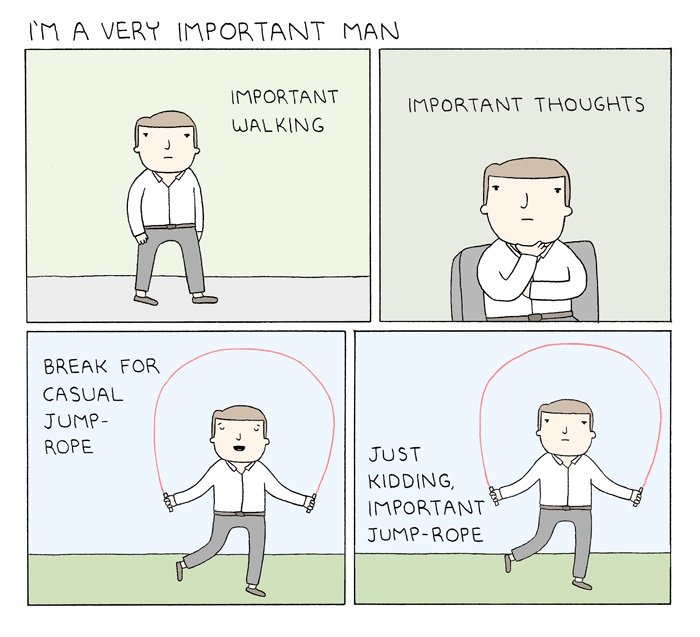
Very Important

Adam Victor Brandizzi

Important kidding BTW

06 Sep 00:55

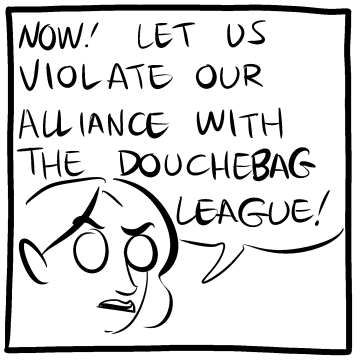
Saturday Morning Breakfast Cereal - Jerk Society

by admin@smbc-comics.com
06 Sep 00:54

Photo


06 Sep 00:54

asylum-art-2: Fire Paintings Draws With Flames And Soot  by...


asylum-art-2:

Fire Paintings Draws With Flames And Soot  by Steven Spazuk

More info: spazuk.com | Youtube | Facebook

Steven Spazuk is a Canada-based artist who uses candle soot to create elegant drawings. After depositing soot on his media with a candle or torch, he etches lines and patterns in the soot with  pencils and feathers.

Though Spazuk has spent the last 14 years developing and perfecting his soot painting technique, the creation process always has an element of random spontaneity and improvisation. via: boredpanda

04 Sep 17:23

I’m mature now.image | twitter | facebook


I’m mature now.

image | twitter | facebook

04 Sep 17:20

Excelente foto do Correio Braziliense.


Excelente foto do Correio Braziliense.

04 Sep 17:20

spatialmadness: Spatial Madness

04 Sep 16:30

Mt. Denali VS Mt. McKinley

by Kristie Lane
Adam Victor Brandizzi

Que história excelente hehehe


A little long, I know- But I had to get this out. Ohio is making a bill that would void the name change, and they're gathering fuel from people who don't know that full story. Which is pretty much everyone. So all I ask is people just be INFORMED.

Thank you,
04 Sep 12:42

Comic for September 04, 2015

by Scott Adams
Robot Personality Defect - Dilbert by Scott Adams

This entry passed through the Full-Text RSS service - if this is your content and you're reading it on someone else's site, please read the FAQ at fivefilters.org/content-only/faq.php#publishers.

04 Sep 12:41

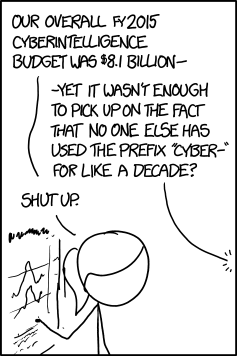
Cyberintelligence

We had gathered that raw information, but had yet to put it all together.
04 Sep 01:01

Elon Musk's growing empire is fueled by $4.9 billion in government subsidies

Adam Victor Brandizzi

Dinheiro bem investido, eu diria.

Los Angeles entrepreneur Elon Musk has built a multibillion-dollar fortune running companies that make electric cars, sell solar panels and launch rockets into space.

And he's built those companies with the help of billions in government subsidies.

Tesla Motors Inc., SolarCity Corp. and Space Exploration Technologies Corp., known as SpaceX, together have benefited from an estimated $4.9 billion in government support, according to data compiled by The Times. The figure underscores a common theme running through his emerging empire: a public-private financing model underpinning long-shot start-ups.

"He definitely goes where there is government money," said Dan Dolev, an analyst at Jefferies Equity Research. "That's a great strategy, but the government will cut you off one day."

The figure compiled by The Times comprises a variety of government incentives, including grants, tax breaks, factory construction, discounted loans and environmental credits that Tesla can sell. It also includes tax credits and rebates to buyers of solar panels and electric cars.

A looming question is whether the companies are moving toward self-sufficiency — as Dolev believes — and whether they can slash development costs before the public largesse ends.

Tesla and SolarCity continue to report net losses after a decade in business, but the stocks of both companies have soared on their potential; Musk's stake in the firms alone is worth about $10 billion. (SpaceX, a private company, does not publicly report financial performance.)

Musk and his companies' investors enjoy most of the financial upside of the government support, while taxpayers shoulder the cost.

The payoff for the public would come in the form of major pollution reductions, but only if solar panels and electric cars break through as viable mass-market products. For now, both remain niche products for mostly well-heeled customers.

Musk declined repeated requests for an interview through Tesla spokespeople, and officials at all three companies declined to comment.

The subsidies have generally been disclosed in public records and company filings. But the full scope of the public assistance hasn't been tallied because it has been granted over time from different levels of government.

New York state is spending $750 million to build a solar panel factory in Buffalo for SolarCity. The San Mateo, Calif.-based company will lease the plant for $1 a year. It will not pay property taxes for a decade, which would otherwise total an estimated $260 million.

The federal government also provides grants or tax credits to cover 30% of the cost of solar installations. SolarCity reported receiving $497.5 million in direct grants from the Treasury Department.

That figure, however, doesn't capture the full value of the government's support.

Since 2006, SolarCity has installed systems for 217,595 customers, according to a corporate filing. If each paid the current average price for a residential system — about $23,000, according to the Union of Concerned Scientists — the cost to the government would total about $1.5 billion, which would include the Treasury grants paid to SolarCity.

Nevada has agreed to provide Tesla with $1.3 billion in incentives to help build a massive battery factory near Reno.

The Palo Alto company has also collected more than $517 million from competing automakers by selling environmental credits. In a regulatory system pioneered by California and adopted by nine other states, automakers must buy the credits if they fail to sell enough zero-emissions cars to meet mandates. The tally also includes some federal environmental credits.

On a smaller scale, SpaceX, Musk's rocket company, cut a deal for about $20 million in economic development subsidies from Texas to construct a launch facility there. (Separate from incentives, SpaceX has won more than $5.5 billion in government contracts from NASA and the U.S. Air Force.)

Subsidies are handed out in all kinds of industries, with U.S. corporations collecting tens of billions of dollars each year, according to Good Jobs First, a nonprofit that tracks government subsidies. And the incentives for solar panels and electric cars are available to all companies that sell them.

Musk and his investors have also put large sums of private capital into the companies.

But public subsidies for Musk's companies stand out both for the amount, relative to the size of the companies, and for their dependence on them.

"Government support is a theme of all three of these companies, and without it none of them would be around," said Mark Spiegel, a hedge fund manager for Stanphyl Capital Partners who is shorting Tesla's stock, a bet that pays off if Tesla shares fall.

Tesla stock has risen 157%, to $250.80 as of Friday's close, over the last two years.

Musk has proved so adept at landing incentives that states now compete to give him money, said Ashlee Vance, author of "Elon Musk: Tesla, SpaceX, and the Quest for a Fantastic Future," a recently published biography.

"As his star has risen, every state wants a piece of Elon Musk," Vance said.

Before his current ventures, he made a substantial sum from EBay Inc.'s $1.5-billion purchase of PayPal, the electronic payment system in which Musk held an 11% stake.

Soon after, he founded SpaceX in 2002 with money from that sale, and he made major investments and took leadership posts at Tesla and Solar City.

Musk is now the chief executive of both Tesla and SpaceX and the chairman of SolarCity, and holds big stakes in all three, including 27% of Tesla and 23% of SolarCity, according to recent regulatory filings. The ventures employ about 23,000 people nationwide, and they operate or are building factories and facilities in California, Michigan, New York, Nevada and Texas.

Tense talks

The $1.3 billion in benefits for Tesla's Nevada battery factory resulted from a year of hardball negotiations.

Late in 2013, Tesla summoned economic development officials from seven states to its auto factory in Fremont, Calif. After a tour, they gathered in a conference room, where Tesla executives explained their plan to build the biggest lithium-ion battery factory in the world — then asked the states to bid for the project.

Nevada at first offered its standard package of incentives, in this case worth $600 million to $700 million, said Steve Hill, Nevada's executive director of the Governor's Office of Economic Development.

Tesla negotiators wanted far more. The automaker at first sought a $500-million upfront payment, among other enticements, Hill said. Nevada pushed back, in sometimes tense talks punctuated by raised voices.

"It would have amounted to Nevada writing a series of checks during the first couple of years," said Hill, calling it an unacceptable risk.

With the deal imperiled, Hill flew to Palo Alto in August to meet with Tesla's business development chief, Diarmuid O'Connell, a former State Department official who is the automaker's lead negotiator.

They shored up the deal with an agreement to give Tesla $195 million in transferable tax credits, which the automaker could sell for upfront cash. To make room in its budget, Nevada reduced incentives for filming in the state and killed a tax break for insurance companies.

Nevada Gov. Brian Sandoval and Musk sealed the agreement in a Labor Day phone conversation. Hill said it was worth it, pointing to the 6,000 jobs he expects the factory to eventually create.

The state commissioned an analysis estimating the economic impact from the project at $100 billion over two decades, but some economists called that figure deeply flawed. It counted every Tesla employee as if they would otherwise have been unemployed, for instance, and it made no allowance for increased government spending to serve the influx of thousands of local residents.

A $750-million factory

Musk has similar success with getting subsidies for a SolarCity plant in Buffalo, N.Y. The company currently buys many of its solar panels from China, but it will soon become its own supplier with a new and heavily subsidized factory.

An affiliate of New York's College of Nanoscale Science and Engineering in Albany will spend $750 million to build a solar panel factory on state land. SolarCity estimated in a corporate filing that it will spend an additional $150 million to get the factory operating.

When finished in 2017, the 1.2-million-square-foot facility will be the largest solar panel factory in the Western Hemisphere. New York officials see the subsidy as a worthy investment because they expect that it will create 3,000 jobs. The plant will replace a long-closed steel factory.

"The SolarCity facility will bring extensive benefits and value to this formerly dormant brownfield that provided zero benefit to the city and region," said Peter Cutler, spokesman for Empire State Development, New York's economic development agency.

SpaceX, though it depends far more on government contracts than subsidies, received an incentive package in Texas for a commercial rocket launch facility. The state put up more than $15 million in subsidies and infrastructure spending to help SpaceX build a launch pad in rural Cameron County at the southern tip of Texas. Local governments contributed an additional $5 million.

Included in the local subsidies is a 15-year property tax break from the local school district worth $3.1 million to SpaceX. Officials say the development still will bring in about $5 million more over that period than the local school district otherwise would have collected.

"That's $5 million more than we have ever seen from that property," said Dr. Lisa Garcia, superintendent of the Point Isabel Independent School District. "It is remote.... It is just sand dunes."

Crucial aid

The public money for Tesla and SolarCity factories is crucial to both companies' efforts to lower development and manufacturing costs.

The task is made more urgent by the impending expiration of some of their biggest subsidies. The federal government's 30% tax credit for solar installations gets slashed to 10% in 2017 for commercial customers and ends completely for homeowners.

Tesla buyers also get a $7,500 federal income tax credit and a $2,500 rebate from the state of California. The federal government has capped the $7,500 credit at a total of 200,000 vehicles per manufacturer; Tesla is about a quarter of the way to that limit. In all, Tesla buyers have qualified for an estimated $284 million in federal tax incentives and collected more than $38 million in California rebates.

California legislators recently passed a law, which has not yet taken effect, calling for income limits on electric car buyers seeking the state's $2,500 subsidy. Tesla owners have an average household income of about $320,000, according to Strategic Visions, an auto industry research firm.

Competition could also eat into Tesla's public support. If major automakers build more zero-emission cars, they won't have to buy as many government-awarded environmental credits from Tesla.

In the big picture, the government supports electric cars and solar panels in the hope of promoting widespread adoption and, ultimately, slashing carbon emissions. In the early days at Tesla — when the company first produced an expensive electric sports car, which it no longer sells — Musk promised more rapid development of electric cars for the masses.

In a 2008 blog post, Musk laid out a plan: After the sports car, Tesla would produce a sedan costing "half the $89k price point of the Tesla Roadster and the third model will be even more affordable."

In fact, the second model now typically sells for $100,000, and the much-delayed third model, the Model X sport utility, is expected to sell for a similar price. Timing on a less expensive model — maybe $35,000 or $40,000, after subsidies — remains uncertain.

"Some may question whether this actually does any good for the world," Musk wrote in 2008. "Are we really in need of another high-performance sports car? Will it actually make a difference to global carbon emissions? Well, the answers are no and not much.... When someone buys the Tesla Roadster sports car, they are actually helping to pay for the development of the low-cost family car."

Next: Battery subsidies

Now Musk is moving into a new industry: energy storage. Last month, he starred in a typically dramatic announcement of Tesla Energy-branded batteries for homes and businesses. On a concert-like stage, backed by pulsating music, Musk declared that the batteries would someday render the world's energy grid obsolete.

"We are talking about trying to change the fundamental energy infrastructure of the world," he said.

Musk laid out a vision of affordable clean energy in the remote villages of underdeveloped countries and homeowners in industrial nations severing themselves from utility grids. The Nevada factory will churn out the batteries alongside those for Tesla cars.

What he didn't say: Tesla has already secured a commitment of $126 million in California subsidies to companies developing energy storage technology.

jerry.hirsch@latimes.com

Twitter: @latimesjerry

Copyright © 2015, Los Angeles Times
Bookmarked at brandizzi Delicious' sharing tag and expanded by Delicious sharing tag expander.
03 Sep 20:56

TBT


TBT

03 Sep 18:52

Free Stuff and Naps

Conference Guy: Here's your headphones and your soft pillow! Conference room A is for napping. Conference room B is for quietly hacking while soft electronica plays.
187

Free Stuff and Naps - Sept. 3, 2015, 9 a.m.

There are at least two interpretations of this joke. Either all developers are lying to all project managers, and developer conferences are secretly just a mini-vacation for devs. OR This developer conference with the pillows and the soft music is a true developer conference - but it is too beautiful to exist in the real world. I think it is equally funny either way. conferences

Share Url: http://cube-drone.com/comics/c/free-stuff-and-naps

Share on TwitterShare on Facebutts

Expanded from Cube Drone by XPath Expander.
03 Sep 16:27

Na fronteira

Um tiroteio na fronteira entre a Venezuela e a Colômbia acendeu o pavio da mais recente crise internacional de nossa vizinhança.

De olho nas eleições de dezembro, Nicolás Maduro esticou a corda. Denunciou os cidadãos colombianos como fonte de criminalidade e contrabando, expulsando mil deles do país. Outros 5.000 saíram com medo. Se a situação piorar, há risco de uma grave crise humanitária.

O problema é artificial e, como todos sabem, manter a fronteira fechada é insustentável porque aquela é uma área de enorme dinamismo econômico. Além disso, 4 milhões de colombianos vivem na Venezuela, gerando um caldo de insatisfação difícil de controlar. Até dezembro, porém, Maduro não tem incentivo algum para reverter as coisas. Sua aposta é arriscada porque uma escalada de violência nunca é fácil de conter.

Se errar na mão, pode reprisar o filme de Galtieri, o general argentino que se lançou à conquista das Malvinas.

Nessas circunstâncias, o governo colombiano assiste à crise de mãos atadas. O presidente Juan Manuel Santos investiu muito na aproximação com a Venezuela e, agora, uma reversão poderia feri-lo nas eleições que enfrentará no próximo dia 25 de outubro.

Santos ainda padece de falta de apoio externo.

Anteontem, ele não conseguiu obter o apoio da OEA e, ontem, ficou claro que a Unasul tampouco virá a seu resgate de modo decisivo.

Para Santos, a opção factível é empurrar com a barriga até dezembro, pedindo aos céus para que a violência contra cidadãos colombianos não chegue ao ponto de forçá-lo a reagir.

Qual o papel do Brasil nessa história?

No Planalto, ninguém esconde exasperação com a diplomacia venezuelana. Os adjetivos utilizados para caracterizá-la não cabem nas páginas deste jornal, que é lido por toda a família. No entanto, ninguém em Brasília está disposto a entrar na briga. Ouve-se que fazê-lo poderia deteriorar o relacionamento com Caracas às vésperas de uma difícil eleição e até mesmo insuflar Maduro ainda mais.

Isso dito, há medidas específicas que o governo brasileiro pode tomar em repúdio sutil à patacoada venezuelana. O cenário ideal para tanto é a visita oficial de Dilma à Colômbia, em 5 de outubro próximo.

A presidente pode pousar em Bogotá com dois acordos hoje emperrados do lado brasileiro –um sobre comércio fronteiriço e outro sobre direito de residência.

Ela ainda pode assinar um ambicioso instrumento de facilitação de investimentos, que está quase pronto.

Acima de tudo, pode chegar bem preparada para responder às perguntas inconvenientes que lhe farão sobre o espinhoso aliado venezuelano.

03 Sep 15:17

Photo


03 Sep 15:17

Photo


03 Sep 12:12

HOW TO FAIL AT THE INTERNET!

by WrongMan
03 Sep 11:25

What A Connected World

by Oliver Widder
03 Sep 11:25

Photo


03 Sep 11:23

The Flare and the Galaxy

Discover the cosmos! Each day a different image or photograph of our fascinating universe is featured, along with a brief explanation written by a professional astronomer.

2015 September 2
See Explanation.  Clicking on the picture will download
 the highest resolution version available.

The Flare and the Galaxy
Image Credit & Copyright: Martin Mark

Explanation: Is this person throwing a lightning bolt? No. Despite appearances, this person is actually pointing in the direction of a bright Iridium flare, a momentary reflection of sunlight off of a communications satellite in orbit around the Earth. As the Iridium satellite orbits, reflective antennas became aligned between the observer and the Sun to create a flash brighter than any star in the night sky. Iridium flares typically last several seconds, longer than most meteors. Also unlike meteors, the flares are symmetric and predictable. The featured flare involved Iridium satellite 15 and occurred over southern Estonia last week. In this well-planned image, a spectacular night sky appears in the background, complete with the central band of our Milky Way Galaxy running vertically up the image center.

Retrospective: Today in APOD History
Tomorrow's picture: open space < | Archive | Submissions | Index | Search | Calendar | RSS | Education | About APOD | Discuss | >

Authors & editors: Robert Nemiroff (MTU) & Jerry Bonnell (UMCP)
NASA Official: Phillip Newman Specific rights apply.
NASA Web Privacy Policy and Important Notices
A service of: ASD at NASA / GSFC
& Michigan Tech. U.

Expanded from APOD by Feed Readabilitifier.
03 Sep 11:22

Photo


02 Sep 19:51

Blythe Masters Tells Banks the Blockchain Changes Everything - Bloomberg Business

Adam Victor Brandizzi

Banqueiros empolgados com blockchain. Faz todo sentido.

The penthouse meeting room in Le Parker Meridien hotel in midtown Manhattan is humming with chatter on this June afternoon. About a hundred money managers are networking at the end of the day at a Sandler O’Neill & Partners investor conference as the green rectangle of Central Park stretches into the distance 42 floors below. With neckties loosened and icy drinks in hand, the attendees largely ignore the founder of a fintech startup who’s presenting a PowerPoint about his investing smartphone app. But when the next guest takes the floor, the room falls silent.

These Wall Street veterans all know who Blythe Masters is. She’s the wunderkind who made managing director at JPMorgan Chase at age 28, the financial engineer who helped develop the credit-default swap and bring to life a market that peaked at $58 trillion, in notional terms, in 2007. She’s the banker later vilified by pundits, unfairly some say, after those instruments compounded the damage wrought by the subprime mortgage crash in 2008. Now, one year after quitting JPMorgan amid another controversy, Blythe Masters is back. She isn’t pitching a newly minted derivative or trading stratagem to this room. She’s promoting something wilder: It’s called the blockchain, and it’s the digital ledger software code that powers bitcoin.

Masters is the CEO of Digital Asset Holdings, a New York tech startup. She says her firm is designing software that will enable banks, investors, and other market players to use blockchain technology to change the way they trade loans, bonds, and other assets. If she’s right, she’ll be at the center of yet another whirlwind that will change the markets.

“You should be taking this technology as seriously as you should have been taking the development of the Internet in the early 1990s,” Masters, a lithe 46-year-old Englishwoman with auburn hair and the proper diction of the Home Counties, explains to the rapt audience. “It’s analogous to e-mail for money.”

That’s a bold statement, but Masters isn’t the only voice heralding the coming of the blockchain. The Bank of England, in a report earlier this year, calls it the “first attempt at an Internet of finance,” while the Federal Reserve Bank of St. Louis hails it as a “stroke of genius.” In a June white paper, the World Economic Forum says, “The blockchain protocol threatens to disintermediate almost every process in financial services.”

In a matter of months, this word, blockchain, has gone viral on trading floors and in the executive suites of banks and brokerages on both sides of the Atlantic. You can’t attend a finance conference these days without hearing it mentioned on a panel or at a reception or even in the loo. At a recent blockchain confab in London’s hip East End, the host asked if there were any bankers in the room. More than half the audience members, all dressed in suits, raised their hands.

Now, everyone’s trying to figure out whether the blockchain is just so much hype or if Masters’s firm and other startups are really going to change the systems that process trillions of dollars in securities trades. When investors buy and sell syndicated loans or derivatives or move money around the world, they must cope with opaque and clunky back-office processes that rely on negotiated contracts between buyers and sellers, lots of phone calls, lots of lawyers, and even the occasional fax. It still takes almost 20 days, on average, to settle syndicated loan trades.

Masters is betting that the blockchain, the breakthrough that permits people to buy and sell bitcoins without the need for an intermediary, can be used to streamline all manner of financial transactions. A June report backed by Santander InnoVentures, the Spanish bank’s fintech investment fund, estimated the blockchain could save lenders up to $20 billion annually in settlement, regulatory, and cross-border payment costs.

“You have front-end systems trading at warp speed, and nanoseconds of competitive advantage are being extracted, and yet the back end of Wall Street hasn’t been fundamentally overhauled in decades,” Masters says in an interview at her offices in Manhattan’s Flatiron District. “Firms are dealing with greater requirements for reporting, transparency, and dissemination of data. Costs have gone up and revenues have gone down. This technology really gets to the core of all those issues.”

That’s why there’s been a Cambrian explosion of blockchain startups, accelerators, and skunkworks in London, New York, and Silicon Valley. In April, UBS installed a half dozen developers in London’s Level39 accelerator to download blockchain source code from the Internet and delve into how it might revolutionize payments, cybersecurity, and other banking needs. Barclays, Goldman Sachs, the New York Stock Exchange, and Santander are backing cryptocurrency ventures. And no surprise, Marc Andreessen, Jim Breyer, Reid Hoffman, and other denizens of Sand Hill Road are all over this space. Venture capitalists plowed $400 million into dozens of digital currency startups in the first six months of this year, a fourfold jump from all of 2013, according to industry news site CoinDesk.

Some of these ventures are building on the actual bitcoin blockchain. In June, Nasdaq teamed up with Chain, a San Francisco firm, and launched a project to use the blockchain to issue and transfer the equity shares of closely held companies on the exchange’s private marketplace. “The blockchain is going to bring levels of efficiency to the financial markets that we’ve never seen before,” says Nasdaq CEO Bob Greifeld. “In time, it could be as impactful on the back office as electronic trading was on open outcry.” 

By contrast, Ripple Labs, another San Francisco company, runs a self-contained network for financial institutions that doesn’t rely on bitcoin at all. Masters plans to offer banks and other financial players both options: Digital Asset is creating an off-the-shelf private blockchain product and developing ways to connect its customers to the existing bitcoin system.

Whatever form it takes, the blockchain has the potential to change the very structure of the financial services industry, says Oliver Bussmann, the chief information officer at UBS. “If you brought up bitcoin with bankers 12 months ago, you’d lose their attention immediately,” Bussmann says. “Now, everyone sees this as a critical topic. I know of more than 100 firms that are trying to make the blockchain more scalable, more secure, to make the one that everybody will use. There’s a race on out there.”

Maybe so, but rewiring the market’s infrastructure is an awfully big task. So is persuading financial players to place their trust in a system embraced by cryptocurrency anarchists and other fringy characters. Even if market pros do grasp the blockchain’s potential, will they buy in?

“Look, the technology is potentially great, but you’re going to have to bring along all the regulators and the banks to change the ecosystem,” says Hank Uberoi, the former co-head of Goldman Sachs’s global technology operations and now the CEO of Earthport, a London-based payments venture. “Change comes very slowly in that world. That’s going to be the hardest part.”

When it comes to adopting innovation, the financial services industry doesn’t exactly have a stellar record. For example, the global interbank payments system, which Uberoi’s Earthport is trying to shake up, is managed by a consortium of more than 10,000 institutions. It’s so antiquated that it still takes days to send transactions from one part of the world to another. Jon Matonis, a founding director of the Bitcoin Foundation, a Washington group that promotes the cryptocurrency, says a private blockchain run by banks could end up as just “another cartel” and function as poorly as the payments consortium. 

Masters had a hard time believing Digital Asset's Sunil Hirani was serious when he first talked to her about bitcoin.

Photographer: Guzman/Bloomberg Markets

Blythe Masters swings open the door of her ninth-floor offices, parks her suitcase, and exhales. Fresh off a flight from London, she’s relieved to be back on solid ground. Masters says her airliner was landing when it suddenly roared back into the sky to avoid a collision on the runway. “That’s the most dangerous moment I’ve ever had on a plane!” says Masters, who’s dressed in a black knit tunic, black tights, and Burberry-plaid flats.

Her new digs at Digital Asset Holdings, with a worn wooden floor and views of air shafts, are a far cry from the Park Avenue executive suite at JPMorgan. The glass walls are covered in scribbled pieces of code and diagrams with a lot of boxes and arrows. A gray terrier named Luna, the office pooch, scampers under the conference room table. A guest notes that Nasdaq has just hired a “blockchain technology evangelist.” “We have a blockchain artist,” Masters replies, pointing out the one decorative object in the place, a painting depicting a network of black and blue lines. “That is our COO’s homegrown work,” she says with delight. “I rather like it.”

Born in Oxford and educated in economics at Cambridge, Masters came of age at JPMorgan. At 18, she joined its London office as an intern during a year off before university. By her mid-20s, Masters was working on the bank’s derivatives team in New York. She helped design a way to remove lending risk from JPMorgan’s balance sheet by getting another party to protect the bank against a default in return for a premium. The contract, which made it possible to bet a bond would fall in value, was dubbed a credit-default swap, and investors fell in love with it. In 1999, Masters, then 30, was named head of the bank’s global credit derivatives unit.

“Blythe has about as much wrapped up in one brain as I’ve ever encountered in finance,” says John “Mac” McQuown, co-founder of KMV, a maker of widely used credit analysis tools. McQuown, 81, has known Masters since the early 1990s. “She is inventive, a risk taker, and beyond a doubt a force to be reckoned with.”

Masters advanced quickly up JPMorgan’s ranks. Following a stint as CFO of its global investment bank from 2004 to 2007, she was appointed chief of a newly formed unit that helped clients manage risk in commodities markets. During the next five years, she built it into a profitable business that oversaw billions of dollars of physical assets. At the same time, Masters served as a board member and then chair of the Securities Industry and Financial Markets Association, known as SIFMA. Along the way, she earned a reputation as that rare figure on the Street, a corporate player with the innovative chops of an entrepreneur.

“You were one of the most powerful women on Wall Street,” CNBC host Bob Pisani noted during an onstage interview with Masters at a fintech conference in June.

“What do you mean I was?” Masters deadpanned.

After the fall of Lehman Brothers in September 2008, some media outlets highlighted her work with credit derivatives and cast her as one of the instigators of the crash. She became such a target of critics that a French graffiti artist spray-painted her likeness onto the wall of a museum called the Abode of Chaos near Lyon.

In a speech that year at SIFMA’s annual conference in New York, she noted that she’d been dubbed “The Woman Who Built Financial Weapons of Mass Destruction.” She responded to the swipes by saying the problem wasn’t the instrument but the way people used it. “Unfortunately, tools that transfer risk can also increase systemic risk if major counterparties fail to manage their risk exposures properly,” she said.

JPMorgan CEO Jamie Dimon backed her all the way through this period, but her fortunes turned in 2013, when the Federal Energy Regulatory Commission investigated whether traders in her commodities division manipulated California’s electricity market. JPMorgan paid a $410 million settlement to end the case without denying or admitting wrongdoing; Masters wasn’t implicated in the matter. Dimon agreed to sell the business to a Swiss trading firm called Mercuria Energy Group in March 2014, and Masters resigned.

For the first time in her career, she had nowhere to be and nothing to do except hang out with her husband and daughter in her Tribeca townhouse, catch up with friends, and pursue her passion for show jumping. Masters has won first-place ribbons riding her two beloved European warmblood horses, Aslan and Vamos.

Then one day that summer, she grabbed breakfast with Sunil Hirani, an entrepreneur who co-founded Creditex Group, one of the first CDS brokerages. Hirani, 48, an effusive man who’s made a fortune at the intersection of technology and derivatives, couldn’t stop talking about bitcoin. He was toying with the idea of creating futures contracts around the ersatz currency. He was also forming a startup, Digital Asset, to explore how to apply the blockchain to the markets. He’d teamed up with Don Wilson, the founder and CEO of DRW Trading Group, a Chicago-based market maker and trading firm.

Masters was surprised. Hirani was a shrewd Street vet. He’d sold Creditex for $513 million to Intercontinental Exchange in 2008. Why was he messing around with a technology associated with cypherpunks and anti-Fed libertarians? Wasn’t the currency’s price cratering amid scandals involving bitcoin-lubricated online drug bazaars and bankrupt bitcoin exchanges? “Can’t we talk about something more serious?” Masters pleaded with her old friend.

Hirani knew that Masters’s knowledge of the inner workings of the markets would make her the ideal person to build the firm he envisaged and to sell this new technology to Wall Street. So he persuaded Masters to do some homework. Over the next few weeks, she delved into bitcoin’s origins and discussed its potential with Hirani and his colleagues as well as her network of regulators and market players. 

Photographer: Guzman/Bloomberg Markets

So what, exactly, is this thing that sounds like something you’d build with Lego pieces? Like many innovations in finance these days, the blockchain is code.

In 2009, a mysterious coder named Satoshi Nakamoto released bitcoin and the math that makes it work on the Internet. He (or she or they—Nakamoto has yet to be identified) created a peer-to-peer network to enable people to buy and sell bitcoins and to automatically secure and perpetuate the system. Every 10 minutes, coders around the world known as miners race to be the first to solve mathematical equations and record transactions made with bitcoins as entries, or blocks, on a digital ledger. In return for their work, which requires brute force computing power to complete, the program rewards miners with bitcoins, which motivates them to process transactions faster.

Here’s the key part: Every new block is connected to every prior one in a digital chain. So the record of every bitcoin transaction lives on the computers of the miners and is updated with each new entry. That’s why the blockchain is also called a distributed or a decentralized ledger. This replication makes the blockchain secure. The only way to tamper with it would be to seize control of most of the computers holding the blockchain in their memories, which miners call the “51 percent attack.” Such an assault has a better chance of materializing in the next Bond flick than in reality, says Matonis, who’s also an editorial board member at CoinDesk.

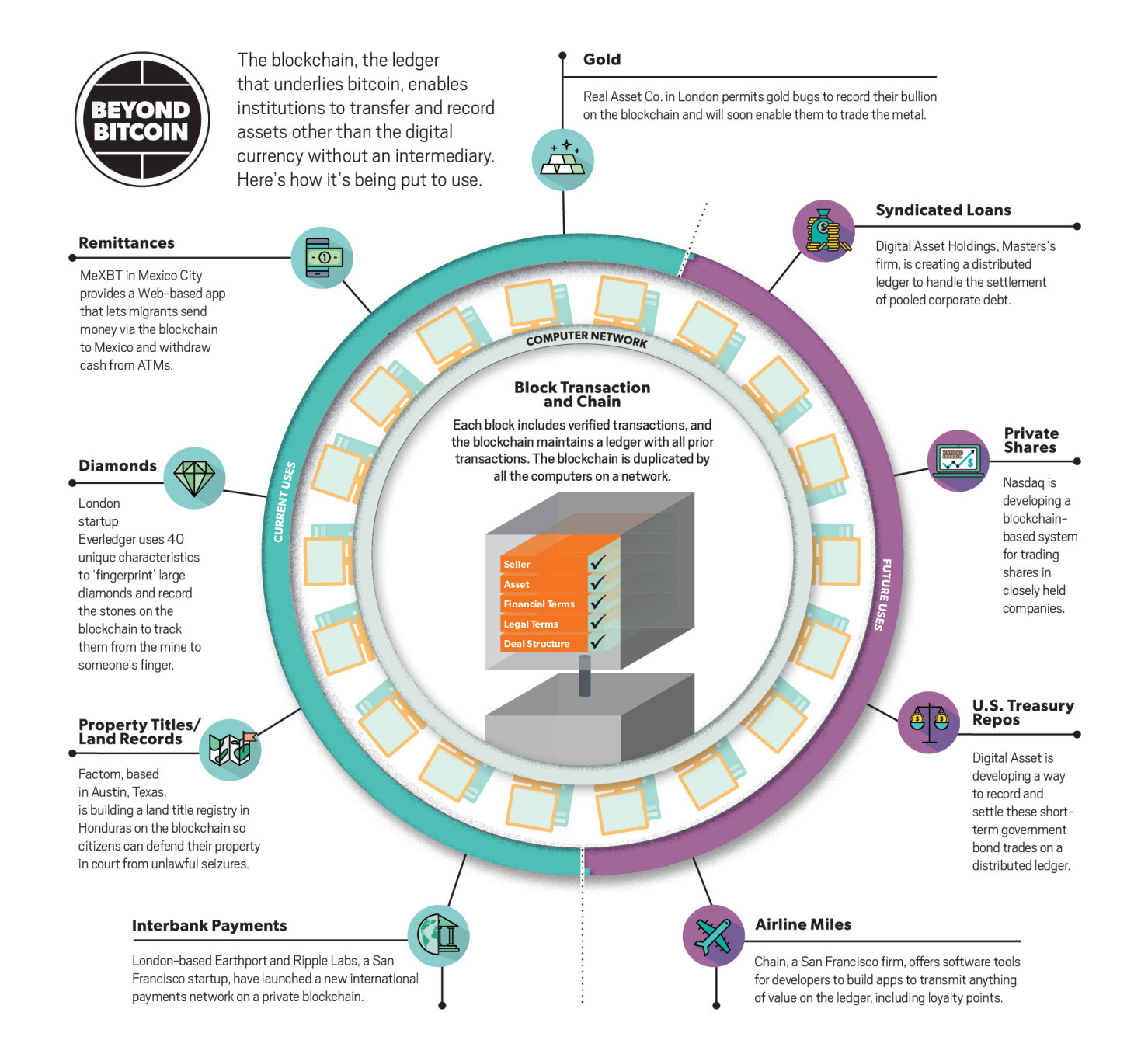
As Masters dug deeper into bitcoin, she learned that it was just one of many applications that could run on the blockchain. Startups in London, Silicon Valley, and even Mexico City were already developing ways to use it to transfer and record land titles, airline miles, gold, and diamonds. Masters realized that bitcoin wasn’t really about bitcoin—it was all about the blockchain. “I had an aha moment,” Masters says.

She then plumbed why the ledger could transmit assets without an intermediary, which would change everything she knew about the way the markets completed trades. Buyers and sellers, of course, can’t automatically trust one another. In the fixed-income market, for example, we need middlemen to draw up contracts between buyers and sellers that cover interest payments, terms, and collateral, plus clearinghouses to guarantee the exchange of cash for securities.

Through her research, Masters understood how you could input all that information into a digital “smart contract” on a distributed ledger. Conceptually, it’s similar to the way you can embed video in an e-mail. But the difference is that when you send that smart contract along, it doesn’t just contain data, it transfers ownership of the security. The value belongs to whoever possesses it. So a trade could be settled in minutes instead of days or weeks, Hirani says.

Anyone with access to the ledger can read the contract with a click of a mouse. That means regulators, who depend primarily on self-regulatory organizations to police the markets, could easily verify that a securities transaction didn’t violate anti-money-laundering rules or other laws. The blockchain, in essence, automates trust, Hirani says.

The clincher for Masters was how the technology can affect risk. Every hour that a trade hangs suspended between sale and purchase, the chances mount that it won’t be fulfilled, she says. Institutions have to set aside capital to protect themselves from such failures. Since the 2008 crash, regulators in the U.S. and the European Union have directed banks to allocate ever-larger sums to cover their exposures. If the blockchain could shorten the settlement time for, say, syndicated loans, from 20 days to 10 minutes, this risk would be reduced and capital would be freed up.

“I spent my whole career thinking about risk, markets, infrastructure, and regulation,” Masters says. “I had seen the financial crisis unfold, and I had seen the credit derivatives market get operationally ahead of itself, which resulted in systemic risk counterparty exposures. I began to believe that distributed ledgers had the capability to tackle that problem.”

In March, Masters joined Digital Asset as CEO. She, Hirani, and Wilson set to work developing blockchain-based software for three inefficient markets they deemed ripe for an overhaul: syndicated loans, U.S. Treasury repos, and equity shares in private companies. At the same time, Masters recognized that the open structure of the bitcoin process—no one controls who does the mining—would be anathema to an industry in which client confidentiality is sacrosanct. So in July, the company acquired Hyperledger, a San Francisco software firm that’s developing the technological equivalent of gated communities. Its system is designed so that users will be able to process transactions themselves rather than depend on the open bitcoin blockchain.

“With private chains, you can have a completely known universe of transaction processors,” Masters says. “That appeals to financial institutions that are wary of the bitcoin blockchain.”

While this vision of a superefficient financial world is enticing, let’s not forget that Masters and her rivals will have to persuade institutions and regulators to uproot decades of legacy IT systems and practices. And the introduction of the blockchain will make the markets’ infrastructure even more complex than it already is, at least in the short term.

Skeptics question whether one piece of code could in a single stroke make finance faster, more transparent, and more efficient. “People are talking about how the blockchain is going to be some kind of Messianic savior for the database industry,” says Bradley Howard, the head of digital media at Endava, a London-based IT services provider. “It may be fantastic in some cases, but it could also just be the latest fad.”

Yet Masters, who in July joined the board of Santander’s U.S. auto financing unit as nonexecutive chairman, is betting that the mindset at the highest levels of finance is changing. The advent of peer-to-peer lending, mobile banking, and other innovations is forcing Wall Street’s chieftains to rethink their businesses. She says the blockchain may be the biggest fintech play of them all.

“Blythe sees that a new industry is being created,” says Hirani, who’s known Masters for 17 years. “There’s no infrastructure. There’s no companies that have any kind of scale. She’s done the bank thing. She did commodities. She did derivatives. She did loan portfolio management. This allows her to bring all of that experience to bear in creating an ecosystem—and a company around it.”

Twenty-three years ago, Masters opened up fresh territory with credit derivatives. Now, she’s determined to do it again, although this time it’s with a technology that was initially designed to bypass the financial system. Masters, with a very British dose of understatement, puts it this way: “I’ve always been motivated to innovate where the implications are significant.”

This story appears in the October issue of Bloomberg Markets magazine. 

Bookmarked at brandizzi Delicious' sharing tag and expanded by Delicious sharing tag expander.
02 Sep 19:29

the-weird-wide-web: “ I’m 87 years old…I only eat so I can smoke and stay alive.. The only fear I...

Adam Victor Brandizzi

"The only fear I have is how long consciousness is gonna hang on after my body goes."

Então não sou só eu.

the-weird-wide-web:

“ I’m 87 years old…I only eat so I can smoke and stay alive.. The only fear I have is how long consciousness is gonna hang on after my body goes. I just hope there’s nothing. Like there was before I was born. I’m not really into religion, they’re all macrocosms of the ego. When man began to think he was a separate person with a separate soul, it created a violent situation.

The void, the concept of nothingness, is terrifying to most people on the planet. And I get anxiety attacks myself. I know the fear of that void. You have to learn to die before you die. You give up, surrender to the void, to nothingness.

Anybody else you’ve interviewed bring these things up? Hang on, I gotta take this call….. Hey, brother. That’s great, man. Yeah, I’m being interviewed… We’re talking about nothing. I’ve got him well-steeped in nothing right now. He’s stopped asking questions.“ 

~ HARRY DEAN STANTON

02 Sep 19:26

Coder discussion

02 Sep 19:24

aagdolla: Twins at Afro Punk 2015 by aagdolla


aagdolla:

Twins at Afro Punk 2015

by aagdolla

02 Sep 19:22

parl–calmer: soundsof71: FULL ALERT: LIFESIZE DAVID BOWIE...


parl–calmer:

soundsof71:

FULL ALERT: LIFESIZE DAVID BOWIE PILLOW!!!

The Lifesize David Bowie Pillow stands 66" tall and is the ultimate gift for a David Bowie fan’s home decor.

Sit this Bowie doll onto a daybed or sofa, against a wall as a soft sculpture artwork or on the floor as a makeshift chair.

Handcrafted from high quality printed fabric that is silky soft to the touch and backed with sturdy broadcloth, this tribute to David Bowie’s famous Ziggy Stardust costume is an utterly unique addition to any Bowie fan’s home.

**I’m a body pillow…
**I’m a Big Bowie coming for youuu…
**I’m the couch invader…
**I’ll be a rockin’, rollin’ cushion for youuu…

Designed by Demi Anter, available at ProxyShop

ziggy-played-keytar buy this.

02 Sep 19:22

O príncipe e os súditos - 02/09/2015 - Opinião - Folha de S.Paulo

Bernardo Mello Franco

BRASÍLIA - Herdeiro da maior empreiteira do país, o executivo Marcelo Odebrecht é conhecido pelo apelido de príncipe. Nesta terça, ele deixou a prisão para ser cortejado por um diligente grupo de súditos: os deputados da CPI da Petrobras.

O depoimento se transformou em uma ação entre amigos. Os inquisidores pareciam concorrer para ver quem elogiava mais o empresário, que responde a ação penal por corrupção, lavagem de dinheiro e formação de organização criminosa.

"Senhor Marcelo, é a primeira vez que tenho a oportunidade de estar pessoalmente no mesmo ambiente que o senhor", desmanchou-se Altineu Côrtes (PR-RJ). Depois, ele disse conhecer empregados da Odebrecht que sentem "profundo orgulho" do patrão. Só faltou pedir autógrafo.

Valmir Prascidelli (PT-SP) formulou uma pergunta curiosa ao investigado. "O sr. acha adequada e correta a sua prisão, considerando que sempre se colocou à disposição da Justiça?" Odebrecht retribuiu, sensibilizado: "Agradeço muito as perguntas que o sr. está fazendo, porque elas seriam as minhas respostas".

Delegado Waldir (PSDB-GO), que na véspera chamara José Dirceu de "ladrão", parecia outra pessoa. "Parabéns, eu também me orgulho muito do meu pai", disse, quando o empreiteiro citou o patriarca Emilio.

Outro tucano, Bruno Covas (PSDB-SP), se mostrou compreensivo quando o réu se recusou a responder perguntas: "Não precisa pedir desculpas, até porque é um direito seu".

É elogiável que os deputados façam perguntas em tom educado. Mas o excesso de mesuras ficou constrangedor até para os padrões da CPI, que tem se empenhado em proteger réus e perseguir delatores da Lava Jato.

No fim, Carlos Andrade (PHS-RR) quis saber se o executivo continua a defender o financiamento privado de campanhas. Em 2014, o grupo Odebrecht doou R$ 918 mil a deputados da CPI. "Sou a favor, sempre fui", respondeu o príncipe encarcerado. Os súditos pareceram respirar aliviados.

Bookmarked at brandizzi Delicious' sharing tag and expanded by Delicious sharing tag expander.