Shared posts

16 Mar 05:51

Here's What the Hell Happened In Bitcoin In 2015 | Motherboard

by brandizzi

Bitcoin season seven—on the web since 2008!—is drawing to a close, and it’s clear that the writers have started to run out of ideas. Earlier seasons of the series had their fair share of drama, like in season six when the gigantic Mt. Gox exchange imploded, taking millions of dollars worth of Bitcoin with it, but even that doesn’t compare to the show’s recent “wacky” phase, where it seems like anything goes.

Without a doubt, 2015 was the craziest year yet for Bitcoin, the virtual currency that, in the last six years, has gone from a niche hobby for people who’ve read Neuromancer to being on the cover of Bloomberg Businessweek.

This year, the stakes got higher, the hunt for Bitcoin’s anonymous creator intensified, and the resulting drama threatened to tear the cryptocurrency community apart. Welcome to the big show, folks.

GIF via Giphy

CRYPTO-DRUG DEALERS GOT THEIR ROBESPIERRE

In 2015, libertarian keyboard warriors and Russell Brand alike got their very own Robespierre: Ross Ulbricht, a 31-year-old college-educated libertarian who was sentenced to life in prison for operating the Silk Road dark web market under the pseudonym “Dread Pirate Roberts.”

For a while, Silk Road was the go-to location on the dark web for buyers and sellers of drugs, with Bitcoin as their currency of choice. After Ulbricht’s 2013 arrest and 2015 sentencing, his supporters, united under the banner “Free Ross,” were up in arms over what they saw as a harsh sentence, and dealers picked up the slack by starting new markets to fill the void left by Silk Road.

But the saga didn’t end there. That would be far too neat and tidy for Bitcoin. There were also two corrupt DEA agents, who were both recently sentenced to prison for doing everything from stealing bitcoins to setting someone up for a hit. And yes, there could still be more crooked cops on the Silk Road case.

Ulbricht wasn’t alone in running Silk Road, either. This was also the year the feds tracked down “Variety Jones”, Ulbricht’s right hand man, also known as Roger Clarke. They’ve since charged him with numerous offences, including narcotics trafficking, and Motherboard's own Joseph Cox kept tabs on the whole thing all the while.

THERE WAS BASICALLY A CIVIL WAR OVER A CODE CHANGE

It all started in December of 2014, when longtime Bitcoin developer Gavin Andresen proposed a change to Bitcoin’s code. The change was intended to help the network handle its anticipated growth by, essentially, increasing the size of the “blocks” of data that get uploaded to the blockchain, the publicly viewable ledger at the heart of Bitcoin.

“That makes sense,” you might say—except the proposed change turned into a total shit show and everyone got mad and said mean things about each other for much of 2015. Even core developers started picking sides. Prominent developer Mike Hearn aligned with Andresen, while others, such as core developerPeter Todd, took a decidedly more contrarian position.

Now, nearly a year later, pretty much everyone agrees that something needs to be done to prepare BItcoin for a huge influx of users, if they ever come, but not everyone thinks Andresen’s idea is the solution. So, that’s something.

Watch more from Motherboard: Life Inside a Chinese Bitcoin Mine

PEOPLE KEPT TRYING TO BREAK BITCOIN

In a war of words, sometimes the best weapon is a little bit of action. Amidst all the hysteria about the network not being able to handle the load of more users, something strange started happening. In June, a Bitcoin exchange called Coinwallet.eu began spamming the Bitcoin network with so many junk transactions that the system slowed to a crawl.

Coinwallet.eu referred to these tests as “stress tests,” but others preferred “spam attack.” Coinwallet.eu, which apparently was willing to piss away the thousands of dollars in Bitcoin, did this several times in 2015 to prove a point: Bitcoin’s code needs to be updated to handle more traffic.

Other mysterious parties began spamming the Bitcoin network in 2015, as well. During one July attack by unknown parties, cleaning up the mess required creating the largest Bitcoin transaction of all time.

One spammer, who claimed to be Russian and went by the name “Alister Maclin,” also claimed responsibility for one of the more damaging spam attacks in October. Why? In an interview with Motherboard, the spammer told me he really just doesn’t think Bitcoin is a very good idea at all.

TOO MANY SATOSHIS

The first lesson in Bitcoin 101 is that nobody knows who actually wrote the original Bitcoin white paper that was circulated among cryptographers in 2008. The anonymous author goes by the pseudonym “Satoshi Nakamoto,” and lots of people have tried to find out who he, she, or they, are, with very little success.

Last year saw Newsweek point the finger at some random guy named Dorian Nakamoto. Although nobody can be totally sure, Dorian denied any involvement, and it almost certainly wasn’t him. This year, two new high-profile entrants made it into the ever-growing pantheon of people who are probably not Satoshi Nakamoto: a cryptocurrency engineer named Nick Szabo and an Australian entrepreneur named craig Steven Wright.

The New York Times implicated Szabo in May for the following reasons: he engineered a predecessor to Bitcoin called “bit gold,” and he denies being Satoshi Nakamoto—which is just what the real Satoshi Nakamoto would do. As for Wright, Wired and Gizmodo ran parallel investigations that named him as the likely person behind Nakamoto based on evidence provided to them by someone claiming to be a hacker. Very little of this evidence was verified and some of it was likely faked, as Motherboard reported.

Nice try everyone, better luck next year.

Introducing... Satoshi Nakamoto! pic.twitter.com/assJ7Ggy3G
— anthony berghain (@neuwaves) December 9, 2015

BUREAUCRACY MET CRYPTOCURRENCY

Much to the chagrin of Bitcoin’s largely libertarian-leaning community, some governments began taking steps to regulate Bitcoin. In New York State, much-maligned BitLicense legislation began forcing Bitcoin businesses to get a license to operate in September of 2015. The law was summarily suplexed by the head of MIT’s Digital Currency Initiative, Brian Forde, along with other prominent members of the community.

Outside of the US, the province of Quebec in Canada followed suit with a similar law, although a report by the Canadian Senate recommended that the government take a very hands-off approach to Bitcoin—at least for now. Europe has also announced plans to regulate Bitcoin amid fears that ISIS is using it to fund their operations, despite a near-total lack of evidence that they actually are.

LOTS OF PEOPLE GOT IN TROUBLE WITH THE LAW

Ross Ulbricht wasn’t the only character in Bitcoin to run afoul of the law this year. And while the others perhaps don’t have Ulbricht’s star power or roguish good looks, they’re worthy of their own mention on this list.

First, there’s Mark Karpeles, the Bitcoin entrepreneur who ran the now-defunct Bitcoin exchange Mt. Gox. Mt. Gox’s fall is one of the more infamous episodes in Bitcoin’s history. When it unexpectedly folded in early 2014, due to a devastating hack, according to Karpeles, it took $473 million worth of Bitcoin with it. Karpeles was arrested by Japanese police several times in 2015, until he was finally charged with embezzling $2.6 million from the failed exchange.

Next, we have Josh Garza, the founder of much-derided and federally investigated mining hardware company GAW Miners. After a few of his other shady Bitcoin operating imploded in 2015, he was formally charged by the Securities and Exchange Commission for running a multi-million dollar ponzi scheme. It wasn’t shocking in the least to anyone who was paying attention, and allowed me to make the joke “Pyramids of Garza.”

Finally, there’s Shiny Flakes, a pseudonymous 20-year-old nerd from Germany who ended up running one of the dark web’s most successful Bitcoin-for-drugs operations. In March, police in Leipzig raided his bedroom and arrested him, taking 4.1 million euros worth in cocaine, LSD, ketamine, weed, and more, with them. He was sentenced to seven years in prison. Besides Ulbricht himself, Shiny Flakes was probably the highest-profile Bitcoin-related sentencing of 2015, at least when it comes to slinging drugs over the Tor network.

***

And this concludes your recap of Bitcoin, season seven. It was a wild ride, and some of it didn’t even make any sense. But that’s okay, because season eight, coming in 2016, promises to be even better.

This entry passed through the Full-Text RSS service - if this is your content and you're reading it on someone else's site, please read the FAQ at fivefilters.org/content-only/faq.php#publishers.


16 Mar 05:50

Dear Mr. President: Please stop with these science “moonshots” | Ars Technica

by brandizzi

During this week's State of the Union address, President Obama announced that his Vice President Joe Biden will lead a new science "moonshot" to put an end to cancer. According to an article on Medium posted by the Vice President, this will do two things: increase resources devoted to fighting cancer and break down barriers that prevent sharing of information among cancer researchers.

The announcement drew a lot of praise from pundits—the snarkier Twitter commentators out there pointed out that Speaker Paul Ryan (R-WI) failed to clap at this, marking him as heartless. More funding for cancer research sounds like a total no-brainer, doesn't it? There's just one problem—it's a terrible idea.

At this point, let me give you a little background on where this editorial is coming from. It might be hard to understand why the car editor at a technology website is whining about science funding, but before moving to Ars full-time in June last year, I spent six years working in a policy office at the National Institutes of Health. It's a job that gave me a front row seat into how science policy actually works in the United States. Before that, I spent another six years as a research scientist, during which time I served in a couple of leadership roles with the National Postdoctoral Association (I also used to write science content for Ars, starting back in 2004).

What follows is my opinion, but it's informed by over a decade of experience in the trenches (and a straw poll of friends and colleagues indicates to me I'm not off-base). However, it will annoy everyone I know working in advocacy. Here goes.

Mr. President and Mr. Vice President: science doesn't need another moonshot, and it really doesn't need another vaguely thought-out initiative dropped on it during a State of the Union address. What it needs is much more important—and probably much more difficult politically, because those needs are much less flashy. What science needs is stable, sustainable budget growth. Take the NIH budget and promise to grow it at a percent or two above inflation for a number of years. The number 10 would be good.

It's not a flashy plan, but flashy draws time, energy, and resources away from the important jobs people are already trying to do.

Don't get me wrong. Done correctly, history shows that lofty scientific and engineering challenges can work. The actual moonshot for example, or the Human Genome Project. Both of those had one thing in common: a clear and well-defined goal at the beginning. "Before 1970, fly someone to the Moon and return them safely." "Sequence the entire human genome."

Nebulous concepts like "end all cancer" get good applause—curing all cancers is right up there with sunshine and puppies. But such concepts are effectively meaningless. Richard Nixon declared a war on cancer back in 1971. The National Cancer Institute is the largest of all NIH institutes and in Fiscal Year 2016 its budget is $5.1 billion (out of NIH's total of $31 billion). Is the implication that that money is just being wasted right now? That it was insufficient all along, and nobody cared or realized?

I'd argue we're not wasting money, and that we're doing a better job of treating many cancers now than ever before. Immunotherapies have made previously lethal conditions like metastatic melanoma into treatable diseases where some patients go into full remission. Large-scale DNA sequencing efforts like The Cancer Genome Atlas have revealed that what we used to think of as a single monolithic disease (breast cancer or lung cancer) is actually tens or hundreds of different conditions and shown us how to treat some of them in ways we hadn't thought of before.

Cancer isn't even the leading cause of death in US! Almost twice as many die each year from heart disease, stroke, or lung disease, yet the National Heart Lung and Blood Institute gets $2 billion a year less than NCI.

Stop giving the system more money than it can safely absorb

So what's wrong with this idea, and why am I coming off like a cranky old man shouting at the clouds? For one thing, history has shown us that giving science a large slug of cash in a very short amount of time has horrible—some might say disastrous—consequences. This was plain to see after the NIH budget got doubled between 1998 and 2003 (something I and my colleagues wrote about extensively here at Ars). It was even more obvious once the two-year bolus of money from the American Recovery and Reinvestment Act (2009-2011) was spent.

Think about the way a sudden influx of nutrients causes algae to bloom and then die off in rivers and oceans, leaving dead zones behind. Rapid injections of cash into the research enterprise create intense periods where there's lots of money available for lots of new scientists to get hired. But once those initial grants run out, there is no more funding to support them.

As a result of the past booms in funding, you will find empty lab after empty lab in research institutes and universities all over the land. We've trained far more scientists than we have money to sustainably support.

Steady, stable, predictable budget growth would solve this problem. And it's not just me saying that. Two years ago, four of the highest-profile scientific leaders in the country (then-editor of Science Bruce Alberts, then-head of NCI and Nobel Laureate Harold Varmus, then-president of Princeton Shirley Tilghman, and founding chair of systems biology at Harvard Marc Kirschner) made sustainability their very first recommendation in a paper calling for the US to fix the systemic flaws in the way we do science.

Unfortunately, this isn't the first or even second time we've had a poorly defined science project dropped on us by the current, well-meaning occupant of the White House. In 2013, we got the BRAIN Initiative. Last year it was the Personalized Medicine Initiative.

In both cases, the pattern was flashy announcement first, followed by a year or more of meetings, workshops, and conference calls where researchers and policy makers had to sit down and work out what the actual scientific questions were supposed to be and what could they actually accomplish with the amounts of money on offer (which in both cases I'd argue were inadequate for the problem at hand).

In my final year at NIH, I saw all the consequences all too well. Colleagues lost weeks of time to planning meetings at a time when we were already understaffed for the day-to-day challenge of keeping the wheels on the science bus. All the while, funding rates for NIH grants dropped into the single digits, and labs closed up shop as scientists gave up on their dreams and went to work in more stable careers.

Which brings me back to my initial point. The way to improve the health of our nation isn't another moonshot where we're not quite sure what we even mean by "Moon." Just find a way to deliver predictable, sustainable funding.

I promise you, the scientists will do the rest.

This entry passed through the Full-Text RSS service - if this is your content and you're reading it on someone else's site, please read the FAQ at fivefilters.org/content-only/faq.php#publishers.

26 Jan 20:30

90 Days in Peru

by Donnia

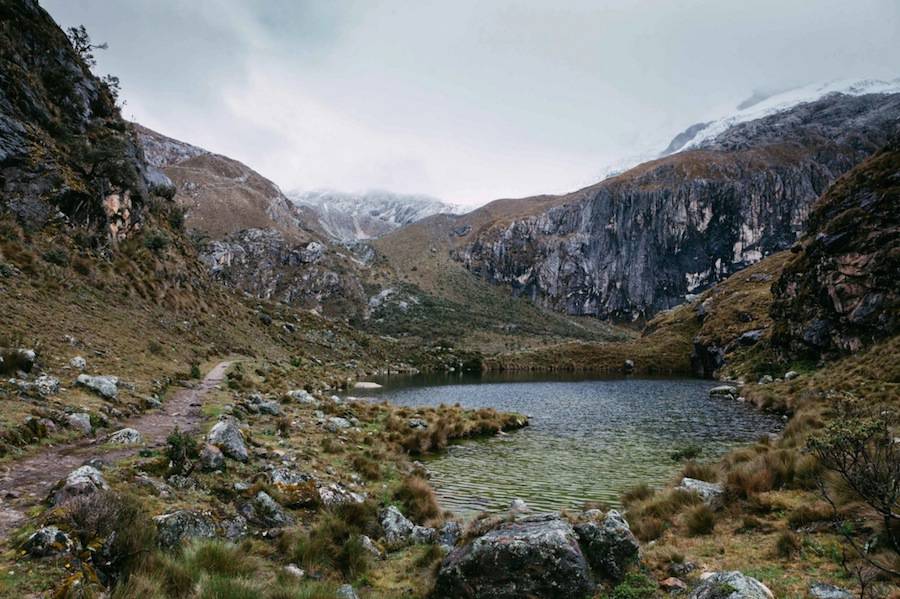
Après avoir voyagé pendant plus de 12 mois au Chili, en Argentine et en Bolivie, le photographe Jan de Roos a finalement terminé son périple au Pérou. Pendant 3 mois de découvertes, il a exploré un pays multiples facettes : des bords de mer saisissants jusqu’aux reliefs impressionnants, en passant par des zones désertiques et des jungles denses. Voici son journal de bord visuel, ses aventures au milieu des ruines et au milieu de petits villages aux habitants chaleureux.

90daysperu-22 90daysperu-21 90daysperu-20 90daysperu-19 90daysperu-18 90daysperu-17 90daysperu-16 90daysperu-15 90daysperu-14 90daysperu-13 90daysperu-12 90daysperu-11 90daysperu-10 90daysperu-8 90daysperu-7 90daysperu-6 90daysperu-5 90daysperu-4 90daysperu-3 90daysperu-2 90daysperu-1 90daysperu-0
24 Jan 19:58

Hypnotic New Kinetic Sculptures by Anthony Howe

by Christopher Jobson
howe-1

Di-Octo. All stainless steel kinetic wind sculpture. Silent operation. 25’6″h x 10’w x 4’6″”d (7.8m h x 3m w x 1.4m d) 1,600lbs (725kg)

Artist Anthony Howe (previously) continues to amaze with his gargantuan kinetic sculptures powered by wind or motors that cycle continuously through hypnotic motions that resemble something between the tentacles of an octopus and an alien spacecraft. Weighing up to 1,600 lbs (725kg), each artwork is first built digitally to test how it will move and react to the force of wind once fabricated in the real world. Seen here are three new sculptures titled Di-Octo, In Cloud Light III, and Switchback. You can see more recent work in his portfolio.

howe-2

In Cloud III. 7.6 meter tall all stainless kinetic wind powered sculpture. Engineered for extreme high winds yet spins in 2mph. (25′ h x 10’w x 5’d, 1,500lbs), shown here not on pedestal.

howe-3

Switchback. Gear motor powered, variable speed, all stainless kinetic sculpture for interior or exterior installation. 112″h x 60″w x 34″d.

24 Jan 12:54

26-09-2015

by Laerte Coutinho

24 Jan 12:53

Longer Than Usual

'--> [ Well, this is embarrassing. ] <--'
24 Jan 12:52

How to Greet People

by Scott Meyer

How you greet someone can set the tone for your interactions throughout the rest of the day. An awkward greeting may well lead to an awkward day. Then, when the next day starts, it’s hard for your greeting to be anything but awkward, which in turn affects that day, and the resultant feedback loop is how I explain my difficulty making friends when I was in school.

Of course, the fact that I put so much thought into this kind of thing might also have had something to do with it. Also, my habit of using words like resultant can’t have helped either.


You can comment on this comic on Facebook.

As always, thanks for using my Amazon Affiliate links (USUKCanada).

24 Jan 12:51

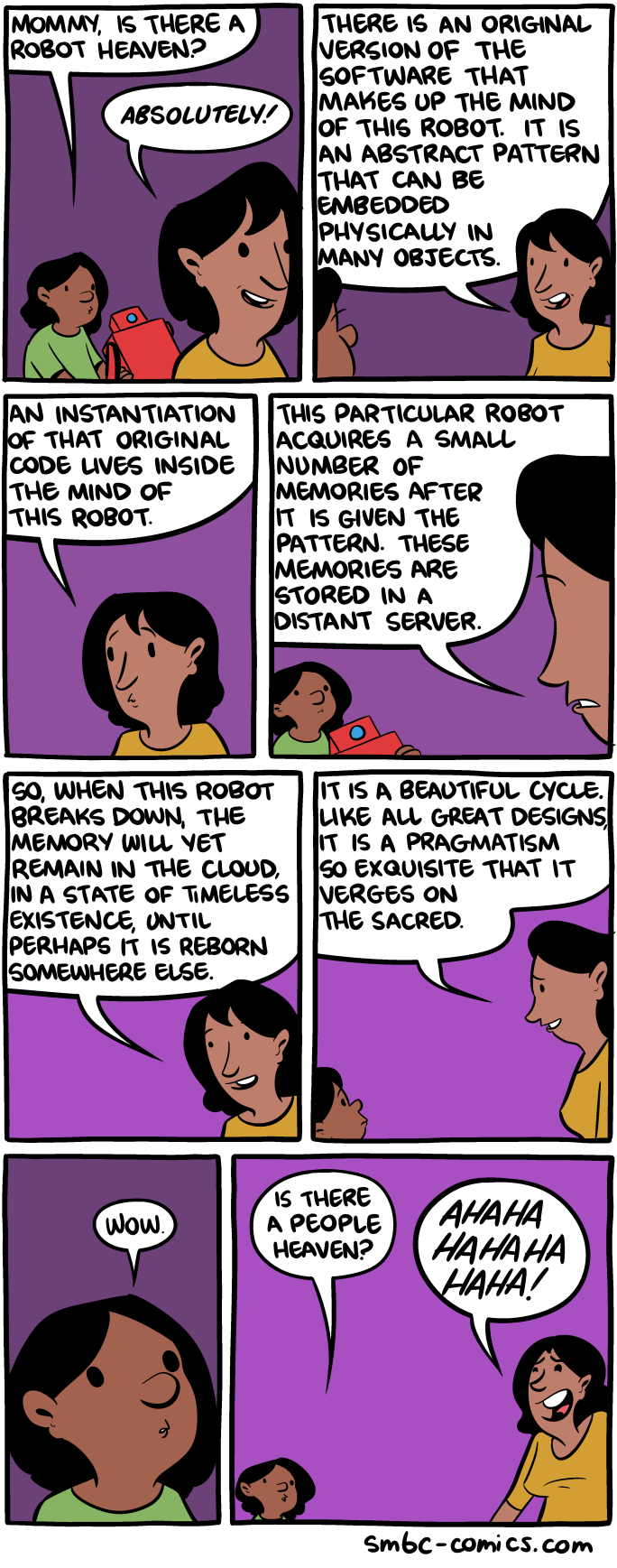
Saturday Morning Breakfast Cereal - Robot Heaven

by admin@smbc-comics.com
17 Jan 04:27

Photo


17 Jan 04:27

Photo


17 Jan 04:26

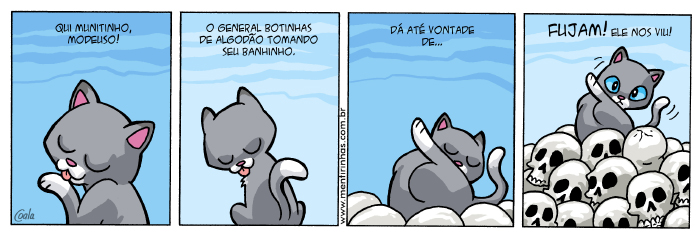
Mentirinhas #919

by Fábio Coala

mentirinhas_907

Todo gato tem uma coleção de crânios.

O post Mentirinhas #919 apareceu primeiro em Mentirinhas.

17 Jan 03:53

ageofdestruction: stars, mercury, and solar corona,...


ageofdestruction:

stars, mercury, and solar corona, photographed by stereo a, january 2009.

27 frames, photographed over 36 hours, 2nd-3rd january. the sun is out of frame right.

image credit: nasa/stereo. animation: ageofdestruction.

17 Jan 03:50

NASA picks three private space companies to resupply the ISS

by Chris Velazco
NASA will fund the International Space Station at least through 2024, so keeping the astronauts on it fed and experimenting is a big deal. That's why the nation's top space agency announced new resupply contracts for Orbital ATK and Elon Musk's Space...

17 Jan 03:50

Tie

by admin

Tie

17 Jan 03:49

nevver: Jan Kaláb

17 Jan 03:49

breaks my heart just a little bit more. what a neat human. (x)


breaks my heart just a little bit more. what a neat human. (x)

17 Jan 03:42

Usando diferentes perfis no Firefox

by brandizzi

Pessoas estão retornado ao Firefox. Excelente! Porém, os filhos pródigos podem se decepcionar. O Firefox, sinto dizer, é pesado e instável. Felizmente, existem maneiras de amenizar estes problemas, e uma delas é criar perfis diferentes.

É simples criar perfis utilizando a extensão ProfileSwitcher. Após instalá-la, vá ao menu “Arquivo”, opção “Abrir gerenciador de perfil” e escolha “Modo normal”. Ele perguntará se você quer fechar o perfil atual; responda que não. A tela abaixo aparecerá:

Screenshot do gerenciador de perfis

No screenshot já há dois perfis. O primeiro, “default” é o que uso para a maior parte das minhas tarefas: cuidar do e-mail, ver redes sociais, assistir MOOCs etc. Originalmente, eu só tinha esse perfil, e ele sempre tinha duzentas, trezentas abas. Invariavelmente, o navegador travava. Grande parte destas abas eram sobre programação e estavam relacionadas a projetos de software pessoais. Daí criei o outro perfil, “Dev.” É com ele que trabalho em meus projetos.

Agora, digamos que eu tenha de resolver problemas do trabalho em casa. Naturalmente, quero evitar proliferação de abas em algum perfil. Assim vou criar outro. Clico em “Create Profile“, e aparecerá esta tela meio assustadora:

Primeira tela do "Create Profile" Wizard: explica o que são perfis e como usá-los

Não tema, porém: basta clicar em “Next” e aparecerá a tela abaixo. Nela, damos o nome do novo perfil — no caso, chamaremos de “Work”.

Tela de seleção de nome de perfil. O nome selecionado é "Work".

E voilà! uma nova janela do Firefox aparecerá.

Vantagens dos múltiplos perfis

Esta nova janela roda como um processo diferente da janela original. Uma consequência é que, nesta nova janela, não estou autenticado nos sites em que já loguei. Isto é uma vantagem: agora posso autenticar em dois e-mails diferentes….

Two GMail accounts

…ou, como costumo fazer com meus perfis “Dev”, posso usar duas contas diferentes no Twitter – uma pessoal e outra mais profissional.

Duas contas do TwitterQuanto à estabilidade, há ao menos duas vantagens. Como cada perfil é um processo separado, se um deles travar o outro continuará funcionando. Fica-se até mais confiante para reiniciar o navegador: se uma janela ficar muito lenta, mato-a.

Além disso, as abas acabam divididas entre dois processos diferentes. As trezentas abas abertas em meu browser agora são aproximadamente cem em cada perfil. Isto consome mais recursos, mas o sistema operacional aguenta — o Firefox não.

Ademais, perfis separados ajudam a manter o foco. Quando estou no meu perfil “Dev”, não há notícias de jornais e amigos me distraindo: apenas desenvolvo e pesquiso. Já no meu perfil de trabalho, há apenas sites profissionais.

Sincronizando perfis

É útil compartilhar algumas informações entre os perfis — por exemplo, o histórico de navegação. Preocupações com privacidade à parte, o Firefox Sync é uma boa solução para isto. Basta ir no menu “Editar”, submenu “Preferências”; na aba que se abrir, escolha a opção “Sync” no meu da esquerda.

Tela de preferência do Sync Na primeira vez em que for configurar o Sync, será necessário criar uma conta. Habilite a opção “Escolha o que sincronizar”; assim você decidirá o que será enviado as servidores da Mozilla.

Tela para criação de conta do syncUm e-mail lhe será enviado. Nele, há um link para que confirme a conta. Clique no lnk. Após isto, é só voltar em nas preferências do Sync (menu “Editar”, submenu “Preferências” etc. etc.) para configurar os detalhes. No meu novo perfil, eu vou desabilitar a sincronização de abas, favoritos e senhas, por mera preferência pessoal. Também faço questão de dar um nome ao dispositivo, identificando a máquina e o perfil.

Tela de configuração do Sync

Movendo abas entre perfis

O Sync também é bom para enviar abas para outros perfis e dispositivos. Por exemplo, às vezes uma notícia interessante sobre política brasileira aparece na minha timeline técnica no Twitter. Não a leio então; ao invés disso, a envio para meu perfil pessoal. Outras vezes, ao pesquisar algo para minha tarefa no trabalho, encontro um link interessante mas não relacionado ao que busco. Para não me distrair, mando o link para i perfil “Dev” de casa.

Isto é feito através da extensão Send Tab to Device. Uma vez instalada, basta clicar em qualquer site com o botão direito em uma área vazia: ao final do menu de contexto estará a opção “Send Tab to Device:”

Opção "Send Tab to Device" no menu de contexto

Uma caixa de diálogo listando todos os perfis, de todas as máquinas, aparecerá. Escolhe-se um e clica-se em “OK.” A aba será aberta no outro perfil em breve. Quando faço isso, fecho a aba — só a verei no outro perfil.

"Send to Device" dialogNão é preciso sequer abrir a aba. Você pode clicar com o botão direito em um link e enviá-lo para outro dispositivo. Ideal para evitar o problema da Wikipédia:

send-link-to-device

Ponto extra: listando perfis no ícone do Ubuntu

Na prática, nunca utilizo o ProfileSwitcher: prefiro abrir os perfis diferentes diretamente do lançador do Firefox. Guiado por esta página de wiki, foi fácil configurá-lo no Ubuntu.

Primeiramente, abrimos o arquivo /user/share/applications/firefox.desktop e salvamos uma cópia em ~/.local/share/applications/firefox.desktop. Nela, procuramos pela linha abaixo:

Actions=NewWindow;NewPrivateWindow;

À linha adicionaremos uma opção. Ela pode ter qualquer nome, então vamos chamá-la de OpenWorkProfile. Note o ponto-e-vírgula ao final:

Actions=NewWindow;NewPrivateWindow;OpenWorkProfile;

Pronto, declaramos a ação. Agora basta adicionar as linhas abaixo ao final do arquivo:

[Desktop Action OpenWorkProfile]
Name=Open the "Work" profiler
Name[pt_BR]=Abrir perfil "Work"
Exec=firefox -no-remote -profile Work
OnlyShowIn=Unity;

Nas duas primeiras linhas, definimos o nome que aparecerá no menu — neste caso em inglês e português. Depois, o comando Exec instrui o Firefox a ser chamado com as opções -no-remote (para que a nova janela seja um processo diferente) e -profile (seguida pelo nome do perfil a ser utilizado).

Finalmente, chamamos sudo update-desktop-database. O menu de contexto do lançador será atualizado. Para vê-lo, basta clicar com o botão direito no ícone do Firefox, que as ações serão listadas.

Um menu de contexto onde se lista a nova ação

Na prática, eu também adicionei uma ação para o perfil de desenvolvimento. Há outra que abre o gerenciador de perfis, de modo que posso criar novos perfis ou escolher algum da lista. Você pode ver como fiz isso no arquivo completo.

all-actionsNão sei como fazer algo semelhante no Windows e no Mac OS X, mas estou certo de que é possível, e talvez não muito complicado.

É uma pena que a interface do Firefox não favoreça mais o uso de perfis. Ainda assim, depois de um pouquinho de trabalho, usar perfis é até fácil. Quando a empolgação com o Firefox passar e sua instabilidade tornar-se insustentável, pense com carinho na hipótese de utilizá-los.

17 Jan 03:32

Photo


17 Jan 00:53

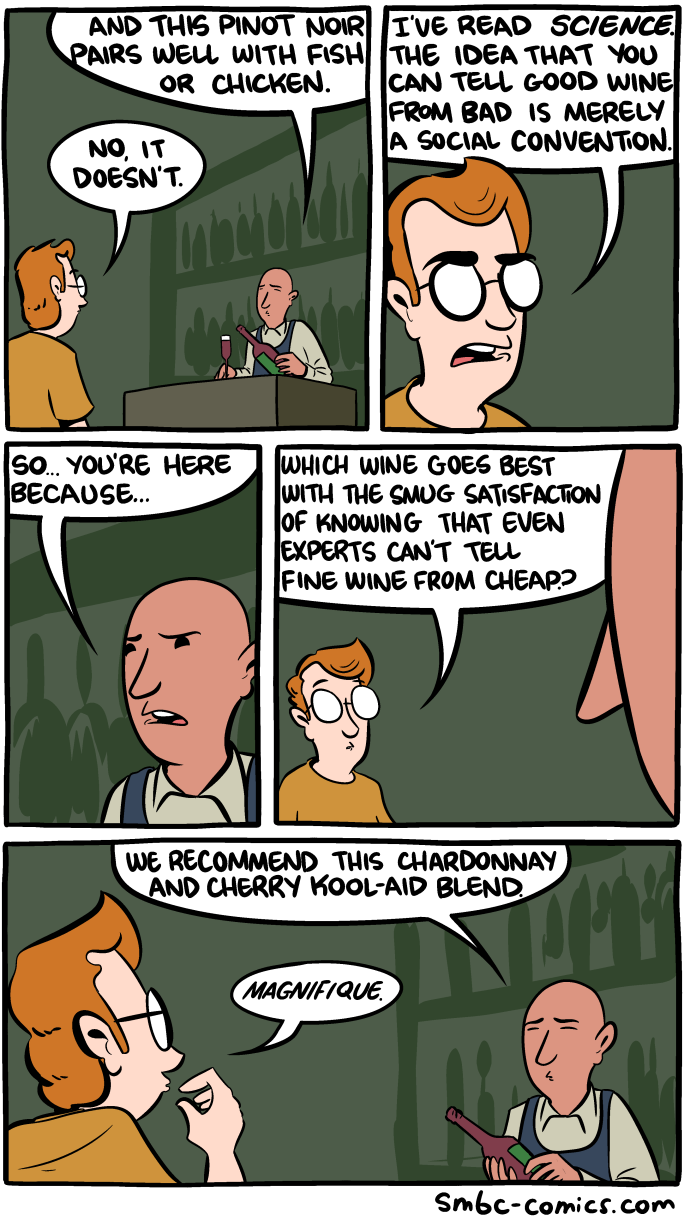
Saturday Morning Breakfast Cereal - Wine

by admin@smbc-comics.com

Hovertext: With notes of dextrose.


New comic!
Today's News:

Only about 30 "both shows" tickets left! 

17 Jan 00:53

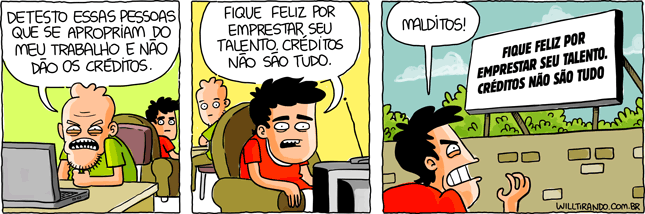
Créditos

by Will Tirando

créditos menção Will direitos autorais placa frase

17 Jan 00:34

Photo


17 Jan 00:34

TBT


TBT

17 Jan 00:33

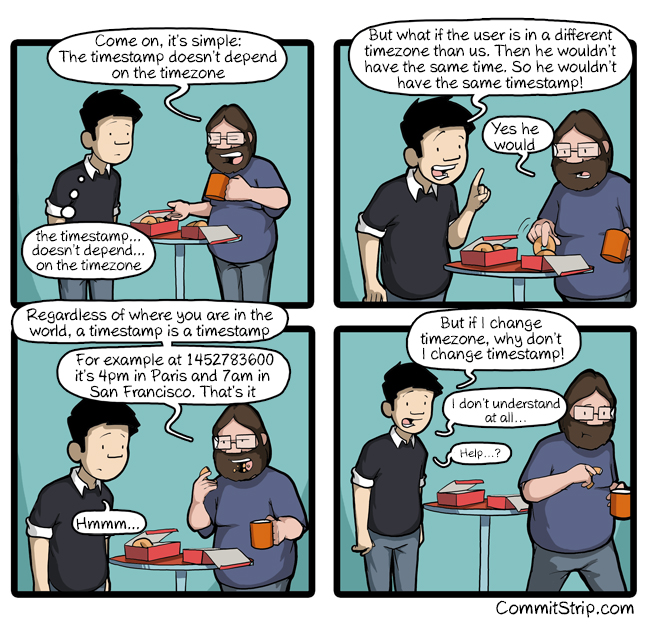
A story about timestamp and timezone

by CommitStrip
Adam Victor Brandizzi

Eu tenho de explicar isso ao menos uma vez por semana. Na metade das vezes, explico para mim mesmo.

Strip-Le-PM-et-le-TSU-(650-final)(english)

16 Jan 21:19

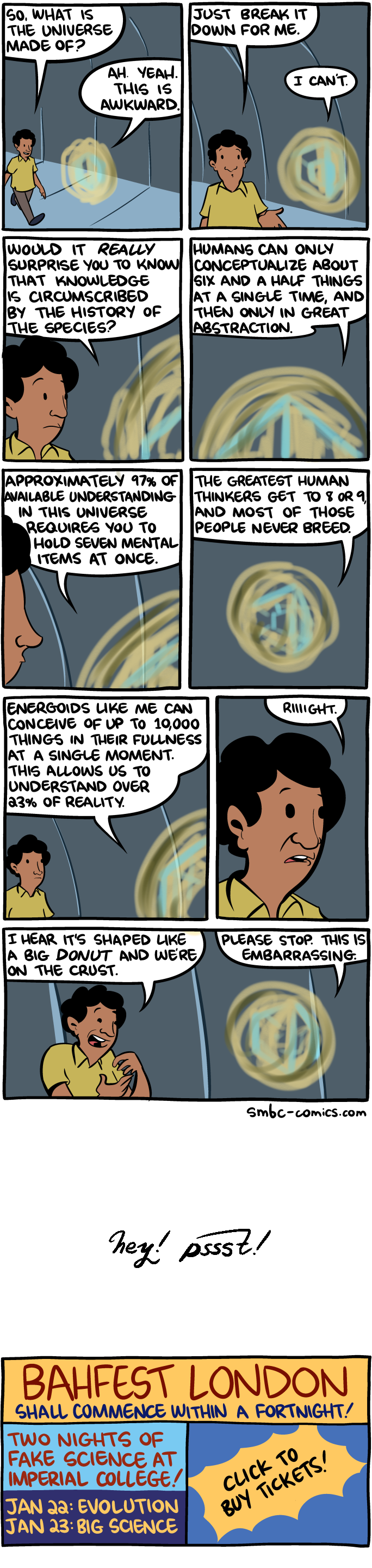
Saturday Morning Breakfast Cereal - Understanding

by admin@smbc-comics.com

Hovertext: Anyway, goodbye. I have to let another sentient species know how pointless it all is.


New comic!
Today's News:

Only a few dozen dicounted "both shows" tickets remain. Please buy to save enough for an okay beer after the show! 

16 Jan 21:14

Photo


16 Jan 21:14

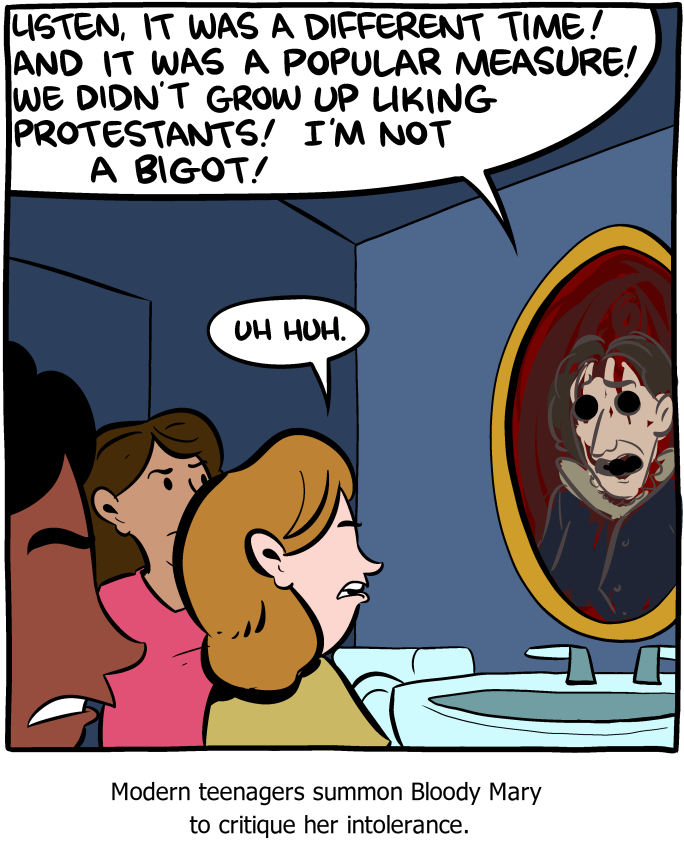
Saturday Morning Breakfast Cereal - Bloody Mary

by admin@smbc-comics.com

Hovertext: And let's be honest - walkin' around all protestanty like that, some of them were askin' for it.


New comic!
Today's News:

Ten days to BAHFest London. OH GOD 

16 Jan 21:12

LOLA 184

by Laerte Coutinho

16 Jan 21:11

Meanwhile on Mars #10 – Life on Mars?

by CommitStrip
David Bowie – Life on Mars ?

Votre navigateur ne supporte pas l’élément audio element.

16 Jan 21:10

LOLA 183

by Laerte Coutinho

16 Jan 21:10

It’s a feature.image / twitter / facebook / patreon


It’s a feature.

image / twitter / facebook / patreon