
Adam Victor Brandizzi
Shared posts
08 Mar 01:37
Alternatives
by Doug

Never take advice from Timmy Tofu.
David Pelaez, Tadeu and one other like this

02 Mar 05:56
Adeus, Gujarati
by Juliana Cunha
Ainda no Brasil, me inscrevi como voluntária numa ONG indiana chamada ANHAD, que tenta promover tolerância religiosa e valores mais republicanos em lugares de conflito entre hindus e mulçumanos. A ONG tem dois jornalistas aqui em Ahmedabad e eu fico como assistente deles por um mês, tirando fotos de eventos, fazendo pequenas notas em inglês. Não acho que vou mudar a vida de ninguém abrindo mão de parte das minhas férias, mas foi uma forma que encontrei de fazer amigos locais e ser convidada a eventos que do contrário eu dificilmente poderia participar. No fim, eles me ajudam bem mais do que eu os ajudo, como era de se esperar.
Arma [bom nome para uma pacifista] e Shabnam:

Quando não tenho nada para fazer no escritório da ONG, saio para passear com Shabnam e Seher. Elas me ensinaram a andar de moto e foram comigo até a fronteira do Paquistão ver a troca de guardas. As duas são mulçumanas e nasceram em Nova Deli. Ambas comem carne e Shabnam vem de uma casta de açougueiros. Comer carne em Ahmedabad é uma coisa muito rock ‘n’ roll, eu mesma não tive coragem.
Seher no look taliban dissidente que ela usava em nossas aulas de direção. Caso esteja se perguntando, não é nada comum uma garota usar roupas assim por aqui. Seher é totalmente fora do padrão indiano. Ela é a única pessoa que conheci que não sabe nada sobre a casta a qual pertence simplesmente porque sua família não dá valor a isso. Ela é neta de Qamar Azad Hashmi, uma ativista que morreu há algumas semanas:

Dev, meu chefe na ONG, vem de uma família de pastoreiros. Isso significa que ele é dono dessas vacas que passeiam pela rua. Ele é jornalista e tem a minha idade. Shabnam, minha consultora para assuntos de casta, me disse que ele pertence a uma casta superior, a dos Desai. Apesar disso, é uma das pessoas mais pobres do meu convívio aqui na Índia.
Dev apresenta o gingado e sedução das castas superiores:

Eu viajei com ele por várias pequenas cidades do estado de Gujarati. Fomos, por exemplo, numa universidade só para mulheres em Porbandar, a cidade onde Gandhi nasceu. As meninas de lá estudam como adorno social. Engenharia é o curso da moda por aqui, a escolha de oito entre 10 jovens que conheci. É legal casar com uma engenheira assim como era legal no século 18 casar com uma moça que falasse francês, tocasse piano e guardasse todo esse francês e todo esse piano para o marido dela.

Seja como for, as engenheiras casadoiras eram muito legais e me convidaram para ser jurada num concurso de saris, por que não?

Minha tarefa menos agradável sem dúvidas foi fotografar o casamento de uma menina de 11 anos com um cara de 37. Os dois repórteres indianos que estavam comigo também são contra esse tipo de coisa, mas têm uma postura meio “shit happens” diante da coisa. Enquanto para nós o clima é de revolta, para eles isso é apenas um problema social. Fiquei com um pouco de vontade de sacudir todo mundo e dar uns tapas nesse dia, mas lembrei que na minha cidade crianças de seis anos usam drogas na frente da polícia e eu passo por elas indo ao trabalho, ouvindo música e lamentando muito superficialmente por esse “problema social”.


Segundo me disseram, os casamentos infantis estavam em franca decadência, mas aumentaram recentemente por conta da onda de estupros. Gujarati é um estado particularmente seguro para mulheres, todos falam isso e você consegue perceber que o clima é diferente dos outros estados. As abordagens masculinas são menos frequentes e incisivas. Mesmo assim, nada como um pouco de terror para fazer as pessoas retomarem velhos hábitos obscuros.
Agora estou encerrando meu turno como voluntária e indo turistar pelo Rajastão, onde espero ver mais camelos e menos noivas de 11 anos. Porque há exotismos e exotismos e o do primeiro tipo é o que nos agrada.

Adam Victor Brandizzi and -1 others like this
02 Mar 05:10
Rachmaninov - piano concerto No.2 (Adagio sostenuto)
by brandizzi2
Adam Victor Brandizzi likes this




24 Feb 17:50

Double Duty
by Greg Ross
From Stuart Kidd in the May 2003 Word Ways:
CANON is a synonym for ORDINANCE, and CANNON is a synonym for ORDNANCE.
Russian Sledges likes this
24 Feb 02:51
Robots and Dinosaurs
by Omar and Sheila Rayyan
I'm not sure why, but robots and dinosaurs always sound like a good combination. Omar has decided to try his hand at painting them, neither of which he paints very often. I think he should do more, don't you??? :)
 |
| "At the Back Gate" watercolor |
 |
| "Triceratophatus" watercolor |
 | |
| "Staggersaurus" watercolor |
 |
| "Triceratops in the Tea" watercolor |

23 Feb 01:52
Photoshop 1.0 Source Code
Adam Victor BrandizziEu, pelo menos, estou.
Some people are amazed that it's in Pascal... HN discussion is here.
Adam Victor Brandizzi, firehose likes this

19 Feb 10:23
Rockin Out
by Doug
Adam Victor BrandizziDizem que acontece em Olinda.

Make that any good song ever recorded, ever. Here’s more music.
Adam Victor Brandizzi likes this

18 Feb 16:27
Mumbai: amor e caos
by Juliana Cunha
Antes de vir para a Índia eu li “Bombaim: Cidade Máxima”, do jornalista Suketu Mehta. Ele me preparou para o amor e para o caos que senti desde que cheguei a essa cidade.
Mehta passou a infância em Mumbai e partiu com a família para Nova York no meio da adolescência. Voltou quando já era adulto, casado com uma indiana que tinha uma trajetória parecida com a dele, só que em Londres. Ele passou a juventude se queixando por viver fora da Índia. Quando finalmente pode voltar, viu sua nostalgia se diluir na água suja da cidade, a mesma água que deixou seu filho — um americaninho sem anticorpos — doente.
Separei alguns trechos do livro e mesclei com fotos da cidade:

“India is the Country of the No. [...] That ‘no’ is your test. You have to get past it. It is India’s Great Wall; it keeps out foreign invaders. Pursuing it energetically and vanquishing it is your challenge. In the guru-shishya tradition, the novice is always rebuffed multiple times when he first approaches the guru. Then the guru stops saying no but doesn’t say yes either; he suffers the presence of the student. When he starts acknowledging him, he assigns a series of menial tasks, meant to drive him away. Only if the disciple sticks it out through all these stages of rejection and ill treatment is he considered worthy of the sublime knowledge. India is not a tourist-friendly country. It will reveal itself to you only if you stay on, against all odds. The ‘no’ might never become a ‘yes’. But you will stop asking questions”.

“There will soon be more people living in the city of Bombay than on the continent of Australia. The city is groaning under the pressure of the 1 million people per square mile. It doesn’t want me any more than the destitute migrant from Bihar, but it can’t kick either of us out. So it makes life uncomfortable for us by guerrilla warfare, by constant low-level sniping, by creating small crises every day”.

“For a Gujarati, cosmopolitan is not a term of approval. ‘Cosmopolitan’ means the whole world except Gujaratis and Marwaris. It includes Sindhis, Punjabis, Bengalis, Catholics, and God knows who else. Nonvegetarians. Divorcees”.

“The food and the water in Bombay, India’s most modern city, are contaminated with shit. Amebic dysentery is transferred through shit. We have been feeding our son shit. It could have come in the mango we gave him; it could have been in the pool we took him swimming in. It could have come from the taps in our own home, since the drainage pipes in Bombay, laid out during British times, leak into the freshwater pipes that run right alongside. There is no defense possible. Every thing is recycled in this filthy country, which poisons its children, raising them on a diet of its own shit”.

“I missed saying ‘bhenchod’ to people who understood it. It does not mean ‘sister fucker’. That is too literal, too crude. It is, rather, punctuation, or emphasis, as innocuous a word as ‘shit’ or ‘damn’. The different countries of India can be identified by the way each pronounces this word — from the Punjabi ‘bhaanchod’ to the thin Bambaiyya ‘pinchud’ to the Gujarati ‘bhenchow’ to the Bhopali elaboration ‘bhen-ka-lowda’. Parsis use it all the time, grandmothers, five-year-olds, casually and without any discernible purpose except as filler: ‘Here, bhenchod, get me a glass of water’. ‘Arre, bhenchod, I went to the bhenchod bank today’. As a boy, I would try consciously not to swear all day on the day of my birthday. I would take vows with the Jain kids: We will not use the B-word or the M-word”.

“This was what colonialism, fifty years after the Empire ended, had done to my son: It had rendered our language unspeakable, our food inedible”.

“Home is not a consumable entity. You can’t go home by eating certain foods, by replaying its films on your television screen. At some point you have to live there again”.

“You came to Bombay to pass through it”.

“Long before the millennium, Indians such as the late prime minister, Rajiv Gandhi, were talking about taking the country into the twenty-first century, as if the twentieth century could just be leapfrogged. India desires modernity; it desires computers, information technology, neural networks, video on demand. But there is no guarantee of a constant supply of electricity in most places in the country. In this as in every other area, the country is convinced it can pole-vault over the basics: develop world-class computer and management institutes without achieving basic literacy; provide advanced cardiac surgery and diagnostic imaging facilities while the most easily avoidable childhood diseases run rampant; sell washing machines that depend on a nonexistent water supply from shops that are dark most hours of the day because of power cuts; support a dozen private and public companies offering mobile phone service, while the basic land telephone network is in terrible shape; drive scores of new cars that go from 0 to 60 in ten seconds without any roads where they might do this without killing everything inside and out, man and beast”.

“It is an optimistic view of technological progress — that if you reach for the moon, you will somehow, automatically, span the inconvenient steps in between. India has the third largest pool of technical labor in the world, but a third of its 1 billion people can’t read or write. An Indian scientist can design a supercomputer, but it won’t work because the junior technician cannot maintain it properly. The country graduates the best technical brains in the world but neglects to teach my plumber how to fix a toilet so it stays fixed. It is still a Brahmin-oriented system of education; those who work with their hands have to learn for themselves”.

“‘When you were there, you wanted to come here. Now that you’re here, you want to go back’. It was when I first realized I had a new nationality: citizen of the country of longing. [...] As I have discovered, having once moved, it is difficult to stop moving”.
Lívia., Adam Victor Brandizzi likes this
09 Feb 20:45
3 vezes 3 de ouros
by noreply@blogger.com (Philipe Maciel)
Nassim Taleb é um trader (excêntrico?) escritor, crítico de boa parte da produção científica hoje, em especial em estatística e em economia. Enquanto trader, fez fortuna com o crash da bolsa de 1987 e com a crise do subprime. O fato de ter "previsto" a crise do subprime o tornou uma sensação e seus livros frequentam desde então as listas de best-sellers.
Entre suas diversas teorias, ele postula que o futuro é imprevisível a tal ponto que, em vez de se perder tempo fazendo previsões, é melhor se preparar e ser flexível para uma eventual mudança.
Os eventos que seriam bem descritos pela estatística moderna seriam os eventos do "mediocristão": fáceis de se medir, mas de pouco interesse prático, como a altura da população.
Eventos importantes seriam situados em um "extremistão" e seriam imprevisíveis: essa banda de quatro garotos de Liverpool vai longe? Será que um livro sobre uma escola de bruxos vai vender bem? Depois do sucesso parece óbvio que sim, mas os Beatles e Harry Potter foram recusados por vezes antes de chegar ao sucesso.
Taleb afirma que grande parte da literatura em estatística sofre de uma "falácia lúdica", aplicando intuições derivadas de jogos de baralho ou de lançamento de dados a eventos que não podem ser reduzidos a uma distribuição conhecida. A vida seria como um jogo de dados de seis lados onde às vezes você poderia tirar, digamos, um sete. Esse evento imprevisível (mas que muitas vezes "especialistas" diziam ser já esperados por causa disso ou daquilo) ele chama de "cisne negro".
Feita essa introdução, apresento meu pequeno cisne negro. Ontem estava jogando buraco no Netcartas quando descubro... que havia três três de ouros na mesa! Em um jogo normal, há somente duas de cada carta em jogo.

Às vezes, mesmo em um jogo com regras plenamente conhecidas, há surpresas... Nesse caso, proporcionadas por um bug do site de jogos.
Entre suas diversas teorias, ele postula que o futuro é imprevisível a tal ponto que, em vez de se perder tempo fazendo previsões, é melhor se preparar e ser flexível para uma eventual mudança.
Os eventos que seriam bem descritos pela estatística moderna seriam os eventos do "mediocristão": fáceis de se medir, mas de pouco interesse prático, como a altura da população.
Eventos importantes seriam situados em um "extremistão" e seriam imprevisíveis: essa banda de quatro garotos de Liverpool vai longe? Será que um livro sobre uma escola de bruxos vai vender bem? Depois do sucesso parece óbvio que sim, mas os Beatles e Harry Potter foram recusados por vezes antes de chegar ao sucesso.
Taleb afirma que grande parte da literatura em estatística sofre de uma "falácia lúdica", aplicando intuições derivadas de jogos de baralho ou de lançamento de dados a eventos que não podem ser reduzidos a uma distribuição conhecida. A vida seria como um jogo de dados de seis lados onde às vezes você poderia tirar, digamos, um sete. Esse evento imprevisível (mas que muitas vezes "especialistas" diziam ser já esperados por causa disso ou daquilo) ele chama de "cisne negro".
Feita essa introdução, apresento meu pequeno cisne negro. Ontem estava jogando buraco no Netcartas quando descubro... que havia três três de ouros na mesa! Em um jogo normal, há somente duas de cada carta em jogo.
Às vezes, mesmo em um jogo com regras plenamente conhecidas, há surpresas... Nesse caso, proporcionadas por um bug do site de jogos.
Narcélio, Albener Pessoa and one other like this
30 Jan 20:11

Good Enough
by Greg Ross
Ixonia, Wisconsin, was named at random.
Unable to agree on a name for the town, the residents printed the alphabet on slips of paper, and a girl named Mary Piper drew letters successively until a name was formed.
The town was christened Ixonia on Jan. 21, 1846, and it remains the only Ixonia in the United States.
30 Jan 20:11

Homework
by Greg Ross
Twenty-nine-year-old James Landis was operating a currency-wrapping machine at the U.S. Bureau of Engraving and Printing when an idea occurred to him. He went home and cut ordinary bond paper into pieces the size of U.S. currency, and wrapped them to resemble the bricks of $20 bills that he produced at work. On Dec. 30, 1953, he smuggled these packages into work with him and hid them in a locker room. Then he wrapped two bundles of real $20 bills in kraft paper and carried them to a storage area. There he unwrapped them, saving the labels, put the bills into two paper bags he had brought from home, and hid these.
He worked the rest of the morning at his station, then returned to the dummy bundles he had brought from home. In a toilet stall he affixed the labels to the ends of the dummy bricks, using glue he had brought from his station, and he rubber-stamped each “HA 12-31-53,” indicating that a bureau employee with the initials H.A. had wrapped the packages on Dec. 31, 1953. Then he carried the dummy bricks to a storage skid on the first floor, where he left them among packages of genuine $20 bills.
At 3:10 p.m. he finished work, changed clothes, and retrieved one of the paper bags from the dead storage area, using a pair of dirty trousers to conceal the $128,000 that the bag held. And he walked out of the building.
Landis and three friends set about buying inexpensive merchandise in order to shed the stolen money and get change, but it wasn’t to last long. When he returned to work on Jan. 4, a stockman picked up two bricks of currency and noted that one of them felt light. When the dummy bricks were discovered, the Secret Service began an investigation; Landis drove to Virginia and tried to hide the money with his father-in-law, who turned him in the following morning. Landis and his friends pleaded guilty on May 3, and all were sent to prison.
30 Jan 20:02
Poluição mais que perigosa envolve Pequim
by Cláudia Trevisan
“Muito insalubre” foi a melhor classificação dada nos últimos quatro dias ao ar respirado pelos 20 milhões de moradores de Pequim, entre os quais eu me incluo. Ontem, a medição oscilou entre “perigoso” e “além do índice”, patamar que supera o pior cenário possível visualizado pelos cientistas que elaboraram a escala, que vai de 0 a 500. Às 6h de ontem, o indicador estava em 517. No dia 12 de janeiro, alcançou inacreditáveis 755.
Para quem está imerso na nuvem que envolve a cidade, é quase como participar de uma versão árida de Blade Runner: a persistente chuva está ausente, mas a noite nunca dá totalmente lugar para o dia, que chega e vai sem mostrar o céu. É um cenário claustrofóbico, em um mundo que parece ter sido construído com pé direito extremamente baixo.
Em uma resposta emergencial, o governo de Pequim determinou ontem o fechamento temporário de 103 fábricas extremamente poluentes e ordenou que 30% da frota de carros oficiais deixasse de circular. As medidas paliativas ficarão em vigor pelo menos até amanhã, quando espera-se que o vento e a neve reduzam a quantidade de partículas no ar.
A poluição não é novidade no país mais populoso do mundo, no qual a queima de carvão responde por 70% das fontes de energia. Mas havia a expectativa de que a situação melhorasse com o tempo e não se agravasse. Pelo menos essa era uma das promessas das Olimpíadas de 2008, quando os governantes se gabaram do aumento no número de dias de céu azul na cidade.
O carvão é o mais poluente dos combustíveis fósseis e o consumo da China equivale quase ao total do restante do mundo somado. Segundo dados do governo norte-americano, foram 3,8 bilhões de toneladas em 2011, comparadas a 4,3 bilhões de toneladas de todos os outros países juntos. No ano 2000, a China consumiu 1,5 bilhão de toneladas de carvão, enquanto o restante do mundo queimou 3,8 bilhões de toneladas. Apesar da retórica oficial e do descontentamento da população, nada indica que a dependência da China em relação ao carvão vá diminuir de maneira significativa.
Além disso, as bicicletas estão desaparecendo das ruas e dando lugar a milhões de carros, no que é o maior mercado para a indústria automobilística desde o fim da década passada. Os abastados tentam se proteger instalando purificadores de ar em suas casas e escritórios e usando máscaras com filtros. Mas a maioria tem de navegar sem proteção ou com precárias máscaras cirúrgicas nesse cenário desprovido de horizonte. Aí vão algumas fotos tiradas perto do meio-dia:

.

30 Jan 15:08

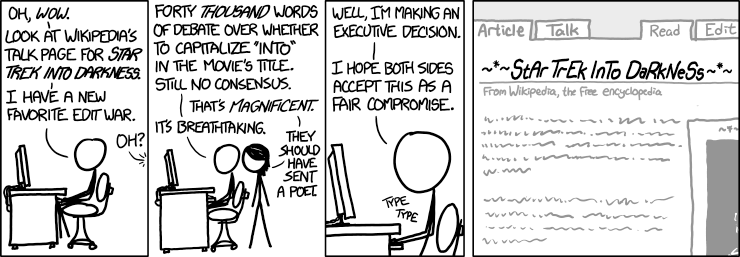
Oh man. I can't wait for these shows (wait for it...) to actually exist.

January 29, 2013
Adam Victor BrandizziO pato inepto me deixou mais triste que a tirinha em si
Oh man. I can't wait for these shows (wait for it...) to actually exist.


30 Jan 14:49
danglingthpider: porn gives young people an unrealistic and unhealthy idea of how quickly a plumber...
porn gives young people an unrealistic and unhealthy idea of how quickly a plumber will come to your house
Osiasjota, Albener Pessoa and -1 others like this
30 Jan 14:49
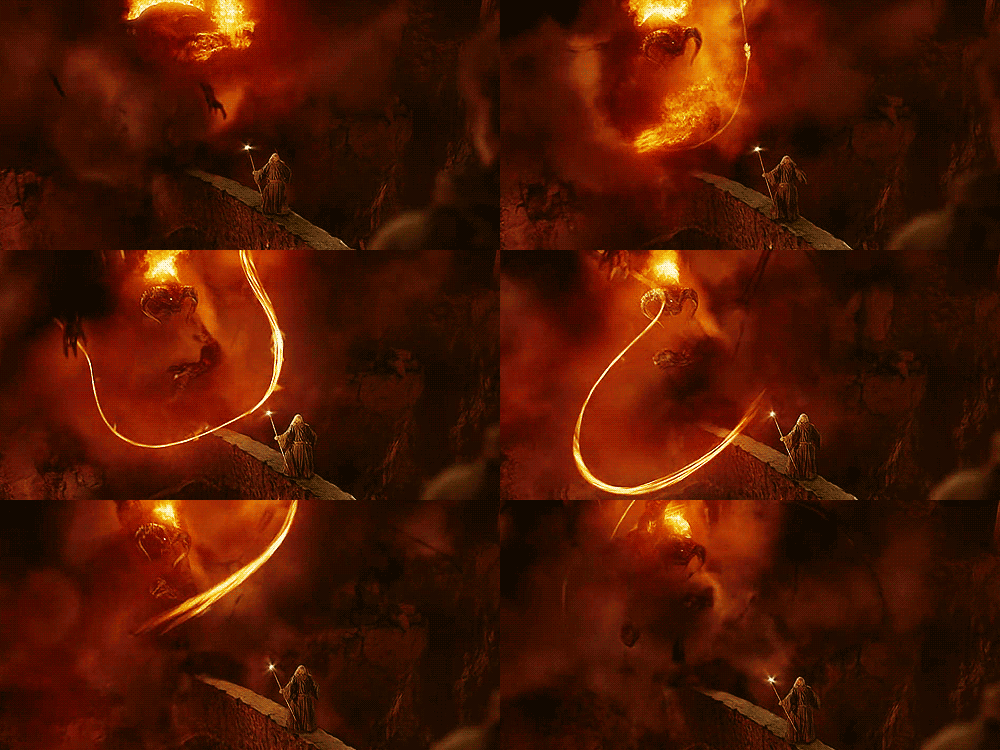
nudityandnerdery: Remember that time Gandalf convinced the...
Remember that time Gandalf convinced the whole party to flee so that he could take out the Balrog and not have to share any of the XP? Shows up the next session with fancy new robes and everything. What a jerk.
Adam Victor Brandizzi and -1 others like this
29 Jan 14:21
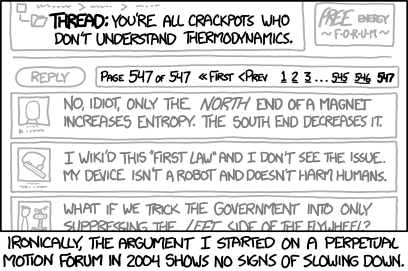
Argument
Adam Victor BrandizziHahaha http://freeenergyforum.com/discussion/187/your-all-crackpots-who-dont-understand-thermodynamics/
Osiasjota, Brian Stouffer likes this