Shared posts

17 May 14:49

Octopus

This volume is full of unexpected revelations, not for the squeamish, starting with the fact that the preferred plural of “octopus” is “octopuses,” not “octopi.” Octopuses, we learn, can lurch onto land and can change color and shape in seconds. After 272 pages in the company of these animals, they no longer seem weird because of their four pairs of arms lined with suction cups. They’re weird because of the ways they contradict our ideas about intelligence. 

James Mason and friend in ‘20,000 Leagues Under the Sea’ (1954)

James Mason and friend in ‘20,000 Leagues Under the Sea’ (1954)

everett collection

Even Aristotle got it wrong, although octopuses are, of course, plentiful in Greece (where they’re often served in balsamic vinegar). When he wrote that “the octopus is a stupid creature, for it will approach a man’s hand if it be lowered in the water,” he missed that octopuses are more curious than afraid. Like small children, they grab unfamiliar objects, such as underwater cameras, and seem to embrace and fondle them. They gaze through the glass at visitors to aquariums and, like attentive dogs, watch their researchers. 

This is all the stranger since, unlike dogs (or dolphins or bees or humans), octopuses are not social. An octopus is a model of self-reliance. Its mother dies as soon as her eggs hatch, and the father soon thereafter. It lives for six months to five years, depending on the species, without bonding to a mate or learning from other octopuses. No man is an island, but every octopus is. Yet octopuses react to us, turning “black with joy” or “white with anger” in response to human actions. 

Why might a loner behave in ways that seem social? One argument is that extreme self-reliance requires extreme engagement with the environment. We associate intelligence with dependence in childhood, longevity, and civilization; but in the case of the octopus, it seems that the opposite conditions promote curiosity, problem-solving, speedy learning, and sensitivity.   

Roland Anderson, a retired biologist from the Seattle Aquarium, tells author Katherine Harmon Courage that octopuses are the “smartest invertebrate,” and to prove the point, he lists a set of very human traits: 

They are a predator, they go out to find food, they build dens and then modify them, they use tools, they use spatial navigation, they have play behavior, they recognize individual people.

In one experiment, Anderson and his colleagues gave a female giant Pacific octopus named Billy a plastic bottle of herring with a childproof cap. In 55 minutes, she figured out that she needed to push and turn the lid simultaneously and was able to open it; with practice, she could do the trick in five minutes. An octopus can also learn to distinguish vertical from horizontal bars and the letter “V” from “W.” The intelligence of the octopus lies “somewhere in the middle of the birds—maybe not as smart as an African gray parrot,” Courage writes. And birds are an impressive bunch. Many species seem sharper than we once guessed, the author notes, largely because researchers are getting better at reading behavior without imposing a human bias. Still, it’s hard to gauge when imaginative observation is influenced by affection. People who study lobsters, for example, claim that they are smarter than octopuses.  

Katherine Harmon Courage reports several tales in which octopuses react to human actions. One researcher describes an octopus pushing up the lid of its tank, apparently trying to get out. The researcher banged on the lid and the animal retreated. The next day, as she sat nearby, the octopus lifted up the lid, brought its funnel to the crack, and squirted a jet of water at her. To test whether an octopus can distinguish between two people, Roland Anderson created a good-cop/bad-cop routine. The bad guy approached a giant Pacific octopus and harassed it with a bristly stick; the good one would come close and feed it. After two weeks, when the bad guy entered the room, the octopus “would shrink back into the corner, it would turn its suckers out to be ready to fight, and it would blow jets of water toward that person,” says Anderson. It also assumed an expression that scientists identify with aggressiveness. When the good cop arrived, the octopus “would come up to the surface or raise its arms up toward the surface,” ready to receive the anticipated food.   

Octopuses even exhibit signs of what we call boredom. Trapped in a small, bare tank, they are likelier to throw themselves against its side, to eject ink, or to turn white. When an octopus gets time in a more interesting environment and is then put back in a bare tank, it may eat its own arm.       

That need for stimulation may seem surprising in creatures with such a smallish brain; but, upsetting our assumptions again, most of their neurons are in their arms. These jointless appendages have a huge range of motion: too wide, scientists argue, to be subject entirely to centralized control. Octopuses do sometimes stiffen their pliable arms into a three-jointed appendage like ours, perhaps when the brain needs to keep track of them. Thus, the arms are both under the control of the brain and independent of it. Some species can eject an arm, which slithers off and distracts predators to chase it.  

A severed arm remains active for some time, as Courage amusingly demonstrates in a story about a Korean restaurant in Flushing, New York, where customers select a live octopus from a tank. (The manager tells Courage that, in Korea, farmers feed raw octopus to sick cows and bulls, which consequently recover from their illnesses in a day.) The octopus meal arrives cut-up but alive, along with plates of dipping sauces: “The muscular arm segments look like little slugs, writhing about, gray and stubby, seething all over one another,” Courage writes. The suckers grip the plate: “Once you do manage to get one of these dang things on your chopsticks, it will likely wrap or suction onto the wood with one end, another end twisting around in the air, as if exploring like a blind inchworm.” Inside the author’s mouth, the suckers grab her gums until she pries them off with her tongue. 

Octopus! feels a bit plumped out for length, and the author, a journalist who often contributes to Scientific American, shares too much information about her travel arrangements and upsets as she visits Spanish fishing boats and Italian laboratories. But the prose is enthusiastic, funny, and unpretentious, steering clear of the style of science writing that risks too much metaphor and speculation. The octopus remains intriguing and baffling. 

Temma Ehrenfeld is a writer in New York.

Shared by Arts & Letters Daily feed and expanded by Arts & Letters Daily feed expander pipe by Brandizzi.
12 May 14:10

All the News …

by Greg Ross

http://query.nytimes.com/gst/abstract.html?res=9D04E2DE163CE633A25754C2A96E9C946096D6CF

How’s that for a headline? It ran in the New York Times Sunday magazine on Aug. 27, 1911:

Canals a thousand miles long and twenty miles wide are simply beyond our comprehension. Even though we are aware of the fact that … a rock which here weighs one hundred pounds would there only weigh thirty-eight pounds, engineering operations being in consequence less arduous than here, yet we can scarcely imagine the inhabitants of Mars capable of accomplishing this Herculean task within the short interval of two years.

The Times was relying on Percival Lowell, who was convinced that a dying Martian civilization was struggling to reach the planet’s ice caps. “The whole thing is wonderfully clear-cut,” he’d told the newspaper — but he was already largely ostracized by skeptical colleagues who couldn’t duplicate his findings. The “spokes” he later saw on Venus may have been blood vessels in his own eye.

Whatever his shortcomings, Lowell’s passions led to some significant accomplishments, including Lowell Observatory and the discovery of Pluto 14 years after his death. “Science,” wrote Emerson, “does not know its debt to imagination.”

12 May 13:20

A Poem For Saturday

by Andrew Sullivan

Mercurybyhendrickgoltzius

Dish poetry editor Alice Quinn writes:

The jacket copy for J.D.McClatchy’s Plundered Hearts: New and Selected Poems, just published by Alfred A. Knopf, is worth quoting to introduce the three poems of his we’ll be featuring today and in the days ahead: “With his first several books, J.D.McClatchy established himself as a poet of urbanity, intellect, and prismatic emotion, in the tradition of James Merrill, W.H. Auden, and Elizabeth Bishop—one who balances an exploration of the underworld of desire with a mastery of poetic form, and whose artistry reveals the riches and ruins of our ‘plundered hearts.’… All of his poems present a sumptuous weave of impassioned thought and clear-sighted feeling.” Last night, McClatchy read from his new book at New York University’s Vernon House on West 10th Street to an intimate, enthralled audience.

“Mercury Dressing” by J. D. McClatchy:

To steal a glance and, anxious, see
Him slipping into transparency—
The feathered helmet already in place,
Its shadow fallen across his face
(His hooded sex its counterpart)—
Unsteadies the routines of the heart.
If I reach out and touch his wing,
What harm, what help might he then bring?

But suddenly he disappears,
As so much else has down the years . . .
Until I feel him deep inside
The emptiness, preoccupied.
His nerve electrifies the air.
His message is his being there.

(From Plundered Hearts: New and Selected Poems © 2014 by J.D. McClatchy. Used by permission of Alfred A. Knopf, Inc. Detail from Hendrik Goltzius’ Mercury, 1611, via Wikimedia Commons)

12 May 12:14

Installing

But still, my scheme for creating and saving user config files and data locally to preserve them across reinstalls might be useful for--wait, that's cookies.
12 May 12:13

rosaparking: rnacintosh: rosaparking: im craving asparagus wtf is wrong with me it’s better than...

rosaparking:

rnacintosh:

rosaparking:

im craving asparagus wtf is wrong with me

it’s better than craving for her to love me back

i dont know what to say im sorry

12 May 04:15

GIF | b98.gif

b98.gif
11 May 19:44

Itzhak Perlman Plays Israel Goldfarb’s “Shalom...


Itzhak Perlman Plays Israel Goldfarb’s “Shalom Aleichem.” “יצחק פרלמן, “שלום עליכם (by Edmund StAustell)

11 May 02:55

“No interviews. Except for Wikipedia!” – Documenting the Eurovision Song Contest on Wikimedia Commons

by Albin Olsson

One of my photos of Conchita Wurst. As few days ago this photo was selected as a “Quality image

I like to illustrate Wikipedia articles, and I like to take unique photos. When Swedish singer Loreen won the Eurovision Song Contest 2012 in Baku, Azerbaijan, it meant the Eurovision was coming to Sweden, my own country, and that meant I had the chance to take unique photos. I uploaded about 870 media files to Wikimedia Commons from the Eurovision Song Contest 2013. My plan was to show the Wikipedia community what was possible, and that the following year (this year) people from the new host country would continue the project that I started. Emmelie de Forest from Denmark won in 2013, and the competition moved across the Øresund and is held in Copenhagen this year. So I thought I could continue the project myself.

As I’m writing this, there are Wikipedia articles about the Eurovision Song Contest in 95 languages, and about the Eurovision Song Contest 2014 in 52 languages. Tonight, on 10 May 2014, over 180 million people will be watching the show broadcast live from Copenhagen. People write about it on Wikipedia, and many more read about it. After the winners from a semifinal are announced, the Wikipedia articles are updated in seconds. But there have been almost no photos from any of the competitions.

The sign I brought to Copenhagen, and showed to all the artists.

Compared to last year, I am better prepared this time. I printed a sign with the lines I wanted the artists to say, and I even got it laminated. Also, I arrived in Copenhagen two weeks before the grand final, instead of one week. Last year I didn’t even know that there were a lot of photo opportunities in the first week. I attended the press conferences after the semifinals, and got photos of the twenty artists that qualified from each of the two semifinals, and after that I tried to get video presentations with as many of them as possible. I managed to get twelve of them, and there were a total of 39.

The first days of the first week consists of “Meet & Greets” with all the artists. This year I knew that, and on Monday (April 28) I took photos of the artists in the press conference room, and then I waited in line outside the interview rooms. There are so many reporters who want to do interviews. “Only 5 minutes”. “Only 10 minutes”. When it was finally my turn, I showed the artists my laminated sign, made them present themselves and their song in English, and then in their mother tongue (and in some cases one or two other languages), and then I was done. I got out of the interview room after about 30 seconds, and the other reporters always looked so surprised that I was done so quickly.

After I was done, I rushed back to the press conference room to take photos of the next artist, and then back to the interview rooms. Between some of the meet & greets there were breaks, and after the breaks the host of the next meet & greet would say “I hope you all had a great lunch”. But I never had time for lunch. I had just been standing in line outside the interview rooms.

Me holding the Wikipedia microphone from Wikimedia Sveriges technology pool.

On Tuesday, things got better. I learned that I could wave my microphone (with the Wikipedia logo) and show my laminated sign to the “head of press”-people and explain that I only need 30 seconds. I quickly noticed how differently I was treated. There is one head of press for every competing country, and they all have different rules. But it was obvious that almost all of them knew that when people google the artists, they are very likely to end up on Wikipedia. And the Head of press-people want the Wikipedia articles to be as good as possible. Suddenly they let me cut the line, and the other reporters weren’t that annoyed, since I only needed 30 seconds. Some even said “only the biggest newspapers” or some only allowed interviews with reporters from their own country. “And the guy from Wikipedia.” (That’s me). There were even those who said “No interviews. Except for Wikipedia!”

For example, when I was standing in line to interview the wonderful Conchita Wurst from Austria, her head of press said that this day they only did interviews with the biggest newspapers. One reporter was inside the interview room, and while we were waiting the head of press said with a smile on his face, as a joke “So, who of you comes from the biggest newspaper?”. I raised my Wikipedia microphone and said “Seventh largest website in the world!”. That was actually quite popular, and one of the other reporters said “Good point”.

As I’m writing this, the grand final will be over in approximately 24 hours, so I have no idea who will win or where the Eurovision Song Contest will be held next year. All I know is that there are already photos of the winner on Wikimedia Commons, and also a video presentation. I have taken photos of all the artists in the press center, and also on stage. Right now I have uploaded 835 files from this year’s competition, and I have many more to upload.

This year I have also managed to get a video presentation of all of the 37 songs! I actually recorded the last one today. For two weeks I have chased the artists like Pokémons (although I have never played Pokémon) and I finally caught them all. Yesterday I had all but one. Molly from the United Kingdom never had the time for interviews, and today the head of press said that they weren’t giving any interviews, because Molly had to save her voice. But of course he said she could do a short presentation for Wikipedia!

File:Molly - Children of the Universe presentation.webm 

Molly presenting herself and her song in the Eurovision Song Contest 2014.

Albin Olsson, Wikimedian mostly active on Swedish Wikipedia and Wikimedia Commons

11 May 02:52

O Fundo Soberano do Brasil é um desastre - EXAME.com

REUTERS/Ueslei Marcelino

O secretário do Tesouro Nacional, Arno Augustin

Arno Augustin, do Tesouro: para os gestores do fundo soberano, não é só a rentabilidade que importa

São Paulo - "Se colocarem o governo para administrar o deserto do Saara”, disse certa vez o economista Milton Friedman, “vai faltar areia em cinco anos.” O Prêmio Nobel Friedman, como se sabe, era um notório crítico das intervenções estatais na economia de mercado. Mas pensava nos burocratas americanos quando disse o que disse.

Imagine o que aconteceria se o governo brasileiro recebesse a missão de administrar o Saara. Logo no início, o preço do transporte por camelo seria congelado para segurar a inflação. O imposto provisório sobre o movimento de dunas (IPMD) ajudaria a cobrir o buraco orçamentário.

Atendendo a uma demanda da bancada do oásis do PMDB, uma norma do Ministério das Areias obrigaria beduínos e tuaregues a adotar rotas diferentes das estabelecidas por seus ancestrais. O resultado, além da falta de areia, seria uma confusão completa.

Pode parecer uma parábola exagerada, mas uma história real (e recente) ajuda, de forma didática, a entender o que acontece quando o governo brasileiro se mete a fazer o que não sabe. Nesse caso, gerir um fundo de investimento — o Fundo Soberano do Brasil.

Em dezembro de 2008, o mundo vivia os efeitos do pânico causado pela quebra do banco americano Lehman Brothers. Em meio ao pacote de medidas destinadas a proteger o Brasil da crise estava a criação de um fundo soberano — nome dado aos fundos de investimento controlados por países e que aplicam, basicamente, no exterior.

Ao anunciar o novo fundo, o ministro da Fazenda, Guido Mantega, afirmou que aquele era um passo para financiar empresas brasileiras que investissem fora do país. No futuro, esse fundo seria engordado com parte dos royalties pagos à União pela exploração das reservas do petróleo do pré-sal, como fazem Arábia Saudita, Emirados Árabes, Noruega e outros produtores. A expectativa era grande.

O fundo começou com 14 bilhões de reais, e sua administração foi delegada à Secretaria do Tesouro Nacional, comandada por Arno Augustin. Começava, ali, uma das lambanças financeiras mais impressionantes da história recente do país.

No primeiro ano, os gestores do fundo não fizeram nada do que haviam prometido. O dinheiro ficou, basicamente, parado em títulos públicos brasileiros. Mas em 2010 a criatividade tomou conta do governo federal, que precisava de uma força para financiar a gigantesca capitalização da Petrobras — feita para levantar recursos para a exploração do pré-sal.

A equipe de Arno Augustin comprou nada menos que 12 bilhões de reais em ações da Petrobras. Pagou 29,65 reais pelas ações ordinárias e 26,30 reais pelas preferenciais e passou a ter 3,9% do capital da companhia. Além de não ter absolutamente nada a ver com os objetivos do fundo, esse investimento foi desastroso.

As ações da Petrobras perderam cerca de 40% de seu valor nos dois anos seguintes. Mas foi aí que surgiu o inexplicável. Arno e seus magos das finanças inverteram a lógica mais básica que rege investimentos e decidiram vender tudo.

Compraram na alta e venderam na baixa — e jogaram na lata do lixo 4,4 bilhões de reais. Até o fechamento desta edição, ninguém havia sido responsabilizado por isso. 

Bookmarked at brandizzi Delicious' sharing tag and expanded by Delicious sharing tag expander.
11 May 02:51

Um brasileiro no coração das trevas

Adam Victor Brandizzi

Dá uma sensação de que "vai dar merda", mas basta lembrar que a merda já deu, está pegando fogo e o cara foi lá para apagar e limpar. Aparentemente, está fazendo isso bem.

As primeiras horas da manhã da quinta-feira 17 de abril estavam especialmente quentes na densa floresta que serve de fronteira natural entre a República Democrática do Congo e Uganda. Antes de se embrenhar pela vereda de terra entre as árvores, o general Carlos Alberto dos Santos Cruz retirou o colete à prova de balas e o capacete. ?Se algo acontecer, é preciso ser ágil?, explicou. ?O caminho é perigoso, as emboscadas são comuns.? O general tinha usado esse equipamento de mais de 15 quilos, capaz de segurar balas de fuzil AK-47, durante todo o trajeto de 40 quilômetros entre o batalhão da ONU na cidade de Beni e a trilha que o levaria a uma base rebelde conquistada pelo Exército congolês uma semana antes.

01.jpg

Santos Cruz vestia a farda camuflada das Forças Armadas brasileiras. No ombro esquerdo, a bandeira do Brasil. No direito, a palavra ?comandos?, que em todo o mundo militar carrega o mesmo significado: ali está um soldado das tropas de elite, um cara durão, preparado para sobreviver na adversidade. Três pequenas estrelas costuradas nas pontas do colarinho o distinguem como um general de divisão. Além do FAL, o fuzil usado pelo Exército brasileiro há quase três décadas, Santos Cruz levava uma pistola Glock 9mm no coldre colado à coxa direita.

À medida que avançava, o acesso no terreno úmido da floresta tropical a poucos quilômetros ao sul da linha do Equador ia se estreitando. O sol logo desapareceu sob a copa das árvores. Santos Cruz teve a sensação de que estava na Amazônia. ?É igual ao Brasil, não muda nada?, disse. Na longa marcha até a principal base conquistada do grupo inimigo, a paisagem dava ideia de como havia sido o combate: troncos perfurados por tiros, árvores derrubadas pelo impacto das RPGs, o chão coberto por um tapete metálico de cápsulas deflagradas. Cartazes escritos à mão indicavam a localização de minas e explosivos. Um pouco mais adiante, covas rasas ao lado da trilha ainda exalavam o cheiro forte dos corpos recém-enterrados pelos vencedores. ?Muitos foram queimados, outros enterramos aqui mesmo, é menos trabalho?, explicou um soldado congolês ao lado do amontoado de terra fofa onde as moscas tentavam encontrar caminho para chegar aos restos putrefatos dos inimigos.

02.jpg

Foram três horas de uma caminhada tensa. Com os rebeldes ainda a poucos quilômetros dali, o risco de uma emboscada não recomendava pausas para descanso. A tropa só parou ao chegar a Medina, um vilarejo improvisado no meio da floresta que o grupo radical islâmico ADF usava como uma de suas maiores bases no Congo. Logo começaram a surgir da floresta centenas de soldados. Sujos e cansados, carregando colares de munição e armamento pesado, eles saudavam Santos Cruz. Pela primeira vez, viam naquele front de batalha um militar tão graduado da ONU. O general brasileiro apertou a mão dos oficiais que combateram os rebeldes islâmicos. Aos soldados, distribuiu cigarros congoleses baratos, comprados a US$ 1 o maço.

?Force Commander?

No Congo, a patente de Santos Cruz importa menos que seu cargo na hierarquia militar da ONU. Ele é o comandante-geral da Monusco, a maior e mais importante missão das Nações Unidas no mundo, com um contingente de mais de 22 mil homens de 20 diferentes países e orçamento anual de quase US$ 1,5 bilhão. É uma missão histórica, em que o conceito de manutenção da paz foi alterado para imposição da paz. Não se trata apenas de semântica. Os capacetes azuis, pela primeira vez desde 1948, têm autorização para caçar, prender e matar aqueles que o Conselho de Segurança considerar inimigos. Na prática, isso significa que os soldados das Nações Unidas podem dar o primeiro tiro, tornando-se, assim, uma força de agressão ? a primeira desde a criação da organização.

O militar brasileiro foi indicado e responde ao secretário-geral das Nações Unidas, Ban Ki-moon, e ao Conselho de Segurança. No Congo, ele divide o comando da missão com um representante civil, o alemão Martin Kobler. São os dois que têm, ao menos oficialmente, a última palavra em qualquer decisão, militar e civil. A guerra no Congo dura quase 20 anos e já deixou cerca de 5,5 milhões de pessoas mortas. Nenhum outro conflito armado matou tantos seres humanos desde a Segunda Guerra Mundial.

Apesar de ser o primeiro brasileiro a comandar forças militares de agressão desde a campanha da FEB na Itália, um ano e pouco atrás, em Brasília, onde mora, Santos Cruz estava mais preocupado com caminhões-pipa no Nordeste brasileiro do que com guerrilheiros africanos. O general foi compulsoriamente para a reserva em 2012, ao ser preterido para ascender à patente de general de exército. Com a carreira militar encerrada, trabalhava na divisão militar da Secretaria de Assuntos Estratégicos da Presidência da República, em Brasília, cuidando de assuntos como a participação do Exército na distribuição de água potável em regiões afetadas pela seca. ?Eu havia abandonado a farda, estava lá, engravatado, num gabinete da Esplanada, quando recebi, em março de 2013, uma ligação de Nova York?, contou ele à ISTOÉ no mês passado, enquanto comia com as mãos uma coxa de galinha frita na cantina do quartel-general da ONU em Goma, a capital da província do Kivu do Norte, onde estão concentrados 95% dos capacetes azuis no país. ?Foi uma surpresa , mas não demorei três segundos para aceitar aquele convite inesperado.?

04.jpg
ATIVO
Santos Cruz viaja pelo menos três vezes por semana a regiões
isoladas do leste do Congo; em casa, gosta de assistir
aos telejornais da rede de tevê Al Jazeera

Santos Cruz é um homem que ri pouco. Natural da cidade de Rio Grande, no litoral gaúcho, o general aparenta ter bem menos que os 62 anos que vai completar no dia 1º de junho. Mantém seus 74 quilos com uma rotina de atleta. Corre dez quilômetros, dia sim, dia não, e segue um programa rígido de exercícios físicos. O sotaque forte dos gaúchos se foi faz tempo, assim como o hábito de tomar chimarrão. O militar deixou o Rio Grande do Sul aos 15 anos, quando foi aceito na Escola Preparatória de Cadetes do Exército, em Campinas, em 1968. ?O que ficou foi a paixão pelo Internacional de Porto Alegre?, diz ele. Toda vez que seu time vence o Grêmio, Santos Cruz liga para um irmão torcedor do rival.

Em Goma, o general brasileiro vive em uma confortável casa de dois quartos, próxima do quartel-general da ONU, que divide com um alto funcionário civil das Nações Unidas. Dois brasileiros fazem a escolta pessoal do general e um grupo de seis soldados das forças especiais uruguaias, equipados com fuzis FAL e uma caminhonete com uma metralhadora Mag instalada na carroceria, completam o time da segurança. Se ele está em casa, os uruguaios fazem patrulha em frente ao seu portão. Se ele se desloca, lá estão os mesmos soldados cercando seu veículo. O general não dá um passo sem que ao menos oito homens estejam acompanhando seus movimentos.

Carlos Alberto dos Santos Cruz, casado, três filhos e avô de um menino, fez uma carreira típica no Exército brasileiro. Poucos anos depois de graduar-se na Academia Militar das Agulhas Negras, em 1974, seguiu para o que parece ser a obsessão dos militares nacionais: a Amazônia. Lá se tornou um especialista em guerra na selva. Nas duas décadas seguintes, sempre esteve, de uma forma ou de outra, próximo da floresta. Comandou pelotões de fronteira na região Norte e um batalhão de infantaria em Mato Grosso. Não à toa, dos seis brasileiros que lhe prestam assistência direta no Congo, quatro são especialistas em guerra na selva ou têm experiência na Amazônia.

03.jpg

Agressividade

A grande virada na carreira do general veio em 2006, quando foi apontado como o chefe militar da missão da ONU no Haiti. Foi por conta de sua ação enérgica na tomada da favela Cité Soleil, um enclave de criminosos em Porto Príncipe, a capital do país, que o general brasileiro chamou a atenção dos burocratas das Nações Unidas. Quase 40 dias de batalha ? com baixas civis duramente criticadas por organizações humanitárias ? garantiram a tomada do local pelas tropas da Minustah, majoritariamente brasileiras. Ao final do período em que liderou a missão, a ONU pediu ao Brasil que mantivesse Santos Cruz no comando da operação por pelo menos mais um ano. O Exército, no entanto, recusou o pedido e o general gaúcho retornou ao País. ?A atitude agressiva e a determinação em agir e correr riscos foram determinantes para que seu nome fosse lembrado em Nova York. Ele está aqui no Congo por causa do Haiti e não pela influência política do Brasil no Conselho de Segurança?, diz um experiente analista de inteligência das Nações Unidas.

No amplo complexo militar e civil que a ONU montou em Goma para ser o quartel-general de sua missão no Congo, Santos Cruz é um dos poucos oficiais a andar armado o tempo todo. A pistola 9mm sempre está ao alcance da mão e, por onde se desloca, carrega o fuzil FAL de fabricação argentina que pegou emprestado do batalhão uruguaio instalado na cidade. Mesmo em seu escritório ? uma sala simples, de cerca de seis metros quadrados, instalada em um contêiner ?, invariavelmente o fuzil está encostado na parede, ao lado de sua cadeira. ?Ele gosta de manter essa imagem, mostrando aos soldados que, mais que um general, é um soldado como todos eles?, diz o major Pethias Mdoka, do Exército Malaui, que atuou diretamente com o brasileiro no último ano.

07.jpg

Santos Cruz chegou ao Congo em julho de 2013, num momento de fragilidade da missão. Após quase 15 anos atuando no país, a ONU tinha sofrido sua maior derrota e humilhação havia poucos meses. Em novembro de 2012 um grupo rebelde supostamente financiado por Uganda, o M23, derrotou o Exército congolês, invadiu Goma e forçou os capacetes azuis a se refugiarem nos quartéis, deixando a população civil à mercê dos invasores. Foi a partir dessa derrota que as Nações Unidas decidiram criar uma força especial de ataque, a Force Intervention Brigade (FIB), e dar carta branca para o ataque. Santos Cruz recebeu a missão de expulsar o M23 de Goma, retomar a cidade e reconquistar a confiança da população e da comunidade internacional na ONU.

A grande batalha

Na longa planície que liga Goma ao vilarejo de Kibati, o primeiro foguete disparado por um lançador Katiuscha de fabricação russa caiu cerca de 400 metros abaixo da trincheira escavada no topo do pequeno morro em que Santos Cruz observava a movimentação das tropas. O segundo, 400 metros atrás. ?Foi uma ação típica de ajuste de tiro da artilharia. Eles sabiam que estávamos lá e tentavam nos acertar?, contou o general. A terceira explosão aconteceu a menos de 30 metros. Deitados na trincheira, os militares puderam ouvir os estilhaços voando sobre suas cabeças. Em seguida, o M23 passou a atingir a periferia de Goma, logo atrás da elevação onde estava Santos Cruz. ?Foi naquele momento que decidi atacar e ordenei que nossos helicópteros e nossa artilharia abrissem fogo contra eles.?

Naquela tarde do dia 21 de agosto de 2013, pela primeira vez na história, a ONU abandonou sua política de isenção e neutralidade e partiu para o ataque, apoiando o Exército congolês tanto com artilharia e fogo aéreo quanto com homens no solo. ?Foi uma batalha intensa, com centenas de mortos e com características muito semelhantes àquelas da Segunda Guerra Mundial?, disse o general. Da trincheira, observando o avanço das tropas e os disparos de artilharia, vieram-lhe à cabeça velhos filmes da Segunda Guerra. ?E de repente eu estava lá, como um dos personagens, participando daquele filme?, contou ele.

06.jpg

Logo no primeiro dia de combate, com foguetes e morteiros explodindo a poucos metros da base de comando, Santos Cruz começou a forjar a imagem do general que gosta de estar no campo de batalha. ?Ele mostrou que não é um político, que não aceita ficar no escritório e trata os soldados de igual para igual?, disse à ISTOÉ o general tanzaniano James Mwakibolwa, que atuou na defesa de Goma. Ao longo de toda a campanha contra o M23, o general brasileiro esteve no front. Hoje, ao menos três vezes por semana, vai de helicóptero às áreas mais remotas do leste do Congo para ver de perto como estão sendo conduzidas as operações contra as dezenas de grupos armados que permanecem ativos na região. Para muitos na ONU, Santos Cruz se expõe em excesso. ?Esse não é o papel de um general, de um ?force comander?. Ele é um alvo muito valioso e parece fazer isso apenas para criar uma imagem de durão?, critica um oficial indiano. Já Santos Cruz tem uma explicação mais singela. ?Eu poderia dizer que vou ao front por questões estratégicas, para incentivar meus homens ou mesmo para dar a impressão à população local de que a ONU se importa com ela?, disse o general pouco antes de embarcar em um helicóptero Orix a caminho de uma vila atacada em meados de abril por um grupo rebelde. ?Tudo isso é verdade, mas o que me leva mesmo ao front é o fato de que eu gosto muito de estar lá, de estar perto dos soldados. Eles me dão coragem e me rejuvenescem.?

A batalha de Goma durou sete dias e forçou o M23 a recuar. A cidade estava liberada e em dois meses o grupo rebelde financiado por Uganda, um dos mais bem armados da região, foi derrotado. ?Santos Cruz chegou ao Congo com uma atitude absolutamente distinta da de todos os outros comandantes que estiveram por lá na última década, uma atitude muito proativa. É claro que essa não é a solução para todos os problemas, mas, sem dúvida, trouxe mudanças?, diz Jason Stearns, autor do aclamado ?Dancing in the Glory of Monsters: The Collapse of the Congo and the Great War of Africa? (Dançando pelos Monstros: o Colapso do Congo e a Grande Guerra da África), ainda não publicado no Brasil.

08.jpg

A guerra do Congo é um conflito complexo, com muitos atores e interesses econômicos e geopolíticos variados. Seu início tem raízes no genocídio perpetrado pela etnia hutu contra os tutsis, em Ruanda, há 20 anos. A matança desestabilizou toda a região dos Grandes Lagos Africanos, no centro do continente, e dragou para a guerra seis países ? Ruanda e Uganda, de um lado, e Congo, Tanzânia, Zimbábue e Angola, do outro. O Congo foi o palco de todas as batalhas do que ficou conhecido como a Grande Guerra Africana.

Oficialmente, o conflito terminou com um acordo de paz em 2002. Com o país destruído, com a absoluta ausência do Estado e uma diversidade de riquezas em uma vasta área sem controle e lei, dezenas de grupos armados passaram a dominar regiões inteiras do país. Desde então, o leste do Congo vive uma guerra sem-fim, com milícias lutando entre si, contra o próprio Exército congolês e contra exércitos estrangeiros, como as Forças Armadas de Ruanda, que ainda caçam os hutus responsáveis pelo genocídio de 20 anos atrás. Os civis são as maiores vítimas. Estima-se que até hoje entre 5,5 milhões e seis milhões de pessoas tenham morrido. Outros três milhões vivem em campos de refugiados. Dezenas de milhares de mulheres foram vítimas de estupros coletivos, que se tornaram uma arma de guerra.

Diante de um cenário tão complexo, Santos Cruz sabe que não será por meio de armas, tanques e helicópteros que a situação será resolvida. ?A saída sempre é política e passa pelo fortalecimento do Estado?, disse ele. ?Minha missão aqui é proteger os civis e desarmar os grupos rebeldes, que, na verdade, são apenas criminosos que se aproveitam da ausência do Estado. O problema não é étnico ou ideológico, como pode ter sido no início, há duas décadas. Hoje a razão desse conflito é econômica, porque esse é um dos países mais ricos do mundo.?

O Congo possui vastas reservas minerais. Estima-se que em seu subsolo esteja guardado algo como US$ 24 trilhões em ouro, cobalto, cobre, diamante e coltan, um mineral amplamente utilizado na produção de notebooks e celulares e do qual o país é o dono da maior reserva do mundo. Quase todos os grupos rebeldes que atuam no leste do país exploram essas riquezas e usam nações vizinhas para exportá-las para os Estados Unidos, Europa e Ásia. ?Não resta muito a Santos Cruz além de ser o homem corajoso desse show?, observou Fidel Bafilemba, um dos coordenadores da organização Enought Project, que acompanha de perto a crise congolesa há vários anos. ?Não há muito o que ele possa fazer sem que a comunidade internacional tome a decisão de parar de importar as riquezas minerais do Congo a preços baixíssimos, como ocorre hoje.?

09.jpg

A posição de Fidel não é muito diferente da de outros integrantes de entidades que atuam no país. A organização Médicos Sem Fronteiras, que mantém no Congo sua maior operação no mundo, também é bastante crítica ao novo papel que a ONU vem tendo no conflito. ?A decisão de abandonar o papel de neutralidade está comprometendo todo o serviço humanitário que tem sido desenvolvido aqui nos últimos anos?, diz Bertrand Perrochet, chefe da missão belga da Médicos Sem Fronteiras no Congo. ?A população não sabe mais se um helicóptero branco da ONU vai distribuir medicamentos ou balas.?

No início da tarde do sábado 19 de abril, o general Santos Cruz embarcou na caminhonete Land Cruiser blindada que tem à sua disposição para saborear um típico churrasco gaúcho no batalhão do Uruguai, o Urubatt. O quartel-general do contingente de mais de 700 soldados uruguaios fica nas proximidades do aeroporto de Goma e é uma espécie de segunda casa para o general e para os seis brasileiros que atuam diretamente como seus motoristas, auxiliares administrativos e seguranças. Nos 15 dias em que a reportagem de ISTOÉ acompanhou a rotina do militar brasileiro, Santos Cruz só foi capaz de soltar uma gargalhada nas duas vezes em que esteve no Urubatt. Ali parece ser o único lugar em que ele consegue relaxar. ?Eu respeito muito as ONGs, mas acho que muito mais poderia ser feito. Milhões e milhões são gastos aqui, mas não há coordenação, não se vê esse dinheiro sendo aplicado diretamente na melhoria do país.? Ele trata as críticas que recebe como meras especulações. ?Ainda não houve um caso concreto de problemas pela cor dos veículos ou helicópteros.?

10.jpg

Santos Cruz é presença constante nas festas mensais promovidas pelo batalhão do Uruguai e que atraem tanto militares quanto civis a serviço da ONU. Batizadas de Tango Bar, as noitadas são agitadas e a pista de dança, quase sempre animada com música latina, é incrementada pela sirene vermelha de um caminhão estacionado ao lado do bar montado para atender a clientela sedenta por momentos de descontração. Na última festa, organizada no dia 12 de abril, Santos Cruz vestia calça jeans, uma camisa social branca e um colete de lã vermelho. Aproveitou a pista de dança para descontrair.

Nas próximas semanas, Santos Cruz será oficializado pelo Conselho de Segurança da ONU como o escolhido para liderar a missão no Congo por mais um ano. Apesar de não confirmar, ele já foi consultado por Nova York se aceitaria ficar mais 12 meses à frente da Monusco ? e aceitou. ?Quando voltar para o Brasil, vou andar a cavalo?, conta ele, um praticante do Concurso Completo de Equitação, espécie de triatlo hípico responsável por matar quase uma dezena de cavaleiros no mundo todos os anos. ?O concurso completo é o esporte que mais se aproxima de uma batalha militar, você corre riscos o tempo todo e eu preciso disso para viver.?

05.jpg

Bookmarked at brandizzi Delicious' sharing tag and expanded by Delicious sharing tag expander.
10 May 23:24

Why Would a Shrink Fall Asleep During a Patient’s Session? -- New York Magazine

Adam Victor Brandizzi

"The Sleeping Cure" é, de longe, um dos meus textos mais favoritos de todos os tempos. Sempre releio.

Comment:
//div[@id="story"]

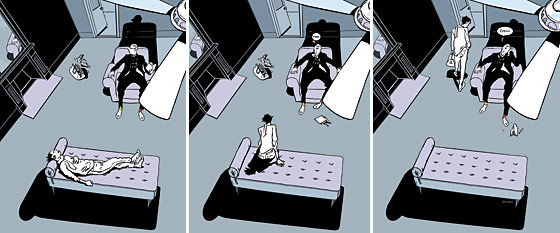
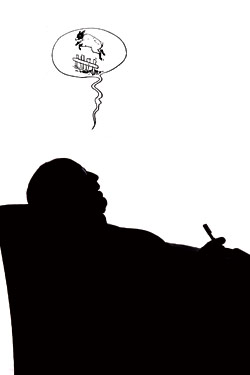
Illustrations by Istvan Banyai  

After I was expelled from boarding school, kicked out one month shy of graduation for boozing and for a condition that might best be labeled “extreme chronic malingering,” I was sent to an old-fashioned psychiatrist on the Upper East Side. This was the late seventies, or halfway between the respective heydays of Holden Caulfield and Prozac. Though the idea of the adolescent hallowed by his suffering had stiffened into a cliché, it wasn’t yet the fashion to put a problem child on meds. I still remember walking into the churchly lit office, with its framed poster of William Jennings Bryan’s “Cross of Gold” speech. To that point, my notion of therapy was informed by little more than Judd Hirsch in Ordinary People.

The doctor was a middle-aged man with a low-slung, do-si-do voice, cowled eyelids, and a silver Cross pen poised above a yellow legal pad. I regarded him as little more than an agent of my parents, and so, aside from a twice-weekly deconstruction of Hubie Brown’s Knicks, refused to engage him. What followed was an old-fashioned Freudian face-off: I sat in a stone-cold silence that he declined to break, a magisterial reticence no doubt meant to open a crawlway to my unconscious mind. We were all but motionless in an all-but-airless room, repaying each other’s muteness in kind. It’s no wonder what eventually happened. The doctor fell asleep.

His eyelids would droop, his head loosen, his chin loll slightly forward, and then—a telltale jerk back into some semblance of attentiveness.

Thirty years and four shrinks later, I’ve come to recognize these signs. I have consulted four therapists in my life, and all four have fallen asleep on me. The ritual—forms, waiting rooms, Kleenex—starts up again, only each time with my own special twist: I pay someone to explore my unconscious mind and instead they sink into theirs. So consistently did I lose wakeful contact with my shrinks that I began to suspect—honest to God—that feigning sleep was a technique for provoking patients to confront their fears of abandonment. “Once in a 40-year career,” said a friend’s shrink, an ancient and cheerful Jungian, when I asked him if he’d ever drifted off while on the clock—making me, I suppose, the Ted Williams of narcissistic monotony.

A little while ago, at a dinner party, I met a prominent analyst, a Kleinian. He is the first therapist I’ve known socially, and I confided in him. “I’d like to go back into therapy, but all four therapists I’ve seen in my life have fallen asleep.” He didn’t laugh. Nor did he ask me how I felt. Instead he took it in, turned it over in his mind, then said, very carefully, “Well, the common denominator here is you.”

The comment lingered, as any stab wound to the chest would. Then, a week later, he e-mailed me a PDF. “In the past I noted a tendency in myself to become drowsy with two patients,” wrote the analyst Edward S. Dean in a now-infamous 1957 paper. “At times this drowsiness became so strong that I desired more than all else that the hour end, that I be rid of the patient and could take a brief nap. I was surprised to observe that as soon as the patient left, I became instantly fresh and alert.”

The sleeping analyst is not common, but it is not unheard of, and Dean’s paper has been cited in most treatments of the subject since. And no wonder: He taught the analyst to interpret his own sleepiness not as malpractice, or even an embarrassing if inevitable bêtise, but as evidence of the patient’s “tenacious and insuperable resistances.” Explicitly following Dean’s lead, successive analysts have generated a composite portrait of the sleep-inducing patient as a kind of negatively charged superhero. He can be so powerfully dissociative, “the analyst feels depleted or half-alive, and thus disorientated and out of touch with the basis of what is most alive, or would be most alive at that time if the patient were truly there.” Typically he suffers from “passive-obsessional and narcissistic character disorders, [using] isolation, inactive rumination, concealment and displacement of affects to control and dull into passivity the patient himself as well as others.”

Therapy is unlike any other social situation. It is a highly ritualized encounter designed to take the immense dead weight of the past and budge it, inch by galling inch, in the direction of change. But therapy is also like any social situation. It is a kind of performance in which we seek to convince, to charm, and, if necessary, to put on the cap and bells of our suffering, to sustain the attention of another. Over the years, my feelings about therapy hardened. But the Kleinian, and his forwarded paper, have made me reconsider. I’ve now gone four for four. Are my own powers of resistance so enormous that the composite portrait of me, as an isolated, narcissistic evader, is unavoidable? Can an abandonment of minimal professional duty—to stay heedful of what a patient says, no matter how stonewalling—really be answered with an evasion, a theory, a cliché? Who are the bullshit artists here? Them or me?


(Photo: Danny Kim/New York Magazine; Illustration by Istvan Banyai)

I went back to see them to try to find out.

Returning to an old therapist is like finding an old mirror in the attic. You dust it off, smile at the frame’s filigree, then recoil in horror to discover its reflection still retains your childhood face. My maiden therapist, dating back to the Hubie Brown years, refused to return my phone calls. As one of the first American analysts to plead guilty to insider trading (a patient of his was the wife of a noted financier), he was no doubt unnerved by the sound of a journalist on his answering machine. That his voice, meanwhile—the Eeyore-like cadence—could sit so unceremoniously on an outgoing message, and still be so provocative to the recesses of my memory, gave me an uncomfortable foretaste of the experience to come.

Therapist No. 2’s office is still tucked in the same small complex on the fringes of a college town, where suburbia melts into farm country. NPR murmured on a dual-cassette boom box, which sat on the floor next to an empty Poland Spring cooler, which was tucked beneath a framed Georgia O’Keeffe poster—everything just as I’d left it twenty years earlier. During my therapy, I used to play the manipulative child, confronting my therapist with the latest anti-Freud aperçu from one of my comp-lit professors, a veteran Freud-basher of some renown. She would sigh and say, “Your professor needs to update his ideas about therapy. We have.”

Obscurely compelled, I suppose, to repeat past behavior, I had stopped by my old professor’s office en route. “Freud happened to be a physician, the same way Schopenhauer happened to be an idealist philosopher,” he said, tilting back in his beat-up brown leather chair. “His work is a brilliant interpretation of the self and the world, but it fails as a therapy. But he was a physician—and so Freud believed he had to cure people.” Not Freud’s problem alone, I thought, driving at a homicidal speed, trying to make my appointment on time. Would I bother recounting my previous night’s dream to a stranger if I didn’t think it would make me better? Admittedly, “cured” is out of the question, I thought, seated in my old therapist’s waiting room. So if not cured, what? Go ahead, say it. Say the word “journey.” I hate the word “journey.”

“Hello, Stephen.” She stands in the doorway, a tiny woman in muted lamb’s wool, a look of friendly anticipation on her face. I cannot quite grasp how satisfying it is to see her. She is older, of course, but it comes back to me in an instant—her patience, her measured but palpable concern, her frequent if gentle skepticism, her wonder while staring at the towering ramparts of my neurosis. Seated, she asks me why I’ve come. “I’m on a kind of … journey,” I say, wishing at that moment a grand piano would, taking mercy on us both, fall through the ceiling. But soon enough our conversation becomes free-flowing and frank. As we talk—I tell her about my marriage, my children—I think, This is like therapy, and yet not like therapy. It’s like Moses Malone and Jabbar playing a charity pickup game. The moves are creaky, yet strangely familiar.

When I first met this therapist, I was a nihilist bristling with a hostility I mistook for confidence and a nervous laugh that sounded like a bagful of frenzied grackles. A tree with pasted-on leaves, as the poet Anne Sexton once wrote about a friend, though she added: “you’ll root / and the real green thing will come.” I feel like a different being now. And yet she still insists I suppress a deep and mostly unconscious rage against my mother. I disagree with this—resistance!—and we go back and forth, but without any of the old aggressive friction. Then I ask her: Do you remember falling asleep during our sessions? And the conversation goes dead. Her chin retracts; her eyes lose focus.

Nothing more, nothing less, therapy is the art of teaching someone to overhear himself. This woman taught me to overhear myself and begin to live beyond the service of my infantile needs. She dared me, by asking simple but, in retrospect, quite cunning questions, to think of my would-be existential jailers—my parents, my teachers, my friends, my enemies—as my fellow inmates. But now she answers the question of her sleep haltingly, to put it mildly. “You were so … heavily defended. When a patient is defending against me … my insights … can be anesthetizing … I’m being excluded … repelled … I can get sleepy.” The Dean defense! The sky-hook of snoozing analysts! I can’t help laughing, and I can’t help noticing, for the first time in years, how my laugh still sounds like a bagful of imprisoned birds.


Browsing through the literature on sleepy analysts, I was struck by how united the analytic community is in interpreting its own sleep. Variations of the Dean defense abound. And yet analysts stand utterly divided on what the sleepy patient might signify. Is it primary narcissism, hallucinatory regression, a desire to retreat into a womblike state? Freud thought each of these at different times; he even thought it could be a repetition of our infantile withdrawal from the pain of our own childbirth. Or maybe it’s a hostile urethral (no joke) reaction to the analyst? Or maybe the desire to be united with the good mother, or a regression to the infant’s inability to accept the nursing breast? The disdain its critics feel for psychoanalysis is not hard to fathom. You pay a handsome sum to sit across from a real, living, breathing human being who, when confronted with your agony, presents you with a toneless expression and the gelid “And how do you feel about that?” Meanwhile, in his notebook, he jots: “Patient exhibits hostile urethra …”

Back in New Haven, passing the hulking Gothic enclosures designed to protect Yale students from, seemingly, everything, I am in a morbid way. It’s true, grad school bestows freedom upon its attendees to luxuriate in the best of what’s been thought and said (and in beer). But over time, you’re in danger of becoming a lifer—part veal calf, part hothouse flower. At Yale, I had a swank fellowship, met literary critics I’d worshipped since childhood, read English Romantic poetry, studied Latin and Greek, and I went to the gym ceaselessly. The weightlifting could stand in for the entire experience. I piled higher and higher weights on top of my meager frame, lying on a bench, beet-faced, pushing them off me, and as I did, I only seemed to get weaker. In grad school, I read more and more books, and as I did, I only seemed to get stupider. In therapy, I added more and more sessions, and as I did, I only seemed to get sicker.

My therapist here was a Freudian who pushed me to take more sessions, to become a fully subscribed, five-day-a-week head case. I remember him only indistinctly, as a tweedy-shabby figure, a lifetime of neurotic confession—oh, city of thwarted glory!—clinging to him, the way a lifetime of johns clings to a prostitute. Does it come across how much I looked forward to this reunion? And yet the man who greets me at the door of his office is … Judd Hirsch. Circa Ordinary People. Seriously. An evidently humane and friendly middle-aged Jewish man in chinos and a button-up oxford. He is genuinely puzzled when I tell him how bitterly I recall our working relationship. “Really?” he says. “You speak of transference. Well, there is countertransference. And I remember you fondly.”

Asked about falling asleep during our sessions, he replies, “Oh, after lunch, glucose in the bloodstream, insulin, tryptophan …” I press him, and he says, “Well, why did the English take their tea in the afternoon?” Pressed, he says the question of his sleep “clearly distressed you.” To a man with a hammer, Mark Twain wrote, everything looks like a nail. Sitting across from my old doctor, in the late afternoon, in an old New England mansion, with its soughing radiators and pockets of gray light, it’s hard not to think of psychoanalysis not only as a dying art but as a ball-peen to the right eye.

Soon after moving from New Haven to New York City, my wife and I made fast friends with a woman who was French, in the film business, and beautiful. If someone were bullshitting her, I reasoned, it would have to be exquisite bullshit. So when my wife learned that she was pregnant with what would become our first daughter, and I flew into a panic, I called our new acquaintance for her shrink’s phone number. She referred me to an elderly man, deep in his seventies, with an M.S.W. and a shingle in the West Village. I remember carefully scanning his face for evidence of stupor, even as I labored to stay vividly and emotionally present. He fell into the deepest sleep, snoring like a bass clarinet. I was left to decide whether to wake a kindly old man or tiptoe silently from his office.

The morning I returned to him, for this latest and last of my therapeutic journeys, I stumbled upon a poem by John Betjeman called “Loneliness.” (“What misery will this year bring / Now spring is in the air at last? … But church-bells open on the blast / Our loneliness, so long and vast.”) A grim meditation on death, but what a relief, I thought, that someone once called it loneliness, and not depression—to be alleviated by intimacy, not medicine or pity. I had forgotten how on his bookshelves, aside from the usual shrinky tomes, sat volumes by Berryman, Lowell, and Sexton. He is thinner now, less robust. I ask him about falling asleep, and he says, cheerfully, “I have no memory of that whatsoever.” This is surprising, considering he passed out cold, I exited quietly, and we later spoke about it intensively. “What did I say?” he asks. That I had been locking him out with emotionally evasive speech. “What did you say?” he asks. That that was a bullshit answer. He pauses. He smiles. “Good for you.”


When I tell him why I’ve come, he thinks for a moment. Then he adds, “This event that you speak of. It happened to me. Twice.”

“You’re joking. Now I feel more like a journalist than a patient.”

“I prefer ‘analysand.’ ”

“Okay, then, analysand. Though that sounds so Freudian.”

“I hold nothing against Freud.”

“Really? Nothing?”

“No. He wasn’t a very good analyst, but he was a remarkable thinker.”

“He fell asleep on his patients. Excuse me, analysands. On Helene … ”

“Deutsch?”

“Thank you, yes, Helene Deutsch.”

“Was he facing her? Or behind?” he asks. Oddly suggestive, but it allows me to play the A student. “Behind. She knew he had fallen asleep because she saw his cigar drop to the carpet.”

He laughs, a light, high, and dry nicker. “Ah, that is wonderful.”

“So, about falling asleep …”

He smiles.

“Would you like to lie on the couch, and we can talk about it?”

“Seriously?”

“Yes!”

“In order to talk about your sleeping analysts, I have to lie on the couch?”

“I’m not going to blackmail you,” he says, but very coyly. I had thought the back of my head would never touch the miserable doily again. Yet here I am, staring at a Friedrich wall unit.

“One was my supervising analyst; one was my training analyst.” Having gotten me where he wants me, he digs right in. “Here is what happened: With my supervising analyst, I was talking along, and I was suddenly aware she was sleeping. And then she woke up, and this is what she said. She said, ‘What have I missed?’ My training analyst, meanwhile, fell asleep with some frequency. I’d just talk louder, and he’d wake up. I’d say, ‘Did you have a nice nap?’ And he would say, ‘Yes, thank you.’ ” How very tidy.

“Did you feel like there was something about what you were saying, or how you said it, that made them fall asleep?” I ask. “Possibly. How can you know those things for sure? It didn’t really bother me. It was part of the relationship, of getting to know each other over the years. He was the founder of modern psychoanalysis. This was a very honest person.”

I did what anyone would have done next: I ran home to Google “modern psychoanalysis founder.” I learned that in the fifties, a man named Hyman Spotnitz began shifting American analysis away from rigidly formulaic diagnoses and toward a more supple understanding of the individual transference. Against the authority of the analyst as a bearer of reality, to which the analysand need be reconciled, Spotnitz promoted the idea of two people, alone in a room, talking. (He expanded that by promoting “group therapy” in the sixties.) Spotnitz believed that neurosis, along with most forms of mental illness, originate in the pre-Oedipal, preverbal, even possibly prenatal stage of life. He believed in the transference, and also in the countertransference—that by joining in with and encouraging the patient’s fantasy of the analyst, the two people, alone in a room talking, could come to understand the shape and nature of the patient’s neurosis.

Hyman Spotnitz founded modern psychoanalysis. He was my analyst’s training analyst, and he fell asleep with some frequency. So this sympathy, this lack of judgment; it is classically Spotnitzian! It is all part of the method! Like the bus driver handing me a voucher, he’s encouraging me to transfer! Could it be that even the stories of his analysts falling asleep are only technique? This sympathy, only one more cunning induction to join? “It must have been hurtful,” my analyst continued during our meeting. “I was the fourth one. I don’t know, now that we’re talking about it, that it had anything to do with your conscious. I think it may have been with your unconscious. Analysts are trained to listen to the unconscious. In the analytic situation, we get back to preverbal times. One often can find words for something that didn’t have words. They often say, ‘Tell me what you don’t know.’ ”

The Friedrich air conditioner, an old warhorse, juddered painfully. If nothing else, I have mastered this repetition: of lying in an office, pondering psychoanalysis. I’ll tell you what I don’t know: I still don’t know whether I am being helped or fleeced like a little baby lamb. “We’re always working in this room,” he murmured, as the final minutes drained from the hour. “Both your unconscious and conscious, and my unconscious and conscious, are together in this room with us. This is a remarkable room, in one way. A lot goes on in here that wouldn’t go on anywhere else.”


Thirty years and four shrinks later, and what have I learned? My personality seems to come with two presets: stentorian bore and class cutup, neither of which exactly enchants the mental-health professional. “Character isn’t fate,” I say to my friend Adam, now living in England, over the phone. “Isn’t this the very American lie that sends us crawling back to the shrinks?”

“I suppose.”

“To see how the little, invisible filaments that weave together the individuals in a family into a single unit—how over time they turn to iron ore and become your character? I mean, to somehow exit the labyrinth of the group mind that conceived you? To move toward enlightenment and a hair further toward mitigated misery …”

“We’re on metaphor four, here, Steve.”

“To penetrate the self and transcend it …”

“Steve, hang on a sec. Zzzzzzzzz.

By this time, the jig is up; you see what I’m about. Admit it: Like my friend Adam, you’re getting sleepy … very, very sleepy. The problem is, of course, just as the problem is in my therapy, between the yuks and pseudo-insight, I’ve revealed nothing of substance. If I’m entitled to keep the Gothic particulars of my self-dispossession quiet, well, then, you’re entitled to the Dean defense. But to break the spell, I will tell you a story:

In 1963, a young and very unmarried girl in Poughkeepsie discovered, to her mounting terror, that she was pregnant. Her father was an IBM executive—this was when IBM executives were confined by sumptuary bylaw to wear white shirts and blue suits—and her mother was from the proper South. The household was run on the fifties model: The father was an authoritarian, everyone else toed the straight and narrow, and God forbid the neighbors found out. The young woman dropped out of college, and conveniently disappeared, to the Inwood House for wayward girls in lower Manhattan. The Inwood was then located in a large brownstone and run like a dormitory, with about twenty girls in residence at a time. There was a nurse and a Friday clinic, and, in offices across the street, a weekly group-therapy session. In November, the president was shot, and West 15th Street filled with pregnant girls, listening to the radio and smoking.

In January, she gave birth to a boy, and with a social worker holding her hand, she cabbed it up the FDR, to an adoption agency on the Upper East Side. On his 14th birthday, she wrote a letter to her son via Ann Landers—“Going into your teen years, I wanted you to know you had been loved, and are loved”—that Ann Landers did not print. The young woman was my mother, the baby boy was me. I first heard this story in my late thirties, sitting with her in a small picnic area overlooking the Hudson River. That is my preverbal, prenatal story; my ancient prehistory. After I heard it for the first time, I boarded a train in Westchester and returned to the city. And then something peculiar happened. I fell asleep—not just asleep, but into the deepest sleep of my life. When I woke up, the train was empty, sitting idle in Grand Central. The platform was empty, too. I had slept through the thronging of passengers exiting a crowded New York commuter train and then slept for an additional half-hour in the deserted car. No conductor was in sight; no one; not a soul.

I have never felt so cleansed by sleep; I’ve also never felt so alone. What could it mean? I haven’t the slightest idea. But I have decided, for now, to leave that stone lying at the base of its Sisyphean incline. Instead of gearing up again—forms, waiting rooms, Kleenex—I called my biological mother and told her about my four therapists and how they had fallen asleep on me. She laughed and laughed and laughed, then said, “Did you ever think it means maybe you don’t need therapy?”

Bookmarked at brandizzi Delicious' sharing tag and expanded by Delicious sharing tag expander.
10 May 22:08

One Div Zero: A Brief, Incomplete, and Mostly Wrong History of Programming Languages

1801 - Joseph Marie Jacquard uses punch cards to instruct a loom to weave "hello, world" into a tapestry. Redditers of the time are not impressed due to the lack of tail call recursion, concurrency, or proper capitalization.

1842 - Ada Lovelace writes the first program. She is hampered in her efforts by the minor inconvenience that she doesn't have any actual computers to run her code. Enterprise architects will later relearn her techniques in order to program in UML.

1936 - Alan Turing invents every programming language that will ever be but is shanghaied by British Intelligence to be 007 before he can patent them.

1936 - Alonzo Church also invents every language that will ever be but does it better. His lambda calculus is ignored because it is insufficiently C-like. This criticism occurs in spite of the fact that C has not yet been invented.

1940s - Various "computers" are "programmed" using direct wiring and switches. Engineers do this in order to avoid the tabs vs spaces debate.

1957 - John Backus and IBM create FORTRAN. There's nothing funny about IBM or FORTRAN. It is a syntax error to write FORTRAN while not wearing a blue tie.

1958 - John McCarthy and Paul Graham invent LISP. Due to high costs caused by a post-war depletion of the strategic parentheses reserve LISP never becomes popular[1]. In spite of its lack of popularity, LISP (now "Lisp" or sometimes "Arc") remains an influential language in "key algorithmic techniques such as recursion and condescension"[2].

1959 - After losing a bet with L. Ron Hubbard, Grace Hopper and several other sadists invent the Capitalization Of Boilerplate Oriented Language (COBOL) . Years later, in a misguided and sexist retaliation against Adm. Hopper's COBOL work, Ruby conferences frequently feature misogynistic material.

1964 - John Kemeny and Thomas Kurtz create BASIC, an unstructured programming language for non-computer scientists.

1965 - Kemeny and Kurtz go to 1964.

1970 - Guy Steele and Gerald Sussman create Scheme. Their work leads to a series of "Lambda the Ultimate" papers culminating in "Lambda the Ultimate Kitchen Utensil." This paper becomes the basis for a long running, but ultimately unsuccessful run of late night infomercials. Lambdas are relegated to relative obscurity until Java makes them popular by not having them.

1970 - Niklaus Wirth creates Pascal, a procedural language. Critics immediately denounce Pascal because it uses "x := x + y" syntax instead of the more familiar C-like "x = x + y". This criticism happens in spite of the fact that C has not yet been invented.

1972 - Dennis Ritchie invents a powerful gun that shoots both forward and backward simultaneously. Not satisfied with the number of deaths and permanent maimings from that invention he invents C and Unix.

1972 - Alain Colmerauer designs the logic language Prolog. His goal is to create a language with the intelligence of a two year old. He proves he has reached his goal by showing a Prolog session that says "No." to every query.

1973 - Robin Milner creates ML, a language based on the M&M type theory. ML begets SML which has a formally specified semantics. When asked for a formal semantics of the formal semantics Milner's head explodes. Other well known languages in the ML family include OCaml, F#, and Visual Basic.

1980 - Alan Kay creates Smalltalk and invents the term "object oriented." When asked what that means he replies, "Smalltalk programs are just objects." When asked what objects are made of he replies, "objects." When asked again he says "look, it's all objects all the way down. Until you reach turtles."

1983 - In honor of Ada Lovelace's ability to create programs that never ran, Jean Ichbiah and the US Department of Defense create the Ada programming language. In spite of the lack of evidence that any significant Ada program is ever completed historians believe Ada to be a successful public works project that keeps several thousand roving defense contractors out of gangs.

1983 - Bjarne Stroustrup bolts everything he's ever heard of onto C to create C++. The resulting language is so complex that programs must be sent to the future to be compiled by the Skynet artificial intelligence. Build times suffer. Skynet's motives for performing the service remain unclear but spokespeople from the future say "there is nothing to be concerned about, baby," in an Austrian accented monotones. There is some speculation that Skynet is nothing more than a pretentious buffer overrun.

1986 - Brad Cox and Tom Love create Objective-C, announcing "this language has all the memory safety of C combined with all the blazing speed of Smalltalk." Modern historians suspect the two were dyslexic.

1987 - Larry Wall falls asleep and hits Larry Wall's forehead on the keyboard. Upon waking Larry Wall decides that the string of characters on Larry Wall's monitor isn't random but an example program in a programming language that God wants His prophet, Larry Wall, to design. Perl is born.

1990 - A committee formed by Simon Peyton-Jones, Paul Hudak, Philip Wadler, Ashton Kutcher, and People for the Ethical Treatment of Animals creates Haskell, a pure, non-strict, functional language. Haskell gets some resistance due to the complexity of using monads to control side effects. Wadler tries to appease critics by explaining that "a monad is a monoid in the category of endofunctors, what's the problem?"

1991 - Dutch programmer Guido van Rossum travels to Argentina for a mysterious operation. He returns with a large cranial scar, invents Python, is declared Dictator for Life by legions of followers, and announces to the world that "There Is Only One Way to Do It." Poland becomes nervous.

1995 - At a neighborhood Italian restaurant Rasmus Lerdorf realizes that his plate of spaghetti is an excellent model for understanding the World Wide Web and that web applications should mimic their medium. On the back of his napkin he designs Programmable Hyperlinked Pasta (PHP). PHP documentation remains on that napkin to this day.

1995 - Yukihiro "Mad Matz" Matsumoto creates Ruby to avert some vaguely unspecified apocalypse that will leave Australia a desert run by mohawked warriors and Tina Turner. The language is later renamed Ruby on Rails by its real inventor, David Heinemeier Hansson. [The bit about Matsumoto inventing a language called Ruby never happened and better be removed in the next revision of this article - DHH].

1995 - Brendan Eich reads up on every mistake ever made in designing a programming language, invents a few more, and creates LiveScript. Later, in an effort to cash in on the popularity of Java the language is renamed JavaScript. Later still, in an effort to cash in on the popularity of skin diseases the language is renamed ECMAScript.

1996 - James Gosling invents Java. Java is a relatively verbose, garbage collected, class based, statically typed, single dispatch, object oriented language with single implementation inheritance and multiple interface inheritance. Sun loudly heralds Java's novelty.

2001 - Anders Hejlsberg invents C#. C# is a relatively verbose, garbage collected, class based, statically typed, single dispatch, object oriented language with single implementation inheritance and multiple interface inheritance. Microsoft loudly heralds C#'s novelty.

2003 - A drunken Martin Odersky sees a Reese's Peanut Butter Cup ad featuring somebody's peanut butter getting on somebody else's chocolate and has an idea. He creates Scala, a language that unifies constructs from both object oriented and functional languages. This pisses off both groups and each promptly declares jihad.

Footnotes

  1. Fortunately for computer science the supply of curly braces and angle brackets remains high.
  2. Catch as catch can - Verity Stob

Edits

  • 5/8/09 added BASIC, 1964
  • 5/8/09 Moved curly brace and angle bracket comment to footnotes
  • 5/8/09 corrected several punctuation and typographical errors
  • 5/8/09 removed bit about Odersky in hiding
  • 5/8/09 added Objective-C, 1986
  • 5/8/09 added Church and Turing
  • 4/9/10 added Ada (1983) and PHP(1995)
Bookmarked at brandizzi Delicious' sharing tag and expanded by Delicious sharing tag expander.
10 May 18:22

Clippy | cd8.jpg

cd8.jpg
10 May 13:05

La educación en Brasil avanza, pero tiene un largo camino por recorrer | Sociedad | EL PAÍS

Adam Victor Brandizzi

Sempre cri isso, mas a descrença geral me faz ficar na moita... Mas sinto mais confiante agora.

Cuando se habla de educación, la imagen de Brasil no es de las mejores. Principalmente cuando se le compara con países más desarrollados. "Pero el vaso está medio lleno, y no medio vacío", sostiene Andreas Schleicher, uno de los responsables del Programa para la Evaluación Internacional de los Estudiantes (PISA), el mayor ránking de evaluación de desempeño escolar del mundo.

Director adjunto de Educación de la Organización para la Cooperación y el Desarrollo Económico (OCDE), Schleicher presentó algunos datos relativos a la educación brasileña e internacional durante el foro PISA y PIAAC: Mejores cualificaciones, mejores empleos, este martes en Brasilia. El evento fue patrocinado por EL PAÍS en colaboración con la Fundación Santillana, la propia OCDE, el Instituto Nacional de Estudios y Encuestas Educacionales Anísio Teixeira (INEP) y el Ministerio de Educación de Brasil.

Aunque admita que el país tiene un largo camino por recorrer, el director de la OCDE recordó que Brasil fue el país que más avanzó en los indicadores desde 2000, cuando empezó. Schleicher comentó que es preciso reconocer que los brasileños, que no están integrados en la OCDE, han decidido encarar los desafíos de exponerse a los resultados del informe PISA desde el inicio, a pesar de las continuas críticas de algunos especialistas que creían que, en vez de ayudar, acabaría por desestimular la evolución del sistema educacional, dada la gran distancia que le queda por recorrer en relación a países más desarrollados.

En diciembre del año pasado, por ejemplo, Brasil elevó su nota en matemáticas de 356 a 391, convirtiéndose en el país que más mejoró desde 2003 en el área. El informe de la OCDE también destacó entonces el avance de Brasil en la educación primaria y secundaria, con un crecimiento del 65% en 2003 al 78% en 2012 en niños escolarizados de hasta 15 años.

También viendo el vaso medio lleno, los alumnos brasileños volvieron a destacar por su capacidad de resolver problemas prácticos, según el experto. A pesar de ello, el país ocupó el 58º lugar de un total de 65 países analizados en matemáticas.

Entre los puntos preocupantes, sin embargo, persiste el hecho de que el Brasil invierte un tercio de la media de los demás países de la OCDE por alumno

El informe PISA se realiza entre alumnos en la franja de los 15 años, edad en la que se presupone que los estudiantes acaban la educación básica obligatoria en la mayoría de los países. Las evaluaciones tienen lugar cada tres años, abarcando tres áreas de conocimiento – Lectura, Matemáticas y Ciencias. En Brasil, el examen es coordinado por el INEP. En general, el examen reúne a medio millón de estudiantes, que representan un universo de 28 millones de jóvenes en 65 países o economías.

Según el presidente del INEP, José Francisco Soares, también presente en el evento, el documento ha tenido "una importancia fundamental" en las evaluaciones del Gobierno de Brasil.

Entre los puntos preocupantes, sin embargo, persiste el hecho de que Brasil invierte un tercio de la media de los países de la OCDE por alumno. Y la inversión también deja que desear entre los profesores. Según Schleicher, es inevitable relacionar la valoración de los profesionales de la enseñanza con los resultados de los alumnos. Como ejemplo, cita Corea del Sur, donde los profesores tienen la mejor relación del mundo entre salarios y Producto Interior Bruto (PIB).

Una de las esperanzas para la sociedad brasileña es el Plan Nacional de Educación, que está en la Cámara de los Diputados y debe ser votado el próximo día 7. El proyecto prevé incrementar del 5% al 10% el PIB dedicado a la enseñanza, así como directrices para el sector hasta el año 2020. Uno de los puntos más importantes de la iniciativa es justamente la equiparación de salarios de los profesores, que hoy ganan un 40% menos que otros profesionales con el mismo nivel de formación.

A origen social no es un destinado, y el alumno necesita comprender que puede ser exitoso a través del aprendizado

Andreas Schleicher

Pero uno de los desafíos cuando se habla de asignación de recursos es justamente el de saber aplicarlos bien. "Brasil podría hacer mucho más con más dinero en educación. Pero la discusión no es solo sobre gastar, sino sobre dónde gastar. Invertir donde tenga un mayor impacto, atrayendo, desarrollando, y reteniendo a líderes escolares de alta calidad", afirma el director de la OCDE.

La escolarización también ocupa un papel destacado en las preocupaciones de países como Brasil por su posibilidad de ascenso social. "El origen no es un destino, y el alumno necesita comprender que puede ser exitoso a través del aprendizaje". "Las capacidades se pueden ser aprender, y, por lo tanto, todos los jóvenes lo pueden conseguir", añade Schleicher. En el último informe del PISA, de diciembre del año pasado, los resultados de Brasil mostraron que la evolución económica del país llevó a un mayor número de niños a la escuela.

Adultos

Uma de las propuestas del foro es debatir el papel de una nueva evaluación, que incluya también el análisis de las habilidades de adultos de hasta 65 años. Hoy la OCDE trabaja con el Programa Internacional para la Evaluación de las Competencias de los Adultos (PIAAC, en sus siglas en inglés), que en un primer momento evaluó 24 países. Los primeros resultados permitieron, por ejemplo, comparar las notas de adultos de Japón y Estados Unidos. Aunque ambos países tengan un modelo similar de formación de adultos, los norteamericanos aplican mucho más su conocimiento en la vida laboral que los japoneses. Ese tipo de diagnóstico pretende estimular el conocimiento de la productividad y la adaptación del sistema de enseñanza para el reciclaje de adultos, ya que las sociedades están envejeciendo y la vida útil de las personas, creciendo.

El indicador PIAAC empieza ahora a evaluar nuevos países, como Singapur, Turquia y Grecia. Solo Chile está incluido, entre los países de Latinoamérica. Brasil aún no se ha adherido, aunque lo está analizando, explica Chico Soares, presidente del INEP, vinculado al Ministerio de Educación. "Brasil ya tiene muchas evaluaciones y es necesario ver cómo el PIAAC podría relacionarse con otros instrumentos utilizados hoy para hacer diagnósticos de nuestro sistema de educación", afirma Soares. El INEP trabaja con ocho programas de evaluación, incluyendo el PISA. Existe también un debate para compararse con los países del Mercosur.

Mejoras brasileñas

El secretario ejecutivo del Ministerio de Educación, Luiz Cláudio Costa, también presente en el evento, destacó el auge de las formaciones técnicas en el país - 6,8 millones de personas formadas en cursos de este tipo desde 2011- y las mejoras en la educación superior. Desde 2003, por ejemplo, el número de matriculados en las universidades pasó de 3,8 millones a siete. Costa reconoció algunos cuellos de botella, como la necesidad de ampliar la formación de bachillerato.

Bookmarked at brandizzi Delicious' sharing tag and expanded by Delicious sharing tag expander.
10 May 13:01

GIF-iti

by Andrew Sullivan

dish_gifiti

RJ Rushmore highlights a new artform:

INSA’s GIF-ITI is clearly designed for the internet. But what I like about it is that it’s not only for the internet. Blu’s animations look great as a finished product, but they’re not so beautiful if you visit those walls in person long after Blu has left. Some murals photograph well or make sense when you look at them, but they don’t pop or make sense when you see them in person. Others look great in person, but are difficult to photograph. INSA’s GIF-ITI pieces work amazingly well online (certainly better than most still photos) and still looks great on the street. That’s an uncommon combination.

A dizzying close-up after the jump:

dish_gifiti_v2

10 May 13:01

Of Testees And Testosterone

by Andrew Sullivan

Last week, a study published in Nature revealed that lab mice react differently to their male and female researchers:

Mice, and rats, it turned out, are made especially stressed out by men. One way to watch the rising anxiety and depression of a mouse is to force it to swim. “Mice can swim very well, and they can swim for a long time, but they don’t really like it,” [psychologist Robert] Sorge said. Over a series of experiments, the team determined that even if a female scientist is working with a mouse, “just having a man in a room was similar to three minutes of forced swim.” …

The team determined that the rodents were responding to the scent of men, not the sight. … To confirm the smell theory, Sorge went on, “we’d have the man wear a T-shirt overnight in bed, with no cologne or anything. We’d have him take the shirt, put it in a bag, and drape it over a chair.” Sorge couldn’t detect the smell, though others in the lab could; the stink depends on the dose, he explained.

The team conducted the same musk test with other males—guinea pigs and cats and dogs, fixed and unfixed. (All male mammals, including humans, produce testosterone.) “We just used the bedding,” Sorge said. He brought in the pillow that his daughter’s cat sleeps on. In each case, the masculine scent provoked the same response from the mice. And it wasn’t just the introduction of a strong odor: “We tried vanilla smell. We tried banana—none of them did anything. It didn’t have to do with being a novel smell. It had to do with a testosterone smell.”

Ian Steadman suggests next steps for scientists:

Scientists working with rodents will need to begin acknowledging and studying these further biases that their implicit assumptions introduce to each experiment, or there may be huge bodies of potential knowledge out there that we just will never know. At the very least, scientists could begin reporting the genders of those taking part in experiments with mice subjects, to address the problem of men ruining things with their presence.

09 May 23:37

O Desafio de Educar Crianças Pobres e Residentes em Áreas Violentas

by Joana Monteiro

O domínio do tráfico de drogas em territórios do Rio de Janeiro é um problema que atravessa décadas. Com a entrada das UPPs, alguns desses territórios estão sendo retomados, mas as desigualdades sociais permanecem. Essas desigualdades tendem a persistir até que se consiga oferecer educação de qualidade às crianças residentes nessas áreas, de forma a oferecer igualdade de oportunidades às novas gerações.

Existem dois grandes desafios em ensinar alunos de áreas dominadas pelo tráfico de drogas. O primeiro desafio diz respeito ao fato de que as áreas violentas da cidade são áreas muito pobres. Isso importa para a análise do aprendizado escolar porque a pobreza é fortemente correlacionada com o baixo nível educacional dos chefes de família e a educação dos pais, por sua vez, é uma das variáveis mais importantes para explicar o desenvolvimento escolar das crianças. Como escola e família são fatores complementares na educação de crianças, passa a caber à escola a responsabilidade de compensar a desvantagem que as crianças pobres trazem de casa, oferecendo um ambiente propício para o aprendizado.

Quando analisamos as escolas em áreas dominadas pelo tráfico, encontramos o segundo desafio. A rotina violenta destes locais dificulta o funcionamento das escolas e acaba comprometendo ainda mais o aprendizado. Essa é a conclusão do estudo Disputas entre Facções de Drogas e Desempenho Escolar, elaborado por mim e pelo Rudi Rocha, professor de economia da UFRJ. O estudo investiga como a violência associada ao tráfico de drogas afeta o aprendizado nas escolas municipais do Rio de Janeiro que ficam localizadas próximas às áreas de conflito. Nós encontramos que os alunos pontuam menos na Prova Brasil de matemática em anos em que há muitos tiroteios durante o período letivo, o que indica que os alunos das escolas expostas à violência estão aprendendo menos. Essa redução de aprendizado é, em média, pequena – as notas diminuem 1% – mas é acentuada em escolas que enfrentam muitos dias de tiroteio e estão localizadas dentro de favelas.

O método empregado no estudo permite afirmar que a violência adiciona dificuldades ao já difícil processo de ensinar crianças em desvantagem social. Que dificuldades extras são essas? Nós encontramos evidências de que os tiroteios geram uma ruptura da rotina escolar. Em escolas próximas a favelas que sofreram com tiroteios que duraram mais de uma semana, a falta de professores aumentou em 30%, a rotatividade de diretores foi maior (aumento de 35% no percentual de diretores que está há menos de dois anos no cargo) e houve uma maior interrupção de aulas durante o ano letivo (aumento de 92% de chance de o diretor declarar que houve interrupção de aulas). É possível ainda que a violência afete os alunos de outras formas, como por exemplo, gerando traumas psicológicos e afetando seu comportamento, mas não possuímos medidas para avaliar essas dimensões.

Quais as implicações desse estudo para a análise que tenho feito sobre as UPPs? Ele indica que a instalação de UPPs deve provocar um aumento direto de aprendizado nas escolas, visto que ela reduz acentuadamente os tiroteios nas áreas ocupadas. Isso é exatamente o que reportagens que acompanham os indicadores escolares das escolas próximas às áreas ocupadas têm apontado, mas eu ainda não conheço um estudo que mostre esse impacto de forma sistemática.  Isso quer dizer que as UPPs vão resolver o problema da educação nessas áreas? Não. A política de pacificação apenas remove um grande obstáculo que existia ao funcionamento das escolas nessas áreas. O enorme desafio de educar crianças em desvantagem social permanece.

Nesse contexto, é preciso criar escolas-modelo capazes de lidar com essas adversidades sociais. Esse diagnóstico já é conhecido pela Secretaria Municipal do Rio de Janeiro desde 2009, quando a instituição criou o programa Escolas do Amanhã. Trata-se de um novo modelo para 155 escolas do Rio de Janeiro, localizadas em áreas conflagradas ou recém-pacificadas. Entre outras coisas, o programa busca oferecer ensino em tempo integral, com contraturno reforçado com foco e atividades acadêmicas. Há evidências sugestivas de que o programa tem apresentado resultados. Os dados da Secretaria informam que entre 2008 e 2012, a evasão escolar nas Escolas do Amanhã apresentou uma redução de 26,5%, contra 21,2% na rede municipal.  Mas é preciso ainda comparar o desempenho das Escolas do Amanhã com os resultados de um conjunto de escolas que atendem alunos de perfil similar para termos indicações dos resultados dessas intervenções e para poder aprimorá-las. Por enquanto, temos apenas a evidência de que removemos o primeiro obstáculo para oferecer melhores oportunidades para as crianças residentes em áreas violentas.


09 May 21:12

The Clown Egg Register

by Greg Ross

https://www.flickr.com/photos/lukestephenson/sets/72157606703952187/#

A clown’s face is his livelihood; it’s an unwritten rule among clowns that one must not copy the face of another. Accordingly, in 1946 London clown Stan Bult began painting the faces of his colleagues onto eggshells, effectively trademarking their identities. Bult’s collection was largely destroyed in an accident in 1965, but London’s Circus Clowns Club resurrected the practice in 1984 and added samples of its members’ costumes and wig hair, making each into a peculiar sort of portrait.

In 1979, Leon “Buttons” McBryde, a clown with the Ringling Bros & Barnum and Bailey Circus, heard about the British practice and established his own egg registry, which now includes hundreds of portraits of clowns hand-painted by his wife, Linda. The U.S. registry has been used in at least one court case in which one clown charged another with infringing his design.

The images above, of the British collection, are by photographer Luke Stephenson; more can be seen on his website and Flickr set.

09 May 11:20

Octopus

by thuudung
Adam Victor Brandizzi

"Eu não sei... realmente preciso, realmente quero ler outro texto sobre estes fascinantes animais?" disse ninguém, nunca.

Octopus!: It has a small brain but is a speedy learner; it can change color and shape in seconds; when bored, it may eat its own arms… more»

09 May 10:40

Running a product

by sharhalakis

by unixorn

08 May 22:24

'Deveríamos tratar porte de drogas como tratamos infração de trânsito' - BBC Brasil - Notícias

Adam Victor Brandizzi

Carl Hart tem ganhado bastante destaque esses dias. Para mim, faz sentido. Só o conheci há alguns dias mas ele é sempre interessante e até original.

Carl Hart (Divulgação)
O neurocientista defende a descriminalização das drogas

O neurocientista americano Carl Hart, de 47 anos, acreditou durante boa parte da vida que as drogas tinham um alto poder viciante e seriam a causa de diversos problemas sociais, como a violência.

Tendo crescido na periferia de Miami, ele viu amigos e familiares se tornarem dependentes do crack, recorrerem a crimes para sustentar o consumo e acabarem presos ou mortos ao se envolver com o tráfico. Essa visão mudou quando começou sua carreira como pesquisador nos anos 1990.

Em sua busca por uma forma de evitar que as drogas viciem, ele estudou o comportamento de dependentes e chegou à conclusão de que estas substâncias não são tão viciantes como imaginava. Hart oferecia US$ 5 a dependentes para que não tomassem uma segunda dose diária de crack. Se a primeira havia sido alta, os dependentes normalmente optavam por uma nova dose. Mas, se a primeira havia sido pequena, era provável que abrissem mão da segunda. Isso mostrou a Hart que, quando uma alternativa era oferecida as estas pessoas, eles tomavam uma decisão racional.

O cientista replicou o estudo com a droga metanfetamina e chegou aos mesmos resultados. Ainda descobriu que, ao aumentar o valor para US$ 20, todos optavam pelo dinheiro. Essa descoberta fez Hart investigar a fundo o universo da drogas e chegar à conclusão de que muitas das premissas nas quais se baseiam as atuais políticas governamentais sobre drogas são falsas.

Sua experiência está resumida em Um Preço Muito Alto (Editora Zahar), que será lançado neste mês no Brasil. No livro, Hart detalha episódios pessoais com as drogas – ele chegou a traficar maconha – e explica como sua afinidade por esporte, música e literatura, além do tempo em que serviu no Exército e dos conselhos recebidos por seus mentores, o levaram por um caminho diferente.

Hoje, Hart é professor de psicologia e psiquiatria na Universidade Columbia, o primeiro negro a ocupar esse cargo, e é pesquisador da Divisão de Abuso de Substâncias do Instituto de Psiquiatria de Nova York

A BBC Brasil conversou com Hart, que está no Brasil para lançar seu livro e realizar palestras sobre drogas. Na entrevista a seguir, ele defende que problemas sociais, como a pobreza, falta de educação e o desemprego crônico, são fatores mais preponderantes do que o potencial viciante de substâncias químicas.

Ainda diz que é preciso esclarecer a população sobre os mitos e reais perigos das drogas para que as pessoas tomem decisões conscientes quanto a seu uso e advoga pela descriminalização, mas não pela legalização. "Ainda somos muito ignorantes para isso", diz.

BBC Brasil - O senhor diz que a política empregada contra as drogas está equivocada. Por quê?

Carl Hart - A política de drogas da maioria do mundo é baseada em premissas falsas como, por exemplo, dizer que as drogas são muito viciantes, perigosas e imprevisíveis. Na verdade, a maioria das pessoas que usa drogas o faz de forma segura. Pense o seguinte: dirigir é estatisticamente perigoso, mas não temos a premissa de que uma motorista certamente sofrerá um acidente ou que passará por uma situação perigosa. Mas fazemos isso com as drogas. Ao basear esta política em mentiras, as leis criadas em torno dela não refletem a realidade.

Um Preço Muito Alto (Divulgação)
No livro, Hart mescla experiências pessoais e pesquisas

BBC Brasil - Em seu livro, o senhor diz que só 10% a 20% das pessoas se viciam em crack e metanfetamina. Esse índice é alto ou baixo?

Hart - Não sou eu quem diz isso, mas as pesquisas feitas nos Estados Unidos nos últimos 30 anos. Considero esse índice relativamente baixo porque isso significa que a grande maioria das pessoas não se vicia nestas drogas. Mesmo entre as que se viciam, normalmente isso normalmente ocorre quando elas são jovens, e, quando somos jovens, cometemos erros.

BBC Brasil - Por que algumas pessoas se viciam e outras não?

Hart - Por várias razões. Algumas porque tem outros problemas psiquiátricos como ansiedade, esquizofrenia ou depressão. Elas usam drogas e não percebem que têm um problema a ser tratado. Outras pessoas são celebridades ou muito ricas e nunca tiveram alguém dizendo a elas o que fazer. Quando usam drogas elas, não farão isso de forma responsável. Outras se viciam porque se drogar é a melhor opção que têm em suas vidas. Questões sociais normalmente têm um papel mais importante do que qualquer outro fator. Mas podemos influenciar nestas questões.

BBC Brasil - Como?

Hart - Se as pessoas estão desempregadas e sem alternativas, podemos tentar garantir que elas tenham empregos significativos. Podemos mostrar que são valorizadas socialmente e fazer com que sejam incluídas na sociedade.

BBC Brasil - Por que o senhor não concorda com a noção de que a maconha é a porta para o vício em outras drogas?

Hart - Porque os dados não apóiam essa noção. É verdade que usuários de heroína e cocaína usaram maconha em algum momento de suas vidas, mas o inverso não é verdadeiro. Os últimos três presidentes americanos experimentaram maconha e chegaram a um dos cargos mais poderosos do mundo. É assim com a maioria das pessoas que fuma maconha em algum momento: eles seguem com suas vidas, trabalham, pagam impostos.

"A maconha não leva a drogas mais pesadas. Os últimos três presidentes americanos experimentaram maconha e chegaram a um dos cargos mais poderosos do mundo. É assim com a maioria das pessoas que fumam em algum momento: eles seguem com suas vidas, trabalham, pagam impostos. "

BBC Brasil - O senhor diz que é um erro separar a maconha de outras drogas tidas como mais pesadas, por quê?

Hart - Todas as drogas são psicoativas e interferem com o cérebro para gerar seu efeito. Todas são potencialmente perigosas, mas também podem ser usadas de forma segura se as pessoas têm acesso a informações e são educadas sobre o assunto. Por isso não faz sentido tratar a maconha de forma diferente, como hoje fazemos com o álcool, por exemplo. Um pessoa pode morrer de abstinência de álcool, mas não de maconha, de cocaína ou heroína.

BBC Brasil - E por que tratamos álcool de forma diferente?

Hart - Porque a população em geral é muito informada sobre o álcool. Não podemos dizer que, quando uma pessoa bebe, ela enlouquece e mata seus familiares. Ninguém acreditaria em você. Mas quando isso é dito sobre cocaína e, de certa forma, da maconha, as pessoas acreditam porque não tem conhecimento ou experiência sobre estas drogas. Se algo é reiterado por tanto tempo, como estamos fazendo sobre o perigo das drogas, as pessoas têm isso como verdade, mesmo que não seja.

BBC Brasil - Tendo tudo isso em mente, como deveríamos lidar com as drogas?

Hart - A primeira coisa a ser feita é corrigir as premissas sobre drogas e acabar com a desinformação. As pessoas pensam que ficarão viciadas ao usar cocaína uma vez ou que a maconha leva a drogas mais pesadas. Em ambos os casos, é mentira, assim como muitos dos danos que as drogas supostamente causam ao cérebro. Depois, é preciso criar leis para tratar o consumo ou porte de drogas como tratamos uma infração de trânsito. Não deveríamos prender pessoas. Deveríamos multá-las ou dar um alerta. Não deveríamos fazer uma guerra contra drogas porque não fazemos uma guerra contra dirigir carros e é possível pode morrer disso. Temos que mudar nossa abordagem se queremos aumentar a segurança de toda nossa sociedade. É preciso manter estas pessoas fora da prisão, onde há outros problemas e doenças.

BBC Brasil - Por que isso não é feito?

Hart - Há governos que fazem o que sugiro, como os da Noruega e da Suíça, mas suas sociedades são homogêneas. Em sociedades como a brasileira e a americana, que são muito diversas social e etnicamente, a política de drogas é usada como uma ferramenta para perseguir grupos que não são muito bem quistos e mostrar que eles são inferiores. O racismo tem um papel nisso. Ninguém admite, mas é que vemos quando analisamos as evidências e os dados.

BBC Brasil - Algumas pessoas podem pensar que o senhor defende a legalização das drogas, mas não é esta posição que o senhor defende, certo?

Hart - Não. Somos ainda muito ignorantes para legalizar as drogas. Primeiro, temos que acabar com os mitos e descriminalizar o porte e o consumo de drogas em vez de responsabilizar as drogas por tudo que há de errado na sociedade.

BBC Brasil -Em grandes cidades do Brasil, como Rio e São Paulo, os governos vêm tentando acabar com áreas de consumo conhecidas como "cracolândias". Parte desse esforço envolve internar essas pessoas à força em clínicas com o aval de suas famílias. Como o senhor vê esse tipo de política?

"É preciso criar leis para tratar o consumo ou porte de drogas como tratamos uma infração de trânsito"

Hart - Você gostaria que fizessem isso com você? Provavelmente não. Fazer isso é ridículo.

BBC Brasil - O argumento é que estes dependentes estão num estado crítico que não permite a eles tomar esse tipo de decisão se precisam de tratamento ou não.

Hart - Quem pensa assim está completamente errado. Em minha pesquisa, dei milhares de doses de crack para dependentes, e estas pessoas tinham condições de tomar decisões por si mesmas. Se uma pessoa comete um crime ou infração, ela devem ser punidas, mas você não pode forçar ela a fazer algo contra sua própria vontade. Isso é uma barbárie.

BBC Brasil - Ao mesmo tempo, em São Paulo, a prefeitura oferece emprego, com remuneração de R$ 15 por dia de trabalho, cursos de capacitação e abrigo para os dependentes. Isso pode funcionar?

Hart - Parece ser um passo na direção certa. Mas é preciso ter certeza que estas pessoas acreditam que suas vidas melhorarão se elas fizerem isso, deixar claro que isso as tirará de uma situação terrível e que as levará a ter uma vida mais responsável e que permitirá a elas cuidar de suas famílias.

BBC Brasil - Como podemos mostrar isso a elas?

Hart - As pessoas não são estúpidas. Se você diz a elas que ganharão certa quantia em dinheiro para fazer certa coisa e que espera-se delas certas atitudes, elas sabem que fazer isso será bom. Foi o que a minha pesquisa mostrou.

BBC Brasil - Mesmo os mais jovens têm capacidade de usar racionalmente as drogas? Muitos pais acreditam que eles não estão preparados.

Hart - Antes de mais nada, nem todos os pais foram criados da mesma forma. Então, não dou ouvidos a pais que falam sobre algo que não entendem. Sou pai. Tenho filhos de 13 e 19 anos. Sei que eles agirão racionalmente com as drogas porque ensinei isso a eles. Expliquei a eles desde muito cedo. Mas as drogas não são o principal assunto entre nós. Em vez disso, os questiono sobre como eles se comportarão em sociedade e como contribuirão para ela. Eles fazem coisas erradas como qualquer criança, porque querem testar limites. Mas, no fim das contas, um adolescente sabem o que é ir longe demais se os pais fizeram um bom trabalho. O problema é que há muita gente que não é um bom pai ou mãe.

BBC Brasil - Como o senhor prepara o seus filhos para as drogas?

Hart - Passo a eles o mesmo tipo de conhecimento de que estamos tratando em nossa conversa. Sei, por exemplo, que uma das principais drogas consumidas por adolescentes é o álcool, então, falamos muito sobre isso. Também falamos muito sobre maconha, a droga ilegal mais usada. Explico que eles e os amigos devem começar por doses menores e tomar cuidado com o lugar onde usam este tipo de droga. Ainda digo que, em caso de qualquer problema, eles devem me ligar. Não porque quero julgá-los, mas quero garantir que eles estão seguros.

"Internar pessoas à força é uma barbárie. Dependentes de crack podem tomar decisões racionais por conta própria"

BBC Brasil - No livro, o senhor reconta sua própria experiência com as drogas. Por que decidiu incluir esse relato pessoal?

Hart - Porque queria que todos soubessem que a maioria de nós usou drogas em algum momento e que isso não impede alguém de ser um membro produtivo da sociedade. Muitas pessoas são hipócritas e dizem que nunca usaram drogas. Não queria ser hipócrita.

BBC Brasil - O senhor ainda usa drogas?

Hart - Claro que sim. Eu bebo e tomo medicamentos.

BBC Brasil - E drogas ilegais?

Hart - Sou muito inteligente para usar drogas ilegais. O corpo não faz distinção entre drogas legais e ilegais. Não preciso buscar drogas nas ruas. Posso ir ao meu médico para conseguir isso. Esse é um dos benefícios de envelhecer e ser responsável: poder obter suas drogas legalmente.

BBC Brasil - O senhor defende uma posição polêmica. Sofreu algum tipo de represália ou prejuízo por conta disso?

Hart - Com certeza. Às vezes, as pessoas acreditam que defendo a legalização de drogas e me tratam de forma diferente, mas a maioria das reações têm sido positivas. Dizem que gostariam de poder dizer o que digo.

BBC Brasil -Mas o senhor perdeu financiamentos de pesquisa, não?

Hart - Ninguém disse que foi por causa disso, mas é o que suspeito. Isso não me surpreende. Porque, assim como a polícia, cientistas se beneficiam da histeria criada em torno das drogas. Se você diz à população que drogas são terríveis, o dinheiro dado para policiais e cientistas aumenta para lutar contra o impacto e efeitos das drogas.

BBC Brasil - O quão difícil é contrariar uma noção tão estabelecida na nossa sociedade?

Hart - É difícil, mas sou um negro que cresceu nos Estados Unidos. A dificuldade faz parte da minha vida.

Leia mais sobre esse assunto

Bookmarked at brandizzi Delicious' sharing tag and expanded by Delicious sharing tag expander.
08 May 22:03

Quinhentos mil contra um - suplementos - alias - Estadão

Adam Victor Brandizzi

Eu tinha a impressão que estávamos vivendo uma epidemia de linchamentos, mas o problema é muito maior, e muito mais antigo, do que imaginava. Essa entrevista antiga me ensinou muito sobre isso.

No fim de semana passado, três homens suspeitos de roubo foram linchados na periferia de Salvador. No sábado, Emílio Oliveira Silva e Michael Santa Izabel, acusados de saquear residências da vizinhança, foram linchados por mais de 30 pessoas. Emílio foi morto a pauladas. Domingo, a vítima foi um homem de identidade desconhecida. Ele também foi perseguido por mais de 30 moradores, que o acusavam de roubar uma TV. Morreu no local, a 200 metros de onde Emílio e Michael foram atacados. Na noite de segunda-feira, em Ribeirão Preto (SP), o estudante Caio Meneghetti Fleury Lombardi, que invadiu um posto de gasolina, atropelou o frentista Carlos Pereira Silva e tentou fugir, sofreu uma tentativa de linchamento. Por fim, na quinta-feira, um adolescente da Fundação Casa (ex-Febem) foi linchado até a morte por outros internos, em Franco da Rocha (SP).

Foram cinco casos noticiados em 6 dias. Não se trata de uma epidemia - em nosso contexto, é algo normal. José de Souza Martins, sociólogo e colaborador do Aliás, estuda linchamentos há quase 30 anos e documentou 2 mil casos. Ele faz uma estimativa surpreendente: no Brasil, possivelmente o país que mais lincha no mundo, há 3 ou 4 casos por semana. Geralmente, nas periferias das cidades, com São Paulo, Salvador e Rio de Janeiro à frente.

A análise minuciosa de como se dão essas atrocidades é dolorosa, mas reveladora. Mais de 500 mil brasileiros e brasileiras, incluindo crianças, participaram de linchamentos nos últimos 50 anos - e quase ninguém foi punido. A seqüência de agressões vai do apedrejamento à mutilação. Não é uma questão de pura maldade: é a população agindo, equivocadamente, onde a Justiça não atua.

José de Souza Martins, de 69 anos, professor de sociologia da Faculdade de Filosofia da USP, está lançando dois livros - uma reedição ampliada de Sociabilidade do Homem Simples (Ed. Contexto) e o inédito A Aparição do Demônio na Fábrica (Ed. 34), ambos sobre a cultura operária. Na entrevista a seguir, ele discorre sobre o fenômeno do linchamento, tema que pretende, em breve, transformar em livro.

O Brasil é o país que mais lincha no mundo?

Possivelmente. Isso nos últimos 50 anos, período que minha pesquisa abrange. Não dá para ter certeza, porque linchamento é o tipo de crime inquantificável. Mesmo os americanos, quando tentaram numerar seus casos, tiveram fontes precárias. O linchamento é um crime altruísta, ou seja, um crime social com intenções sociais. O linchador age em nome da sociedade. É um homem de bem que sabe que está cometendo um delito e não quer visibilidade. Por outro lado, no Código Penal brasileiro não existe o crime de linchamento, somente o homicídio. Então, ele não aparece nas estatísticas. Os casos são diluídos. Estimo que aconteçam de 3 a 4 linchamentos no País por semana, na média. São Paulo é a cidade que mais lincha. Depois, vêm Salvador e Rio de Janeiro.

Que análise o senhor faz de um país habituado ao linchamento?

As sociedades lincham quando a estrutura do Estado é débil. Há momentos históricos em que isso acontece. Na França, depois da 2ª Guerra Mundial, quando não havia uma ordem política, havia a tonsura (a raspagem dos cabelos) de mulheres que tiveram relações sexuais com nazistas. Era uma forma de estigmatizar, para que ela ficasse marcada. O linchamento original, nos Estados Unidos, tinha essa característica.

O que configura um linchamento?

É uma forma de punição coletiva contra alguém que desenvolveu uma forma de comportamento anti-social. O anti-social varia de momento para momento e de grupo para grupo. Na França, ter traído a pátria era um motivo para linchar. No caso da Itália, aconteceu o mesmo. No Brasil, é o fato de não termos justiça, pelo menos na percepção das pessoas comuns. Nesse caso do atropelamento de um frentista em Ribeirão Preto, por exemplo, o delegado decidiu inicialmente por crime culposo (depois mudou para doloso). As pessoas que tentaram linchar o rapaz acreditavam que não haveria justiça, já que a pena seria mais leve por conta da atenuante.

Qual o perfil de quem é linchado?

Em geral, é linchado o pobre, mas há várias exceções. Há uma pequena porcentagem superior de negros em relação a brancos. Se um branco e um negro, separadamente, cometem o mesmo crime, a probabilidade de o negro ser linchado é maior.

Que criminoso é mais vulnerável?

O linchado pode ser desde o ladrão de galinha até o estuprador de criança. Sem dúvida, os maiores fatores são os casos de homicídio. Se a vítima do assassino é uma criança ou um jovem, ou se houve violência sexual, os linchamentos são freqüentes. Há muitas ocorrências por causa de roubo, especialmente se o ladrão é contumaz. Acredito que tenha sido o caso dos rapazes em Salvador. A própria população estabelece uma gradação da pena que vai impor ao linchado. Esta é a dimensão de racionalidade num ato irracional.

Como funciona essa gradação?

Um ladrão de galinha vai sair muito machucado - e pode acontecer de ele morrer. Mas o risco de ser queimado é mínimo. Com o estuprador é o contrário. Há também uma escala de durabilidade do ódio. Se um ladrão sobreviver durante 10 minutos de ataque, está salvo. Tem havido muitas tentativas de linchamento em acidentes de trânsito. Mas normalmente a polícia chega logo e evita o ataque.

Mulheres são linchadas?

É raríssimo. Nos 2 mil casos que estudei, há dois ou três em que uma mulher foi a vítima. Agora, há muitas mulheres linchadoras no Brasil. Mulheres e crianças.

Quem são os linchadores no Brasil?

Não há tanto uma divisão de ricos e pobres. De modo geral, os linchamentos são urbanos. Ocorrem em bairros de periferia. Porém, há linchamentos no interior do País, onde quem atua é a classe média. O caso mais emblemático é o de Matupá, no Mato Grosso. O linchamento foi filmado e passado pela televisão, no noticiário. Três sujeitos assaltaram o banco, a população conseguiu linchá-los e queimá-los vivos. Isso foi a classe média. E quando a classe média lincha, a crueldade tende a ser maior, porque ela tem prazer no sofrimento da vítima. O pobre é igualmente radical, porém é mais ritual na execução do linchamento.

Qual é a diferença entre um linchador cruel e um ritual?

No caso de Matupá, por exemplo, o prazer de quem linchou foi ver sofrer. Os três nem sequer cometeram um crime contra a comunidade. Já o pobre lincha quando a condição humana é violada. É uma punição sacrificial da vítima do linchamento pelas vítimas que ele causou. Isso não exclui a crueldade, mas ela é diferente. A idéia, nesses casos, é punir o corpo e a alma. Há um caso no sertão da Bahia, na região de Monte Santo. Um rapaz estupra e mata uma professora da região. Ele é preso num quartel. Naquela noite, uma pequena multidão chega de caminhão ao quartel, rende os soldados, tira o sujeito da cadeia e o leva para o local do crime. No caminho, vão mutilando o rapaz. Chegando lá, ele ainda está vivo, mas é uma pasta. O moço é queimado vivo, que é como a maior parte dos linchamentos acaba no Brasil. Ou seja, ele teve de derramar seu sangue onde foi derramado o sangue de sua vítima.Aparentemente, é um ritual de troca do sangue. Como ele derramou o de uma pessoa inocente, de uma mulher presumivelmente virgem - o que agrava a dimensão simbólica e a sacralidade do corpo violado -, ele foi queimado. Na crença popular, quem morre desfigurado por violência não encontra o caminho da eternidade. O cego, especialmente. Por isso, é comum que arranquem os olhos do linchado.

A característica ritual desses linchamentos é uma invenção brasileira?

Levantei muito material sobre os EUA, onde a cultura é protestante. Lá, o caráter ritual não aparecia. A execução de negros, por exemplo, era sumária, por enforcamento. Inclusive, depois se fotografava o linchado e produziam-se cartões-postais com essas imagens. Era um ato para mostrar quem mandava.

O linchamento já foi usado como pena instituída?

Existe uma tradição antiga de vários países, especialmente asiáticos e árabes, em que a punição para determinados crimes é o linchamento por apedrejamento. Mas reservamos o termo para o início da sociedade moderna, em que surge a figura da multidão "indiferençada". O típico linchamento é na rua. Se há um assalto e alguém grita, forma-se uma multidão que não tem identidade. Quem passa por ali ataca. Não há planejamento.

As pessoas têm consciência do que estão fazendo?

Muitas vezes, não. E há casos comprovados disso. Um rapaz negro foi linchado na periferia do Rio e, quando a polícia chegou, havia uma velhinha da vizinhança, tipo vovozinha, com uma colher tentando arrancar os olhos do rapaz. A polícia teve enorme dificuldade para tirá-la de cima do morto. Foi preciso levá-la para o hospital e medicá-la para que voltasse a si. A multidão passa a ser outro sujeito.

Estamos todos sujeitos a participar de um linchamento?

Se você tem valores bem fundamentados, não vai participar de um linchamento. Ele envolve pessoas cuja referência social é frágil. O problema é que elas são maioria no Brasil. Estima-se que 500 mil brasileiros tenham participado de linchamentos nos últimos 50 anos. Não é um número pequeno.

Como agem os linchadores?

Inicialmente, corre-se atrás do linchado. A vítima sempre corre, mesmo armada. É tudo muito covarde, porque as pessoas não atacam com as mãos. Primeiro, estonteiam a vítima com pauladas e pedradas. Arrastar a pessoa é comum, sempre pelos pés, que é mais uma forma de degradar. O passo seguinte é a mutilação. Em caso de crime sexual, há a castração e, às vezes, ela é seguida por atos ainda mais humilhantes, como o de colocar o pênis do rapaz em sua própria boca. Por fim, queima-se o sujeito, vivo ou morto.

Esse tipo de imagem nos leva àquela velha questão: intrinsecamente, o homem é mau?

Não diria isso. Mas a camada de civilização é muito fina. Tudo o que a gente chama de civilização, esse conjunto de valores, é muito frágil. Basta um acontecimento que rompa essa seda para que o ser humano primitivo que está ali, embutido não de maldade, mas de instintos, venha para fora. Porém, mesmo na reação instintiva, há regras.

Há picos de linchamento no Brasil?

Sim. Pegando os últimos 50 anos, logo após o fim da ditadura militar, o sentimento da população era de que a ordem havia acabado e que tudo era incerto. E esse clima não acabou. Outro pico foi no fim da ditadura de Getúlio Vargas. E há um detalhe interessante. Quarta e quinta-feira são os dias de pico. Em geral, há poucos linchamentos aos domingos e segundas-feiras.

Por quê?

Provavelmente, porque nossos linchamentos são urbanos e, no meio da semana, as pessoas estão no pico do estresse, mais frágeis para resistir à tentação.

Punir quem lincha é uma forma de reprimir os linchamentos?

Quem mata tem que ser punido. Não punir significa estimular. Mas é difícil punir. Há um caso curioso no oeste de Santa Catarina, mais ou menos 20 anos atrás. Um rapaz foi linchado e levou uns 20 dias para morrer. Antes disso, conseguiu identificar 23 linchadores. Eles foram a julgamento. Os jurados absolveram 22 acusados. Só condenaram um: o mais pobre. Ele foi condenado a 7 anos de prisão. É complicado levar a julgamento, porque o júri tende a ter simpatia pelos linchadores.

Há mais casos de pessoas que foram presas por linchamento?

Sim, mas só um caso de condenação efetiva que eu conheça.

O fato de o linchamento não ser tipificado altera os números de violência no Brasil?

O número de assassinatos e tentativas de assassinato que não ocorrem por meio de linchamento é muito maior do que os que são provocados por linchamento. Então, isso não afeta significativamente os números de violência. Afeta, sim, a quantificação de linchamentos no Brasil. Há períodos em que acontecem mais e há períodos, de algumas semanas, em que nada acontece.

Quando?

No mês da Copa de 98, por exemplo, o Brasil não registrou nenhum linchamento. Poucas horas depois do último jogo da seleção brasileira, aconteceu um linchamento, que não tinha nada a ver com a partida. Isso confirma que há momentos, como a Copa do Mundo e a morte de grandes ídolos, como foi a do Ayrton Senna, em que a sociedade brasileira comunga. A desordem deixa de existir, porque há um sentimento que prevalece sobre o conjunto da diversidade e das adversidades. O Brasil só é Brasil nesses momentos.

Que papel a polícia desempenha nos linchamentos?

A polícia militar tem sido exemplar na proteção da vítima de linchamento. Inclusive, expondo-se a perigos. Às vezes, diante de evidências de que vai ocorrer um linchamento, a polícia se omite para permitir que ele ocorra. Mas, em geral, isso vem da polícia civil. Quando o delegado coloca um preso em determinada cela, pré-julga o criminoso e não o isola, ele está participando do linchamento que aquele preso pode sofrer na cadeia.

De onde vem o termo linchamento?

De um tal juiz Lynch, que atuava no oeste dos EUA, no século 18. Ele não era um juiz de verdade. As cidades que estavam nascendo ali não tinham lei. Quem violava as regras que estavam na consciência das pessoas era punido com o linchamento, que lá consistia em recobrir o corpo do fulano de betume e colocar penas de galinha nele, obrigando-o a desfilar pelo povoado, para todos saberem que ele deveria ser evitado. Era um linchamento moral e físico. No Brasil, já linchávamos no século 16. É o registro mais antigo que tenho.

Nos EUA, o linchamento esteve muito associado ao racismo. É surpreendente que, em tão pouco tempo, o país possa eleger um negro?

Os linchamentos dos EUA eram feitos principalmente entre pobres - pobres brancos linchando pobres negros. O governo Roosevelt criou alternativas para brancos e negros, com o desenvolvimento econômico. Além disso, as mulheres, que eram usadas como desculpa para linchar, fizeram um movimento lindíssimo e desarmaram a predisposição dos maridos. O último linchamento de que tenho notícia lá foi uns 10 anos atrás, de negros linchando um negro. As mudanças econômicas e as guerras, que abriram a possibilidade de um negro ser general, foram importantes. Os americanos já têm a Condoleezza Rice no governo, uma mulher muito culta. E isso abre caminho para o Barack Obama. Ainda há muito racismo, mas nada que mobilize multidões.

Bookmarked at brandizzi Delicious' sharing tag and expanded by Delicious sharing tag expander.
08 May 21:18

Copy & Paste: Vamos parar de falar merda sobre o Bolsa-Família?

Adam Victor Brandizzi

Este texto antigo é o melhor resumo de por que acho que o Bolsa-Família é um programa excelente e imprescindível.

Detesto falar de pobre. Mas as circunstâncias às vezes me obrigam. Como o que se segue está pessimamente escrito, e eu não vou revisar porque tenho mais o que fazer no sábado à noite, vai tudo na extended entry para não enfear o blog

O que é o Bolsa-Família, esse programa abraçado pelo Banco Mundial e pelo Consenso de Washington? É claro que não vou fazer um post preciso e didático, porque ia ficar mais chato ainda e eu acabaria não fazendo. Bem, o BF tem um quê de Milton Friedman: dê dinheiro ao sujeito e não coisas (comida, por exemplo) que você acha que ele necessita. O miserável sabe usar muito melhor o dinheiro em benefício próprio, comparado com o que você daria a ele usando o mesmo dinheiro. Isto é um aspecto.

O outro é o seguinte. Nos anos 60 e 70, quando nossa população explodiu, o Brasil optou por grandes obras e otras cositas más em detrimento da educação das massas que surgiam. Criamos, com isto, um enorme contingente de sujeitos sub-educados e ineptos a sobreviver dignamente no capitalismo, que continuaram a se reproduzir, chegando até a massa atual de sujeitos sub-educados e ineptos a sobreviver dignamente no capitalismo.

O custo de pegar um sujeito destes, a partir dos 18 anos de idade, e transformá-lo num cara minimamente educado e apto a sobreviver dignamente no capitalismo provavelmente daria para pegar 500 crianças de 3 meses em lares de analfabetos e miseráveis e, dando – digamos – dois ou três anos de atenção especial intensiva a elas nesta tenra idade, criar uma grande probabilidade de que a maioria delas, quando crescer, se torne minimamente educada e apta a sobreviver no capitalismo, mesmo que, depois daquele programa intensivo, continue a morar no contexto miserável em que nasceu. Isso está praticamente provado, ok?

Ora, você não vai gastar os recursos públicos escassos tentando – a um preço caríssimo, e com opções de gasto tão mais atraentes quanto a descrita acima – transformar adultos sub-educados e ineptos a sobreviver dignamente no capitalismo em adultos minimamente educados e aptos a sobreviver dignamente no capitalismo. A menos que você seja uma besta, você vai investir nas crianças, e quanto mais cedo, melhor.

Então, o que fazer com esta massa de adultos sub-educados e ineptos? Até os anos 90, a opção foi a de deixar eles se foderem. Aí entram dois aspectos. O primeiro é moral e político (no sentido nobre da palavra). A sociedade brasileira falhou com estes caras, ao deixar que crescessem sub-educados. Agora, ela tem uma obrigação moral de garantir que eles tenham um mínimo de dignidade até morrer. O BF é em grande parte isso: um mínimo, pequenininho mesmo, que você dá aos ineptos porque um país decente responsabiliza-se por todos os cidadãos. É muito barato e não dá para comparar com o custo caro, e com o foco rombudo, das aposentadorias que no fundo são benefícios sociais dadas a idosos e supostos idosos no valor de um salário mínimo. So, voltando ao BF, a tal porta de saída para os adultos não é tão importante quanto dizem. É claro que se deve tentar. É claro que vamos dar a eles alguns instrumentos para ver se saem da inépcia. Mas não esperem grandes coisas. O Brasil já fodeu com estes caras quando eles eram criancinhas. O BF é um preço pequeno a pagar (e é pouco mesmo, em termos fiscais) para o crime de ter gasto na construção de Brasília o que não se gastou para educar a molecada em plena explosão populacional.

Bem, o segundo aspecto é sócio-econômico. Estes ineptos são pais de crianças que potencialmente podem não ser ineptas. É por isto que há condicionalidades educacionais e de saúde. Para que as crianças dos ineptos consigam ser minimamente educadas. As condicionalidades, especialmente as de educação, estão sendo paulatinamente implementadas. É um desafio logístico e de sistemas gigantesco. É um problema eminentemente técnico. Se você vir dois gerentes do BF conversando sobre cadastro e condicionalidades, e se você não for familiarizado com estatística e sistemas de computação, não vai entender xongas. Não tem nada de frei Beto e das emoções baratas da solidariedade. É um papo técnico chato e pesado pra chuchu.

Um aspecto pouco entendido do BF, como gosta de frisar o Ricardo Paes de Barros, mencionado pelo Matamoros, é que a merreca que as famílias recebem às vezes é o que as tira do caos da indigência e permite que haja um mínimo de estabilidade no processo educacional das crianças. É a menina de 8 anos que não precisa faltar escola para cuidar do irmão de 4 quando a mãe fica doente, é a mãe que pode andar todo o dia com o filho até o distante ponto de ônibus (já que não precisa fazer um bico nessa hora), é o dinheiro do transporte, do material escolar, etc. O fluxo regular de grana do BF dá um mínimo de organização a estas famílias, que elas não teriam se dependessem apenas dos ganhos muita vezes irregulares dos trabalhos miseráveis. O Paes de Barros compara o BF a uma bolsa da Capes ou do CNPq, que é uma grana que permite ao mestrando ou doutorando estruturar a sua vida para se dedicar ao estudo. O BF é uma bolsa que permite ao pobre e miserável estruturar a sua vida para que suas crianças se dediquem ao estudo.

Bem, as pesquisas indicam que a tal substituição de trabalho por BF (a mãe e o marido param de trabalhar), apontada pelo Jarbas Vasconcellos quando chegou no seu restaurante predileto e não encontrou os serviçais de costume, é muito pequena ou inexistente. Na verdade, a substituição seria até boa até certo ponto, porque, ao rarear a oferta de trabalho nas profissões mais humildes, ela elevaria salários. Ela poderia também eliminar, ou reduzir muito, as ocupações aviltantes, tipo trabalho escravo, ou nas piores usinas de açúcar, etc.

As pesquisas também indicam que o BF é um dos programas do gênero no mundo com o menor nível de fraudes. Fraudes existem em qualquer programa social, seja no Congo ou na Suécia. Com 11 milhões de famílias beneficiárias, se todo o dia o Jornal Nacional mostrasse 1000 casos novos de fraudes no BF, ainda assim, em termos estatísticos, o BF ainda seria um dos programas de gênero com menos fraude no mundo.

Bem, enchi o saco de escrever sobre pobre. Arre!

torre de marfim

Bookmarked at brandizzi Delicious' sharing tag and expanded by Delicious sharing tag expander.
08 May 21:16

KEPLER

by Laerte
Esta série ficou por aqui - frustrou-se. Acontece.

08 May 21:15

Handing Over Homs

by Andrew Sullivan
Adam Victor Brandizzi

Esse acordo parece ser um bom avanço...

Incredibly surreal image of 2nd batch of rebels evacuated from #Homs's old city today. Pix2 by #GhassanNajjar http://t.co/D0x1wiCcBI
Hala Jaber (@HalaJaber) May 07, 2014

Syrian rebels have ceded the central city of Homs to the regime:

Rebels are attempting to portray the deal less as a military defeat and more as a strategic compromise. Anti-regime activists say that besieged residents have been so weakened by the siege, which has caused chronic shortages of food there. “Revolutionaries inside have nothing at all. You would think it’s impossible for them to survive, but they did for two years,” says Samer al-Homsi, a 27-year-old activist in Homs who goes by a pseudonym to protect his identity. “At this point, they are facing sure death so it’s best for them to leave and maybe resume the fight later. For them it does feel like a victory that they’ve managed to survive.”

In practical terms, the deal appears to offer the best possible outcome for the rebels considering their position, says Syria analyst Noah Bonsey of the International Crisis Group. “Given that rebels lacked the means to gain ground within the city or to secure their exit militarily, this safe passage holds clear value.” Still, says al-Homsi, the capitulation will be a permanent “lump lodged in the rebels’ throats. Homs was known as the capital of the revolution.”

The regime is being unusually magnanimous:

As part of the truce, rebels were allowed to leave the besieged city peacefully under the supervision of regime forces and UN delegates; they were also permitted to keep their personal weapons. The rebels promised to open a safe passage to allow for food and medical aid to reach the government-controlled enclaves of Nubul and Zahraa outside the northern city of Aleppo, another big battleground. For months, rebels had blocked access to these two cities.

To uphold its end of the deal, the government promised to grant amnesty to 50 people who defected from the regime to the rebel forces in Homs. The government also promised not to arrest the rebels once they reached regime checkpoints; earlier this year, a more limited evacuation led to the detainment of several rebels at checkpoints.

Juan Cole explains the strategic significance of the city:

The rebel strategy last year this time was to take Homs (they held part of the city) and its hinterland, towns like al-Qusayr. The rebels, mainly Sunni Arabs and increasingly leaning toward extremist groups, hoped to use their dominance of Homs to cut Damascus off from both Latakia and from the Lebanese ports. At the same time, they intended to take the airports, including small military ones, so as to prevent resupply by air from Russia and Iran. Damascus would be under siege and gradually would weaken and ultimately surrender.

The rebel plan was defeated by several regime responses.

08 May 11:37

Bringing A Smart Gun To A Dumb Fight

by Andrew Sullivan
Adam Victor Brandizzi

Não sabia que existiam tais armas e a história de por que as rejeitam é ainda mais esquisita!

Emily Bobrow looks at the lengths gun rights activists are going to—including intimidation and outright threats of violence—to keep “smart guns” out of the US:

As it happens, guns that work only when they are in the hands of their legal owners do indeed exist. Armatrix, a German company that makes a .22-calibre “smart gun”, had plans recently to begin selling them in America. But then something odd happened: the very people who were trying to bring these guns to market began receiving threats from gun enthusiasts. Belinda Padilla, the head of the American division of Armatix, no longer picks up the phone if she doesn’t recognise the caller, having fielded too many scary calls. Andy Raymond, a gun-dealer in Maryland, decided not to sell the Armatrix guns after receiving death threats. Both Ms Padilla and Mr Raymond are pro-gun; they simply believe there is room in the market for some with safety mechanisms. But aggressive and antagonistic campaigns from gun-lovers have ensured that not a single American gun-dealer will risk selling Armatrix smart guns.

This is remarkable. It is one thing for gun-rights advocates to quibble over a few paternalistic whistles and bells on some guns for sale; it is quite another for them to prevent these guns from ever reaching store shelves. Gun-lovers argue that the smart guns could pave the way for a host of new safety regulations. These fears are apparently heavy enough to justify manipulating the market.

As it turns out, all the fuss comes down to a law in New Jersey. Adrianne Jeffries explains:

There has been renewed interest in smart guns since the Newtown school shooting, which reinvigorated the gun-control debate. However, there is immense pressure not to be the first to sell them. That’s because of a New Jersey law passed in 2002 known as the Childproof Handgun Law, which says that all guns sold in New Jersey must be state-approved smart guns within three years of a smart gun being sold anywhere in the country.

The goal was to make smart guns mandatory as soon as the technology existed. Officially, no smart gun has been sold in the US yet — meaning if Raymond had sold one, it would have triggered the clause in New Jersey. … Smart-gun advocates say the technology will stop kids from shooting themselves with their parents’ guns, undermine the market for stolen guns, and protect law enforcement from having their guns used against them. “We need the iPhone of guns,” said Ron Conway, a Silicon Valley investor, referring to the phone’s fingerprint unlock. Conway is backing a $1 million contest for smart-gun technology. “We want gun owners to feel like they are dinosaurs if they aren’t using smart guns,” he told the Washington Post.

But David Kopel lays out the arguments against smart guns:

There is an inherent difficulty in making a computer chip, which is supposed to read a radio wave, a palmprint, or some other identifier, function with perfect reliability in an environment a few inches from frequent gunpowder explosions, along with gasses and particles of lead debris.

Persons who own firearms for self-defense (the core of the Second Amendment, according to Heller) would be especially wary, since a gun which works 99.5% of the time is not sufficiently reliable for self-defense. Most people who have experience with fingerprint readers, magnetic key cards, etc., know that these devices are often convenient, but they are not reliable enough to bet one’s life on them. This is one reason why there has been zero adoption of personalized guns by law enforcement, even though the initial impetus for personalized gun research was for law enforcement use. Indeed, the New Jersey law exempts law enforcement; the exemption is an admission that personalized guns are insufficiently reliable for lawful defense of self and others. A recent article on the website of American Rifleman (a NRA member publication) details some potential problems with hacking or jamming of computer-dependent guns.

08 May 11:29

The Teen Pregnancy Crisis That Isn’t

by Andrew Sullivan

05143e0e7

Derek Thompson relays the findings of a new report (pdf) from the Guttmacher Institute showing that teen pregnancy has become much less common over the past 30 years and that abortions among teens are also on the decline:

Even though increasing proportions of women ages 18 and 19 reported having sex, the smallest portion on record are getting pregnant. “Changes in contraceptive use are likely driving this trend,” write authors Kathryn Kost and Stanley Henshaw. Previous studies have found that media awareness of teen moms, like the eponymous MTV show “Teen Moms,” are also responsible for declining pregnancies, although the 30-year trend suggests that there’s something else (presumably sex education and wider use of contraceptives) besides a new MTV show driving the trend.

Katie McDonough thanks birth control and sex ed:

Reproductive rights advocates echoed the sentiment. “The good news is that we know what works to prevent teen pregnancy. Sex education works. Ensuring that teens have access to birth control works,” Leslie Kantor, Planned Parenthood’s vice president of education, said of the report. “When young people have accurate information and resources, they make responsible decisions.” Someone should alert Bill O’Reilly about this news so that maybe he’ll stop obsessing over Beyoncé already.

But Tara Culp-Ressler notes that most adults think teen pregnancy is on the rise:

Perhaps it seems like things are getting worse because there’s always a new trend that inspires moral panic about teens’ risky sexual behavior — like sexting, “raunchy” pop songs, the college “hook up culture,” and TV shows’ supposed “glamorization” of teen pregnancy. Social conservatives also often raise concerns about the fact that Americans are increasingly having sex and children outside of marriage, equating changing family structures with bad choices. And it doesn’t help that the public health campaigns to discourage teen pregnancy often rely on doom-and-gloom messages to shame teens for making terrible decisions that will ruin their lives.

Ultimately, the fact that more teens are successfully using birth control doesn’t fit into our larger societal narrative that kids are always irresponsible. Americans tend to be reluctant to trust teenagers to manage their own sexual health, and often treat sex as something that’s totally outside kids’ realm of understanding.

08 May 11:27

In a Word

by Greg Ross
Adam Victor Brandizzi

#infelizmentenãodeu

juise
n. judgment; a judicial sentence; penalty

William Vodden had a particularly bad day in 1853. He was on trial in Wales for larceny, and the jury foreman delivered a verdict of not guilty. The chairman discharged Vodden, but then there was a stir among the jurors, who said they had intended a verdict of guilty.

Vodden objected and appealed the case, but Chief Baron Pollock decided that “What happened was a daily occurrence in the ordinary transactions of life, namely that a mistake was made but then corrected within a reasonable time, and on the very spot on which it was made.” Vodden got two months’ hard labor.

08 May 11:24

Jornal da Globo - Confira todas as reportagens da série "Impunidade" do Jornal da Globo

Adam Victor Brandizzi

Essa série do Jornal da Globo é tão assustadora quanto é imprescindível.

Em cinco reportagens, a série "Impunidade" mostrou o despreparo da polícia para investigar, processar provas e punir os criminosos. Veja abaixo um retrato da investigação do Brasil.

PRIMEIRA PARTE

Maioria dos crimes no Brasil não chega a ser solucionada pela polícia

De cada cem crimes pelo país, mais de 90 nunca foram descobertos. Por ano, são mais de 50 mil mortes no país. E os casos em que os assassinos são punidos não chegam sequer a 8%.

SEGUNDA PARTE

Perícia policial não consegue identificar todos os assassinos no Brasil

Jornal da Globo encontrou institutos de perícia em situações lastimáveis. Falta de higiene, agulhas improvisadas, ossadas humanas em baldes de lixo e urnas funerárias abandonadas com corpos sem identificação.

TERCEIRA PARTE

Polícia enfrenta dificuldades para processar provas e punir culpados

Descobrir o culpado de um crime não basta para que ele seja punido. No modelo brasileiro de investigação, o delegado é o responsável pelo inquérito. Mas, nas delegacias brasileiras, um inquérito que termina como deveria é raridade.

QUARTA PARTE

Etapas da condenação apresentam sérias deficiências em todo o Brasil

Acúmulo de inquéritos é um problema que persiste em todo o país. Uma fase do processo depende da outra. O problema é que, no Brasil, todas têm deficiências sérias. Para o desespero das famílias das vítimas.

 QUINTA PARTE

Justiça do Chile consegue combater a violência com segurança pública

A reportagem mostra o Chile, um país vizinho e latinoamericano do Brasil. Apesar da diferença de tamanho do território, tem história e problemas sociais parecidos com os nossos. Mas conseguiu vencer o desafio de oferecer segurança pública ao seu cidadão.

Bookmarked at brandizzi Delicious' sharing tag and expanded by Delicious sharing tag expander.
08 May 11:23

Designer Duds: Losing Our Seat at the Table - Mokriya - Quora

If design hadn’t triumphed by 2012, it had by 2013.

Three years after launching the iPad, Apple was the world’s most valuable company, and even second-order pundits knew why: design. Steve Jobs’ remark that design was “how it works” had achieved what seemed like widespread comprehension, and recruiting wars for top designers rivaled those for top engineers. Salaries escalated, but cachet escalated faster; entire funds emerged whose only purpose was to invest in designer founders, and with money and esteem came the fetishization of design, the reduction of designers into archetypes, the establishment of trade cliques and the ever-increasing popularity of trend-ecosystems.

There were valedictory encomia about the power of design to deliver better products and therefore better commercial outcomes for companies and better utilitarian outcomes for users. In his rather more sober but nevertheless remarkable talk at Build 2013, David Cole noted that thanks to Apple,

Taking a design-centric approach to product development is becoming the default, I’m sure it will be taught in business schools soon enough… This is a trend I’ve observed happening across our whole industry: design creeping into the tops of organizations, into the beginnings of processes. We’re almost to the point, or maybe we’re already there, that these are boring, obvious observations to be making. Designers, at last, have their seat at the table.

For those of us who believe in the power of design thinking to solve human problems, and to a lesser extent in the power of markets to reward solutions when the interests of consumers and businesses are correctly aligned, this was invigorating news. Parts of the technology industry spent much of the 1990s and even the 2000s misunderstanding what design was and how it could help improve products. There was a time, after all, when Apple was a laughingstock. Now, in part thanks to Jobs and Ive and the entire culture of the company, as well as its undeniable financial success, designers would be heard and could make bigger contributions to human progress.

It’s now 2014, and I doubt seriously whether I’m alone in feeling a sense of anxiety about how “design” is using its seat at the table. From the failure of “design-oriented” Path [1] to the recent news that Square is seeking a buyer [2] to the fact that Medium is paying people to use it [3], there’s evidence that the luminaries of our community have been unable to use design to achieve market success. More troubling, much of the work for which we express the most enthusiasm seems superficial, narrow in its conception of design, shallow in its ambitions, or just ineffective.

To take stock, let’s consider three apps which ought to concern anyone who hoped that the rising profile of design would produce better products, better businesses, better outcomes.

Dropbox’s Carousel
Dropbox isn’t an obvious candidate for a design-obsessed company, but under the direction of former Facebook designer Soleio it has nevertheless become one, stockpiling designers at an impressive rate with a relatively simple pitch: we have the world’s data, its photos, its documents, its digital lives, as a massive foundation. Build great products on top of that. One can see how this might seem plausible enough, and indeed Soleio has assembled a strong team. In the design community, anticipation for the fruits of their labor has been widespread, and Carousel seems to be the first indication of what they’ll be up to.

Carousel is an app for storing and sharing photos. Dryly described, it almost seems like it was released several years late by accident; after all, many solutions already address both needs. Carousel has nice touches —it attempts, with middling success, to enlarge the “most interesting” photo on a given view when it lays out your pictures, and it uses some possibly handy but easily forgotten gestures— but its main standout at launch was some gratuitously sentimental and derivative marketing. It’s honestly hard to determine what should be interesting about it, even in theory; it takes mostly standard approaches to organization, display, and sharing, and seems to do little to distinguish itself from the default iOS Photos app + iCloud Photo Sharing, let alone apps and services like Instagram, VSCO Cam, Snapchat, iMessage, Facebook Messenger, and so on.

Its value seems to be unclear to iPhone owners, in any event:


If Carousel is intended to solve a user problem, neither I nor other potential users seem to be able to figure out what it is. It seems likelier to solve a Dropbox problem: how to get consumers to pay for higher tiers of Dropbox  services by getting them to store all of their photos there. But Flickr, too, will store all of my photos, with additional functionality and without a fee. And Apple will also store many of my photos, and with iCloud Photo Sharing will let me share them in the manner Carousel does [4].

Despite an immense amount of press at its launch, Carousel is faring poorly in the App Store. Perhaps there are plans for the future development of more useful, differentiating features, but until then, it’s duplicative of existing and adopted solutions and seems to offer no incentive for switching from whatever one uses currently.

If you gathered some of the world’s best designers and gave them significant organizational support and all the resources they need, is an app which at best matches the functionality of bundled OS features from a few years ago what you’d expect?

It should go without saying that Carousel could be on its way to becoming a great product; it should also be acknowledged that absent intimate familiarity with its development, we can’t be confident who’s to fault for its paltry functionality and underwhelming differentiation. Perhaps it was rushed, poorly executed, or the fault of some errant executive. But that hardly accords with what one knows about Soleio, and in any event: the team seems happy with it.

But who is helped by this app? Whose life is improved? Whose problems are solved? What is now possible that wasn’t before? What is even merely easier?

Facebook’s Paper
Facebook has landed some of the best designers in the industry over the past several years, often acquiring their companies outright in order to do so; folks like Wilson Miner, Nicholas Felton, Mike Matas, and many more have gone over to the new Big Blue [5]. While Felton was reputed to be responsible for a Timeline redesign, Paper is known to be the work of Matas, along with several other folks in Facebook’s “Creative Labs” group.

Apart from its performance in the marketplace or success with users, Paper is interesting for two reasons:

  1. The continuing physicalization of the UI, which Matas helped along by designing iPhone OS 1.0 while at Apple, is important for making computers usable. A significant percentage of our progress in computational accessibility comes from the utilization of increased power or device awareness to deliver more persuasively “realistic” physical models for UI elements. First, the GUI; then additional colors, layering, and transition animations; now, velocity physics, the making of manipulable “objects” out of app elements, and so on. The better we get at this, the easier computers are to use and the more power we devolve to users, enabling their aspirations [6].
  2. Facebook spent lots of time and effort on creating a design / development environment to make UI elements like those in Paper easier to implement. They also open-sourced some of their work, helping others to physicalize their UIs, too. Given that Apple seems uninterested in this at the moment —focusing more on data, services, interconnection, and the like while iOS remains mostly a series of scrolling views with headers and footers — Facebook’s leadership is useful.

That said, Paper is not actually a good product in itself, and users don’t seem to be keen on replacing the main Facebook app —which is quite awkward in its animations, webby in its janky scrolling— with it:

While this is better than Carousel, it’s still beneath apps like Keek, We Heart It, Kik Kak, and even Google +. If rumors of poor in-app metrics like engagement are true, the download numbers are just the start of the problem. What Paper seems to be is a lovelier UI for Facebook. Path spent tens of millions of dollars attempting to achieve the same goal; both teams seem determined to ignore that for most users, the problems with Facebook do not actually have to do with how pretty it is.

To the extent that Paper is an initial step of UI renovation with substantial functional goals —for example, perhaps the “cards” of user stories have the ultimate aim of making it easier for neophytes to express what they don’t want to read or see by, say, flicking the card down— some of these criticisms are baseless. However, some of the people who made Paper suggest that in fact users are the ones who need to improve:


Hoping that users “worry more” about the quality of their photos seems like the wrong attitude to have. It’s worth noting that everyone I know who’s happiest with Facebook uploads whatever they want, including ugly, low-resolution photos, garbage meme-images, random, hyper-compressed videos, and the rest of the junk that they find interesting. It all looks insane in Paper. Wanting users to spring for DSLRs and learn how to shoot their kale salad with a shallow depth of field so that the very lovely new app you’ve built isn’t ruined by their tastelessness is exactly backwards.

Using Paper, I have a sense of anxiety: what if this is what designers make when not yoked to “product thinking”? What if Matas et alia sans Jobs or Forstall are capable of impossibly perfect physics in UIs, of great elements of design, but not of holistic product thinking, of real product integrity? What if design uses its seat at the table to draw pretty things, but otherwise not pay much attention to the outcomes, the user behaviors, the things enabled?

Because Paper, after all, not only adds little to Facebook per se, but is in fact feature-limited relative to the main app. And this is to say nothing of the strange information architecture in it, the issues with information density —most of the bottom row is usually white space around short status updates one must drag up to enlarge in order to read— and so on. What were they really solving for? Whose lives will be bettered by it? What has been enabled?

Jelly
Jelly is Biz Stone’s empathy-boosting app. Or it’s an app you use to get answers to questions. The marketing makes it hard to understand:

The idea for Jelly is a complete reimagining of how we get answers to queries based on a more human approach. Jelly is a mobile application that uses photos, interactive maps, location, and most importantly, people to deliver answers to queries. On a fundamental level, Jelly helps people. (source)

The idea is a reimagining? It is a reimagining of how we get answers based on a more human approach? More human than what? Than Google Search, which is made by humans to respond to your human inputs by connecting you to resources made by other humans? More human than Quora, which functions similarly?
Using Jelly to help people is much more important than using Jelly to search for help. If we’re successful, then we’re going to introduce into the daily muscle memory of smartphone users, everyone, that there’s this idea that there’s other people that need their help right now. Let’s make the world a more empathetic place by teaching that there’s other people around them that need help. (source)

Stone seems everywhere to hedge his bets about Jelly’s real purpose, and it’s not hard to understand why: a sufficiently vague target is harder to miss. On the other hand, using the app oneself is a depressing experience; my experience with it, despite being in precisely the demographic that is likeliest to use it heavily, bears out this writer’s opinion: it is a desert. That’s probably because no one is downloading it:

To be clear: I do not believe that Jelly is purely a marketing failure. Its design is not good, despite being the startup of a fully pedigreed “thought-leader” in the industry, who says in interviews that “we designed a better way to ask a question.”

But when Google Search designed a better way to ask a question, the proof was in the answers. With Jelly, the answers are rare, slow-in-coming, often jokes, gags, or irrelevant comments, and have nothing like the crowd-vetted quality of sites like Quora. Jelly, by design, is a step backwards, re-emphasizing the quality of your own existing networks as though the very problem to be solved for isn’t the contingent availability of knowledge itself, distributed inefficiently and unequally through social connections!

What Jelly does is it uses photos, locations, maps, and most importantly, people from all your social networks meshed together into one big network. It goes out not just one degree but two degrees of separation. Your query is going to real people. And they either know the answer or they can forward it to someone in their social network. This is where the strength of weak ties comes in… You and your friends generally know the same sort of stuff. But then you’ve got that one acquaintance, that lawyer, say, who brings a whole new circle of expertise. So the queries jump into these new arenas, and within a minute you get back answers from people. You see how you’re connected to that person. A real answer from a real person. (source)

Hopefully you’re connected to lawyers, or to folks who know some! Otherwise, this “better way to ask a question” yields the same divisions society already has: someone people know the right folks to get the right answers, and others don’t. It’s not hard to see why one particularly acerbic pundit called it “Yahoo Answers for the bourgeoisie,” just as Medium is a CMS for the bourgeoisie.

While Stone’s questions about M&A law and where to get the absolute best handmade bike probably get responses, for most of us, Google, Quora, Wikipedia, and dozens of other sources besides are better places to get questions answered.

Again one wonders: what were they designing for? What outcomes did they hope to catalyze through the software and service? Whose life will be improved, or even affected? How seriously are they even taking this?

Designer, Heal Thyself
It’s not fashionable to rain criticism on creative and entrepreneurial efforts in Silicon Valley, and I apologize to anyone rankled, vexed, or hurt by these remarks [7]. I also acknowledge again that, from outside of an enterprise, one’s analyses can be quite mistaken, and if I’ve maligned any apps or companies due to errant assumptions, I regret it. And as it happens: I use and enjoy Paper.

But for the design community, the issue is larger than anyone’s feelings, or even the success or failure of these apps. I worry about the reckoning to come when Square sells to Apple for less than its investors had hoped, or when Medium shuts down or gets acquired (or pivots to provide something other than an attractive, New Yorker-themed CMS for writers, the poorest people in the first world). While Biz Stone will walk away from Jelly smiling about yet another “valuable failure” and Soleio and Matas will always have their bodies of work, ordinary designers will be asked to please gather their things and leave the conference room in which CTOs and VPs of Sales and CEOs who remember how useless all of Square’s attention to detail turned out to be will resume making decisions. Design has, after all, passed out of vogue before.

In order to avoid losing its place atop organizations, design must deliver results. Designers must also accept that if they don’t, they’re not actually designing well; in technology, at least, the subjective artistry of design is mirrored by the objective finality of use data. A “great” design which produces bad outcomes —low engagement, little utility, few downloads, indifference on the part of the target market— should be regarded as a failure.

And if our best designers, ensconced in their labs with world-class teams, cannot reliably produce successful products, we should admit to ourselves that perhaps so-called “design science” remains much less developed than computer science, and that we’d do well to stay humble despite our rising stature. Design’s new prominence means that design’s failures have ever-greater visibility. Having the integrity and introspective accuracy to distinguish what one likes from what is good, useful, meaningful is vital; we do not work for ourselves but for our users. What do they want? What do they need? From what will they benefit? While answering these questions, we should hew to data, be intuitive about our users and their needs, and subject our designs to significant criticism and use before validating them.

Combining epistemological humility, psychological perceptivity, and technological-systematic thinking remains the best defense against launching duds, but necessary too is some depth of character, some intelligence about purposes, some humane empathy for those we serve. Because if what we design is shown by the markets not to have been useful, it's no one's fault but ours. And we shouldn’t think that others in organizations won’t take notice.


Notes
1. Path is a themed Facebook, little more; it’s a shallow variation on an existing product, and its lack of use reflects this. In a recent essay, Path co-founder Dave Morin argued for an approach to design which he called Super Normal, borrowing from a distantly-related set of ideas advanced by Jasper Morrison. Morin writes:
Imagine a basic metal bucket in your mind… To apply Super Normal thinking we start by looking at what is normal and then ask the question: What are the key problems? In the case of our basic metal bucket we can find a few. First, the metal handle cuts into your hand when carrying a bucket full of cold water. Second, when picking up a bucket of cold water the metal is freezing to the touch. Third, when pouring the water out, it’s hard to control the stream of water, causing you to lose water.

In thinking through these problems we can come up with some simple innovations that would make the bucket better. First, we can add a wood or plastic wrap to the metal handle, creating more surface area and thus a more comfortable carry. Second, we can wrap the entire bucket in a thin layer of plastic creating insulation when carrying hot or cold water. Third, we can add a spout to the side, making it easy to control the pour, causing you to lose less water.

It’s easy to see how Morin could mistake Path for design innovation when one reads this. To be clear: what’s needed isn’t plastic-covered buckets (or red-covered Facebooks). What’s needed is plumbing. Design is about solving problems that humans have, not problems that products have. We start with problems people have —how do I get clean water to drink, how do I fill my bathtub, how do I water my plants— and find the best practicable solution. It’s not a more comfortable bucket. Morin seems to believe design is varying the ideas of others in obvious ways. I disagree, and so does the market.

2. Square had a complex, ambitious, multi-phase product and services strategy that seems to have required levels of adoption they simply couldn’t achieve. Without substantial marketshare for the card reader, Wallet didn’t work in enough places to be worth downloading (and it had issues with reliability, too); without Wallet adoption rising, card reader adoption depended solely on its value proposition relative to other POS solutions, which are no longer unprepared for Square. Without merchants switching over to Square solutions en masse, Market doesn’t make as much sense, and other companies are already attacking the problem of e-commerce for smaller businesses, with more focus. Square Cash works well, but competitors like Venmo have a multi-year head start and, perhaps, a better model. Building a mutually-reinforcing ecosystem of payments-technology products and using leverage from one success to propel another, in sum, seems not to have worked.

3. While Medium fiddles with its organizational structure for approving journalists, adoption is sufficiently slow that they’ve resorted to paying people to use their product, since doing so brings no real functional or distributional advantages (beyond the pleasures afforded by their beautiful UI and visual design). Contrast this, say, with Quora’s value proposition: perhaps it’s less pretty, but for writers distribution, longevity, and much more besides full-bleed images matter. As it happens, I feel like Medium is approaching a painful moment Quora itself faced: early adoption by a certain sort of user can affect the brand in the eyes of a larger market of users. Medium is becoming synonymous with bloviating design and tech writing of the “thought leadership” variety and the occasional one-off confession, apology, or hatchet job. Its collections system doesn’t seem to drive much browsing behavior, and it certainly can’t afford to pay micro-celebrities and freelancers forever.

4. I’m reminded of the short-lived Apple ad campaign which said that the first question in design is something like: “Does it have a right to exist?” Does Carousel?

5. Miner and Felton have both already left. People often ask how Facebook, which isn’t particularly beloved among designers or their “set,” can entice these sorts of talents. Beyond material compensation, I think it also has to do with something I wrote about here:

There’s a millennial element to insisting on living in public, but it’s also just an effect of the social media age. As it happens, I think this is the one unreservedly positive cultural effect of social media, and I assume this is how Zuckerberg et alia recruit idealists to work on social media products. Thanks to such networks, two things happen: (1) it becomes harder to conceal secrets, to hide ourselves and our behaviors and choices; and (2) it’s harder to ignore the true, unconcealed nature of others, their humanity, the validity of their behaviors and choices.

Together, these bring about necessary revisions in our moral standards and cultural judgments; while it is too slow for persons affected by discrimination and abuse, this process is unbelievably rapid by historical standards.

In particular, the transformation of American attitudes about homosexuality —the decreasing acceptability of using words like “gay” pejoratively, the commonplace presence of gay characters on TV, etc.— has occurred at breakneck speed, due both to activist political efforts and phenomena like George Takei’s presence in everyone’s Facebook news feeds for the past few years. Takei has 6M “Likes” on Facebook and over 1M followers on Twitter, lots of them heartland folks whose exposure to a “safe” and funny gay person changed how they thought; it’s harder to dehumanize those who appear alongside your family in your feed, making amusing observations and getting 100K likes from “regular people.”

Being brought into frequent contact with cultural output of George Takei and others probably did more to shift American attitudes than many would believe. That’s a foundational idea behind Buzzfeed’s LGBTQ coverage, and that they’ve been so successful suggests a lot about the centrality and importance of social media in culture.

6. See Paper Prototyping for more.

7. If it helps: I was not a success as a designer or as an entrepreneur in the marketplace. I’m not a success in any sense!

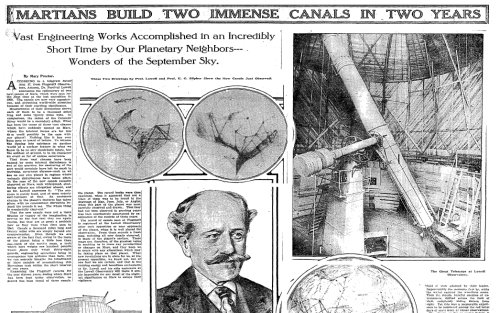
Bookmarked at brandizzi Delicious' sharing tag and expanded by Delicious sharing tag expander.