Shared posts

01 Jun 16:54

Juiz e filha de Rubens Paiva falam sobre evolução do caso

by Míriam Leitão

Enviado por Míriam Leitão - |

PROGRAMA NA GLOBONEWS

Juiz e filha de Rubens Paiva falam sobre evolução do caso

Quarenta e três anos depois da morte de Rubens Paiva, a Justiça Federal aceitou a denúncia feita pelo Ministério Público contra cinco militares acusados de matar o deputado. O juiz Caio Gutterres Taranto, da 4ª Vara Federal Criminal do Rio, responsável pelo despacho, um dos meus entrevistados na Globonews, explicou por que decidiu aceitar a denúncia, abrir o processo.

Diante desse momento histórico, não dá para esquecer um trecho emocionante do discurso feito pelo deputado Ulisses Guimarães, em 1988, durante a promulgação da Constituição. Disse ele que "a sociedade foi Rubens Paiva, não os facínoras que o mataram".

É tempo de olhar para o passado para entender o Brasil. Recentemente, a Justiça também aceitou denúncia contra militares envolvidos no atentado do Riocentro, em 1981. Até então, o entendimento era de que todos esses crimes estavam cobertos pela Lei da Anistia. Mas para a Justiça, nesses casos, ela não se aplica, não.

No caso de Rubens Paiva, os denunciados vão responder por homicídio doloso, ocultação de cadáver, fraude processual e quadrilha armada.

Com essa ação, o Brasil terá a oportunidade de elucidar a verdade, na avaliação do juiz federal.

Filha do deputado morto cujo corpo nunca foi encontrado, Vera Paiva falou sobre como a família recebeu a notícia. Para ela, é um passo importante para o esclarecimento da verdade. Nos últimos anos, estamos vendo, segundo Vera, um recuperar da memória do país. E para entender o presente, diz ela, é preciso compreender essa história, ir atrás das verdades. Por mais difíceis que sejam. Vera falou também do mal que a impunidade faz ao Brasil.

Recentemente, uma preciosidade histórica foi descoberta: um discurso feito por Rubens Paiva na rádio Nacional, na madrugada de 1º de abril de 1964. A família de Vera ficou emocionada ao ouvir a voz do deputado mais de 40 anos depois. Do discurso, a filha destacou a defesa que fez da legalidade e da resistência ordeira e pacífica ao que denunciava como golpe a um governo eleito democraticamente. 

Esclarecer os fotos do passado é mexer em antigas feridas, mas o Brasil tem que fazer isso. O exemplo de outros países mostra que o caminho é esse mesmo: enfrentar o passado para que não aconteça de novo.

Quarenta e três anos depois, o país não esqueceu Rubens Paiva.

01 Jun 16:41

Chegada à praça é experiência sufocante

by Felipe Corazza

A primeira visita à Praça Tiananmen é uma experiência sufocante. As dimensões faraônicas do local, a arquitetura de traços soviéticos dos prédios que ficam na praça em contraste com o traço chinês do Portão da Paz Celestial, câmeras de vigilância por todos os lados e a figura central do retrato de Mao Tse-tung impõem ao visitante uma certeza: nós somos mais fortes do que você. Muito mais fortes. Não faça besteira.

Pisei pela primeira vez na praça poucos dias após minha chegada a Pequim em janeiro de 2008. A caminho, ainda no trem do metrô, imaginei encontrar um lugar imponente, vigiado e hostil, apesar de todo o interesse turístico. Mas nenhuma impressão prévia é capaz de dar ao visitante uma ideia do que se verá no final da escadaria de uma das duas estações de metrô que chegam à praça.

O primeiro olhar busca diretamente o retrato do “grande timoneiro”. Encontrá-lo não é difícil, mas isso não reduz o impacto de estar, finalmente, em um dos lugares mais icônicos dos últimos 50 anos. Achado o retrato e o Portão da Paz Celestial que o sustenta, a primeira visita torna-se um momento caótico. Para onde caminhar? Não é possível definir logo. É muito espaço, os prédios são todos extremamente vigiados e ficar parado por muito tempo com cara de perdido pode significar uma aproximação não muito amigável de policiais interessados em acabar com possíveis focos de protesto. É melhor andar.

Passado um tempo, percebe-se que não é tão simples quanto parecia encontrar o cenário de uma das imagens mais importantes do século XX: o ponto da avenida onde o “homem do tanque” desafiou os militares e parou uma coluna inteira de blindados apenas com sacolas de compras nas mãos. Não é o ponto turístico clássico, por motivos óbvios. Ninguém vendendo suvenires do “feito”. Ali, em 1989, “nada aconteceu”, como diz a piada contada por dissidentes que chegou a ser reproduzida até em um episódio dos Simpsons. Todo o sentimento sobre o massacre é de inteira responsabilidade do visitante – e é prudente não demonstrar qualquer inclinação a rememorar o que “não aconteceu” nas redondezas.

Visitando a praça mais vezes, caminhando pela região e passando por ali com certa frequência, o sentimento de estranheza diminui, apesar de nunca sumir por completo. Perto do Museu Nacional, lojas de bugingangas e restaurantes dão uma feição um pouco mais humana ao mar de concreto que circunda o mausoléu onde repousa a múmia de Mao. No miolo da praça, fotógrafos ambulantes se oferecem para registrar os momentos especiais dos turistas – milhares de visitantes de diversas regiões da China fazem diariamente uma peregrinação à praça.

Com o tempo, surge a vontade de presenciar a cerimônia de hasteamento da bandeira chinesa que acontece todos os dias ao nascer do Sol. Acorda-se cedo, veste-se roupas para o frio e chega-se à praça. A cerimônia é bonita, mas deixa um gosto amargo na boca. Os passos sincronizados da marcha dos soldados que levam o pavilhão chinês desde o interior do Portão da Paz Celestial até o mastro que fica no lado oposto da avenida ecoam pela praça. Difícil manter a concentração sem lembrar do que aconteceu – ou não aconteceu, dependendo do ponto de vista – em 1989.

Depois de visitas suficientes, a praça torna-se mais um lugar a se observar da janela do táxi no caminho de volta para casa em um momento ou outro. Mesmo assim, a cada visita, a respiração se altera um pouco. Especialmente quando o táxi vai se aproximando do Beijing Hotel e passa perto da área onde o “tank man” ajudou a mudar o rumo da história do mundo. Os passos do desconhecido mais conhecido do mundo diante dos tanques ainda não deixam em paz quem tenta compreender o que é a Praça Tiananmen. E certamente alteram a respiração de alguns dos que ocupam os carros oficiais do governo chinês que, obrigatoriamente, passam pela avenida Chang’an a caminho da sede do governo em Zhongnanhai.


31 May 23:13

Photo


31 May 21:10

Photo

by holyfuuu


31 May 21:09

Programa Painel – GloboNews

by mansueto
Hoje vou participar às 23:00 do programa Painel da GloboNews do jornalista William Waack. O tema será o desarranjo das contas públicas. Espero você lá. O programa vai ao ar novamente as 10 da manhã no domingo e fica disponível na internet na página da GloboNews. Arquivado em:Economia
31 May 21:01

swegener: futurastic: CARAVAN PALACE | Rock It For Me I love...

30 May 20:01

Creative Destruction Is So Cute, Ctd

by Andrew Sullivan
Adam Victor Brandizzi

Faz sentido.

A reader joins the conversation:

I’m starting to think that the first thing that self-driving cars replace won’t be cars. It will be buses. There is already self-driving public transportation on rails, like the Docklands Light Railway in London, so self-driving public transportation on rubber tyres can’t be that far away. The capital cost of a bus is already substantial, so adding the cost of an automated driver will be a much smaller percentage increase than on a regular private car, but bus drivers are usually reasonably well-paid for manual labor, so there are significant cost savings from automating them away.

The first city to decide to replace all their bus drivers with automation will probably be a failure, but the third or fourth will save a fortune by no longer employing drivers, which will allow for the bus service to be cheaper and available for much more of the evening. Jitneys (mini-buses with semi-flexible routings, like a cross between a bus and a taxi) are very restricted by the expense of drivers, and could be widely available in low-density areas, like exurbs and farming regions, perhaps offering much more travel freedom to teens and others who can’t drive themselves around.

30 May 18:38

How To Talk To Babies

Adam Victor Brandizzi

Eu tô quaaaase assinando o feed do The Toast...

babiesHow soon is too soon to begin introducing basic gender theory and Lacanian self-definition to an infant? A primer.

BABY: dont want u
want daddy
ME: GENDER IS A SPECTRUM OF BEHAVIORS NOT A FIXED IDENTITY
STOP DENYING MY AGENCY
BABY: want juice
ME: I’M GONNA READ JUDITH BUTLER TO YOU AGAIN

BABY: [nurses]
ME: you realize youre literally consuming me
BABY: [nurses]
ME: wow
its like de Beauvoir never even wrote The Second Sex

[leans over baby's crib]
ME: DON’T YOU DARE DEVELOP ALONG FREUDIAN STAGES
BABY: [sleeps]
ME: ARE YOU IGNORING MY REGULATIVE DISCOURSES

BABY: [sleeps]
ME: wow
have you queered anything today

BABY: [cries]
ME: hey
HEY
we have talked about this
BABY: [cries]
ME: what is the function of the imaginary primordial enclosure formed by the imago of the mother’s body
you know this
i know you know this

ME: i dont care how you express your future sexuality
but dont you dare bring a post-structuralist into this house
BABY: [chortles]
ME: THIS IS SERIOUS

ME: IS GENDER A PERFORMANCE OR A CONSTRUCT
PUT DOWN THAT BUNNY AND ANSWER ME

ME: [holding car keys] okay, Baby
show me the difference between the symbol and the archetype
BABY: [claps]
ME: come on
what’s being displaced here

BABY: want fahh
want fahhh
ME: who wants fahh?
BABY: want fahh
ME: Is it I?
Are you learning the function of the I?
Are you ready for Lacan’s mirror stage?
BABY: want fahhh
ME: I didn’t think so

BABY: [eats a Cheerio]
ME: WHEN ARE YOU GOING TO REALIZE
THAT ‘THE REAL’ IS NOT NECESSARILY COEXISTENT WITH REALITY

BABY: [hands me 'Are You My Mother']
ME: DO YOU WANT ME TO READ THIS TO YOU
OR ARE YOU FINALLY READY TO CRITICALLY INTERROGATE THE TEXT
BABY: book

[Image via Wikimedia Commons]

Tags: advice, babies, feminism, gender theory, humor, parenting, raising a family
Bookmarked at brandizzi Delicious' sharing tag and expanded by Delicious sharing tag expander.
30 May 18:37

natgeofound: Roaring out of Auyan-Tepui’s wall, a waterfall...


natgeofound:

Roaring out of Auyan-Tepui’s wall, a waterfall plummets over 3,000 feet in Venezuela, March 1963.Photograph by Thomas J. Abercrombie, National Geographic

30 May 15:39

Striving While Black

by Andrew Sullivan

Recent African-American college grads have a harder time finding work than their white counterparts:

In 2013, the most recent period for which unemployment data are available by both race and educational attainment, 12.4 percent of black college graduates between the ages of 22 and 27 were unemployed. For all college graduates in the same age range, the unemployment rate stood at just 5.6 percent. The figures point to an ugly truth: Black college graduates are more than twice as likely to be unemployed. …

[Economist John] Schmitt pointed to a series of studies that have in recent years found that when trained sets of black and white testers with identical resumes are sent on interviews, white men with recent criminal histories are far more likely to receive calls back than black men with no criminal record at all. In fact, the center’s study found that even black students who majored in high-demand fields such as engineering fare only slightly better than those who spent their college years earning liberal arts degrees.

30 May 15:06

Sacred wine

Adam Victor Brandizzi

A pesquisa sobre uma moda oba-oba na Califórnia leva a um passeio na história.

I should start by saying that I’m not a wine critic. I can be counted on to keep a few bottles on hand, but I don’t have a cellar or a special refrigerator, or different glasses for whites and reds. I know the sensory sequence of wine tasting – I don’t slug the stuff back like a shot of tequila. I make my wine into a stained-glass window, by holding it up to the light. I inspect its colour, swirl it around, and dunk my nose in for a deep inhale. And when the rush of taste comes, I do my best to break it up into its constituent elements. But I have always been turned off by wine snobs. It’s a crude litmus test, but if you can’t stomach a glass of Trader Joe’s finest, you’re probably not my people.

I used to be a regular at a wine bar in San Clemente, a beach town in California where my wife and I lived when we were first married. The ‘Tuscan’ decor of the place was a little too vivid for my taste, but the wine was priced right and the owner was a great conversationalist. He would tell us stories from behind the bar about his travels to vineyards in Chile and New Zealand, and he had a charming populist streak. When people got too pretentious about the wine, he would roll his eyes and say: ‘Relax, it’s just a beverage.’

He was wrong about that, of course. Since its invention more than 8,000 years ago, wine has always been more than just a beverage. The oldest winemakers we know of lived in Eastern Georgia, a storied place in the history of our species. Eastern Georgia is home to the oldest European hominid remains, a group of 1.8 million-year-old skulls. The skulls were dug up at Dmanisi, a site that sits halfway between the Black and Caspian seas, on the strip of land that connects the Middle East to Eurasia. They tell us that Eastern Georgia was one of the first rest stops in the great human epic, the 2 million-year march that brought humanity out of Africa, and to the far corners of planet Earth.

Much later, after shaking off its ice age glaciers, Eastern Georgia became one of the first landscapes to turn humans into farmers, impressing its fertility on the mind. In 2002, a team of archaeologists dug up a pottery fragment at a Neolithic site called Shulaveri, just 30 miles east of the Dmanisi skulls. The shard of hardened clay bore biochemical wine stains, telling us that Shulaveri was one of agriculture’s first Edens, and that it was home to Vitis vinifera, a vine that snakes its way across trees and trellises, proffering dense clusters of a truly wondrous fruit.

The origins of viticulture are somewhat mysterious. We find references to wine in our most ancient work of literature, the Epic of Gilgamesh, but no one says where it came from. Nor do the ancient Egyptians offer us an origin story for wine, though we know they used it to symbolise blood, and we know that 26 casks of it – each labelled according to vintner, vineyard and vintage – were buried with King Tut. The Bible credits Noah, a famed drunk, with planting the first vineyard, but it doesn’t say what inspired him to ferment grapes.

That task falls to a legend about Jamshid, the great king in Persian mythology, who is said to have stored grapes in jars so he could eat them deep into winter. When the colder months came, King Jamshid went to retrieve his treats, and was disappointed to find broken skins and bubbling juices instead. Suspecting sorcery, he declared it poison, and forbade his court from so much as sipping the hissing mixture. One night, a sick concubine stumbled across the strange liquid and drank it down, thinking it medicine. She passed out shortly thereafter, but awoke the next morning, completely cured.

This story records the ancient idea that wine is an elixir, but it also tells us something about the grape – that it has long been seen as a miracle worker, a shape-shifter that can transform water into wine. Jesus Christ is said to have performed this feat at a wedding in Cana, as his very first miracle. But while Jesus used water from stone jars to make his wine, the vine takes its moisture from the earth, using roots that can plunge 20 feet beneath its surface. It then sweetens this moisture with sunlight, and stores the resulting juice in easily punctured bubbles, bits of candy meant to tempt birds and mammals into dispersing its seeds. But not all grapes get eaten. Some fall to the soil or get crushed underfoot, exposing their insides to the thin layer of yeasts that coats their skins. The yeasts slip into the juices and drift around on micro-currents, snagging sugars that they burn for energy, in a biochemical fire that gives off alcohol as an exhaust.

This trick is impressive, but alcohol’s magic is even more miraculous, for it transforms the most metaphysically slippery thing we have yet found in this universe: human consciousness. After charming its way into the body by delighting our taste buds with a delicious mixture of sugars, acids, and tannins, the alcohol in wine passes through the walls of the stomach like a free-roaming apparition. Once in the bloodstream, it makes a beeline for the brain, penetrating the membrane barrier between the two. Before long, it’s swimming among the neurons, whose crossfire it slows ever so slightly. As we know from a host of taboos, ancient and new, alcohol’s effects can be dangerous, and can even destroy lives. But under the right circumstances, and in the right amount, it can also lend a glow to human experience, and put halos around the heads of the people with whom we break bread.

You can tell our culture values wine by looking at the price we pay for it, and the dandyish glasses we drink it from: the fragile ones with the crystal pedestals. But it’s difficult to say what the first farmers made of this extraordinary substance. Early winemakers decorated their vessels, but the symbols they used have faded with the ages. There is one clue, however – a 7,000-year-old piece of pottery from Eastern Georgia with a grape cluster and stick figure etched into it. The figure appears underneath the cluster, and seems to have its arms raised in worship, suggesting that wine was considered divine from the start. Alas, the etching is too crude and worn to know for sure. What we do know is this: where we find legible symbols next to wine, on ancient vessels, or in the textual recesses of human memory, wine is almost always associated with the gods. And even today, three centuries after the Enlightenment, if you look closely, you’ll find that the vine is still spiralled tight around the supernatural.

Last fall, I visited Templeton, a small town that sits 30 miles east of California’s central coast. Templeton is part of Paso Robles, the state’s third largest and fastest growing wine region. Winemaking there goes back more than 200 years, but the wine boom of the early aughts brought in new money, launching a creative renaissance. Last year, Paso was named wine region of the year by Wine Enthusiast magazine, mostly on account of its reputation for experimental viticulture. If you want to picture the landscape, don’t think of northern California’s Napa Valley, which is wetter and greener, and surrounded by pine forests. Paso has more of a Mediterranean feel. Its hills are coated in grasses that sprout green, but dry quickly into gold. And its valleys are shaded by the dark leafy fractals that earned the region its name, which is Spanish for ‘the Pass of the Oaks’.

It was the Spanish who first ferried wine grapes to the agricultural wonderland of California – the tail end of the grapevine’s astonishing 2,000-year colonisation of the planet. In that time, it spread to six continents, hitching rides with seafaring humans, beginning with the Greeks of the Classical era, who scattered vineyards throughout the Mediterranean. The Romans followed suit, planting Greek cuttings at settlements up and down the Atlantic coast, including a few at a little river town called Bordeaux. Vitis vinifera didn’t make it to North America until the 17th century, and it didn’t come to the west coast until the 18th. In 1797, a Spanish padre named Fermín Francisco de Lasuén founded the Mission San Miguel a few miles from present-day Paso Robles. His priests planted grapevines in a small valley north of the mission, in order to make wine for a sacred ritual called comunión.

Passing the sommelier exam is famously difficult. To make it through, you have to be able to detect a wine grape’s varietal, region, and vintage from only a few droplets

I had come to Paso on the advice of my friend Patrick, a wine buyer in southern California. I’d recently become interested in biodynamic agriculture, a mystical method of farming devised by Rudolf Steiner, an Austrian philosopher and self-proclaimed clairvoyant. Steiner began his academic career as a Goethe specialist, but in 1891, at the age of 30, he began expounding what would become his life’s work: a new philosophy he described as a ‘spiritual science’.

Steiner was a prolific writer, and his work has spawned a surprisingly large number of subcultures, spanning almost every aspect of human life. In addition to his philosophical writings, Steiner invented new forms of music and medicine, and developed the educational ethos behind the Steiner/Waldorf schools.

Steiner’s musings on agriculture anticipated the rhetoric of the modern sustainability movement by decades. He favoured a holistic approach to agriculture, and described the farm as an organism, a living system made up of distinct parts that all operate in harmony. Metaphors of this sort are a dime a dozen in environmental discourse, but Steiner’s farming tips had something extra, a supernatural component. He urged farmers to apply fermented mixtures he called ‘preparations’ to their properties. The best-known of these is made from cow manure, which is crammed into a ‘well-formed’ steer horn in November, and buried until spring. By the time the horn is dug up, its manure has morphed into a rich compost material that is spread over the farm in a tiny homeopathic dose. The preparations are not meant to fertilise the soil, at least not in the contemporary sense. They are meant to stimulate invisible ‘cosmic forces’.

Biodynamic vineyards have been popping up all over the planet, in experimental corners of the New World but also at top estates in legendary regions such as Burgundy and the Rhône Valley. I told my friend Patrick I wanted to visit one to see if the whole thing was a marketing ploy or if the winemakers really believed in the more mystical aspects. He said he would introduce me to Frederic Ballario, the assistant vintner at AmByth Estate, Paso’s only certified biodynamic winery. ‘You’ll like Frederic,’ Patrick said, presciently. ‘He always comes in with a big scraggly beard and dirt under his fingernails, looking like he just stepped off the farm. But he has a great French accent, and his wine is incredible.’

AmByth Estate sits at the end of a dirt road, 10 miles east of California’s Highway 101. After passing through its front gate, I drove up a vine-covered hill to the winery, stopping twice to shoo cows from my path. I found Frederic tending a chicken coop on wheels, a shit-sprinkling structure he uses to fertilise the estate’s soils. The vintners at AmByth have to be creative about soil enrichment, because they refuse to use chemical fertilisers, or any other measures that might coddle crops against nature’s caprice. ‘If you put vines on the valley floor where there is a bunch of water and you dump fertiliser on them, they will give you a lot of fruit,’ Frederic told me. ‘But if you want to bring out the grape’s most complex tastes and aromas, you have to make the vines struggle.’

This is the sort of thing you hear in every tasting room. But rarely do you see it applied with the zeal of AmByth, where the vines sit on steep, dry hillsides, without a single black hose gurgling beneath them. The plants have suffered the consequences of this privation, and so has Philip Hart, AmByth’s owner and winemaker. The vineyard hugs the dry edge of a drought-stricken region, and its recent harvests have been three to four times smaller than those of its irrigated neighbours.

Not every biodynamic winemaker is a dry farmer, but most sit at the more extreme end of the organic foods spectrum. In February this year, a French biodynamic winemaker named Emmanuel Giboulot was actually prosecuted for refusing to spray a pesticide on his vines. The spray was meant to protect his vineyard, and the entire Burgundy region, from a rampaging plant disease known to weaken and kill vines. At one point, Giboulot faced the possibility of a jail sentence, but he refused to cave. He said the spray would disturb the natural balance in the vineyard.

‘Wine is the blood of the earth; if we want to hear what it has to say, we have to be quiet’

Back at AmByth, Frederic reeled off a long list of complaints about the wine industry, which he disdained as ‘too commercial’. He bemoaned the ‘big, muscular yeasts’ large wineries use to speed along the fermentation process. He complained about sulphites, the chemical preservatives vintners add to wines to make sure they age well. He claimed ‘99 per cent’ of winemakers use flavoured syrups and powdered acids to keep tastes consistent from year to year.

Playing devil’s advocate, I mentioned that ancient winemakers were quite fond of additives. The Greeks used resins, spices such as cinnamon, and even seawater to flavour their wines, and to protect them against decay. Frederic said additives distort a wine’s terroir, its expression of a particular place on the planet’s surface. ‘Wine is the blood of the earth,’ he said, ‘and if we want to hear what it has to say, we have to be quiet.’ He told me AmByth had a philosophical commitment to non-interference in winemaking. ‘We want to avoid disturbing the natural balance,’ he said. ‘We’ve been wrecking the natural balance ever since the Industrial Revolution. And I don’t mean just the land, or the sky, or the things we can see and touch. I mean the whole.’

Frederic’s rhetoric can be traced back to German Romanticism, the seismic cultural movement that birthed Steiner’s philosophy. Like many Romantics, Steiner thought that the Enlightenment view of nature was debased. He found the lens of scientific rationality too constrictive to capture the majesty of nature. Steiner conceived of the planet, and nature itself, as transcendent – and to express this idea, he drew from the available precedents: folk art, paganism, and ancient mythology. You could say he saw himself as a Dionysus living in an age of Apollo.

Steiner is said to have turned his attention to agriculture after a group of farmers approached him in 1924, complaining that artificial fertilisers had drained their soils of vitality. Steiner had never farmed before, but he clearly knew something about the folklore of pre-industrial Europe, much of which made it into biodynamics. The rest of his ideas he ‘channelled’, he said, from spirits that lurked behind the surface of mountains and trees, spirits he claimed to have been in contact with since he was a young boy.

I waited until later that week to ask Frederic if he believed that Steiner was clairvoyant. He had invited me to have dinner with him in his RV, which overlooks AmByth’s vineyards, and most of the local wine country. I brought fish from the market and he supplied the wine, a delicious and still-unlabelled bottle of white. Frederic told me he came to work at AmByth as ‘Philip’s left-hand man’ in 2012, after apprenticing at a biodynamic farm in Ecuador. He told me he enjoys working for Philip, but that the two of them are not close personally. ‘He is more commercial than me,’ he said.

Before moving to Ecuador, Frederic was the sommelier-intendant at Krug, one of Champagne’s top estates. Passing the sommelier exam is famously difficult. To make it through, you have to be able to detect a wine grape’s varietal, region, and vintage from only a few droplets. Frederic told me it was his sommelier’s palette that led him to AmByth. ‘I tend to like wines that have a meditative quality to them,’ he said. ‘I like to put my nose in the glass and feel time and space grinding to a halt.’ He stepped away from the sizzling fish for a moment and did a mime routine, closing his eyes to sniff an imaginary glass, before snapping his head back, and widening his eyes, as though in a state of shock. ‘That’s how I felt the first time I tasted Philip’s wine.’

Frederic doesn’t actually drink wine. He just tastes and spits. He gave up drinking a few years back, after the death of his wife, an event that pushed him to the brink of suicide. ‘I came to the realisation that there must be more than just this,’ he said, gesturing out to the cold, starry night. ‘If this is all there is, then life hurts too much, and it probably isn’t going to last long for me.’

Frederic told me that Steiner’s teachings had given him peace, and helped see him through the worst of his grief. ‘Biodynamics opened up the spiritual side of farming for me,’ he said. When I left, he handed me a book by Steiner. It was called Intuitive Thinking as a Spiritual Path (first published as Die Philosophie der Freiheit, or ‘The Philosophy of Freedom’, in 1894), and its jacket design featured a flame rendered in psychedelic shades of pink and orange. Earlier in the evening, he had told me, without hesitating, that he did indeed think Steiner was clairvoyant. It is hard to know another man’s heart, but I have no doubt he was sincere.

Frederic’s comment about Philip, that he was ‘more commercial’, intrigued me, so I arranged to return to AmByth to meet him. But I had a few weeks in between, so I resolved to read up on Steiner in the meantime. I managed to machete my way through the book Frederic gave me, and two other Steiner texts, but they were hard to parse. The experience reminded me of reading German philosophy in undergrad, and not in a good way.

Steiner believed that there was a hidden world, beyond the one we apprehend with our senses. He said that we could access this world by awakening our dormant spiritual faculties. Cultivating these special forms of perception would reunite us with the spiritual dimension of the universe, and rescue us from the sickness of modern life. Steiner used a lot of quasi-scientific language in his philosophy and his work on agriculture. He claimed to be aiming for a rational mysticism, but I was curious to see how rational it was. I wanted to know what the biodynamic preparations actually did to soil – that marvellous stuff we so often denigrate as dirt.

The story of soil reaches back 4.5 billion years, when gravity gathered the fragments of dead stars into a rocky ball we call Earth. The outer layer of our planet was lavalike at first, but it cooled quickly, into rock that water would slowly shatter, by seeping into its cracks and freezing. Our oldest fossil soils date back to the Archaean, the aeon when microbes started to soften up the continents, in advance of plants’ assault on land. Once they’d colonised the planet’s major landmasses, plants sped up soil formation by breaking up rocks with their roots, and dissolving into the dirt upon death. They also grew prolific enough to support land animals, whose waste and bodies further fertilised the earth. Today, every inch of topsoil takes centuries to form, and every handful teems with billions of rioting microbes. The chemistry of this thin fertile film that sits atop our continents is so complex that when I pressed one scientist to describe it, all he could manage was, ‘it’s just fucking gnarly’.

Only a few scientists have done peer-reviewed research into how biodynamic preparations interact with soils. When I searched the peer-reviewed journals, I kept seeing the same names, including one that appeared over and over: Lynne Carpenter-Boggs, an associate professor of soil science at Washington State University. I called her office one day, and asked her why there was so little research into biodynamics. She told me that many scientists are biased against it. ‘Some aren’t even sure biodynamics can be studied,’ she said.

It must be said that there are good reasons for scientists to be suspicious of Steiner’s writings, for they do not evidence a deep understanding of nature’s workings, nor its history. Steiner believed human beings were as old as the Earth, and that we had ‘civilised’ ancestors with ‘jellylike’ bodies, whose descendants lived on the lost continent of Atlantis. Like many religious thinkers, he put stock in the myopic concept of a chosen people. He said humans were reincarnated after death, into ‘ascending’ or ‘descending’ races, depending on the life they had lived. Naturally, in this scheme, Africans, Asians, American Indians, and Jews were considered lower than the Germanic races.

Steiner did not distinguish himself on the subject of chemistry, either. He professed faith in hidden alchemies, including one that could transform potassium and calcium into nitrogen through ‘transmutation’. He made head-scratching statements such as: ‘the ethereal moves with the help of sulphur along paths of oxygen’, and he championed a whole host of discredited astrological beliefs. Steiner claimed that the movements of the Moon could tug nutrients up and down the roots and stems of plants (they can’t) and he thought that constellations directly influenced the health of a farm (they don’t).

This movement between aesthetic extremes, from pornographic fertility to bleak decay, and back again, has earned the vine a long-standing association with resurrection

In the late 1990s, Lynne and a colleague set up a series of long-term experiments designed to test the efficacy of Steiner’s preparations. Up to that point, little of the research into biodynamic agriculture had been properly refereed. The first of their experiments compared ordinary organic compost piles with organic compost piles treated with biodynamic preparations. In the biodynamic piles, Lynne found slightly higher temperatures and new populations of microbes. She also found faster decomposition and greater retention of nutrients, improvements that showed up consistently across several years. But when the preparations were added to the soil, the results were ‘unimpressive’, she told me.

How the biodynamic compost piles improved is still a mystery, because the preparations are too thinly spread to boost nutrient levels on their own. Lynne said they might serve as catalysts for complex organic processes we don’t yet understand. They could, for instance, trigger butterfly effects among microbes. ‘We know that microorganisms communicate with each other by several means, including through diffusible molecules,’ she said. ‘But the chemistry of microbial signalling is a new frontier in microbiology, and it’s very complex.’

I asked Carpenter-Boggs if she thought Steiner’s work should be regarded as a source of genuine insight into agriculture, given all the pseudoscience he promoted. ‘Biodynamic agriculture is meant to change the way you look at a farm,’ she said, ‘but we don’t have to take all the details at face value. The compost preparations, for instance, could work by forcing you into valuing biodiversity, because you have to use all these different animal parts.’

I could understand that, and could also see how the rituals of biodynamic agriculture might increase a farmer’s general engagement with the land. But why not use scientific experiments to test each element of biodynamics? That way we could separate the superstitions from the stuff that works, whether that’s specific preparations, or ritualistic attention to the farm. This is the same point I put to proponents of alternative medicine: if there are miracle cures to be had, let’s ferret them out with rigorous lab tests, and leave the placebos and rhino horns to the dustbin of history.

Lynne thought about it for a moment. ‘If we want to advance in the science of agriculture, we can’t be limited by what we already know,’ she said. ‘If mysticism and dancing around fires turns you off, that’s fine, but you have to understand that there are different ways of learning and thinking.’

We hung up shortly after that, but something nagged at me later that night, so I emailed Lynne to ask one last question. I wanted to know if she saw Steiner and biodynamics as a step backward. ‘Isn’t this a reversion to a discredited method of figuring things out about the world,’ I wrote, ‘where instead of doing experiments, we look to divine texts?’

Lynne sent me a long reply explaining that she didn’t see biodynamics as a divine text. But it was something she wrote about religious rituals that really stuck with me. ‘You have to remember the biodynamic preparations were not entirely original to Steiner,’ she said. ‘Most of the methods are based on Old World agricultural practices. In this way, biodynamics is similar to many other rituals and religious beliefs that get passed down through different pathways. Some of those traditions involve important practices for the health of an individual, or a society. And in some cases, stories have been built around them, in order to deepen the practice in one’s memory, and increase the likelihood it will be passed on.’

It was winter when I returned to AmByth, and the vines were looking stark. Summertime vines are a feast for the eyes – all lush leaves, curling stems and berry clusters – but cold weather shrivels them to sticks. This movement between aesthetic extremes, from pornographic fertility to bleak decay, and back again, has earned the vine a long-standing association with resurrection. And with Jesus Christ, a man who is supposed to have said, on the eve of his death, ‘I am the vine.’

I had come back to AmByth to help hasten the vines’ resurrection by taking part in a ritual. I’d been invited the month before, while dining with Philip Hart and his wife, Mary. We’d talked for several hours that night, around their fireplace, wine glasses in hand. They asked me why I was so interested in biodynamic wine. I told them it was the relationship between wine and mysticism that really interested me. The conversation drifted to religion, and Mary told me she was a Christian, and considered herself born again. Philip didn’t come out and say what he believed, but it was clear he took Steiner’s metaphysics quite seriously. A disagreement between them broke out at one point: Mary said, ‘as a Christian’, she was turned off by the pagan elements of biodynamics.

She was right: Steiner did swoon for European paganism. But to be fair, he also gave Christ an elevated perch in his ontology. Like Joseph Smith, Muhammad, Jesus himself, and many other religious figures, Steiner knew you couldn’t create a religion ex nihilo. You needed to draw from religious ideas that came before you, and you had to pay your respects to older prophets. Steiner paid his by describing Christ as a ‘cosmic sun being’, whose death had helped to release religious wisdom into the world. At the crescendo of their argument, Philip told Mary that Steiner’s thinking was perfectly consistent with Christianity. ‘You call it God, I call it cosmic forces,’ he said.

The parallels between Christ and Dionysus are striking: the solstice birth, the mortal mother, the springtime resurrection

Philip mentioned they would be dispersing a preparation called ‘three kings’ shortly after the turning of the New Year. The ‘three kings’ preparation was devised decades after Steiner’s death, by Hugo Erbe, a disciple of his who also claimed to be in touch with nature’s ‘elemental beings’. Erbe said he’d seen these beings take flight from his farm after the atomic levelling of Hiroshima and Nagasaki. In order to rescue them, and heal the Earth’s wounds, he developed a preparation made from the gifts given to the infant Christ by the three wise men: gold, frankincense, and myrrh. The preparation is dispersed once a year, on 6 January, the date the wise men showed up in Bethlehem. ‘You’re welcome to join us, if you’re in town,’ Philip said to me.

When I arrived on the 6th, I found the Harts on the front porch, taking turns stirring a large bucket of icy rainwater with their hands. Philip gave me a glass of rosé and showed me the preparation, which looked like thick, glittery peanut butter. The hand stirring was meant to mix the ‘three kings’ into the water, but it had to be done in a particular way: the water needed to rotate vigorously, so that a vortex would form, and the vortex had to change directions every few minutes. When it was my turn, I plunged my hand in, and dutifully worked up a mini-whirlpool, which Philip walked over to examine, before nodding his head in approval. He said the stirring was supposed to ‘give life’ to the water.

After the preparation was sufficiently mixed, we poured it into a plastic backpack with a sprayer attached, and began walking around the perimeter of the property, passing a ‘no poisons’ sign and a large compost pile along the way. I told Philip I thought he’d timed his entry into natural winemaking perfectly. The US market for organic goods has grown 60 per cent in the past five years, and several sommeliers told me they’d recently seen a spike in the demand for natural wines, especially in big cities. Wine consumers are also easy marks for suggestive marketing because, as countless experiments have shown, our expectations about a wine actually change our experience of it. Those expectations can be driven by a wine’s cost, the images on its label, or a critic’s assessment of it. They can also be shaped by the stories we hear about where a wine was made or how its grapes were grown. You can see how being certified as the ‘most organic of the organic’ might be beneficial in a market like that.

Philip insisted his switch to biodynamic viticulture ‘happened randomly’, and that ‘there was no grand plan’. He said it was the wine that converted him. ‘We weren’t fanatics when we started out,’ he told me. ‘I can still remember doing my first preparation, stirring this stuff for an hour in the freezing predawn. I kept thinking: What am I doing?’

Religious rituals often feel absurd to new believers. I haven’t taken communion in years, but I can still remember the first few times I did, feeling stilted and phoney. Communion is usually thought of as a Christian rite, but there are versions of it that predate the last supper, the meal at which Christ pressed the grail to his lips, saying ‘This is my blood, poured out for you.’ Some historians of religion hear, in those words, an echo of Euripides, who wrote, of the Greek wine god Dionysus: ‘When we pour libations out, it is the god himself we pour out, and by this bring blessings on mankind.’

Euripides penned that sentence in the 5th century BC, at a time when Athenian elites participated in banquets of fellowship and philosophy called symposia. The ‘libations’ were the most sacred ritual at these banquets, and they were performed in honour of Dionysus, the god who ‘turned the grape into a flowing draft and proffered it to mortals’, so they could experience ecstasy. The parallels between Christ and Dionysus are striking. Both were the sons of a supreme deity and a mortal woman. Both were supposed to have been born in late December, just after the winter solstice. Both returned from the dead at the dawning of the earth’s springtime regeneration. And both inspired wine rituals.

By the time the New Testament was written, the Romans had renamed Dionysus, calling him Bacchus instead. But the myths written about him – the solstice birth, the mortal mother, the Easter resurrection – remained the same. No one can be sure if, and to what degree, these myths influenced early Christians, but we know they were in the air during Christianity’s early evolution, when communion, its most sacred ritual, was developed.

Communion is sometimes ridiculed as primitive, or even cannibalistic, but it can be quite beautiful when interpreted with an open mind. My favourite part is the epilogue, after Jesus has taken the cup. ‘Truly, I tell you,’ he says to his disciples, ‘I will not drink from this fruit of the vine from now on until that day when I drink it new with you in my Father’s kingdom.’ These words seal his covenant, but they also express a profound solidarity. In the Old Testament, wine was associated with joy, and the ‘gladdening of human hearts’. And so here, we can hear Christ saying: ‘I shall not taste joy until we taste it together, upon our reunion in a world I have made for us, a world that isn’t temporary, and broken, and pain-ridden like this one.’ In the Book of Matthew, the next verse has the disciples breaking spontaneously into song.

It’s tough to say where biodynamic farming sits on this spectrum, between beautiful idea and irrational nonsense

Lynne was right when she said religious rituals carry ideas forward, but the trouble is, religion can also safeguard bad ideas from criticism. You can see this with Christianity, a faith that has spent too much time protecting discredited cosmologies, and propping up suffocating patriarchies. And that’s too bad, because there are Christian tenets whose appeal has not diminished one iota over the millennia. I’m thinking of ‘love your neighbour’, and ‘blessed are the meek’, and ‘let him without sin cast the first stone’. There is a radical empathy encoded in those words, and radical empathy has always been, to my eyes, one of most beautiful ideas – one that’s worth toasting, provided you can shake off the associated dogma.

There are beautiful ideas at the core of Steiner’s teachings, too. His writings throb with a bone-deep recognition that humans have inflicted a trauma on the Earth, and in doing so, have broken a sacred covenant with the natural world. So much of our culture – the organic movement, the ‘local farm’ interior of modern grocery stores, our fetish for the ‘natural’ – plays to this sense of rupture, this longing to return to a purer time, before we alienated ourselves from the rest of existence. Indeed, this longing is one of the most widely felt spiritual experiences of our time, and it has inspired genuine progress. It has motivated the rescue of Earth’s wildernesses, and the expansion of our moral concern to animals, our fellow travellers on this planet, whose experiences can be as vivid and potentially painful as ours.

But this desire to be reconciled to nature has also given rise to excess and superstition. Think of the rabid response to genetically modified organisms, the loose talk about ‘toxins’, and the endless commissions of the naturalistic fallacy. Think of probiotics and homeopathics, and the other ‘alternative medicines’ on offer at Whole Foods stores. Think of the voluntary human extinction movement, or the murderous nihilism of the Unabomber Ted Kaczynski.

It’s tough to say where biodynamic farming sits on this spectrum, between beautiful idea and irrational nonsense. I can’t fault Steiner for warning us away from a purely extractive relationship with nature, or for doing so in spiritual language. But does that mean people should still be spraying his potions on their farms, or timing their harvests to the movements of distant stars? I’d say no, but maybe that makes me an unfeeling sceptic.

Either way, it doesn’t surprise me to see Steiner catching on among winemakers, because wine always seems to connect with the religious impulse. Among human artefacts, wine is unsurpassed as a symbol of joy and resurrection, and the astonishing fertility of this world we have awakened into. That’s why wine is so often transfigured in rituals, whether it’s the libations of Dionysus, the god of ecstasy, or the communion of Jesus Christ, who said, ‘This is my blood, given for you.’ Today it is Gaia whom we crucify, and Gaia who gives us our wine, our expression of terroir, our ‘blood of the earth’, as Frederic had called it.

Biodynamic wine is, in this sense, a cultural descendant of communion wine, and it probably won’t be the last. So long as we remain a religious species, there will be wine sacraments of one sort or another. They will differ from era to era, depending on the anxieties of the people they serve, but there will be a family resemblance among them, something that weaves all the way back through Christ and Dionysus, to the terracotta etchings of the first farmers.

I thought about those farmers a lot during the hour it took Philip, Mary and me to trace AmByth’s perimeter on foot. We had to dodge a bunch of cow patties and poison oak plants along the way, which delighted Philip: ‘A lot of vineyards look like moonscapes, but here we have biodiversity!’ We’d almost made the full lap when Philip realised his pack was still half full of the preparation water. He’d been spraying it only every 10 yards or so, meaning each square foot was getting less than a droplet. I asked him what he thought this exceedingly fine mist was doing. ‘I think it’s supposed to keep harmful nature spirits out of the property,’ he said. ‘But it could also just be a way to get you out on the vineyard in winter.’

Frederic was right about Philip. He was more commercial, but he was also sincere. I believed him when he told me Steiner’s teachings had brought him closer to his land, and closer to something else too, something ineffable. After the ritual was finished, we all went back to the house and spent the evening acting out a secular communion. We feasted. We drank too much. We told our sad stories. We argued about religion.

I can’t say that Philip and Mary were able to persuade me that Steiner was a prophet, or that there is such a thing. But I must confess, I took a liking to their wine, and to biodynamic wines in general. I find myself looking for them everywhere I go now. There’s something about the taste that gets me, a certain earthiness to the flavours. But what do I know? I’m not a sommelier, or a wine critic, if you recall. And like everyone else who drinks wine, my mind stirs stories into the raw data it takes from my taste buds. After all, there’s just no such thing as pure perception, in wine or anything else.

27 May 2014

Read more essays on Belief & Faith, Food and Ritual

Shared by Arts & Letters Daily feed and expanded by Arts & Letters Daily feed expander pipe by Brandizzi.
30 May 12:59

How to Understand a Flaw in Our Society

by Scott Meyer

Just to make it easier, here's a clickable link to that article.

As always, thanks for using my Amazon Affiliate links (USUKCanada).

29 May 20:58

fer1972: Surrealism by Dragan Ilic Di Vogo


fer1972:

Surrealism by Dragan Ilic Di Vogo

29 May 18:56

O legado de Joaquim Barbosa: balanço de sua gestão é positivo

by Míriam Leitão

Enviado por Míriam Leitão - |

NA CBN

O legado de Joaquim Barbosa: balanço de sua gestão é positivo

Anunciada a aposentadoria do ministro Joaquim Barbosa, presidente do Supremo Tribunal Federal (STF), começa a especulação sobre se ele pensa em entrar na política ou não. De vez em quando, dava indícios de que sim; outras vezes, não. Como ministro e presidente do Supremo, Joaquim foi fundamental para um passo importante na vida do país.

Bastante sólido, o voto dele em relação ao caso do mensalão foi estruturado de uma forma que o país conseguiu lembrar de todo o episódio, além de ter sido acompanhado pela maioria dos ministros. Os que tinham sido denunciados pelo Ministério Público foram julgados e condenados e, nesse momento, estão cumprindo pena.

No julgamento da avaliação do trabalho de um presidente da Suprema Corte, o importante é saber como ele votou, como foi nos autos. O balanço é positivo.

O Brasil tinha a sensação de que a Justiça jamais chegaria aos muito poderosos, mas ele demonstrou que mesmo sendo indicado por um presidente que era do PT, na hora de julgar, separou as coisas. Nesse aspecto, a presidência dele foi altamente positiva. Ele deixa esse legado.

Joaquim foi um bom ministro. Todas as polêmicas nas quais ele esteve envolvido não têm a menor importância. O que conta é como se comportou como juiz, o que julgou, a força demonstrada ao longo de todo o processo como ministro e presidente do Supremo.

Quando ele entrou, comemorou-se a chegada do primeiro negro no STF. Ele sai e até agora não entraram outros. O que se quer é que seja mais normal haver negros na elite brasileira. Essa barreira tem que ser derrubada.

A aposentadoria dele está sendo bastante comentada porque como relator do processo do mensalão, ele inovou. Foi um caso que vai ficar na história do Brasil. Sobre ele sempre se falou muito: a favor, contra.

Joaquim disse que vai se dedicar à vida privada. Certa vez, numa conversa que tivemos, ele dissera que não ficaria até o final, até os 70 anos.

Acho que muita gente do atual governo vê com alívio a saída dele. Mas reduzidas todas as paixões provocadas por essa gestão, o que vai ficar é a lembrança de um ministro que foi forte, combativo, que apoiou suas convicções sobre um sólido conhecimento jurídico.

Ouçam aqui o comentário feito na CBN

29 May 18:55

Na direção certa

by Míriam Leitão

Enviado por Míriam Leitão e Alvaro Gribel - |

COLUNA NO GLOBO

Na direção certa

A decisão do governo de tornar permanente a desoneração da folha salarial não é a solução perfeita, cria distorções e déficits, mas é um passo na direção de mudar um problema ainda maior na economia. O sistema tradicional de recolhimento patronal ao INSS pune quem emprega mais e quem paga mais aos seus funcionários. A desoneração agrava, no entanto, o rombo na Previdência.

O percentual sobre a folha que as empresas recolhem à Previdência cria vários desequilíbrios. Setores capital intensivo pagam pouco e setores que naturalmente têm que ter um grande número de funcionários têm um custo pesado demais. Isso incentiva a falsa terceirização, e o registro de salários mais baixos do que os efetivamente pagos, ou seja, o famoso pagamento "por fora", principalmente nas médias empresas.

Outro mérito da medida do governo é não ficar restrito à indústria, que é o endereço da maioria dos benefícios fiscais setoriais dos últimos anos. Empresas de serviços, construção civil e comércio também estão entre as beneficiadas pela mudança que o governo agora torna permanente.

O problema continua sendo a assimetria de tratamento. Nem todos os setores que se beneficiariam entraram na medida. O ministro Guido Mantega disse que entrarão no ano que vem. Estranha declaração para um ministro de um governo que termina em dezembro de 2014. Tomara que seja apenas um escorregão e não mais uma das várias peças de campanha eleitoral em que se transformam todos os atos de governo ultimamente.

A Previdência é outro e grave problema a resolver para que a medida seja sustentável. O que foi feito até agora reduz a arrecadação em R$ 21 bilhões e o sistema de aposentadorias já é deficitário. O rombo tende a ser cada vez maior por razões demográficas. O governo até agora nada fez para construir um equilíbrio nas contas das várias previdências. O que já estava vermelho, mais vermelho ficará, porque se as empresas reduzirão o que recolhem, o governo, obviamente, terá menor arrecadação.

A questão é que em um mundo em que o emprego é sempre escasso seria contraditório manter o mesmo sistema que sempre onerou as empresas mais empregadoras. No mundo inteiro, o grande desafio das economias em um tempo de automatização, robotização e exigência de trabalhador qualificado é exatamente a aberturas de vagas no mercado de trabalho. É nesse ponto que a política adotada agora acerta.

O problema é a subestimação do enorme problema da Previdência. O ministro Guido Mantega disse que já há previsão para cobertura desse gasto, como se ele fosse apenas em um ano e não tivesse o enorme risco de continuar crescendo.

É preciso agora olhar profundamente as assimetrias dentro do mundo empresarial criadas pela concessão a apenas alguns setores. É preciso também reconhecer o tamanho do risco previdenciário que o Brasil tem. Do contrário, a solução a ser inventada pelo governo — na hipótese ou não da reeleição da presidente Dilma — será a de criar mais um imposto para cobrir o déficit da Previdência. Tudo terá ido por água abaixo se for assim.

O ideal seria fazer a sempre adiada reforma tributária e novas mudanças no sistema previdenciário. Todos sabem disso, inclusive os atuais comandantes dos ministérios, mas em época eleitoral ninguém quer dar má notícia ao eleitorado. Há ajustes a serem feitos e eles têm sido adiado por tempo demais.

O mérito da desoneração é não ser mais uma daquelas medidas apenas para a indústria automobilística que o governo chama de política industrial. Não resolve o peso excessivo sobre a folha de salários das empresas e precisa ser aperfeiçoada, mas é um passo na direção certa.

29 May 17:17

midnight-charm: Naomi Campbell by Patrick Demarchelier for...


midnight-charm:

Naomi Campbell by Patrick Demarchelier for Versace Atelier S/S 1992

29 May 14:36

Our Starved for Touch Culture

by Leah Libresco
Adam Victor Brandizzi

O interessante é pensar que o Brasil, um país tão violento, não sofre de assassinatos em massa como os EUA, e cremos que somos mais "aconchegantes". Se somos, há uma causa e efeito aí?

When did the Friendzone become such a terrible place to live?

In the wake of the Santa Barbara shootings, the unpleasant underbelly of the pickup artist community (PUA), involuntary celibates (incels), and other unhealthy refuges for lonely men have drawn scrutiny and condemnation. They describe themselves as exiles; in the case of the Isla Vista shooter, he decided to destroy the world he couldn’t enter, instead of building something new outside it.

Their sense of exclusion is exacerbated by the stories we tell about sex as a prize you can earn and the tendency of the media to shame sexual inexperience (The Daily Mail referred to the shooter as “The Virgin Killer,” implicitly agreeing that his sexual exploits, or lack thereof, defined him). It is also exacerbated by the stories we don’t tell about friendship and platonic love.

The friendzone is treated as a wasteland not just because we treat sex as an idol, but because friendship and non-sexual affection is written off as irrelevant. Casual dating has been replaced by casual sex; platonic touch has been eclipsed by erotic signalling. Pickup artists teach their pupils (not inaccurately) that taking someone’s hand, touching a shoulder, or even moving into one-on-one conversations are indications of interest, and a signal to keep escalating, in the hopes of transitioning to a hookup.

If affection is merely foreplay, then a person who isn’t having luck approaching people romantically is also cut off from most normal human comforts. That kind of isolation is tremendously harmful.

In the 1960s, Harry Harlow conducted a famous series of experiments in which he gave infant monkeys a choice between mother-substitutes made of cloth or wire. Even when it was only the wire “mother” that fed the monkeys, they came to it only to eat, and clung to the cloth mothers that gave sustenance of a different sort. The monkeys who were only given wire mothers were more skittish and would cling to their cloth diapers as the only source of soft contact in their cage.

Some men and women feel that they’ve wound up in a wire monkey world. In an essay for The Good Men project (“The Lack of Gentle Platonic Touch in Men’s Lives is a Killer”), Mark Greene talked about how isolated he was from others, until he had a child to take care of:

How often do men actually get the opportunity to express affection through long lasting platonic touch? How often does it happen between men? Or between men and women? Not a hand shake or a hug, but lasting physical contact between two people that is comforting and personal but not sexual. Between persons who are not lovers and never will be. Think, holding hands. Or leaning on each other. Sitting together. That sort of thing. Just the comfort of contact. … I found this kind of physical connection when my son was born. As a stay at home dad, I spent years with my son. Day after day, he sat in the crook of my arm, his little arm across my shoulder, his hand on the back of my neck. As he surveyed the world from on high, I came to know a level of contentment and calm that had heretofore been missing in my life.

The isolation may be more pronounced for men, since physical contact between two women is less likely to be stigmatized or even remarked upon. In my own experience, however, usually the only time I make physical contact with another person is when I shake the priest’s hand on my way out of Mass. When I went on a cultural exchange trip to China, I was surprised and jealous when our group leader warned us that friends commonly hold hands in China, and we shouldn’t assume a host was flirting with us if they did so.

In America, that kind of physical affection would be unusual between pairs of friends, especially if both were male. But, if friends are off limits, where else are people to turn for physical reassurance?

The shooter, and most Americans his age, don’t live among large, extended families. They are not giving piggy-back rides to small cousins or kissing grandparents hello or being called over for cheek pinches from meddlesome aunts. Luckily, comfort isn’t only available from families and romantic partners; some communities and pastimes retain norms of physical contact and encouragement. Sports are one place where platonic touch can still flourish (in fact, NBA teams with a lot of physical touch between teammates tend to do better at cooperating), but those communities aren’t open to or even desired by everyone.

After a tragedy, we tend to dwell on how we could have stopped the shooter: did he do anything to merit institutionalization, should he have been eligible to buy guns, etc. Those questions are appropriate, but constraining a potential shooter is only a partial victory. We should also look for alternatives to free him from a prison of despair, envy, and fear, even if he’s the only victim of his own unhappiness.

No one has a humanitarian duty to hug isolated men like the Isla Vista shooter any more than anyone was obliged to provide him with sex. However, it’s worth asking if there is something we can do to make non-sexual affection more common generally. At the personal level, that might just mean offering friends hugs more often, and at a societal level, telling and repeating better stories about friendship.

Follow @leahlibresco

29 May 14:34
A Wonkish Plan To Prevent Car Accidents

by Andrew Sullivan

Nicole Gelinas explores Bill de Blasio’s Vision Zero initiative, which aims to end traffic fatalities in New York City:

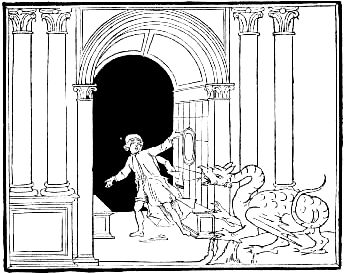
The inspiration behind the plan, which reinforces and expands on efforts by Michael Bloomberg’s administration, comes from Sweden’s use of innovative road design and smart law enforcement, which has reduced overall traffic fatalities in Stockholm by 45 percent—and pedestrian fatalities by 31 percent—over the last 15 years. When a child runs after a bouncing ball into a residential street and a speeding car strikes and kills him, the Vision Zero philosophy maintains, the death shouldn’t be seen as an unavoidable tragedy but as the result of an error of road design or behavioral reinforcement, or both. We already think this way about mass transit and aviation. These days, a plane crash or a train derailment is never solely explained by human error (a train conductor falling asleep, say); it also is a failure of a system that allowed a mistake to culminate in disaster.

Of course, engineers and regulators can’t eliminate all injuries and deaths; but by applying rigorous, data-based methods, they can cut down on them dramatically. …

New York City has already come a long way in reducing traffic fatalities, it’s important to recognize. Last year, New York suffered 288 crash deaths, including 170 pedestrians. That sounds bad, and it is, but in 1990, New York had 701 traffic deaths, with 366 pedestrians killed. And 20 years before that, the city saw nearly 1,000 traffic deaths in a single year; it wasn’t unusual to lose 500 pedestrians annually. New York’s current traffic-fatality numbers compare favorably with other American big cities. An Atlanta resident is more than three times more likely to die in a traffic crash (adjusted for population); a Los Angeleno faces twice the risk. But New York remains behind—in some cases, far behind—other global cities in this area of public safety: Paris, London, Hong Kong, and Tokyo are all less dangerous. A citizen of Stockholm—the gold-standard metropolis for traffic safety—faces just a third of a New Yorker’s risk in dying by vehicle. Last year, the Swedish city, with a population of 900,000, suffered only six traffic deaths. The Gotham equivalent would be 60 such fatalities—not nearly five times that number.

29 May 14:11

Brazilians Hate the World Cup. Brazilians Are Role Models.

by Hamilton Nolan on Gawker, shared by Barry Petchesky to Deadspin
Adam Victor Brandizzi

NUNCA achei que leria algo assim em minha vida. Via Osiasjota

Brazilians Hate the World Cup. Brazilians Are Role Models.

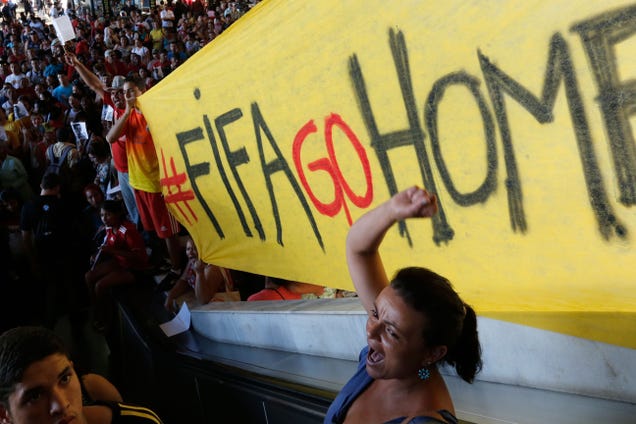
Brazilians do not just hate the World Cup theme song ; with the world's biggest sporting spectacle just weeks away, it's becoming clear that Brazilians hate the whole fucking World Cup. Why can't we all be like Brazilians?

Read more...


29 May 14:09

Via.


Via.

29 May 13:56

US man finds lost mother in Amazon tribe | New York Post

Adam Victor Brandizzi

Que história perturbadora / fascinante

When David Good was a kid, and his friends asked where his mother was, he’d always say the same thing: She died in a car crash.

Kenneth, youngest daughter Vanessa, Yarima and David in Philadelphia

“I experimented with responses, and I found that the most effective,” David says. “I could see the horror in their faces” — he laughs — “and there would be no more questions.”

His dad, Ken, couldn’t understand: “I’d say, ‘Why don’t you just say your mom’s Venezuelan, and your parents are divorced? It’s so common.’ ”

But the story of David’s mom — who she was, where she came from and why she left — was so complicated and painful, he couldn’t bring himself to talk about it.

“I didn’t want my friends to know that my mom’s a naked jungle woman eating tarantulas,” he says today. “I didn’t want to be known as a half-breed. And it was my revenge; I was angry that she left me. So I just wanted to stick with the story that she was dead.”

Stone Age to Philadelphia

As a child, David Good lied to his friends about his mother’s whereabouts. He would later stumble upon this picture of Yarima in the Museum of Natural History during a class trip.

David’s mother, Yarima, is a member of the Yanomami tribe of Venezuela. She was born and raised in the jungle, in a remote village that rarely, if ever, encounters any outsiders, let alone Westerners. Her age is unknown, because the Yanomami count only up to 2; anything more than that is called “many.” They have no electricity, no plumbing, no paved roads, no written language, no markets or currency, no medicine.

They also have no word for “love.”

David’s father, Kenneth, was an anthropology student at the University of Pennsylvania who, under the tutelage of the prominent scholar Napoleon Chagnon, made his first trek to the Amazon in 1975. “I was older than the rest of the team, and a little more arrogant,” he says. Exasperated, Chagnon rid himself of Kenneth, sending him to the most remote part of the jungle.

There, he stumbled upon Yarima’s tribe. He was enthralled and fascinated, and made so many return trips that the Yanomami came to regard Kenneth as one of their own. “The head man of the village said, ‘You know, have a wife — you’ve been here for so long.’ ”

You can be damn sure that she was the age of consent in most states and many countries around the world, which I think is 13. The cultural age is what’s important down there. Don’t I have the right to do this or that in another culture? - Kenneth Good

In 1978, he was offered Yarima, who was then about 9 to 12. Good was 36. He saw no real problem.

“Living down there, of course I didn’t care, and the Yanomami didn’t care,” Kenneth says. “Our culture is obsessed with numbers.”

He says that the Yanomami don’t have what we consider marriage; instead, they betroth their girls — even while in the womb — to tribesmen for later consummation.

Kenneth says that a girl can refuse her betrothal, but he knew Yarima had feelings for him, because she watched for him always, brought him food, ran down the riverbank when he was approaching.

Kenneth has always taken umbrage at the obvious question: How old was Yarima when their union was consummated? “PBS asked me that once, and I said, ‘You can be damn sure that she was the age of consent in most states and many countries around the world,’ ” he says. “Which I think is 13. The cultural age is what’s important down there. Don’t I have the right to do this or that in another culture?”

His former mentor Chagnon — himself controversial for depicting the tribe as bloodthirsty warriors — disagreed and openly criticized Kenneth for “marrying a teenager.” Kenneth’s family, too, disapproved.

“I brought Yarima home to my mother, and she said, ‘Jesus, it’s one thing to study these people — but to marry one? What are you going to do with someone who can only count to 2?’ I said, ‘We’ll work it out.’ ”

Kenneth conducted a long-distance marriage with Yarima, living part-time in the United States on his own, part-time with his young wife in the jungle. He was well-funded by a German institute and had an unlimited expense account, but the Venezuelan government made it difficult for him to come and go at will.

He knew his absences left ­Yarima vulnerable, but the work was just as important.

Before he departed for a short trip back to the States sometime in 1986, Kenneth told Yarima he’d be back by the full moon, or three weeks’ time. “But I was gone for four months,” he says, and ­Yarima, her protector gone, was gang-raped by 20 to 30 men over a period of weeks. Her earlobe was nearly shorn off.

Baby Vanessa, Yarima, Kenneth and Daniel Good near their homePhoto: Getty Images

“That,” Kenneth says, as if recalling a flat tire, or some other minor nuisance. “She was really angry with me. She said, ‘Why didn’t you come back sooner?’ ” He would later say he made an error in judgment by leaving her for so long, that he knew the ­Yanomami fear only a female’s husband and that this was a likely consequence.

Kenneth convinced Yarima to come with him to Caracas, so she could receive proper medical care; there, they saved her earlobe. Then he convinced her to come to America.

At the time, Yarima was nine months pregnant with David. They found a doctor to write a note, falsely claiming she was less far along, so that she could fly.

In November 1986, within a week of arriving in Bryn Mawr, Pa., Yarima went into labor and was panicked by the American hospital: the gurneys, the monitors, the machines, the needles. Once admitted, she sprung herself out of bed and attempted to give birth by squatting in the corner of the hospital room.

“It was so unnatural to her,” Kenneth says. “It went against ­everything she ever learned.”

After David was born, Kenneth attempted to settle Yarima into modern American domesticity, with a sprinkling of celebrity treatment: Around that time, a reporter at People magazine caught wind of their story, and in January 1987, Kenneth and Yarima — who spoke no English, no matter — were profiled in a feature called “An Amazon Love Story: Romance — and a Jumbo Jet — Took Yarima from the Stone Age to Philadelphia.”

Then came the book deal, the movie options, the wooing and flattering. “CBS wanted to do a miniseries,” Kenneth says. “I said, ‘No. I don’t watch television. I want the big screen.’ ”

Alan Alda called and said he wanted to write, direct and star as Kenneth. “I said, ‘Gee, Alan, isn’t that a lot for one man?’ ” Alan Pakula, director of “All the President’s Men” and “Sophie’s Choice,” wanted in, too.

Kenneth was feeling powerful. “Everybody wanted me,” Kenneth says. “I’m basically at the level of Pacino, De Niro, Redford. Then I get a call from Richard Gere. He says, ‘I just got off the plane from Sri Lanka and I read your People magazine article, and I want to get involved.’ I said, ‘What are you — a producer? A director?’ ’’

But he never heard from Gere again. Alda and Pakula also quit fighting over the rights, and the movie was never made.

Meanwhile, his wife was becoming ever more isolated and desperate. While Kenneth was teaching, Yarima would take the $20 he left every morning and go to Dunkin’ Donuts, then the $10 store, where she never knew how much she could buy. She had to adapt to wearing clothes every day and thought that running cars were animals on the attack. She had no friends.

“I miss my family,” Yarima told People magazine. “I want to go home.” Kenneth was her translator.

‘Anthropologists don’t know humans’

In 1991, Kenneth made a deal with National Geographic: The whole family — which now included daughter Vanessa and baby Daniel — would return to the Amazon for a documentary. While there, Yarima told Kenneth she would not be going back to America.

He says there was no debate over the children.

Once admitted to the hospital, Yarima sprung herself out of bed and attempted to give birth by squatting in the corner of the room.

“She knew the kids wouldn’t do well in the jungle,” Kenneth says. “She told me to take Daniel” — then about 18 months old. “Babies get sick there. They die.”

Kenneth never explained to the children anything about their mom — who she was, where she came from, why she left.

David says that for a few years, Kenneth would sit the kids in front of a video camera and have them beg her to come back.

“After two or three years, I ­began internalizing it as abandonment,” David says.

“Sometimes I would bring ­Yarima up,” Kenneth says. “And when I did — dead silence. I thought, ‘Well, that’s strange.’ ”

Once, when David was about 10 years old, his class took a field trip to the Museum of Natural History. They turned a corner to a small tribal exhibit and there he saw a blown-up photo of his mom, taken by his dad, right there on the wall.

“I just froze,” David says. “All the blood drained out of me. I ran to a dark corner and hid for 10 minutes.”

He never told his dad — who, in turn, had never told David about the day he got a call from the Museum of Natural History, looking to verify that this photo of Yarima was authentic and taken by him.

“We weren’t a touchy-feely, talk-about-things kind of family,” Kenneth says.

David hated his mother but missed her, too, and he resented his father for toting him around to events like some kind of experimental offspring.

Ken Good and his family at their home outside PhiladelphiaPhoto: Getty Images

“I really hated going with my dad to these conferences,” he says. “I remember the wife of a very prominent anthropologist — I was 12 or 13 at the time — asking me what I wanted for Christmas. I said, ‘A Nintendo 64 with Super Mario Bros.’ She looked at me in horror and said, ‘Oh, my God. You’re a typical American kid. I thought you’d be different.’ That really cut me.”

By 14, David was drinking heavily. He thought that kids who wanted to party would always hang out with other kids who wanted to party — no chance of abandonment there. And the alcohol sanded down the anguish, if only temporarily.

“I used to cry about my mom all the time,” David says. “Usually before I blacked out.

“This would be in public, in private. Then I’d wake up ashamed of myself. These are things my dad doesn’t even know . . . Anthropologists study humans, but they don’t know at all how to interact on a ­human level.”

His dad had a fundamental misreading of David’s identity crisis. “You know what I feel bad about?” Kenneth says. That the Yanomami are short. “David’s only 5-4. I mean, he’s shorter than Al Pacino.”

David found himself wondering what his mom’s side of the story could be. At 20, he began reading the book his dad had written back in 1991. “The parts where I could hear her voice — that was hard.”

At 21, he decided to stop drinking and go visit his mom.

‘I want to be Yanomami’

I really want to be Yanomami, I want to trek through the jungle like they do. - David Good

It took David three years to raise the money for a one-way, $700 ticket to the Amazon. It also took about that long for him to summon the courage to go. His siblings don’t quite understand yet and still want nothing to do with their mother.

“That trip was all about uncertainty,” David says. “I didn’t know if she would like me, or if I would like her, or if she would reject me.”

He arrived in August 2011, the tribe expecting him. When his mother emerged, he recognized her immediately. She wore wooden shoots through her face and little clothing, and he felt immediately that he was her son in every way.

He’d thought a lot about whether to hug her — he wanted to, but he was too nervous, and the Yanomami don’t hug — so he put his hand on her shoulder and told her what he’d wanted to for years.

David and Yarima

David Good and his mother, Yarima, in the Yanomami Territory in Venezuela

“I said, ‘Mama, I made it, I’m home. It took so long, but I made it.’ ” Yarima wept.

David stayed with the tribe for two weeks and made a monthlong return trip late last year. He doesn’t travel with anti-snake venom because he can’t afford it, but he also enjoys immersing himself in the culture he rejected for so long.

“My dad tells me not to walk around barefoot in my underwear, but I want to,” David says. When he’s in the jungle, he eats what the tribe eats: grub worms, termites, boa constrictors, monkeys, armadillo.

He has contracted parasites; gotten food poisoning; had mosquitoes attack all of his nether regions, and still he’s happy there.

“I really want to be Yanomami,” David says. “I want to trek through the jungle like they do.”

He says his mother has told him that she wants to come back to America for a visit, to see the rest of her family.

“It’s not like there’s closure,” David says. “We’re at the beginning of our story, in so many ways.”

Bookmarked at brandizzi Delicious' sharing tag and expanded by Delicious sharing tag expander.
29 May 12:26

The Great Irony of Brazil's World Cup

by Rio Gringa

As the World Cup draws closer, Brazil is once again in the international spotlight. There's some debate about whether the media is being too hard on the country with overly negative coverage, and if foreigners are going overboard with scrutiny. But the country's biggest critics are its own residents, with many critical of the games and a small, vocal minority aiming to protest the event.

WorldCupShadow

When Brazil was chosen to host the games back in 2007, it was a different time. The country was starting a new rise on the world stage, Lula was president, huge oil stores had recently been discovered, and the economy was taking off. There was a heady feeling that Brazil was coming into its own, and the World Cup was a coming-out party, a chance to show off the country's status. Now, a Forbes columnist wrote yesterday that the mega-event has become "the worst publicity stunt in history."

But maybe in this sense, Brazil has become a victim of its own success.

With more people joining the middle class and improving their standard of living, more people are demanding a better quality of life. Democracy is alive and well as people aren't afraid to criticize the government or to speak out against perceived injustices. Digital inclusion has meant a steadily rising number of Brazilians online, making ideas and protest plans and complaints flow faster.

This doesn't mean that all Brazilians oppose the World Cup outright. A new Ipsos poll found that around one-third of Brazilians simply don't care about the games at all. There's a sense of less excitement than during past World Cups, despite being the hosts.

One thing Brazilians often care about, though, is outsiders' criticisms. Being in the spotlight and coming under international scrutiny has dredged up sentiments of self-doubt and in some cases, of an inferiority complex. One recent Datafolha survey showed that three-quarters of paulistanos, residents of the country's largest city, don't think Brazil is prepared to host the games, and 43 percent oppose the World Cup being held in their country. 

A Tumblr was created last week called "Only in Brazil," featuring laments by Brazilians that certain bad things only happen in Brazil. Each complaint is compared to a real-life example of the same thing happening in another country. "Imagine what they'll say about us abroad during the Cup," the blog's subtitle reads. Journalist Priscila Silva took to Medium this week to point out this same issue, arguing that Brazil's problems aren't necessarily unique and that this kind of mentality is defeatist. The headline reads: "The problem isn't Brazil. It's you."

Now that there's less excitement about Brazil's economy and its role abroad, maybe the country won't make the splash leaders were hoping for. But perhaps Brazilians' discontent and even disinterest proves just how far the country has actually come--that a soccer-crazed nation wouldn't be utterly spellbound by bread and circuses. With only two weeks left before the games kick off, time will tell.

Image: Gustavo Gomes/Flickr.

29 May 12:13

Desoneração definitiva da folha é uma medida pró-emprego

by Míriam Leitão

Enviado por Míriam Leitão - |

NA CBN

Desoneração definitiva da folha é uma medida pró-emprego

O governo tomou uma boa decisão ao tornar permanente a desoneração da folha de pagamento de 56 setores da indústria, do comércio e do varejo. A medida era temporária, foi testada para vários segmentos e funcionou. Os setores com muitos trabalhadores, com mão de obra intensiva, naturalmente, ganham com isso. Na forma tradicional, eles pagavam 20% sobre a folha; aqueles que empregavam mais, portanto, eram punidos. Com a medida, passam a pagar um percentual sobre o faturamento. Quem tem muito empregado tende a ganhar com isso. É uma medida pró-emprego, vai na direção correta.

Ao contrário de outras medidas voltadas só para alguns setores da indústria, essa também abrange serviços e comércio, espalhando-se mais para a economia.

O ruim é que não está aberta a todos os setores que queiram entrar, mas apenas para aqueles que o governo escolheu. Outro ponto importante é que provoca um custo: se alguém vai deixar de pagar um imposto, o governo deixa de receber. Nesse caso, significa uma renúncia fiscal de R$ 21,6 bi por ano, que iriam para a Previdência, já com déficit. O governo precisa de um programa para reequilibrar essas contas enquanto ainda tem uma população jovem. Precisa agir, mas não criando outro imposto.

O ponto negativo foi o ministro dizer que no ano que vem entrarão outros setores. Em 2015, ele pode estar lá ou não, vai depender dos eleitores. Um governo, quando está concorrendo à reeleição, não pode ficar prometendo o que fará no ano seguinte, porque isso é campanha eleitoral. Um ministro da Fazenda não pode fazer isso. 

Ouçam aqui o comentário feito na CBN

29 May 11:38

Amar e punir

Adam Victor Brandizzi

Grande Contardo!
* * *
Nossa, dá para se identificar muito com essa alternância de humor. Sofro muito dela, e é sempre perigoso punir meu filho por isso. É preciso muito autocontrole (e, claro, relaxar um pouco...)
* * *
O texto é todo interessante, mas é especialmente interessante no final.

 http://feeds.folha.uol.com.br/colunas/contardocalligaris/rss091.xml

Na semana passada, a Câmara dos Deputados aprovou e mandou para o Senado a Lei da Palmada, ou Lei Menino Bernardo (em homenagem a Bernardo, assassinado recentemente, aos 11 anos, no RS). A lei fará que pais e educadores não possam recorrer a castigos corporais, mesmo moderados, ainda que sejam na intenção de educar as crianças.

Há argumentos contra: a vontade de não deixar o Estado invadir o espaço privado da família e o receio de que educar se torne mais impossível do que já é.

Eu sou mais a favor da lei do que contra ela, porque a violência é contagiosa: reprimir a violência de pais e educadores talvez quebre o círculo vicioso pelo qual tendemos a reproduzir a violência da qual fomos vítimas.
Mesmo assim, cuidado: o que enlouquece as crianças não são as palmadas, mas as oscilações repentinas do humor dos adultos.

Harold Searles, numa obra (1959) que continua sendo uma referência, descreveu "O Esforço para Tornar o Outro Louco". Ele revelou, por exemplo, as consequências enlouquecedoras de um comportamento dos pais feito de alternâncias rápidas e contínuas entre amor visceral e fúria punitiva.

Essa alternância não é a obra de malucos. Ao contrário, ela é trivial, sobretudo quando os adultos amam muito seus rebentos (ou seus educandos) e, portanto, querem dar tudo (e mais um pouco) para eles: tempo, atenção, esperanças, bens materiais etc.

Repetidamente, o adulto que ama demais explode, porque não aguenta o sacrifício de sua própria vida, que as crianças não lhe pedem, mas que ele se impõe como se as crianças lhe pedissem. Cada explosão, por sua vez, produz culpa e uma nova onda de extrema paixão amorosa. E a coisa recomeça.

Essa alternância de beijos molhados e punições terrificantes mina a confiança da criança no mundo e é muito mais enlouquecedora do que, por exemplo, uma severidade constante, mesmo que ela se expresse em castigos físicos.

De novo, uma criança não enlouquece porque seus pais praticam a palmatória; mas algumas crianças enlouquecem porque os pais passam de apertões e declarações de amor a gritos raivosos e tentativas de estrangulação.

Conclusão: talvez a maior violência contra as crianças não seja a palmada, mas o amor excessivo dos adultos.

Falando em "maior violência contra as crianças", durante a discussão na Câmara, no dia 21, o deputado pastor Eurico disse que a Xuxa cometeu "a maior violência contra as crianças", referindo-se ao fato de que, em 1982, num filme vagamente erótico, Xuxa (então com 18) contracenou com um garoto de 12 anos (cá entre nós: o verdadeiro problema com o filme em questão é que ele não é exatamente uma obra-prima).

Enfim, para o pastor Eurico, a maior violência contra as crianças consiste em deixar um menino de 12 anos acariciar um seio.

Por coincidência, no dia seguinte à patacoada do pastor Eurico, o Ministério Público de São Paulo ratificou um Termo de Ajustamento de Conduta com a Igreja Universal do Reino de Deus para impedir que crianças e adolescentes sejam expostos publicamente, durante cultos ou eventos.

A promotora de Justiça responsável pelo TAC, Fabiola Moran Faloppa, entendeu que são humilhantes ou degradantes as situações em que, no púlpito ou na TV, o ministro religioso revela informações íntimas sobre as crianças (suas doenças, seus abusos sofridos etc.). Concordo com a promotora. E acrescento um comentário.

Há várias razões para expor as crianças à religião. Entre elas, a ideia de que a autoridade divina possa ajudar pais e educadores —a ameaça do inferno substituindo castigos e palmadas. Pode ser. Mas é também possível que, para as crianças, a religião seja mais perigosa do que a palmada ou o vago erotismo de um filme.

O Deus da Bíblia é muito parecido com a mãe ou o pai que enlouquecem seus filhos: ele nos ama a ponto de nos criar e nos entregar as chaves do mundo, mas pode se transformar num castigador absurdamente intransigente (palmadas eternidade adentro).

Em outras palavras, Deus passa do amor à punição com a mesma ferocidade de uma mãe ou de um pai ciclotímicos. Será que os ganhos sociais do ensino precoce da religião compensam seus efeitos enlouquecedores?

Seja como for, se quisermos punir menos as crianças, deveríamos começar por amá-las menos, adotando um novo provérbio: quem ama demais castiga demais.

28 May 20:34

A Puzzle Book

by Greg Ross

http://commons.wikimedia.org/wiki/File:Hypnerotomachia_Poliphili_pag062.jpg

The world’s most beautiful book is also its most mysterious. The Hypnerotomachia Poliphili, published anonymously in 1499, recounts the “struggle for love in a dream” of Poliphilo, who pursues his beloved Polia through 370 pages of gorgeous woodcuts and epoch-making typography. Their story is told in a cryptic polyglot text of Tuscan, Latin, Greek, Hebrew, and Arabic, replete with arcane references and hidden meanings.

“The Hypnerotomachia is a catalogue of every possible and imaginable foil to understanding,” writes Liane LeFavre in her 2005 exploration of the text. “On every page one is confronted by words whose meaning must be deciphered, inscriptions that have to be interpreted, episodes whose conclusion is ambiguous, a hero and a heroine who embody ideas that have to be divined. Texts and images in code, symbolic images and their interpretation, are recurrent patterns in these cryptic tactics.”

The author’s enormous erudition continually interrupts his story: He fills 200 pages with architectural descriptions and another 60 with botanical lore. The book’s patron, Leonardo Crasso, wrote that it contains “so much science that one would search in vain through all the ancient books [for its meaning], as is the case for many occult things of nature.” The author, he wrote, “devised his work so that only the wise may penetrate the sanctuary.”

Why would anyone produce such a prodigious work of art and learning and then conceal his identity? No one knows for certain. A century and a half after its publication, a French reader discovered an acrostic concealed in the first letters of the book’s 39 chapters. These spell out “Poliam Frater Francescus Columnia Peramavit,” or “Brother Francesco Colonna loved Polonna immensely.” Who was Francesco Colonna? There are two candidates by that name, a Venetian friar and a Roman aristocrat. But both lived on for decades after 1499 and neither claimed to be author of this remarkable book. His identity, and that of the illustrator, remain uncertain.

28 May 20:27

Explain Yourself

by Andrew Sullivan
Adam Victor Brandizzi

Me surpreende que demoraram tanto para pensar isso.

It might make you more open-minded:

Recruiting a sample of Americans via the internet, [researchers] polled participants on a set of contentious US policy issues, such as imposing sanctions on Iran, healthcare and approaches to carbon emissions. One group was asked to give their opinion and then provide reasons for why they held that view. This group got the opportunity to put their side of the issue, in the same way anyone in an argument or debate has a chance to argue their case.

Those in the second group did something subtly different. Rather that provide reasons, they were asked to explain how the policy they were advocating would work. They were asked to trace, step by step, from start to finish, the causal path from the policy to the effects it was supposed to have.

The results were clear. People who provided reasons remained as convinced of their positions as they had been before the experiment. Those who were asked to provide explanations softened their views, and reported a correspondingly larger drop in how they rated their understanding of the issues.

28 May 20:20

Menos achismo e mais evidência científica no debate - brasil - geral - Estadão

ANÁLISE: João Manoel Pinho de Mello - Especial para o Estado

Há duas correntes no debate sobre violência. Para os “mano dura”, o crime é uma escolha e a impunidade seu motor. Implícitas estão as suposições de que os bandidos agem racionalmente, além da crença na incapacitação, isto é, um bandido preso é um a menos para delinquir. O outro lado diz que o crime é “socialmente construído”, em particular pela pobreza e a desigualdade.

Há também um ceticismo sobre o efeito dissuasivo das penas. Ambos têm razão, e moderação contribui para um debate produtivo. Mas o que falta não é moderação, e sim qualificação. Salvo honrosas exceções, os argumentos não são informados por evidência científica. Exímios comentadores em outros temas confundem a correlação com a causa ao falar de violência. Preso à ideologia, o debate é nefasto à política pública. Afinal, os argumentos não ultrapassam as platitudes de discussão de bar. Exemplo: a queda expressiva dos homicídios em São Paulo. Uma banda acha que foi endurecimento do policiamento e o aumento do encarceramento; outra atribui à melhoria nas condições socioeconômicas. Na falta de evidência, um achismo é tão bom quanto o outro. Por que a indiferença à evidência científica?Em parte faltam dados experimentais.

A queda dos homicídios em SP foi acompanhada de aumento no encarceramento, que já estava subindo desde meados dos anos 1990, quando os homicídios ainda subiam fortemente. Maior encarceramento é manifestação de policiamento mais efetivo, o que aumenta tanto a dissuasão como a incapacitação dos bandidos. Mas encarceramento também é consequência do crime. Há mais prisões onde há mais crime. Pode-se diminuir a dúvida sorteando quais estados aprisionam mais e menos. A aleatorização permite interpretar as diferenças como o efeito causal do encarceramento. Infelizmente, ou não, sortear quase nunca é possível. A falta de experimentação não é desculpa para o vale tudo. A literatura mediu o efeito incapacitação usando técnicas não experimentais que imitam experimentos.

Os pesquisadores Paolo Buonanno e Stephen Raphael, em artigo publicado na American Economic Review, mostram que o perdão coletivo de presos aumentou o crime na Itália, o que sugere que o efeito incapacitação é grande. Em artigo publicado no Journal of Political Economy, os especialistas Rafael Di Tella e Ernesto Schargrodsky mostram, para criminosos e crimes parecidos, que a reincidência é maior entre os que vão para a cadeia do que entre os que recebem penas alternativas, como tornozeleira. O que fazer? Prender mais seletivamente porque cadeia ao mesmo tempo que incapacita é escola do crime? Ou prisão perpétua para todos, para evitar a reincidência causada pela escola do crime? A sociedade deve decidir.

A ciência orienta quanto aos fatos científicos. Incapacitação e reincidência são apenas alguns dos temas de estudos. O que é criminogênico, a droga ou sua proibição? É melhor espalhar o efetivo policial para dirimir o deslocamento do crime, ou concentrá-lo em áreas problemáticas? O Fóruns Estadão 2018 lançará alicerces para um debate sobre segurança pública baseado em evidência.

JOÃO MANOEL PINHO DE MELLO É DOUTOR PELA UNIVERSIDADE STANFORD E PROFESSOR TITULAR DO INSPER. É COORDENADOR DA AMERICA LATINA CRIME AND POLICY NETWORK DA LATIN AMERICAN AND CARIBBEAN ECONOMIC


Bookmarked at brandizzi Delicious' sharing tag and expanded by Delicious sharing tag expander.
28 May 19:08

When Southern Baptists Backed Abortion

by Andrew Sullivan

It was as recently as the 1970s:

Both before and for several years after Roe, evangelicals were overwhelmingly indifferent to the subject, which they considered a “Catholic issue.” In 1968, for instance, a symposium sponsored by the Christian Medical Society and Christianity Today, the flagship magazine of evangelicalism, refused to characterize abortion as sinful, citing “individual health, family welfare, and social responsibility” as justifications for ending a pregnancy. In 1971, delegates to the Southern Baptist Convention in St. Louis, Missouri, passed a resolution encouraging “Southern Baptists to work for legislation that will allow the possibility of abortion under such conditions as rape, incest, clear evidence of severe fetal deformity, and carefully ascertained evidence of the likelihood of damage to the emotional, mental, and physical health of the mother.” The convention, hardly a redoubt of liberal values, reaffirmed that position in 1974, one year after Roe, and again in 1976.

When the Roe decision was handed down, W. A. Criswell, the Southern Baptist Convention’s former president and pastor of First Baptist Church in Dallas, Texas—also one of the most famous fundamentalists of the 20th century—was pleased: “I have always felt that it was only after a child was born and had a life separate from its mother that it became an individual person,” he said, “and it has always, therefore, seemed to me that what is best for the mother and for the future should be allowed.”

Eye-opening.

28 May 18:43

Limerick

by Greg Ross

When Einstein was traveling to lecture in Spain,
He questioned a conductor again and again:
“It may be a while,”
He asked with a smile,
“But when does Madrid reach this train?”

28 May 18:02

Photo