Shared posts

07 Sep 23:47

Light Writing in the Tropics, The Story of Hercule Florence - Aperture

In the 1830s, an adventurer and inventor named Hercule Florence sought to score the Amazon’s abundant birdsong. When attempting to print his peculiar manuscript about nature’s sound archive, he also invented an early form of photography.
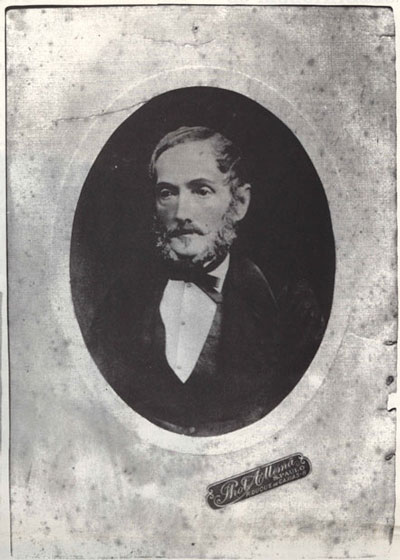
Portrait of Hercule Florence, ca. 1875. Courtesy Instituto Hercule Florence (Arnaldo Machado Florence Archive), São Paulo

In a letter dated June 1839, William Henry Fox Talbot wrote to a botanist living in Italy that his “photogenic” drawings, as he named his first proto-photographs made with the aid of a solar microscope, would be “a big help to botanists.” In a later letter Talbot insisted that his invention would be “useful especially to the naturalists, since one can copy the most difficult things with much ease, for example crystallizations, tiny parts of plants, etc. etc.” Little did Talbot, largely credited as one of photography’s inventors, know that six years earlier a twenty-nine-year-old man in Brazil, far removed from the conversations happening in Europe about how to fix light and shadow (including French scientist and politician François Arago’s presentation of the daguerreotype at the Academy of Sciences in Paris in 1839, and British scientist Sir John Herschel’s supposed coining of the word photography the same year with his now-famous phrase “picture obtained by photography” at the Royal Society in London), had invented his own form of “photogenic” writing aimed to aid naturalists.

In 1833, Hercule Florence, a Frenchman who settled on the outskirts of São Paulo after surviving a four-year stint as a draftsman for a Russian Naturalist expedition up the Amazon River basin in the 1820s, invented a mode of reproduction that he called photographie (light writing)—the same words Fox Talbot used years later to describe his invention. Florence arrived at his form of light writing somewhat accidentally. In contrast to the narrative typically used to describe photography’s invention in Europe, it was not the joint achievement of nineteenth- century chemists and artists experimenting with light and silver compounds, nor that of Romantic poets desiring to apprehend that unruly living organism called nature. Instead it was the end result of a long search for a mode of printing. Specifically, Florence wanted to print and distribute a transcription method he had developed to organize and systematize the sounds of nature found in the Amazon region.

Florence was twenty when he arrived in the newly proclaimed Brazilian Empire in the early 1820s, living first in Rio de Janeiro, where he worked at a bookstore and printing press, before settling down some years later in the small village of São Carlos (Campinas), outside of São Paulo, for the remainder of his life. He hadn’t been living in his adopted country for long before he responded to an advertisement for an expedition led by Georg Heinrich von Langsdorff and was hired to be the group’s second draftsman (along with the well-known German painter Johann Moritz Rugendas and a younger artist named Aimé Adrien Taunay, although Rugendas would be dismissed before the journey began, after falling out with Langsdorff ). The expedition’s aim was to reach Pará, in the Amazon basin, through a fluvial route, while engaging in botanical, astronomical, and cartographic observations typical of such ventures. Close reading of Florence’s sporadic diary entries from these years reveals that despite his penchant for travel and adventure—a trait that brought him to Brazil—he found the expedition tiresome, describing the journey as a “grueling, anguished, and unfortunate peregrination” and noting time and again that “to see one Brazilian village is to see almost all of them.” These observations are not surprising for a man who often commented on the lack of culture and excess of nature in his adopted homeland. The watercolor views and landscapes that Florence produced as a hired painter bored him. What was the purpose, he asked in his diary, of visually reproducing the natural world, of composing collections that could only imitate existing collections and inventories gathered and archived throughout Europe? Was there nothing uncharted and original left to continue expanding the inventory of the world? Had nature been turned, in this way, into nothing more than a dead still life—obvious and trivial, predictable, lifeless?
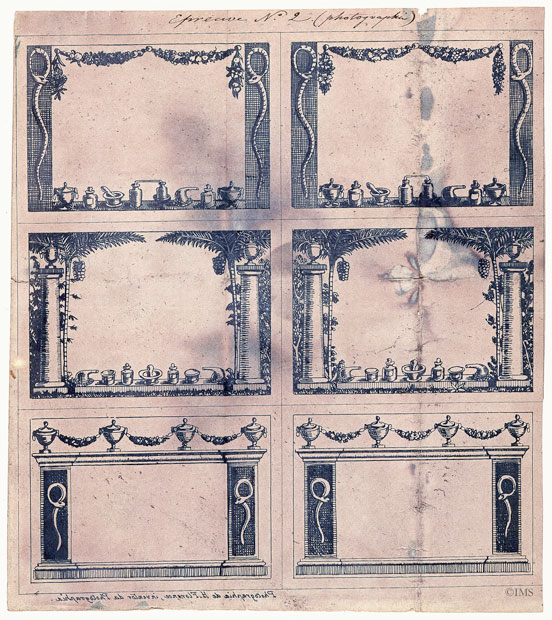
Hercule Florence, Photographic copy of pharmacy labels obtained through direct contact with photosensitive paper under the action of sunlight, ca. 1833. The lower left margin reads (in reverse): “Photography by H. Florence, inventor of photography.” © Instituto Moreira Salles

Craving a recording of the natural world that offered infinite uniqueness, singularity, and power, Florence fixated on the idea that while the naturalist expeditions of the first decades of the nineteenth century had created encyclopedic and cartographic knowledge, they never contemplated the possibility of a sonic inventory. “With great zeal we have tried to, and continue to try to, learn everything that is known about animals,” Florence wrote. “Even the most minimal details have not been ignored; for this reason expensive and arduous voyages have been made to almost every point on the globe; collections of animals were thus made at an enormous cost to the museums of the great cities; the descriptions and drawings allow them to become known throughout the world.” Ironically, Florence would have more opportunities to indulge his theories about sound as the expedition ran into grave problems, derailing hopes of becoming the most scientifically important journey of its kind in the region: Taunay would drown crossing a river; the group’s astronomer came down with beriberi, a tropical disease that afflicted many slaves in colonial Brazil; Langsdorff, as well as half of the team, was stricken with malaria and suffered high, debilitating fevers, resulting in his complete insanity and loss of memory. Amid this chaos, Florence sidelined his official work and turned his attentions to the universe of sounds enveloping him. He began a series of notations recording the calls of birds, the croaks of frogs, and noises made by other animals. Of a bird called araponga, Florence writes that “it is beautiful…it makes a sound that imitates well the banging of a hammer on an anvil,” and of the singing of the anhu-póca: “it is big, its voice strong and euphonious; repeats this sound every fourth of a minute.” Florence approximated the corresponding notations to the sounds he heard and then produced musical scores, a method he dubbed zoophonie. The outsized ambition of his desire to catalogue all the jungle’s birdsong was not lost on Florence: “when one considers how much animals’ voices vary to infinity, one tends to think that it is almost impossible to transcribe them without using an infinite number of signs … the method that I am here giving is only a first attempt … .”

In 1831, after returning home from his journeys, Florence attempted to print and circulate his notes and manuscript outlining his zoophonie. The cumbersomely titled text, Research on the Voice of Animals or Essay on a New Subject of Study Offered to the Friends of Nature, detailed his discovery of nature’s potential sound archive and proposed his novel method of capturing and recording the immaterial, enchanted animal sounds of the Brazilian tropical forests. Florence, however, ran into difficulties finding a printer for his manuscript—a struggle that reveals how his experimentation with photography belongs to the story of a fragile, emerging early-nineteenth-century print culture. Few printing presses then existed in Brazil because the Portuguese Crown sought to control the spread of anti-colonial propaganda. But Florence would not be deterred. This obstacle motivated him to find a more accessible and democratic mode of reproduction, one that utilized a resource available to all, sunlight. Unlike the European figures credited with the invention of the medium, Florence used photography to reproduce symbols and written artifacts, not the visible world. His first attempts with the process resulted in a print made around 1833 of pharmacy labels, likely produced for his friend and collaborator Joaquim Corrêa de Mello, a chemist who at the time lived in Campinas, the same village as Florence, and helped him learn the properties of silver nitrate. These six pharmacy labels on a single sheet of paper demonstrate how, for Florence, photography functioned as a mode of reproduction analogous to printing. His method worked much like a modern-day photocopy—and, significantly, these labels reveal how seriality was ingrained in his work, something that standard accounts of photography’s history attribute to the invention of the carte-de-visite decades later. His notebooks and diaries also reveal that he worked on other photographs: a photographic copy of a Masonic Diploma and one of his own hand-drawn designs for a camera obscura and other items needed for the photographic process. Ultimately, Florence did not use this method to print his manuscript, as he finally convinced a printing press in Rio de Janeiro to publish his findings, though there is no record of how his zoophonie was received.
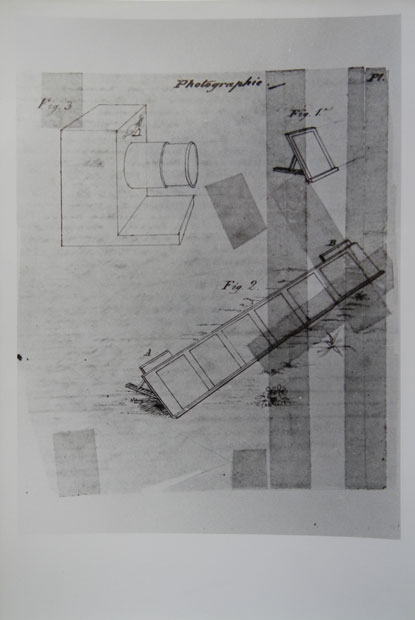
“Equipment used for photography,” originally appeared in Florence’s manuscript, L’Ami des Arts…, 1837. Courtesy Instituto Hercule Florence (Arnaldo Machado Florence Archive)

On May 1, 1839, the Rio de Janeiro–based newspaper Jornal do Commercio announced the invention of what would become known as the daguerreotype, calling the invention a “revolution in the arts of design,” in which “nature appears portraying itself, copying its works as well as works of art…. Light, light itself was the painter.” Six months later, in response to the announcement of Louis Daguerre’s method, Florence published a press release in the São Paulo–based newspaper A Phenix in which he stated that he had already been working on photographic printing methods for nine years and that these experiments led him first to the invention of polygraphy (a form of printing that used sunlight, stencils, and chemistry to reproduce texts or graphics) and then to the “discovery” of “fixing of images in the camera obscura through the action of light.” He continued, “I will not dispute anyone’s discoveries, because one same idea can come to two persons, and because I always considered my findings precarious.” When Florence’s press release was reprinted in Rio two months later, it was prefaced by a journalist’s note stating, “Let the readers compare the dates and decide if the world owes the discovery of Photography, or at the very least of Polygraphy, to Europe or to Brazil.”

Daguerre had received a life pension from the French government, and Florence hoped to obtain the same. He wrote letters and made his case to the French Academy of Sciences but never received any serious response, and his diary entries from this time convey his resentment at being overlooked. “Photography is the wonder of the century. I had also already established the grounds, foreseen this art in all its majesty. I did it [photography] before Daguerre’s process, but I worked in exile. I printed by means of sunlight seven years before photography was first talked about. I had already given it that name; however, all honors to Daguerre.” The French invention caught on and became popular in Brazil; in 1840, fourteen-year-old Pedro II, about to be crowned Second Emperor of Brazil, had the daguerreotype technique demonstrated to him. The young emperor became enamored with the invention, turning into the first promoter of official photography within a monarchy, introducing the title of “Crown Photographer” before Queen Victoria in England.

Hercule Florence, Anhu-póca, n.d. (polygraphic drawing). © Instituto Moreira Salles

A tireless inventor despite lack of fame, fortune, or even credit, Florence continued to experiment with reproduction. In the late 1830s, he purchased a typography machine, obtained the necessary license to operate it, and printed advertisements and the short-lived revolutionary newspaper O Paulista that became the “fuel of the liberal movement” until the anti- monarchical revolt had been squashed, forcing Florence to disappear his machine after printing only four editions. In the early 1840s, about a decade after his first experiments with photography, Florence invented unique and inimitable paper money. The move from photography to money might seem a stretch, but both share an inherent seriality. A banking crisis of 1864 that resulted in a reconfiguration of the banking and commerce system made it evident that money, both paper and coin, were difficult to authenticate. Florence seized on the economic tumult by introducing paper that, because of the “sharpness” it allowed in printing, the “microscopic traces,” and the “indelible” quality of the printed colors and patterns could, as his 1842 advertisement claimed, “guarantee … against forgeries.” But this, too, failed to catch on. Yet Florence never gave up: In 1859 he patented a reproduction technique he called “stereopainting” and, soon thereafter “solar painting,” though we don’t know much about what these intriguing projects entailed. His last known “invention” was what he called “The Sixth Order of Architecture, or Brazilian Order.” This order consisted of columns, pediments, and other architectural details inspired by Brazilian palm trees, already an icon of the country. Greece produced the three known orders of architectural style—the Doric, Ionic, and Corinthian—that symbolized the roots of Western architecture. Florence seems to have wanted to put Brazil on the cultural map by inventing a style or order that reflected the country’s tropical environs.
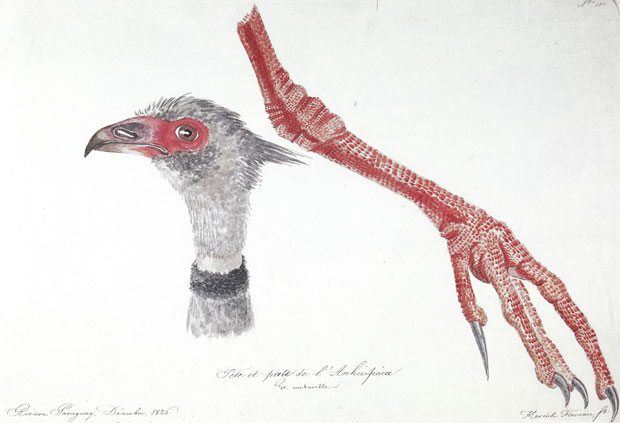
Hercule Florence, Tête et pate de l’anhu-póca (Head and feet of anhu-póca bird, or Southern screamer), Paraguay river, 1826, from Expedição Langsdorff ao Brasil 1821–1829. Volume 3: Aquarelas e desenhos de Florence (Langsdorff expedition to Brazil 1821–1829. Volume 3: Watercolors and drawings). Courtesy Instituto Hercule Florence, Saõ Paulo, and Archive of the Russian Academy of Sciences, St. Petersburg

Why didn’t any of Florence’s ideas and inventions flourish? Most likely his status as an outsider within the highly structured political and class system in nineteenth-century Brazil, with its strong monarchy and organized cultural centers clustered in Rio de Janeiro and the northern city of Recife, is to blame for his lack of recognition. Though his name would fall into obscurity rather than becoming canonized in photography histories, he seems to have passed his later years rather contentedly in the small town of Campinas, where he fathered twenty children and lived on a beautiful fazenda (ranch).

A century passed before Florence’s remarkable achievements were discovered. In the early 1970s, Boris Kossoy, a Brazilian photographer and photography historian who came across Florence’s “alleged” invention through mentions in specialized Brazilian publications, began his research on what he called the “isolated discovery of photography in Brazil.” To build his case Kossoy traveled to the George Eastman House in Rochester, New York, to test, with the aid of technicians, the notations made by Florence about his photographic experiments. His tests proved that Florence had indeed invented a photographic process in 1833. Around the same time his photographic discoveries were being at last acknowledged, his studies of Amazon sounds were also finding new supporters in the emerging field of bioacoustics, or animal communications. In 1978, the world-famous French ornithologist Jacques Vielliard was invited by the University of Campinas, on the outskirts of the city of São Paulo, in Florence’s hometown, to establish what would become the most important bioacoustics lab in the Americas. Vielliard amassed an enormous collection of tropical sounds, creating the “Neotropical Sound Archive,” and in 2005 set up a second archive called the “Amazonian Sound Archive,” housed at the Federal University of Pará.
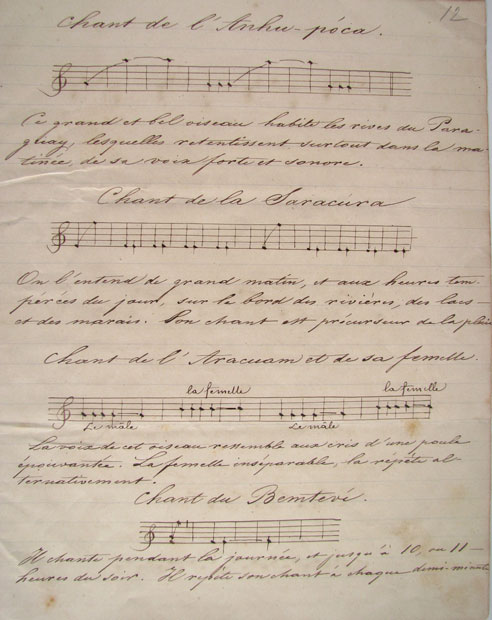
Page from Hercule Florence’s manuscript Voyage fluvial du Tieté a l’Amazone (Fluvial voyage from the Tieté to the Amazon river), 1831, which included many examples of his zoophonie notations. Courtesy Archive of the Instituto Histórico e Geográfico Brasileiro, Rio de Janeiro, and Instituto Hercule Florence, São Paulo

More recently, contemporary artists have found Florence a source of inspiration. In the nineties, German sound artist Michael Fahres, working with a group of artists from Russia, Germany, and Brazil, retraced Florence’s journey with the Langsdorff expedition and reinterpreted his zoophonie. Italian photographer Linda Nagler is preparing a multimedia art exhibition around Florence’s many artistic and scientific explorations for the New National Museum of Monaco in 2015. An Argentine trio including writer Pola Oloixarac, photographer Luna Paiva, and composer Esteban Insinger wrote a contemporary opera called “Hercule Florence in Mato Grosso,” which will premiere in Buenos Aires this October. Perhaps Florence was neither a naturalist nor an inventor but rather a conceptual artist who was ahead of his time.

______

Natalia Brizuela is a professor at the University of California, Berkeley. She is the author of Fotografia e império: Paisagens de um Brasil moderno (Photography and Empire: Landscapes of a modern Brazil) (Companhia das Letras, 2012) and the forthcoming Uma literatura fora de si. Escrita e fotografia (A literature beside itself: Writing and photography) (Rocco, 2014).

Bookmarked at brandizzi Delicious' sharing tag and expanded by Delicious sharing tag expander.
23 Aug 00:54

End the Drug War, Save the Children

by Kelley Vlahos

The American audience sure loves its drug porn—from Scarface to the more recent binge-worthy popularity of the Grammy-winning series, “Breaking Bad.” There is nothing more intoxicating than the illicit, albeit vicarious, score.

But these drugs have to come from somewhere, and when we see the pictures of youth squeezed into concrete detention cells, or hear stories about the scabies, lice, and other ailments they brought in with them on the arduous journey from Central America, suddenly nothing seems very sexy.

What does one have to do with the other? A growing number of voices are trying to make it clear, despite the political clamor over the waves of unaccompanied children attempting to get through the southern border, that it’s all about the drugs. America’s drug problem, specifically, which goes beyond the cheap titillation of movies and film. It’s a $100 billion annual illicit drug industry, with some 23.9 million current users over the age of 12 (that’s more than 9 percent of the population 12 years and older).

In other words, America’s demand for drugs is driving children like Cristian Omar Reyes, an 11-year-old terrorized by gangs in Honduras, or Carlita, a 13-year-old Salvadoran, also fleeing gang violence, to the U.S-Mexico border. If you don’t want these children—an estimated 70,000 to 90,000 by the end of 2014—then the drug war must end.

“Of course there is a direct line between the drug war and the migration you are seeing today,” Terry Nelson, a retired U.S. Customs and Border Protection officer, who now works with LEAP (Law Enforcement Against Prohibition), told TAC. The only way to stop it is, “if you were to end the drug war today and begin to legalize all drugs.”

The idea is a dramatic and provocative one, but not at all novel. The notion that prohibition has created a $300 billion global black market that has only allowed the worst parasitical crime and corruption that goes with it to flourish is not new. Legalization advocates have been using the example of the Volstead Act, which outlawed alcohol consumption in the U.S. from 1920 to 1933 as the most salient example of prohibition’s violent, if not directly intended, repercussions, for years.

But it is not only our own lives as Americans, critics say, but the lives of millions of people in already poor, badly governed, and war-pocked countries that are paying the consequences for the drug war, and yes, our love affair with drugs. While opinion might differ on whether it should be called a “crisis” the waves of children bearing stories of dead parents and classmates and fear for their lives, are the best reminder we have that the war has been lost.

“The [right-wing conservative] view … it is overly simplistic and erroneous, that [children] are coming here illegally, that it is an invasion of our territory and we must deport them immediately. You are not taking responsibility for contributing to the problems yourself,” said Marco Careces, an editor and contributor for the Honduran Weekly and aerospace analyst for a Virginia-based technology firm who shuttles often between the Washington D.C. area and Central America.

“As long as you keep the drugs illegal, you will keep the revenues growing for the cartels,” he said in an interview with TAC. “Marijuana, and cocaine, heroin and methamphetamines—unless you’re willing to legalize all of them, there is always going to be a market for something.”

No surprise that Central American leaders have been saying this in greater numbers over the last several years. They see the writing on the wall. The drug war in our hemisphere has been an exercise in whack-a-mole, or as Cato’s Ted Galen Carpenter noted recently, a game of squeeze the balloon: “put pressure on the drug cartels in one area, and the drug trade just pops up somewhere else.”

Over the last four decades, the U.S. taxpayer has funded some $1 trillion for this war, which has only been successful in driving the illicit industry from Columbia (leaving environmental and economic devastation behind) to the Caribbean and Mexico (the scene of the worst cartel violence in modern times), down to Honduras, Guatemala and El Salvador, where we see our handiwork flourish today. In 2012, when TAC reported on this angle of the war, the U.S. military and DEA had just abruptly halted an Iraq counterinsurgency-inspired operation with local police that left a string of civilians dead, including four killings that are unsolved two years later. At the time, according to the U.S. military involved, 84 percent of the U.S.-bound cocaine was crossing this Central American region.

“For them, the violence is terrible. People here just can’t imagine,” said Nelson, who worked for 30 years in federal border enforcement and customs, mostly in drug trafficking in Mexico, Central America, and the Caribbean. At one point he led a team that seized 230 pounds of cocaine from smugglers in five years. When he retired in 2005, he looked around and saw that despite year after year of high profile seizures, the price of so-called blow on Main Street hadn’t budged.

“It’s a no-win situation,” he said. “I know what’s working and what is not. I was one of the one of the guys fighting the war.” He saw other retired law enforcement officers take up the banner of ending it. “These aren’t a bunch of long-haired hippies. These are serious guys who want to right a wrong,” he said of LEAP. “I am a conservative and I think this is a very conservative issue—crime and violence.”

The gangs work for the cartels, the cartels have helped to corrupt governments. They all make life miserable for the people who live in urban centers and the outskirts of these towns where the criminal enterprises have boiled life down to two choices: either cooperate (by joining or paying up), or hide, and hope the next bullet or swing of the machete doesn’t find you. Then there is the decision to flee to the U.S. where relatives already await, many of whom pay for the so-called coyotes to smuggle their loved ones through. There is promise there, or so they believe—jobs, education—and a chance to live.

According to author and Los Angeles Times writer Sonia Nazario, some 6,800 children were detained at the U.S. border three years ago. This year, they expect that number to reach upwards of 90,000. She said the gang members deported from L.A. back to Central America have joined up with homegrown groups flourishing from the recently redirected drug trade. As she writes in a recent New York Times profile of the children, whom she calls refugees, from Honduras: 

Gangs arrived in force in Honduras in the 1990s, as 18th Street and Mara Salvatrucha members were deported in large numbers from Los Angeles to Central America, joining homegrown groups like Los Puchos. But the dominance in the past few years of foreign drug cartels in Honduras, especially ones from Mexico, has increased the reach and viciousness of the violence…

Nazario describes how narco gangs actively recruit in schools, the relentless pressure to do the drugs and to join, the exposure to brutal crimes most Americans only witness—safe, in the comfort of their own homes—on Netflix and HBO. “I want to avoid drugs and death,” 14-year-old Carlos Baquedero Sanchez, told the author about his willingness to risk the dangers of flight to the north. His story mirrors others, some of whom have made the journey more than once, and will try again until they make it.

It all goes back to demand, however. There has been unprecedented movement toward decriminalization of drugs, even legalization, among Latin American, West African, Caribbean countries, and North American states. There has also been a push, which LEAP is involved in, toward transforming existing United Nations treaties on drug prohibition from criminal policy to that of a public heath and treatment posture in hopes of weakening the global black market, which, as we know, funds the world’s most dangerous terror organizations, too.

Yet it is clear that nothing will truly help until the U.S. government takes the first step. Being careful to save some blame for his own Central American presidential cohorts, Honduran president Juan Orlando Hernandez nonetheless told TIME magazine that, “This is a problem they (Americans) generate, I repeat, because of the connection between the drugs they consume in enormous quantities in the United States that are produced in the south and pass through Central America, generating violence, generating this migratory flow.”

Skeptics say the gangs would shift to another enterprise if drugs suddenly became legal—extortion, prostitution, human trafficking, etc. Perhaps so, says Caceres, but drugs are lucrative, easy to move, and have allowed these gangs and cartels incredible amounts of capital to invest in weapons and other material trappings of their power.

“Drug revenues are easy money. Making people pay through extortion when they don’t have anything to give it is hard. Controlling human beings (prostitution, trafficking) is a lot harder than selling drugs to American consumers,” Caceres insists. “If you dry up the revenues for the drugs from the States it will be easier for Honduras to get out of paying extortions. These cartels and gangs will get weaker. It will diminish in the long term.”

U.S. politicians, however are no closer to facing the bitter fruits of the failed drug war than they are to dealing with the thousands of unaccompanied minors currently sitting in federal detention centers awaiting their fate. Before it broke for summer vacation, the House passed two immigration measures, both emphasizing deportation over everything else. The bills, pushed by the right wing of the Republican Party, are unlikely to be signed—but they’re great November election optics.

“If you deport these kids back to where they came from, you’re actually making the problem worse. They are either going to be killed or recruited by the gangs and it will make the gangs more powerful,” said Caceres. “They will keep trying to get back in … a wall won’t stop the wave if people are desperate enough.”

Marijuana is now legal in two U.S. states. That is a long way from ending the prohibition of all drugs, something that seems nearly impossible today. But let the children be a reminder of a different path, Nelson suggested. “Drugs are too dangerous to be left in the control of cartels and drug gangs.”

Kelley Beaucar Vlahos is a Washington, D.C.-based freelance reporter and TAC contributing editor. Follow her on Twitter.

14 Aug 16:15

“I Do Not Know What My Gender Is”: On Messy Transitions

by James Warwood

PridePhoto“But when I met you, you were such a girly girl.”

My stepmom leaned across the dining room table and told me this urgently, as if she was offering up incontrovertible evidence that I couldn’t possibly be transgender. 

It was a fair enough assertion. From the moment I was born – the first girl in a close-knit family of male cousins – I effortlessly fell into the preformed mold of femininity: I grew up in a bedroom with pink carpet and a four-poster lace canopy bed; I loved dresses and Barbies; my favorite game to play with my brother and cousins was house; by the time I was in fifth grade I had an absurd amount of make up, and the sleepovers I hosted always involved a make over. I can say that all of this was authentically me; but that is not what I told my stepmother.

“I was compensating.”

As a gender-different person growing up in the arms of Livejournal comment threads, I learned pretty quick that when talking to cisgender people – parents, friends, therapists – you sometimes have to bend the truth to be taken seriously. I vividly remember sitting on the lumpy sofa in my therapist’s dark office as a senior in high school, telling her brokenly that I had felt trapped in the wrong body for as long as I could remember. Constricted by the DSM and the WPATH Standards of Care, most healthcare providers (especially in my conservative hometown) look for a particular checklist of experiences and feelings before diagnosing a person with gender dysphoria. I knew, before walking into that office for the first time, that I didn’t meet the majority of the criteria for the diagnosis but I also knew – yes, at the age of eighteen – that transitioning to male would make me happier. I could not and cannot explain how: my gender identity has always been an amorphous and unstable mystery. As of this writing I feel closest to what I would call masculine agender (that is, I don’t identify with any gender, but I feel more masculine than feminine.) A few weeks ago I was adamantly identifying as a man with a transgender medical history, and several months before that I embraced my genderqueerness. 

paraphernaliaUnfortunately, because our healthcare providers are the gatekeepers to transition, those of us who do not fall neatly into the boxes of the diagnostic checklist have two choices: prepare for an uphill battle or become storytellers. I learned all the key words and phrases that I needed to drop into my initial therapy visits, the stories I needed to concoct that would convince my therapist to write that all-powerful letter instructing my physician to prescribe hormones. I told my therapist an out-and-out lie (which I don’t endorse!) because I did not have the words for myself, much less for her, to explain why the prospect of living as a man felt right to me. Telling my truths, I feel sure, would have found me ten years down the road still trying to explain to a therapist that no, I am not a female-to-male transgender person but yes, I need to medically transition to male to be able to live my life.

There was some understanding in my mind that I was not after life as a man, whatever that means. I have been medically transitioning for over four years and I am still not read as male. One look at me and people either start excessively dropping the “ma’am” bomb or asking how old I am (as if I’m twelve rather than my twenty-three years.) I tell baristas to call me ‘Jim’ because I have gotten back one too many coffee cups with ‘Jane’ scrawled on the side. Last month a nurse, processing me for some blood work, paused in her data input and said, “I’m sorry, but I have to ask: male or female?” Holding my wife’s hand in public means running the risk of passersby making loud comments about lesbians. Kids stare and sometimes ask the question their parents are all thinking: is that a boy or a girl? 

It does not bother me. (Any embarrassment I feel is, I think, a manifestation of what I’ve been told I should feel.) I did not embark on this ludicrous journey to become one of the guys. I still cling to my more feminine mannerisms enough that more than one person has made assumptions about my sexuality. I’ve started growing my hair out – much to the chagrin of relatives who would like to see me able to pass as male even a little – and mentioned to my wife yesterday that I miss wearing headbands. Almost all of my friends are women because I relate to them, not to mention most men are too crass for my tastes. I very much enjoy the label of husband but my wife and I share the pants in our relationship. (Or perhaps there are no pants.)

I do not know what my gender is. I do not know how to explain it, even to myself. And yet, mired in uncertainty, I made the decision in 2010 to start bimonthly self-administered testosterone injections, undergo a double mastectomy, and sit before a judge in an empty courtroom in order to change the name and gender on all of my legal documents. Frankly, I would be amazed if, after reading to this point, not a single person thought me nuts or at least wondered if I might have some regrets. 

I do not, not about this. My transition was just another milestone, like getting my driver’s license or graduating high school: a tedious but necessary obstacle that opened up my future. I frequently daydreamed of my future as a kid and while I certainly never pictured this, as I made my way through high school the path to transition just naturally opened in front of me. I don’t really see my coming out and transition as a Big Deal, but I know that it must have been to everyone else in my life. How does a child who was perfectly content as a girl grow up to be a man? Even those who are familiar with transgender people know that there is some amount of internal struggle that leads to transition. Some sort of sign that this had been there all along. 

On this one point, I agree with my stepmom. I had been a girly girl, and happily so. I can only assume that I could have continued on and maintained some level of contentment with my life. There isn’t an easy way to explain why I transitioned or to describe my gut feeling that it had to be done. I’ve only begun to come close to understanding my gender identity by expanding my understanding of gender: that is, by accepting that gender is not a binary. When I transitioned, I think some part of me did so because I thought my options were either male or female, and I have a stronger pull towards male. I know now that although I use male pronouns and check the ‘M’ on forms, I am not necessarily a man. At least, that’s not how I identify today.

Read more “I Do Not Know What My Gender Is”: On Messy Transitions at The Toast.

14 Aug 14:06

Os pais e a escola

14 Aug 14:05

A falácia do capitalismo de compadrio dos tigres asiáticos que funcionou

by Valdenor Júnior
Adam Victor Brandizzi

Faz sentido, mas é importante o autor ter em mente de que acordos políticos *também* são necessários. Aí fica o desafio de desenhar a linha do aceitável.

Por Valdenor Júnior

Publicado originalmente em Tabula (não) Rasa & Libertarianismo Bleeding Heart

As pessoas que leem meu blog ou conhecem os textos que publico em outros blogs sabem que sou contrário ao “capitalismo de conchavo” ou “capitalismo de compadrio” (crony capitalism). Esse é o termo que designa um sistema onde o governo subsidia/ajuda empresas específicas, em um conluio entre Estado e grandes corporações politicamente bem-conectadas, que manipulam politicamente aquele mercado em prejuízo do resto de nós.

Mas existem algumas pessoas que defendem um “capitalismo de conchavo” temporário, para alçar um país no caminho do desenvolvimento econômico. A ideia é que, quando o país é subdesenvolvido, você teria de subsidiar e proteger a indústria nacional para possibilitar o crescimento econômico.

A chamada “substituição de importações”, onde tarifas protecionistas são aplicadas para proteger a indústria nacional da concorrência externa hoje em dia é amplamente desacreditada. Mas uma versão de capitalismo de conchavo ainda é influente em alguns círculos hoje – a de um capitalismo de conchavo disciplinado pela concorrência internacional em uma economia voltada à exportação. O exemplo de Taiwan e Coréia do Sul, dois importantes “Tigres Asiáticos”, supostamente confirmaria o valor desse sistema.

four-asian-tigers

Um defensor dessa tese é o economista Raghuram Rajan, e, por isso, é útil transcrever sua defesa disso em ordem de entendermos melhor qual seria esse raciocínio:

“Trinta e cinco anos depois, é relativamente fácil descrever o caminho que, de modo geral, os países bem-sucedidos seguiram em sua busca pelo crescimento. Esse caminho passou tanto pela intervenção governamental substancial, nos estágios iniciais – razão pelo qual me refiro a ele, de forma genérica, como capitalismo de relacionamento ou gerenciado -, como pelas exportações. Embora seja fácil descrevê-lo, é bem mais difícil implementá-lo. (…)  A estratégia de crescimento gerenciado com foco nas exportações, quando bem aplicada, tem sido a principal via para a saída da pobreza na era pós-guerra.

(…) O processo de apadrinhamento, muitas vezes chamado, de forma pejorativa, ‘capitalismo de compadrio’, pode ser mais justamente denominado ‘capitalismo de relacionamento’ ou ‘capitalismo gerenciado’. Envolve uma combinação ponderada de proteção dada pelo governo a algumas empresas – proteção contra a concorrência estrangeira -, e também privilégios especiais para que pudessem gerar os lucros com os quais pudessem criar seu capital organizacional enquanto mantinha alguns incentivos à eficiência das empresas. (…) Com subsídios e proteção do governo, alguns líderes privilegiados cresceram vertiginosa e rentavelmente, adquirindo know-how, riqueza, capacidade organizacional e estabilidade.

(…) Uma maneira de disciplinar as empresas ineficientes e ao mesmo tempo expandir o mercado de bens de consumo é incentivar as exportações das grandes empresas do país. As empresas não só se sentem obrigadas a fabricar produtos atraentes, a custos competitivos, e que possam conquistar participação no mercado internacional, mas os maiores mercados internacionais lhes oferecem a possibilidade de economias de escala.” (RAJAN, Raghuram. Linhas de Falha. P. 90-91, 103-104, 107)

Em síntese, Rajan argumenta que o capitalismo de compadrio funcionaria para alçar países subdesenvolvidos para o desenvolvimento rapidamente, usando o exemplo dos “Tigres Asiáticos”, desde que o subsídio e proteção a alguns fosse seguido de uma rápida inserção no comércio internacional, uma vez que a competitividade do comércio internacional anularia a tendência das empresas “apadrinhadas” de ficarem dependentes da proteção do governo e só se sustentarem com base nessa intervenção governamental em seu favor. Logo, a vantagem de adquirir capital organizacional nas empresas privadas nacionais por meio do capitalismo de compadrio justificaria a adoção deste, mas apenas quando suas desvantagens e incentivos perversos fossem anulados pela disciplina do livre comércio internacional.

O problema desta tese é que o motivo do capitalismo de compadrio dos Tigres Asiáticos ter “funcionado” pode não ter nada a ver com economia, mas sim com política.

Não pretendo esgotar as evidências para minha tese aqui – meu objetivo principal aqui é mostrar que esse curso de eventos não é obviamente explicado por motivos econômicos, como alguns pretendem -, mas sim sugerir qual é a real razão desse suposto sucesso do capitalismo de compadrio em fomentar desenvolvimento em economias exportadoras asiáticas, apesar de todas as evidências existentes de que o compadrio prejudica o crescimento econômico.

Entendo que a razão real seja política. Ajudar elites locais foi necessário para convencê-las a aceitarem maior livre comércio e abertura econômica.

Segundo essa hipótese, a abertura econômica e o maior livre comércio foram o principal motor do crescimento econômico, enquanto o “capitalismo de compadrio” foi basicamente um acordo político, que redistribuía grande parte da renda que seria obtida com o crescimento para as elites locais envolvidas com a indústria subsidiada em troca de que estes elites locais aceitassem a abertura econômica e o maior livre comércio.

A intervenção governamental em favor de setores da indústria, portanto, não foi um requisito econômico para o crescimento desses países, mas sim um requisito político sem o qual as elites locais não concordariam com a abertura econômica que, esta sim, levou ao crescimento.

Duas evidências importantes que podemos mencionar aqui é o sucesso da política do “não intervencionismo positivo” de Hong Kong e  que grande parte das chaebol (multinacionais sul-coreanas) foram aniquiladas em duas crises porque eram financeiramente frágeis.

Portanto, é falacioso argumentar em prol do capitalismo de compadrio, quando temos evidências de que esse tipo de política prejudica o crescimento econômico e as vantagens da dinâmica de um mercado não manipulado politicamente, e que a intervenção governamental em favor de empresas nacionais no início do processo de desenvolvimento (nos exemplos históricos citados) é melhor “enquadrada” no curso de eventos como um acordo político para assegurar apoio das elites locais à abertura econômica, não como uma estratégia econômica que por si mesma seria vantajosa.

junior

Valdenor Júnior é advogado. Desde janeiro de 2013, escreve em seu blog pessoal Tabula (não) Rasa & Libertarianismo Bleeding Heart onde discute alguns de seus principais interesses: naturalismo filosófico, ciência evolucionária com foco nas explicações darwinianas ao comportamento e cognição humanas, economia, filosofia política com foco na compatibilidade entre livre mercado e justiça social. Também escreve para o Centro por uma Sociedade sem Estado – C4SS e o Liberzone.

14 Aug 11:52

Frases do Dia—o Estado de Direito e o Capitalismo Americano

by Drunkeynesian
Adam Victor Brandizzi

Muito, muito bom o artigo da New Yorker.

“The pioneers of American capitalism were not graduated from Harvard’s School of Business Administration. The early settlers and founding fathers, as well as those who “won the West” and built up cattle, mining and other fortunes, often did so by shady speculations and a not inconsiderable amount of violence. They ignored, circumvented, or stretched the law when it stood in the way of America’s destiny and their own—or were themselves the law when it served their purposes. This has not prevented them and their descendants from feeling proper moral outrage when, under the changed circumstances of the crowded urban environments, latecomers pursued equally ruthless tactics."

Do sociólogo Daniel Bell, citado nessa matéria interessante do Malcolm Gladwell.
14 Aug 11:47

The Pay is Good

by Doug
13 Aug 22:36

Fields Medal mathematics prize won by woman for first time in its history

Adam Victor Brandizzi

Também tivemos a primeira mulher medalhista da Fields este ano!

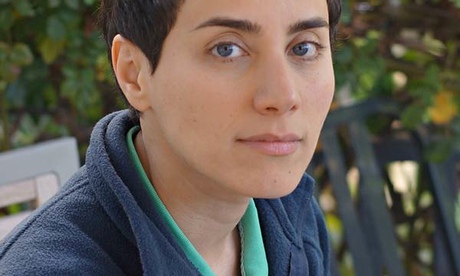
Fields Medal winner Maryam Mirzakhani

Maryam Mirzakhani, a mathematician at Stanford University, was among a number of women tipped for the Fields Medal in recent years. Photograph: Stanford University

It will go down in history as the moment one of the last bastions of male dominance fell. A woman has won the world's most prestigious mathematics prize for the first time since the award was established nearly 80 years ago.

Maryam Mirzakhani, an Iranian maths professor at Stanford University in California, was named the first female winner of the Fields Medal – often described as the Nobel prize for mathematics – at a ceremony in Seoul on Wednesday.

The maths community has been abuzz with rumours for months that Mirzakhani was in line to win the prize. To outsiders her work is esoteric, abstract and impenetrable. But to more qualified minds, she has a breathtaking scope, is technically superb and boldly ambitious. She describes the language of maths as full of "beauty and elegance".

The prize, worth 15,000 Canadian dollars (£8,000), is awarded to exceptional talents under the age of 40 once every four years by the International Mathematical Union. Between two and four prizes are announced each time.

Three other researchers were named Fields Medal winners at the same ceremony in South Korea. They included Martin Hairer, a 38-year-old Austrian based at Warwick University in the UK, Manjul Bhargava, a 40-year old Canadian-American at Princeton University in the US and Artur Avila, 35, a Brazilian-French researcher at the Institute of Mathematics of Jussieu in Paris.

There have been 55 Fields medallists since the prize was first awarded in 1936, including this year's winners. The Russian mathematician Grigori Perelman refused the prize in 2006 for his proof of the Poincaré conjecture.

Mirzhakhani, 37, was among a number of women tipped for the prize in recent years and her success won immediate praise from fellow mathematicians.

Christiane Rousseau, vice president of the International Mathematics Union, said: "It's an extraordinary moment. Marie-Curie had Nobel prizes in physics and chemistry at the beginning of the 20th century, but in mathematics this is the first time we have a woman winning the most prestigious prize there is. This is a celebration for women."

"I am thrilled that this day has finally come," said Sir Tim Gowers, a Fields medallist and mathematician at Cambridge University. "Although women have contributed to mathematics at the highest level for a long time, this fact has not been visible to the general public. I hope that the existence of a female Fields medallist, who will surely be the first of many, will put to bed many myths about women and mathematics, and encourage more young women to think of mathematical research as a possible career."

Born and raised in Iran, Mirzakhani completed a PhD at Harvard in 2004. Her path into mathematics was not a given, though. As a child, her passion was not for numbers, but literature. Her school in Tehran was near a street full of bookshops and because browsing was not allowed, she ended up buying a lot of random books. "I dreamed of becoming a writer," she said in an interview for the Clay Mathematics Institute (CMI) in 2008. "I never thought I would pursue mathematics before my last year in high school."

It was Mirzakhani's brother who first piqued her interest in science. He used to come home from school and talk over what he had learned. He told her the story of the German mathematician, Carl Friedrich Gauss, who displayed his precocious skills as a schoolboy when he worked out in seconds how to sum all the numbers from 1 to 100. (The answer is 5,050 and the trick is to look at pairs that add up to 101.) "That was the first time I enjoyed a beautiful solution, though I couldn't find it myself," she said.

The seed that had been sown began to germinate, with help from her school principal, a strong-willed woman who made every effort to ensure her students had the same opportunities as the boys. As a teenager, Mirzakhani took part in international maths olympiads and won gold medals in 1994 and in 1995. In the first, in Hong Kong, she dropped a single point. At the latter, in Toronto, she finished with a perfect score.

Later, as a student at Sharif University, she befriended inspiring mathematicians and found that the more time she spent on the subject, the more excited she became. Then, at Harvard, she began to work with another Fields medallist, Curt McMullen, and became fascinated with how he made mathematics so simple and elegant.

Most of the problems Mirzakhani works on involve geometric structures on surfaces and their deformations. She has a particular interest in hyperbolic planes, which can look like the edges of curly kale leaves, but may be easier to crochet than explain. According to a citation released by the International Mathematical Union, Mirzakhani won the prize for her "outstanding contributions to the dynamics and geometry of Riemann surfaces and their moduli spaces".

Hairer won for his "outstanding contributions to the theory of stochastic partial differential equations", which contain terms that are inherently random. At school, he created audio software that he marketed as "the Swiss army knife of sound editing".

Avila was honoured for his "profound contributions to dynamical systems". Bhargava won for "developing powerful new methods in the geometry of numbers", including elliptic curves used in cryptography.

"The mathematics that has been the most applicable and important to society over the years has been the mathematics that scientists found while searching for beauty; and eventually all beautiful and elegant mathematics tends to find applications," said Bhargava.

Mirzakhani declined an interview, but she told the CMI in 2008 that while maths was not for everyone, many students did not give it a real chance. She did poorly at maths for several years at school because she was not interested in the subject. "I can see that without being excited, mathematics can look pointless and cold. The beauty of mathematics only shows itself to more patient followers," she said.

Speaking to the American Mathematical Society last year, she said the situation for women in maths was still far from ideal. "The social barriers for girls who are interested in mathematical sciences might not be lower now than they were when I grew up. And balancing career and family remains a big challenge. It makes most women face difficult decisions which usually compromise their work," she said.

Frances Kirwan at Oxford University, one of Britain's leading mathematicians, said: "Maths is a hugely rewarding subject, but sadly many children lose confidence very early and never reap those rewards. It has traditionally been regarded as a male preserve, though women are known to have contributed to its development for centuries – more than 16 centuries if we go back to Hypatia of Alexandria.

"In recent years around 40% of UK undergraduates studying maths have been women, but that proportion declines very rapidly when we look at the numbers progressing to PhDs and beyond. I hope that this award will inspire lots more girls and young women, in this country and around the world, to believe in their own abilities and aim to be the Fields medallists of the future."

Bookmarked at brandizzi Delicious' sharing tag and expanded by Delicious sharing tag expander.
13 Aug 20:34

Ayn Rand’s The Devil Wears Prada

by Mallory Ortberg
Adam Victor Brandizzi

SOU MUITO MAIS ESSA VERSÃO!!!

devilPreviously: Ayn Rand’s The Breakfast Club.

INFERIOR MAN: Hey.

ANDREA: Happy birthday. Nate, I’m so sorry. I kept trying to leave, but there was a lot going on. And, you know, I didn’t have a choice.

INFERIOR MAN: Don’t worry about it. I’m gonna go to bed.

ANDREA: You are a grown man with a demanding job of your own, yet you seek to punish me for missing several hours of a completely arbitrary event in order to excel in my chosen career?

INFERIOR MAN: I said don’t worry about it.

ANDREA: And you lack even the common manly courage to fight with me about this matter? You would rather slink off to bed, stinking of jealousy and defeat, than argue with the woman you call your mate? You are so lost to your higher self that you would resent me for my achievements, rather than celebrate them with me, sexually?

INFERIOR MAN: I guess.

ANDREA: You disgust me. You are not my sexual equal. You make expensive cheeses for idlers, triflers, and non-producers. I create value in a billion-dollar industry. Your good opinion is utterly meaningless. I will find myself a man who is a captain of industry and buys diamonds to wrap around my throat. You will die in squalid poverty, surrounded by greasy snacks. Good-bye forever.

INFERIOR MAN: Andrea, wait.

ANDREA [over her shoulder]: If you ever make something of value by yourself, take a picture and send it to me. My address will be the tallest skyscraper in the world.

***

JEALOUS COWORKER: I don’t care if she was gonna fire you or beat you with a red-hot poker! You should have said no.

ANDREA: That is an absurdity. What could Miranda possibly gain in beating me with a red-hot poker? Under the free market, there is no reason to exploit or mistreat the laborer. Doing so would go against one’s self-interest.

JEALOUS COWORKER: You should have said no.

ANDREA: You truly believe I should have allowed myself to be fired because you wanted to go on vacation to Paris?

JEALOUS COWORKER: That’s not how I would put it.

ANDREA: You deserved to be hit by that car. You have no sense of the value of others. I will go to Paris, and I will continue to surpass you professionally, and you will have no one to blame but yourself.

***

DEAD WEIGHT FRIEND: Who were you talking to?

ANDREA: Lily, he’s just a guy I know from work.

DEAD WEIGHT FRIEND: Yeah, that looked like work.

ANDREA: Are you truly suggesting I do not have the right to speak to talented, professional men in art galleries?

DEAD WEIGHT FRIEND: You know, the Andy I know is madly in love with Nate, is always five minutes early, and thinks, I don’t know, Club Monaco is couture. For the last 16 years, I’ve known everything about that Andy. But this person? This “glamazon” who skulks around in corners with some random hot fashion guy? I don’t get her.

ANDREA: Why should I remain static and frozen in the past simply because it is the Andrea you are the most used to? Is it not my obligation to learn about fashion if I work in the fashion industry? Should I purposely fail at my job in order to make you feel more comfortable in your own mediocrity?

DEAD WEIGHT FRIEND: I didn’t mean it like that –

ANDREA: If I recall, you were perfectly happy about my newfound knowledge of couture when I got you that Marc Jacobs bag. You appear to be carrying it now. Was this wrong of me?

DEAD WEIGHT FRIEND: I –

ANDREA: Be silent. I do not require explanations. I will never apologize for my newfound excellence. I will speak to whatever man I consider fit to talk to. And I would describe him as more “weirdly ugly-cute” than “hot.” He has no eyebrows.

DEAD WEIGHT FRIEND: Look, I’m –

ANDREA: If you can think of a better way to stand in a corner, I am happy to hear it. But I will not sacrifice myself for you. Perhaps someday you will learn that my success is not a threat to you unless you wish it to be.

***

MIRANDA: Andrea. Everybody wants this. Everybody wants to be us.

ANDREA: You are quite right. [Gets in the limo] Let us buy a helicopter, that we may float above the poor.

Read more Ayn Rand’s The Devil Wears Prada at The Toast.

13 Aug 19:35

Em 2018, o Brasil receberá a "Copa da matemática" - 10/08/2014 - Ilustríssima - Folha de S.Paulo

Adam Victor Brandizzi

Aliás, o próximo Congresso Internacional de Matemáticos será aqui também.
* * *
Cara, a descrição do IMPA, do Congresso, de tudo... é tão lindo. Queria ter tido habilidade para sequer chegar perto disso...

RESUMO Nesta semana, o Rio será anunciado como a sede, em 2018, do Congresso Internacional de Matemáticos, encontro quadrienal que reúne a nata da ciência. Escolha inédita para um latino-americano e consolidação da excelência de instituto carioca põem país no páreo para receber medalha que corresponde a Nobel do setor.

A Copa do Mundo no Brasil ainda não começou. Ao menos para cerca de 5.000 matemáticos de todo o planeta. Nesta semana, o Rio de Janeiro será anunciado oficialmente como a sede do Congresso Internacional de Matemáticos de 2018. O encontro ocorre a cada quatro anos e é considerado o mais importante dessa ciência.

Realizado desde 1897, e atualmente em sua 27ª edição, o evento nunca teve como sede uma cidade latino-americana. O anúncio do Rio-2018 será feito pouco antes da abertura do congresso deste ano, nesta quarta-feira (13), em Seul, capital da Coreia do Sul.

Na ocasião, também serão revelados os novos donos da "taça". Na abertura do congresso quadrienal se anuncia quem ganha a Medalha Fields, distinção popularmente conhecida como Nobel da matemática, que é concedida a cientistas abaixo de 40 anos que tenham se destacado recentemente.

O Brasil começou a almejar a copa matemática há seis anos, quando postulou a candidatura para receber o congresso de 2014. Montréal, no Canadá, e Seul também estavam no páreo. "Na época não botei fé nos coreanos", admite Marcelo Viana, presidente da Sociedade Brasileira de Matemática e organizador do evento de 2018. "Costuma haver uma alternância geográfica das sedes. E o congresso de 2010 seria realizado na Índia, ao lado da Coreia."

Aos 52 anos, cabelos lisos batendo nos ombros e jeito "bon vivant", Viana é considerado um dos principais matemáticos de sua geração. Carioca, criou-se em Portugal, o que lhe confere sotaque sutil, mas marcante. Retornou ao Brasil em 1986, para fazer o doutorado no Impa (Instituto Nacional de Matemática Pura e Aplicada), no Rio. Não deixou mais a instituição, principal centro de excelência em matemática da América Latina, da qual ele é pesquisador.

Viana é a força por trás das duas candidaturas brasileiras.

Imediatamente após a escolha de Seul, a delegação brasileira renovou sua candidatura. "Troquei figurinhas com o pessoal de Montréal e eles me confidenciaram que não iriam voltar à disputa. Além disso, notamos uma boa vontade para realizar o evento novamente nas Américas", diz Viana. A última vez havia sido em Berkeley, nos Estados Unidos, em 1986.

A nova candidatura foi oficializada em novembro de 2012.

O comitê brasileiro chegou a ser contatado por delegações de outros países que consideravam entrar no pleito. "A diretora do Comitê Nacional de Matemática dos EUA me escreveu perguntando sobre a nossa intenção. Disse a eles que éramos candidatos e estávamos avançados na organização. Deixei claro que não iríamos desistir", conta Viana. Os EUA declinariam em favor do Brasil, que concorre sozinho.

A primeira coisa que chama a atenção no maior evento da matemática é o seu nome: Congresso Internacional de Matemáticos.

"Esse nome não é por acaso. Ele sempre foi visto como um evento para congregar seres humanos, como uma oportunidade de os matemáticos de todo o mundo se juntarem e contarem uns aos outros os avanços obtidos na área", diz Viana. É o único evento do mundo a congregar matemáticos e temas de todas as áreas. "Ao longo do século 20, a matemática cresceu e se espalhou muito. A existência do congresso é uma das razões de ela não ter se fragmentado", pondera.

Não há outro evento dessa natureza e importância em qualquer outro campo do conhecimento. "A grandeza do congresso reside em parte no apoio e engajamento dos maiores matemáticos da época quando do seu surgimento", diz Jacob Palis, 74, pesquisador emérito do Impa e presidente da Academia Brasileira de Ciências.

HUMANOS

Mas, como insiste Viana, ele é um encontro com características bastante humanas e o seu surgimento se dá num contexto de rivalidade entre matemáticos franceses e alemães. O congresso de 1900, um dos mais célebres da história, realizado na Sorbonne, em Paris, é um exemplo dessas disputas. O maior matemático francês da época, Henri Poincaré, foi o presidente do congresso. O lado alemão era liderado por David Hilbert, o gigante matemático daquele país. Os dois defendiam pontos de vista conflitantes sobre diversas questões relativas aos fundamentos da matemática.

Ambos, Hilbert e Poincaré, dariam conferência plenárias, as mais importantes. Não se sabe se por descuido ou desatenção, Hilbert não enviou seu trabalho a tempo, e sua conferência foi cancelada. O alemão, contudo, acabou sendo convidado para dar uma palestra menor, numa sessão temática. "A ironia é que ela se tornou a mais conhecida e celebrada palestra de matemática de toda a história", diz Viana.

Hilbert teve uma sacada de gênio: ele apresentou uma lista de 23 problemas. Questões em aberto que, segundo ele, o século 19 legava para o 20. A lista acabou influenciando decisivamente diversos campos da matemática. "Os problemas eram tão importantes assim? Nesta altura não importa, tornaram-se", diz Viana.

Um problema da lista que ainda permanece aberto é a conjectura de Riemann, proposta pelo alemão Georg Bernhard Riemann. Uma das principais consequência da conjectura é estabelecer uma fórmula que descreve a distribuição de números primos, os números que só são divisíveis por 1 e por eles mesmos (como 2, 3, 5, 7, 11, 13, 17, 19, 23...). Obter uma fórmula capaz de dizer quantos primos existem até um certo número poderia ter consequências que vão da segurança de computadores até as teorias sobre a origem do Universo.

TENSÃO

Viana descreve uma certa tensão que cresce a cada congresso e que se relaciona à excessiva especialização da matemática. "A pessoa vai num evento desses e não entende uma palestra que não seja da sua área. Há uma certa tensão interna. Vale a pena? Tenho colegas que não têm o menor interesse pelo congresso."

Ele diz que um espírito de humildade deve nortear os participantes da reunião. "Esse é um evento para a matemática toda. Eu não vou entender tudo, mas eu vou ganhar uma ideia do que está acontecendo nesse mundo."

Jacob Palis conta uma história que ilustra bem o nível de especialização da matemática. Durante as negociações para a realização do congresso na China, no fim dos anos 90, ele, na época presidente da IMU (International Mathematical Union) foi recebido, junto com uma comitiva formada por alguns dos maiores matemáticos do mundo, pelo presidente chinês Jiang Zemin, engenheiro e entusiasta da matemática.

A certa altura do encontro, o grupo foi surpreendido por Zemin. O presidente chinês sacou um problema de geometria e pediu que os presentes o resolvessem. Ele explicou que o seu neto trouxera a questão da escola e que havia pedido a sua ajuda para solucioná-la, sem sucesso.

"Era um problema de geometria elementar, mas desses intrincados." Os participantes se debruçaram sobre a questão, mas, apesar de várias tentativas, não conseguiram resolvê-la. "Você consegue imaginar? Alguns dos maiores matemáticos do mundo estavam lá e ninguém conseguiu resolver o problema", ri Jacob.

Marcelo Viana diz que a realização do Congresso no Brasil em 2018 é um reconhecimento de que o país pertence a uma elite e tem capacidade para organizar um evento desse porte. Segundo ele, no entanto, a principal razão para realizar uma reunião dessas no país é o incentivo aos jovens para seguirem a carreira matemática.

"Queremos que a garotada que está na escola agora saiba que existe uma coisa chamada carreira matemática, que alguns deles se tornem matemáticos e que outros, mesmo que não sigam a carreira, tomem gosto pelo tema. Quem sabe com isso mudemos o panorama dramático do ensino de matemático e engenharia no Brasil."

FLORESTA

O Instituto Nacional de Matemática Pura e Aplicada está localizado nas franjas da floresta da Tijuca, no Rio. Da varanda de alguns gabinetes dos pesquisadores é possível ver a lagoa Rodrigo de Freitas. Pássaros e macacos são presenças constantes nas árvores da mata que envolve o prédio.

A arquitetura do instituto é simples e funcional, com quatro andares atravessados por longos corredores de cimento queimado negro. Vistos de cima, os três módulos que compõem a construção se distribuem como um "S" incrustado na mata. Nos dois andares superiores ficam os gabinetes de seus 50 pesquisadores. Há quadros negros espalhados pelos corredores do prédio e nas salas de uso comum, e sempre é possível achar duas ou mais pessoas diante deles, giz branco à mão, discutindo algum problema ou teorema.

O Impa nasceu em 1952 em torno de três pessoas: seu primeiro diretor, Lélio Gama (1892-1981), e seus dois primeiros pesquisadores, Leopoldo Nachbin (1922-93) e Maurício Peixoto, 93. O início, no entanto, foi pouco glorioso. "Eu estava estudando na biblioteca quando os três [Gama, Nachbin e Peixoto] chegaram até a mim, exultantes, 'acabou de ser criado o Impa'. Não havia nada, o instituto ocupava uma salinha do Centro Brasileiro de Pesquisas Físicas [instituto fundado em 1949]", lembra Elon Lima, 85, pesquisador emérito e um dos primeiros alunos do instituto.

LIMBO

O Impa passou seus primeiros 15 anos com atividades intermitentes. Nachbin e Peixoto tinham também posições fora do Brasil. Os poucos membros do instituto viviam numa espécie de limbo, sem qualquer regulamentação profissional. "Os pesquisadores recebiam seus salários em envelopes, sem nenhum direito trabalhista", diz Elon.

A partir do final dos anos 1960, começaram a retornar ao Brasil alguns matemáticos que haviam ido fazer doutorado nos EUA, como Jacob Palis e Manfredo do Carmo. Quando terminou o regime militar, em 1985, o Impa já estava consolidado como "a" instituição de pesquisa de matemática do Brasil.

PRÊMIO

A medalha Fields foi criada a partir das sobras financeiras do congresso de 1924, realizado em Toronto. A ideia era criar um prêmio de incentivo a jovens matemáticos talentosos. As primeiras foram entregues no congresso de 1936. "A medalha muda a vida de quem ganha, sem dúvida", diz Jacob. "Ela confere um prestígio que dura a vida toda." É um prêmio raro -só foram conferidas 52 medalhas até hoje- e para jovens.

O comitê que conferiu as duas primeiras medalhas interpretou a palavra jovem como alguém com menos de 40 anos e essa idade se tornou tradição. Apenas na década de 1960, esse limite se tornou uma regra escrita.

Apesar de sua importância, o cheque que acompanha a Fields é modesto, quando comparado com o do Nobel, que paga cerca de US$ 1,1 milhão aos premiados. A medalha matemática rende 15 mil dólares canadenses (R$ 31 mil) aos seus vencedores.

Nunca um brasileiro recebeu a distinção. Jacob conta que Ricardo Mañé, no fim dos anos 90, e Marcelo Viana, na década seguinte, chegaram perto da medalha. Hoje, os maiores candidatos brasileiros são Artur Avila e Fernando Codá. Todos foram formados pelo Impa.

O vencedor da medalha Fields é escolhido por um comitê secreto formado por 12 matemáticos de renome. Somente o nome do presidente do comitê é conhecido.

Os países que mais ganharam a medalha são Estados Unidos, com 12, e a França, com 10."É como a Copa do Mundo, quem já ganhou tende a continuar ganhando."

No próximo dia 13, em Seul, a torcida brasileira espera que essa tradição seja quebrada.

FERNANDO TADEU MORAES, 29, é jornalista da Folha.

Bookmarked at brandizzi Delicious' sharing tag and expanded by Delicious sharing tag expander.
13 Aug 18:10

A disputa política ficou mais triste: morre Eduardo Campos (1965-2014)

13 de agosto de 2014 por mansueto

O Brasil está chocado com a morte prematura e trágica do ex-governador de Pernambuco e candidato a Presidente da República pelo PSB Eduardo Campos. A morte de qualquer pessoa jovem em um acidente é sempre muito dolorosa.

No caso de um político em ascensão, que aparecia todos os dias nos noticiários devido à sua participação na campanha eleitoral, a sensação que se tem é de alguém que era próximo de todos nós e que partiu.

A homenagem que podemos fazer ao político e ao pai de família é seguir o que ele falou em uma das suas últimas entrevistas ontem no Jornal Nacional: “Não vamos desistir do Brasil. É aqui onde vamos criar nossos filhos, é aqui onde temos que criar uma sociedade mais justa….”. Eduardo Campos

Eduardo Campos - Foto Aluisio MoreiraSEI-749572

Foto: Aluisio Moreira

Curtir isso:

Curtir Carregando...

Relacionado

13 Aug 17:54

This Guy Has It Rough

by DOGHOUSE DIARIES
Adam Victor Brandizzi

Que situação triste :(

This Guy Has It Rough

Trying to pick answers for password security questions can be a traumatizing experience.

13 Aug 11:21

Edição especial: modo de usar | piauí_1000 [revista piauí] pra quem tem um clique a mais

Não é todo dia que o Brasil pode sacar louvores superlativos do armário. A data de 13 de agosto de 2014 será lembrada como uma dessas ocasiões, e não apenas porque nesse dia, em Seul, na Coreia do Sul, um carioca de 35 anos protagonizou o feito mais importante da história da ciência brasileira. Ao receber a Medalha Fields, maior honraria da matemática, Artur Avila era a expressão luminosa de um projeto de pouco mais de meio século: o de criar entre nós, no âmbito público, um ambiente intelectual em que a pesquisa científica de alta qualidade pudesse prosperar.

Avila é pesquisador do Impa – Instituto Nacional de Matemática Pura e Aplicada – e do CNRS, centro de pesquisa francês. A parte brasileira de sua dupla filiação faz dele o primeiro medalhista vinculado a uma instituição acadêmica do mundo em desenvolvimento. Surpresa maior, foi no Impa que fez todos os seus estudos. Avila é o único laureado da história da Fields cuja formação se deve integralmente a uma instituição ao sul do Equador. Essa é a história singular que contamos neste número especial da piauí.

“Seria natural esperar que um povo completamente desprovido de tradição científica enveredasse pelos caminhos tortuosos das pesquisas de mau gosto ou pela enganadora suavidade dos problemas irrelevantes”, disse o matemático Elon Lages Lima, numa palestra a colegas. O ano era 1987 e ele já considerava “extraordinário” o fato de que, àquela altura, a matemática brasileira estivesse ocupada em produzir tão bons trabalhos.

Como se verá no perfil de Artur Avila, os matemáticos prezam o bom gosto, que descrevem como o dom de escolher sempre os problemas mais centrais, aqueles que, quando resolvidos, abrem vistas para todo o campo específico, se não para toda a matemática. Por razões óbvias, tais problemas são também os mais difíceis, e, se bom gosto se mede pela capacidade de identificá-los, segue-se que não pode haver bom gosto sem ambição. Guarde esse teoremazinho na cabeça; apesar de meio besta, ele ajuda a compreender o percurso que levou à Medalha Fields.

A aposta de três brasileiros – eis os seus nomes: Lélio Gama, Leopoldo Nachbin e Mauricio Peixoto – de criar, no início da década de 50, um centro de excelência em pesquisa matemática era ambiciosa e de bom gosto. Saía da cabeça de pesquisadores condicionados pela profissão a rejeitar “a suavidade dos problemas irrelevantes”. O projeto seria levado adiante por outros tantos matemáticos, quatro deles retratados em página dupla nesta revista. Graças a todos eles, existe hoje no país uma instituição de alma pública – o Impa – capaz de formar um medalhista Fields. A história de Gama, Nachbin e Peixoto, bem como a dos que deram seguimento à obra deles, está contada ao longo dos dois perfis reproduzidos aqui, o de Artur Avila (piauí_40, janeiro 2010) e o de Fernando Codá Marques (piauí_87,dezembro 2013).

O que é a Fields? A literatura se acostumou a chamá-la de Prêmio Nobel da matemática, e em importância para a disciplina, sim, ela é isso. A Medalha, porém, tem características próprias que de certa forma tornam sua conquista até mais difícil. Como se ganha uma Fields? É preciso cumprir duas tarefas simultâneas: (1) produzir matemática excepcional, é claro; e (2) se articular internacionalmente para que o mundo científico compreenda e reconheça o trabalho realizado. A primeira esquina – nome que damos aos pequenos perfis e reportagens que abrem a seção homônima da piauí – se incumbe de contar como e por que a Fields foi criada. A necessária articulação é tema da segunda esquina. A grande matemática se espraia pelos dois perfis.

Não é simples resumir em meia dúzia de frases as razões pelas quais Artur Avila ganhou a Medalha. “Ele trabalha em várias coisas muito diferentes, coisas difíceis, profundas, duras”, diz Marcelo Viana, pesquisador do Impa e coautor de Avila. O que são essas “coisas”, o leitor saberá no perfil, mas pode-se adiantar que são sempre problemas extraordinariamente abstratos e que Avila não se contenta em militar num só campo da matemática. Com instrumentos lógicos que manipula com destreza quase sem par – vários deles de sua própria autoria –, ele pula de campo em campo, como um médico-cirurgião que fosse chamado a resolver encrencas resultantes de diversas patologias espalhadas por vários órgãos vitais. Avila vai, ataca o problema, resolve e se retira.

A propósito, é bom lembrar que a Medalha Fields é entregue na cerimônia de abertura do Congresso Internacional de Matemáticos, evento que ocorre de quatro em quatro anos. Surgidos na virada para o século XX, esses congressos pretendiam evitar que os diferentes campos da matemática, como certos bichos que ficam ilhados, se isolassem tanto que, no decorrer do tempo, deixassem de fertilizar o tronco comum. O encontro quadrienal pode ser visto como uma tentativa de controlar a evolução das espécies matemáticas, outro modo de dizer que tenta mitigar os efeitos da especialização excessiva. Ali se reúnem pessoas que já mal trazem os mesmos cromossomos, na esperança de que alguma promiscuidade genética ainda seja possível.

Artur Avila, por esse ângulo, é um fauno. Quando o escolheram para dar uma das palestras mais prestigiosas do congresso de 2010, seu nome havia sido indicado por quatro campos de investigação (e não três, como publicamos em 2010). Quatro áreas julgaram que as contribuições de Avila à matemática expandiram seus territórios específicos de atuação. 

São muitos os matemáticos que vêm avançando por picadas abertas por ele. O próprio Avila, é claro, se abastece em seara alheia. Da gente que faz a sua cabeça, ninguém merece mais destaque do que quem o formou. Os matemáticos dão enorme importância à própria genealogia: fui aluno de Fulano, que foi aluno de Beltrano, que foi aluno de Sicrano e assim por diante, o conhecimento percolando as gerações, definindo um modo de fazer as coisas, um gosto comum. Avila é filho acadêmico de Welington de Melo, que foi discípulo de Jacob Palis, que foi aluno do americano Stephen Smale, Medalha Fields 1966. Esta edição dedica uma esquina a cada membro da linhagem.

Avila também deve tributos a um francês nascido na Polônia – Benoît Mandelbrot, que para muitos nem matemático era –, cujo obituário foi publicado originalmente na piauí_50, de novembro de 2010. Um dos objetos mais fascinantes da matemática leva o nome desse pensador que mudou nossa maneira de entender a geometria do mundo natural. Mandelbrot inventou a palavra fractal para designar as formas imperfeitas, cheias de reentrâncias, pontas e irregularidades, que existem in rerum natura: nuvens, linhas costeiras, alvéolos, relâmpagos, os galhos de uma árvore. Essas coisas são feitas de ordem e caos, combinação a que Avila consagra tempo, neurônios e afeto.

O conjunto de Mandelbrot – objeto inesgotável gerado a partir de uma equação de grande simplicidade, ZZ2 + C – lembra um besourinho. É com um enxame desses fractais que Avila se diverte na capa da revista, numa ilustração quase factual, pois é assim mesmo que ele costuma fazer matemática: deitado na cama, girando objetos na cabeça e achando tudo muito bonito. Por licença poética, a equação de que tanto gosta foi bordada no lençol. Idem para as divisas da Medalha Fields que enfeitam o travesseiro.

A União Internacional de Matemática, entidade que atribui a Fields, classifica o Brasil no nível 4 de uma escala em que o quinto nível corresponde à elite dos países produtores de matemática. É um indicador de que a ciência já dispõe aqui de massa crítica. Nesse conjunto de pesquisadores, existem alguns que, a exemplo de Avila, têm publicado resultados excepcionais. Fernando Codá Marques é um deles. No início de 2012, trabalhando em coautoria com o português André Neves, ele provou uma conjectura que perseguia os melhores geômetras do planeta havia cinquenta anos. É um dos grandes resultados em geometria na última década, como mostra o perfil de Codá.

Diante desse cenário, cabe perguntar: teremos já conquistado assento como protagonistas no banquete da matemática mundial? A resposta é simples: não. “Somos recém-chegados”, como diz Marcelo Viana, “estamos aprendendo a jogar o jogo. Quando, a cada quatro anos, com regularidade, formos cogitados para a Medalha, aí, sim, será o cume.”

Não se constrói uma cultura de pesquisa apenas com talentos excepcionais. Hoje a matemática do Brasil é bastante requintada no topo, mas subir o patamar médio dos matemáticos ainda vai dar muito trabalho. Somos como certas cidades emergentes em que se come bem em três ou quatro restaurantes e mal em todos os outros. A metáfora gastronômica não é imprópria, já que os matemáticos falam tanto em gosto. De fato, uma cultura de boa comida passa a existir quando o forasteiro não precisa consultar o guia para saber onde satisfazer o apetite, pois qualquer canto da cidade poderá lhe oferecer uma refeição decente. Estamos longe disso, como mostra o artigo que encerra este número especial.

Bookmarked at brandizzi Delicious' sharing tag and expanded by Delicious sharing tag expander.
12 Aug 21:10

Artur Avila ganha a Medalha Fields

O matemático Artur Avila é o primeiro brasileiro a ganhar a Medalha Fields, o prêmio mais prestigioso da disciplina, frequentemente comparado ao Nobel. O anúncio foi feito na tarde desta terça-feira no site da União Internacional de Matemática (IMU na sigla em inglês), responsável pela premiação.

A IMU tinha planejado fazer o anúncio na noite desta terça, manhã de quarta em Seul, durante a abertura do Congresso Internacional de Matemáticos, mas a informação já está disponível em seu site. A Academia Brasileira de Ciências também anunciou o prêmio de Artur Avila em seu site. A cerimônia de premiação pode ser acompanhada em tempo real aqui, a partir das 21h (horário de Brasília).

Doutor pelo Instituto Nacional de Matemática Pura e Aplicada – o Impa, com sede no Rio de Janeiro –, Avila é o primeiro ganhador da medalha formado numa instituição do hemisfério Sul. A Fields é o maior prêmio já conquistado por um cientista brasileiro de qualquer área do conhecimento. (Avila também tem nacionalidade francesa e vínculo com o CNRS, Centro Nacional de Pesquisa Científica daquele país, e divide seu tempo entre o Rio e Paris.)

Artur Avila é especializado no estudo dos sistemas dinâmicos, área que investiga a evolução de fenômenos variados no tempo. Valendo-se das ferramentas desse campo, ele atacou uma série de problemas que haviam derrotado outros colegas.

Oferecida pela União Internacional de Matemática, a Medalha Fields foi concebida para celebrar grandes realizações em várias áreas da disciplina, mas também para estimular novos trabalhos de impacto. Por isso, é concedida a pesquisadores com idade máxima de 40 anos. Foi batizada em homenagem ao canadense John Charles Fields, que a idealizou no final dos anos 1920 (à sua revelia – ele preferia que ela não fosse associada a qualquer nome). Embora seja a mais cobiçada honraria da matemática, não se trata de um prêmio de valor elevado – Avila receberá cerca de 31 mil reais.

A medalha é entregue a cada quatro anos, no Congresso Internacional de Matemáticos, a até quatro pesquisadores. Até o início deste ano, apenas 52 matemáticos haviam ganhado a medalha desde a sua instituição, em 1936. Além de Artur Avila, os outros medalhistas de 2014 são o canadense-americano Manjul Bhargava, da Universidade Princeton; o austríaco Martin Hairer, da Universidade de Warwick; e a iraniana Maryam Mirzakhani, da Universidade Stanford, primeira mulher laureada.

A Medalha Fields de Artur Avila coroa o projeto de estabelecer no Brasil um centro de pesquisa matemática de ponta, iniciado com a fundação do Impa em 1951 pelos matemáticos Lélio Gama, Leopoldo Nachbin e Mauricio Peixoto. O Impa começou a atrair matemáticos brasileiros que tinham ido se formar no exterior e estavam de volta ao país; não demorou até que passasse a formar doutores e se tornasse um polo produtor de matemática de alto nível feita em território nacional. O instituto ganhou prestígio ao longo dos anos e atrai matemáticos vindos da América Latina e de outros cantos do mundo.

A linhagem de Artur Avila mostra bem a transformação pela qual o Impa passou desde a sua criação. Jacob Palis, seu “avô acadêmico”, fez parte da primeira geração de matemáticos brasileiros que decidiu seguir carreira acadêmica no país. Palis se doutorou na Universidade da Califórnia em Berkeley sob a orientação do americano Stephen Smale, um dos maiores matemáticos do século passado, ele próprio medalhista Fields de 1966. De volta ao Brasil, Palis ajudou a implantar no Impa uma escola forte no estudo dos sistemas dinâmicos. Dentre seus primeiros alunos no Impa estava Welington de Melo, que viria a ser o orientador de Artur Avila.

Em janeiro de 2010, piauí publicou um perfil de Artur Avila – o brasileiro já era considerado um forte candidato à Medalha Fields no congresso daquele ano, realizado em Hyderabad, na Índia. Depois disso, a matemática continuou um tema frequente em nossas páginas. Mais recentemente, em dezembro de 2013, foi publicado um perfil de Fernando Codá Marques, matemático brasileiro que começa a aparecer nas especulações de pesquisadores do mundo inteiro sobre possíveis candidatos à Medalha Fields – ele ainda terá idade para ganhá-la no congresso de 2018, a ser realizado no Rio de Janeiro.

Em comemoração ao feito de Artur Avila, circula esta semana uma edição especial de piauí dedicada à matemática. A revista conta como o Brasil conseguiu construir em seis décadas um centro de pesquisa de primeiro nível nessa área e revela os bastidores da maior conquista da ciência nacional, além de recuperar a história das Medalhas Fields e a trajetória dos ancestrais acadêmicos de Avila. Os perfis de Artur Avila e Fernando Codá Marques também estão reunidos na edição especial, que chega às bancas na sexta-feira, 15 de agosto.

Bookmarked at brandizzi Delicious' sharing tag and expanded by Delicious sharing tag expander.
12 Aug 18:15

Squee Spree: Pandas Pile

Squee Spree: Pandas Pile

Submitted by: Unknown

Tagged: panda , pile , cute
12 Aug 16:18

Silence is Not an Option

roxanegay:

Another young black man has been gunned down. His name was Mike Brown. He was unarmed.

My [redacted] e-mailed me because she knew I would be upset about this story, because she knows all of my heart, and all I could say in response was, “I am numb.” 

I don’t care if Mike Brown was going to college soon. This should not matter. We should not have to prove Mike Brown was worthy of living. We should not have to account for the ways in which he is suitably respectable. We should not have to prove that his body did not deserve to be riddled with bullets. His community should not have to silence their anger so they won’t be accused of rioting, so they won’t become targets too.  

It should not matter if Mike Brown was a good boy but I have no doubt that he was. His life mattered, no matter how he chose to live it. He had family and friends who must mourn him and who must now worry about who will be murdered next. Every life matters. There are few things I believe more passionately. Unfortunately, we live in a country where your worth and safety are largely determined by the color of your skin. 

Yesterday, a young black man was murdered in Ferguson, Missouri. Every day, this happens. This is the value of black life. We are targets. Our children are targets. This is the scarred reality in which we must raise our children.

The media, as usual, has no idea how to talk about Mike Brown’s murder ethically. They do not know how to talk about his community’s grief and anger ethically. They do not know how to overcome the profound cultural biases that have shaped how they understand the value of black lives or the tenor of black anger and grief. 

Yesterday, NASCAR driver Tony Stewart hit and killed Kevin Ward Jr. with his car during a sprint race on a dirt track. Not much of that sentence makes sense to me because I don’t really follow car racing but I have been struck by the story and how clearly the proper language has been used to describe what took place. One man killed another with his car. It is a tragedy. Did Kevin Ward Jr. go to college? That will never be part of his narrative because we inherently assume his life matters. He is white.

There is no comparing Mike Brown and Kevin Ward Jr. not really, but I am still keenly aware of the differences in how their deaths have been reported. I am keenly aware of how deftly responsibility has been placed squarely on the responsible party in Kevin Ward Jr.’s death. The police officer who murdered Mike Brown is on “paid administrative leave,” while an investigation is conducted. This is what always happens. An unarmed young black man is shot multiple times and his murderer is given the compensated benefit of the doubt. 

As we try to make sense of this latest tragedy and as we try to prepare for the next one, and there will, certainly be a next one and one after that for the whole of our lives, I think about how we rally and how we try to express our solidarity. We are. We are. We are. 

But. 

We are not Mike Brown. We are not Eric Garner. We are not Renisha McBride. We are not Trayvon Martin. I understand the sentiment behind these cries of solidarity but we are not these men and women who have been murdered in different but similar ways for the exact same reason. I worry that we diminish their lives, their deaths, and the grief of those who loved them when we think we can simply say we are those who have been so cruelly lost.

We are not these people. 

Maybe it is better for those of us with brown skin to say we might someday endure a fate like the one suffered by Mike Brown, Renisha McBride, Eric Garner, Trayvon Martin, and countless others. Maybe it is better for those of us who could never possibly endure such a fate to say, “We will never know what it is like to live with such danger in a seemingly safe place.” These statements aren’t as catchy as “We are,” but they are more accurate. 

What on earth is there to say at this point? Outrage has done nothing. Protest has done nothing. Grief has done nothing. Doing or saying nothing is not an option, and yet.

12 Aug 14:46

How to Apologize for Slavery - The Atlantic

The "Door of No Return" at the House of Slaves museum on Goree Island, near Senegal's capital Dakar (Finbarr O'Reilly/Reuters)

In June of 1961, Ambassador Malick Sow of the newly independent African nation of Chad was en route to Washington, D.C. to present his credentials to President John F. Kennedy and stopped for coffee at a diner on Maryland’s Route 40. The diner’s white female owner greeted him with the announcement that black people were not welcome there. When asked about the incident by Life magazine, she felt no need to apologize, explaining, “He looked like just an ordinary run-of-the-mill nigger to me. I couldn’t tell he was an ambassador.”

Sow’s experience was not unusual even for an ambassador. A string of similar incidents had already occurred along Route 40 as Jim Crow rolled out the unwelcome mat for African ambassadors traveling between New York and the nation’s capital. As the embarrassments accumulated, international observers saw duplicity in American claims of liberty and equality, as Cold War competition for influence in Africa made the continent a high priority for the U.S. and Soviet Union. Under the circumstances, the Kennedy administration was forced to offer an official apology to the many offended African ambassadors. Soon afterward, the president appointed a federal task force to enforce desegregation along Route 40.

But where international politics succeeded in securing an apology for the discrimination suffered by a handful of black African statesmen, more than 50 years later, black Americans still haven’t received a state apology for subjugation and discrimination at the hands of their own country. This is not because of some national stance against apologies. In 1988, for example, President Ronald Reagan signed legislation, complete with reparations, extending a formal apology for Japanese-American internment on American soil during World War II. In 1997, President Bill Clinton offered a presidential apology for the infamous Tuskegee syphilis study that the U.S. Public Health Service launched in the 1930s, to study the disease in hundreds of infected black men while falsely claiming to be providing them proper treatment. By contrast, congressional resolutions apologizing for slavery, passed separately by the House in 2008 and the Senate in 2009, were never reconciled or signed by the president. Far from constituting a state apology, they carry all the weight of resolutions passed to congratulate Super Bowl victors.

Related Story

The Case for Reparations

Ta-Nehisi Coates’s recent article in The Atlantic on “The Case for Reparations” has reignited the debate about the politics of American remorse and forgiveness for its treatment of black people. As Coates and many others have pointed out, reparations are not only—arguably not even mostly—about remuneration, but about unequivocally acknowledging the wrongs the state has inflicted on black people. They’re about apologizing.

In this context, Sow’s experience is instructive for what it reveals about international politics, state apologies, and racial discrimination. Social scientists who study these issues argue that apologizing is an essential component of reconciliation between an offending state and its victims. But apologizing on the state level entails real costs, just as it does on the individual level. In both cases, an apology signals a shift in the power dynamic between offender and victim in favor of the latter. Moreover, as Azuolas Bagdonas of Turkey’s Fatih University has written in a paper on the subject, state apologies “require changes in state identity. … [S]tates refuse to apologize when apologizing would significantly disrupt their self-narratives.” Given America’s narrative of freedom, self-determination, and success for all who work hard, apologizing for the intentional suppression of liberty forces the nation to confront the fundamental truth that we weren’t who we thought we were.

Given these costs, Kennedy apologized only because it would have been more costly not to, given U.S. hopes of preserving its position on a Cold War battleground. In other words, the apology to Sow and others came from a calculation of national interests. It did not arise from a sense of moral obligation—which would have mandated an apology to all black Americans, who had suffered far worse.

So what would it take for the U.S. to see an interest in apologizing for slavery?

                                                            ***

The experience of several African countries is instructive here. Many West African nations have now acknowledged the role they played in the enslavement of black people in the Americas. Some have apologized on behalf of members of previous generations, who captured black men, women, and children from neighboring tribes and bartered their lives away to European slave traders. But they have offered or withheld apologies for different reasons.

Nigeria, Ghana, and Benin have taken different approaches to the question of apologizing for slavery. The resulting models reveal what interests might compel, or prevent, a U.S. apology for slavery, and how such an apology could get the buy-in of the American people.

If America were ever to apologize for slavery, Benin’s approach would be the most logical to follow.

In Nigeria, some tribal leaders have taken the position that since slavery occurred long ago, the perpetrators of the crime own their sins and did not bequeath remorse to their descendants. In 2009, when Nigerian tribal chiefs sought a constitutional amendment formalizing their influential role in the country’s governance, the Civil Rights Congress of Nigeria, a human-rights organization, encouraged them to apologize for their role in the Atlantic slave trade. These efforts failed—in declining to apologize, one elder told a Nigerian newspaper that his people were “not apologetic about what happened in the past,” explaining that the slave trade was “very very legal” when his forebears were involved in it. Henry Bonsu, a broadcaster researching African apologies for slavery, told The Guardian at the time that among those he interviewed in Nigeria, “People aren't milling around Lagos … moaning about why chiefs don't apologise. They are more concerned about the everyday and why they still have bad governance.” Public opinion polls reflect this concern. The corruption watchdog Transparency International ranks Nigeria among the most corrupt countries worldwide; in 2013, 72 percent of Nigerian respondents to the NGO’s corruption-perception survey reported that the problem was getting much worse.

Ghana’s 2006 apology to African-Americans for slavery, by contrast, was largely a business decision. It formed part of a strategy to forge a stronger tourism economy, and closer ties to America, by making it easier for black Americans to visit, emigrate, own land, invest, and start businesses in Ghana. The initiative, called Project Joseph after the biblical character sold into slavery by his brothers, sought to portray Ghana to black Americans as Israel presents itself to the Jewish diaspora. Ghanaian tourism companies even offer “ceremony of apology” packages that black Americans can purchase to accompany visits to ancient slave castles. Explaining that healing and reconciliation would play a prominent role in the 50th-anniversary celebrations of the country’s independence in 2007, Emanuel Hagan of Ghana’s Ministry of Tourism and Diasporean Relations told a local news organization that the history of slavery was “something that we have to look straight in the face because it exists. So, we will want to say something went wrong, people made mistakes, but we are sorry for whatever happened.” And Ghana’s efforts worked. Around 10,000 black Americans visit the country every year, and around 3,000 now live in Ghana’s capital—triple the number estimated to have lived in the entire country in 2007.

Mathieu Kérékou, Benin's former president, shown here with former French President Jacques Chirac, has been the most active among West African leaders in publicly apologizing for his nation's culpability in the slave trade.

Benin, too, apologized for its role in slavery, not only to African-Americans and the black diaspora, but also to the world. The apology coincided with then-President Mathieu Kérékou’s efforts to repair his, and Benin’s, international reputation after a series of corruption scandals that imperiled the country’s access to foreign aid money. In 1999, Kérékou began a global apology tour, including multiple stops in America. He and members of his government appealed to the religious conception of forgiveness to frame the act of reconciliation as a divine pursuit that would make whole the relationship between offending states and the victims’ offspring. “We cry forgiveness and reconciliation,” said Luc Gnacadja, Benin’s minister of environment and housing, on a visit to Virginia in 2000. “The slave trade is a shame, and we do repent for it.” Kérékou didn’t stop there. Benin also convened the Leaders’ Conference on Reconciliation and Development, where speakers from around the world, including two American congressmen, apologized for slavery. Benin’s initiative has been the most cited and revered state apology for slavery to date. And though the government’s motivation for its act of contrition was political, the spiritual terms in which the state delivered its apology lend it an element of sincerity that can’t be matched by other models.


***

If America were ever to apologize for slavery, Benin’s approach would be the most logical to follow. Not only does the model appeal to America’s deeply ingrained religious sensibilities, but it would cost taxpayers virtually nothing. As a result, such an endeavor might prove personally rewarding for citizens and politically palatable because it wouldn’t come across as a race-based entitlement. Most importantly, it would be a confession of wrong in service to a higher belief, and thus devoid of the normal interpersonal implications that attend apologies. Research has shown, as psychology professor Cindi May wrote in Scientific American, that “those who refuse to express remorse maintain a greater sense of control and feel better about themselves than those who take no action after making a mistake.”

Yet embracing the Benin method would require a political impetus for an apology to occur at all. A recent YouGov poll shows that 54 percent of Americans do not support a formal government apology for slavery, and another 18 percent are unsure. Further, 68 percent do not support reparations payments to descendants of slaves, and 57 percent don’t even support reparations in the form of education or job-training. For many Americans, like many Nigerians, the country is facing more pressing concerns than the ills of slavery or racism. Besides, as some thinking goes, voting in a black president twice must count for something.

Slavery itself did not end because of U.S. moral obligation or Lincoln’s sense of guilt, but because a large swath of the country felt it was in the nation’s strategic, and eventually military, interest to emancipate black people. It is not a coincidence that America’s chief European peers and rivals abolished slavery decades before the Civil War. Likewise, even Western nations’ prohibition on international slave-trading was a product of political and economic calculus, not born of moral imperative.

Segregation was not outlawed because the U.S. suddenly felt black people were equals, but because integration was in the national interest.

Similarly, segregation was not outlawed because the U.S. suddenly felt black people were equals, but because integration was in the national interest. During World War II, Germany dropped leaflets on black American troops reminding them that they were fighting for a country that subjugated them. Japan established “Negro propaganda operations” that sought to damage America’s international reputation, destabilize the U.S. by deepening its racial divide, and dissuade black soldiers and sailors from fighting in World War II. The Soviet Union utilized racial propaganda during the Cold War; for example, the Russian newspaper Trud circulated a story of a Louisiana lynching where “a crowd of white men tortured a negro war veteran … tore his arms out and set fire to his body,” and “the murderers, even though they are identified, remain unpunished.” As a 1961 issue of the Afro-American noted: “As long as any type of racial discrimination remains in the United States, the world will know about it, for, this senseless and indefensible practice is superb fodder for anti-West propaganda mills.” Over time and in combination, these trends spurred America into action and led to a decade of civil-rights legislation and Supreme Court rulings that served America’s national interests in repairing its image as a nation of liberty and justice for all.

In 1961, after Kennedy apologized, a couple of black newspaper reporters decided to test the desegregation order along Route 40 and dressed as African ambassadors to see if they’d be accepted in the restaurants there. With some consternation from frustrated owners, they were served at each stop they made. However, they were disconcerted to learn that local black college students had been refused service as recently as the night before the reporters’ experiment.

The change, in other words, had only reached as far as the international politics and national interest required. Absent these catalysts for an American apology for slavery, even the power of spiritual reckoning will be insufficient to summon the nation to action.

Bookmarked at brandizzi Delicious' sharing tag and expanded by Delicious sharing tag expander.
12 Aug 14:28

Jovem estudante brasileiro é campeão mundial de Excel 2007

Adam Victor Brandizzi

Brasil-sil-sil-sil!

RIO – O brasileiro Ian Leitão Ferreira, aluno de engenharia com 20 anos de idade, sagrou-se campeão mundial de Excel 2007 em disputa realizada no evento “Certiport 2014 Microsoft Office Specialist World Championship” http://goo.gl/GgWrr>, ocorrido entre 27 e 30 de julho em Anaheim, na Califórnia.

Com a vitória, Ian tornou-se o primeiro brasileiro a vencer em uma das categorias do campeonato que, este ano, congregou mais de 400 mil candidatos de 130 países, que disputaram para mostrar sua destreza no uso dos recursos oferecidos pelos produtos Microsoft Office. A final reuniu 123 estudantes competindo nas categorias Word 2007, Excel 2007, PowerPoint 2007, Word 2010, Excel 2010 e PowerPoint 2010.

“Mais de 740 mil exames foram submetidos como parte da competição e os campeões mundiais em Microsoft Office estão no topo de um grupo de elite formado por indivíduos que sabem como usar as ferramentas do Office efetivamente”, declarou no blog oficial da Microsoft Brasil Bob Whelan, presidente e CEO da Pearson VUE, empresa de desenvolvimento de exames de certificação em tecnologia.

Bandeira brasileira nos ombros, Ian exibe medalha e taça de vitorioso - Divulgação

“A certificação de especialista em Microsoft Office continua a crescer em popularidade e permite que mais estudantes provem que têm habilidades acadêmicas e de trabalho para ter sucesso”, complementou.

De acordo com Margo Day, vice-presidente de educação da Microsoft nos EUA, “a certificação de Microsoft Office Specialist dá aos estudantes uma forma tangível de estar preparado para a universidade e uma carreira. Afinal, o mercado de trabalho de hoje exige proficiência no uso do computador e todos os indivíduos que conquistam a certificação têm uma credencial valiosa que atesta suas habilidades”.

Cearense de Fortaleza, Ian ganhou um tablet Surface PRO 3, uma bolsa de estudos no valor de US$ 5.000 (R$ 11.500), uma medalha e uma taça de campeão.

“Passei um ano inteiro estudando, me preparando muito com meus professores e o time da SOS. Estudei em casa e trabalhei duro para estar aqui. Fiquei muito orgulhoso e feliz com o resultado do esforço”, relata Ferreira, que contou com o suporte da SOS Vocational Education e da ETC Brasil.

“Antes dessa competição, eu pensava que a certificação iria me ajudar na minha carreira. Agora, com o prêmio, creio que tudo isso irá me ajudar muito, é inacreditável”, rejubila-se.

A edição do evento no ano que vem acontecerá novamente nos EUA, desta vez em Dallas, no Texas. Interessados em participar podem tirar suas dúvidas no site oficial.

Veja a entrevista que Ian deu em inglês por ocasião de sua vitória, clicando aqui.

Bookmarked at brandizzi Delicious' sharing tag and expanded by Delicious sharing tag expander.
12 Aug 13:21

Operation Fantasia

by Greg Ross

http://www.freeimages.com/photo/943363

In 1943, seeking to use psychological warfare to prevail in its efforts against the Japanese, the U.S. Office of Strategic Services hit on a strange plan. Noting that Shintoists might view the image of an illuminated fox as a harbinger of bad times, the agency’s experts suggested that “under extremely trying conditions” the Japanese “would be adversely affected by what they might consider an evil omen” and succumb to “fear, terror, and despair.”

How does one make a glowing fox? Planners started by experimenting with fox-shaped balloons covered in luminous paint and dangled by fishing line, but by the end of 1944 they’d shelved that idea and begun spraying live foxes with luminous paint, hoping to release them across the “entire field of combat,” calling this America’s “most potent” psychological tool against the Japanese.

The operation would begin by distributing pamphlets warning of impending evil and patterned after those of Japanese soothsayers. These would be airdropped and also spread by field operatives who would blow special reed whistles to simulate a fox-like “cry of the damned” and use powders and pastes to spread “fox odors.” The OSS also enlisted Japanese collaborators to “simulate persons possessed of the Fox spirit.”

To test the plan, the agency actually released 30 foxes in Central Park that “were painted with a radiant chemical which glowed in the dark.” As a result, according to one report, “Horrified citizens, shocked by the sudden sight of the leaping ghostlike animals, fled from the dark recesses of the park with the ‘screaming jeemies.’”

Heartened at this result, the planners set about procuring as many foxes as possible from China and Australia in anticipation of an Allied invasion of Japan. Only the war’s sudden conclusion, with the dropping of the atomic bomb, stopped the operation from going forward.

“Still, the development of their idea demonstrates how Americans during the war perceived the psychology of their Asian foe in a far different way than they saw their enemies in Europe,” writes Robert Kodosky in Psychological Operations American Style (2007). “Based on their notions of Japan’s primitive state, Americans produced plans like ‘Operation Fantasia’ for use against Japanese that stood as much more absurd than any European campaign they proved willing to consider.”

(Thanks, Meaghan.)

12 Aug 13:20

What really matters in Brazil’s presidential elections

by Mauricio Savarese

Jobs and income.

I could stop in those two as the key drivers of Brazil’s presidential elections and never be wrong (by the way, sorry if you thought the 7-1 defeat against Germany would actually have a role in politics here.) All the other settings that make a competitive candidate derive from the perception of how these two figures are coming along. When both are fine, people want to carry on. When they are not, they crave for change. Yes, we Brazilians are that boring.

In 1994, Finance Minister Fernando Henrique Cardoso was elected because his policies tamed inflation and stabilized income. He was reelected four years later because prices were still at check and there was some job creation. In 2002, his right of center administration was so unpopular because of the low levels of employment and income that opposition’s Luiz Inácio Lula da Silva won by a landslide. Lula was reelected after a short recovery in 2006 and made a little known minister his successor in 2010.

Rousseff’s party tries to stop votes from leaving her

This time neither job creation nor income are in great shape. Still, the levels of employment and the power of purchase haven’t been dramatically reduced. It is not clear whether most Brazilians want continuity with change or change with continuity. What is clear at this point is that higher inflation hit income enough to end Rousseff’s super popularity, an asset she had inherited from Lula and the Worker’s Party (PT). She is the favorite, but the advantage is slimmer.

Although growth has been sluggish since Rousseff took office, right of center Aécio Neves (PSDB) and centrist Eduardo Campos (PSB) are focusing their message on the rise of inflation because GDP figures haven’t been low enough to cut down too many jobs. Differently from 2006 and 2010, corruption scandals have taken the back seat so far because the opposition feels they have a proper standing now. Now they can talk about jobs and income.

Not many people are paying attention, truth be said. Brazilians were focused on the World Cup, as in every general election. Going back to normal life takes a while. But now the unofficial kick off to the presidential elections has been made: Brazil’s main TV news, Globo’s Jornal Nacional, is broadcasting live interviews with the candidates. Tough questions, some even aggressive, available to almost 100% of Brazilians, show whether they have what it takes to be president or not. It is the first big moment of the campaign trail.

Neves’ interview on Jornal Nacional was the first of the presidential hopefuls

TV is key to move the candidates’ message on jobs and income forward. Brazil is a country where scandals printed in newspapers and magazines don’t matter as much if they don’t reach the telly. Since they have more TV attention and spin doctors to score their points, they feel more and more comfortable.

The opposition has spent the last 12 years wasting that time in the run up to the vote by talking too much about corruption. They were just following the media. Many Brazilians still fear that this will be a dirty campaign because a big chunk of the media are critical of PT politicians but have done very little to run their checks and balances on Neves in the last decade. It could be different this time: polls show there is a fatigue of the ruling coalition, which still doesn’t seem to translate into votes against the incumbent. There is a chance for a proper national debate instead of the dirty wars of the past decade.

The Jornal Nacional interviews don’t treat candidates any differently. Still, Rousseff will still hold a major advantage on television that will end only if she gets less than 50% in the first vote and has to go to a second one.

Brazil’s bizarre electoral law states that coalitions get days and days of free time on TV and radio to prop up propaganda before the elections. For many Brazilians, that is the only way they get informed, excited and disappointed during the campaign trail. That characteristic will give candidates some free TV time twice a day three times a week from August 19 till the first vote on October 5th. The more Congressmen a coalition has, the more time their candidate will be on.

Cardoso ad from 1998: free TV time is key to build momentum

Since many parties don’t think job creation and income are that bad now (let’s pretend it is not also because of love for the current perks in government), Rousseff has a gigantic advantage: she will be on focus for 11min48 in each program — they are all shown in sequence.

Neves will be visible for 4min31. Campos will drop by for 1min49. Less powerful candidates will literally speak a few sentences and disappear. That will only change in case of a runoff; time will be evenly split among the two contenders if Rousseff doesn’t get more than 50% of the votes on October 5th.

Using TV well for two weeks into the runoff is Neves’ best bet for the election, although far from a certain one.

Besides the time the presidential hopefuls themselves will have, they can be helped by strong candidates for governorship, specially in highly populated states. Those endorsements come through two different means: the general elections coalition itself, since all national agreements have to be respected in the states, or by candidates of parties that chose not to be in national coalitions so their members are free to support whoever they want. Of course some governorship candidates can get lazy so they help someone they can’t help in official ways. That has often been the case of PMDB, Rousseff’s key corruption prone ally.

These local candidates will have free time on TV too, and that will be on days the national dispute is not on. Some of them have the power of carrying their state to Rousseff, Neves or Campos. Others will be important fundraisers. A few, even if they don’t have any chance of winning, make it more likely a national candidate at least loses by an acceptable margin. Overall, Rousseff will have more candidates talking about her, since her coalition is bigger than anyone else’s.

That doesn’t mean the opposition will be weak in this part of the game. São Paulo state, for instance, has become a stronghold of the opposition, although Lula’s and Dilma’s allies have at least been competitive enough to help prevent heavy defeat. If margins don’t hold in the paulista election this time, Neves might be more competitive, since incumbent Geraldo Alckmin is well ahead in the polls for reelection.

The picture is not very clear in many states, since many governors can’t run for reelection and people only pay attention to the state election when it is a month to the vote. In the four cornerstone states, there are different trends. São Paulo seems to carry on as a safe haven for the opposition, but Neves’ Minas Gerais can end up with Rousseff’s closest friend in government. The race in Rio de Janeiro state is chaotic and not particularly helpful to any of the presidential hopefuls so far. The opposition poses a serious challenge in Bahia, a territory held by PT for eight years.

In those disputes, jobs and income aren’t as key as in the presidential elections.

The final act before October 5th is likely to have jobs and income as the key elements too. TV Globo promotes the last presidential debate just three days before the election. Those leading usually drop a few points in the poll if they don’t show up. They run the risk of losing even more if they do go, according to many strategists.

Whether Rousseff will accept that invitation or not is not clear. Cardoso didn’t go to any debate in 1998 and still won in the first ballot. Lula decided not to show up hours before the 2006 debate and had to go to a runoff. Rousseff wants to avoid the runoff at all costs, but if that happens there is no evidence she will lose. Unless jobs and income deteriorate, Brazil can lose another ten matches by 7-1 that the votes won’t be much different in the end. And that is what matters.


12 Aug 12:58

BBC - Future - Anthropology: The sad truth about uncontacted tribes

On July 1, Funai, the Brazilian governmental agency in charge of indigenous Indian affairs, quietly posted a short press release on its website: two days earlier, they said, seven members of an isolated Indian tribe emerged from the Amazon and made peaceful contact with people in a village near the Peruvian border.

As the first official contact with such a tribe since 1996, the event was out of the ordinary. But the event itself could have been anticipated. For weeks, local villagers in Brazil’s Acre state had reported sightings of the tribesman, who supposedly came to steal crops, axes and machetes, and who “mimicked monkey cries” that frightened women and children.

Two members of an isolated indigenous tribe from the Amazon investigate a settled community of villagers in Acre, Brazil (Funai)

The Indians’ decision to make contact was not driven by a desire for material goods, however, but by fear. With the help of translators who spoke a closely related indigenous Panoan language, the Acre Indians explained that “violent attacks” by outsiders had driven them from the forest. Later, details emerged that their elder relatives were massacred, and their houses set on fire. Illegal loggers and cocaine traffickers in Peru, where the Indians are thought to come from, are likely to blame, according to the Brazilian government. Indeed, Funai’s own nearby monitoring post was shut down in 2011 due to increasing escalations with drug traffickers.

Early contact with the Acre tribe, recorded by Funai

After they decided the situation called for drastic measures, the Indians did not just stumble upon the Brazilian village by chance – they probably knew exactly where to go. “They know far more about the outside world than most people think,” says Fiona Watson, research director for the non-profit organisation Survival International. “They are experts at living in the forest and are well aware of the presence of outsiders.” 

This gets to the heart of a common misconception surrounding isolated tribes such as the one in Acre: that they live in a bubble of wilderness, somehow missing the fact that their small corner of the world is in fact part of a much greater whole – and one that is dominated by other humans. “Almost all human communities have been in some contact with one another for as long as we have historical or archaeological records,” says Alex Golub, an anthropologist at the University of Hawaii at Manoa. “Human prehistory is not like that game Civilization where you start with a little hut and the whole map is black.”

Fear factor

Today’s so-called uncontacted people all have a history of contact, whether from past exploitation or simply seeing a plane flying overhead. The vast majority of an estimated 100 or more isolated tribes live in Brazil, but others can be found in Colombia, Ecuador, Peru and northern Paraguay. Outside of the Americas, isolated groups live in Papua New Guinea and on North Sentinel Island of India’s Andaman Islands, the latter of which is home to what experts think is the most isolated tribe in the world, the Sentinelese. Nothing is known about their language, and Indian authorities have only rough estimates of how many of them exist today. But even the Sentinelese have had occasional brushes with other societies; members of their tribe have been kidnapped, helicopters sometimes fly over their island and they have killed fishermen who have ventured too close.

A member of the Yora tribe from the border between Bolivia and Peru - 1986 (Kim Hill)

It is almost always fear that motivates such hostilities and keeps isolated groups from making contact. In past centuries and even decades, isolated tribes were often murdered and enslaved by outsiders. From the time white Europeans first arrived in the Americas, indigenous peoples learned to fear them, and passed that message down generations through oral histories. “People have this romanticised view that isolated tribes have chosen to keep away from the modern, evil world,” says Kim Hill, an anthropologist at Arizona State University. But when Hill and others interview people who recently came out of isolation, the same story emerges time and time again: they were interested in making contact with the outside world, but they were too afraid to do so. As Hill puts it: “There is no such thing as a group that remains in isolation because they think it’s cool to not have contact with anyone else on the planet.”

Some have personal memories of traumatic encounters with outsiders. In the 1960s and 70s, Brazil largely viewed the Amazon as an empty place in need of development. Indigenous people who stood in the way of that progress were given little or no warning before their homes were bulldozed over – or they were simply killed. In one case in Brazil’s Rondônia state, a single man, often referred to as “the Last of His Tribe,” remains in a patch of forest surrounded by cattle ranches. His people were likely killed by ranchers years ago. When he was discovered in 1996, he shot arrows at anyone who dared to approach his home. Funai officials sometimes check up on his house and garden, and, as far as anyone knows, he’s still living there today. “It’s a really sad story of this one little pocket of forest left where this one lone guy lives,” says Robert Walker, an anthropologist at the University of Missouri. “He’s probably completely terrified of the outside world.”

People from Brazil's Guaja tribe (Rob Walker)

In some cases in the 70s and 80s, the Brazilian government did try to establish peaceful contact with indigenous people, often with the aim of forced assimilation or relocation. They set up “attraction posts” – offerings of metal tools and other things indigenous Indians might find to be valuable – to try and lure them out of hiding. This sometimes led to violent altercations, or, more often than not, disease outbreaks. Isolated people have no immunity to some bugs, which have been known to wipe out up to half of a village’s population in a matter of weeks or months. During those years, missionaries traipsing into the jungle also delivered viruses and bacteria along with Bibles, killing the people they meant to save.

In 1987, Sydney Possuelo – then head of Funai’s Department of Unknown Tribes – decided that the current way of doing things was unacceptable. After seeing tribe after tribe demolished by disease, he concluded that isolated people should not be contacted at all. Instead, natural reserves should be placed aside for them to live on, and any contact attempts should be left up to them to initiate. “Isolated people do not manifest among us – they don’t ask anything of us – they live and die mostly without our knowledge,” he says. When we do contact them, he says, they too often share a common fate: “desecration, disease and death.” 

Viral event

Unfortunately, history seems to be repeating itself. Three weeks after the Indians in Acre made contact, Funai announced that several of them had contracted the flu. All of them subsequently received treatment and vaccinations, but they soon returned to the forest. The fear, now, is that they will carry the foreign virus back with them to their home, spreading it to others who have no natural immunity. 

“It’s hard to say what’s going to happen, other than to make doomsday predictions,” Hill says. “So far, things are looking just like they looked in the past.”

Possuelo – who was fired from Funai in 2006 after a disagreement with his boss over some of these concerns – issues a more direct warning: “What they do in Acre is very worrying: they are going to kill the isolated people,” he says. “The president of Funai and the Head of the Isolated Indians Department should be held accountable for not meeting established standards.” (Funai did not respond to interview requests for this story.)

Surprisingly, no international protocol exists that outlines how to avoid this predicament. “Every government and group involved in making contact just wings it according to their own resources and experiences,” Hill says.

The common problem is a lack of institutional memory. Even in places like Brazil with decades of experience, Hill says, “each new government official takes on the task without knowing much about what happened in the past.” Some officials, he adds, have minimal expertise. “Quasi-amateur is what I’d call them: government officials who come in with no medical, anthropological or epidemiological training.”

Total denial

The situation in Peru, Watson points out, is even worse. “At one stage, the Peruvian government denied that uncontacted people even exist,” she says. And now major oil and gas operations are allowed to operate on reserves containing their villages. Added to that is the presence of illegal loggers and drug traffickers – making for a very crowded forest.

A satellite image of a remote village (Google/Rob Walker)

Native people living there seem to be well aware of these encroachments. Google Earth satellite images that Walker recently analysed reveal that one large isolated village in Peru seems to be migrating, year by year, further afield from outside encroachment on their land, including a planned road project. “Most people argue that what’s going on here is that they’re potentially being forced out of Peru,” he says. “It seems like they are running away.”

When accidental harm from the outside world seems inevitable, Hill argues it would be better if we initiated contact. Slowly building up a long-distance friendship, he explains, and then carrying out a controlled contact meeting with medical personnel on site would be preferable. After that initial contact is made, anthropologists should be prepared to go back into the forest with the group and stay on site to monitor the situation for several months, as well as build up trust and communication. That way, if an epidemic should break out, help can be called for. “You can’t just tell them after 15 minutes, ‘Oh, by the way, if your whole village gets sick, send everyone out to this spot to get medical treatment,’” Hill says. “They won’t comply with that.”

It’s unclear whether or not such a plan is being carried out in Acre, however. “Funai is not the most transparent organisation, and they have complete monopoly on what happens to remote people in Brazil,” Hill says. “Unfortunately, that doesn’t work in the best interest of native peoples.”

Several members of an isolated indigenous tribe from the Amazon (Funai)

To ensure isolated groups have a future, both Brazil and Peru might need to become more transparent as well as more proactive about protecting them. No matter how remote the Amazon might seem, unlike the Sentinelese, South America’s isolated groups do not live on an island cut off from the forces of mainstream society. “Everywhere you look, there are these pressures from mining, logging, narcotrafficking and other external threats,” Walker says. “My worry is that if we have this ‘leave-them-alone’ strategy, at the end of the day the external threats will win. People will just go extinct.”

Thanks to João Victor Geronasso for translation help for this story.

If you would like to comment on this, or anything else you have seen on Future, head over to our Facebook or Google+ page, or message us on Twitter.

Bookmarked at brandizzi Delicious' sharing tag and expanded by Delicious sharing tag expander.
12 Aug 12:33

Doing is knowing: “Sweet Jane” and the Web — Wordyard


Lou Reed at Web 2.0 2006

I. Turn around and hate it

Lou Reed cast a stony stare over a hotel ballroom packed with entrepreneurs, venture capitalists and geeks. It was November 8, 2006, the peak of the last Web bubble — remember? the littler one? the one between the monster bubble that ended in a big mess in 2000 and the bubble we’re in now that will end in another big mess one of these days?

That one, right: the bubble we called “Web 2.0.” That was also the name of the conference that Lou Reed was very visibly getting pissed off at — because, as he stood there and played his guitar and sang his songs, the geeks and VCs and founders weren’t listening. They were talking.

Reed was not known for suffering fools or turning the other cheek; he was famously prickly. (One live track from 1978 captures a rant he directed from the stage at a critic: “What does Robert Christgau do in bed? I mean, is he a toe fucker?”) So maybe the whole idea of having him serve as the after-dinner entertainment for a Web-industry conference hadn’t been so bright. But here we were!

Reed stopped playing. An AOL logo haloed his leathery face. While one of his two accompanying bassists vamped, he began barking at the crowd.

“You got 20 minutes. You wanna talk through it, you can talk through it. Or I can turn the sound up and hurt you.”

This suggestion from the man who wrote “Vicious” elicited a wan cheer.

“You want it louder? Frank, turn it up!”

Turn it up Frank did, to ear-punishing levels. That pretty much ruled out talking valuations and pitch decks and APIs with the person next to you. The whole event now felt like an encounter between hostile forces: disruptive market capitalism versus disruptive confrontational art.

Web 2.0 was supposed to be all about user participation and network value. It was idealistic about building open platforms to empower individuals and crowds — while remaining a little coy, if not outright cynical, about who was going to reap the profits resulting from what those individuals and crowds actually did on those platforms.

Maybe it was only to be expected that the folks who had championed peer-to-peer interactivity and comments and “user-generated content” would not sit back and just passively consume the performance in front of them. Or maybe they were just being rude. Either way, it did not look like it was going to end happily.

If you were sitting near the front of the ballroom, as I was that night, this was the moment when you became aware of some kind of commotion toward the back. Had fisticuffs broken out? Was there a medical emergency? No, it was Tim O’Reilly — the publisher and tech pundit who’d coined the term “Web 2.0″ and cofounded the eponymous conference — doing a herky-jerky dance, all by himself, wobbling down the aisle like an off-balance top.

It was brave and a little nuts, and for quite some time O’Reilly was on his own. But it gave us something to look at besides Angry Lou’s glare, and it defused some of the tension in the room. Finally, someone else stood up and joined O’Reilly; then a handful of people more. When Reed broke out the chords to one of his best-known songs, the room burst to life. People stood up, dancing or clapping. With relief, we eased into our role as “the audience.”

That song was “Sweet Jane.”

II. Other people have to work

I first heard “Sweet Jane” in 1970, age 11, sitting on the floor of my older brother’s room in Jamaica, Queens. I had no idea what the words were or what the song was about, and I didn’t care. All that mattered was that riff. Just three syncopated chords! Well, four, really — as Reed will explain for you, and Elvis Costello, here:

Also: a pushy bassline that elbowed its way on either side. A mid-tempo beat like a gleaming railroad track. And Reed’s baritone, deployed in some crazy mashup of Beat recital, Wagnerian sprechgesang, and rap, stepping in and out of the way, spitting out words as if between cigarette puffs. It all worked, just as “Louie Louie” had, and “Wild Thing,” and “Twist and Shout,” and all the other hook-driven songs that most people had stopped listening to by 1970.

Don’t know it? Take a listen:

So I listened, too, over and over — not yet aware that Reed’s group, the Velvet Underground, had started out as Andy Warhol’s house band and explored shadowy frontiers of sex, drugs, and noise for years with no commercial success and had already broken up when Loaded, the album featuring “Sweet Jane,” came out.

It was decades later before I actually paid attention to the song’s words. They had gone through many changes before Reed settled on the version recorded on Loaded, and they remain cryptic in places. But it’s clear what “Sweet Jane” is all about: A rocker glimpses a couple of friends. Thinks about their mundane lives. Weighs taking the cynical view, and rejects it — concluding that no, beauty is not a scam, goodness is not a lie, and both can be found in the stuff of everyday life.

The song is aggressively untrendy, anti-hip, playing against all the fashions of 1970. It rejects both lazy downtown nihilism and counterculture protest. It offers a little nostalgia for old-time “rules of verse,” classic cars — even classical music. It embraces the working life of banker Jack and clerk Jane, and winks at them with a playful touch of cross-dressing kink. (“Jack’s in his corset, Jane is in her vest” — although, for years, I thought Reed was saying “Jack’s in his car,” and to this day so do many of the lyrics sites.) But the song only nods to the demimonde; it’s more the stay-at-home type.

“Sweet Jane” moves, verse by verse, from standing on a street corner to sitting down by the fire to pondering the meaning of life. Near the end it takes full-throated flight with this emphatic credo:

Some people, they like to go out dancing
Other people, they have to work
And there’s even some evil mothers
They’re gonna tell you that everything is just dirt

That women never really faint
And that villains always blink their eyes
And that children are the only ones who blush
And that life is just to die

But anyone who ever had a heart
They wouldn’t turn around and break it
And anyone who ever played a part
They wouldn’t turn around and hate it

It’s easy to get distracted by the curled lip, the black leather, the shades, and the swagger — all part of the “Lou Reed” act, and all intentionally misdirecting your gaze. But in “Sweet Jane” Reed made very clear that, if you could for just one second stop his guitar hook from looping in your brain and listen to his words, he was always, at heart, an idealist.

III. I’m in a rock and roll band

I learned to play the guitar so I could play “Sweet Jane.” There were only three chords. (Oh, right, four.) It couldn’t be that hard, and indeed it wasn’t.

But for the longest time, playing any chords was, for me, a foreign country. No one I knew as a teenager had a guitar — the kids I ran with played D&D, not Dylan. It wasn’t until my mid-20s, in the ’80s, that I figured out this was something I could actually do. I went with a kind and knowledgeable friend to a little shop on Mass Ave. in Cambridge, bought a cheap acoustic, crossed the street with it to my apartment, and realized just how easy it was to put D, A, and G together. I sounded awful for a long time. But the guitar is a forgiving instrument, and I could coax just enough joy from it to keep me going.

“Sweet Jane” was a starter drug, and since then I’ve learned to play other favorite songs. (“Waterloo Sunset.” “Pinball Wizard.” “Welcome to the Working Week.” Half the Mountain Goats catalog. And so on.) I remain a lousy guitarist, a lefty-playing-righty with a vigorous strum and not much else. But I’ve learned what musicians have always known: Playing a song changes your understanding of it. Playing music changes how you listen to it. Doing changes knowing.

Anyone who wants to learn “Sweet Jane” today can look it up on YouTube and get schooled by gawky kids and middle-aged instructional-video peddlers and all sorts of other people who have chosen to say, “I will show you how I do this.” You can listen to and compare a fat catalog of live performances by Reed and covers by others. (You may visit the “Sweet Jane” Museum I have assembled here, if you like.) The Web has, among many other achievements, allowed us all to produce and share the instruction manuals to our DIY dreams. Pickers and strummers everywhere who have posted your clumsy, loving, earnest videos: I thank you and salute you!

Yet this eruption of knowledge-sharing is usually understood, and often dismissed, as an essentially marginal phenomenon. Let the passionate indulge their pastimes, but we’re basically talking hobbies here, right? Consequential things involve cash. They are metricized and monetized.

The same logic was used for years to belittle the rise of blogging, at a time when it was though to be a pursuit fit only for the pajama-clad. “That’s cute,” said the insiders and the media-savvy. “But it is of no consequence.”

Yet the consequences were real and substantial. Large numbers of people discovered a new opportunity to control a media platform and project a personal voice into the network. Before you knew it, blogs were being metricized and monetized. Then Facebook and Twitter came along and made it far easier for people to post, share, and kibitz without committing to a regular publishing project. These platforms moved quickly toward metrics and monetization, too.

Whether we are teaching guitar or ranting about politics or blogging about our lives, the trend here moves inevitably from small numbers to large, from private pursuit to professional endeavor, and from labor-of-love to cashing in or out. There has been no shortage of analyses and tools to help us understand the numbers and the money at each stage of this evolution. And we have held lengthy, valuable, and — yes — repetitive arguments about the impact of these changes on the collective mediasphere. Do they enrich or impoverish public discourse? Is there more variety or less? More choice or less?

But we haven’t kept as close an eye on how each turn of the digital-era wheel affects us, subjectively, as individuals. That is, we have looked at the numbers and the economics and the technology, but not so much at how the experiences we’re having in our newly-constructed digital environments are shaping us. It’s only recently that we have begun to ask whether Facebook makes us happy (or unhappy), Twitter keeps us connected (or distracted), our devices serve us or the companies that supply them.

One thing we can say with some certainty is that, for the first time in the still-short span of human history, the experience of creating media for a potentially large public is available to a multitude. A good portion of the population has switched roles from “audience” to — speaker, creator, participant, contributor, we don’t even have the proper word yet.

Forget whether this is “good” or “bad”; just dwell with me for a moment on its novelty.

Millions of people today have the chance to feel what it’s like to make media — to create texts or images or recordings or videos to be consumed by other people they may or may not know. Whether they are skilled at doing this is as beside the point as whether or not I can play “Sweet Jane” well. What matters about all this media-making is that they are doing it, and in the doing, they are able to understand so much more about how it works and what it means and how tough it is to do right — to say exactly what you mean, to be fair to people, to be heard and to be understood. If you find this exciting, and I do, it is not because you are getting some fresh tickets to the fame lottery; that’s the same game it’s always been. It’s because we are all getting a chance to tinker with and fathom the entire system that surrounds fame — and that shapes the news and entertainment we consume every day.

The Internet, with all its appendages, is one big stage. There is no script and no director. We cast ourselves. There’s no clear curtain rise or drop. Each of us has the chance to shine for an instant, to create a scene, and to embarrass ourselves. The house is crowded and moody and fickle and full of hecklers; sometimes people are paying attention to you, but mostly they’re not. And, let’s face it, the show itself is a mess. Yet there is so much to learn from the experience.

In the pre-Internet era, already receding into the murk, you couldn’t just step out onto this stage — the roles were rationed. To get one, you had to be lucky or wealthy or connected to the right people or so astonishingly good you had a shot at not being ignored. “Those were different times.” We assumed that those limits were eternal, but they turned out to be merely technical.

To this day, two decades after I first glimpsed a Web browser, this change knocks me flat and makes me happy. It doesn’t solve all our problems and it doesn’t fix everything that’s wrong with the digital world. But it gives us a bright ingot of hope to place in the scales, to help balance out everything about the Net and social media that brings us down — the ephemerality, the self-promotion, the arms race for your eyeballs, the spam, the tracking, the ads, and the profound alienation all of the above can induce when you tally its sum of noise.

This hope can be elusive, I know. It is deeply non-metric, invisible to A/B testing, and irreducible to data. It does not register on our Personal Digital Dashboards or vibrate our phones. It is still unevenly distributed, but it is more widely available than ever before. It lies in the gradual spread, one brain at a time, of a kind of knowledge about ourselves and one another that until very recently was held tight by a very small group that made mostly cynical use of it.

(One reason this idea remains relatively invisible in the conversation about social media is that so many of the journalists leading that conversation are professional cynics prone to missing its importance because of the nature of their work. Just as the things I learned about music by teaching myself “Sweet Jane” would be blindingly obvious to a professional guitarist, so the general public’s education in media basics thanks to the Internet elicits shrugs from most of the professional press. That doesn’t make it any less extraordinary.)

Any experience of authorship gives you a piece of this knowledge — the knowledge of the storyteller, the musician, the crafter of objects, the dreamer of code. In a media-saturated world that will eagerly tell us who we are if we let it, acquiring the confident insight, the authority of media-making, is both a necessity and a gift.

What is it that you learn from being a media actor and not just a media consumer? What do you come to know by playing a song and not just listening to it?

I don’t think the answer is reducible to bullet points. For me, two ideas stand out.

One is: Define yourself if you get the chance — if you don’t, others will be happy to do it for you.

The other is: Empathy.

IV. Anyone who ever played a part

Onstage that night in 2006, Lou Reed sure looked like he hated being there. For years afterwards, I kept that show filed in my memory under both “symbolic moments of despair” and “high-water marks of tech-industry hubris.” Today I’m a lot less certain, and much slower on the condemnation trigger.

Yes, the audience had sat there and essentially said: We’re rich and we’re building the future and we’re so cool that we can turn icons like Lou Reed into our private entertainment — and then not even pay attention to him!

And Reed? He responded with a big raised middle finger: “I’m here to serve,” he rambled, icily, during one song break. “It’s the moment I’ve been living for my whole life. I was on St. Mark’s Place and I thought, someday there’ll be a cyberspace, and an Internet…”

All that happened. And yet to frame the encounter as “philistine businesspeople vs. sellout artist” isn’t just reductive; I don’t think it’s accurate.

Remember: The Velvet Underground were famous for having failed to get the world to pay attention to them. Their live recordings, like the beloved Live 1969 album, have always sounded lonely. There are, maybe, three people clapping. The band’s albums sold miserably, to just a handful of devotees — though, as Brian Eno famously quipped, “every one of them started a band.”

I wouldn’t assume that Reed and his bandmates were indifferent to all this indifference. But it didn’t stop them from writing, or playing, or mattering.

I kept thinking about that strange collision-of-cultures show at Web 2.0 over the years, especially after the news of Reed’s death last year. What was he really thinking that night? Pestering Reed with questions about it is no longer an option. So I tracked down Jonathan Miller, then the CEO of AOL and the person who arranged the whole event, and asked him.

Miller and Reed met when Reed appeared in a 2002 AOL video shoot, and they studied with the same tai chi master. “We were trying for more of a presence on the West Coast,” Miller recalled. “We were the primary sponsor of the conference, and that gave us the right to designate a musical act for the night. I thought, we gotta have a little attitude. Lou embodies doing it your own way.”

So Lou Reed was going to lend AOL a little bit of his edge. Could be tricky! How pissed off was he, really?

“We went out for dinner afterwards,” Miller says. “He was okay with it. He said, ‘That wasn’t the first time I had to do that.’”

Neither Miller nor conference host John Battelle remembers (or will say) what Reed was paid for the show. Clearly, on some level, the performance was a simple transaction: Musicians have bills to pay, too, and today they have a harder time than ever — thanks in good part to the disruptions of the tech industry. If Lou Reed could earn a few bucks by renting out his attitude, who are we to throw stones?

On another level, it made absolutely perfect sense for Reed to be there at Web 2.0, talking to (or glowering at) the people building the media platforms of the future. In his own way, Reed was a geek, too, a connoisseur of guitar sounds, electronic gear, and audio experiments.

At the modest peak of his commercial success in the mid-’70s, he’d released a technologist’s dreamwork: a “difficult” double album titled Metal Machine Music presenting a symphony of pure feedback that is, depending on your opinion, either a groundbreaking work of pristine abstraction foreshadowing ambient and techno or a colossally bad joke that fell deservedly flat. (I think it’s kind of cool to write to.) In the late ’70s, Reed recorded several albums using a “binaural audio” technology intended to one-up traditional stereo. In Laurie Anderson’s moving piece eulogizing Reed, her partner and husband over two decades, she recalls the locus of their first date — a music-tech gear show. Patti Smith, in her tribute to Reed in the New Yorker, wrote, “An obscure guitar pedal was for him another kind of poem.”

So Reed could have been quite at home among the Web 2.0 crowd. But nobody felt at home that night — it was an orgy of awkwardness all around. See for yourself: 2006 was pre-iPhone, but there were some people in the device-forward conference crowd who kept their cameras handy, and crude videos of parts of the show turned up on YouTube. Here’s that Sweet Jane performance.

Pretty uninspired and uninspiring, no? What I see most, watching that clip and playing the event back in my memory, is Lou Reed having a lot of trouble, at that moment, being Lou Reed. So he falls back on tired mannerisms, a belligerence and cynicism that the songs he was performing had already transcended.

It never stops being hard to be yourself, whoever you are. To the extent that our time online gives so many of us space to work and play at doing so better, I’m grateful for it. I’m not going to hate it, even when it ignores me, or tracks my clicks, or lobs tomatoes at my face.

That night in 2006 was the last time I saw Reed perform in person, but it’s not how I want to remember him. I prefer this story, a recollection by film director Allan Arkush (as posted last year by Anne Thompson):

I asked Lou when it first struck him that he was indeed ‘Lou Reed.’ He told me that starting with “Transformer” in 1972, people came up to him on the street all the time and shared drug experiences or stories of being on the fringe of societal standards of behavior and how his music had inspired them to these extremes. Hearing those personal tales of decadence just made him uncomfortable and he did not like being the “Lou Reed” connection for only those types of experiences.

He told me a story of when he was most happy being ‘Lou Reed.’ It was in Manny’s Music Store (a very famous place where guitarist Mike Bloomfield bought the Fender he used on ‘Like a Rolling Stone’ on his way to that session, and countless other amps, guitars and basses that mark the history of rock were purchased). Lou was just hanging out, buying some new guitar strings, when he noticed that a young teen with his dad were shopping for his first Fender guitar. The kid was 13 or so and practically shaking with excitement as he had just put on the Telecaster and was being plugged in–a very serious part of the ritual of buying a guitar at Manny’s.

Lou was wondering what this geeked-out teen would play to test out his momentous purchase. After some tuning and a squall of feedback from being turned up to 11, the boy launched into the opening chords to “Sweet Jane”; the riff turned everyone’s head in the store. In his typical dry and penetrating manner, Lou looked at me: “That’s when I said to myself, ‘Hey. I’m Lou Reed!’”

For your listening pleasure: Visit the Sweet Jane Museum

Post Revisions:

Bookmarked at brandizzi Delicious' sharing tag and expanded by Delicious sharing tag expander.
11 Aug 21:21

Rescuing The Yazidis

by Jonah Shepp
by Jonah Shepp

Startling photos of Yazidis swarming aid helicopters: yhoo.it/1sHJHET 'One man was punched back' http://t.co/NdS3d4BjUs
(@Yahoo) August 11, 2014

More than half of the 40,000 Yazidis trapped on Mount Sinjar by ISIS militants have managed to escape through a safe passage opened by Iraqi and Syrian Kurdish militias, but many still remain in danger:

The refugees, all members of the Yazidi sect, began streaming back into Iraqi Kurdistan on Sunday after a perilous journey past Islamic State militants who had vowed to kill them and had surrounded their hideout on Mount Sinjar after storming the area. The day-long trek took them first over a mountain range into Syria, then through the Peshkhabour crossing three hours north-west of Irbil, where Kurdish officials were rushing to provide food and shelter.

Fleeing Yazidis said their escape had been aided by the YPG, a Syrian Kurdish rebel faction, and by US air strikes on Islamic State (Isis) positions which had forced the jihadists to withdraw for around six hours on Saturday. Their retreat gave a window for thousands of Yazidis, all desperately low on food and water, to begin streaming down the mile-high mountain and north across the Nineveh plains, which have been an ancient homeland of Iraqi minorities.

It’s important to remember that “rescuing” the Yazidis means, for now, sending them to save havens far from home. They are refugees, part of a massive wave of displacement, and will require consistent support while in exile and at some point (hopefully) in returning to their homes. I stress this because refugees have a tendency to get buried in our consciousness of protracted conflicts, especially in the Middle East. Esther Yu-Hsi Lee tallies the Iraqis displaced in the current conflict, who number over 1 million:

Just this week alone, the rapid advance of ISIL forces in several cities of Iraq has forced the internal displacement of about 195,000 refugees, including adherents of the religious Yazidi sect, Palestinians, and Turkmen living in Iraq — a move that has sent neighboring countries and international agencies scrambling to accommodate the refugee crisis within Iraq. …

Overall, nearly 200,000 internally displaced people have fled away from major cities, like Qaraqosh, the largest Christian city captured by ISIL this week, with the greatest concentration of people fleeing towards the northern provinces of Dahuk, Erbil, and Kirkuk, and Sulaymaniyah, near Turkey. Between January and July, there were at least 1.2 million displaced refugees within Iraq. And in June, the United Nations upgraded Iraq’s crisis to a level 3 humanitarian disaster — the most severe rating it has.

There’s really no overstating how catastrophic this situation is. Hundreds of thousands of refugees is one thing; hundreds of thousands more refugees, on top of multiple, unresolved refugee crises involving millions of people, is quite another. The sheer scale of the displacement is hard for us as Americans to comprehend, which makes it equally hard to appreciate the outsized role refugees have played in the history of the modern Middle East and the conflicts playing out there today. Some Arab communities, particularly the Palestinians, have suffered the trauma of being shuffled from one conflict zone to another over the course of three generations. That has to take a toll on one’s psychological wellbeing as well as one’s worldview: it’s really no shocker that people in such an intractable predicament are prone to radicalization and have a hard time building democratic states and civil societies.

11 Aug 21:00

Sorry About The Stuff I Did While Figuring Out This Trans Thing

by Avery Edison
Adam Victor Brandizzi

Velho, ¡que post monumental!

To my elementary school teachers: I’m sorry for crying all the time. I cried so much that, in second year, my school report read that I “burst into tears at the first sign of trouble”. It’s because I was going through childhood totally confused, of course, but it can’t have been fun for you to deal with as educators.

I’m also sorry that when our school portraits were delivered, I scrawled all over my face with a marker pen and got you in trouble for not stopping me. I still defend my decision to obscure my image, but regret that I didn’t speak up and explain that you couldn’t have known I’d taken the Sharpie from your desk.

To my middle school teachers: Um, yeah, I’m sorry for crying with you guys, too. I really didn’t get on top of the crying thing for a good long while. My bad.

To my classmates at the all-boys high school I attended for two years: I don’t owe you any apologies. In fact, you probably owe me a “sorry” or two for making my life a daily struggle against taunts, pranks, and beatings.

blair-waldorf-sorry

I understand why you did it, though. A single-sex school is a difficult place to be during the early stages of puberty, and you guys needed an outlet for your aggression. It was easy to tell that I was different from the rest of you, that there was something “off” about me, and I don’t bear a grudge. Okay, I bear a small grudge. But if I met any of you in person now, I would probably not bring up the time you trapped me in a locker over lunch break.

To my little sister: I’m sorry for trying on your clothes when I was alone in the house as a teenager. I did it a whole bunch of times, and I probably stretched out your jeans and a few of your shirts. And maybe even a bra or two, when I stuffed far too many bunched-up socks in there to try and compensate for my lack of curves in other areas. I was very lucky to have a sibling only a year younger than I was, and I couldn’t pass up the opportunity to experiment with cross-dressing in clothes close enough to my size to work.

giphy

In hindsight, we had a relationship that was friendly and understanding, and maybe I could have been upfront with you about the whole deal, and about everything I was going through. But to be honest, I wasn’t even being upfront with myself.

To my teachers at my second high school: I’m sorry I didn’t respect you. By the time I got to you (after transferring from the all-boys place because the only other alternative I felt I had was suicide), I’d lost all respect for teaching staff. They couldn’t stop the bullying, they couldn’t keep me interested during lessons, and they couldn’t explain to me why I felt so, so sad all the time. So I acted out, and probably made lessons much harder than they had to be.

Also, I stole a projector from one of your classrooms. I’m sure someone got in trouble for that. I still use it, though, if that makes it better? The tech department probably would have junked it by now, so maybe I’m kind of a hero for prolonging its life?

To my friends from that same high school: I’m sorry I acted like such an weirdo. I was in a mixed-up place, and treated people badly because I didn’t know how to deal. I’m sorry I wouldn’t shut up about my unicycle, and I’m sorry that I tried to do a trick off of one of the common-room tables and ended up hitting Jacob in the face with the wheel.

giphy (1)

I’m also sorry I didn’t take the time to seek you out and explain the whole “transgender” thing when I started transitioning a year after we all went to our respective universities. My lack of communication meant you faced the situation with ignorance, and cut me out of your lives. I like to think we’d still be friends if I hadn’t abandoned you to the small-town thinking you were working with. Except Jacob, probably.

To the girl I lost my virginity to: I’m sorry I never let you go down on me. I know that you wanted to, and that it worried you that I was seemingly the one guy in the entire world who didn’t want a blowjob.

giphy (2)

To my classmates in college: I’m sorry for subjecting you to my experimentation when I was convinced I was “just” a transvestite. Thank you for being kind enough to not straight-up ditch me when I would turn up to hang-outs in a pink mohair sweater and lip gloss. I’m sorry we got so many side-eyes from Subway sandwich artists who definitely did not sign up for making a turkey sub for the weird dude with painted fingernails and a visible bra under his men’s Family Guy t-shirt.

To my writing teacher at that same college: I’m sorry everyone laughed at you when you called me by my old name a day after I’d sent the email to my classmates letting them know about the changeover. You had no idea what was going on, and you didn’t deserve to be made the fool. I think it was just that everybody was feeling weird about the whole situation, and they needed some kind of release, and you provided an opportunity. I’m sorry I didn’t keep you as informed as I did everyone else. Also, I’m sorry I made fun of the way you would pronounce “genre”. In fairness, though, there’s no letter D in that word, and it’s kind-of weird that you’d put one in there.

To my bosses at the supermarket I worked at for four years: I’m sorry that when I came out as transgender I became so difficult about wearing a regular women’s uniform. I was incredibly boy-shaped because I was still a year away from receiving hormones, and the oversized, padded bras I wore were the only things indicating any femininity about me at all. The baggy shirts that were the standard ladies tops covered up my “breasts” and made me feel like I might as well be wearing my old men’s outfit, and I freaked out.

You guys could have been way worse about my transition (it’s not like the law protected me all that well), but instead you were supportive and let me wear my own clothes for a while. But as soon as you, very reasonably, put your foot down and said, “you need to wear a uniform like everyone else,” I stopped coming into work. I didn’t even call to officially quit. I still feel bad that I threw away four years of work (and friendships with my colleagues) over a little body anxiety.

giphy (3)

To my older sister: I’m sorry for acting like a real jerk about your wedding. It wasn’t as big a deal as I made it out to be that you didn’t want me to be a bridesmaid. In fact, that decision was probably for the best, as I didn’t even want to be in the family picture that was taken at the end of the ceremony, demuring as the photographer tried to coax me out of my seat. I’m sorry I wore that awful wig to your special day, and that you had to deal with anxiety about how your new husband’s family would react to me. But, I mean, you’re the one who married into a family from a Catholic country, so maybe we can split the blame on that one?

To my mother: I’m sorry for taking another son away from you. I owe you more apologies than that, but you owe me some, too, so let’s just let those cancel each other out and leave this one by itself.

To myself: I’m sorry for for the anger I feel towards you. I’m sorry for all the times I could’ve spoken up about how I felt and ended up starting transition earlier. I’m sorry I let them give you testosterone to start puberty when the doctors realized you weren’t growing. I’m sorry for every bad decision I’ve made for you. I’m sorry I didn’t write this earlier. I’m just sorry.

Read more Sorry About The Stuff I Did While Figuring Out This Trans Thing at The Toast.

11 Aug 19:14

Levantamentos mostram perseguição contra religiões de matriz africana no Brasil

RIO - Conceição de Lissá já avaliava os estragos causados pelo incêndio, quando, novamente, foi pega de surpresa. Sutilmente, o cheiro de gasolina indicava que a faísca que tinha iniciado a destruição do quarto onde guardava roupas de santo e outros artigos usados em cerimônias não fora acionada por um curto-circuito, como até então supunha. A mãe de santo entendeu que alguém havia destruído o local de forma voluntária e procurou a polícia. Oito anos e oito ataques depois, ainda não sabe quem a agrediu e continua a ser vitimada. O último episódio ocorreu mês passado, quando outra parte do terreiro, em Duque de Caxias, foi novamente incendiada.

- A minha casa de santo se tornou um quilombo. Aqui falamos africano, cantamos músicas, vestimos roupas típicas e sofremos perseguição. Terei de instalar câmeras e alarmes, para garantir a segurança que o Estado não me dá. Mas temos de resistir - protesta a mãe de santo.

O relato de Conceição é repetido na voz de outros muitos adeptos de religiões de matriz africana. Fiéis do candomblé e da umbanda - que somavam quase 600 mil pessoas no Censo de 2010 - são os mais atacados no Brasil. De janeiro a 11 de julho deste ano, eles foram vítimas em 22 das 53 denúncias de intolerância religiosa recebidas pelo Disque 100, da Secretaria de Direitos Humanos da Presidência, segundo levantamento feito a pedido do GLOBO. Em 2013, foram 21 registros feitos por adeptos de religiões afro-brasileiras, em um total de 114. Mas o segmento também foi o que somou mais agredidos nesse ano.

O estudo “Presença do axé - Mapeando terreiros no Rio de Janeiro”, de pesquisadores da PUC-Rio, também contabilizou as agressões aos frequentadores de culto afro-brasileiros. Das 840 casas listadas, 430 foram alvo de discriminação. Mais da metade (57%) em locais públicos. Entre esses casos, a maior parte ocorreu nas ruas (67%).

- As denúncias à secretaria são encaminhadas a defensorias públicas, promotorias e delegacias. E os dados estatísticos servem de instrumento de orientação das nossas políticas - afirma Elias Vieira de Oliveira, coordenador geral de promoção de diversidade religiosa da SDH. - Em março deste ano, foi empossado o Comitê Nacional da Diversidade Religiosa, que tem representantes de matriz africana. As agressões já estão na pauta do grupo.

Se por um lado as denúncias trazem indícios de que é crescente a violência contra fieis do candomblé e umbandistas, por outro, mostram também um aumento da mobilização contra a intolerância. O movimento vem se fortalecendo desde 2008, quando quatro pessoas invadiram o Centro Cruz de Oxalá, no Catete. Na ocasião, imagens foram quebradas e fiéis xingados. Foi criada então a Comissão de Combate à Intolerância Religiosa (CCIR), formada por grupos da sociedade civil e religiosos de diferentes crenças.

Em junho, uma polêmica decisão do juiz titular da 17ª Vara Federal do Rio de Janeiro, Eugênio Rosa de Araújo, que negou pedido de retirada de vídeos do YouTube gravados durante cultos evangélicos, com mensagens de intolerância contra religiões afro-brasileiras, foi o gatilho para novas manifestações. O magistrado dizia, na sentença, que candomblé e umbanda não são religiões. Ele acabou voltando atrás, mas não conseguiu apaziguar os ânimos. Dias depois, representantes de diferentes estados viajaram a Brasília para cobrar de autoridades o respeito ao direito de crença.

- Esses casos recentes reacenderam a autoestima dos adeptos de religiões de origem africana. Além disso, causaram um resgate da identidade religiosa, porque têm levado essa população a se assumir e buscar apoio da sociedade - analisa o babalaô Ivanir dos Santos, interlocutor da CCIR, que espera reunir cem mil pessoas na 7ª Caminhada em Defesa da Liberdade Religiosa, dia 21 de setembro, na orla de Copacabana.

GRUPO FOI EXPULSO DE COMUNIDADE

Os casos denunciados à Secretaria de Direitos Humanos da Presidência vão de insultos à violência física, passando por invasões de terreiros e até recusa de fazer negócios. Foi o que ocorreu com Fábio Oliveira, frequentador do Ilê Axé Oxum.

- Compramos um terreno em uma comunidade em Campo Grande para erguer um barracão. Na semana seguinte, fomos informados de que o tráfico local não queria ‘macumbeiros’ ali. Tivemos de desistir do espaço - conta.

O grupo de Oliveira hoje se reúne com frequência no Parque Ecológico dos Orixás, em Magé. O local foi criado há dez anos, na tentativa de evitar a exposição dos praticantes de candomblé e umbanda. Todos os fins de semana, a área, de 60 mil metros quadrados, recebe dezenas de associados à União Umbandista dos Cultos Afro-Brasileiros. Vestidos de branco, os frequentadores se reúnem em cantorias com atabaques e deixam oferendas aos pés de imensas estátuas de orixás e em uma cachoeira.

Diferentemente de Oliveira, grande parte dos frequentadores do parque não quer ser identificada e não se deixa fotografar. Testemunhos de quem aceita conversar dão pistas do que leva ao acanhamento.

- Trabalho em um banco e tive uma chefe que descobriu que eu batia tambor. A partir dali, ela começou a me perseguir, e tive de pedir transferência - conta uma umbandista.

Professor do Departamento de Ciência da Religião, da Pontifícia Universidade Católica de São Paulo (PUC-SP), o cientista social Silas Guerriero vê um aumento da intolerância no Brasil nos anos recentes:

- As intolerâncias mexem com a sociedade de maneira geral, quando um grupo se acha superior ao outro. No Brasil, sempre houve uma certa tolerância religiosa. O que tem acontecido nos últimos anos é que o pentecostalismo se coloca de maneira muito fundamentalista. E esse fundamentalismo evangélico tem levado às situações de violência que estamos vendo.

Segundo números do Disque 100, evangélicos são apontados em nove dos 22 registros de intolerância contra adeptos do candomblé e da umbanda. Mas, para o diretor da Associação dos Pastores e Ministros Evangélicos do Brasil, Carlos de Oliveira, os neopentecostais são acusados de maneira injusta.

- Os evangélicos são pacíficos. Nunca presenciei um pastor dizendo “vamos incendiar um terreiro, vamos quebrar suas imagens”. O que se fala é “vamos orar para que Deus toque o coração deles”. - defende o pastor da Assembleia de Deus. - Sempre que invadem uma igreja católica ou um terreiro, os evangélicos são os primeiros suspeitos. Mas, muitas vezes, os agressores não são da religião.

Bookmarked at brandizzi Delicious' sharing tag and expanded by Delicious sharing tag expander.
11 Aug 19:14

I Liked Everything I Saw on Facebook for Two Days. Here’s What It Did to Me | Gadget Lab | WIRED

facebook-manipulateGetty

There’s this great Andy Warhol quote you’ve probably seen before: “I think everybody should like everybody.” You can buy posters and plates with pictures of Warhol, looking like the cover of a Belle & Sebastian album, with that phrase plastered across his face in Helvetica. But the full quote, taken from a 1963 interview in Art News, is a great description of how we interact on social media today.

Warhol: Someone said that Brecht wanted everybody to think alike. I want everybody to think alike. But Brecht wanted to do it through Communism, in a way. Russia is doing it under government. It’s happening here all by itself without being under a strict government; so if it’s working without trying, why can’t it work without being Communist? Everybody looks alike and acts alike, and we’re getting more and more that way.
I think everybody should be a machine. I think everybody should like everybody.
Art News: Is that what Pop Art is all about?
Warhol: Yes. It’s liking things.
Art News: And liking things is like being a machine?
Warhol: Yes, because you do the same thing every time. You do it over and over again.

The like and the favorite are the new metrics of success—very literally. Not only are they ego-feeders for the stuff we put online as individuals, but advertisers track their campaigns on Facebook by how often they are liked. A recent New York Times story on a krill oil ad campaign lays bare how much the like matters to advertisers. Liking is an economic act.

I like everything. Or at least I did, for 48 hours. Literally everything Facebook sent my way, I liked—even if I hated it. I decided to embark on a campaign of conscious liking, to see how it would affect what Facebook showed me. I know this sounds like a stunt (and it was) but it was also genuinely just an open-ended experiment. I wasn’t sure how long I’d keep it up (48 hours was all I could stand) or what I’d learn (possibly nothing.)

See, Facebook uses algorithms to decide what shows up in your feed. It isn’t just a parade of sequential updates from your friends and the things you’ve expressed an interest in. In 2014 the News Feed is a highly-curated presentation, delivered to you by a complicated formula based on the actions you take on the site, and across the web. I wanted to see how my Facebook experience would change if I constantly rewarded the robots making these decisions for me, if I continually said, “good job, robot, I like this.” I also decided I’d only do this on Facebook itself—trying to hit every Like button I came across on the open web would just be too daunting. But even when I kept the experiment to the site itself, the results were dramatic.

The first thing I liked was Living Social—my friend Jay had liked it before me and it was sitting at the top of my feed. I liked two more updates from friends. So far, so good. But the fourth thing I encountered was something I didn’t really like. I mean, I don’t truly like Living Social either, whatever the hell that is, but who cares. But this fourth thing was something I sort of actively disliked. A bad joke—or at least a dumb one. Oh well. I liked it anyway.

One thing I had to decide right away was what to do about the related items that appear after you’ve liked something. Let’s say you like a story about cows that you see on Modern Farmer. Facebook will immediately present you with four more options to like things below that cow story, “relateds” in Facebook parlance. Probably more stories about cows or agriculture.

Relateds quickly became a problem, because as soon as you like one, Facebook replaces it with another. So as soon as I liked the four relateds below a story, it immediately gave me four more. And then four more. And then four more. And then four more. I quickly realized I’d be stuck in a related loop for eternity if I kept this up. So I settled on a new rule: I would like the first four relateds Facebook shows me, but no more.

Sometimes, liking is counterintuitive. My friend Hillary posted a picture of her toddler Pearl, with bruises on her face. It was titled “Pearl vs. the concrete.” I didn’t like it at all! It was sad. Normally, it would be the kind of News Feed item that would compel me to leave a comment, instead of hitting the little thumbs up button. Oh well. Like. The only time I declined to like something was when a friend posted about the death of a relative. I just had a death in my family last week. It was a bridge I wasn’t going to cross.

But there was still plenty more to like. I liked one of my cousin’s updates, which he had re-shared from Joe Kennedy, and was subsequently beseiged with Kennedys to like (plus a Clinton and a Shriver). I liked Hootsuite. I liked The New York Times, I liked Coupon Clipinista. I liked something from a friend I haven’t spoken to in 20 years—something about her kid, camp and a snake. I liked Amazon. I liked fucking Kohl’s. I liked Kohl’s for you.

My News Feed took on an entirely new character in a surprisingly short amount of time. After checking in and liking a bunch of stuff over the course of an hour, there were no human beings in my feed anymore. It became about brands and messaging, rather than humans with messages.

Likewise, content mills rose to the top. Nearly my entire feed was given over to Upworthy and the Huffington Post. As I went to bed that first night and scrolled through my News Feed, the updates I saw were (in order): Huffington Post, Upworthy, Huffington Post, Upworthy, a Levi’s ad, Space.com, Huffington Post, Upworthy, The Verge, Huffington Post, Space.com, Upworthy, Space.com.

Also, as I went to bed, I remember thinking “Ah, crap. I have to like something about Gaza,” as I hit the Like button on a post with a pro-Israel message.

By the next morning, the items in my News Feed had moved very, very far to the right. I’m offered the chance to like the 2nd Amendment and some sort of anti-immigrant page. I like them both. I like Ted Cruz. I like Rick Perry. The Conservative Tribune comes up again, and again, and again in my News Feed. I get to learn its very particular syntax. Usually it went something like this:

Screenshot_2014-08-04-10-18-01

A sentence recounting some controversial news. Good!

A sentence explaining why this is good.

A call to action, often ending with a question?

Once I see this pattern, I start noticing it everywhere. SF Gate, the San Francisco Chronicle‘s web presence, uses a similar tactic. It is a very specific form of Facebook messaging, designed to get you to interact. And if you take the bait, you’ll be shown it ad nauseam.

I was also struck by how different my feeds were on mobile and the desktop, even when viewed at the same time. By the end of day one, I noticed that on mobile, my feed was almost completely devoid of human content. I was only presented with the chance to like stories from various websites, and various other ads. Yet on the desktop—while it’s still mostly branded content—I continue to see things from my friends. On that little bitty screen, where real-estate is so valuable, Facebook’s robots decided that the way to keep my attention is by hiding the people and only showing me the stuff that other machines have pumped out. Weird.

As day one rolled into day two, I began dreading going to Facebook. It had become a temple of provocation. Just as my News Feed had drifted further and further right, so too did it drift further and further left. Rachel Maddow, Raw Story, Mother Jones, Daily Kos and all sort of other leftie stuff was interspersed with items that are so far to the right I’m nearly afraid to like them for fear of ending up on some sort of watch list.

This is a problem much bigger than Facebook. It reminded me of what can go wrong in society, and why we now often talk at each other instead of to each other. We set up our political and social filter bubbles and they reinforce themselves—the things we read and watch have become hyper-niche and cater to our specific interests. We go down rabbit holes of special interests until we’re lost in the queen’s garden, cursing everyone above ground.

But maybe worse than the fractious political tones my feed took on was how deeply stupid it became. I’m given the chance to like a Buzzfeed post of some guy dancing, and another that asks Which Titanic Character Are You? A third Buzzfeed post informs me that “Katy Perry’s Backup Dancer is the Mancandy You Deserve.” According to New York magazine, I am “officially old” because Malia Obama went to Lollapalooza (like!) and CNN tells me “Husband Explores His Man-ternal Instincts” alongside a photo of a shirtless man cupping his nipples. A cloud that looks like a penis. Stop what you’re doing and look at this baby that looks exactly like Jay-Z. My feed was showing almost only the worst kind of tripe that all of us in the media are complicit in churning out yet should also be deeply ashamed of. Sensational garbage. I liked it all.

Screen Shot 2014-08-08 at 10.34.17 AM

While I expected that what I saw might change, what I never expected was the impact my behavior would have on my friends’ feeds. I kept thinking Facebook would rate-limit me, but instead it grew increasingly ravenous. My feed become a cavalcade of brands and politics and as I interacted with them, Facebook dutifully reported this to all my friends and followers.

That first night, a small little circle with a dog’s head popped up in the corner of my phone. A chat head, from Facebook’s Messenger software! The dog turned out to be my old WIRED editor, John Bradley. “Have you been hacked,” he wanted to know. The next morning, my friend Helena sent me a message. “My fb feed is literally full of articles you like, it’s kind of funny,” she says. “No friend stuff, just Honan likes.” I replied with a thumbs up. This continued throughout the experiment. When I posted a status update to Facebook just saying “I like you,” I heard from numerous people that my weirdo activity had been overrunning their feeds. “My newsfeed is 70 percent things Mat has liked,” noted my pal Heather. Eventually, I would hear from someone who worked at Facebook, who had noticed my activity and wanted to connect me with the company’s PR department.

But I’d already put a stop to it by then anyway, because it was just too awful. I tried counting how much stuff I’d liked by looking in my activity log, but it was too overwhelming. I’d added more than a thousand things to my Likes page—most of which were loathsome or at best banal. By liking everything, I turned Facebook into a place where there was nothing I liked. To be honest, I really didn’t like it. I didn’t like what I had done.


Taken in 1918, this photo shows the near absolute destruction of Ypres, a crucial city in the fight for West Flanders. Imperial War Museum

Taken in 1918, this photo shows the near absolute destruction of Ypres, a crucial city in the fight for West Flanders.

Imperial War Museum

The smaller image to the left shows the entirety of Belgium, which was a strategic byway between Germany and France. The larger map on the right is West Flanders, and Allied and German front lines ground away at each other for the entirety of the war. The action centered on Ypres (above and to the left of the center of the box), which is where the Allies dug in to hold off the German advance. Mercatorfonds

The smaller image to the left shows the entirety of Belgium, which was a strategic byway between Germany and France. The larger map on the right is West Flanders, and Allied and German front lines ground away at each other for the entirety of the war. The action centered on Ypres (above and to the left of the center of the box), which is where the Allies dug in to hold off the German advance.

Mercatorfonds

Ypres stood in the way of the German plan to sweep through Belgium into France. The contest for the city is one of history's greatest stalemates. Over the course of the war, millions of men died in miles of trenches dug here. Imperial War Museum

Ypres stood in the way of the German plan to sweep through Belgium into France. The contest for the city is one of history's greatest stalemates. Over the course of the war, millions of men died in miles of trenches dug here.

Imperial War Museum

Aerial oblique photos like this weren't as tactically useful as those that looked straight down, but they were easier for laymen to read, and were used for infantry to visualize their assault. This photo is of Ypres in 1915. Freiherr Dietrich Von Kanne/Flanders Fields Museum

Aerial oblique photos like this weren't as tactically useful as those that looked straight down, but they were easier for laymen to read, and were used for infantry to visualize their assault. This photo is of Ypres in 1915.

Freiherr Dietrich Von Kanne/Flanders Fields Museum

Two soldiers from the US Army's Signal Corps attach camera to their plane's fuselage. This camera probably had a focal length of around 50 centimeters, which gave a good balance of detail and area. US National Archives and Records Administration

Two soldiers from the US Army's Signal Corps attach camera to their plane's fuselage. This camera probably had a focal length of around 50 centimeters, which gave a good balance of detail and area.

US National Archives and Records Administration

Passchendaele was a small town near Ypres on the German side of the front lines. In the summer of 1917, the Allies launched an offensive on the town because they saw it as vital way to disrupt the German supply chain. Imperial War Museum

Passchendaele was a small town near Ypres on the German side of the front lines. In the summer of 1917, the Allies launched an offensive on the town because they saw it as vital way to disrupt the German supply chain.

Imperial War Museum

Rain and mud caused the battle to drag on for months. By the end, the small town had been bombed to oblivion. The total fatalities are disputed, but with anywhere from 500,000 to 1 million dead, the Battle of Passchendaele became one of the war's most infamous battles. A few walls of the church were all that remained. Imperial War Museum©

Rain and mud caused the battle to drag on for months. By the end, the small town had been bombed to oblivion. The total fatalities are disputed, but with anywhere from 500,000 to 1 million dead, the Battle of Passchendaele became one of the war's most infamous battles. A few walls of the church were all that remained.

Imperial War Museum©

The Great War Seen From The Air includes colorful icons that highlight supply routes, trench lines, and other things of strategic importance. Flanders Fields Museum

The Great War Seen From The Air includes colorful icons that highlight supply routes, trench lines, and other things of strategic importance.

Flanders Fields Museum

This smoke isn't from bombs, it's from generators. The Germans used smoke to conceal their artillery from aerial reconnaissance. This photo was taken over Ostend, a coastal Flemish city. Flanders Fields Museum

This smoke isn't from bombs, it's from generators. The Germans used smoke to conceal their artillery from aerial reconnaissance. This photo was taken over Ostend, a coastal Flemish city.

Flanders Fields Museum

Trenches have a distinctive zig zag pattern to minimize the damage a single bullet or explosion could cause. This photo also shows the scale of devastation that bombing left on the landscape. Flanders Fields Museum

Trenches have a distinctive zig zag pattern to minimize the damage a single bullet or explosion could cause. This photo also shows the scale of devastation that bombing left on the landscape.

Flanders Fields Museum

Both sides used aerial photography to keep their tactical maps up to date. This is a British trench map of an area south of Ypres from September 1915. The blue markings are Allied resources, and the red lines are German trenches. Flanders Fields Museum

Both sides used aerial photography to keep their tactical maps up to date. This is a British trench map of an area south of Ypres from September 1915. The blue markings are Allied resources, and the red lines are German trenches.

Flanders Fields Museum

This photo of a German Albatros C.III reconnaissance plane was taken in 1916 from a Belgian plane. This was both strategically and technically difficult. In addition to the inherent danger of photographing an enemy (who was equipped with a machine gun), the photographer had to manually focus using a tiny aperture all from a jumpy little plane several thousand feet above ground. Flanders Fields Museum

This photo of a German Albatros C.III reconnaissance plane was taken in 1916 from a Belgian plane. This was both strategically and technically difficult. In addition to the inherent danger of photographing an enemy (who was equipped with a machine gun), the photographer had to manually focus using a tiny aperture all from a jumpy little plane several thousand feet above ground.

Flanders Fields Museum

For the first time in human history, warring sides could see each other from above and plan their attack. World War I, which began 100 years ago, introduced new technology that forever changed the nature of warfare. Machine guns, gas, and mortars made choreographed field maneuvers a thing of the past and gave rise to trench warfare. And for the first time, fighter planes and bombers turned the sky into a battlefield.

Aircraft also brought aerial reconnaissance to war, which is documented in a new book, The Great War Seen From The Air. Armies on all sides started equipping small planes with cameras to gather intelligence on troop movement, trench layout, and other geographic features of strategic importance.

“Aerial photography is often forgotten, yet it was perhaps one of the most deadly weapons of the war,” says co-author Birger Stichelbaut.

World War I is often considered a war of artillery, Stichelbaut says, “but, without aerial photography there would be no targets to fire at, there would be no maps indicating the positions of the enemy, commanders would simply have no idea what would be happening on the other side of the no-man’s-land separating opposing trench lines.”

wwi-aerial-photog-inline Josh Valcarcel/WIRED

The photographs collected in the book give modern readers a new perspective on the war. It chronicles the standoff between German and Allied forces in West Flanders, Belgium. This grinding battle lasted four years, during which Allied forces prevented the Germans from accessing what could have been a crucial northern invasion route into France. West Flanders was one of the most trench-scarred and bomb-pocked battlegrounds of the war.

Rather than the personal perspective of bullets flying at bodies, these pictures show war’s toll on the landscape. In the book, they’re accompanied by easy-to-read legends that point out strategic nuances that might be invisible to eyes unfamiliar with aerial imagery, and short paragraphs to explain each image’s significance to the broader conflict. Many of the photos have vellum paper overlays printed with bright icons to identify opposing front lines, barracks, artillery batteries, and supply lines.

The pictures are taken from too high an altitude to see the human drama below, but many of the pictures are taken over active combat. Even from a thousand feet in the air, it’s a crushing thing to see.


bionic-yarn-01 Bionic Yarn
arns

The earth’s oceans are clogged with millions of tons of plastic trash, threatening marine life and, in some cases, the safety of our seafood here on land. One particularly troubling study this year found that millions of tons of trash had gone missing from the ocean, likely swallowed whole by unsuspecting sea creatures.

Merely considering a solution to such a hopelessly massive problem can be a humbling experience. What can one person possibly do to make a difference? But Tyson Toussant has a plan. And it starts with a pair of jeans.

Toussant is the co-founder of Bionic Yarn, a New York City-based startup that makes fabric from recycled ocean plastic, and next month, the company is launching its biggest collaboration to date with designer clothing company G-Star RAW. The “RAW for the Oceans line” includes a range of denim products that, all told, are woven with some nine tons of ocean plastic inside. It’s a tiny fraction of the pollution problem, but you have to start somewhere.

Toussant sees blue jeans as a sort of Trojan Horse in the battle to save the oceans.

The fact is: most people are all too aware of the trouble the planet is in, but few actually go out of their way to, say, volunteer at an ocean cleanup or buy only sustainably sourced clothing. But everyone wears blue jeans, which is why Toussant sees the popular garment as a sort of Trojan Horse in the battle to save the oceans. Weaving ocean plastic into denim, he says, is a surreptitious way to get consumers to take on some environmental responsibility without sacrificing on style.

tyson-yarn Tyson Toussant. Bionic Yarn

“I had to face the fact that the only way people are going to move is if it appeals to their vanity,” Toussant says. “After they buy into that, you let them know, ‘Hey, you can look good and ignore the companies that don’t make sustainability a priority.’”

Even if every pair of jeans in the world were made from Bionic Yarn, the oceans would still have a plastic problem. Toussant knows that much. But if every piece of clothing, every shoe, every pillow and couch cushion, blanket and rug were stitched with the stuff, then we might see a dent. So the G-Star collaboration isn’t really about the clothes. It’s Toussant’s way of issuing a provocation to the business community at large to begin taking steps, simple as they may be, to creating more sustainable products.

Tugging at the Thread

Toussant and his co-founder, long time friend Tim Coombs, were originally inspired to get into the recycled fabric business by Patagonia, which, in 1993, introduced its own line of fleece jackets made of recycled plastic. The product was nice, but like so many other eco-friendly clothing lines, seemed limited in Toussant’s mind. “Looking back, it was a naive thing to say, but I was like: ‘Why don’t they just make everything out of this? Why would you limit it to this novelty product?’” he says. “It seemed more like a marketing pitch.”

Toussant began tugging at that thread and soon learned about all the limitations of working with recycled materials, including, most critically, the fact that they produce much weaker fabrics. So Toussant and Coombs set out to develop a recycled fabric that would be as durable as any other fabric on the market.

Today, the company’s patented yarn is made of three layers: a core that gives the fabric strength and stretch, a middle layer of recycled material that makes up 45 percent of the yarn, and a top coating of any fiber—be it cotton, wool, linen, or nylon—to give the fabric the desired feel. “You’re never compromising on the feel of something you’re used to,” Toussant says. “But the beauty of it is in the cross section, the yarn always carries ocean plastic with it.”

Still, convincing brands that Bionic Yarn was just as good as the real thing proved to be more challenging. “Fabric is the guts of your brand, and if you change it up in a big way and it doesn’t work out, you could really tank your company,” Toussant says.

Enter…Pharrell Williams

But the startup’s luck turned around when Toussant attracted the attention of celebrity producer, singer, and designer Pharrell Williams. Initially, Toussant just wanted Williams’s own clothing brand to use Bionic Yarn in its own designs, but Williams became so excited about what Toussant and Coombs had created that he asked to join the company as its creative director. “We were like: ‘Of course!’” Toussant remembers. “After that, he walked in the door with about six customers ready to go.”

bionic-yarn-03 Bionic Yarn

Bionic Yarn has since landed deals with Timberland, The Gap, Cole Haan, and others, but the G-Star deal is by far the largest. Still, Toussant has his sights set on even larger targets, like Vanity Fair Corporation, the parent company behind brands like Wrangler, The North Face, and Vans. Selling to a major parent company like that would not only drive down the costs of manufacturing Bionic Yarn, which would make the material more attractive to buyers, but it could have a significant impact on ocean cleanup. “Right now, I think it’s baby steps talking to G-Star and Timberland,” he says. “I want to knock it out in one fell swoop.”

The Trouble With Dyes

According to Francesca Granata, assistant professor of fashion studies at Parsons The New School for Design, the day when a multinational brand places such an order may not be so far away. “I think more and more bigger companies are starting to feel like they need to address sustainability in a hands-on way,” she says, noting H&M’s push into organic and recycled cotton as a recent example. “They have their issues, but they’re trying. If more of those companies get on board, then this change will be huge.”

That said, as it scales, Granata says, Bionic Yarn will have to address other issues with regard to its environmental footprint. For instance, one of the most environmentally taxing parts of designing denim are the dyes and washes they’re treated with. “I hope this material innovation catches on, but at the same time that’s not the only thing they have to do to be more sustainable,” she says.

Toussant says using more sustainable dyes is a priority as Bionic Yarn gets to work on its third line for G-Star. He’s also looking at ways to strengthen the fabric even more, while adding even more plastic to the yarn. “I think the world is so ready for this,” Toussant says. “It’ll just take a little time for the brands to see what people want, which is ultimately good for them and the world.”


Scientists love to research sharks, probably because they're the badasses of the sea. But despite decades of analysis, some basic behaviors of Earth's most infamous predator remain a mystery. How do sharks move when pursuing prey? Do they avoid other shark species? So a team of biologists from the Hawaii Institute of Marine Biology and the University of Tokyo's Atmosphere and Ocean Research Institute decided to try an approach that's popular with extreme athletes: strap on a camera and see what happens.

Scalloped hammerheads and a sandbar shark caught by a fin-cam near Oahu.

With the help of Japanese data-logging company Little Leonardo, the researchers built a device that captures video and movement information (with a triaxial accelerometer-magnetometer like a flight-data recorder) but is small enough that it won't interfere with a shark on the move. They secure the camera to the shark's fin, where it rides for up to two weeks. Then the device auto-releases and floats to the surface, pinging the research team for pickup.

The footage has been, as ecologist Carl Meyer puts it, astounding. The cams recorded Hawaiian sandbar sharks diving in close formation with other species (including hammerheads and blacktip reef sharks) and chasing members of the opposite sex. The team had never seen multiple shark species congregating. “This is our first ever shark's-eye view,” Meyer says. “Until we deployed the cameras, we had no idea that these mixed-species shark aggregations were occurring only a few miles from our research institute.” Finally, researchers can keep up with the predator that never stops.


letters_light WIRED

When the computer security company Hold Security reported that more than 1.2 billion online credentials had been swiped by Russian hackers, many people were worried—and justifiably so. Hold isn’t saying exactly which websites were hit, but with so many credentials stolen, it’s likely that hundreds of millions of ordinary consumers were affected.

Some of these may be incredibly complex passwords—with lots of jumbled numbers and symbols. And some may be incredibly simple—using just the simplest of English words, like, say, “password.” But after the hack, most all of them have left their users vulnerable to attack. According to Alex Holden, Hold Security’s founder, the “vast majority” of the passwords he uncovered had been stored in plain text on company servers.

What this shows that a complex password isn’t necessarily a secure password. As we’ve written before, password systems have a very annoying way of putting most of the hard work onto the shoulders of the users. You’ve got to mix up a jumble of numbers and letters (some in capitals, please) and special characters. Some passwords time-out after 90 days, forcing you to reset them. But that doesn’t mean they’re that much safer than simple passwords.

Some of our ideas about passwords date back to the 1980s, when the National Institute of Standards and Technology came up some guidelines for creating secure passwords for local area networks. Back then, they’d mail them out to interested computer security types via U.S. Post. Now, NIST is trying to help the U.S. move beyond the password, says Donna Dodson NIST’s chief cyber security advisor. “Putting the burden of security on the end-user and making it more complex just doesn’t work,” she says. “The security has to be usable for the end-user. Otherwise they’re going to find workarounds.”

‘Everyone is confused in this space. We don’t know half of why we’re doing this stuff.’

In some situations, a complex password can help you. But in others—like when the company holding your password stores it in plain text, without encrypting it—that complexity is meaningless. And some passwords may seem complex, when they’re actually pretty easy to guess. They can trip you up, even if they’re stored using cryptographic techniques, when someone hacks into the machines that they live on. The lesson here is that system administrators—the people who oversee all those password rules you have to follow—need to shoulder a bit more of the work. They need to better understand what makes a secure password—and how passwords should be stored.

“Everyone is confused in this space,” says Cormac Herley, a Microsoft researcher who’s been studying passwords for years. System administrators will lay down rules for passwords but often, “we don’t know half of why we’re doing this stuff.,” says Herley. And they may not realize they should be spending their time securing systems in other ways.

Unsafe P@ssw0rds

That’s why Herley, along with researchers at Microsoft and Ottawa’s Carleton University, set out to to take a cold hard look at passwords and here’s what they found: the way we traditionally measure password strength is inconsistent—and often say nothing about how hard it might be to guess a password.

Here’s an example: some systems force you to chose an eight-character password, using capital letters, numbers and at least one number. That sounds pretty secure, but it’s not. The word P@ssw0rd fits these criteria and password cracking tools such as JohntheRipper or hashcat will guess it in minutes. That’s because they use something called “mangling rules” which take dictionary words and substitute letters such as a for @ or s for $.

“The cracking software that’s out there has known about all of these tricks for more than a decade,” says Herley. “A lot of the password completion policies don’t push people toward randomness and things that will pass 1014 guesses, they push people toward predictable strategies that will not.”

Try out enough password-strength checkers, and you’ll get the impression that more is always better when it comes to password. But that’s not really the case, Herley says. Randomness is the key. But the problem—and it’s a near-fatal one—is that humans are really, really bad at generating random passwords. So maybe we should just expect our passwords to suck, and concentrate on protecting accounts in other ways–like with two-factor authentication, where you have to use a password in tandem with something like a fingerprint, a text message, or a random number generated on a device you lug around.

The Fool’s Wager

What’s more, system administrators need to spend more time securing the passwords they store. If sysadmins had been taking care of business before the Russian hack—locking down their websites and protecting their users passwords with cryptography instead of storing them in plain text—users would be a lot better off. “Rather than asking the end-user to do all the work—and there’s actually not a lot of evidence that people will do the work—why don’t we invest more effort on the system side by checking that we don’t leak the password database?” says Paul van Oorschot, a computer science professor who did this research with the Microsoft team.

Some companies seem to get this. Amazon, for example, is ok with six-character passwords—no numbers or special characters required. Apple, on the other hand, forces you to run the gauntlet: capital letters, numbers, lower-case letters.

The way Herley and van Oorschot see things, some accounts are perfectly fine to have completely low security. Using the word “password” as your throw-away password when you’re forced to register to read an online news article may not be such a big deal. On the other hand, if you’re using Gmail as your primary email account, you’re going to make things more difficult. You want a password that’s really hard to guess, and you want Google to text you a second password whenever you try to log in from a different device.

Either way, pinning your security on an insanely complex password is a fool’s wager. Just ask the people running the airline, travel and social networking sites that got hacked by Alex Holden’s Russian hackers. “Why are we burdening users with demands to chose stronger and stronger things with the goal of withstanding increasingly sophisticated guessing attacks when 1.2 billion credentials are just spewed from servers that are improperly protected,” says Herley. “That seems like a big waste of effort.”


Susan (not her real name) had suffered from epileptic seizures since the age of two. Localized to her right temporal lobe, they’d been successfully controlled with drugs until she was 17. After that, they became so severe and uncontrollable that neurosurgeons removed part of her temporal lobe. They hoped this would alleviate her seizures, and it did. But there was another unanticipated effect. Post-surgery, Susan said she developed an enhanced ability to read other people’s emotions. She also experienced heightened physical sensations, such as “spin at the heart”, when she herself was moved emotionally, or when she met friends or family, or encountered fictional characters. Now Susan is aged 37, a French team led by Aurélie Richard-Mornas has systematically tested her, and they confirm that she has “hyper empathy”. I’m skeptical about these claims, but I’ll get to that later.

The researchers are careful to make some distinctions – they say there are two forms of understanding other people’s mental states (an ability known as Theory of Mind): a cognitive variety, which allows us to represent the beliefs and intentions of others; and an affective variety, which allows us to represent their feelings and emotions. They further explain that empathy is separate from Theory of Mind and is about feeling other people’s emotions. The finding from their tests is that Susan has heightened “Affective Theory of Mind” – that is, an enhanced ability to recognize the feelings and emotions of others; and heightened empathy, in the form of an intense response to other people’s emotions.

The tests

The researchers arrived at these conclusions after subjecting Susan to various neuropsychological tests. One of these tapped her Affective Theory of Mind by asking her to rate her agreement with statements like “I am good at predicting how someone will feel”; another tapped her empathy levels by asking her to rate statements like “I get upset if I see people suffering on news programmes”. More objective was use of a French version of the Reading The Mind in The Eyes Test, which involves identifying a person’s current emotions purely from looking at their eyes. Susan excelled at this test compared with ten healthy control women. The researchers also tested Susan’s Cognitive Theory of Mind using a false-belief task. This takes the form of short stories and the test-taker must deduce which character knew what in each scenario. On this, Susan performed no better than controls.

Richard-Mornas and his colleagues conclude that theirs is a “fascinating case of a patient with a hyper empathy associated with exceptional performance in a task of affective theory of mind after right amygdalohippocampectomy [that is, partial removal of the amygadala and hippocampus]“. They note that the regions where brain matter was removed are part of a neural network, together with the prefrontal cortex, that is involved in understanding other people’s minds and feelings. “The present case report suggests that a new permanent cortical organization of attention and emotion processes has developed in our patient that may be responsible for an enhancement of affective theory of mind,” they said.

Why I’m skeptical

This is far from being the first report of new or enhanced abilities emerging after brain injury or illness. For example, there are reports of people with language impairments developing an unusual ability to detect lies; and people with fronto-temporal showing newfound creativity. At first blush then, this is an intriguing case report in that vein, and it’s notable that Susan’s family corroborate her claims. However, I’m disappointed in the rigor of the scientific testing, which makes me question the value of this case report.

As you may have noticed, two of the tests merely required that Susan rate her agreement with statements about her empathic skills and her emotional reactivity. She’s already claimed that these are enhanced post-surgery, so these tests don’t really add anything beyond that testimony. The Reading the Mind in the Eyes Test is more objective, but it’s been criticised for its lack of realism. Psychologist Cordelia Fine writes that “trying to penetrate the expression of Mona Lisa, or talking to a time-pressed Muslim woman in full burka, might come closer to what [it] assesses [than everyday mind reading].” This dependence on questionable measures was repeated in other parts of the assessment that I didn’t mention earlier. For example, the researchers ruled out the possibility that Susan had depression or psychotic disorder on the basis of her performance on a Rorschach inkblot test – a test that has been widely criticised for being unreliable and invalid.

In an essay published in the Skeptical Inquirer, a group led by Harald Merckelbach discuss the qualities of a valid case report, and on many of these the current paper is lacking. For example, the information about the extent of Susan’s brain surgery (accompanied by a grainy MRI image) is incredibly vague: “The patient underwent right mesial temporal lobectomy including amygdala and hippocampal region, and regions of the lateral temporal lobe that were involved in the lesional process,” the report says. Merckelbach’s group further point out that serious efforts should be made to explore other possible causes of a patient’s unusual behavior or performance, beyond simply attributing it to their brain damage. Yet no such efforts were made by these French researchers. We have no detailed or concrete information on Susan’s empathy pre-surgery, and little-to-no interview data or other background information about possible psychological reasons underlying her claims (and those of her family).

Finally, Merckelbach et al, argue that extraordinary case reports should be linked to the existing scientific literature. Here too, the French researchers fall short – they include a paragraph about mirror neurons (“The existence of mirror neurons indicates the ability of the brain to replicate and mimic the action, emotion, and intention of the other person”), which appears to propagate a simplistic understanding of these cells, without explaining their relevance to the current case. Richard-Mornas’ team also cite limited research showing that the right amygdala is involved in understanding other people’s minds, but their explanation (“new permanent cortical organisation”) for why the removal of tissue in this area might therefore enhances empathy is vague to say the least.

I was excited when I saw the title of this newly published case report, but its scientific content is disappointing, and if anything I fear it will only add mystery and confusion to the scholarly literature on the neural correlates of empathy. Am I being too harsh? What do you think?


The Return Trip is Never the Same is an art project that explores both insect behavior and how technology affects human language. Illustration: Adriana Ramić

The Return Trip is Never the Same is an art project that explores both insect behavior and how technology affects human language.

Illustration: Adriana Ramić

While at Google’s Cultural Institute in Paris, for their artist residency, Adriana Ramić began meeting with etymology enthusiasts at the local Museum of Natural History. Illustration: Adriana Ramić

While at Google’s Cultural Institute in Paris, for their artist residency, Adriana Ramić began meeting with etymology enthusiasts at the local Museum of Natural History.

Illustration: Adriana Ramić

There she met a scientist, who gave her a copy of a book with no text, just pages of drawings of ant movement patterns by Victor Cornetz, a French topographer and a naturalist. Illustration: Adriana Ramić

There she met a scientist, who gave her a copy of a book with no text, just pages of drawings of ant movement patterns by Victor Cornetz, a French topographer and a naturalist.

Illustration: Adriana Ramić

Ramić traced those ant patterns onto an Android Swype keyboard. Illustration: Adriana Ramić

Ramić traced those ant patterns onto an Android Swype keyboard.

Illustration: Adriana Ramić

Because Swype uses algorithms and a language model to interpret fingertip swipes into text, this generated blocks of nonsensical sentences. Illustration: Adriana Ramić

Because Swype uses algorithms and a language model to interpret fingertip swipes into text, this generated blocks of nonsensical sentences.

Illustration: Adriana Ramić

Sample text is seen here: "sadness golf dry please drafting." Illustration: Adriana Ramić

Sample text is seen here: "sadness golf dry please drafting."

Illustration: Adriana Ramić

Ramic re-interpreted the ant pathways into textured strokes that look like finger paints. Illustration: Adriana Ramić

Ramic re-interpreted the ant pathways into textured strokes that look like finger paints.

Illustration: Adriana Ramić

She repeated this technique with 190 of Cornetz’s drawings, in all 71 languages supported by Swype, and wound up with 82 pages in her art e-book. Illustration: Adriana Ramić

She repeated this technique with 190 of Cornetz’s drawings, in all 71 languages supported by Swype, and wound up with 82 pages in her art e-book.

Illustration: Adriana Ramić

“It’s about tracking how aunts move, and how Swype is tracking me," Ramić says. Illustration: Adriana Ramić

“It’s about tracking how aunts move, and how Swype is tracking me," Ramić says.

Illustration: Adriana Ramić

For awhile now, New York-based artist Adriana Ramić has been thinking about insects. Or more specifically, the movement of insects. See, Ramić’s art, while hard to categorize, often examines the infrastructure and language of technology, and insect behavior patterns often informs and mirrors how we behave online. In her latest project, she has used Android’s Swype app to translate the paths of ants into surreal sentences.

“It stemmed from repulsion, and then I found some fascinating things, like a study in the Netherlands about how they leave messages to future insects in the soil, and how they’re used as metaphors and tools by the military,” Ramić says, referring to the similarities between drones and dragonflies, and military research on swarm intelligence. “And they operate on a small scale so it’s easier to track their movements.”

Ramić had been toying with the idea of translating the paths of ants into words for awhile. Finally, through her participation in 89plus—an international community for young artists working with technology—she landed a residency at Google’s Cultural Institute to flesh it out. During her ten weeks at Google’s artist space in Paris, Ramić started to explore the underbelly of the local bug enthusiast scene (yes, that exists). At a meeting for the Association de Coléoptéristes (essentially meaning “anyone interested in beetles”), at the Museum of Entomology in Paris’s Natural History Museum, she met a scientist who gave her a copy of a book. From 1910, the book had no text, just pages of drawings of ant patterns by Victor Cornetz, a French topographer and a naturalist. Those paths turned out to be just the fodder she needed to take the next step.

the-return-trip-is-never-the-same-10 Adriana Ramić

“The drawings were quite romantic, with titles like, ‘Pathways of Ants’ or ‘Return to the Nest,’ ” Ramić says. For The Return Trip is Never the Same, Ramić traced the ant routes from Cornetz’s studies onto an Android Swype Keyboard, which uses algorithms and a language model to interpret fingertip swipes into text. This generated blocks of nonsensical text that Ramić saved. (Sample sentence: ‘Mesh people not poor availability on Willa novel.’) She repeated this technique with 190 of Cornetz’s drawings, in all 71 languages supported by Swype, and wound up with 82 pages in her art e-book.

You can’t make much sense of these pages, but that’s not the point. Ramić re-interpreted the ant pathways into colorful strokes that look like finger paints, and layered them over the text. This obscures some of the sentences, but Ramić finds the random, individual words more interesting. “There were strange associations that were surprising me, like the English name of my recently deceased aunt pulling up on the Polish page. A lot of strange coincidences,” she says. “It’s about tracking how aunts move, and how Swype is tracking me.”

Bookmarked at brandizzi Delicious' sharing tag and expanded by Delicious sharing tag expander.
11 Aug 18:15

We know where the real art is. 


We know where the real art is. 

10 Aug 18:09

"The absurdity runs deep: America is using American military equipment to bomb other pieces of..."

“The absurdity runs deep: America is using American military equipment to bomb other pieces of American military equipment halfway around the world. The reason the American military equipment got there in the first place was because, in 2003, the US had to use its military to rebuild the Iraqi army, which it just finished destroying with the American military. The American weapons the US gave the Iraqi army totally failed at making Iraq secure and have become tools of terror used by an offshoot of al-Qaeda to terrorize the Iraqis that the US supposedly liberated a decade ago. And so now the US has to use American weaponry to destroy the American weaponry it gave Iraqis to make Iraqis safer, in order to make Iraqis safer.
 
It’s not just ironic; it’s a symbol of how disastrous the last 15 years of US Iraq policy have been, how circuitous and self-perpetuating the violence, that we are now bombing our own guns. Welcome to American grand strategy in the Middle East.”

- The US bombing its own guns perfectly sums up America’s total failure in Iraq - Vox
08 Aug 20:25

#44 - How to learn from your mistakes

By <a href=”/about/”>Scott Berkun</a> , July 17 2005

Power linesYou can only learn from a mistake after you admit you’ve made it. As soon as you start blaming other people (or the universe itself) you distance yourself from any possible lesson. But if you courageously stand up and honestly say “This is my mistake and I am responsible” the possibilities for learning will move towards you. Admission of a mistake, even if only privately to yourself, makes learning possible by moving the focus away from blame assignment and towards understanding. Wise people admit their mistakes easily. They know progress accelerates when they do.

This advice runs counter to the cultural assumptions we have about mistakes and failure, namely that they are shameful things. We’re taught in school, in our families, or at work to feel guilty about failure and to do whatever we can to avoid mistakes. This sense of shame combined with the inevitability of setbacks when attempting difficult things explains why many people give up on their goals: they’re not prepared for the mistakes and failures they’ll face on their way to what they want. What’s missing in many people’s beliefs about success is the fact that the more challenging the goal, the more frequent and difficult setbacks will be. The larger your ambitions, the more dependent you will be on your ability to overcome and learn from your mistakes.

But for many reasons admitting mistakes is difficult. An implied value in many cultures is that our work represents us: if you fail a test, then you are a failure. If you make a mistake then you are a mistake (You may never have felt this way, but many people do. It explains the behavior of some of your high school or college friends). Like eggs, steak and other tasty things we are given letter grades (A, B, C, D and F) organizing us for someone else’s consumption: universities and employers evaluate young candidates on their grades, numbers based on scores from tests unforgiving to mistakes.

For anyone than never discovers a deeper self-identity, based not on lack of mistakes but on courage, compassionate intelligence, commitment and creativity, life is a scary place made safe only by never getting into trouble, never breaking rules and never taking the risks that their hearts tell them they need to take.

Learning from mistakes requires three things:

  1. Putting yourself in situations where you can make interesting mistakes
  2. Having the self-confidence to admit to them
  3. Being courageous about making changes

This essay will cover all three. First we have to classify the different kinds of mistakes.

The four kinds of mistakes

One way to categorize mistakes is into these categories:

  • Stupid: Absurdly dumb things that just happen. Stubbing your toe, dropping your pizza on your neighbor’s fat cat or poking yourself in the eye with a banana.
  • Simple: Mistakes that are avoidable but your sequence of decisions made inevitable. Having the power go out in the middle of your party because you forgot to pay the rent, or running out of beer at said party because you didn’t anticipate the number of guests.
  • Involved: Mistakes that are understood but require effort to prevent. Regularly arriving late to work/friends, eating fast food for lunch every day, or going bankrupt at your start-up company because of your complete ignorance of basic accounting.
  • Complex: Mistakes that have complicated causes and no obvious way to avoid next time. Examples include making tough decisions that have bad results, relationships that fail, or other unpleasant or unsatisfying outcomes to important things.

(I’m sure you can come up with other categories: that’s fantastic, please share them here. But these are the ones you’re stuck with for the rest of this essay).

Breakfast of championsI’m leaving all philosophical questions about mistakes up to you. One person’s pleasure is another person’s mistake: decide for yourself. Maybe you enjoy stabbing your neighbor’s cat with a banana, who knows. We all do things we know are bad in the long term, but are oh so good in the short term. So regardless of where you stand, I’m working with you. However mistakes are defined in your personal philosophy this essay should help you learn from them.

Learning from mistakes that fall into the first two categories (Stupid & Simple) is easy, but shallow. Once you recognize the problem and know the better way, you should be able to avoid similar mistakes. Or in some cases you’ll realize that no matter what you do once in a while you’ll do stupid things (e.g. even Einstein stubbed his toes).

But these kinds of mistakes are not interesting. The lessons aren’t deep and it’s unlikely they lead you to learn much about yourself or anything else. For example compare these two mistakes

  1. My use of dual part harmony for the 2nd trumpets in my orchestral composition for the homeless children’s shelter benefit concert overpowered the intended narrative of the violins.
  2. I got an Oreo stuck in my underwear.

The kind of mistakes you make define you. The more interesting the mistakes, the more interesting the life. If your biggest mistakes are missing reruns of tv-shows or buying the wrong lottery ticket you’re not challenging yourself enough to earn more interesting mistakes.

And since there isn’t much to learn from simple and stupid mistakes, most people try to minimize their frequency and how much time we spend recovering from them. Their time is better spent learning from bigger mistakes. But if we habitually or compulsively make stupid mistakes, then what we really have is an involved mistake.

Involved mistakes

pile of mistakesThe third pile of mistakes, Involved mistakes, requires significant changes to avoid. These are mistakes we tend to make through either habit or nature. But since change is so much harder than we admit, we often suffer through the same mistakes again and again instead of making the tough changes needed to avoid them.

Difficultly with change involves an earlier point made in this essay. Some feel that to agree to change means there is something wrong with them. “If I’m perfect, why would I need to change?” Since they need to protect their idea of perfection, they refuse change (Or possibly, even refuse to admit they did anything wrong).

But this is a trap: refusing to acknowledge mistakes, or tendencies to make similar kinds of mistakes, is a refusal to acknowledge reality. If you can’t see the gaps, flaws, or weaknesses in your behavior you’re forever trapped in the same behavior and limitations you’ve always had, possibly since you were a child (When someone tells you you’re being a baby, they might be right).

Another challenge to change is that it may require renewing commitments you’ve broken before, from the trivial “Yes, I’ll try to remember to take the trash out” to the more serious “I’ll try to stop sleeping with all of your friends”. This happens in any environment: the workplace, friendships, romantic relationships or even commitments you’ve made to yourself. Renewing commitments can be tough since it requires not only admitting to the recent mistake, but acknowledging similar mistakes you’ve made before. The feelings of failure and guilt become so large that we don’t have the courage to try again.

This is why success in learning from mistakes often requires involvement from other people, either for advice, training or simply to keep you honest. A supportive friend’s, mentor’s or professional’s perspective on your behavior will be more objective than your own and help you identify when yhttp://www.scottberkun.com/wp-admin/post.php?post=578&action=editou’re hedging, breaking or denying the commitments you’ve made.

In moments of weakness the only way to prevent a mistake is to enlist someone else. “Fred, I want to play my Gamecube today but I promised Sally I wouldn’t. Can we hang out so you can make sure I don’t do it today?” Admitting you need help and asking for it often requires more courage than trying to do it on your own.

The biggest lesson to learn in involved mistakes is that you have to examine your own ability to change. Some kinds of change will be easier for you than others and until you make mistakes and try to correct them you won’t know which they are.

How to handle complex mistakes

a complex mistakeThe most interesting kinds of mistake are the last group: Complex mistakes. The more complicated the mistake you’ve made, the more patient you need to be. There’s nothing worse than flailing around trying to fix something you don’t understand: you’ll always make things worse.

I remember as a kid when our beloved Atari 2600 game system started showing static on the screen during games. The solution my brother and I came up with? Smack the machine as hard as we could (A clear sign I had the intellect for management). Amazingly this worked for awhile, but after weeks of regular beatings the delicate electronics eventually gave out. We were lazy, ignorant and impatient, and couldn’t see that our solution would work against us.

Professional investigators, like journalists, police detectives and doctors, try to get as many perspectives on situations as possible before taking action (Policemen use eyewitnesses, Doctors use exams and tests, scientific studies use large sample sizes). They know that human perception, including their own, is highly fallible and biased by many factors. The only way to obtain an objective understanding is to compare several different perspectives. When trying to understand your own mistakes in complex situations you should work in the same way.

Start by finding someone else to talk to about what happened. Even if no one was within 50 yards when you crashed your best friend’s BMW into your neighbor’s living room, talking to someone else gives you the benefit of their experience applied to your situation. They may know of someone that’s made a similar mistake or know a way to deal with the problem that you don’t.

But most importantly, by describing what happened you are forced to break down the chronology and clearly define (your recollection of) the sequence of events. They may ask you questions that surface important details you didn’t notice before. There may have been more going on (did the brakes fail? Did you swerve to avoid your neighbor’s daughter? etc.) than you, consumed by your emotions about your failure, realized.

If multiple people were involved (say, your co-workers), you want to hear each person’s account of what happened. Each person will emphasize different aspects of the situation based on their skills, biases, and circumstances, getting you closer to a complete view of what took place.

If the situation was/is contentious you may need people to report their stories independently – police investigators never have eyewitness collaborate. They want each point of view to be delivered unbiased by other eyewitnesses (possibly erroneous) recollections. Later on they’ll bring each account together and see what fits and what doesn’t.

investigationAn illustrative example comes from the book Inviting disasters Inviting Disaster: Lessons from the edge of technology. It tells the story of a floating dormitory for oil workers in the North Sea that rolled over during the night killing over 100 people. The engineering experts quickly constructed different theories and complex explanations that focused on operational errors and management decisions.

All of these theories were wrong. It was eventually discovered through careful analysis that weeks earlier a crack in a support structure had been painted over, instead of being reported and repaired. This stupid, simple and small mistake caused the superstructure to fail, sinking the dormitory. Without careful analysis the wrong conclusion would have been reached (e.g. smacking the Atari) and the wrong lesson would have been learned.

Until you work backwards for moments, hours or days before the actual mistake event, you probably won’t see all of the contributing factors and can’t learn all of the possible lessons. The more complex the mistake, the further back you’ll need to go and the more careful and open-minded you need to be in your own investigation. You may even need to bring in an objective outsider to help sort things out. You’d never have a suspect in a crime lead the investigation, right? Then how can you completely trust yourself to investigate your own mistakes?

Here some questions to ask to help your investigation:

  • What was the probable sequence of events?
  • Were their multiple small mistakes that led to a larger one?
  • Were there any erroneous assumptions made?
  • Did we have the right goals? Were we trying to solve the right problem?
  • Was it possible to have recognized bad assumptions earlier?
  • Was there information we know now that would have been useful then?
  • What would we do differently if in this exact situation again?
  • How can we avoid getting into situations like this? (What was the kind of situation we wanted to be in?)
  • Was this simply unavoidable given all of the circumstances? A failure isn’t a mistake if you were attempting the impossible.
  • Has enough time passed for us to know if this is a mistake or not?

As you put together the sequence of events, you’ll recognize that mistakes initially categorized as complex eventually break down into smaller mistakes. The painted over crack was avoidable but happened anyway (Stupid). Was there a system in place for avoiding these mistakes? (Simple). Were there unaddressed patterns of behavior that made that system fail? (Involved). Once you’ve broken a complex mistake down you can follow the previous advice on making changes.

Humor and Courage

No amount of analysis can replace your confidence in yourself. When you’ve made a mistake, especially a visible one that impacts other people, it’s natural to question your ability to perform next time. But you must get past your doubts. The best you can do is study the past, practice for the situations you expect, and get back in the game. Your studying of the past should help broaden your perspective. You want to be aware of how many other smart, capable well meaning people have made similar mistakes to the one you made, and went on to even bigger mistakes, I mean successes, in the future.

One way to know you’ve reached a healthy place is your sense of humor. It might take a few days, but eventually you’ll see some comedy in what happened. When friends tell stories of their mistakes it makes you laugh, right? Well when you can laugh at your own mistakes you know you’ve accepted it and no longer judge yourself on the basis of one single event. Reaching this kind of perspective is very important in avoiding future mistakes. Humor loosens up your psychology and prevents you from obsessing about the past. It’s easy to make new mistakes by spending too much energy protecting against the previous ones. Remember the saying “a man fears the tiger that bit him last, instead of the tiger that will bite him next”.

So the most important lesson in all of mistake making is to trust that while mistakes are inevitable, if you can learn from the current one, you’ll also be able to learn from future ones. No matter when happens tomorrow you’ll be able to get value from it, and apply it to the day after that. Progress won’t be a straight line but if you keep learning you will have more successes than failures, and the mistakes you make along the way will help you get to where you want to go.

The learning from mistakes checklist

  • Accepting responsibility makes learning possible.
  • Don’t equate making mistakes with being a mistake.
  • You can’t change mistakes, but you can choose how to respond to them.
  • Growth starts when you can see room for improvement.
  • Work to understand why it happened and what the factors were.
  • What information could have avoided the mistake?
  • What small mistakes, in sequence, contributed to the bigger mistake?
  • Are there alternatives you should have considered but did not?
  • What kinds of changes are required to avoid making this mistake again?What kinds of change are difficult for you?
  • How do you think your behavior should/would change in you were in a similar situation again?
  • Work to understand the mistake until you can make fun of it (or not want to kill others that make fun).
  • Don’t over-compensate: the next situation won’t be the same as the last.

References

Inviting Disaster: Lessons from the edge of technology by James Chiles. A series of magazine style essays about major technological disasters in the last 100 years. Includes the Challenge shuttle, Apollo 13, & Three mile island.

The Logic of Failure by Dietrich Dorner. An analysis of decision making mistakes in complex environments. More academic than Inviting disaster, but also more prescriptive.

You can read this essay in Ukranian here.

Bookmarked at brandizzi Delicious' sharing tag and expanded by Delicious sharing tag expander.
08 Aug 17:21

Who Are The Yazidis?

by Andrew Sullivan

Not a new thing, but still quasi-amazing how nobody even speculated that a state other than the US would try and do something re the Yezidis—
Tom Gara (@tomgara) August 08, 2014

Raya Jalabi profiles the ancient faith community whose ongoing persecution at the hands of ISIS was a major factor driving Obama’s decision to authorize air strikes in Iraq:

The ancient religion is rumoured to have been founded by an 11th century Ummayyad sheikh, and is derived from Zoroastrianism (an ancient Persian faith founded by a philosopher), Christianity and Islam. The religion has taken elements from each, ranging from baptism (Christianity) to circumcision (Islam) to reverence of fire as a manifestation from God (derived from Zoroastrianism) and yet remains distinctly non-Abrahamic. This derivative quality has often led the Yazidis to be referred to as a sect.

At the core of the Yazidis’ marginalization is their worship of a fallen angel, Melek Tawwus, or Peacock Angel, one of the seven angels that take primacy in their beliefs.

Unlike the fall from grace of Satan, in the Judeo-Christian tradition, Melek Tawwus was forgiven and returned to heaven by God. The importance of Melek Tawwus to the Yazidis has given them an undeserved reputation for being devil-worshippers – a notoriety that, in the climate of extremism gripping Iraq, has turned life-threatening.

Under Ottoman rule in the 18th and 19th centuries alone, the Yazidis were subject to 72 genocidal massacres. More recently in 2007, hundreds of Yazidis were killed as a spate of car bombs ripped through their stronghold in northern Iraq. With numbers of dead as close to 800, according to the Iraqi Red Crescent, this was one of the single deadliest events to take place during the American-led invasion. The Yazidis had been denounced as infidels by Al-Qaida in Iraq, a predecessor of Isis, which sanctioned their indiscriminate killing.

A BBC feature explores the Yazidis’ beliefs and customs further:

Their own name for themselves is Daasin (plural Dawaaseen), which is taken from the name of an old Nestorian – the Ancient Church of the East – diocese, for many of their beliefs are derived from Christianity. They revere both the Bible and the Koran, but much of their own tradition is oral. Due in part to its secrecy, there have been misunderstandings that the complex Yazidi faith is linked to Zoroastrianism with a light/dark duality and even sun worship. Recent scholarship, however, has shown that although their shrines are often decorated with the sun and that graves point east towards the sunrise, they share many elements with Christianity and Islam.

Children are baptised with consecrated water by a pir (priest). At weddings he breaks bread and gives one half to the bride and the other to the groom. The bride, dressed in red, visits Christian churches. In December, Yazidis fast for three days, before drinking wine with the pir. On 15-20 September there is an annual pilgrimage to the tomb of Sheikh Adi at Lalesh north of Mosul, where they carry out ritual ablutions in the river. They also practise sacrifice of animals and circumcision.