Shared posts

07 May 20:58

Cova da Moura, the Portuguese 'favela' turned tourist magnet

General view of the Cova da Moura neighborhood of Amadora, pictured during a tourist sightseeing tour of the area, on the outskirts of Lisbon, on October 23, 2014

Lisbon (AFP) - The spicy scent of Cape Verdian cuisine wafts down its winding alleyways, where palm trees sway among a colourful bric-a-brac of houses perched high above Lisbon. Welcome to the infamous Cova da Moura, Portugal's answer to the favelas of Brazil -- now turned tourist magnet.

Taxi drivers refuse to venture after dark into the belly of Cova da Moura, a drug-trafficker's haven half an hour north of the capital that was long seen as one of Europe's most dangerous slums.

But by day tourists -- around 1,000 a year including academics, architects and sociologists -- are now willing to pay the five euro price for a tour of its narrow, history-filled streets.

On this autumn day, a group of a dozen Germans stand poring over giant graffiti of Nelson Mandela and Martin Luther King.

"These are idols for many of us," explains their 27-year-old guide Reginaldo Spinola, originally from the once-Portuguese Cape Verde islands like three quarters of local residents.

Inspired by the favela circuits launched in Brazil in recent years, the visits have a twin goal: "to clean up the neighbourhood's image as a drug and crime haven, and give the local economy a boost," said Miguel Lourenco, who runs the tourism project "Sabura".

"This isn't Montmartre or Barcelona's gothic quarter, but our cultural heritage can take visitors into the world of Cape Verde, its food, crafts and music."

Reginaldo Spionola (R), guide and resident of the Cova da Moura neighborhood in Amadora, on the outs …

Baseball cap twisted backwards, Spinola shakes hands and exchanges a few words in Creole with neighbours, as he tells the story of Cova da Moura.

"This is a little village of 7,000 people -- everyone knows everyone else."

- Selling drugs for food -

The first to settle the hill above Lisbon were Portuguese returning from the colonies. But after Cape Verde's independence in 1975, they were joined by a mass influx of immigrants who built homes there illegally.

Along with men and women from former colonies Angola and Guinea Bissau, they flocked to Portugal at a time when it was hungry for cheap labour.

Forty years on, with the economic crisis biting hard, Cova da Moura is plagued with unemployment. Those who have work struggle as badly paid labourers or cleaners.

A tourist stands on a street corner in the Cova da Moura neighborhood of Amadora, on the outskirts o …

"A lot of young people sell drugs to put food on their families' tables," said Spinola.

Some have left to seek better fortune elsewhere, in Switzerland, Germany or France. "Cova da Moura is a gateway to Europe," Spinola said.

Others -- armed with Portuguese qualifications -- have headed home to Cape Verde, even though life there is now twice as expensive as Portugal.

Godelieve Meersschaert first came to Cova da Moura from Belgium in 1982, as a young psychologist looking for a new experience.

"I liked the neighbourhood, and I'm still here," she said.

Together with her husband Eduardo, originally from the Azores islands, she founded an association called Moinho da Juventude -- Mill of Youth -- which has been working to improve local living conditions, including fighting for access to running water and sewage.

A tourist stands in front of a Martin Luther King graffiti in the Cova da Moura neighborhood of Amad …

These days, the soft-spoken 69-year-old is on a new mission -- to save Cova da Moura from demolition.

"Ten years ago, city hall wanted to tear down the neighbourhood and offer the land up to property developers. It is very well located, at the gates of Lisbon.

"They organised a campaign of slander on television to get people worked up against us," she said.

So from there came the idea of opening up the area to tourists, to show another side of Cova da Moura.

- 'Gold mine'-

Police raids are frequent by night, but Cova da Moura is considered safe to visit -- with a local guide -- after sunrise, and the gangs seem to have reached a tacit decision to leave the tourists alone.

'Bino', guide and resident of the Cova da Moura neighborhood of Amadora, on the outskirts of …

One dealer even had an abortive go at a new career as a tour guide -- before he was sent to jail for driving without a licence.

Judging by the German tourists' reaction as they clap and cheer to a local rap video shot to denounce police violence -- the PR operation is a success.

For Sabine Oster, a pharmacist from Frankfurt, the tours "show you the other side of Lisbon, instead of just visiting the same old monuments."

"Exploring Cova da Moura is more than worthwhile," she said.

So how bright does the future look for the neighbourhood?

Although new waves of immigrants continue to head to Cova da Moura, any new construction is banned.

"When a local resident dies, if his children live far away, the town demolishes his home," said Spinola, gesturing at a patch of newly-cleared land. "They want to knock down the neighbourhood," he said. "It's a gold mine for developers."

In the middle of the 2000s the Portuguese government tried to bring local crime under control, while funding a major literacy campaign.

But in 2011, on the verge of bankruptcy, the state pulled out.

"The authorities are no longer doing anything at all for Cova da Moura," said the sociologist Elsa Casimiro, who has studied the neighbourhood and its close-knit community.

"But the area will survive, because there is a great solidarity here."

  • Society & Culture
  • Travel Destinations
  • Cape Verdian
Bookmarked at brandizzi Delicious' sharing tag and expanded by Delicious sharing tag expander.
13 Nov 08:17

The Thunder Stone

by Greg Ross

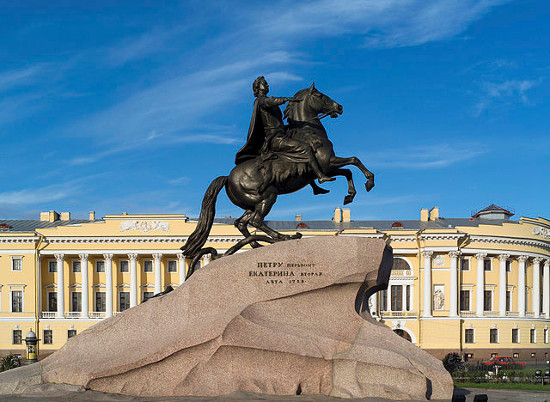
In Saint Petersburg, an equestrian statue of Peter the Great stands atop an enormous pedestal of granite. The statue was conceived by French sculptor Étienne Maurice Falconet, who envisioned the horse rearing at the edge of a great cliff under Peter’s restraining hand.

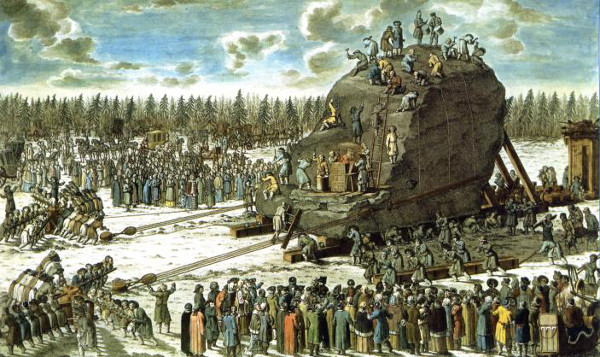
Casting the horse and rider was relatively easy; harder was finding a portable cliff. In September 1768 a peasant led authorities to an enormous boulder half-buried near the village of Konnaia, four miles north of the Gulf of Finland and about 13 miles from the center of Saint Petersburg. Falconet proposed cutting it into pieces, but Catherine the Great, who wanted to show off Russia’s technological potential, ordered it moved whole, “first by land and then by water.”

Incredibly, she got her wish. The unearthed boulder measured 42 feet long, 27 feet wide, and 21 feet high; even when trimmed by a third it weighed an estimated 3 million pounds. But it was mounted on a chassis and rolled along atop large copper ball bearings, a “mountain on eggs,” as stonecutters worked continuously to shape it. When they reached the Gulf of Finland it was transferred precariously to a barge mounted between two cutters of the imperial navy, which carried it carefully to the pier at Senate Square, where it was installed in 1770, after two years of work. The finished pedestal stands 21 feet tall.

“The daring of this enterprise has no parallel among the Egyptians and the Romans,” marveled the Journal Encyclopédique; the English traveler John Carr said that the feat astonished “every beholder with a stupendous evidence of toil and enterprise, unparalleled since the subversion of the Roman empire.” It remains the largest stone ever moved by man.

https://commons.wikimedia.org/wiki/File:Thunder_Stone.jpg

11 Nov 12:55

Prompt directory shortening

by Tom Ryder

The common default of some variant of \h:\w\$ for a Bash prompt PS1 string includes the \w escape character, so that the user’s current working directory appears in the prompt, but with $HOME shortened to a tilde:

tom@sanctum:~$
tom@sanctum:~/Documents$
tom@sanctum:/usr/local/nagios$

This is normally very helpful, particularly if you leave your shell for a time and forget where you are, though of course you can always call the pwd shell builtin. However it can get annoying for very deep directory hierarchies, particularly if you’re using a smaller terminal window:

tom@sanctum:/chroot/apache/usr/local/perl/app-library/lib/App/Library/Class:~$

If you’re using Bash version 4.0 or above (bash --version), you can save a bit of terminal space by setting the PROMPT_DIRTRIM variable for the shell. This limits the length of the tail end of the \w and \W expansions to that number of path elements:

tom@sanctum:/chroot/apache/usr/local/app-library/lib/App/Library/Class$ PROMPT_DIRTRIM=3
tom@sanctum:.../App/Library/Class$

This is a good thing to include in your ~/.bashrc file if you often find yourself deep in directory trees where the upper end of the hierarchy isn’t of immediate interest to you. You can remove the effect again by unsetting the variable:

tom@sanctum:.../App/Library/Class$ unset PROMPT_DIRTRIM
tom@sanctum:/chroot/apache/usr/local/app-library/lib/App/Library/Class$
08 Nov 15:02

The Mysterious World of the Deaf by Gavin Francis | The New York Review of Books

by Lydia Denworth

Dutton, 390 pp., $26.95

francis_1-112014.jpg René Burri/Magnum Photos Deaf-mute children learning to hear through their vibratory senses at a school in Zurich, 1955

At medical school I was taught by Dr. Nimmo, an elderly Edinburgh physician who wore a pinstripe suit, carried a heavy gold watch, and whose combed white hair was held in place with pomade. If he realized that a patient was hard of hearing he’d take his stethoscope from his jacket pocket and ceremoniously place the earpieces into their ears. Taking the other end in his hands, he’d speak slowly and clearly into it as if into a microphone. The focus and amplification of the stethoscope meant that he didn’t have to shout loudly, and the privacy of the patient on the open ward was preserved. For the most part his patients found the role reversal hilarious; occasionally the medical students did too. I remember him turning to one student who was sniggering a little too conspicuously. “There’s nothing funny about trying to communicate properly,” he said. “Use whatever means you can to understand and be understood.”

In my clinical practice I still make use of his advice when meeting patients who are hard of hearing. Most of those who try on my stethoscope appreciate it, and yes—most of them find it funny. It’s less funny overcoming communication difficulties with those who are profoundly deaf. If a Sign interpreter is not available, and the patient’s lip-reading skills are not excellent, we cover pages of paper with written questions and answers. Even so, much of the breadth and subtlety of the consultation is lost.

One of my profoundly deaf patients is Miss Black, a woman in her early fifties whose lip-reading skills are good. But our appointments still take much longer than if she were hearing. Often we don’t have the luxury of discussing her emotional well-being, but focus on her physical complaint, diagnosis, and a plan for treatment. She lives alone on welfare benefits with little involvement in what the deaf sometimes call the “hearing world,” though she has many friends among the Edinburgh deaf community. Recently I needed to talk to her without the time pressure of the clinic, so I pedaled down from the office to visit her at home.

Beside a button on her front door was a sign: “Press Hard—Don’t Knock.” The wire was connected to a flashing light inside rather than a bell. The walls of her small apartment were covered with pictures, and the floors with toys for her cats. Among her small collection of books she had a medical encyclopedia; she told me she combs it for clues before our appointments. After years of encounters with doctors she’s learned that it’s quicker to propose her own ideas about diagnosis, and suggest her own treatments.

Outside there were workmen digging up the road. I was irritated by the pneumatic drills but of course they made no difference to her. With the luxury of time she began telling me about her earliest memories: they were of frustration and despair, being treated as if she was stupid (in her file I’d seen letters that referred to her as “retarded”). As a little girl she didn’t understand why people were so often angry with her, and why they were moving their mouths. At age four, it having been realized that she was deaf, she was sent to a special school to learn Sign. “And when did you start learning to lip-read?” I asked her. She held up eight fingers. “Lip-reading hard,” she said with the distinctive, hard-won voice many deaf people have. She held her hand low, at about the height of a four-year-old, and put two bunched fists to her eyes to symbolize weeping. Then she shifted her hand higher, to about the height of an eight-year-old, and began to nod and smile. “At eight can understand.”

Experts in language acquisition say that the first three years of a child’s life are the most crucial in developing the conceptual frame to build fluent language. By the time Miss Black began to learn language (and Sign language is as delicate, sensitive, and complete a means of expression as any spoken language) that critical period was past. She didn’t say as much, but she’d been living with the consequences of that delay ever since. It was there in her lack of involvement with the hearing world, in her inability to find satisfying work, in the clumsy handwriting with which she communicated.

In I Can Hear You Whisper Lydia Denworth makes what she calls “an intimate journey through the science of sound and language.” That critical window of language acquisition, so detrimental to Miss Black, was of immense significance to Denworth: when her son was about a year old she learned that he was very hard of hearing and might soon be deaf. She had noticed something was amiss because the development of his language was much slower than it had been for her other two sons.

Children born deaf of deaf parents have no language delay at all: being exposed to Sign from birth enables a baby to develop as full a vocabulary as the hearing, not just to describe the world, but to manipulate abstract concepts. As Homo sapiens—the “thinking” or “knowing” man—it’s through language that we flourish, because language has provided us a tool kit for abstract thought. Children born deaf of hearing parents are at a disadvantage in this respect: either they must learn to lip-read (which is slow and difficult, as Miss Black pointed out) or they must be exposed to Sign from as young an age as possible (Sign is actually easier to acquire than speech: children can be fully fluent by three).

Over the last twenty-five years there has been an eruption of interest in a third possibility: the insertion of cochlear implants. It’s now common in countries with well-funded health care systems for deaf children to be fitted with one or two of these devices (in Australia, 80 percent of deaf children have them). Having one on each side improves comprehension in a noisy environment, as well as sound localization. However, 15 to 20 percent of recipients gain little benefit from them and, contrary to some claims, they don’t reproduce normal hearing. Instead they transmit a simplified, broken-down representation of the acoustic world (one of the technology’s pioneers, Michael Merzenich, likens the signal from implants to “playing Chopin with your fist”). But despite these limitations, they have the potential to magnificently enhance the understanding and acquisition of spoken language.

In Europe and the United States, the eighteenth and early nineteenth centuries saw the rapid spread of schools for the deaf, each teaching the various national languages of Sign. Many deaf individuals of that period wrote eloquently about the liberation they’d experienced through Sign. But during the late nineteenth century the emphasis in education shifted from learning Sign to the acquisition of spoken language through lip-reading and speech.

That shift, perhaps begun with the best of intentions,1 was a disaster for the deaf community. Speaking and lip-reading take years of concentrated work that squeezes out education in most other areas of human proficiency and knowledge. By the mid-twentieth century educational attainment among the deaf had plummeted, literacy skills of deaf adults were poor, and the deaf were significantly more marginalized than they had been a century earlier. Miss Black was fortunate to learn Sign when she did.

Andrew Solomon’s 1994 article in The New York Times Magazine, “Defiantly Deaf,” illuminated just how damaging the emphasis on oral skills could be. He quotes Jackie Roth, a woman educated in an oralist environment:

We felt retarded…. Everything depended on one completely boring skill, and we were all bad at it…. We spent two weeks learning to say “guillotine” and that was what we learned about the French Revolution. Then you go out and say “guillotine” to someone with your deaf voice, and they haven’t the slightest idea what you’re talking about.

If the purpose of deaf education was to enable those of us who can’t hear to take a meaningful part in national and cultural life, it was failing.

During the 1980s deaf individuals began to assert their rights as members of a distinct and valuable community. Books like When the Mind Hears2 and Deaf In America3 framed a debate about how the hearing appreciated (or more poignantly, didn’t appreciate) those who couldn’t hear, and called on deaf individuals to take pride in their uniquely visual culture. Political rights and accommodations were won, and the capitalized “D” in “Deaf” was adopted as a marker of pride in a cultural identity.

Cochlear implants, which became available in experimental form just as Deaf identity was gathering confidence, were for many years seen as an insult—in some quarters they still are. If deafness is a difference, rather than an impairment, why implant wires into the brains of children (though the wire goes into the cochlea—a sense organ—not the brain)? Why, for that matter, consider deafness a “health care” issue at all? At the shrill end of the debate, parents who wanted implants for their children were branded child abusers, while at the other end, cochlear implants were hailed as a miracle of biblical proportions.

We’re in highly emotive territory here, sacred to some, debating cultural identity, disability and enablement, and how a society accommodates diversity. We have to proceed with care. But that can be difficult when a baby or toddler is thrown into the debate, her clock for language acquisition ticking, and her parents asked to make a decision that would test the wisdom of Solomon: to implant, or not to implant. “Deafness as such is not the affliction,” Oliver Sacks has pointed out, “affliction enters with the breakdown of communication and language.” How then to safeguard your child’s best chance of acquiring language and enabling communication? Denworth’s book explores the science surrounding that question. It is a personal memoir as well as a journalist’s inquiry by a mother who urgently needed to find her own answer.

Through cataract surgery, the blind had been made to see; could the deaf be made to hear? If the deaf could be made to hear, so the majority argument went, then the debate over the relative merits of oralism and Sign would become redundant. The earliest physicians had tried knocking deaf people on the ear with a stone, and since that didn’t work, later ones for the most part gave up on trying to “fix” deafness. That changed during the 1950s in Paris, when a surgeon called Charles Eyriès implanted an induction coil into the auditory nerve of Monsieur G., who’d been rendered deaf through surgery to remove tumors near his ears. When the coils were electrified G. heard a sound like cloth ripping, but little else. A Los Angeles ear surgeon, Bill House, heard of Eyriè’s experiment and through working on cadavers in the morgue figured out a more refined system: feeding a fine electrode wire into the snail-shaped cochlea of the ear. His initial trials, in 1961, were promising.

francis_2-112014.jpg Science Photo Library/Corbis A section of the outer and inner ear showing a cochlear implant, a prosthetic hearing device. Sound from an external microphone (behind the external ear, top left) is transmitted by wires to electrodes that are implanted into the cochlea (the coil at right). The electrodes transmit sound as electrical impulses to the auditory nerve and into the brain, allowing the person to hear.

The origins of our inner ear lie hundreds of millions of years back in evolution, when primitive fish began to develop hollows in the skin that were sensitive to waves of pressure from water around them, as well as to water’s movement as they pitched and rolled. With time the nerves became more refined, the hollows became tubes of seawater, and those tubes eventually closed off and buried themselves in the head. Further on in evolution, bones that were originally related to the jaw migrated and miniaturized, becoming the amplifying bones of the ear. The tubes dedicated to sensing rotational movement became our semicircular canals (balance), and it’s theorized that parts involved in sensing the pressure waves became our cochleas (hearing). In the composition of their salts, the fluids of our inner ear still carry the memory of that primordial ocean.

Within the human cochlea is a thin sensitive membrane, around thirty to thirty-five millimeters long, wound into a spiral and bathed in this salty fluid. This membrane resonates with sound, sensing from high to low frequency along its length, while associated nerve cells convey that resonance to the brain. To describe it simplistically, a cochlear implant is a series of very fine electrodes that lie along the length of the membrane. Sound is coded in a receiver behind the ear (often held on by magnets) and transmitted to electrodes, which then stimulate the nerve cells along the membrane in a way broadly analogous to sound. After William House’s first device in the early 1960s, during the next three decades groups in California, Melbourne, Vienna, and Utah worked almost independently on the research problem of how to optimize this ostensibly simple, but devilishly complicated, idea.

As an accomplished investigative reporter as well as a mother anxious to choose the best for her son, Denworth has interviewed most of the pioneers of this technology. Her inquiry takes her into a comprehensive examination of auditory physiology, the science of phonation, or how speech is produced, and the electronic coding of speech. A healthy cochlea can distinguish thousands of tones, but modern cochlear implants have just twenty-two channels. What’s astounding is that these devices, which reduce the complexity and plurality of our acoustic world to just twenty-two stimuli, are so successful in making speech comprehension possible. More astounding still is that each pioneering group developed a different coding system for sound, but had broadly comparable success. It seems you can send widely divergent signal patterns down a wire and the brain still makes sense of them. To understand more about why that might be, as well as what drives the urgency about whether to implant, we have to move from the cochlea down the acoustic nerve and into the brain.

Once they pass the cochlear nuclei—the first relay station for auditory information within the brainstem—nerve impulses from each side are dovetailed and compared; they move in parallel tracks up to the midbrain and then the cerebral cortex. It’s the midbrain connections that make us startle at a bang—a primitive, preconscious level of reaction; but it is the cerebral cortex that integrates those impulses into our experiential world. The cortex “learns” surprisingly quickly how to make sense of a new sound—if that sound is repeated and has meaning. This learning can occur at any age, but it’s in children that learning occurs most efficiently, and children that urgently need language to conceptualize the world.

In the mid-1990s, when I took a degree in neuroscience, the neuronal plasticity responsible for learning was thought to occur at the level of the synapse. As technology improved so did the resolution of neuroscience’s discoveries: it’s now suspected that learning occurs at the level of dendritic spines—tiny portions on the receiver tendrils on each neuron. My contemporaries were limited to MR (magnetic resonance) and PET (positron emission tomography) if the location of brain activity was to be examined, and EEG (electroencephalography) if the timing of brain activity was under question. It wasn’t possible then to get information on both location and timing simultaneously; but neuroscientists now have MEG (magnetoencephalography) scanners that resolve this problem.

In the sixteenth century it was believed that magnets had souls, that swallowing them would give you eloquence, and that their property of “action at a distance” was related to the attraction of love. Now we know that eloquence and love, as they are expressed in the brain, do create magnetic fields—each neuron, as it fires, generates a minuscule magnetic field around the axis of its impulse. Imagine these fields as the ripples on a pond after throwing a stone, then imagine the undulating surface sheen of the water stripped off and wrapped around your head. Haloes of magnetic fields ripple from our brains as we talk, think, experience the world.

MEG scanners pinpoint these almost impossibly small magnetic fields with amazing accuracy. They have shown us that only fifteen milliseconds after hearing a sound an impulse has reached the brainstem, and only a few milliseconds later it’s in the cortex. But the computation involved in understanding sounds is much slower: it takes sixty to one hundred milliseconds before large assemblies in the auditory cortex are activated, essentially “looking up” each sound. If the sound is familiar this process is quicker and generates less of a ripple, because the brain does less work to comprehend it. At around two hundred milliseconds conscious awareness begins, but isn’t lexically understood until after more like three or four hundred milliseconds. When we consider languages worldwide, we find that syllables last between 150 and 200 milliseconds—a constant that appears related to the physiology of the brain. It takes us almost six hundred milliseconds—over half a second—to recognize unexpected words, discordant tones in music, or make the looping connections necessary to make sense of discourse. These revelations emphasize just how much our brains do not passively sense the world; they weave it from threads of sensory information, moment to moment.

Applying the revelations from MEG scanners to the question of how children learn and acquire language has shown an intimate link not just between sound and learning to speak, but sound and literacy. Repetition, rhyme, and rhythm are all crucial in this process; the genius of Dr. Seuss has a basis in neurobiology. Like the beating down of paths through a garden of briars, some pathways through the tangle of neuronal connections are strengthened by repetition, while others, which are less used, become obsolete.

Late language acquisition is much clumsier than in childhood because many potential connections have already been lost, so adults must involve higher and slower brain centers. Training your ear, and improving the focus of your attention, actually speeds up the process of silent reading. Another astonishing finding is that acquiring Sign from babyhood improves later reading speed in English. Lydia Denworth decided to get a cochlear implant for her son because, since she was not a native Signer, it gave him the best chance of acquiring language quickly. That he is now thriving in mainstream schooling is, from her perspective, ample vindication of her and her husband’s decision.

Early in her inquiry she meets hearing children of deaf adults, and sees how uniquely placed they are to pass between the worlds of the deaf and hearing, “but they absorb some of the pain of their parents with each border crossing.” Toward the end she meets Sam Swiller, a deaf man who had an implant successfully inserted as an adult—forcing me to consider asking some of my own patients, such as Miss Black, if they’d like to be put forward for consideration of one. “The wall between the hearing world and the deaf world is getting shorter,” Swiller says. “It’s a more porous border.” When Denworth asked him why he went for an implant, despite being fully involved in the Deaf community and by then fluent in Sign, he answered, “Life is difficult and you need every type of weapon in your quiver, every resource possible.”

I Can Hear You Whisper is a triptych of reportage, popular science, and memoir. As reportage into the controversy surrounding cochlear implants it’s both timely and rigorous, though Denworth admits her own pro-implant bias. As popular science it’s enthralling, offering a window onto the latest research into perception, language, and the weaving of conscious awareness. As a memoir it is tender and involving: accompanying Denworth and her son on their journey, and imagining making the same journey with my own children, I was often deeply moved. To implant or not to implant is the question embedded in the fabric of this book, and there are no easy answers. But I remember the wisdom of my old teacher at medical school, as he placed his stethoscope gently into hard-of-hearing patients’ ears: “Use whatever means you can to understand and be understood.”

1 Some historians of Deaf culture can be less generous: for Harlan Lane and others the preference of speech over Sign was led by fear of difference rather than a desire to promote the greater involvement of the deaf in society. 

2 Harlan L. Lane, When the Mind Hears: A History of the Deaf (Random House, 1984); reviewed by Oliver Sacks in these pages, March 27, 1986. 

3 Carol Padden and Tom Humphries, Deaf in America: Voices from a Culture (Harvard University Press, 1988). 

Bookmarked at brandizzi Delicious' sharing tag and expanded by Delicious sharing tag expander.
07 Nov 03:11

Médicos fazem primeiro transplante com 'coração morto'

A máquina batizada de 'coração em caixa', que permitiu aos médicos manter o coração próprio para transplante

Cirurgiões na Austrália realizaram o primeiro transplante cardíaco usando um coração tecnicamente morto.

Os corações usados em transplantes normalmente são retirados de pacientes com morte cerebral, mas ainda com batimentos cardíacos.

Desta vez, porém, os médicos do St Vincent's Hospital, em Sydney, ressucitaram e transplantaram órgãos que haviam parado de bater até 20 minutos antes.

A técnica envolveu uma máquina que os médicos batizaram de "heart-in-a-box" (coração em caixa), que mantém o órgão aquecido. Os batimentos são então restaurados e fluidos e nutrientes são injetados para reduzir o dano muscular.

A primeira paciente a receber um transplante usando a técnica foi Michelle Gribilas, de 57 anos.

"Agora sou uma pessoa totalmente diferente", disse a mulher, que recebeu o coração dois meses atrás. "Me sinto como se tivesse 40 anos. Tenho muita sorte."

Desde então, duas outras cirurgias semelhantes foram realizadas.

A equipe responsável pelos experimentos estima que a técnica do "coração em caixa", que está em testes em todo o mundo, pode elevar em até 30% o número de vidas salvas por transplantes, devido à maior disponibilidade de órgãos.

"Esse avanço representa um passo na redução da falta de órgãos", disse o chefe da unidade de transplantes do hospital St Vincent's, Peter MacDonald.

Mais órgãos

Diferentemente de outros órgãos, o coração não é aproveitado após a chamada morte circulatória – quando cessam os batimentos cardíacos. O órgão é retirado e mantido no gelo por até quatro horas antes da operação.

Diversos métodos de aquecimento e fornecimento de nutrientes são usados para manter outros órgãos, como o fígado e os pulmões, próprios para transplante.

Leia mais: Técnica triplica tempo de preservação de órgãos para transplante

Esta máquina mantém o fígado vivo à temperatura normal do corpo

O diretor médico de transplantes do sistema de saúde pública do Reino Unido, James Neuberger, disse que o uso de máquinas neste campo "é uma oportunidade de melhorar o número e a qualidade de órgãos disponíveis para o transplante".

Mas ele disse que "ainda é muito cedo para estimar quantas vidas podem ser salvas por transplantes a cada ano se essa tecnologia for adotada como prática padrão no futuro".

A Fundação Britânica para o Coração descreveu a técnica como "um desenvolvimento significativo".

Bookmarked at brandizzi Delicious' sharing tag and expanded by Delicious sharing tag expander.
07 Nov 03:11

Miséria para de cair no país e ainda atinge 12 milhões de pessoas

RIO E RECIFE - O Brasil conseguiu acabar com a fome, mas ainda precisa lutar contra a miséria. Pouco depois de o Fundo das Nações Unidas para a Alimentação e a Agricultura (FAO) informar que o percentual de pessoas com insegurança alimentar aguda chegou a 1,7%, percentual considerado erradicação, a miséria parou de cair no país. Após uma década de queda sistemática da pobreza extrema, os dados da última Pesquisa Nacional por Amostra de Domicílios (Pnad) mostraram que ela passou de 6,1% para 6,2% da população no último ano. Em que pese ser considerada estabilidade estatística pelos pesquisadores, 422 mil pessoas foram empurradas para a miséria e passaram a integrar um grupo que hoje soma 12,531 milhões.

Para Andrezza Rosalém e Samuel Franco, pesquisadores do Instituto de Estudos do Trabalho e Sociedade (Iets), o que explica a interrupção da melhora para os mais excluídos da sociedade é o mercado de trabalho. Enquanto na média, as taxas de desemprego estão em mínimas históricas (em torno de 6%), para os mais vulneráveis, a estagnação da economia já pesou. A pedido do GLOBO, os pesquisadores traçaram um mapa de onde estão e quem são os miseráveis no país. A taxa de desemprego dos mais pobres subiu de 25,5%, em 2012, para 30,4%, em 2013. Enquanto 43,8% dos trabalhadores no país são informais, entre os miseráveis essa é a regra: 96% vivem sem proteção social.

Outra diferença foi a renda, que, na média, ainda acumula crescimento real, mas recua entre aqueles em pobreza extrema. Entre os miseráveis que trabalhavam, o salário caiu de R$ 129,7 para R$ 123,9. Nessa parcela, o orçamento das famílias era composto sobretudo por outras rendas (transferências, como Bolsa Família), e o rendimento no domicílio dividido pelos moradores era de R$ 58,5, em 2013, abaixo dos R$ 62,2, de 2012. O grupo dos 5% de brasileiros mais pobres viu sua renda encolher 11%.

— Para quem estava ocupado, houve perda de poder de compra afetada pela inflação. Essa população é mais vulnerável e sente de imediato o impacto da desaceleração econômica — diz Franco.

INFOGRÁFICO: Veja o mapa da miséria no Brasil

Os pesquisadores consideram miserável quem tem renda de até R$ 123, um patamar acima daquele usado pelo governo, de R$ 70, em 2013. Cada pesquisador trabalha com uma linha de extrema pobreza. Segundo Andrezza e Franco, apesar de o Nordeste concentrar mais da metade da pobreza extrema de todo o país, 56,5%, houve queda da miséria na região. Em 2012, 59,2% estavam nessa condição. A Região Norte também teve recuo de 14,2% para 13,8% na participação de extremamente pobres no país.

Segundo o trabalho de Andrezza e Franco, o maior aumento dos miseráveis ocorreu na Região Sudeste, que respondia por 18,3% dos extremamente pobres do país e, agora, concentra 20,6% do grupo. Das 422 mil pessoas que entraram na linha da miséria no ano passado, 282 mil estavam, sobretudo, na área urbana de São Paulo.

Os miseráveis têm acesso precário a serviços, mas aumentaram a sua escolaridade. Ao contrário da mãe, Janecleide Fernandes, de 18 anos, sabe ler e estudou até a quinta série. Isso não impediu a moradia precária no Recife. Ela mora com o filho Leonardo, de 3 anos, numa comunidade quase invisível, fincada em pleno manguezal, entre duas pontes que dão acesso aos bairros do Pina e Boa Viagem, na Zona Sul da capital.

As casas têm tábuas irregulares, que margeiam becos estreitos sobre pedaços velhos de madeira, sem direito a banheiro, água encanada nem ligação oficial de luz elétrica. Para se ter acesso à comunidade, é preciso escalar uma mureta da ponte e subir uma escada enterrada entre a lama e as “ruas” de madeira que dão acesso às palafitas onde moram catadores de sururu, marisco disputado por restaurantes da capital. A casa de Janecleide tem dois pequenos cômodos, não possui latrina. Os moradores carregam baldes d’água tirada de uma mangueira comum.

— Aqui é assim, cada um no seu chiqueiro. Quem tem filho, tem que ter o seu lugar para cuidar dele — diz ela, que trabalha desde os 12 anos de idade e ganha hoje menos de meio salário mínimo por mês para a família.

O fato de a miséria ter parado de cair em 2013 não significa retrocesso. Ao longo dos últimos dez anos, a pobreza extrema caiu ano após ano. Em 2004, eram 15,4% de miseráveis. No ano passado, a taxa era de 6,2%. Para estudiosos, com um patamar menor de miseráveis, fica cada vez mais difícil encontrá-los. O governo estima que 150 mil famílias ainda precisam ser alcançadas pelos programas sociais e lançou uma busca ativa para tentar localizá-las.

Para Sonia Rocha, especialista em desigualdade e pobreza do Iets, e que utiliza outra linha de pobreza extrema, a maior dificuldade está no combate à miséria na área rural. Pelos cálculos da economista, um quinto da população do Maranhão rural é miserável. Ela lembra que a proporção de pessoas vivendo na extrema pobreza na área rural do país é o dobro da média para todo o Brasil. Também pelos cálculos da economista, houve aumento do percentual de miseráveis de 4,1%, em 2012, para 4,7% (sem o Norte rural), no ano passado, a maior alta desde 2008. A pesquisadora lembra que a pobreza extrema está ligada à presença de crianças na família: em 2013, 40% dos miseráveis tinham até 14 anos.

— As políticas de transferência do governo são boas, mas não são capazes de zerar a miséria. Quando chega nesse nível muito baixo, é preciso, além da política de renda, associar outras políticas — afirma ela, que defende um programa de creches nas áreas mais carentes.

AUMENTO DOS SEM RENDA INFLUENCIOU

O economista Rafael Osório, assessor da Secretaria de Assuntos Estratégicos (SAE), chegou a antever a superação da miséria em 2013, com a complementação de renda para famílias assistidas pelo Bolsa Família. Em seus cálculos, Osório viu um aumento em 2013 no total de miseráveis. Para ele, o principal fator foi o maior número de pessoas que se declararam com “renda zero”. Este grupo inclui os que recebem pelo trabalho apenas moradia, alimentação, roupas, vales-refeição ou transporte e medicamentos. Não são consideradas as transferências de renda. Quando isso ocorre, a renda média de quem está abaixo da linha de pobreza é “puxada” para baixo.

— Estamos estudando a Pnad para entender o que aconteceu. O baixo crescimento e a inflação ajudaram (a aumentar o total de miseráveis), bem como o fato de que o salário mínimo, por estar em patamar já bastante elevado, só tem impacto para as linhas de pobreza mais altas — diz Osório.

O Ministério do Desenvolvimento Social disse que não se pronunciaria sobre os dados do Iets porque não teve acesso à pesquisa completa.

Bookmarked at brandizzi Delicious' sharing tag and expanded by Delicious sharing tag expander.
07 Nov 03:11

Scientists reverse ageing process in mice; early human trials showing 'promising results' - ABC News (Australian Broadcasting Corporation)

Updated November 04, 2014 21:01:02

Scientists from Harvard and the University of New South Wales say they have discovered how to reverse the ageing process.

The research has focused on mice, but early clinical trials have also been conducted on humans.

The scientists said they switched youthful genes on and older genes off, using naturally occurring proteins and molecules.

Professor of genetics at Harvard and UNSW, David Sinclair, led the research team.

"We've discovered genes that control how the body fights against ageing and these genes, if you turn them on just the right way, they can have very powerful effects, even reversing ageing - at least in mice so far," he said.

"We fed them a molecule that's called NMN and this reversed ageing completely within just a week of treatment in the muscle, and now we're looking to reverse all aspects of ageing if possible."

Professor Sinclair said the breakthroughs could be used to develop drugs to restore youthfulness in human cells.

"We've gone from mice into early human studies actually. There have been some clinical trials around the world, and we're hoping in the next few years to know if this will actually work in people as well," he said.

The clinical trials were small studies but showed promising results in humans, he said.

"They show that the molecules that extend lifespan in mice are safe in people; they seem to be anti-inflammatory, so they might be useful against disease's inflammation, like skin redness or even inflammatory bowel disease," he said.

"Eventually we want these molecules to be taken by many people to prevent diseases of ageing and make them live longer, healthier lives."

Professor Sinclair was named by Time Magazine as one of most influential people in the world.

He has been taking the red wine molecule, resveratrol, for a decade.

"I've been taking resveratrol for the last 10 years because it seemed to be very safe," he said.

"I think the risks are, for myself, worth it, though I don't ever promote it.

"But the more research that I see done, and there are now thousands of papers on it, I think that there's a good chance that it'll have some benefit."

Professor Sinclair said the latest discovery could, one day, be seen in the same light as antibiotics.

"Some people say it's like playing God, but if you ask somebody 100 years ago, what about antibiotics? They probably would have said the same thing," he said.

"Some people worry about big advances in technology and medicine, but once it's adapted and it's natural for people to live until they're 90 in a healthy way ... we'll look back at today like we do at the times before antibiotics when people died from an infected splinter."

Topics: medical-research, health, science-and-technology, older-people, australia, nsw, sydney-2000, united-states

First posted November 04, 2014 16:55:24

Bookmarked at brandizzi Delicious' sharing tag and expanded by Delicious sharing tag expander.
07 Nov 03:10

The strange, weird geopolitics of time


Daylight saving time by country. Blue means "Northern hemisphere summer time" is used, while orange means "Southern hemisphere summer time" is used. Dark gray is countries who have never used DST, while light gray means they once used it but do not any longer. (TimeZonesBoy/Wikipedia)

On Sunday morning, Americans awoke to an extra hour, the result of the country's adherence to daylight saving time. With it came a reignited debate. Wonkblog's Chris Mooney was among those who criticized the practice, writing that "turning our clocks back Sunday makes no sense," and argued that the original logic that made America switch to daylights saving time was flawed.

Whatever you think of America's daylight savings debate, it's a useful reminder that the time we set our clocks to are not set in stone. It's decided upon by politicians — and all around the world, it causes controversy.

For a start, while more than 70 countries use some form of daylight saving time (it is particularly popular in North America and Western Europe), the rest of the world doesn't. And among those countries that do use it, there are some strange, unexplainable differences: In Europe, for example, clocks are changed on the last Sunday of March and on the last Sunday of October, one week earlier than the U.S.

Those countries that regularly change their clocks often debate the logic of doing so. In Britain, for instance, the changing of the clocks has led to some quite significant controversy. One idea put forward by environmental groups has become known as "Single/Double Summer Time," and would require the U.K. to keep its clocks in "summer time" during winter. The clocks would then go forward one extra hour in summer, for what would be known as "double summer time."

The U.K. has come fairly close to changing its policy. In 2010, one politician put forward a bill that would have required the government to investigate whether moving the clock forward for part of or all of the year was actually beneficial to the country. It proved remarkably controversial, and while the bill saw some backing from Prime Minister David Cameron, it did not make it past the House of Commons before the allocated time and thus was abandoned.

Other countries that have used daylight saving in the past have turned their back on it. In 2011, Russia's then-President Dimitry Medvedev pushed through a plan to end the practice in Russia, which the country had observed since the Soviet era, and shift to permanent summer time. Medvedev cited a medical report that said that the number of heart attacks increase by 1.5 times and the rate of suicides grows by 66 percent in the period when clocks were changed.

However, there were problems. Some residents complained that it meant that the sun would be rising at 9 a.m. in certain locations. Angry lawmakers cited health data that suggested that the time change was causing damage to Russians' health. In July, Vladimir Putin, who had returned to the president's office, announced that Russia would do away with permanent summer time. Instead, Russia would go to permanent winter time.

It was a politically notable event. Putin had in effect destroyed one of the few real legacies of his protege Medvedev's time in office. And along with the move to winter time, Putin also announced that there he would reintroduce two time zones that had been removed by Medvedev, pushing the country's total number of time zones from nine to 11.


Time zones around the world, as of October 2014. (TimeZonesBoy/Wikipedia)

Time zones may be an even more politically charged subject than daylight saving. While Russia may have the most time zones of any country in the world, a symbol of its grandiosity, other large countries don't bother with them at all. In 1918, for example, the nascent Republic of China established five time zones. However, in 1949, the new Communist government decided to reverse this: The entire country would have one time zone, and clocks would be set to Beijing time.

This causes some pretty obvious problems for cities far from Beijing. "In the summer, for instance, it isn’t uncommon in Ürümqi, Xinjiang's capital, to see people enjoying a beautiful sunset ... at midnight," Matt Schiavenza noted in the Atlantic last year. In practice, many in China's far west adopt an informal "Ürümqi Time."

China is not alone. India, another large country, has a single time zone, creating similar problems. In that country, some are now challenging the time zone hierarchy: Earlier this year, Assam, a northeastern Indian state, announced plans to shift its clocks one hour forward.

As my colleague Ishaan Tharoor has pointed out, this probably has a lot to do with nation building: Benedict Anderson, a leading modern theorist, listed the clock as one of the two most important inventions for modern European state-building (the other was the newspaper). By having one time zone in China and India, you strongly strengthen the idea that these are single nations with a unified people. It's worth noting that after Crimea voted to become part of Russia this year, it changed its time zone to Moscow time.

As problematic as such a practice might seem, the reality is that most of the world's time zones are "wrong" to some degree or another. Take a look at the map below, charted by Google engineer Stefano Maggiolo, which shows how far off some of the world's time zones are from what they should be, according to solar time.


The difference between solar time vs official time (Stefano Maggiolo)

As you can see, it's not just India and China who have some time zone issues: Virtually every nation does. Some of these are understandable — Argentina, which has significant economic ties with Brazil, follows the same time zone as the big cities in Brazil's east rather than the sparsely populated Brazilian regions. But why is the Russian city of Vladivostok, just north of Japan, two hours behind Japan?

So, perhaps America's adherence to daylights saving time doesn't make sense. Perhaps, the country should move to two time zones instead (one widely floated idea). But it's worth remembering that such a decision will no doubt be political and controversial. And evidence suggests that any way we do it, it may be imperfect.

Bookmarked at brandizzi Delicious' sharing tag and expanded by Delicious sharing tag expander.
07 Nov 03:10

Modelos e Gerações do Voto Eletrônico

1.      A polêmica - Modelos ou Gerações

      No julgamento da ADI 4543 no STF em outubro de 2013, a relatora, ministra Carmém Lúcia, inicou seu voto polemizando sobre qual seria a nomenclatura adequada para se referir aos diversos tipos de máquinas de votar existentes e em uso mundo afora.

      A ministra, que à epoca acumulava a presidência do TSE, repeliu a denominação de "gerações" para esses vários tipos, pleiteando que a designação por "modelos" seria mais correta.

      O uso da terminologia "gerações" foi proposta pelo prof. Pedro Rezende, da UnB e do CMInd, durante uma apresentação em audiência pública no TSE em julho de 2010.

      Foram apresentados os 3 modelos conhecidos (DRE, VVPAT e E2E) e denominá-los por "gerações" se justifica porque os três modelos descritos surgiram como evolução um após o outro, sempre para resolver algum problema do modelo anterior.

      Em todo o mundo onde se usa voto eletrônico, excluindo-se o Brasil, modelos da 1ª geração já foram abandonados devido a sua inerente falta de transparência e absoluta dependência do software.

      Apenas os membros da administração eleitoral brasileira e do Comitê Multidisciplinar do TSE relutam em adotar a expressão "geração", provavelmente porque ela revela com clareza que o modelo de urna eletrônica usado no Brasil até 2014, ainda de 1ª Geração, é o mais atrasado e já foi abandonado no resto do mundo.

2.      A 1ª Geração - DRE

      A primeira concepção de equipamentos eletrônicos de votação surgiu logo no início dos anos 90 e eram microcomputadores, onde cada voto era mostrado na tela para confirmação do eleitor e depois era gravado diretamente em algum arquivo na memória digital. No final da votação, o equipamernto faz a apuração eletrônica dos votos que depois deve ser transmitida, por alguma via digital, para a central de totalização.

      Por essa característica de gravação direta do voto, na literatura técnica internacional eram chamadas por "Direct Recording Electronic voting machine" (maquina de gravação eletrônica direta do voto), abreviadamente: DRE.

      Essa característica das máquinas DRE resulta que a confiabilidade do resultado publicado fica totalmente dependente da confiabilidade do software instalado no equipamento.

      Máquinas DRE foram usadas em eleições oficiais em 1991 na Holanda, em 1992 na Índia e em 1996 no Brasil. O modelo brasileiro chegou também a ser usado em alguns países latino americanos entre 2002 a 2006.


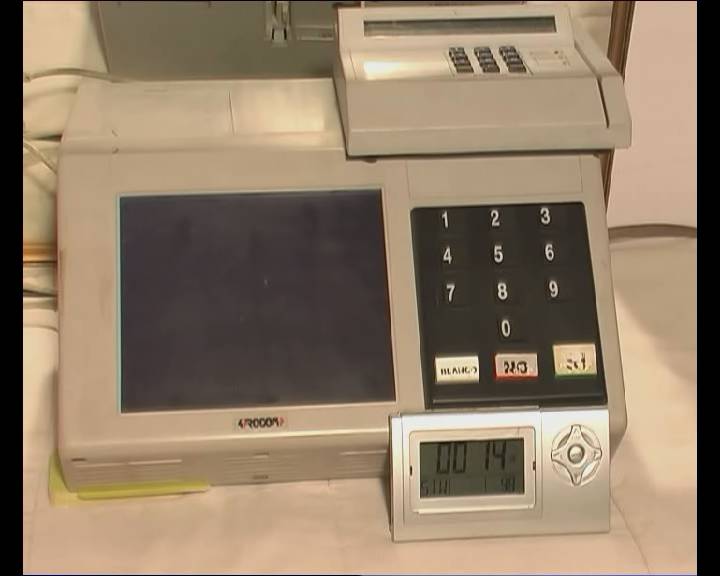
Urna DRE usada na Holanda até 2006


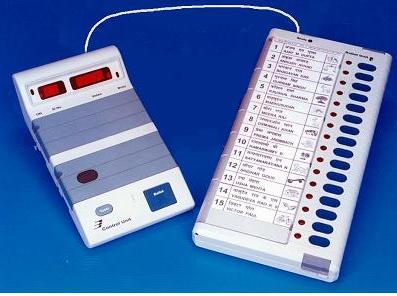
Urna DRE usada na Índia desde 1992


Urna brasileira modelo 96,
também usada no Paraguai em 2004/6


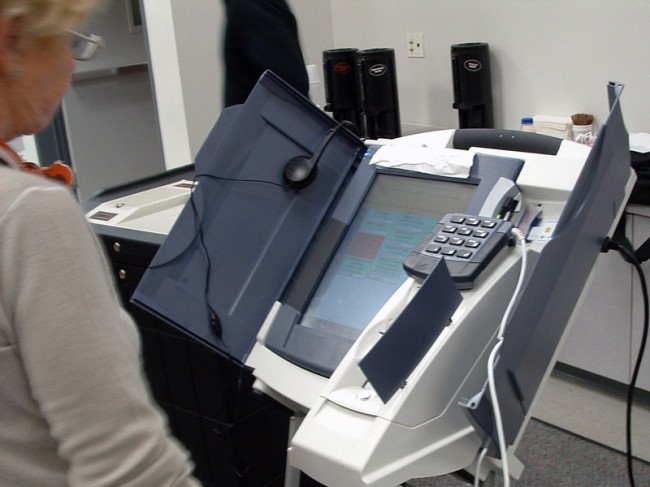
Urna DRE Diebold, usada nos EUA até 2006

      A absoluta dependência da confiabilidade do software nos modelos DRE encontrou muita resistência e a partir de 2004, na Venezuela, começou o fim do ciclo de vida desse modelo, que passou a ser substituido por outros modelos independentes do software.

      A seguir, entre 2006 e 2012, a Holanda, a Alemanha, os EUA, o Canadá, a Rússia, a Bélgica, a Argentina, o México, o Paraguai abandoraram o modelo DRE de 1ª Geração.

      Finalmente, em 2014, chegou a vez da Índia e do Equador adotarem modelos mais avançados, de maneira que restou apenas o Brasil ainda usando o modelo DRE de 1ª Geração em todo o mundo.

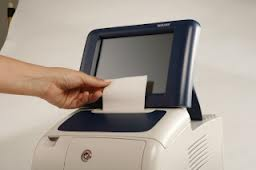
3.      A 2ª Geração - IVVR ou VVPAT

      A 2ª Geração de equipamentos de votar foi concebida a partir da tese de doutourado publicada em 2000 pela Ph.D. Rebecca Mercury.

      Na tese, foi proposta a possibilidade de auditoria contábil (Checks & Balances) da apuração eletrônica por meio da criação de uma segunda via de registro do voto, além do registro digital das máquinas DRE.

      Esse novo registro deveria ser gravado em meio independente que não pudesse ser modificado pelo equipamento de votação e deveria poder ser visto e conferido pelo eleitor antes de completar a sua votação.

      Por essas características, propôs o nome "Voter Verifiable Paper Audit Trail" (Documento de Auditoria em Papel Conferível pelo Eleitor), abreviadamente: VVPAT.

      Posteriormente, a literatura técnica adotou também o nome "Independent Voter Verifiable Record" (Registro Independente Conferível pelo Eleitor), abreviadamente: IVVR. No Brasil é comum se chamar de Voto Impresso Conferível pelo Eleitor - VICE.

      A principal característica de equipamentos com VVPAT (IVVR ou VICE) é que passam a ser independentes do software. O Registro Digital dos Votos (RDV) e a sua apuração eletrônica podem, neste caso, ser conferidos por ações contábeis de auditoria, independente do desenvolvedor do software e do administrador do sistema.

      Assim, em 2006, desenvolveu-se o Princípio da Independência do Software em Sistemas Eleitorais que, aos poucos, passou a ser exigido em todos os países que usam voto eletrônico, fora o Brasil.

      No Brasil, por força da Lei 10.408/02, em 2002 houve um teste com urnas com VICE, de 2ª Geração, mas a má vontade do administrador eleitoral brasileiro, que repele da ideia de um sistema eleitoral que possa passar por uma auditoria independente do seu controle, resultou numa experiência mal projetada e mal conduzida. O treinamento de eleitores e mesários foi menosprezado e o teste resultou em fracasso.

      Logo em seguida, em 2004, a Venezuela implantou equipamentos de 2ª Geração com VICE com todo sucesso, demonstrando que a proposta é perfeitamente viável, ao contrário do que afirma o TSE no Brasil.

      A partir de 2006, equipamentos de 2ª Geração, com voto impresso ou escaneado, passaram a substituir os equipamentos de 1ª Geração em uso.


Urna Smartmatic, com VVPAT, usada na Venezuela desde 2004


Urna Indra, com VVPAT, fabricada na Espanha desde 2006


Urna, com VVPAT, usada no México desde 2012

4.      A 3ª Geração - E2E

      A partir de 2008, várias iniciativas começam a apresentar sistema eleitorais independentes do software que aprimoravam e/ou facilitavam os procedimentos de auditoria, tanto do registro do voto, como de sua apuração e totalização.

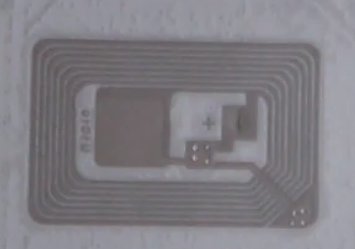
      Na Argentina foi apresentada a ideia de uma cédula eleitoral com um chip de radio-frequência (RFID) embutido, onde, num só documento, estão presentes o registro digital e o registro impresso do voto.

      Esse documento é chamado de "Boleta de Voto Electrónico" (BVE) e propicia muita facilidade para o eleitor e para os fiscais de Partido poderem conferir o registro do voto, a apuração e a transmissão dos resultados.

          
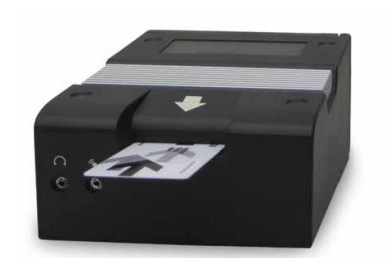
Boleta de Voto Electrônico (BVE) e o chip RFID embutido


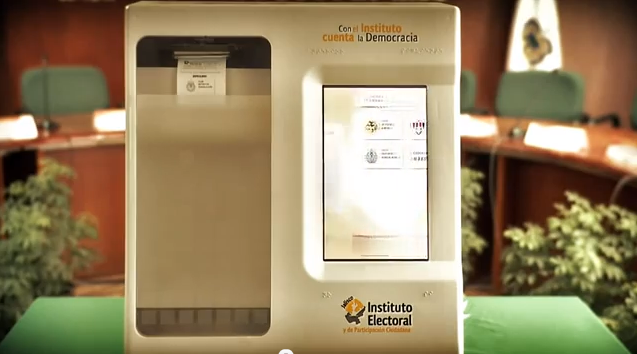
Maquina VotAR, com BVE, usada na Argentina desde 2010

      Em 2011, foi publicado o 2º Relatório CMind de observação da eleição na Província del Chaco na Argentina e que apresenta várias tabelas comparativas do funcionamento e desempenho desse sistema de 3ª Geração em relação ao sistema brasileiro de 1ª Geração.

      Em 2009, no município de Tacoma Park, nos EUA, foi testado o sistema Scantegrity II, onde o voto criptografado é impresso e entregue ao eleitor, que poderá verificar posteriormente o seu processamento, sem, no entanto, conseguir revelar o conteúdo do seu voto. Logo em seguida, em Israel foi apresentado o Wombat, muito parecido ao Scantegrity.

      As carecterísticas comum de todos esses sistemas de 3ª geração é a independência do software e a grande facilidade de auditoria independente, de ponta a ponta, no processamento digital do voto. Por esse motivo, os sistemas de 3ª geração são designados com "End-to-End verifiability" ou, E2E.

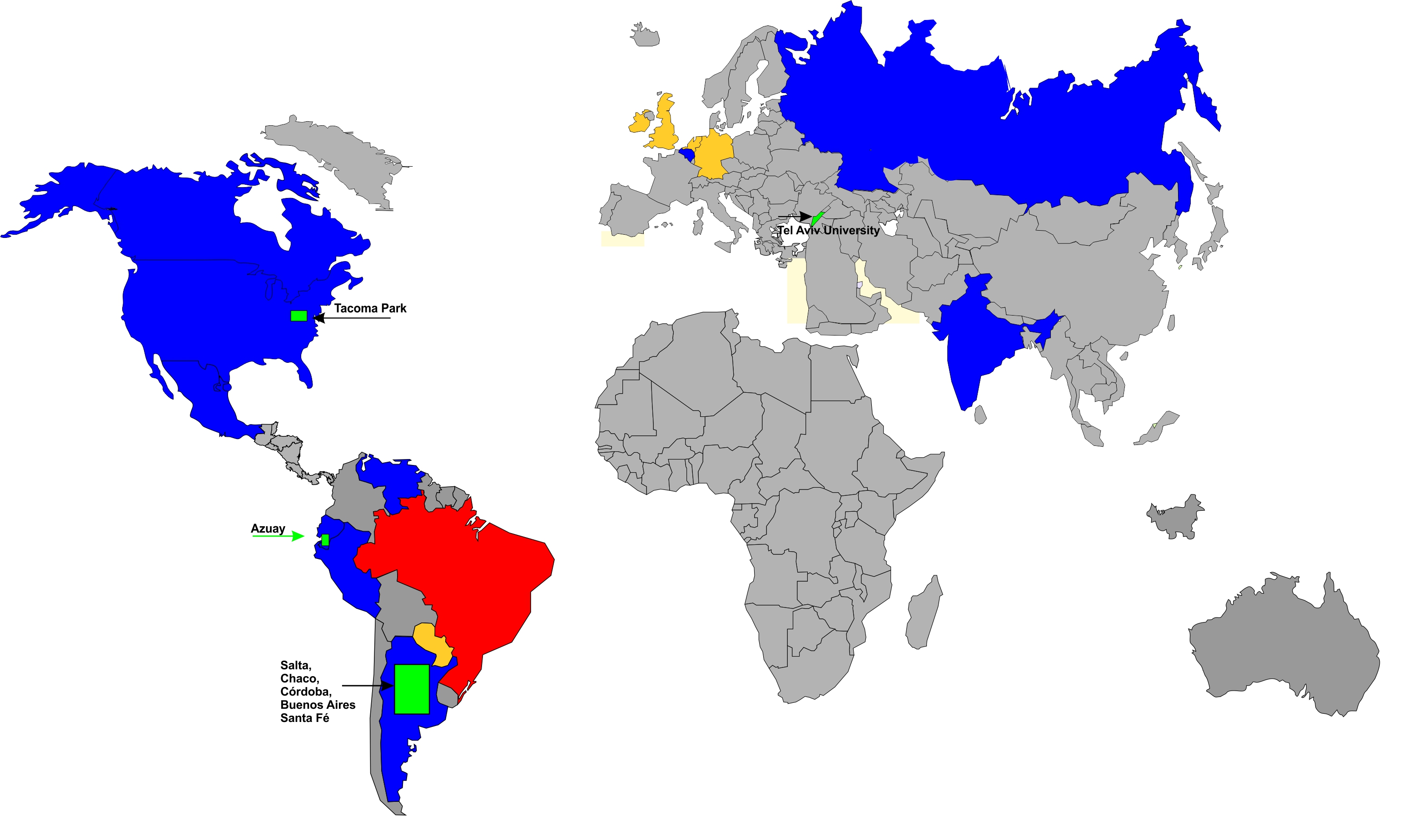
5.      Distribuição dos Modelos Usados no Mundo


CINZA - Países que ainda não adotaram voto eletrônico em eleições oficiais

VERMELHO - Países que ainda usam sistemas DRE de 1ª Geração (dependentes do software) LARANJA - Países que testaram e abandonaram sistemas de 1ª Geração por falta de transparência ou falta de confiabilidade
e, no momento, não estão usando votação eletrônica

  • Alemanha
  • Holanda
  • Irlanda
  • Inglaterra
  • Paraguai
AZUL - Países que abandonaram sistemas de 1ª Geração
e passaram a usar sistemas VVPAT de 2ª Geração (independentes do software)
  • Bélgica
  • Russia
  • Índia
  • EUA
  • Canadá
  • México
  • Venezuela
  • Peru
  • Equador
  • Argentina
VERDE - Países que adotaram ou estão testando sistemas E2E de 3ª Geração
(independentes do software, com auditoria facilitada)
  • EUA (Takoma Park County)
  • Israel (Tel Aviv University)
  • Equador (Província de Azuay)
  • Argentina (Províncias de Salta, Chaco, Córdoba, Santa Fé e Buenos Aires)

* Amílcar Brunazo Filho, engenheiro, é membro do Comitê Multidisciplinar Independente, é Representante Técnico do PDT junto ao TSE e coordenador do Fórum do Voto-E na Internet

Bookmarked at brandizzi Delicious' sharing tag and expanded by Delicious sharing tag expander.
07 Nov 03:09

Brazil divided - big surprise

by frombrazil

divided

We’ve been told since the end of the election that Brazil has been split in two. But all that really happened last month was that citizens voted largely according to rational self-interest. And for those who have been paying attention – or those who come from the less fortunate half of the rift – the tale of a united Brazil was never much more than a myth in the first place.

By James Young

Brazilians woke up nine days ago to a country that, according to the results of the second round run-off election won by Dilma Rousseff, was far more regionally and socially divided than they had previously believed. The widespread support for Rousseff in Brazil’s poorer North and Northeast regions, coupled with the rancorous nature of the contest and the ease with which social media allows the spread of venom, had seemingly set Brazilian against Brazilian, with much of the unpleasantness directed against voters in the nordeste.

Former national justice secretary and police chief Romeu Tuma Junior was one of many who published an illustration showing a wall dividing the north and the south of Brazil, accompanied by the legend “Let’s respect the PT voters and let Dilma govern just them – a wall now!” A (failed) attempt at humor, no doubt, but the sentiment behind the joke was clear. Mr Tuma went on to write that he wished he could understand the people of the northeast, who “vote PT and then move to São Paulo seeking a better life.”

Firstly, it should also be pointed out that rumors of a straight north vs. south split are exaggerated. More than 11 million Brazilians voted for PSDB candidate Aécio Neves in the north and northeast, while Rousseff picked up more than 26 million votes in the south and south east (including wins in Neves’ home state of Minas Gerais and in Rio de Janeiro, Brazil’s second and third most populous states). Nor is it accurate to suggest a strict social divide between rich and poor – Rousseff lost out to Neves in a number of working class neighborhoods in the periferia of São Paulo, for example, but did well in relatively prosperous areas such as the Triângulo Mineiro area of Minas

Nonetheless, according to many the election results meant that the Brazilian happy family of myth and legend, of “The Brazilian People,” had suddenly become dysfunctional. “O povo Brasileiro doesn’t exist,” wrote Vladimir Safatle in the Folha de São Paulo. “The Brazil we have known until now is over.” 

In fact, the most surprising thing about what the election results told us about Brazil was that people were surprised by any of this in the first place. Mr Safatle could have gone further – arguably, o povo Brasileiro has never existed at all.

The country’s regional inequality is well documented, with the north and north east trailing the south and south east in every economic indicator, from average earnings to literacy rates to the provision of basic sanitation, while prejudice against the nordeste is rife among the less reconstructed parts of Brazilian society.

The idea that the millions of Brazilians who scrape by on a minimum salary of U$288 (or often much less) in desperately poor parts of the nordeste should magically share the same political beliefs as the upwardly mobile in the tonier parts of Rio de Janeiro, São Paulo or Florianopolis seems as fanciful an idea as believing in the Coelhinho da Páscoa, the Brazilian Easter Bunny.

cancer

In fact nordestinos have plenty of good reasons to vote PT, despite the party’s current woes, which include the Petrobras corruption scandal, a stalled economy, and rising inflation. “Don’t blame the people of the north east for choosing Dilma. Before Lula, many nordestinos lived in poverty. We in the South and those in the North have different political visions. We see the PSDB as a force for change, while they see the party as a return to the government of Cardoso, and poverty,” wrote Folha de São Paulo reader Lucas Ferreira Ramos in a letter to the newspaper. Mr Ramos’s words felt like a rare voice of reason amidst all the histrionics and hyperbole.

It is also myopic to attribute PT success entirely to social programs. Over the last decade, economic growth has been much higher in the Northeast than in the Southeast – not just for the poor, but for the middle class, the upwardly mobile entrepreneurial class, and the rich – which means that any political analysis should surely have expected higher levels of PT support in the region.

Brazil did not become “polarized” overnight – the country’s divisions have festered for decades, if not centuries, aided and abetted by a media discourse based in São Paulo and Rio which continue to treat the north and northeast of the country as backwaters, as well as a succession of local and federal governments disinterested in the plight of the regions.

Perhaps the only surprising thing about the country’s political divisions is that they have seemingly gone unnoticed until now. In 1989 the second round run-off between Luis Inácio Lula da Silva (born into poverty in the interior of Pernambuco) and Fernando Collor (scion of a wealthy northeastern political family) ended narrowly in Collor’s favor. The regional split back then was not exactly the same as this year’s results – former union leader Lula did well in a number of the big industrialized cities of the south east, while the elegant, Globo-approved Collor, who looked exactly like what many Brazilians expected their leaders to look like, was strong in parts of the northeast and the countryside. But that election was much more acrid than even this one.

“Fernando told the nation that the Workers’ Party was heading for a blood bath in Brazil, which raised anxiety levels. But he was floundering until a society friend of his mother’s told Dona Leda that her servants were threatening to occupy her apartment when Lula won. Fernando told a TV talk show that Lula would confiscate people’s life savings. That families would have their front doors broken down and rooms seized to house the homeless. You’ll have Workers’ Party militants living with you, Fernando said,” writes Peter Robb in his study of Brazilian culture and history, A Death In Brazil.

This time around, market players and international investors made it clear that Neves would be better for the small minority whose income is linked to returns on capital. But some Neves voters, feeling squeezed under the PT, said they may take their fears to a more radical conclusion.

“In my parents’ time being middle class meant you could afford the best apartment, the best car. Now I just get by. That’s why I’m leaving Brazil,” said unhappy 37-year-old sales manager Ana Silvia da Silva, who was interviewed by Folha after Sunday’s results came out.

Ironically, perhaps the election results show that northerners and southerners have more in common than they think. For despite their eagerness to assume the moral and intellectual high ground, a great many PSDB supporters surely cast their votes for the same reasons as large percentages of voters in every election since time began (including, of course, their PT voting countrymen and women) – good old fashioned self-interest.

The first photo is of São Paulo’s Paraísopolis favela, which shares a border with wealthy residents of skyscrapers. In the second photo, protesters take to Avenida Paulista to call for impeachment of the president-elect last Saturday. Some called for military intervention.

07 Nov 03:09

O Supremo e o bolivarianismo

Com sua retórica apocalíptica, o ministro Gilmar Mendes disse aos repórteres Valdo Cruz e Severino Motta que "é importante que (o Supremo Tribunal Federal) não se converta numa corte bolivariana": "Isto tem de ser avisado e denunciado". A advertência está relacionada com a eleição de Dilma Rousseff e sua atribuição constitucional de nomear cinco novos ministros para o Supremo Tribunal Federal durante seu mandato. Pelo andar da carruagem, depois de julho de 2016, quando o ministro Marco Aurélio Mello completar 70 anos, dez dos onze juízes do Supremo terão sido nomeados por presidentes petistas. Leia mais (11/05/2014 - 02h00)
07 Nov 03:08

O recorde de Guido Mantega

by João Villaverde
Mantega: perto do recorde de permanência no cargo (Foto:Estadão)

Mantega: perto do recorde de permanência no cargo (Foto:Estadão)

São poucas, bem poucas, coisas que podem nos fazer imaginar, hoje, novembro de 2014, como era viver no Brasil em, digamos, novembro de 1814. Duzentos anos atrás, o Brasil era parte do Reino Unido de Portugal e Algarve, comandado por Dom João IV, que fugira para cá – mais especificamente o Rio de Janeiro – depois da invasão de seu país pelas tropas francesas de Napoleão.


Mas há sim um paralelo, neste exato momento, com o Brasil de 200 anos atrás. Essa relação de similaridade se estabelece quando olhamos a estrutura de poder da Corte de então, montada por Dom João no Rio. Quando aqui chegou, Dom João não encontrou um país, mas um amontoado de estruturas e subestruturas que respondiam à Portugal. Sua primeira iniciativa, então, foi a de montar então nossa primeira burocracia real.


Definiu, então, que o novo governo brasileiro deveria ter um Ministério da Fazenda. Como o Brasil ainda não era propriamente Brasil, mas sim uma colônia de Portugal, Dom João denominou sua criação de Ministério da Fazenda do Reino Unido de Portugal, Brasil e Algarve.


Nosso primeiro ministro da Fazenda foi Fernando José de Portugal e Castro, que nascera em Lisboa e chegara ao Brasil junto com a comitiva real, em 1808. Naquele mesmo ano, com a criação da Fazenda, Fernando Castro virou ministro.


Fernando Castro foi ministro da Fazenda por 8 anos, 9 meses e 19 dias, entre 11 de março de 1808 a 30 de dezembro de 1816. Ele deixou a Fazenda apenas porque estava muito doente – morreria menos de um mês depois, em 24 de janeiro de 1817, no Rio de Janeiro.


Até hoje, Fernando Castro é o ministro da Fazenda mais longevo da história política do Brasil.


Mas seu recorde está perto de ser quebrado, pela primeira vez em 198 anos. Vivemos hoje, portanto, um certo paralelo com aquele País do início do século XIX, na medida em que o mandatário de nossa economia está, também, há muitos anos consecutivos no comando.


O atual ministro da Fazenda, Guido Mantega, completa hoje 8 anos, 7 meses e 8 dias no cargo. Isso quer dizer que, se permanecer na Pasta até o dia 31 de dezembro, estará a apenas 15 dias de superar a marca de Fernando Castro.


Tal como nosso primeiro ministro da Fazenda, Mantega também não nasceu no Brasil. O chefe da política econômica do segundo governo Luiz Inácio Lula da Silva e deste primeiro mandato da presidente Dilma Rousseff nasceu em Gênova, na Itália, e veio ainda bebê com os pais para o Brasil.


Virou ministro da Fazenda quase que por acidente, no fim de março de 2006. Depois de participar do núcleo duro da economia nas campanhas presidências petistas, lideradas e perdidas por Lula em 1989 (para Collor), 1994 e 1998 (para FHC), Mantega entrou na campanha de 2002 tendo que dividir o foco econômico com Antônio Palocci, um dos principais artificies da famigerada “Carta ao Povo Brasileiro”, com a qual Lula domou o mercado financeiro e criou condições para governar.


Mantega foi escolhido para assumir o Ministério do Planejamento, em janeiro de 2003, enquanto Palocci ficou com a desejada Fazenda. Palocci herdou a Pasta também de outro “quase recordista” – o engenheiro Pedro Malan chefiou a Fazenda por exatos 8 anos, entre janeiro de 1995 e janeiro de 2003.


Depois de quase dois anos no Planejamento, Mantega assumiu a presidência do Banco Nacional do Desenvolvimento Econômico e Social (BNDES). Assumiu por uma emergência: seu primeiro presidente na era Lula, Carlos Lessa, havia iniciado uma crise interna no governo ao criticar pesadamente o presidente do BC, Henrique Meireles, que iniciara um ciclo de aumento de juros (que terminaria por derrubar o PIB de 2005). A demissão de Lessa, ruidosa, precisava ser estancada rapidamente e, assim, Mantega pulou o barco do Planejamento.


Depois de pouco mais de um ano no BNDES, no início de 2006, uma reportagem do Estadão revelou uma das crises mais dramáticas do governo Lula, que sofria, então, o auge do escândalo do mensalão. A crise agora pegava Palocci em cheio e envolvia o caseiro de uma casa de sua propriedade. Mesmo humilhado, Palocci deixou o governo em alta e sua demissão foi decidida quase que de surpresa, no fim da tarde do dia 26 de março daquele ano. Mantega foi chamado às pressas para assumir a Fazenda e precisou comprar uma gravata (viajara do Rio, onde fica a sede do BNDES, para Brasília sem se preparar adequadamente) para participar da cerimônia de posse, no dia 27.


Era um ministro tampão. Mas passou 2006, 2007, 2008, 2009, 2010, 2011, 2012, 2013 e, agora, está para terminar 2014 no mesmo gabinete do quinto andar do Ministério da Fazenda em Brasília.


Sobreviveu a seus maiores desafetos no poder federal petista – Palocci e Henrique Meirelles, que presidiu o Banco Central por oito anos, entre 2003 e 2010. Depois que Palocci caiu pela segunda vez, em 2011, Mantega virou o “homem forte” do governo, segundo palavras de Antônio Delfim Netto, este sim, o mais poderoso ministro da Fazenda história brasileira. Sob Mantega cresceram na máquina federal os economistas Nelson Barbosa, que pode voltar ao governo federal como ministro, e Antônio Henrique da Silveira, que neste mês substituirá Rogério Studart como o representante do Brasil no Banco Mundial, em Washington.


Amigos de Mantega, como os economistas Luiz Gonzaga Belluzzo e Júlio Sérgio Gomes de Almeida, avaliam que Guido, como ele é chamado por todos, deveria ter deixado o governo Dilma no início de 2012. “O Guido estava decidido a sair em 2010, com o fim do governo Lula, mas decidiu ficar, porque a política que ele comandou de combate à crise mundial tinha dado certo e ele ficou estimulado. Ele ajudou na transição e a dar uma cara ao governo Dilma, mas deveria ter feito aquele primeiro ano, 2011, e saído no começo do segundo”, afirmou a este blog um de seus mais próximos amigos. A data tem uma razão: “é porque a partir de 2012 a coisa realmente começou a desandar e a política econômica foi ficando perdida”.


Se tivesse saído no início de 2012, Mantega teria um currículo praticamente imbatível no reino do poder. De 2006, quando começou, até o fim de 2011, o Brasil registrou as mais altas taxas de crescimento econômico dos últimos 30 anos. A média desses seis anos, mesmo contando 2009, quando a economia caiu por conta da crise, foi alta: 4,2% ao ano. A inflação mais baixa em todos os 12 anos de PT foi obtida sob Mantega, em 2006, quando o IPCA registrou alta de apenas 3,14%. O superávit primário foi forte nos três primeiros anos e depois da queda em 2009 e 2010, voltou a ser forte em 2011. O saldo comercial chegou aos patamares recordes, superiores a US$ 40 bilhões, em 2006 e 2007, e continuou alto até 2011.


Mas, então, as coisas mudaram muito. O ciclo econômico mundial, que tivera seu auge interrompido em 2008, acabou definitivamente entre 2011 e 2012. Com isso, os preços das commodities que exportamos despencaram, reduzindo drasticamente nosso saldo comercial e deixando bem claro que a indústria de transformação foi o setor que mais sofreu durante os anos de excesso, quando o País crescia sob uma taxa de câmbio em constante valorização.


A política fiscal, que foi efetivamente sólida até 2011 (apesar de dois anos problemáticos em 2009 e 2010), virou o ponto mais fraco da economia brasileira nos últimos três anos, ao ponto de ser investigada, neste exato momento, pelo Ministério Público Federal e pelo Tribunal de Contas da União (TCU). Mantega passou a prometer e a não cumprir e isso arranhou a credibilidade do País não apenas perante o mercado, mas principalmente (e aí está o mal), aos olhos do empresariado, que tirou o pé do acelerador nos investimentos. A economia foi parando… até cair. No primeiro semestre deste ano, ao registrar dois PIBs consecutivos com sinal vermelho, a economia brasileira passou por uma recessão técnica.


A dívida do País está aumentando. A dívida bruta do setor público, que fora de 56,5% do PIB em dezembro do ano passado, bateu em 61,7% do PIB em setembro. Esse forte aumento do endividamento em apenas 9 meses não teve como contrapartida um incremento do crescimento, como sabemos. Mas mesmo com PIB zero e dívida em alta, a inflação nunca cedeu, apesar das repetidas promessas do ministro Guido Mantega.


Se Mantega entregou o menor IPCA do PT, em 2006, ele também está para entregar um dos maiores: neste ano, até o mês passado, o IPCA acumula alta de nada menos de 6,75%, acima do teto da meta perseguida pelo Banco Central, que é de 4,5%. A inflação deve diminuir até dezembro, mas fechar em algo entre 6,3% e 6,5%.


Por que a inflação não diminui apesar de todas as diversas desonerações tributárias concedidas pelo governo? Por que a economia não cresce mesmo depois de 35 pacotes (!!) com medidas para estimular o PIB?


Mantega deve deixar a Fazenda sem que essas perguntas, simples, tenham uma resposta clara.


Fora da Fazenda, Mantega já sinalizou a amigos, como Yoshiaki Nakano, que deseja voltar a dar aulas de economia na FGV de São Paulo. O atual ministro também deve retomar seu projeto de escrever um livro, em primeira pessoa, sobre como foi estar na cadeira mais importante da economia brasileira em 2008, quando o banco de investimentos americano Lehman Brothers faliu e, com ele, levou toda a economia mundial abaixo, deixando os Estados Unidos, a Europa e o Japão de joelhos.


A presidente Dilma Rousseff está para decidir, nesta semana, quem vai substituir Guido Mantega na Fazenda. Será uma missão complexa, tal qual foi a de substituir Fernando Castro em 1816. O primeiro substituto de Castro que assumiu no reveillon (31 de dezembro) de 1816, Antônio de Araújo e Azevedo, caiu depois de apenas seis meses. Em seu lugar entrou João Paulo Bezerra de Seixas, que ficou menos tempo ainda, meros cinco meses. No lugar de Seixas entrou Tomás Antônio de Vila Nova Portugal, que segurou a Fazenda por três anos e quatro meses, quando caiu também, para ser substituído por Diogo de Meneses, que então fez a transição econômica de Dom João IV para Dom Pedro I, nosso primeiro imperador.


Dilma precisa escolher bem para evitar que um troca-troca se suceda na Pasta que vai passar por uma reformulação histórica.


***

 
P.S. Em tempo: Fernando Castro é o ministro mais longevo de forma consecutiva, na Fazenda, mas o segundo em toda a história quando se considera períodos não lineares. Isso porque Artur de Sousa e Costa foi ministro da Fazenda por 8 anos 10 meses e 26 dias, mas de forma não consecutiva, entre 24 de julho de 1934 e 29 de outubro de 1945, no governo Getúlio Vargas.

Guido Mantega pode bater o recorde geral se permanecer no cargo até o dia 22 de fevereiro de 2015. Para superar Fernando Castro e passar a ser o ministro da Fazenda que mais tempo permaneceu de forma seguida na história, basta ficar no cargo até o dia 16 de janeiro.


Hoje, as três maiores permanências na Pasta mais importante do governo brasileira são essas:

1) Artur de Sousa Costa – 8 anos, 10 meses, 26 dias – de forma não consecutiva.

2) Fernando Castro – 8 anos, 9 meses, 10 dias – de forma consecutiva.

3) Guido Mantega – 8 anos, 7 meses, 8 dias – de forma consecutiva.


07 Nov 03:04

Film company does the inevitable: shoots porn using a drone

by Mariella Moon
Here's the deal: if a device has a camera, it will be used to shoot porn. No exceptions -- not even if that device is a drone. Brooklyn film company Ghost+Cow shot a project called, erm, Drone Boning, using only unmanned aerial vehicles. Despite the...
07 Nov 02:54

monobeartheater: ultrafacts: Sources: 1 2/2/2 3 4 5 6 7 8...


monobeartheater:

ultrafacts:

Sources: 1 2/2/2 3 4 5 6 7 8 9

Follow Ultrafacts for more facts

hey reminder that american stereotypes of mexico prevented be from knowing any of this and lead me to believe that mexico was a crime ridden horrible place

07 Nov 02:51

Wealth is such a burden

07 Nov 02:17

21-09-2014

by Laerte

06 Nov 22:37

Médicos que 'ressuscitam mortos' querem testar técnica em humanos - BBC Brasil

David Robson Da BBC Future
Técnica para estender vidas por algumas horas nunca foi testada em humanos

"Quando seu corpo está com temperatura de 10 graus, sem atividade cerebral, batimento cardíaco e sangue - é um consenso que você está morto", diz o professor Peter Rhee, da universidade do Arizona. "Mas ainda assim, nós conseguimos trazer você de volta."

Rhee não está exagerando. Com Samuel Tisherman, da Universidade de Maryland, nos Estados Unidos, ele comprovou que é possível manter o corpo em estado "suspenso" por horas.

O procedimento já foi testado com animais e é o mais radical possível. Envolve retirar todo o sangue do corpo e esfriá-lo até 20 graus abaixo da sua temperatura normal.

Quando o problema no corpo do paciente é resolvido, o sangue volta a ser bombeado, reaquecendo lentamente o sistema. Quando a temperatura do sangue chega a 30 graus, o coração volta a bater.

Os animais submetidos a esse teste tiveram poucos efeitos colaterais ao despertar. "Eles ficam um pouco grogue por um tempo, mas no dia seguinte já estão bem", diz Tisherman.

Testes com humanos

Tisherman causou um frisson internacional este ano quando anunciou que está pronto para fazer testes com humanos. As primeiras cobaias seriam vítimas de armas de fogo em Pittsburgh, na Pensilvânia.

Nesse caso, são pacientes cujos corações já pararam de bater e que não teriam mais chances de sobreviver, pelas técnicas convencionais. O médico americano teme que, por conta de manchetes imprecisas na imprensa, tenha-se criado uma ideia equivocada da sua pesquisa

Peter Rhee ajudou a criar técnica inovadora que envolve retirar o sangue do paciente

"Quando as pessoas pensam no assunto, elas pensam em viajantes espaciais sendo congelados e acordados em Júpiter, ou no [personagem] Han Solo, de Guerra nas Estrelas", diz Tisherman.

"Isso não ajuda, porque é importante que as pessoas saibam que não se trata de ficção científica."

Os esforços para trazer as pessoas de volta do que se acredita ser a morte já existem há décadas. Tisherman começou seus estudos com Peter Safar, que nos anos 1960 criou a técnica pioneira de reanimação cardiorrespiratória. Com uma massagem cardíaca, é possível manter o coração artificialmente ativo por um tempo.

"Sempre fomos criados para acreditar que a morte é um momento absoluto, e que quando morremos não tem mais volta", diz Sam Parnia, da Universidade Estadual de Nova York.

"Com a descoberta básica da reanimação cardiorrespiratória nós passamos a entender que as células do corpo demoram horas para atingir uma morte irreversível. Mesmo depois que você já virou um cadáver, ainda existe como resgatá-lo."

Recentemente, um homem de 40 anos no Texas sobreviveu por três horas e meia com a reanimação cardiorrespiratória.

Segundo os médicos de plantão, "todo mundo com dois braços foi chamado para se revezar fazendo as compressões no peito do paciente".

Durante a massagem, ele continuava consciente e conversando com os médicos, mas caso o procedimento fosse interrompido, ele morreria. Eventualmente ele se recuperou e acabou sobrevivendo.

Esse caso de rescucitação ao longo de um grande período só funcionou porque não havia uma grande lesão no corpo do paciente. Mas isso é raro.

'Limbo'

A técnica desenvolvida agora por Tisherman é baseada na ideia de que baixas temperaturas mantêm o corpo vivo por mais tempo - cerca de uma ou duas horas.

O sangue é retirado e no seu lugar é colocada uma solução salina que ajuda a rebaixar a temperatura do corpo para algo como 10 a 15 graus Celsius.

Em experiência com porcos, cerca de 90% deles se recuperaram quando o sangue foi bombeado de volta. Cada animal passou mais de uma hora no "limbo".

Técnica de massagem cardíaca já ajuda a estender a vida de pessoas com paradas

"É uma das coisas mais incríveis de se observar: quando o coração começa a bater de novo", diz Rhee.

Após a operação, foram realizados vários testes para avaliar se houve dano cerebral. Aparentemente nenhum porco apresentou problemas.

O desafio de obter permissão para testar em humanos tem sido enorme até agora. Tisherman e Rhee finalmente receberam permissão para testar sua técnica com vítimas de tiros em Pittsburgh.

Um dos problemas a ser contornado é ver como os pacientes se adaptam com o sangue de outra pessoa. Os porcos receberam o próprio sangue congelado, mas no caso dos humanos será necessário usar o estoque do banco de sangues.

Se der certo, os médicos acreditam que a técnica poderia ser aplicada não só vítimas de lesões, como tiros e facadas, mas em pessoas com ataque cardíaco.

A pesquisa também está levando a outros estudos sobre qual seria a melhor solução química para reduzir o metabolismo do corpo humano.

Leia a versão desta reportagem original em inglês no site BBC Future.

Bookmarked at brandizzi Delicious' sharing tag and expanded by Delicious sharing tag expander.
06 Nov 22:37

Norovirus: The Perfect Pathogen Emerges From the Shadows

As the year comes to a close, people are starting to puke. The notorious stomach bug known as norovirus is starting its annual rampage,, which will last from late fall through winter. A couple years ago, in the midst of another norovirus season, I wrote about the virus’s spectacular biology on the Loom. Noroviruses (unlike the Ebola virus) are extraordinarily rugged, able to waft through the air and survive for days on surfaces where it can cause a new infection. In a scientific review, one CDC scientist went so far as to declare, “noroviruses are perhaps the perfect human pathogen.”

This exquisite potency makes noroviruses a massive burden on our collective health. According to the latest estimates, noroviruses infect about 20 million Americans every year, and many more worldwide. But despite the scale of their threat, the fight against noroviruses has been slow. That’s because no on has been able to rear human noroviruses in the lab. To run experiments to see how noroviruses makes us sick, to develop vaccines, and to test out antiviral drugs, scientists desperately want a recipe for brewing up batches of noroviruses.

The inability to raise noroviruses stems, in turn, from our ignorance about some of the most important aspects of their biology. Scientists know that the virus attacks the gut, but they haven’t known for sure which kind of cell it attacks, or how it does so. They know that different noroviruses are more dangerous to people with different blood types–despite the fact that norovirus does not cause blood disease.

But now a team of scientists led by Stephanie Karst of the University of Florida may have cut through a lot of these mysteries. Karst and her colleagues have figured out how noroviruses get into our cells. And it turns out that some of our harmless gut bacteria are helping the viruses get there.

For years, scientists had assumed that noroviruses infected the cells that make up the inner lining of the intestines. After all, those cells (called epithelial cells) were the first ones that the viruses would encounter when they arrived in the gut.

If noroviruses infected epithelial cells, scientists could also explain the puzzling link to blood types. Our blood types are determined by the type of carbohydrates that festoon our red blood cells. But our gut epithelial cells also put the same carbohydrates on their surface too. Noriviruses can bind to these carbohydrates (known officially as human blood group antigens, or HBGAs).

Add up all the evidence, and you got a pretty straightforward scenario: noroviruses arrive in the gut, latch onto the HBGAs on the epithelial cells, invade those cells, and voila, a weekend of vomiting and diarrhea.

As sensible as that scenario sounded, though, there was one big problem: when scientists would run experiments, the viruses didn’t show any interest in infecting epithelial cells. Nor did the viruses seem to stay around on the surface of the intestines. Karst and her colleagues infected mice with a mouse version of norovirus, they found that it somehow burrowed deep inside the intestinal lining.

Buried deep in the lining of our gut, there are pouches of immune cells that protect us from intestinal infections. As food slides down through the intestines, the epithelial cells pick out suspicious-looking proteins and deliver them into those pouches. Cells known as B cells can then make antibodies that attack dangerous pathogens.

The deep dive that the noroviruses were taking raised the possibility that they were infecting B cells in the gut. Karst and her colleagues got even more interested in B cells when they ran another experiment on mice. The scientists were hoping to better understand how a norovirus infection may protect a mouse for future infections. As part of their experiment, they reared mice that couldn’t make B cells.

You might expect that the mice would become less able to withstand norovirus infections, since they couldn’t make antibodies. But the opposite was true: without B cells, the mice became more resistant.

Pondering all these pieces of evidence, Karst and her colleagues suspected that maybe B cells–not epithelial cells–really were the target of noroviruses.

The scientists tested out the idea on mouse noroviruses. When they mixed mouse noroviruses in a dish with mouse B cells, the viruses could indeed invade the cells, as the scientists predicted. But when they tried to infect epithelial cells, on the other hand, the viruses failed to invade.

The scientists couldn’t be sure that what was true for mice was true for humans. But testing their idea on human noroviruses would be a lot harder, since Karst and her colleagues didn’t have an endless supply of pure noroviruses.

Instead, the scientists had to collect stool samples from sick patients. They diluted the virus-laden stool and mixed it with human B cells. Just as they had hoped, the viruses infected the B cells.

There was, however, a fascinating catch. If the scientists put the stool through very fine filters–fine enough to exclude bacteria–the noroviruses could no longer infect the B cells.

This failure suggested that resident gut bacteria–or at least one species of bacteria–were helping the noroviruses.

It would have been absurd for Karst and her colleagues to test out every species of gut bacteria to see which one was aiding the noroviruses. Our guts contains many hundreds of species. Fortunately, previous research by other scientists allowed Karst and her colleagues to avoid this brute-force approach.

It turns out that blood type cells and epithelial cells are not the only cells to produce blood-type molecules. Certain species of bacteria have HBGAs, too. It’s not clear why they have the same molecules as we do. But whatever the reason, noroviruses can grab onto bacterial HBGAs as well as they can onto our own.

Diagram by Stephanie Karst

Diagram by Stephanie Karst

Karst and her colleagues picked out one of the species that other scientists had shown could bind noroviruses. It’s a common kind of bacteria called Enterobacter cloacae. The scientists added Enterobacter cloacae to filtered stool samples that contained human noroviruses. And then they combined this mixture with human B cells. Now they could get human noroviruses to infect B cells.

This experiment doesn’t reveal precisely how Enterobacter cloacae help noroviruses get into B cells. It’s possible that the bacteria ferry them into the hidden pouches where B cells lurk. It’s also possible that when the viruses latch onto the bacteria, the connection triggers a change in their surface molecules, making it possible for them to infect the cells. Karst hopes to get some answers with more research.

But this new results may offer an explanation for why people’s blood types make them more or less vulnerable to noroviruses. Let’s say you’re type B. Your immune system learns to recognize type B HBGAs as harmless, because they’re part of your own body. It’s possible that if you’re colonized by bacteria that have type B HBGAs, too, your body will tolerate them as well.

But if you get infected with bacteria that carry type A HBGAs, your immune system may make antibodies and attack them as foreign. That’s the likely reason that getting a tranfusion with the wrong blood type can be so dangerous. If you are Type B, for example, you have lots of antibodies to Type A HBGAs. So your body will attack Type A blood as foreign.

The new study from Karst and her colleagues may also explain why noroviruses seem to care about your blood type. Your blood type may determine the kinds of bacteria that can survive in the gut–and thus the kinds of bacteria that noroviruses can latch onto and use to get into B cells.

It would be great to say that this discovery immediately points to a sure-fire cure for the noroviruses blues. It doesn’t, alas. Karst and her colleagues were able to block norovirus infection in mice by using antibiotics to wipe out their gut bacteria. Without bacteria to help, the virus couldn’t get into B cells. But that’s the sort of cure that’s worse than the disease. The microbiome performs lots of important tasks, including helping with digestion and creating a kind of ecological barrier that prevents nasty pathogens from invading. Take it away, and you could get very sick–much sicker than you’d be with a norovirus infection.

Nevertheless, this discovery is still important, because it explains why previous attempts to raise noroviruses have failed. The viruses were provided with the wrong target and didn’t get the help they needed to hit it. Now, Karst hopes, she and her colleagues can finally develop a recipe to brew up lots and lots of human noroviruses for research on vaccines and antivirals.

And that’s the only sense in which the phrase “lots of lots of noroviruses” can make us happy.

Bookmarked at brandizzi Delicious' sharing tag and expanded by Delicious sharing tag expander.
06 Nov 22:37

Photo


06 Nov 22:34

Spectacular Paper Pop-up Sculptures Designed by Peter Dahmen

by Christopher Jobson

Spectacular Paper Pop up Sculptures Designed by Peter Dahmen pop up paper documentary

Spectacular Paper Pop up Sculptures Designed by Peter Dahmen pop up paper documentary

Spectacular Paper Pop up Sculptures Designed by Peter Dahmen pop up paper documentary

While studying graphic design in college, German artist Peter Dahmen was given the assignment of creating a 3D object out of paper. He soon realized a small problem. Regardless of what he designed, there was no safe way to transport it to class on his daily train commute. Instead of risking damage to his project, Dahmen devised a way to make his paper sculpture fold flat like a pop-up book, a fateful decision that changed the course of his life. He enjoyed the challenge so much that be became obsessed with creating more elaborate designs, eventually leading to a full-time career as a paper engineer.

Filmmaker Christopher Helkey recently sat down with Dahmen as he demonstrates some of his more incredible paper sculptures, many more of which you can see on his YouTube channel. If you liked this, also check out Matthew Shlian.

06 Nov 22:34

An Owl Flying Straight into a Camera Looks like a Hovering Spaceship

by Christopher Jobson

An Owl Flying Straight into a Camera Looks like a Hovering Spaceship owls birds

British photographer Russell Savory captured this amazing shot earlier this summer of an owl flying directly toward his camera. With its wings pulled back, it looks like a hovering two-eyed spaceship. Though don’t let the perspective fool you, Savory was shooting from a distance with a 600mm telephoto lens.

06 Nov 22:33

RT @gondimricardo: Mulheres Curdas se armam e mobilizam para combater o ISIS. A foto é surpreendente....

by Osias Jota
RT @gondimricardo: Mulheres Curdas se armam e mobilizam para combater o ISIS. A foto é surpreendente. http://t.co/1lwvinVmQ7
06 Nov 22:30

America's Rising Crime Problem: Feeding the Homeless; 90-Year-Old Criminal Arrested for It

by Brian Doherty

Whenever a criminal is daring to feed the homeless, America's finest are on it. The latest, out of Ft. Lauderdale, Florida, involved collaring a 90-year-old menace to society, as told by TV station KHON-2:

On Sunday, the city charged three people, including two ministers and a 90-year-old homeless advocate, and they could face up to 60-days in jail for their so-called crime.

“I fully believe that I am my brother’s keeper. Love they neighbor as thy self,” explained Arnold Abbott.

90-year-old Abbott prepares hundreds of meals each week for the homeless in the kitchen of the Sanctuary Church....

He faces possible jail time and a $500 fine for feeding the homeless after he was charged Sunday with violating a new ordinance that virtually outlaws groups from sharing food with the hungry in the city.

“One of police officers came over and said ‘Drop that plate right now,’ as if I was carrying a weapon,” Abbott said.

Also charged was a minister from Coral Springs and Sanctuary Church pastor, Wayne Black.

“We believe very strongly that Jesus taught us that we are to feed his sheep,” said Pastor Black.

Reason has alas had way too many occasions to blog about the national law enforcement war against feeding the homeless in this most Christian of nations.

Reason TV on Philadelphia's war on feeding the homeless:

06 Nov 22:26

RT @diretordeletras: Presidente da Apple anuncia que é gay. Presidente da Samsung...

by Osias Jota
Author: Osias Jota
Source: Buffer
RT @diretordeletras: Presidente da Apple anuncia que é gay. Presidente da Samsung anuncia que é bem mais gay e à prova d'água.
06 Nov 22:18

Jupiter 'shepherds' the asteroid belt, preventing the asteroids from falling into the sun or accreting into a new planet.

06 Nov 22:14

normalbiology: nubbsgalore: an alligator has a tapetum lucidum...


larry lynch


david moynahan


larry lynch


david moynahan


larry lynch

normalbiology:

nubbsgalore:

an alligator has a tapetum lucidum at the back of each eye, which reflects light back into the photoreceptor cells to make the most of low light, and causes its eyes to glow red. photos by larry lynch and david moynahan

This is the coolest thing I’ve seen today.

05 Nov 18:31

Political Brutes

by Andrew Sullivan

Justin E. H. Smith argues that humans “are not the only political animals”:

There are overwhelming empirical data revealing, to anyone who is willing to look, complex social organization across the animal kingdom, including collective deliberation, division of labor, ritualized conflict resolution, and other forms of behavior that, when identified in human society, are deemed political without hesitation. We know that elephants plan elaborate raids on human settlements to recover the remains of their slaughtered loved ones. We know that in ant colonies the appearance of elaborate systems of task-allocation is related directly to the size of the colony: just as in human society, the more individual members of the society, the more we may expect to find social differentiation. Thanks to the primatologist Frans De Waal’s popular work, we are now slowly warming up to the idea that there is such a thing, at least, as “chimpanzee politics.” …

[T]here is another way of understanding animals as political that even the most defiant human-exceptionalist cannot dispute:

not as separated out into their own discrete political societies, each according to its kind, but rather as part of a single, global political formation that includes, notably but not exclusively, human beings. Some recent political philosophy, in fact, is starting to approach its subject from just such a trans-species perspective. In their groundbreaking 2011 book, Zoopolis: A Political Theory of Animal Rights, Sue Donaldson and Will Kymlicka argue compellingly that animal rights theory has been limited to the extent that it has emphasized only negative rights of animals, a category that is conceived as universal and without any distinctions of moral significance within it. They argue instead that theorists would do well to focus on relational obligations that human beings come to have to animals that figure in different ways in human society. For them, nonhuman animals belong to the polis, too.

Update from a reader:

I came across this item regarding animal politics. Several species seem to make decisions by voting. A couple examples:

Red deer

The red deer of Eurasia live in large herds, spending lots of time either grazing or lying down to ruminate. Some deer are ready to move on before others are, and scientists have noticed that herds only move when 60 percent of the adults stand up — essentially voting with their feet. Even if a dominant individual is more experienced and makes fewer mistakes than its underlings, herds typically favor democratic decisions over autocratic ones.

A major reason for this, according to research by biologists Larissa Conradt and Timothy Roper, is that groups are less impulsive: “Democratic decisions are more beneficial primarily because they tend to produce less extreme decisions, rather than because each individual has an influence on the decision per se.”

African buffalo

Similar to red deer, African buffalo are herd herbivores that often make group decisions about when and where to move. In the 1990s, researchers realized that what initially looked like “mundane stretching” is actually a type of “voting behavior,” in which females indicate their travel preferences by standing up, staring in one direction and then lying back down.

“Only adult females vote, and females participate regardless of their social status within the herd,” biologist David Sloan Wilson wrote in a 1997 study. “When the average direction of gaze is compared with the subsequent movement of the herd, the average deviation is only three degrees, which is well within measurement error. On days in which cows differ sharply in their direction of gaze, the herd tends to split and graze in separate patches for the night.”


05 Nov 18:23

Most Autistic People Have Normal Brain Anatomy

by Neuroskeptic
A new paper threatens to turn the world of autism neuroscience upside down. Its title is Anatomical Abnormalities in Autism?, and it claims that, well, there aren't very many. Published in Cerebral Cortex by Israeli researchers Shlomi Haar and colleagues, the new research reports that there are virtually no differences in brain anatomy between people with autism and those without. What makes Haar et al.'s essentially negative claims so powerful is that their study had a huge sample
04 Nov 22:16

E se em vez de metas de inflação, os candidatos se comprometessem a reduzir homicídios

E se em vez de metas de inflação, os candidatos se comprometessem a reduzir homicídios

E se em vez de metas de inflação, os candidatos se comprometessem a reduzir homicídios

1) Candidato (a), caso eleito (a), o (a) senhor(a) se compromete a liderar um pacto nacional que induza à redução dos homicídios no País?

2) O (A) senhor (a) assume a responsabilidade de prestar contas sobre as taxas anuais de homicídios no Brasil? Podemos cobrar da sua gestão?

Eu gostaria muito de contrabandear essas perguntas para o debate eleitoral. Será que eu consigo? Quem sabe algum colega jornalista pudesse fazê-las por mim. Ou será que somente as metas de inflação merecem o firme compromisso político do próximo presidente?

Assisti aos 2 primeiros debates dos candidatos a presidente na TV. Deu para ver que o tema da segurança pública se tornou um tema importante, quase sempre abrindo as discussões. Provavelmente porque os marqueteiros detectaram a relevância do tema entre os eleitores brasileiros. Mas, por enquanto, não ouvi nada de relevante saindo de seus discursos superficiais.

Apesar de relegado a segundo plano, o debate sobre os homicídios é mais do que pertinente. Em 2012, ocorreram 56.337 homicídios no País. Visualize mentalmente a multidão em um estádio da Copa do Mundo. É mais ou menos como se uma massa como aquela morresse todo ano. O mais importante é que já existem formas para evitar tantas tragédias. Desde 1997, quando Nova York mostrou que a diminuição dos homicídios podia ser enfrentada com políticas públicas em curto prazo, a discussão sobre a redução dos assassinatos mudou no mundo. Deixou de ser vista como um sonho longínquo para ser assumida pelos políticos como um intervenção com resultados quase imediatos.

Outros grandes cidades também conseguiram liderar reduções intensas em períodos curtos, como Medellín e Bogotá, na Colômbia, e São Paulo e Recife, no Brasil. É por isso que os candidatos a presidente não podem mais se acovardar diante do problema.

Os homicídios estão crescendo no Brasil desde 1980, quando 13.910 pessoas (11,7 por 100 mil) foram assassinadas. Em 2012, o total já havia saltado para as 56.337 mortes (29 por 100 mil habitantes). Cresceu fortemente no Governo de Fernando Henrique Cardoso – passou de 32. 603 ocorrências em 1994 para 49.695 em 2002 (28,5 por 100 mil) – e segue aumentando no Governo de Dilma Rousseff — foi de 52.260 (27,4 mortes por 100 mil) em 2010 para os 56.337 (29 por 100 mil) de 2012. Veja gráfico abaixo.

O governo Lula foi o único que registrou queda das taxas de 28,5 por 100 mil em 2002 para 27,4 em 2010. Só que não há muito para o ex-presidente celebrar, já que quase a totalidade da redução se deveu à intensa queda verificada no mesmo período em São Paulo. Em oito anos, os paulistas, estado com maior número absoluto de mortes no Brasil, reduziram o total de assassinatos de 14.494 para 5.806 em 2010.

Só não vá perguntar ao governador os motivos: ele provavelmente repetirá três ou quatro frases feitas sugeridas por seus marqueteiros. É curioso que nem ele parece entender como a queda ocorreu.

Caso tope o desafio, a primeira estratégia para o (a) presidente é focar os esforços nos chamados pontos quentes ou hot-spots brasileiros, locais que concentram a maior quantidade de conflitos fatais. Esse esforço deve ser feito na base da sintonia fina. Inicia-se a concentração de medidas nos estados mais violentos, partindo para as cidades e bairros onde se concentram os conflitos. Os homicídios são quase sempre crimes territoriais que demandam políticas focadas e localizadas.

Os estados do Norte e Nordeste são os que atualmente se encontram em situação mais delicada. São nordestinos os cinco estados que mais aumentaram o total de homicídios entre 2002 e 2012. Do 1º ao 5º, respectivamente, lideram as altas Rio Grande do Norte, Bahia, Maranhão, Ceará e Paraíba. No ranking dos mais violentos, hoje estão na liderança Alagoas (64,6 homicídios por 100 mil habitantes), Espírito Santos (47,3 por 100 mil), Ceará (44,3 por 100 mil), Goiás (44,3 por 100 mil) e Bahia (41,5 por 100 mil). Os estados do sudeste, antigos campeões nos anos 1980 e 1990, entraram em viés de baixa.

Não se pode dizer que os candidatos estejam mal assessorados na área. No governo Dilma, a secretaria Nacional de Defesa, Regina Miki, mergulhou em uma rica experiência em Alagoas, na tentativa de reduzir as taxas do Estado. Conseguiu uma leve redução, revertendo pelo menos a tendência de alta. Foi uma política limitada e restrita, mas que pode servir de base em um eventual segundo mandato.

O sociólogo Claudio Beato, que ajudou a implementar com sucesso em Minas Gerais o programa de redução de homicídios Fica Vivo, também é um especialista no tema. Caso seja ouvido por Aécio Neves, certamente boas políticas podem aparecer. Outro sociólogo, José Luiz Ratton, foi um dos coordenadores de Eduardo Campos em Pernambuco no bem-sucedido Pacto pela Vida. Apesar de não integrar a equipe de Marina Silva, caso a candidata queira, não faltará expertise vindas principalmente de Pernambuco.

Falta, contudo, o mais importante: compromisso político com o tema. Já ficou demonstrado que o empenho de lideranças no cumprimento da missão, como fez Eduardo Campos em Pernambuco entre 2008 e 2012, é fundamental para o sucesso da empreitada.

Caso não sejam cobrados de compromissos relevantes, os candidatos talvez prefiram se concentrar em ideias populistas, voltadas ao mercado de votos, mas que de nada adiantam para enfrentar os gargalos da segurança pública. Como é o caso de Aécio Neves, que vai levantar a bandeira da flexibilização da maioridade penal.

Seguem abaixo 10 medidas para atuar na redução dos assassinatos no Brasil, segundo os especialistas José Luiz Ratton, Carolina Ricardo e Lígia Rechenberg. As sugestões fazem parte de uma agenda de segurança pública preparada pelo Instituto Sou da Paz para os candidatos a presidente. Leia na íntegra do artigo que eles escreveram para o El País.

1) Articular esforços para incentivar os Estados a priorizarem a redução dos homicídios. Um plano nacional com diagnósticos sólidos, estabelecimento de metas de redução e produção de indicadores de avaliação dessas metas.

2) Conhecer a fundo as dinâmicas associadas aos homicídios nos territórios onde ocorrem.

3) Aumentar o índice de esclarecimento dos crimes. As taxas de esclarecimento variam de 8% a 69%, predominando o percentual de 15% em estados como Pernambuco, Rio de Janeiro e Minas Gerais. Nos EUA, esse percentual é de 64% e na Inglaterra de 81%.

4) Criar de departamentos especializados para crimes contra a vida.

5) Incentivar o cumprimento de mandados de prisão dos acusados de homicídio.

6) Investir nas perícias criminais.

7) Fortalecer das Varas do Tribunal do Júri.

8) Implementar uma política de controle de armas.

9) Fortalecer o controle sobre categorias com acesso a armas (como empresas de segurança privada, atiradores e colecionadores). Aprimorar programas de retirada de armas de circulação; mecanismos de rastreamento de armas e ampliação da marcação de munições e estímulo a mecanismos estaduais de destruição rápida de armas e munições.

10) Criar ações para reduzir o número de mortos em ações policiais, tanto de civis, quanto de policiais. Em São Paulo, em média 1 em cada 5 assassinatos é praticado por policiais em supostas resistências seguidas de morte. Estimular a atuação das Corregedorias e Ouvidorias com foco na redução da letalidade, desarticular grupos de extermínios com forças-tarefa interinstitucionais e disseminar protocolos e procedimentos de uso da força em todos os níveis.

Expanded from Ponte by Feed Readabilitifier.
04 Nov 13:38

Farewell, Murphy. [whompcomic]


Farewell, Murphy. [whompcomic]