Shared posts

23 Nov 18:40

'Isso non ecziste': seguidores de padre Quevedo dão aulas de parapsicologia

PAULA SPERB, DE SÃO PAULO

“Grupinho dos estraga prazeres”. É assim que Marcia Regina Cobêro, 59, define os integrantes do Instituto Padre Quevedo de Parapsicologia (IPQ) dirigido por ela, em São Paulo. É que os profissionais escolhidos pelo jesuíta espanhol Oscar Quevedo, 85, não aceitam explicações fáceis (forças do além) para fenômenos intrigantes (desencadeados por ação humana).

Padre Quevedo chegou ao Brasil em 1954 e ficou conhecido pelo bordão “Isso non ecziste”, evocado sempre que desmistifica histórias de assombrações em palestras.

Segundo Cobêro, não é raro o IPQ atender casos de objetos que se movem ou incendeiam. Por trás dos fenômenos, diz, há uma mente perturbada, capaz de mover objetos. Mas não espíritos. “Objetos não se movem sem alguém para enxergar”, diz ela, que é teóloga e filósofa.

As aulas, de pós-graduação, oferecem explicações racionais e lógicas para fenômenos como levitação, telepatia e exorcismo. O curso está com inscrições abertas na Unisal, em São Paulo, e no colégio católico Regina Mundi, em Maringá (PR).

O corpo docente é formado por doutores e mestres de diferentes áreas, autodenominados “cientistas católicos”. Entre eles, há três padres, mas não Quevedo.

Desde 2012 ele vive em um lar para padres idosos em Belo Horizonte e escreveu três livros –no total são 17 obras. O recente “Corpos Incorruptos” trata de corpos que não se decompõem após a morte. A Igreja Católica tem mais de 1.200 registros do fenômeno.

O IPQ também atende pessoas que se dizem atormentadas por espíritos, feitiços e até possuídas pelo demônio.

“A Igreja é clara: antes do exorcismo tem que descartar todas as possibilidades. É aqui que se faz isso. Sempre resolvemos”, diz a diretora.

O instituto não tem fins lucrativos, atende atualmente 69 pessoas e, segundo a diretora, está no vermelho desde 2012, quando foi fundado.

Nos atendimentos, psicólogos orientam sobre os problemas que angustiam as pessoas com sintomas e padres derrubam “explicações místicas” para problemas como infelicidade no casamento.

Veja as fotos

INÍCIO DAS PESQUISAS

Padre Quevedo fundou o Centro Latino Americano de Parapsicologia (Clap) em 1970. Por mais de três décadas, pesquisou fenômenos que não são estudados pela ciência nem pela psicologia, mas afetam a vida das pessoas. Em 2012, ao ser aposentar, a equipe criou o IPQ com a bênção do padre.

Em breve, os 8.600 livros do instituto estarão disponíveis on-line, incluindo raridades como a obra completa do papa Bento 14 em latim e mais de 7.000 fichas datilografas por Quevedo e equipe, organizadas por temas (feitiçaria, levitação, demônios).

Além disso, há um museu em fase de montagem, com peças recolhidas por Quevedo e outras doadas. Uma das que mais chamam atenção é um navio cheio de “exus”.

“As freiras de um convento chamaram a equipe do padre apavoradas quando viram o navio. Elas diziam que era um feitiço de uma ex-funcionária, por vingança”, conta a diretora. Quevedo ficou indignado porque as freiras deveriam era ensinar que essas coisas “non eczistem”.

07 Nov 03:16

In Green Company: Aurora over Norway

Discover the cosmos! Each day a different image or photograph of our fascinating universe is featured, along with a brief explanation written by a professional astronomer.

2014 November 3
See Explanation.  Clicking on the picture will download
 the highest resolution version available.

In Green Company: Aurora over Norway
Image Credit & Copyright: Max Rive

Explanation: Raise your arms if you see an aurora. With those instructions, two nights went by with, well, clouds -- mostly. On the third night of returning to same peaks, though, the sky not only cleared up but lit up with a spectacular auroral display. Arms went high in the air, patience and experience paid off, and the amazing featured image was captured. The setting is a summit of the Austnesfjorden fjord close to the town of Svolvear on the Lofoten islands in northern Norway. The time was early March. Our Sun has been producing an abundance of picturesque aurora of late as it is near the time of its maximum surface activity in its 11-year magnetic cycle.

Tomorrow's picture: Moon before Earth < | Archive | Index | Search | Calendar | RSS | Education | About APOD | Discuss | >

Authors & editors: Robert Nemiroff (MTU) & Jerry Bonnell (UMCP)
NASA Official: Phillip Newman Specific rights apply.
NASA Web Privacy Policy and Important Notices
A service of: ASD at NASA / GSFC
& Michigan Tech. U.

Expanded from APOD by Feed Readabilitifier.
04 Nov 13:27

There Is No ‘Healthy’ Microbiome

LONDON — IN the late 17th century, the Dutch naturalist Anton van Leeuwenhoek looked at his own dental plaque through a microscope and saw a world of tiny cells “very prettily a-moving.” He could not have predicted that a few centuries later, the trillions of microbes that share our lives — collectively known as the microbiome — would rank among the hottest areas of biology.

These microscopic partners help us by digesting our food, training our immune systems and crowding out other harmful microbes that could cause disease. In return, everything from the food we eat to the medicines we take can shape our microbial communities — with important implications for our health. Studies have found that changes in our microbiome accompany medical problems from obesity to diabetes to colon cancer.

As these correlations have unfurled, so has the hope that we might fix these ailments by shunting our bugs toward healthier states. The gigantic probiotics industry certainly wants you to think that, although there is little evidence that swallowing a few billion yogurt-borne bacteria has more than a small impact on the trillions in our guts. The booming genre of microbiome diet books — self-help manuals for the bacterial self — peddles a similar line, even though our knowledge of microbe-manipulating menus is still in its infancy.

This quest for a healthy microbiome has led some people to take measures that are far more extreme than simply spooning up yogurt. In September, the archaeology writer Jeff Leach used a turkey baster to infuse his guts with the feces of a Hadza tribesman from Tanzania. Doctors have carried out hundreds of fecal transplants, particularly to treat people with unshakable infections of the diarrhea-causing bacterium Clostridium difficile. The procedure has been spectacularly successful, far more than conventional antibiotics.

But Mr. Leach did not have C. difficile. He experimented on himself because he views the Western microbiome as “a hot microbial mess,” he wrote on his blog. Poor diets, antibiotics and overly sanitized environments have gentrified the Western gut, he wrote, “potentially dragging us closer to ill health.” The Hadza, with their traditional hunter-gatherer lifestyle, carry diverse microbial communities that are presumably closer to a healthier and disappearing ideal. Hence the stunt with the turkey baster. Mr. Leach billed it as “(re)becoming human.”

This reasoning is faulty. It romanticizes our relationships with our microbes, painting them as happy partnerships that were better off in the good old days. It also invokes an increasingly common trope: that there is a “normal” or “healthy” microbiome that one should aim for. There is not. The microbiome is complex, varied, ever changing and context-dependent — qualities that are the enemies of easy categorization.

“Healthy” microbes can easily turn rogue. Those in our guts are undoubtedly helpful, but if they cross the lining of the intestine and enter our bloodstream, they can trigger a debilitating immune response. The same microbes can be beneficial allies or dangerous threats, all for the difference of a few millimeters.

Conversely, “unhealthy” configurations of microbes can be normal, even necessary. Ruth E. Ley at Cornell University and colleagues demonstrated this in dramatic fashion when they found that microbiomes go through a huge upheaval by the third trimester of pregnancy. They end up looking like the microbiomes of people with metabolic syndrome — a disorder that involves obesity, high blood sugar and a higher risk of diabetes and heart disease. These communities might indicate someone on the verge of chronic disease — or merely motherhood. Packing fat and building up blood sugar makes sense when you are nourishing a growing fetus.

Here is another example. Common medical wisdom says that healthy vaginal microbiomes are dominated by the acid-making Lactobacillus group that creates an inhospitable environment for disease-causing microbes. But Larry J. Forney at the University of Idaho and colleagues found that a quarter of women didn’t fit this pattern, despite being perfectly healthy. They also showed that their vaginal communities can change dramatically and rapidly, even over a single day, flitting in and out of states that are supposedly conducive to disease, but with neither clear causes nor ill effects.

If you tried to determine a woman’s health by analyzing her vaginal microbes, the results would be hard to interpret and might be outdated by the time they arrived.

This befuddling complexity is not confined to the vagina. Earlier this year, Patrick D. Schloss at the University of Michigan analyzed microbes from 18 different body parts on 300 volunteers. They were all healthy, with nary a dental cavity among them. And yet, Dr. Schloss found that their microbes varied greatly, and flipped between different states, for as yet inexplicable reasons.

The dynamic nature of the microbiome partly explains the enthusiasm that surrounds it. If scientists identify changes in the human genome that increase the risk of disease, it is hard to rewrite those genes or to find drugs that target them. But the microbiome could theoretically be altered through probiotics, fecal transplants or other means. It is, as some researchers say, the only “organ” that can be replaced without surgery.

But how can you tell when it needs replacing? A bloom of C. difficile is an obvious problem, but most other communities are not so easily classified. The microbiome is a teeming collection of thousands of species, all constantly competing with one another, negotiating with their host, evolving, changing. While your genome is the same as it was last year, your microbiome has shifted since your last meal or sunrise.

We need to start thinking about it as an ecosystem, like a rain forest or grassland, with all the complexities that entails. And just as the gorillas and leopards of African forests differ from the wolves and moose of American ones, so, too, do microbiomes vary around the world.

Take the Hadza. Their microbial roll call is longer than a Western one, with both omissions and additions. They are the only adult humans thus far sequenced who are devoid of Bifidobacteria — a supposedly “healthy” group that accounts for up to 10 percent of the microbes in Western guts. But they do carry unexpectedly high levels of Treponema, a group that includes the cause of syphilis.

Is this menagerie worse than a Western one? Better? I suspect the answer is neither. It is simply theirs. It is adapted to the food they eat, the dirt they walk upon, the parasites that plague them. Our lifestyles are very different, and our microbes have probably adapted accordingly. Generations of bacteria can be measured in minutes; our genomes have had little time to adapt to modern life, but our microbiomes have had plenty.

It may be that a Hadza microbiome would work equally well in an American gut, but incompatibilities are also possible. The conquistadors proved as much. As they colonized South America, they brought with them European strains of Helicobacter pylori, a stomach bacterium that infrequently causes ulcers and stomach cancer, and these European strains also displaced native American ones. This legacy persists in Colombia, where some communities face a 25-fold higher risk of stomach cancer, most likely due to mismatches between their ancestral genomes and their H. pylori strains.

The microbiome is the sum of our experiences throughout our lives: the genes we inherited, the drugs we took, the food we ate, the hands we shook. It is unlikely to yield one-size-fits-all solutions to modern maladies.

We cling to the desire for simple panaceas that will bestow good health with minimal effort. But biology is rarely that charitable. So we need to learn how tweaking our diets, lifestyles and environments can nudge and shape the ecosystems in our bodies. And we need ways of regularly monitoring a person’s microbiome to understand how its members flicker over time, and whether certain communities are more steadfast than others.

Our microbes are truly part of us, and just as we are vast in our variety, so, too, are they. We must embrace this complexity if we hope to benefit from it.

Bookmarked at brandizzi Delicious' sharing tag and expanded by Delicious sharing tag expander.
04 Nov 13:27

The greatest story Reddit ever told

By Kevin Morris on November 2nd, 2014

At around 8:30am on the morning Dante Orpilla planned to pay back the woman who had saved his life, he made a phone call.

Scenarios about the way things were about to play out had been running through his head all morning, but he kept the conversation short. “If we want to do this,” he said to the man on the other end. “We can do it at like 2 or 3.” He wanted to get this over with. I can finally pay the debt, he remembers thinking.

His friends called him Lucky, or Youngluck. The son of a Filipino father and mixed mother (“we’ve got no idea what her lineage is,” he says), Orpilla grew up on the violent Oakland streets of the ’80s and ’90s. When he was 17, a bullet from a nearby gunfight grazed the back of his head. When he was 21, he got into a verbal tussle with a guy while on a late-night run to a convenience store. The next day, the guy unloaded a gun at Orpilla, hitting him once in the arm.

All along, he was grinding his way up the ladder of the underground L.A. music scene, working as a producer and vocalist for a hardcore rap-rock band called the Bottom Dwellerz. Orpilla felt like it was on the cusp of something great; the drummer had played with Snoop Dogg, the bassist with Mariah Carey, and the group had “deals on the table from a couple pretty big labels,” he says.

His nickname seemed less appropriate the older he got. In 2006, after a messy breakup, his girlfriend disappeared with his 3-year-old son, Orion. As Orpilla plastered neighborhoods with missing posters and filed reports with the police, he took the edge off with drugs. The occasional hit of coke to power late-night work sessions transformed into a full-blown meth addiction. He became paranoid. (Once, convinced the National Security Agency had wired his house, he ripped apart a $3,000 leather sofa to find a bug that didn’t exist.)

That’s when a good friend—whom Orpilla still won’t name—locked him in a room for a month and helped him kick the habit, to get him off of “shit you’re not supposed to get off of.”

Now that friend was in serious trouble. Her boyfriend, a dope dealer, had just found some of his product was missing. The guy threatened her life if the situation didn’t get fixed, fast. Orpilla had promised to help her.

By 11am he was on the road, taking his white Dodge Ram along Interstate 605, from his home in Woodland Hills to Torrance, Calif., about 20 miles south of Los Angeles. The guy he was supposed to meet, the one he’d called that morning, was another good friend. But all day he’d been unusually slow, taking his time to respond to text messages, not answering his phone. He was going to be late, he kept telling Orpilla.

“I take full responsibility for the choices I have made. I have not only damaged my life, but the lives of those that love me and look up to me.”

So at the end of the hour-and-a-half drive, Orpilla took a couple pit stops. He pulled off near the meeting space to get lunch. He ordered a bowl of chicken soup, finished it, waited for the phone call. When it didn’t come, he moved on to a gas station. Waiting in line, Orpilla saw a man approach through the big glass windows. Using his hands as shade from the glaring sun, the guy peered inside, like he was looking for someone. He was tall, maybe 6 feet, and sported a goatee and a polo shirt tucked into blue jeans. But it was the black strap around his thigh that really stuck out. He looked like a cowboy, Orpilla thought.

He wasn’t.

Meanwhile, the knot in Orpilla’s stomach just kept getting tighter. Back in his truck, his phone lit up with a text message.

Just taking the grease off so u can cut into them,” his friend texted.

The meeting happened 20 minutes later.

The guy was waiting for him in a big empty parking lot, just north of a Burger King. “You ready?” his friend asked after jumping out of his car and walking to greet Orpilla. “Yep,” Orpilla replied, pulling out a brown paper bag from the back seat. The guy counted the wads of cash inside one-by-one, adding them up—$10,000 $20,000, $30,000. At $50,000, he fanned the rest and, apparently satisfied, pulled out his cellphone.

Two men pulled into the lot in small black car. Orpilla wasn’t experienced doing this kind of thing, but everything seemed to be going smoothly enough. They handed him a single blue bag, heavy with blocky, rectangular packages. Everything was good, done. Orpilla started the engine, drove northbound toward the exit—and a convoy of black SUVs rolled in and surrounded him. Men with guns rushed toward him, commanding him to get out of his vehicle, to put his hands on his head. A K-9 snarled. Helicopter blades thumped overhead.

Orpilla had just tried to buy 7 kilos of cocaine from two undercover ICE agents for $115,000 in cash.

On the ride to the federal detention center, Orpilla remembers feeling detached, like his mind had been separated from his body and he was watching everything unfold from far away. But there was also a sense of relief. The knot was gone. An ordeal that had begun years ago was finally over, albeit in the worst possible way.

The agent in the front seat summed up his future:

“You’re fucked.”

Halfway home

The first communication I ever received from Dante Orpilla landed in my mailbox one morning in the summer of 2011. The handwritten letter, filling up six pages of legal-sized paper, arrived in an envelope stamped with a return address to the Federal Correctional Institution in Sheridan, Ore.

It began with an apology.

“I had actually written a much more detailed recollection of the events that led to my incarceration,” Orpilla wrote in his skinny, looping script. “But was advised by the resident legal expert here that it might not be such a good idea to broadcast that level of detail, at least not under my current living arrangement.”

Truth was, I wasn’t as interested in how he wound up in prison as I was in what happened after his arrest. Orpilla had been caught with enough coke to kill a large herd of African elephants. The minimum sentence recommended for comparable drug-trafficking cases was 10 years, but in just a few months, Orpilla was set to be released to a halfway house. That would make his total stay in the federal prison system about two and a half years.

As I was about to read in the letter, Orpilla’s life had been saved a second time, between the ride to the detention center and his sentencing. And not by a good friend, not even close. Bored and on home release one day in 2009, Dante Orpilla loaded up a website called Reddit.

The Internet’s megacity

For Internet neophytes, Reddit must now seem like a foundational pillar of Web culture. A sprawling collection of forums, called subreddits, the site is a Darwinian battlefield of virality, pumping out memes and images macros from the Web’s abyssal depths and propagating them across the world. Content on Reddit lives or dies according to the whims of its users, who push it to the top with upvotes or bury it to viral purgatory with downvotes. More than 115 million people visit the site every month.

But nowadays, the word “Reddit” itself almost a loaded term among the Internet culture cognoscenti. The site’s founders, University of Virginia students Alexis Ohanian and Steve Huffman, instilled an institutional devotion to ideals of free speech, turning Reddit into an online petri dish for experiments in stretching the First Amendment to its breaking point. The site’s doors were open to everyone, from programming obsessives and gaming geeks to marijuana enthusiasts—and others, including noxious trolls and Internet stalkers, or even purveyors of scantily clad pics of teenagers. It’s those latter forums that have cemented themselves in the consciousness of the Web and earned Reddit its oddly mixed reputation as both a haven of do-gooders and a den of iniquity—even if the latter has come to dominate mainstream stories about the site in recent years.

It’s easy to paint Reddit with both those broad brushes because it’s one of the few large online platforms whose users present something of a shared culture and common identity. The voting system only amplifies this, giving an appearance of community approval or disapproval to opinions and ideas. But Reddit has a population of millions, and there are in turn a million stories on the site’s forums that skirt the site’s broader narrative trends or have nothing to do with them at all.

When Orpilla loaded it up from his home in 2009, Reddit was only on the cusp of its future ubiquity. And he was about to write what should be (and was once) its greatest story—one that has faded into obscurity as the site has exploded in size, becoming little more a memory of a few strings of text that once ran across the screens of thousands of strangers.

Reddit was the new megacity, absorbing and finding space for every disparate community on the Internet, connecting everything through the central hub of its front page.

Around then, at four years old, Reddit was something of a middle-aged man in the crash-and-burn cycle of tech startups. It was staffed by only a skeleton crew of about five devoted, if overworked, developers, who relied on a small army of volunteer moderators to keep the thousands of forums running.

The site’s barebones design hearkened back to the almost prehistoric days of the Internet, when people were clacking away on mechanical keyboards and loading up Usenet threads on text-based UNIX systems. Indeed, Reddit bore more resemblance to Usenet—the online network of forums born in the early ’80s that spawned a lot of early Internet culture, like the emoticon—more than more modern services like Myspace or Facebook. Web communities of the late ’90s and early aughts were a collection of largely independent forums devoted to highly specific subject areas—little hamlets thinly connected by search engines and word of mouth.

Reddit was the new megacity, absorbing and finding space for every disparate community on the Internet, connecting everything through the central hub of its front page.

Orpilla’s memory of his earliest time on the site isn’t perfect, but he was pulled into Reddit’s orbit like a lot of other people. It was in the build up to the 2010 elections, and he’d gotten into a heated discussion on Facebook about partisan politics—something relating to Glenn Beck. He wanted to back up his side of the debate with facts, and a Google search brought him to a thread on Reddit, where he once more plunged headfirst into the arguments. Five years later, he doesn’t remember what he was arguing about—only that some redditor completely demolished his argument. And that sold him.

On July 29, 2009, around 6pm, he created an account. He named himself Youngluck.

‘I will draw you a spiffy picture of almost anything’

The trial, meanwhile, wasn’t looking good. Orpilla had been assigned district Judge George Schiavelli, a George H.W. Bush appointee who’d gained a reputation as a hard-assed sentencer, a big fan of harsh, federally recommended minimum sentences.

“Chatter back at Twin Towers was,” Orpilla remembered, referring to the slang name for the federal detention center in downtown L.A., where he stayed for months after his arrest, “anybody who gets this judge, we give ’em noodles, beans, extra portions of food. Because they’re fucked.”

“Getting fucked” was becoming a theme for Orpilla.

To keep his mind off that unpleasant prospect, he waded deeper into Reddit. Most of the site’s forums function like glorified news tickers, aggregating links around a certain topic. But the possibilities for topics were pretty much infinite. And their formation was often organic, with forums splitting off from one another like roots from a tree. When redditors noticed that discussion threads would easily get derailed by a single person with an interesting story, they shepherded those threads into a dedicated forum. They called it r/IAmA, which in a matter of years would become the go-to Internet watering hole on promotional tours for everyone from A-list celebrities and media personalities to President Obama.

There were others who figured out how to turn Reddit’s powerful crowdsourcing mechanics into a tool for good. In 2009, Web programmer Dan McComas threw out an idea for a crowdsourced gift exchange powered by Reddit. And in no time, it took off, pulling in 17,000 participants just one year later, all of which McComas organized in his free time with his wife. It would shortly become the most successful Reddit offshoot of all time, the crowdsourced gift hub they named RedditGifts.

“The response it received from Reddit became like my lifeline.” — Dante Orpilla

Then there was the r/favors subreddit, where someone would toss out a request, from the inane to the serious, and another redditor would help out: Can someone make a quick translation for me? Can someone make me a Daft Punk Christmas mix?

Orpilla clicked through those forums and couldn’t believe what he was seeing. “I lost my son, got betrayed by one friend doing a favor for another friend, and I stumble on this obscure site where people are helping other people just help to help them,” he recalls. “Doing it anonymously. At that time, I needed to see that.”

Reddit’s Secret Santa and the r/favors subreddit were filling an emotional hole, the same one he’d started to fill with coke and meth years ago, and that had been made even deeper by his isolating house arrest.

Orpilla had always been good at drawing. He was the type of kid who’d spend all class filling up his notebook with sketches that would make other kids drool with envy. That would be his entry point.

On Jan. 13, 2010, he stopped lurking and started posting. “Offer,” his first post in the forum read. “I will draw you a spiffy picture of almost anything.”

The requests flew in.

“THREE HORSE GOAT LAMA HEADED DEMON?”

15 minutes later:

llama

“a platypus, tap dancing on a wheel of cheddar, wearing a snorkel mask, tutu, clown shoes, with a spatula in one hand and an umbrella in the other, blocking the cherry kool-aid rain.”

Easy.

platypus

“A t-rex with sunglasses playing the piano in the foreground, a burning city in the background.”

trex

Not long after, Orpilla ran another drawing thread in r/favors. Encouraged by the community’s response, he tried his luck with something much bigger—a favor, for him. Would a group of strangers help a soon-to-be-convicted felon, a drug trafficker, with a project—for free? He threw out the idea: Someone transform my design for a blog into a reality. When I’m in prison, I’ll make art and mail it to someone to the outside who can scan it and upload it, so my family has a way to follow what’s happening to me.

The response was immediate, thanks in part for the reputation Orpilla had built for his art. As he worked with two redditors to build his site, he also worked on a speech to give the judge. He wanted the court to know how he’d changed his life, to emphasize that he’d done the cocaine run to help a friend and that was it, to show that he was already a changed man trying to do more good in the world. But something still wasn’t quite right, no matter how much he worked on it. He turned to Reddit once more to ask for feedback, again on r/favors.

The man who founded r/favors wasn’t just your average redditor. A scriptwriter and audio engineer in real life, kleinbl00 was one of the closest things Reddit had to a celebrity. He’d drop long, immaculately constructed comments at a speed that less-gifted Internet pontificators drop 140-character tweets. And his range of knowledge was vast. He’d show up in any one of dozens of forums and leave thoughtful comments with the unmistakable sheen of expertise on everything from audio engineering to communism and the short American vacation to homeopathy and neuropathy. Redditors would shower his best comments with hundreds of upvotes and crosspost them to the r/bestof subreddit, a museum for the best of the best of Reddit comments. But kleinbl00 was also a tough-as-nails moderator when he needed to be, knocking heads of unassuming redditors who broke the rules.

“When he asked for help proofreading, I knew I was pretty good at it,” kleinbl00 said, matter-of-fact. “So I helped.” The scriptwriter reworded some things, cut the length, made the whole speech cleaner, punchier, better—but the writing, the heart, was all still Orpilla’s. It took kleinbl00 30 minutes.

On July 29, around 6pm, he created an account. He named himself Youngluck.

A few days before the sentencing, Orpilla received a piece of good news: Schiavelli, the hard-nosed judge famous for handing out maximum sentences, had fallen and hurt his hip. He’d be out. (He’d later sue the shopping center where he fell for $21 million and lose.) His replacement was a far more liberal judge named Robert Whaley. Still, Orpilla hardly slept in the week leading up to sentencing. The next 10 years of his life were on the line, and all he had on his side was a tiny speech that a complete stranger had helped him edit.

Orpilla’s entire family showed up in the courtroom. Everyone watched as he pulled that little speech out of his pocket and read it to the judge.

“Your Honor,” it began. “I take full responsibility for the choices I have made. I have not only damaged my life, but the lives of those that love me and look up to me. However lenient or severe you make my sentence, my family and I will be serving it for the rest of my life.” Orpilla laid out the changes he’d made to get his life back on track, how he feared his incarceration wouldn’t just punish him, but his young son.

“I understand and respect that you have a job to do. I only pray that you not only consider the crime, you consider the criminal. I did not do what I did to harm anyone. I did not even do it for profit. I did it to help a friend in danger. My heart told me to do what my gut told me not to and while I would do anything to rethink that choice, I know that I and my family will live with it forever.”

Whaley delivered his verdict: 36 months with time served, leaving Orpilla with only a 28-month stay in federal prison, with five years of home confinement when he was out.

As soon as he could, he shared the news on Reddit.

Kool-Aid and coffee

From its entrance, the orange-roofed buildings of the Federal Correctional Institution in Sheridan are barely visible above the rolling wheat fields and copses of evergreens that dot this part of Oregon. The land in this secluded town is flat as a table, running between the state’s coastal range rising to the west and the Cascades to the east. But the prison sits at the end of a winding road lined with tall firs and reveals itself only as you leave the gate and pull around the bend.

Orpilla arrived on Sept. 6, 2010, after a 1,000-mile trip that began the day before, which he took with his his grandmother, his “lola.” He remembers how the prison never really revealed itself until you were inside. “Even when you pull into intake,” he says, “there’s just one door.”

There’s wasn’t much more once you made it through the door. Orpilla’s new home was in the solitary wing; the prison had become so overloaded with prisoners that it simply didn’t have room for anyone else. His cell, in other words, was intended for one convicted felon. But he was sharing it with two others—one of whom couldn’t speak English. Whenever he sat on the toilet, Orpilla could have reached out and kicked his roommates.

He spent the first couple days in bed, barely moving. His skin went pale. He fell into a deep depression. There was one small thing keeping his sanity: He’d borrowed a pencil (“no bigger than my thumb; the kind you use to keep score when playing miniature golf”) from his Spanish-speaking roommate, which he used to make sketches on the back of envelopes.

welcome

Time passed slowly. Then, a full two months after arriving, he was finally transferred to the main prison.

“By then the actual prison was a breath of fresh air,” Orpilla said. But it wasn’t just the extra space. There were more opportunities for an enterprising artist—if you were willing to hustle. He upgraded his pencil, this time getting one with an eraser. Not longer after, he drew a sketch for another prisoner and in return got a ballpoint pen.

There was an urgency in Orpilla’s gut; the pictures weren’t just to pass the time—they were exorcising his demons, clearing his conscience. (“I think people get this impression of him that he’s like a wild, happy guy, crazy guy,” McComas would later tell me. “But I think his art might actually come from a place of pain, which is kind of sad. But I know having people enjoy his art makes him happy.”)

Reddit’s Secret Santa and the r/favors subreddit were filling an emotional hole, the same one he’d started to fill with coke and meth years ago.

One day, he spilled some coffee on a piece of paper and realized the brownish hue could be manipulated into complicated forms rich in color. His morning beverage soon became a favorite watercolor. So did the Kool-Aid-like packs he’d buy from the prison’s only vendor, a company called Keefee. He’d throw in soy sauce too, for darker shades.

His drawings became richer, more complicated, sometimes darker. One of his favorite pieces, “Faces,” is a collage of sketched out visages of all the men who’d walked into the Sheridan yard after him, started at the very beginning of his time and finished at the very end.

faces

Another, called “Just a Taste,” looks over the shoulder of a prisoner who stares in darkness, shadows of cell bars laying stripes across his back. In his journal entry for the piece, Orpilla lays out all the many kinds of depression inmates suffer. “The optimistic few,” he writes, “make attempts to counter its bitter taste with laughter, visions of the future and a belief that just as misery loves company, so does joy. Yet every once in a while we taste it, bitter on our tongues.”

justataste

The paintings weren’t just for him. With the help of two redditors, he had launched that website. He’d mail his art out to kleinbl00, who’d scan it and post it to the blog. The combination online art gallery and daily journal provided a window into Orpilla’s life behind bars. Kleinbl00 would share the links to r/youngluck, which he’d created as a place for the community to follow Orpilla’s progress, and which became a kind of online support group. He also encouraged these strangers to send care packages in the mail. So while Orpilla was mailing out artwork, his supporters on Reddit were sending in books and mountains of letters. Every week he’d get maybe five letters from his followers on Reddit, though at the holidays that would jump to 15 or 20. That first Christmas the volume of letters and books was particularly high, after Dan McComas and the RedditGifts squad put out a rallying cry on the r/secretsanta subreddit.

There were people writing letters just to ask how he was doing. Others printed off the Reddit front page, or mailed him drunken scribbles. Orpilla chokes up when he talks about it today.

“The response it received from Reddit became like my lifeline,” he said. “I know that you’re not totally forgotten. Your family has to go about their day to day life. They let you know that you love them. As soon as the phone hangs up, they’re starting to live their life. That has its limits as far as that connection. Reddit was constant. a constant supply of motivation and positivity. I can’t honestly say that I would be the man I was when I walked out if it weren’t for that support.”

Coffee became a watercolor. So did the Kool-Aid-like packs he’d buy from the prison’s only vendor, a company called Keefee.

Why did they do it? The answers are as varied as the people behind the Reddit accounts, and of those I asked, few could pinpoint a specific reason. Some did it because they’d lived through similar experiences, others just to be kind to a stranger, or others because they became fans of Orpilla’s artwork. And curiously, almost every redditor I spoke to asked to stay anonymous, from kleinbl00 to one of the redditors who made his website. That includes prettyjellybean, a middle-aged woman who shares moderation duties with kleinbl00 in r/youngluck. When she first started helping out—she volunteered to keep track of all the books sent Orpilla’s way, so he didn’t get duplicates—she was still using a dial-up modem. In 2011, when Orpilla was still in prison, I asked what her involvement with Orpilla meant to her.

“I’m not sure how to answer that,” she wrote back. “I could do a whole song and dance about how wonderful Youngluck is, but it’s just possible that I could be wrong. Here is what I do know for sure: People end up walking down different roads than they ever had planned for themselves.”

Sometimes, the generosity went the other way. On Christmas Day 2011, a college kid named Jabir from Queens, N.Y., complained on Reddit that his Secret Santa hadn’t come through. “I think I got shafted and I didn’t get rematched,” he wrote, referring to the system RedditGifts to find new matches for people whose Secret Santa didn’t come through.

Five days later, he received a text from his mother. “YOU GOT A LETTER FROM PRISON. ARE YOU IN TROUBLE?” Inside was a fantastical drawing, painted from a mix of prison-bought Folgers and Keefee coffee, from a Secret Santa named Youngluck.

youngluck

A second chance

My conversations with Orpilla trailed off in 2012. We had moved from the handwritten letter to the fairly regular correspondence on the Department of Justice’s clunky email system, CorrLinks, which would sometimes go down for weeks at a time. But in around October that year he had a meeting with his case supervisor to determine if he was eligible for early release. This time there was no prepared speech, no crowdsourced help. Just Orpilla in front of his supervisor, answering generic questions. It lasted an hour.

In January, he was out.

Oddly enough, it became harder to reach him out of prison than in. His halfway house forbade the use of cellphones and didn’t have computers for its residents, meaning he was only able to go online for short periods of time at a job resources center. And he had relationships to jump-start, family members to meet, friends like kleinbl00 to thank in person. Then there was his son. Orion was 8 years old now, and he’d spent the last two and a half without his dad. Per the stipulations of his federal probation, though, Orpilla would have to wait two months to see him. In the meantime, he needed to find work—another stipulation of probation.

Lucky for him, Dan McComas at RedditGifts had been following his story all along. And as it turned out, he needed some help. It wasn’t long before Orpilla got an email. “So you’re a digital artist?” McComas wrote.

Soon Orpilla was doing contract art work for RedditGifts on a regular basis. “I don’t think he owned a computer,” McComas says. “Every time I emailed work, he’d drive an hour and a half to his friend’s place, and worked all night to finish.”

There were big changes happening at RedditGifts, too. That summer, the mom-and-pop volunteer organization became Reddit’s first-ever acquisition, meaning that McComas and his wife, Jessica Moreno, could now devote themselves to the work full-time—and bring on paid staff. Orpilla was putting in solid hours, right when RedditGifts was hitting its own stride.

One day in the summer of 2013, McComas was sitting in a Salt Lake City bar, a little buzzed and feeling great. He’d just asked his higher-ups at Reddit if he could bring on a full-time designer, and they’d said yes.

He sent Orpilla a text message: “Do you want a job?”

Anyone could have guessed the answer to that question. And though McComas was pretty certain he wanted Orpilla full time, he’d still never even spoken to the guy on the phone. So before giving him an official offer, he needed to meet him in person. He wanted to make sure Orpilla was a good fit.

“The response it received from Reddit became like my lifeline.” — Dante Orpilla

On Aug. 4, Orpilla flew into Salt Lake City on a ticket bought by RedditGifts. McComas picked him up at the airport. Orpilla’s travel was restricted as a condition of his parole; he could only go out of state with special permission. So he was kind of like a wide-eyed kid on his first vacation there in the car with McComas.

“Everything is still new to me,” he remembers thinking. “I finally get to meet this guy who I’ve been inspired by for a long time. Finally get to meet one of my heroes.”

McComas drove straight to lunch, a place called the Red Iguana, which he calls “the one good Mexican restaurant” in Salt Lake City. It sits across from a line of train tracks amid a cluster of tire stores and mechanic shops, with dusty outliers of the Rocky Mountains rising as backdrop. Before the meeting, McComas told his staffers to give him a subtle “thumbs up”—one that Orpilla wouldn’t be able to notice—if they thought he should be brought on.

Orpilla doesn’t remember seeing anything of the sort. He does remember that the restaurant had six different flavors of mole. He remembers how the staff started grilling him from the moment he walked in. He remembers talking passionately about RedditGifts and his work.

One by one, and via any method they could—text message, a subtle nod—the RedditGifts staffers gave their verdict.

Thumbs up.

Project Stane

Dante Orpilla’s not a big guy, but he carries himself with the type of outward toughness you’d expect of someone who grew up in rough neighborhoods, who’d been shot twice, who’d kicked meth and spent two and a half years in federal prison. McComas spoke about Orpilla’s “pain” informing his art, and you can see what he means. When he’s not talking, maybe when he doesn’t think you’re looking, Orpilla’s eyes can turn dark and he can look off into the distance, like those bad memories are constantly there, under the surface, and he’s trying to keep them away. (When we first spoke, it was hard for him to remember anything about what happened on the day he was arrested; he’d tried for more than three years to forget it all.)

But then he starts talking, or flashes a smile, and it’s like a mask gets ripped off. He’s disarmingly sweet and open, the kind of guy who can make friends with anyone, who laughs often and easily. Prisons are often divided sharply along race, and at Sheridan there was a tradition where members of your race would prepare a single meal for you the day before you get out.

On Orpilla’s last day, he ate four.

Nowadays, he’s still working for RedditGifts out of Los Angeles, where he’s stayed so he can keep fighting for custody of his son—a battle not made any easier by his stay behind bars. He’s remained friends with kleinbl00, who was one of only three people to visit him in prison. He’s working on his art.

When we spoke via video chat in March, he was sitting in a motel room somewhere in Nashville, and that smile just kept flashing across his face. We’d hit on something that makes him very proud.

About three months after he was first released, Orpilla held an art demonstration for at-risk kids in Los Angeles. He had this idea that maybe other people could use the coping mechanism he’d depended on in prison. Maybe kids could learn to make art from coffee stains, to channel anger and pain into color. So using that first session as a model, he launched something he calls Project Stane. Now, whenever he can—he always needs special permission, as a condition of probation—he travels the country, going to group homes, youth centers, juvenile detention centers, working with kids that aren’t much different than he was. 

“I teach them how to make something beautiful out of a mess,” he later told me. “Basically my whole experience.”

selfie2
Main illustration by J. Longo | All other illustrations by Dante Orpilla

Bookmarked at brandizzi Delicious' sharing tag and expanded by Delicious sharing tag expander.
03 Nov 19:46

Os rebeldes “moderados” da Síria são aliados da Al Qaeda? Sim

by Gustavo Chacra

Neste fim de semana, um jornalista americano que ficou dois anos como refém da Frente Nusrah, como é conhecida a Al Qaeda na Síria, relatou o seu sequestro nas páginas da revista do New York Times. Super recomendo a leitura. Mas, neste post, irei falar de apenas um trecho.

Theo Padnos, o jornalista, conta que, em determinado período do seu sequestro, a Frente Nusrah estava em um campo junto com membros do Exército Livre da Síria, como é chamado o supostamente grupo moderado dos rebeldes sírios que o presidente Barack Obama disse que irá treinar.

O problema é que 1) a CIA já treina este grupo faz tempo e 2) Este grupo é aliado da Al Qaeda.

A prova? No diálogo, Padnos afirma que um dos membros do Exército Livre da Síria elogia o treinamento americano. Mas o jornalista pergunta se não era para eles lutarem com a Frente Nusrah (Al Qaeda). “Nós mentimos para os americanos”, afirma o rebelde supostamente moderado.

Esta afirmação deixa claro que os rebeldes moderados que os EUA apoiam na Síria são aliados da Al Qaeda, embora sejam inimigos do regime de Bashar al Assad e também do ISIS (Grupo Estado Islâmico ou Daesh). Obama estava certo ao não intervir na Guerra da Síria. Agora que entrou, pode se dar mal. Não tem lado bom no conflito. Todos são ruins.

Não sei como faz para publicar comentários. Portanto pediria que comentem no meu Facebook (Guga Chacra)  e no Twitter (@gugachacra), aberto para seguidores

Guga Chacra, comentarista de política internacional do Estadão e do programa Globo News Em Pauta em Nova York, é mestre em Relações Internacionais pela Universidade Columbia. Já foi correspondente do jornal O Estado de S. Paulo no Oriente Médio e em NY. No passado, trabalhou como correspondente da Folha em Buenos Aires

Comentários islamofóbicos, antissemitas, anticristãos e antiárabes ou que coloquem um povo ou uma religião como superiores não serão publicados. Tampouco são permitidos ataques entre leitores ou contra o blogueiro. Pessoas que insistirem em ataques pessoais não terão mais seus comentários publicados. Não é permitido postar vídeo. Todos os posts devem ter relação com algum dos temas acima. O blog está aberto a discussões educadas e com pontos de vista diferentes. Os comentários dos leitores não refletem a opinião do jornalista

Acompanhe também meus comentários no Globo News Em Pauta, na Rádio Estadão, na TV Estadão, no Estadão Noite no tablet, no Twitter @gugachacra , no Facebook Guga Chacra (me adicionem como seguidor), no Instagram e no Google Plus. 

03 Nov 19:38

Dilma, o Alckmin de amanhã?

by Tiago de Thuin
A seca que assola o Sudeste do Brasil pode - provavelmente será - a primeira de muitas, num país mal posicionado para enfrentá-las ou mitigá-las. Nesse sentido, a debâcle da Cantareira pode ser uma prefiguração do que espera o Brasil inteiro...

Este post precisa de duas ressalvas enormes.

Primeiro, a relação inequívoca que faz a atual seca ser culpa do desmatamento amazônico, atribuída ao pesquisador Antônio Nobre por uma imprensa sôfrega de espalhar as responsabilidades pela Cantareira, não é feita no relatório dele, até porque não poderia mesmo, nem na sua apresentação ao público. Atribuir um caso específico de fenômeno climático a um processo de alteração global é impossível, mesmo num trabalho de divulgação, de propaganda, que não se pretende ao rigor de trabalhos mais técnicos. O número de variáveis, em diferentes processos, muitos deles estocásticos, é grande demais; o que os modelos descrevem é o progresso geral, não cada ponto específico. O que o relatório fala, o que é quase certo, é que teremos mais secas assim no futuro que tivemos no passado. O que outros relatórios, os do IPCC, dizem é que teremos mais secas assim no futuro do que tivemos no passado, no sudeste brasileiro, por conta do aquecimento global. E os dois não se somam, se multiplicam (e pra piorar, ao contrário do Antônio Nobre que pretende soar um alerta, o IPCC é ridiculamente conservador nas suas estimativas; é provável que a coisa seja pior). Sinceramente, isso é muito mais importante para a discussão do que as causas da atual seca: as causas das futuras secas, que ainda podemos mitigar. Para a atual, a Inês já é morta,
Secas do rosto as rosas, e perdida
  A branca e viva cor, co'a doce vida.

Segundo, é óbvio que, apesar do título, Dilma não é a única responsável pelo que ocorre no meio ambiente no Brasil. Pelo contrário, pelo menos parte da estagnação ou reversão de 2013 (revertida por sua vez em 2014, indicando antes uma estabilidade) na queda de desmatamento ocorrida no período 2004-2010 é atribuível ao código florestal, cuja aprovação, em que o PT foi o único partido grande a votar contra, foi celebrada como derrota da presidenta. E, como podemos ver no gráfico abaixo, o desmatamento caiu sob o PT, e muito. Mesmo com o aumento pós-código florestal, ele ainda é uma fração do que era antes, que dirá da tendência apontada até 2004. (De novo, o PT não é tampouco o único responsável por essa queda, apesar de no caso ser o principal.) Se as coisas estão ruins, imagine como estariam com uma década de desmatamento aos níveis de 2004, ou pior ao dobro desses níveis?


Ressalvas feitas, a questão é: o Brasil, assim como as primeiras civilizações no Oriente Médio, no norte da China, no Paquistão, é uma civilização hidráulica. Enquanto a maioria dos países no mundo puxa sua energia elétrica de usinas térmicas, aqui são as hidrelétricas as principais. Nosso maior produto de exportação são os frutos da terra, o que também é chamado de exportação de água. Nossos rios, pelo menos nos planaltos e morros cisamazônicos, são hoje quase todos escadinhas de represas. E como essas primeiras civilizações, cercadas de desertos e se aninhando junto ao Indo, ao Huang Ho, ao Nilo ou o ao Tigre-Eufrates, é uma civilização hidráulica em que a água não abunda. A declaração, a princípio, parece um despautério. É só ver no Google Maps o contraste entre o Brasil verdejante e as áreas no entorno desses rios; o Nilo, em particular, é uma tripa verde em meio ao deserto, a fronteira tão nítida que poderia ter sido talhada a faca; não é por acaso que do deserto vêm os deuses terríveis dessas civilizações, os Apshai e as Lamias e Set o terrível, o estrangeiro de cabelo vermelho e cabeça de hiena, que fez em pedaços Osíris, deus morto da ressurreição do grão. Mas porém todavia entretanto, algumas diferenças nas civilizações em questão fazem com que essa seja uma declaração até conservadora. Tebas a gloriosa, cidade das mil portas, não tinha a população da Vila Mariana ou Copacabana. São Paulo fica, não no curso médio do Tietê, mas em suas cabeceiras, assim como outras metrópoles brasileiras. A água no Brasil depende do delicado equilíbrio dos rios voadores para continuar caindo do céu. E a maior parte da energia que supre a civilização industrial brasileira vem de barragens. Manter e aumentar a disponibilidade de água, longe de ser frescura de ambientalista, deveria ser das prioridades principais de qualquer governante. Temos pouca água, teremos menos no futuro.

Temos menos água porque a geografia do Brasil é tal que, sem a Amazônia e seus efeitos peculiares no clima, a maior parte do país seria semiárido ou (bem menos provavelmente) até desértico. As montanhas íngremes da Serra do Mar bloqueiam a vinda de umidade marinha para o planalto; as chuvas copiosas que caem sobre o vale do Paraná vão escasseando à medida que se sobe para o norte, justamente por serem copiosas no início; a própria Amazônia se situa próxima do grande cinturão global de desertos. A questão é que a grande floresta tropical respira, transpira, evapora água; uma quantidade imensa de água, superior ao próprio volume do rio-mar. Com isso, a chuva que vem do oceano, ao invés de se gastar, como na subida do Paraná, vai é se retroalimentando, até escorregar pelos vales dos grandes afluentes da margem direita, e com isso chegar ao planalto. (Mais chuva ainda bate nos Andes, fazendo da floresta peruana dos lugares mais úmidos, e biodiversos, do planeta.)

E, apesar do mapa abaixo em que boa parte do Brasil tem estresse hídrico fraco (a manchinha vermelha adivinhem aonde é), isso não reflete a realidade das grandes cidades brasileiras que, pelos caprichos da história, não ficam em sua maioria junto a grandes cursos d'água, mas bem pelo contrário, nas cabeceiras dos rios, em que eles ainda são pouco mais que riachos, ou em baixadas litorâneas estreitas, cujos rios são igualmente pequenos. O Tietê em São Paulo mal saiu de sua infância encachoeirada antes de ser canalizado; o Anhangabaú, junto ao
qual foi construída a vila, hoje desapareceu, como desapareceu o primo Carioca (este fica sob a rua das Laranjeiras). Estão enterrados sob as avenidas, são apenas galerias pluviais a mais. Do mesmo modo, estão nas cabeceiras, equilibradas sobre as montanhas (mesmo - a altura média das grandes cidades brasileiras do interior é maior do que a das grandes cidades suíças, japonesas, ou checas) logo aonde começa a expedição de descida da Serra do Mar, além de São Paulo, Curitiba,  Campina Grande, Garanhuns, Caruaru... E nas pequenas baixadas litorâneas estão quase o resto todo - Florianópolis, Rio de Janeiro, Salvador, Recife, João Pessoa...  e sempre temos as cidades erguidas como capitais no planalto, como Belo Horizonte, Goiânia, ou Brasília; nenhuma dessas cidades tem água disponível próxima em grandes quantidades. Vitória, relativamente próxima da foz do rio Doce, as capitais alagoana e sergipana, próximas do São Francisco, Porto Alegre junto ao Guaíba, são exceções à regra. A falta de grandes rios por perto não era  problema quando essas cidades nasceram, com as chuvas abundantes; os riachos e ribeirões bastavam. Hoje, não se pode dizer a mesma coisa, com milhões e milhões de pessoas a circular por metrópoles, sem nem falar das exigências da indústria. Na megalópole do Sudeste, que se estende de Campinas a São Gonçalo, o alto Tietê e os alto e médio Paraíba alimentam mais de quarenta milhões de bocas, fazendo com que a disponibilidade de água por habitante seja comparável à do semiárido ou até pior. Outras precisariam de canalizações ainda maiores para buscar água de rios caudalosos - e para uma definição ampla de caudalosos. O Paraíba já caminha para, como o Colorado nos EUA ou o Huang Ho na China, chegar ao mar só em ano bissexto, ou por benemerência ocasional de seus gestores. Pra piorar as coisas quase à tempestade perfeita, o ciclo natural tridecenal da chuva na Serra da Mantiqueira acaba de se inverter - isso é, teremos três décadas secas, depois das três décadas úmidas que tivemos entre 1979 e 2013 (a rigor, a seca chegou até um pouco atrasada). E essas são as chuvas que abastecem São Paulo e, em menor escala, o Rio e Belo Horizonte. Mesmo sem a acumulação formidável de maustratos, portanto, a Cantareira teria menos água para nos oferecer nos próximos trinta anos.


Ao invés disso, a sinalização é de governos - em todos os níveis - fazendo a coisa piorar. Depois do breve interlúdio em que os índices de desmatamento caíram não só na Amazônia mas também no sempre ignorado (às vezes até explicitamente sacrificado) Cerrado, o futuro é de menos mata, e portanto menos água. Só na "nova fronteira" do Cerrado nordestino, ou Mapitoba, a previsão é de um milhão de hectares de nova área agrícola na década de 10.  O novo código florestal causa uma área de desmatamento do tamanho das Ilhas Britânicas só na Amazônia; mais diretamente em relação aos cursos d'água, ele reduziu a faixa de proteção da floresta ao longo deles, a mata ripária. A bancada ruralista parece bêbada com o próprio poder, cega pelo ódio a quem lhe queira impor limites, porque isso tudo significa o fim da própria agricultura de exportação num horizonte de tempo que não chega a ser secular. Não é que ignorem as descobertas científicas, tanto as recentes, caso dos rios voadores amazônicos, quanto as mais velhas que matusalém, como a importância da floresta ripária para a preservação dos cursos d'água (havia leis protegendo matas ciliares com esse objetivo, pelo menos, desde o império romano, que já via os efeitos da devastação na árida orla do Mediterrâneo); nem é a água o único benefício de se manter matas entremeadas às culturas - o consumo necessário de pesticidas, por exemplo, chaga em que o Brasil é campeão mundial, pode ser reduzido substancialmente pela presença de um matinho próximo, em que predadores naturais das pragas da lavoura podem se multiplicar. Pelo contrário, utilizam-nas, sempre que possível; longe da imagem tradicional do latifundiário, coroné da guarda nacional, o agronegócio brasileiro é hoje um negócio, capitalizado (com a ajudinha centibilionária do Banco do Brasil), moderno, que utiliza tecnologia de ponta. A questão é de ocupação de espaço, ideológica apenas como reação à ameaça percebida mesmo; esmagar o inimigo que ousa limitar seu poder. OK, nesse sentido ela se parece com o coroné. E a bancada ruralista é fortíssima, maior que qualquer partido; tem 120 parlamentares hoje, e deve ter 158 a partir do ano que vem. Mais coesa, também, que a maioria dos partidos; ao contrário das demais bancadas que nem sobre os seus temas de base votam sempre alinhadas, a bancada ruralista inclusive negocia com partidos e governo.

Se a bancada ruralista garante a proteção aos particulares que desmatam, o governo avança para a Amazônia fazendo mais barragens, a ferro e fogo, e as estradas abertas, os operários carreados para as obras, abrem novos clarões na Amazônia, sem nem contar a inacreditável ajeitadinha nas reservas de proteção ambiental do Tapajós. De novo, para isso a ideologia parece contar mais do que a lógica. Afinal, se há um consenso científico prevendo clima mais seco, situação agravada com a construção da hidrelétria, essa situação vai afetar a própria produção de energia da hidrelétrica. A solução gernsbackiana já é apontada pelo setor elétrico: parar com essa estória de hidrelétrica a fio d'água, sem reservatório, e voltar a inundar grandes lagos para regular a vazão dos rios amazônicos e armazenar energia; uma das desculpas é uma preocupação com o aquecimento global que soa oca quando sabemos que hidrelétricas tropicais têm o potencial - especialmente quando o desmate não é bem feito, como ocorreu recentemente no Mato Grosso - de, ao contrário, liberar tanto gás carbônico quanto usinas térmicas a carvão. Ainda pensamos localmente e agimos globalmente, invertendo o aforisma; ainda pensamos, em outras palavras, como se o Brasil fosse uma terra de infinita abundância. Não é.  É uma terra em que um exótico e frágil mecanismo mantém uma quantidade de água razoável. Razoável, apenas; no Brasil cisamazônico, lar de 90% da população e um terço das águas, nunca foi tão abundante quanto parecia. O Brasil é a São Paulo de amanhã porque corre o risco real de se ver sem água e sem solução. É tanto mais curiosa essa despreocupação quanto o Brasil agrário sonhado pelo Congresso e o Brasil industrial sonhado pelo Executivo necessitam, ambos, de vastas quantidades de água - a carestia em São Paulo já está afetando até, por tabela, a indústria da Suécia. Não é apenas gente, essa coisa sem importância, que vai morrer de sede; o PIB também. O reflorestamento é urgente, e está tão longe de ser coisa de ecoativista hippie na fefeléchi que já é praticado até pelo governo chinês (com resultados dúbios, é verdade).

Alckmin quebrou a Cantareira. Pode ser que ainda assistamos, antes de morrer, à quebra do Paraná. A responsabilidade será mais difusa, é verdade, com vários atores e não um só, o que ajuda cada um a fingir que não tem nada a ver com isso. Sem muita pressão da sociedade, quem vai ganhar politicamente será a bancada ruralista - logo antes de perder, junto com todo mundo, num apocalipse que deixará o dust bowl americano parecendo bolinho. Cupcake, vá lá. Não que essa catástrofe venha de uma vez; o que vai acontecer, o que já está acontecendo, é uma mudança gradual dos padrões. Já estamos pra terceira seca entre as cinco maiores do século, nos últimos 15 anos. (E para uma possível catástrofe urbana sem precedentes na maior cidade do país, apesar disso não ser bem culpa só da seca.) Mesmo com todas as soluções de engenharia possíveis tendo sido tomadas - linhas de transmissão, construção de térmicas complementares, integração do sistema - o ONS já fala em blecautes programados na madrugada durante este verão; em São Paulo, já se fala, como nos desertos, em reaproveitamento de esgoto (espero que tratem antes - hoje o efluente das ETEs da Sabesp é secundário, impróprio até para uso industrial; o tratamento a nível de consumo, por outro lado, custaria mais ou menos a mesma coisa ou menos que o plano atual de puxar água de novos mananciais, nas bacias do Paraíba e do Ribeira). Assim como o sapo que pula ao ser jogado no caldeirão fervente, mas deixa-se ferver mansamente quando vão aumentando a temperatura, nós humanos não somos bons em responder a processos graduais. É da boca de um personagem que pertence ao dust bowl que  saem as palavras que, no futuro, poderão ser ditas sobre a preservação da floresta, e portanto da água, no continente sul-americano:

Of all the words of mice and men, the saddest are 'it might have been.'

03 Nov 19:29

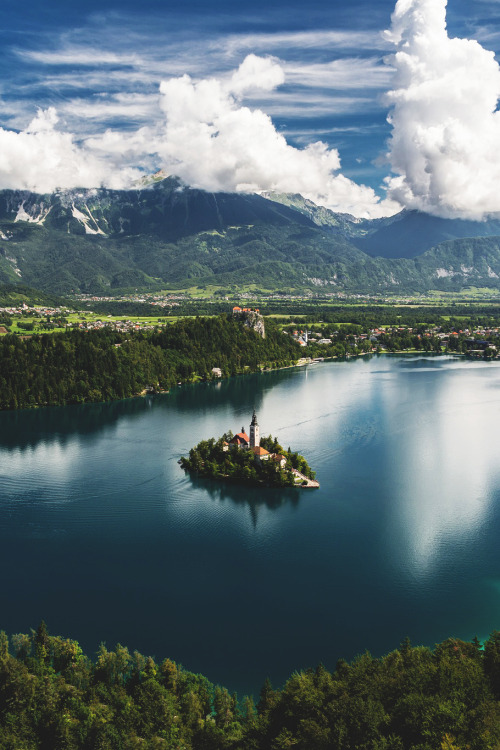
wnderlst: Lake Bled, Slovenia | Kevin Lozar


wnderlst:

Lake Bled, Slovenia | Kevin Lozar
03 Nov 14:50

Reforma política é 'erro cabal', diz cientista político - 30/10/2014 - Poder - Folha de S.Paulo

Balela. Irresponsabilidade. Caixa de Pandora. Não faltaram palavras duras contra a reforma política durante palestra do cientista político Fabiano Santos (Uerj) proferida nesta quarta-feira (28), durante reunião anual da Anpocs (Associação Nacional de Pós-Graduação e Pesquisa em Ciências Sociais).

"A possibilidade de criar um desastre institucional é muito grande. Não há nenhuma percepção da gravidade que é mexer nessas discussões com esse açodamento, com essa radicalidade", afirmou Santos, tido com um dos principais estudiosos do Legislativo no país.

"Reforma política não tem nenhuma relação com um problema substantivo da vida das pessoas. É um erro cabal do governo puxar esse assunto, um desastre", disse o pesquisador, sobre o tema colocado no topo das prioridades da presidente reeleita, Dilma Rousseff.

De acordo com ele, não há chance de o PT conseguir aprovação no Congresso dos pontos que considera importantes, como financiamento de campanha exclusivamente público."Existe o sonho dourado do PT e existe algo que o Congresso não fará, que é o sonho dourado do PT."

Santos afirma que uma consulta por meio do voto tampouco seja viável e citou como exemplo o próprio financiamento. "Vai convencer a população para que seja só público. Tem uma comoção em torno da política. Aí a gente vai pagar imposto pros caras Não é bom."

Com relação a propostas que tramitam no Congresso, criticou alguns pontos que estão em discussão, como o fim da reeleição e alteração do mandato presidencial, para cinco anos, separando a votação para presidente da escolha de deputados e senadores.

"Hoje, tem mais coordenação entre o Executivo e o Legislativo. Vamos simplesmente jogar isso fora e não se sabe por quê. Com o princípio de que o sujeito é eleito e depois pensa em se reeleger", ironizou, arrancando risos da plateia.

No final, Santos disse que experiências internacionais em reforma política resultaram em desastre e lembrou a experiência italiana.

"Na Itália, a reforma política foi feita sob uma grande comoção sobre corrupção. O sistema fragmentou-se mais ainda, radicalizou-se o processo político, e o [ex-premiê Silvio] Berlusconi ficou 25 anos."

Um dos homens mais ricos do mundo, Berlusconi governou a Itália durante três períodos entre 1994 e 2011, em um total de nove anos. Atualmente, responde na Justiça a processos de fraude fiscal e foi cassado da política, enquanto o país reerguer a sua economia.

"Então é uma balela, uma balela. Reforma política é balela. Não produz nada que se diz que irá produzir. A experiência internacional mostra isso", disse.

Santos acredita que seja possível aperfeiçoar o processo eleitoral de forma pontual, sem convocar uma ampla reforma política. Nesse sentido, defendeu o fim da doação empresarial a partidos e políticos, ficando apenas doações individuais e financiamento público.

Bookmarked at brandizzi Delicious' sharing tag and expanded by Delicious sharing tag expander.
03 Nov 14:48

A política no gueto

by Jose Roberto de Toledo

“Não conheço ninguém que tenha votado em Dilma. Como ela pode ter sido eleita?” Tal pergunta, frequente nas redes sociais, animou 2,5 mil pessoas a irem à rua pedir o impeachment da recém-reeleita e, em alguns casos, defender a volta da ditadura militar. O questionamento à legitimidade do pleito também está nas entrelinhas do pedido de “auditoria” da eleição presidencial feito pelo PSDB à Justiça eleitoral.

Embora diferentes em tom e propósito, são simbólicos – tanto a suspeição do resultado das urnas insinuada pelo vencido, quanto a apelação explícita de cidadãos inconformados com a derrota por intervenção militar. Mesmo que os eventos sejam inconsequentes, vale investigar o fenômeno de opinião pública na base de ambos.

A propalada divisão eleitoral do País é geográfica, mas não pode ser totalmente vislumbrada nos mapas de fronteiras estaduais, nem sequer municipais. Afora sua inconstitucionalidade e xenofobia, a ideia de um muro que separasse os eleitores de Dilma Rousseff (PT) e de Aécio Neves (PSDB) pressupõe que eles vivam em Estados ou, ao menos, cidades distintas. Não é o caso.

Na Bahia, onde a petista venceu com 70% dos votos válidos no segundo turno, o tucano tem 2,1 milhões de eleitores. São três vezes mais pessoas do que ele teve de votos no Mato Grosso do Sul, onde saiu-se vitorioso. Há mais aecistas baianos do que goianos, mato-grossenses, acreanos, roraimenses, capixabas, brasilienses e rondonienses – a despeito de os eleitores de tais unidades da Federação terem preferido Aécio a Dilma.

Ao mesmo tempo, só no município de São Paulo, onde Aécio teve 64% dos votos válidos, Dilma tem 2,3 milhões de eleitores. É mais gente do que o eleitorado que sufragou a petista em todo o Pará, onde ela foi a mais votada. E não só. Numericamente, os paulistanos que votaram na petista pesaram mais para sua vitória do que os piauienses, potiguares, paraibanos, amazonenses, alagoanos, sergipanos, tocantinenses e amapaenses.

A segregação de eleitores de Dilma e de Aécio existe, mas é muito mais profunda e complexa do que os mapas podem revelar. Ela ocorre, na maioria das vezes, dentro das cidades. Os eleitores de um e outro vivem no mesmo município, mas convivem muito pouco entre si. Cada grupo conversa quase exclusivamente dentro do seu gueto político-eleitoral – e ignora o outro.

Na média do Brasil, um eleitor tem 2,4 vezes mais chances de encontrar alguém que vote como ele para presidente do que alguém que vote no outro candidato – não importa se ele prefere Dilma ou Aécio. No Estado de São Paulo, a segregação cresce: a chance de encontrar um semelhante é 3,5 vezes maior do que um diferente. Em alguns lugares, essa chance é até 15 vezes maior.

O cálculo é baseado nos resultados por zona eleitoral do pleito presidencial. Como mais de 70% dos eleitores demora menos de 15 minutos para ir até o local de votação, a zona eleitoral pode ser considerada uma unidade espacial. Dois eleitores que votem numa mesma zona têm maior probabilidade de morar perto um do outro do que longe. Portanto, têm mais chances de conviverem.

Por causa da segregação, há pouca troca de palavras entres os divergentes. Cada grupo tende a conviver dentro de sua própria bolha, repetindo ideias preconcebidas sem que haja contraposição de argumentos – pois todos concordam entre si. Em época de eleição, essas ideias viram slogans, e logo, preconceitos. Aí, quando os contrários se encontram, não há debate, só confronto.

Esse fenômeno de guetização da política é agravado pelas redes sociais. Os eleitores tendem a seguir quem pensa parecido. O Facebook só coloca no “feed” de notícias do usuário aquilo que seu algoritmo imagina que seja do seu agrado e interesse. Assim, os guetos de opinião tendem a ser cada vez mais homogêneos entre si e heterogêneos no conjunto. É a receita para o conflito.

03 Nov 14:48

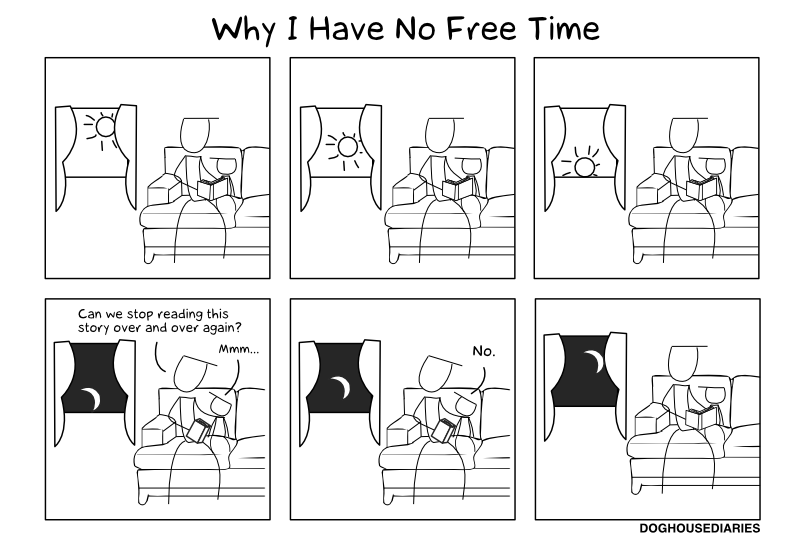
Why I Have No Free Time

by DOGHOUSE DIARIES

Why I Have No Free Time

It's not a total waste of time. I'm learning all sorts of stuff. Apparently, 'A' is for 'Apple'. Go figure.

03 Nov 13:07

Painted Canyon

My latest render is called "Painted Canyon". It was inspired by a tiny thumbnail of a photo I glimpsed while surfing the internet. I wish I'd saved it or tried to find the source! The photo brought back the time I visited Big Bend National Park and saw the sunset through a massive gorge.

I hope you enjoy it. I still have a tweak or two I would like to try but I thought it looked nice enough to share...

03 Nov 13:07

Titan Beyond the Rings

Discover the cosmos! Each day a different image or photograph of our fascinating universe is featured, along with a brief explanation written by a professional astronomer.

2014 November 2
See Explanation.  Clicking on the picture will download
 the highest resolution version available.

Titan Beyond the Rings
Image Credit: Cassini Imaging Team, ISS, JPL, ESA, NASA

Explanation: When orbiting Saturn, be sure to watch for breathtaking superpositions of moons and rings. One such picturesque vista was visible recently to the robot Cassini spacecraft now orbiting Saturn. In 2006 April, Cassini captured Saturn's A and F rings stretching in front of cloud-shrouded Titan. Near the rings and appearing just above Titan was Epimetheus, a moon which orbits just outside the F ring. The dark space in the A ring is called the Encke Gap, although several thin knotted ringlets and even the small moon Pan orbit there.

APOD Wall Calendar: Moons and Planets
Tomorrow's picture: mountain green < | Archive | Index | Search | Calendar | RSS | Education | About APOD | Discuss | >

Authors & editors: Robert Nemiroff (MTU) & Jerry Bonnell (UMCP)
NASA Official: Phillip Newman Specific rights apply.
NASA Web Privacy Policy and Important Notices
A service of: ASD at NASA / GSFC
& Michigan Tech. U.

Expanded from APOD by Feed Readabilitifier.
03 Nov 11:06

vintagegal: Evil Corp vinyl figures Vocês cinéfilos, chuto,...


vintagegal:

Evil Corp vinyl figures

Vocês cinéfilos, chuto, vão gostar disso.

03 Nov 03:30

Whoever Saves a Life

Adam Victor Brandizzi

A espetacular história da Defesa Civil em Alepo. Um dos melhores textos que li.

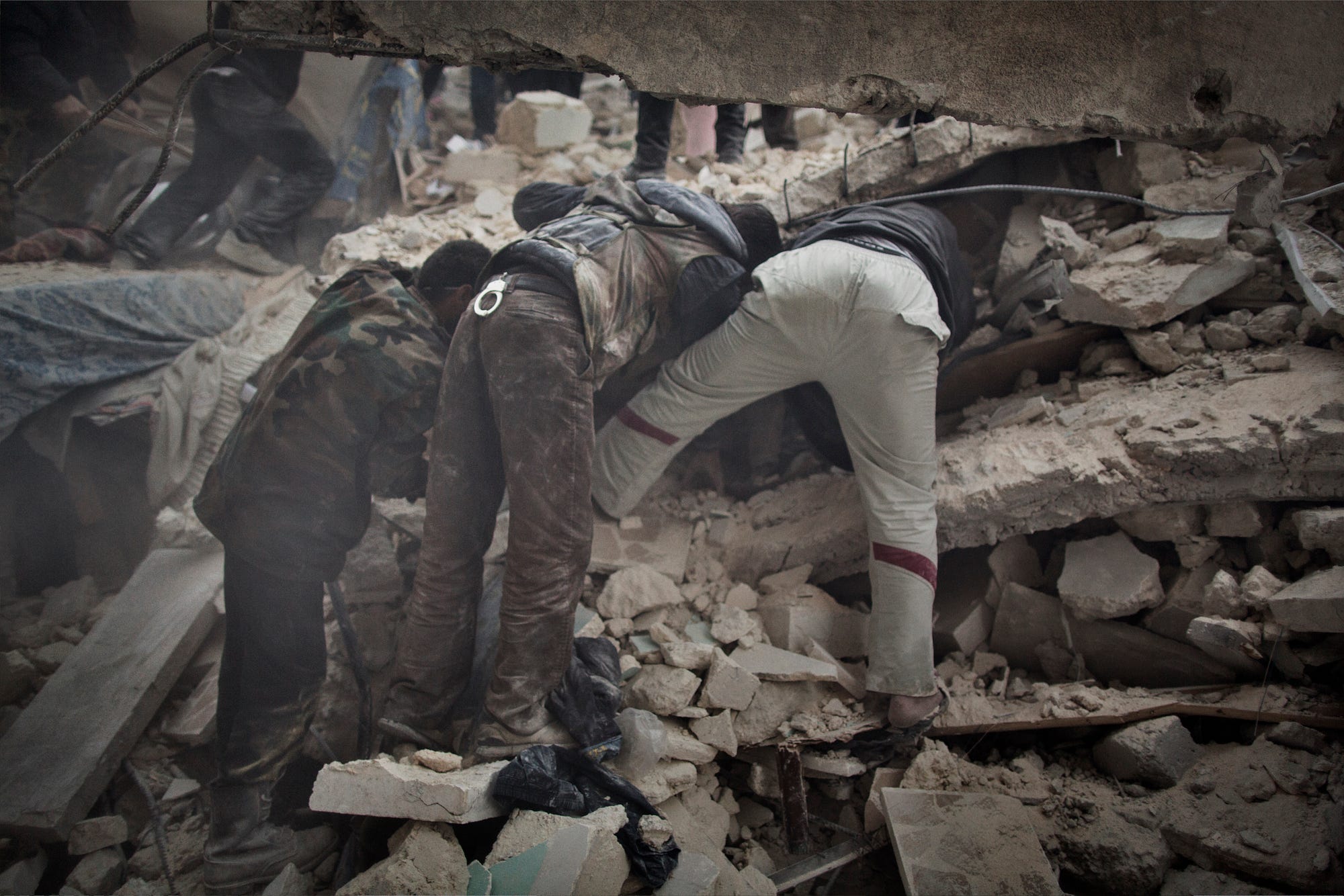
Their training came just in time. In the fall of last year, the momentum of the war began to shift in favor of Assad. After the regime killed over a thousand people with sarin gas on the outskirts of Damascus on August 21, 2013, and the West declined to intervene, Assad renewed his offensive. Aleppo, the linchpin city of the north, was among its key objectives. And to break the rebels’ grip on the eastern half, the regime turned to a tool it had been testing in other cities: the barrel bomb.

Last November, the campaign began in earnest. Dozens of bombs rained each day and night on crowded markets and apartment buildings. In one two-week span, over five hundred people were killed, almost all of them civilians. The Hanano team worked the sites nonstop, massacre after massacre, from early morning until late at night. There was hardly time to eat.

And yet through it all, they stuck together. In the last year, only two members had quit, one at the insistence of his family. The people are waiting for us, Khaled would tell the team each time there was a blast. We know that they are waiting for us. They cited as their motto a Koranic sura: “And whoever saves a life, it will be as if he has saved all of humanity.” For all their gallows humor, they held it in earnest. They were there to stand beside the weakest and the most helpless, even at the cost of their own lives, even after losing three teammates, even after the destruction of their station. So that others might live.

By evening, the school was taking on some of the old station’s trappings, including the collection of ratty communal sandals in the hallway. But here there was plenty of room. The guys sorted and stored the equipment in an empty classroom that still bore an ISIS decal. They cleared out a space and set up their beds in the basement, where they would be better protected from the bombardment at night. There were more rooms, but they had grown accustomed to sleeping close together. Khaled put his desk and couch next door to the equipment room.

“It’s like a five-star hotel,” he announced.

“I still miss the old place,” sighed Surkhai.

They were sitting on the floor in their break room, watching the rebel channel Haleb al Youm, or Aleppo Today, on their beat-up TV. They had arranged the room in the Middle Eastern style, laying carpets and cushions around the perimeter in a U-shape facing the television. Despite the grim reality in the countryside, the channel stayed upbeat, playing clip after clip of the rebels firing anti-tank missiles and mortars at government positions. Then the boys recognized themselves.

“Hey, it’s us!” said Annas, and they turned the volume up. The broadcaster said that the regime had targeted and destroyed the Hanano Civil Defense station, but that no one had been injured.

“We should have told them we were all killed in the blast, then maybe Bashar would leave us alone,” said Ali.

Shahoud, the elder twin, came in with a platter of fresh vegetables and mezzes, little dishes of tapenade and hummus, along with flatbread. “You think we’re going to live a long time?” he said, slapping his belly. “We’re eating so that we don’t miss anything.” And they all tucked in.

Down time between bomb blasts.

“Listen, guys, I’m defecting,” his brother Surkhai announced, as they lit up cigarettes. He held up his phone, which had a photo of a blonde woman in a skimpy outfit posing with two regime soldiers. “Look at this girl, and look at your beard,” he said, shaking his head in disgust.

“All the hot girls are in the regime areas,” Annas said. “We just have Al Qaeda.”

“Look at us. Bashar has been sitting in a jacuzzi this whole war, fucking girls,” Surkhai moaned. “I’m so horny, but I don’t think I could even get a girl pregnant after living like this.”

“Why don’t you go fuck yourselves?” Ali suggested.

Khaled laughed shyly. He had never been with a woman. There was a girl before the war, but she had married someone else. The rest of them were similarly inexperienced; some, like Ahmed, a romantic, were engaged, but only Shahoud had his own family. The war had interrupted all their plans, and, even as it became apparent that it would not end soon, not many families wanted their daughters to marry the lunatics in Civil Defense.

Their main pastime, apart from smoking, was banter. The stronger and more tender their bond, the sharper the insults. Especially with Surkhai, the head clown of the lot. Earlier that day, he had found a tennis-sized metal ball that, when rolled on the school’s stone tiling, made a rumbling sound uncannily similar to that of a jet swooping down to strike. He’d roll it behind the guys and watch them jump.

It wasn’t easy to join such a tightly knit team. During the afternoon, a chubby, curly haired nineteen-year-old named Ammar had shown up and asked to sign up. They had a couple of openings, but Khaled was skeptical. He would give him a chance for a few weeks, and see how he handled the dead bodies and double-taps. Lots of people wanted to join, but few stayed longer than a week. He assigned Shaben, an eight-month veteran of the team who was mature beyond his 24 years, to look after the rookie.

Everyone had his own nickname. Ali, who was whippet-shaped, was called Sankour, which meant something like “bum.” “Because he looks like a poor man,” Surkhai explained.

One last cigarette in the team’s destroyed headquarters before moving out.

Latif, whose board shorts and mop of auburn hair gave him the appearance of a Californian surfer, was nicknamed Zawahiri, after the current head of Al Qaeda, because, well, he had sort of been involved with Al Qaeda. His two older brothers were fighting with Jabhat al Nusra, the Syrian Al Qaeda affiliate, and he had been a fighter with another related jihadist group. If someone asked him if he shared the group’s vision for a Shariah-based state in Syria, he’d nod and smile: “Inshallah.”

His parents had decided that two boys on the front lines was enough, and had forced Latif to quit. But he craved adventure, and told his parents that if he was going to die in this war, he wanted to die as a martyr. When he found out how dangerous Civil Defense was, he signed up.

“He wants to be a martyr?” said Khaled, overhearing him. He laughed incredulously. “He loves the girls!” The rest of the guys hooted in assent. “The other day, he went on a date with one in the border camp in Azaz.” Not exactly proper extremist behavior.

“She’s my fiancee,” Latif protested, gesturing as if he were putting a ring on his finger. “My fiancée!” he repeated, over the team’s laughter.

The sound of a helicopter swooping in woke them. Khaled pulled his blanket over his head like a surly teenager. The deafening blast was close enough that the doors slammed and a window broke. They waited for the second one, and then clambered to their feet and ran for the truck. Abu Sabet had just arrived with the morning bread run. “It’s in Sakhour,” he said, as they climbed in atop the still-warm stacks of flat bread and jolted off.

A civilian calls to his family members trapped inside what had been their home.

The site was just around the corner. The bomb had completely demolished an empty house and torn off the front half of the neighboring seven-story apartment building, so that you could see into people’s kitchens and bathrooms, like a dollhouse. Two people had been killed, and there were women and children still trapped upstairs. The team watched from below as Ahmed and Annas climbed up an exposed staircase and brought them down with linked arms in a chair lift. The women’s faces were caked white with dust, like geishas.

On the way home, Ahmed let his head rest against Annas’s shoulder contentedly — it always felt good to get someone out of the rubble. It was a victory against the bombs.

Back at the station, Khaled noticed that the blast had torn his office door off its hinges. It was only their third day there. He looked to the sky. “Where do you want us to go?” he yelled to no one in particular.

Later that morning, Abu Sabet returned with his taxi, and Khaled decided to make the rounds of the city’s stations. As operations chief for Civil Defense in all of Aleppo, Khaled was supposed to have his own car, but it had broken down and the city council had still not repaired it. He was beginning to suspect it was an intentional move by his boss, the head of Civil Defense and a political appointee named Ammar Salmo who, he believed, was jealous of his popularity.

ARK had been asking Khaled to provide a list of nominees for a new round of training, selected from among the four rescue teams and the firefighting unit in the city. Khaled had to get recommendations from each station chief, so he drove to the closest first, Bab al Nerab. When no one answered the station door, he went inside and climbed up to the second-floor office. Though it was nearly noon, the chief, Abu Rajab, was still in his pajamas and was rubbing his eyes sleepily. Khaled listed off ARK’s requirements and the number of men needed for each class — there would be a basic training course, one in heavier equipment, a medical assistance class, and finally a course in leadership. Abu Rajab listened absentmindedly without taking notes. “Okay thanks,” Khaled said, struggling to contain his annoyance.

In the new headquarters, the team placed their bunks in the basement for a more fortified night sleep.

He continued to the firefighting team down the road, which was also under Abu Rajab’s command. There he found a former protégé, who poured him some cola in a paper cup. Khaled sipped as he listened to him vent about his boss. The protégé had been a firefighter before the war, and knew his job.

“He says to me, ‘If you don’t like it, go work with Hanano.’”

Khaled shook his head. “What about the radio?” Several radios at the Bab al Nerab station had gone missing.

“He says that someone stole it from his home.”

“He’s selling the radio, that’s what it means.” Khaled sighed. Petty corruption was becoming more and more of a problem. Before Civil Defense had been purely volunteer work, but now they were getting salaries from the city council.

“Tomorrow, I’ll send you someone good from my team to help, Okay?” Khaled said, patting him on the knee. “If this guy” — he meant Abu Rajab — “doesn’t work, we’ll kick him out.” He finished his cola. “Maybe we’ll have to kick a lot of people out.”

Khaled walked outside and lit a cigarette. His talk of kicking people out was just bluster. In the beginning, after getting training from ARK, he had helped set up the other teams in Aleppo, and had been the de facto leader for the city, with authority over the equipment and personnel decisions. But then the Civil Defense program had been integrated into the local government, which was in turn, in theory, integrated into the Syrian National Council, the rebel government-in-exile. This was what the Western donors wanted, even though the national council was, as far as Khaled and the team were concerned, a bunch of corrupt politicians sitting in five-star hotels in Turkey. When the city council arbitrarily decided that the head of Civil Defense had to have a college degree, they picked the well-connected Ammar over Khaled.

A wounded member of Civil Defense awaits news on a his teammate’s condition inside a makeshift hospital.

Ammar had appointed his own cronies, like the lazy Abu Rajab. He disliked Khaled, but couldn’t get rid of him. Khaled had too much moral authority. When the three men from the Hanano team had been killed on an operation, the city council had refused to keep paying their salaries to their families. Khaled and the guys had marched in the streets with signs; Ammar and the other teams had refused to join them. But the Civil Defense teams were extremely popular, especially Hanano, and, embarrassed by the media coverage of the protest, the council had been forced to pay the salaries out.

Khaled knew he had to exercise what influence he could through his network of protégés who were spread among the city’s teams. There was nothing he could do about the fact that the city council was ineffective and corrupt, and completely beholden to the various armed rebel groups that controlled the city. As the war had gone on, he thought, the revolution had changed, and had become about power and extreme views of religion. As if to prove the point, as he stood in front of the fire station, a red fire truck cruised slowly by. It was much larger and nicer than his, and the three heavyset men in the cab were wearing civilian clothes and had large, fan-shaped beards and shaved mustaches. It was Jabhat al Nusra, the local Al Qaeda affiliate. They had their own fire brigade, and the city council gave them the best of the donated equipment. Seeing Khaled’s uniform, the men smiled and waved. He dragged on his cigarette and returned the gesture half-heartedly.

When Khaled drove around his city with Abu Sabet, he saw it in terms of a new geography inflicted by the war, one that had almost come to obscure the memories of life before, one whose landmarks were the sites of massacres and improbable rescues. It was not just physical destruction that the regime was after, Khaled thought, but the destruction of living communities. Whole neighborhoods in the rebel-held side of the city were abandoned now. When he asked people why, in spite of everything, they had stayed, he found three kinds of answers. Either they were too poor to leave, or they were too stubborn to abandon their homes. Or else they had become fatalistic, thinking that their appointed hour would come whether in Aleppo or in the refugee camps. The desperate and the mad. But regardless, he swore to them, Civil Defense would be the last to leave.

The catacombs of Aleppo.

Had there ever been a war like this in history, he wondered? They said that nearly two hundred thousand Syrians had died so far. Another nine million had fled their homes. Why had God allowed these things to happen? Perhaps it was a test. He thought of his diaries, which he had left behind in his family home. Growing up as a middle child of 17 — his father had three wives — he hadn’t had many opportunities, but he had taught himself history and poetry. After graduating high school, he had tried to enroll in college but soon dropped out to earn a living, teaching in a little vocational school that trained nurses and electricians. At night, he would often write in his diary, puzzling over what the future had in store in him, trying to answer the question: What should I become? The war had been his answer.

Life in Aleppo had become like the concrete dust that coated each blast site, as monochrome as a dream. The rubble he worked in was churned and uniform, like food from a stomach. Where there had once been a building with distinct parts, with painted doors and windows and balconies, and inside them chairs and tables and cupboards, the constituents of a person’s home, now they had to strain to see objects among the grayish mass: a twisted ceiling fan, the edge of a mattress, a woman’s shoe. The dust colors everything, colors the light from the evening sky, colors the hair of the rescuers, colors the metallic taste in their throats, lies like snow upon the neighbors’ window frames, lies on the eyelashes that fluttered in stunned beats, and as the night comes upon them, the dust seems to descend and thicken with the darkness.

There was no electricity, and the city was pitch black now, the stars bright above. On either side of Khaled and Abu Sabet, the desolate, bombed-out blocks stretched out into the night like catacombs. A few generator-powered corners passed like islands; drivers kept their headlights off for fear of attracting the jets. Abu Sabet crept along in the darkness through the familiar streets, sensing potholes and wrecks before they were visible, flicking his lights occasionally as a blind man sweeps his cane. It was like gliding in a submarine along the bottom of the sea.

It had been another sleepless night in the basement of the school. Latif, the Al Qaeda fanboy, had gone to bed with a pop song endlessly looping on his phone. The shelling had been particularly loud and intense, but worse still were the famished mosquitoes. The first bombs at dawn were almost a relief.

The team, led by Surkhai, one of the twins, pulled on their clothes and ran upstairs to the truck, breakfasting on cigarettes as they rattled through Aleppo’s broken streets. For once Surkhai, the team jester, was silent. It was the fifth day in the new station.

They found the site down a narrow side street. A bomb had come sailing down in the clear morning air and struck a small apartment building, partially collapsing it. Most of the extended family who lived there had made it out and were standing anxiously in the street. There were two sisters in headscarves holding each other and weeping; men were digging angrily at the rubble. Surkhai got down from the truck and ran up to an old man, still in his pajamas, who was powdered with dust. “There are two boys trapped inside,” he said.

According to the training they received in Turkey, the rescue technique they chose depended the kind of structure and the degree to which it had collapsed. When multi-level concrete buildings fail — whether from a bomb strike or an earthquake — its floors tend to pancake on top of each other, crushing those inside. However, small spaces will often remain around columns, stairwells, or pieces of heavy furniture, allowing people to survive. The key was to get to them in time, without getting caught by a further collapse of the building.

The first step was to locate the victims. The family knew that the kids had been in their bedrooms, sleeping, so the team had an idea of where they should be.

Civilians and Free Syrian Army fighters search for survivors.

Now there were two possible approaches. The first was known as a horizontal rescue, where the team tunnels parallel to the floor layers, shoring with pieces of wood as they went. The second was a vertical rescue, where they would dig from either above or below to the victim. In this case, the team went for both approaches simultaneously. Surkhai went into a one-room shop on the ground floor of the building and started smashing at its back wall with a pick. Meanwhile, whippet-skinny Ali got up on top of the rubble pile and, aided by the boys’ father, started digging downward toward where the bedroom had been.

The old man and the women stood in the street, watching helplessly as the men swarmed atop the pile that had been their home. They were simple tailors who were trying to eke out a living in Aleppo. Why should they leave their homes for Bashar al Assad?

At the top of the pile, Ali could hear the sound of the little boys’ voices calling for help, and they redoubled their efforts. The closer they got to their target, the slower they went, even as the pressure mounted — a frantic search turned archeological excavation. Smaller chunks of concrete were picked away, larger ones levered free, webs of rusted rebar were sawed in half. Finally, they opened a hole through the floor, and there they were: The brothers crouched down by their beds, chalk-white but seemingly unharmed. It was as if they had been etched back into the world.

Ali and Surkhai carried the children down to a waiting ambulance. Their mother ran to them, sobbing in relief at a kind of second birth. Watching the reunion, even Surkhai got a lump in his throat.

The team returned to the station elated. But there was only time for a cup of tea before a second call came in — the firefighting team needed their help. This time, Khaled came along. They drove into the narrow streets of the old city, where a blaze was sending up pillars of black smoke. An incendiary round fired by a regime sniper had ignited the stocks of dry goods in the basement of a shop. The fire squad, led by Khaled’s friend, was struggling to put it out. Their pump wasn’t working properly. Ahmed, the former firefighter, put on coveralls and started helping.

Then Khaled caught something over the radio. There was a bombing across town, but he couldn’t make out the rest of the message — the signal was terrible as usual. They ran back to the truck and headed in that direction, but as they passed through the central rebel market, a little yellow taxi careened toward them. It was their driver, Abu Sabet.

“The guys were hit!” he shouted. “They’re in the hospital.”

As Abu Sabet wheeled around, the truck charged forward to the hospital just down the street, where several of the Civil Defense guys were standing outside, pacing and smoking. Some of them were in tears. Ammar, the rookie, was caked in dust, a rivulet of blood running down his temple.

“What happened?” Khaled demanded.

“We were getting water when the helicopter came,” he said. “We tried to run for cover but the bomb came too close. I’m okay, but Shaben…”

Khaled looked toward the hospital, his face ashen. “Go home,” he said.

“I want to stay,” Ammar replied.

Khaled marched into the hospital. It was all that remained of the big one around the corner, Dar al Shifa, which had been infamously bombed by the regime the year before. The surviving doctors and nurses had moved into a little indoor shopping mall, with beds for patients set up in the tiny shops. Shaben, who had been looking after the rookie, was shirtless and hooked up to an IV bag, his torso and head bloody and bandaged. A doctor was taping the gauze on his forehead.

A critically injured volunteer is treated for shrapnel wounds.

Most nights, when Ahmed the firefighter walked out into the courtyard of the station, he could lift his lanky arm and pick out the “W” of Casseiopea. The stars would be bright in the cloudless sky, the same stars that people in North America would see six hours later. The central star of the W, Gamma Cassiopeia, was his star. Down and to the right was Alpha Cassiopeia, her star. And Caph, a giant 54 light years distant, was the star of their love.

He kept a photo of his fiancée on his phone: she looked demure in a headscarf but had a glint of humor in her eyes. Now she was stuck on the regime-held side of the city, where at least it was safer. So they messaged each other on Facebook, and Skyped.

All the guys imagined a better life after the war, but none knew when it would end. Khaled had a feeling it would be a long war. He wondered what would be left of his country by the time it ended. Somehow the revolution had gone horribly wrong. Could anyone really say that the rebels or the regime were in the right anymore? The world had turned its back on them, that much was clear.

And yet the simple stoicism that drove the team’s rescue work did not allow them to believe that their cause was futile. Surely God would grant them victory, though ISIS and the regime had nearly surrounded Aleppo. In the meantime, their youth and courage would protect them, if not from destruction, then from despair. They were living the war with more emotion than they would ever feel again in their lives. In its wild moments, it exalted the senses higher than any drug or love affair, and in its mundane, it hardened the bonds of friendship until they seemed stronger than the bombs that fell from the sky. And even if the boys of Civil Defense were among the testosterone-and-adrenaline junkies getting their kicks on Syria’s front lines, at least they were innocent of the stain of taking human life. Perhaps that protected them. As they saved others, they saved themselves.

Bookmarked at brandizzi Delicious' sharing tag and expanded by Delicious sharing tag expander.
03 Nov 03:21

Desembargador defende auxílio-moradia para ir a Miami comprar terno. E para não ter depressão - Caixa Zero

Adam Victor Brandizzi

Tá difícil...


Discutir eleição é importante, claro. Mas o período eleitoral sempre serve também para que outras instituições que estão de fora do processo aprovem benefícios em causa própria ou façam coisas que querem ver debaixo do tapete. Como todo mundo que acompanha o noticiário só presta atenção aos candidatos, fica barato fazer coisas impopulares nesses meses.

Em 2014, o troféu da medida impopular foi para o Judiciário, aprovou R$ 1 bilhão em “auxílio-moradia” para os seus. São R$ 4,4 mil por mês para cada magistrado do país, independente de ele (ela) já ter casa, de morar com outro juiz (juíza), e agora, discute-se, até mesmo independente de estar na ativa ou ser aposentado.

Como não precisam se eleger nem gostam muito de prestar contas do que fazem, os juízes se retraíram e os críticos ficaram falando sozinhos. Mas às vezes alguém põe a cabeça para fora e é possível perguntar por que, afinal, dar auxílio moradia para quem já tem casa, e dar mais benefícios a quem já tem salário inicial superior a R$ 20 mil.

No Jornal da Cultura, isso aconteceu. O desembargador José Roberto Nalini, presidente do Tribunal de Justiça de São Paulo, foi questionado sobre o tema. E vale a pena transcrever na íntegra a resposta:

“Esse auxílio-moradia na verdade disfarça um aumento do subsídio que está defasado há muito tempo. Hoje, aparentemente o juiz brasileiro ganha bem, mas ele tem 27% de desconto de Imposto de Renda, ele tem que pagar plano de saúde, ele tem que comprar terno, não dá para ir toda hora a Miami comprar terno, que cada dia da semana ele tem que usar um terno diferente, ele tem que usar uma camisa razoável, um sapato decente, ele tem que ter um carro.

Espera-se que a Justiça, que personifica uma expressão da soberania, tem que estar apresentável. E há muito tempo não há o reajuste do subsídio. Então o auxílio-moradia foi um disfarce para aumentar um pouquinho. E até para fazer com que o juiz fique um pouquinho mais animado, não tenha tanta depressão, tanta síndrome de pânico, tanto AVC etc

Então a população tem que entender isso. No momento que a população perceber o quanto o juiz trabalha, eles vão ver que não é a remuneração do juiz que vai fazer falta. Se a Justiça funcionar, vale a pena pagar bem o juiz.”

A declaração é uma mostra do que pensa o Judiciário? Esperemos que não, claro, mas vejamos o que ela diz:

1- O juiz aparentemente ganha bem, mas não é verdade, dados os imensos encargos que ele tem.

2- Entre esses encargos estão o Imposto de Renda e plano de saúde, coisas que os demais brasileiros, por óbvio, não têm que pagar. Caso tivessem de bancar isso, seguramente, visto que existe justiça no país, receberiam auxílio-moradia igualmente.

3- Outro encargo é que o juiz tem que comprar roupas. Curioso que o auxílio-moradia pague ternos, mas vá lá. E não são quaisquer roupas de plebeu, diga-se. São ternos de Miami! Necessariamente. Imagine só a que se subordinam os juízes em nome da aparência da Justiça nacional, em nome da boa expressão da soberania do país. Gastam dinheiro (do seu próprio bolso!) para ir a Miami comprar ternos. Quem de nós, caso tivesse sabido disso antes não teria se apiedado dos magistrados? Quem ousaria ser contra um subsídio que garante esse gesto de altruísmo em nome de nossa soberania?

4- Os juízes também precisam comprar camisas, sapatos e carros. O que justifica um auxílio moradia, evidentemente.

5- O salário de R$ 20 mil (inicial) e a ausência de um auxílio moradia estão levando nossos juízes à depressão. Custa ajudar?

6- Além de depressão, o encargo de representar a soberania nacional com viagens frequentes a Miami também está levando os magistrados a ter ataques de pânico.

7- A ausência de um auxílio-moradia causa AVC. (Não se sabe como os outros 99% da população estão sobrevivendo a essas doenças todas que acometem quem não ganha o benefício.)

8- Se a população soubesse o quanto o juiz trabalha, pagaria sem reclamar. Porque, claro, os juízes trabalham mais do que você, mais do que qualquer um. E ao invés de usar este bilhãozinho para contratar mais juízes e dividir a carga, o certo é pagar mais para que eles sejam recompensados pelo que fazem.

9- Não é o dinheiro do salário do juiz que fará falta. Afinal, o que é R$ 1 bilhão por ano, né?

10- O auxílio-moradia é um disfarce assumido para reajuste de salário. O que é ilegal. Mas como quem vai julgar isso é o próprio Judiciário, quem se importa de admitir isso em público?

Este é um espaço público de debate de idéias. A Gazeta do Povo não se responsabiliza pelos artigos e comentários aqui colocados pelos autores e usuários do blog. O conteúdo das mensagens é de única e exclusiva responsabilidade de seus respectivos autores.

Bookmarked at brandizzi Delicious' sharing tag and expanded by Delicious sharing tag expander.
03 Nov 03:20

GamerGate and the politicization of absolutely everything

1. If you want to understand why Gamergate has blown up, you could start with a recent study by Stanford University's Shanto Iyengar and Sean J. Westwood. They handed 1,000 people some sample student resumes and asked them to decide which deserved a scholarship. The resumes included clues to both the race and the political orientation of the applicant, as well as information about their grades.

2. Race mattered. But political orientation mattered even more. Democrats and Republicans chose the resumes that shared their politics roughly 80 percent of the time. Of course, it's the grades themselves that should have driven the decisions — but the activation of political identity made grades pretty much irrelevant. "We found no evidence that partisans took academic merit into account," the researchers wrote.

at least under certain conditions, our political identities now trump our racial identities

3. In another experiment, Iyengar and Westwood set up a game wherein player one received $10 and could give any amount they wanted to player two. Here, race didn't matter. But political affiliation did. People gave 24 percent more to their fellow partisans than they did when they didn't know anything about the other player.

4. Iyengar and Westwood's conclusion is stark. "Partisans discriminate against opposing partisans, and do so to a degree that exceeds discrimination based on race," they write. Think about that for a moment: at least under certain experimental conditions, our political identities now trump our racial identities.

5. In fact, our political identities are now so powerful that they structure our reactions to racial controversies, as this graph of poll results from Brown University's Michael Tesler shows:

race and politics

Michael Tesler/Monkey Cage

6. This didn't used to be the case. Even a few decades ago, our political identities weren't strong enough to drive our reactions to racial controversies:

politics and race older

Michael Tesler/The Monkey Cage

7. This is the context for how #Gamergate has become so massive: we live in a world where politics leads to a 38-point gap on whether a movie about slavery should win an Oscar — an issue, for the record, that neither the Democratic nor Republican parties had any official, or even unofficial, position on. But partisans knew intuitively which side to take. They knew who their friends were, and they knew who their enemies were, and they knew which side would cheer if "12 Years A Slave" won the Oscar. Political identities aren't about tax cuts. They're about tribes.

Political identities aren't about tax cuts. They're about tribes.

8. This is the result of the incredible rise in political polarization in recent decades. It used to be that both the Republican and Democratic parties included both liberals and conservatives. Since parties contained ideological multitudes, it was hard for them to be the basis of strong, personal identities. A liberal Democrat in New Jersey didn't have a lot in common with a conservative Democrat in Alabama. But now that's changed. The parties are sharply sorted by ideology. What were once fractious coalitions have become unified tribes.

9. You can see the rise in political identity in the surveys on marriage. As Cass Sunstein writes, "in 1960, 5 percent of Republicans and 4 percent of Democrats said that they would feel 'displeased' if their son or daughter married outside their political party. By 2010, those numbers had reached 49 percent and 33 percent."

This is a world in which it was only a matter of time until video games were politicized

10. This isn't a world in which we should be surprised that video games have been politicized. This is a world in which it was only a matter of time until video games were politicized. This is a world in which, sooner or later, most everything will get politicized.

11. Though there are liberals within Gamergate and conservatives opposing it, the broad coalitions that have emerged around Gamergate are very clear. The conservative site Breitbart has been a leading source for Gamergaters convinced there's a media conspiracy against them. (Sample headline: "WHILE THE MEDIA SLANDERS GAMERS AS ‘TERRORISTS,' GAMERGATE IS HUNTING TROLLS AND ABUSERS.") Christina Hoff Sommers, a scholar at the conservative American Enterprise Institute, has become the movement's protector against claims that it's anti-woman.

12. On the other side, liberal opinion is in lockstep against Gamergate. Outlets ranging from Salon ("#Gamergate is really about terrorism: Why Bill Maher should be vilifying the gaming community, too") to Gawker ("#Gamergate Trolls Aren't Ethics Crusaders; They're a Hate Group") to the Colbert Report have slammed the movement. The last, in particular, has created something of a cultural crisis within Gamergate, as the kinds of mostly young, mostly male, reasonably webby people who like Gamergate also like Colbert, and his rejection of them stings.

13. What's telling about the constellation of forces here is that none of them actually care much about video games. Prior to Gamergate, Sommers did not traffic in critical analyses of video gaming. Prior to Gamergate, Salon did not spend a lot of time writing about video games. Prior to Gamergate, the Colbert Report did not regularly cover gaming news. Rather, these are outlets and players that specialize in political conflict. And Gamergate has become a political conflict. Video games, at this point, are an excuse for that conflict.

Gamergate has become a political conflict. Video games, at this point, are an excuse for that conflict.

14. It's worth stopping for a moment to say that Gamergate, as well as the reaction against it, isn't any one thing. It includes horrifying, probably criminal, harassment against pretty much any women who dare oppose it. It's partly an argument about what kinds of games the gaming press should cover — and, by extension, what kinds of games developers should make. It has members who want clearer disclosure policies in gaming journalism. It has a lot of people who joined because they hate feminism and internet "social justice" warriors. And it has many people, on both sides, who are far surer about who they're fighting than what they're fighting about.

15. One thing that comes clear when you spend much time reading inside the Gamergate community is the feeling of being misunderstood — and, for that matter, smeared — is very, very real. If you're reading about Gamergate on the left, virtually all you're reading about is the intense, horrifying harassment against women that's happening under Gamergate's banner. If you're reading about Gamergate from inside Gamergate, virtually all you're reading about is how the media is smearing Gamergate by equating it with harassers who don't represent the movement's real tactics or goals (some Gamergaters even believe the trolls are part of a false flag operation meant to discredit Gamergate). Gamergaters are furious that the media focuses on all the bullying happening under Gamergate rather than all the money Gamergaters are raising for anti-bullying efforts. Anti-Gamergaters are furious that Gamergate focuses more on bad jokes from Gawker than the monsters in its midst.

Within Gamergate, there's a deep sense of conspiracy

16. Within Gamergate, there's a deep sense of conspiracy — the belief is that the reaction to their campaign has been so unfair and so overwhelming that the only possible explanation is a wide-ranging conspiracy. Much of the subreddit Kotaku In Action is dedicated to try to untangle this sinister web. This has led to some...odd theories. People have reported that, as editor of Vox.com, I own or runPolygon.com, despite the fact that Polygon has been around a lot longer than Vox.com (the confusion here stems from the fact that both sites share the same corporate parent, Vox Media). They've suggested that "weird Twitter" is secretly controlled by Nick Denton, founder of Gawker Media. But the sense of siege is very real within Gamergate. "This is a gamers vs. the media issue," says the top-voted comment on the guide to Kotaku In Action.

If indeed Weird Twitter is Nick Denton's private troll army, the rabbit hole goes far deeper than any of us could have imagined. #GamerGate

— Matt Forney (@realmattforney) October 25, 2014

17. All this, too, is common within political conflict in polarized times: the two sides segregate into completely separate information loops. Politicized media outlets and activist information sources have incentives to cover the worst of the other side, and to play to the fear, anger and even paranoia of their own side. Structurally, each side only becomes familiar with the most extreme members and interpretations of the other side — and so comes to loathe and fear them even more.

18. The point here is not that both sides are equal, or equivalent. It's not even obvious that there are two sides here, so much as there are two coalitions, each with multiple sides and competing interests. And no one should dismiss the very real, very dangerous harassment that's happening under Gamergate's banner. The point here is that the Gamergate fight is now being partly driven by forces that have nothing to do with the video gaming industry, or even with gamers. Forces that are very good at making these kinds of conflicts worse and deeper. Forces that will be around long after Gamergate dies down. Forces that will create the next Gamergate.

19. A lot of the people glomming onto Gamergate are doing so because they're angry at the way the "social justice left" has been able to set some of the terms of online discourse. In Gamergate, they saw a point of weakness — a way to make gains in a fight they've otherwise been losing. You can see this in a lot of Breitbart's coverage, which makes clear this isn't about video games so much as it's a new front in a larger battle:

It's easy to mock video gamers as dorky loners in yellowing underpants. Indeed, in previous columns, I've done it myself. Occasionally at length. But, the more you learn about the latest scandal in the games industry, the more you start to sympathise with the frustrated male stereotype. Because an army of sociopathic feminist programmers and campaigners, abetted by achingly politically correct American tech bloggers, are terrorising the entire community - lying, bullying and manipulating their way around the internet for profit and attention.

This resonates with a lot of Gamergaters, who though they see themselves as liberals, they feel dismissed and even hated by the social justice left — they're for equal pay and they voted for Barack Obama, so why are they being made the enemy just because the women in their games have skimpy outfits?

They're for equal pay and they voted for Barack Obama, so why are they being made the enemy?

20. On the left, the interest in Gamergate also isn't about games so much as it's about the widespread problem of women being harassed on the internet — a problem that existed, and was getting a lot of attention, well before Gamergate, but that Gamergate threw into particularly sharp relief. And every time someone from Gamergate tries to change the subject from women being driven from their homes by death threats to "ethics in game journalism," it looks like proof that they just don't take the problem of online sexual harassment seriously.

21. Broad media coverage of Gamergate doesn't focus on the debates about how video games should be reviewed and by whom because the media doesn't much care about video game reviews. They care, on the right, about political correctness and speech policing, and on the left, about sexism and online harassment. Gamergate happens to be about video games but it could be about anything. Video games are the excuse for this fight, not the cause of it.

22. Some of the tactics that Gamergaters have innovated are going to be turned around with even more force. I agree with Vox's Todd VanDerWerff, who thinks it's a chilling innovation to focus activism campaigns on the technology companies that run the ad platforms rather than the advertisers themselves. But Gamergate isn't going to convince Amazon or Google to yank web services from anyone. Gamergate doesn't have the cultural capital to do that; being against Gamergate isn't socially dangerous in San Francisco or Seattle.

Ruling beliefs culturally repugnant is a game that the left is better at playing these days

23. But being against, say, marriage equality really can be dangerous right now. Remember when the CEO of Mozilla was driven from his job because he donated, as a private citizen, to a campaign against gay marriage? It's easy to imagine a reverse Gamergate that's much more effective in tearing revenue from rightwing media outlets that place themselves on the wrong side of a social justice fight. In the long-run, that would be a disaster for the media as a whole. My hope — and my guess — is that advertisers and web services will quickly acclimate to this new climate and these new organizing tactics, just as they have in the past. But ugly stuff can happen in transition.

24. Gamergate is going to happen again. As polarization proceeds, our political identities become powerful enough to drive our other identities. As Washington locks up, the political outlets that normally spend their time covering fights in Congress need to find fights that will engage their audience elsewhere. As cultural mores change ever more rapidly, the battles over what's acceptable to say and do will become even fiercer. And as everyone becomes more and more dependent on web traffic, skirmishes with deep digital roots will become increasingly attractive to cover.

25. The result will be a cycle we'll soon come to recognize: glancingly political fights will attract coverage from professionally politicized outlets and quickly be turned into deeply politicized wars. Once political identities are activated, these fights will spread far beyond their natural constituencies — in the Gamergate case, people who care about video games — and become part of the ongoing conflict between the red and blue tribes. Expect more Gamergates.

Bookmarked at brandizzi Delicious' sharing tag and expanded by Delicious sharing tag expander.
03 Nov 03:20

Mulher recupera parte da visão após bater com a cabeça em mesa - Fernando Moreira: O Globo

Enviado por Fernando Moreira - |

Mulher recupera parte da visão após bater com a cabeça em mesa

Lisa e o seu cão-guia - Foto: Reprodução/Twitter(Blind Foundation)

Desde os 11 anos, Lisa Reid, de Auckland (Nova Zelândia), convivia com a cegueira, que havia começado por causa de um tumor que pressionava o seu nervo ótico.

A situação mudou estranhamente na noite de 15 de novembro de 2000, quando a neozelandesa tinha 24 anos. Ao se curvar para dar um beijo no seu cão-guia, Lisa bateu acidentalmente com a cabeça em uma mesinha de centro.

Na manhã seguinte, ao acordar, Lisa notou que parte da sua visão havia sido recuperada!

"Ninguém sabe o que aconteceu ou explicar o que houve. Eu não tenho palavras para descreveu como me senti. Você não consegue ver e de repente passa a ver. Você não sabe como descrever isso. Ver o mundo novamente foi um presente", contou ela ao "Daily Mail Australia".

Como não recuperou totalmente a visão, Lisa ainda conta com ajuda de um cão-guia e de profissionais da entidade Blind Foundation.

Lisa aos 38 anos - Reprodução/Twitter(Blind Foundation)

Em novembro, faz 14 anos que Lisa recuperou parcialmente a visão. Ela decidiu revelar a sua história para ajudar a divulgar o trabalho da Blind Foundation. Ela recordou a primeira imagem que viu após acordar: o irmão e a mãe.

"Ele tinha virado um homem, com barbicha e tudo. Quando vi minha mãe disse: Você parece a mesma, só que mais velha", comentou.

Bookmarked at brandizzi Delicious' sharing tag and expanded by Delicious sharing tag expander.
03 Nov 03:20

nevver: Now voyager, Bart Nijstad


http://bartnijstad.com/


http://bartnijstad.com/


http://bartnijstad.com/


http://bartnijstad.com/

nevver:

Now voyager, Bart Nijstad

03 Nov 03:20

Brazil Is Keeping Its Promise to Avoid the U.S. Internet

Brazil was not bluffing last year, when it said that it wanted to disconnect from the United States-controlled internet due to the NSA's obscenely invasive surveillance tactics. The country is about to stretch a cable from the northern city of Fortaleza all the way to Portugal, and they've vowed not to use a single U.S. vendor to do it.

At first glance, Brazil's plan to disconnect from the U.S. internet just seemed silly. The country was not happy when news emerged that the NSA's tentacles stretched all the way down to Brazil. And the country was especially not happy when news emerged that the NSA had been spying on the Brazilian government's email for years. But really, what are you gonna do?

Brazil made a bunch of bold promises, ranging in severity from forcing companies like Facebook and Google to move their servers inside Brazilian borders, to building a new all-Brazilian email system—which they've already done. But the first actionable opportunity the country was presented with is this transatlantic cable, which had been in the works since 2012 but is only just now seeing construction begin. And with news that the cable plan will not include American vendors, it looks like Brazil is serious; it's investing $185 million on the cable project alone. And not a penny of that sum will go to an American company.

The implications of Brazil distancing itself from the US internet are huge. It's not necessarily a big deal politically, but the economic consequences could be tremendously destructive. Brazil has the seventh largest economy in the world, and it continues to grow. So when Brazil finally does divorce Uncle Sam—assuming things continue at this rate—a huge number of contracts between American companies and Brazil will simply disappear. On the whole, researchers estimate that the United States could lose about $35 billion due to security fears. That's a lot of money.

We knew there would be backlash to the Snowden leaks, but it's not just political; Edward Snowden cost the United States a lot of money, even if that wasn't his plan. Yet here we are, waving goodbye to information technology revenues from one of the world's largest countries. Still, that's a small price to pay for knowing just how little privacy we've had all along. [Bloomberg]

Bookmarked at brandizzi Delicious' sharing tag and expanded by Delicious sharing tag expander.
03 Nov 03:19

Photo


03 Nov 03:19

Europe's oldest book: Ancient Lindisfarne gospel which survived pillaging Vikings and lay in a saint's coffin for centuries

  • The seventh century St Cuthbert Gospel is on show at the London library
  • Book is a copy of the Gospel of St John
  • It was buried alongside St Cuthbert, an early English Christian leader, on the island of Lindisfarne off the coast of Northumberland in around AD698
  • Coffin was moved off island to escape Viking raiders and taken to Durham
  • Book was found when the coffin was opened at Durham Cathedral in 1104
  • Its original red leather binding survives today
  • Now bought by the British Library for £9million

By Graham Smith

PUBLISHED: 03:39 EST, 17 April 2012 | UPDATED: 08:36 EST, 17 April 2012


The earliest surviving intact European book, which lay buried in a saint's coffin for hundreds of years, has been bought by the British Library for £9million.

The seventh century St Cuthbert Gospel is on show at the library in King's Cross, north London.

It was purchased and saved for the nation after a multimillion-pound fundraising effort.

Europe's earliest book: The seventh century St Cuthbert Gospel lay buried in a saint's coffin for hundreds of years and has now been bought by the British Library for £9million

Europe's earliest book: The seventh century St Cuthbert Gospel lay buried in a saint's coffin for hundreds of years and has now been bought by the British Library for £9million

Time capsule: The book was produced in the north of England in the late seventh century

Time capsule: The book was produced in the north of England in the late seventh century

LIFE AND TIMES OF ST CUTHBERT

Dame Lynne Brindley, the British Library's chief executive, said: 'This was a once-in-a-lifetime opportunity to secure the Gospel for the nation and we were both grateful and touched that so many people felt moved to support our campaign.'

The book was produced in the north of England in the late seventh century and buried alongside St Cuthbert, an early English Christian leader, on the island of Lindisfarne off the coast of Northumberland in around AD698.

The coffin was moved off the island to escape Viking raiders and taken to Durham, where the book, which is a copy of the Gospel of St John, was found when the coffin was opened at the cathedral in 1104. Its original red leather binding survives today.

Preserved: A page in the St Cuthbert Gospel, a remarkably preserved palm-sized book which is a manuscript copy of the Gospel of John in Latin

In the beginning was the word: The first page of the St Cuthbert Gospel, a remarkably preserved palm-sized book which is a manuscript copy of the Gospel of John in Latin

The book was produced in the north of England and buried alongside St Cuthbert (pictured)

The book was produced in the north of England and buried alongside St Cuthbert (pictured)

The single largest contribution to the campaign was a £4.5million grant from the National Heritage Memorial Fund but there were also donations from charitable trusts and the public.

Dame Lynne said: 'To look at this small and intensely beautiful treasure from the Anglo-Saxon period is to see it exactly as those who created it in the seventh century would have seen it.

'The exquisite binding, the pages, even the sewing structure survive intact, offering us a direct connection with our forebears 1,300 years ago.

'Its importance in the history of the book and its association with one of Britain’s foremost saints make it unique, so I am delighted to announce the successful acquisition of the St Cuthbert Gospel by the British Library.

'This precious item will remain in public hands so that present and future generations can learn from it.'

The book will also go on show in Durham next year.

The Very Rev Michael Sadgrove, Dean of Durham, said: 'It is the best possible news to know that the Cuthbert Gospel has been saved for the nation. For the people of Durham and north-east England, this is a most treasured book. Buried with Cuthbert and retrieved from his coffin, it held a place of great honour in Durham Cathedral Priory.'

Initial resting place: The book was buried alongside the English Christian leader at Lindisfarne Priory off the coast of Northumberland in around AD698, before being moved to Durham to escape Viking raiders

Initial resting place: The book was buried alongside the English Christian leader at Lindisfarne Priory (pictured) off the coast of Northumberland in around AD698, before being moved to Durham to escape Viking raiders

British Library: The single largest contribution to its campaign was a £4.5million grant from the National Heritage Memorial Fund but there were also donations from charitable trusts and the public

British Library: The single largest contribution to its campaign was a £4.5million grant from the National Heritage Memorial Fund but there were also donations from charitable trusts and the public


Bookmarked at brandizzi Delicious' sharing tag and expanded by Delicious sharing tag expander.
03 Nov 03:17

November 02, 2014


You suck, humans!
03 Nov 03:15

How to Manage Other People's Expectations

by Scott Meyer

As always, thanks for using my Amazon Affiliate links (USUKCanada).

03 Nov 02:07

Photo


02 Nov 00:24

Como Naji Nahas fez a bolsa subir 2.000% – e quebrou o mercado no dia seguinte.

by Alexandre Versignassi

cigar

Ele chegou a ser dono de 7% das ações da Petrobras e 12% das da Vale. Um assombro: se alguém tivesse frações desse tamanho das duas empresas hoje, só isso já garantiria uma fortuna de  US$ 16 bilhões  – o suficiente para assumir a posição de 56º mais rico do mundo, e de 2º do Brasil, atrás de Jorge Paulo Lehman (US$ 21 bi).

Nos anos 80, quando Naji Nahas era dono dessas fatias da petroleira e da mineradora, nenhuma das duas tinha a sombra do tamanho que têm hoje. Mesmo assim, contar com 7% da Petrobras e 12% da Vale já significava um portfólio monstruoso: US$ 500 milhões da época, ou US$ 1 bilhão de hoje.

E isso era só uma parte da fortuna de Naji Nahas, um fumante de charutos de 1,90 m nascido no Líbano, criado no Cairo e estudado em Londres.

Ele chegou ao Brasil com 22 anos e US$ 2 milhões (cortesia da família), atrás de oportunidades. Achou várias: de criação de coelhos a especulação no mercado internacional de prata. Mas foi  na bolsa que ele se encontrou. Aos 40, já era multimilionário e visto como o melhor especulador que já tinha pisado nestas terras. Uma das melhores jogadas de Nahas foi em 1988. Ele adquiriu um caminhão de opções de compra da Petrobras quando as ações estavam em baixa. Opções de compra são uma aposta. Funciona assim: digamos que uma ação esteja a R$ 50. Aí você paga R$ 1 por um vale (imagine como se fosse um papelzinho mesmo) que dá o direito de comprar essa mesma ação dali a 30 dias por R$ 100. Se der um mês e a ação estiver abaixo de R$ 100, você perde seu R$ 1 – porque o papelzinho não dura para sempre, vence depois dos 30 dias.

Mas se a ação estiver, vá lá, a R$ 130, maravilha: você compra por R$ 100, já que o papelzinho te permite isso, e revende na hora pelo preço de mercado. Cada R$ 1 rende R$ 30. Lucro de 3.000%. Se você tivesse gastado R$ 10 mil em papelzinhos de R$ 1, levaria R$ 300 mil para casa sem ter feito nada. Parece exagero, mas isso é um cenário possível no mundo das opções. Tanto que aconteceu com Nahas. Várias vezes.

Mas não foi sorte do libanês. E sim um plano bem arquitetado. Nahas comprou seu caminhão de opções e passou a trabalhar para que os preços subissem. Como? Comprando ações no mercado, na surdina, sem fazer alarde – quanto mais ações comprava, mais o preço subia. Oferta e demanda, como sempre. À primeira vista parece um negócio tão inteligente quanto vender o almoço para comprar a janta. Mas não. Os lucros do mercado de opções dão e sobram para fazer essa jogada valer a pena. Note que isso só vale para a realidade de uma bolsa de valores pequena, em que há relativamente pouco dinheiro circulando. Hoje, um investidor sozinho até consegue botar para cima o preço de uma ação, mas precisaria gastar bilhões para mantê-lo no alto por semanas. Em 1988, bastavam alguns milhões.

Não que fosse fácil: Nahas teve que levantar empréstimos vultuosos para conseguir as carretas de dólares que precisava para comprar suas toneladas de ações. Não é num café com o gerente que você consegue empréstimos desse tamanho. Nahas precisava da aprovação de altos diretores de banco para arranjar o tanto que precisava. Mas aí quem dava uma força era seu iate ancorado em Mônaco, para onde levava o pessoal dos bancos al longo do verão europeu.

Bom, Nahas foi comprando cada vez mais ações da Petrobras com o dinheiro dos empréstimos, e os papéis foram subindo. Aí entra a história mais clássica do mercado financeiro: quanto mais uma ação sobe, mais gente compra. O papel ganha vida própria… Quando chegou o vencimento das opções de Nahas, a Petrobras tinha subido 400%. Aí Nahas exerceu o direito que seus papeizinhos, suas opções de compra, lhe davam: o de comprar as ações por um preço defasado. E revendeu as ações com lucro na mesma hora, a preço de mercado.

Foi mais interessante que isso, na verdade.

A operação envolvia um monte de valores diferentes (cada lote de opções foi comprada a um valor específico, por que isso muda todo dia, e davam direito a comprar os papéis a preços distintos, já que esse número também não permanece estático), mas vamos simplificar aqui. Digamos que as ações da Petrobras tinham chegado a $ 40 cada uma e as opções permitiam a Nahas de comprar por $ 20. Só que ele estava com tantas ações na mão que não existiam tantos papéis assim da Petrobras à venda no pregão. Quando ele exerceu seu direito de compra, então, o pessoal que tinha vendido as opções para ele lá atrás precisou adquirir boa parte das ações da Petrobras que precisavam com o próprio Nahas, ao preço de mercado de $ 40. Tudo para repassar a ele por $ 20. Naji ficava com a diferença em dinheiro mais as ações. Mestre.

Depois de quitar os empréstimos, terminou essa jogada com as opções da Petrobras US$ 30 milhões mais rico – é o valor real, estimado por analistas da época.

Essa foi só a primeira vez. Depois viria outra, que prometia mais dinheiro ainda. Entre 1988 e 1989, ele fez os papéis da Vale subir 1.600% em 8 meses, sempre com empréstimos vultuosos, enquanto ia lucrando com as opções. Manipular preços para lucrar com a subida é ilegal? É. Mas aí entram filigranas jurídicas no meio: o sujeito pode dizer que estava comprando as ações porque não há nada na lei que impeça detentores de opções de fazer isso. No caso de Nahas, porém, era difícil emplacar essa: descobriram que três empresas dele estavam comprando e vendendo ações entre si para puxar os preços do mercado para cima – essa masturbação financeira era exatamente o que alguns investidores faziam na Bolsa de Nova York em 1929, e que deu no que deu.

Bom, Nahas só se complicou quando o presidente da Bovespa, cansado das manipulações, convenceu os bancos que emprestavam para Nahas a fechar as torneiras de dinheiro. Só que ele já tinha passado milhões de dólares em cheques para comprar mais ações da Vale. Como os empréstimos não vieram, os cheques voltaram. Estavam sem fundos. E as corretoras que intermediaram a compra ficaram com a dívida.

Nisso, a Bovespa confiscou a carteira de ações de US$ 500 milhões de Nahas para compensar os prejuízos. E o problema com os cheques lhe rendeu uma condenação a um ano de prisão domiciliar. Ele também foi processado por “crime contra o sistema financeiro”, mas acabou absolvido. Nahas ainda passaria os anos seguintes se dizendo vítima de um golpe do antigo presidente da bolsa. “Sem esse golpe, o homem mais rico da América Latina não seria o Carlos Slim”, disse numa entrevista em 2008. “Seria eu”.

Mas o golpeado mesmo foi o mercado financeiro. Quando a jogada de Nahas para inflar os preços virou assunto do Jornal Nacional, a bolsa quebrou. Não teve pregão no primeiro dia depois que o esquema veio a público. O medo era de uma queda massiva. Ninguém sabia o quanto daqueles 1.600% das ações da Vale tinham subido só pela influência de Nahas. E agora? E se ele tivesse bombado o preço de outras ações também? Pior: a manipulação dos preços tinha criado uma corrida para a bolsa, que é o que sempre acontece quando algumas ações sobem demais. Nisso até papéis que não tinham nada a ver com o esquema de Nahas não paravam de subir. A arrancada foi de 2.549% em 1988. Descontando os 1.037% de inflação daquele ano (pois é…), ainda  significava uma alta real de 1.512%. Era uma das maiores subidas de um mercado acionário na história da humanidade.

Agora, que estava claro para todo mundo que tinha coisa ali, ficou óbvio: era uma senhora bolha. Uma onda gigante prestes a arrebentar e levar o mercado financeiro junto. O pensamento geral era naquela lógica de bolha estourando: todo mundo tentaria vender tudo com medo de que todo mundo tentasse vender tudo. E foi o que aconteceu: de cara, as ações perderam um terço do valor. Parece pouco, só que é mais do que a bolsa de Nova York tinha caído no crash de 1929. Uma bomba. Só não chegou a ser uma tragédia para o resto da economia no Brasil por que nossa bolsa de valores era mirrada na época: representava menos de 5% do PIB. Se fosse hoje, que ela vale 75%, e de um PIB quatro vezes maior que o daquela época, sai de baixo. Ia dar saudade de quando o maior problema da economia era uma inflação de 1.000%.


———-

Este é um trecho do meu livro sobre a história da economia, o Crash. Tá com um desconto bom na Amazon:


crash


01 Nov 18:49

16-09-2014

by Laerte

01 Nov 14:27

Porsche: The Hedge Fund that Also Made Cars

Adam Victor Brandizzi

Velho, que história impressionante!

“When you play the game of thrones you win or you die. There is no middle ground.”

Cersei Lannister, The Game of Thrones

***

In 2008, Porsche was cruising. 

The luxury car manufacturer generated $13.5 BN in pre-tax profit, and sold a record 98,652 automobiles -- a staggering $136K profit per car sold. Even for a luxury brand, the numbers seemed nearly impossible.

Upon closer inspection, $11.5 billion dollars of that profit wasn’t from selling cars -- it was from speculating on financial derivatives: Porsche was furtively amassing a sizable position in call options to buy up Volkswagen shares. As a report from the BBC put it, Porsche was “a hedge fund with a carmaker attached.” In 2008, the car business was good, but the financial engineering business was even better.

The company’s CEO at the time, Wendelin Wiedeking, was the highest paid executive in all of Germany. He’d taken the helm of the company in 1993 when the once-fabled car-maker was bleeding money and at the edge of irrelevancy. When he took the position, he negotiated a seemingly moot provision in his contract that would give him 1% of the company’s annual profits as bonus -- in the unlikely event the company ever turned a profit. The company was losing $150MM a year at the time; no one could’ve foreseen how lucrative that provision would turn out to be.

The company’s operational performance improved tremendously under Wiedeking’s decade-long management, and the company sold thousands of cars at very lucrative profit margins. And so, the CEO set his sights on an even bigger financial coupe: He’d acquire Volkswagen, the largest car manufacturer in Germany. At the time, Volkswagen produced 50 times more cars than Porsche. But, starting in 2005, the smaller competitor quietly bought up Volkswagen shares and options; by October 2008, Porsce announced that it controlled 74% of VW.

At that moment, the hostile takeover of massive Volkswagen by little Porsche seemed inevitable. But just five months later, Porsche’s plan fell apart: just before completing the acquisition, the global financial crisis worsened and the company ran out of money. Porsche had gone severely into debt to buy out VW; all of a sudden, banks were very anxious to get their $13 billion in loans repaid.

Porsche was left scrambling for a white knight to save it from its financial woes. In a stunning turn of events, that white knight ended up being Volkswagen, the very company Porsche had attempted to acquire.

Wendelin Wiedeking: Porsche’s Golden Boy

Porsche, like most German automobile makers, has seen its fortunes rise and fall dramatically.

Founded in 1931 by Ferdinand Porsche, the company was initially an automotive design consultancy that helped automakers design cars. Most notably, the company designed The Beetle, dubbed by Adolf Hitler as “the people’s car,” on behalf of its biggest customer -- Volkswagen. 

Ferdinand Porsche (tallest person in picture) with a Porsche-designed Volkswagen in 1939.

It wasn’t until 1948, when Ferdinand’s son Ferry Porsche couldn’t find a sports car to his liking, that Porsche began making its own cars. The company’s first model, the Porsche 356, was a success: it went on to sell 76,000 units, and put Porsche on the automotive map. In 1963, the company launched its signature model, the Porsche 911; today, the car is still the linchpin of its lineup. 

Ever since Porsche produced its original model, the company’s cars’ reputation vacillated between “luxury precision engineering” and “over-priced junk that breaks down frequently.” In 1993, it was firmly in the later category, and dark times had descended on the company.

After selling 50,000 vehicles per year in the 1980s, the company’s sales plummeted to 14,000 cars in 1993. In the US, Porsche’s largest market, the company was obliterated. The rising value of the Deutschmark, the increasing popularity of Japanese cars, and a US recession tanked sales to 3,000 cars sold per year, down from 30,000 just a few years earlier. The company was in financial ruin.

This was when 39-year-old Wendelin Wiedeking took over as Porsche's CEO. A former company engineering manager, Wiedeking sought to revitalize the German automaker by adopting new-fangled Japanese techniques. He operated on a fresh set of principles: manufacture cars with fewer defects, handle less inventory, and hire fewer production workers. 
Wendelin Wiedeking via Porsche.com

To implement these radical changes at Porsche plants, he enlisted the help of Shin-Gijutsu, a Japanese consultancy made up of ex-Toyota manufacturing experts. Yoshiki Iwata, the lead consultant, recalls Porsche’s less-than-ideal conditions:

“It was appalling. ‘Where is the car factory,’ I asked myself. ‘It looks like a mover's warehouse!’ And there were no workers, just apes clambering up and down shelves.”

An extensive revamping of production methods ensued. At the consultant’s behest, Wiedeking symbolically sawed the factory's storage shelves in half; now there was 50% less shelfspace to keep all this wasteful inventory around. 

Though some employees resented being ordered around by consultants who didn’t speak a lick of German, the Porsche factories improved dramatically under Wiedeking: assembly time per vehicle went from 120 hours to 72 hours, defects per vehicle shrunk 50%, the labor required to make the cars fell by 19%, and 30% less factory space was used.

Perhaps most strikingly, Porsche shed its artisanal view of craftsmanship for a more scientific one -- something Daniel Jones, a professor at Cardiff Business School, enumerated on in a 1996 New York Times article:

"The traditional craftsmanship for which Germany became famous was filing and fitting parts so that they fit perfectly. But that was wasted time. The parts should have been made right the first time. 

So the new craftsmanship is the craftsmanship of  thinking up clever ways of making things simpler and easier to assemble. It is the craft of creating an uninterrupted flow of manufacturing." 

When the US and global economy rebounded in 1996, Porsche was a leaner, more efficient company poised to take advantage of increased demand. Sales spiked, especially in the United States: by the end of 1996, the company had broken even, and by 1998, it was turning a $166 million profit.

Wiedeking, who had negotiated in his contract that he would receive 1% of the pre-tax profits as a bonus, received a sizable payday. But his pot of gold was about to get much larger. During the Wiedeking era, the company introduced a slightly more affordable sportscar (the Boxster), and an SUV (the Cayenne), the latter during a time when Americans were gaga for SUVs. These introductions effectively tripled the revenue of the company.
Note: Wiedeking took over in 1993. Data via Porsche.com.

By 2005, the company’s revenue had jumped to $10.3 billion per year, compared to $1.7 billion in 1993. The company made a whopping $1.9 billion in profit, entitling Wiedeking to a bonus of around $20 million. In 2006, every employee received a $4,655 bonus.

Around this time, Wiedeking started grappling with what to do next. According to his philosophy, the company needed to be actively working on something new, otherwise it would atrophy resting on it’s laurels. He recalls his process:

“...I just started to talk about visions for 2005 and 2010. Where will the company be in 2005 and 2010? In 2002, we introduce the SUV. What will we do then? This is, again, my job, because a company must grow. If a company is not able to grow, it is not able to survive. If you stagnate, I think, that's the beginning of the end."

At the onset of the 21st century, Porsche had emerged from a crisis stronger than ever. Operations were modernized, new products were selling strongly, and profits were at an all-time high. As recalled by then-CFO Holger Härter, Porsche had launched these products and invested in operations without using any debt:

“We learnt the hard way that banks are there for you when you don’t need them, and when you do need them, they’re no where to be seen.”

And yet, the very same CFO and Wiedeking would forget this lesson only a few years later. The company would borrow billions of dollars as it sought out it’s next conquest: the acquisition of Volkswagen. And, just as CFO Härter’s observation suggests, when Porsche needed the banks the most, they would be nowhere to be found.

The Prize of Volkswagen
In 2005, Volkswagen had the dual privilege of having a depressed stock price and being an important partner for Porsche. Though the company had $123 billion dollars in annual sales, its annual profits were only around $2.2BN and it’s market capitalization only around $17BN.  It was widely considered by the financial community to be a pretty crappy company, which is why it was trading at such a low multiple of revenue.

Since Volkswagen was trading relatively cheaply for a company with $120 billion in sales, there were rumors that at US corporate raider like Kirk Kerkorian would make a play at acquiring them -- or worse yet, that an American or Japanese car company could swallow them. There were, after all, a lot of companies out there that could shell out $17BN.

Though Porsche had always had a close relationship with Volkswagen, over the years Porsche had become increasingly reliant on its larger counterpart. Most notably, the Porsche Cayenne SUV, responsible for almost a 1/3 of the company’s sales by 2005, was built using the VW SUV chassis -- a move that saved Porsche hundreds of millions of dollars. Porsche’s 4-door soon to be released sedan, the Panamera, would also be built on a VW chassis. These new Porsches were essentially fancy Volkswagens with a Porsche engine dropped in.

With this context in mind, on September 25, 2005, Porsche announced that it was paying $4.2 billion to acquire a 20% stake in Volkswagen. Though this was a sizable part of Porsche’s $6.0 billion cash reserve, the transaction would make it very difficult for a corporate raider or competing car company to swoop up Volkswagen, and thusly compromise Porsche’s ability to build cars on Volkswagen’s platforms.  In his initial announcement, Porsche CEO Wiedeking made it clear that this minority position was taken just to stave off potential hostile takeovers. Porsche, he adamantly stated, would not be trying to take over the company:

"Our planned investment is the strategic answer to this risk.  We wish in this way to ensure the independence of the Volkswagen Group."

The financial markets were baffled by Porsche’s acquisition of Volkswagen shares. Why was a sports car company pouring so much money into a struggling mass-market car company? It seemed to be the equivalent of a company like Hermes announcing it was taking a large stake in Old Navy.

“‘Porsche told us that they were going to invest back into the company rather than pay higher dividends,” wrote an German financial analyst at Dresdner Kleinwort Wasserstein. “Now they're investing into one of the least profitable car companies in Europe.”

The Economist weighed in on CEO Wiedeking’s move -- somewhat prophetically, it turns out:

“Mr Wiedeking is one of those rare beasts in the corporate jungle who have not yet had their come-uppance. He is widely revered for his forthrightness and his leadership of Porsche, from the dark days of near-bankruptcy in 1993 when he took over, to years of growth and glowing results today. So it would be a pity if this David overreached himself and fell victim instead to another phenomenon, known as the Peter principle: promotion beyond one's level of competence.”

There another thing, too: In 2005, it was technically impossible for Volkswagen to get acquired by anyone because of something called the “Volkswagen Rule.” The essence of this rule was that the local German government of Lower Saxony owned 20% of Volkswagen and could prevent anyone from acquiring company without their permission, or anyone from having more votes than them over shareholder matters. 

However, this law was incompatible with European Union laws that barred capital restrictions like this, and there was reason to believe that it would be soon repealed. When this happened, Volkswagen would be fair game for an acquisition. With its 20% share in the company, Porsche made it less likely that anyone else would be able to buy Volkswagen in the event of a repeal.

One year later, in August 2006, Porsche modestly increased its stake in Volkswagen from 20% to 25%. Moreover, the company started actively lobbying for Germany to repeal the Volkswagen Rule so that Porsche could “take full advantage of [its] rights as a shareholder.”  Publicly, Porsche still claimed to not be interested in an acquisition.

By November of 2006, Porsche had increased its holdings in Volkswagen to 29.9%. A Businessweek headline trumpeted “Porsche's 'King Looks to Expand Empire” (or course, referring to Wiedeking). As recounted by the New York Times, Wiedeking began discussing Volkswagen as if he were already its boss:

“‘We could be passive board members or active board members,’ he said at a meeting that was supposed to be about the performance of his company. ‘Our intention is to be very, very active members of the supervisory board.’

‘We believe that if anybody can stand up to Toyota, it is Volkswagen...There will be some changes -- there have to be some changes, no doubt.’

Buying a stake protected Porsche's access to VW factories. Besides, Wiedeking grins, ‘the share price was cheap.’”

By now, another of Porsche's reasons for purchasing Volkswagen shares had become apparent: Porsche thought the company was cheap, and it was getting a good deal. In interviews from around this time, Wiedeking refers to Volkswagen as a “goldmine” with lots of opportunity to make the kind of operational improvements that turned Porsche around years earlier.

“Turning around Volkswagen” was to be the next grand project for Wiedeking and Porsche.

As Porsche continued to state publicly -- and vociferously -- that it had no intentions to take over the larger Volkswagen, its actions indicated otherwise. In March 2007, Porsche announced it would increase its share in Volkswagen to 31%. By now, Volkswagen shares were trading at twice the price from when Porsche started acquiring them two years prior. It was getting expensive to buy Volkswagen.

A year later, in March 2008, the Porsche supervisory board gave the company authorization to increase the company’s share in Volkswagen to 50%. By this point, Volkswagen shares had tripled in price from three years before, when Porsche started buying them.

Volkswagen Becomes the Most Valuable Company in the World

As Porsche slowly bought up Volkswagen shares, the financial markets reacted in two ways. First, the price of Volkswagen shares continued to trend upwards -- despite the company’s poor performance. This was based on the belief that Porsche would continue to buy up shares and drive demand for the stock upward.

Second, there were many who felt that Volkswagen’s share price was a case of “the emperor has no clothes” and that the Volkswagen stock price would soon fall. The price was artificially high based solely on the expectation that Porsche would keep buying shares in Volkswagen -- not because of anything fundamental about Volkswagen. Given that the Volkswagen Rule was still in effect (and that Porsche publicly stated it wasn’t interested in merging with Volkswagen), many analysts were betting that Porsche would soon stop acquiring Volkswagen shares, and that their value would plummet.

In the truest sense of the term, the Volkswagen shares that Porsche acquired were only valuable “on paper.” That is, if Porsche tried selling any of these shares, the value of its Volkswagen holding would likely drop because the market expectation that Porsche would continuing buying Volkswagen would. At the same time, buying more shares in Volkswagen would continue to be expensive because that would mean Porsche continued to prop up the price.

By 2008, the full effects of the Financial Crisis had hit public markets and it was seeming less than likely that Porsche could borrow enough money to buy up shares of Volkswagen. That fall, Lehman Brothers, Bear Stearns, and Washington Mutual collapsed. Almost every American bank received a cash infusion from the US Government to avoid insolvency. After a years of lax lending practices, banks stopped lending money.

As a result, Volkswagen became one of the most shorted stocks on the market. By October 2008, almost 12.8% of the shares were being shorted with the hope that the price would fall and the shorters would make a profit. 

On October 20, the financial publication Barrons published a story about VW titled “The World’s Most Overvalued Stock” and surmised that Volkswagen shares would “likely drop like a Beetle pushed from a cliff” once Porsche stopped purchasing the company’s shares. 

The timing of this article couldn’t have been worse. 

On October 27 2008, Porsche dropped a bomb on the financial community: it had again raised its stake in Volkswagen -- now to 42.6%. Moreover, it had secretly purchased “cash-settled” options to purchase another 31.5% of outstanding Volkswagen shares. Combined, Porsche had now corned 74.1% of all Volkswagen shares! Moreover, after years of denying its intent to acquire Volkswagen, it now finally stated it intended to pursue a “domination agreement” -- or 75% of the shares. In doing so, the $12 billion sitting on Volkswagen’s balance sheet could be used by Porsche to finance this acquisition.

For the short sellers, this was a disaster. Not only was Porsche continuing to buy up Volkswagen, which drove up its price, but since Porsche and the Lower Saxony government controlled 94.1% of the Volkswagen shares together, there were practically zero available shares on the market for the short sellers to cover their position.

The Volkswagen share price shot up from $200 per share to $500 per share in one day. The following day, the shares skyrocketed to almost $1,000 per share. For a brief moment on that day, Volkswagen was technically the most valuable company in the world.
Volkswagen stock price in for the first 10 months of 2008.

Short sellers lost tens of billions of dollars over those two days. On the third day, Porsche agreed to make 5% of its shares available to the market to provide liquidity to buyers (and presumably turn a massive profit on those shares). Only then did Volkswagen shares return to more earthly levels. 

This maneuver of secretly buying shares would have been (and still would be) illegal in the United States. In Germany though, where Porsche is based, it was likely legal. Normally, it would have had to disclose its growing position, but it used “cash settled” options, which technically wasn’t considered “buying shares” in the company. That meant that the underlying asset of the derivative was cash equal to the the price of a Volkswagen share -- not an actual share. Moreover, it bought these options in small amounts spread out among six different banks. It was so convoluted that no individual person knew the extent of Porsche’s move.

Porsche was at the verge of completing one of the most audacious acquisitions ever. It had gained control over 74.1% percent of the shares of one of the largest companies in the world. Moreover, when it reached 75%, it would attempt to gain access to Volkswagen's cash reserves. And if the “Volkswagen Rule” was repealed (as was widely expected), Porsche would easily be able to own Volkswagen outright.

But none of this happened. Instead, over the next few months, Porsche’s plans fell to pieces.

Meanwhile at Volkswagen
“According  to rumour, Ferdinand Piëch likes to run chickens off the road in his Volkswagen Touareg. Whether that is true or not, he certainly tends to ride roughshod over humans, metaphorically at least.”

-- The Economist on Ferdinand Piëch, Chairman of Volkswagen

***

If there is a Vladimir Putin-type character in the automobile industry, Volkswagen Chairman Ferdinand Piëch is a good candidate. Known for ruthlessly firing Volkswagen senior executives and CEOs, and buying up luxury sports car companies on a whim, Piëch was running Volkswagen as his own personal kingdom. After decades at the company, he had transformed second-tier maker of unreliable German cars into a stable of powerhouse automotive franchises with over a hundred billion dollars of sales per year. Piech’s autocratic rule had made Volkswagen a force to be reckoned with.

But to everyone’s surprise, Ferdinand Piëch appeared to give up Volkswagen without much of a fight. At the beginning of 2006, Piech announced he would resign from the board of Volkswagen when his term ended in 2007 in order to make way for Porsche CEO Wiedeking and CFO Härter.  

While uncharacteristic, it appeared to all that perhaps he had recognized his time running Volkswagen was coming to an end. 

But Piëch would not end up stepping down. Instead, he would remain behind-the-scenes and manipulate the process so Volkswagen would end up buying out Porsche at the 11th hour -- after nearly every analyst had assumed that Porsche was acquiring Volkswagen. In the end, Piëch would get the job that he’d always vied for, but that had eluded him for years: He’d get to run Porsche.

Despite his last name, Ferdinand Piëch is actually the grandson of Porsche's founder, Ferdinand Porsche. By virtue of this lineage, he was the second largest shareholder in Porsche.   

During this episode, Piëch sat on the boards of both Porsche and Volkswagen. While running Volkswagen, his Porsche holdings were becoming very valuable; as Porsche bought up shares in Volkswagen, he made billions of dollars.

To say this was a conflict of interest would be an understatement.

***

Ferdinand Porsche, the founder of the eponymously named company, had two children: a boy and a girl. The girl married a boy with the last name Piëch, hence half the heirs to to the company have the name Piëch, and the other half more fortuitously retain the Porsche surname.

Ferdinand Piëch, the grandson of the founder, was born with a 10% stake in Porsche -- the same as the rest of the grandchildren. He entered the family business in 1963, and, by 1971, became Director of Engineering. As such, he was the leading contender to succeed his uncle as CEO of Porsche. 
Ferdinand Piëch (on left) with this uncle Ferry, the CEO of Porsche. Image via Stuttcars.com.

However, family squabbles would prevent this from happening.

As sometimes happens with family businesses, things were in a bit of a disarray by the third generation. In the case of Porsche, the acrimony had grown so bad that in 1970 the family decided no member of the Porsche-Piëch clan would be allowed to play an active role in the management of the company. Instead, the family would continue to run the board and retain 100% of the voting shares in the company.

For members of the Porsche family relaxing with their trust funds, exiting the management of the family business was all well and good -- but it meant that Ferdinand Piëch, the heir-apparent to running the company, had to find a new job. In 1975, he joined Audi, a small car brand owned by Volkswagen, as the Head of Technical Development.

Ferdinand Piëch had also been the instigator of much of the family’s drama. In 1972, as a married man with five children, Piëch struck up an extra-marital affair with Marlene Porsche -- the wife of his cousin and fellow heir, Gerd Porsche. Piëch left his wife for Marlene, and they cohabited for twelve years and had two kids together (during this time, Piëch also fathered two children with other women). 

You can imagine that taking up with your cousin’s wife might make things awkward at Porsche-Piëch family reunions and company board meetings. Many family members suspected Piëch did this solely to gain access to the company shares that Marlene received in the divorce, though this fear never materialized: in 1984, Piëch left Marlene for their 27-year old nanny, Ursula. They are still married today.

At Audi, Piëch was credited with integrating the Quattro all-wheel-drive system into the cars, and turning the company into the sporty luxury brand it is today. In the mid-1980s, reports surfaced that the cars were accelerating erratically and causing serious injuries; Audi had to institute a massive vehicle recall in the US. When Piëch brusquely responded -- “We must teach Americans how to drive” -- sales of the company’s cars fell by 50% within a couple of years.

In 1988, Piëch became the CEO of Audi. By 1993, he was CEO and Chairman of the parent company, Volkswagen. At the time the company was losing over a billion dollars a year and was reportedly just three months away from bankruptcy. Piëch brought the company back from the dead: he cut costs by reducing the number of vehicle platforms used from 12 to 4, brought in General Motors “cost cutting ace” Jose Ignacio Lopez, and swiftly taught himself the politics of dealing with labor unions and the German government. Instead of laying off workers, he negotiated a 20% reduction in working hours and lower salaries.

He also tremendously grew company’s market share in the US and Europe with the introduction of cars like the “new” Beetle and the VW Passat. By 1998, he’d transformed Audi into a legitimate competitor of Mercedes and BMW. But, as recounted in a Businessweek article, this turnaround came at a cost:

“Piëch’s visionary leadership has a dark side. VW's achievements since 1993 have come in a virtual autocracy.

Moreover, his iron grip on VW means there are few checks and balances on his decisions. Piëch has shrunk VW's management board to just five members, from nine before he took the top job. He holds personal responsibility for R&D, production, purchasing, and the VW brand--areas typically assigned to individual directors.”

With his staff, Piëch did not tolerate dissent. During his time at Volkswagen, he fired over 30 board members, as well as the CEOs of Volkswagen and Audi. At the tail end of 1994, a year after Piëch was named CEO, a group of Volkswagen managers submitted their thoughts to the then-Chairman of the board: “this company is run by a man with psychopathic traits.'' In one meeting, a manager made the mistake of questioning a policy of Piech’s; Piech’s icy response: “I’m going to remember your name.”  

But under Piëch’s command, Volkswagen thrived. So much so, that they could afford to buy up a slew of sports car companies. In rapid succession, the company acquired Bugatti, Lamborghini, Bentley, the assets of (though not the brand of) Rolls Royce, in addition to brands like SEAT, Skoda, and Ducati. In this era, Volkswagen became a global car powerhouse on par with Toyota or General Motors.

In 2002, Piëch reached the mandatory CEO retirement age of 65; while he stepped down as the CEO, he remained Chairman and retained dictatorial power. Union leaders, German politicians who oversaw the government’s stake in the company, and top executives were all hand picked as “Piëch-loyalists.”

All this is to say it was surprising that Piëch was sitting by idly as the Volkswagen Empire he had built with an iron fist was being devoured by some upstart who was running Porsche -- the family business that Piech was deprived of taking over.

Throughout the process of Wiedeking and Porsche slowly acquiring their stake in Volkswagen, Piëch was publicly silent on the issue. Not only that, but he sat on the boards of both companies, so he was very much aware of what Porsche was doing. Since he was one of the largest shareholders of Porsche, observers noted he may be selling out Volkswagen to Porsche so that he could profit from the move.

In 2006, with two years left on his CEO term, Piëch announced he would be stepping down from the Volkswagen board when his time expired. It would seem that he had capitulated to Wiedeking and Porsche. But as that two year period came and went, Piëch soon reversed his decision.

It would seem that Piëch was just biding his time.

Porsche Crashes in the Final Lap
Porsche race car in 1969. Image via Stuttcars.com.

By the end of 2008, Porsche had acquired 42.6% of Volkswagen and had the option to acquire 31.5% more. However, in this process the company had also acquired $13BN in debt to finance the acquisition. 

Volkswagen stock had appreciated substantially, and the company had made a paper fortune on these financial trades; meanwhile, speculators shorting Volkswagen stock had lost tens of billions of real dollars. Moreover, once it acquired 75% of Volkswagen, the company’s $12BN cash reserves would become available to Porsche -- assuming that the Volkswagen Rule would be lifted soon.

Wiedeking, the CEO, and Härter, the CFO, were hailed as financial geniuses. Arndt Ellinghorst, an analyst at Credit Suisse, called Porsche “one of the most sophisticated investors on the planet, as well as being a car maker." The Economist humorously noted:

“Great cornering and eye-popping acceleration make Porsche's cars popular among thrill-seeking bankers and hedge-fund managers. Now its clients are discovering that the carmaker itself has an unexpected talent for cornering markets,” as they reported that Porsche made between $7-15BN from the short squeeze.”

But in reality, the company was actually in a very tough position. Their primary asset was the shares they held in Volkswagen. Those shares were only valuable because of the market’s expectation that Porsche would continue to buy up Volkswagen stock; and if they did, it would be very expensive to buy the rest of the company. If Porsche stopped buying up Volkswagen shares, the price of Volkswagen stock would plummet, the value of most of Porsche’s assets would fall, and the company would experience massive losses.

This scenario would look very bad for Porsche’s creditors -- and by now, there were many. By Spring 2009, Porsche had accumulated $13 BN in debt. This wasn’t an enormous amount of debt considering they were making $2BN operating profit a year from selling Porsches, and owned more than half of Volkswagen, but in order to pull off buying the rest of Volkswagen, they’d need access to a lot more capital.

And precisely when Porsche needed banks the most, banks stopped lending money. The words spoken by the company’s CFO years before -- “banks are there for you when you don’t need them, and when you do need them, they’re no where to be seen” -- now seemed prophetic.

By the end of 2008, the great Financial Crisis had hit and all the banks had either given Porsche new funds or allowed the company to rollover the debt when it came due; in any case, they were no longer interested in funding a speculative scheme to corner the market for Volkswagen shares.

Porsche’s debts were coming due much sooner than they expected. And not only that -- after years of consistent growth in automobile sales, Porsche’s core business of selling cars was hurt severely by the recession and unit sales dropped 27% in one year.

A financial maneuver that had been considered “brilliant” just a few months earlier was now a poor decision: Porsche was out of money. On March 24, 2009, loan payments of $13BN were due. While previously it would have been a trivial matter to refinance the amount, this time the banks weren’t interested. Moreover, Porsche owed money to 15 different banks, each of which could bankrupt the company if it so wished.

Porsche’s CFO managed to avert disaster the day before the loan was due and refinance most -- but not all -- of the $13BN debt into a new loan. The catch: $4.4 BN of it would be due within 6 months. 

But even with most of the debt refinanced, Porsche would need additional capital to pay the part of the loan that was currently due. It just so happens that one of the board members was able to get the company an emergency infusion of almost a billion dollars from another company that he also sat on the board of. That loan would be from Volkswagen, orchestrated by their Chairman Ferdinand Piëch. 

In the blink of an eye, Porsche went from predator to prey. Once on the brink of acquiring Volkswagen, Porsche now found itself borrowing a billion dollars from them just five months later. 

Piëch Twists the Knife

Porsche didn’t publicly disclose the Volkswagen loan for another two months, though internally, they knew their quest to buy out Volkswagen was over. One does not simply acquire the company you are borrowing money from.

From CEO Wiedeking and CFO Härter’s perspective, this was a setback -- but not necessarily a dire circumstance. Porsche was still a great car company, and they had acquired half of Volkswagen with options to acquire more of it. They might not be able to finalize the acquisition, they figured, but they still had a valuable company -- as as long as they didn’t run out of money. Surely, money would be available.

The company’s immediate problem, however, was that they were about to run out of money. They now also owed money to a myriad of banks, as well as to Volkswagen, the company they had been antagonizing. But the looming $4.4 BN debt payment was a sword hanging over the company’s head, in addition to the estimated $790 MM annual interest payment.

Porsche needed help. At best, it could retain its independence if it brought in a new investor. Or instead, it could merge with Volkswagen as an equal. Still worse from Porsche’s management perspective, it could be acquired by another car company. The worst case scenario, however, was looking very likely -- the hallowed sports car maker would simply run out of money and go bankrupt.

What Porsche needed was a bailout.  

As many governments did during this time, the German government set up a stabilization fund to loan money to German businesses that were in need of a bailout. Porsche applied for multi-billion dollar loan, but was rejected. It couldn’t have helped that head of the Lower Saxony Government, and board member of Volkswagen, Christian Wulff, was a close ally of Angela Merkel, the German Chancellor. Wulff, who later became Germany’s president under Merkel, was said to be the one who convinced her not to repeal the Volkswagen Rule.

By the end of the spring, it appeared that a savior had emerged for Porsche, in the form of the Qatar Sovereign Wealth fund. Qatar was close to acquiring a multibillion dollar stake in the company in exchange for much needed cash to pay down the debt. 
Qatar Prime Minister and Chief Executive of the investment fund at the time.

Then, the Qatar government abruptly decided not to invest in Porsche, reportedly at the urging of Lower Saxony government head Wulff and and Chancelor Merkel. Instead, they would only invest in Porsche after it had cleaned up its finances and resolved its situation with Volkswagen. (Qatar would later provide a cash infusion to the company, but only after it was too late to save an independent Porsche.)

With a healthy balance sheet of cash, the support of the German government, and Qatar’s money waiting in the wings, Volkswagen had ample funds to pick up the wounded Porsche. Moreover, Porsche owed Volkswagen nearly a billion dollars and that would be due soon.

Now was the time for Volkswagen to strike. 

After publicly staying quiet on the merger for years, Piëch started rumbling about his waning confidence in the Wiedeking and the Porsche management team and their mismanagement of the company’s financance. VW’s loan would come with “strings attached.”

The “strings,” as it turned out, would be that Porsche would sell itself to Volkswagen, otherwise Volkswagen would force it to pay back the loan. By July 2009, Porsche CEO Wiedeking would resign. The $71MM severance package he received suggests this wasn’t purely voluntary, but instead was to pave the way for a Volkswagen acquisition of Porsche. Wiedeking had flown too close to the sun, and now his career at Porsche was over.

By fall of 2009, the acquisition was set. Volkswagen would acquire the Porsche automotive business for $11.3BN in cash (49% of it right away, and 51% of it later, for tax reasons). The Porsche family would retain their shares in a holding company that owned 50% of Volkswagen -- but also all the Porsche debt. The Qatar fund would, however, provide capital to the Porsche holding company to help eliminate that debt.

Considering that they’d fumbled their family business, the Porsche-Piech family did pretty well for themselves. All said and done, they ended up owning approximately 32% of Volkswagen by the end of negotiations; a few years later, they bought back the shares they’d sold to Qatar.  

But one member of the Porsche-Piech family did particularly well: Ferdinand Piëch. Under his lead, Volkswagen had gained control of Porsche -- the company his grandfather started. His stake in Porsche became a stake in both Volkswagen and Porsche; today, it is worth many billions of dollars. 

Conclusion
“You come at the king, you best not miss...”

- Omar Little, The Wire

***

So, what is to be learned from the saga of Porsche?

First, if you’re a car company, it’s probably best to focus on making cars instead of gravity-defying financial maneuvers.  Wendelin Wiedeking ran Porsche brilliantly when it was just a car company. He modernized its operations, successfully added new products, and turned the company from near bankruptcy to a highly profitable enterprise. It was only when Porsche started making more money from its hedge fund-like activities than it’s automotive ones that Wiedeking got his comeuppance and was terminated (though his $71MM exit wasn’t so bad).

Second, capital has a tendency to be there when times are great, but disappears when you need it most. Different parts of the economy are highly correlated with each other. So, when your business turns sour, lots of other businesses turn sour, including the banking business. Any strategy that requires access to capital to succeed can be shakey, because capital is likely to not be available during times of duress.

Finally, if you’re going to go shoot the king, don’t miss. In order for Porsche to acquire Volkswagen, they needed to acquire 80% of the company and revoke the “Volkswagen Rule” -- which allowed the local German government to block any acquisition. When the rule was not revoked, the acquisition process dragged on and sapped Porsche’s financial reserves.

All of this gave Ferdinand Piëch time to wait and see what would happen. And at the first sign that Porsche was in trouble, Piëch decisively struck and took his grandfather’s company back. 

And, finally, after many decades of waiting, he became the boss of Porsche. Or rather, he became the boss of the boss of Porsche. Either way, Piëch is definitely in charge.

If you enjoyed this post, you' might like our book → Everything Is Bullshit.

This post was written by Rohin Dhar. Follow him on Twitter. To get occasional notifications when we write blog posts, sign up for our email list.

01 Nov 12:54

Por dizer que "juiz não é Deus", agente de transito indenizará magistrado do RJ

Adam Victor Brandizzi

Juiz é parado sem documento em carro sem placa e agente tem de indenizá-lo. PQP, viu...

Por tratar de forma irônica a condição de um juiz, uma agente de trânsito foi condenada a indenizar o magistrado por danos morais. Ele havia sido parado durante blitz da lei seca sem a carteira de habilitação e com o carro sem placa e sem documentos.

Ao julgar o processo, a 36ª Vara Cível do Rio de Janeiro condenou a agente a indenizar em R$ 5 mil o juiz João Carlos de Souza Correa, do 18º Juizado Especial Criminal, zona oeste da capital do Estado. Os fatos ocorreram em 2011.

De acordo com o processo, agente Lucian Silva Tamburini agiu de forma irônica e com falta de respeito ao dizer para os outros agentes “que pouco importava ser juiz; que ela cumpria ordens e que ele é só juiz não é Deus”. O magistrado deu voz de prisão à agente por desacato, mas ela desconsiderou e voltou à tenda da operação. O juiz apresentou queixa na delegacia. 

A agente processou o juiz por danos morais, alegando que ele queria receber tratamento diferenciado em função do cargo. Entretanto, a juíza Mirella Letízia considerou que a policial perdera a razão ao ironizar uma autoridade pública e determinou o pagamento de indenização.

A agente apelou da decisão em segunda instância. Entretanto, a 14ª Câmara Cível do Tribunal de Justiça do Rio considerou a ação improcedente e manteve a decisão de primeira instância.

"Em defesa da própria função pública que desempanha, nada mais restou ao magistrado, a não ser determinar a prisão da recorrente, que desafiou a própria magistratura e tudo o que ela representa", disse o acórdão.

Processo 0176073-33.2011.8.19.0001
Clique aqui para ler o acórdão.

Revista Consultor Jurídico, 31 de outubro de 2014, 8h46

Bookmarked at brandizzi Delicious' sharing tag and expanded by Delicious sharing tag expander.
01 Nov 12:12

http://www.elenakalisphoto.com/blog/2013/10/22/1382463159609.html

by Elena Kalis


01 Nov 11:55

Strange Horizons Reviews: The Clockwork Rocket by Greg Egan, reviewed by Michael Levy

Adam Victor Brandizzi

Vocês que curtem ficção científica vão gostar disso. Eu que nem gosto tanto já quero ler!

02 April 2012

The Clockwork Rocket US cover

The Clockwork Rocket UK cover

I'm what you might call a physics groupie. I hang out with physicists on a regular basis and I read the physics and astronomy articles in Science News first. I have to admit, though, that the last formal physics course I took was way back in high school, during the dark ages, when it was still possible to think of the atom as a miniature solar system. I mention this by way of admitting that I may not be the ideal reviewer for Greg Egan's fine new novel The Clockwork Rocket, the first volume in his Orthogonal series. I mean, forget about Clarke, forget about Clement, heck, forget about Robert L. Forward and Stephen Baxter; this is real hard science fiction, multiple diagrams, equations and all. Egan doesn't just play with the net up, to quote Gregory Benford; he teaches you the physics of tennis while he's at it.

The Clockwork Rocket takes place in a different universe than ours, one with decidedly different physics. To quote Egan's website, it is a Riemannian universe, one described by "geometries that we'd normally think of as kinds of space, whether flat or curved, where all the dimensions are treated as fundamentally the same. In contrast, in the Lorentzian space-time of our own universe, one of the dimensions, time, is singled out for special treatment." If you want to know exactly how the physics of a Riemannian universe might work, Egan spells it out in detail in the text, on his website, and in appendices at the back of the book. More immediately to the point, however, the novel concerns a group of alien scientists, who live in the Riemannian universe that Egan has created and who must figure out the relevant physics for themselves in order to preserve their species from extinction.

Egan doesn't immediately announce what he's doing at the beginning of the book, although the jacket copy gives away some of the more spectacular differences between his universe and ours. This is, for example, a universe where light does not have one speed and the stars in the sky all have multicolored trails because the various spectra reach the viewer over a period of years. It is a universe where "the creation of light is accompanied by the creation of kinetic energy," rendering all matter inherently less stable; a person who works too hard at physical labor may quite literally burst into flame and a meteor strike on a large planet could turn it into a second sun. It is also a universe where a spaceship traveling at near light speed can, from the viewpoint of several generations of crewmembers, return to its home planet hundreds of years after it was launched, though only a few years will have passed for those who stayed behind. Egan has extrapolated dozens of other large and small differences between our Lorentzian universe and his Riemannian one, concerning everything from how life might evolve and metabolize raw materials, to how a rocket engine would work, to how two materials in close proximity might wear on each other, all given this radically different physics.

The story concerns an intelligent alien species who are in some ways very different from us, but in other ways quite similar. Protean in form, they are able to sprout arms and legs in a variety of different combinations as needed. With training, they can learn to produce images, even writing on their bodies and absorbing those images from each other through close contact. They have two sexes, but the female of the species reproduces by splitting into four parts, essentially dying as a person to produce offspring. Children tend to be born in paired couples who then go on to reproduce together themselves, but it occasionally happens that an odd number of children are born or one of a pair dies. The resulting solo is often considered strange, a sort of pervert, and is pressured to pair up with another solo of the opposite sex. Women are larger and stronger, but men of necessity do the bulk of both the long-term planning and the childcare. In a sense, although nearly every woman's life is cut short by reproduction, it's mostly just men who die. As one might imagine, the existence of hollin, a medication that can defer women's reproduction almost indefinitely, is controversial, considered quite literally a life saver by women who want more out of existence than just reproduction, but viewed as something akin to blasphemy by (generally) male conservatives. Given the form of reproduction Egan has postulated, hollin is a necessary element in the text for a variety of plot-driven reasons, but the sometimes violent male reaction against it also signals the author's concern with our society’s current debate over abortion and birth control. This in turn serves as an avenue of engagement with the text for the audience; even creatures as strange as these have concerns that parallel our own, both literally and emotionally.

As the book opens, society is in the throes of an industrial revolution. A variety of purely mechanical, clockwork technologies have been created, but there is nothing comparable to workable electricity. Yalda, Egan's protagonist, is a solo, and worse yet a solo female with no interest in reproduction, who'd rather discover how machines work than farm. Her father, a relatively enlightened sort, encourages her to go to school where she blossoms, despite gaining a reputation as an oddball, and is eventually sent on to university. There she finds a complex and exciting world of new ideas and changing customs, not to mention some very real danger. Yalda, who remains somewhat naïve and unworldly, is taken under her wing by an older scientist who is herself a solo, and she is introduced to other well-educated women at the proto-feminist Solo Club. Although it is illegal, these women take hollin to prolong their life spans by staving off spontaneous asexual reproduction, which can occur under crowded urban conditions. Solos are the subject of considerable prejudice and when the son of a civic leader attacks Yalda she is imprisoned and tortured for fighting back. Radicalized by this experience, Yalda studies hard, develops her own revolutionary theory of rotational physics, resists attacks on her work by hidebound colleagues, and finally gains a university teaching position and the respect of a new generation of scientists. Her growing concern, however, is with the Hurtlers, fast moving meteors which have begun to speed through the solar system in increasing numbers, and which, Yalda realizes, herald an impending catastrophe for her world. The daring plan that Yalda and other scientists come up with to buy the time with which to find a solution to this problem is to build a giant rocket that can approach the speed of red light, the slowest form of light in the universe. They will return home only a few years later, from their world's perspective, but generations will have passed on the ship, during which the crew may invent the science to save their world.

As a reviewer I have on more than one occasion used some variation on the phrase "This novel is not for everyone," and this is certainly the case for The Clockwork Rocket. It's hard to imagine any other writer in our field feeling comfortable stopping his or her narrative periodically, heck, frequently, for physics lectures, and this may derail readers whose sense of wonder isn't satisfied by such things. When Egan does this, however, the story takes on some of the feel of a Platonic dialogue, with Socrates deducing a wide range of brilliant ideas and the other characters periodically answering back, "Well, so it would seem," or "This cannot be disputed." In some ways Egan's method is reminiscent of the clumsy infodumps found in science fiction of the Gernsback era, but there's a key difference here. Unlike the typical Gernsback-era writer, Egan knows exactly what he's doing. The characters who lectured on and on in the early Amazing stories are mostly telling each other what they already know in the most clumsy manner imaginable. Their purpose, transparently, is to let the reader in on some super-scientific idea of the author's, but they're invariably talking nonsense. Egan's characters, however, given the scientific premise that underpins the novel, appear to make sense, though what they're saying may be hard to follow. In fact they come very close, I think, to recreating the kind of dialogues that actually occur between brilliant scientists. One can imagine Einstein conversing with his students in this manner as they walk the tree-lined sidewalks of Princeton, changing the world as they go. Yes, these scientific discussions stop the action of the story dead in its tracks and they violate all traditional rules of good narrative, but, if you can follow the science, even a little bit, even though it’s not real, oh my!

Many science fiction writers have used the generation starship trope, so many that at least one scholarly book has been published on the subject. The hollowed-out asteroid as generation ship is also nothing new, but I doubt that anyone has ever attempted to launch what is essentially a hollowed-out asteroid (actually in this case an entire mountain) from the surface of a planet. In our universe such a thing would be entirely impossible, of course, but Egan's Riemannian physics makes it feasible. Egan also devotes a great deal of space to describing how his starship might be constructed, again including technical details, but also paying attention to the practical needs of his crew, needs that are in some ways identical to but in other ways differ significantly from our own. This detail exemplifies one of The Clockwork Rocket's greatest strengths. On one level we have all of the sophisticated and abstract scientific data describing Yalda's universe and its many (from our point of view) oddities, but on another level, we have a great deal of attention paid to more visceral matters. What kind of closed environment will allow aliens with their particular nutritional needs to produce enough food to survive? How exactly will they limit reproduction on board the starship? How do you run a sophisticated machine with millions, perhaps billions of cogs and springs, but no practical understanding of electricity (and, yes, we have a small steampunk vibe going here too, though it's less than you might expect).

In The Clockwork Rocket Greg Egan has brought together a number of science fiction’s standard tropes—the depiction of a truly alien species, the creation of a universe with physics different from our own, the bildungsroman of a genius inventor, a race to avoid the end of the world, and a generation starship—in a way that is both novel and satisfying. The physics is decidedly heavy and the dozens of diagrams and equations will be off-putting to some readers, but others, I'm sure, will find them endlessly engaging and I can easily imagine the development of a blog or two devoted to arguing over their intricacies. Beyond the science, however, as is often the case with Egan's best work, this is also a gripping and, I suppose the appropriate word is "human" story. We come to care deeply about Yalda, an ugly duckling who, if she never becomes a swan, nonetheless triumphs beyond all expectations. We also care about her friends, her society and, indeed, her entire fascinating, down the rabbit hole Riemannian universe. Book two of Orthogonal will presumably be dominated by the generation starship trope, but Egan has done the ground work necessary to set up any number of engaging variations on the scientific discoveries he's already revealed and surely still more surprises are in store. I don’t know whether or not I'll be able to handle the physics, but I do look forward to them.

Copyright © 2012 Michael Levy

Michael Levy teaches English at an obscure Wisconsin university and is a past president of both the Science Fiction Research Association and The International Association for the Fantastic in the Arts.

Top

Bookmarked at brandizzi Delicious' sharing tag and expanded by Delicious sharing tag expander.