
(11/16/14) Update: Typo fixed, thanks jast (see comments)
(11/16/14) Update: Typo fixed, thanks jast (see comments)
The cloud is all about redundancy and fault-tolerance. Since no single component can guarantee 100% uptime (and even the most expensive hardware eventually fails), we have to design a cloud architecture where individual components can fail without affecting the availability of the entire system. In effect, we have to be stronger than our weakest link. We can use techniques like graceful degradation on dependency failures, as well as node-, rack-, datacenter/availability-zone and even regionally-redundant deployments. But just designing a fault tolerant architecture is not enough. We have to constantly test our ability to actually survive these "once in a blue moon" failures.
Imagine getting a flat tire. Even if you have a spare tire in your trunk, do you know if it is inflated? Do you have the tools to change it? And, most importantly, do you remember how to do it right? One way to make sure you can deal with a flat tire on the freeway, in the rain, in the middle of the night is to poke a hole in your tire once a week in your driveway on a Sunday afternoon and go through the drill of replacing it. This is expensive and time-consuming in the real world, but can be (almost) free and automated in the cloud.
This was our philosophy when we built Chaos Monkey, a tool that randomly disables our production instances to make sure we can survive this common type of failure without any customer impact. The name comes from the idea of unleashing a wild monkey with a weapon in your data center (or cloud region) to randomly shoot down instances and chew through cables -- all the while we continue serving our customers without interruption. By running Chaos Monkey in the middle of a business day, in a carefully monitored environment with engineers standing by to address any problems, we can still learn the lessons about the weaknesses of our system, and build automatic recovery mechanisms to deal with them. So next time an instance fails at 3 am on a Sunday, we won't even notice.
Inspired by the success of the Chaos Monkey, we’ve started creating new simians that induce various kinds of failures, or detect abnormal conditions, and test our ability to survive them; a virtual Simian Army to keep our cloud safe, secure, and highly available.
Latency Monkey induces artificial delays in our RESTful client-server communication layer to simulate service degradation and measures if upstream services respond appropriately. In addition, by making very large delays, we can simulate a node or even an entire service downtime (and test our ability to survive it) without physically bringing these instances down. This can be particularly useful when testing the fault-tolerance of a new service by simulating the failure of its dependencies, without making these dependencies unavailable to the rest of the system.
Conformity Monkey finds instances that don’t adhere to best-practices and shuts them down. For example, we know that if we find instances that don’t belong to an auto-scaling group, that’s trouble waiting to happen. We shut them down to give the service owner the opportunity to re-launch them properly.
Doctor Monkey taps into health checks that run on each instance as well as monitors other external signs of health (e.g. CPU load) to detect unhealthy instances. Once unhealthy instances are detected, they are removed from service and after giving the service owners time to root-cause the problem, are eventually terminated.
Janitor Monkey ensures that our cloud environment is running free of clutter and waste. It searches for unused resources and disposes of them.
Security Monkey is an extension of Conformity Monkey. It finds security violations or vulnerabilities, such as improperly configured AWS security groups, and terminates the offending instances. It also ensures that all our SSL and DRM certificates are valid and are not coming up for renewal.
10-18 Monkey (short for Localization-Internationalization, or l10n-i18n) detects configuration and run time problems in instances serving customers in multiple geographic regions, using different languages and character sets.
Chaos Gorilla is similar to Chaos Monkey, but simulates an outage of an entire Amazon availability zone. We want to verify that our services automatically re-balance to the functional availability zones without user-visible impact or manual intervention.
With the ever-growing Netflix Simian Army by our side, constantly testing our resilience to all sorts of failures, we feel much more confident about our ability to deal with the inevitable failures that we'll encounter in production and to minimize or eliminate their impact to our subscribers. The cloud model is quite new for us (and the rest of the industry); fault-tolerance is a work in progress and we have ways to go to fully realize its benefits. Parts of the Simian Army have already been built, but much remains an aspiration -- waiting for talented engineers to join the effort and make it a reality.Ideas for new simians are coming in faster than we can keep up and if you have ideas, we'd love to hear them! The Simian Army is one of many initiatives we've launched to put the spotlight on increasing the reliability of our service and delivering to our customers an uninterrupted stream of entertainment. If you're interested in joining the fun, check out our jobs page.
- Yury Izrailevsky, Director of Cloud & Systems Infrastructure

If my heart trembles
for Kabul,
it’s for the slow step of summer noons,
siestas in my father’s house which,
heavy with mid-day sleep,
still weighs on my ribs…
It’s for the hawker’s cry
of the vegetable seller doing his rounds,
lost in my neighbours’ troubled dreams,
that my heart’s trembling.
– Shakila Azizzda


Yet even at their most turbulent, the Afghans have tended to impress
travellers with their dignity and hospitality as much as their fierce independence.
- William Dalrymple, author of Return of a King: The Battle for Afghanistan 1839–42




In Afghanistan, you don’t understand yourself solely as an individual.
You understand yourself as a son, a brother, a cousin to somebody,
an uncle to somebody.
You are part of something bigger than yourself.
- Khaled Hosseini

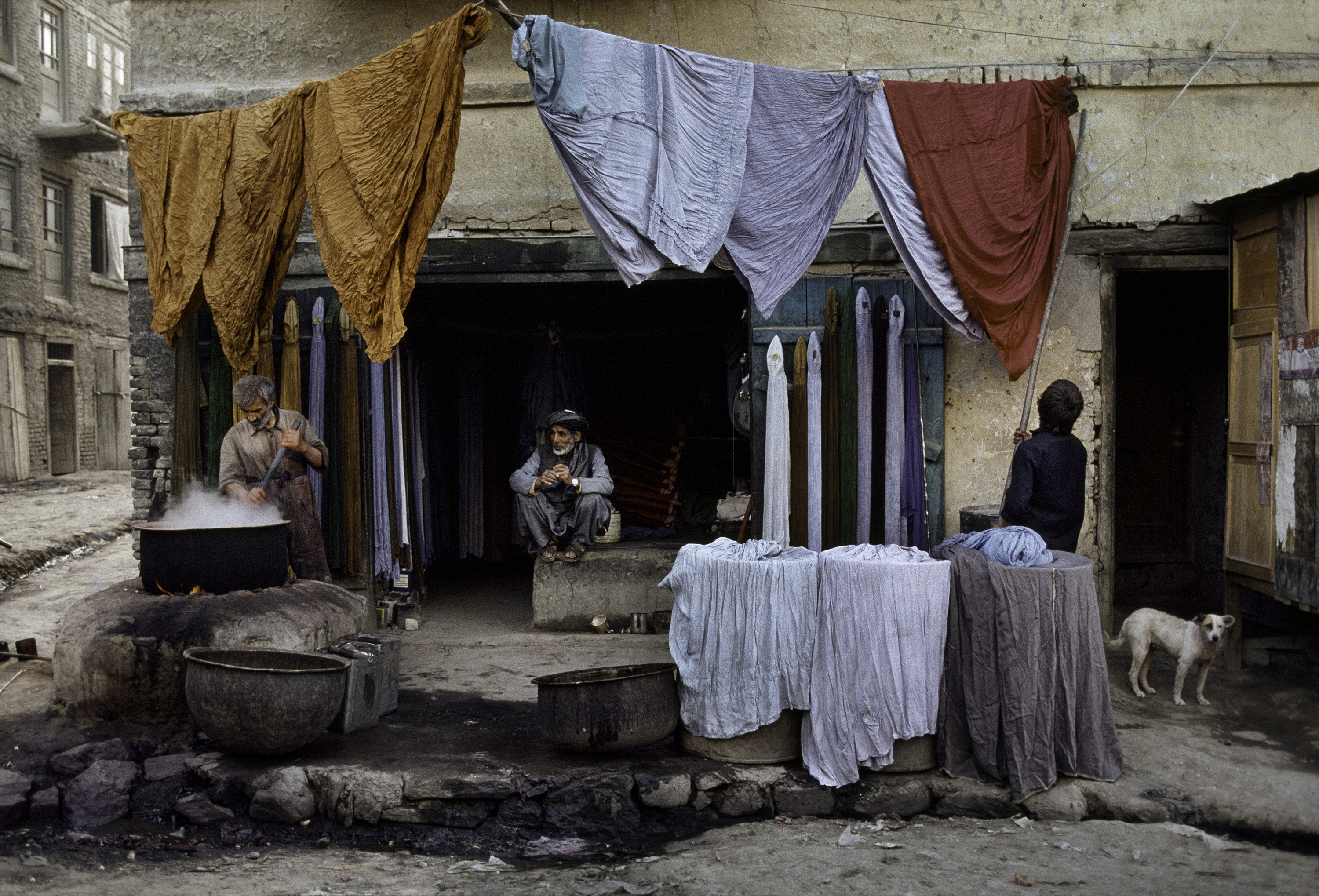
Kabul
Every street of Kabul is enthralling to the eye
Through the bazaars, caravans of Egypt pass
One could not count the moons that shimmer on her roofs
And the thousand splendid suns that hide behind her walls.
– Saeb-e-Tabrizik
Translation by Josephine Davis



God must have loved Afghans because he made them so beautiful.
- Unknown



Steve McCurry Retrospective
Villa Reale di Monza
Monza, Italy
October 30, 2014 – April 6, 2015
Finding the Sublime
CT Gallery
112, rue Saint-François
74120 Megève
France
December 16, 2014 – February 8, 2015


A telenovela “Windeck” estreia hoje às 23h no Brasil, informa a EBC. A primeira novela africana a ser exibida naquele país vai ser emitida na TV Brasil.
Anteriormente, a direcção da EBC – Empresa Brasileira de Comunicação, que gere a TV Brasil -, disse que a iniciativa de exibição de “Windeck” é apenas um primeiro movimento em relação à ampliação do conteúdo lusófono exibido na TV Brasil. Para o próximo ano, quando serão comemorados os 40 anos de independência de Angola e dos outros países africanos da lusofonia, estão a ser preparados conteúdos especiais em parceria com produtores do continente e também de Portugal.
“Windeck” foi produzida em 2012 pela Semba Comunicação, tendo sido exibida primeiro pela TPA e posteriormente pela RTP1, em Portugal. A novela esteve entre as quatro indicadas ao Emmy Internacional de 2013, ano em que “Lado a Lado” recebeu o prémio.
“Windeck” esteve no ar em Angola de 19 de Agosto de 2002 a 13 de Fevereiro de 2013.

CHARLOTTE TURNER’S SAMPLER The man who sold it “knew nothing” about its history.
Six weeks ago, Seattle Art Museum announced they had acquired a "significant collection of early American art." The collection was a trove of 45 "early American" objects assembled by the interesting American collector Ruth J. Nutt, who died in 2013, according to a statement from the museum. Some of those objects had already been on display at SAM thanks to a long-term loan, including Raphaelle Peale's 1814 oil painting Still Life with Strawberries and Ostrich Egg Cup, and others were added, including an actual cup made out of an ostrich egg.
On page three of the announcement about the acquisition, the museum mentioned Nutt's "outstanding collection of needlework," among which "one sampler stands out." It described a needlework sampler made in 1831 "by a 10-year-old named Charlotte Turner, a liberated African slave who was resettled to the Bathurst settlement in Sierra Leone. This is the only known example produced within this population." There was no image of the needlework sampler in the press release, and the sampler wasn't going out on immediate display, but it intrigued me.
So SAM collections coordinator Sarah Berman let me into SAM's storage to see it.
It is a modest thing, measuring a foot high and 10 inches across, with silk words and design elements hand-stitched into wool fabric. The lettering includes the entire alphabet in upper case and lower case, two strings of numbers 1 through 10, a Christian hymn ("My Bible says that Jesus died/For sinners young and old;/I am a sinner though a child..."), and these words:
Liberated African
Charlotte Turner
Aged 10 years
Bathurst, Sierra Leone 1831 March 18th
I looked at it and wondered: Liberated African? What precisely does that mean? Liberated from where? African slaves in the United States weren't liberated until the 1860s. The idea of her having been liberated from American slavery and ending up in Sierra Leone in 1831 at the age of 10 seemed improbable. I wanted to take SAM's word for it that this was an "American object," but that seemed like a stretch. Which population was SAM referring to when they said, "This is the only known example produced within this population"? Had Charlotte Turner been enslaved in another country, then somehow returned to Sierra Leone?
I asked Berman for whatever other information the museum had, and she gave me two paragraphs of information on file, from Nutt. From those:
Throughout the first forty years of the 19th century, schoolgirls in English speaking countries, notably the United States and the British Isles, made needlework samplers. As missionary movements, both American and English, intensified their activities in outposts such as India and Africa, the tradition of samplermaking traveled with them, providing an opportunity to teach the English language and instill religious beliefs. ... The settlement of Bathurst included a school administered by the Church Missionary Society which was responsible for the education of thousands of children over the years.
Bathurst is a village six miles west of Freetown, Sierra Leone, and at the mission there, they gave all their students names. Why did they pick the name Charlotte Turner specifically? Did the young girl think of that as her name? How liberated was she? Did she believe in their God? The Church Missionary Society wrote its intentions in its 1830 log: "We are convinced that the instruction and right education of the Children of the African Race will do more to advance the cause of Universal Emancipation, than all other means put together. Whatever is achieved in this way, strikes at the root of the evils against which we are contending: it counteracts, and in measure abolishes, that prejudice against the Colour, which is the greatest barrier to Emancipation."
There was only one more clue about the object in the museum's possession, something I almost missed. Just before we left storage, I asked Berman to turn over the sampler—in a wooden frame and under glass—and on the back were written the words "M. Finkel and Daughter."
I didn't know what that meant, and Berman didn't know who that meant, but the internet did. M. Finkel and Daughter is an established dealer of samplers based in Philadelphia. When I called, Amy Finkel (the daughter of M.) told me she remembered Charlotte Turner's 1831 creation well. "I've never had one like it since then or before then," Finkel said.
When Finkel bought it, she had the collector Nutt in mind, and sure enough, Nutt purchased it for her collection. Finkel said the man who sold the sampler to her in 2004, for $10,000, was "a reliable source," but "he knew nothing" about the object's history or travels; he told her he'd bought it on eBay. Earlier that year, the auction house Bonhams has a record of the piece selling in London on January 20, 2004, for 293 British pounds, or $467, including the auction house's premium and "together with another embroidered picture.”
Finkel is the source of the claim that "this is the only known example produced within this population." She told me the same thing on the phone.
But it isn't.
As I wrote soon after that conversation on Slog, The Stranger's blog, a little googling revealed a dozen more specific African girls' samplers from mission schools in Sierra Leone. I found an essay called "African Girls' Samplers from Mission Schools in Sierra Leone (1820s to 1840s)," by a scholar named Silke Strickrodt at the German Historical Institute in London. The essay was published in the journal History in Africa in 2010. I e-mailed Strickrodt, and she sent me her essay, containing a small section about "Liberated African Charlotte Turner, Aged 10 years, Bathurst, Sierra Leone."
So Strickrodt knew exactly which piece I was talking about.
Since writing about the first known samplers by African girls in Sierra Leone mission schools, Strickrodt has been alerted to three more, she e-mailed, so now there are known to be 15 of them. Only two others are marked "Liberated African."
"Liberated African" was the term applied to people who were "rescued from 'illegal' slave ships on the West African coast by vessels of the British navy's anti-slave-trade patrol," Strickrodt wrote. In 1807, Britain's Parliament passed the Slave Trade Act, which abolished the slave trade, but not slavery itself (that wouldn't come until 1833). Ships were stopped on their way out of Africa, and people "rescued" were put into the British military or apprenticed, which could mean being sent out in service. The majority of the people rescued, Strickrodt writes, were Yoruba—a people native to the part of the African continent we now call Nigeria.
This means that Charlotte Turner was likely Yoruba. Her "liberation" most likely involved being kidnapped somewhere in the territory of present-day Nigeria, transported possibly hundreds of miles from her home to the coast of Nigeria, marched onto a slave ship, caught by the royal navy somewhere on the ocean, taken to Sierra Leone by the British, marched off the ship in Freetown, and delivered to the missionaries.
Why didn't the royal navy try to return people to their hometowns when they encountered slave ships on the high seas?
Aside from the basic British desire to assimilate Africans into good Christian royal subjects, there was the question of logistics. It would have been very difficult for the people themselves to know how to get back to where they belonged—and presumably, raiders were still lying in wait there. They became detached, floating. There is the famous example of a Yoruba man with a similar life story to the one we can imagine about Charlotte Turner named Samuel Ajayi Crowther. He, too, was freed from a slave ship as a young man and taken first to Bathurst, after which he went on to become the first-ever black Anglican bishop. He traveled the region teaching and preaching during the first half of the 1800s, when the long history of slavery began to come undone. He may well have encountered Charlotte Turner, though I couldn't find any specific documentation of him at Bathurst in 1831.
In her essay, Strickrodt explains that the samplers like the one with Charlotte Turner's name on it are special because they were "generated by a group of people for whom we do not usually have first-hand documentary material." But "these 'textile documents' present serious problems of interpretation."
"What," she asks, "do they express of the girls' own perspectives, as distinct from the European missionaries who directed the girls' work?" At Bathurst, teachers designed the samplers and the girls executed them. The girls spent most of their time making boys' clothes, and samplers were considered a treat. Samplers were meant to teach girls the "feminine" virtues of "perseverance, industry, and obedience," Strickrodt explained.
"That needle[work] is not stepping out of line, it is pretty disciplined, and at 10 years old to be doing that, you can imagine the rigorous disciplinary surroundings she was living in," said Pamela McClusky, SAM's curator of African and Oceanic art.
The samplers were fundraisers for the mission. If a sponsor back in Europe paid for a sampler, that sponsor got to name the girl who made it. So that's how Charlotte Turner got her name. The samplers "were missionary propaganda pieces that were sent to Europe to supporters to ensure their continued support," Strickrodt told me, "which, however, does not mean to say that the girls who stitched them did not enjoy making them."
Strickrodt believes Charlotte Turner was "probably one of 147 liberated African girls who in late January 1831 were returned by the colonial government to the care of the [Church Missionary Society] at Bathurst, following their withdrawal in the previous month, after it had been discovered that the local CMS missionary, the Rev. Thomas Davey, had a sexual relationship with a girl placed in his household for education."
Had Charlotte Turner known that girl? Had Charlotte Turner been that girl?
How did living conditions at the mission compare to where she'd been before she was "returned"?
McClusky, the SAM curator, has seen firsthand the kind of boardinghouses where Charlotte Turner probably lived in Bathurst. McClusky formerly lived in Sierra Leone, where some of those buildings still stand. They were made to look like Southern American plantations, with "big open porches," McClusky said—because missionaries relied on freed American slaves to build them, when the first waves arrived between roughly 1792 and 1804.
Often, samplers made by African girls in missionary schools bore European flora and fauna, not African: strawberry border, rose twigs, dovecots. There's none of that in Charlotte Turner's sampler. Strickrodt sees in it "baskets, crosses, peacocks, and a bird (a chicken?)."
The initials "C.B." at the bottom, Strickrodt guesses, probably referred to the sponsor in England, and given that the piece ended up in private hands rather than in the archives of the CMS in London, this sampler probably made it to its recipient. There's another haunting possibility: that Charlotte Turner did not exist at all, that she was the fabrication of a missionary to raise money. But whether she's real or made up, the object draws us back to the real forgotten lives of those "liberated" girls.
So should this sampler be part of an "early American" collection at all?
When Nutt bought the sampler from Finkel, she thought it was by a slave girl liberated in the United States. Julie Emerson, the recently retired Ruth J. Nutt Curator of Decorative Arts of Europe and America at SAM, feels especially close to Charlotte Turner's sampler. Emerson noticed back in 2004 when it was for sale at auction, and contacted Ruth Nutt in the hopes that Nutt would buy it—only to learn that Nutt already had. When it was donated to SAM in September, it was in Emerson's honor, for her many years as a SAM curator. When I reached her by phone recently, Emerson didn't want to let go of the possibility that Charlotte Turner could have been enslaved in the United States before she was freed and returned to Africa.
But McClusky and Strickrodt say that's highly unlikely. Charlotte Turner probably had no connection to the United States at all. "If I wasn't a historian, I would say 'categorically not,' but historians do not like to talk like that as there are always exceptions," Strickrodt wrote dutifully.
If Charlotte Turner was already freed at 10, she would have been freed on her way to servitude, not on her way out of servitude. Traders weren't looking for young children, and the journey across the ocean was long. She also wouldn't have been descended from earlier slaves returned from the Americas, because they and their children were referred to as "Settlers," while the term "Liberated African" specifically meant those from illegal ships in African waters. People freed on the American side of the Atlantic were usually taken to places on that side of the ocean, like Havana, rather than sent the distance to Africa.
Charlotte Turner, if she was Yoruba, probably spent about "a week and a half or two" on the intercepted slave ship traveling from coastal now-Nigeria to her missionary life in Sierra Leone, McClusky said. She must have been terrified, then bewildered.
A sampler like this represents less a single person—Charlotte Turner—and more the triangular relationship between the girl, her teacher, and the sponsor, Strickrodt explains. A little more is known about Charlotte Turner's probable teacher at Bathurst in March 1831, Sarah Warburton. She was an Englishwoman who came to Sierra Leone with her husband. He died there. Warburton went on to marry the man who replaced the lecherous Davey at the mission. Had Charlotte Turner survived into adulthood, she probably would have gone on to marry another member of the church, both of them maybe continuing to proselytize and participate in small trade activities, speculates Saheed Adejumobi, director of Global African Studies at Seattle University. The children and grandchildren of those marriages went on to sow the seeds of African independence movements.
SAM's collections are mostly arranged by geography. But like people and their stories, objects resist boundaries. History is messier than museums or maps would lead us to believe.
Recently, for example, Chiyo Ishikawa, SAM's chief curator and European art specialist, spent time reorganizing the art outside the museum's "Italian Room." It's not a gallery for Italian art, it's a whole wood-paneled room reconstructed and placed in the museum, dating from the 16th century. But there was no country called Italy until the 19th century, and the anachronism began to grate on Ishikawa, so she sent an e-mail asking Emerson whether the name could be changed to "The Chiavenna Room," referring to the town where it's from. Emerson must have smiled at the e-mail. Emerson had argued the same point some years ago but lost, because "it felt like nobody would know what [Chiavenna] was."
A museum that's considered "encyclopedic"—and there are only a few in the world, including the Metropolitan Museum of Art in New York—has the luxury of being able to flirt with time travel by divvying its vast collections into very specific categories. But a "general" museum like Seattle's has a smaller and more limited collection. The collection looks better, and can tell better stories, when departments join forces. That's why "we actively seek out works that can be seen in multiple contexts," Ishikawa told me.
For a few years after the new and expanded SAM opened in 2007, the European and African departments shared a small gallery where they demonstrated the strengths that could come out of their weaknesses. It was located right between the European and African galleries on the fourth floor, and over time it brought together 20th-century African photography, 18th-century prints by the British satirist William Hogarth, 18th-century neoclassical French painting, and a work called Nuclear Family by the British Nigerian artist Yinka Shonibare. Nuclear Family is two parents and two children, dressed in European designs made out of African-patterned fabric, creating a striking visual dissonance that speaks volumes about the separations and intimacies between cultures—at the site of the human body.
Charlotte Turner's sampler would be perfect for that little interstitial gallery.
But if it has to be classified geographically?
Ishikawa said she isn't sure. McClusky said it belongs in the African galleries.
If the sampler were made of tougher materials, the museum might want to keep it on near-constant display. But silk on wool is organic and delicate. Textiles fade and break down under bright museum lights. The rule is that textiles can be out for about six months before having to go back into the dark for at least two years, McClusky said. Some museums make exceptions for delicate pieces they display with black cloths over the frames that visitors can lift to see what's underneath, but SAM doesn't generally use those (it's just a style decision, the curators say; in the one textile gallery at SAM, the lights go on when a visitor enters and turn off when nobody's there).
Nothing is confirmed yet, but Ishikawa and McClusky are working on an interdepartmental textiles exhibition for 2016, to take place at the Asian Art Museum. That will be the first time Charlotte Turner's sampler comes out for display. There she'll be, and not be, under that name picked by a stranger. 

Class matters far less than it used to in the 19th century. Citizenship matters far more
I’ve been a lucky boy. I could start with the “boy” fact. We men enjoy all sorts of privileges, many of them quite subtle these days, but well worth having. I’m white. I’m an Oxford graduate and I am the son of Oxbridge graduates. All those are things that I have in common with my fellow columnist Simon Kuper, who recently admitted that he didn’t feel he’d earned his vantage point “on the lower slopes of the establishment”.
I don’t feel able to comment objectively on that, although we could ask another colleague, Gillian Tett. She’s female and – in a particularly cruel twist – she wasn’t educated at Oxford but at Cambridge. That’s real diversity right there.
All these accidents of birth are important. But there’s a more important one: citizenship. Gillian, Simon and I are all British citizens. Financially speaking, this is a greater privilege than all the others combined.
Imagine lining up everyone in the world from the poorest to the richest, each standing beside a pile of money that represents his or her annual income. The world is a very unequal place: those in the top 1 per cent have vastly more than those in the bottom 1 per cent – you need about $35,000 after taxes to make that cut-off and be one of the 70 million richest people in the world. If that seems low, it’s $140,000 after taxes for a family of four – and it is also about 100 times more than the world’s poorest people have.
What determines who is at the richer end of that curve is, mostly, living in a rich country. Branko Milanovic, a visiting presidential professor at City University New York and author of The Haves and the Have-Nots, calculates that about 80 per cent of global inequality is the result of inequality between rich nations and poor nations. Only 20 per cent is the result of inequality between rich and poor within nations. The Oxford thing matters, of course. But what matters much more is that I was born in England rather than Bangladesh or Uganda. (Just to complicate matters, Simon Kuper was born in Uganda. He may refer to himself as “default man” but his life defies easy categorisation.)
That might seem obvious but it’s often ignored in the conversations we have about inequality. And things used to be very different. In 1820, the UK had about three times the per capita income of countries such as China and India, and perhaps four times that of the poorest countries. The gap between rich countries and the rest has since grown. Today the US has about five times the per capita income of China, 10 times that of India and 50 times that of the poorest countries. (These gaps could be made to look even bigger by not adjusting for lower prices in China and India.) Being a citizen of the US, the EU or Japan is an extraordinary economic privilege, one of a dramatically different scale than in the 19th century.
Privilege back then used to be far more about class than nationality. Consider the early 19th century world of Jane Austen’s Pride and Prejudice. Elizabeth Bennet’s financial future depends totally on her social position and, therefore, if and whom she marries. Elizabeth’s family’s income is £430 per capita. She can increase that more than tenfold by marrying Mr Darcy and snagging half of his £10,000 a year (this income, by the way, put Mr Darcy in the top 0.1 per cent of earners). But if her father dies before she marries, Elizabeth may end up with £40 a year, still twice the average income in England.
Milanovic shows that when we swap in data from 2004, all the gaps shrink dramatically. Mr Darcy’s income as one of the 0.1 per cent is £400,000; Elizabeth Bennet’s fallback is £23,000 a year. Marriage in the early 19th century would have increased her income more than 100 times; in the early 21st century, the ratio has shrunk to 17 times.
This is a curious state of affairs. Class matters far less than it used to in the 19th century. Citizenship matters far more. Yet when we worry about inequality, it’s not citizenship that obsesses us. Thomas Piketty’s famous book, Capital in the 21st Century, consciously echoes Karl Marx. Click over to the “Top Incomes Database”, a wonderful resource produced by Piketty, Tony Atkinson and others, and you’ll need to specify which country you’d like to analyse. The entire project accepts the nation state as the unit of analysis.
Meanwhile, many people want to limit migration – the single easiest way for poor people to improve their life chances – and view growth in India and China not as dramatic progress in reducing both poverty and global inequality, but as a sinister development.
It would be unfair to say that Simon Kuper and Thomas Piketty have missed the point. Domestic inequality does matter. It matters because we have political institutions capable of addressing it. It matters because it’s obvious from day to day. And it matters because over the past few decades domestic inequality has started to grow again, just as global inequality has started to shrink.
But as I check off my list of privileges, I won’t forget the biggest of them all: my passport.
Also published at ft.com.

This is a detail from the allegorical painting Taste, Hearing and Touch, completed in 1620 by the Flemish artist Jan Brueghel the Elder. If the bird on the right looks out of place, that’s because it’s a sulphur-crested cockatoo, which is native to Australia. The same bird appears in Hearing, painted three years earlier by Brueghel and Peter Paul Rubens.
How did an Australian bird find its way into a Flemish painting in 1617? Apparently it was captured during one of the first Dutch visits to pre-European Australia, perhaps by Willem Janszoon in 1606, who would have carried it to the Dutch East Indies (Indonesia) and then to Holland in 1611. That’s significant — previously it had been thought that the first European images of Australian fauna had been made during the voyages of William Dampier and William de Vlamingh, which occurred decades after Brueghel’s death in 1625.
Warwick Hirst, a former manuscript curator at the State Library of New South Wales, writes, “While we don’t know exactly how Brueghel’s cockatoo arrived in the Netherlands, it appears that Taste, Hearing and Touch, and its precursor Hearing, may well contain the earliest existing European images of a bird or animal native to Australia, predating the images from Dampier’s and de Vlamingh’s voyages by some 80 years.”
(Warwick Hirst, “Brueghel’s Cockatoo,” SL Magazine, Summer 2013.) (Thanks, Ross.)
Adam Victor BrandizziExcelente trabalho de pesquisa (também tava precisando de um para a Dilma, verdade seja dita).
Por Gabriel Almeida Prado e Gabriel Brener Ferreira
[N. do Editor, em 18/10/2014: Alguns leitores deste site criticaram a publicação do texto abaixo, que inclusive é um texto enviado por dois leitores nossos, que o assinam, não de um dos colunistas de nossa equipe fixa. O motivo da crítica foi que a publicação deste artigo representaria uma defesa do voto em Aécio no segundo turno. Respeitamos a crítica, uma vez que é possível que esta impressão tenha advindo do fato de não ter sido publicado o texto originalmente com uma Nota do Editor, o que representou uma falha de nossa parte. Portanto, consertando isto, viemos por meio desta esclarecer que o texto não foi publicado com a intenção de ser um apoio à candidatura de Aécio, mas sim como uma forma de contribuir para um debate mais informado nestas eleições, onde a desinformação abunda, seja contra Aécio ou Dilma (e Marina no 1º turno). Para saber qual é a posição do site em relação às propostas de ambos os candidatos do 2º turno, dirija-se ao texto “Dilma e Aécio poderiam ser do mesmo partido“, por Felippe Brandão, que é o que melhor representa a posição geral deste site em relação aos dois candidatos, uma posição crítica e pautada no fato de que os grandes temas liberais e progressistas estão ausentes do 2º turno]
Durante a campanha eleitoral, diversos boatos foram divulgados sobre o candidato Aécio Neves. Uma boa compilação desses boatos está no texto “27 motivos para não votar em Aécio Neves”. Após ler o texto e verificarmos que boa parte das informações não vinha acompanhada de fontes, fomos checar a veracidade de cada um dos “motivos”, que chamamos aqui de boatos. Imaginávamos que alguns deles pudessem ser exagerados, mas ficamos surpresos com a quantidade de boatos que eram simplesmente falsos. Alguns são verdadeiros, por outro lado. Na lista abaixo, nosso objetivo principal é expor os fatos relacionados a cada acusação. Tudo o que foi escrito está acompanhado por fontes.
Para facilitar, classificamos os itens de acordo com o caráter da informação:
Falso: informação comprovadamente falsa.
Sem Provas: informação infundada ou sem evidências.
Impreciso: informação com verdades mal-explicadas, confusas ou com falsidades que não alteram o sentido do item.
Capcioso: informação verdadeira, mas cuja formulação induz ao erro.
Verdadeiro com ressalvas: informação verdadeira com detalhes incorretos ou omitidos.
Verdadeiro: informação comprovadamente verdadeira.
Além disso, os itens estão classificados em categoria temática da forma como estavam na publicação original.
CENSURA

1) Acusação: Aécio censurou a parte da imprensa mineira que ousou denunciar esquemas de corrupção quando governador de MG.
Caráter: Sem provas
Fatos: A acusação é genérica e os links dados como fonte não apontam nenhuma prova do ocorrido. De acordo com o site da Rede Brasil Atual, o então presidente do Sindicato dos Jornalistas Profissionais de Minas Gerais (SJPMG), Aloísio Lopes escreveu ao jornal Pauta que haveria crescido o número de queixas de jornalistas quanto a conduta das redações dos jornais e das chefias de comunicação de instituições públicas. Há também outras denúncias de que Aécio Neves teria pressionado outras redações a retirar matérias parecidas.
Porém, conforme veiculado pelo jornal Folha de São Paulo “o jornalista Josemar Gimenez, diretor de redação de ‘O Estado de Minas’, contesta: ‘Não existe nenhum esquema de blindagem com relação ao governo Aécio Neves. O jornal não tem o menor compromisso com este ou aquele governo. [...] Isso [a alegação de blindagem] faz parte do jogo político’, afirma Gimenez.”
O SJPMG (Sindicato dos Jornalistas Profissionais de Minas Gerais) denunciou os supostos acontecidos ao Ministério Público Federal em 2004, mas as denúncias nunca foram provadas e o MP arquivou o processo.
Vídeos divulgados pelo SPJMG com jornalistas demitidos na época foram editados para favorecer a visão do Sindicato. Alguns desses jornalistas afirmaram, mais tarde, não responsabilizar o Governo de Minas por suas demissões (vide item 3).
Este vídeo é ilustra bem o caso:
Fontes:
http://bit.ly/1wr0Fwd / http://bit.ly/1twoA7b / http://bit.ly/1uxHgHU / http://bit.ly/1rUEeve / http://bit.ly/1twAkXq
2) Acusação: Também tentou censurar o Google, Yahoo! e Bing, movendo um processo para retirada de links relacionados ao uso de drogas e ao desvio de verbas da saúde.
Caráter: Capcioso
Fatos: Aécio Neves entrou com um pedido na Justiça Federal de São Paulo para a retirada de sites que vinculavam o candidato a duas acusações falsas: a primeira, nunca provada, sobre o uso de cocaína e a segunda, claramente falsa (como explicado no item 5) sobre um processo por desvio de dinheiro público. Como dito pelo PSDB “Não se trata, portanto, de interferir no legítimo direito de opinião e crítica do cidadão. Opinião é direito sagrado. Difamação e calúnia são crimes”. De acordo com os advogados do Google, é impossível que a retirada desses resultados de busca seja feita sem afetar outros resultados.
Fontes: http://bit.ly/1giwklZ

3) Acusação: Mandou demitir um diretor da Globo de Minas Gerais após três reportagens que o desagradaram.
Caráter: Falso/Sem Provas
Fatos: O diretor de Jornalismo de Minas Gerais, Marco Nascimento foi transferido para Alagoas após reportagens sobre a venda de crack nas proximidades do Departamento de Investigações da Polícia Civil. Certo tempo depois o diretor foi demitido. Não foi provada nenhuma relação entre as matérias e a transferência, nem mesmo a relação entre a transferência e o então governador. Além disso, Marco Nascimento afirmou em vídeo nunca ter responsabilizado ninguém do Governo de Minas pela sua demissão, tendo afirmado à Folha de São Paulo de que teria sido uma decisão da Rede Globo.
(ver vídeo postado no item 1)
Fontes:
http://bit.ly/1twAkXq / http://bit.ly/1uXijqR
4) Acusação: Não gosta de ser investigado: em 10 anos ele e seu sucessor Anastasia só permitiram 3 CPIs em Minas Gerais. Mais de 70 foram barradas.
Caráter: Falso.
Fatos: CPI’s e investigações não necessitam de permissões do Poder Executivo como algumas pessoas ou partidos parecem acreditar. Dessa forma, Aécio e Anastasia não tem o poder de barrar CPI’s, que são convocadas pela ALMG, a Assembleia de Minas. As CPI’s citadas, portanto, não tiveram apoio de deputados estaduais suficientes conforme o previsto por lei. Há ainda o fato de a Assembléia Legislativa não ser o único órgão com poder de investigar escândalos de corrupção. Nada impede que outros órgãos, como a Polícia Federal e o Ministério Público, investiguem as denúncias.
CORRUPÇÃO QUANDO FOI GOVERNADOR DE MINAS GERAIS

5) Acusação: Foi processado por desviar R$ 4,3 bilhões da saúde.
Caráter: Falso
Fatos: Primeiramente, nenhum centavo desses R$ 4,3 bilhões foi desviado ou foi para o bolso de quem quer que seja. O dinheiro foi investido na população. Há, em todo orçamento estadual, uma verba obrigatória que deve ser destinada à saúde. O processo em questão discutia se esta verba poderia ser usada para investimento em saneamento básico. Há uma óbvia correlação entre investimentos em saneamento básico e índices de saúde pública. Segundo especialistas, a cada 1 real investido em saneamento básico, 4 são economizados em saúde, dado que uma boa rede de saneamento atua de forma preventiva. Ou seja, este “escândalo” pode acabar beneficiando o acusado, principalmente pela relutância históricas de políticos brasileiros com investimentos em saneamento, que em tese são mais difíceis de converter em votos nas eleições seguintes.
Vale ressaltar também que o Ministério Público desistiu do processo. Caso parecido ocorreu quando o Governo Lula investiu parte do orçamento em saúde no programa Fome Zero. O processo judicial consta nas fontes abaixo, assim como outras informações.
Fontes:
http://bit.ly/1nYFr6C / http://bit.ly/1CSvMl9 / http://abr.ai/LyYan3 / http://bit.ly/MFdFK6
6) Acusação: Construiu 5 aeroportos em cidades com menos de 25 mil habitantes no entorno de sua fazenda.
Caráter: Falso
Fatos: Esse item nem sequer acompanha qualquer notícia ou processo a respeito disso. Buscando pelo tema na Internet há apenas a referência circular ao próprio item. Há o caso de um aeroporto apenas, tratado abaixo no item 7.
7) Acusação: Um dos aeroportos custou R$ 14 milhões e fica na fazenda de seu tio.
Caráter: Falso
Fatos: Houve de fato a construção de um aeroporto com custo total de R$ 14 milhões pelo Governo de Minas. Porém, o terreno em questão não é do tio-avô de Aécio: foi desapropriado em 2008. De acordo com o jornal Folha de São Paulo, o ex-proprietário recebeu uma indenização de cerca de R$ 1 milhão, mas contesta a ação na justiça, pois pedia R$ 9 milhões pelo terreno. Ou seja, o tio-avô de Aécio está processando o Governo de Minas por acreditar que foi prejudicado com a decisão do seu sobrinho.
O Ministério Público Estadual não encontrou nenhuma irregularidade na obra após cinco anos de investigação, mas continua a apurar o ocorrido, juntamente com a Agência Nacional de Aviação Civil. Os ex-ministros do Supremo Tribunal Federal, Ayres Britto e Carlos Velloso, também consideraram a obra legal, fato que será revisto no item 8. Sobre a necessidade de um aeroporto na região, Aécio Neves deu a seguinte declaração em matéria para a Folha: “A pista de pouso em Cláudio existe há 30 anos e vem sendo usada por moradores e empresários da região. Com as obras, o governo de Minas Gerais transformou uma pista precária em um aeródromo público. Para uso de todos.”. Nos cinco anos de 2009 a 2014, o MP não encontrou nenhuma ilegalidade ou desvio ético na construção.
Fontes:
http://glo.bo/1pAb0yR / http://bit.ly/1m0FQ1t / http://bit.ly/1zUe0NE / http://abr.ai/1EqdBVC

8) Acusação: Pagou R$ 56 mil reais ao ex-ministro do STF Ayres Britto para arquivar a investigação de ilegalidade no aeroporto na fazenda de seu tio.
Caráter: Falso
Fatos: A investigação não era competência do STF, nem estava na capacidade desses ministros arquivá-la. Aécio contratou o ex-ministro, quando ele já não estava no cargo, para emitir um parecer sobre a legitimidade jurídica dos seus atos. Não se trata de algo ilegal, ou mesmo incomum. Muito pelo contrário. O valor pago foi de R$ 56 mil do bolso de Aécio Neves, como a contratação normal de qualquer advogado.
Fatos:
9) Acusação: Quando governador, desapropriou um terreno de seu tio-avô no valor de R$ 1 milhão e fez o Estado pagar a ele uma indenização superfaturada de R$ 20 milhões.
Caráter: Falso
Fatos: Como já relatado no item 7, o depósito judicial de desapropriação foi de R$ 1 milhão. O tio-avô de Aécio entrou na justiça pedindo R$ 9 milhões pelo terreno. A perícia de Justiça avaliou o terreno em R$ 3,4 milhões na Lei de Diretrizes Orçamentárias (LDO) de 2014 e em R$ 20,6 milhões na LDO de 2015, porém, a pedido do Estado, a Justiça anulou a avaliação mais recente e o terreno será reavaliado. Até agora, apenas o R$ 1 milhão inicial foi pago ao ex-proprietário pela desapropriação.
Fontes:
http://bit.ly/1n9Drrf / http://bit.ly/1zUe0NE / http://abr.ai/1EqdBVC
INFRINGINDO A LEI

10) Acusação: Apesar de declarar apenas R$ 100 mil em bens, sua rádio tem uma frota de carros de luxo e de passeio no valor de mais de 1 milhão e reais. Quem passeia nesses carros?
Caráter: Falso
Fatos: Primeiramente, os bens declarados de Aécio Neves totalizam R$ 2,5 milhões, de acordo com o Tribunal Superior Eleitoral. Além disso, Aécio Neves é dono de apenas uma parte da rádio, sendo sua irmã a sócia majoritária. A forma como a frota de carros será usada é uma decisão da empresa, dos sócios, e portanto não há nenhuma infração a lei se um dos familiares usar um dos carros, como sugere o a categoria onde esse item foi colocado.
Fontes:
http://bit.ly/1lRA3Bd / http://abr.ai/1saN35Q
11) Acusação: Foi pego pela polícia dirigindo o carro de sua rádio, um Land Rover no valor de R$ 192.000,00. O pior: estava embriagado e se recusou a fazer o teste do bafômetro.
Caráter: Verdadeiro com ressalvas
Fatos: O senador foi parado por uma blitz da Lei Seca e sua carteira de habilitação estava vencida. Ele recusou-se a fazer o teste do bafômetro, alegando que não iria mais dirigir a partir dali por estar com a carteira vencida. Sua embriaguez não foi confirmada e a situação do carro era legal.
Fontes:
http://bit.ly/1tx5Zrz / http://glo.bo/1eFU5e7

12) Acusação: Troca de favores ou compra de votos? Quando governador contratou 98 mil servidores públicos sem concurso e de maneira ilegal.
Caráter: Capcioso
Fatos: Houve, de fato, a contratação de 98 mil servidores sem concurso pelo Governo de Minas em 2007, ação considerada inconstitucional pelo Supremo Tribunal Federal apenas esse ano. Não houve, porém, qualquer indício de troca de favores ou de compra de votos na ação. Foi, pelo que os fatos indicam, apenas um erro administrativo.
Fontes: http://bit.ly/1vHo7BB / http://bit.ly/P2sV53
13) Acusação: Nepotismo? Com apenas 25 anos foi nomeado diretor da Caixa Econômica Federal por seu primo, o então Ministro da Fazenda Francisco Oswaldo Neves Dornelles.
Caráter: Falso
Fatos: O presidente da Caixa Econômica Federal é determinado, conforme o site da própria empresa, pelo Presidente da República, e não pelo Ministro da Fazenda. Cabe ao Ministro da Fazenda fazer recomendações, assim como ao Conselho Administrativo. O Presidente na época era José Sarney. Além disso, ainda que fosse este o caso, a Súmula Vinculante 13, que determina o crime de nepotismo, foi instituída na Constituição Federal de 1988, três anos após a nomeação de Aécio, não havendo, portanto, infração legal.
Fontes:
http://bit.ly/1yKVSrp / http://bit.ly/1pNpYRP / http://bit.ly/1y38FnP
EDUCAÇÃO E SAÚDE

14) Acusação: Durante seu governo, Minas Gerais passou a pagar o piso salarial mais baixo do Brasil a professores.
Caráter: Verdadeiro
Fatos: O governo de Minas mantinha um salário mensal de R$ 369,00 para uma jornada de 24 horas semanais de trabalho, durante o governo de Aécio, sendo o piso mais baixo do país na época. Porém, vale lembrar que o sistema de pagamentos do Governo de Aécio em Minas previa o pagamento de adicionais pelo cumprimento de metas, não considerados no piso salarial.
Fontes:
15) Acusação: Aliás, tal piso era mais baixo que o permitido pela lei do piso salarial de professores, e portanto, ilegal.
Caráter: Verdadeiro
Fatos: Como explicado acima, o salário-base era menor do que o piso nacional, tornando o procedimento irregular. Para entrar na legalidade o governo de Antonio Anastasia(PSDB), sucessor de Aécio, passou a incorporar as gratificações mencionadas acima ao vencimento básico, e está atualmente dentro dos índices legais.
Fontes:

16) Acusação: Diminuiu o salário-base dos médicos em Minas para apenas R$ 1.050,00 – o segundo mais baixo do Brasil.
Caráter: Falso/Capcioso
Fatos: Primeiramente, o poder executivo não tem o poder de diminuir qualquer salário-base, exceto em casos de extrema crise financeira. O valor acima seria o vencimento básico mensal de 20 horas de trabalho semanais, ou seja, metade da carga horária real e ainda sem os acréscimos como gratificações e adicionais existentes. Mesmo no levantamento em questão esse valor não é o segundo pior. [É importante notar que o Conselho Regional de Medicina, o Sindicato dos Médicos e a Associação Médica de Minas se uniram em apoio à candidatura de Aécio para presidente e condenaram a forma com que o governo federal tem tratado a saúde pública no Brasil.]
Fontes:
http://bit.ly/Zei8cU / http://bit.ly/1BJnUQq / http://bit.ly/1vR9UEu
17) Acusação: Quando governador de MG, pagou com dinheiro do Estado uma dívida da Rede Globo de US$ 269 milhões referente à compra da Light.
Caráter: Sem Provas
Fontes: Esse item apresenta uma suposta fraude contábil em operações da Cemig (Companhia Energética de Minas Gerais). Porém, as fontes apresentadas e os textos encontrados na Internet apontam para apenas um texto original, publicado pelo Novo Jornal em 32/01/2007. De acordo com o Blog do Tarso, a Comissão de Meio Ambiente e Recursos Naturais da Assembléia Legislativa de Minas Gerais aprovou, em 20 de dezembro de 2006, um requerimento de autoria do deputado estadual Laudelino Augusto (PT) pedindop para que fosse encaminhado ofício ao Tribunal de Contas de Minas Gerais (TCMG) para a realização de auditoria nas contas da Cemig. Não houve nenhum processo ou condenação contra Aécio Neves ou o Governo de Minas.
Fontes: http://bit.ly/1vU2a1c / http://bit.ly/1uC3N6F
ECONOMIA

18) Acusação: Em 2013 quando Dilma anunciou redução de 20% na conta de luz, os tucanos de Minas se posicionaram contra. Pediram um aumento de 30%. Em vez de a conta abaixar, subiu 14,76% (que foi o que a Aneel aprovou).
Caráter: Verdadeiro
Fatos: A Cemig (Companhia Energética de Minas Gerais), solicitou o aumento de 29,74% nas contas de energia para compensar, segundo a empresa, o aumento do custo da energia e a queda das receitas causada pelo novo modelo de concessão do governo federal. Dessa forma, o aumento serve para evitar a necessidade de injeção de dinheiro público na companhia, em um país onde 53,8% do total arrecadado em impostos é pago por brasileiros com renda de até 3 salários mínimo, de acordo com o Instituto Brasileiro de Planejamento e Tributação.
Vale ressaltar também o fato de a presidente Dilma estar controlando o preço da energia como forma de manter os índices de inflação artificialmente baixos.
Fontes:
http://abr.ai/1n0Szmi / http://bit.ly/1qcPnUh / http://bit.ly/1xbtVs1
19) Acusação: Ele e seu sucessor fizeram a dívida de Minas crescer 127% em 11 anos.
Caráter: Capcioso
Fatos: É verdade que, entre dezembro de 2002 e dezembro de 2013, a dívida de Minas tenha aumentado cerca de 128%. Porém, como todo e qualquer economista reconhece, esse valor só é relevante quando comparado com o PIB do Estado. Comparar o tamanho da divida sem considerar o tamanho do PIB é uma barbeiragem analítica. É mais ou menos como comparar o valor nominal da divida de Bill Gates com a de uma família de classe média, sem considerar que Bill Gates é um multibilionário e a família de classe média é… de classe média.
Em 2002, o PIB mineiro era de R$ 127,8 bilhões, de acordo com o IPECE, o Instituto de Pesquisa e Estratégia Econômica do Ceará e a dívida era cerca de R$ 34,69 bilhões. Ou seja, a dívida representava 27,15% do PIB do Estado. Não achamos os dados de 2013, mas em 2011, o PIB mineiro totalizou R$ 386 bilhões e a dívida foi de R$ 67 bilhões. A dívida em 2011 era de 17,3% do PIB, 10 pontos percentuais a menos do que em 2002.
Fontes:
http://bit.ly/1y3lqPi / http://bit.ly/ZcvA0X / http://bit.ly/1nYPFUp / http://glo.bo/1t4SyFe
MENSALÃO E PROTEÇÃO DA IMPRENSA
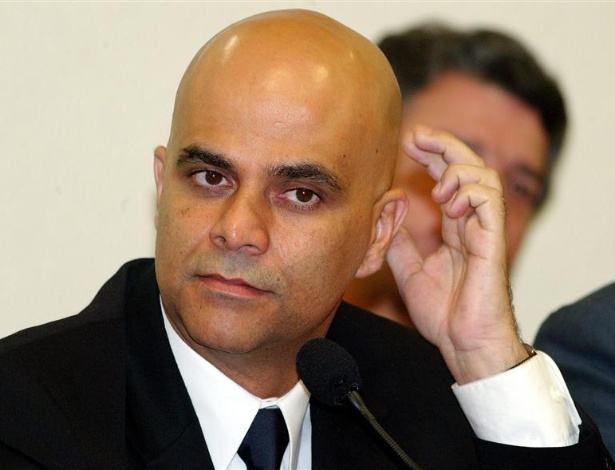
20) Acusação: Tem um dos réus do mensalão tucano como assessor. O publicitário Eduardo Guedes, acusado de desviar R$ 3,5 milhões para a empresa de Marcos Valério.
Caráter: Verdadeiro
Fatos: Eduardo Guedes assessorou Aécio Neves em sua campanha. Porém, ele não foi condenado, o processo está em andamento. Em defesa, Aécio Neves declarou: “não há nenhuma decisão judicial contra o citado jornalista”.
Fontes:
21) Acusação: Tem em seu palanque em Minas o maior réu e mentor do mensalão tucano, seu antecessor no governo de MG, Eduardo Azeredo.
Caráter: Verdadeiro
Fatos: Recentemente, forças em defesa da campanha de Aécio Neves dentro do PSDB pediram a desfiliação do ex-deputado. Porém, Aécio Neves declarou que Eduardo Azeredo poderá participar como quiser da campanha por ainda não ter sido condenado. O processo contra ele está em andamento e, em entrevista ao UOL, Aécio Neves declarou que “se Azeredo for condenado, não será transformado em ‘herói nacional’, como teria feito o PT com seus filiados condenados no mensalão.”
Fontes:
http://bit.ly/1vLDMRy / http://glo.bo/ZcB4Zy
22) Acusação: Seu primo, Rogério Lanza Tolentino, era braço direito de Marcos Valério e foi condenado por lavagem de dinheiro em MG.
Caráter: Capcioso
Fatos: Rogério Lanza Tolentino foi condenado por lavagem de dinheiro no mensalão petista, sem ligação com Aécio. Além disso, há poucas fontes que reconhecem ele como primo de Aécio Neves, todas sendo sites contra a candidatura deste e que ainda assim o citam como “primo de segundo grau”.
Fontes:

23) Seu outro primo, Tancredo Aladin Rocha Tolentino, foi preso por vender sentenças judiciais. A Globo se calou.
Caráter: Impreciso/Capcioso
Fatos: Tancredo Tolentino, conhecido como Kêdo e primo de Aécio Neves, foi preso uma vez em 1997 por sonegação fiscal e está sendo processado por venda de habeas corpus. Porém, Kêdo não é do mesmo partido que Aécio Neves, concorrendo pelo PV.
Fonte:
http://bit.ly/1sbBn2L / http://bit.ly/ZQyZDT
24) Acusação: Por falar em sentença, conseguiu um mandado de busca e apreensão para que a polícia invadisse o apartamento de uma jornalista. Computador, hd externo, cds e celular foram apreendidos.
Caráter: Sem provas/Impreciso
Fatos: Apesar da apreensão e invasão terem ocorridos, não há provas de que isso tenha ocorrido a pedido de Aécio Neves. O senador movia um processo contra alguns sites de mídia por difamação e, de acordo com a assessoria do PSDB, “em nenhum momento, [o senador] requereu a realização de busca e apreensão de quaisquer equipamentos ou documentos, sejam em residências ou em sedes de empresas. [...] os pedidos solicitados limitaram-se aos que são padrão nesse tipo de investigação, qual seja: oitiva de testemunhas, depoimento dos suspeitos já identificados como participantes da quadrilha, e providências para apuração se essas pessoas são remuneradas por terceiros pela execução dessas ações.”. De acordo com o portal G1, “o Ministério Público afirma que recebeu representação do senador Aécio Neves e que está realizando diligências que incluem o cumprimento de mandados de busca e apreensão.”
Fontes:
http://bbc.in/1sb2ETY / http://glo.bo/1rVEKch
SENADOR EXEMPLAR?

25) Acusação: Nos quatro anos como senador, apresentou menos projetos que o deputado Tiririca.
Caráter: Falso
Fatos: Existem comparações feitas na internet entre o deputado e o senador, porém em nenhuma delas são mostrados números de propostas. O site Vote na Web traz números diferentes aos apresentados no texto. De acordo com o site, o Senador Aécio Neves cadastrou oito projetos e um deles foi aprovado. Tiririca apresentou quatro projetos e um foi aprovado.
Ainda assim, precisamos lembrar que a função de um senador não é apresentar o maior número possível de projetos de lei. E ainda que fosse, teríamos que observar a qualidade dos projetos para atestar se o mandato foi bem utilizado.
Fontes:
26) Acusação: Gastou 63% do dinheiro com passagens de avião pagas pelo senado com viagens para o Rio de Janeiro. Apenas 27% das viagens foram para MG, estado que o elegeu senador.
Caráter: Verdadeiro
Fatos: Aécio Neves realmente viajou 63% das vezes para o Rio de Janeiro. A assessoria de imprensa de Aécio explicou que o Senador tem residência fixa em Brasília, Minas Gerais e Rio de Janeiro, tendo morado e estudado na capital fluminense) e que ele vai para o Rio para ver a filha, eventos e questões políticas. O Senado autoriza os senadores a viajarem dentro do Brasil.
Fontes:
27) Acusação: Aliás, torrou 589 mil reais em passagens de avião para o Rio em pouco mais de 3 anos e meio como senador.
Caráter: Falso
Fatos: De acordo com o site do Partido dos Trabalhadores, o Portal da Transparência do Senado Federal divulgou que, durante seus anos como senador, Aécio gastou 77 mil reais em viagens, ou seja, 512 mil reais a menos que as alegações feitas no texto.
Fontes:
28) Acusação: Segundo o respeitadíssimo jornalista Juca Kfouri, Aécio Neves bateu em sua ex-mulher, em público, numa festa num hotel no Rio de Janeiro. Apesar de tentar censurar a matéria Aécio perdeu na justiça, que não a considerou caluniosa.
Caráter: Sem Provas
Fatos: Uma nota publicada por Joyce Pascowitch em 26/10/2009 em seu site Glamurama, afirma que um convidado embriagado de uma festa de um estilista da Calvin Klein teria dado um tapa em sua namorada, mas não especifica quem. Uma semana depois, o jornalista Juca Kfouri afirmou em seu blog que o convidado em questão era Aécio Neves, mas não explicou como obtivera aquela informação. A assessoria de imprensa do governo mineiro notificou o jornalista que aquela informação não era verdade, mas ele decidiu manter eu seu site. Não há outros canais de mídia que notifiquem o fato, a não ser aqueles que citam Juca Kfouri como fonte. O jornalista é conhecido por ter divergências com o senador. A namorada de Aécio Neves na época era Letícia Weber, sua atual esposa, e ela nega que a agressão tenha ocorrido.
Fontes:
http://bit.ly/1cQ09ds / http://bit.ly/1CViAMk

The post Revisando 28 boatos sobre Aécio Neves appeared first on Mercado Popular.
The .io country code top-level domain is pretty popular right now, particularly among tech startups that want to take advantage of the snappy input/output reference and the relative availability of names — Fusion.io, Wise.io and Import.io are just a few examples. But who benefits from the sale of .io domains? Sadly, not the people who ultimately should.
While .tv brings in millions of dollars each year for the tiny South Pacific island nation of Tuvalu, and .me benefits Montenegro, the people of the British Indian Ocean Territory, or the Chagos Islands, have no such luck. Indeed, profits from the sale of each .io domain flow to the very force that expelled the Chagossian or Ilois people from their equatorial land just a generation or two ago: the British government.
The Chagossians are largely descended from African slaves brought to the previously uninhabited islands, 2,200km (1,367 miles) north-east of Mauritius, by the French in the 18th century. The British took over in the early 19th century. Slavery was abolished in 1835 and the Chagossians became contract workers on the islands’ coconut plantations. Many Indian workers joined the local population.

Map showing location of the Chagos Islands
The problem, of course, was that the islands didn’t lack a civilian population, as the U.S. had required. So the British resolved to get rid of the Chagossians, with Colonial Office chief Denis Greenhill writing:
“Unfortunately along with the birds go some few Tarzans or Man Fridays whose origins are obscure and who are hopefully being wished on to Mauritius.”
The British bought and shut down the plantations in the hope of getting the Chagossians to leave of their own accord, but many stayed, so the U.K. forced them all off the islands anyway, lying to the United Nations that they were just migrant workers. Some resettled in Mauritius and the Seychelles; some dispersed around the world. In total, more than 1,500 Chagossians were expelled and barred from returning.
The British government gave refugees who resettled in Mauritius a small amount of compensation, but the Chagossian people — representatives of whom say the compensation was insubstantial and poorly distributed — have been frustrated in their quest to return home. The British High Court ruled in 2000 that they could do so, but the government ordered the ruling overturned and ultimately beat the subsequent challenges.
The Chagossians tried taking their case to the European Court of Human Rights, but failed on jurisdictional grounds. Right now they have no one left to appeal to. And cables leaked via Wikileaks showed that the U.K.’s recent establishment of a marine nature reserve around the Chagos archipelago was at least partly intended to make it harder for the Chagossians to ever return home.
The rights for selling .io domains are held by a British company called Internet Computer Bureau (ICB), which also holds the rights to sales of .ac and .sh domains — indicating the South Atlantic islands of Ascension and Saint Helena respectively — and others. The .io domains each cost £60 ($102) before taxes, or twice that if you’re outside the EU.
The British government granted these rights to ICB chief Paul Kane back in the 1990s. ICB gets to run .io “more or less indefinitely, unless we make a technical mistake,” Kane told me. (ICB has so far run a stable .io namespace. It should be noted that Kane is a respected veteran of the infrastructure scene, and has been entrusted by ICANN with one of the 7 so-called “keys to the internet”.)
Kane would not disclose the number of .io domains that are sold each year, nor how much of the revenue go to the government. However, he said a fixed amount per domain goes to the “Crown bank”, with the rest being reinvested in the Domain Name System (DNS) services he operates, such as CommunityDNS. “We are a for-profit company that has elected to make sure that the monies received go into infrastructure investment,” he said.
As for the money going to the British state, “profits are distributed to the authorities for them to operate services as they see fit,” Kane explained. “Each of the overseas territories has an account and the funds are deposited there because obviously the territories have expenses that they incur and it’s offsetting that.”
In other words, a cut from the sale of every .io domain goes to the British government for the administration of a territory whose original inhabitants should arguably be getting that money, and whose only current inhabitants are 5,000 U.S. troops and spooks, their civilian contractors, and a handful of British personnel who are there for policing and customs purposes.
When I approached representatives of the Chagossian community, they said they had been unaware that domains associated with their homeland were being sold for profit. Sabrina Jean, the chair of the U.K. Chagos Support Association, said in a statement:
“I am afraid that this is another example of the Chagossian people being robbed — when there were tuna fishing licences for sale the exiled Chagossians saw none of the profits, nor any of the tourist fees, nor of course the billions of pounds of rent paid by the U.S. military for leasing our homeland.”
That sentiment was shared by Roch Evenor and Bernadette Dugasse of the Chagos Seychelles Committee U.K.:
“While our community continue their lives in exile, enduring so much poverty and hardship, it greatly saddens us to hear of yet another example of how we are having taken from us what is rightfully ours.”
The U.S. lease is up for renewal later this year and Mauritius is trying to lay claim to the Chagos Islands. Earlier this year the U.K. government launched a survey to see if resettlement is feasible. A previous government study concluded that resettlement would be too costly for the British taxpayer.
Jean said her group would raise the .io matter with the Foreign Office and with those conducting the survey. I have asked the Foreign Office to explain how much it receives from .io domain sales and how those funds are used, but have not yet received an explanation.
I asked a few founders of “.io” startups whether they knew of the Chagossian association, and if it changed their view of the domain.
“That was kind of shocking – I had no idea, and of course it feels wrong,” Hampus Jakobsson, the founder of sales reporting startup Brisk.io, responded. “The problem is that there are, as you know, an issue with availability of good domains. I will think twice before buying a dot io, but that means it will be harder for me to find addresses.”
Thomas Schranz, founder of project management startup Blossom.io, concurred: “It does indeed change my perception of the .io domain in that I now see it as politically more nuanced/slightly problematic to choose it over a ‘neutral’ domain like .com or .net or .org or the upcoming new top-level domains.”
However, some startup founders don’t see the association with Chagossian history as a perception-changer.
“Nowadays, a lot of TLDs are used without any relation to the original country, such as .ly, .io, .me,” Jens Segers, founder of marketing tech firm Auki.io said. Another, Seats.io CEO Ben Verbeken, said: “To us, the .io domain is not a geographical indication, but we took it because it refers to ‘input-output’. And our customers (mostly tech savvy people) understand it like so.”
Oliver Gajek, co-founder of email security startup Whiteout.io, said he was uncertain how to feel about a situation that results in DNS infrastructure investment but that might also be “helping to prolong the Diego Garcia human rights violation.”
“I bet that, if done properly, a social media awareness campaign with a call-to-action for .io domain holders and their users to donate to a relevant charity would get some traction,” Gajek suggested.
There is another remote possibility — Mauritius might win its sovereignty dispute with the U.K. over the Chagos Islands. If that happens, the ownership of .io rights would probably be up in the air.
For now, though, the U.K. reaps the rewards of a hot top-level domain, and the Chagossians get nothing.

Adam Victor BrandizziTadinho :(
A advogada e ex-deputada estadual Alice Tamborindeguy, ex-mulher do juiz João Carlos de Souza Corrêa, disse à Folha nesta sexta-feira (7) que ficou "indignada" com a atitude da agente de trânsito que o parou em blitz.
Luciana Tamburini foi condenada a indenizar o magistrado por ter dito, em uma fiscalização da Lei Seca em 2011, que ele "não era Deus".
O juiz foi abordado no Leblon, zona sul do Rio, sem habilitação e em um veículo sem placa. Na ocasião, o magistrado anunciou voz de prisão à agente de trânsito.
O caso ganhou repercussão nos últimos dias após Luciana, atualmente licenciada, ter sido condenada a indenizá-lo em R$ 5.000.
Ex-mulher de Corrêa e irmã da socialite Narcisa, Alice conta que, no dia da blitz, chegou em dez minutos ao local com a carteira que ele havia esquecido em sua bolsa.
"Ele está tão massacrado com tudo que está acontecendo", afirma Alice. Ela diz que a agente foi "desrespeitosa, debochada, grosseira" e ficou "alteradíssima o tempo inteiro" durante a abordagem.
"Depois que soube que ele é juiz, ela [agente] montou em cima dele: Sabe que não pode andar sem carteira. Você é um juiz... Não conhece a lei? Pensa que é Deus?'", relata.
A ex-deputada destacou que não tem dúvidas de que a decisão da Justiça do Rio, que considerou que Luciana "tinha a clara intenção de deboche" e o "objetivo de expô-lo ao ridículo'', foi justa. A Folha tentou contato com Luciana nesta sexta, mas ela não foi encontrada.
A Corregedoria Nacional de Justiça anunciou que fará uma reavaliação do caso.
INVESTIGAÇÃO
O CNJ (Conselho Nacional de Justiça) informou que o juiz é alvo de outra investigação, relacionada a decisões sobre disputas de terra na Comarca de Búzios, cidade da região dos Lagos do Rio, onde Corrêa atuou até 2012.
Há duas denúncias contra o magistrado: a mais grave por suposto favorecimento a um advogado que afirma ser dono de uma área de 5 milhões de metros quadrados, em área nobre do município.
A reportagem foi até o gabinete do juiz no Fórum de Campo Grande, zona oeste carioca, mas um estagiário disse que ele havia saído mais cedo para ir ao médico.
Em nota, o CNJ afirma que ainda está sendo investigado "se houve infração disciplinar pelo juiz e, por isso, não há nenhuma condenação contra ele até o momento".
Outro episódio ocorreu em 2007 e foi divulgado na época pela coluna de Ancelmo Gois, do jornal "O Globo".
Segundo a notícia, Corrêa ainda trabalhava em Búzios e aproveitou o momento em que um transatlântico atracou próximo ao píer para fazer compras no "free-shop", que estava fechado.
O juiz insistiu e discutiu com o comandante. A confusão acabou com a chegada da Polícia Federal, chamada por Corrêa, dizem testemunhas.


Today’s Classic: Pygmalion and Galatea
1. By Ernest Norman Atkinson (1886)
2. By Jean Raoux (1717)
3. By Jean Leon Gerome (1890)
4. By Laurent Pecheux (c. 1780)
5. By Anne-Louis Girodet de Roussy-Trioson (1819)
6. By Jean-Baptiste Regnault (1786)
Adam Victor BrandizziEm defesa de Shingy.
About five minutes before I met David Shing in the Sheraton hotel bar in Austin, Texas, his image was going viral through my Twitter feed. Again. For the second time in about a month.
I was catching up on some work emails on my phone in the hotel's driveway when the tech and media folks I follow started furiously retweeting a photo from AOL's official advertising account.
It was Shing, commonly known as "AOL's Digital Profit Shingy," riding on a wrecking ball, Miley Cyrus-style, in Mashable's South By Southwest party house in downtown Austin. He was wearing a leopard print jacket, black pants, and a pair of boots that looked like white paint had been purposefully splattered all over them. His long, black hair, streaked with wisps of gray, stood nearly straight out in all directions, defying gravity thanks to a who-knows-what concoction of hair gels and glues. He was smiling. Enjoying himself.
Knowing the Twitter community's penchant for knee jerk commentary, I sensed a disaster. Sure enough, the AOL tweet spawned enough snarky comments and blog posts for AOL to delete it the next day, which in turn caused another round of attacks. (AOL wouldn't say exactly why it deleted the tweet.)
Until that day at the Sheraton, my only exposure to Shingy was an appearance on MSNBC in February. It wasn't his first time on TV, but it somehow captured the attention of tech pundits and journalists on an afternoon with no real news to write about. Before Shingy was even finished with the segment, the Internet exploded. "This Man Is Representing AOL On Live Television," read the headline on a Valleywag post, which later said, "This is the face of a dying corporation, convulsing as it goes down."
That's not quite the impression I got from Shingy when I spent one afternoon with him at the SXSW Interactive festival.
Shingy, 43, is warm and downright polite. I found him chatting with some clients at the hotel bar and introduced myself. He bought me a Coke and we found a quiet corner of the bar to start our chat. He was wearing the same outfit I had seen him wearing minutes before in the tweeted wrecking ball photo.
We got to know each other before the formal interview and talked about everything from what we thought of Austin to the stories behind our tattoos. (He and his wife have matching Chinese knot tattoos that connect when they press their sides together.) He's truly pleasant and thoughtful, and easy to talk to. He makes you want to be friends with him.

Screenshot / Twitter
Shingy's appearance on MSNBC in February.
But what does Shingy do?
The "Digital Prophet" title sounds absurd, especially for someone working at a conventional corporation like AOL. But his day-to-day role is pretty normal for an ad guy. He meets with clients and helps them come up with ways they can advertise differently online, versus traditional media like TV. Based on the way Shingy describes his job, it doesn't sound much different than what your typical creative director does.
But Shingy being Shingy, he has his own unique way to define his job: "I'm a storyteller. I contextualize. I take all the currencies of what's going on before, now, and next. I come in and basically inspire people."
That's how Shingy speaks, as if he has the power to peer into the future and tell us what the Internet is going to turn into. Hence the "Prophet" in his job title. The question is then, with all these why should any advertiser believe buzzwords, or take his predictions seriously?
"It's about my point of view," Shingy says about his meetings with clients. "I see what's trending and I do the thinking for them. The truth is that my advice may not be the advice they take on, but it inspires them to think differently about it."
Shingy began working at AOL in 2008 as a contractor in the marketing department and helped the company launch new content verticals overseas, including a women's magazine and European versions of AOL's American sites. Eventually, he joined the marketing team full time and started speaking on a bunch of panels about the future of digital media. That led him to the current Digital Prophet role, which was originally pitched to him as a sort of evangelist position within AOL's advertising division.
"The title came from asking myself: Do I want to call myself an evangelist? No. Do I want to call myself an architect? No. Do I want to call myself a creative director? No," Shingy says, sort of turning his nose up at the blah-sounding creative director title. "So, I chose Digital Prophet because it was fun and funky. And it's polarizing." Shingy later asked me if I thought he should change his title since that seems to be the source of so much criticism. I told him that's up to him and Tim Armstrong, AOL's CEO.
Polarizing is probably the best word to describe Shingy. And he knows it. A designer by trade, Shingy came to the U.S. from Australia to work at a startup. He holds a patent for a design tool that can change the way a business' website looks without doing much work. He gets a lot of his predictions from his gut after being a heavy user of the Web for so long.
"I know I look weird to them," Shingy says of his critics. "I guess I quite like it. I quite like being polarizing. The industry is about to change. There are more weird-looking people. There are more weird titles out there. There are more people doing things we never thought they'd do ... and we're going to see even more interesting and creative people."
But that hasn't stopped the Internet snark-machine from dumping on everything Shingy does.
"Did it hurt my feelings? No." Shingy says of the blowback his MSNBC interview received. "I was more concerned about what this means to be bullied by people who are kind of anonymous, people who haven't seen what I do in context. They made an assumption and it became a pile-on. I was really just surprised by it."
"I got tons of support," Shingy says. "I mean, obviously people saw it and said, 'hey, this is becoming a thing.' But no, I didn't get any negative feedback."
The higher-ups at AOL weren't concerned with it either, Shingy says. And the fact that AOL's PR reps asked me if I wanted to meet Shingy in person likely means they see an opportunity to get him out in public even more.
In fact, Shingy says he's gotten even more interest from clients than ever before. SXSW was particularly busy for him, giving him the opportunity to meet with potential clients attending the conference.
I don't think he's spinning tales either. After we spoke, I followed Shingy through the streets of downtown Austin to Pete's Piano Bar on 6th Street, where he was speaking on a panel about new media with Gary Vaynerchuk and some other pundits. Some of Shingy's clients who happened to be staying in the same hotel — all I can say is they work for a major automotive company — came along with us.
I asked the clients what they thought about Shingy. Was he just spewing buzzy terms trying to attract advertisers, or did they think he was the real deal? After all, it doesn't matter what you and I think about Shingy. His job is to attract advertisers so they spend their money with AOL. If the clients are happy with Shingy, then AOL is happy with Shingy.
And the clients I spoke to seemed to dig Shingy. They said they liked his ideas, and love it when they get a chance to meet with him and pick his brain. You could argue that they were just saying this because Shingy was standing 10 feet away, but these are smart people with lots of money to spend. There are plenty of other online media organizations who would love a chunk of that. I didn't get the impression they felt duped.
Shingy got some strange looks on our walk. I heard a small crowd outside Stubbs Barbecue snicker as we walked by. But when we hit 6th Street, a random guy came up to Shingy, shook his hand, and said something about loving Shingy's videos. (Shingy has his own Web series on AOL.)
And once we got inside Pete's, where a bunch of others in the online media and marketing world were hanging out, Shingy was in his element, surrounded like some sort of rock star.
Perhaps that's what Shingy meant by his critics looking at him out of context. The Internet can be mean, with folks hiding behind the pseudo-anonymity of blog bylines and Twitter avatars. You see a weird-looking guy on TV who works for a behemoth like AOL, and before you know it he's been turned into a nasty meme by people who know next nothing about him other than the fact that his hair stands on end.
But in the context of Shingy's professional world, the world that matters — the world that pays his bills — he seems to be doing all right.
Adam Victor BrandizziResistirei.
I'm predicting that Google will end Gmail within the next five years. The company hasn't announced such a move -- nor would it.
But whether we like it or not, and whether even Google knows it or not, Gmail is doomed.
Email was created to serve as a "dumb pipe." In mobile network parlance, a "dumb pipe" is when a carrier exists to simply transfer bits to and from the user, without the ability to add services and applications or serve as a "smart" gatekeeper between what the user sees and doesn't see.
Carriers resist becoming "dumb pipes" because there's no money in it. A pipe is a faceless commodity, valued only by reliability and speed. In such a market, margins sink to zero or below zero, and it becomes a horrible business to be in.
"Dumb pipes" are exactly what users want. They want the carriers to provide fast, reliable, cheap mobile data connectivity. Then, they want to get their apps, services and social products from, you know, the Internet.
Email is the "dumb pipe" version of communication technology, which is why it remains popular. The idea behind email is that it's an unmediated communications medium. You send a message to someone. They get the message.
When people send you messages, they stack up in your in-box in reverse-chronological order, with the most recent ones on top.
Compare this with, say, Facebook, where you post a status update to your friends, and some tiny minority of them get it. Or, you send a message to someone on Facebook and the social network drops it into their "Other" folder, which hardly anyone ever checks.
Of course, email isn't entirely unmediated. Spammers ruined that. We rely on Google's "mediation" in determining what's spam and what isn't.
But still, at its core, email is by its very nature an unmediated communications medium, a "dumb pipe." And that's why people like email.
You'll notice that Google has made repeated attempts to replace "dumb pipe" Gmail with something smarter. They tried Google Wave. That didn't work out.
They hoped people would use Google+ as a replacement for email. That didn't work, either.
They added prioritization. Then they added tabs, separating important messages from less important ones via separate containers labeled by default "Primary," "Promotions," "Social Messages," "Updates" and "Forums." That was vaguely popular with some users and ignored by others. Plus, it was a weak form of mediation -- merely reshuffling what's already there, but not inviting a fundamentally different way to use email.
This week, Google introduced an invitation-only service called Inbox. Another attempt by the company to mediate your dumb email pipe, Inbox is an alternative interface to your Gmail account, rather than something that requires starting over with a new account.
Instead of tabs, Inbox groups together and labels and color-codes messages according to categories.
One key feature of Inbox is that it performs searches based on the content of your messages and augments your inbox with that additional information. One way to look at this is that, instead of grabbing extraneous relevant data based on the contents of your Gmail messages and slotting it into Google Now, it shows you those Google Now cards immediately, right there in your in-box.
Inbox identifies addresses, phone numbers and items (such as purchases and flights) that have additional information on the other side of a link, then makes those links live so you can take quick action on them.
You can also do mailbox-like "snoozing" to have messages go away and return at some future time.
You can also "pin" messages so they stick around, rather than being buried in the in-box avalanche.
Inbox has many other features.
The bottom line is that it's a more radical mediation between the communication you have with other people and with the companies that provide goods, services and content to you.
The positive spin on this is that it brings way more power and intelligence to your email in-box.
The negative spin is that it takes something user-controlled, predictable, clear and linear and takes control away from the user, making email unpredictable, unclear and nonlinear.
That users will judge this and future mediated alternatives to email and label them either good or bad is irrelevant.
The fact is that Google, and companies like Google, hate unmediated anything.
The reason is that Google is in the algorithm business, using user-activity "signals" to customize and personalize the online experience and the ads that are served up as a result of those signals.
Google exists to mediate the unmediated. That's what it does.
That's what the company's search tool does: It mediates our relationship with the Internet.
That's why Google killed Google Reader, for example. Subscribing to an RSS feed and having an RSS reader deliver 100% of what the user signed up for in an orderly, linear and predictable and reliable fashion is a pointless business for Google.
It's also why I believe Google will kill Gmail as soon as it comes up with a mediated alternative everyone loves. Of course, Google may offer an antiquated "Gmail view" as a semi-obscure alternative to the default "Inbox"-like mediated experience.
But the bottom line is that dumb-pipe email is unmediated, and therefore it's a business that Google wants to get out of as soon as it can.
Say goodbye to the unmediated world of RSS, email and manual Web surfing. It was nice while it lasted. But there's just no money in it.
Depending on who you ask, the Common Core State Standards (CCSS) are either a step forward in creating a clearer and more consistent education framework for our kids…or complete insanity. Here's what parents need to know about the Common Core and how we can help our kids in this unfamiliar learning environment.
In a nutshell, the Common Core State Standards are a set of learning goals currently adopted by 43 states, specifying exactly what students should know and be able to do at each grade level for math and English language arts, from Kindergarten through 12th grade. These are concrete, measurable goals such as "support a point of view with reasons" and "apply and extend previous understandings of multiplication to multiply a fraction by a whole number." Sounds like your everyday education-ese, right? It's actually an entire overhaul of our education system.
A brief history lesson: The precursor to CCSS is the No Child Left Behind Act from 2002. It required states to administer standardized tests to all students at select grade levels and show "adequate yearly progress" in test scores in order to get federal funding. As a result, states' use of mandated standardized tests increased as a way to gauge students' progress. (Get out your number 2 pencils, kids!) But even with teachers teaching to the test, the results were mixed, if not a flop. After that, the Race to the Top initiative further promoted standardized testing, having states and school districts evaluate teachers in part by their students' test scores.
The Common Core State Standards is meant to shift the focus, seeking to give states more test flexibility and emphasize higher-level thinking skills—while still holding schools and especially teachers accountable for their students' progress. Here's the intention:
Sounds good, right?
It's hard to argue with the Common Core's goals of raising academic standards and preparing our kids for college and the workforce—or its philosophy of emphasizing critical thinking (how you problem solve, rather than what you memorized). Who wouldn't support more consistent standards that are, according to the Common Core State Standards Initiative:
- Research- and evidence-based
- Clear, understandable, and consistent
- Aligned with college and career expectations
- Based on rigorous content and application of knowledge through higher-order thinking skills
- Built upon the strengths and lessons of current state standards
- Informed by other top performing countries in order to prepare all students for success in our global economy and society
The Fordham Institute found that Common Core standards were clearer and more rigorous than the previous standards in the majority of states: 37 states for English language arts, and 39 states for Math. (However, California, Indiana, and DC were "clearly superior" to the Common Core and nearly a dozen states had standards in the same league as the Common Core.)
Mr. T, a NJ educator who played a key role in helping his school transition to the Common Core, commends its focus on important skills not all schools have been teaching:
As an educator I think the Common Core is a step in the right direction. The focus on critical thinking, analysis, and real world problem solving is something that has been lacking in curricula.
However, he notes the confusion many have around the Common Core and the shaky transition period:
I haven't experienced much "backlash" but there definitely a concern among parents and educators on how this Common Core is going to play out. Right now we are in a transition period and it seems that the folks at the state department of education are building the plane as they are flying it. So a lot of people are confused. What we do know is we need to change the way we teach, so that these kids are better prepared for college and the job world.
As a parent, there are several things I like about the Common Core. In math, students are taught multiple ways to solve problems, including some very visual methods, and this should help reach more types of learners. Common Core math also attempts to get kids to understand and work with numbers not as abstract concepts but as representations of units. In language arts, students are asked to use details in the text to support their answer—making them stronger writers and readers, hopefully. Overall, the Common Core encourages kids to demonstrate their thinking, which is great. "Learning how to learn" is one of the top subjects we wish were taught more in schools.

Even though we learn a great deal in school, some of the most essential skills we need as adults… Read more Read more
That said, the Common Core—or at least the way it has been implemented—has been terribly frustrating for students, parents, and teachers alike.
The most pronounced criticisms of the Common Core have been along the lines of "this doesn't make any sense" (from parents, students, and some teachers) and "they're too constrictive" (from some teachers and policymakers). As Stephen Colbert joked, it's like we're rushing to ready our kids for the "pointless stress and confusion" of adult life—spurring them along with newfangled number lines.

Critics argue that the Common Core math curriculum is needlessly complicated. Read more Read more
We parents who have never learned how to "skip count" or "draw an array to multiply" are befuddled by the new ways kids do math. Perhaps the most disconcerting issue, for us, is the distance the Common Core has created between parents and their children's education. In the rush to adopt these standards, someone forgot to help the parents—and many of the teachers—come along. More than one teacher confessed to me they didn't understand the new math (or approve of the shift to using more non-fiction works instead of literature). We're often told that parents are critical to students' success in school, but if we can't make sense of our kids' homework, how can we support our kids?
It's like having a nightmare where you're trying to help your child over some hurdle but you're given foreign instructions like "use a multiplication fact as place value as another way to multiply by a multiple of 10." (That's a real math problem.)
With the Common Core, it's not just that the methods are entirely new, either, that's led to so many complaints. Some approaches are needlessly complicated for the problems kids are asked to solve, like this one:
In some cases, the new way makes sense, like when doing mental math to see how much change you should get back if something costs $8 and you have a $20 bill (count two up to ten and then add the other ten). But in this example and countless others, the exercises are convoluted.
It's like the "new math" of the 60s and 70s all over again:
Former English teacher Pauline Hawkins writes on the Huffington Post the biggest difference between the Common Core State Standards and the old state standards (in Colorado): stricter, more detailed specifications. Before, there were benchmarks for each grade level (e.g., six reading and writing standards), but the schools and teachers were free to decide how to help students reach those benchmarks—and could better tailor lessons for students at different levels. Meanwhile, the Common Core State Standards document detailing the new reading and writing benchmarks is 173 pages long, and it does not account for special needs students, gifted students, or other varying proficiency levels. Some say the new standards are too rigid and a "one size fits all" approach.
Instead of goals like "Students read to locate, select, and make use of relevant information from a variety of media, reference, and technological sources" and "Students write and speak for a variety of purposes and audiences," CCSS has more specific guidelines like this (found at the bottom of one of my daughter's third grade weekly writing tests):
Common Core State Standards
Informational Text 1. Ask and answer questions to demonstrate understanding of a text, referring explicitly to the text as the basis for the answers. Writing 1. Write opinion pieces on topics or text, supporting a point of view with reasons. Writing 1.a. Introduce the topic or text they are writing about, state an opinion, and create and organizational structure that lists reasons. Writing 1.b. Provide reasons that support the opinion. Writing 1.c. Use linking words and phrases (e.g., because, therefore, since, for example) to connect opinion and reasons. Writing 1.d. Provide a concluding statement or section. Language 2. Demonstrate command of the conventions of standard English capitalization, punctuation, and spelling when writing.
As someone who taught English and graded too many writing papers for a few years, I won't argue that clearer guidelines for students' writing and critical thinking skills aren't needed. These are all important skills to learn. The rigidity, however, can lead to a cookie-cutter approach and encourage teaching to the test—a very high stakes test for our kids.
Mr. T notes that tying the standards to the tests is a mistake:
However, it is important that we separate the Common Core from the assessments. While the two are related, the state assessments are a very different animal and are mostly controlled by multi-million dollar private contracts. In the case of my home state of NJ we have the PARCC. I was one of the few teachers that got to see the "pilot" test last year. It was a nightmare, for 3 days my students tested for 5 hours or more. Content aside the test fatigue alone is going to torpedo student success on that exam. Granted they are still ironing out the kinks and improvements are coming, but no one really knows how it is going to go. I'm really concerned about "over testing" students. The plan is to have two tests a year on every grade level in both language arts and math. The test is all computer based which makes scoring quicker, but the sheer volume of it may burn students out.
Proponents of the Common Core are quick to point out that CCSS isn't a national curriculum (content that must be taught), but, well, standards (descriptions of what students are supposed to know)—so we can't blame the Common Core for the confusing math and English problems and all the frustration. Schools and teachers can implement the standards however they wish.
For better or worse, though, a particular curriculum has arisen with the Common Core. There's been bad implementation of educational initiatives in school districts before, of course, but now we're seeing it on a national level. Politics and big money are behind the rapid adoption of the Common Core. Washington Post's Valerie Strauss writes:
The Pearson Corporation [one of the major textbook publishers and who was found to be calling the shots for test passing marks at least in NY] has become the ultimate arbiter of the fate of students, teachers, and schools.
Integral to the Common Core was the expectation that they would be tested on computers using online standardized exams. As Secretary Duncan's chief of staff wrote at the time, the Common Core was intended to create a national market for book publishers, technology companies, testing corporations, and other vendors.
Strauss highlights the fact that no parents and only one K-12 educator participated in drafting the standards:
The standards were drafted largely behind closed doors by academics and assessment "experts," many with ties to testing companies. Education Week blogger and science teacher Anthony Cody found that, of the 25 individuals in the work groups charged with drafting the standards, six were associated with the test makers from the College Board, five with the test publishers at ACT, and four with Achieve. Zero teachers were in the work groups. The feedback groups had 35 participants, almost all of whom were university professors. Cody found one classroom teacher involved in the entire process. According to early childhood expert Nancy Carlsson-Paige: "In all, there were 135 people on the review panels for the Common Core. Not a single one of them was a K–3 classroom teacher or early childhood professional." Parents were entirely missing. K–12 educators were mostly brought in after the fact to tweak and endorse the standards—and lend legitimacy to the results.
The Common Core is tied to profitable test assessments and educational materials, and the unsustainable rate of transition to implement it has resulted in poorly designed curricula and mass confusion.
Not all schools are struggling with the Common Core; those who are embracing it are likely transitioning more slowly and providing teachers and parents with the information and tools they need to effectively help our children.
I saved the most important issue for last. Even if we can't understand our kids' homework, there are still things we can do to continue to support them.
Use your state's resources. Check the standards in your state and the resources offered by your department of education. You'll find materials explaining the objectives for each grade level, with examples of problems the students will have to solve.
Talk to your kid's teacher. They understand your frustration and can tell you the areas your child is excelling in and the ones that are more challenging. Mr. T says:
In terms of how parents can best help their kids that is a tough one. Most parents are unfamiliar with the new methodologies and new standards. I think the best thing they can do is have an open line of communication with their child's teacher and to stay on top of their child's progress. If they see them start to slip, get interventions immediately.
Ask for materials from your teacher. This week was American Education Week, and parents were invited to classrooms to see a sample lesson. It helped me to see the writing rubric (used by teachers to grade work) and the kinds of specific objectives for that lesson, because I can use that knowledge when helping my daughter improve her work. Many teachers are sending home "cheat sheets" or explanations of new methods and goals.
Also, some school districts are offering workshops for parents so they can understand the Common Core strategies. Ask your school if that's offered.
Have your child explain the problems to you. Yes, that's a bit of a role reversal, but the kids sit through the lessons and likely "get" the problems more than we do. By teaching you, they also reinforce their own knowledge.

Learning is all about retaining knowledge so it can be accessed later on. You can only teach… Read more Read more
Help your kids boil down the questions. Story645 offered this helpful tip on Jezebel's Powder Room: Help your kids figure out what the problem is really asking:
"What we want to tell parents to do is they don't need to teach the math," says Briars, the president of the National Council of Teachers of Mathematics. "What they need to help their children do is figure out, What is the problem asking you?"
Similarly, my daughter tends to overthink questions and answers (and with poorly written multiple choice options, it's easy to argue for more than one choice). So I tell her to look for the "obvious" answer, the one that the question wants.
Because questions are also now often paragraphs long (even in math), you might help your child break down the question into more manageable parts.
Advocate for your child. Finally, if the Common Core really bothers you, consider ways you can voice your dissent. Your school district might allow parents to participate in adopting new curriculum, you can attend school board meetings, and you should vote in state and federal elections (in the most recent election, "Stop Common Core" was a ballot line in many states, and voters made their choice clear in many states). Here are more ideas for parent advocacy in the public school system.
Photos by rdlamkin (Shutterstock), R2D2 (Shutterstock), artizarus (Shutterstock), Erik Erickson, Arizonans Against Common Core, Peter Gene.
The Virgin Galactic rocket plane had just broken the sound barrier and was shooting toward the heavens when it began disintegrating, battered by powerful aerodynamic forces.
The pilots were strapped into their seats as entire pieces were torn from SpaceShipTwo. At more than 10 miles high, with fingers no doubt numb from the cold, Peter Siebold somehow escaped from the hurtling wreckage.
Siebold, who had been flying Virgin Galactic's spaceships for a decade, had to rely on his experience and his instincts. He had a parachute but no spacesuit to protect him from the lethal environment as he plunged toward Earth at close to the speed of a bullet.
At almost twice the height of Mt. Everest, the air is dangerously thin and the temperature is about 70 degrees below zero. It was a real world case of survival in the face of disaster, like the movie "Gravity."
Siebold managed to deploy his parachute and land in the Mojave Desert. His shoulder was smashed and a fellow pilot described him as "pretty banged up." He was discharged from the hospital Monday.
"The fact that he survived a descent of 50,000 feet is pretty amazing," said Paul Tackabury, a veteran test pilot who sat on the board of directors of Scaled Composites until it was sold to Northrop Grumman Corp. "You don't just jump out of aircraft at Mach 1 at over 50,000 feet without a spacesuit."
Siebold's partner, 39-year-old copilot Michael Alsbury, was found dead, strapped into his seat in the wreckage.
Hundreds of test pilots, like Alsbury, have died in their work over the last century. Edwards Air Force Base, where some of the nation's most secret planes are tested, is named for pilot Capt. Glen Edwards, who died in an experimental craft in 1948.
But Siebold's jump is part of a long history of extraordinary feats of survival by test pilots who have defied the odds through skill, faith or luck.
Perhaps nobody can appreciate Siebold's gift for survival more than Bob Hoover, the famed 92-year-old test pilot who survived five crashes and lives in Palos Verdes.
"I have been broken up from head to toe," he said. "It is the reason I am all crippled up now."
In October 1947, he ejected out of one of the first combat jets, the Republic F-84, and hit the tail at 500 mph, breaking both legs and busting his face. Several years later, he was trapped in a disabled F-100 Super Sabre that slammed into the desert, bounced 200 feet back into the air and then slammed down again. It broke his back. Rescue crews had to chop him out of the wreckage. His career continued for decades longer and he eventually flew 300 types of aircraft.
As for Siebold, Hoover said, "It is a miracle he got out. At 50,000 feet, your survival time is very limited, and for him to pull the rip cord in those conditions is pretty surprising. I am so happy for him."
The exact details of Siebold's more than 10-mile fall are still unknown. On Monday night, federal investigators said they still had not been able to interview him.
"We don't know how he got out," National Transportation Safety Board spokesman Eric Weiss said Tuesday.
Ken Brown, a photographer and avionics engineer who was taking shots of the test flight Friday, said his pictures show that the rocket plane was in pieces in a few moments.
SpaceShipTwo was released from its WhiteKnightTwo ferry craft at somewhere between 45,000 and 50,000 feet. Then the rocket motor ignited, blasting the craft over the next 13 seconds to more than Mach 1, NTSB investigators said. The rocket plane malfunctioned after its tail, known as a feather, deployed at the wrong time. The NTSB said it could take up to a year to unravel the cause.
Brown said he believes the plane may have been at 60,000 feet or higher when it broke apart.
"Peter is a lucky guy," Brown said. "The vehicle disintegrated around him. He would have found himself falling."
In such thin air, Hoover said it is almost impossible to inhale or exhale.
"It is the most horrible feeling in the world," Hoover recalled.
Exactly when Siebold pulled his rip cord is unknown. He may have fallen freely for miles to exit the cold as fast as possible. Brown believes Siebold may not have deployed his parachute until well under 20,000 feet.
SpaceShipTwo pilots wear thin flight jumpsuits, offering little protection against the bitter cold of the upper atmosphere. It was a decision made early in the program by aerospace pioneer Burt Rutan, who designed the predecessor SpaceShipOne, Tackabury said. The craft was made by winding composite fibers into a strong pressure vessel, and Rutan wanted small hatches to preserve the strength of that structure, meaning large spacesuits would not fit, Tackabury said.
Friday's test flight was crucial to Virgin Galactic's program, which aims to ferry wealthy tourists to the edge of space. The WhiteKnightTwo and SpaceShipTwo both had grown over their designed weight, Tackabury said, meaning the spacecraft would have to launch from a lower altitude than the planned 50,000 feet. To compensate, Scaled Composites was testing a new hybrid solid rocket motor that used a faster burning fuel producing greater thrust.
The need to test experimental aircraft has always taken pilots to the edges of safety.
In 1966, Lockheed test pilot Bill Weaver was flying an SR-71 at 3.2 times the speed of sound at 78,000 feet when it began to disintegrate around him, just like SpaceShipTwo. He blacked out under the severe forces. When he regained awareness, his plane was gone and he was flying through the air strapped to his seat. The absurdity of his situation led Weaver to think, "Therefore I must be dead," he wrote later.
In fact, he came to his senses and parachuted to a New Mexico cattle ranch, where the owner rescued him.
Test pilot Chuck Yeager, the man who first broke the sound barrier, had his own fall from space in 1963 when his Lockheed NF-104A lost control at 108,700 feet, 21 miles above the Earth. The plane went into a spin and plunged to 7,000 feet while Yeager desperately tried to restart the plane's engine. Finally, Yeager ejected. But the exit was far from clean, and rocket fuel from the ejection seat leaked over Yeager, giving him second- and third-degree burns, according to written accounts. When rescuers arrived, Yeager was reportedly standing with his helmet in the crook of his arm and his parachute properly rolled up.
Siebold, the father of two children, has flown 35 different aircraft and holds a license as a glider pilot as well, according to his biography. His official company portrait shows a man with dense wavy black hair squinting against bright desert sunlight and wearing a sly smile. He has an engineering degree from Cal Poly San Luis Obispo and has worked at Scaled Composites since 1996.
"I just think it was a miracle," said his Tehachapi neighbor Maureen Cornyn. "I'm very thankful for them. But again, you're torn because there's somebody else's father and son that's been lost."
Vartebedian reported from Los Angeles and Petersen from Mojave. Times staff writer Ruben Vives contributed to this report from Tehachapi.
Copyright © 2014, Los Angeles Times"What do you mean, a 50 percent refund?" says the voice on the other end of the line. "Are you serious? When the account has already been suspended? That's not fair!"
Blood rushes to my cheeks. I desperately want my next sentence to calm her down, to sound confident, sympathetic. I want this customer--my customer--to feel assuaged. Satisfied.
But as the little timer on my computer screen ticks into the call's ninth minute, I have other worries: I have to say "please" and "thank you" at least twice. I have to keep my refunds-per-call metric low. I don't realize it at the time, but also I have an audience: The call center's president and CEO, Gabriel Bristol, is secretly monitoring my calls from his office. He, I am learning, is something of an obsessive.
"You say 'um' too much," he cheerfully tells me the next morning, minutes into breakfast. I've joined him, his life partner, and his adopted daughter and son, both 11, at a Las Vegas brunch place a few miles from the Strip. They're all dressed preppily, in woolens and saddle shoes. It's Sunday, family day. But Bristol can't yet put me and my ums behind him.
Never say "um," he tells me. In the customer service jungle, this signals weakness, uncertainty. Instead, I should pause. Speak slowly. Let the caller hang ... on my every word. "It makes you authoritative," he says. Customer service, a business of micro human interactions, is full of these tricks, ways to keep a caller calm--and keep her money--all while making her think it was her idea. Bristol knows this. He's spent 10 years working the phones himself.
I've flown out to his offices to learn about call centers. Bristol, who took over a phone room of about 40 people two years ago, has big plans for his--so far, he's grown the business into a 300-plus-employee company called Intelicare Direct, with locations in San Diego and Las Vegas. Bristol is consumed with thoughts about the industry. He wants to fix it, to make call center jobs--widely regarded as the scutwork of the white-collar world--into valued, rewarding careers. For him, it's deeply personal. Call centers brought him up from nothing. On the telephone, he's something of a virtuoso.
I'll bet you didn't know call centers had virtuosos. Bristol didn't either. At least, not until the day he found out he was one. It was 1989. He was 19, freezing on the streets of Lansing, Michigan, giving blood for money. A runaway. Homeless.

Bristol grew up in Spring Lake, Michigan, a village of 2,500 people on the shores of Lake Michigan, the fourth in a family of five adopted children. Child services took him away from his birth mother when he was 5. His earliest memory is of waiting for her at the police station as she was being booked on prostitution and heroin charges.
Bristol's adoptive parents, a cement-truck driver and a stay-at-home mom, were devoutly Christian. But Gabriel and his biological half-sister, Joanna Bristol, who was adopted along with him, say the couple used their religious beliefs as a pretense to control and abuse them. "After every meal, we would have to read the Bible," recalls Joanna, "and we'd all have to recite a sentence from the passage from memory. And if you couldn't get it, they would beat you for it. It was so scary." The siblings say they had to ask permission to bathe, to brush their teeth, and even to have a drink of water--or else have their ears pulled or their faces slapped. Gabriel received the worst of it, he says. "I was hit every day," he says. "Every day. Some days, I couldn't go to school because--I didn't get this at the time--my mom knew if I went to school looking like that, she'd get in trouble."
"Gabriel really suffered a lot," says Joanna, "because the dad knew he was feminine, or gay or whatever you call it. He would beat Gabriel constantly. I don't know if it was because he enjoyed seeing Gabriel in pain, or because he was trying to make Gabriel more manly. But it was horrible." (Their father is now deceased. Their mother, who hasn't spoken to Gabriel in 27 years, denies he was ever beaten. "How could you make him more manly by hitting him?" she says. "There was nothing like that. Nobody hit anybody. I don't understand where all this is coming from.")
At school, Gabriel struggled to fit in. He had few friends. "A lot of times he would go outside by himself and role-play, kind of like an escape," says Joanna. "Just making believe, talking to himself in different voices." Puberty isolated Gabriel further, when he realized he was attracted to other boys. He kept those feelings secret, hoping no one would notice.
Still, people knew. "Other kids would come up to me and say, 'Is Gabe a fag?' " recalls Lara Harris David, his high school friend and prom date. "He and I were both rejects. We really bonded over that." For the prom, Harris David and Bristol had fun designing their own outlandish outfits--Bristol's bolero jacket, top hat, and big leather boots got a lot of attention. A popular girl invited them to a bonfire party after the dance. But around the bonfire, as Bristol tried to enjoy himself, it soon became clear he'd been invited as a joke.
"Throw the faggot in the river!" shouted one boy. Several other kids chimed in, and two boys grabbed Bristol. Before they could finish the job, he struggled free. Traumatized by the episode, Bristol stopped going to school shortly thereafter. Following a particularly bad fight with his parents, he got on a Greyhound bus to the first big city he could think of: Lansing.
Bristol drifted around Lansing for a while, eventually falling in with a group of goth kids who let him crash on their couches. He started dating another guy who'd been kicked out of his parents' house and who worked at a call center. He got Bristol a job there. As it turned out, Bristol was a natural--he had a talent for sensing people's emotions, detecting hints of agitation, saying things that kept them relaxed.
When I ask Bristol where he thinks those talents came from, he points to frightening moments from his childhood. "If you knew that if you raised your voice a tiny little bit, or if you looked at me in a certain way, that I would haul off and smack you?" he says. "You would start to read me, figure out how to keep me in a good place. That's a skill I learned. To give everybody what they need."
Before he knew it, Bristol was collecting one performance bonus after another. It was a strange feeling. After struggling in school, at home, and with friends, he'd found something he was good at. But it was a skill pretty much no one admired.
Bristol worked more call center gigs and pulled together enough money to buy a Greyhound ticket to Los Angeles. He had no place to stay at first, but eventually he was able to rent a studio apartment. He dreamed of doing something else--acting, modeling, working at a clothing boutique--but call centers paid. After a while, he'd gotten enough experience to manage one himself. In 1999, he got a job at MetLife, running a 30-person phone room in a department that sold annuities.
When Bristol arrived, the staff was a mix of slackers and oddballs, the eccentric and the surly. One prospective rep came in for an interview wearing three pairs of sunglasses (head, neck, and face), and when Bristol asked him about it, the guy snapped, "What's your problem?" Another day, a new hire in her 50s interrupted training when she scrunched up her face and groaned. Bristol was confused--until he got hit with the smell. "Don't worry," the woman said. "I'm wearing a diaper."
"You've got these people with a lot of challenges, a lot of baggage," he says. Still, he knew there must be good people there. After all, he'd been one.
Bristol restructured pay, cutting hourly wages and increasing bonuses. He fired diaper lady and people like the glasses guy. Performance improved. In three years, sales increased from $8 million to $22 million. Then Bristol got a call from JCPenney's direct marketing subsidiary, offering to hire him for $90,000 plus bonuses--twice his annual salary. Bristol told his boss he was leaving.
"Hang on," his boss replied. "Let me make a call first." Ninety minutes later, Bristol's boss called back and told him the company would match JCPenney's offer--and give him a $10,000 cash bonus. Bristol was shocked. He'd been working there for three years, and in 90 stupid minutes, they'd doubled his salary. Just like that.
The lesson didn't hit home until later, at a MetLife sales conference in Las Vegas. There, he was invited to attend a company-sponsored dinner at Spago, a four-star restaurant at Caesars Palace casino. Feeling self-conscious about MetLife's generosity and intimidated by the men around him--several of the salesmen wore Rolexes--Bristol ordered the cheapest entrée on the menu.

But at dinner, the men he thought were so impressive just complained: MetLife didn't give them good enough leads, it had taken too long for them to reach their $200,000 annual salaries, and so on. Bristol was shocked. These guys made twice what he did, and they didn't seem all that smart or hardworking. There was just one stark difference: They were the swaggering sales guys. He was the chump on the phone.
"We're those people you shove in the corner, that you put on a floor nobody goes to, or outsource to some part of the world that nobody ever sees," he says. "We don't know our own power. We don't know how amazing we are."
After MetLife and a couple of other jobs, Bristol finally tried leaving call centers. He yearned for people to see the value of his profession. But he also just wanted some more money and respect. He and his partner at the time had just adopted two small children. He bought and flipped property during the real estate boom, and got a job running HR for a Los Angeles-based startup. But the housing bust quashed those dreams.
In 2012, he replied to a listing for a call center manager job at Instant Checkmate, a background-check website that, for a monthly subscription fee, lets users perform public records searches. The site, created by San Diego entrepreneurs Joey Rocco and Kris Kibak, already had a call center, but "it was poorly managed," says Kibak. "The quality control was not there."
Bristol came into the interview and promised to fix those problems. "He was very much a salesman," says Rocco. "I remember smirking in the interview, like, wow, he's good." They all agreed that he should run the customer service department as a standalone company and bring in his own clients and revenue.
And so, for the first time, Bristol was running the show. He leased new office space in Las Vegas and built another location in San Diego. He'd build call centers the way he thought his people deserved.
To get a sense of Bristol's dream, I start my corporate training in the company's low-slung San Diego office, bright and early on a Thursday morning. As I walk past the reception desk, I hear the low din of phone conversations filtering up from row after row of the sleek, minimal desks. The voice nearest me is explaining to someone that, yes, she did agree to the terms, and asking that she not be so hard on him. I pass by lounge spaces, where employees gather for informal meetings, and a "fun room," where people can kick back and play video games, watch TV, or mess around on iPads. On the floor near one rep's feet, a big yellow Labrador retriever lolls, watching passersby. (Employees are allowed to bring their children and their dogs to work.)
I find a place in the conference room next to four new recruits. Up front, Jasmine Cook, a primly coiffed HR woman, reviews the basics for us: All employees work 40 hours a week for health benefits and a base rate of about $11 an hour, plus a $1 hourly bonus for keeping refunds per call below $7. Each shift includes a paid "wellness" walk. A personal trainer leads fitness classes twice a week.
Throughout the day, different managers come in to speak to us, and since each one asks us about ourselves, I hear the other trainees' short bios again and again: The baby-faced guy with the bouffant hair is Javier Marquez, 21. He has recently moved from Arizona and wants to be a dermatologist. The guy in the suit is Chris Podaca, 26. He has worked as a busboy and dreams of going to nursing school.
The managers smile encouragingly. It seems assumed that nobody actually wants to work at a call center.
A few days later, I shadow a rep named Ava Albanese. We sit elbow-to-elbow in her cubicle, as I watch her work. You wouldn't know by talking to her that she's one of the top reps at Intelicare: She's 21 years old, shy and sweet, with braces, chunky plastic glasses, and a high, almost squeaky, voice. She hands me a headset. Soon enough, her computer demands our attention with an alert window and a loud ring. She clicks Accept and answers with the scripted greeting.
"Thank you for calling Instant Checkmate Member Services. This is Ava. How may I provide you with excellent customer care today?"
The caller had gotten the five-day trial, and he wants to cancel. Most callers, it turns out, want to cancel. Instant Checkmate tantalizes Web surfers with the prospect of uncovering dark secrets about their neighbors and loved ones. ("Warning! This background report may be graphic!" reads one pop-up window. "We have millions of records that could expose your subject for who they really are!" reads another.) In reality, the site performs basic public records searches that generally turn up a few old home addresses or maybe a parking ticket. The service then automatically bills customers' credit cards close to $30 a month. Perversely, that makes for good business at Intelicare: As many as 7,000 people call every day about Instant Checkmate. (Intelicare also has two other clients.) In a typical shift, Albanese handles about 40 calls.
The challenge of her work is maintaining a smooth perkiness during this daily parade of vexed souls--all while clicking boxes and typing notes. She's like an assembly-line worker who processes human irritation into docile acceptance. Albanese doesn't have an opinion about the Instant Checkmate service itself. She just likes keeping folks happy and her refunds-per-call rate low. (Refund negotiations follow a script, too: First, reps offer a simple cancellation with no money back. Then, a 50 percent "courtesy" refund. And finally--and only if the customer is boiling over with rage--or mentions the attorney general or the Better Business Bureau--a full refund. Between each step, reps put the caller on hold to "speak to a supervisor." But we actually speak to Albanese's supervisor only once, between calls, about the best place to get tacos nearby.)
After a while, Albanese lets me take over. It's a lot harder than it looks, all that simultaneous clicking and typing and happy talking. And it becomes near impossible when I have customers who are truly pissed. The harder I try to sound calm and soothing, the more my voice quavers. And though my responses get more polished after a few calls (someday, I might even stop saying "um"), I can't stop feeling their anger. I know it's illogical to feel bothered by these random voices in this tinny headset. But I can't help it.
Later, I'm sitting in on a senior staff meeting when a manager announces the top reps of the month. Bristol asks someone to fetch the winner so they can congratulate her.
In walks Aleksandra Micaiah, a 26-year-old with--at the time--bright pink hair. Jolinda Fields, the San Diego manager, tells Micaiah she has won. The room applauds.
"Really?" Micaiah asks. She looks around, smiling, and then starts to cry. "I'm so honored," she says, "because, I'm not even from here."
Micaiah moved to the U.S. from Poland four years ago, and she still has an accent. That makes her easy bait on the phone. She explains she never thought she'd be any good; customers had always ripped into her for being foreign. Bristol embraces her. So do the others. As if on cue, a friendly bulldog trots in from the main room and jumps up onto the group hug.
Micaiah thanks them and leaves. Afterward, the managers commiserate. Nearly all of them have worked the phones--Bristol staffs his management team with former entry-level reps. ("See those two empty rows of desks?" a team leader had said during training. "There will be new teams there. They'll need team leaders. They could be you.") And all have had calls that still haunt them. Bristol recalls a guy from years ago who'd hurled homophobic slurs and threats, getting more and more vicious and explicit until Bristol couldn't take it anymore.
"Finally, I just said, 'You're not even going to buy me a drink first?' "
They all laugh. They seem unified by their shared hurt. Like Bristol, many of his staffers were in tough spots when they found call center work--manager Kevin Simpson had lost his construction job and been sleeping on a friend's porch when Bristol hired him. These are the people Bristol wants. Smart people who just need a shot, but don't know they deserve one. And, besides, it's not like the people with the flashy résumés come looking for work here.
That afternoon, Bristol and I are driving back from lunch when I ask him whether, if economics allowed, he'd hire every person in trouble and pay all his reps six-figure salaries. He says no. "The work doesn't merit that," says Bristol. Plus, many of the employees he has hired "weren't capable" or "weren't ready" for the job. In his view, there are diamonds in the rough, but there's also a lot of rough. To chisel it all away, he uses some blunt tools. The attendance policy is strict: Employees are fired for being tardy or absent five times in a 90-day period. There's also the set of quality assurance requirements, the mandatory "pleases" and "thank yous" and so forth. Mistakes lead to written warnings, and eventually termination. As a result, Intelicare fires a lot of people. Bristol concedes that's probably led to the departures of some good people along with the bad. (Since my visit, Marquez, Podaca, and a few others have left the company.) For better or worse, all that churn helps Bristol find gems that others have overlooked.
That includes people like Joie Andre, a 38-year-old in the San Diego office. Before Intelicare, she worked at a call center that sent workers home when business was slow--she was lucky to get more than 10 hours a week. "I made more money on unemployment," she tells me. When, after a year at her old job, she asked for a $1 raise to her $8 hourly wage--and whether she could apply for a supervisor job--the HR person turned her down flat.
But Andre is a natural manager, someone who loves figuring out ways to mentor and motivate people. Less than two months into working at Intelicare, a supervisor noticed that Andre had a knack for teaching her co-workers, and promoted her to team leader.
At one point, I watch Andre coach a young rep named Angelina Olson through a sticky negotiation. (An irate customer had been charged $59 for a six-month membership, but he believed he'd signed up for only a couple of days.) Andre shows Olson how to reframe the conversation by giving the caller a 50 percent refund but also leaving the account open for the remainder of the six months. ("That equals out to just $4.90 a month!") It works. Afterward, Olson beams at Andre. "I love you," she says. Andre laughs and smiles back. "I love you, too."
At that moment, Andre's 8-year-old son, Michael, runs over from the fun room. San Diego schools are on spring break this week and some kids have been watching the movie Frozen.
"Michael, tell this man what Mom does for a living," she says.
The fidgety little boy looks at his mom, then at me. "She supervises and helps others," he says. Andre swells with pride. She's never before had a job she felt proud of, she tells me.
In the months since I visited, Intelicare has promoted Andre again, to assistant manager of the Las Vegas call center. With the money from her raise, she rented a three-bedroom house with a yard and a garage--the first time Michael has ever had his own bedroom, she says.
Meanwhile, Intelicare continues to grow. Sales are on track to exceed $11 million in 2014, a 120 percent increase from last year. And Bristol is planning to open a new location, in San Jose, California. He has ambitious plans. He wants to build a call center without cubicles--replacing them with mobile tablets and wireless headsets and comfy chairs. He imagines that someday his reps will provide his clients with strategic advice, insights they'd glean from their daily calls. It's unclear what he'll achieve--he may never build a cubicle-free call center. But what he has done is given his employees some hope. That they are valuable. That they are respected. That they, like him, can achieve something.
In our time together, I notice that Bristol has a strange habit. He likes to call his own customer service line--sometimes twice, three times a day, or more--to be the customer. I see him do it a few times, almost as if he were on a script. He'll call, and the rep will reply with the verbatim opener. He'll pipe up:
"Hi, this is Gabriel. How are you?"
An uncomfortable pause. "Good, how are you?"
"Do you know who I am?"
Another pause, and maybe a nervous laugh. "Yes."
"OK, I wanted to tell you your introduction sounds very good. Thank you." Having checked on them, Bristol will hang up. He knows everything's all right at the call center. They know what's possible on the other end of the line.
Adam Victor BrandizziPor que gandhi é pior que Edward Teller em Civilization.
From the very first game in the series through to today, India's supposedly-peaceful leader Gandhi has been famous for one thing: dropping nukes. And there's a very good reason for it.
It's not your mind playing tricks on you, or a case of myth becoming accepted fact, he really does drop nukes more than other civs. Like any other leader in the series, Gandhi has pre-determined statistics that govern his behaviour, making him more likely to do certain things and behave in certain ways.
His preference for nukes doesn't just make the latter portions of a game messy, though, it's a behaviour that stands in such stark contrast with his pacifist approach in the real world that it's become Civilization's defining joke.
So why does he do it?
In the original Civilization, it was because of a bug. Each leader in the game had an "aggression" rating, and Gandhi - to best reflect his real-world persona - was given the lowest score possible, a 1, so low that he'd rarely if ever go out of his way to declare war on someone.
Only, there was a problem. When a player adopted democracy in Civilization, their aggression would be automatically reduced by 2. Code being code, if Gandhi went democratic his aggression wouldn't go to -1, it looped back around to the ludicrously high figure of 255, making him as aggressive as a civilization could possibly be.
In later games this bug was obviously not an issue, but as a tribute/easter egg of sorts, parts of his white-hot rage have been kept around. In Civilization V, for example, while Gandhi's regular diplomatic approach is more peaceful than other leaders, he's also the most likely to go dropping a-bombs when pushed, with a nuke "rating" of 12 putting him well ahead of the competition (the next three most likely to go nuclear have a rating of 8, with most leaders around the 4-6 region).
So the next time you see the AI lay waste to an entire continent, and wonder if it's just co-incidence or a quirk of the game that it's Gandhi, know that it's not. He's meant to be an asshole, because he's programmed that way.