Shared posts

22 Apr 20:00

my professor wants us to walk into local businesses and ask if we can do a free project for them

by Ask a Manager

This post, my professor wants us to walk into local businesses and ask if we can do a free project for them , was originally published by Alison Green on Ask a Manager.

A reader writes:

In two of my classes so far in college, we have been required to divide into groups of students and find a client in the community, usually a small business, nonprofit, or the like, and do a website or other IT, design, or technical communications work for them. Yes, for free. We get client gratitude and a grade. And it doesn’t count as any kind of internship. Our groups are divided into project manager, technical writer, designer, and developer; all but project manager can be duplicated if need be.

Big University offers no official help to find these clients. It’s entirely in our hands. The professor of both of these (and other classes where this is a requirement) might have some unofficial leads — one group a couple years ago did the website of a club that the teacher was president of at the time — but otherwise, this group of usually 19-22-year-old students have to find the resources and make contacts on their own with zero help. Unsurprisingly perhaps, many wind up doing work for family or friends of family, which comes with its own set of problems.

Banana crackers check:

The professor for this class was trying to suggest ways to find clients. His primary suggestion was to go, as a full group, properly masked of course, and walk into businesses and ask if they needed the services we are offering.

This doesn’t work for a job. I sincerely doubt it would work for this, pandemic or not!

I spoke up against it, saying they’d never get past the receptionist and recommending using email. Probably unsurprisingly, he contradicted me and insisted it was a good idea.

For this guy’s background, he’s talked about his job history several times. He worked for a couple of large corporations before being hired by [Big Airplane Company] and worked there for many years before being recruited to teach classes at Big University (an incredibly common career track in this state). He’s always worked the technical and SME end; he’s never worked for a small company, never worked in hiring even when he managed, never worked front desk.

But I’m asking for a check that going into offices is as banana crackers an idea as I think it is.

Are there better, more reliable ways for my classmates and future students to connect with organizations in our community so they can do these projects that, in my experience, are 50% of the quarter grade? For environment and resources, Big University is in a populous county with several cities, an excellent transit system, and good infrastructure for the internet.

It is indeed a bad idea.

Most offices won’t be receptive to a random group of students appearing without an appointment and wanting to talk to someone (and presumably not knowing who) about doing free work for them.

The ones that are receptive (and there must be some, if the professor has had students do this successfully) are likely to be very small, somewhat disorganized, and … maybe not especially rigorous in their standards if they’re going to let a group of students off the street do web, IT, design, or communications work for them.

It’s not surprising that a lot of students end up doing the work for family or friends instead. And in those cases, you’ve got to assume they’re not learning the same lessons they’d learn from doing the work in a more professional context.

Speaking of lessons, by encouraging students to look for projects this way, your professor is teaching a questionable lesson about how business usually gets done. And that’s before getting into the issues with working for for-profit business for free. That’s a little more complicated here than it normally is, since you’re students seeking an experience these businesses otherwise wouldn’t give you (but of course that’s the argument people use for highly problematic unpaid internships too, although this isn’t quite the same).

As for how to do it differently … ideally your professor would do some of the legwork to set this up, like working with the career services center or the alumni office or tapping his own networks to find organizations that are willing to partner with students for the project. And if that proves difficult/impossible, that’s likely a sign that students won’t have more success trying to arrange it on their own. (I’m also curious about how necessary this element of the work is, or whether the same lessons could be learned by “working with” faux company profiles created for the sake of the project.)

22 Apr 19:06

Fashion Design for the 80s

by Mary Kelly

fashion color line and design cover

Fashion
Color, Line, and Design (3rd edition)
Geringer
1985

This is more of a text than a DIY book for the average library user. It’s actually quite good and comprehensive. Since the book focuses on core design skills, the fashion examples aren’t as crucial. I would think it would be a reasonable choice for a specialty collection. However, since there are a lot more choices featuring 21st century style that would work better for the average public library. Bottom line, this is one that would be dependent on the kind of library and the kind of collection. Personally, I could live without 80s fashion examples, but this is something students might find interesting. You never know if if big shoulder pads and leg warmers make a come back.

For those of you that are new to the art of weeding, this website is not intended to be a checklist for weeding. This site is really about making wise decisions about what stays and what goes.  Both Holly and I also love the old books we show because they are relics of past times. The longer you are in library service the less likely you will notice time marching on. Both of us have had those moments where we say “Didn’t I just buy that?” and realize that was a decade ago. (In this particular case, I am looking at the illustrations and realizing I once thought these dresses were cute.)

Yours in Weeding,

Mary


4 ugly dresses from the 1980s

fashion examples highlighting the use of color

more fashion examples

women's jogging suit and a man's suit

Japanese layering and Italian tailoring4 ugly dresses from the 1980s


The post Fashion Design for the 80s appeared first on Awful Library Books.

22 Apr 19:02

Intentional Unintentional RF for Sneaky CW Transmissions

by Steve

An unintentional radiator is a device that emits radio frequency signals, even though it’s not intended to. Usually this happens as a result of poor circuit design or inadequate shielding, and it’s a problem. For sneaky purposes, an unintentional radiator can also be used intentionally to send a weak radio signal that carries real information, instead of just causing interference. For example, see this DDR SDRAM hack that uses carefully-timed memory accesses to transform memory bus traces on the PCB into a WiFi antenna, transmitting signals from air-gapped computers.

I’ve started wondering if a simpler version of the same idea could be used to send Morse code transmissions on standard ham radio bands. For example, say you have an Arduino with a built-in LED. If you use PWM to toggle the LED on and off at 7.4 MHz, and tune a radio that’s sitting next to the Arduino to 7.4 MHz CW, I think you would hear a steady carrier. By programmatically enabling and disabling the PWM, you could create the dots and dashes of Morse code. It might take a little experimentation to discover which traces on the Arduino PCB radiate best, at what frequencies. But this kind of thing seems to happen often enough by accident, so it maybe wouldn’t be hard to do it on purpose.

A more interesting avenue would skip the Arduino, and work directly on a typical computer. Is there some Javascript code you could write that would abuse the hardware APIs to enable and disable some oscillator on the computer whose frequency is in a standard ham band, that might unintentionally radiate a very weak signal, and that can be programmatically switched on and off to create Morse? For example, you can do USB HID stuff now through Javascript, and a USB cable might make a nice antenna. Or maybe try some carefully-timed sequence of RAM or SSD access. Or somehow abuse the camera API or anything else that would involve switching signals in the tens to hundreds of MHz range.

The end result could be like magic: just visit a web page in your browser, then tune a nearby radio to the right frequency, and hear a Morse code message. It would be like playing music with floppy drives, except at radio frequencies. Is there any existing proof-of-concept for an idea like this?

22 Apr 13:15

Tinkercad’s New Soil Moisture Sensor

by Team Tinkercad
21 Apr 17:16

my employer is pushing a sketchy healthcare app, high-pressure interviewer, and more

by Ask a Manager

This post, my employer is pushing a sketchy healthcare app, high-pressure interviewer, and more , was originally published by Alison Green on Ask a Manager.

It’s five answers to five questions. Here we go…

1. Is my employer pushing a healthcare app as sketchy as it feels?

I’ve worked at my company for more than a decade and used the health insurance offered since I started. While I love my job, I’ve not always agreed with upper management’s decisions. But their latest plot has me even more concerned. We’ve received increasingly pushy encouragement to download and use a healthcare app that would track and collect all of our medical information. It’s being promoted as a “convenient” way to track appointments, look up prescriptions, and access insurance information. It isn’t connected to any one provider network and even promotes its ability to connect to actual health care provider apps to further streamline your data. We’ve been told that if the company gets 70% participation EVERYONE will get $100. This is the biggest bonus the company has ever offered. This year even while bragging about record profits, our reward was a $10 gift card.

I’m hesitant to trust this app in the first place, but it just seems so sketchy that the company is so eagerly pushing involvement. Am I right to be concerned about this? Is this something worth pushing back on?

It feels sketchy AF to me.

There are laws restricting what kind of medical data your company can collect on you, and legally they shouldn’t be able to access or monitor the data employees input into this app … but why are they so invested in getting you to use it? I’m guessing they’ve partnered with the app in a way that compensates them for sign-ups, but it feels like a big overstep and I wouldn’t sign up for it. You can track your own medical info, and if you want to use an app to do it, you can choose one not being pushed by your employer.

If you want to do more than that, it could be interesting to ask the company whether they have a financial relationship with the app, what data will be shared, and what privacy protections are in place, and ideally to ask that in front of others or to at least share the answers you receive.

2. Was this a high-pressure interviewer or just a jerk?

Yesterday I had a lovely experience interviewing in person with a company. They could not have been more welcoming and warm. They told me that my qualifications exceeded what they were looking for and arranged for me to speak with someone else in the company who had a higher level position open in his department.

This morning I had yet another fantastic interview with a very warm and engaging manager. He recommended I speak with the vice president, who turned out to be the hiring manager. This was arranged as a video interview late this afternoon.

This afternoon’s interview was completely different and very off-putting. The VP was dismissive about parts of my resume, challenging me when I tried to explain or clarify. This went back and forth for a bit and then he stated he hoped I knew he was “just having fun.” It didn’t get much better from there, with him asking sometimes loaded or vague questions that were difficult to interpret. It was the most miserable hour I’ve spent in an interview. Obviously I have no interest in pursuing this further and am disappointed, as I would have loved to work with any of the other people I had met except for the hiring manager.

It has been about seven years since I last interviewed. I thought obnoxious high-stress interviews were long a thing of the past. However, I was interviewing for a position two levels higher than my last job. Could this be why? Is it typical to have high-pressure interviews when being considered for higher level positions? Or was this guy just being a jerk? Am I being too sensitive? I’m wondering if I need to brace myself for this in future interviews.

Nah, this guy was just a jerk. In fact, I’d argue that anyone who uses high-stress interview tactics is a jerk! People who would be good to work for aren’t usually jerks in interviews to test how you do under pressure. (There are a small number of jobs where you legitimately need to see how people operate in hostile situations, but you don’t generally test for that by being hostile yourself — you do role-plays and simulations that candidates know are role-plays and simulations, probe into past experience, etc.)

This was someone who outright told you that he likes to “have fun” by being a dismissive ass to people who he knows are hoping to work with him. That’s all this was.

3. Asking a colleague to change her email formatting

I’m a graduate student in a program where professional presentation and identity is a big part of our education (think business/law school). I’m in a student group with “Leah,” who is smart and driven. She’s flawlessly handled some difficult logistics for us with our school. However, every time she writes emails, every sentence gets its own line. As in, she presses enter after every sentence, so the email reads like a poem. I’ve never seen this before and have no idea why she does it. Sometimes she sends emails on behalf of our organization to our whole 100+ student listserv or to outside guests. Every time, I feel a little embarrassed that our group may be coming off unprofessionally.

I’m afraid of broaching the subject with Leah, not only because I don’t want to embarrass her, but also because I know this email formatting thing is objectively minor and therefore silly. I also consider us colleagues rather than friends, so I’m nervous about overstepping bounds if I ask her to write her emails in a different style. How can I ask her to send emails for our organization using paragraphs instead in a collegial way?

There are some relationships where it would be natural to just say, “What’s up with you making every sentence its own line, like a poem?” or “Hey, could you write these in standard paragraph form instead of putting every sentence on its own line?” But if that were the relationship here, I suspect you already would have said something like that.

So assuming it’s not, I’d leave it alone. It’s weird and will make her emails look less polished, but it’s not a big deal and isn’t likely to reflect on the group as a whole. (And she will be just the first of many colleagues you encounter with strange email habits.)

4. I got Covid in the middle of an interview process

I caught Covid in the middle of an interview process. The job I applied for has multiple rounds, including a technical test and an interview with top leadership. I did well in my first interview and was invited back for the next few steps. I was so excited! And then I caught Covid and it’s been terrible. I know they’re on a timeline to get someone on board, so I’m not sure if I should just soldier through (I think everything is virtual) while I’m at my worst mentally and physically. Or if I do ask for an extension, what is reasonable timing and how to phrase it? I’m so worried I’ll be sick for a few weeks and won’t be mentally fit for the rest of the steps.

Oh no! I think it depends on how far from your best you are right now. If you feel crappy but can still focus for a few hours, I’d probably continue on while still mentioning it to them so they know that context (assuming everything is indeed virtual!) … but otherwise you could say something like, “I’m really excited about this job, even more so after our last interview. I’ve unfortunately caught Covid and am out of commission for at least the next week, maybe longer. I know you have timeline constraints, but would we be able to push our next meeting back a bit until I’m through the worst of it?” As for how far to push it back, it’s okay to ask what the latest is that they could reasonably do.

5. Job ads want dynamic go-getters … but I want a quieter life

How do I find a job that I am suited to when employers seem to value attributes that stress me out? Self-starter, fast-paced environment, and other buzzwords that scream “stressful!” to me seem to feature in all the ads for jobs I otherwise think I could excel at.

My career to date has been in a field where spinning plates is the norm, but I am looking for something that takes the pace down a notch or two. I’m open to changing sectors but I don’t know how to match my skills to another role.

I should say that I am still 100% work from home, something that has shown my ability to motivate myself severely wanting, and may be making those attributes seem like insurmountable problems. I am hoping to find a more hybrid role which may help resolve my fears by giving me that balance of in-person collaboration and solo focus time.

It’s true that that fast-paced office environment isn’t always as dynamic and exciting as promised, but I still feel I have to sell myself as being that person in order to be successful in my search. Am I overthinking how the job ads are written? Or should I take at face value that the recruiting manager wants a dynamic juggler?

So much of the language in job ads is boilerplate that hasn’t been updated in years or that never had much meaning even when it was first added. Plenty of employers claim to have be fast-paced when they’re not or use words like “dynamic” for no reason whatsoever ever. Job ads are just … really weird. They should be written in plain language that clearly lays out what the job is and what it takes to do it well, but instead much of the time they read like they were written by an overly bureaucratic robot whose batteries are dying.

As for where that leaves you: When it comes to pace and “dynamism,” it’s hard to know from the outside whether you’re getting a true description of the environment and job requirements. You can’t really know until you interview. Instead, mentally remove all of those words from the posting and if what’s left makes you you think you could do the job well, apply! And then make this something you screen for once you’re in the interview process.

Related: why do offices say they’re “fast-paced” when they’re not?

21 Apr 17:14

I know my colleagues with kids are struggling … but it’s causing more work for me

by Ask a Manager

This post, I know my colleagues with kids are struggling … but it’s causing more work for me , was originally published by Alison Green on Ask a Manager.

It’s the Thursday “ask the readers” question. A reader writes:

I think this is just a question of checking in with myself and better enforcing boundaries, but here goes:

I’m childless in my late thirties, so I am:
1) surrounded by parents of young kids
2) constantly flexing or taking extra work for colleagues, folks in volunteer organizations, etc.
3) constantly asked what’s wrong with me that I don’t have kids. (Answer: nothing! There are many pathways to a meaningful life!)

I’m happy to do extra work and be supportive (e.g., taking over projects while folks are on parental leave) or be flexible (e.g., I’ll take the late-afternoon meeting while you pick up your kids, or we can schedule a meeting before working hours because that’s when you have child care). I’m also happy to meet friends wherever and however they need to, including procuring dinner and taking it to their house so we can hang out with them and their kid.

However, I think folks *expect* it of me. It feels … not good. I feel taken for granted. Folks will do things like just not show up and tell me a minute beforehand, and the reason is that they’re parenting — that’s hard! Just give me notice or give up the role (this is in the context of volunteering). Commit to what you can! I feel like I’ve flexed a lot that I can’t keep bending or done a lot of “extra” tasks and am now tired. I going to be totally candid and say I’m starting to feel resentful.

I mean, I intellectually know the reason this problem exists — folks have the truly impossible task of parenting during the pandemic (and/or without adequate supports – a situation that existed long before the pandemic, inequitably, of course). We need a better system — that’s the real problem here. I take part in my local mutual aid to help families w/ low income get some basic needs met, but that’s not the same thing. That also doesn’t change the system but patch some of the worst holes in it.

Does anyone have advice? How do you keep showing up as a good friend and supportive colleague who understands that we are all contending with broken systems? Everyone is overwhelmed; my life has more “give” in it than others’ do because I set it up that way (and had the privilege/resources to do so). I needed the stability it brought me. I want to be a generous person, but something isn’t quite working for me.

I wish I could boil this down into a simple question — maybe it’s “how do I stop resenting that people’s impossible situations (i.e., pandemic parenting) are resulting in more work/inconvenience for me?” Is it just perspective — constantly reminding myself that they wouldn’t be asking for help if they didn’t absolutely need it? That we are all just doing the absolute best we can? Or is this a sign to take a vacation?

Thanks for reading, and I welcome your perspective — even if it’s to tell me to get over myself.

Readers, what’s your take? (A note: I appreciate this writer’s empathy for parents, many of whom are in an impossible situation right now, and I request the same empathy in the comment section. Thank you!)

21 Apr 16:48

There’s No Need to Wear a Mask On This Flight—We’re Not Scared! Now Take Off Your Shoes in Case There’s a Bomb in Your Socks

by Eli Grober

“Hours after a federal judge struck down a nationwide mask requirement on airplanes, trains, buses and other public transportation on Monday, the country’s largest airlines said they would stop requiring masks, ending a practice that had been in place for most carriers for nearly two years.”— The New York Times, 4/18/2022

Welcome to the airport! We’ve got some great news: you no longer need to wear a mask on your flight. Why? Because we’re not scared anymore. Now take off your shoes and put them in this tray so we can check if there’s a bomb in your socks.

That’s right: even though COVID is still dangerous and highly transmissible, we’re just not that worried about it anymore. We’re relaxed. Whatever will be, will be! Now walk through this full-body X-ray machine so we can make sure you didn’t swallow a grenade before you got here.

Two hundred strangers in a small tube in the sky, and any of them could be carrying a new variant of a deadly virus we still don’t fully understand? Who cares! A bottle of shampoo larger than 3.4 ounces? Put your hands in the air and don’t fucking move. That bottle could be carrying anthrax, or worse: expired shampoo.

As an American airline, we don’t want our fellow Americans to feel restricted in any way, and that includes having to wear a light piece of fabric over their mouths for a couple of hours. To be clear, things that are still completely restricted include bowling pins, hiking poles, cutting boards, and Magic 8 Balls. Do the decisions we’ve made recently make any sense? Outlook not so good.

Look, we’re not being unrealistic about all this. The virus hasn’t gone away—our concerns have gone away. We’ve decided to stop being concerned with pretty much anything. Now take a seat in this windowless interrogation room for five hours because your skin color is concerning us.

If you still want to wear a mask on a plane, we won’t stop you. But we’re not going to force any individual passenger to be responsible for the safety of everyone else on this plane. Now, if you happen to be sitting in the emergency exit row, you are responsible for the safety of everyone else on this plane.

So sit back, relax, and breathe in! Ah, isn’t that great? It feels good to not be so anxious anymore, doesn’t it? Now put your goddamn phone on airplane mode or we’re all gonna die.

21 Apr 13:25

Popular Pets, Ranked by How Much They Will Disrupt Your Sex Life

by Emma Brewer and Parisa Karami


8. Miniature Pony

A miniature pony is the true neutral of sexual disruption. It is out in the yard, minding its business. It wants no part in your relations and, frankly, is a little affronted that you would even ask.


7. Hamster

Minor dysfunction may occur. Although hamsters generally keep to themselves, the sound of the hamster toiling away on its tiny treadmill can certainly kill the mood.


6. Parrot

It depends on the parrot. Some may vocalize their encouragement, but most do not. There once was a parrot who never spoke, only sneezed. It turned out there was no health concern; it was merely repeating the last vocal emissions of its previous owner, who had died of a sneezing fit many years before. This was known as the mystery of the sneezing parrot, and it cast all thoughts of lovemaking asunder.


5. Ferret

It’s not that ferrets do anything to deter copulation; it’s more that there is an actual ferret owner involved.


4. Dog

Dogs have brains that are programmed with highly sensitive bone receptors, and they can move like heat-seeking missiles.


3. Cat

Cats came here to do two things: drink some beer and block some cock. And it looks like they’re all out of beer. But seriously, cats are passionate about nipping coitus in the bud. Scientists agree this is why they developed such a stealthy approach, so that a blast of tuna breath and those kneading little paws come out of nowhere, right at the worst moment.


2. Trisha

Trisha knows what she did.


1. Goldfish

Goldfish are a death sentence for sexual relations. Their glassy eyes follow you around, seeing what they see. Reflecting their uncanny visions and memories: childhood rodeo dreams mangled in the fun-house mirror of your disillusionment. If you can enjoy intimacy while a dead-eyed demon floats silently in the room, then your powers are mighty, and we salute you.


Farewell and good luck out there, lovers!

21 Apr 13:23

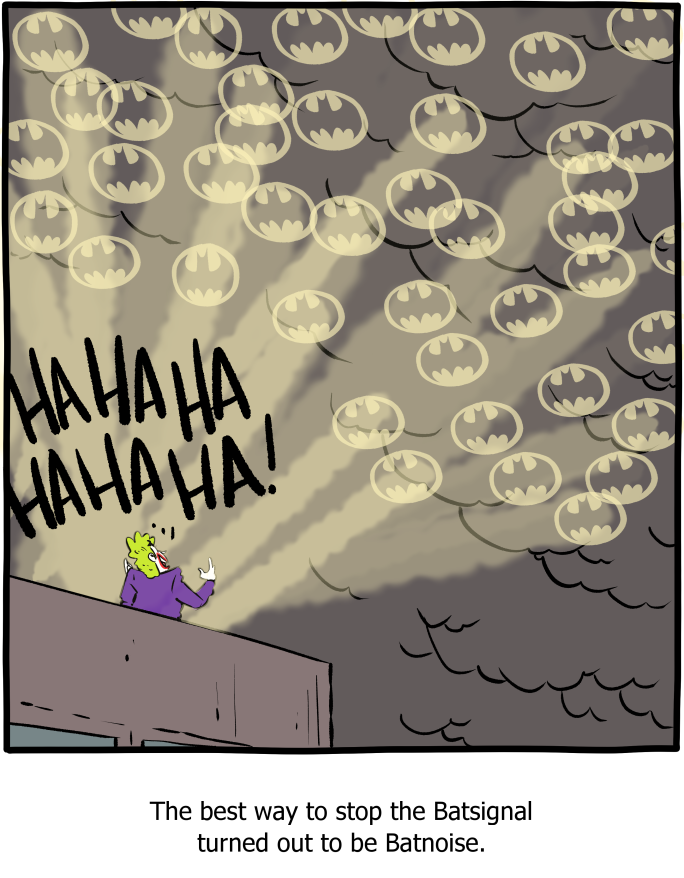
Saturday Morning Breakfast Cereal - Signal

by tech@thehiveworks.com


Click here to go see the bonus panel!

Hovertext:
This is one of those jokes where someone must've beaten me to it, but well, in that case I'm just adding to the noise.


Today's News:
21 Apr 13:21

Moon Knight Episode 4's Big Twist Is A Classic TV Trope

by Devin Meenan

Warning: Major spoilers for the most recent episode of "Moon Knight."

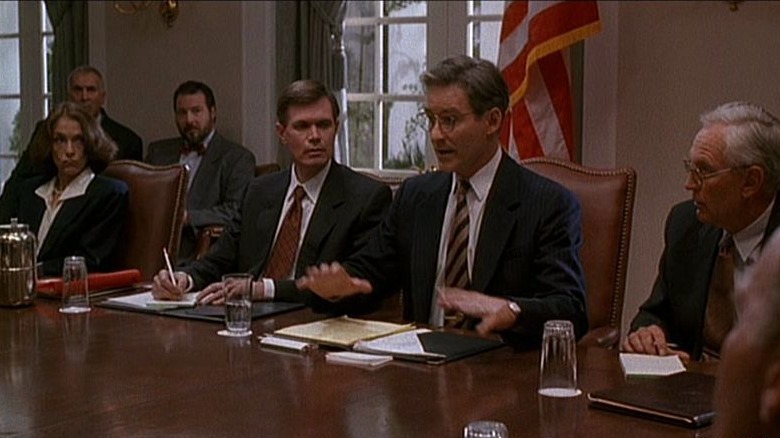
The latest episode of "Moon Knight," "The Tomb," threw us for a loop. Could it be that Marc Spector (Oscar Isaac) is simply a delusional mental patient who's too obsessed with the B-movie adventures of archaeologist Steven Grant? That he's cast his fellow patients as supporting characters in his fantasy and his doctor as the villainous Arthur Harrow (Ethan Hawke)? Is nothing we thought true? Yeah, right.

This premise -- the hero wakes up in an asylum, surrounded by familiar faces telling them the events of the show have been a delusional fantasy -- is a common one in sci-fi and fantasy shows. It makes sense that "Moon Knight" is where Marvel finally explores this trope, given the titular hero's dissociative identity disorder has been a lynchpin for the show. But where has this plot been used before? Let's run down a few classic examples and examine why it's a trope that genre TV shows love to use again and again.

Deep Space Nine – 'Far Beyond The Stars'

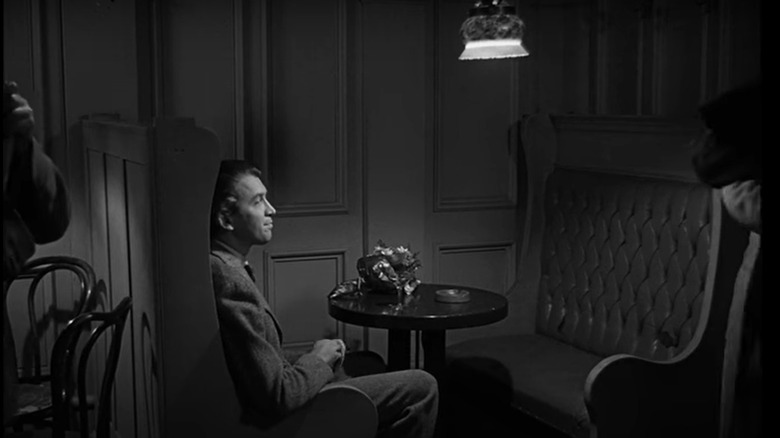
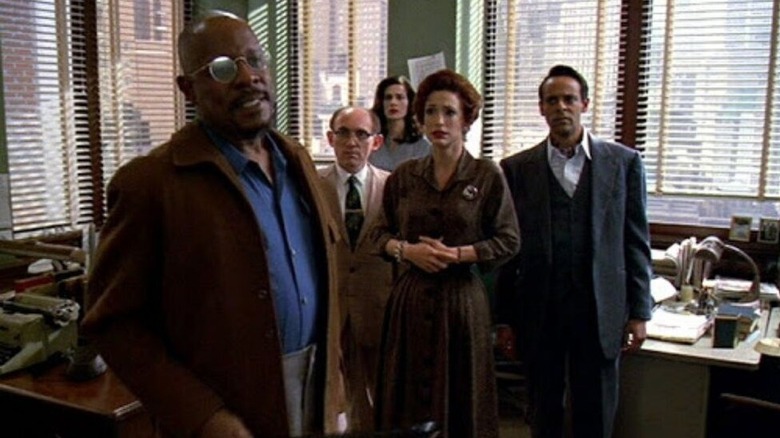
A classic example of this type of story is "Star Trek: Deep Space Nine" episode "Far Beyond The Stars." In the throes of the Dominion war, Captain Ben Sisko (Avery Brooks) is feeling down, especially after a friend dies in combat. The captain then enters a very different world — 1950s New York City, to be precise. Sci-fi writer Benny Russell (also played by Brooks) has written a story about a familiar-looking space station captained by a Black man named Sisko. However, Benny will have to fight tooth and nail with the institutionalized prejudice of the time to see his story published.

The usual cast of "DS9" are assigned different roles throughout the episode, mostly as Benny's co-workers at "Incredible Tales" magazine. Notably, the actors who played the show's alien characters are out of make-up and out of character; Michael Dorn (Worf) is Willie Nelson, Benny's laid-back baseball player friend who couldn't be more different from the stuffy Klingon who Dorn usually plays. Armin Shimerman (Quark) is Herbert Rossoff; far from a traditionalist (i.e. capitalist) Ferengi bar owner, Rossoff is the resident lefty at "Incredible Tales."

Some of the characters' New York counterparts aren't so different; Marc Alaimo (Dukat) and Jeffrey Combs (Weyoun) play a pair of cops who harass Russell and shoot his young friend Jimmy (Cirroc Lofton, usual role Jake Sisko) dead. Most interestingly, Rene Auberjonois (Odo) is Douglas Pabst, the magazine's editor-in-chief. The story takes Odo's role as head of station security and flips it on its head; Pabst is a small-c conservative who refuses to rock the boat by publishing a story with a Black lead. 

"Far Beyond The Stars" is a self-reflexive episode. Kay Eaton (Nana Visitor, aka Major Kira Nerys), who writes under the gender-ambiguous pen name KC Hunter, has to be a reference to "Trek" writer DC Fontana. "Star Trek" has always been socially conscious, but in the utopian future of the Federation, racial prejudice has been eradicated. The framing device of Benny's story "Deep Space Nine" finally gives the show a chance to examine what a big deal the series being led by a Black captain is. 

Benny Russell's world is telegraphed to be hallucinations from the beginning; the show all but states that the Bajoran prophets are trying to revitalize the faith of Sisko, their Emissary. Before Russell's world takes over the episode completely, Dr. Bashir (Alexander Siddig) notes Sisko's brain patterns resemble previous times he's experienced visions from the Prophets. Throughout the episode, a preacher played by Brock Peters (regular role Sisko's father Joseph) encourages Benny to follow the path of Prophets. 

However, the episode ultimately chooses not to give easy answers about which reality is the real one. In a failed bid to get "Deep Space Nine" published, Benny rewrites the ending to make the story the dream of a contemporary Black man. This gives the framing device a level of circular meta-textuality. Before Sisko reawakens on the real Deep Space Nine, the preacher tells Russell, "You are the dreamer and the dream." One part of the meaning is clear -- he's both Ben Sisko and Benny Russell. However, this doesn't answer which one is the dreamer and which one is the dream. Sisko is left uncertain himself by the end; the last shot of the episode is him looking at his reflection and seeing Benny staring back.

Benny Russell would return in the season 7 episode "Shadows and Symbols," where he's been committed to an asylum after his mental break at the end of "Far Beyond The Stars." Showrunner Ira Steven Behr even had an audacious pitch for the series finale involving Russell:

"The final episode would end up with Benny Russell on Stage 17 at Paramount, wandering around the sound stages, realizing that this whole construct, this whole series that we had done for seven years, was just in Benny's head. That is how I wanted to end the series."

Behr's ending would've definitely made Russell into the dreamer and Sisko into the dream. However, in what was probably for the best, the show didn't go through with this. "DS9" series finale "What You Leave Behind" lacks any ambiguity about what is and isn't reality in the "Trek" universe. 

Buffy The Vampire Slayer – 'Normal Again'

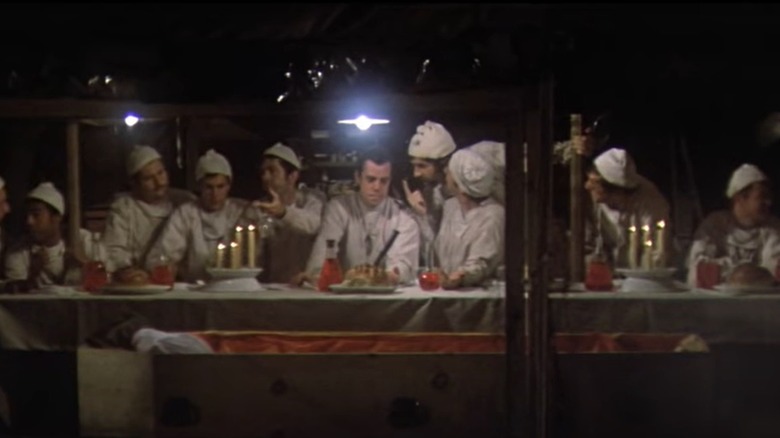
A line-of-sight gag in "Far Beyond The Stars" indicates that Rossoff had a rejected story pitch about a cheerleader who fights vampires. This was an inside joke about "Buffy The Vampire Slayer," where Shimerman played hard-nosed Principal Snyder. Fittingly enough, "Buffy" would have its own "is everything a hallucination?" episode in its sixth Season: "Normal Again."

"Buffy" ran for five seasons on The WB, with the final episode "The Gift" featuring the series' heroine (Sarah Michelle Gellar) making the ultimate sacrifice. However, the series was swiftly revived by UPN for two additional seasons. Season 6 opens with Buffy resurrected by her witchy best friend Willow (Alyson Hannigan), in a season that ultimately proved to be the darkest and grimmest of "Buffy." A DVD behind-the-scenes feature even declared that in season 6, "Life is the Big Bad." So, late in the season, when Buffy learns her life might be a fantasy, she can't shrug it off.

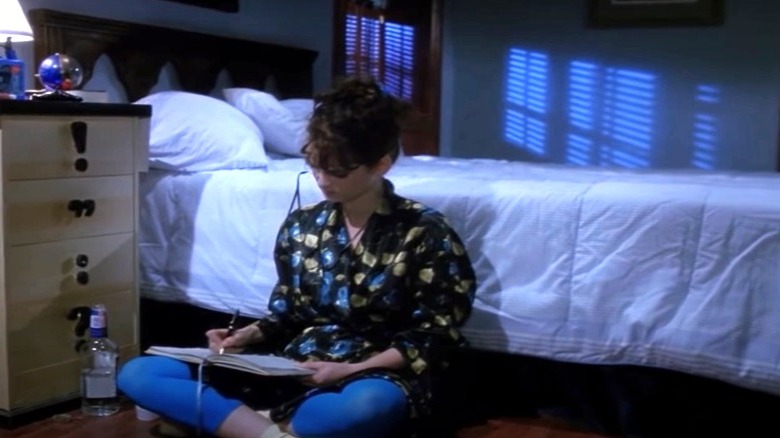
In "Normal Again," a scuffle with a demon leaves Buffy poisoned and suffering hallucinations that she's an asylum patient. According to her doctor, Sunnydale is nothing more than an elaborate illusion she created to sustain her heroism fantasies. Unusually, the show's supporting cast doesn't show up in the "real" world. They're instead painted as constructs of the fantasy that Buffy must slay to regain her grip on reality. The only recognizable face in the asylum scenes is Buffy's late mother Joyce (Kristine Sutherland); a familiar face who anchors the fantasy scenes for both Buffy and the viewer.

As she becomes more seduced by her visions of the hospital, Buffy asks aloud, "What's more real, a sick girl in an institution or some kind of supergirl chosen to fight demons and save the world?" This question illustrates why it's specifically genre shows which use this type of story; it only works when the show's premise is far out enough that it could only be a hallucination in real life. In doing so, the show plays on the audience's own suspension of disbelief. The episode also puts an ironic twist on the escapism that the audience enjoys; Buffy's life slaying vampires is fun for us, but it's gotten so hard for her she prefers to believe it's not real. The more realistic world becomes Buffy's escapism from the "real" supernatural one -- or does it?

The last scene of "Normal Again" is in the asylum, where Buffy's doctor tells her despairing parents that their daughter has permanently succumbed to her illness. The obvious conclusion is that the asylum was indeed the real world and Sunnydale the hallucination. Showrunner Marti Noxon disputes this; in "Slayers and Vampires: The Complete Uncensored, Unauthorized, Oral History of Buffy the Vampire Slayer and Angel," (by Mark Altman and Edward Gross), she says:

"It was a fake out; we were having some fun with the audience. I don't want to denigrate what the whole show has meant. If Buffy's not empowered then what are we saying? If Buffy's crazy, then there is no girl power; it's all fantasy. And really the whole show stands for the opposite of that, which is that it isn't just a fantasy. There should be girls that can kick ass. So I'd be really sad if we made that statement at the end. That's why it's just somewhere in the middle saying "Wouldn't this be funny if ...?" or "Wouldn't this be sad or tragic if...?" In my feeling, and I believe in Joss' as well that's not the reality of the show. It was just a tease and a trick."

While Noxon has her interpretation, it's just that, an interpretation. By ending the way it does, "Normal Again" puts the viewer in Buffy's shoes and forces them to choose which reality they want to believe is true.

Smallville – Labyrinth

What is "Smallville" if not "Superboy" + "Buffy"? Naturally, "Smallville" had its own "Superhero in the asylum" episode: "Labyrinth." It's a by-the-numbers rendition; Clark Kent (Tom Welling) awakens in a mental hospital. One Dr. Hudson (Matthew Walker) tells him that his Kryptonian origin, superpowers, etc., are all a delusion, created to cope with the death of his birth parents in the Smallville meteor shower.

A twist is that the supporting cast's lives are mostly the same, but reconfigured around the hallucination. Martha Kent (Annette O'Toole) and Lana Lang (Kristin Kreuk) are still a loving mother and girlfriend, respectively, which means they want Clark to get "better." Chloe Sullivan (Allison Mack) is still Clark's confidante, and thus is the one who sustains his delusions about superpowers. The biggest deviation concerns Lex Luthor (Michael Rosenbaum). In the series' pilot, Clark and Lex became friends after the latter crashed into the former; the super-resistant Clark fished an unconscious Lex out of his drowned car, kicking off a doomed friendship. In the "Labyrinth" reality, Clark having no superpowers means Lex came away from the accident paralyzed and with a chip on his shoulder.

"Labyrinth" lacks the introspection of "Far Beyond The Stars" or "Normal Again" and is nowhere near as ambiguous. By "Smallville" season 6, the monsters of the week had changed from "Meteor Freaks" (Smallville residents granted superpowers by Kryptonite exposure) to Phantom Zone escapees. Dr. Hudson turns out to be a Phantom trying to take over Clark's body; our hero defeats him with some help from the Martian Manhunter (Phil Morris).

"Labyrinth" is ultimately a version of a story that's been done before, and done better, elsewhere, but with some DC Comics wallpaper stapled on. That's really "Smallville" in a nutshell, isn't it?

Community – Curriculum Unavailable

As a sitcom, "Community" might seem the odd one out of these shows. However, that presupposes "Community" is a normal sitcom. Instead, the show is better described as not just a parody of TV, but often of genre itself. Season 3 episode "Curriculum Unavailable" is mostly a parody of clip shows, but it throws in an "it's all a hallucination" sequence towards the end.

In the previous episode, "Course Listing Unavailable," the study group was expelled from Greendale Community college. Abed (Danny Pudi) takes this poorly and begins trespassing on school property; to avoid him being charged, the group takes him to a psychiatrist. Dr. Heidi (John Hodgman) eventually drops the bombshell on the group: There is no Greendale Community College.

The group was institutionalized together and the past three seasons were a shared hallucination. As Heidi explains this, the episode then shows clips of the group in "Greendale Asylum" together. It takes three steps from Heidi's office for Jeff (Joel McHale) to realize the holes in this. For one, Annie (Alison Brie) wore a Greendale College backpack to the session. Heidi caves, revealing he was hired by Ben Chang (Ken Jeong) to lie to the group and deter them from returning to Greendale.

That the deception is so quickly unveiled speaks to the inherent ludicrousness of this premise; "it was all just a dream" is the most hackneyed twist in storytelling for a reason. It also reflects how no series which has done this plot has ever committed to it. So, why do shows keep using it?

Why Is This A Trope?

This trope provides a potent metaphor for television itself. After all, the worlds that the characters of "Deep Space Nine," "Buffy," "Smallville," "Community," and "Moon Knight" inhabit aren't real. "Everything was a delusion, you're really in an asylum" puts the character in the place of the viewer, forced to deal with everything they've invested in being fiction.

The premise also strikes the right mix of shock and safety that's essential to television. Done well, an episode with this premise can instill a kernel of doubt in the viewer's mind, but only for a moment. For one, the show must go on; revealing everything about the show's story is false would undermine it to the point it couldn't be continued. It would also be a challenge, if not an insult to the audience; you wasted your time getting invested in something that was never real to begin with. As such, there's a safety hidden in the suspense; of course everything will turn out to be "real" by the episode's end.

After all, no show which has done this premise has pulled the trigger all the way; the indefinite teasing of "Deep Space Nine" and "Buffy" come the closest, but still don't go all the way. Considering its place within the larger MCU, I doubt that "Moon Knight" will be the one to break this rule.

Read this next: Joker's Wild: Ranking The Cinematic Versions Of The Clown Prince Of Crime

The post Moon Knight Episode 4's Big Twist is a Classic TV Trope appeared first on /Film.

21 Apr 11:26

Jean-Luc Enlists His Own Version Of Agent Mulder In Episode 8 Of Star Trek: Picard Season 2

by Witney Seibold

It seems "Star Trek: Picard" has officially reached the "spinning its wheels" phase of its current season.

In the first two episodes of this season, "Picard" wisely laid out a single, clear mission for its characters: Go back in time to the year 2024 and investigate the single event in history that caused humanity to begin down a dark path of galactic fascism. Our heroes got to experience Fascism World in person (thanks to the impish cosmic tinkering of the trickster god Q, played by John De Lancie), and Picard (Patrick Stewart) briefly occupied the role he would have played in the alternate timeline: that of Lord High Executioner. It was a promising premise that could have played very strongly into the politics of the present, warning humanity that we are at a turning point in history: Choose between committing multiple genocides or Roddenberry's optimism. 

In episode 8 of season 2, entitled "Mercy," we're three episodes past that turning point. In a rather limp conceit, the pivot in history was merely about whether an ancestor of Picard's (Penelope Mitchell) would go on a space mission or not. If she refused — as Q was trying to get her to do by acting as her psychiatrist — then humanity would plunge into genocide within a generation. If she accepted — as Picard ensured she would by giving her a pep talk at a party — then Roddenberry, ho! A disappointingly simple solution, as audiences in 2022 aren't living in the middle of a space race, and underfunded astral travel projects don't capture the public's imagination anymore. And, no, there is no speech in "Star Trek: Picard" about how Renée Picard's mission was destined to change the public's perception of space travel. 

So the unsatisfying conclusion has been reached, and the plot now has one mystery left: Why did Q teleport Picard and co. into the fascist timeline to begin with? The answer is given, and, dear readers, it is just as disappointing. 

Q's Motivation

Caution: Spoilers ahead.

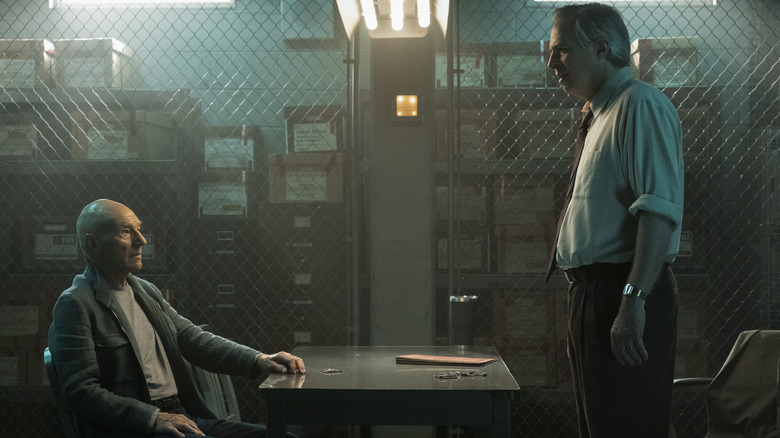
At the end of episode 7, Picard and Guinan (Ito Aghayere) were apprehended by 2024's own Agent Mulder, a character named Wells (actor Jay Karnes who, incidentally, played a Starfleet lieutenant in the fifth season of "Star Trek: Voyager"). Picard and Guinan are taken to a top-secret FBI bunker where they are interrogated. Picard is questioned by Wells, and has the good sense to play dumb. Wells eventually reveals that he became an FBI agent because of a boyhood run-in he had with a pair of visiting Vulcans. Just as the Vulcans were initiating a mind meld to erase Wells' memory, they were beamed away, leaving Wells obsessed with finding aliens. Figuring that Wells already had a run-in with space visitors (prior to "First Contact"!), Picard spills the beans. He is from the 25th century, there is an evil robot on the loose in Los Angeles, and he needs the FBI's help. Picard's "Will you help me" speech is riddled with clichés, and wouldn't have felt out of place in a corny comic book movie from the 1990s

Guinan, meanwhile, is questioned by Q himself, posing as an FBI agent. It is to Guinan that Q will reveal his ultimate motivation: Q, it turns out, is dying. The Q Continuum is supposed to be immortal, so it came as quite a shock to both Guinan and to Q. De Lancie gives a good performance, talking about opening himself up to the possibility of glorious oblivion, but eventually had to face that he was merely withering away. Because he was facing his own mortality, Q decided to put Picard in a trap one last time just to see if his old Starfleet friend could wriggle his way out. 

This is disappointing. Q instigated the second season of "Star Trek: Picard" out of the boredom wrought by a midlife crisis? This doesn't seem like a very becoming motivation for an immortal deity. Perhaps Q would have visited Picard, but to discuss mortality, not to put him through the wringer — checking notes — for fun. If Q were messing around, surely he would have teleported Picard into Sherwood Forest again.  

The reveal of Q's motivation also robs the central plot of its stability. Did Q know that Picard would think to infiltrate a party? Did he know the Borg Queen was needed to go back in time? Did Q intend for the Borg Queen to take over the mind of Dr. Jurati (Alison Pill)? Q was giving hints to the genetic scientist Adam Soong (Brent Spiner). What was the plan there? Did Q know about the Watcher? Did he know Picard and co. were going to visit the locales they did? It's all terribly thought out.

Borg Queen On The Loose

Oh yes, and, as mentioned above, there's a Borg Queen loose in Los Angeles. Dr. Jurati's body has been taken over by the cyborg villainess, and now intends to cause mayhem in 2024. Raffi (Michelle Hurd) and Seven (Jeri Ryan) are on her trail. 

Seven, we state explicitly now, has no Borg implants any longer. She is fully human again. Again: Did Q plan for that? Why allow Seven to remain human when Picard retained his golem android body? I know, I know. Picky, picky, picky.

The Borg Queen cannot assimilate people into the Borg, however, as she has no assimilation nanites in her blood to infect others, so she — and here we emit a very long, heart-rending sigh — had to eat car batteries to get essential metals into her bloodstream, so she can produce the nanites that she needs to — I'll stop there. Needless to say, "Star Trek: Picard" is deep into shlock territory. The sight of Alison Pill in her killer red dress, with battery acid spilling down her chin as she dreams of world conquest ... It all feels so silly now. The Jurati/Queen character will eventually beat up Raffi and Seven and somehow find her way to Adam Soong where they will — another sigh — assemble a team of military mercenaries ripe for Borg assimilation. This is something Soong had access to, I suppose.

The episode ends with the Jurati/Queen gearing up for world conquest/assimilation with her military lapdogs. I guess the battery lunch helped. While this should feel like the ramping up of a threat, recall that we're essentially in the falling action of the series. New plot complications aren't so much complicated as they are filler until the showrunners can complete a season. Just keep spinning those wheels. We'll get back to the 25th century soon enough.

Guinan's Psychic Shimmer And Other Details

With so many illogical plot decisions and silly motivations, one might fall into the dark side of recounting annoying little details to maintain sanity. Plot inconsistencies and ill-thought-out details aren't at all important if the story or the characters are engaging. When one disengages, one starts nitpicking. 

As long as that's true...

Guinan can talk to Picard psychically. Indeed, Guinan seems to host numerous superpowers never previously alluded to in "Star Trek." Guinan previously gained her dramatic appeal through her compassion and ability to listen. Now she is being turned into a capable badass, one of the worst decisions for that character. 

The idea that a Borg only needs to eat metal in order to become capable of assimilating people is a pretty bad idea. The dialogue explains that she needs base metals in her bloodstream to make nanites, but what is constructing the nanites? Even using the rules of "Star Trek's" own imaginary technology, this is a silly idea. 

Adam Soong has been trying to create a perfect clone, having made multiple copies of his adult daughter (Isa Briones). His current daughter finds she is only six years old, and had childhood memories implanted. Briones played a similar scene in season one when her character Soji discovered she was an android. 

It's clear the Adam Soong story will have something to do with the Eugenics Wars (an established event in "Star Trek"). A pity that it was a Borg villain — and not the mere hubris of humankind — that brought about said wars. 

Sigh. Only a few more to go.

Read this next: The 10 Best Sci-Fi Movie Villains

The post Jean-Luc Enlists His Own Version of Agent Mulder in Episode 8 of Star Trek: Picard Season 2 appeared first on /Film.

20 Apr 17:43

A key Texas bridge lost $1 billion per week during governor's slowdown

by Bill Chappell
Commercial trucks wait to cross the Pharr-Reynosa International Bridge in Pharr, Texas, last week, before Gov. Greg Abbott lifted his order requiring additional inspections of trucks arriving from Mexico.

Gov. Greg Abbott's rule imposing safety inspections at the border did "nothing to stop the flow of illegal immigration or illegal drugs," Texas Agriculture Commissioner Sid Miller told NPR.

(Image credit: Michael Gonzalez/Getty Images)

20 Apr 17:38

I got in trouble for talking to my coworker about how much money I make

by Ask a Manager

This post, I got in trouble for talking to my coworker about how much money I make , was originally published by Alison Green on Ask a Manager.

A reader writes:

Recently, I was given feedback from my manager stating they had concerns with confidentiality and discretion when it came to my work. They said it had been brought to their attention that I had shared what my salary was with a team member. My manager did not share who it was, for confidentiality reasons, but I have only spoken to one person about salary and that is my team member “Rachel.” Both of us are women, started the same week, and I felt it important to share. Rachel had told me she had asked for a raise and been denied for several reasons that did not seem valid to her. I was under the impression this was a private conversation between Rachel and me, and I told my manager that workplaces cannot prevent employees from discussing salary.

My manager then said that Rachel was made to feel that I and/or my work was more important than hers. I remember my conversation with Rachel as me sharing that I couldn’t believe that she was denied a raise and that she deserved appropriate compensation for her work. She didn’t tell me she felt my work or I were more important, but I acknowledge that she could have felt this way. I feel awful that she could have felt this way because I don’t think that my work is more important. In fact, I’m confident the only reason I got a raise is that my workload was requiring me to dip into the overtime budget too much, and with the raise, I was moved to exempt.

I want to talk to Rachel about this, but I am concerned because of how this was presented to me by my manager. First, it was about confidentiality and discretion, and then it was about how it made someone feel. Because of that, this whole situation feels off to me. I feel like trust is broken between Rachel and me, and now I am going to be labeled as someone who doesn’t respect confidentiality. My manager mentioned my desire to move up within the company several times during our conversation and I’m concerned for my future. Is it appropriate for me to speak with Rachel about this? How do I go about navigating this with my manager? I feel blindsided and am now lacking trust in my team. Am I overreacting?

Your manager is almost certainly BS’ing you. See through the con!

Based on what you’ve shared, the most likely scenario is:

* You and Rachel discussed your salaries and you confirmed her feeling that she should be getting paid more. You did not make her feel that you or your work were more important than hers.

* Rachel asked your boss for more money and cited what you’re earning as part of her case for deserving a raise.

* Your boss is pissed off that you shared your salary with Rachel, because it makes it harder for her to convince Rachel she’s appropriately paid for her work.

* Your boss wants to discourage you from talking about salary with your coworkers — even though it’s illegal for companies to prohibit that among non-management employees — and so she told you she has concerns about your “confidentiality and discretion,” hoping that would intimidate you into not doing it again.

* When you pointed out that you’re legally entitled to talk about your salary with coworkers, she changed her story and said her real concern was that you made Rachel feel less important than you. (That’s very telling, by the way! Your manager is upset that by sharing your salary, you let Rachel know that the company does indeed value her less in real terms — dollars. But that’s about how the company values Rachel, not how you feel.)

* Now she has you feeling guilty, which means you’ll probably hesitate to share salary information with coworkers in the future, and she’s created tension between you and Rachel, which undermines the solidarity you two had formed around salary. That’s a win for a company that doesn’t want salary transparency among its employees and doesn’t want workers organizing with each other.

* She also mentioned your desire to move up in the company several times in this conversation, implying that you’ll need to stop talking about salary with coworkers if you want to be promoted … even though it’s illegal for companies to do that. She’s trying to dress it up as “discretion and confidentiality” but that’s like objecting to you reporting discrimination because of “manners and respect.”

You get to talk about salary with your coworkers; that’s a right enshrined in law. “Discretion and confidentiality” has nothing to do with it, unless you’re a manager trying to intimidate employees into not exercising a legally protected right … which she is.

I strongly suspect that if you talk to Rachel, you’ll find that her conversation with your manager wasn’t about how you made her feel. It was about wanting more money. And yes, part of her argument for wanting more money was probably that she feels the company is undervaluing her relative to what they’re paying you. Those feelings are about the company, not you.

Don’t let your manager’s manipulation work. Consider reporting to HR that your manager implied you wouldn’t be promoted if you continue to exercise a legally protected right. (That says “consider” not “do” because whether to do it depends on what you know of your HR, how your manager might be inclined to retaliate, whether HR is likely to prevent said retaliation, and how much capital you want to invest in this generally.) But most importantly, keep talking to your coworkers about money if you’re comfortable continuing. When a company is actively trying to get you not to, that’s a sign it’s all the more important to do it.

20 Apr 17:34

my employee is missing too much work, but always has reasons

by Ask a Manager

This post, my employee is missing too much work, but always has reasons , was originally published by Alison Green on Ask a Manager.

A reader writes:

I have an employee who always has something happen that prevents him from coming to work on time or at all at least once per week. He will text me that morning and say, “My dog was sick all night and we need to take him to the vet” (both he and the wife are going, which to me is so odd) or “My wife is ill and I need to stay with her.” It’s always something. This has been incredibly frustrating and it happens so often that I don’t really believe him, but who can argue with someone that says those things? I don’t know how to handle this.

I answer this question — and three others — over at Inc. today, where I’m revisiting letters that have been buried in the archives here from years ago (and sometimes updating/expanding my answers to them). You can read it here.

Other questions I’m answering there today include:

  • My employee uses odd, repetitive jargon
  • Candidates get snippy when I won’t take their calls before they apply
  • Job candidates who claim to know Word and Excel but don’t
20 Apr 17:20

TSA Now Looking To Make It Impossible For People Wrongly Added To Terrorist Watchlist To Travel On The Ground

by Tim Cushing

Apparently, it’s not enough to prevent hundreds or thousands of people with “no known affiliation” with terrorist groups from flying — a list that includes children who have yet to enter kindergarten. Even though the TSA long ago admitted (albeit, not publicly) the threat to airline flights was almost nonexistent, it still needs to look like it’s doing something useful to ensure continued funding.

So, it’s moving on to Amtrak, according to this report from WLKY, which obtained the TSA’s Privacy Impact Assessment [PDF] that discusses its decision to start running passenger manifests against the DHS’s highly questionable “no fly” list. We are moving on to “no rail” for Muslims and an assortment of brown people most likely described as “swarthy” and “suspicious” by people who couldn’t find an explosive device if you paid them to.

Amtrak has asked the TSA to start screening some of its passengers against the Terrorist Screening Database watchlist maintained by the Threat Screening Center to see if known or suspected terrorists have been riding the rails, according to a U.S. Department of Homeland Security privacy impact document obtained by the Hearst Television National Investigative Unit.

The program, part of the Amtrak Rail Passenger Threat Assessment and which has not been previously reported, would compare personal passenger information from Amtrak – which may also later include a traveler’s “publicly available social media” profiles viewed by DHS personnel – to the government’s terrorist screening database.

According to the Privacy Impact Assessment, the TSA believes hardly any privacy will be impacted. The sharing will be one way: Amtrak will hand over passenger manifests and the TSA will run names against watchlists.

To the extent it is available, Amtrak will provide historical passenger manifests for several months on routes in the Northeast corridor to TSA. The manifests will contain first and last name and date of birth for passengers who have provided that data to Amtrak. In addition, where available, Amtrak may also provide additional data elements that passengers have provided on an optional basis or as part of frequent passenger Guest Rewards accounts. These additional data elements may include but not exceed: middle initial; billing address; phone; email; ticketed origin/destination; and actual origin/destination. TSA will match the passenger information against the Terrorist Screening Database to identify possible known or suspected terrorists

The TSA claims — at least, at this point — that the information will only flow to the TSA. But if it finds matches, it’s inconceivable the information won’t be relayed back to Amtrak to flag passengers for the TSA to approach and/or track. While this appears to be exploratory at the moment (seeing how many hits on watchlists passenger manifests rack up), the end goal is obviously the implementation of a version of the “no fly” list that means no more traveling by rail for the hundreds of people the DHS has determined too dangerous to fly despite their apparent lack of ties to terrorist organizations.

And, like anything else the government chooses to do in bulk while securing the homeland, innocent people will be negatively affected.

There is a risk that limited information provided by Amtrak will result in inaccurate watchlist match results.

The mitigation factors the TSA lists only apply for as long as the TSA continues to do nothing but research historic data. Since the data doesn’t flow back to Amtrak at the moment, people mistakenly flagged by the system will still be able to travel via Amtrak. But it’s inevitable that this data will start flowing back to Amtrak, even as the TSA determines the threat to rail transportation is, like the threat to air travel, almost nonexistent. And once that happens, people who’ve never done anything wrong will lose another option for traversing the Land of the Free.

20 Apr 14:30

my boss wants to check in with my doctor, employer wants to hear our worst lockdown moments, and more

by Ask a Manager

This post, my boss wants to check in with my doctor, employer wants to hear our worst lockdown moments, and more , was originally published by Alison Green on Ask a Manager.

It’s five answers to five questions. Here we go…

1. My boss wants to be able to check in with my doctor about me

I recently reported to my managers that I am fighting through a rather difficult health issue that is slightly stigmatized in mainstream culture, due to not being understood well. It is slightly sensitive to the profession in which I work, but is a valid health condition. It has impacted certain areas of my performance, but nothing beyond what I believe can be reasonably overcome. My profession is also related to healthcare and healing.

In talking with my managers about returning to my position (after taking needed time off to heal), one of the suggestions from my manager was for them to be placed in contact with my mental health/medical team so that the managers could be in the loop for any reason. (Mind you, my prior lack of performance was in no way harmful to myself or others, just below standard performance and expectations.)

It was mentioned out of what seemed like concern, as if my managers should be somehow involved in my healing process, but it struck me as a bit off (I couldn’t tell if it was care or control, for example). I wondered if you had thoughts on this. Can a manager ask an employee for contact information for an employee’s mental health/wellness team to “check on them,” should anything go awry in the managers’ eyes?

Whoa, no, that is not okay. Your employer can ask for certain information from your doctor as outlined in laws like the Family Medical Leave Act and the Americans With Disabilities Act, but that information is very narrowly in the law and is really only to (a) confirm that you have a condition that qualifies under those laws and/or (b) to explain the need for reasonable accommodations. They can’t ask to be in touch with your medical team so they’re “looped in” on how your treatment is going (and your doctor wouldn’t be able to tell them anyway unless you waived your rights under HIPAA).

Legalities aside, it’s a terribly inappropriate request. Your managers aren’t part of your medical team, and you aren’t their child; you are an adult performing a job. They should not be asking to involve themselves in your private medical affairs.

One option for a response: “I don’t think that would make sense and legally we can’t do it anyway, but if something comes up that’s concerning you, I’d appreciate if you’d flag it for me. If there’s ever a need for me to check with my doctor, I’ll of course handle that privately but will keep you in the loop if something affects works or any needed medical accommodations.”

2. I took a job because I could work from home — but now it sounds like that may change

I got laid off in the beginning of the pandemic right before starting my maternity leave. It was a bit difficult to find a new job in my field with everything that was going on, but I used every single bit of advice I learned from you for searching and interviews and managed to get a job I am excited about, starting next week.

A big reason for me accepting the job offer was that the manager said I could work remotely as much as I wanted to. My boss said they don’t even notice or care who is in the office. When I accepted the offer, I made it clear that the possibility of remote working was a big reason for me accepting the role.

I have prepared a plan for a nanny to take care of my baby at home, with my husband present before lunch and me working from home during the afternoon. We cannot leave our baby alone with a nanny yet, for specific reasons.

However, last week I was visiting my new workplace and my new manager expressed some frustration with employees working remotely, and indicated that there are going to be some changes being made around working from home. I’m now very very stressed. Our set-up for our baby relies on working from home half days. Can or should I address this before I start? And if so what should I say? This new job is very important to me, but so is my child.

It’s reasonable to say that remote work was a big part of why you accepted the job and ask whether that’s changing! I’d contact your new manager and say it this way: “I wanted to check with you about the plans for remote work. Remote work was an important thing I was looking for in a new role and a big part of why I was able to accept the position, so I was concerned by what you said about possible changes in that regard when we talked last week. Can you tell you me more about what’s likely to change?” (You could also specify that your child care arrangements depend on the remote work that was agreed to, if you judge that it would help your case. In some cases it would; in others it might not.)

From there, your next steps would depend on how willing you’d be to walk away from the job over this — but get more info and see where things stand.

3. Employer wants us to share our best and worst lockdown moments

Our office is having a reopening party and while I have no issues with that (vaccinations and masks are required, attendance and continuing remote work are all optional), our general manager sent out an email that included the following paragraph: “Share your lock-down moments! We want to see and hear about some of your best (and worst) moments of lock-down. Please submit your stories and pictures here before April 22nd.”

The thoughtlessness of the request sent my jaw to the floor, where it has remained for days. Share your Covid trauma with your management and colleagues! It’s so wildly out of touch — and to boot, we’re in NYC, which was obviously hit hard and early in the pandemic!

Managers, noooo. For you, the pandemic might have been all learning to bake bread and getting to wear sweatpants every day. For other people, it was loved ones dying (as well as mental health crises, isolation, and a child care cataclysm that still isn’t over).

I’m sure this employer means well — they’re imagining photos of terrible beards and stories about your fifth-grader’s successful mask-sewing business — but it’s awfully insensitive.

4. Do I still have a coop placement?

I’m in my second to last year of an undergrad engineering degree, and my university sponsors a coop placement. I’m happy with where I got matched, but they’ve told me that the original funding fell through. They said they are looking for more funding. It’s now less than a month to when my work term would start, and my emails to them aren’t giving me answers about if I have a job there in three weeks or not. How can I yell for help?

It sounds like, as things stand right now, the job is no longer there. It might return if they find funding, but as of right now it doesn’t exist — so the safest thing is to assume the job is no more and plan accordingly. Contact your university’s coop office immediately (or whoever works with coop placements), explain what happened, and ask for help.

5. I don’t want my coworker talking about my religion

I am a woman in my mid-twenties, working at a small food service business. A few weeks ago, we hired a retired lady who works the same shift as me. Overall she has been friendly, helpful, and effective.

A few days ago, she started talking to me about religion. I had mentioned at one point about a week prior that I practice religion, and a few days ago she started a discussion and told me that she was raised in my religion, but left it as an adult. She listed several reasons why she dislikes my religion and will never go back. Outside of work, I welcome these conversations, but at work I felt like responding would sound preachy or argumentative. She made generalizations about people in my faith that were inaccurate and stereotypical.

Then she started to talk about her marriage because she was married in my faith and was complaining about the process. She got married later in life, and remarked that her marriage is so good because “it’s not like she’s some 22-year-old kid getting married.” I got married at age 21, which she knows.

During this whole time, I had no idea what to say, so I just smiled and nodded. She absolutely has the right to her beliefs, same as I do, but I don’t feel like work is an appropriate place to tell someone all the reasons you dislike their religion or generalize them as a dumb kid because they got married young. I don’t know what to do about this, especially since she is a friend of the owner. What should I do?

If she brings it up again: “I don’t like to talk about religion at work, I’m sure you understand!” And if it continues after that, say more firmly, “I’m not comfortable discussing religion at work. Please don’t keep bringing this up with me.”

Most people will stop at that point unless they are truly A Problem, but if she continues, it really is an okay thing to bring to your manager, even though your coworker is friends with the owner (and even if your manager and owner are the same person). Most managers don’t want their employees harassing other employees about religion and if you can plainly say, “I’ve told her to stop but she keeps bringing it up,” it’s going to be clearly a her problem, not a you problem. (If the business has 15 or more employees, it’s also covered by federal anti-discrimination law, which means your employer is legally obligated to put a stop to it. If you’ve got under 15 employees, they might not be — but check your state laws because some kick in at a lower employee threshold.)

20 Apr 14:25

Alien Baby Millennials

by Mary Kelly

Parenting the Millennial Generation Cover

Parenting the Millennial Generation
Guiding Our Children Born between 1982 and 2000
Verhaagen
2005

This one caught my attention in my sweep through the catalog. Since it is a parenting book, I wondered if there was something still relevant to today’s parents. I figure since the kids in question are in their 20s and 30s is it worth hanging on to in a public library collection?  In everyday practice I wouldn’t necessarily weed a parenting book just for “age” unless it was woefully out of date. (Check out our Parent/Teacher category for real offenders)

I only skimmed this book, but the majority is standard parenting advice found in a variety of books. I am not quite sure it brings anything new to the table in 2022. In real life, I would weed if the circulation was still decent or if I need the space.

I probably wouldn’t have noticed this book except for the Alien Baby on the cover.

Thoughts?

Mary


back cover

inside flap

Who is this Millenial Generation?

Top 10 traits of Good Parents

personality factors

The post Alien Baby Millennials appeared first on Awful Library Books.

20 Apr 11:43

The Applesoft Compiler (TASC): We have the source code, in a sense

by Raymond Chen

Back in the early 1980’s, the Apple ][ computer was taking the personal computing world by storm, and Microsoft released a compiler for Applesoft BASIC. That compiler went by the name TASC: The Applesoft Compiler.

TASC was written by one person in his dorm room while studying at MIT. Microsoft licensed the product and hired the author, who spent the summer at the Northup building¹ polishing the code.

As noted on page 61 of the manual:

TASC is a “two-pass” compiler, since it compiles in two major steps. PASS0 simply picks up user inputs and sets up compilation parameters, so it is not really part of the actual compilation process. The Applesoft program TASC runs PASS0.

PASS0 and PASS1 chain to PASS1 and PASS2, respectively. All three passes were written largely in Applesoft, and TASC was used to compile itself.

Chaining refers to a program instructing the system to replace the current program in memory with another program, but preserve the values of some or all variables. Chaining was a common technique when your program got too large to fit into memory all at once, so you broke it into multiple programs that each handed off control to each other.

Even if you hadn’t made it that deep into the manual, you could have figured out that TASC was used to compile itself because TASC used its own runtime library.

Chaining was not a feature native to Applesoft BASIC. It was one of a handful of language extension provided by TASC itself, through the use of magic comments that begin with an exclamation point. This meant that once TASC development reached the point that it required chaining, it could be run only in its compiled form. There was no way to bootstrap it from the interpreter.

As the author added features, he kept hitting the Apple ][‘s 48KB RAM limit and was forced to delete all the comments from the code, and when that wasn’t enough, he resorted to shortening all the important variable names to one character.

Such is the desperation of developing on a system with very tight memory constraints.

Everything was working smoothly, until the author returned to school for a semester. Upon returning to Microsoft, he found that he no longer understood the code. He had a sprawling compiler, with no comments, and unhelpful variable names.²

Yet somehow, he finished TASC, and it shipped.

If you dig through the TASC manual, you can find all sorts of wonderful implementation details.

All of the real work happened in pass 1. This performed code generation and left placeholders for references to other locations like branch targets or variables. Pass 2 consisted of resolving these references and patching up the code. Even though Pass 1 had all the smarts and Pass 2 was just doing clerical work, it was Pass 2 that took the most time because it was I/O-bound, and floppy disks are not speed demons when it comes to random access. Pass 2 was I/O-bound not only because of the need to patch the object code, but also because the table of line numbers was itself written to disk, there not being enough RAM to keep it in memory.

Pass 2 made a pass through the object code once for each variable, since the references to a variable were threaded through the object code as a linked list, similar to how 16-bit Windows threaded external references through the code instead of keeping a separate fixup table. Your program has 100 variables? Then that’s 100 passes through the object code to update references to 100 variables.

When the code generator needed to access a variable, it didn’t do so directly. The 6502 was an 8-bit processor, so none of the variables fit into a register. You needed to call a function to transfer the variable’s value to or from a common staging area.³ Your traditional code generation went something like this:

    ; BASIC code: X = A + B

    ; traditional code generation
    lda #address_of_a_lo
    ldy #address_of_a_hi
    call load_variable_to_accumulator

    lda #address_of_b_lo
    ldy #address_of_b_hi
    call load_variable_to_arg

    call add_arg_to_accumulator

    lda #address_of_x_lo
    ldy #address_of_x_hi
    call store_accumulator_to_variable

To save four bytes at each call site, the address-loading is factored out, and each variable gets a dedicated entry point:

    ; revised code generation
    call load_variable_a_to_accumulator
    call load_variable_b_to_arg
    call add_arg_to_accumulator
    call store_accumulator_to_variable_x

    ...
    ; block of variable access functions

load_variable_a_to_accumulator:
    lda #address_of_a_lo
    ldy #address_of_a_hi
    jmp load_variable_to_accumulator

load_variable_b_to_arg:
    lda #address_of_b_lo
    ldy #address_of_b_hi
    jmp load_variable_to_arg

store_accumulator_to_variable_x:
    lda #address_of_x_lo
    ldy #address_of_x_hi
    jmp store_accumulator_to_variable

This is a net win if each variable is accessed several times, which is a pretty fair assumption.

To save code size further, the access function was itself parameterized on the type of access.

store_arg_to_variable_x:
    ldx #4
    .byte 0x2c      ; swallow next two bytes
load_variable_x_to_arg:
    ldx #3
    .byte 0x2c      ; swallow next two bytes
store_accumulator_to_variable_x:
    ldx #2
    .byte 0x2c      ; swallow next two bytes
load_variable_x_to_accumulator:
    ldx #1
    lda #address_of_x_lo
    ldy #address_of_x_hi
    jmp do_something_with_variable ; uses value in X to decide what to do

We are using the trick of jumping into the middle of an instruction to provide multiple entry points to a common block of code. The author of TASC was very proud of this optimization.

Related reading: Excuse me, has anybody seen the FOCAL interpreter?

¹ This is the same building that was next door to the restaurant that inspired an important variable name in the 16-bit Windows kernel.

² Also, Applesoft BASIC didn’t have local variables. All variables were global. That certainly didn’t help with understanding the code.

³ It has been said that when you write code for the 6502, you’re not so much writing code as you are writing microcode. The CPU itself has only three 8-bit registers (A, X, and Y), and only A can do arithmetic. Anything of more than ephemeral value must be stored in memory. The real working space was the zero page. For example, you might decide that one region of the zero page was the logical “accumulator”, and most of your time was spent transferring values into or out of that accumulator, interspersed with occasionally performing arithmetic on or testing the value in that accumulator.

Perhaps the most famous example of treating the 6502 as microcode is the SWEET16 interpreter, written by Steve Wozniak, which emulated a 16-register 16-bit virtual processor in roughly 300 bytes of memory.

The post The Applesoft Compiler (TASC): We have the source code, in a sense appeared first on The Old New Thing.

19 Apr 15:02

InfoWars files for bankruptcy in the face of lawsuits over Sandy Hook shooting denial

by Joe Hernandez, NPR
Founder Alex Jones, who's repeatedly called the 2012 shooting at a Connecticut elementary school a hoax, has been sued several times by the victims' families for defamation and emotional distress.
19 Apr 15:02

Cleanup of the San Jacinto Waste Pits must continue as planned, EPA says

by Katie Watkins
The waste pits were built in east Harris County on the San Jacinto River in the 1960s to store hazardous waste from a nearby paper mill.
19 Apr 15:01

After today, Houston’s weather will be on repeat for awhile

by Eric Berger

Good morning. Temperatures have dropped into the 50s across nearly the entire metro area this morning, which is fairly chilly for this time of year. But winds have turned easterly already, and that marks the beginning of warmer, windier weather for pretty much the rest of this week. We’ll be somewhere in the 80s, with lots of humidity and persistent southerly winds through the weekend.

Tuesday

Skies should be partly to mostly sunny today, and temperatures will remain on the moderate side with highs in the upper 70s. However, winds out of the southeast at 10 to 15 mph, with gusts of about 25 mph, and this will start to pump up humidity levels. Highs will reach the upper 70s this afternoon, but lows will only drop to around 70 degrees tonight.

Highs today will be pleasant, in the 70s, with a side of easterly winds. (Weather Bell)

Wednesday

In response to low pressure in the middle of the United States, winds will again be noticeable on Wednesday, out of the south at 10 to 20 mph, with gusts as high as 30 mph. Look for highs in the low 80s, with partly to mostly cloudy skies, and overnight lows in the low 70s.

Thursday and Friday

The end of the work week brings more of the same, albeit warmer, conditions. Look for partly sunny skies, highs in the mid- to upper-80s, with a breezy southerly flow. We’re not looking at anything extreme, but winds will be fairly constant this week.

Rain accumulation forecast for now through Sunday. Basically: It ain’t gonna rain. (Weather Bell)

Saturday and Sunday

More of the same: The weekend should see partly sunny skies, highs in the 80s, and more southerly winds. Despite increasing moisture levels, there is virtually no chance of rain through at least Saturday, and probably on Sunday as well.

Next week

Changes will eventually come to this pattern, but probably not until later on Monday or Tuesday, with the next front. All of this moisture will help setup our region’s next real chance of rain during that time frame, and then we should see some legitimately cooler and drier weather afterward. How wet and cool will it get? Alas those details are understandably fuzzy at more than a week out.

Reliant Giveaway winner

I’m happy to report that Mike Burgas and Laura Martinez have won the Reliant-Astros Giveaway! We’ll contact you shortly.

19 Apr 15:00

Fox News star Tucker Carlson widely mocked for show on masculinity

by Towleroad
509092 origin 1
Published by
AFP
509092 origin 1
In his new series, Fox News host Tucker Carlson (pictured March 2019) worries about 'the total collapse of testosterone levels in American men'

Washington (AFP) – Tucker Carlson, star Fox News anchor and bow-tied darling of the American right, has become a laughingstock among Twitter users for his new series on masculinity, which according to him is under growing threat. 

In the trailer for “The End of Men,” Carlson worries about “the total collapse of testosterone levels in American men,” which he says is “a huge story that no one covers.”

The short clip, set to the grandiose theme music from “2001: A Space Odyssey,” shows muscular young white men wrestling shirtless, milking a cow, preparing a barbecue, doing push-ups and drinking what appears to be raw eggs. 

Others chop wood or carry tractor tires, always bare-chested. 

In the midst of these images appears a naked man, arms outstretched, standing high on a rock at sunset in front of a small machine that is emitting an orange light on his crotch. 

The voiceover, meanwhile, talks about “men who are tough, men who are resourceful, men who are strong enough to survive.”

The excerpt has triggered an avalanche of mockery on social networks, with many users commenting on what they call the “homoeroticism” of the footage, in stark contrast to the professed traditional family values widely propounded on Fox News.

“You could literally just change the voiceover and make this an ad for Grindr,” the gay hook-up site, commented one Democratic activist. 

In another teaser clip, Carlson talks to a sports coach from Ohio who is the promoter of “red light therapy,” a practice that, he says, includes “testicle tanning.”

Without explicitly defending this practice, which has not been endorsed by medical professionals, Carlson insists on the need to “seek a solution” to the drop in testosterone levels.

19 Apr 13:19

Thirteen Ways of Looking at Blackboard

by Kayla Bivin

I
Among twenty blinding tabs,
The only thing still loading
Was Blackboard.

II
I was of three tasks,
Like a class
In which there are three assignments.

III
The Blackboard processed its ones and zeros.
It was the backbone of my academic experience.

IV
A student and their grade
Are one.
A student and their grade and Blackboard
Are one.

V
I do not know which to prefer,
The beauty of analysis
Or the beauty of discussion.
Pressing “submit”
Or just after.

VI
The hungry screen glowed
White as fangs.
Upon the tyrant syllabus
My eyes dart to and fro.
The mood
Of bewilderment while reading
An indecipherable charge.

VII
O professors of University,
Why do you imagine class on Zoom?
Do you not see how Blackboard
Has a course room
Awaiting us?

VIII
I know point values
And rubrics, efficient paths to passing;
But I know, too,
That Blackboard is involved
In showing what I know.

IX
When Blackboard went down for maintenance,
It marked the dawn
Of one of many updates.

X
At the sight of a Blackboard notification
Dawning in my inbox
Even the sleep-deprived student
Would cry out sharply.

XI
He drove to school
With cobbled-together homework.
Once, a fear struck him
In that he mistook
The sound of cars
For Blackboard notifications.

XII
The student is working.
Blackboard must be open.

XIII
She was working all afternoon.
She was studying
And she was going to study.
Blackboard lingered open
On her desktop.

19 Apr 11:25

Debian To Consider Changing How It Treats Closed-Source Firmware

While most Linux distributions will include linux-firmware.git firmware files as the collection of firmware/microcode binaries needed by various mainline Linux kernel drivers, Debian does not. While the kernel drivers are open-source, the firmware files tend to be binary-only/closed-source, but these days are increasingly necessary for any level of functional support. Thus Debian is left in the awkward position of either providing poor hardware support and users left wondering what's going on or to make some improvements to better deal with today's world of firmware necessities...
19 Apr 03:01

The 95 Best Comedy Movies Ever

by Audrey Fox

How does one even approach making a list of the best comedies? Of all genres, this is the one that's the most difficult to pin down. First of all, comedy is entirely subjective -- everyone's sense of humor is different. What works for one person will fall completely flat for another. Then, how do we account for comedy that has aged poorly, but has had a huge impact on the genre, influencing cinema for decades after its release?

Really, embarking on this whole undertaking is like opening up a can of worms. Nevertheless, we've resolved to give it a try. Consider this list a primer of the best comedies released over the course of cinematic history -- with any luck, you'll find more than a few laughs in the films listed here!

9 To 5
If anything, "9 to 5" has only grown more relevant in the years since its release. Who can't relate to the feelings of rage and powerlessness that one experiences when dealing with a particularly monstrous boss at work? 

In "9 to 5," three secretaries have had enough with their infuriatingly misogynistic boss, and they hash out a revenge scheme with hilarious consequences. Aside from Dolly Parton's iconic opening theme, each of the film's three leading ladies are given an opportunity to shine. Tara Brady of the Irish Times says that the film, "retains a barbed relevance beneath its capering and unflattering hairstyles, not to mention one of cinema's most badass trios."

  • Starring: Jane Fonda, Lily Tomlin, Dolly Parton

  • Director: Colin Higgins

  • Year: 1980

  • Runtime: 110 minutes

  • Rating: PG

  • Rotten Tomatoes Score: 83%

Addams Family Values

One of the rare sequels that vastly surpasses the original, "Addams Family Values" is a delicious ode to the macabre. When a serial husband killer named Debbie (Joan Cusack) gets her hooks in the hapless Uncle Fester (Christopher Lloyd), the Addams children immediately see through her and are subjected to the worst possible torture as a result: summer camp. Wickedly funny throughout, "Addams Family Values" owes its classic status to Cusack's performance as the melodramatic, self-involved antagonist -- her villain monologue, which comes complete with a slide show presentation, is one for the ages.

  • Starring: Raul Julia, Anjelica Huston, Christopher Lloyd

  • Director: Barry Sonnenfeld

  • Year: 1993

  • Runtime: 93 minutes

  • Rating: PG-13

  • Rotten Tomatoes Score: 77%

A Fish Called Wanda

With an all-star cast that includes Monty Python alums John Cleese and Michael Palin, Kevin Kline, and Jamie Lee Curtis, "A Fish Called Wanda" was one of the premier comedy events of the 1980s. When a group of misfit criminals embarks on a carefully planned diamond heist, everyone just can't stop double-crossing one another. "A Fish Called Wanda" has some of the best comedic dialogue of the era, earning itself an Oscar nomination for best writing and best director, as well as a win for Kevin Kline for best actor.

  • Starring: Jamie Lee Curtis, Kevin Kline, John Cleese

  • Director: Charles Crichton

  • Year: 1988

  • Runtime: 107 minutes

  • Rating: R

  • Rotten Tomatoes Score: 96%

Anchorman

Back when the relationship between Will Ferrell and Adam McKay was firing on all cylinders, "Anchorman: The Legend of Ron Burgundy" gave birth to dozens of instantly quotable lines. Ron Burgundy (Ferrell) is the unquestioned king of 1970s San Diego news, but his supremacy is challenged when the network brings in a female co-anchor (Christina Applegate). Their rivalry leads to a hilarious fall from grace for Burgundy, as well as a wacky romance between the two leads. But Burgundy would be nothing without his news team, which is comprised of David Koechner, Paul Rudd, and Steve Carrell, all of whom make their mark on the film in endlessly entertaining ways.

  • Starring: Will Ferrell, Christina Applegate, Paul Rudd

  • Director: Adam McKay

  • Year: 2004

  • Runtime: 95 minutes

  • Rating: PG-13

  • Rotten Tomatoes Score: 66%

Animal House
The gender politics of "Animal House" may not have aged particularly well (and neither have the frat's hazing rituals), but its influence on raucous R-rated comedies is too significant to ignore. A pair of freshmen pledge Delta Tau Chi after being rejected by the more prestigious fraternities on campus. There, they find there a community of misfits singularly committed to the college party lifestyle, led by the laidback Eric (Tim Matheson) and the iconic Bluto, played by John Belushi at the height of his fame. Over-the-top and full of raunchy humor, "Animal House" would serve as the definitive college sex comedy for generations.

  • Starring: John Belushi, Tom Hulce, Tim Matheson

  • Director: John Landis

  • Year: 1978

  • Runtime: 109 minutes

  • Rating: R

  • Rotten Tomatoes Score: 90%

Arsenic And Old Lace

Although Cary Grant was primarily known for his romantic comedies throughout the '30s and '40s, romance takes a backseat in the pitch black "Arsenic and Old Lace." Just before he departs on his honeymoon, Mortimer Brewster (Grant) pays a visit to his kindly aunts, only to learn that they have been cheerfully murdering people and burying them under their floorboards. As a much-put-upon nephew whose aunts just don't seem to grasp the enormity of their actions, Grant plays one of the most legitimately hilarious straight men in comedy history.

  • Starring: Cary Grant, Priscilla Lane, Peter Lorre

  • Director: Frank Capra

  • Year: 1944

  • Runtime: 118 minutes

  • Rating: NR

  • Rotten Tomatoes Score: 83%

Austin Powers: International Man Of Mystery

A delightful parody of 1960s spy films, "Austin Powers: International Man of Mystery" packs more gags into a minute than most movies manage over their entire run time. Mike Myers stars as Austin Powers, a shagadelic English spy from the swinging '60s who is cryogenically frozen and unthawed in the '90s to battle his greatest enemy, Dr. Evil (also played by Myers). But Powers doesn't just have to face off against Dr. Evil: He has to learn the ways of an entire new world, one with very different sexual politics than the era he left. With a cheeky grin, Mike Myers puts all of his considerable comedic talents into the dual roles.

  • Starring: Mike Myers, Elizabeth Hurley, Michael York

  • Director: Jay Roach

  • Year: 1997

  • Runtime: 89 minutes

  • Rating: PG-13

  • Rotten Tomatoes Score: 73%

Barb And Star Go To Vista Del Mar

Released in the thick of the pandemic, "Barb and Star Go to Vista Del Mar" as a balm for the weary soul. Kristen Wiig and Annie Mumolo play a pair of Midwestern best friends who go on vacation to Florida, leaving their small hometown for the first time ever. Unfortunately, things don't go exactly as planned -- as soon as they arrive at the Vista Del Mar resort, the two quickly become embroiled in a villainous plot to release a horde of lethal mosquitos. Aside from the two delightful lead performances, the film features a hilarious turn from Jamie Dornan, who is given a rare opportunity to display his surprising comedic prowess.

  • Starring: Kristen Wiig, Annie Mumolo, Jamie Dornan

  • Director: Josh Greenbaum

  • Year: 2021

  • Runtime: 106 minutes

  • Rating: PG-13

  • Rotten Tomatoes Score: 80%

Beetlejuice
There aren't many films that straddle the line between horror and comedy as well as "Beetlejuice." When a young, strait-laced couple (Geena Davis and Alec Baldwin) die in a car crash, a new family moves into their home. The only problem? The recently deceased homeowners are still occupying it, and are horrified by the changes made by the cosmopolitan Deetzes, who are played by Catherine O'Hara and Jeffrey Jones. That's where Beetlejuice (Michael Keaton), a demonic figure guaranteed to scare away the humans, comes in. Keaton delivers a frenetic performance in the titular role, and a young Winona Ryder steals the show as the deeply morbid Deetz daughter, Lydia.

  • Starring: Michael Keaton, Winona Ryder, Geena Davis

  • Director: Tim Burton

  • Year: 1988

  • Runtime: 92 minutes

  • Rating: PG

  • Rotten Tomatoes Score: 85%

Being There

A dynamite collaboration between director Hal Ashby and actor Peter Sellers, "Being There" satirizes both class and the world of politics. When a humble gardener (Sellers) is mistaken for an eccentric gentleman with courtly manners, he finds himself bemusedly hobnobbing with the country's elite. "Being There" would earn an Oscar nomination for Sellers, as well as a win for his costar Melvyn Douglas. Richard Combs of Sight & Sound referred to the film as "one of the boldest of commercial comedies, for the way it turns on passages of dead time, the dreadful pauses while other characters struggle to see the significance in each of Chance's cryptically meaningless remarks."

  • Starring: Peter Sellers, Shirley MacLaine, Melvyn Douglas

  • Director: Hal Ashby

  • Year: 1979

  • Runtime: 130 minutes

  • Rating: PG

  • Rotten Tomatoes Score: 95%

Best In Show

By the time "Best in Show" came out in 2000, director Christopher Guest had long developed a reputation for being one of the leading voices in improvisational mockumentary comedy. Here, he brings together some of his most frequent collaborators to capture the epic highs and lows of the competitive dog show. Complete with overbearing pet owners and larger than life characters, "Best in Show" has a lovably chaotic energy that perfectly showcases the spirit of these well-intentioned oddballs.

  • Starring: Michael McKean, Catherine O'Hara, Eugene Levy

  • Director: Christopher Guest

  • Year: 2000

  • Runtime: 90 minutes

  • Rating: PG-13

  • Rotten Tomatoes Score: 93%

Better Off Dead

John Cusack was one of the go-to teen stars of the 1980s, but while many of his films were light-hearted romantic comedies, "Better Off Dead" taps into something much darker and more wickedly funny. Cusack stars as Lane Meyer, a high school student in a major depressive funk after his girlfriend dumps him for the captain of the ski team. As he copes, he befriends a French foreign exchange student who lives with his bizarre neighbors, drag races Korean immigrants who learned to speak English from watching Howard Cosell, and is chased by a very determined newspaper delivery boy. Filled with quirky, subversive humor, "Better Off Dead" has become a cult classic.

  • Starring: John Cusack, Diane Franklin, Curtis Armstrong

  • Director: Savage Steve Holland

  • Year: 1985

  • Runtime: 98 minutes

  • Rating: PG

  • Rotten Tomatoes Score: 77%

Big

Most kids are impatient to grow up. Few are actually able to will themselves into becoming an adult overnight with the help of a mysterious Zoltar machine. But that's exactly what Josh Baskins (Tom Hanks) does in "Big." Suddenly forced into the world of adults while still having the mind of an adolescent, Josh is bereft -- until he lands a great job working at a toy company and starts dating his coworker, that is. Set aside the weirdness of this poor woman coming to terms with the fact that she's inadvertently fallen in love with a child, and you've got a charming comedy with a winning performance from Tom Hanks.

  • Starring: Tom Hanks, Elizabeth Perkins, John Heard

  • Director: Penny Marshall

  • Year: 1988

  • Runtime: 104 minutes

  • Rating: PG

  • Rotten Tomatoes Score: 97%

Blazing Saddles
There's really no such thing as a bad Mel Brooks movie, but "Blazing Saddles" stands among his very best. Starring Cleavon Little as Bart, the first Black sheriff in the dusty western town of Rock Ridge, the parody skewers the Western genre and its inherent racism as Bart and his cowboy friend (Gene Wilder) team up to protect the town from local criminals. Roger Ebert called the film a "crazed grabbag of a movie that does everything to keep us laughing except hit us over the head with a rubber chicken."

  • Starring: Gene Wilder, Madeline Kahn, Cleavon Little

  • Director: Mel Brooks

  • Year: 1974

  • Runtime: 93 minutes

  • Rating: R

  • Rotten Tomatoes Score: 89%

Booksmart

An ode to high school overachievers everywhere, "Booksmart" stars Kaitlyn Dever and Beanie Feldstein as two graduating seniors who are horrified to realize that they've followed the rules their entire academic lives, never once letting loose to have fun. So, they resolve to make their final night before graduation count by hitting up some last-minute ragers, but their adventures hit quite a few speed bumps. From the girls' awkward attempts to flirt to their drug-induced transformation into dolls, "Booksmart" gives its teen heroines the opportunity to be strange, codependent, and neurotic in a way that few films do.

  • Starring: Kaitlyn Dever, Beanie Feldstein, Skylar Gisondo

  • Director: Olivia Wilde

  • Year: 2019

  • Runtime: 102 minutes

  • Rating: R

  • Rotten Tomatoes Score: 96%

Bridesmaids

When it comes to cinematic comedy duos, few have as much chemistry as former "Saturday Night Live" co-stars Kristin Wiig and Maya Rudolph. In "Bridesmaids," Wiig stars as Annie, a woman who feels threatened by the idea that her best friend Lillian is pulling away from her, especially as Lillian embraces a more grown-up life and prepares for her wedding. Believing that the seemingly perfect Helen (Rose Byrne) is taking her place, Annie acts out in ways that have wildly hilarious consequences. 

In addition to the charming lead performances, "Bridesmaids" proved that a comedy film starring an ensemble of women could not only be genuinely funny, but successful at the box office. It even garnered two Oscar nominations, including one for supporting actress for Melissa McCarthy.

  • Starring: Kristin Wiig, Maya Rudolph, Rose Byrne

  • Director: Paul Feig

  • Year: 2011

  • Runtime: 125 minutes

  • Rating: R

  • Rotten Tomatoes Score: 90%

Bringing Up Baby

The on-screen collaboration of Cary Grant and Katharine Hepburn is one of the best that classic Hollywood has to offer, and "Bringing Up Baby" shows why. Grant plays an exasperated paleontologist who is searching for the last bone to complete the skeleton of his beloved dinosaur. Hepburn is a kooky socialite with a pet leopard in tow, and a delightful little dog who has inconveniently buried said bone. Hijinks ensue. "Bringing Up Baby" was not a major financial success at the time, but it has since gone on to serve as the quintessential screwball comedy.

  • Starring: Cary Grant, Katharine Hepburn, Charles Ruggles

  • Director: Howard Hawks

  • Year: 1938

  • Runtime: 102 minutes

  • Rating: NR

  • Rotten Tomatoes Score: 94%

Caddyshack

With some of the biggest comedy stars of the late 1970s signing on for "Caddyshack," it was pretty much guaranteed to become a classic. The film follows the goings-on at a local country club, where teens and college students work as caddies for entitled golfers. "Caddyshack" lives and dies on the performances of its stars, especially Bill Murray as a groundskeeper locked in a battle with a rogue gopher and Rodney Dangerfield as a gregarious, loud-mouthed golfer. In the years since its release, it has become a comedy staple, and remains one of the most quotable films to come out of the 1980s.

  • Starring: Chevy Chase, Bill Murray, Rodney Dangerfield

  • Director: Harold Ramis

  • Year: 1980

  • Runtime: 98 minutes

  • Rating: R

Rotten Tomatoes Score: 73%

Car Wash

Films like "Clerks" and "Empire Records" owe a significant debt to "Car Wash," which really got the ball rolling on the modern ensemble comedy about a bunch of hard-done-by employees just trying to get through the day. The film takes place at a car wash in Los Angeles, where workers try to navigate obnoxious customers and an overbearing boss. Perhaps worst of all, however, they also have to contend with the boss' son, a well-intentioned but patronizing twenty-something who has just returned from college as a self-professed man of the people, but who is nonetheless happy to take on a managerial role. 

  • Starring: Richard Pryor, George Carlin, Franklin Ajaye

  • Director: Michael Schultz

  • Year: 1976

  • Runtime: 97 minutes

  • Rating: PG

  • Rotten Tomatoes Score: 89%

Catch-22

A pitch-black satire based on the classic novel by Joseph Heller, "Catch-22" exemplifies the inherent absurdities of warfare. It stars Alan Arkin as a World War II pilot whose efforts to get sent home are stymied by the titular catch-22: a discharge order would require evidence of mental instability, but the mere act of requesting a transfer away from death and constant warfare is, if anything, proof of sanity. Of Mike Nichol's directorial efforts, Time said, "It is the book's cold rage that he has nurtured. In the jokes that matter, the film is as hard as a diamond, cold to the touch and brilliant to the eye. To Nichols, "Catch-22" is 'about dying'; to Arkin, it is 'about selfishness'; to audiences, it will be a memorable horror comedy of war, with the accent on horror."

  • Starring: Alan Arkin, Martin Balsam, Bob Newhart

  • Director: Mike Nichols

  • Year: 1970

  • Runtime: 121 minutes

  • Rating: R

  • Rotten Tomatoes Score: 80%

City Slickers

When a trio of Manhattanites take a "relaxing" trip to a dude ranch in "City Slickers," comedy ensues. A grizzled cowboy, Curly (Jack Palance), tries (and frequently fails) to teach the trio of well-meaning doofuses the ropes, and their ill-fated efforts put a comedic spin on concepts of traditional masculinity and vitality. While the entire cast turns in note-perfect performances, Palance's memorable turn was singled out for acclaim, taking home the Academy Award for best supporting actor in a rare win for a comedy.

  • Starring: Billy Crystal, Daniel Stern, Bruno Kirby

  • Director: Ron Underwood

  • Year: 1991

  • Runtime: 112 minutes

  • Rating: PG-13

  • Rotten Tomatoes Score: 91%

Clerks

An ultra-low budget independent film reportedly made for under $30,000, "Clerks" single-handedly put director Kevin Smith on the map. Its premise is simple: The film revolves around two underachieving store clerks, Dante and Randal, and the long conversations they have at work to avoid dealing with the customers that plague their days. A major box office success, "Clerks" launched the View Askewniverse (the name given to Smith's films that take place in the same narrative universe) and introduced the now-famous characters of Jay and Silent Bob.

  • Starring: Brian O'Halloran, Jeff Anderson, Jason Mewes

  • Director: Kevin Smith

  • Year: 1994

  • Runtime: 91 minutes

  • Rating: R

  • Rotten Tomatoes Score: 90%

Clue

How many great comedies are adaptations of popular board games? Possibly just this one. Set in a spooky mansion in 1950s New England, "Clue" takes place over the course of one dinner party with an extremely high body count. The murders begin to pile up, as the hapless guests desperately try to figure out who is responsible and keep themselves alive. "Clue" features kooky, fast-paced dialogue and a troupe of talented comedic actors who demonstrate an unshakeable commitment to playing it straight.

  • Starring: Tim Curry, Michael McKean, Madeline Kahn

  • Director: Jonathan Lynn

  • Year: 1985

  • Runtime: 96 minutes

  • Rating: PG

  • Rotten Tomatoes Score: 68%

Clueless

A modern take on Jane Austen's "Emma," "Clueless" stars Alicia Silverstone as Cher Horowitz, an entitled Beverly Hills teen determined to play matchmaker for the people in her life, even though her schemes often get her into trouble. Cher's most recent project is Tai (Brittany Murphy), a transfer student who she deems badly in need of a makeover. An icon of mid-1990s cinema, "Clueless" not only reflects the teen culture of the time, but successfully influenced it, with Cher's very specific speech patterns and slang effortlessly becoming part of the zeitgeist.

  • Starring: Alicia Silverstone, Paul Rudd, Brittany Murphy

  • Director: Amy Heckerling

  • Year: 1995

  • Runtime: 97 minutes

  • Rating: PG-13

  • Rotten Tomatoes Score: 81%

Coming To America
By the late '80s, there was no one bigger in the comedy world than Eddie Murphy, and "Coming to America" is one of his best films. He stars as Prince Akeem, who travels to America from the African nation of Zamunda in an attempt to escape an arranged marriage and ends up falling in love with a girl from Queens. Although it received mixed reviews when it was initially released (Sheila Benson of the Los Angeles Times referred to "Coming to America" as a "hollow and wearying Eddie Murphy fairy tale"), it was enormously successful at the box office, becoming one of the highest grossing films of the year.

  • Starring: Eddie Murphy, Arsenio Hall, John Amos

  • Director: John Landis

  • Year: 1988

  • Runtime: 116 minutes

  • Rating: R

  • Rotten Tomatoes Score: 73%

Cooley High
"Cooley High" is a coming-of-age story that serves as a counterpart to the more suburban nostalgia of George Lucas' "American Graffiti." It's Chicago in the 1960s, and two best friends are attempting to navigate their senior year, with frequently humorous but sometimes tragic consequences. When it was released in 1975, "Cooley High" stood in sharp contrast to the blaxploitation films that were popular at the time, and it has long been considered hugely influential on directors such as Spike Lee and John Singleton.

  • Starring: Glynn Turman, Lawrence-Hilton Jacobs, Garrett Morris

  • Director: Michael Schultz

  • Year: 1975

  • Runtime: 107 minutes

  • Rating: PG

  • Rotten Tomatoes Score: 85%

Dave

As cynical as we can be about politics, deep down we often have an idealistic desire to believe that our leaders are honest people who could be forces for good if they were given the opportunity. In "Dave," Kevin Kline plays a morally upright actor who bears a striking resemblance to the president -- a similarity that comes in handy when the president suffers a debilitating stroke and urgently needs a stand-in. Dave takes advantage of his time in the White House to make a difference, and while there are a few comedic growing pains as he acclimates to the role, he quickly proves himself up to the challenge of running the nation. With warm, earnest performances from Kline and his co-star, Sigourney Weaver, "Dave" is an unbelievably likable production.

  • Starring: Kevin Kline, Sigourney Weaver, Frank Langella

  • Director: Ivan Reitman

  • Year: 1993

  • Runtime: 110 minutes

  • Rating: PG-13

  • Rotten Tomatoes Score: 95%

The Dead Don't Die
Perhaps one of the more divisive films on this list, "The Dead Don't Die" is nonetheless a genuinely hilarious zombie comedy. It tackles all of the genre's expected tropes, while also gleefully barreling into increasingly surreal territory as it entirely demolishes the fourth wall. 

In the film, a trio of small-town cops are caught unaware when zombies begin to attack, but things only get more dangerous and bizarre as the outbreak continues. With anarchic plot twists and disarmingly deadpan performances, "The Dead Don't Die" isn't quite like any other zombie comedy -- whether that's a good thing or a bad thing is open to interpretation.

  • Starring: Bill Murray, Tilda Swinton, Adam Driver

  • Director: Jim Jarmusch

  • Year: 2019

  • Runtime: 103 minutes

  • Rating: R

  • Rotten Tomatoes Score: 54%

Death At A Funeral

All that Daniel (Matthew Macfadyen) wants to do is give his father a nice, respectable funeral, but it seems like the entire world is conspiring against him. Between his famous brother shirking his familial responsibilities, his cousin accidentally giving her strait-laced boyfriend (Alan Tudyk) heavy-duty hallucinogens, and his father's secret lover (Peter Dinklage) turning up out of nowhere to demand hush money, Daniel has his hands full. A relentlessly funny comedy of errors, "Death at a Funeral" takes the concept of an emotionally restrained upper-class British funeral and turns it on its head.

  • Starring: Alan Tudyk, Peter Dinklage, Matthew Macfadyen

  • Director: Frank Oz

  • Year: 2007

  • Runtime: 90 minutes

  • Rating: R

  • Rotten Tomatoes Score: 62%

The Death Of Stalin

When Stalin dies in his sleep, his inner circle is less grief-stricken and more flummoxed. What are a group of yes men supposed to do when their leader isn't around anymore, forcing them to grapple with one another for scraps of influence in the midst of a major power vacuum? 

With the television shows "Veep" and "The Thick of It" under his belt, director Armando Iannucci built his career around political satire, and "The Death of Stalin" should feel familiar to fans of his unique brand of comedy. With a strong ensemble of supporting actors who are each (unlike their characters) willing to share the spotlight, "The Death of Stalin" is side-splittingly hilarious.

  • Starring: Steve Buscemi, Jason Isaacs, Simon Russell Beale

  • Director: Armando Iannucci

  • Year: 2018

  • Runtime: 107 minutes

  • Rating: R

  • Rotten Tomatoes Score: 95%

The Discreet Charm Of The Bourgeoise
From the king of surrealism himself, Luis Buñuel, "The Discreet Charm of the Bourgeoise" is a French comedy about a group of upper-middle-class friends who attempt to share a meal, despite a constant barrage of interruptions. Willing to play fast and loose with reality, the film is less one coherent storyline and more a series of intertwining vignettes. It was tremendously popular upon its release, earning an Academy Award for best foreign language film. Vincent Canby of the New York Times said of the film, "In addition to being extraordinarily funny and perfectly acted, 'The Discreet Charm' moves with the breathtaking speed and self-assurance that only a man of Buñuel's experience can achieve without resorting to awkward ellipsis."

  • Starring: Fernando Rey, Delphine Seyrig, Stéphane Audran

  • Director: Luis Buñuel

  • Year: 1972

  • Runtime: 100 minutes

  • Rating: PG

  • Rotten Tomatoes Score: 98%

Don't Be A Menace To South Central While Drinking Your Juice In The Hood

The Wayans brothers have a long history with parody, beginning with "I'm Gonna Git You Sucka," a 1988 film riffing on the blaxploitation genre. In "Don't Be a Menace to South Central While Drinking Your Juice in the Hood," they turn their comedic gaze to the Black coming-of-age films that came out in the early 1990s, including "Boyz N the Hood" and "Do the Right Thing." When Ashtray (Shawn Wayans) moves in with his father, he learns all about life in the hood — in the funniest way possible. Although it was not particularly well-received by critics at the time, it has since become a cult classic.

  • Starring: Shawn Wayans, Marlon Wayans, Tracey Cherelle Jones

  • Director: Paris Barclay

  • Year: 1996

  • Runtime: 88 minutes

  • Rating: R

  • Rotten Tomatoes Score: 30%

Dr. Strangelove Or: How I Learned To Stop Worrying And Love The Bomb
In the aftermath of the Cuban Missile Crisis, audiences likely did not need a reminder of how close they were to nuclear war and destruction. Nevertheless, that's exactly what "Dr. Strangelove" offers. It's a chilling, subversive satire that skewers the American military and political structures as being full of buffoons, yes men, and dangerous megalomaniacs whose existence is the only thing standing between us and nuclear winter. It's also a comedy. That's the genius of "Dr. Strangelove" — it doesn't pull its punches. It develops its characters with ludicrous absurdism that we can't help but laugh at.

  • Starring: Peter Sellers, George C. Scott, Keenan Wynn

  • Director: Stanley Kubrick

  • Year: 1964

  • Runtime: 93 minutes

  • Rating: PG

  • Rotten Tomatoes Score: 98%

The Edge Of Seventeen

With "The Edge of Seventeen," director Kelly Fremon Craig ushers in a new era of high school comedies in which teenage girls are allowed to be as weird and horny as their male counterparts. Hailee Steinfeld stars as an awkward student whose world is rocked when she learns that her best (and only) friend has been secretly dating her brother. To make matters worse, she accidentally sends her crush a graphic message on social media about all the raunchy things she'd like to do to him in the backroom of the pet store where he works. A perfect mix of the funny and the heartfelt, "The Edge of Seventeen" is one of the best teen comedies in years.

  • Starring: Hailee Steinfeld, Haley Lu Richardson, Woody Harrelson

  • Director: Kelly Fremon Craig

  • Year: 2016

  • Runtime: 105 minutes

  • Rating: R

  • Rotten Tomatoes Score: 94%

Ferris Bueller's Day Off

The charming tale of an upper-middle-class teenager who's spent his entire life avoiding the consequences of his actions, "Ferris Bueller's Day Off" succeeds in large part due to Matthew Broderick's charismatic turn in the role of Ferris. He decides to play hooky from school one day, dragging his neurotic best friend, Cameron (Alan Ruck,) and his easygoing girlfriend, Sloane (Mia Sara), along for the ride. A series of misadventures ensues, as the trio makes their way across Chicago, narrowly evading their principal (Jeffrey Jones) and Ferris' sister (Jennifer Grey), who are both trying to catch them in the act.

  • Starring: Matthew Broderick, Mia Sara, Alan Ruck

  • Director: John Hughes

  • Year: 1986

  • Runtime: 103 minutes

  • Rating: PG-13

  • Rotten Tomatoes Score: 81%

The Freshman

Among the big three silent comedians (Charlie Chaplin, Buster Keaton, and Harold Lloyd), Lloyd was the most charming in a romantic comedy context. In "The Freshman," he tackles the 1920s trend of college-themed movies, playing an awkward first-year student who resolves to join the football team in a bid to win his crush's affections. All of Lloyd's performances are intensely physical, but "The Freshman" is particularly punishing, as he puts his body on the line to achieve a variety of pratfalls on the football field that holds up to this day.

  • Starring: Harold Lloyd, Jobyna Ralston, James Anderson

  • Director: Sam Taylor, Fred Newmeyer

  • Year: 1925

  • Runtime: 70 minutes

  • Rating: NR

  • Rotten Tomatoes Score: 94%

Friday

Arguably best known for introducing the internet meme, "Bye, Felicia," "Friday" is a stoner comedy starring Ice Cube and Chris Tucker. Taking place over the course of one Friday, it's a slice-of-life narrative about two friends who find themselves in over their heads with a drug dealer. "Friday" was created in part as a response to the many dramatic films released in the early 1990s that focused primarily on violence in urban communities. Its production team sought to bring a comedic, lighthearted sensibility that more closely resembled their own experiences.

  • Starring: Ice Cube, Chris Tucker, Nia Long

  • Director: F. Gary Gray

  • Year: 1995

  • Runtime: 91 minutes

  • Rating: R

  • Rotten Tomatoes Score: 78%

Galaxy Quest

A note-perfect sendup of "Star Trek" (and more importantly, "Star Trek" fandom), "Galaxy Quest" stars Tim Allen as a washed-up '70s TV star who milks science fiction conventions for all their worth. The rest of the cast from his popular TV show can barely hide how much they loathe him as they're forced to rehash old grievances at every public appearance. Still, they have to work together when they're recruited to mediate between two alien races who have received old transmissions of their show and believe them to be real historical records. Funny, heartfelt, and exciting, "Galaxy Quest" is nearly perfect.

  • Starring: Tim Allen, Sigourney Weaver, Alan Rickman

  • Director: Dean Parisot

  • Year: 1999

  • Runtime: 104 minutes

  • Rating: PG

  • Rotten Tomatoes Score: 90%

Game Night

An ultra-competitive couple (played by Jason Bateman and Rachel McAdams at their most charming) live and die by their organized game nights with their friends. But one day, Brooks (Kyle Chandler) shows up and introduces an element of danger to the festivities, and a murder mystery party ends up involving the gang in actual crime. A perfect blend of action and comedy, "Game Night" takes the audience through a series of hilarious twists and turns. Jesse Plemons gives an incomparable supporting performance as Gary, the oddball neighbor.

  • Starring: Jason Bateman, Rachel McAdams, Kyle Chandler

  • Director: John Francis Daley, Jonathan M. Goldstein

  • Year: 2018

  • Runtime: 100 minutes

  • Rating: R

  • Rotten Tomatoes Score: 85%

Gentlemen Prefer Blondes

In "Gentlemen Prefer Blondes," Marilyn Monroe and Jane Russell play two showgirls and best friends on a cruise. Lorelei (Monroe) is bubbly, obsessed with diamonds, and way smarter than she looks. Dorothy (Russell) would take a bullet for her friend, even when her social-climbing hijinks get in the way of her opportunity to ogle the entire U.S. men's Olympic team (in a musical number that is probably one of the most hilariously horny ever committed to celluloid). "Gentlemen" may be in the title, but the biggest joke of the film is that at no point does it seem that Lorelei or Dorothy particularly care what they prefer.

  • Starring: Marilyn Monroe, Jane Russell, Charles Coburn

  • Director: Howard Hawks

  • Year: 1953

  • Runtime: 91 minutes

  • Rating: NR

  • Rotten Tomatoes Score: 98%

Ghostbusters
When New York City is suddenly plagued by a scourge of malicious ghosts, a trio of misfit scientists start their own small business to meet an obvious need. Thus, the Ghostbusters are born. Although some of the spirits featured in the film are more spooky than others, the efforts of Dan Aykroyd, Bill Murray, and Harold Ramis to keep them in line are always funny. "Ghostbusters" was a massive hit when it was first released, earning nearly $300 million at the box office and spawning several sequels and reboots that stretch to the present day.

  • Starring: Dan Aykroyd, Bill Murray, Harold Ramis

  • Director: Ivan Reitman

  • Year: 1984

  • Runtime: 107 minutes

  • Rating: PG

  • Rotten Tomatoes Score: 97%

Girls Trip

When four friends decide to embark on an epic road trip to reconnect in "Girls Trip," things don't go exactly as planned. Their various misadventures see them get in scrapes with one another and accidentally hallucinate while drinking absinthe, but their wildly comedic journey only serves to bring them closer together. When speaking with the Hollywood Reporter, writer Tracy Oliver said that she wanted to show "Black women being carefree and having fun just like everybody else," adding, "I think we need to show all aspects of black lives. I love 'Moonlight,' I love 'Hidden Figures,' but I also want to see some people who are having fun and just showing female friends hanging out."

  • Starring: Regina Hall, Queen Latifah, Jada Pinkett Smith

  • Director: Malcolm D. Lee

  • Year: 2017

  • Runtime: 122 minutes

  • Rating: R

  • Rotten Tomatoes Score: 92%

Good Bye Lenin!
There's not much funny about the Berlin Wall falling as your mother has a debilitating heart attack that leaves her in a coma. However, "Good Bye Lenin!" manages to find the humor in a son's desperate, increasingly manic attempts to preserve a slice of East German life for his mother when she wakes up, believing that the shock of a rapidly Westernized, reunited Germany will finish her off. Daniel Brühl puts in a star-making performance, creating a miniature world for his mother to not only shield her from reality but also capture the last melancholy remnants of the flawed but familiar country that has always been his home.

  • Starring: Daniel Brühl, Katrin Saß, Chulpan Khamatova

  • Director: Wolfgang Becker

  • Year: 2003

  • Runtime: 121 minutes

  • Rating: R

  • Rotten Tomatoes Score: 90%

Groundhog Day

"Groundhog Day" is proof that the wish of having all the time in the world is not all it's cracked up to be. When a grumpy weatherman (played by Bill Murray, of course) is sent to cover a fluff piece about Groundhog Day, he isn't exactly thrilled about the assignment. But things get considerably worse when he is forced to relive this single day thousands of times — to the point where he has memorized the actions of every single person in town and learned a host of new skills to pass the time. We've seen plenty of time loop movies since, but they all owe a debt of gratitude to the one that started them all.

  • Starring: Bill Murray, Andie McDowell, Chris Elliot

  • Director: Harold Ramis

  • Year: 1993

  • Runtime: 96 minutes

  • Rating: PG

  • Rotten Tomatoes Score: 97%

Harvey

"There are two ways to live well: You can be smart or pleasant. I've been smart for years, and I recommend pleasant." This is the philosophy of Elwood P. Dowd (James Stewart), the quirky lead of "Harvey." His family is horrified by his intimate friendship with Harvey, a seemingly imaginary six-foot-tall rabbit that only Dowd can see. The plot descends into screwball comedy as they attempt to have him committed, but "Harvey" has a surprisingly wise and heartwarming message that even in the conformist 1950s, normal is overrated.

  • Starring: James Stewart, Josephine Hull, Cecil Kellaway

  • Director: Henry Koster

  • Year: 1950

  • Runtime: 104 minutes

  • Rating: NR

  • Rotten Tomatoes Score: 86%

Heathers

A withering anti-social response to John Hughes' view of teen life in America, "Heathers" stars Winona Ryder as Veronica, a girl who finds herself part of a vacuous clique that she quietly loathes but can't seem to extricate herself from. That is until J.D. (Christian Slayer) moves to town. His counterculture vibes are a breath of fresh air in monotonous suburbia. However, his rebellion quickly takes on a homicidal edge, and Veronica unwittingly becomes entangled in an accidental murder spree. With its pitch-black, subversive humor, "Heathers" is an open rejection of Ronald Reagan's 1980s Americana.

  • Starring: Winona Ryder, Christian Slater, Shannen Doherty

  • Director: Michael Lehmann

  • Year: 1989

  • Runtime: 102 minutes

  • Rating: R

  • Rotten Tomatoes Score: 93%

His Girl Friday
When it comes to screwball comedies from the 1930s and 1940s, Cary Grant is unquestionably your man. In "His Girl Friday," he plays a cynical newspaper editor who goes a little bit off the rails when he finds out that his ex-wife (Rosalind Russell) is about to get remarried. He uses the promise of a juicy story about a murderer scheduled for execution to lure her back into her fast-paced life as a journalist and, he hopes, a renewed relationship with him. Grant's chemistry with Russell is off the charts. Together, they make a fine pair in this classic Howard Hawks comedy.

  • Starring: Cary Grant, Rosalind Russell, Ralph Bellamy

  • Director: Howard Hawks

  • Year: 1940

  • Runtime: 92 minutes

  • Rating: NR

  • Rotten Tomatoes Score: 99%

Hollywood Shuffle
If there's a dearth of film roles available to Black men right now that don't fall into racial stereotypes, it was significantly worse in the 1980s. "Hollywood Shuffle" was written in response. Robert Townsend stars as Bobby Taylor, a young man who dreams of becoming an actor. His efforts to find success in Hollywood lead him to grapple with his conscience as he considers taking on poorly-written, racially insensitive roles. Taylor's concerns are presented as daydreams in which offensive Hollywood demands are exaggerated for comedic effect. One sequence depicts a school that teaches Black actors how to act "more Black" to meet the needs of a white production team. Bitingly witty and still relevant, "Hollywood Shuffle" is one of the best satires of the 1980s.

  • Starring: Robert Townsend, Anne-Marie Johnson, Starletta DuPois

  • Director: Robert Townsend

  • Year: 1987

  • Runtime: 80 minutes

  • Rating: R

  • Rotten Tomatoes Score: 85%

House Party

Released in 1990, "House Party" stars Christopher Reid and Christopher Martin (also known as the hip-hop group Kid 'n Play) as a pair of teenagers determined to throw a rager, even if parents and an inordinate amount of trouble stand in their way. The film features some familiar faces, including Martin Lawrence, George Clinton, and Robin Harris, who tragically died just a few days after the film's release. Roger Ebert had positive words for the film, writing "the musical is a canvas used by the director, Reginald Hudlin, to show us Black teenagers with a freshness and originality that's rare in modern movies."

  • Starring: Robin Harris, Christopher Reid, Christopher Martin

  • Director: Reginald Hudlin

  • Year: 1990

  • Runtime: 100 minutes

  • Rating: R

  • Rotten Tomatoes Score: 93%

It's A Mad, Mad, Mad, Mad World
A frenetic adventure, "It's a Mad, Mad, Mad, Mad World" features a cadre of Hollywood stars in a race to lay claim to a hidden fortune. When a dying man reveals the location of a $350,000 stash, the unlikely witnesses to his deathbed confession are left to fight it out. It's at times an unwieldy comedy, clocking in at nearly three hours (something practically unheard of for the genre), but it hits far more often than it misses. Bosley Crowther of the New York Times described it simply, saying that "So many excellent actors and stunt men do so much in this film that it is beyond my space allowance to begin to credit them."

  • Starring: Spencer Tracy, Edie Adams, Milton Berle

  • Director: Stanley Kramer

  • Year: 1963

  • Runtime: 175 minutes

  • Rating: G

  • Rotten Tomatoes Score: 70%

Kind Hearts And Coronets
A pitch-black comedy with razor-sharp wit, "Kind Hearts and Coronets" shows the lengths to which someone will go when driven by a sense of pride and entitlement. Dennis Price stars as Louis, the son of a well-born woman who disgraced her family by marrying below her station. Raised with a powerful sense of his noble ancestry, Louis decides to take his rightful place as the heir to the family fortune — even if it means killing every relative ahead of him in line! Alec Guinness is especially impressive, playing each of Louis' many estranged family members. Bosley Crowther of the New York Times wrote of his performance, "The sly and adroit Mr. Guinness plays eight Edwardian fuddy-duds with such devastating wit and variety that he naturally dominates the film."

  • Starring: Dennis Price, Alec Guinness, Valerie Hobson

  • Director: Robert Hamer

  • Year: 1949

  • Runtime: 104 minutes

  • Rating: NR

  • Rotten Tomatoes Score: 100%

MASH

Set during the Korean War (although providing obvious political commentary on the then-ongoing Vietnam War), "MASH" revolves around the doctors and nurses who serve on the front lines at a military hospital. Despite its serious subject matter, Robert Altman's unique directorial style helps it to succeed as an irreverent comedy. The film proved so popular that it was quickly spun off into a television series. The version of "MASH" that starred Alan Alda and ran for 11 seasons on CBS is perhaps the more famous of the two iterations, but the film stands on its own as a subversive black comedy.

  • Starring: Donald Sutherland, Elliott Gould, Sally Kellerman

  • Director: Robert Altman

  • Year: 1970

  • Runtime: 116 minutes

  • Rating: R

  • Rotten Tomatoes Score: 84%

Meatballs

Released just two years after Bill Murray made his debut as part of the cast of "Saturday Night Live," "Meatballs" served as proof that he could headline a major motion picture. He stars as Tripper Harrison, a counselor at an under-funded and under-staffed summer camp, who is just trying to get his campers and counselors-in-training back home alive. The film succeeds largely on his talents, with Gary Arnold of the Washington Post saying, "As the seniors boys' counselor, an easygoing role model, and spontaneous comic genius, Bill Murray of 'Saturday Night Live' makes a deceptively sensational debut as a film comedy star."

  • Starring: Bill Murray, Chris Makepeace, Kate Lynch

  • Director: Ivan Reitman

  • Year: 1979

  • Runtime: 92 minutes

  • Rating: PG

  • Rotten Tomatoes Score: 72%

Midnight Run
Thanks to films like "Meet the Fockers," we're all familiar with Robert De Niro's comedic side, but when "Midnight Run" was released in 1988, he was primarily known as a serious film actor. His biggest hits up to that point had been "The Godfather Part II," "Taxi Driver," and "Raging Bull" — not exactly laugh riots. "Midnight Run" shows us a different side of the actor, allowing him to flip the script on his traditional tough-guy persona (here he plays a bounty hunter tasked with bringing in a mob accountant) and introduce a little levity to the proceedings. The result is overwhelmingly positive — Vincent Canby of the New York Times referred to De Niro and his costar Charles Grodin as "lunatic delights."

  • Starring: Robert De Niro, Charles Grodin, Yaphet Kotto

  • Director: Martin Brest

  • Year: 1988

  • Runtime: 122 minutes

  • Rating: R

  • Rotten Tomatoes Score: 94%

Modern Times
By 1936, silent film was all but dead — except, that is, in the eyes of Charlie Chaplin. He was slow to adopt sound, and "Modern Times" proves that he still had a few tricks up his sleeve. Chaplin stars as a harried factory worker who has a breakdown while working the assembly line, culminating in an imaginative sequence in which he becomes caught in the cogs of a machine. "Modern Times" has the pratfalls and slapstick humor one might expect from a Chaplin film, but it's also a subversive commentary about the burden of modern labor practices on the common worker.

  • Starring: Charlie Chaplin, Paulette Goddard, Henry Bergman

  • Director: Charlie Chaplin

  • Year: 1936

  • Runtime: 89 minutes

  • Rating: G

  • Rotten Tomatoes Score: 98%

Moonstruck

Cher and Nicolas Cage might not be an obvious on-screen duo, but as we see in "Moonstruck," they just sort of make sense together. They both have the same frenetic energy that makes them constantly engaging, even when they're wildly dysfunctional. In "Moonstruck," Loretta (Cher) is engaged to marry Johnny (Danny Aiello). When she accidentally falls in love with his hot-headed younger brother Donny (Cage), a baker with one hand and a propensity to fly off the handle, chaos ensues. "Moonstruck" is frequently loud, often aggressive, but always charming.

  • Starring: Cher, Nicolas Cage, Danny Aiello

  • Director: Norman Jewison

  • Year: 1987

  • Runtime: 101 minutes

  • Rating: PG

  • Rotten Tomatoes Score: 94%

Monty Python And The Holy Grail

If there were only going to be one Monty Python film on this list, it would have to be "Monty Python and the Holy Grail" for the sheer impact it has had on cinematic comedy. It stars Graham Chapman as a perpetually exasperated King Arthur, and it highlights his adventures alongside the Knights of the Round Table as they seek the fabled Holy Grail. Along the way, they encounter significant obstacles, including obstinate Frenchmen, a group of randy maidens at Castle Anthrax, the forbidding Knights Who Say Ni, and, of course, one homicidal rabbit. "Monty Python and the Holy Grail" maintains a lofty position as one of the most frequently quoted comedies of all time.

  • Starring: Graham Chapman, Eric Idle, Michael Palin

  • Director: Terry Gilliam, Terry Jones

  • Year: 1975

  • Runtime: 90 minutes

  • Rating: PG

  • Rotten Tomatoes Score: 97%

My Cousin Vinny

Let's all take a moment to stand in awe of Joe Pesci's crowning achievement, "My Cousin Vinny." He has no business being so funny as Vinny, a New York lawyer who is way out of his depth when he travels to the deep South to defend a young relative (Ralph Macchio) who has been charged with murder. There's absolutely no reason why he should have such electric chemistry with Marisa Tomei (who won an Oscar for her performance), who plays his endlessly clever girlfriend, Mona Lisa. Somehow, he just does, and it all works. There's not a single line or gesture that isn't executed for maximum comedic effect in "My Cousin Vinny."

  • Starring: Joe Pesci, Marisa Tomei, Ralph Macchio

  • Director: Jonathan Lynn

  • Year: 1992

  • Runtime: 119 minutes

  • Rating: R

  • Rotten Tomatoes Score: 86%

My Man Godfrey

During the Great Depression, screwball comedies had a tremendous amount of class consciousness. "My Man Godfrey" is a perfect example. In the film, a wealthy woman (Carole Lombard) adopts the homeless Godfrey (William Powell) to serve as her family's butler. She intends to help him get off the streets and into a comfortable home, even if her methods are patronizing (and ultimately unnecessary, as we learn that Godfrey is just as rich as her, only living with vagrants to get in touch with the common man). Nevertheless, she ends up falling for him, and the family's condescending philanthropy is turned on its head. "My Man Godfrey" is one of the best comedies and social commentaries of the 1930s.

  • Starring: Carole Lombard, William Powell, Alice Brady

  • Director: Gregory La Cava

  • Year: 1936

  • Runtime: 95 minutes

  • Rating: NR

  • Rotten Tomatoes Score: 97%

The Nutty Professor

A play on the classic "Dr. Jekyll and Mr. Hyde" story, Jerry Lewis reaches new comedic heights with "The Nutty Professor," a film he both directed and starred in. He plays a shy, submissive chemistry professor who can't even prevent his students from pushing him around. That all changes when he invents a serum that instantly transforms him into the ultra-suave (and kind of mean and misogynistic) Buddy Love. 

His alter ego is irresistibly charming and often speculated to be a ruthless parody of Lewis' frequent on-screen partner, Dean Martin. However, Lewis denied this. He claimed that Buddy Love was "actually a conglomeration of every unkind, nasty son of a b*tch I had seen all of my life. The man who says, 'Waitress, where the hell is my coffee?' ... the man who takes the cab in the rain from the lady who had her hand on the [door] handle."

  • Starring: Jerry Lewis, Stella Stevens, Del Moore

  • Director: Jerry Lewis

  • Year: 1963

  • Runtime: 107 minutes

  • Rating: NR

  • Rotten Tomatoes Score: 81%

The Odd Couple
"The Odd Couple" is pretty much exactly what it says on the tin. Jack Lemmon and Walter Matthau make a very odd couple indeed. When neurotic, fastidious Felix (Lemmon) moves into the bachelor pad of perennial slob Oscar (Matthau), it requires a little bit of an adjustment period for them to figure out how to live together. Their personalities and lifestyles clash in the most hilarious ways. The duo made such an impression that they would team up again decades later as the titular "Grumpy Old Men" in the 1990s.

  • Starring: Jack Lemmon, Walter Matthau, John Fiedler

  • Director: Gene Saks

  • Year: 1968

  • Runtime: 105 minutes

  • Rating: G

  • Rotten Tomatoes Score: 97%

Office Space
An ode to the sheer pointlessness of office culture, "Office Space" speaks to everyone who has ever fantasized about quitting their day job. Ron Livingston stars as Peter, an office drone who quietly hates his life until his girlfriend convinces him to attend a hypnosis session. When the hypnotist suffers a fatal heart attack before waking him from his trance, Peter is stuck with a relaxed, devil-may-care attitude towards his job. Surprisingly, this makes his bosses respect him even more, perceiving him as a straight shooter. Full of great comedic moments (including the gangster-style execution of a perpetually malfunctioning printer), "Office Space" has grown in relevance since its release.

  • Starring: Ron Livingston, Jennifer Aniston, David Herman

  • Director: Mike Judge

  • Year: 1999

  • Runtime: 89 minutes

  • Rating: R

  • Rotten Tomatoes Score: 80%

Pee-Wee's Big Adventure

Once upon a time, Pee-wee Herman (played by Paul Reubens) was everyone's favorite naïve man child. In "Pee-wee's Big Adventure," our intrepid hero embarks on a cross-country adventure in search of his beloved bike, which has gone missing, much to Pee-wee's consternation. The entire production exists in a heightened reality, from the childlike feud between Herman and his ultimate nemesis Francis to his madcap escapade on a Hollywood set to his legitimately frightening encounter with the terrifying truck-driving ghost Large Marge. Director Tim Burton imbues this sweet film with a strange sense of menace that lies just beneath its candy-coated exterior, making "Pee-wee's Big Adventure" equal parts charming and unsettling.

  • Starring: Paul Reubens, E.G. Daily, Diane Salinger

  • Director: Tim Burton

  • Year: 1985

  • Runtime: 90 minutes

  • Rating: PG

  • Rotten Tomatoes Score: 87%

Planes, Trains And Automobiles
In 1987 you could simply put Steve Martin and John Candy on-screen together, and it would be funny. The two play an unlikely duo in "Planes, Trains and Automobiles," the classic story of two very different men desperately trying to get home for the holidays. Straight-laced Neal Page (Martin) has had his flight rerouted at the last minute, putting his Thanksgiving plans with his wife and children in jeopardy. The last thing in the world he needs is to end up with the good-hearted but obnoxious Del Griffith (Candy) — but that's what happens. Despite their differences, they have to work together to make it back home for the holiday.

  • Starring: Steve Martin, John Candy, Laila Robins

  • Director: John Hughes

  • Year: 1987

  • Runtime: 92 minutes

  • Rating: R

  • Rotten Tomatoes Score: 92%

Popstar: Never Stop Never Stopping

If there's any single entity ripe for parody, it's the self-important performing artist who is ultra-convinced of their own talent. "Popstar: Never Stop Never Stopping" stars Andy Samberg as Conner (aka Conner4Real), the former frontman of the wildly successful pop-rap group the Style Boyz, who goes solo. The film chronicles his seemingly endless series of poor decisions — creative, professional, and romantic. "Popstar: Never Stop Never Stopping" is held together by Conner's relentless optimism and a soundtrack full of note-perfect comedy musical numbers.

  • Starring: Andy Samberg, Akiva Schaffer, Jorma Taccone

  • Director: Akiva Schaffer, Jorma Taccone

  • Year: 2016

  • Runtime: 86 minutes

  • Rating: R

  • Rotten Tomatoes Score: 79%

Private Benjamin
When Judy Benjamin's (Goldie Hawn) new husband dies suddenly while in the middle of sex, she decides to take her life in a different direction. Thanks to a fortuitous conversation with a military recruiter, the pampered, indoorsy woman joins the Army. That's the basic plot of "Private Benjamin." Judy is a fish out of water as she tries to make her way through boot camp. While "Private Benjamin" laughs with Judy, it restrains itself from laughing at her. Hawn is too unrelentingly charming to be the subject of mockery for long, and her journey ultimately leads her to self-discovery.

  • Starring: Goldie Hawn, Eileen Brennan, Armand Assante

  • Director: Howard Zieff

  • Year: 1980

  • Runtime: 109 minutes

  • Rating: R

  • Rotten Tomatoes Score: 82%

The Producers
In Mel Brooks' "The Producers," Leopold Bloom (Gene Wilder) and Max Bialystock (Zero Mostel) come up with a foolproof plan: They will produce a Broadway show so bad that it's guaranteed to flop, and they'll make a killing because they never have to pay back their investors. The result? "Springtime for Hitler," a garish, campy ode to the Third Reich that is in appallingly poor taste. But when it becomes a surprise hit, disaster looms for the suddenly successful theater producers. Wilder and Mostel are at the top of their game, bouncing off each other with the wit and precision of seasoned vaudeville performers.

  • Starring: Gene Wilder, Zero Mostel, Kenneth Mars

  • Director: Mel Brooks

  • Year: 1968

  • Runtime: 88 minutes

  • Rating: NR

  • Rotten Tomatoes Score: 90%

Raising Arizona

Whenever the Coen brothers are involved, you know two things for certain: There's going to be crime, and it's probably going to be hilarious. That's what we get in "Raising Arizona," an off-kilter romantic comedy that showcases Nicolas Cage and Holly Hunter at their absolute best. Cage is a petty criminal who can't stop getting arrested. Hunter is a police officer who falls in love with him in spite of herself. They marry, but when they are unable to conceive, they land upon a perfect solution: They'll kidnap one of the quintuplets that have been in the news recently. After all, with five babies, what are the odds that someone would notice one missing? This plan goes as poorly as you might expect, but it's a perfect disaster that makes an entertaining movie.

  • Starring: Nicolas Cage, Holly Hunter, John Goodman

  • Director: Joel Coen

  • Year: 1987

  • Runtime: 93 minutes

  • Rating: PG-13

  • Rotten Tomatoes Score: 92%

Rushmore

Eccentric indie auteur Wes Anderson's second film, "Rushmore," was a massive critical success that put the director on the map. It stars Jason Schwartzman as Max Fischer, a precocious teenager who is incredibly invested in a variety of extracurricular activities at his prep school despite being on the verge of flunking out. While he attempts to mount his theatrical opus on the high school stage, he finds himself falling in love with elementary school teacher Rosemary Cross (Olivia Williams). Max's crush brings him into conflict with his curmudgeonly, older friend (Bill Murray), who happens to also be romantically interested in her. Come for Murray's quiet exasperation with his annoying teenage sons, and stay for the priceless exchange in which Dr. Peter Flynn (Luke Wilson) says, "These are O.R. scrubs," to which Max replies, "O.R. they?"

  • Starring: Jason Schwartzman, Bill Murray, Olivia Williams

  • Director: Wes Anderson

  • Year: 1998

  • Runtime: 93 minutes

  • Rating: R

  • Rotten Tomatoes Score: 89%

School Of Rock
When deadbeat rocker Dewey (Jack Black) takes on a substitute teaching job in a desperate bid to earn enough money to keep his roommate off his back, he discovers a classroom full of elementary school students waiting to be transformed into a pint-sized rock band. Thus, the "School of Rock" is born. Jack Black was born for the role of a deeply dysfunctional mentor who offers a sense of chaos mixed with his genuine support for his students. "School of Rock" wouldn't be the outright classic that it is without its deep bench of young actors, all of whom are strong performers and preternaturally talented musicians.

  • Starring: Jack Black, Joan Cusack, Mike White

  • Director: Richard Linklater

  • Year: 2003

  • Runtime: 108 minutes

  • Rating: PG-13

  • Rotten Tomatoes Score: 92%

Shaun Of The Dead

The first entry in Edgar Wright's Cornetto trilogy, "Shaun of the Dead" is a comedic take on the traditional zombie film. Shaun (Simon Pegg) doesn't have a lot going for him. He works a dead-end job and seems to be perpetually disappointing his girlfriend, Liz (Kate Ashfield), who wants them to take the next step in their lives together. Luckily (or unluckily), Shaun gets the perfect opportunity to prove himself when zombies descend upon their town, and he and his best friend, Ed (Nick Frost), must step up to defend the people they care about. Sweet, scary, and genuinely funny, "Shaun of the Dead" is a true original.

  • Starring: Simon Pegg, Nick Frost, Lucy Davis

  • Director: Edgar Wright

  • Year: 2004

  • Runtime: 97 minutes

  • Rating: R

  • Rotten Tomatoes Score: 92%

Sherlock Jr.
In this classic Buster Keaton silent film, the stone-faced comedian stars as a young projectionist who daydreams constantly about being a famous detective and wooing the woman of his dreams. "Sherlock Jr" features plenty of Keaton's trademark stunts and practical effects, including a notable fantasy sequence in which he is transported into the world of the film. The scenes keep changing around him so that one minute he's standing in a peaceful garden, the next in front of a speeding train. 

  • Starring: Buster Keaton, Kathryn McGuire, Ward Crane

  • Director: Buster Keaton

  • Year: 1924

  • Runtime: 48 minutes

  • Rating: NR

  • Rotten Tomatoes Score: 92%

She's Gotta Have It
In 1986, director Spike Lee hadn't been proclaimed the next big thing yet. All he had was this little film, "She's Gotta Have It," which despite barely getting funded, became one of the cornerstones of the independent film movement of the late 1980s and early 1990s. It stars Tracy Camilla Johns as Nola, a sexually-liberated woman who isn't particularly interested in monogamy. In the film, she dates three men at the same time, partially because she finds different qualities appealing in each of them but also because she doesn't feel the desire to be tied down to just one person. Although it has some problematic elements (Lee himself has said that his one directorial regret is a sequence in this film), for the most part, it's a breezy, endearing introduction to his career.

  • Starring: Tracy Camilla Johns, Tommy Redmond Hicks, John Canada Terrell

  • Director: Spike Lee

  • Year: 1986

  • Runtime: 84 minutes

  • Rating: R

  • Rotten Tomatoes Score: 94%

Singin' In The Rain

You would be forgiven for considering "Singin' in the Rain" just a musical. After all, it is one of the very best of that genre. But as a parody of old Hollywood, especially in its depiction of silent film diva, Lina Lamont (Jean Hagen), it packs more humor into its runtime than many movies that are promoted as straight comedies. Lina, with her boorish behavior and comically screechy voice ill-suited for the transition to talkies, and perpetually quipping sidekick, Cosmo Brown (Donald O'Connor), provide plenty to laugh at in between musical numbers.

  • Starring: Gene Kelly, Donald O'Connor, Debbie Reynolds

  • Director: Stanley Donen, Gene Kelly

  • Year: 1952

  • Runtime: 102 minutes

  • Rating: G

  • Rotten Tomatoes Score: 100%

Sister Act

It just makes sense. If you're hiding from the Mob, a nunnery has to be the last place they would think to look, right? Anyway, that's the logic in "Sister Act." When Deloris (Whoopi Goldberg) witnesses a murder, she is swiftly whisked away for her protection, posing as the newest nun in a convent in California. The quiet life doesn't particularly suit her, but she finds an unexpected outlet in running the convent's choir. "Sister Act" was a massive hit at the box office, ultimately earning over $230 million worldwide — not bad for a relatively inexpensive production with a budget of $31 million.

  • Starring: Whoopi Goldberg, Maggie Smith, Kathy Najimy

  • Director: Emile Ardolino

  • Year: 1992

  • Runtime: 100 minutes

  • Rating: PG

  • Rotten Tomatoes Score: 74%

Slap Shot

The third collaboration between director George Roy Hill and actor Paul Newman, "Slap Shot" is a quintessential sports comedy. Set in a Rust Belt factory town whose best days are far behind it, the film follows the exploits of a local hockey team that is willing to resort to desperate (and violent) measures to win. Newman stars as the team's goalie and coach, who encourages his team to play ...

19 Apr 02:31

Family Reunion

Grandma says that because of differences in primate and feline lifespans, the cat is actually my 17,000,000th cousin 14,000,000 times removed.
18 Apr 20:32

here’s a template to make writing cover letters easier

by Ask a Manager

This post, here’s a template to make writing cover letters easier , was originally published by Alison Green on Ask a Manager.

I recently received this letter from a reader:

I wanted to add another chorus to the thank you’s for your straightforward cover letter advice. I am a reasonably strong and fast writer, but for some reason always used to get futzed over a cover letter. Now I can bang out a high quality one in an hour, or even less! Your templates of favorite cover letters helped me extrapolate “genre rules” and ideal lengths for how to write my own cover letters. I have applied to a few gigs so far since learning those rules, and have gotten at least one call back pretty much every time.

If you’re curious to see how I used it, this is a sample doc I made myself where I tried to pull out the themes across several examples, and start with notes about the gist of how I want each section to go, and then I write it out, and edit it until it’s succinct enough. (I tend to be overly verbose.) And by including samples from multiple letters, I protect myself against being overly derivative of any one letter.

This writer generously agreed to let me share her template with readers here, and it’s below. Some notes:

  • Each of the sections contains lines pulled from real-life cover letters I’ve shared here in the past. (example 1, example 2, example 3).
  • The point is NOT to use those lines yourself! (Doing so would be plagiarism, and also bad strategy since those letters have now been copied widely across the internet, to the point that when I’m hiring, I receive them from applicants myself. You don’t want to use the same lines as your competition is using; that makes you look bad, which is the opposite of what a good cover letter is about.)
  • Instead, the point is to organize your thinking about the sort of thing you could discuss in each paragraph; the sample lines are for inspiration, not copying.
  • The numbers before each section are the word count the writer is recommending to herself.

Cover Letter Template

Paragraph 1: (37-44) (I am excited to apply because I am a person) 

  • It’s with great enthusiasm that I am applying to be your next Intergalactic Service Intern. I know that my background and expertise would serve the Mars Agency well and leave a lasting impression in your client management department.
  • I am excited to apply for your posted Data Analyst position. While my recent experience is in a different heavily regulated industry, my background includes extensive data analysis and reporting to all levels of management, as well as a variety of internal and external stakeholders. I love to dive in and really understand not just the data – but the story that the data tells and how it fits into the broader picture
  • I am excited to apply for the Director of Content position at [new media company].

Paragraph 2: (78-96) 

  • I’ve worked in some level of customer service since I was young, moving my way up from cashiering to supervisory and office positions. My positions went beyond simply giving change with a smile and a thank you; for many of my customers I become friend and confidant, a familiar face with whom they could discuss their day and all its ups and downs. In my long tenure at Starbucks I knew hundreds of customers by name, knew their jobs, their children, their lives—I was there to support them beyond a transaction, living up to our core value of becoming a second home. My experience there helped shape me as a person, and I still keep contact with some of my customers and coworkers to this day.
  • One of my favorite elements of my previous jobs has been pulling together just the right data elements to create a snapshot that’s easy for the intended audience to understand. I’ve developed everything from high level monthly dashboards of department performance to an in-depth look at a particular focus area. While many times data and reporting needs are clear, I have also met with stakeholders to help define the process and clarify the data needed to answer the questions that will support goal achievement.
  • After my first week of working in [related field] as an [entry level position] and observing how [employer’s] Program Director managed the station, something inside me clicked and I knew being a program director was what I wanted to do. I think it was the attention to detail — crafting the sound of a station, creating great content, and making memorable listener experiences.

Paragraph 3: (75-93) (I also work in X groups of my own accord) 

  • I carried these values over to my volunteering, allowing profession to grow into passion. At the Saturn Wildlife Exhibit, I prepare specimens in an open-air space that allows the public full access to our work. My days are spent speaking to children and adults alike about the exhibit, specimens, and local flora and fauna, stoking enthusiasm and awe for the natural world in the process. My interpretive conversations show a new generation that natural science is fun, exciting, and accessible to everyone.
  • I also love the opportunity to flex my analytic muscles and create the opportunity to play “what if?” with the data. In my current role, that manifests as development of a $35M/year budget for a three year plan for stewpot production activities. I review previous expenditures and contract details to build a flexible model that ties spending (and stewpot production) to various levels of forecasted performance. As planned activities are rolled out, I track performance and dig into variances – not just the “what,” but also the “why”.
  • Fast forward to 2019 where recently, I had occasion to fill in as [radio show] host. Imagine my delight when preparing for the shift, I saw a sticky note written by our substitute [other radio show] host and posted in the studio with specific reminders about her delivery — the very attention to detail and opportunities she and I have been discussing since she first began hosting. It was a powerful reminder of my crucial role in working with on-air talent to make sure [my current media company] sounds as good as possible.

Paragraph 4: (67-81) (Beyond these examples, I also have my background in X)

  • Beyond my love of working with people, I also have a broad and expansive set of technical skills. Working at the Saturn Veterinary Clinic doesn’t just afford me client interaction and puppies to adore: every day I’m on my feet and on the move, dealing with complicated system processes and problem-solving on the fly to help ease the workload of our six doctors. Scheduling, cleaning, pet wrangling, sample collecting—you name it, I do it. I have a knack for wearing many hats, and revel in the challenges of new experiences.
  • In my previous role, I dug deep into a health plan’s claims data set to look for patterns of claim activity for targeted provider and facility audits. To facilitate that review, I worked closely with the clinical external audit staff to discuss what they were seeing in the field, and eventually became a certified professional coder.
  • From coaching on-air hosts, to upholding [my specific field’s] core values, to something seemingly as routine as [specific task done in my field], it’s all part of managing the station’s complete sound, no matter how that sound is being consumed. I bring this enthusiasm to the job every day because [my field] makes a difference in people’s lives. It’s what gets me out of bed in the morning – some days much earlier than others. [anecdotal and relevant due to the specific nature of the work].

Paragraph 5 + 6: (79-97) (This job suits me well because) 

  • While the current pandemic has required many difficult adjustments, it has also dramatically accelerated changes to how healthcare operates. Data needs to drive these changes to connect them to current business models. This will require new data, and changes to how existing data is thought about and used. I’m excited to be a part of that.
  • I’ve enjoyed visiting [city] every summer for the past six years. As a listener and a colleague, I’ve also enjoyed observing the success of [organization] both during my visits and from afar. I would welcome the opportunity to bring my passion and experience to [new media company]. I look forward to talking with you about ways to help grow [company’s] tradition of exemplary public service in [city].

I’d be thrilled with the opportunity to learn more about this internship, and would love to talk to you about the contributions I can make at the Mars Agency. Thank you for your consideration, and I hope to hear from you soon.

I look forward to speaking with you to learn more about your organization, and the career opportunities it offers me, as well as how my skills can help Stewpot Enterprises succeed. Thank you for your consideration.

Thank you for your consideration, and I hope to hear from you soon.

Thank you for your consideration,

NAME


In addition to the sample cover letters pulled from in the template above, you can find more sample cover letters here:

example 4

example 5

example 6

example 7

example 8

example 9

18 Apr 19:45

Math Concepts the State of Florida Finds Objectionable

by Carlos Greaves

Our 7th most-read article of the 2022.

- - -

Originally published April 18, 2022.

- - -

“The Florida Department of Education announced Friday that the state has rejected more than 50 math textbooks from next school year’s curriculum, citing references to critical race theory among reasons for the rejections.” – CNN, 4/17/21

- - -

Here in the great state of Florida, we are committed to protecting our children from any and all forms of indoctrination, and math is no exception. These are the mathematical concepts we find objectionable based on the dangers they pose to children:

Calculus: We stand firmly against any field of mathematics that requires integration.

Multiplication: We believe only certain numbers should be allowed to multiply with one another.

Polygons: We reject the notion that anything can have more than one side.

Order of Operations: The mnemonic Please Excuse My Dear Aunt Sally is reverse racism. Nobody should have to apologize just because their relative was in the United Daughters of the Confederacy.

The Number Zero: All numbers are either positive or negative. That’s just basic math.

Subtraction: It’s wrong to subtract a fractional number from another number before it has become whole.

Set Theory: We oppose any concept that recognizes the “simple majority” or “plurality” of a group.

Equal Signs: We believe in equality, obviously. Just not the way they’re doing it.

Prime Numbers: The only prime number the State of Florida recognizes is 17—the age at which a woman is in her prime.

Functions: We’re against anything that requires getting input first before it can be executed.

Gradients: We believe all slopes are slippery.

Square Roots: No mathematical concept that encourages using radical symbols should ever be taught in schools.

Mathematical Proofs: We don’t think any assertion requires “proof.”

Limits of Exponential Functions: Powers should not have any limits.

Non-Binary Operations, the Transitive Property, Cis(x), and Homogeneous Spaces: You’re not allowed to say any of these words in Florida.

Division: This one is OK with us.

- - -

Read an interview with Carlos Greaves about writing this piece here.

18 Apr 19:43

All the Answers

by Reza
18 Apr 19:42

Presocratic Return Policy

by Corey Mohler
PERSON: "Excuse me, i have a complaint."

PERSON: "Yes?"

PERSON: "This bird is dead."

PERSON: "So...?"

PERSON: "So you sold me a dead parrot! I demand a refund."

PERSON: "Sorry, store policy."

PERSON: " "

PERSON: "I'm not saying something changed and now the bird is dead, i'm saying it was dead when i bought it."

PERSON: "How do you know that?"

PERSON: "Because all change is an illusion, obviously."

PERSON: "If all change is an illusion, then why do you want your money back? Your bank account is eternal and changeless, after all."

PERSON: "Look, i'm going to need to speak to your manager."

PERSON: "No problem."

PERSON: "What seems to be the problem?"

PERSON: "What? You are clearly the same guy!"