Over the course of two decades, Queens resident Joe Macken meticulously built an entire city from the ground up. In fact, he built New York City—the whole thing—one building, house, and bridge at a time. Now, his expansive scale construction is on view in He Built This City: Joe Macken’s Model at the Museum of the City of New York.
Macken began working on the 50-by-27-foot model in 2004, first in Middle Village, Queens, before moving to Clifton Park, New York. It comprises 340 individual sections, each built from everyday materials like cardboard and glue, with many of the buildings constructed of balsa wood and detailed with pencil and paint. He completed the structure in 2025, and it’s now on long-term view at the museum, where visitors can walk around it and are encouraged to use binoculars to find familiar buildings and neighborhoods.
Photo by David Lurvey. All images courtesy of the artist and the Museum of the City of New York, shared with permission
You may also enjoy the “Panorama of the City of New York” at the Queens Museum, which was completed in 1964 and took a team of more than 100 people about three years to complete.
Photo by Filip WolakPhoto by David LurveyPhoto by David LurveyPhoto by Filip WolakPhoto by David LurveyPhoto by David LurveyPhoto by David LurveyPhoto by David Lurvey
In mid-2025, the Trump administration rescinded $9 billion in public media funding and foreign aid, including $1.1 billion slated for the Corporation for Public Broadcasting (CBP). CBP, in turn, was responsible for distributing funding to organizations like National Public Radio (NPR), Public Broadcasting Service (PBS), and their member stations across the nation. The corporation was established following a 1967 law called the Public Broadcasting Act, but just like that, when the funds were no longer there, CBP voted to dissolve. What did NPR have to say about that? Its “mission will continue, unchanged.”
NPR aims “to create a more informed public—one challenged and invigorated by a deeper understanding and appreciation of events, ideas, and cultures.” While CBP-allocated funding amounted to only about one percent of the broadcaster’s annual funding, there’s a bit of a trickle-down effect. NPR relies heavily on fees from its member stations, plus endowments, cash contributions, and other revenues. And while one percent doesn’t seem like a lot, member stations—many of which are in rural areas—often depended on about 13 percent of their revenue from CBP, making them much more vulnerable to the cuts.
Reporting continues with vigor at NPR, despite some inevitable challenges, and the organization has doubled down on its mission to approach stories and news through the lens of curiosity and understanding. In collaboration with New York-based ad agency Mischief, a new campaign reimagines NPR’s logo into prompts aiming to ignite inquiry and investigation.
Mischief “creates work that makes a stir, because the riskiest thing a brand can do is be ignorable.” The campaign, titled For your right to be curious, is conceived as a way for NPR to “stand up for the public’s right to ask hard questions,” the agency says in a statement. Across a range of formats, from merchandise and the sign on NPR’s headquarters to billboards and ad screens on the New York City subway, the recognizable block letters transform into urgent and timely questions—many that listeners around the country are asking. “How does AI affect my electric bill?” “Why are groceries still so expensive?” “How is my farm going to survive?”
“Curiosity is the fuel of a functioning democracy,” says Mishka Pitter-Armand, NPR’s chief marketing officer. “NPR is essential civic infrastructure built to protect the right to inquiry. As a cornerstone of American life for over 50 years, this work is our pledge to the public: we will continue to provide the trusted context you need to explore the world, encouraging every American to keep listening and asking the hard questions.”
Along with its reputation as the driest and lowest national park in the U.S., Death Valley is also one of the hottest places on Earth. It holds the air temperature record of 134 degrees Fahrenheit, recorded in 1913. But in spite of its macabre name, Death Valley is anything but lifeless. And over the past couple of weeks, a rare “superbloom” demonstrates just how vivacious it can be.
For photographer Dr. Elliot McGucken, who focuses on landscapes and nature, the visual cacophony of wildflowers foregrounding the Mesquite Flat Sand Dunes or dramatic mountains like Telescope Peak are an endless source of fascination. Death Valley’s predominant flower displays are magenta and yellow—Phacelia and Desert Gold, respectively. There are also Mojave Stars, Brown-eyed Primrose, Five Spot, Sand Verbena, Brittlebush, and the uniquely named Gravel Ghost.
McGucken was photographing at Yellowstone National Park when he learned that Death Valley had experienced record rainfall over the past few months and was primed for a superbloom. Not wanting to miss it, as they only happen occasionally—the last ones occurred in 2016, 2005, and 1998—he drove to California. “As nature photographers, we’re oft waiting for those ‘hell yes’ moments to pack up and move out, and this was a ‘hell yes’ moment!” McGucken says. “I traveled from minus 10 degrees Fahrenheit to over 90 degrees in a day!”
At the beginning of March, Death Valley National Park announced it was experiencing its best superbloom in a decade. At lower elevations, the wildflowers blossom in early March, and depending the weather, can last until mid-month. At higher elevations, wildflowers bloom from April to June, depending on the altitude.
“While I had photographed a smaller bloom in the Panamint Valley back in 2024, I had never seen so much greenery in the lower parts of the park, from Stovepipe Wells to the Mesquite Dunes to Furnace Creek to Badwater,” McGucken says. “I have been photographing for the last few days, making the most of the once-in-decade event.”
The photos here were taken over the course of several days, including March 16. While the superbloom is now considered past peak, there are still some displays in certain areas of the park. See more on McGucken’s Instagram, and purchase prints on his website.
Mythology, landscapes, and technology converge in the meticulous, Afrofuturistic sculptures of Ekow Nimako. Using thousands of black LEGO bricks, the Ghanaian-Canadian artist explores legends and folklore of the African diaspora, creating figurative embodiments of allegorical creatures and spiritual beings. Through a single, modular medium, he highlights a wide range of cultural phenomena, from graffiti writing in his series Building Black GRAPHICA to sprawling metropolises in Building Black CIVILIZATIONS.
Recently, Nimako has been working on a collection inspired by African ceremonial masks, interstellar travel, machines, and geometric forms. Some of the works seen here are currently on view in Building Black AMORPHIA: Spiritual Starships at Harbourfront Centre, which is part of a program celebrating Black culture called ZUUMBA 365.
Nimako recently installed a multi-part piece titled “Children of the Rouge Valley” at the Rouge Valley Community Recreation Centre in Scarborough, Ontario, and he’s currently working toward another public installation on a Canadian university campus. Building Black AMORPHIA: Spiritual Starships continues in Toronto through August 31. Find more on the artist’s Instagram, including updates about forthcoming e-store drops.
My mother never officially banned cilantro. She just ignored it.
She’s from Wuxi, a southern river town in China, where flavors flow as gently as the canals. Cooking there is a subtle art—a pinch of salt to season, a drop of light soy sauce to tint, and a few pieces of rock sugar to enhance. Our dishes were clean, balanced, and predictable. Cilantro, with its bold, unapologetic fragrance, was simply absent from our dinner table. I didn’t know to miss it.
My father did all the food shopping. It was the 1980s, when every household in China still lived under the state's rationing system. We needed tickets for almost everything: rice, cooking oil, cloth, and even household items like soap. Every morning my father walked about 20 minutes to the nearest state-run market to buy groceries. It was there he would sometimes use our monthly meat tickets and brought home a slice of pork. But just outside the state-run market, the small-vendor economy was thriving—peddlers lined up the street hawking everything from live poultry to steamed buns.
Then one day, my father came home holding a thin, white plastic bag, twisted tightly at the top. Inside, the contents glistened with red chili oil and dark soy sauce. It was his surrender to the street vendor he passed every day: 口水鸡 koushui ji, “mouth-watering chicken.”
He carefully transferred the contents into a bowl. The sharp scent rose instantly—unmistakably different from my mother's pot. The cool, slick chicken, the crunch of peanuts, and then—that bright, sharp and peppery explosion, a green crispness that cut through the numbing spice and made the entire dish sing!
My mother watched with a smile, as my father and I dug in, gasping now and then because of the spice. She was amused, but completely unfazed. She said she didn’t want any—glad to let the moment be ours alone.
I, on the other hand, had found a new appetite. Soon I started tagging along on my father’s shopping trips, and we visited the vendor one day. It was a sight I had never seen before—rows upon rows of mismatched containers holding powders, pastes, sauces, and oils in every imaginable shade of brown, red, and black. I recognized sesame seeds, peanuts, chilli flakes, and the heaping green of chopped up cilantro, but so much else was entirely a mystery to me. It was a universe of flavor, a world away from my mother’s neat lineup of condiments in the cupboard.
The vendor picked up a chicken, and with a few swift strokes of his cleaver, transformed it into a neat pile of pieces, each with skin and bone. It looked as effortless as cutting soft tofu. He then placed it all in an aluminum basin.
“All the usual seasonings?” he asked.
My father would quickly reply, “Yes, all of them.”
Just as swiftly, the vendor tossed in a scoop of each condiment, naming them off one by one: “Salt, soy sauce, vinegar, ground Sichuan pepper, garlic water, ginger water, sugar, MSG, sesame oil, chilli oil, scallions, sesame seeds, crushed chili, crushed peanuts … cilantro!”
I heard myself say: “Could we have extra cilantro, please?”
The vendor smiled without looking up, reached again, this time grabbing a full handful and scattering it over the chicken, like green confetti.
Cilantro—or coriander, as some call it—has been a traveler far longer than any of us. Archaeologists have found its seeds in ancient Egyptian tombs. It crossed the Mediterranean, perfumed Indian curries, spiced the Mexican salsas, warmed Scandinavia pickled herrings, and eventually found its way along the Silk Road into China. The earliest Chinese word for cilantro—胡荽 husui—reveals its origin, as the character 胡 hu signifies things from beyond its western borders. Later the name was changed to 香菜 xiangcai, which literally means “fragrant vegetable.”
Many years later, when I left home for college, I found a small “free market” (自由市场 ziyou shichang) just outside campus. Against the old brick wall, farmers lined the dirt road with their wooden carts, selling pyramids of tomatoes, baskets of brown eggs, cucumbers fresh off the vines, and most of all, bunches and bunches of cilantro.
In the planned economy of the late 1980s, our monthly food quota was fixed. Every student received a fixed monthly ration of cafeteria meal tickets. My classmates who had pocket money to spare headed to the free market to buy fresh food, while I, with my tight budget, could only look on. Then I heard other girls talking about a workaround: They sold the meal tickets they didn't need to the hungry boys in our class. Soon I was doing the same, and bringing that extra cash to the free market.
I would go buy one bunch of cilantros and one cucumber. I’d wash, chop, and toss them with one spoonful of 豆瓣酱 doubanjiang, the spicy Sichuan bean paste. The crisp cucumber, the salty paste, and the crunchy cilantro became the staple of my four years in college.
After graduation, I moved even farther—across an ocean, to Columbus, Ohio. One afternoon, in the fluorescent aisles of Kroger, I spotted it: a small, humble bunch of cilantro bound with a blue rubber band. I stood there, surrounded by unfamiliar vegetables and the hum of refrigerators, and almost cried. If cilantro could grow here, maybe I could too.
Life moved on. I worked, raised two beautiful daughters, and built a home in Oklahoma. Cilantro quietly slipped into the corners of my days. It was never costly, never essential—only occasionally called for—a handful to garnish a bowl of homemade chicken soup or folded into my daughter’s guacamole when she decided it was a Mexican food night. More often, its fate was a slow, tragic wilting in the crisper drawer before I remembered it. Cilantro’s bold, peppery taste seemed too loud for my own plate. Sometimes I’d pass it in the store, hesitate, then move on. There were other demands, other ingredients more pressing. The girl who once boldly asked for “extra” had grown into a mother measuring out what would fit, what would last, and what could wait.
Until one Thanksgiving, as we gathered around the steaming hot pot, my daughter watched me prepare my dipping sauce. The way I scooped—not a sprinkle, but a generous half-bowl of fresh cilantro into my dipping sauce bowl.
Her eyes lit up with surprise, “Mom, you like cilantro that much?”
The innocent discovery broke the quiet fiction I had carried for so long. I looked down at the bright green in my bowl, unapologetically. “Yes,” I admitted. “I could eat a whole bowl of it, just like this, as a salad.”
One day, in a WeChat group, a friend posted about “World Anti-Cilantro Day.” I laughed, surprised to learn there was even an “Anti-Cilantro Alliance.” Some people said it tasted like soap—a trick of genetics. Apparently, my mother and I didn't share the same receptor for cilantro.
And now I see the pattern repeating. My younger daughter adds extra handfuls to her noodles, while my elder one politely declines—a quiet echo of my mother’s palate, a preference she carries not only in her taste buds but deep in her heart.
Yet last year, when I visited her in Nashville, where she lived with her fiancé in a cozy apartment, she greeted me with, “Mom, I made something for you!” as she pulled out a glass bowl from the fridge. It was cilantro salad (凉拌香菜 liangban xiangcai).
“From H Mart! The best cilantro, your favorite!” she beamed.
I took a bite. The bright, peppery taste dissolved into a more tender one. It was the taste of being pampered.
My younger daughter attends college in San Francisco. One day she texted me, “Mom, look what I found!” Attached was a photo of Cilantro Noodles from Weee, the online Asian grocery.
A week later, a big cardboard box arrived at my door. Inside were two giant packs of the Cilantro Noodles. I cooked one right away. The noodles turned a faint green when boiled.
As I sprinkled it with the dried cilantro flakes, the scent filled up the kitchen. I snapped a photo, took a slurp, and texted back a thank-you note. Steam curled up from the bowl, wetting my eyes. It was the quiet comfort of being remembered.
Oklahoma’s sun is relentless; cilantro doesn’t thrive in my backyard. Occasionally, I could harvest a sprig or two, but as soon as the weather warms—which happens fast—the plants bolt into tall flower stalks. The stems become tough, and a few remaining tender leaves turn bitter, no longer edible.
When my younger daughter comes home for the summer break, she buys bunches of cilantro from Sprouts Farmers Market and makes me her signature summer dish: cilantro noodles. She blends the herb with soft tofu, sesame seeds, and miso paste into a green sauce, pours it over the cold noodles, tops it with thin cucumber and peach slices, and garnishes it with more chopped cilantro and a drizzle of sesame oil. It’s heavenly.
Now, when I make chicken soup on quiet nights, if I choose to indulge the moment, I find myself adding cilantro at the end. As I stir the pot, I imagine my mother sitting at my table. I picture myself placing the bowl before her, watching as she lifts her spoon. Maybe she would push the green leaves to the edge, or maybe—just maybe—she might let them stay and even try. She would smile, the corners of her mouth curving up in that gentle way I always remembered. If only I could cook for her, just for once, in my own kitchen.
When I was little, we lived in a small mountain village at the foot of the Fragrant Mountain (香山 Xiangshan) in the northwest of Beijing. Summer mornings smelled of mung beans simmering on the stove, their faint sweetness mixing with the damp warmth from the hissing steamer. But what woke me were the uneven groans of the old fan—spinning too fast, then too slow. I’d rub my eyes, get up, and see in the mirror the imprint of the bamboo mat on my face—the relentless grid of its weave pressed into my face. It never truly faded, no matter how much I washed it.
Summer days were simple and light, like the cold celery and wood ear salad on the table almost every day. When Mom got off work, the home was warm with the smell of food. My brother and I would sit before a steaming plate of dumplings, his cheeks puffed and flushed as he ate quickly, while I whimpered over the dumplings too hot for me to swallow.
When Mom was busy working, I would fly downstairs and crouch over the dirt, digging for cicadas. Above me, the summer wind murmured through the silk trees in front of our building, their pink blossoms like feathers in cloud light, still coloring my dreams. If I ventured farther onto the hill near our home, I would be greeted by fields of Chinese chaste trees, with their tiny purple-white blooms that perfumed the air. That was what summer smelled like—clean, faintly sweet, and a little earthy. The days were hot, the air heavy, but never unbearable.
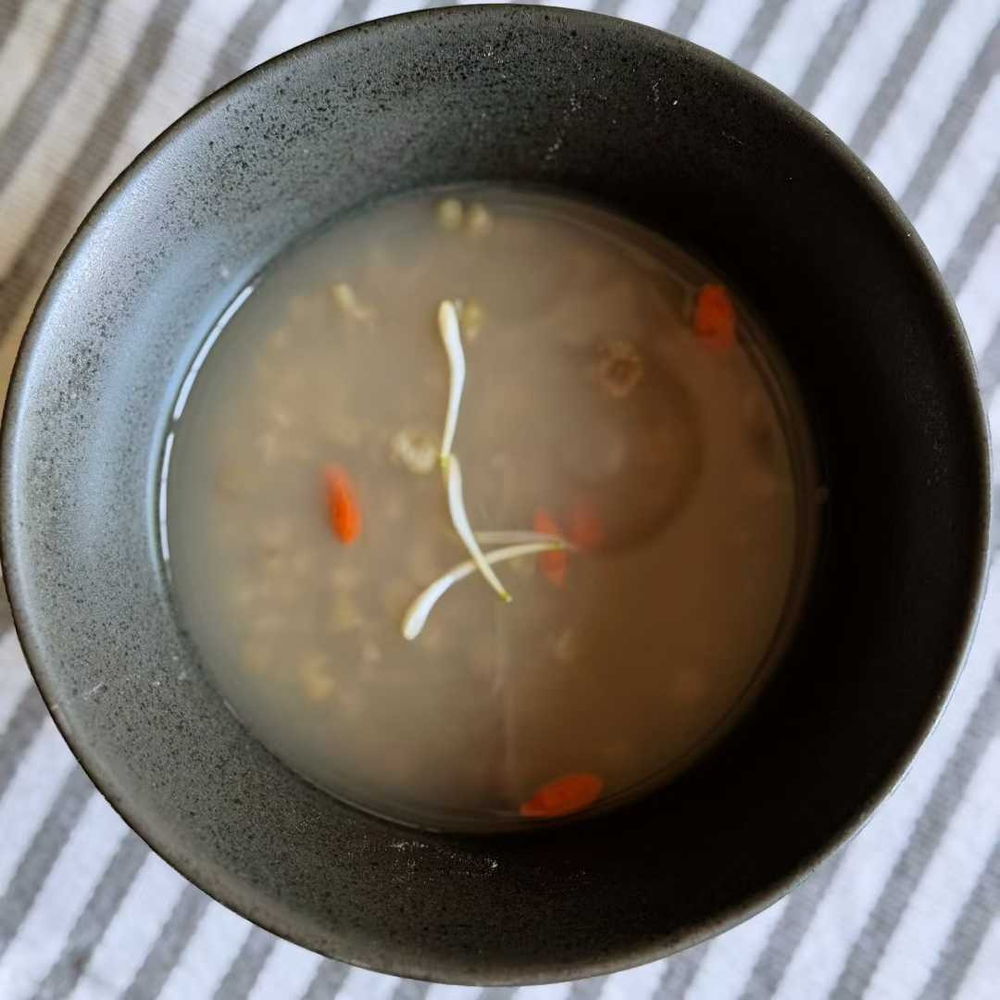
The heat was simply part of living. So was the faint fragrance of mung bean soup. A bowl of cooled mung bean soup was always set aside on the kitchen table. I’d rub my dirty hands on equally dirty pants and gulp it down in one go, then find myself licking the bowl for the sweetness—the taste of caring and love I was too young to know.
The first time I saw mung bean cakes was in the village grocery store. I was surprised to learn they shared the same name with the soup. They were dry, crumbly, and hard to swallow, but I loved them. Perhaps it was because, at that time, those square yellow cakes—about the size of my little palm—were one of the few luxuries we could afford.
My mother used to say that summertime must have mung bean soup and mung bean cakes—they have the ability to 去火 qu huo, which literally means “to get rid of fire”. But I never fully understood what “fire” she meant to remove. Was it the summer heat the fan tried to blow away? Or the blazing summer air that always made my skin sticky? She always said it matter-of-factly, as if the heat were something that could be miraculously removed with the right food.
When I grew older, I learned that in traditional Chinese medicine, “fire” (火 huo) refers to an “internal heat,” an imbalance that can make the body feel unwell and the mood agitated.
Now, I find myself saying the same thing to my daughters. “Drink more mung bean soup! It’ll help you qu huo.” They are kind enough not to comment, but I wouldn’t blame them if I catch them rolling their eyes. As the air conditioner hums softly 24/7 in the background, turning our house into a seasonless haven, I wonder, too: What fire indeed? There are no sticky nights on the bamboo mat, nor sleepless heat to fend off.
Then there is “internal heat,” the invisible flickering inside: the pain of growing up, the disenchantment of adult life, the ache of figuring out how to belong, how to become. Watching my daughters grow has never felt easy, and as the helplessness simmered during one particularly heavy summer, I found myself standing in front of the stove, stirring a pot of mung bean soup.
The beans tumbled and swirled in the boiling water, their green skins splitting open, curling back, revealing soft, golden hearts within. I dropped in a few rock sugar crystals and a handful of dried goji berries. A few honeysuckle blossoms from the front yard would go in after the stove was turned off.
My younger daughter loves my mung bean soup. She always finishes the first bowl quickly, then looks up, smiling, “Can I have another one please?” My mother was right.
Years later, in an Asian supermarket, I recognized the square yellow cakes on the shelves. They were neatly wrapped, sealed tight in glossy packaging, miles away from the heat and smells of the small village store of my childhood. I stood there for a moment, unable to decide if I should buy one. I turned to my daughter and asked, “Do you want to try these? The mung bean cakes?”
She looked at the cakes, half puzzled, half indifferent, “Mom, if you want them, get them.”
I held the package, wondering if this simple cake could one day become for her what it was for me—a taste of childhood. I wondered if I had given her any food that would, years from now, bring her back to a summer afternoon with me.
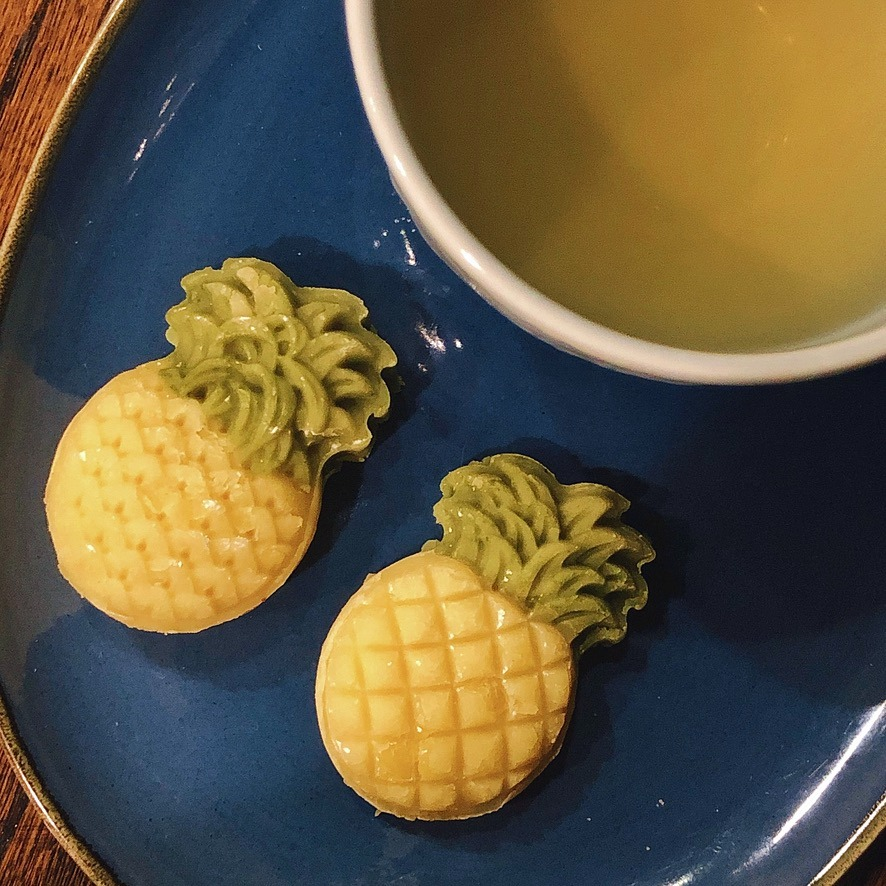
That autumn, just before the Mid-Autumn Festival, I decided to make mung bean cakes (冰皮月饼 bingpi yuebing) myself. I soaked the beans overnight, boiled them until tender, then blended them with dates to fold in their natural sweetness. I transferred the mix to a pan, added butter, and stirred it on low heat until the paste thickened and became soft and moldable. Once it cooled, I shaped the paste into small balls and pressed them into special molds to form cakes. The mold was pineapple-shaped, so I used matcha powder to color some of the paste green for the “pineapple” leaves.
When I placed the cakes on a white plate, they looked like a small cluster of fruit captured in moonlight. Watching my daughter’s eyes widen at the sight made me happy. She bit into the cakes, “They’re so soft and buttery! Are they really made of mung beans?” she marveled.
I’ve always felt that the bean sprouts from the supermarket lack a fresh, earthy scent, and for some reason they never have roots. I don’t know if the roots were trimmed off or if it’s just the way they’re grown here. Either way, something about them felt lifeless. So I thought, why not grow my own?
It turned out to be simple. When the first batch of sprouting was ready, I made a cold salad with them—dressed with soy sauce, minced ginger and garlic, and a touch of sesame oil. The moment I took a bite, I couldn’t help but close my eyes. The sprouts were tender yet snappy, fresh with a faint sweetness. It was the kind of taste that makes the corners of your mouth lift before you even realize you’re smiling.
So I calculated the timing carefully. A week before my daughter came home, I started soaking the mung beans. The next day, I rinsed them clean, poked tiny holes in the bottom of an aluminum disposable baking tray—my improvised sprouting tray—and spread the beans evenly across the bottom. Then I covered them with a damp towel, put it in another tray, and tucked them away in a dark corner.
By the third day, tiny white shoots began to peek out. That night, they were already stretching proudly with delicate yellow leaves. Every night, I gave the sprouts a little shower under cool water and covered them again with a moist towel. Each day, the sprouts pushed the towel a little higher until a dense forest of sprouts stood tall. I knew they were ready
When my daughter came home, she found me sitting at the dinner table, sorting the fresh bean sprouts one by one, their slender long roots moist and clean. “Mom,” she said, confused, “you know they sell bean sprouts at the supermarket! You don’t have to go through all this trouble.”
I kept picking through the pile and said, “I’m making your favorite cold bean sprout salad!”
That evening, I set the dish on the table—a tower of sprouts glistening with a light sheen of sesame oil and red chilli. My daughter picked up a bite with her chopsticks, tasted it, and froze for a moment, “Mom … this is so good!”
I wish I had said the same thing to my mother, whose caring filled the days like the cicada’s song filled the summer—tireless and endless. I think of those long sweltering summer days in the village, with my mother in the kitchen before we woke up, standing by the stove, stirring quietly against the heat, coaxing the beans open and making our days cooler and gentler.
So I continue to stir the pot in the quiet of my Oklahoma kitchen, far from the canals of Wuxi and the foothills of Fragrant Mountain. The daughter who licked the bowl for the last taste of sweetness now cooks for her own, hoping to give them a taste to carry forward.
If a tiny, humble mung bean can hold the promise of a golden heart, may we too, find the strength to open our own tough shells, to soften what is hard, and to meet life’s relentless heat with grace.
People suffering from dementia lose their ability to take an active part in conversations, everyday activities, and their own physical upkeep.
They are prone to sudden mood swings, irritability, depression, and anxiety.
They may be stricken with delusions and wild hallucinations.
All of these things can be understandably upsetting to friends and families. There’s a lot of stigma surrounding this situation.
Taking care of a spouse or parent with dementia can be an overwhelmingly isolating experience, though no one is more isolated than the person experiencing severe cognitive decline firsthand.
While many of us would do anything to stay out of them, the sad fact is residential memory care facilities are often the end-of-the-line reality for those living with extreme dementia.
The Hogeweyk, a planned village just outside of Amsterdam, offers a different sort of future for those with severe dementia.
The above episode of By Design, Vox’s series about the intersection of design and technology, explores the innovations that contribute to the Hogeweyk’s residents’ overall happiness and wellbeing.
Rather than grouping residents together in a single institutional setting, they are placed in groups of six, with everyone inhabiting a private room and sharing common spaces as they see fit.
The common spaces open onto outdoor areas that can be freely enjoyed by all housed in that “neighborhood”. No need to wait until a staff member grants permission or finishes some task.
Those wishing to venture further afield can avail themselves of such pleasant quotidian destinations as a grocery, a restaurant, a barbershop, or a theater.
These locations are designed in accordance with certain things proven to work well in institutional settings — for instance, avoiding dark floor tiles, which some people with dementia perceive as holes.
But other design elements reflect the choice to err on the side of quality of life. Hand rails may help in preventing falls, but so do rollators and walkers, which the residents use on their jaunts to the town squares, gardens and public amenities.
The designers believe that equipping residents with a high level of freedom not only promotes physical activity, it minimizes issues associated with dementia like aggression, confusion, and wandering.
Co-founders Eloy van Hal and Jannette Spiering write that the Hogeweyk’s critics compare it to the Truman Show, the 1998 film in which Jim Carrey’s title character realizes that his wholesome small town life, and his every interaction with his purported friends, neighbors, and loved ones, have been a set up for a highly rated, hidden camera reality TV show.
They describe The Hogeweyk as a stage for, “the reminiscence world”, in which actors help the residents live in a fictitious world. Many Alzheimer’s experts have, however, valued The Hogeweyk for what it really is: a familiar and safe environment in which people with dementia live while retaining their own identity and autonomy as much as possible. They live in a social community with real streets and squares, a real restaurant with real customers, a supermarket for groceries and a theatre that hosts real performances. There is no fake bus stop or post office, there are no fake façades and sets. The restaurant employee, the handyman, the caretaker, the nurse, the hairdresser, etc.—in short: everyone who works at The Hogeweyk uses their professional skills to actually support the residents and are, therefore, certainly not actors.
Professional care and support goes on around the clock, but rarely takes centerstage. Normal life is prioritized.
In the shade of one of the large trees, a married couple gazes happily at the activity in the theatre square. An elderly gentleman, together with a young lady, intently study the large chess board and take turns moving the pieces. At the fountain, a group of women chat loudly on colourful garden chairs. The story is clearly audible—it is about a memory of a visit to a park in Paris which had the same chairs. Passers-by, old and young, greet the women enthusiastically. A little further on, a woman is talking to a man opposite her. She is gesturing wildly. After a while, another woman joins the conversation. The two women then walk through the open front door of Boulevard 15.
The covered passage smells of freshly-baked cookies. The scent is coming from De Bonte Hof. Amusing conversations can be heard that pause for a moment when the oven beeps in the kitchen that has been decorated in an old-fashioned style. A tray of fresh cookies is removed from the oven. Two women, one in a wheelchair, enter the venue, obviously seduced by the smell. They sample the cookies.
The supermarket across the street is very busy. Shopping trolleys loaded with groceries are pushed out of the shop. The rattle of a shopping trolley dissipates into the distance as it disappears from view towards Grote Plein. A man reluctantly pushes the full trolley while two women follow behind him arm in arm. The trio disappear behind the front door of Grote Plein 5.
A staffer’s account of a typical morning in one of Hogeweyk’s houses reveals more about the hands-on care that allows residents to continue enjoying their carefully designed home, and the autonomous lifestyle it makes possible:
Mr Hendricks wakes up on the sofa. He unzips his fly. I jump up and escort him to the toilet just in time. I grab a roll of medication for him from the medication trolley. He is now walking to his room. We pick out clothes together and I lay them out on his bed. He washes himself at the sink. I watch briefly before leaving. Fifteen minutes later, I poke my head through the door. That’s not how electric shaving works! I offer to help, but Mr. Hendricks is clearly a bit irritated and grumbles. He’ll be a little less shaven today. We’ll try again after breakfast…
We help Mrs Stijnen into the shower chair with the hoist. She is clearly not used to it. Discussing her extensive Swarovski collection, displayed in the glass case in her room, turns out to be an excellent distraction. She proudly talks about the latest piece she acquired this year. On to the shower. The two other residents are still sleeping. Great, that gives me the chance to devote some extra time to Mrs Stijnen today.
The doorbell rings again and my colleague, Yasmin, walks in. She’s the familiar face that everyone can rely on. Always present at 8 a.m., 5 days a week. What a relief for residents and family. She, too, puts her coat and bag in the locker. The washing machine is ready, and Yasmin loads up the dryer. The table in the dining room is then set. Yasmin puts a floral tablecloth from the cupboard on the table. Mr Hendricks lends a hand and, with some guidance, puts two plates in their place, but then walks away to the sofa and sits down. A Dutch breakfast with bread, cheese, cold cuts, jam, coffee, tea and milk is served. Yasmin is making porridge for Mrs Smit. As always, she has breakfast in bed. Yasmin helps Mrs Smit. It is now 08:45 and Mr Hendricks and Mrs Stijnen are sitting at the dining table. Yasmin pushes the chairs in and sits down herself. They chat about the weather, and Yasmin lends a helping hand when needed.
Mr Hendricks is really grumpy today and is currently grumbling at Mrs Jansen. I’m wondering if we’re overlooking something?
Learn more about the Hogeweyk, the world’s first dementia village here.
As an exercise draw a composition of fear or sadness, or great sorrow, quite simply, do not bother about details now, but in a few lines tell your story. Then show it to any one of your friends, or family, or fellow students, and ask them if they can tell you what it is you meant to portray. You will soon get to know how to make it tell its tale.
- Pamela Colman-Smith, “Should the Art Student Think?” July, 1908
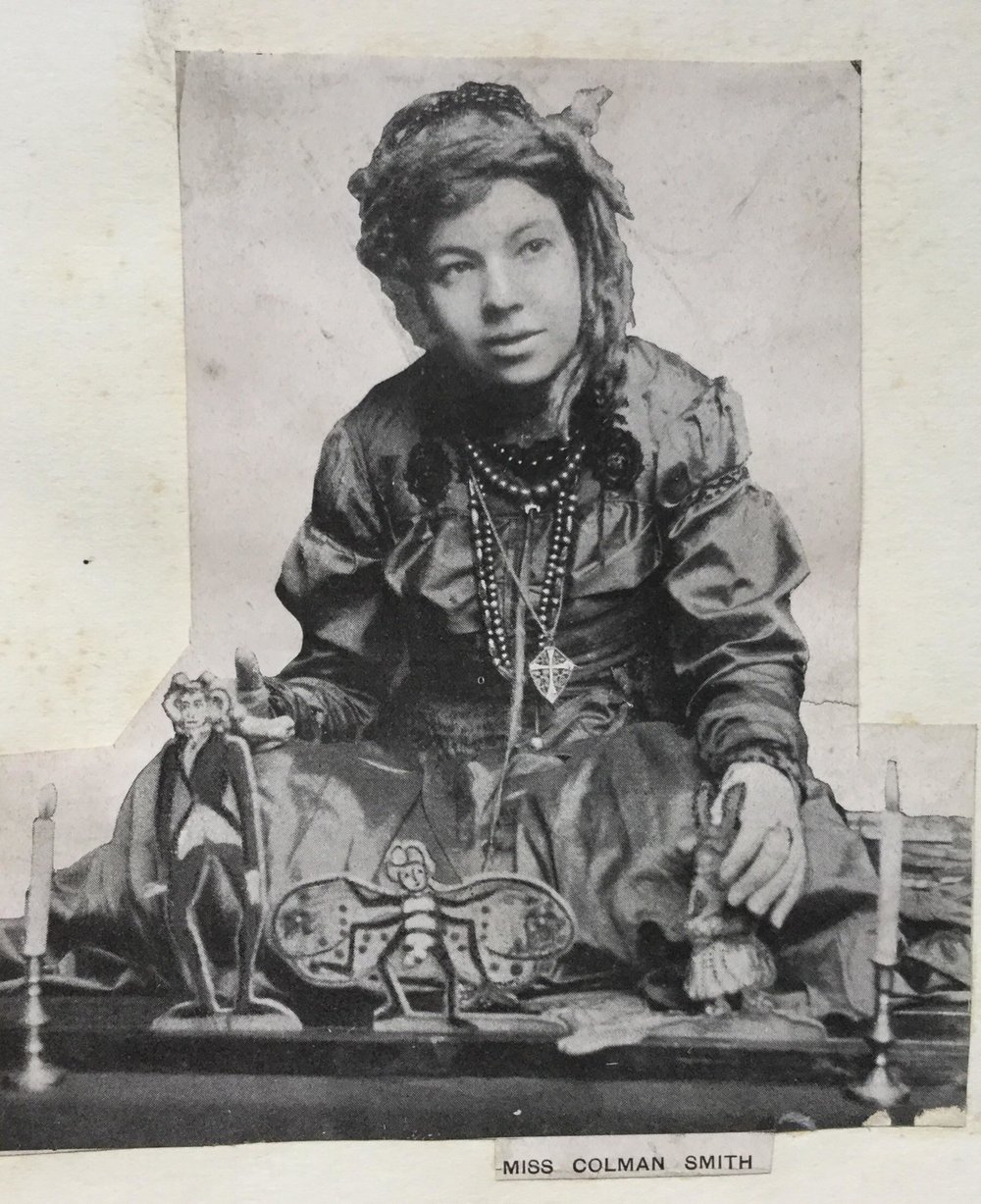
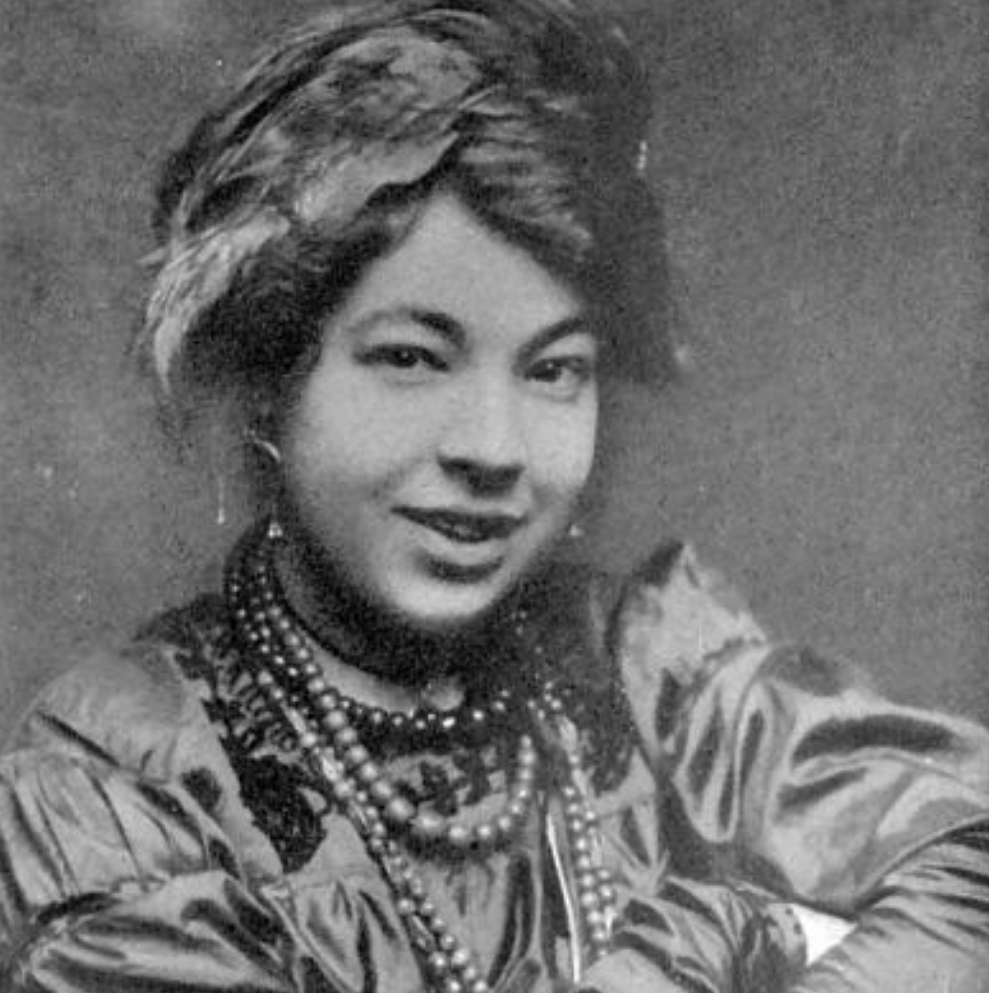
A year after Arts and Crafts movement magazine The Craftsman published illustrator Pamela Colman-Smith’s essay excerpted above, she spent six months creating what would become the world’s most popular tarot deck. Her graphic interpretations of such cards as The Magician, The Tower, and The Hanged Man helped readers to get a handle on the story of every newly dealt spread.
Colman-Smith—known to friends as “Pixie”—was commissioned by occult scholar and author Arthur E. Waite, a fellow member of the British occult society the Hermetic Order of the Golden Dawn, to illustrate a pack of tarot cards.
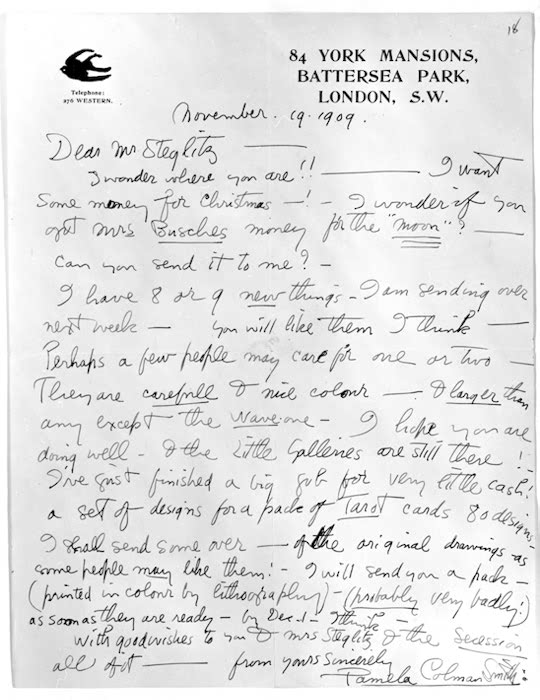
In a humorous letter to her eventual champion, photographer Alfred Stieglitz, Colman-Smith (1878 – 1951) described her 80 tarot paintings as “a big job for very little cash,” though she betrayed a touch of genuine excitement that they would be “printed in color by lithography… probably very badly.”
Although Waite had some specific visual ideas with regard to the “astrological significance” of various cards, Colman-Smith enjoyed a lot of creative leeway, particularly when it came to the Minor Arcana or pip cards.
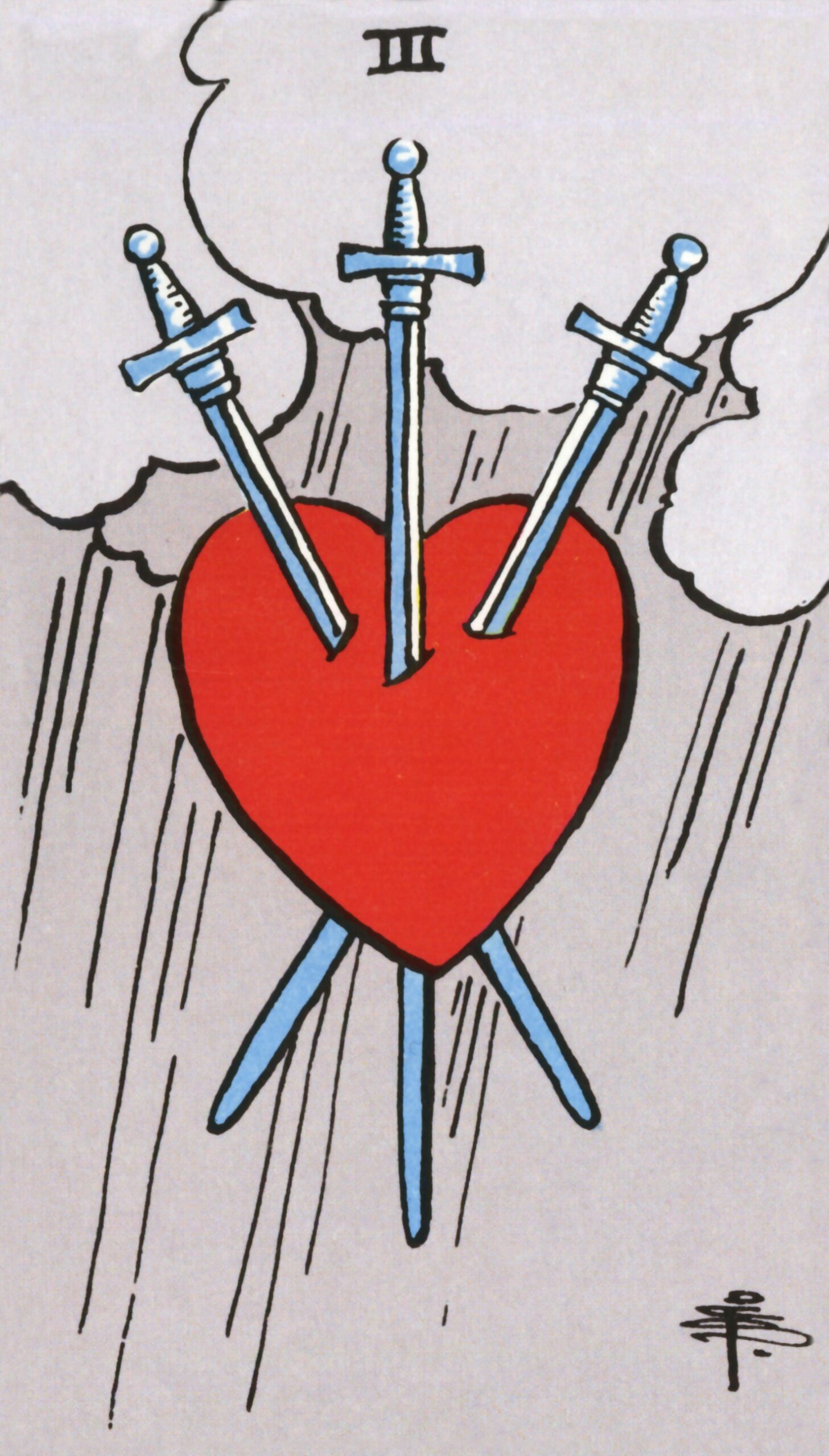
These 56 numbered cards are divided into suits—wands, cups, swords and pentacles. Prior to Colman-Smith’s contribution, the only example of a fully illustrated Minor Arcana was to be found in the earliest surviving deck, the Sola Busca, which dates to the early 1490s. A few of her Minor Arcana cards, notably 3 of Swords and 10 of Wands, make overt reference to that deck, which she likely encountered on a research expedition to the British Museum.
Mostly the images were of Colman-Smith’s own invention, informed by her sound-color synesthesia and the classical music she listened to while working. Her early experience in a touring theater company helped her to convey meaning through costume and physical attitude.
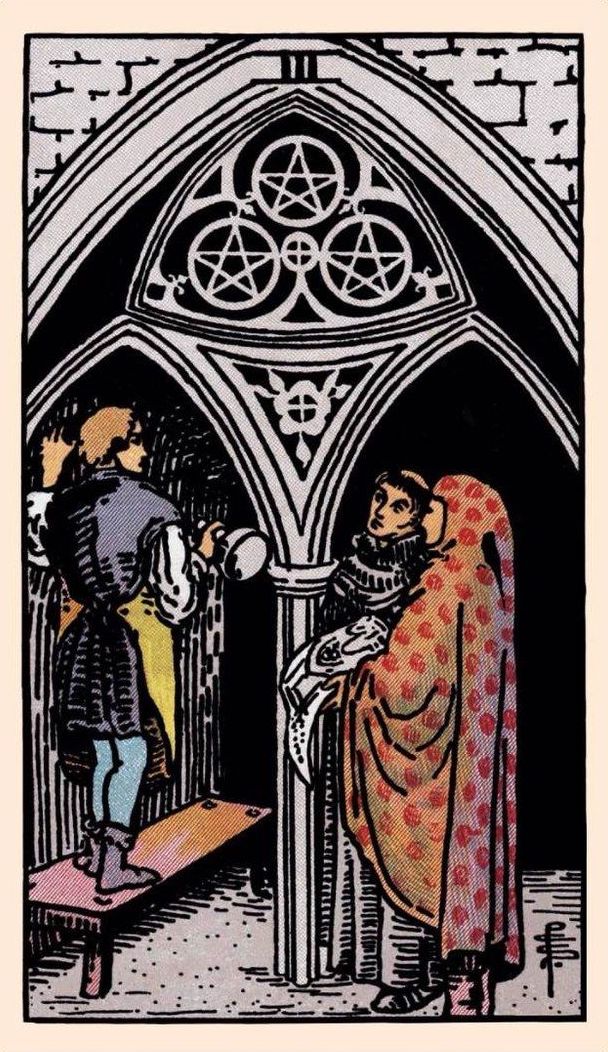
Here are Pacific Northwest witch and tarot practitioner Moe Bowstern’s thoughts on Smith’s Three of Pentacles:
Pentacles are the suit of Earth, representative of structure and foundation. Colman-Smith’s theater-influenced designs here identify the occupations of three figures standing in an apse of what appears to be a cathedral: a carpenter with tools in hand; an architect showing plans to the group; a tonsured monk, clearly the steward of the building project.
The overall impression is one of building something together that is much bigger than any individual and which may outlast any individual life. The collaboration is rooted in the hands-on material work of foundation building, requiring many viewpoints.
A special Pixie Smith touch is the physical elevation of the carpenter, who would have been placed on the lowest rung of medieval society hierarchies. Smith has him on a bench, showing the importance of getting hands on with the project.
For years, Colman-Smith’s cards were referred to as the Rider-Waite Tarot Deck. This gave a nod to publisher William Rider & Son, while neglecting to credit the artist responsible for the distinctive gouache illustrations. It continues to be sold under that banner, but lately, tarot enthusiasts have taken to personally amending the name to the Rider Waite Smith (RWS) or Waite Smith (WS) deck out of respect for its previously unheralded co-creator.
It’s sad, but not a total shocker, to learn that this interesting, multi-talented woman died in poverty in 1951. Her paintings and drawings were auctioned off, with the proceeds going toward her debts. Her death certificate listed her occupation not as artist but as “Spinster of Independent Means.” Lacking funds for a headstone, she was buried in an unmarked grave.
If you wish to become a cinephile worthy of the title, you must first pledge never to refuse to watch a film for any of the following reasons. First, that it is in a different language and subtitled; second, that it is too old; third, that it is too slow; fourth, that it is too long; and fifth, that it has no “story.” These categories of refusal are what Lewis Bond, co-creator of the YouTube channel The House of Tabula, calls “the five cardinal sins of cinema,” and no one who commits them can ever attain an understanding of the art form, its nature, its history, and its potential. Once you’ve made your vow, you’ll be ready to watch through the 135 chronologically ordered motion pictures that constitute The House of Tabula’s “Ultimate Film Studies Watchlist,” fully explained in the video above.
While the movies first emerged in the nineteenth century, and plenty continue to be made here in the twenty-first, they stand unopposed as the defining popular art form of the twentieth. And it is from the span of that century that all the films on this list are drawn, from Georges Méliès’ Le Voyage dans la Luneand D. W. Griffith’s The Birth of a Nation to all the way to Quentin Tarantino’s Pulp Fiction and the Wachowskis’ The Matrix.
What happened to cinema between those periods was, in a sense, a process of technological and artistic evolution, but as Bond’s commentary underscores, older films aren’t superseded by newer ones — or at least, older films of value aren’t. Indeed, the ambition and creativity of these decades, or even century-old movies, puts many a current release to shame.
By no means is the list dominated by obscurities. Gone with the Wind, Fantasia, Singin’ in the Rain, Psycho, Jaws, Alien: even the least cinematically inclined among us have seen a few of these movies, or at least they feel like they have. Maybe they’ve never got around to watching Citizen Kane, but they’ll have a sense that it belongs on any syllabus meant to cultivate an understanding of film as an art form. The presence of Star Wars may come as more of a surprise, but no less than Citizen Kane, it illustrates the benefit of watching your way through cinema history: if you do, you’ll experience just how much of a break they represented with all that came before. Ordinary moviegoers may feel like they’ve seen it all before, but cinephiles — especially those who’ve made the journey through The House of Tabula’s watchlist — know how vast an area of cinematic possibility remains unexplored.
Based in Seoul, Colin Marshall writes and broadcasts on cities, language, and culture. His projects include the Substack newsletterBooks on Cities and the book The Stateless City: a Walk through 21st-Century Los Angeles. Follow him on the social network formerly known as Twitter at @colinmarshall.
Back in 2008, Bob Boilen (host of All Songs Considered) and NPR music critic Stephen Thompson attended a noisy concert where they struggled to hear Laura Gibson perform. Jokingly, Thompson suggested that Gibson perform at Boilen’s office desk instead. She did. And, with that, the NPR Tiny Desk Concert was born. Since then, more than 1,300 musical acts have performed their own stripped-down, authentic shows in the cramped confines of NPR’s headquarters in Washington, D.C. That includes everyone from Taylor Swift to Dua Lipa, to the Pixies, the Grateful Dead’s Bob Weir, and Gary Clark Jr. In the video above, Architectural Digest takes you behind the scenes, showing the set where the magic happens. There you can see “a real desk in a real office, surrounded by shelves packed with priceless mementos left by artists–from Adele’s water bottle to Sabrina Carpenter’s martini glass and even Chappell Roan’s wig.” And you can meet the team behind the production, while learning how Tiny Desk became a beloved series. Below watch a complete playlist of all Tiny Desk Concerts. Enjoy!
From WIRED comes this: NYU professor and “authoritarianism scholar Ruth Ben-Ghiat joins WIRED to answer the internet’s burning questions about dictators and fascism. Why do people support dictators? How do dictators come to power? What’s the difference between a dictatorship, an autocracy, and authoritarianism? What are the most common personality traits found in tyrants and dictators? Is Xi Jinping a dictator? How do dictators amass wealth? Professor Ben-Ghiat answers these questions and many more on Tech Support: Dictator Support.” Watch the video above and pick up a copy of Ben-Ghiat’s timely, bestselling book: Strongmen: Mussolini to the Present.
Although recycling paper uses less water than manufacturing the material from wood pulp, the process still requires significant energy and resources. The team behind Resketch has found a way to skip that step altogether.
Founded by Chicago-based artist Shawn Smith and now helmed by Skaaren Design, the company makes notebooks and sketchpads of unused architectural diagrams, maps, logs, sheet music, and more. The resulting designs offer users the opportunity to creatively engage with the original markings and add their own additions to the printed pages. Flipping through a notebook also becomes an act of discovery as old calendars or bureaucratic forms are tucked between graphs and lines.
“Through partnerships with the creative community and local and national businesses, we rescue 8 to 10 tons of high-quality, unused paper every year that would otherwise prematurely enter the waste stream,” Resketch says. The company currently collaborates with schools, businesses, architectural firms, and creatives across the U.S. to source materials with just enough blank space for a doodle or to-do list.
From Rick Steves comes a thought-provoking documentary that revisits the rise of fascism in Europe, reminding us of how charismatic figures like Benito Mussolini and Adolf Hitler came to power by promising to create a better future for their frustrated, economically depressed countries–a future that recaptured the glory of some mythologized past. Once in power, these fascist leaders replaced democracy with a cult of personality, steadily eroded democratic norms and truth, ratcheted up violence, and found scapegoats to victimize–something facilitated by the spread of conspiracy theories and propaganda through modern media. They would lead their nations into war, and ultimately ruin, but not before creating a playbook for other charismatic autocrats who entice voters with simplistic solutions to complex problems.
Originally aired on television, Steves has released the documentary on YouTube, hoping that 21st-century citizens can “learn from the hard lessons of 20th-century Europe.” The text accompanying his documentary reads as follows:
In this one-hour special, Rick travels back a century to learn how fascism rose and then fell in Europe — taking millions of people with it. We’ll trace fascism’s history from its roots in the turbulent aftermath of World War I, when masses of angry people rose up, to the rise of charismatic leaders who manipulated that anger, the totalitarian societies they built, and the brutal measures they used to enforce their ideology. We’ll see the horrific consequences: genocide and total war. And we’ll be inspired by the stories of those who resisted. Along the way, we’ll visit poignant sights throughout Europe relating to fascism, and talk with Europeans whose families lived through those times. Our goal: to learn from the hard lessons of 20th-century Europe, and to recognize that ideology in the 21st century.
The Story of Fascism (which will be added to our list of Free Documentaries) is recommended for students and adults alike. With World War II fading from living memory, we could use a good reminder, says Steves, of how “nationalism can be channeled into evil, and how our freedoms and democracies are not indestructible…in fact, they are fragile.”
If you would like to support the mission of Open Culture, consider making a donation to our site. It’s hard to rely 100% on ads, and your contributions will help us continue providing the best free cultural and educational materials to learners everywhere. You can contribute through PayPal, Patreon, and Venmo (@openculture). Thanks!
This collection of email sign-offs over on Arena is a treasure trove. I usually sign-off with Waving from Brooklyn, or Warmly, but I might have to add a few of these to the list now.
Mount Fuji World Heritage Center (2017), Fujinomiya, Shizuoka, Japan. Photo by Hiroyuki Hirai. All images courtesy of TASCHEN, shared with permission
A list of today’s most influential architects wouldn’t be complete without Shigeru Ban, whose exceptional projects range from religious centers and corporate campuses to museums and disaster-relief shelters around the globe. The designer’s oeuvre is unmistakably modern while drawing on timeless Japanese framing traditions. His innovative use of timber and paper results in technologically advanced forms, elaborate yet elegant latticework, harmonious curves, and a perceptive use of light.
Next month, TASCHEN is set to release Shigeru Ban. Complete Works 1985–Today, a monograph that traces the designer’s most influential works throughout the past four decades. In the publisher’s “XXL” format, experience Ban’s sweeping Japan Pavilion at Expo 2000 in Hanover, Germany, a colorful, translucent public restroom in Tokyo that turns opaque when in use, and a vaulted cathedral ceiling made of cardboard in New Zealand, among myriad other projects.
Shigeru Ban is written by by Philip Jodidio, who has authored more than 150 books about architecture the world over. A series of 200 limited-edition copies come with a three-dimensional, laser-cut wooden cover and include a signed print of a sketch by Ban. Preorder from TASCHEN or Bookshop.
Haesley Hamlet (2020), Gyeonggi, South Korea. Photo by texture on texture
Japan Pavilion (2000), Expo 2000, Hanover, Germany. Photo by Hiroyuki Hirai
Nomadic Museum, Pier 54, New York, United States (2005); Santa Monica, California, United States (2006); Tokyo, Japan (2007). Photo by Michael Moran
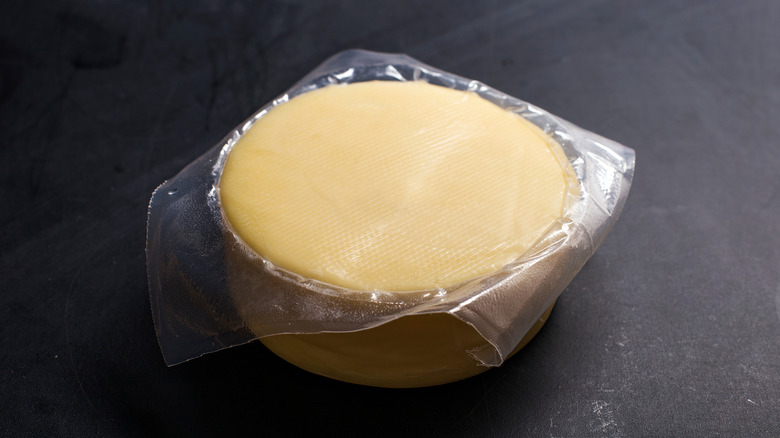
It might be concerning to open a sealed package of cheese and find that it feels wet, but don't worry. It's safe to eat, and there's a reason for that wetness.
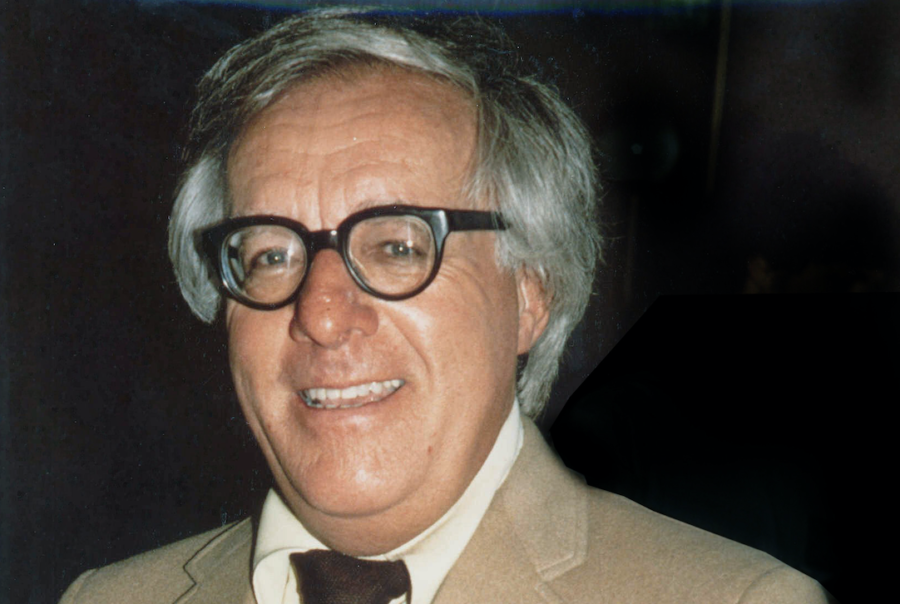
It sounds like a third grade math problem: “If Ray Bradbury wrote the first draft of Fahrenheit 451 (1953) on a coin-operated typewriter that charged 10 cents for every 30 minutes, and he spent a total of $9.80, how many hours did it take Ray to write his story?” (If you’re doing the math, that’s great, but you might be in the wrong class.)
Bradbury’s composition of Fahrenheit 451 demonstrates two of the prolific writer’s most insistent demands among his many practical nuggets of writing advice: 1. Always write, all the time; a short story a week, as he told a writer’s symposium in 2001. And, as he told the same group, 2. “Live in the library! Live in the library, for Christ’s sake. Don’t live on your goddamn computer and the internet and all that crap.”
Granted, the library—and the school, and the office, and all the rest of it—now lives in the “goddamn computer” for many of us. But Bradbury’s elaboration of why he ended up in the library in the early 1950s, specifically the basement of UCLA’s Powell Library, will be relatable to any working parent. As he wrote in 1982, he found himself “twice driven; by children to leave at home, and by a typewriter timing device…. Time was indeed money.”
This was a different time, so you’ll need to adjust the currency for 21st century inflation. Also, Bradbury had the 50s’ writer-husband’s prerogative to beg off the childcare. As he explains:
In all the years from 1941 to that time, I had done most of my typing in the family garages… behind the tract house where my wife, Marguerite, and I raised our family. I was driven out of the garage by my loving children, who insisted on coming around to the window and singing and tapping on the panes.
Devoted father Bradbury “had to choose between finishing a story or playing with the girls. I chose to play, of course, which endangered the family income. An office had to be found. We couldn’t afford one.” Bradbury did not write all of Fahrenheit 451 in the library basement. “He ended up with the novella version,” notes UCLA Magazine, “originally called The Fireman and did not come back to it until a publishing company asked if he could add more to the story.”
The speed at which Bradbury wrote, both to save money and to get home to his children, did not cause him to get careless. He looked back on the book 22 years later with pride. “I have changed not one thought or word,” wrote Bradbury in his introduction. He didn’t notice until later that he had named main characters after a paper company, Montag, and pencil company, Faber.
Bradbury told the magazine in 2002, “It was a passionate and exciting time for me. Imagine what it was like to be writing a book about book burning and doing it in a library where the passions of all those authors, living and dead, surrounded me.” When it came to finding the book’s title, however, supposedly the temperature at which books burn, not only did the library fail him, but so too did the university’s chemistry department. To learn the answer, and finish the book, Bradbury finally had to call the fire department.
"$5,000 in cash had been withdrawn from my checking account — but not by me," writes journalist Linda Matchan in the Boston Globe. A police station manager reviewed footage from the bank — which was 200 miles away — and deduced that "someone had actually come into the bank and spoken to a teller, presented a driver's license, and then correctly answered some authentication questions to validate the account..."
"You're pitting a teller against a national crime syndicate with massive resources behind them," says Paul Benda, executive vice president for risk, fraud, and cybersecurity at the American Bankers Association. "They're very well-funded, well-resourced criminal gangs doing this at an industrial scale."
The reporter writes that "For the past two years, I've worked to determine exactly who and what lay behind this crime..."
[N]ow I had something new to worry about: Fraudsters apparently had a driver's license with my name on it... "Forget the fake IDs adolescents used to get into bars," says Georgia State's David Maimon, who is also head of fraud insights at SentiLink, a company that works with institutions across the United States to support and solve their fraud and risk issues. "Nowadays fraudsters are using sophisticated software and capable printers to create virtually impossible-to-detect fake IDs." They're able to create synthetic identities, combining legitimate personal information, such as a name and date of birth, with a nine-digit number that either looks like a Social Security number or is a real, stolen one. That ID can then be used to open financial accounts, apply for a bank or car loan, or for some other dodgy purpose that could devastate their victims' financial lives.
And there's a complex supply chain underpinning it all — "a whole industry on the dark web," says Eva Velasquez, president and CEO of the Identity Theft Resource Center, a nonprofit that helps victims undo the damage wrought by identity crime. It starts with the suppliers, Maimon told me — "the people who steal IDs, bring them into the market, and manufacture them. There's the producers who take the ID and fake driver's licenses and build the facade to make it look like they own the identity — trying to create credit reports for the synthetic identities, for example, or printing fake utility bills." Then there are the distributors who sell them in the dark corners of the web or the street or through text messaging apps, and finally the customers who use them and come from all walks of life. "We're seeing females and males and people with families and a lot of adolescents, because social media plays a very important role in introducing them to this world," says Maimon, whose team does surveillance of criminals' activities and interactions on the dark web. "In this ecosystem, folks disclose everything they do."
The reporter writes that "It's horrifying to discover, as I have recently, that someone has set up a tech company that might not even be real, listing my home as its principal address."
Two and a half months after the theft the stolen $5,000 was back in their bank account — but it wasn't until a year later that the thief was identified. "The security video had been shared with New York's Capital Region Crime Analysis Center, where analysts have access to facial recognition technology, and was run through a database of booking photos. A possible match resulted.... She was already in custody elsewhere in New York... Evidently, Deborah was being sought by law enforcement in at least three New York counties. [All three cases involved bank-related identity fraud.]"
Deborah was finally charged with two separate felonies: grand larceny in the third degree for stealing property over $3,000, and identity theft. But Deborah missed her next two court dates, and disappeared. "She never came back to court, and now there were warrants for her arrest out of two separate courts."
After speaking to police officials the reporter concludes "There was a good chance she was only doing the grunt work for someone else, maybe even a domestic or foreign-organized crime syndicate, and then suffering all the consequences."
The UK minister of state for security even says that "in some places people are literally captured and used as unwilling operators for fraudsters."
The film distribution company Kino Lorber now allows you to stream complete films on YouTube for free. Since we first mentioned this initiative back in 2022, the list of streamable films has grown. Among the now 146 films, you will find a mixture of documentaries and cinematic works, including Derek Jarman’s Blue; Fela Kuti: Music Is The Weapon (a documentary exploring the life and work of the African musician); The Search for One-Eye Jimmywith Steve Buscemi, Samuel L. Jackson, and John Turturro; Buster Keaton’s Three Ages; Gary Cooper in A Farewell to Arms; Genius Within: The Inner Life of Glenn Gould; and War Requiem with Tilda Swinton, Derek Jarman and Laurence Olivier.
In an effort to boost tourism and innovation, Japan will launch a new visa program for digital nomads, allowing remote workers to work in the country for up to six months while enjoying sightseeing trips. Tech Times reports: Starting from the end of March, Japan will introduce a unique visa status aimed at IT engineers and remote workers employed by overseas companies. The program is designed to cater to the evolving work landscape, recognizing the surge in digital nomads-individuals who can seamlessly work from anywhere in the world. Nikkei Asia (paywalled) tells us that to be eligible for this digital nomad visa, applicants must boast an annual income of at least 10 million yen ($68,000).
Citizens from 50 countries and regions, including the U.S., Australia, and Singapore, which have existing visa waiver agreements with Japan, can apply. Private health insurance is a prerequisite, ensuring the well-being of the visa holders during their stay. Self-employed individuals engaged in overseas business can also benefit from this innovative program. Moreover, they have the option to bring their family members along, provided they are covered by private health insurance.
While the program offers the freedom to explore Japan, it has unique conditions. Digital nomads under this visa will not receive a residence card or certificate, limiting access to specific government benefits. The visa is non-renewable, requiring reapplication after a six-month interval, and applicants must spend that time outside the country. Japan joins the ranks of over 50 countries issuing digital nomad visas. Notably, South Korea allows up to two years, while Taiwan offers a three-year stay, with the possibility of permanent residency. The diverse offerings cater to digital nomads' varied needs and preferences, seeking a balance between work and exploration.
Social media encourages some pretty unusual behavior sometimes. Often, those behaviors involve chicken. And right now, an Instagram user with 391,000 followers is undertaking a particularly gnarly poultry experiment. The user, who simply goes by John, has been posting to an account called @rawchickenexperiment. Given…
As a child, Kagen Sound crafted a cardboard puzzle box that, to open, required the user to move a piece hidden within the work. The Rubik’s Cube-esque project sparked a lifelong passion for the designer, who’s now known worldwide for his wildly intricate patterns and sequences.
In a new documentary, the Wired team visits Sound’s garage studio, where he walks viewers through his process and workspace. Melding his background in math with 20 years of woodworking experience, the designer uses simple joinery techniques to formulate springs, geometric slides, and elegant motifs made with interlaced materials. “A lot of times if I can determine a finish for a particular kind of wood, it will unlock a project in itself,” he says. Containing secret mechanisms and maneuvers, these mind-boggling works have brought Sound international recognition as one of the best puzzle box designers in the world.
Detail of Astrolin Color Card, Établissement Georget Fils Peintures Laquées et Vernis, Chantenay-Lès-Nantes (c. 1906). Image courtesy of Bibliothèque Forney, Paris. All images courtesy of Princeton University Press, shared with permission
From chemists’ plant-derived dyes to consumer paint swatches displayed at the hardware store, the history of color charts reflects a varied relationship between pigments, science, culture, and commerce. Anne Varichon in her forthcoming book explores the entwined evolution of this categorization through nearly 200 vibrant samples from the 15th century to modern day.
Translated by Kate Deimling, Color Charts: A History is a hefty survey of hundreds of grids and illustrations cataloging a remarkable spectrum of hues, materials, and uses. Inside its pages are swatches of 19th-century silk ribbons, thin fragments of wool roving, and a 1960s diagram featuring a linoleum collection that appears like a celestial map. While many of the charts included haven’t been published previously, the book also references classics like Werner’s Nomenclature of Colours, a wildly popular guide of hues for naturalists and artists.
Published by Princeton University Press, Color Charts outlines the way color has always informed consumer choice, from hand-dyed fabrics to the vast options of mass-produced goods we know today. Dive further into the history by pre-ordering your copy from Bookshop.
Detail of Sarlino Reims’ ‘Linoleum Collection’ (1966-1967). Image courtesy of Bibliothèque Forney, Paris
Detail of color chart of silk velvet ribbons, G.G. & Cie, France, Leporello, late nineteenth century. Image courtesy of Bibliothèque Forney, Paris
M. D. Gonfreville’s ‘Art of Dyeing Wools in Fleece, Yarn, and Fabrics,’ Librairie Scientifique, Industrielle et Agricole Lacroix et Baudry, Paris (1848). Image courtesy of Bibliothèque Nationale de France, Paris
Acid Dyes for Felt Pile, Base Colors, Société Anonyme des Matières Colorantes et Produits Chimiques de Saint-Denis, Saint-Denis, November 1930, leporella. Image courtesy of Anne Varichon
Detail of color chart of silk velvet ribbons, G.G. & Cie, France, Leporello, late nineteenth century. Image courtesy of Bibliothèque Forney, Paris
Detail of Astrolin Color Card, Établissement Georget Fils Peintures Laquées et Vernis, Chantenay-Lès-Nantes (c. 1906). Image courtesy of Bibliothèque Forney, Paris
Detail of Oscar Piéquet’s ‘The Chemistry of Dyers, New Theoretical and Practical Treatise on the Art of Dyeing and Printing Fabrics’ (1892), Paris. Image courtesy of Ôkhra-Ecomuseum of Ocher, Roussillon
Starting in late December and January when the temperatures stay consistently below freezing, bodies of water in the northern United States and Canada begin to freeze. As the ice reaches thicknesses over four inches, it becomes safe to walk on, and at more than five inches, it is usually safe for snowmobiles. Then, in droves, residents take to the lakes. Ontario’s 279-square-mile Lake Simcoe, for example, draws more people for its ice fishing than any other lake in North America, attracting upwards of 4,000 huts each year.
The colorful villages of hand-built structures that populate many popular spots during the coldest months caught the eye of Toronto-based architectural photographer Richard Johnson (1957-2021), who captured hundreds of the structures, from the artistic to the ad-hoc, in a series of bold portraits taken between 2007 and 2019. “I have always been fascinated with small structures,” Johnson said. He continued:
My earliest recollection of shelter was as a 6-year-old growing up in Trinidad. It was a guard house for our neighbour. No more than three walls and a lean to roof, it was a simple solution to shade the harsh sun and protect from tropical rains. These shelters, built by individuals with available materials, inspired me to take notice.
The photos highlight a wide array of materials and design choices that comprise the seasonal communities, from plastic tarps wrapped around poles to one-person sheds to comparatively sophisticated board-and-batten buildings. Johnson captured the individual personality of each hut in a square format, framed by a snowy landscape, with their inhabitants typically out of view. Small enough to be towed onto the ice with a vehicle, some versions boast unique decor and enough space to hold several people, a small stove, and basic provisions.
See more on Richard Johnson Gallery’s website, where prints are available for purchase.
“Ice Hut #356” (2010), La Baie Des Ha! Ha!, Saguenay River, Québec
“Ice Village #178” (2016), Péribonka, Lac Saint-Jean, Québec
“Ice Hut GRID #11”
“Ice Hut #220” (2009), Killarney Beach, Lake Simcoe, Ontario
“Ice Hut #137” (2008), Gilford, Lake Simcoe, Ontario
“Ice Hut #998” (2017), New Liskeard, Lake Timiskaming, Ontario
“Ice Village #47” (2013), Renforth, Kennebecasis River, New Brunswick
“Ice Hut #946” (2016), Péribonka, Lac Saint-Jean, Québec
One needn’t think too hard to come up with a list of celebrated children who seem somehow less exceptional when their baby fat comes off and their permanent teeth come in.
When she was 11, conductor Johannes Wildner told the New York Times that “she is not good because she is young. She is good because she is extremely talented and has matured very early.”
Her parents were the first to recognize her extraordinary abilities.
It’s nice when a musically gifted child is born to parents who are not only willing to cultivate that seed, they understand that their 18 month old sings with perfect pitch…
She was nearing the age of reason when the general public became acquainted with the pigtailed composer who played piano and violin, loved improvising and drew constant, not universally welcome comparisons to Mozart.
At seven, she penned a short opera inspired by “The Sweeper of Dreams”, a short story by Neil Gaiman.
She followed that up with a full length operatic reimagining of Cinderella (age 10) and rigorous training that built on her early exposure to Partimenti — keyboard improvisation.
Now 18, Alma continues to spellbind listeners with her seemingly magical ability to conjure a piano sonata using randomly selected notes in less that a minute, just as she wowed 60 Minutes correspondent Scott Pelley after he picked a B, an A, an E flat, and a G from a hat back in 2017, when she was 12.
She’s was unabashed about her love of melody in the 60 Minutes appearance, and has remained so, explaining the reasoning behind her piece, Waltz of the Sirens, to a 2019 Carnegie Hall audience by saying that she’s always wanted to write beautiful music:
Music that comes out of the heart and speaks directly to the heart, but some people have told me that nowadays melodies and beautiful harmonies are no longer acceptable in serious classical music because in the 21st century, music must reflect the ugliness of the modern world. Well, in this waltz, instead of trying to make my music artificially ugly in order to reflect the modern world, I went in exactly the opposite direction. I took some ugly sounds from the modern world, and I tried to turn them into something more beautiful through music.
The full length opera The Emperor’s New Waltz is the soon to be 19-year-old’s first major adult achievement in what promises to be a long career.
Taking her inspiration from Hans Christian Andersen’s The Emperor’s New Clothes, she sought to create a love story that would appeal to young pop fans (while also getting a few swipes in at the “tuneless world of atonal contemporary music.”)
As she noted in an interview with Germany’s Klassik Radio, it’s “definitely the beautiful melodies that unite pop and classical music:”
I’m sure that if Mozart or Schubert had heard the most beautiful melodies of ABBA, or Queen or Elton John, then they would have been jealous and they would have said, “I wish I had thought of that!”
About 60 percent of Japan’s apples grow in Aomori Prefecture, and as with any agricultural crop, the region also generates a significant amount of production waste, particularly as the fruits are squeezed and pressed for juice. The designers at Sozai Center engineered a new technology that recycles the leftover pomace into an elegant fabric called “Adam.”
In collaboration with KOMORU Corporation and M&T, the center gathers leftover matter from local farmers and fashions translucent sheets speckled with deep red flecks from a powder of stems, skins, and cores. Water-resistant and durable enough for frequent washing, “Adam” is suitable for garments and furniture. In addition to selling the raw fabric, Sozai Center also designed a small wallet and crossbody pouch for everyday use.
Shotaro Oshima, the studio’s director, shares that the team is currently working on creating boards from scallops and straw waste. Follow the latest developments on Instagram. (via designboom)
Could you use a mental escape? Maybe a trip to Mars will do the trick. Above, you can find high definition footage captured by NASA’s three Mars rovers–Spirit, Opportunity and Curiosity. The footage (also contributed by JPL-Caltech, MSSS, Cornell University and ASU) was stitched together by ElderFox Documentaries, creating what they call the most lifelike experience of being on Mars. Adding more context, Elder Fox notes:
The footage, captured directly by NASA’s Mars rovers — Spirit, Opportunity, Curiosity, and Perseverance — unveils the red planet’s intricate details. These rovers, acting as robotic geologists, have traversed varied terrains, from ancient lake beds to towering mountains, uncovering Mars’ complex geological history.
As viewers enjoy these images, they will notice informal place names assigned by NASA’s team, providing context to the Martian features observed. Each rover’s unique journey is highlighted, showcasing their contributions to Martian exploration.
If you would like to support the mission of Open Culture, consider making a donation to our site. It’s hard to rely 100% on ads, and your contributions will help us continue providing the best free cultural and educational materials to learners everywhere. You can contribute through PayPal, Patreon, and Venmo (@openculture). Thanks!
We’ve also updated the new interactive graphic – Breaches by Data Sensitivity – so you can see what kinds of records have been leaked (passwords, social security numbers, medical data). All made with our tool VizSweet.
We’re now in our eighth year of updates. Let us know if we’ve missed any (but pretty please review the datasheet first).
» Safely check if your details have been compromised in any recent data breaches @ haveibeenpwned.com

















_-cropped-.jpg)