TL,DR: they're taking the Copilot branding away from some things, but leaving the AI integration. I personally, didn't have a problem with the name or the logo, it was the AI integration. We are hellbent on un-solving problems.
If you've ever gone to open up some built-in Windows app and wondered why Microsoft has bothered to add a Copilot button in it, you aren't alone. After hearing community feedback, MS is reducing Copilot branding, starting with the likes of Snipping Tool, Photos, Widgets, and Notepad.
As reported by VideoCardz, the latest preview of Notepad (version 11.2512.28.0) is removing the Copilot button up in the top right. Now, it will instead have a pen icon called "writing tools", which then opens up the same AI writing functionality.
Effectively, though it will be removing some of its Copilot branding, it won't be entirely removing the tools that come with it. You will still be able to use AI in most of your apps, it just won't be quite as obnoxiously branded.
The Snipping Tool, however, does appear to have entirely lost AI functionality, so that's a win for the AI sceptics.
This change was choreographed in a Windows Blog post last month. In it, writer Pavan Davuluri says, "You will see us be more intentional about how and where Copilot integrates across Windows" and "As part of this, we are reducing unnecessary Copilot entry points."
We have seen Notepad remove its Copilot button, but we haven't yet seen the same for Photos, Widgets, and Notepad. One can assume, based on the blog, that they, too, will follow suit.
This may be a 'forest through the trees' moment for Microsoft, though, as some users' problems with Copilot aren't just with the name and logo. I, for one, don't particularly want AI tools thrown at me upon bootup, without asking for them.
Still, there's a level of self-awareness here that Microsoft is demonstrating. Let's just hope it gets the full memo on AI next time. Given its investment in the tech, that seems unlikely, but one can dream nonetheless. Or swap to Linux, I guess.
Resolution was expected to fail but introduction signals unease on Capitol Hill about conflict with no clear endgame
An attempt by House Democrats to pass a long shotresolution on Thursday curtailing Donald Trump’s war powers over Iran failed after Republican pro forma speaker Chris Smith did not recognize lawmakers from the opposite party on the floor.
The vote, scheduled for Thursday morning, used a procedure called unanimous consent, which is a shortcut that allows legislation to pass the chamber instantly, without debate or a formal tally, so long as not a single member objects. Any one lawmaker can kill the resolution by simply objecting, and Republicans were expected to do exactly that.
B-17 bomber is riddled with German anti-aircraft fire but miraculously survives. Later they discover the explosive shells were all inert; sabotaged by Nazi slaves working in armament factories.
Inside one empty shell is a written note: it’s all we can do for you now.
The most important part of all this is that these small acts of bravery and noncompliance cannot be known as long as the enemy still stands, and might never be known. Just because it doesn’t seem like anyone is doing anything doesn’t mean it’s true. The best malicious compliance or subtle sabotage is the one that’s never detected, but makes ravages nonetheless.
A critical part of any resistance is
Do not post your crimes
Do not brag. Do not look for brownie points. Do not publicly recruit. Keep your mouth shut.
Thanks to the breathtaking power of artificial intelligence, we may now use natural language to beg the computer to perform a function that once came as naturally to its binary brain as breathing does to ours. Google—a company worth 3.5 trillion dollars, uncontested owner of both the almighty internet search algorithm and the web browser, has overengineered its latest Discover feed AI curation tool to such an extent that it cannot simply block a website from appearing as a source.
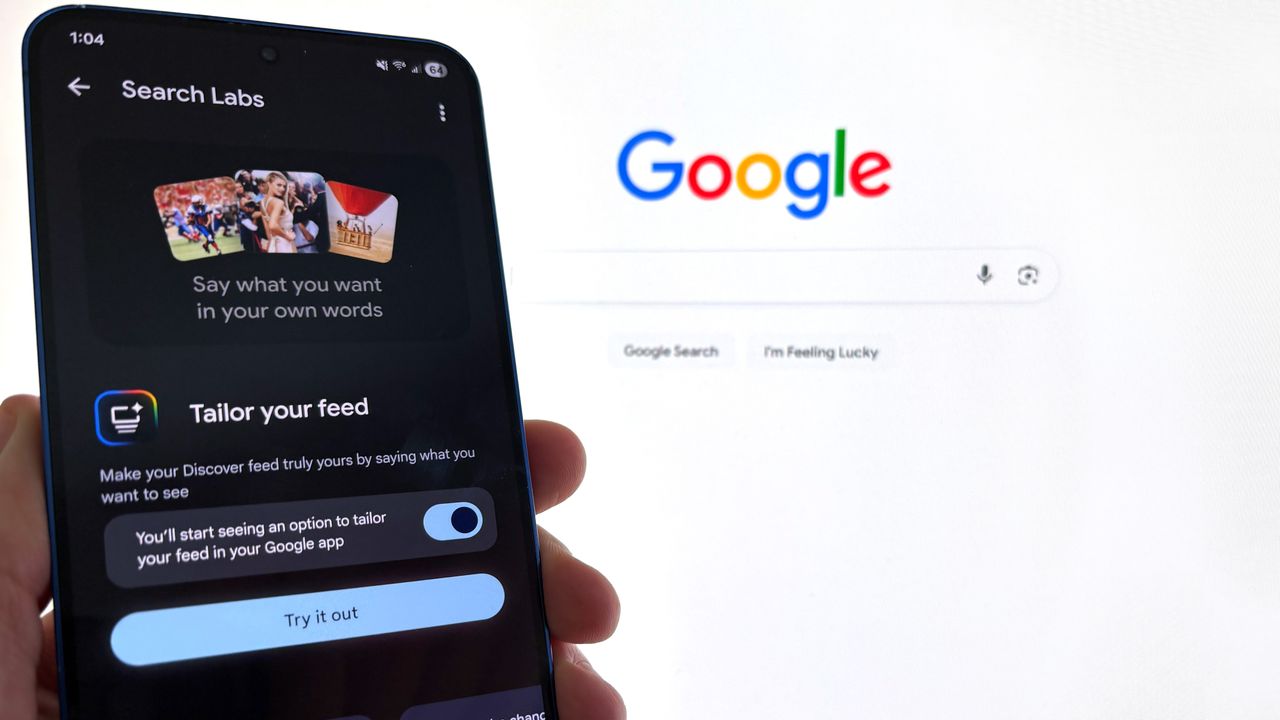
Google's 'Tailor your feed' feature, introduced a few months ago, adds a familiar chat prompt that encourages you to type something like "Keep me updated on what's happening in college basketball" to curate what shows up in your Discover feed. Discover, if you're not familiar, is what Google calls the list of recommended stories that shows up when you open a new tab in Chrome, and is also built into the Google app and Android.
'Tailor your feed' is an experimental "Lab" feature you have to enable manually. I can't recommend it, because it will make you feel mad, sad, and dumb, not necessarily in that order.
I'm no computer scientist, but my understanding is that all the stuff we're doing On Here ultimately distills down to, y'know, binary: on or off, yes or no, zero or one. On one hand, this is such an oversimplification of technology that it may have little bearing on the complexities of the large language models and mystery algorithms that power modern AI agents. On the other hand, I don't think that actually matters when the end result of that modern complexity is failing at a task as simple as yes or no. I enabled 'Tailor your feed' so that I could tell Discover to completely block X.com links from appearing in the list of curated stories, because I really don't need to see what the worst people in the world are saying when I'm scrolling for headlines about new brunch spots in my neighborhood. And here's what happened when I made that request:
You won't see as many posts from X going forward.
I can't guarantee you'll see none of something.
As I found with a quick search on Reddit, I'm not the only person who's tried this solution since Google started flooding Discover with posts from X in late 2025. (Given that Google could pull quality writing from a billion websites and blogs across the internet, I have to wonder why it instead decided the site that was plagued with AI-generated child sexual assault imagery was an ideal source.) After typing in something similar, one Redditor reported seeing only "one story from X as opposed to the usual dozen."
So is Google placing its thumb on the scale by refusing to remove a paying partner entirely from its feeds, or has it developed a piece of AI software so staggeringly stupid that it can't even create a blacklist (or 'blocklist' as they're more often called these days)? The entire damn internet is built around blocklists. Google Chrome has built-in blocklists of websites it deems unsafe. Every piece of antivirus software in existence? Blocklists. Internet Explorer had blocklists in 1996!
What are we doing here, man. "I can't guarantee you'll see none of something" should be a vastly more difficult operation for a computer than "zero." Google Labs is out here spending billions of dollars trying to unsolve problems. This new frontier for software is indeed revolutionary, because I've never simultaneously felt embarrassed for the computer and for myself when trying to coax it into the simplest possible action.
It's clearer than ever that big tech's vision for the algorithms choking the life from the internet springs from the idea that they know better than we do what we actually want. It really is time to turn off the recommendations and ditch this stuff once and for all. RSS awaits.
Oracle has just let go of "some 10,000" people, according to one employee who recently spoke to the BBC.
There's been some speculation lately over whether the AI industry is showing the first creaky signs of struggle, and this isn't likely to help that. Especially as Oracle is spending big to keep up with datacenter demand. Though it's also suggested tech firms are hoping AI will make up for any loss of workforce.
Global software behemoth Oracle has been pumping money into AI over the last year for various projects, and has even said it's willing to look beyond Nvidia for the AI chips needed for its contracts. Those contracts including, for instance, the gigantic $300 billion that's earmarked for OpenAI.
But now, Oracle has been laying off "senior engineers, architects, operations leaders, program managers, and technical specialists", according to Michael Shepherd, Senior Operations Manager at Oracle.
"Today, Oracle conducted a significant reduction in force that impacted some of the most talented, dedicated, and high-performing people I’ve had the privilege of working alongside.
Let me be direct: this was not a performance action. The individuals affected were not let go because of anything they did or didn’t do."
This comes at a time when OpenAI has discontinued its Sora app and had Disney pull out of its $1 billion investment deal. These are both things that show signs the AI market could be straining in some capacity. And if not the market in general, then OpenAI. Though, to the contrary, OpenAI also today closed a funding round of $122 billion. So it's hardly struggling for cash or interested parties.
Tom the Dancing Bug: Dementia Donnie and his ballroom and war
-> Please join the team that makes it possible for your friendly neighborhood comic strip Tom the Dancing Bug to exist in this hostile Trumpverse! JOIN US FOR 2026 IN THE INNER HIVE, and be the first kid on your block to get each week's Tom the Dancing Bug comic – before it's published anywhere. — Read the rest
A bit of good news. Maybe I'll look into an EU Switch at some point.
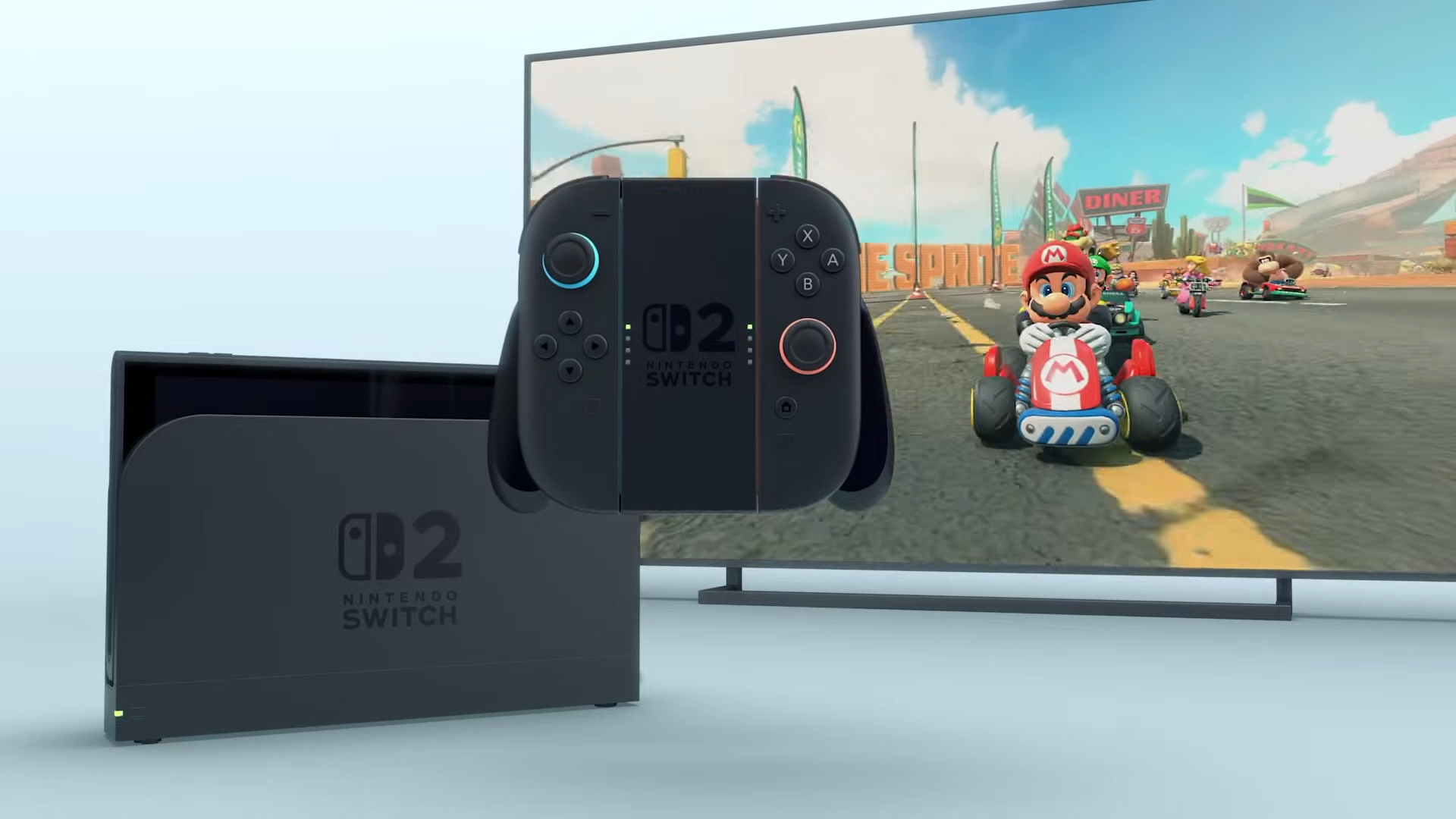
Not so long ago, I was primarily a console gamer. One thing I definitely don't miss about those bad old days is that, unlike with a gaming PC, when things went wrong, cracking the console open myself was rarely a real option. Well, thanks to the EU's right to repair bill, some significant repairability hoops are about to disappear for the Nintendo Switch 2.
Teardown team iFixIt was previously unimpressed with the repairability of the Nintendo Switch 2, particularly on account of the battery being easy to disconnect but otherwise glued in place within the launch model. The good news is that Nintendo will soon release a version of the Nintendo Switch 2 with batteries you can replace much more easily yourself—but only in the European Union (via Nikkei).
The new version of the Switch 2 will feature replaceable batteries for both the main console and the Joy-Con controllers, too. The Switch 2 model featuring the glued-in battery will continue to be sold in Japan, and Nintendo still doesn't recommend folks outside of the EU attempt to replace the console's battery themselves.
Instead, Nintendo and many non-console manufacturers like it often only offer consumers a very short list of authorised repair facilities. Packing up and sending off faulty hardware is not only a faff, but can also be expensive if these sanctioned specialists then decide it's not worth the repair. In other words, there have been concerns for a long time that this repairability model actually limits consumer choice.
Basically, the replaceable battery model of the Switch 2 exists so that the console remains compliant with various repairability laws that will soon come into effect across EU member states—specifically, the EU introduced fresh battery regulation back in 2023.
This includes a directive that aims to ensure portable batteries are easy to remove, replace, and recycle by typical consumers "without requiring the use of specialised tools, unless they are provided free of charge, or proprietary tools, thermal energy or solvents to disassemble it." This comes into effect from February 2027.
As we've previously covered, the EU further strengthened the 'right to repair' with fresh legislation back in 2024 as well. The resulting directive aims to "reduce premature disposal of viable goods purchased by consumers and to encourage consumers to use their goods longer" by "allowing consumers to seek affordable repair from the repair service provider of their choice." EU member states have until 31 July 2026 to incorporate this directive into national law.
Nintendo, seeing which way the legislative wind is blowing, is simply getting its ship in order. Now we've seen such a major player steering with the EU's current, odds are plenty of handheld gaming PC manufacturers will soon follow suit.
Offering replaceable batteries has been a long time coming for the handheld market, and there's little room to argue now that the EU has made it clear that that's the price to paddle among its waters. Here's hoping similar 'right to repair' legislation outside of the EU gets a boost, too, in the near future.
-> It's the INNER HIVE DRIVE! Join Tom the Dancing Bug's Inner Hive today, and the cost of signing up will be donated to the Democracy Defenders Fund to sue Donald Trump over and over, and protect voters' rights! — Read the rest













 ALT
ALT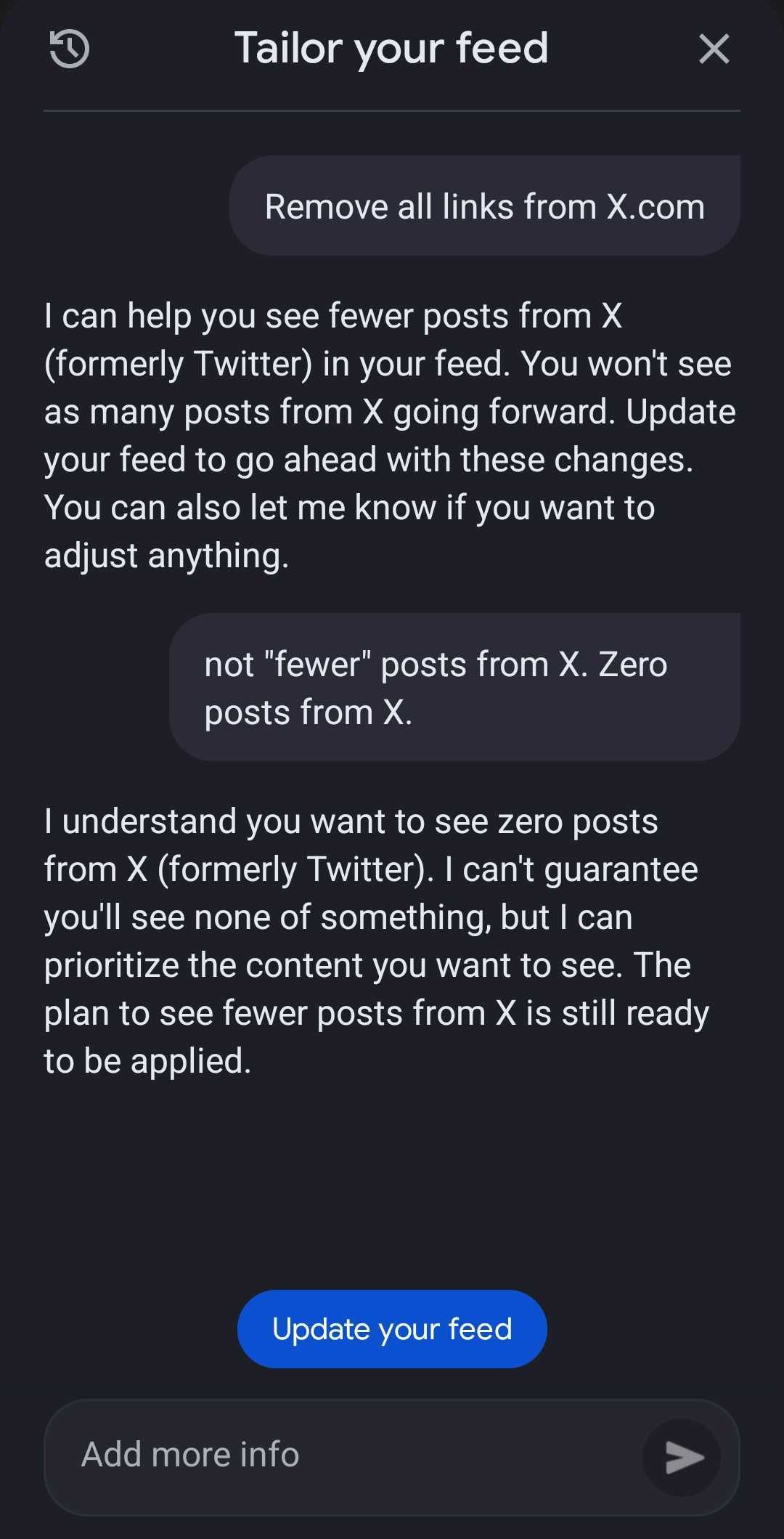






![[link]](https://i.redd.it/7vthkx40c4ug1.jpeg)
![[link]](https://i.redd.it/hsetwtmz63ug1.jpeg)
![[link]](https://i.redd.it/kk2kv68wh1ug1.png)
![[link]](https://i.redd.it/fzzmnl1bkxtg1.jpeg)
![[link]](https://i.redd.it/gawtxb7t3dtg1.jpeg)
![[link]](https://i.redd.it/3p06q12sjirg1.png)
![[link]](https://i.redd.it/ro1g3vo0z0rg1.jpeg)
![[link]](https://i.redd.it/yhhth0z27vqg1.png)
![[link]](https://i.redd.it/wx2zm4kjxrqg1.jpeg)
![[link]](https://i.redd.it/ewurhxj3v9qg1.jpeg)
![[link]](https://i.redd.it/ij64jnpumepg1.jpeg)