“When a reviewer starts explaining how the preparation of a quiche Lorraine at the restaurant he has visited differs from the way one prepared a true quiche Lorraine, I always want to interrupt. “But did you like it?” I want to shout. “Did it make you happy? Did you clean your plate?” Any chance that I might someday acquire a serious interest in how closely what I ate resembled the true article disappeared one day at a block party near our house while I was eating some homemade gazpacho and talking about how it differed from the authentic gazpacho one got in Seville. The more I talked about the difference, the faster I wolfed down the gazpacho – until I realized that one way what I was eating differed from authentic gazpacho was that it tasted better.”
Today photography for most of us means… Instagram? Filters? Selfies? Most of us capture gorgeous, richly coloured, flattering images of ourselves, our friends and our surroundings countless times each week. In an age where every phone is a highly sophisticated camera we don’t think twice about snapping something and – thanks to the technology in our hands – it looking great first time. However the history of colour photography evolved slowly, with far more basic origins. We’ve been having a look at the world’s first colour photograph to find out how far we’ve come.
Maxwell’s colour photograph of tartan ribbon
The first ever known photograph was taken by Joseph Nicéphore Niépce in 1826, but it took until 1861 for someone to develop the technology to incorporate very basic colour. It was Scottish physicist and poet James Clerk Maxwell who produced the first true colour photograph – one that didn’t fade immediately or need colour adding afterwards by hand. The image today looks foggy, mysterious, perhaps even a little sinister. Can you make out what it is?
The red, green and blue filters used for Maxwell’s photograph
The image is of tartan ribbon and it was photographed three times using different coloured filters – red, blue and yellow. The three images where then overlaid to create a single composite. The technique was developed according to theories about how the eye processes colour, and it was this, rather than any real desire to advance the art of photography, that Maxwell wished to demonstrate with his picture.
Colour photography by English pioneer Sarah Angelina Acland, 1900
It would take decades until colour photography developed sufficiently to be recognisable in its scope to our modern eyes. In the very early 20th century advances in equipment allowed first for landscapes and still lives to be photographed, as the exposure time necessary for the image to be taken made still subjects preferable. English pioneer Sarah Angelina Acland however took a number of artful, subtle portraits using the Sanger Shepherd process. This process used the same basis of colour filters, but it was a technically demanding and time consuming process. At the time it was theorised that women were particularly well-suited to this form of photography due to their superior patience and tidiness! Acland was lecturing on her photographic process at The Royal Photographic Society in 1905 – two years before the Lumière brothers wowed Paris with their Autochrome colour process in 1907.
Portrait of Margaret Hope, September 1907, Sarah Angelina Acland
Perhaps most vivid and recognisable to our modern eyes are the photographs of Russian Sergey Mikhaylovich Prokudin-Gorsky. The scientist and photographic pioneer not only photographed Tolstoy in colour in 1908, but in 1909 began a tour of Russia with a specially equipped railroad-car darkroom provided by Tsar Nicholas II, documenting the Russian Empire in around 3,500 negatives.
Colour composite of Alim Khan, emir of Bukhara, 1911, by Prokudin-Gorsky
Young Russian peasant women in a rural area along the Sheksna River near the small town of Kirillov, Prokudin-Gorsky
In 1377, nearly a century before the famous Gutenberg Bible was printed in Germany, the Jikji anthology was made using movable metal type, then bound and and protected for centuries to come.
A new installation outside the Cheongju Art Centre in South Korea celebrates this historic achievement, acting as a shelter for public performances in the open plaza.
It also hints at a larger exhibit inside: an array of architecture, art, design and digital media that traces the history and impact of movable type on literacy and publishing.
The pavilion itself, folded and stitched together with red twine, forms a canopy that mimics the properties of an open book “being pushed down onto a flat surface,” explains its creator Ron Arad. “The thickness increases where the pages fan out, and the metal binding of the structure is derived from a traditional spine.”
The Jikji is the abbreviated title of a Korean Buddhist document, whose title can be translated roughly as “Anthology of Great Buddhist Priests’ Zen Teachings.” It collects teachings of Buddhism passed down for generations.
Printed during the Goryeo Dynasty in the 14th Century, it is the world’s oldest extant book printed in an essentially modern fashion. Prior printing techniques in China used ceramics to generate volumes, but none of those works survive.
While other copies of the content still exist thanks to wood engravings in temples, only the final volume of the original metal-printed Jikji remains. It is preserved by the Manuscrits Orientaux department of the National Library of France.
The fact the a movable metal type process was used to create the anthology was only rediscovered in the early 1900s in the West when this last book was examined.
Johannes Gutenberg, meanwhile, was the first to create type pieces from a particular alloy of lead, tin, and antimony—and these materials remained standard for over 550 years as printing evolved in Europe.
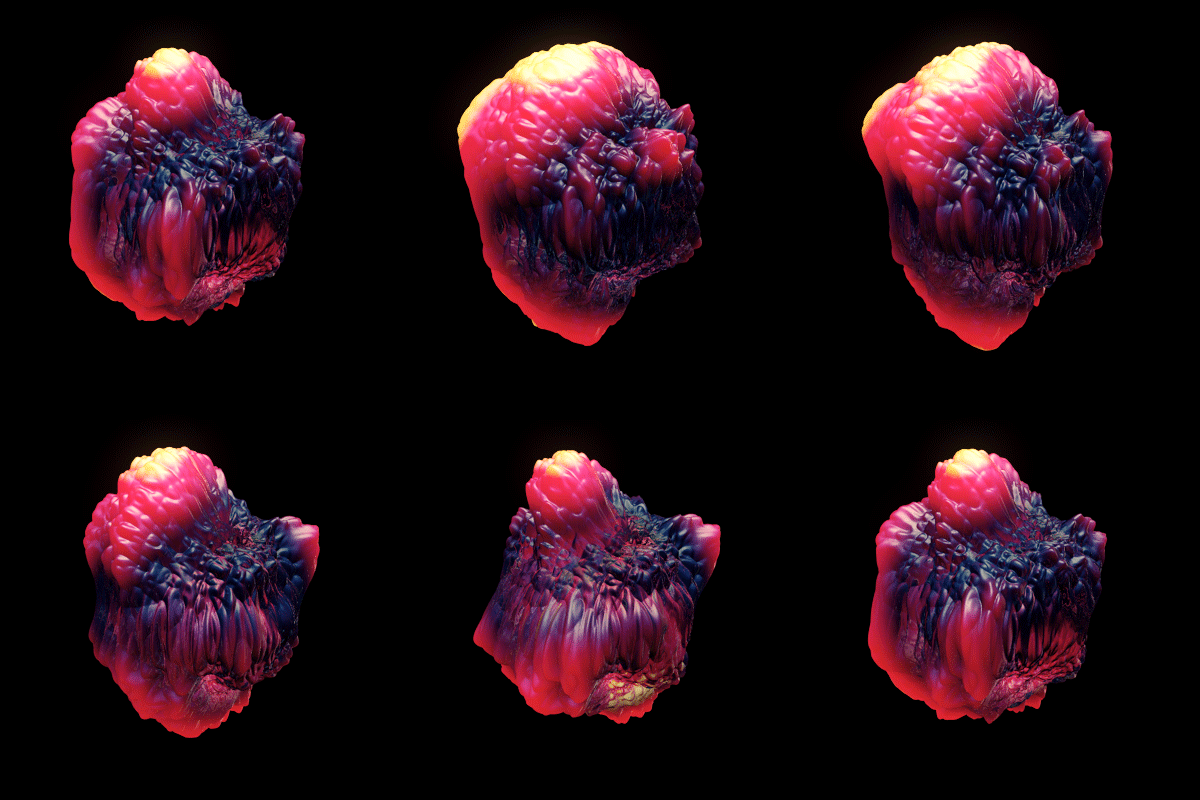
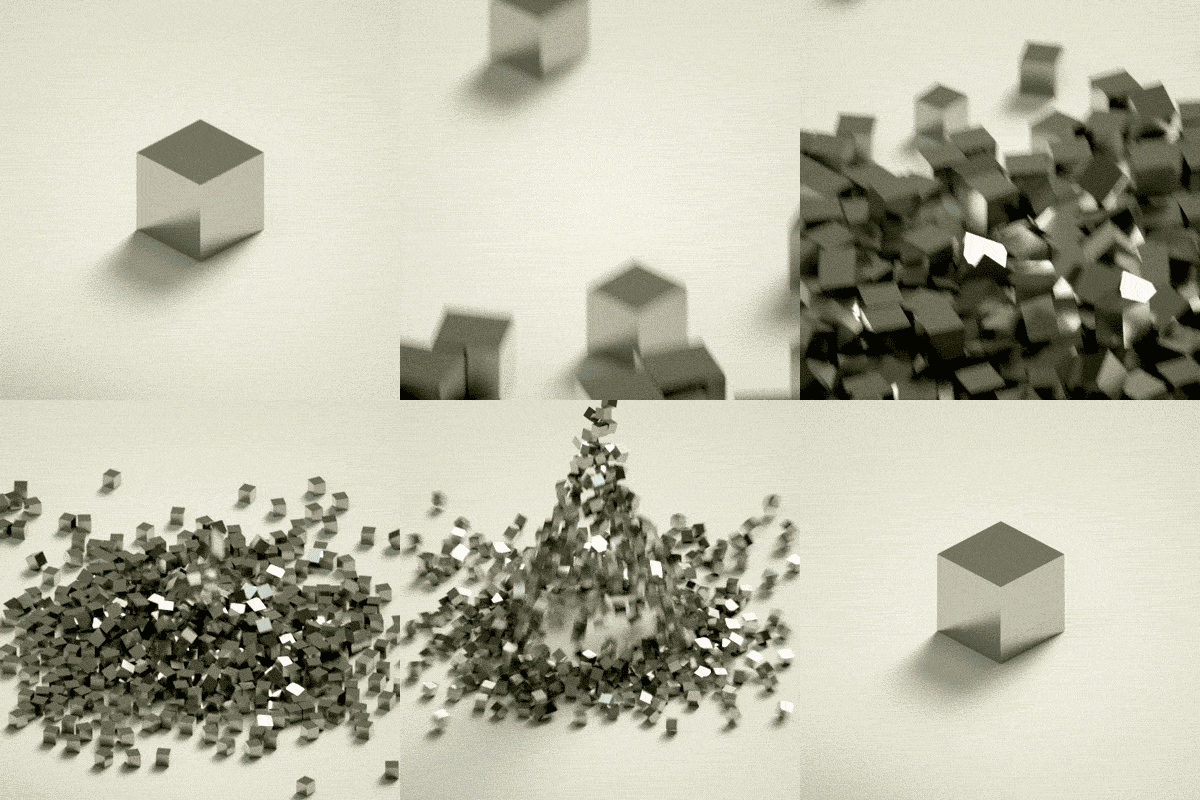
It's a perfect replica of St. Stephen's Cathedral in Vienna, complete with each tiny peak and each window. But to the naked eye, this object would look like no more than a grain of sand. The ...
An interdisciplinary team of architects and material specialists is developing a commercially-viable 3D-printing machine capable of creating complex objects using one of the planet's most ...
Shaped like a book, a cultural facility on the boundary between a residential neighborhood and industrial area in a suburb of Incheon, South Korea acts as a smooth visual segue-way. Placed on a ...
Virtual Reality software by Alientrap is a sandbox world building app which lets you build games and experiences collaboratively:
Modbox is a world creation sandbox game for the HTC Vive. You can
create your own game worlds to play in and share - or load others on the
Steam Workshop.
Loading a Creation in Modbox will also load the Mods it uses. Mods
can include custom entities and building tools - or custom game logic
for things like new game modes.
You can also edit any creations, or create your own from scratch. In
edit mode you can add Entities, and and set up rules of the game
(gravity, game mode, level size…).
Lakeside House is a long and elegant silhouette set against a mountainous backdrop. Designed by Shinichi Ogawa & Associates, this Japanese home utilises its inspiring environment as a key feature in the design. The structure is a long rectangle with floor to ceiling windows that frame excellent views of the landscape. The oversized windows blur the boundaries of indoors and outdoors: at times the home feels like a floating dock on the lake.
On the interior, large white tiles stretch across the floor. These tiles continue out to the lakeside terrace, further supporting the idea that Lakeside House is both inside and outside. White walls and curtains stand alongside monochromatic furnishings. This simplified colour palette keeps one’s attention on the exterior views, allowing the colours of nature to enhance the home’s environment. The home is lit simply with soft overhead lighting and at night this house glows beautifully, reminiscent of a lighthouse calling its ships home.
Every corner of Lakeside House is designed with the environment in mind. All the rooms feature walls of windows on at least three sides. Even the soaking tub in the bathroom is awarded a dramatic view of the lake and mountains.
Chinese practice Vector Architects built a futuristic, yet traditional chapel on the waterfront of Bohai Coast in China. With its unspoilt view onto the sea, visitors may feel like drifting on a boat. Vector Architectswas founded in 2008 in Beijing. The relationship between architecture and living, place, perception, and tectonic are the core directions in their architecture design.
While we celebrate National Coming Out Day today in the United States, I just want to recognize my sistas all across the globe who CAN’T come out. I understand your struggles my sistas and I CELEBRATE you!
I regularly get messages from women who stay closeted to protect their income, children, shelter or bodies. There are some places in this world where the egos of men are so fragile that they think nothing of raping women to “correct” their attraction to other women.
For many years I stayed closeted to protect my income because coming out would mean losing my job. There are many family members who I’ve never come out to, not because I’m ashamed or have anything to hide, but because their opinions on my life is irrelevant. I’m from Jamaica and I would never feel safe going home and holding the hands of my partner in public.
So while we appreciate and celebrate those who have the courage and privilege to come out today and everyday, let’s not forget or bash those who cannot.
“His speeches are full of non sequiturs,” … It’s a completely different style from nearly any other politician you normally see on a big stage…
He makes vague implications with a raised eyebrow or a shrug, allowing his audience to reach their own conclusions. And that conversational style can be effective. It’s more intimate than a scripted speech…
Yet to many linguists, Trump stands out for how often he deploys these conversational tics. “Trump’s frequency of divergence is unusual,” Liberman says. In other words, he goes off topic way more often than the average person in conversation.
Geoffrey Pullum, a linguist at University of Edinburgh, argues that there’s more going on than just a conversational, I’ll-let-you-fill-in-the-gaps-style. Trump’s unorganized sentences and short snippets might suggest something about how his mind works. “His speech suggests a man with scattered thoughts, a short span of attention, and a lack of intellectual discipline and analytical skills,” Pullum says. [link]
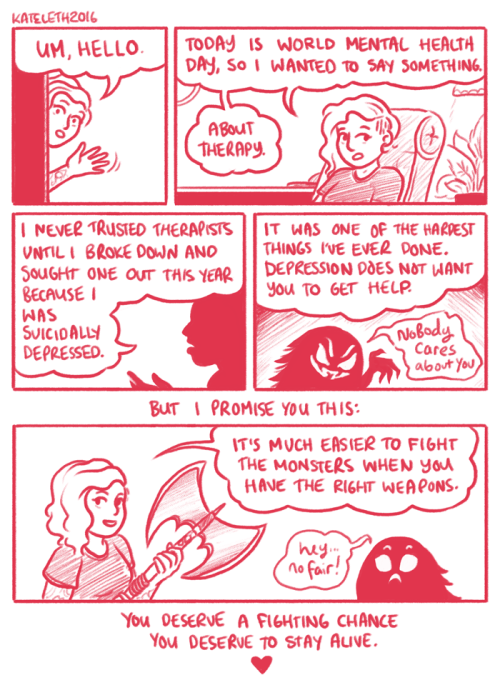
Hi! I almost never share my personal comics anymore, but this one felt important. Therapy isn’t for everyone, but it absolutely saved my life. I’m just trying to help get rid of that stigma I bought into for so long.
I don’t mention it often here, but I still do comics like these regularly on Patreon for $1+ per month. If you miss ‘em. Thanks!
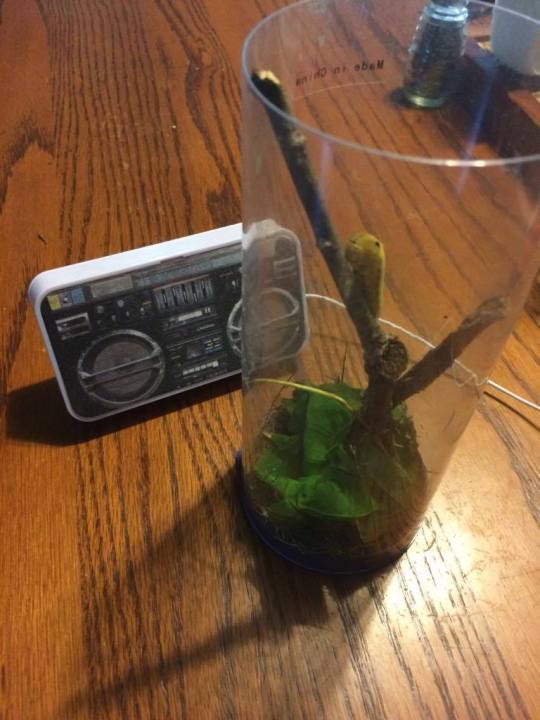
Aaaa he’s turning a duller color… I hope he’s alright
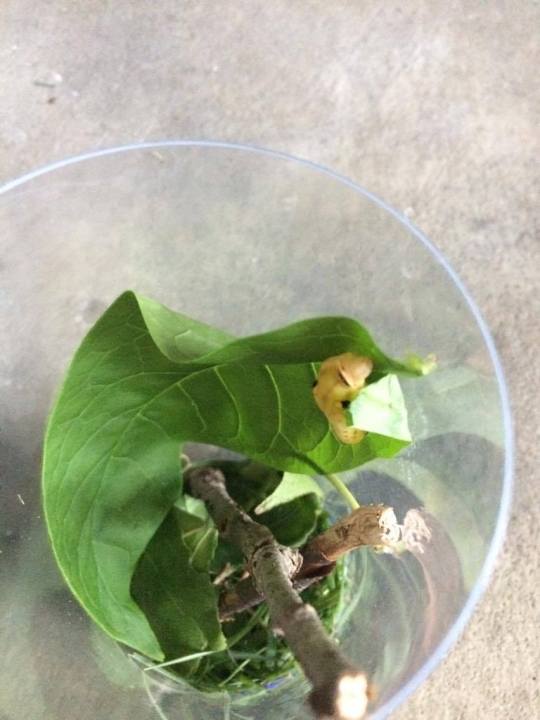
So apparently chicken nugget is a spicebush swallowtail and they turn yellow before they pupate.
He was making little silk things everywhere
Bruh this caterpie is going to evolve to metapod today my boy isn’t messing around
update hes entirely yellow now
i made him a tube room
hes crawlin all over the place checking it out
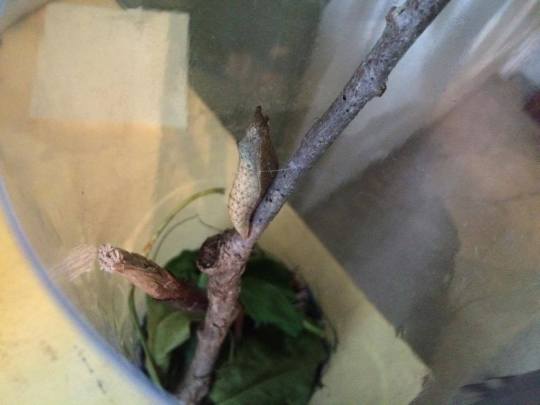
its happening
False alarm he moved a bit This guy
??? caterpie doesnt evolve into kakuna
whats he doing
its happening part 2 For Real This Time
chicken nugget using those advanced tactics balancing my man doesnt do anything halfway
i put on some tunez for him so he can get into the metamorphazone
sorry for keeping you all in suspense but chicken nugget is doing fine and he has a cool hat now
hes been chillin like this for a couple days
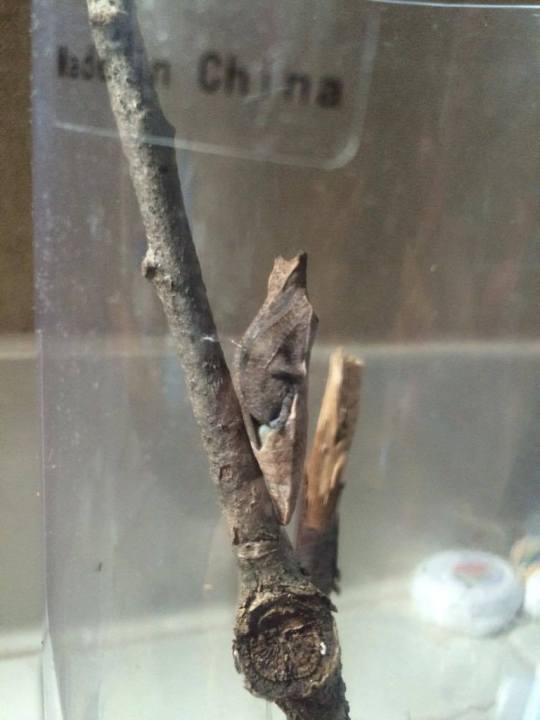
hes been in cocoon for 10 days now 🎉🐛🎉
let me know how he’s doing soon
HES BUSTIN OUT
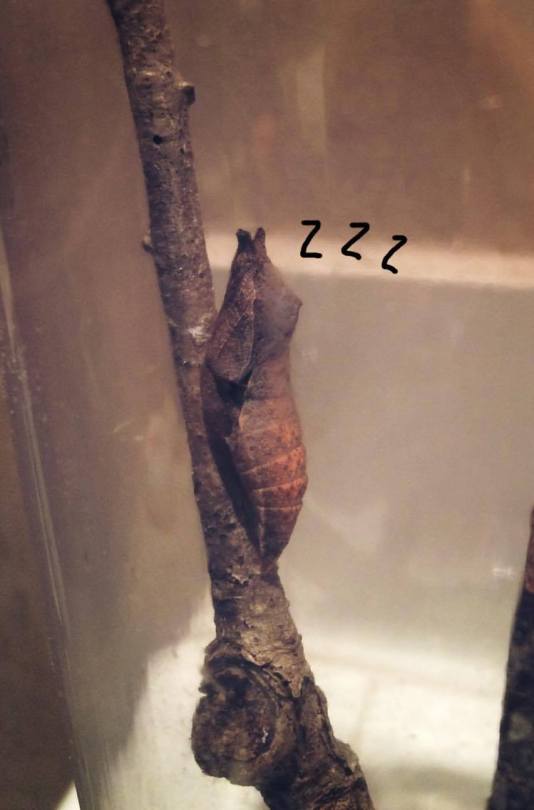
im going to sleep, chicken nugget is snoozin and ill check up on him as soon as i wake up
hope he doesnt party too hard
🐛
💤
💤
hes gone goth hes in his emoteen stage
CHICKEN NUGGET IS A CHICKEN WING NOW BABY WE HAVE LIFTOFF!!!!!
Part of me wants to do this and part of me is like, NOPE
Skycycle
A human powered “roller coaster” located at
Okayama Prefecture’s Brazilian Washuzan Highland Park in Japan. Unlike a traditional roller coaster, this one is slow and terrifying as opposed to fast and terrifying.
Aside from seat-belts there isn’t much keeping you safe. It is equipped with two sets of pedals so each of the passengers can control the speed. There are multiple people riding Skycycles so its up to the riders to make sure they don’t run into each other.
The Bolwoningen which can be translated as either “ball” or “bulb” apartments were built in 1984 by artist and sculptor Dries Kreijkamp. He created an experimental settlement consisting of houses that resemble extraterrestrial buildings in the neighborhood of medium-sized town Den Bosch in the Netherlands.