...so are we done now?
Submitted by: (via khellendros98)
...so I wrapped your bubble wrap in bubble wrap so you can pop bubbles while you pop bubbles.
Submitted by: (via The Bored Ninja)


Essa moda tá pegando entre os Deuses
É Deus, é melhor você abrir o olho…

I never thought it would happen to me. I was wrong. When I close my eyes, I can still see the confused look on their faces.
Ephemeral messaging apps such as Snapchat, Wickr and Frankly, all of which advertise that your photo, message or update will only be accessible for a short period, are on the rise. Snapchat and Frankly, for example, claim they permanently delete messages, photos and videos after 10 seconds. After that, there's no record.
This notion is especially popular with young people, and these apps are an antidote to sites such as Facebook where everything you post lasts forever unless you take it down—and taking it down is no guarantee that it isn't still available.
These ephemeral apps are the first concerted push against the permanence of Internet conversation. We started losing ephemeral conversation when computers began to mediate our communications. Computers naturally produce conversation records, and that data was often saved and archived.
The powerful and famous -- from Oliver North back in 1987 to Anthony Weiner in 2011 -- have been brought down by e-mails, texts, tweets and posts they thought private. Lots of us have been embroiled in more personal embarrassments resulting from things we've said either being saved for too long or shared too widely.
People have reacted to this permanent nature of Internet communications in ad hoc ways. We've deleted our stuff where possible and asked others not to forward our writings without permission. "Wall scrubbing" is the term used to describe the deletion of Facebook posts.
Sociologist danah boyd has written about teens who systematically delete every post they make on Facebook soon after they make it. Apps such as Wickr just automate the process. And it turns out there's a huge market in that.
Ephemeral conversation is easy to promise but hard to get right. In 2013, researchers discovered that Snapchat doesn't delete images as advertised; it merely changes their names so they're not easy to see. Whether this is a problem for users depends on how technically savvy their adversaries are, but it illustrates the difficulty of making instant deletion actually work.
The problem is that these new "ephemeral" conversations aren't really ephemeral the way a face-to-face unrecorded conversation would be. They're not ephemeral like a conversation during a walk in a deserted woods used to be before the invention of cell phones and GPS receivers.
At best, the data is recorded, used, saved and then deliberately deleted. At worst, the ephemeral nature is faked. While the apps make the posts, texts or messages unavailable to users quickly, they probably don't erase them off their systems immediately. They certainly don't erase them from their backup tapes, if they end up there.
The companies offering these apps might very well analyze their content and make that information available to advertisers. We don't know how much metadata is saved. In SnapChat, users can see the metadata even though they can't see the content and what it's used for. And if the government demanded copies of those conversations -- either through a secret NSA demand or a more normal legal process involving an employer or school -- the companies would have no choice but to hand them over.
Even worse, if the FBI or NSA demanded that American companies secretly store those conversations and not tell their users, breaking their promise of deletion, the companies would have no choice but to comply.
That last bit isn't just paranoia.
We know the U.S. government has done this to companies large and small. Lavabit was a small secure e-mail service, with an encryption system designed so that even the company had no access to users' e-mail. Last year, the NSA presented it with a secret court order demanding that it turn over its master key, thereby compromising the security of every user. Lavabit shut down its service rather than comply, but that option isn't feasible for larger companies. In 2011, Microsoft made some still-unknown changes to Skype to make NSA eavesdropping easier, but the security promises they advertised didn't change.
This is one of the reasons President Barack Obama's announcement that he will end one particular NSA collection program under one particular legal authority barely begins to solve the problem: the surveillance state is so robust that anything other than a major overhaul won't make a difference.
Of course, the typical Snapchat user doesn't care whether the U.S. government is monitoring his conversations. He's more concerned about his high school friends and his parents. But if these platforms are insecure, it's not just the NSA that one should worry about.
Dissidents in the Ukraine and elsewhere need security, and if they rely on ephemeral apps, they need to know that their own governments aren't saving copies of their chats. And even U.S. high school students need to know that their photos won't be surreptitiously saved and used against them years later.
The need for ephemeral conversation isn't some weird privacy fetish or the exclusive purview of criminals with something to hide. It represents a basic need for human privacy, and something every one of us had as a matter of course before the invention of microphones and recording devices.
We need ephemeral apps, but we need credible assurances from the companies that they are actually secure and credible assurances from the government that they won't be subverted.
This essay previously appeared on CNN.com.

Dedicated to Dee L. because it’s her birthday tomorrow. Hope you have a great day, Dee!
Here are more superheroes.

Even Nyarlarthotep gets moments like these.
I hope everyone is well out in the world, we’re still working on a wide variety of cool things here. To that end we’re going to have a couple of guest comics in the next two weeks so Natalie can work on some of our ongoing projects.
We’re still getting comments where people are recommending Lovecraftian movies and the like, and that’s something I want to encourage, so if there are any books/games/movies etc that you think Lovecraft fans would enjoy please mention them in the comments. Shameless self promotion is absolutely okay too, just make sure you say it’s something you made.
See you next week!
- Andrew

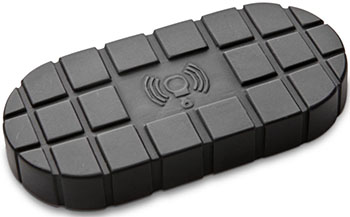
When you activate the Micro Sonic Grenade, it emits a 115-decibel siren. The manufacturer describes this as a “prank,” which it might be if you think pushing someone out of a third-story window is funny. The customer reviews mostly complain that the device is not loud enough, which is a valuable insight into the mind of the typical user, as poorly as it may bode for society.
 Péssimo dia para as inimigas.
O post Mentirinhas #610 apareceu primeiro em Mentirinhas.


Read more of this story at Slashdot.

On Wednesday, we wrote about a scientific study showing that pee in a pool's chlorinated water can yield a toxic chemical called cyanogen chloride. That substance has recommended exposure limits from the World Health Organization and is also considered a chemical warfare agent.
The yields from the pool water in the study were not anywhere near deadly or even conclusively harmful. But the next question that bubbled up in Ars readers' minds was:
How much pee would it take to develop a deadly Olympic-sized swimming pool?
Albener PessoaLink 2:
"Researchers here say they have unearthed stone tools proving that humans reached what is now northeast Brazil as early as 22,000 years ago. Their discovery adds to the growing body of research upending a prevailing belief of 20th-century archaeology in the United States known as the Clovis model, which holds that people first arrived in the Americas from Asia about 13,000 years ago."
...
"In what may be another blow to the Clovis model of humans’ coming from northeast Asia, molecular geneticists showed last year that the Botocudo indigenous people living in southeastern Brazil in the late 1800s shared gene sequences commonly found among Pacific Islanders from Polynesia."
Quero ver o final desta novela
1. Why computers find it hard to win at Go.
2. “The Clovis paradigm is finally buried.”
3. How has the mining boom changed Perth?
4. Did childhood obesity really decline? And NYC receives its first cupcakes ATM.
5. Propagating confusion about money creation.
6. History of European border changes (short video). Many lessons in that one.
David Ball, a professor of risk management at Middlesex University, analyzed U.K. injury statistics and found that as in the U.S., there was no clear trend over time. “The advent of all these special surfaces for playgrounds has contributed very little, if anything at all, to the safety of children,” he told me. Ball has found some evidence that long-bone injuries, which are far more common than head injuries, are actually increasing. The best theory for that is “risk compensation”—kids don’t worry as much about falling on rubber, so they’re not as careful, and end up hurting themselves more often.
From The Overprotected Kid by Hanna Rosin in the Atlantic.
Addendum: More on the Peltzman Effect.
Albener PessoaYay !!! (via Firehose)

The cult-classic horror film Tucker & Dale Vs. Evil is most likely getting a sequel. Stars Alan Tudyk and Tyler Labine casually announced the news at a horror convention in Cincinnati this past week. In the video below, Tudyk reveals that producers are interested in making a sequel—something he found out only after he’d made fun of the “producer-y type guys” he mistakenly thought had squashed the idea. Labine promises the film will be just as good as the first, assuring the crowd, “Don’t worry. Alan and I will never make a shitty sequel.”
The first Tucker & Dale—which had a limited theatrical release, but earned a cult following on Netflix and home video—follows two best friends who get mistaken for “murderous backwoods hillbillies” by some preppy college students. The horror-comedy features a series of increasingly ridiculous accidental deaths as Tucker and Dale just try to ...

Tiny furniture is a great way of making rooms look far larger than they actually are, and of creeping out anyone who enters your house.
Follow on Twitter @BadRealtyPhotos.
Albener Pessoa$$$$$$

The new Mac Pro has become the object of desire, but a lustrous finish hides its true beauty—the massive power within. If you're a pro user in the video or audio industries, the Mac Pro offers the power you need, but lacks the built-in expandability you count on. In order to achieve this engineering feat, Apple® designers stripped away components and space to a minimum, taking out PCIe slots and drive bays, and packed the remaining components into a small cylinder. Its compact size makes the new Mac Pro more transportable and rackable, but prevents onboard installation of PCIe expansion cards. In addition, the computer still requires an enclosure to make it road- or rack-ready and provide convenient cable management. Sonnet's xMac Pro Server PCIe expansion system/4U rackmount enclosure addresses these issues and increases a Mac Pro's potential in a big way.Sonnet claims the xMac Pro Server will ship in early June, offering a sign-up sheet for interested customers on its website. It has a suggested price of $1,499.

    
|
We have been in discussions – not ever initiated by us – with practically all players in smart wearables up until today,” Swatch chief executive Nick Hayek told the Financial Times. “However, we see no reason why we should enter into any partnership agreement.”Hayek says his reluctance to work with Apple and similar companies comes from his desire to protect Swatch's advancements in ergonomic design, longevity and battery life, but he also has been critical of the iWatch, proclaiming publicly the smartwatch won't be "the next revolution" for Apple.
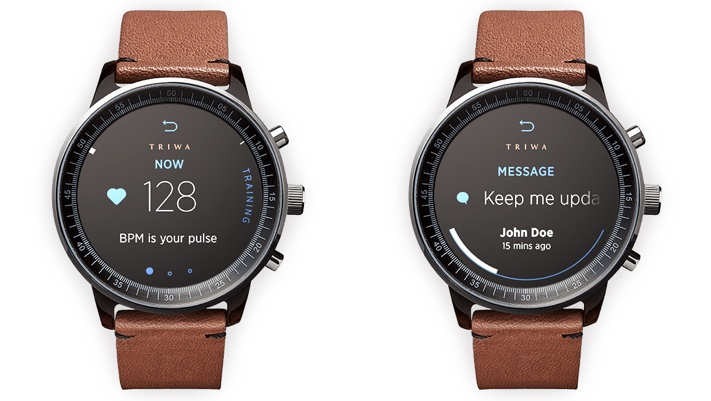
"Apple has contacted some of my employees – I saw the emails personally," Mr Biver told a Swiss publication, claiming that all those who had been contacted refused the iPhone maker’s advances.Apple allegedly may launch the iWatch later this year as it prepares to expand its lineup of mobile devices to the wrist. The iWatch may have a fitness focus with biosensors that enable users to track vital health statistics like heart rate, blood pressure and more. It is believed the band could share this data with Apple's Healthbook app, a health and fitness title expected to debut alongside iOS 8.

|
|