
Shared posts
29 Oct 21:31
Tim Cook on Apple Watch: 'You're Going to Wind Up Charging It Daily'
by Juli Clover
Apple CEO Tim Cook took the stage today at the WSJ.D conference in Laguna Beach, California, where he commented on an array of topics including the Apple Watch, Apple Pay, Apple TV, and more.
Unsurprisingly, Cook said that Apple is "excited" about the upcoming launch of the Apple Watch, and he's impressed that Jony Ive and his team had the foresight to understand that "something you wear has to be personal" and that it can't be "geeky."
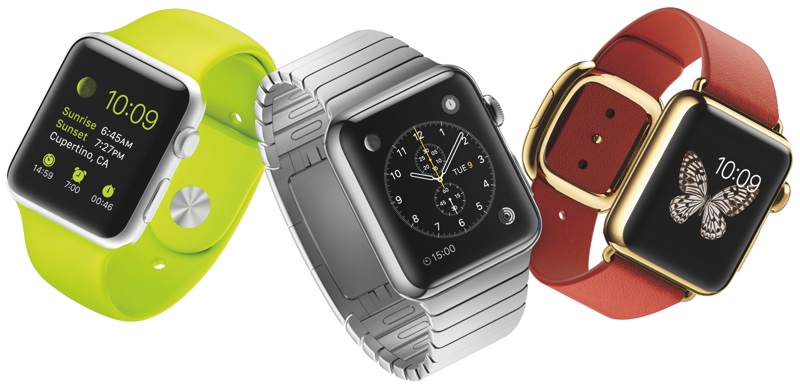
Cook divulged some new information on the Apple Watch's battery, which has previously gone unmentioned by Apple. Cook says that people will use it so much that it will need to be charged on a daily basis. "You're going to wind up charging it daily," he said, declining to provide a specific battery life for the device as Apple is still examining how people use it.
Battery life on the Apple Watch has been in question since long before the device launched, with early reports suggesting Apple was having trouble getting the device to last longer than a day. While the company was originally aiming to have the Apple Watch last three to four days, it appears that battery life may be closer to the iPhone's battery life, requiring a charge on a nightly basis. Apple employees have also suggested that the device may only last for a full day of usage, which is why Apple designed an easy charging system.
The Apple Watch connects to a magnetic charger that's much like the MagSafe chargers supplied with the Mac, snapping easily to the back of the device. High-end versions of the Apple Watch even ship in a luxury box that doubles as a charging stand. Apple likely has not commented officially on the Apple Watch battery as it is continuing to finalize the software for the device ahead of its early 2015 launch.
An official rough transcript of Cook's comments during the interview, which also covered the Mac, the iPhone, Apple's taxes in Ireland, plans for a low cost iPhone, and Cook's thoughts on Carl Icahn, can be found over at The Wall Street Journal, and a second comprehensive live blog from Fast Company's Harry McCracken also has details on exactly what Cook shared during the conversation.


Unsurprisingly, Cook said that Apple is "excited" about the upcoming launch of the Apple Watch, and he's impressed that Jony Ive and his team had the foresight to understand that "something you wear has to be personal" and that it can't be "geeky."
Cook divulged some new information on the Apple Watch's battery, which has previously gone unmentioned by Apple. Cook says that people will use it so much that it will need to be charged on a daily basis. "You're going to wind up charging it daily," he said, declining to provide a specific battery life for the device as Apple is still examining how people use it.
Battery life on the Apple Watch has been in question since long before the device launched, with early reports suggesting Apple was having trouble getting the device to last longer than a day. While the company was originally aiming to have the Apple Watch last three to four days, it appears that battery life may be closer to the iPhone's battery life, requiring a charge on a nightly basis. Apple employees have also suggested that the device may only last for a full day of usage, which is why Apple designed an easy charging system.
The Apple Watch connects to a magnetic charger that's much like the MagSafe chargers supplied with the Mac, snapping easily to the back of the device. High-end versions of the Apple Watch even ship in a luxury box that doubles as a charging stand. Apple likely has not commented officially on the Apple Watch battery as it is continuing to finalize the software for the device ahead of its early 2015 launch.
An official rough transcript of Cook's comments during the interview, which also covered the Mac, the iPhone, Apple's taxes in Ireland, plans for a low cost iPhone, and Cook's thoughts on Carl Icahn, can be found over at The Wall Street Journal, and a second comprehensive live blog from Fast Company's Harry McCracken also has details on exactly what Cook shared during the conversation.
29 Oct 21:31
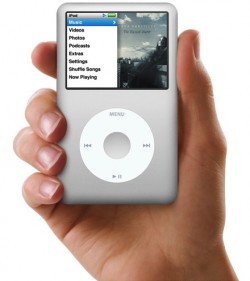 During the Q&A portion of his interview at the WSJ.D conference tonight, Tim Cook was asked about the iPod classic, which was finally discontinued last month five years after its last update.
Cook said Apple primarily stopped making the device because it was no longer possible to source the necessary parts from anywhere in the world. Apple does not have plans to reintroduce the iPod classic due to a shrinking audience and the engineering costs that would be needed for a new version, but Cook pointed towards the iPod touch, which has almost the same amount of storage space, as a viable option.
Observers had speculated Apple was waiting for a 128 GB iPod touch before discontinuing the iPod classic, but while the iPhone and iPad have gained 128 GB options, the iPod touch has yet to do so. Still, with Apple unable to source parts for the iPod classic, the company was left with no choice but to end sales of the descendent of the original iPod.
The iPod classic's 1.8-inch hard drives were typically supplied by Toshiba, with the last generation using a 160 GB drive. Toshiba launched a 220 GB version in early 2011 that gave some hope the iPod classic might receive an update, but one never came to pass and Toshiba has long since discontinued its entire line of 1.8-inch hard drives.


Tim Cook on iPod Classic: 'We Couldn't Get the Parts Anymore' [iOS Blog]
by Eric Slivka
During the Q&A portion of his interview at the WSJ.D conference tonight, Tim Cook was asked about the iPod classic, which was finally discontinued last month five years after its last update. Cook said Apple primarily stopped making the device because it was no longer possible to source the necessary parts from anywhere in the world. Apple does not have plans to reintroduce the iPod classic due to a shrinking audience and the engineering costs that would be needed for a new version, but Cook pointed towards the iPod touch, which has almost the same amount of storage space, as a viable option.
Observers had speculated Apple was waiting for a 128 GB iPod touch before discontinuing the iPod classic, but while the iPhone and iPad have gained 128 GB options, the iPod touch has yet to do so. Still, with Apple unable to source parts for the iPod classic, the company was left with no choice but to end sales of the descendent of the original iPod.
The iPod classic's 1.8-inch hard drives were typically supplied by Toshiba, with the last generation using a 160 GB drive. Toshiba launched a 220 GB version in early 2011 that gave some hope the iPod classic might receive an update, but one never came to pass and Toshiba has long since discontinued its entire line of 1.8-inch hard drives.
29 Oct 21:30
Class Action Lawsuit Filed Against Apple Over 2011 MacBook Pro Graphics Issues
by Eric Slivka
Back in January, we highlighted graphics issues being experienced by a number of owners of 2011 15-inch and 17-inch MacBook Pro models, with many users needing to pay for (sometimes multiple) expensive logic board replacements due to the issue. The apparent widespread nature of the issue has led to claims that it is a manufacturing defect that should be covered by Apple, with a change.org petition seeking relief from Apple now exceeding 20,000 signatures and affected users organizing in a Facebook group of over 5,000 members.
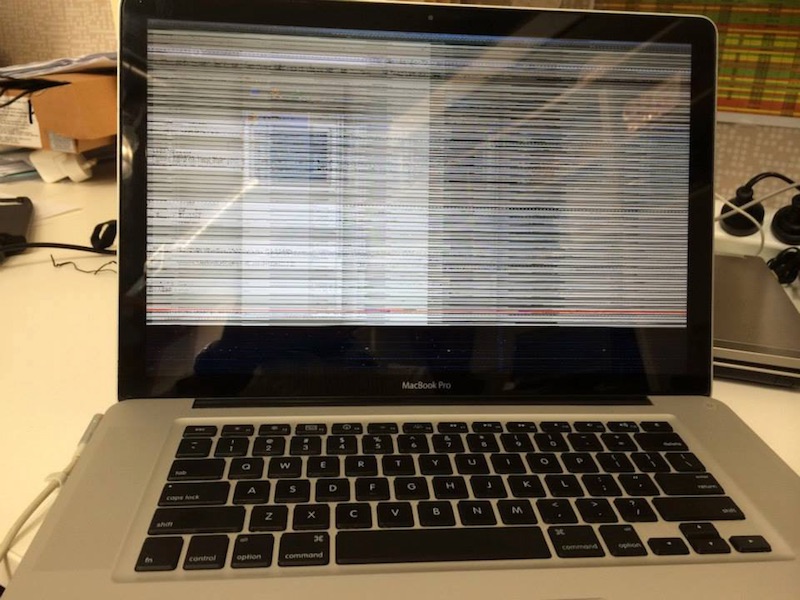
We noted in August that law firm Whitfield Bryson & Mason LLP had begun researching the issue, soliciting feedback from affected users to determine whether a class action lawsuit against Apple might be warranted. The firm apparently found sufficient reason to proceed as it has announced today that it has indeed filed suit against Apple on behalf of affected consumers.
The lawsuit lays out the plaintiffs' argument that the issues stem from hardware defects related to the lead-free solder used on the AMD graphics chips in the 2011 MacBook Pro models.
Drawing parallels to similar graphics issues in the 2008 MacBook Pro that ultimately resulted in a recall by Apple, the plaintiffs in this case request that Apple acknowledge a defect in the 2011 MacBook Pro models, notify owners of the issue, bear the costs of inspection of affected machines, and pay the full costs of repairs and damages. The suit also requests that users who have paid out of pocket for repairs be reimbursed for their expenses.


We noted in August that law firm Whitfield Bryson & Mason LLP had begun researching the issue, soliciting feedback from affected users to determine whether a class action lawsuit against Apple might be warranted. The firm apparently found sufficient reason to proceed as it has announced today that it has indeed filed suit against Apple on behalf of affected consumers.
Our firm recently filed a class-action lawsuit in a California federal court against Apple, Inc. on behalf of residents in the States of California and Florida who purchased 2011 MacBook Pro Laptops with AMD GPUs who experienced graphical distortions and system failures.The firm is continuing to solicit feedback from affected users and is considering filing actions in other jurisdictions around the country.
The lawsuit lays out the plaintiffs' argument that the issues stem from hardware defects related to the lead-free solder used on the AMD graphics chips in the 2011 MacBook Pro models.
When the lead-free solder cracks it degrades the data flow between the GPU and the logic board. A small crack can cause the laptop’s graphics to become distorted on occasion. But as cracks in the lead-free solder propagate over time, the graphics issues worsen and system stability decreases, until eventually the computer is completely unusable. This defect related to the lead-free solder connecting the GPU to the logic board (the “Graphics Defect”) limits all computers at the point of sale forward from performing as advertised and warranted.The suit goes on to note that Apple's only solution offered for the issue is complete logic board replacement, but that the remedy is ineffective as replacement parts use the same solder and fail in the same way, sometimes within days. Apple has also in many cases charged consumers for the repairs and has refused requests to reimburse consumers for repairs paid for out of pocket.
Drawing parallels to similar graphics issues in the 2008 MacBook Pro that ultimately resulted in a recall by Apple, the plaintiffs in this case request that Apple acknowledge a defect in the 2011 MacBook Pro models, notify owners of the issue, bear the costs of inspection of affected machines, and pay the full costs of repairs and damages. The suit also requests that users who have paid out of pocket for repairs be reimbursed for their expenses.
firehose likes this


28 Oct 19:29
It's Probably the Onions
Lucioc, Damiani.guilherme likes this
28 Oct 19:26
Win One Award and You're Set
firehose likes this

27 Oct 17:06

Chinese telco hires in-store tailor to enlarge pant pockets for the iPhone 6 plus
Use your > keys to browse more stories
The iPhone 6 and 6 Plus devices hit shelves today in mainland China, and buyers are lining up outside of telcos and Apple stores across the country. But one local carrier outlet is aiming to make its customers’ deep pockets even deeper. A photo going viral on Weibo depicts a tailor at a China Unicom branch in Shanghai adjusting pant pockets to accommodate the oversized iPhone 6 Plus.
It’s likely the local outlet deliberately built the booth in hopes of attracting media attention – note how the woman beside the booth stands above two microphones.
As some Chinese users have pointed out, this China Unicom branch isn’t the first to come up with this idea. When the iPhone 6 Plus arrived in Amsterdam, local telco KPN hired a tailor to enlarge pant pockets outside one of its retail stores.
We’ll keep an eye out for reports by the Global Association of Trousers on how Apple’s phablet is affecting tailors worldwide.
Editing by Steven MillwardHave Your Say!
firehose likes this
27 Oct 16:46
★ Retailers Are Disabling NFC to Block Apple Pay
by John Gruber
Eric Slivka, reporting for MacRumors:
Earlier this week, pharmacy chain Rite Aid shut down unofficial support for the Apple Pay and Google Wallet mobile payments systems, resulting in an outcry from users who have been testing out Apple’s new system since its launch on Monday. Rite Aid was not an official Apple Pay partner, but the payments system generally works with existing near field communications (NFC) payment terminals anyway, and many users had had success using Apple Pay at Rite Aid stores early in the week.
It now appears that fellow major pharmacy chain CVS is following suit and as of today is shutting down the NFC functionality of its payment terminals entirely, a move presumably intended to thwart Apple Pay. Google Wallet services are obviously also being affected by the move.
These retailers are part of a group (Merchant Customer Exchange, “MCX”) working on an upcoming mobile payment system called CurrentC. Here’s an article about CurrentC by Debbie Simurda, writing for Mainstreet Inc., a point-of-sale provider:
CurrentC mobile payments platform by Merchant Customer Exchange (MCX) is a mobile wallet being developed by a group of major retailers who want greater control of payments, their mobile brand and mobile customer experience. They want to keep more of their customer data, rather than ceding to technology companies. MCX was established in 2012 and currently consists of 59 participating retailers, many large Tier 1 merchants, across all segments. […]
[Update: Not sure why, but Mainstreet Inc. took down the original article. I’m now linking to Google’s cached version of it.]
Here’s how it’s supposed to work:
The application can be downloaded for free from the App Store and Google Play Store. Available for both iOS and Android devices, it is designed to ‘simplify and expedite the customer checkout process by applying qualifying offers and coupons, participating merchant rewards, loyalty programs and membership accounts, and offering payment options through the consumer’s selected financial account, all with a single scan.”
Using CurrentC mobile payments the point-of-sale displays a QR code for the customer to read with their phone.
The QR code generates the payment token on the smartphone which verifies the shopper’s presence, identity and initiates the transaction between the merchant and the bank.
- The phone connects with the cloud for authorization and sends the approval to the merchant.
CurrentC doesn’t support the contactless Near Field Communications (NFC) used by Apple Pay.
QR codes. Good luck with that. Plus, CurrentC doesn’t even work with credit cards — it only works with prepaid store cards and debit cards tied directly to your bank account. Apple Pay is built atop the credit card system; CurrentC is a (futile, I say) attempt to eliminate credit card.
What Apple gets and what no one else in the industry does is that using your mobile device for payments will only work if it’s far easier and better than using a credit card. With CurrentC, you’ll have to unlock your phone, launch their app, point your camera at a QR code, and wait. With Apple Pay, you just take out your phone and put your thumb on the Touch ID sensor.
Tim Cook was exactly right on stage last month when he introduced Apple Pay: it’s the only mobile payment solution designed around improving the customer experience. CurrentC is designed around the collection of customer data and the ability to offer coupons and other junk. Here is what a printed receipt from CVS looks like. It looks like a joke, but that’s for real. And that’s the sort of experience they want to bring to mobile payments.
If I’m reading this right, and I think I am, these retailers who are shutting down their NFC payment systems are validating that Apple Pay is actually working, that people are actually using it. And remember, it only works with the month-old iPhones 6. Think about what happens a year or two from now when a majority of iPhones in use are Apple Pay enabled.
Think about what they’re doing. They’re turning off NFC payment systems — the whole thing — only because people were actually using them with Apple Pay. Apple Pay works so well that it even works with non-partner systems. These things have been installed for years and so few people used them, apparently, that these retailers would rather block everyone than allow Apple Pay to continue working. I can’t imagine a better validation of Apple Pay’s appeal.
And the reason they don’t want to allow Apple Pay is because Apple Pay doesn’t give them any personal information about the customer. It’s not about security — Apple Pay is far more secure than any credit/debit card system in the U.S. It’s not about money — Apple’s tiny slice of the transaction comes from the banks, not the merchants. It’s about data.
They’re doing this so they can pursue a system that is less secure (third-party apps don’t have access to the secure element where Apple Pay stores your credit card data, for one thing), less convenient (QR codes?), and not private.
I don’t know that CVS and Rite Aid disabling Apple Pay out of spite is going to drive customers to switch pharmacies (Walgreens is an Apple Pay partner), but I do know that CurrentC is unlikely to ever gain any traction whatsoever.
27 Oct 16:09

Where are the Medicare savings coming from?
by Tyler Cowen
Loren Adler and Adam Rosenberg report:
…the disproportionate role played by prescription drug spending (or Part D) has seemingly escaped notice. Despite constituting barely more than 10 percent of Medicare spending, our analysis shows that Part D has accounted for over 60 percent of the slowdown in Medicare benefits since 2011 (beyond the sequestration contained in the 2011 Budget Control Act).
Through April of this year, the last time the Congressional Budget Office (CBO) released detailed estimates of Medicare spending, CBO has lowered its projections of total spending on Medicare benefits from 2012 through 2021 by $370 billion, excluding sequestration savings. The $225 billion of that decline accounted for by Part D represents an astounding 24 percent of Part D spending. (By starting in 2011, this analysis excludes the direct impact of various spending reductions in the Affordable Care Act (ACA), although it could still reflect some ACA savings to the extent that the Medicare reforms have controlled costs better than originally anticipated.) Additionally, sequestration is responsible for $75 billion of reduced spending, and increased recoveries of improper payments amount to $85 billion, bringing the total ten-year Medicare savings to $530 billion.
The full piece is here, via Arnold Kling.
27 Oct 16:08

Should we pay teachers more?
by Tyler Cowen
Libby Nelson reports:
It’s common to hear that teachers should be paid better — more like doctors and lawyers. In 2009, the Equity Project, a charter school in New York decided to try it: they would pay all their teachers $125,000 per year with the possibility of an additional bonus.
The typical teacher in New York with five years’ experience makes between $64,000 and $76,000. The charter school, known as TEP, would pay much more. But in exchange, teachers, who are not unionized, would accept additional responsibilities, and the school would keep a close eye on their work.
Four years later, students at TEP score better on state tests than similar students elsewhere. The differences were particularly pronounced in math, according to a new study from Mathematica Policy Research. (The study was funded by the Gates Foundation.) After four years at the school, students had learned as much math as they would have in 5.6 years elsewhere…
The gains erased 78 percent of the achievement gap between Hispanic students and whites in the eighth grade.
…The $125,000 number was eye-catching, but it was just the start of the school’s approach to teaching. Teachers were also eligible for a bonus of between 7 to 12 percent of their salary. The teachers, who are not unionized, went through a rigorous selection process that included a daylong “audition” based on their teaching skills. The typical teacher already had six years of classroom experience before they were hired.
Teachers at TEP also get more time to collaborate and played a bigger role in school decision-making than teachers in other jobs. Teachers were paired up to observe each others’ lessons and provide feedback, collaboration that experts agree is important but happens too infrequently. During a six-week summer training, teachers also helped set school policy.
There is more here. Addendum: Do read the comments, there are some excellent points in there.
27 Oct 16:06

Sentences to ponder
by Tyler Cowen
In “A More Perfect Union,” Mr. DuBois downloaded 19 million profiles from 21 online dating sites. He then wrote software to sort them by ZIP code, and determine the words most frequently used in each location. In the resulting maps, the top-ranked words replace city names. New York is “Now.” Atlanta is “God.”
That is from Steve Lohr at The New York Times.
27 Oct 16:03

Sicily Fact of the Day
by Alex Tabarrok
Sicily, for instance, employs 28,000 forestry police — more than Canada — and has 950 ambulance drivers who have no ambulances to drive.
More here on the general state of decline in Italy.
27 Oct 15:58

Sounds like me trying to study. #9gag
Sounds like me trying to study. #9gag
Lori likes this

27 Oct 13:43
Madeleine Albright Delivers the Twitter Burn of the Year
firehose, Albener Pessoa and -1 others like this
27 Oct 12:47
Some Costumes Are Truly Works of Art
Lori, Eran Greenberg likes this
27 Oct 12:46


Never Too Soon to Get Started
Submitted by: (via marcdoll)
Tagged:
beanie babies
, Cats
, costume
, crazy cat lady
, kids
, parenting
, poorly dressed
, g rated
Drakkulea likes this