Shared posts

03 Feb 07:19

A Vibrant Portrait of Liberia in GIFs

by Laura C. Mallonee
monrovia 11

“Ducor Hotel once had a tennis court that is now mostly used by kids from the community that developed around the hotel to play football.” (all images courtesy of François Beaurain)

Liberia occupies a gloomy place in the Western imagination. Ask the average American what they picture when they think of the country, and they might say child soldiers, the murderous dictator Charles Taylor, or Ebola.

While working in the capital Monrovia for several months during 2014, photographer François Beaurain saw something else entirely. Children were playing. Adults were working. People were making music, going to school, and generally just trying to live good lives. In hopes of getting to know the strangers she saw in the streets, Beaurain started creating GIFs of daily life. “The more I was shooting, the more people I met, and the more I understood about Liberia and Liberians,” she told Hyperallergic.

The GIFS that resulted are charmingly playful, colorful, and hypnotic. But they’re also more than just eye candy, breaking past the never-tired tropes of silly cats and models stumbling on the runway to describe life in a real community. In Monrovia Animated, Beaurain has produced an unusual form of GIF-as-documentary photo, one that brings to life a far-off locale and makes us consider it in a way we’ve rarely been asked to before.

monrovia 18

“The Mount Coffee hydropower plant was built in 1966 to provide power to Monrovia. In the ’90s, the facility was looted and destroyed. The plant is now in rehabilitation and is expected to be back to work in 2015.”

"Monrovia animated #106.  Hipco is a hip-hop proper to Liberia which is sung in Liberian-English exclusively. Mr.Smith Lib Money International is one of the numerous MCs of the Liberian Hipco scene. I met Mr Smith in the streets of Monrovia, he was looking for somebody to take some pictures of him. I am not sure that picture was what he was expecting from me."

“Wesseh Freeman is a blind musician from Monrovia making his living singing in Duala market. He learned music by himself and built his “guitar” out of an oil can. His music is about the war, the history of Liberia and his own life. The story of Wesseh Freeman is not really clear to me. What I understood is that he turned blind when he was a kid and was then kicked out from his home. This is when he would have started to learn and play the music.”

"Hipco is a hip-hop proper to Liberia which is sung in Liberian-English exclusively. Mr.Smith Lib Money International is one of the numerous MC of the Liberian Hipco scene. I met Mr Smith in the streets of Monrovia, he was looking for somebody to take some pictures of him. I am not sure this picture was what he was expecting from me..."

“Hipco is a hip-hop proper to Liberia which is sung in Liberian-English exclusively. Mr.Smith Lib Money International is one of the numerous MC of the Liberian Hipco scene. I met Mr Smith in the streets of Monrovia, he was looking for somebody to take some pictures of him. I am not sure this picture was what he was expecting from me…”

monrovia 19

“Princess is 14 years old and lives on the slopes of Ducor Hotel’s hills . She’s standing on the ruin of a small swimming pool.”

"Ducor Hotel was built on a hill that was once surrounded with forests. This hill has been since chaotically urbanised and suffers from severe erosion. Heavy rains turn the streets into torrents and cascades eroding the foundations of houses."

“Ducor Hotel was built on a hill that was once surrounded with forests. This hill has been since chaotically urbanised and suffers from severe erosion. Heavy rains turn the streets into torrents and cascades eroding the foundations of houses.”

"This is the only wave pool in West Africa!"

“This is the only wave pool in West Africa!”

monrovia 8

“In a dollarized economy where US and Liberian dollars cohabitate, money changing is one of the most common ‘small business’ in Liberia.”

monrovia 13

“Countless churches have to compete to attract believers, so posters for churches are some of the most common commercials in Monrovia. The lady in the photo allowed me to take off this poster only because she was not a follower of the ‘Shake the Throne’ church.”

monrovia 10

“While Chinese products have invaded Monrovia’s markets, numerous shops are still selling the lappas used to tailor traditional clothes.”

monrovia 15

“In Liberia, expats live in houses behind 3 meter walls doubled with barbed wire. Private security companies control the access to these fortresses. In this compound, for instance, there were more guards than guarded people.”

monrovia 6

“Monrovia has countless evangelical churches. Church is a flourishing business in Liberia and a major part of Liberians’ lives. Christopolis is the former name of Monrovia and the name of the church where this gif was shot.”

monrovia 3

The sunset.

31 Jan 09:08

nuttersincorporated: geekartgallery: “The Problem With...


nuttersincorporated:

geekartgallery:

Source: Dorkly
If you ever get a superpower, what are the chances that a second power develops at the same time to counteract the negative effects of the first power?

That last one though

31 Jan 09:07

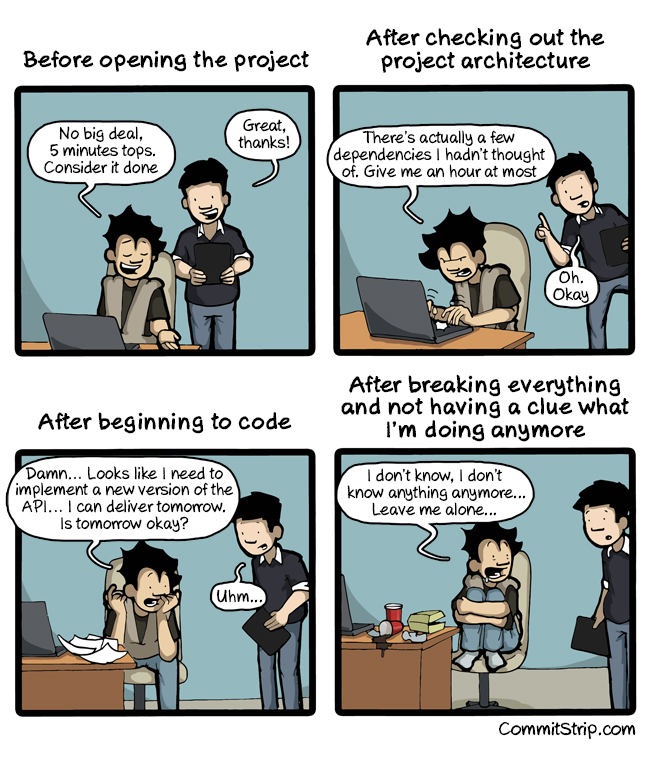
Looks can be deceiving

by CommitStrip

31 Jan 09:06

S.F. Cops Arrest Public Defender for Publicly Defending

by Kevin

The officer's explanation to the lawyer at the time was that if she didn't stop objecting to what he wanted to do, "I will arrest you for resisting arrest." That either made sense to him or he just didn't care. That's bad either way.

Jami Tillotson is a public defender in San Francisco, and was with a client who was appearing at the courthouse for a misdemeanor theft charge. After the appearance, her client and another man were apparently stopped in the hallway by five police officers, led by Sgt. Brian Stansbury (he's the one in the suit). Tillotson noticed this and, not surprisingly, came over to find out what was going on.

'Cause that's what we do, you know. If we represent someone and notice something that might affect their legal rights—like, let's say, if they have been stopped by police officers and we happen to be in the area—we like to find out what is going on. It's actually kind of our job. We might even object, if something's objectionable. Just FYI.

Anyway, this is what happened next: 


The facts aren't 100% clear, but here's a summary based on the reports and video. Police claim these two guys are "persons of interest" in another crime. The sergeant says he just wants to take their pictures and then they'll be "free to go." Tillotson says no thanks, and that's when he states that "if you continue to do this [object], I will arrest you for resisting arrest." She says, "please do," and he does. He then takes pictures of the men as Tillotson is led away in handcuffs, and she spent the next hour cuffed to a wall in a holding cell.

Now, police are entitled to take pictures of someone in public if they want to—you know, just like citizens are entitled to take pictures of police in public, whether police honor that or not. Here the pictures were apparently intended for use in a lineup, which would explain why he doesn't just take the pictures. He wants them to pose.

That I don't think he's entitled to any more than an officer is entitled to require you to answer questions as you walk by him on the street. Police need at least "reasonable articulable suspicion" to stop you even briefly, and I think that has to be based on the immediate circumstances, or else once you are a "person of interest" they could stop you at will. If I'm right about that, then these guys had no obligation to cooperate in any way.

Which in turn would mean Tillotson was right to object. Her client may have been standing still, but it wasn't voluntary. That's why the sergeant says that once he gets his pictures, they'll be "free to go." So they were obviously being detained and interrogated in some sense (I'd have at least assumed the officers were asking questions as well as taking photos.) I'm not a criminal-defense attorney, but if I were I'd sure as hell try to put a stop to that. And if I were a client I'd probably fire my attorney if she didn't.

Even if Tillotson had been wrong, arresting her for this is ridiculous. She's not actually obstructing anything, let alone "resisting arrest." And holding her for an hour after the pictures were taken is nothing but punishment for objecting. But I don't think she was wrong. The cops could get their pictures if they want to, or require a lineup, I assume. They just have to get a warrant. Remember those?

According to this report, SFPD is claiming that "lawyers are only allowed to counsel a suspect when they are being formally interrogated for a crime," and I hope that's not an accurate summary of the claim because wow, it's complete bullshit.


Speaking of criminal-defense attorneys, here are better analyses from people who actually are that:

31 Jan 09:04

Photo


31 Jan 09:03

Reading David Foster Wallace for the Colors

by Sarah Rose Sharp
Phase one of the 'Infinite Jest Project' by Corrie Baldauf (all images courtesy the artist)

Phase one of the ‘Infinite Jest Project’ by Corrie Baldauf (all photos by PD Rearick)

DETROIT — When a tweet from @CorrieBaldauf breaks into your Twitterstream, it is captivating and disorienting for a number of reasons. More often than not, she is live-tweeting her progress through her latest iteration of the Infinite Jest Project, an exercise in literature, obsession, and social media that Baldauf has been working on since 2013.

Baldauf initially began the process of flagging all the references to color in the text — more than 2,600 of them — as a sort of mechanism to help her concentrate on reading David Foster Wallace’s infamous masterwork, a notoriously difficult literary achievement that has divided readers on one side or the other, or in many cases, lost somewhere in the middle. Stymied by her early attempts to tackle the book, Baldauf “realized that the part I cared the most about was the color references, and that was going to be my impetus — it was going to be the familiar, intriguing thing that was going to help me focus, to commit,” she told Hyperallergic. Color figures strongly in much of Baldauf’s work, including her Optimism Filters — plexiglass filters that she uses to literally tint the perspective of Detroit, captured through a camera — and exquisitely meticulous visualized recordings of overheard conversations.

Page 800: David Foster Wallace averages four color references per page of 'Infinite Jest,' bringing life to a text that might otherwise be too dark (or heavy) to hold up.

Page 800: David Foster Wallace averages four color references per page of ‘Infinite Jest,’ bringing life to a text that might otherwise be too dark (or heavy) to hold up.

Over the course of the next three or four months, Baldauf was able to make her way through Infinite Jest, the color-flagging helping her to stay committed even as it slowed her down, requiring an average of four breaks a page. But the next dynamic of the project emerged around page 200, when, though fully committed to the reading at this point, Baldauf continued to flag colors. “It started as a tool, which is how someone would start drinking coffee or doing cocaine,” Baldauf says. “But once the tool resolved the problem of not reading it, that was when it became an obsession.”

Ironic, or maybe exactly fitting, that a novel whose major theme is obsession in all its forms, and which features an “entertainment” so powerful in its ability to take viewers out of themselves that it turns them basically into vegetables, has brought an obsessive quality to Baldauf’s project. So, after completing her first edition of Infinite Jest, she moved on to a second copy.

The color tabs that began as the mechanism to draw Baldauf away from herself (in her desire not to read the book) and into the world of Infinite Jest have now produced a unique art object that has its own aura of appeal. In the months since Baldauf has gone public with her project, it’s generated conversations with hundreds of people. “It’s the first project I’ve done where the conversation is as creational as the making,” she says.

In her second iteration, Baldauf has also added the dimension of what she calls “digital intimacy.” This is the live-tweeting of her reading of Infinite Jest, using a medium — social media — that has an addictive quality all its own. “Seeing a book in your Twitter feed is nostalgic. It’s a surrogate from a literary time,” she says. This quixotic collision marries Twitter, one of the shortest of short literary forms, with a titan of the long-form.

Baldauf refers to her habit of duplication as “Only Only,” which is drawn from a typo found in Zorn’s translation of “Art in the Age of Mechanical Reproduction,” by Walter Benjamin, an occurrence that Baldauf feels adequately sums up the entire essay.

Baldauf refers to her habit of duplication as “Only Only,” which is drawn from a typo found in Harry Zorn’s translation of “Art in the Age of Mechanical Reproduction” by Walter Benjamin, an occurrence that Baldauf feels adequately sums up the entire essay.

Now, as she has begun her third edition of Infinite Jest, with ever-increasing specifications to her process that require greater cost and care — like buying a new firsthand copy of the book and exercising greater stringency of color flags — Baldauf is forced to consider some tough questions about the ongoing nature of her project (much like other addictions).

“I’ve pictured in my mind a really tall stack,” she says, “but it’s up in the air. Usually I don’t think there needs to be more than two. Two is already many; why would you ever need more than two of something? It’s redundant.”

“I’m pretty sure I’m going to stop after this one,” Baldauf says. She pauses to reflect, then bursts into laughter. “But that’s just what an addict would say, isn’t it?”

31 Jan 09:01

Photo


31 Jan 09:00

rebecca-dearest:iwatchforsasha:(x)It’s amazing how many times...


rebecca-dearest:

iwatchforsasha:

(x)

It’s amazing how many times girls get told this. 

31 Jan 01:05

Reagan was wearing the Flag, Falwell was carrying the Bible

by Provider_UNE_AndPlayersToBeHatedLater™

Anyway this shit went down.

So yet another example of what some might call the creep of Fascism or fascistic tendencies has slithered over the transom, but before we move along let us take a gander of some of what might constitute a fascist situation .

Dr. Lawrence Britt has examined the fascist regimes of Hitler (Germany), Mussolini (Italy), Franco (Spain), Suharto (Indonesia) and several Latin American regimes. Britt found 14 defining characteristics common to each:

1. Powerful and Continuing Nationalism – Fascist regimes tend to make constant use of patriotic mottos, slogans, symbols, songs, and other paraphernalia. Flags are seen everywhere, as are flag symbols on clothing and in public displays.

Check

2. Disdain for the Recognition of Human Rights – Because of fear of enemies and the need for security, the people in fascist regimes are persuaded that human rights can be ignored in certain cases because of “need.” The people tend to look the other way or even approve of torture, summary executions, assassinations, long incarcerations of prisoners, etc.

Check

3. Identification of Enemies/Scapegoats as a Unifying Cause – The people are rallied into a unifying patriotic frenzy over the need to eliminate a perceived common threat or foe: racial , ethnic or religious minorities; liberals; communists; socialists, terrorists, etc.

Check

4. Supremacy of the Military – Even when there are widespread
domestic problems, the military is given a disproportionate amount of government funding, and the domestic agenda is neglected. Soldiers and military service are glamorized.

Triple Check.

5. Rampant Sexism – The governments of fascist nations tend to be almost exclusively male-dominated. Under fascist regimes, traditional gender roles are made more rigid. Divorce, abortion and homosexuality are suppressed and the state is represented as the ultimate guardian of the family institution.

Push

6. Controlled Mass Media – Sometimes to media is directly controlled by the government, but in other cases, the media is indirectly controlled by government regulation, or sympathetic media spokespeople and executives. Censorship, especially in war time, is very common.

Check

7. Obsession with National Security – Fear is used as a motivational tool by the government over the masses.

Klaxon’s yelling Check

8. Religion and Government are Intertwined – Governments in fascist nations tend to use the most common religion in the nation as a tool to manipulate public opinion. Religious rhetoric and terminology is common from government leaders, even when the major tenets of the religion are diametrically opposed to the government’s policies or actions.

Push

9. Corporate Power is Protected – The industrial and business aristocracy of a fascist nation often are the ones who put the government leaders into power, creating a mutually beneficial business/government relationship and power elite.

Check. And check for the ones that follow as well.

10. Labor Power is Suppressed – Because the organizing power of labor is the only real threat to a fascist government, labor unions are either eliminated entirely, or are severely suppressed.

11. Disdain for Intellectuals and the Arts – Fascist nations tend to promote and tolerate open hostility to higher education, and academia. It is not uncommon for professors and other academics to be censored or even arrested. Free expression in the arts and letters is openly attacked.

12. Obsession with Crime and Punishment – Under fascist regimes, the police are given almost limitless power to enforce laws. The people are often willing to overlook police abuses and even forego civil liberties in the name of patriotism. There is often a national police force with virtually unlimited power in fascist nations.

13. Rampant Cronyism and Corruption – Fascist regimes almost always are governed by groups of friends and associates who appoint each other to government positions and use governmental power and authority to protect their friends from accountability. It is not uncommon in fascist regimes for national resources and even treasures to be appropriated or even outright stolen by government leaders.

14. Fraudulent Elections – Sometimes elections in fascist nations are a complete sham. Other times elections are manipulated by smear campaigns against or even assassination of opposition candidates, use of legislation to control voting numbers or political district boundaries, and manipulation of the media. Fascist nations also typically use their judiciaries to manipulate or control elections.

From Liberty Forum

http://www.libertyforum.org/showflat.php?Cat=&Board=news_constitution&Number=642

109&page=&view=&sb=&o=&vc=1&t=-1

So we got at the very fucking least 12 of the criteria checked off. Nice. So back to the current example of the creeping menace…

San Francisco’s public defender has released a video showing police arresting a deputy public defender outside a courtroom for intervening in an interaction between police and her client.

The video shows Deputy Public Defender Jami Tillotson refusing to step aside as a man identified as San Francisco Police Inspector Brian Stansbury tries to take a cellphone picture of Tillotson’s client in a hallway at the Hall of Justice on Tuesday.

White defense attorney (not sure why I used the qualifier) arrested in the hall of a courthouse for defending her African American client (oh wait, maybe that’s it)for defending her client. All of it caught on tape. Is it possible that the decision in the Garner case might have given somebody some ideas?

The video shows Deputy Public Defender Jami Tillotson refusing to step aside as a man identified as San Francisco Police Inspector Brian Stansbury tries to take a cellphone picture of Tillotson’s client in a hallway at the Hall of Justice on Tuesday.

“I just want to take some pictures, ok? Then he will be free to go,” says Stansbury on the video. Tillotson refuses and Stansbury then tells her she can either step aside or be arrested for resisting arrest, according to the subtitles on the YouTube video.

Tillotson, an 18-year veteran of the public defender’s office, is calm throughout the video and does not resist officers. She continues to assert she is representing her client as she is led away.

“I just want to take some pictures”?!?!? What the fuck? Why? Presuming the client of the public defender has been arrested and awaits or is already involved in the Judicial process there should already be at the very least a “picture”.

It would seem that “resisting arrest” has a heretofore unknown scope which seems to include “breathing while not being an authoritarian”.

Unless of course you are an African American Police Officer.

A San Francisco police officer has filed a federal civil rights lawsuit against the city, saying he was racially profiled, choked and wrongfully arrested during a traffic stop by several colleagues who ignored him when he said he was an officer.

Lorenzo Adamson, 43, said he was stopped in his Honda Accord by a field training officer on Lane Street in the Bayview neighborhood about 8:15 p.m. May 30 for not having a license plate.

Officer Brian Stansbury immediately asked Adamson if he was on probation or parole, a question that made Adamson believe he was being racially profiled, according to the suit filed Tuesday in U.S. District Court in Oakland. Adamson is African American and Stansbury is white.

Adamson, a 15-year veteran who is on disability leave for a back injury he suffered while on the job, objected to Stansbury’s question and told the officer, “What does not having a plate on my car have to do with being on parole or probation? Shouldn’t you be asking for my license, registration and insurance?” the suit said. Stansbury replied, “That’s what we do out here,” according to the suit, filed by civil rights attorney John Burris.

One thing I noticed is that between these two events Stansbury, who in the former case was an officer only a little over a year ago is in the current case referred to as a Police Inspector, which I presume, indicates that he has had been promoted in the interim. He must be doing something right, or more importantly, satisfying an agenda.

{Update}

Could this possibly be related to my point?

h/t Adam_Hominem

30 Jan 12:08

Dan Weiss’s Morning Coffee

by Dan Weiss

It’s a Friday so I get to lead with a story about a blind baby seal.

The important take-away here is that the Eiffel Tower once had a penthouse apartment in it.

I guess chickens are smarter than we thought too (everything is smarter than we thought).

Let’s all take a walk through a secret soviet nuke stashing bunker.

Reconsidering the rat.

Related Posts:

  • No related posts…
30 Jan 12:08

Chait Criticizes Exactly The Kind Of Speech We Should Want More Of

by Ampersand

pc-pota

Jonathan Chait’s attack against “Political Correctness” is the talk of the interwebs.

He mixes a few examples of genuinely bad, but also rare and unrepresentative, anti-speech efforts (MacKinnon in 1992 (!), a student whose anti-feminist article led to his apartment getting egged, a professor who stole a pro-life display) with a laundry list of people – well, progressives – using their free speech to protest or criticize:

You may remember when 6,000 people at the University of California–Berkeley signed a petition last year to stop a commencement address by Bill Maher, who has criticized Islam (along with nearly all the other major world religions). Or when protesters at Smith College demanded the cancellation of a commencement address by Christine Lagarde, managing director of the International Monetary Fund, blaming the organization for “imperialist and patriarchal systems that oppress and abuse women worldwide.” Also last year, Rutgers protesters scared away Condoleezza Rice; others at Brandeis blocked Ayaan Hirsi Ali, a women’s-rights champion who is also a staunch critic of Islam; and those at Haverford successfully protested ­former Berkeley chancellor Robert Birgeneau, who was disqualified by an episode in which the school’s police used force against Occupy protesters.[…]

Stanford recently canceled a performance of Bloody Bloody Andrew Jackson after protests by Native American students. UCLA students staged a sit-in to protest microaggressions such as when a professor corrected a student’s decision to spell the word indigenous with an uppercase I — one example of many “perceived grammatical choices that in actuality reflect ideologies.” A theater group at Mount Holyoke College recently announced it would no longer put on The Vagina Monologues in part because the material excludes women without vaginas. These sorts of episodes now hardly even qualify as exceptional.

Ken White once called this argument “The doctrine of the Preferred First Speaker“:

The doctrine of the Preferred First Speaker holds that when Person A speaks, listeners B, C, and D should refrain from their full range of constitutionally protected expression to preserve the ability of Person A to speak without fear of non-governmental consequences that Person A doesn’t like. The doctrine of the Preferred First Speaker applies different levels of scrutiny and judgment to the first person who speaks and the second person who reacts to them; it asks “why was it necessary for you to say that” or “what was your motive in saying that” or “did you consider how that would impact someone” to the second person and not the first. It’s ultimately incoherent as a theory of freedom of expression.

There are responses to speech that I think are genuinely anti-speech – harassment (Anita Sarkeesian recently posted the harassing comments she gets on Twitter in a single week – extreme trigger warning on that link), threats, attempts to get people fired.1 But Chait’s examples of unreasonable speech are… well, just unreasonable. More often than not, Chait objects to people using their free speech to criticize what others have said. It’s hard to make what he’s saying into anything principled or even coherent.

Chait sometimes attacks the kinds of political arguments we should value the most. For instance, Chait puts on his laundry list “Stanford recently canceled a performance of Bloody Bloody Andrew Jackson after protests by Native American students.”

The real event was much more complex. For one thing, no protests took place; for another, it was voluntarily cancelled by the student thespians themselves, not cancelled by Stanford.2 Instead, Native American students met with the theater students and had a series of long discussions in which the groups tried to resolve their differences.

“[‘Bloody Bloody Andrew Jackson’] more or less uses Native Americans as a prop to tell the story of Andrew Jackson and his controversial presidency,” Brown said. “It uses Native people as a foil, or a backdrop to tell his story, which we felt took away from the legitimacy and historical narrative that is very real and exists for a lot of Native students on this campus.”

Stern and her team proposed a variety of potential solutions to ensure that a positive dialogue came out of the show, including cutting certain songs and making small script changes, or finding a show written by a Native American author to be funded by ATF and put on in conjunction with “Bloody Bloody Andrew Jackson.”

After a month of meetings, which included Stern, the co-producers, SAIO, ATF and various faculty moderators, it became clear that the problems of representation in “Bloody Bloody Andrew Jackson” could not be fixed.

This process – in which two groups that disagreed sat down for in-depth discussions – is exactly the kind of free speech that we should admire. When they walked away from the table, the two groups still didn’t fully agree with each other – but they both praised the other sides’ good intentions and willingness to talk.

When a local newspaper, The Fountain Hopper, published an article making a Jonathan-Chait-like article about freedom of speech under threat, one of the theater students objected:

Knarr expressed equal frustration with the article.

“No one from the Fountain Hopper contacted anyone from our team,” she said. “I think the whole process does bring up questions about, ‘When is it okay to say that something artistic should not be put up?’ but I did not come away from this process feeling like my freedom of speech had been restricted.”

I’m not saying what went on at Stanford was perfect in every way. But it was good enough so we should consider it an example of conflict and speech to strive for – and Chait should explain why this is the sort of speech he wants less of.

Angus Johnson makes a similar point:

When someone protests a campus speaker, they’re engaging in an act of speech. When they complain about microagressions, they’re engaging in an act of speech. When they challenge their professors, or trend a hashtag on Twitter, or write trigger warnings into their syllabi, or accuse each other of racism, or criticize our country’s conception of free speech, they’re engaging in acts of speech.

Isn’t that what they’re supposed to do? Isn’t that what [Chait’s] looking for?


A quote from Chait:

Under p.c. culture, the same idea can be expressed identically by two people but received differently depending on the race and sex of the individuals doing the expressing.

What I find interesting about this quote is that it remains perfectly true even if the first three words are deleted.


Some good blog responses to Chait I’ve read, in arbitrary order:

  1. Chait Speech I’d call this a “steelmanning” of Chait’s position; that is, it restates Chait’s argument in a way that is stronger. (And much shorter.)
  2. What exactly do you want, Jonathan Chait?
  3. Jonathan Chait and the New PC | The Nation
  4. All politics is identity politics – Vox
  5. ECHIDNE OF THE SNAKES: The Language Police Is Coming To Get You
  6. The truth about “political correctness” is that it doesn’t actually exist – Vox
  7. Some Thoughts on White Anti-Racists and Angry Black People |
  8. Amanda Marcotte: P.C. Policeman Jonathan Chait Can Dish It Out, But He Can’t Take It
  9. But Wait…There’s More! — Crooked Timber
  1. Scott Alexander discusses this in more detail.
  2. To be fair, if the production had gone ahead, there would probably have been protests.
30 Jan 01:14

It’s Not Erik Loomis’ Birthday Until bspencer Wishes Him a Happy Birthday

by bspencer

So…a toast to Erik, everybody!!!


30 Jan 01:13

fluffmugger: sapphysapph: For the uninitiated, this is what...


fluffmugger:

sapphysapph:

For the uninitiated, this is what Magpies are like during “swooping season” here in Australia.

  • Fun fact: people have been known to walk around with empty ice cream containers on their heads to protect themselves in lieu of helmets.

Things to remember:

1) This is an Australian magpie. it is not like European magpies.It’s not a flappy bappy chirpy little shitbag you can bat away with your palm. This is a fucking crow in cow makeup

2) Cats and dogs will not try and take them on because cats and dogs know they will lose

3) They live for 25 years and yes, they will remember your face.  Although I will confess that my 36 years of life I have never seen a dead one. Under tumblr logic this means they are immortal

4) They are insane. Cold stone bug-fuck insane.  And they give zero fucks.I’ve seen them attack cyclists, moving cars, trucks, even a goddamn train.

So imagine, if you will, you are walking merrily down a street one spring and suddenly this train-assaulting, cow-cosplaying ball of immortal feathers and batshit insanity comes screaming out of nowhere and tries to embed itself in the back of your skull, beak clacking like the pump of a shotgun as it tears out chunks of your hair.

This is Australia.

30 Jan 01:12

rstevens: Tonight’s comic ain’t afraid of 51% of ghosts.

30 Jan 00:03

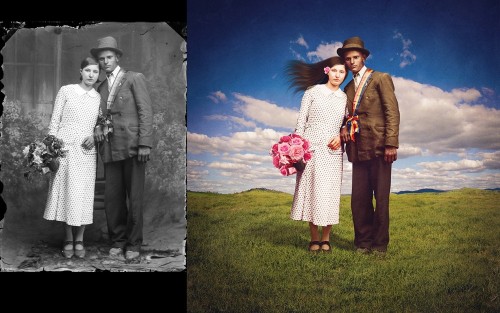
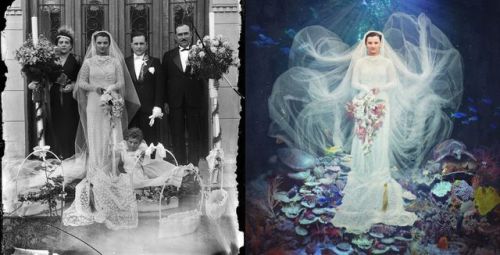
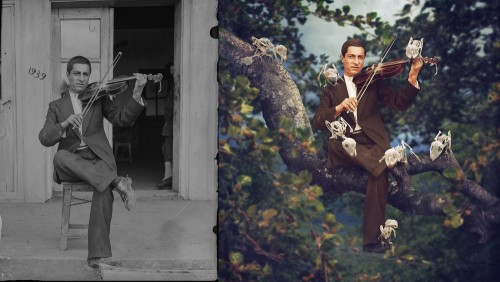
asylum-art: Historic Glass-Plate Photos From Romania Restored...


asylum-art:

Historic Glass-Plate Photos From Romania Restored And Turned Into Colorful Art

 PhotoMerchant | Jane Long | Facebook

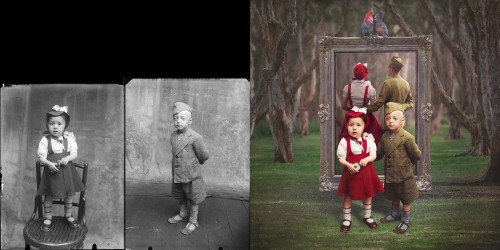
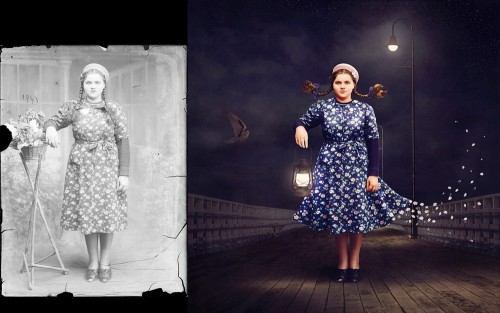
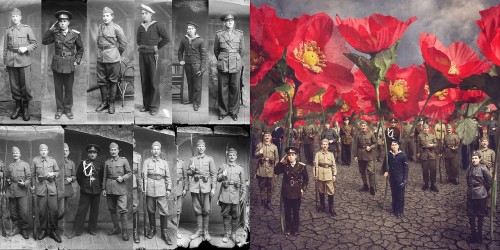
The recoloring of old black-and-white photos is an excellent way for modern audiences to re-visit, understand and associate with history. Jane Long, a photographer based in Australia, has taken a collection of old glass-plate images by Romanian photographer Costica Acsinte (or Axinte, depending on who you ask) and updating them by adding color and a bit of Photoshop magic.

Acsinte, who died in 1984, was a Romanian war photographer during WWI who also took photos professionally and personally after the war. In 2013, what was left of his damaged vintage glass-plate photos was digitized by the Costica Acsinte Archive to preserve it, and it is this collection that Long drew on to create her wonderful photo series.

Via boredpanda

30 Jan 00:02

Photo


30 Jan 00:01

felineofavenueb: My dash wanted to finish the poem.


felineofavenueb:

My dash wanted to finish the poem.

30 Jan 00:01

helloyoucreatives: Some amazing GIFs explaining 9 Principles of...


helloyoucreatives:

Some amazing GIFs explaining 9 Principles of Responsive Design 

30 Jan 00:00

nevver: Edible light, Radu Zaciu


nevver:

Edible light, Radu Zaciu

29 Jan 23:59

The Party of Death

by Scott Lemieux

At The Week, I have some reflections on Michael Strain’s “sure, if we destroy the ACA plenty of people will die, your point being?” op-ed:

But the fact that the costs of the ACA might theoretically exceed the benefits doesn’t get us very far. What benefits, exactly, would accrue if millions of people were denied medical coverage because the ACA is seriously damaged or destroyed? It’s here that Strain’s argument falls apart.

One potential line against the ACA is the radical libertarian one, holding that any effort by the government to provide health care to the non-affluent represents an unacceptable level of state coercion. The problem here is that the “freedom” to die of preventable illnesses and injuries is not one the vast majority of people value very highly. A Republican Party committed to these principles would be transformed into an electoral coalition that would make Barry Goldwater’s 52 electoral votes in 1964 look robust.

Since the people responsible for the anti-ACA effort know this perfectly well, the constitutional arguments against the ACA have the advantage of not logically requiring the Supreme Court to rule the entire modern regulatory state unconstitutional. The disadvantage is that they ask the court to deny many millions of people health coverage based on liberty interests that are ludicrously trivial.

The litigants challenging the constitutionality of the ACA do not contend that the federal government cannot regulate national health care markets. Rather, their constitutional argument boils down to an assertion that the government has the authority to assess a tax to compel people to purchase health insurance, but not a penalty. It’s pretty hard to argue that the fate of liberty in America hinges on this formal limitation on federal power.

The more successful federalist argument launched against the Affordable Care Act is similarly unattractive. Chief Justice John Roberts’ inept re-writing of the ACA’s Medicaid expansion allowed states to opt out. Republican-controlled states have eagerly rejected the large amounts of federal money on offer to insure more poor residents, something that is likely to result in the unnecessary deaths of more than 5,000 people a year.

I don’t think this particular protection of state autonomy is worth that many lives (or, indeed, a single life). But here’s the kicker: The Supreme Court’s decision does not even meaningfully protect state sovereignty. Under the court’s theory, Congress could have enacted the ACA’s Medicaid expansion by repealing the pre-existing Medicaid entirely. This, apparently, would be completely constitutional. There may be things worth 5,000 lives a year; an incoherent legal argument that doesn’t even really protect states’ rights isn’t one of them.

More at the link for those of you who are into that kind of thing. Read Beutler as well. Hiltzik is excellent too.


29 Jan 23:59

“Won’t Someone Please Think of the Children?” “No.”

by Scott Lemieux

We’ve already established that for today’s Republicans the minimization of deaths is not a virtue, at least where something as important as arbitrary formal limitations on federal power are at stake. It’s important, therefore, that children get to share in this sweet, sweet freedom from tax credits Congress granted them:

King v. Burwell, the latest Supreme Court case attacking the Affordable Care Act, is largely perceived as a threat to people who purchased insurance through the law’s health exchanges. Should the plaintiffs succeed, at least 8 million people with plans purchased through such an exchange are projected to become uninsured — many of whom have life-threatening conditions. In reality, however, King presents an even bigger threat to American lives. Should the Supreme Court embrace the plaintiffs’ theory in King, up to 5 million children who had insurance long before Obamacare became law would also lose their insurance.

That’s 13 million newly uninsured people, many of them children.

However, it must be noted that Jon Adler has a letter* in which 11 House Democrats are clear that they intended to keep the liberty-destroying boot of health insurance off as many children as possible. Surely the will of Congress must be honored.

*Note: characterization of letter’s contents may not be accurate.


29 Jan 23:58

On “Identity Politics”

by Scott Lemieux

What Yglesias says here, responding to Jon Chait’s definition of “identity politics” as “shorthand for articles principally about race or gender bias” is very true and very necessary:

This is, I think, the problem with idea of “identity politics” as a shorthand for talking about feminism or anti-racism. The world of navel-gazing journalism is currently enmeshed in a couple of partially overlapping conversations, about “PC culture,” diversity, social justice, technological change, and shifting business models. One thread of this is the (accurate) observation that social media distribution creates new incentives for publications to be attuned to feminist and minority rights perspectives in a way that was not necessarily the case in the past. But where some see a cynical play for readership, I see an extraordinarily useful shock to a media ecosystem that’s too long been myopic in its range of concerns.

The implication of this usage (which is widespread, and by no means limited to people who agree with Chait) is that somehow an identity is something only women or African-Americans or perhaps LGBT people have. White men just have ideas about politics that spring from a realm of pure reason, with concerns that are by definition universal.

You see something similar in Noam Scheiber’s argument that New York City Mayor Bill de Blasio went astray by emphasizing an “identity group agenda” of police reform at the expense of a (presumably identity-free) agenda of populist economics. For starters, it is actually inevitable that a New York City mayor would end up spending more time on his police department management agenda (something that is actually under the mayor’s control) than on tax policy, which is set by the State Legislature in Albany.

But beyond that, not addressing a racially discriminatory status quo in policing is itself a choice. Indeed, it’s a kind of identity group appeal — to white people, whose preferred means of striking the balance between liberty and security, in many contexts, is that security should be achieved by depriving other people of their civil liberties.

As I mentioned recently, Christopher Caldwell’s assertion that Obama only getting 40% of the white vote suggested that he was racially divisive (something he wouldn’t say about Romney getting less than 10% of the African-American vote or less than 30% of the Hispanic or Asian-American vote) is another classic example. Opposition to “identity politics” generally provides particularly strong illustrations of what it’s decrying.


29 Jan 23:57

Cops’ thuggery continues unabated; now they’ve moved on to arresting lawyers

by Gideon

This is the hubris that is leading to the downfall of America’s police forces and the public’s erosion of trust in them.

A plainclothes detective in San Francisco had the temerity to arrest a public defender who represented the individual he was seeking to question and photograph. When she fulfilled her Constitutional Duty to tell him to go fuck off (in entirely more polite terms than I would have; I’d have laughed in his face), he threatened her with arrest for, get this, resisting arrest.

After his cronies escorted her from the scene, he continued to question the represented individual about his criminal activity.

During the time Tillotson was not present, Stanbury photographed and questioned her client and another man who did not have an attorney present, acccording to Adachi.

Do you think you’d feel free to refuse the officer’s questions at that point? Go ahead, make his day.

It’s one things for officers to get their way by removing civilians from the scene who object to their searches and seizures, but it takes quite another level of totalitarianism and disregard for the law to arrest and make absent an officer of the court.

But police said the five officers, led by a plainclothes sergeant who was accused of racially profiling a fellow officer in a 2013 traffic stop, were merely investigating a burglary case in which her client and his co-defendant were persons of interest.

Tillotson was cited for misdemeanor resisting or delaying arrest because she obstructed a police investigation, police officials said.

As I wrote just yesterday, there seems to be a growing idea among police officers that people must comply with their orders, regardless of the legality of their actions and anyone who gets in the way, questions or refuses those orders is automatically guilty of resisting or hindering.

Now imagine what these cops would have done if they weren’t in a courthouse, on camera. How many convictions have been obtained on the basis of their representations of confessions by bullied and threatened citizens on the streets.

It might be time for some civil disobedience.

29 Jan 23:53

Lighting design theory for 3D games, part 1: light sources and fixtures

by Robert Yang
Contemporary Jewish Museum (San Francisco, California)
Here's how I generally, theoretically, approach lighting in my games and game worlds. Part 1 is about the general concept of lighting design.

Mood is the most important end result of your lighting. The "functional school" of game lighting, which maintains that lighting exists primarily to make a space readable so that the player can navigate it and shoot people -- can be useful in my eyes but only so far as that gameplay is tactical violence, and when that violence can support evoking a mood. The rest of the time, some designers often seem content to light their spaces like a furniture catalog, or even leave it as a total after-thought. Lights can do more than show-off your normal maps and show where to walk to trigger the next cutscene, okay?

So let's begin: lighting design is a discipline that has existed since the beginning of sunlight.

"Urban Lantern" (Fort Worth, Texas), photo by Jeff Stvan
... A window is a light fixture.

So are candles, torches, braziers, lanterns, stained glass windows, tree-shaded gardens, the first electric light, gas lights, welding torches, car headlights, televisions, LEDs... not only is this an old discipline, it is also a robust discipline. Technology cannot render any of these lighting tools completely obsolete the way tech has, for example, more or less erased the payphone or fax machine or beeper from society.

Instead, the light bulb just changed what we use candles for: instead of being your primary work light source as in Shakespeare's days, the loyal candle is now a romantic fixture that is pleasantly dim and pleasantly flickers. Plenty of people still make and buy and use candles, and now candles are mostly a luxury you give as a gift to that one aunt you don't know very well. Candles have not disappeared from the world, they just now signify something different in a modern context.

Meanwhile, a ceiling-mounted flickering fluorescent light strip is not romantic at all, it's more appropriate for a desolate strip mall or a horror movie hospital. This smokeless efficient bright fixture did not replace the candle, it simply created new functions and contexts for other fixtures.

from "Architecture of Authority" by Richard Ross
So why is that hospital fluorescent flicker so different from the flicker of a candle?

It's in the light intensity, the light falloff, the color temperature, the sound it makes, the shape of the fixture, the cost, the cultural connotations, the implied maintenance program. Much like anything else in art, lights are more than just their visual properties, they also express values and politics.

In New York City at least, one main difference between a high-end cocktail bar, a warehouse dance party rave, a million dollar condo, and a dilapidated squat, is the lighting. A lot of torches would evoke... I don't know, an angry mob? A lot of bright electrical light will evoke a large institution. And these days, a lot of dim light sources with old Edison bulbs would imply expense from acquiring and maintaining all these antique fixtures.


My lighting design teacher told us about the early history of electric light: the first domestic fixtures placed the light source on a table at the center of the room, because there was something so beautiful about this new type of glowing filament. (It was barely as bright as a few candles, by our standards, but by their standards it was absolutely fantastic.) Why would you want to hide this beautiful glowing orb with a lampshade, or why would you mount it out of sight on the wall or ceiling?

I often feel a similar way when learning a particular 3D framework or toolset for the first time: I place lights in all these positions and arrangements, flashing neon purple, because I'm just enjoying this sensation of looking at a light and getting a sense of how this engine simulates light. Some lighting designers might call this "glitter" -- glare is usually an unpleasant thing, but in this case, tea candles, holiday lights, and fireworks are forms of glare that are pleasing to look at.

These days, it's very fashionable to mask the light source. Even though I think he's super overrated, part of the basic wonder of James Turrell's light installations is that you're not really sure where the light sources are, which totally distorts your perception of the space. This type of subtle design reads as futuristic, bold, sophisticated. Too much light, or too obvious of a light source, now feels cheap or industrial in a way that early viewers of artificial lighting could hardly imagine. ("What's the point if you can't see the bulb?")


My teacher's point was that, as designers, you have to think beyond the science of light. All those sensory phenomena ultimately get framed by our cultural ideas about light and what light means, and these ideas have changed over time.

Part of unpacking all this meaning in lighting involves expanding your definition of a "lighting fixture" -- a streetlamp outside your window, a mirror reflecting it onto the ceiling, where it splashes onto a spinning disco ball -- and the illuminated red exit sign, reflected by a puddle, by the glow of cigarettes in an alley -- these all belong to one unified system called light, and these all become light fixtures given the right circumstances.

And there's just something about sunlight or moonlight, you know?

NEXT TIME: part 2, a formal approach to lighting, and light as depth.
29 Jan 23:50

America and scientists: we're proud of them, but we don't believe them

by Jason Weisberger
The Pew Research Center tells us Americans like science and think our scientists are great, but we disagree with them on things like science.

PI_2015-01-29_science-and-society-00-01

29 Jan 23:48

TSA Saves Public From Air Pirates!

by Kevin

Hey you guys, the TSA has released its annual Look What We Found summary, and it turns out they found a lot of things!

Like this cannon!

Yarrrr!

Cannons are prohibited, of course, because of the obvious risk that the enemy would use them to lay siege to the cockpit.  Or, a group of air pirates might stick them out the windows and start firing broadsides at other planes!

Yarrrrrr!

Our heroes say they found this last October in the luggage of a passenger planning to fly from Hawaii to San Francisco. It was in a checked bag, not a carry-on, so in fact there was no risk of air piracy in this case. But the TSA noted it both in its week-in-review blog post at the time and again in the recent year-end summary, apparently including it in its list of "firearms" or replica firearms that agents had discovered. The TSA's blogger(s) have never responded to at least a dozen questions from commenters as to whether the cannoneer was allowed to fly or not. (They also wanted to know whether he brought gunpowder, cannonballs, and fuses, but I suspect those questions were tongue-in-cheek.)

Turns out that he was allowed to fly, "but had to make special arrangements to transport the cannon barrel." That report, in the L.A. Times, doesn't say why that was necessary. According to the TSA, size and weight limitations are up to the airlines. So if the airline weighed this bag and was okay with it, it's not clear to me why the TSA had any business telling the guy how to transport his cannon. And why would he have thought there'd be a problem? Their can-I-bring-it search box doesn't say you can't:

Cannon

Firearms are allowed as long as they are unloaded and carried in checked bags, and this is (or was once) a firearm. So what the hell?

There are more important points to be made about the recent report, of course. For example, the TSA says that on average, it finds six firearms every day in carry-on bags. There are about 30,000 flights per day in the U.S., so the chances someone will try to smuggle a gun on a particular flight are maybe 1 in 5000. But those are the ones they find. If you think the TSA finds any significant percentage of the weapons people try to bring on board, you have not been paying any attention at all. So, let us assume that there is in fact at least one flight every single day on which at least one passenger is armed. Seems like a fair assumption because of the hundreds of attempted hijackings every year that involve handguns.

Wait.

Not only does that happen approximately never, the TSA does not say whether it (or law enforcement, rather) found the gun owner to be an actual security risk, let alone a terrorist, in any of the 2,212 incidents it's reporting from last year. I bet if it had, it'd say so, don't you think? In other words, I don't know why people are trying to bring guns or knives or whatever on board (and I don't think they should be allowed to). But I do know that the implication that the TSA is important and necessary because they find this stuff should not be taken seriously.

Also, of course, so far as I can tell all of this would have been found by a simple metal detector or by x-raying carry-on bags, again showing that spending many millions on fancy scanners is not necessary.

I will eat these words if I end up being forced to walk the plank by an air pirate, but that doesn't seem very likely.

29 Jan 23:46

‘The Babadook’ Is No By-the-Book Horror Movie

by Becca Rothfeld
(all photos by Matt Nettheim, courtesy  Causeway Films, via thebabadook.com)

Still from ‘The Badabook’ with Essie Davis and Noah Wiseman (all photos by Matt Nettheim, courtesy Causeway Films, via thebabadook.com)

“Present fears are less than horrible imaginings,” Macbeth famously mused. Centuries later, this tenet is borne out in countless horror movies, where campy monsters emerge from the veil of mystery to anticlimactic effect. Rarely does our fear — and our exhilaration — survive the grand revelation and the strained explanation that immediately follows it.

But the eponymous monster in The Babadook, a stunningly adept debut film from Australian director Jennifer Kent, is both a present fear and a horrible imagining. Clad in an ominous black cloak and outfitted with long, claw-like fingers, the Babadook poses an immediate threat to widowed Amelia (Essie Davis) and her six-year-old son Sam (Noah Wiseman) — but it also presents us with a possibility far more terrifying than any of the usual monsters. A creature straight out of a disturbed child’s imagination, the Babadook is as absurd as it is dangerous, suggesting that the fears we dismiss as outlandish or irrational may not be so silly after all.

Set in Australia, The Babadook follows Amelia and Sam’s efforts to cope with the death of Sam’s father, who was killed in a car crash while driving Amelia to the hospital to give birth. Six years later, Amelia is still grieving — and Sam is troubled, obsessed with a seemingly fictive monster he calls “the Babadook.” Amelia and Sam’s relationship becomes increasingly strained as Sam’s fixation escalates into full-on misbehavior: the child sneaks homemade weapons into class, pushes his cousin out of a tree house, and refuses to sleep, keeping his mother awake for days. At first, the situation seems unambiguous: Sam is disturbed, and the Babadook is the stuff of his overactive imagination — even the word “Babadook” sounds like childish murmuring.

Still from 'The Badabook' with Noah Wiseman

Still from ‘The Badabook’ with Noah Wiseman

But when a morbid pop-up book titled “The Babadook” mysteriously appears on Amelia’s shelf, we begin to question our original take. “If it’s in a word, or it’s in a look, you can’t get rid of the Babadook,” the book begins. It goes on to narrate the macabre tale of a monster who dogs unhappy houses with relentless fervor. Indeed, the Babadook’s defining feature is his persistence in the face of disbelief: “the more you deny, the stronger I get,” the book warns. And as Amelia’s denials grow increasingly adamant, the Babadook’s displays of defiance grow increasingly dramatic: it calls and breaths ominously into the phone, slams doors, turns lights on without touching them, and slithers across the ceiling over Amelia’s bed. Unsurprisingly, Amelia’s attempts to burn the malevolent book are unsuccessful. It reappears on her doorstop, this time with more sinister content still.

Unlike so many horror movies, The Babadook eschews easy and reductive resolutions: we can’t dismiss the Babadook as a figment of Amelia and Sam’s vivid imaginations and waking dreams, nor does the matter resolve itself via exorcism — one presided over by a kindly, moralizing priest. (Spoiler alert.) Only when Amelia confronts the monster head-on, affirming its existence and its power, can she overcome it. In the end, she doesn’t expel it, but instead relegates it to the basement, where she visits it each day to bring it some snacks. Better to get comfortable with one’s emotional demons, it seems, than try to will them away.

Still from 'The Badabook' with Essie Davis and Noah Wiseman

Still from ‘The Badabook’ with Essie Davis and Noah Wiseman

The Badabook is playing in New York at the IFC Center (323 Sixth Avenue, Greenwich Village, Manhattan) through January 31.

29 Jan 23:38

Photo


29 Jan 23:38

Photo


29 Jan 23:37

mydrunkkitchen: tastefullyoffensive: A Short History of the...


mydrunkkitchen:

tastefullyoffensive:

A Short History of the Modern World by Robin Edds/Reddit

Previously: The Adventures of George Washington

History of Denmark