Another announced project from Google ATAP today on developing interactive method using small RADAR chips and finger gestures:
Project Soli is developing a new interaction sensor using radar
technology. The sensor can track sub-millimeter motions at high speed
and accuracy. It fits onto a chip, can be produced at scale and built
into small devices and everyday objects.
Specifically, why is a player’s 3000th hit such a big deal, and when did it become one?
Over the next couple of weeks, Alex Rodriguez will provide an excellent example of the arbitrariness of the career milestones that occasion different levels of media attention.
Rodriguez is about to drive in his 2000th run. He will be only the third player, after Aaron and Ruth, to do so (if you don’t count Cap Anson’s years in the National Association as major league stats, which I don’t because he was a bad guy).
Meanwhile, he’s also about to become the 29th player to get 3,000 hits. The latter achievement is going to get a lot more media attention, because somewhere in the distant past (apparently shortly after Sam Rice retired while 13 hits short) 3,000 hits became The Official Mark of Baseball Greatness. How and when did this happen?
A similar thing happened (quite a bit later I’m guessing, since only two three players had reached the mark prior to 1960) with 500 home runs. In the pre-internet days, when we had to walk five miles to school through six-foot snowdrifts, and baseball statistics were primitive and hard to come by, those were the two milestones that counted. (For pitchers it was and remains 300 wins, probably because 300 is 3000 divided by ten).
Relatedly, I was a fanatical baseball fan and something of a baseball stats geek as a teenager in the 1970s, and I literally don’t remember hearing anything about Aaron passing Ruth to become the all-time RBI leader, which according to the record books happened sometime early in the 1975 season (Of course Aaron’s 715th home run the year before was one of the biggest sports stories ever).
A side issue in all this is the extent to which the steriod era has or is going to destroy the magic of 3000/500 in the mind of the members of the BBWA, who control the politics of glory, in re the Hall of Fame.
. . . in comments, several people argue that RBI are context-dependent in a way that hits aren’t, and that therefore the career hits leaderboard is a better measure of greatness than the list of career RBI men. Except:
Top ten RBI leaders who aren’t in the 3000 hit club:
Ruth
Bonds
Gehrig
Foxx
Ott
Williams
Griffey
Ramirez
Al Simmons
Frank Robinson
Top ten hits leaders who aren’t in the top 29 in career RBI (equivalent to career 3000 hit list):
Rose
Speaker
Jeter
Molitor
Eddie Collins
Lajoie
Brett
Waner
Yount
Gwynn
Obviously the second group is made up of great players, but just as obviously career RBI is a better proxy for all-time greatness than career hits.
If you want to know what the big deal over regulating broadband internet access as a public utility is and what it actually means for Americans, well we can start with this.
The Federal Communications Commission is proposing to expand its Lifeline program to help subsidize Internet service for low-income Americans. The plan floated Thursday by FCC Chairman Tom Wheeler could face resistance from
“He’s from Alabama? No wonder he’s such an idiot. All those stupid inbred redneck hicks come from the South. Alabama, Georgia, Texas, whatever… his momma and his auntie are probably one and the same.”
“Man, I’d really love to have one of those Chinese girls for a wife… so sweet, and soft, and you know they never talk back to their husbands! I love that exotic air of mystery they have…”
“Wait, you said your teacher was condescending, impatient, and rude? Let me guess… totally a woman, right? Hate to say it, but that’s just how girls are!”
Totally offensive, right? Completely unacceptable things to say. I mean, they’re horrible things to believe, even if you keep your mouth shut about it, but I hope that most of you can recognize that these stereotypes are over-broad, that they deny the agency of any individual person who happens to fit into a category because of something to do with the circumstances of their birth.
There are millions of people born in the southeastern United States, hundreds of thousands (at least) in Alabama. To insist that you know anything about a person from that single fact is arrogant, ignorant, and completely narrow-minded. Sure, there are lots of people who make those assumptions anyway, but that doesn’t mean they’re right!
There are as many ways to be a woman as there are women — none of them more valid than any other. To insist that you know anything about someone based solely on their gender is arrogant, ignorant, and completely narrow-minded. Lots of folks still do, sadly.
And… ugh. Please, don’t get me started on the Colonialist, racist bullshit that sits behind the fetishization of East Asian women. Just… eww. And yes, sadly, there are plenty of folks who are into that. Shit, someone who’s a blood relation is off the deep end of that Orientalism cesspool, mail-order bride and everything. I’ve seen it up close, and it’s disgusting.
So what about this, then? “Oh, you just had your birthday? I bet you’re super sensitive to criticism, aren’t you? Always trying to help people out? You seriously need to get out and do something with your life, stop sitting around all the time!”
Especially if you just barely met someone, then I guarantee you that you don’t know enough about them to make those kinds of claims. But for some reason, it’s much more socially acceptable to deny individual agency and make arrogant assumptions about someone based on over-broad stereotypes… when you base it on one category about the circumstances of a person’s birth: that person is obviously a Pisces, and so you can generally get away with insisting that you know everything about them!
I call bullshit on that. I call bullshit just as much as on the rest of those sickening, harmful stereotypes, and I call bullshit on anyone who claims that they can take shortcuts instead of getting to know you. I call bullshit on projecting a stereotyped image that gets in the way of actually interacting with an individual.
I call bullshit on the laughable idea that the place and time of my birth have any bearing on my future. I call bullshit on the disempowerment of giving up control over what I do and how I do it, giving that up to some bullshit stereotype that some other humans decided to write up into tables and graphs and circles and charts and symbols. I call bullshit on anyone writing my future besides me.
And, no doubt, there will be folks who jump in to tell me that this is exactly what they’d expect from a [some guess at when I was born and what my “sign” is based on the aforementioned bullshit] — which of course leaves the wiggle-room of “oh, well, I guess I was wrong, but that one shares some traits with this other sign, so I was still right about the ignorant, arrogant, agency-denying assumptions I made! Ha!” And really? One thing I’ve found fairly consistently is that for folks who choose to give up their own agency to the star charts, it’s difficult for them to handle others who haven’t joined in with drinking the Kool-Aid.
Even worse is the folks who use their birth date as an excuse and a rationalization for their own failings — “Well, yeah, I should’ve admitted I was wrong about that, but you know how stubborn we Taurus folks are!” or “Yes, I know I was late… again… I just can’t seem to get things together, I’m definitely an airy, air-headed Gemini!” How about admitting personal fault instead of shrugging it off as inescapable? I suppose that would be too close to admitting that you’re responsible for yourself, instead of having the handy excuse of something “out there” having determined everything about you from the day you were born, wouldn’t it?
Installation view of Ramin Haerizadeh, Rokni Haerizadeh, Hesam Rahmanian’s “I won’t wait for grey hairs and worldly cares to soften my views” (2015) (all images courtesy Callicoon Fine Arts unless otherwise noted)
Stepping into the fantastical world of I won’t wait for grey hairs and worldly cares to soften my views is like going through a portal, entering a delirious space of a collective dream — a non-place where familiar objects, people, and world events take on new forms, meaning and function. A parallel universe where the assemblages, collages, figurative paintings, theatrical performance photos, videos, and sculptures charm the viewer into letting go of his banal, colorless perception of reality to contemplate an alternate playful world. This subverted, converted, and more often than not, diverted universe has been concocted by Dubai-based artists, brothers Ramin and Rokni Haerizadeh, and their childhood friend Hesam Rahmanian in their first US collaborative at Callicoon Fine Arts gallery in Manhattan’s Lower East Side.
The spectacle is a collaborative installation, interspersed by the trio’s individual pieces and works of other artists from their private collection.
View of “O, You People!” (2014) video installation by the gallery window on Delancey (courtesy of the artists and Callicoon Fine Arts, NY) (click to enlarge)
Upon entering the gallery, you are spellbound and immediately transported into the trio’s tricksterland. As if whipping a magical wand, they have transformed the gallery space inside out, floor to ceiling and all around — budding with giant long-stemmed amaryllises and splatters of yellow across — the viewer steps into a landscape unified by black and white triangular patterns snaking along the floor, around the walls and up the columns, setting a visual path drawing your gaze from one art piece to the next. The black and white triangular patterns, which started emerging more prominently in the artists’ collaborative works during their residency at the Rauschenberg Foundation on Captiva Island (January 2014), have become one of the recurring motifs in their individual and collective works. Also conceived during this residency is the video “O, You People!” which is playing on three screens at the gallery entrance. The piece, which was inspired by Nima Yushij’s poem of the same title, is an improvised performance piece in which the artists, wearing plastic animal masks, interact with Rauschenberg’s fish house at the end of a long pier, day in and day out for two weeks. While watching the masked trio engage in an intimate, excited exploration of their surrounding as they sniff, crawl, kiss, lick, touch, and caress the wooden panels around the fish house, you can’t help but wonder many things, including: What are they doing? Why are they doing what they are doing?
Installation of Rokni Haerizadeh’s “Letter” (2014), animation and paintings
There is no time to figure that out today in this visual cacophony as your gaze is drawn to a contraption stand with a huge plastic ear and chattering teeth roped to its sides. This hilarious assemblage is titled “Break Free” (2015). The assemblage of readymades is a tall cat scratcher that serves as a multipurpose, all-in-one entertainment pit stop for today’s contemporary man and woman. A place where you can fulfill your basic needs to recharge electronic devices, retouch make up, and re-accessorize, while catching up on the latest posted videos at the iPhone/iPad station section. The iPad is playing a performance by the trio, again wearing masks, engaged in some kind of ritual ceremony. Apparently this performance is in response to the musical message sent to them by their musician friend, Yasmine Hamdan. Her music video message is playing on an iPod Touch wedged in an empty toilet paper role with two paper cups attached to its sides emulating an iPhone speaker — the sculpture is also equipped with a vacuum cleaner.
Ramin Haerizadeh, “First Rain’s Always a Surprise” (2014), paper and found oil painting collage, acrylic, ink, color pencil and lipstick on paper 39.37 x 27.56 inches (click to enlarge)
The three artists grew up in Tehran and have been practicing art throughout their lives. Ramin and Rokni Haerizadeh moved to Dubai in 2009 to freely create, away from the limitations of a conservative Islamic regime back in Iran. Hesam Rahmanian moved to Dubai at the same time, shortly after finishing his studies in the United States. Their home in Dubai is a living, breathing, creative sanctuary — an environment indistinguishable from their collaborative exhibitions. A place where its inhabitants, visitors and all that surrounds them become both the creators and the creations, taking part in an ongoing ritual of existence.
Interspersed among the collaborative pieces are each artist’s individual works, which differ stylistically. A dark yet crisp mood runs through Hesam Rahmanian’s works of somber-colored, thickly painted images of scenes and figures. A windblown broken umbrella in “Defeat,” (2012) and the “Rearview Portrait” (2012) series displaying the back of politicians’ heads, convey the gloomy moments of when it feels like the world has turned its back on you.
Hesam Rahmanian, “Rearview Portrait” (2012), acrylic on canvas, 23 1/2 x 20 inches
Ramin Haerizadeh’s collages and assemblages are like some sort of spontaneous combustion of his playful imagination as the photo images and found objects reconfigure and reassociate in the process. In “First Rain’s Always a Surprise” (2014) old family photos in the background set a landscape over which images of fruits, a car, a cherub, pipes, bowls, and other figures and objects interact and coexist — sealed with a tiny red lipstick kiss mark at the bottom of each piece. Haerizadeh’s work titles such as “Carrot Cake, Carrot Cake, Do You Have Any Nuts” should not be missed as they may point to one of the various elements inspiring the works — in this case the title brings to mind an episode of the British television series, Little Britain.
A view of the exhibition and its many fantastical objects.
Rokni Haerizadeh’s “Letter” video and paintings are part of a series of an ongoing project called “Fictionville” in which he investigates the function of media in their representation of the iconic events of our times, through his humorous and satirical approach to politics, violence, and cultural rituals. In his video the events unfold before your eyes showing a familiar yet alternate world inhabited by human-beast creatures. In this delirious world images slowly transform and morph into other identifiable shapes telling a new story. Here is a world where the British royal wedding and the Femen protests are represented as if a hallucinatory dream by Haerizadeh. His Subversive Salami in a Ragged Briefcase painting series, also exhibited in his US museum premiere at the 2013Carnegie International, are allegories of the current state of our times. The viewer can sit and watch the videos from the comfort of the gallery office chairs transfigured into odd-shaped creatural sculptures wrapped in blue masking tape. One can not help but wonder if Haerizadeh’s joke is also on the visitor by inviting him to take a seat and become part of his fantastical world.
Rokni Haerizadeh, “But a storm is blowing from paradise” (2014–2015) from his Fictionville project, gesso, water color and ink on printed paper, 11 5/8 x 16 1/2 inches (29.5 x 41.9 cm)
It is hard to leave this mirage, where every corner offers an oasis of overpowering spectacle that nourishes your imagination. A poetic contemplation of a piece is a fleeting moment as is the sting of its underlying reality that bites with sharp insightfulness. This is a place where everything and everyone global and local across cultures, genders, genres, identities, politics, and all that constitutes our contemporary consumer world can coexist — in twisted harmony — in reality and fantasy. There is no doubt that the worldly cares of this collaboration cannot soften their views, but it is an altering experience for the viewer, as one leaves tricksterland feeling giddy, disoriented, and amused — wondering What just happened? and wanting to go back for more.
Loomis, who also writes for the liberal blog Lawyers, Guns and Money, masses an impressive amount of examples of the current appetite among multinational corporations for a race to the bottom, from Haitian wage theft to factory disasters in Thailand to the destruction of subsistence agriculture in Mexico to forced labor on shrimp boats to “sacrifice zones” where corporations deposit their toxic waste around the world. In each case, Loomis challenges the conventional wisdom that workers abroad benefit from making clothes or electronics for multinational corporations by raising their living standards, however meekly. In reality, this is outweighed by the massive environmental and health burdens ravaging their communities, and the awful conditions under which they toil.
His solution has resonance amid the TPP debate. “Workers should have the right to sue their employers or the companies contracting with their employers,” Loomis writes, “regardless of where the site is located.” Without this key feature, corporations will simply gravitate to the lowest-cost site for their factories and continue to abuse workers for profit.
This is a clever spin on what we see now with modern trade deals. They almost universally feature investor-state dispute settlement (ISDS), where companies can appeal to extra-judicial tribunals, presided over by corporate lawyers who may have worked for that corporation at one point, and sue for “expected future profits,” lost when countries change regulations and violate the terms of international trade agreements. Trade negotiators claim this is critical to protect foreign investments from discrimination by host governments.
Workers don’t have the same privilege. They can’t appeal to some international body when they experience abuse, even if it violates trade deals. Unions and non-governmental organizations must appeal to a government to make claims against other countries, and that process simply hasn’t worked. Loomis’s idea would initiate a worker-state dispute settlement, or WSDS, giving workers direct access to sanctioning unlawful activities, rather than routing them through a third party. “This is not about turning our back on international agreements,” Loomis said. “It’s about making them serve us instead of serving corporate interests.”
Summary: There is a lot of racism in the history of the US minimum wage – but the most important way that racism has been expressed is through exemptions to the minimum wage law which have kept workers of color from being protected as well as white workers. And evidence suggests that the minimum wage law does not increase unemployment amongst black workers.
And, let’s face it: minimum wage laws were designed to price black people out of the labor market; why should we be surprised that they accomplished that goal?
It’s true that the history of the minimum wage is shot through with racism, including occasional examples of racists wanting a universal minimum wage in order to price non-whites out of the labor market. But the main way racists in the US have effected minimum wage law is by making exemptions for jobs that are primarily held by workers of color.
The first federal minimum wage law in the US was the Fair Labor Standards Act of 1938. But racist Southern Democrats lobbied heavily to exclude some classes of workers, especially agricultural workers, from the FLSA. For example, Florida Representative J. Mark Wilcox, debating the FLSA in 1937, said:
Then there is another matter of great importance in the South, and that is the problem of our Negro labor. There has always been a difference in the wage scale of white and colored labor. So long as Florida people are permitted to handle the matter, this delicate and perplexing problem can be adjusted; But the Federal Government knows no color line and of necessity it cannot make any distinction between the races. We may rest assured, therefore, that … it will prescribe the same wage for the Negro that it prescribes for the white man. … [T]hose of us who know the true situation know that it just will not work in the South. You cannot put the Negro and the white man on the same basis and get away with it. Not only would such a situation result in grave social and racial conflicts but it would also result in throwing the Negro out of employment and in making him a public charge.
As historian Juan Perria wrote (pdf link, long but excellent):
Specifically, southern congressmen wanted to exclude black employees from the New Deal to preserve the quasi-plantation style of agriculture that pervaded the still-segregated Jim Crow South. While they supported reforms that would bring more prosperity to their relatively poor region, they rejected those that might upset the existing system of racial segregation and exploitation of blacks.
President Roosevelt and his legislative allies recognized that in order to pass any New Deal legislation at all, it was necessary to compromise with Southern Democrats intent on preserving white supremacy. The compromise position was race-neutral language that both accommodated the southern desire to exclude blacks but did not alienate northern liberals nor blacks in the way that an explicit racial exclusion would. An occupational classification like agricultural and domestic employees, excluding most blacks without saying so, was just such race-neutral language.
In the decades since, anti-racist activists in the US have fought long and hard to reduce and eliminate those occupational classifications, with some success.
But what about Jut’s second claim – “why should we be surprised that they accomplished that goal?” Have minimum wage laws actually priced Black workers in particular out of the labor market?
Good empirical studies haven’t supported Jut’s assertion. From John Schmitt’s overview of the research (pdf link):
As Allegretto, Dube, and Reich note, however, a theoretical case can be made that minimum wages might instead improve the relative employment prospects of disadvantaged workers: “An alternative view suggests that barriers to mobility are greater among minorities than among teens as a whole. Higher pay then increases the returns to worker search and overcomes existing barriers to employment that are not based on skill and experience differentials.”62 A higher minimum wage could help disadvantaged workers to cover the costs of finding and keeping a job, including, for example, transportation, child-care, and uniforms.
Allegretto, Dube, and Reich’s (2011) own research on the employment effect of the minimum wage on teens looks separately at the effects on white, black, and Hispanic teens. For the period 1990 through 2009, which includes three recessions and three rounds of increases in the federal minimum wage, they find no statistically significant effect of the minimum wage on teens as a whole, or on any of the three racial and ethnic groups, separately, after they control for region of the country. Using a similar methodology, Dube, Lester, and Reich (2012) detect no evidence that employers changed the age or gender composition in the restaurant sector in response to the minimum wage. In a study of detailed payroll records for a large retail firm with more than 700 stores, Laura Giuliano (2012) found that teens from more affluent areas increased their labor supply (and employment) after the 1996-1997 increases in the minimum wage, while employment of teens in less affluent areas experienced no statistically significant change in employment.
We can also look at this in a cruder way: Does Black unemployment actually move up and down with the value of the minimum wage? Here are three graphs: A graph of Black unemployment, a graph of the minimum wage, and then an overlay showing the two graphs together.
There are major periods (marked in blue in the overlay) in which black unemployment and the value of the minimum wage seem to be moving together. But there are also major periods (marked in pink) in which they seem to actually be opposites. Overall, it’s hard to argue, looking at this, that the correspondence is anything more than chance.
Furthermore, there are two big problems with arguing that the areas of correspondence shows that black unemployment is being drive by the minimum wage. First of all, Black and white unemployment rates virtually always move up and down together (although the Black unemployment rate is always higher). So it’s hard to argue that the minimum wage is causing unemployment amongst Black but not white workers.
Secondly, and more importantly, look at those gray bars in the chart of Black unemployment over time. Those mark recessions. And when you look at that, it becomes obvious that changes in unemployment rates are overwhelmingly driven by recessions. During recessions (including the time before and after the recession), and at no other time, unemployment rises steeply. After recessions, and at no other time, unemployment drops. The longer the time between recessions, the longer the drop.
Once you notice the link to recessions, it’s hard to see how the minimum wage can be the driving force behind black unemployment.
But maybe looking at Black unemployment is my mistake. If the idea is that higher minimum wages cause employers to favor white employees more, wouldn’t it make more sense to look instead at how the minimum wage corresponds with the ratio of Black to white unemployment? Yes, it would. But:
Once the Joy Division frontman’s former home went up for sale earlier this year, fans began rallying to purchase the building and turn it into a museum. The campaign fell hugely short of its goal, raising only about 1 percent of its goal on Indiegogo; and some lovers of Joy Division, including former member Bernard Sumner, expressed concern that turning the site of Ian Curtis’s death into a museum would amount to creating a “monument to suicide,” regardless of the positive intent of its founders. Now it looks like the debate sparked by such concerns may be more than a theoretical one, since self-proclaimed fan Hadar Goldman purchased the home for what looks like twice the asking price. A press release is circulating that promises any museum on the premises will be “sympathetically conceived and developed,” which we hope means what it says. Watch Sumner’s take on the issue after the jump.
After somehow losing a challenge to jurisdiction in Pennsylvania, of all places, the members of Led Zeppelin have now filed an answer to the complaint alleging that they stole the intro to "Stairway to Heaven." Most of the pleading is as dull as answers normally are, but part of it is amusing.
The complaint was filed last year by a trust representing the heirs of Randy California, a.k.a. Randy Craig Wolfe, who was the leader of a band called Spirit for which Led Zeppelin opened in 1968. The trust claims Zeppelin stole the iconic opening passage of "Stairway" from Spirit's song "Taurus." The passage of five or six descending notes starting at about the 1:37 mark of "Taurus" is kind of similar to the bass part (not the iconic opening notes denied in "Wayne's World,") but hardly enough to justify an infringement claim, it seems to me.
The lawyers who wrote the complaint (via Hollywood Reporter) should get some credit for how it was drafted, though, because at least the format isn't boring:
You know, that looks an awful lot like the font from Houses of the Holy—
—but maybe they got permission first.
Anyway, paragraph 11 of the complaint alleges this:
11. Led Zeppelin is undeniably one of the greatest bands in history, and their musical talent is boundless. However, what happened to Randy California and Spirit is wrong. Led Zeppelin needs to do the right thing and give credit where credit is due. Randy California deserves writing credit for “Stairway to Heaven” and to take his place as an author of Rock’s greatest song.
The answer responds this way:
Answering paragraph 11 of the First Amended Complaint ..., Defendants admit that Led Zeppelin has been called one of the greatest bands in history and its members were and are exceptionally talented, but otherwise deny each and every allegation contained in paragraph 11 of the First Amended Complaint.
In early 2014, I made the decision to suspend my weekly link round-up, the M.M.M. (Mysteria Misc. Maxima). It was a bit of a bummer for me, and I know as well for a lot of you out there. I had many reasons for doing this. Some were logistical; putting together the MMM took a fair amount of time each week, time which was slipping away as I finished up my time at York. Others were more personal; the last couple of years have been filled with massive changes and I needed whatever personal space I could get to recharge. The other part is what any blogger or writer faces over time: Burn out. Doing the MMM was no longer was fun, and rather than phone it in, I needed some time away to reassess the whole situation.
This week I will be in Ottawa, co-presenting on John the Baptist with Tony Burke at the CSBS Conference. But I am happy to say that next week I will be bringing back the MMM—at least for the summer. I can’t guarantee that it will be around forever (Grad school isn’t far off, you know), but I have some time over the next few months, and maybe this will be good for both of us.
So hold tight, MMM will be back next week with everything noteworthy and notorious in the world of religion. Huzzah!
Shepard Fairey’s Obama portrait on a banner in Chicago in 20108 (photo by Quinn Dombrowski, via Wikimedia Commons)
In the seven years since Shepard Fairey created what might be, to date, the most iconic artwork of the century — the “Hope” poster for Barack Obama’s 2008 US presidential campaign — its subject has had to make a lot of compromises and its creator has lost a lot of hope. In a recent interview with Esquire, Fairey expounds on his frustrations with President Obama and calls for massive campaign funding reform.
“Obama has had a really tough time, but there have been a lot of things that he’s compromised on that I never would have expected. I mean, drones and domestic spying are the last things I would have thought [he’d support],” Fairey told Esquire. “I’ve met Obama a few times, and I think Obama’s a quality human being, but I think that he finds himself in a position where your actions are largely dictated by things out of your control. I’m not giving him a pass for not being more courageous, but I do think the entire system needs an overhaul and taking money out of politics would be a really good first step.”
Fairey’s disillusionment with the Obama administration echoes the frustrations of many of the president’s would-be supporters, particularly over issues like the NSA’s surveillance programs. His sentiments stand in sharp contrast to the optimism he captured with his “Hope” design and expressed following the 2008 election.
“I think the Obama image is a triumph, in that, well, I think Obama’s going to be a great president so there’s the triumph there,” Fairey told Suicide Girls in late 2008. “I’m cautiously optimistic … For me it’s a very, very sensitive time right now. Because I don’t want to look like I’ve been brainwashed and I’m going to be 100% complicit with everything that’s going on just because Obama’s the president, but at the same time I think it’s much easier for negativity to flourish. I kind of want to see what happens to see what topics I really need to make art about.”
Accordingly, Fairey has been making art about environmental exploitation, campaign financing, gun control, immigration reform, among other issues on which Obama has come up short. But does that mean he’s done making campaign posters? Will he be throwing his support and design savvy behind Hillary Clinton’s 2016 presidential campaign?
“I mean nothing against Hilary,” Fairey said. “I agree with Hilary on most issues, but campaign finance structure makes me very angry, because it means that politicians are going to have to raise a huge amount of money, which narrows the field dramatically. There are only certain kinds of people that either have the preexisting resources or the willingness to work in a way that will get them a lot of money from donors. That narrows the field right there.”
All told, it sounds like Fairey will spend next year’s election season campaigning for issues, rather than a candidate. Perhaps a line of “No Hope Before Campaign Finance Reform” posters, stickers, stencils, and murals is in order.
Art Movements is a weekly collection of news, developments, and stirrings in the art world.
The Suicide Girls, a community of models and burlesque performers, announced that they will sell prints of their Instagram posts for charity after discovering that Richard Prince’s appropriations of their posts were reportedly being sold for around $90,000 each at Frieze New York. “If I had a nickel for every time someone used our images without our permission in a commercial endeavour I’d be able to spend $90,000 on art,” stated Suicide Girls co-founder Missy. “[We] are going to sell the exact same prints people payed $90,000 for $90 each. I hope you love them. Beautiful Art, 99.9% off the original price.”
ISIS executed 20 men at Palmyra’s ancient amphitheater according to the Syrian Observatory for Human Rights.
Tunisian officials arrested a second suspect in connection to the terrorist attack on the Bardo Museum.
Cuban artist Tania Bruguera was detained by state security agents after staging a group reading of Hannah Arendt’s The Origins of Totalitarianism (1951) at her Havana home. The Los Angeles Times‘s Carolina A. Miranda noted that the concurrent Havana Biennial has “proceeded as planned,” despite calls for a boycott.
The individual who purchased Pablo Picasso’s “Les Femmes d’Alger [version O]” (1955) for $179 million at Christie’s has yet to be identified. CNBC claims that its sources have confirmed that the painting was not purchased by former Qatari prime minister Hamad bin Jassim bin Jaber Al-Thani, as was widely reported last week.
Staff at London’s National Gallery held another round of strikes.
National Gallery director Nicholas Penny acknowledged that Dublin has “some moral claim” to its collection of Impressionist paintings bequeathed by Sir Hugh Lane. Sir Lane, who was killed on board the Lusitania when it was struck by a German torpedo in 1915, added an amendment to his will — which went unwitnessed — indicating that he wanted the paintings to reside in Dublin.
The chief of the Miawpukek First Nation Band entered into repatriation talks with officials at the National Museum of Scotland in Edinburgh. The remains of two Beothuk people killed in the 1820s — a chief named Nonosabusut, and his wife Demasduit — entered the museum’s collection after their bodies were shipped to Britain for study.
Arts Council England chief executive Darren Henley warned that government cuts would hurt the “cultural growth” of England’s cities. Chancellor George Osborne is widely expected to outline around £30 billion in government spending cuts in July.
Artist Darren Cullen is looking to open an anti-Margaret Thatcher museum in London.
The leaked Sony emails include extensive correspondence between the Gagosian Gallery and a number of Hollywood executives. The correspondence centers on Andreas Gursky’s use of comic book characters including Batman, Spider-Man, and Superman.
An exhibition of work by Hermann Nitsch, which was cancelled by the Museo Jumex, is scheduled to open at the Museo Zac ai Cantieri Culturali alla Zisa in Palermo on July 10.
Works from Maya Angelou’s art collection, including a Faith Ringgold quilt portraying the late poet that was commissioned by Oprah Winfrey, will be auctioned at Swann Auction Galleries on September 15.
Faith Ringgold, “Maya’s Quilt of Life” (1989), acrylic on canvas with pieced fabric border (courtesy Swann Auction Galleries)
Tokyo architects Kazuyo Sejima and Ryue Nishizawa of SANAA were awarded the contract for the Art Gallery of New South Whales’s $450 million renovation.
The BBC’s James Reynolds examined some of the antiquities that the US recently returned to Italy. The absence of page-holders to secure the antique books at the press conference is somewhat concerning (in the video beginning at the 49-second mark).
London’s National Portrait Gallery unveiled Sean Henry’s sculpture of World Wide Web inventor Tim Berners-Lee.
Tokyo’s Hotel Okura, described by Curbed as a “1960s Tokyo time capsule,” will undergo a transformative renovation ahead of the 2022 Olympic Games.
The United States Postal Service will release a stamp featuring Flannery O’Connor next month.
Eyebeam launched a journalism fellowship in partnership with Buzzfeed.
Robert Reynolds, the Brooklyn resident who became a viral sensation after a Reddit user pointed out his incredible resemblance to Vincent van Gogh, will star in a web series entitled “The Van Gogh Show.”
Jack Vettriano is taking an indefinite break from painting after sustaining a shoulder injury.
Transactions
KAWS, “ALONG THE WAY” (2013) (Brooklyn Museum, gift in honor of Arnold Lehman; photo by Adam Reich, courtesy of Mary Boone Gallery, New York)
KAWS’s monumental wooden sculpture of two figures, “ALONG THE WAY,” will go on display in the lobby of the Brooklyn Museum from June 10 to December 6. The work was donated to the museum in honor of outgoing director Arnold Lehman by an anonymous donor.
Barbara Streisand will donate John Singer Sargent’s “Mrs. Cazalet and Children Edward and Victor” (1900–01) to the Los Angeles County Museum of Art.
Jennifer and John Eagle donated $3 million to the Dallas Museum of Art for the renovation of the museum’s north entrance. The Hamon Charitable Foundation donated an additional $1.3 million toward the project.
The Artist Protection Fund, a three-year pilot project which will offer grants and university places for threatened artists, received $2.79 million in funding from the Andrew W. Mellon Foundation. The project is being led by the the Institute of International Education.
The Brigham Young Museum of Art acquired Carl Bloch’s “The Mocking of Christ” (1880). The painting was recently rediscovered by Danish art dealer Peter Titelbach.
The Pérez Art Museum Miami acquired Sheila Hicks’s “Tapestry” (1977).
Washington, DC’s National Gallery of Art acquired works by Cecily Brown, Roni Horn, Martha Rosler, and Joseph Yoakum.
Martha Rosler, “Cleaning the Drapes from House Beautiful: Bringing the War Home” (1967–72, printed 2007), inkjet print (National Gallery of Art, Washington, gift of the Collectors Committee and Pepita Milmore Memorial Fund; courtesy National Gallery of Art, Washington)
Transitions
The funding of the UC San Diego University Art Gallery was severely cut.
The Museum of Contemporary African Diasporan Arts will move to a space in a new 32-story facility at the intersection of Lafayette and Flatbush Avenues in Brooklyn.
David Little was appointed director and chief curator of the Mead Art Museum at Amherst College.
Monica Ponce de Leon was named the next dean of Princeton’s School of Architecture.
Jennifer Hardin resigned her post as chief curator at the Museum of Fine Arts, St. Petersburg.
Tina Oldknow, the senior curator of modern and contemporary glass at the Corning Museum of Glass, will retire in September.
Suzanne Hall retired her post as chief communications officer at the Virginia Museum of Fine Arts.
Husband-and-wife team Beatriz Colomina and Mark Wigley were appointed the curators of the third Istanbul Design Biennial.
After announcing that it would close its doors in June, San Francisco’s Cartoon Art Museum will remain open through September.
Accolades
The Rhode Island School of Design will award an honorary degree to filmmaker John Waters.
Mikhael Subotzky and Patrick Waterhouse were awarded the 2015 Deutsche Börse Photography Prize.
Lawrence Weiner was awarded the Roswitha Haftmann Prize.
Lawrence Weiner, “A Rubber Ball Thrown on the Sea, Cat. No. 146″ (1969/ realized 2010), the Hirshhorn Museum, Washington DC (photo by Joe Loong/Flickr)
Obituaries
Helen Kohen (unconfirmed–2015), art historian and retired Miami Herald art critic.
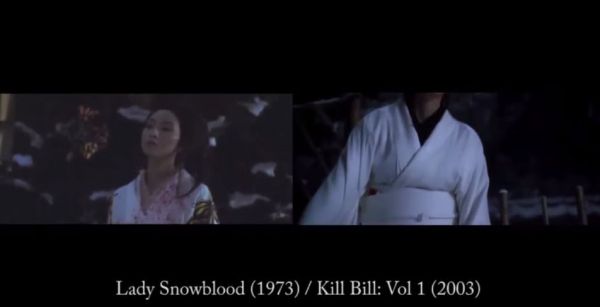
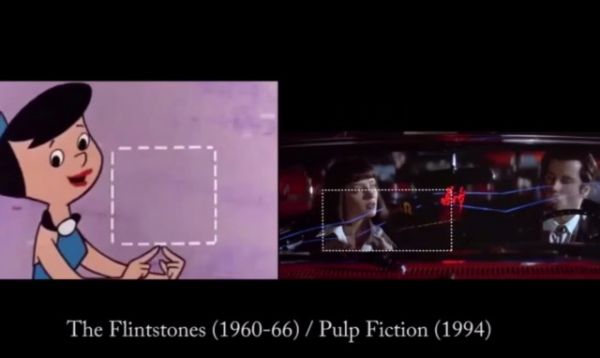
Quentin Tarantino is more than just a filmmaker. He's a scholar of film who loves the craft. Tarantino's works are filled with references to other movies that inspire him--some of which you've probably never heard of. In this video, Jacob T. Swinney shows you some of those allusions in Tarantino's movies.
Yesssssss! So much this. changed my walking route this evening because there were too many dudes who felt entitled to me and my body... much longer walk than I wanted, but less hassle than dealing with all the cat-calling.
I don't look this fucking hot for you, silly boys! Go away!
With summer on the way, shorts come out of hiding, skirts get a bit shorter, and men seem a thousand times more entitled to catcall you for daring to be comfortable in the heat. So many magazines feel the need to weigh in on how to make yourself MORE attractive to men, but why would you want to, when they can’t seem to STFU whenever you leave the house?
Well, don’t worry, dear reader. Here’s how can you tell them to fuck right off without ever saying a word:
Neon
In the wild, bright colours mean a lot of things, often like “warning”, “toxic”, and “touch me and die”. The human world is no different- men apparently find themselves repelled by those fantastic 80s neons, so whether a more subtle look like neon makeup or accent pieces, or something blatant like a full on florescent romper, this palette is the one to choose for that initial “get the fuck away from me” statement.
Smokey Eye Makeup
I won’t lie- Imperator Furiosa has made this look a must for an on-trend misandrist summer style. That full-on grease look not your cuppa? You can also get your Fury Road on with a smokey eye that incorporates some fetching chrome highlights which also stops bros in their dusty tracks. Witness this, assholes everywhere!
Oversized Sunglasses
Less of a makeup person? This eye-shielding look is for you. Without the possibility of eye contact, many dudes don’t get even the entry point they desperately seek to have an excuse to bother you when you just want to listen to your music. Added bonus- oversized sunglasses allow you to roll your eyes as much as you’d like when you hear that guy on the train negging you and every other femme he sees.
Bold Florals
Flowers are some femme shit, at least according to mens magazines. And why do flowers come in a rainbow? To attract bees, the symbol of cooperative matriarchies everywhere. Let the fellas around you know that you’re not here for them by sporting some bright blossoms.
Chunky Heels
Men hate chunky heels, probably because they hate the idea we can get away from them more easily when we wear them. So fuck that. Also, the chunkier the heels, the more spikes you can add to them so you can use your shoes as a bludgeoning weapon. Cute!
Bright and/or Dark Lipstick
Tell the men around you that you don’t give a fuck if you leave a mark with a lipstick that refuses to sit down and play nice. Go for something sci fi with a metallic sheen, or go witchy with a dark matte. Bonus points if you add glitter, or the blood of your enemies.
Statement Necklaces
Actions speak louder than words, sure, but there is a step between telling a pushy manplainer off and macing him. A statement necklace, especially one with an actual statement on it, can speak volumes for you so you can go back to Neko Atsume or reading Janet Mock’s bestseller or literally anything else other than listening to him.
Not Shaving
Nothing sends menfolk running to the hills like unrepentant body hair on women. Good! They should go live in the hills, by themselves, eating grubs. Get creative by bedazzling your softly fuzzy self, dye your pubes or underarms hairs, or, if you are bereft in the body hair department, consider DIY pit and pube merkins.
Extreme Hairstyles
Finally, how could we forget the terror that’s inspired by any hair style other than soft, long, and down? Men have been afraid of hairspray as soon as they discovered that a lighter was all that was required to make the styling product into a flamethrower. Never mind that big hair can hide all sorts of things, like a switchblade or a spare lippy, so take up space with hair that says “my milkshake is none of your damned business”.
all of these styles have been labeled as things women should avoid because men dislike them, because of course when you wake up every morning all you think about is how to catch the attention of mediocre white men. I am not making this up.
Like this post? Want to see more? Support my Patreon!
Norms La Cienega (photo by the author for Hyperallergic)
LOS ANGELES — Architectural preservationists won a major victory last week, when the Los Angeles City Council voted unanimously to designate Norms La Cienega as a Historic-Cultural Monument. While this decision does not offer unlimited protection for the iconic, mid-century eatery, it does mean that any permits for alteration or demolition would be reviewed by the Cultural Heritage Commission and the Office of Historic Resources. “Any proposed alterations are supposed to meet the Secretary of the Interior’s Standards for Rehabilitation,” Ken Bernstein, manager of the OHR, told us. “This means that most significant features of a historic building should be preserved and that new additions should be compatible with the architectural character of the building.”
Designed by architects Armet & Davis in 1957, Norms La Cienega is a quintessential example of Googie architecture. This mid-century Southern California phenomenon brought together car culture and space age futurism in a striking new style characterized by dynamic geometric forms. Named for a coffee shop designed by famed architect John Lautner in 1949, the style would come to be used in a range of structures including restaurants, theaters, gas stations, and banks, and embodied a kind of architectural populism befitting these public buildings. Although derided by some critics as lacking in seriousness, Googie architecture is now seen as a quintessential part of Southern California’s architectural history. “Today Googie is a distinct and significant part of the story of Modernism,” noted historian Alan Hess, “telling how it became part of the everyday life of millions.”
While some Googie buildings still remain, a great many have been demolished, including the style’s namesake building which was torn down in 1989. Preservationists have had other recent successes, such as Johnie’s Coffee Shop on Fairfax which was granted landmark status in 2013. Unlike Norms however, Johnie’s is not a functioning restaurant, being used primarily as a film location (most notably for Reservoir Dogs and The Big Lebowski). According to the LA Conservancy, only about eight Googie restaurants remain in LA.
Led by the LA Conservancy, the push to have Norms declared a historic landmark began in January, when the new owner of the property was issued a demolition permit. A temporary hold on demolition was then issues by the Cultural Heritage Commission. In March, the site’s new owner, Jason Illoulian of Faring Capital, told Los Angeles Magazine of his plan to develop a “community of shops” where Norms much-needed parking lot stands. Craig Hodgetts, the architect he’s working with, expressed disdain for both Norms defenders and patrons, dismissing the former as hipster elitists who don’t actually patronize Norms, and the latter as aesthetically naïve, “content with the generic In-N-Out Burger type of place.” Nothing could be further from the reality, as City Councilman Paul Koretz told the LA Times, “It has probably the most diverse customer base, from small children and senior citizens to rock-and-rollers … It’s really not just culturally significant but culturally uniting.” Neither Illoulian nor Hodgetts responded to our requests for comment.
Norms president Mike Colonna expressed his intention to continue running a Norms restaurant out of the La Cienega location, via a statement released by the restaurant chain. “We look forward to working with our landlord on a solution that would allow us operate Norms La Cienega,” the statement read, “while protecting the integrity of our Googie architecture and the historical significance of the building.”
In a press conference held outside the restaurant in March, Matthew Weiner, creator of Mad Men, voiced his support for preservation. Saying that he wrote his original notes for the series at Norms, he touched on not only the architectural, but also the cultural significance of the restaurant. “It’s a viable restaurant, yes. It’s a part of the community, yes. It’s a part of the neighborhood, absolutely, but more importantly it’s an inspiration and a treasure and should be treated as such.”
I can count the number of times I’ve worn this swimsuit on both hands. It’s a black one piece, with an exposed back and halter straps tied behind my neck. The ruffles spilling down the front are tattered from living in the corners of various bay area dresser drawers, giving that Jackie-O look I usually … Continue reading Control, Fashion, and not feeling where i belong
If I could just make the rain all day, every day, I'd be happy.
via Cooper
The Tempescope is a novel device designed by Ken Kawamoto that displays the upcoming forecast by simulating weather conditions inside a small translucent box. The device is capable of downloading information about upcoming weather off the internet, which it then translates into a variety of modes to replicate sunshine, clouds, rain, and even lighting. Kawamoto made an early version of the device available as a free open-source project called OpenTempescope so you can try building your own, but a consumer version is planned for Kickstarter later this year. If you liked this, don’t miss The Cloud. (via Sixpenceee)
I went to this pole dancing class with my homegirl K the other day & we were in there with a bunch of housewives and their hubbys were watching and talking in the waiting room. We’re having fun laughing and what not learning how to swing around and pick ourselves up and hang upside down and what not. this one housewife (you know the ones that make snicker doodles for bake sale n shit) approached us and said “you two shouldn’t be here! Our husbands can see us right through that window and we don’t need you two coming in here and trying to wreck our marriages.” So at this point K and I are looking at each other like
And she’s clearly upset about it she’s redder than a habanero pepper at this point and she’s like do you have anything to say about yourselves? Are you happy that you can be the potential cause of several divorces? Blah blah blah. K and I are laughing hysterically at this point and I told her “maam, we aren’t here to ruin your marriage and if you think we are then you have problems in your marriage that are already present.” Before I can even turn around K bursts in with “plus your husband has had his eye on your friend with the Roshe Runs on anyways so looks like either A. He’s scheming on her or B. They’re already fucking and you didn’t even know it.
By this point the woman is just like
The woman breaks down crying and runs out the studio and the real drama unfolded right before our very eyes turns out her husband and her friend have been having an affair since 2007, her now ex bff’s husband is trying to fight the other dude saying “you’ve been fucking my wife?” Cops get called they’re trying to separate the two men who are now in a huge brawl. The other two cops (backup) are questioning everybody else and they can’t find Roshe Run girl because she disappeared in the midst of all the chaos.
Anyways long story short, the two men were arrested for disturbing the peace and I learned never to go to a pole dancing class in the Wonder Bread suburbs ever again.
Javier de Riba spray paints abandoned buildings, but not in the way you might imagine. Instead of working on the interior or exterior walls of the buildings he finds, de Riba spray paints the floors, mapping out bright geometric patterns both large and small. The patterns de Riba creates look exactly like tiled floors, making it seem like an element of the building’s past has been elegantly restored.
Like a screen printer, de Riba works layer by layer, first painting the entirety of the space he plans to cover, then working one colored stencil at a time to build up the tile-like effect. The end result is a trick to the eyes both with materials and placement, one never expecting that spray paint formed the intricate patterns on the dusty floors.
The artist and creative designer was born in Barcelona and has worked as an art director in various agencies and studios. His current job is at Reskate Arts & Crafts Collective, a company that develops graphics and communication projects with a focus on sustainability and humane treatment. (via Junk Culture)


 facebook
 reddit