Shared posts

11 Jun 07:56

The Paper Chase

by driftglass


(h/t @Shoq for the head's up on this article)

I have been told that law school is not like this anymore, but I have number of friends who have gone down to JD Town over the decades, and their experiences have all sounded remarkably similar: despair, fury, self-loathing, collapsing mid-slog at the thought of how long the Sisyphusian horror will continue, some vomiting and crying and, finally, exhausted triumph (this does not include one of my Chicago pals whose ordinary law school travails were further complicated by the fact that our boss was a sadistic, racist asshole and college dropout who actively tried to sabotage my friend's studies over and over again.)

So I am guessing that the author of this article -- "I'm a liberal professor, and my liberal students terrify me" -- is not a professor at a law school, where heartbreak is a required course.

 Probably doesn't teach at business school either.

 Or J-school.

 Or med school.

Or nursing school.

Or any trade school.

Or a military academy.

I'm a professor at a midsize state school. I have been teaching college classes for nine years now. I have won (minor) teaching awards, studied pedagogy extensively, and almost always score highly on my student evaluations. I am not a world-class teacher by any means, but I am conscientious; I attempt to put teaching ahead of research, and I take a healthy emotional stake in the well-being and growth of my students.

Things have changed since I started teaching. The vibe is different. I wish there were a less blunt way to put this, but my students sometimes scare me — particularly the liberal ones.

Not, like, in a person-by-person sense, but students in general. The student-teacher dynamic has been reenvisioned along a line that's simultaneously consumerist and hyper-protective, giving each and every student the ability to claim Grievous Harm in nearly any circumstance, after any affront, and a teacher's formal ability to respond to these claims is limited at best.
I, too, have taught college.  At a Well Known College in Chicago.  I was also on staff at that college, in a position where my tiny team and I had to put the department back together because after years of negligence it had basically gone feral. Whole labs had been commandeered by pirates and their droogs and molls. Packs of wild dogs roamed the halls while the faculty hid in the dung-wattled teacher's lounge getting wasted enough to brave the crossfire and get back to class.

When the Well Known College finally moved to repair this mess, they did so by 1) handing the outgoing chair an enormous pile of money and telling him to stay in his office and play "Empire" until he died and, 2) hiring me and my merry band in at just barely above minimum wage to rebuild civilization.

And we did -- Yay us! -- and in the process we pissed off a lot of droogs and molls and pirates and wild dogs, all of whom made their way down to the Dean of Crazy Students to register a rich and fragrant bouquet of complaints against me and my rectification crew.

When I returned a few years later the teach a few classes at the same college, I was heartened to see that the changes we had made had taken root and become institutional.   Also there was still a Dean of Crazy Students and still young maidens and neckbeards who felt that since mama and papa were shelling out a shit-ton of money to send them to a Well Known College,  we were their employees.  Many, many more times than once we heard a variant of "I pay your salary!" from some disgruntled child who felt that their mediocre "C" work should really be an "A" or that being docked a grade for multiple absences was Cruel and Unusual punishment, even though that rule was in the syllabus, on the board and mentioned by me ad nauseum.

And now, a bit of deeper background.

I took classes off and on at various places as it suited me for years until it was made clear that I Had No Future without a degree, so I was on campus back when Andrea Dworkin was riding high and all men were monsters and all marriage was rape...and I was around when the Men's Movement was a thing.  I remember Piss Christ, was right down the street when "What is the Proper Way to Display a Flag?" was giving people the sweats, and I vividly recall the day a gang of Chicago aldermen marched into the School of the Art Institute and snatched down the painting depicting the late mayor Harold Washington in bra and panties.

So as a weary and threadbare traveler who has been observer, student, staff member and instructor at schools which were always being wracked one way or another with the fury and cultural apocalypses of the day (which, in turn, often end up being the only-vaguely-remembered college reunion memories of tomorrow), all I can say it that when I read "Edward Schlosser"s take on the modern academy --
...
In 2009, the subject of my student's complaint was my supposed ideology. I was communistical, the student felt, and everyone knows that communisticism is wrong. That was, at best, a debatable assertion. And as I was allowed to rebut it, the complaint was dismissed with prejudice. I didn't hesitate to reuse that same video in later semesters, and the student's complaint had no impact on my performance evaluations.

In 2015, such a complaint would not be delivered in such a fashion. Instead of focusing on the rightness or wrongness (or even acceptability) of the materials we reviewed in class, the complaint would center solely on how my teaching affected the student's emotional state. As I cannot speak to the emotions of my students, I could not mount a defense about the acceptability of my instruction. And if I responded in any way other than apologizing and changing the materials we reviewed in class, professional consequences would likely follow.

I wrote about this fear on my blog, and while the response was mostly positive, some liberals called me paranoid, or expressed doubt about why any teacher would nix the particular texts I listed. I guarantee you that these people do not work in higher education, or if they do they are at least two decades removed from the job search.
...
-- I do not see the failure of Liberalism or social justice or whatever:
I agree with some of these analyses more than others, but they all tend to be too simplistic. The current student-teacher dynamic has been shaped by a large confluence of factors, and perhaps the most important of these is the manner in which cultural studies and social justice writers have comported themselves in popular media. I have a great deal of respect for both of these fields, but their manifestations online, their desire to democratize complex fields of study by making them as digestible as a TGIF sitcom, has led to adoption of a totalizing, simplistic, unworkable, and ultimately stifling conception of social justice.
Instead I see Reaganomics and the deeply Libertarian impulse to let an utterly unregulated capitalist fighting pit settle every issue operating at peak efficiency.

By transforming the previously-extrinsic factor of a college degree into the minimum entry requirement for even the lowliest job, American capitalism has handed the American college and university system a license to print money.  This has made the demand for college degrees perpetually inelastic:  since your kids have to have it, they can charge whatever they like.

Second, not only has American capitalism guaranteed colleges and universities an inexhaustible source of wealthy, but governance and rewards structures within those temples of higher learning are handled in the way which capitalism loves best

Feudalism!

To the ippy tippy top -- the administration, departments chairs and the tenured -- go the lion's share of the wealth and job security, while the heavy lifting is done by a"contingent" workforce of academic beanfield-hands, kept in a perpetual state of economic insecurity:
...
The academic job market is brutal. Teachers who are not tenured or tenure-track faculty members have no right to due process before being dismissed, and there's a mile-long line of applicants eager to take their place. And as writer and academic Freddie DeBoer writes, they don't even have to be formally fired — they can just not get rehired. In this type of environment, boat-rocking isn't just dangerous, it's suicidal, and so teachers limit their lessons to things they know won't upset anybody.
...
What the author is describing is not some exotic peonage arrangement peculiar to UC Sunnydale. What the author is describing is the everyday reality of labor for virtually every working class American scrapping for a living in our brave, new right-to-work/employment-at-will economy (from me, last year):
...
Thank's to the Conservative Long War on Labor, today almost every worker in almost every job in almost every state is an "at-will" employee who may be canned by the boss for almost any reason, or no reason at all:
[A]n employer may terminate its employees at will, for any or no reason ... the employer may act peremptorily, arbitrarily, or inconsistently, without providing specific protections such as prior warning, fair procedures, objective evaluation, or preferential reassignment ... The mere existence of an employment relationship affords no expectation, protectable by law, that employment will continue, or will end only on certain conditions, unless the parties have actually adopted such terms.[6]
Yes, there are exceptions such as race, religion, sex, handicap status and so forth, but the burden of affirmatively proving that you were fired because you're a member of one of those protected categories falls to the fired employee, and short of discovering a cache of documents in which your boss explicitly outlines his plans to terminate you because you're a woman or gay or over 40, you're usually shit outta luck. 
Welcome to Capitalism 101!

I have seen people sacked for being too unattractive for the new boss's tastes.  For having too must melanin.  For being dangerously competent.  For being too honest.  Too old. Because the boss's drinking buddy or mistress doesn't like you.  For having the wrong last name.  For having the bad luck of not knowing an alderman who owes you a favor. Because the boss needed to make a soft place for one of his pals to land when he got laid off from some other division.

Because in a free and unregulated labor market, firing you because, well, fuck you, that's why, is the boss's very own modern-day droit du seigneur.
...
Once a degree became the only remaining Letter of Transit available to get your kid into the middle class, it became a commodity...another product in the marketplace.

And in the marketplace, the customer is always right.  

And the more the fortunes of the people at the top depends on catering to the whims of the customer, the more monstrous unreasonable the customer gets to be:


When colleges made the checkbooks of the parents of temperamental children their primary focus, they went out of the eternal verity business.

Which is a real shame.

driftglass
07 Jun 08:50

DennisInteractive web music video by Always and Forever Computer...


Dennis

Interactive web music video by Always and Forever Computer Entertainment employs a generative audio-responsive presentation to the song, one which is different each time you see it:

Dennis is a music video with music from popcorn_10 produced by Always & Forever. It’s a generative 3D experience whose every movement responds to the song’s finest details. Each frame is created in real time with code—nothing is pre-rendered. An interactive camera allows you to explore the scenes, which are created procedurally every time you press play. You’ll never see the same video twice.

Experience it out for yourself here

07 Jun 07:57

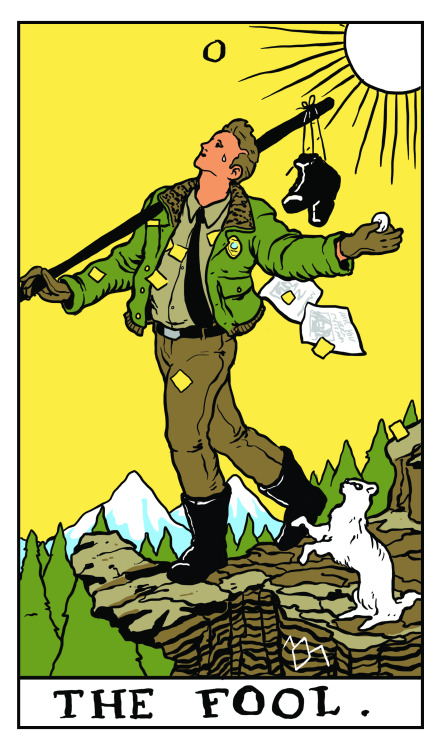
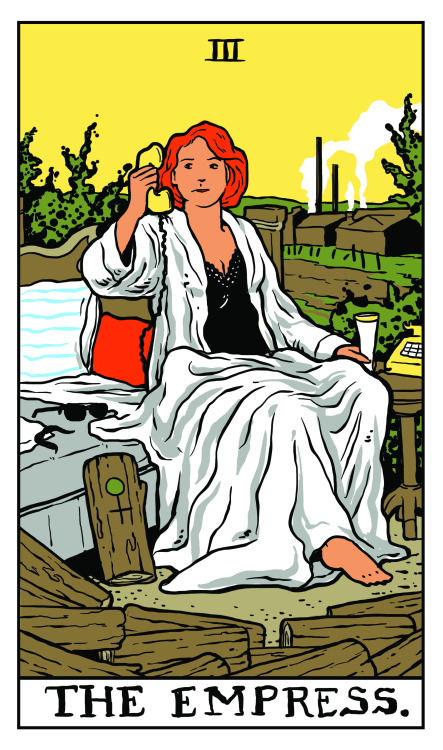
swampseer: benjaminmackey: ∆ TWIN PEAKS TAROT ∆Direct visual...


swampseer:

benjaminmackey:

∆ TWIN PEAKS TAROT ∆

Direct visual inspiration drawn from the Rider Waite Tarot deck. 

At present, the plan is to make recreate all of the Major Arcana…and then maybe move into the Minor Arcana. 

OH MY GOD

04 Jun 08:36

Parenting Gender-Variant Children

by gendsocoakland

By Elizabeth Rahilly

lego blocksFollowing the women’s movement and its calls for “gender-neutral” parenting, many contemporary parents are happy to challenge masculine and feminine stereotypes for their young sons and daughters. Boys can play with dolls and kitchen sets, girls can be ultra tomboys. But they are ever and always “boys” and “girls,” respectively. The gender boxes are flexed, so to speak, but rarely totally abandoned.

The parents in my study, however, radically start to question prevailing assumptions about sex and gender: assigned sex may have little to do with one’s gender expression and identity, nor should it. This is because their children consistently contradict the expectations of their assigned birth sex—from the clothes, toys, and play groups they prefer to their repeated self-identifications (e.g., “I’m your son, not your daughter!” or “I feel more like a girl than a boy”). As one parent reflected,stuffed animals “Okay, you’re born with a penis, okay, you’re a boy, boom, done—NO, not necessarily.” These parents come to embrace their children as gender-variant or transgender, and pursue a course of parenting practices that expand proverbial notions of “gender-neutral” parenting, in ways that are particularly transgender-aware.

Drawing on in-depth interview data, my article examines three practical strategies that surfaced during parents’ early experiences with childhood gender variance: “gender hedging,” “gender literacy,” and “playing along.” Through these practices, these parents develop a critical consciousness about the ways in which gender norms limit one’s most authentic self-expression, and strive to accommodate their gender-nonconforming children in a society that is still ignorant of childhood transgender possibilities.

In “gender hedging,” parents give small concessions to their child’s gender-variant interests while trying to stay within gender-normative boundaries. An assigned male child can wear a pink T-shirt to the store, for example, but dresses and skirts must stay indoors. Over time, such maneuvering breeds weariness and skepticism in parents about how much boundary work they should enforce, if at all. Parents begin to question cultural dictates for males and females, which bear little relevance to what their child continually asserts and expresses, and cross more and more boundaries. Children assigned male can wear dresses outside of the house; children assigned female can wear more and more clothing from the boys’ department. Hair is grown out or cut very short.

Parents eventually turn to the internet, where they find a burgeoning support community and related discourses that affirm childhood gender variance as a natural and normal part of the human “gender spectrum.” Through “gender literacy,” parents try to reiterate these discourses to their children during daily conversations, consciously articulating transgender and transsexual possibilities (e.g., “If one day you think you want breasts like your Mommy’s, there are medicines you can take” or “Some boys have penises and some boys don’t”). Parents also speak with school administrations to make schools more aware and accommodating of gender-variant and transgender students, so that their preferred gender presentations and bathroom use are honored.

Finally, through “playing along,” parents learn to navigate public interactions with strangers, who often attribute the wrong gender to a gender-variant child. By “playing along” with strangers, parents permit their child’s gender-variant expressions in public without the hassle and scrutiny that correcting them would entail. At the grocery store, a gender-variant child can be a “beautiful little girl” or a “handsome young man” without question. With more familiar persons, like neighbors or other parents at school, parents learn to not “play along,” broaching more candid discussions about childhood gender variance (e.g., “He’s a boy who likes girl things”).

Not all of these practices pose an explicit challenge to gender binary norms, but they all reveal parents’ strategic efforts to support their children’s nonconformity in the most appropriate ways they can construct, in diverse social situations, all while their awareness of gender-variant and transgender possibilities grow. Among these families, males and females can be whatever they want to be, including, conceivably, (transgender) girls and boys, or something less binary altogether. Indeed, with their newfound perspectives, these parents abandon a simple two-sex schema and imagine a wider array of (trans)gendered possibilities.

My article captures several early processes and practices in a broader longitudinal journey I am studying among parents of gender-variant and transgender children. Of the sixteen childhood cases represented here, ten are living as transgender boys or girls. My research trajectory includes follow-up work with these families, as well as additional parents of transgender and gender-variant children, so as to chronicle the budding viability of the category “transgender’ for young children and, in turn, society’s contemporary reckonings with sex, gender, and identity.

Elizabeth P. Rahilly is a PhD candidate in the Department of Sociology at the University of California, Santa Barbara. Her article “The Gender Binary Meets the Gender-Variant Child: Parents’ Negotiations with Childhood Gender Variance” is published in the June 2015 issue of Gender & Society.

Filed under: Adolescence/Children, Family, Transgender
04 Jun 08:35

Like a door that keeps revolving in a half-forgotten dream

by Sophia, NOT Loren!

I posted my usual “off to bed, goodnight!” on Facebook ages ago, but I couldn’t sleep… so I pulled out a stack of hard drives I’d taken out of my stuff in storage last time I was there, to see which (if any) of them worked, and what might be on them.

Found a bunch of video diary clips I thought I’d lost forever, although not (sadly) the ones I have been hunting for from when I was head-over-heels in love for the first time. (I recall seeing myself giggling as I attempted to recite lyrics to “All The Things She Said” for example, and it was both delightfully cute and acutely painful to know just how ignorant and blind I was, and how much misery she’d leave me with just 3 weeks later.)

Then on another disk I found a directory full of images, video clips, and miscellaneous documents I’d downloaded ages ago from a handful of sites that don’t exist anymore and would be difficult to track down at best… and more likely impossible for me to find again. I had put a significant amount of time and effort into getting these, and I thought they were gone. Turns out I have them still… score!

As if that weren’t enough, I also came across a handful of photos my mom had sent me, at my request, of me at various points in my life before I left home. They were lower resolution than the ones she’d sent the first time, but those high-resolution copies got eaten on my end and then later when her system crashed, too. Either way, I have several old photos of myself that I had though were gone forever.

Took a bath after copying files off of several drives, and as I stood up from the tub, I opened the window…

Outside, I could see only a patch of starry sky. I was struck again by the intense reminder that I haven’t been out under a starry sky in a very long time, and I want that again. I don’t have any interest in camping alone, mind you; I want to go out with someone I care for, but not to go out in the woods and have sex (even though I hear it’s, like, fucking in tents!) but to get away from everything with somebody who understands that we can get away together, and can share both silence and conversation as we both desire. The last time I had that was… long ago. Before the last time anyone came inside me, and the last person to do that was my psycho ex, back at the very beginning of 2011.

I need a break from all of this, though. From the daily stress and constant overwhelming sensory overload. From the petty squabbling and pointless chatter around me. From the isolation when I dread it and the complete lack of privacy when it’s essential.

Oh, and sex on a more frequent basis would make a world of difference, too… just one night with Again and I felt so awesome, so refreshed and so alive. And then I slept wonderfully, and my sleep was filled with dreams, and my dreams were filled with sex, sex, sex, and more sex. My mind and body remembered this thing I’d gone so long without; the appetite again awakened and stirred from sleep left my sleep stuffed with sex of all sorts.

I write quite often when I’m tired, I’ve noticed. Ditto with making my audio and/or video diaries. I’m okay with that, just something I’ve noticed. Also, going back through some of those old entries, I’ve found several bits where I detailed a dream I’d had, and I want to transcribe some of them… there’s some pretty interesting stuff in there!


Filed under: General
04 Jun 08:35

The Preemptive Self-Pity Two-Step

by Scott Lemieux

Beth linking to it earlier reminds me that this, from Belle Waring, deserves to be quoted in full:

What did Freddie deBoer have to say to feminists who make jokes on the internet? That they are not intellectually rigorous, that they are insecure, emotional and spiteful, that they are incapable of defending feminism with rational arguments, that they “flip out” when confronted with logic, that they “censor” people when they don’t want to deal with anything other than the false flattery of servile male feminists, etc. etc. etc. These are the most tedious sexist criticisms ever. I’m sorry, but they are—insultingly so.

DeBoer is making a larger point which, if it were not so hideously sexist, would have some merit. Recursive LOLspeak and self-critical whiteness can be an idle diversion for minds that would be more profitably engaged in political activism. Frothing oneself to a lather about the latest outrage is counterproductive if it only redirects energy away from real issues. OK! These are, in principle, valid criticisms of the internet progressive milieu. HOWEVER: a) this goes awry when the complaint is a sexist one that codes the lamentable unseriousness as female b) the criticism itself can and has become an irritable gesture, quite entirely another matryoshka doll inside the online feminist one! The pose of the Orwell-like contrarian who calls people to action with high-minded seriousness is…also a pose! If you are mcmanus-sensei, you call for burning shit down at every opportunity and lament the trifling concerns of others. Then you accuse people of harbouring a desire for fascist conformity because they like monumental architecture. You didn’t see that coming, did you? No? That’s because mcmanus-sensei is a better troll than deBoer, who has a limited range. Every day Freddie deBoer turns his face to serious issues, and every day the paltry concerns of feminists online blast him like an ill-wind of dick-jokes, a Boreas enjoining him to drink a tall, cold glass of STFU, which batters his doughty vessel but cannot prevent him from steering on, tacking back and forth in the direction of personal liberation, which project he needs no woman’s approval to undertake [swelling strings and snapping pennants].

A couple additional points:

  • In response to libarbarian here, nobody “responded” to de Boer’s immediate substantive point about Brauer’s tweets because Brauer’s tweets are obviously indefensible.  The problem with de Boer’s post was not that he was critical of Brauer but that he cited the tweets of an utter nonentity that nobody of any influence defended as representative of American liberalism in general, a frequent and deeply irritating feature of his writing.  The fact that he incoherently combined this with a ridiculously overwrought attack on a mild bit of observational humor and his latest argument that a website edited by women wasn’t “challenging” its readers enough (presumably, by agreeing more with Freddie de Boer) just made it worse.  (As politicalfootball observed, “When this ‘major tactic’ is used, he claims to be offended by its use. When it’s not used, he’s still offended.”)
  • Making Brauer the Very Face of American Liberalism Today is even more problematic when your immediate response to any criticism is generally to note that you’re just a Daily Dish blogger with 4,000 twitter followers who palpably craves attention a humble grad student nobody with a WordPress blog.
  • The rhetorical value of the “I am but a simple WordPress caveman” routine should, however, be made clear by this classic CT comments thread. Freddie enters the conversation by making an generalization about the quality of research published in social science journals he can’t possibly know enough to defend, combined with an insinuation that anyone who doesn’t agree with him (including the accomplished researcher of you can probably guess which gender who wrote the OP) isn’t a serious researcher.  After being called out on it, he immediately retreats into belligerent self-pity, building up to attacks on imaginary people citing their Ivy League credentials without bothering to engage with the criticisms that were being made of his position on the merits.  If enjoy saying things like “all liberals like torture because Alan Dershowitz” and “this tweet from former vice president of the Duluth Young Democrats just destroyed the American left,” this excuse comes in very handy.  It also highlights the sexism of his repeated assertions that women online Will Not Rationally Engage.
  • I should note here that I haven’t actually read the latest uvam acerbam magnum linked to by Rob above, so perhaps the excerpts in comments are unrepresentative and this one actually gets around to making some points on the merits after all the whining about how he never really wanted the attention reflected by a miniscule percentage of this blog’s posts anyway.  And maybe The Human Centipede III surpasses the achievement of The Rules of the Game, but in both cases I’m happy to play the odds.
04 Jun 08:31

Disguising Payments Hurts Writers

by Ian MacAllen

Literary journals don’t always pay contributors. But unpaid contributions are less of a problem for writers than literary journals that conceal their pay rates. Allison Williams, over at The Review Review, takes a look at how some publications handle the issue. She points out that the issue of non-payment might be fine for some writers, but the obfuscation of whether or not a market pays is a problem for everyone:

It’s perfectly in keeping with being a writer—even a “literary” writer—to want to be paid. Before “amateur” meant “unskilled,” it meant “one pursuing an occupation for the love of doing it.” Artists often move between the amateur and professional worlds, choosing some projects for cash, some for prestige, some for creative challenges. I love writing. I love it a lot. And I would write whether I got paid or not. But one of the ways to get better at writing is to make it my job, so that I can afford to spend more time doing it. I can’t pay for Scrivener, computer repair, or office space with the warm glow of achievement. For many writers, whether or not a journal pays is a primary consideration when determining where to send our work.

Related Posts:

04 Jun 08:31

The Ex Post Facto Self-Pity Gambit

by Scott Lemieux

EmmaSulkowicz

This is a thing Meghan Daum wrote.  It is, as you can see, uncharacteristically silly:

It’s a striking juxtaposition, to say the least. In the news this week we’ve seen photos of hundreds of girls and young women, many of them pregnant, recently rescued from captivity and sexual slavery at the hands of Boko Haram, the militant Islamist group in Nigeria. We’ve also seen photos of young women, smiling in their robes and mortarboards on graduation day at Columbia University in New York City, helping a classmate carry her mattress to the podium as a symbol of the trauma she says she experienced from an alleged rape.

[…]

As a trending topic (and one that’s constantly sprouting subtopics), this thread of feminist discourse is compelling because it manages to be both exasperating and necessary. For every fatuous notion that ricochets around social media (mansplaining! microaggression!), the campus assault meme could also be sparking conversations worth having about gender and power, and the overall state of women in the world.

So why aren’t we having those conversations? Why is Mattress Girl generating more headlines and postings than the victims of Boko Haram? Why (other than the usual vagaries of the class divide) are so many young women ignorant of the big picture captured by the FBI’s Uniform Crime Reporting stats — that if you lived in, say, Gallup, N.M., in 2013 you were 47 times more likely to get raped than if you were enrolled at Harvard?

I generally admire Daum’s writing, but this is a real clinker.  This argument — “how can you focus on bad thing x when over there is worse thing y” — is tired, it is wrong, it is inherently conservative.  (You may remember it from such early-aughts classics as “how can you criticize Republican policies towards women when things in Saudi Arabia are so much worse?” and “how can grad students unionize when janitors in Houston have it so much worse?”)  As Katrin Higher puts it:

“Enough of Mattress Girl; what about the victims of Boko Haram?” Daum asks before we’ve even started the column’s first paragraph. OK. But why the victims of Boko Haram and not the women in Sudan, Syria, and literally every other part of the world that lives under patriarchy? What about them? Where do we stop and start, when have we had “enough”?

[…]

Perhaps President Obama stop focusing on the problems faced by the United States – you know, petty things like unemployment and police brutality — and instead go to other worse-off countries to “help”? The “it’s worse over there!” fallacy is a tactic used by conservatives, misogynists and classists alike to take the focus off of what they believe to be trivial problems in our own backyard and divert it towards more sinister problems in “scary” foreign countries – often to their own benefit, either because they literally profit from such diversions or have a stake in those things they’d like us to ignore.

In addition, it’s worth noting that it’s not only the magnitude of an injustice but one’s potential capacity to alleviate that injustice that are relevant when determining priorities. What seems more plausible — that campus activists can affect the policies governing sexual assault at their universities, or that they can affect the behavior of Boko Haram in Nigeria? (To be clear, it is entirely possible that campus activists could pursue the laudatory goal of reducing sexual assault on campus using ineffective tactics or bad policies. People should feel free to point this out if they think so. But either way, Boko Haram is beside the point, and we shouldn’t ever say that we’re sick of hearing about the problem.)

Daum’s follow-up doesn’t link to Higher’s response, but she does link to several other similar ones:

Could repeating those words exactly have prevented the furor that erupted on social media and the feminist blogosphere in the last week? My column was fodder for LAist, Salon and Feministing, and for Twitter vengeance. I was accused of being a “misogynist feminist” and of blaming college activists for the lack of attention to the victims of Boko Haram. One Twitter user told me I was “on the wrong side of history.” Another accused me of “mansplaining,” which she said she didn’t realize women were capable of (as it happens, I’ve written about that too.) Yet another spoke of “patiently waiting for Jezebel to rain hellfire” down on me.

Jezebel, in case you’re unfamiliar with it, is a popular site that began as a smart decoder of women’s media. Today it devotes much of its space to parsing and calling out any smidgen of what it perceives to be public misogyny. In fact, the preponderance of  blogospheric female wrath might, collectively, be called the Jezebel Effect.

So there is something called the “Jezebel Effect.” It is supposed to be very bad. It is apparently reflected by this case, even though as far as I can tell Jezebel has not written about the column. But, as with Hanna Rosin’s similar arguments, I’m entirely unclear what it is that I’m supposed to be upset about. Meghan Daum, generally a sharp writer, made a bad argument in a public forum. Various people in various fora online responded by explaining why it was a bad argument. (There wasn’t even a hashtag campaign!) Daum, who didn’t and shouldn’t have suffer any professional consequences, then used her platform at the LA Times to complain about it. This…is how discourse is supposed to work, right? What’s the problem here? Why are we talking about pitchforks?

Online harassment of women is a very real and very serious problem. Suey Park circa-2013 hashtag campaigns strike me as tactics of dubious efficacy even if their bad effects tend to be overstated, and I’m open to the idea that there may be cases where it has a genuinely chilling effect for little gain. But for writers with access to major platforms to use these things to try to preempt disagreement from other writers is disingenuous. Whether it’s an isolated case (as I hope and expect it will be with Daum,) or whether it’s more systematic, a high ratio of being able to dish it out and being able to take it is not a very attractive combination. When you write stuff and people pay attention, they will sometimes disagree strongly, and if you’re tempted to say that this shows that there’s Something Wrong With the Kids Online Today you probably want to rethink it.

04 Jun 08:22

Iranian Artist Gets 12 Years in Prison for Political Cartoon

by Benjamin Sutton
Atena Farghadani (screenshot from YouTube video)

Atena Farghadani (screenshot from YouTube video)

Atena Farghadani, a 28-year-old artist on trial in Iran over a cartoon that depicts members of parliament as animals, has been sentenced to 12 years and 9 months in prison. According to Amnesty International, the crimes for which she was tried included “spreading propaganda against the system,” “insulting members of parliament through paintings,” and “gathering and colluding against national security.” The offending artwork satirized members of parliament, depicted as monkeys and either cows or goats, casting votes for proposed laws that would ban some types of birth control and restrict Iranian women’s access to contraception.

“Atena is being punished for something many of us have been doing in Iran: drawing politicians as animals, without naming them,” Iranian-American artist Nikahang Kowsar told the Washington Post. “Of course, I drew a crocodile and made a name that rhymed with the name of powerful Ayatollah, and caused a national security crisis in 2000. What Atena drew was just an innocent take on what the parliamentarians are doing, and based on the Iranian culture, monkeys are considered the followers and imitators, [and] cows are the stupid ones. Many members of the Iranian parliament are just following the leaders without any thoughts.”

Atena Farghadani's cartoon satirizing the Iranian parliament (via Free Atena Farghadani/Facebook)

Atena Farghadani’s cartoon satirizing the Iranian parliament (via Free Atena Farghadani/Facebook)

Earlier this year, after being repeatedly arrested, beaten, released, and rearrested, Farghadani was summoned to a Revolutionary Court on January 10 and arrested once more. According to some, the summons stemmed from a YouTube video Farghadani had posted, in which she detailed the horrendous conditions of her previous detentions. She was detained at the notorious Gharchak Prison, which is about 30 miles south of Tehran, and on February 9 she began a hunger strike. She vowed not to eat until she was transferred to Evin Prison in Tehran, where she was held for nearly two months last year — including two weeks in solitary confinement, according to the Art Newspaper. Two and a half weeks into her hunger strike, on February 26, she suffered a heart attack and was transferred to a hospital.

“Atena should never have been imprisoned in the first place. Her repeated arbitrary arrest and detention for her artistic work is a flagrant assault on freedom of expression,” Hassiba Hadj Sahraoui, Amnesty International’s deputy director for the Middle East and North Africa, said at the time. “Her life is now literally in the hands of the Iranian authorities. She must receive the urgent medical care she needs, and the Iranian authorities must release her and all other prisoners of conscience immediately and unconditionally.”

According to the Washington Post, the longest Farghadani is likely to serve is seven and a half years, and an appeal of the Revolutionary Court’s ruling is being prepared.

04 Jun 08:22

elainemorisi: aiffe: chainofaffection: “Have you ever come...

Sophianotloren

ALL OF THIS. And you know what? When you're sleeping on a sidewalk, in cold weather, and if you're lucky you've got enough to make a bit of a pillow... a swig of liquor can be the difference between tricking your body into thinking it's a little bit warmer than it really is, being drowsy enough to doze off... and tossing and turning until the crack of dawn when the cops come to kick you out of your spot.

As the last comment says, "if you're going to give a beggar something, either ask them what they need or just give them fucking money." I guarantee you that they know the value of that cash and how best to use it, and it may well be towards things you wouldn't approve of. But don't attach strings to what you give -- that's just cruel.

As someone who has been fortunate enough to only briefly spend time on the streets, but who has spent a lot more time homeless on friend's couches and spare beds (like I currently am, have been for over a year) I can vouch for the absolute worthlessness of these "blessing bags" and can tell you how much difference some cold hard cash can make.


elainemorisi:

aiffe:

chainofaffection:

“Have you ever come across a homeless individual and felt totally uncomfortable? You see them and you know they are in need, but you are not sure what to do. You know that handing them money is not the best thing. But, you also see that they clearly have some needs. Their lips are chapped. They are hungry. They are thirsty. They are asking for help. How can you help? Here is a simple idea - blessing bags.

This was such an easy project. We are now going to keep a few “Blessing Bags” in our car so that when we do happen to see someone on the streets who is homeless, we can hand them a Blessing Bag. I first learned of these bags from my friend, Julie. I am using the picture of her bags (see above) because the ones we took were taken in horrible lighting and turned out really grainy and hard to see what is inside of them.

If you’d like to make your own Blessing Bags, this is what you would need: Gallon size Ziplock bags items to go in the bags, such as: chap stick packages of tissues toothbrush and toothpaste comb soap trail mix granola bars crackers pack of gum band aids mouthwash coins (could be used to make a phone call, or purchase a food item) hand wipes you could also put in a warm pair of socks, and maybe a Starbucks gift card Assemble all the items in the bags, and maybe throw in a note of encouragement. Seal the bags and stow in your car for a moment of providence. This would be a great activity to do with some other families. Each family could bring one of the items going into the bags (ex: toothbrushes). Set up all the items around a table and walk around it with the ziplocks and fill the bags.” http://kwavs.blogspot.com/2011/05/blessing-bags-how-to.html

Hey, words from an actual former homeless person here.

Those people you see who make you uncomfortable? Those aren’t homeless people, they’re beggars. Well, some of them are also homeless. Some of them are not. NOT ALL HOMELESS PEOPLE ARE BEGGARS. (Also, they’re not all addicts, though some are. You literally know nothing about a beggar’s life except that they are beggars.)

Beggars have a uniform like any other kind of worker. They have to look as bedraggled and dirty and pathetic as possible. If you gave a beggar a chance to shower and wash their clothes, you would be damaging their earning potential. They make their money by manipulating the feelings of people who don’t know much about poverty. That means they have to play to stereotypes, some of which are like a hundred years out of date.

When I was homeless, I did not beg. (I stole, dealt with charities, sometimes even worked. Yes, you can be homeless with a full-time job. I’ve worked 60 hours a week and been homeless. And I mean sleeping in a car or a tent homeless, not on somebody’s couch homeless, though that’s an under-counted form of homelessness. I asked for food once or twice, but I didn’t look like a beggar.) I kept myself clean. I looked like anyone else. That person you pass in the store, on the bus, someone who looks just like anyone else, they could be homeless. The sales clerk who helps you for minimum wage. They could have lost their apartment because you can’t pay rent on that salary.

I’m not saying there’s anything wrong with begging. And it’s true that some people do actually just look like that because due to mental illness or addiction they sincerely can’t take care of themselves. Some of them are honestly nothing more than scam artists who have no real need, though, playing off people’s sympathy for those who genuinely do need help. But let’s assume that you were giving these to an actual homeless person.

- soap is not that difficult to come by if you are so inclined to have/use it. Many public bathrooms have it. Homeless shelters will give you a bar of it. If you have $10 or so for a truck stop shower, soap is provided. Running water is a lot more difficult.

- believe it or not, they may already have a toothbrush and toothpaste, and if they don’t, it’s unlikely they have any interest in using them. Homeless people commonly cache useful items wrapped in plastic in a bunch of hidden places. If you want to help the homeless, next time you find one of those caches, don’t throw them away. I mean, think about it. If you had to start living on the street, would you stop brushing your teeth? I didn’t either. Plus, if everyone gave homeless people one of these packs, they’d have more toothbrushes than they did teeth. Same with the deodorant—one stick lasts a long time, and they give them to you in shelters. This kind of mismanagement and waste is incredibly frustrating. People are willing to flush money down the toilet to avoid helping you TOO much.

- food is nice! But keep in mind that not everyone can eat stuff you give them. Dietary restrictions like diabetes and Crohn’s unfortunately don’t go away when you become homeless. Maybe this is why they were hoping for cash? Also, some (though not all) homeless people have access to food already through food stamps, soup kitchens, charities, etc. A granola bar is nice, but they likely have other problems. If they need food, they will usually have a sign asking for food, or ask for it verbally! Otherwise food might not be a problem for them.

- I’ve given medicine to beggars when it was asked for. Medicine can be super useful if you have a need of it. But when you don’t have a place to put your shit, you realize what a luxury it is to be able to store shit you don’t need at the moment. At best, it could go into one of those caches, if that individual uses caches, or into a shopping cart if they haul one of those around. Or in a car if they have one.

You know what’s useful, lightweight, and portable? MONEY.

You know what money can be used for?

- the nightly fee of some pay-shelters to keep you out of the elements.

- minutes for a pay-as-you-go phone, which can be used for emergencies, scheduling appointments with therapists, doctors, and addiction counselors, even searching for jobs or housing. There is a TON of bureaucracy involved in getting help when you have nothing, and that shit burns through your minutes. Payphones? What is this, 1980? I still have and use a phone I bought while living in my car. It was $10.

- gas for a car, if they have one. (Commoner in rural areas.)

- a hot shower at a truck stop.

- medicine, including prescription medication.

- items that protect against the elements, in their size!

- transportation. News flash, no bus will let you on for pocket change.

- items you might not even think of, like pet food (some homeless people have pets!) sanitary napkins (even if they don’t look female—remember how the homeless rates go up if you’re queer? Yeah.) condoms (possibly for sex work? Not something you want to assume though!) diapers (adult or otherwise! seriously! You don’t know their lives!) or pretty much anything else THAT IS BOUGHT AND SOLD WITH MONEY.

Does that include cigarettes, drugs, and alcohol? You bet it does. But you know what, if that’s what they need, you’re in no position to judge. I’ve never been through withdrawal, but I’ve seen people go through it, and it’s complete shit. If that were you, yeah, you wouldn’t want to get drug sick, are you fucking kidding me? Offset it with a contribution to a rehab center, whatever helps you sleep at night.

And all this is assuming the person giving you a case of the guilts is actually homeless. When they may not be. And other people you don’t notice around you almost surely are.

That uncomfortable feeling you get, though? That has a name. It’s called INEQUALITY. It means that you know you have shit other people don’t have access to. You probably have resources so that even if you were in trouble, there’d be safety nets. You have the kind of money that you can buy a bunch of care packages to assuage this horrible guilt you feel every time you’re in bed in the rain and you know someone else out there isn’t. Those feelings are right. The world shouldn’t be this unequal. We shouldn’t have houses standing empty while people live on the street. We shouldn’t have food sitting in warehouses till it spoils while people starve. We shouldn’t be punishing people for trying to medicate away the pain we gave them.

If you want to REALLY help the poor, go buy a pen and paper and write to your representatives. Stop blaming “generational welfare users” for being “leeches on the system.” Tell them you want to see real aid going to people in your community. Tell them to fund the mental health system, which is inadequate for the demand and constantly getting slashed. Tell them you don’t want to see food stamps cut for bad grades! Tell them a stitch in time saves nine, and if they helped people who were losing their homes, maybe there wouldn’t be so many homeless. Tell them to decriminalize drug use and prostitution. Tell them to support programs like Insite. Support universal healthcare, because you’d be surprised how many people end up homeless due to illness, either in themselves or a family member. If you’re ever in a position of power, such as a landlord or employer, don’t discriminate against people who don’t have a current address. Also don’t discriminate against marginalized groups by race, gender, orientation, ability, etc. These people are more likely to end up homeless because of this BS. Check out charities in your area doing actual outreach with the poor, many of whom are not beggars and not visible. And if you’re going to give a beggar something, either ask them what they need or just give them fucking money.

You can’t make that uncomfortable feeling go away with the wave of a magic wand. You can’t buy exemption from the fact that you HAVE and others DON’T with some soap and granola.

And if you’re going to give a beggar something, either ask them what they need or just give them fucking money.

04 Jun 00:28

Hey You Guys: Jeff “Chunk” Cohen on Astoria, Heroism and Dead Deer

Goonies Tour of Astoria | Oral History of the Goonies | Goonie Stars Then and Now

 Goonie 30th Anniversary Events | Why's Cyndi Lauper Hate "Good Enough"?

Astoria Fish n Chips | Astoria Beer | Oregon's Biggest Films | Astoria Film History 


Usually, when you check in on a former child star, you’re overcome with sadness and the urge to check for accidental needle pokes.

That’s not the case with Jeff B. Cohen, who will forever be remembered to the masses as Lawrence “Chunk” Cohen, Truffle Shuffler, lover of rocky road, friend to Sloth and overlooked beating heart of the Goonies.

These days, you probably wouldn’t recognize Cohen. Gone are his belly flaps and curly hair, replaced by a svelte frame and shaved head. He’s got his own entertainment law firm in Beverly Hills, and a new book called The Deal Maker’s Ten Commandments that’s all about wheeling and dealing in Hollywood. Hell, dude can’t even Truffle Shuffle anymore.


But despite sounding like he might pal around with dickhead Troy nowadays, it turns out that Cohen’s still got a big heart and a deep love for The Goonies. This weekend, June 5-7, he returns to Astoria for Goonies Day. Turns out, he returns more often than you’d think. We chatted him over the phone and discovered, to our delight, that he still hasn’t said “die.” He’s just an unfortunate victim of puberty. 


WW
: So, you’re an entertainment lawyer now. Did you just decide to quit acting?

Jeff B. Cohen: No way man. Puberty created a forced retirement. Puberty won. I was a chunky kid. I would play the funny little fat kid. I went from Chunk to the gorgeous hunk I am now (laughs), and I couldn’t get work. I don’t think anyone quits acting intentionally. It’s the best job. You get to play make believe and dress up. They feed you. There’s food on the set all day. You get to travel. Acting’s the best gig of all time. I like being an entertainment lawyer, but being an actor is hard to beat. 


Still, you had some pretty cool roles.

I was on a very special episode of Webster. I’m super proud of that. And probably a less special episode of Facts of Life. And Kids Incorporated. That was the worst thing I ever did. I had to do a dance number. I had to dance to Prince’s “Baby I’m a Star.” It was so bad that even I, when watching it as a kid, in the middle of it I turned it off. It was so bad even I was like, “No man. I’m gonna get some Twinkies and think about it.’” 


Are you sick of still talking about The Goonies three decades later?

I’m a transactional entertainment lawyer. I negotiate deals. Normally, I’m so in that world that I don’t come out for Goonies stuff. Now because I have the book to promote, and the 30th anniversary, it’s fun to talk about it. Normally, it’s so far removed. Normally, with my clients, I’m lucky if I’m the fifth most-famous person in the room. So it’s kind of fun to be celebrated momentarily, ya know?


What were your first impressions of Astoria?

I was excited to be in a movie. The first scenes we did were in Astoria, then we went to Warner Brothers for the sound stage, then Bodega Bay for the end. I grew up in the San Fernando Valley, which is hot and dry. To go to a longshoreman’s town in the most northern part of Oregon was exotic and overcast and mysterious. It was a little overwhelming.


Do you remember exploring the town?

I was recovering from the chickenpox. We kind of kept that to ourselves, which wasn’t good. But I didn’t want to get kicked out of the movie. One of the earlier scenes I shot was the Truffle Shuffle. If you look, all my belly, I have chickenpox and they had to put makeup on it. It was overwhelming. It’s a new cast. It’s a new world. And I have to keep this secret and hide and stay separate. 

I really love Astoria. It’s so different (from L.A.). Even as a kid, it was fun and exciting. There’s this amazing bridge. The weather was different. I loved Seaside. If I had a day off, I’d play in the arcade over there. Even going to the different restaurants. The hotel they put us up at—the Thunderbird—it was right on the water, so you had the view. It was a fun way to kick off the day. I could order whatever I wanted, because I was in a movie.
 

Ecola State Park is just about the windiest place in the world. What was it like to be sick there?

Cohen: My outfit is a Hawaiian shirt, because of course, fat kids wear Hawaiian shirts and plaid pants. Both are very thin material. That wind goes right through. I had a red, paper-thin little jacket. I was freezing my ass off. You’re supposed to wear a Hawaiian shirt in Hawaii. That’s why it’s called a Hawaiian shirt. It is appropriate for tropical weather, not freezing-your-ass-off Oregon weather.


Was there a lot of culture shock between Astorians and the Hollywood people?

Cohen: I was in the restaurant in the Thunderbird Hotel (where cast and crew stayed). There was a commotion, people looking out the window. The L.A. people were freaking out. It was a hunter who had come back, and had a deer he had shot strapped to his car. He was proud of it; it was a good deer. And all the L.A. people were like, "What the fuck, get that out of there." Dick Donner is such an animal lover. It was interesting to see these cultures clash. It’s like, "I’m proud, I shot this 10-point buck," and all the L.A. people are like, "Get that fucking car out of here, what’s wrong with you, you murderer."


Did you ever return for non-Goonie stuff?

Cohen: We would still go up there for vacation, and I would go up for the longshoremen’s picnic. They’d smoke their meat and bury it for certain times. All this crazy awesome food. For me that was always interesting. A really fun and special thing around Astoria.


You seem to have really connected to the city. Did you connect to the castmates as well?

Cohen: Karen Martin (the waitress from Thunderbird, whom the Cohens befriended and visited regularly), she became a close friend of the family. It’s one way versus the other. You’re close to the cast because you have that shared experience. But I think I’m closer to the people of Astoria. It was different, and they were so kind. It’s a different value system.


In the movie, you eat a lot of sweets. Did you ever get sick of that?

The thing about being a fat kid is, it’s impossible for a fat kid to get sick of eating pizza and ice cream. But the last thing you want to do as a fat kid is shake your belly. But that’s why child actors do a lot of drugs. They have a lot of stuff to work out. But ultimately, it was worth it. If shaking my fat belly was the cost of becoming a cultural icon, I can accept it. Pain is temporary and victory is eternal. I’ll take it.


Did you get sick of the chubby kid jokes?

My inspiration was Spanky from The Little Rascals. He was the chubby, funny little guy. I wanted to be like him. He was awesome and cool and he made me laugh and made me happy. He took so much ribbing, I was like, "This is part of the game." It didn’t bother me. It was the price I was willing to pay to make people laugh.


You spent most of your time with John Matusak. Were you close with him?

It’s funny. He was very nice, but he was enormous. When he played in the NFL, he was literally the biggest guy in the NFL. I remember watching the old NFL films and seeing him just beating the shit out of people was shocking to me. He’s Sloth. He’s my buddy. Seeing him go nuts on an offensive lineman was unbelievable.


You’re 10 years old. You’ve hanging out with Sloth and a dead body. Did any of this stuff scare you as a kid?

The scariest thing was the blender scene. The blades were rubber, so if my fingers went in it my hand wouldn’t be cut off. But even if that’s the case, it sure looks real. And it sounded real. Nobody wanted to test the rubber blades. That was a little scary.


What was the most fun? I mean, you didn’t even get to go down the big water slide.

They actually, after shooting that scene, allowed the cast to have fun for a couple hours. But I didn’t do it in the movie. I think the most fun, for the fat kid, was craft services. You have constant access to food at any time. Not only on set, but there was a nice food truck. They’d be like “what do you want for breakfast, fat kid?” And I’d say “What can you do?” “We can do anything you want. You want a hamburger, we’ll make a hamburger. Want spaghetti? We’ll make spaghetti.” Having unlimited access to food was an amazing treat.
 

All right, so recently, I realized that Chunk is the hero. More than anybody. Chunk and Sloth save the day. Everyone else sets themselves up to get killed.

I couldn’t agree more. Without Chunk, they walk the plank and that’s it. It’s a terribly sad ending. Children weeping and drowning. I agree. Chunk and Sloth save the day.
 

My editor said Chunk sets it all in motion. I say he’s forced into this shit. Does anyone else recognize this?

No. They don’t. But you do, and I wholeheartedly agree with your position. That’s right. Chunk saves the day. He’s like, pre-lawyer. “I know this is dangerous. I’m risk averse. I’m looking for the liability. Due diligence shows you shouldn’t be in the weird cave.”
 

Chunk tries to stop them.

Cohen: He’s like, “Fine, I guess I have to befriend this monster, put on a pirate hat and save the day.”


Goonies Tour of Astoria | Oral History of the Goonies | Goonie Stars Then and Now

 Goonie 30th Anniversary Events | Why's Cyndi Lauper Hate "Good Enough"?

Astoria Fish n Chips | Astoria Beer | Oregon's Biggest Films | Astoria Film History 

04 Jun 00:23

obscuruslupa: qjunior: THIS SHOW WILL KILL ME OMG


obscuruslupa:

qjunior:

THIS SHOW WILL KILL ME

OMG

04 Jun 00:23

operaspaz: anomalyaday: I’m dying last night we had a house...


operaspaz:

anomalyaday:

I’m dying last night we had a house party and at one point I remembered I have a lit paper due this week and decided to get started on it, this morning I woke up to this

Holy hell this is brilliant.

04 Jun 00:23

xenadd: Mad Max Posters Improved With Daily Mail CommentsStay...


xenadd:

Mad Max Posters Improved With Daily Mail Comments

Stay away from the feminist proppergander, kids.

04 Jun 00:22

City of Portland Fines HomeAway $326,500 in Short-Term Rental Crackdown

Portland city officials have levied their second fine against a short-term rental company for not following the rules—and the penalty is a doozy.

The city's Revenue Bureau fined the Austin, Texas, online marketplace HomeAway on May 19, charging it $326,500 for failing to register to pay transient lodging taxes, get its hosts to obtain city permits and undergo safety inspections.

The city's notice says inspectors found 330 rentals where HomeAway didn't collect taxes, and 332 rentals operating without a permit or inspection. The city fined the company $500 for each violation.

UPDATE, 4:10 pm: HomeAway co-founder Carl Shepherd confirmed late this afternoon the company had received the city's letter. He declined further comment.

In April, the city fined Vacation Home Rentals of Newburyport, Mass., $3,000 for the same violation. 

Mayor Charlie Hales led the charge last summer to legalize Airbnb and other short-term rental sites. But the city soon found few hosts were getting the required city permits and safety inspections.

The rate of noncompliance is still at 91 percent, according to recently updated data from insideairbnb.com/portland. The site, developed by technologist Murray Cox, displays where Airbnb rentals are located in the city, what type they are (complete homes, single rooms, etc.), and an estimated number of nights per year listings are booked.

04 Jun 00:21

The Rent Is Too Damn High—and the Wages Are Too Damn Low

by Melissa McEwan
[Content Note: Class warfare; housing insecurity.]

Although this is a story about Chicago, it's emblematic of a problem across much of the country:
More than half of renters in Chicago are paying 30 percent or more of their income in rent, an amount that a federal guideline has defined as unaffordable.

The percentage of renters in the city paying more than they can afford jumped to 53.7 percent in 2013 from 37.9 percent in 2000, according to Census data.

The 30 percent threshold is based on a federal guideline established in 1981 that families in public housing could pay no more than 30 percent of their household income for rent. The assumption is that spending more than this amount diminishes a family’s ability to spend on other necessary items, such as food, clothing and transportation...

The problem of affordable housing is particularly acute for low-income renters. According to a recent report from Chicago Rehab Network, an affordable housing advocacy group, more than 90 percent of renters in Cook County who earn less than $20,000 per year were overburdened by housing costs in 2010.
Last year, "more than a quarter of Chicago households signed up for a spot on the Chicago Housing Authority's wait list," in the hopes of getting into subsidized housing. Without getting into its whole complicated history, suffice it to say that underfunding, overcrowding, and institutional neglect have historically made CHA housing a "choice" one makes only when every other option has run out.

I know I'm a goddamn boring broken record, but this is an absolute scandal. The United States is (nominally) the wealthiest country in the world, and we have a defense budget that could fund mansions built from recycled drones for every person on the planet, and yet we're somehow content to let half the population struggle to afford housing and leave half of all public school students unable to afford food.

And the most progressive politicians we've got speak about strengthening the middle class and proposing a minimum wage that still isn't anything close to a livable wage.

We refuse to have a meaningful public conversation about poverty. An honest conversation about what it means to be a person in poverty, that centers the voices of those people instead of bootstraps bullshitters who tell fairy tales about welfare queens.

Nothing that is being proposed is enough. Not even close.

We need universal healthcare, equal public education, and an unconditional basic income.

And, yeah, we need to tax the wealthy more fairly to pay for that stuff, but we could pay for a hell of a lot of it simply by defunding the policing and prosecution of poor communities and redirecting the massive amounts of funding earmarked for the criminalization of need to the people who are in need.

Our elected legislators offer all kinds of intricate and elaborate and ineffective policy proposals to "deal with" poverty, for programs that require eleventy layers of bureaucratic administration, because of garbage narratives about how people in poverty don't know what's best for themselves and can't be trusted to make good decisions.

We waste billions upon billions of dollars because we stubbornly refuse to just give people money and let them use it in the way they see fit.

Like paying the rent.

[H/T to my friend KG.]
04 Jun 00:21

Today in America 2.0

by Melissa McEwan
[Content Note: Surveillance.]

An AP investigation has determined that the FBI is responsible for a "mysterious fleet of aircraft conducting surveillance over US cities."
Scores of low-flying planes circling American cities are part of a civilian air force operated by the FBI and obscured behind fictitious companies, The Associated Press has learned.

The AP traced at least 50 aircraft back to the FBI, and identified more than 100 flights in 11 states over a 30-day period since late April, orbiting both major cities and rural areas. At least 115 planes, including 90 Cessna aircraft, were mentioned in a federal budget document from 2009.

For decades, the planes have provided support to FBI surveillance operations on the ground. But now the aircraft are equipped with high-tech cameras, and in rare circumstances, technology capable of tracking thousands of cellphones, raising questions about how these surveillance flights affect Americans' privacy.

...The FBI says the planes are not equipped or used for bulk collection activities or mass surveillance. The surveillance equipment is used for ongoing investigations, the FBI says, generally without a judge's approval.
Emphasis mine. There is much, much more at the link.

So here we are again, back to federal surveillance with no judicial review, no Congressional oversight, and thus no meaningful accountability.

This sort of fuckery was supposed to leave the building with George W. Bush and his merry band of miscreants, but, as I have said before on many, many occasions, once federal law enforcement has been granted any power to encroach upon the civil rights of the people, they are very reluctant to let it go.

And neither of the two major parties are keen to force them to let it go, because neither of them are particularly interested in a truly free citizenry.

[H/T to Shaker KatherineSpins.]

04 Jun 00:20

Priorities

by Melissa McEwan
[Content Note: Food insecurity; child neglect.]

Another terrific example of how every fetus is precious and life is sacred, until those hypothetical fetuses become actual, living children:
Della Curry is out of work, and unashamed, after being fired by the Cherry Creek School District.

A married mother of two, Curry is the former kitchen manager at Dakota Valley Elementary School in Aurora [Colorado]. She lost her job on Friday after giving school lunches to students who didn't have any money.

"I had a first grader in front of me, crying, because she doesn't have enough money for lunch. Yes, I gave her lunch," Curry said.
"Yes, I gave her lunch." The confession of her heinous crime. Giving a hungry child something to eat.

There is a free and reduced lunch program in the district: "To qualify for the free lunch program, a family of four would have to have a household income of around $31,000. To qualify for a reduced lunch, the threshold is below $45,000." Those are very low numbers. Lots of families of four making, say, $46,000, just enough to price themselves out of assisted lunches, might have trouble providing lunches every day for every child. So they go to school hungry.

And those are exactly the students whom Curry was helping—the kids who fall through the cracks because lunch programs are based on arbitrary fixed income cut-offs and not on whether an individual child has food to eat that day.
In the district, students who fail to qualify for the free lunch or reduced lunch program receive one slice of cheese on a hamburger bun, and a small milk.

Curry says that meal is not sufficient. Many times she paid for lunches out of her own pocket. "I'll own that I broke the law. The law needs to change," she said.

...Curry says the students she helped did not qualify for either program. "Kids whose parents make too much money to qualify, but a lot of times they don't have enough money to eat," she said.

...Curry said she understands the school district was just following policy when it fired her. Now she's hoping her story will lead to some changes.

"If me getting fired for it is one way that we can try to change this, I'll take it in a heartbeat," she said.
No one should have to lose her job in order to effect change that makes sure every hungry child is fed. For fuck's sake.

The school district released a statement on Curry's firing, which starts thus: "The law does not require the school district to provide the meal to children who have forgotten their lunch money, that is a district decision."

You know, when one of your employees is willing to risk her job and her own livelihood to make sure that children are being fed, because there are children standing in front of her crying from hunger, maybe you need to be a little less concerned about defending yourself on the basis that you're meeting the bare minimum of what the law requires you to do.
04 Jun 00:19

xicanasol: California Senate approves health care for...

04 Jun 00:19

Photo

Sophianotloren

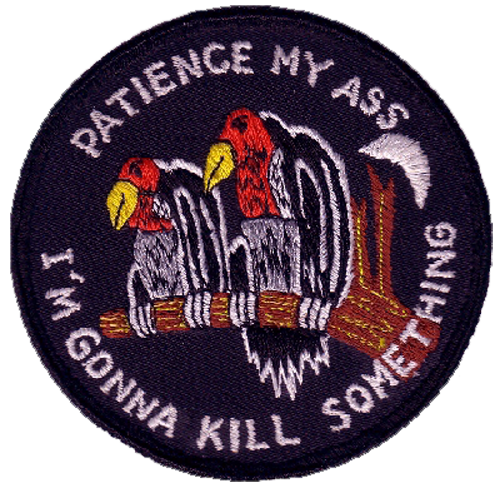
Patience is a virgin, so they say. She just kept waiting. Don't be like her.


04 Jun 00:18

thekonietzkystrain: Bill Murray on Gilda Radner:“Gilda got...


thekonietzkystrain:

Bill Murray on Gilda Radner:

“Gilda got married and went away. None of us saw her anymore. There was one good thing: Laraine had a party one night, a great party at her house. And I ended up being the disk jockey. She just had forty-fives, and not that many, so you really had to work the music end of it. There was a collection of like the funniest people in the world at this party. Somehow Sam Kinison sticks in my brain. The whole Monty Python group was there, most of us from the show, a lot of other funny people, and Gilda. Gilda showed up and she’d already had cancer and gone into remission and then had it again, I guess. Anyway she was slim. We hadn’t seen her in a long time. And she started doing, “I’ve got to go,” and she was just going to leave, and I was like, “Going to leave?” It felt like she was going to really leave forever.

So we started carrying her around, in a way that we could only do with her. We carried her up and down the stairs, around the house, repeatedly, for a long time, until I was exhausted. Then Danny did it for a while. Then I did it again. We just kept carrying her; we did it in teams. We kept carrying her around, but like upside down, every which way—over your shoulder and under your arm, carrying her like luggage. And that went on for more than an hour—maybe an hour and a half—just carrying her around and saying, “She’s leaving! This could be it! Now come on, this could be the last time we see her. Gilda’s leaving, and remember that she was very sick—hello?”

We worked all aspects of it, but it started with just, “She’s leaving, I don’t know if you’ve said good-bye to her.” And we said good-bye to the same people ten, twenty times, you know. And because these people were really funny, every person we’d drag her up to would just do like five minutes on her, with Gilda upside down in this sort of tortured position, which she absolutely loved. She was laughing so hard we could have lost her right then and there.

It was just one of the best parties I’ve ever been to in my life. I’ll always remember it. It was the last time I saw her.”

- from Live from New York: an Uncensored History of Saturday Night Live

04 Jun 00:17

the-entire-furry-fandom: ww-swagabond: meta18: osoru: slowly approaching bear the bears will be...

the-entire-furry-fandom:

ww-swagabond:

meta18:

osoru:

image

slowly approaching bear

the bears will be in eventually

image

Bear will arrive sooner than thought.

image

BEAR IS APPROACHING AT ALARMING SPEEDS

image

BEAR IS GO FAST LOSING TRACK OF BEAR

image

BEAR HAS REACHED MACH ONE

image

WE HAVE LOST VISUAL ON BEAR

04 Jun 00:16

unclewhisky: I like to imagine these are all from the same mom...


unclewhisky:

I like to imagine these are all from the same mom and the same dad.

04 Jun 00:15

zimothy: Some cool stuff from the Fury Road art book. Let me...


zimothy:

Some cool stuff from the Fury Road art book. Let me know if you guys want to see more! Each wife has a whole page profile 😊

04 Jun 00:13

The Animated Franz Kafka Rock Opera

by Dan Colman

“The Franz Kafka Rock Opera” comes from Season 1 of a 1999 video series called Home Movies. In this episode, we find the character Dwayne writing a rock opera based on Kafka’s famous novella The Metamorphosis. It’s not Tommy or Quadrophenia — two of the greatest rock operas ever made. But it does, true to form, feature lyrics and song. You can watch a segment of the rock opera above.

· Kafka Song #1: Introduction
He is Franz Kafka!
Franz Kafka!
Be careful if you get him pissed…
Franz! Franz Kafka!
He’ll smite you with metaphor fists!
Writing all he can, he’s just a man
A warrior of words taking a stand
He is Franz Kafka!
Spoken: Oh look, but there he is, what will he say?
I’m a lonely German…a lonely German from Prague!
Kafka! Kafka! Kafka!

· Kafka Song #2: Turning into a bug
I don’t know what’s wrong with me I think I’m turning into a bug
I see double what I see I think I’m turning into a bug
I ain’t got no self-esteem I think I’m turning into a bug
Bet you fifty dollars I’m a man, I’m a scholar and I’m turning into a bug
Momma like a daddy like a baby like a baby like I’ll turn into a bug
Yeah! Yeah!
He is Franz Kafka!

· Kafka Song #3: Living like a bug ain’t easy
Living like a bug ain’t easy
My old clothes don’t seem to fit me
I got little tiny bug feet
I don’t really know what bugs eat
Don’t want no one stepping on me
Now I’m sympathizing with fleas
Living like a bug ain’t easy…

· Kafka Song #4: Ending
Spoken: Welcome to heaven Franz! My name is God! I think you’re going to like it here!
He is Franz Kafka!

· Louis, Louis End Rap
Well, I’m, curing disease
Helping blind people read
Don’t drink that milk without talking to me (Oh yeah!)
I’m saving those who can’t see with their eyes
Don’t mess with me you’ll get pasteurized!
Yeah! Come on! Come on! Louis Louis in the house! Break it down!

(Jason does a human beatbox)

· Kafka End Song
Right now he can
He’s just a man
A warrior of words
Taking a stand
He grew up very poor
He’s steel, it’s to the core
Born in 1883 died in 1924
He is Franz Kafka!

h/t @DongusAmongus

Related Content:

Four Franz Kafka Animations: Enjoy Creative Animated Shorts from Poland, Japan, Russia & Canada

Franz Kafka’s Kafkaesque Love Letters

Vladimir Nabokov Makes Editorial Tweaks to Franz Kafka’s Novella The Metamorphosis

The Art of Franz Kafka: Drawings from 1907-1917

04 Jun 00:13

Teenage Michael Stipe attends ‘The Rocky Horror Picture Show’ in Frank-N-Furter drag, late 1970s


A local St. Louis news broadcast from the late 1970s about the fans of the then almost controversial horror-musical The Rocky Horror Picture Show at the city’s Varsity Theater.

At around the 1:25 mark, you’ll see future R.E.M. frontman Michael Stipe, in his best Frank-N-Furter drag, talking to...

04 Jun 00:10

proof

by Author

proof

This month’s raffle winner is Jean-François, who gets a signed print of his choice.

Patreon.

04 Jun 00:10

We thought robots didn’t die! The demise of the AIBO robot dogs and the fight to keep them alive

by Kay

Aibo Sep 2005

Remember AIBO, the futuristic pet robot from Sony that amazed us with its dog-like appearance and behavior when it came out in 1999? It was probably one of the first examples of artificial intelligence the general public got a taste of, and we were quite duly fascinated with the antics of the robotic dogs, as evidenced by the fact that the first batch of 3,000 AIBOs sold out in just 20 minutes despite its 250,000 yen (about US$2,100 according to the exchange rate back then) price tag.

But now, more than 15 years down the line, AIBO owners who have become attached to their cybernetic pets, are facing a grave situation — an aging and ailing (or breaking down, in this case) population of AIBOs.

Aibo Sep 2005 (2)

The AIBO, which not only looked like a dog but came programmed so that each one would develop a distinct personality depending on its interactions with its owner, indeed seemed to symbolize the future at the time it was released. It’s estimated that roughly 150,000 AIBOs were sold in total, but it appears the business of developing intelligent robotic pets wasn’t quite profitable enough, as Sony decided to discontinue production of the AIBOs in 2006.

As sad a development as that was for AIBO fans, the big problem now for owners of the electronic pet is that Sony’s repair service for AIBO, the “AIBO Clinic”, was also closed in March last year. The predicament of these owners has been the topic of a recent article on Japanese news and information compilation site Karapaia.

The article focuses particularly on elderly AIBO owners who have come to rely on these robotic dogs for companionship and peace of mind. For them, seeing their AIBOs “grow old” and malfunction, sometimes needing new parts that are no longer available, is a heartbreaking experience, and with the repair service now shut down, they are having to come to terms with the “mortality” of the pets they had thought would never grow old or die.

To the owners who have spent many years with their AIBOs and treated them like a member of the family, this can be a surprisingly difficult experience.

▼ Major Japanese network TV Asahi showed a segment last year about AIBO owners struggling to accept the unexpected mortality of their mechanical pets:

But there is still a glimmer of hope. For desperate owners trying to find a cure for their ailing AIBOs, A・FUN, a company specializing in vintage machine repairs, could be their savior. The company was started by former Sony engineers, so we guess there are no better people to turn to if your precious AIBO is in need of some treatment and care.

According to the Karapaia article, when the engineers decided to take on AIBO repairs, they had to start by taking one of the robots apart and studying the incredibly complex machinery inside — no easy task, and made even more difficult by the fact that Sony was no longer making parts for AIBO.

But the engineers persevered, propelled by the love of the AIBO owners for their long-time companions, and they are now at a point where they are able to perform “transplants” of parts between AIBOs and even custom make the necessary parts in some cases.

As a matter of fact, they even held a group funeral service back in January this year for 19 decommissioned AIBOs whose parts would then be used for other AIBOs needing a transplant.

▼ The first generation AIBO that came out in 1999:

Aibo 1st gen

▼ And here’s a promotional video showing a later generation AIBO from 2003 in action:

Considering the amount of time and love these owners have given to their AIBOs, it’s not surprising that the engineers at A・FUN are being kept extremely busy with inquiries and repair requests. Hopefully, their work will allow many owners to spend a much longer time with their beloved pets than would be otherwise possible.

Karapaia’s article raises the issue of  whether it is reasonable to treat robots with artificial intelligence in the same way as regular toys. Should a company be allowed to cut off repair service for a machine that responds to you and grows with you? As technology progresses, this is the kind of question that we are sure to be facing more and more frequently. We can’t help wonder, how much longer will it be until we see kids playing with humanoid robots, and when that happens, will we be discarding these robots when they stop working or their parts become unavailable?

Source: Karapaia (Japanese)
Top Image: SONY Sep. 29, 2005 Press Release
Inset images: SONY Sep. 29, 2005 Press Release, SONY May 11, 1999 Press Release

Origin: We thought robots didn’t die! The demise of the AIBO robot dogs and the fight to keep them alive
Copyright© RocketNews24 / SOCIO CORPORATION. All rights reserved.

Related Stories

04 Jun 00:08

Gustav Machatý’s Erotikon (1929) & Ekstase (1933): Cinema’s Earliest Explorations of Women’s Sensuality

by Jonathan Crow

Czech cinema gained international acclaim in the 1960s with films like Closely Watched Trains (1966) and The Fireman’s Ball (1967) – movies that conflated the political with the sexual in ways that were as innovative as they were subversive. Much of the fuel of this New Wave of Czech film was the utter absurdity of the Communist rule and the horrors inflicted by the Nazis. Yet beneath that, there’s something within Czech culture that seems naturally skeptical of authority. Franz Kafka was a native of Prague, after all. And one of the most beloved books in the Czech language is Jaroslav Hašek’s The Good Soldier Švejk (1923), a frequently hilarious satire on the idiocy of war.

The works of Czech filmmaker Gustav Machatý weren’t overtly political yet they were still very subversive. At a time when the battles for universal suffrage was still a recent memory, Machatý had the audacity to show women as sexually autonomous beings.

Born in Prague in 1901, Machatý went to Hollywood at a young age and reportedly apprenticed under D. W. Griffith and Erich von Stroheim. When he returned to his home country, he started making movies.

Machatý’s third feature and final silent movie was Erotikon (1929), a story about a country girl seduced by an upper-class cad only to get pregnant and ostracized by her village. The film recalls F.W. Murnau in his emphasis on faces and his expressionistic use of the camera. This is perhaps most clearly seen in the scene above where the girl surrenders to her slick paramour and discovers sexual bliss. The camera spins around as she writhes on the bed. Showing female sexuality frankly was daring at that time. Women in movies by D. W. Griffith and Charlie Chaplin were chaste and pure. They received male appetites, perhaps, but were not subject to animalistic urges themselves.


Four years later, Machatý went even further with his movie Ekstase (1933). Early in the movie, we see the luminously beautiful Hedy Lamarr skinny-dipping in a pond. When her horse runs off with her clothes, she run naked over hill and dale to catch it. A bit later in the movie, in a scene that recalls Erotikon, she has an earth-shattering orgasm thanks to the strapping young worker who finds her horse. Ekstase might not be the first non-pornographic film to have nude scenes but it was certainly one of the first. And it was definitely the first film to clearly show a female orgasm.

The movie was an international sensation. It received raves at the Venice Film Festival only to be denied a prize because the Vatican objected. Worse, it couldn’t get a proper release in the US. First Ekstase was seized by U.S. Customs as pornography. Then, when it finally cleared that hurdle, the movie ran afoul of Hollywood’s self-censoring Hays Code. Ekstase only managed to screen in a handful of independent theaters in 1940, seven years after it first came out.

Nonetheless, the notoriety of the movie turned Hedy Lamarr into a star and soon she was starring opposite Hollywood icons like Jimmy Stewart and Clark Gable. (And just in case you thought that Lamarr was just a pretty face, she also co-invented and patented technology during WWII that laid the groundwork for things like Wi-Fi.)

Machatý had less success. As the threat of Nazism loomed, he fled back to Hollywood and ended up being an uncredited director for such studio films as The Good Earth and Madame X. He spent the last part of his life teaching film at the Munich Film School before dying in 1963.

You can watch the entirety of Erotikon below:

Related Content:

Fritz Lang’s M: Watch the Restored Version of the Classic 1931 Film

Kafka’s Famous Character Gregor Samsa Meets Dr. Seuss in a Great Radio Play

Brokeback Before Brokeback: The First Same-Sex Kiss in Cinema (1927)

Jonathan Crow is a Los Angeles-based writer and filmmaker whose work has appeared in Yahoo!, The Hollywood Reporter, and other publications. You can follow him at @jonccrow. And check out his blog Veeptopus, featuring pictures of vice presidents with octopuses on their heads.  The Veeptopus store is here.

03 Jun 06:54

Facing Healthcare Cuts, Museum of Modern Art Staff Protest Outside Fundraising Gala

by Benjamin Sutton
Protesters outside the Museum of Modern Art on 53rd Street on Tuesday night (all photos by the author for Hyperallergic)

Protesters outside the Museum of Modern Art on 53rd Street on Tuesday night (all photos by the author for Hyperallergic)

This evening, as trustees and VIPs arrived at the Museum of Modern Art (MoMA) for its annual “Party in the Garden” gala, they were greeted by dozens of the museum’s staff brandishing signs that read “Modern Art, Ancient Wages” and “MoMA, Don’t Cut Our Healthcare.” The protest, organized by MoMA workers and the United Auto Workers Local 2110, which represents them, came in response to a recent breakdown in contract negotiations after the museum demanded that its staff take on additional healthcare costs. For many employees at the protest, among them curators, librarians, members services workers, graphic designers, and catalogue editors, this was a step too far for an institution flush with cash.

The leaflet that was handed out by MoMA workers at Tuesday night's protest. (click to enlarge)

The leaflet that was handed out by MoMA workers at Tuesday night’s protest. A copy of the leaflet was posted on a women’s bathroom door inside the museum and sent to Hyperallergic by a partygoer. (click to enlarge)

“We’re expressing our collective revulsion for the medical givebacks they’ve put on the table; we want the museum to believe us and to know that we cannot afford what they put on the table,” says Danny Fermon, a MoMA librarian and chairperson of the Local 2110 unit at the museum. “But they’re not just going to believe the committee of activists that’s on the negotiating team only. They’re gonna need to hear it from the members, and the members have shown up tonight in larger numbers than I ever expected in this kind of weather.”

Indeed, a group of about 100 protesters had gathered near the entrance to MoMA’s education and research building on West 54th Street by the time the protest began at 6pm. They handed out flyers to passersby explaining the current contract situation, and chanted slogans including “No Contract, No Peace,” “No Give-Back,” and “Cut Our Healthcare, That’s Not Fair.” The group eventually split in two, one stationed outside the Garden Party’s VIP entrance on 54th Street, the other on 53rd Street facing the entrance to the museum’s film building, where trustees were arriving for the gala. Social reporter Nate Freeman, who was attending the party, told Hyperallergic that the protesters’ chants could be heard very clearly inside the party. “I don’t think MoMA’s very happy about it,” he added.

    Protesters outside the Museum of Modern Art on 53rd Street on Tuesday night

Protesters outside the Museum of Modern Art on 53rd Street on Tuesday night

The museum has been in negotiations with Local 2110, which represents more than 200 MoMA employees, since early May. There have already been four negotiation sessions, with a fifth due to take place Wednesday morning. Though the workers’ contract, last renegotiated in 2010 without complications, expired on May 20, the museum and union agreed to extend it by 30 days, through June 20. MoMA’s Local 2110 members have not had to strike since 2000, when the main bargaining chips included healthcare coverage, salaries, and threats of layoffs. Now, as the museum prepares for another expansion and its assets and endowment continue to grow — according to the institution’s financial statements for fiscal year 2014, its endowment and investments were worth $838.9 million in June 2014, up from $706.3 million a year earlier — it is demanding workers pay more for healthcare coverage.

Protesters outside the Museum of Modern Art on 54th Street on Tuesday night

Protesters facing the main entrance to MoMA’s Party in the Garden on 54th Street on Tuesday night

Reached for comment, a spokesperson for MoMA sent Hyperallergic the following statement: “The Museum of Modern Art has an outstanding staff. At this time, we are in the process of negotiations with Local 2110, and are optimistic that we will reach a positive outcome for the staff and all concerned.”

“Quite honestly, we have a lot of people working many, many overtime hours, the majority of which are uncompensated, and so we already have people who are working more than they’re being paid for and we do it because we really love this work — nobody gets a job at a museum to become a millionaire,” said Victoria Wong, a library assistant at MoMA. “So when they come at us and they say, oh, we’ve been financially strained, we need you guys to make contributions by raising our premiums, raising our deductions, raising everything, it’s kind of insulting. We are a museum, we’re a social, cultural institution, and that ethos should be trickling down in its business practices.”

Protesters outside the Museum of Modern Art on 53rd Street on Tuesday night

Protesters outside the Museum of Modern Art on 53rd Street on Tuesday night

By 8pm, as the last of the partygoers made their way inside the museum, the MoMA employees began to disband, their clothes dampened, but not their spirits.

“I’m hoping that the museum will change its position in bargaining and that they’ll back off these demands for healthcare cuts for members,” said Maida Rosenstein, president of UAW Local 2110. “People have for years accepted lower wages, knowing that as museum workers, somehow the standard is that you work for less, but relied upon having a good benefits program. And I think it translates into loyalty by the museum for its workers. And breaking contract with them shows disloyalty to their own workforce.”

MoMA employees protesting on Tuesday evening

MoMA employees protesting on Tuesday evening