Joel Thrasymachus DahlHi, Malcolm!

Amber Gee and her two children evacuated last week from their home in Callaway, a town of about 15,000 in the Florida Panhandle, and she assumed that her relatives who lived northeast of her had done the same.
They hadn’t.
Gee learned that they were in distress after scouring a map of aerial imagery published by the National Oceanic and Atmospheric Administration that showed the severe damage from Hurricane Michael in the area. Someone had used trees felled in the storm at her grandmother’s house in Youngstown to spell out “help” in letters big enough to be seen from the sky. She later learned that her uncle, Ernest Gee, had made the message outside the home, which is owned by her grandmother, Emily Bently, Gee told ABC. Bently had already evacuated, but Ernest, his wife and a friend had not — and they were trapped, she said.
A testament to the power that digital imagery holds to provide detailed portraits of human activity in a rapid time frame, as well as the effectiveness of an old-school SOS directed at the sky, the miraculous story has been covered by media outlets across the country.
The images were taken by one of NOAA’s Beechcraft King Air 350CERs, a twin-engine plane flown by two pilots and a technician to operate its four cameras. Though the agency has long used planes for imaging and mapping purposes, its work to provide images of disasters within hours of their occurrence was prompted by response to the terrorist attacks of Sept. 11, 2001, Mike Aslaksen, chief of the remote-sensing division at NOAA, said in an interview.
Working then with film cameras, the agency took five days to supply emergency responders with computerized images of the area.
“Some of the response community said, ‘We need the imagery within 24 hours or it’s no good,’” Aslaksen said.
The agency was first able to meet that goal after a storm in 2003.
It now has nine aircraft housed at an airport in Lakeland, Fla., that head toward disaster scenes to provide images to emergency responders, government agencies and the public.
Flooding from hurricanes has occupied much of their time in recent years; planes flew for 30 straight days to take images around Houston after Hurricane Harvey, Aslaksen said. The photographs allow first responders to track affected areas and scientists to study flooding levels — a vast improvement over the process of sending teams out to map levels manually — and evacuated residents to check on their homes.
“We’ve got to support the response community, but at the end of the day, the data that NOAA collects is in the public domain, and making that data available to the public is one of our priorities,” Aslaksen said. “We’ve worked hard to make the website pretty intuitive.”
Images of the Florida Panhandle show the destruction of the storm in towns such as Mexico Beach and, in areas farther inland, carpets of downed trees.
Aslaksen said the Gee family’s story was similar to an incident after Hurricane Katrina, when responders found a resident who had spelled out “help” around a home after the flooding.
The story of the Gee family was shared first on Facebook by the Emergency Services division in Bay County, where the town is located.
“This is an incredible story of how people are working together in this situation,” it wrote. “Someone from another county was using the mapping app to check property in rural Bay County and noticed the word ‘help’ spelled out in the grass in logs.”
Gee fled her home Thursday, after the storm made landfall in the area, with brutal winds and heavy rain causing damage all around the Panhandle.
After she saw the SOS, she contacted emergency officials, hoping to prompt a wellness check. Representatives from another county’s sheriff department arrived at about 2 a.m. Sunday to assist the family, ABC reported.
Satellite imagery shows numerous trees that had fallen to block the dirt road to the property.
“Apparently, they had to cut through a lot of downed trees to get there,” Gee told ABC.
The death toll from the hurricane is at least 18, and dozens of people are unaccounted for in the storm’s hardest-hit areas in Florida. Many communities in the Panhandle still do not have cellphone service. An additional 190,000 in Florida and 120,000 in Georgia do not have electricity, according to the Associated Press.
Read more:
Kellyanne Conway called Elizabeth Warren’s DNA test ‘junk science.’ Is it?
He returned from Afghanistan to applause. Then he resumed his violent prostitution ring.
All we know about the White House portrait of Trump drinking Diet Coke with Abraham Lincoln


Monday’s announcement that Sears would file for bankruptcy and close 142 stores came as little surprise to anyone who has followed the retail giant’s collapse in recent years. Still, the news inspired a wave of nostalgia for a company that sold an ideal of middle-class life to generations of Americans.
A lesser-known aspect of Sears’s 125-year history, however, is how the company revolutionized rural black Southerners’ shopping patterns in the late 19th century, subverting racial hierarchies by allowing them to make purchases by mail or over the phone and avoid the blatant racism that they faced at small country stores.
“What most people don’t know is just how radical the catalogue was in the era of Jim Crow,” Louis Hyman, an associate professor of history at Cornell University, wrote in a Twitter thread that was shared more than 7,000 times Monday in the wake of the news of Sears’s demise. By allowing African Americans in Southern states to avoid price gouging and condescending treatment at their local stores, he wrote, the catalogue “undermined white supremacy in the rural South.”
As historians of the Jim Crow era have documented, purchasing everyday household goods was often an exercise in humiliation for African Americans in the South. Before the advent of the mail-order catalogue, rural black Southerners typically only had the option of shopping at white-owned general stores — often run by the owner of the same farm where they worked as sharecroppers. Those store owners frequently determined what African Americans could buy by limiting how much credit they would extend.
While country stores were one of the few places where whites and blacks routinely mingled, store owners fiercely defended the white-supremacist order by making black customers wait until every white customer had been served and forcing them to buy lower-quality goods. “A black man who needed clothing received a shirt ‘good enough for a darky to wear’ while a black family low on provisions could have only the lowest grade of flour,” historian Grace Elizabeth Hale wrote in an essay published in “Jumpin’ Jim Crow: Southern Politics from Civil War to Civil Rights.”
In 1894, Sears, Roebuck and Co. began sending out 322-page illustrated catalogues. The year before, Congress had passed the Rural Free Delivery Act, making it possible for the Chicago-based retailer to easily reach communities across the rural South. Notably, the company made an effort to accommodate customers who were barely literate, enacting a policy that the company would fill any order it received regardless of the format.
“So, country folks who were once too daunted to send requests to other purveyors could write in on a scrap of paper, asking humbly for a pair of overalls, size large,” the Bitter Southerner explained this summer. “And even if it was written in broken English or nearly illegible, the overalls would be shipped.”
But even more important, the catalogue format allowed for anonymity, ensuring that black and white customers would be treated the same way.
“This gives African Americans in the Southeast some degree of autonomy, some degree of secrecy,” unofficial Sears historian Jerry Hancock told the Stuff You Missed in History Class podcast in December 2016. “Now they can buy the same thing that anybody else can buy. And all they have to do is order it from this catalogue. They don’t have to deal with racist merchants in town and those types of things.”
Even though white store owners wanted black customers’ business, many were uncomfortable with the idea of blacks having money. Mamie Fields, a black woman who was born in segregated South Carolina in 1888, wrote in her memoir: “Some of them did think colored people oughtn’t to have a certain nice thing, even if they had enough money to buy it. Our people used to send off for certain items. That way, too, the crackers . . . wouldn’t know what you had in your house.”
The company has even been credited with contributing to the development of a unique genre of black Southern music — the Delta blues. “There was no Delta blues before there were cheap, readily available steel-string guitars,” musician and writer Chris Kjorness wrote in Reason, a libertarian magazine, in 2012. “And those guitars, which transformed American culture, were brought to the boondocks by Sears, Roebuck & Co.” By 1908, anyone could buy a steel-string guitar from the catalogue for $1.89, roughly the equivalent of $50 today. It was the cheapest harmony-generating instrument available on the mass market, Kjorness noted.
There isn’t enough data available to determine exactly how much black customers contributed to Sears’s bottom line during the Jim Crow years. And historians have noted that purchasing from the catalogues was an option only for African Americans who had access to a phone and enough cash on hand to place an order.
Still, Southern merchants clearly felt threatened by the competition from mail-order department stores: As catalogues for Sears and Montgomery Ward made their way into more and more homes, local storekeepers began circulating rumors that the companies were run by black men.“The logic, of course, was that these fellows could not afford to show their faces as retailers,” Gordon Lee Weil wrote in his 1977 history of the company, “Sears, Roebuck, U.S.A.: The Great American Catalog Store and How it Grew.”
By the turn of the century, some merchants were even encouraging people to bring in their catalogues for Saturday night bonfires and offering bounties of up to $50 for people who collected the most “Wish Books,” historians Stuart and Elizabeth Ewen wrote in “Channels of Desire: Mass Images and the Shaping of American Consciousness.” In response, Sears published photos of its founders to prove that they were white, while Ward offered a $100 reward in exchange for the name of the person who had started a rumor that he had mixed black and white ancestry.
Meanwhile, in the ensuing decades, Julius Rosenwald, who had become a part owner of the company after Alvah Roebuck sold his share of the business in 1895, became a well-known philanthropist to the black community. He donated $4.3 million — the equivalent of more than $75 million today — to open nearly 5,000 “Rosenwald schools” in the rural South between 1912 and 1932, when he died.
“These schools were in very, very rural areas, where many African American kids did not go to school. If they went to school, they went to a very ramshackle building,” writer Stephanie Deutsch, who published a book on the history of the schools, told The Washington Post in 2015. “These schools were new and modern, with big tall windows, and lots of light streaming in. They felt special, because they were new and they were theirs.”
Although most Rosenwald schools shut down after Brown v. Board of Education mandated an end to segregation, 1 of every 3 black children in the South attended a Rosenwald school during the 1930s, The Post’s Karen Heller reported in 2015. Among the schools’ notable alumni were poet Maya Angelou and Rep. John Lewis (D-Ga.).
Rosenwald, the son of Jewish immigrants from Germany, became a friend of Booker T. Washington and served on the board of the Tuskegee Institute. He also helped fund black YMCAs and YWCAs and provided financial support to black artists and writers, including opera singer Marian Anderson, poet Langston Hughes, photographer Gordon Parks and writer James Baldwin.
Sears went only so far in subverting racial norms. Up until the middle of the 20th century, the company followed Jim Crow laws in its Atlanta department store, Bitter Southerner noted, meaning that black employees could work only in warehouse, janitorial and food service positions. Still, the company allowed both blacks and whites to shop there, which wasn’t the case for other stores in the area at the time.
And for a significant portion of U.S. history, the Sears catalogue offered black shoppers something that they couldn’t find anywhere else: dignity.
More from Morning Mix:
Nicole Kidman says that being married to Tom Cruise was ‘protection’ from sexual harassment
Jeff Sessions attacks judges thwarting Trump agenda, blasts order for Wilbur Ross deposition
Kanye West is a man of many talents — one of which is professing to be a genius.
“I am Picasso,” West once shouted between songs during a 2013 concert, the crowd roaring in approval of his comparison to the Spanish painter. “I am Michelangelo. I am Basquiat. I am Walt Disney. I am Steve Jobs.”
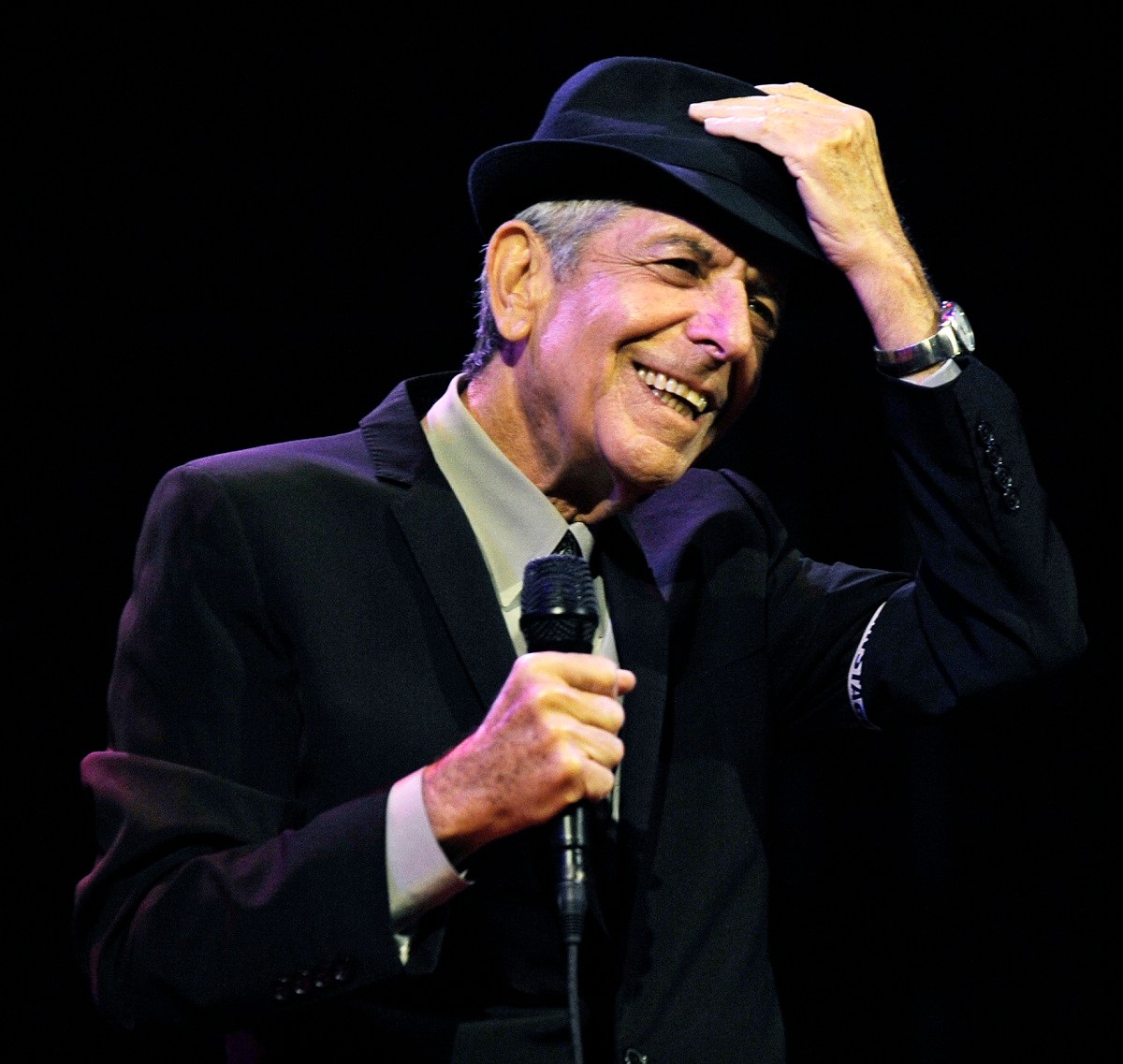
Famed singer-songwriter Leonard Cohen disagreed.
A poem written by Cohen in 2015, before his death in November 2016, was recently published and went viral on Thursday — the same day the Grammy Award-winning rapper met with President Trump, another person who has touted himself as a genius. The poem bears a blunt title: “Kanye West Is Not Picasso.”
The fiery 21 lines, published last week in “The Flame,” a book of Cohen’s last writings, were penned long before West’s bizarre White House visit and before he was quite so controversial. But many were quick to call it “a diss poem from beyond the grave.” Shared on Twitter by musician Amanda Shires early Thursday, the tweet has since amassed more than 10,000 likes and was retweeted more than 4,500 times as of early Friday.
The poem begins with the frank lines, “Kanye West is not Picasso/I am Picasso.”
West has repeatedly likened himself to the painter. Following his 2013 outburst, West repeated a similar sentiment during a 2015 speech at Oxford University, saying, “My goal, if I was going to do art, fine art, would have been to become Picasso or greater.” A year later, backstage at NBC’s “Saturday Night Live,” West was recorded claiming to be 50 percent more influential than Picasso, Stanley Kubrick and the apostle Paul, CBS News reported. West’s 2016 Grammy-nominated album is also called “The Life of Pablo.”
Cohen appeared to mock West’s propensity for aligning himself with some of the world’s most prominent creative minds.
“Kanye West is not Edison,” he wrote. “I am Edison/I am Tesla.”
The Kanye-focused lines take a similar tone.
“I am the Kanye West of Kanye West/The Kanye West/Of the great bogus shift of bulls— culture.” he wrote. “I am the Kanye West Kanye West thinks he is/When he shoves your a– off the stage/I am the real Kanye West.”
It remains unclear what inspired Cohen to write the poem. Cohen talked about West in a 2014 interview with the Wall Street Journal and appeared to harbor no ill will toward the rapper, saying, “A lot of, say Jay-Z or Kanye West — you don’t have to identify with every position they take, especially if you’re white. It’s not necessary to identify. It’s the energy, it’s the resonance of truth, of person, of real experience. When we are exposed to someone’s real experience, it resonates and it invigorates.”
Whatever the reason, one thing is certain: Cohen intended his poem to be read. While the book in which the poem appears was published posthumously, Cohen did take part in deciding what pieces would be included. An article in Maclean’s by Brian D. Johnson describes the book’s tone and selections as seeming to “reflect the almost giddy vertigo of an artist standing at the brink of death.”
In other words, Johnson wrote, West’s poem was Cohen’s “koan-like answer to a poetry slam.”
Reactions to the poem are largely split into two camps: Those who praised Cohen and those who saw the 2008 Rock and Roll Hall of Fame inductee as just another old musician griping about changing times.
“I didn’t think I could love him more,” one person wrote on Twitter about Cohen.
Another described the poem as the “ultimate mic drop.”
Leonard Cohen taking Kanye down in a diss poem from beyond the grave is too much for me. My brain is broken and what is life.
— Kevin Morby (@kevinmorby) October 11, 2018
Montreal Gazette columnist Brendan Kelly was not a fan.
Kelly, who had met the “Hallelujah” writer and singer in the late 1980s, wrote Thursday that while the poem reflected some of Cohen’s trademark humor, “mostly there is a kind of grumpiness that’s off-putting, reminding me of all the boomer musicians I’ve heard endlessly dissing Kanye and hip-hop in general as they sit home listening to the same old Dylan and James Taylor albums.”
Many echoed Kelly’s opinion.
“To be clear: I think this sucks,” tweeted New York Times staff editor Willy Staley, adding that Cohen sounded like a “hater.”
Another person tweeted, “This just reads as ‘rap is not as legitimate as what I do.’ ”
More from Morning Mix:
Master sommeliers stripped of coveted titles after cheating taints wine-tasting test
‘When they go low, we kick them’: How Michelle Obama’s maxim morphed to fit angry and divided times
Joel Thrasymachus DahlWhat's everyone's take on this? Just joining the growing list of former Dump Administration people who could not take Dump's dump anymore, or running for the GOP nomination in 2020?
My read is that it's the former, as she made a fairly shermanesque statement that she wasn't running, which would be hard to walk back in any primary campaign. But who knows?
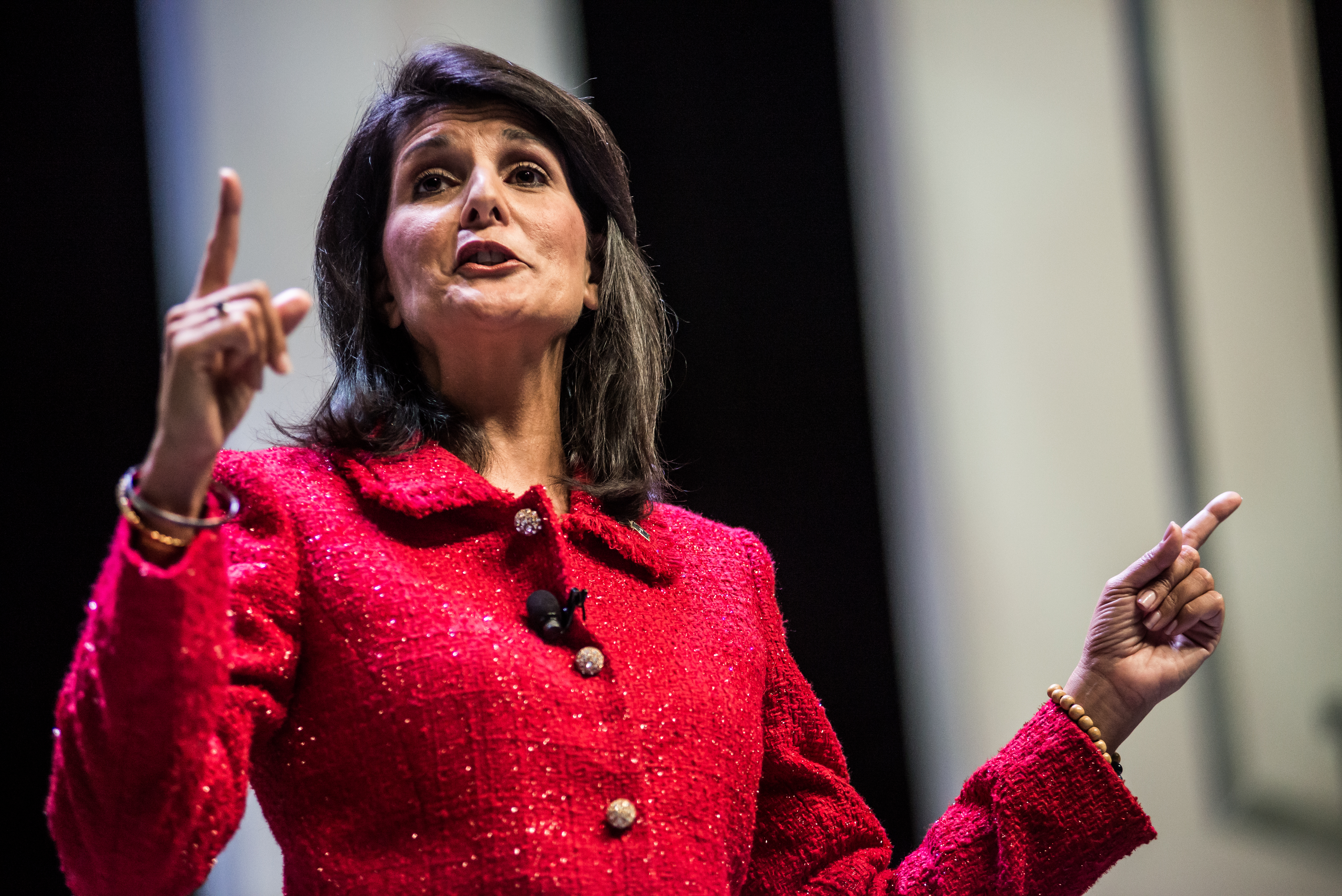
Nikki Haley’s abrupt and unexpected resignation from President Trump’s administration secured her membership in a singular club — the rare former White House official who leaves Trump’s orbit as a political force who could pose a potential threat to the president.
In a sign of her rising profile, the ambassador to the United Nations on Tuesday simultaneously announced her resignation at the end of this year while also reassuring Trump that she has no plans to challenge his reelection.
“No, I’m not running for 2020,” she said, seated next to the president in the Oval Office. “I can promise you what I’ll be doing is campaigning for this one. So, I look forward to supporting the president in the next election.”
The blunt statement underscores both the loyalty demanded by Trump and the political complications Haley could pose to the president.
At 46, Haley has built her own political brand and has a long potential career ahead of her. The former South Carolina governor mixes homespun Southern charm with hard-boiled political savvy — a daughter of immigrants boasting both executive experience in her home state and foreign policy chops from two years as one of Trump’s top diplomats.
“She’s a rising star and he’s king, so there’s always an inherent tension there,” said Mike Murphy, a longtime Republican strategist and Trump critic. “Politically, any star in the party is a threat to Trump because in his Stalinesque way, there’s only one sun god and it has to be Trump.”

For now, at least, Christine Matthews, a pollster who has worked with Republican candidates, said that Haley seems to be leaving the Trump administration on her own terms and with her personal and political bona fides still intact.
“She has served very well and has only enhanced her reputation and I think she’s probably the only person in the Trump administration who you can say that about,” Matthews said.
She likened Haley to Condoleezza Rice — the secretary of state and national security adviser under President George W. Bush — who was often mentioned as a possible GOP vice-presidential candidate. “She’s one of these rare people in Republican circles who conservatives and moderates really like and women and men can both agree on,” Matthews said. “She is somebody who is outside of stereotypical Republican central casting. She’s Indian American, she’s young, she’s both pragmatic as well as conservative, and I feel that she very much has that image going for her.”
Yet for a rising star, it remains unclear where she will shine. In the hours after her surprise announcement, political operatives floated options ranging from a high-dollar private-sector gig to a television contributor deal and book contract. There was also chatter that Haley could seek the Senate seat occupied by Lindsey O. Graham (R-S.C.) — an idea quickly dismissed by Haley confidants, Trump and Graham himself. “I have zero desire to be a Cabinet member,” Graham quipped.
Rick Tyler, a Republican strategist and former adviser to Sen. Ted Cruz (R-Tex.), said that while Haley’s departure was highly choreographed — “Who gets to resign in the Oval Office? It’s unbelievable.” — the challenge for Haley will be how she bides her time, especially if Trump seeks reelection in 2020 as expected.
“If she runs in 2024, she’ll have to figure out how to keep her profile active for the next six years, and most politicians can’t manage that,” Tyler said.
The timing of Haley’s exit, less than a month before the 2018 midterms, struck many in the president’s circle as either savvy or suspect.
On the one hand, she leaves with foreign policy credentials, the credibility that comes from navigating an often chaotic White House and ahead of potential political fallout from the November elections or special counsel Robert S. Mueller III’s Russia investigation.
“She’s shrewd, which is good in politics, but you have to keep an eye open,” said H. Boyd Brown, a former Democratic South Carolina legislator who has battled with Haley in the past. “She’s coming for you if you are in her way.”
The suddenness and secrecy surrounding her announcement Tuesday also prompted speculation about her motives. The expansive portfolio she enjoyed during Rex Tillerson’s tenure as secretary of state was diminished by the arrival of Secretary of State Mike Pompeo and national security adviser John Bolton, who controlled foreign policy out of the White House and made themselves more visible than their predecessors.
Trump has also been leery of her ambitions at times, frustrated when she made announcements on television or when she garnered large amounts of glowing press coverage. Haley had been privately skeptical of some of the president’s politics and tactics, yet was careful even in private situations not to criticize him while marveling at his crowds and poll numbers.
“Resignations in national politics are highly calculated maneuvers — it’s not just like, ‘Uh, I think I’ll have chili for lunch,’ ” Murphy said. “This was so abrupt and the timing so politically weird that it sure reads like it’s preempting something . . . If it’s the political masterstroke, where’s the landing pad? Where’s the ooh and ahh?”
A polished campaigner, Haley already was a rising national star in the Republican Party when Trump began running for president in 2016. She did not hide her discomfort with his pugnacity and the racially insensitive aspects of his campaign, delivering criticisms of Trump’s rhetoric and demeanor, and ultimately endorsing a competitor, Sen. Marco Rubio (R-Fla.).
But Trump won the primary in Haley’s home state handily, so his move to make her U.N. ambassador was seen as an olive branch to the Republican establishment.
Haley — one of the few women in the Cabinet and one of the few minorities to hold a senior administration position — quickly became the face of Trump’s foreign policy, demonstrating political acumen and shrewdness in her dealings with the White House.
When speculation mounted last month that Haley might have written an anonymous New York Times column claiming a “resistance” within the Trump administration, Haley penned a Washington Post column under the headline: “When I challenge the president, I do it directly. My anonymous colleague should have, too.”
In April, Haley revealed in a television interview that the administration would be rolling out new economic sanctions against Russia. Trump was upset because he was not ready to impose the new penalties, and National Economic Council Director Larry Kudlow said Haley had bungled the interview out of “confusion.”
The U.N. ambassador shot back the next day: “With all due respect,” she said, “I don’t get confused.”
Haley’s positioning on racial issues also stood in contrast with that of Trump. In August 2017, after Trump suggested both sides were to blame for the deadly white supremacist rally in Charlottesville, Haley made clear she disapproved of the president’s response but stopped short of publicly breaking with him, saying that she had communicated her views to him in private.
Notoriously fearful of media leaks, Haley has long micromanaged her own image and career and has kept extraordinarily close counsel, discussing major career moves only with her family and a clutch of key advisers. During her 2010 gubernatorial campaign, she kept her own schedule, pecked out emails late into the night and personally monitored comments on her Facebook page.
Once based in New York City for her U.N. post, Haley sought to stand apart from the backbiting that has often defined the West Wing, balancing a desire to be seen as independent with not running afoul of Trump.
Katon Dawson, former chairman of the South Carolina Republican Party, said Haley’s whirlwind resignation was probably deliberate.
“She’s certainly not confused,” Dawson said. “What you saw was vintage Nikki Haley.”
Josh Dawsey and Anne Gearan contributed to this report.
From fancy PBS comes a show where anything can happen and none of the continuity matters- it's Honest Trailers for Doctor Who! (Modern Version)
Watch the Honest Trailer for Classic Doctor Who at the link below!
https://www.youtube.com/watch?v=TOelo...
Watch the Honest Trailers Commentary to see an inside look from the writer's perspective!
https://www.youtube.com/watch?v=jN_Sf...
Written by Spencer Gilbert, Dan Murrell, Joe Starr, Lon Harris & Riley Silverman
Produced by Spencer Gilbert, Dan Murrell, Joe Starr & Max Dionne
Edited by Kevin Williamsen and TJ Nordaker
Assistant Editor: Emin Bassavand
Honest Trailers - Doctor Who
Joel Thrasymachus DahlMy explanation for this is that the reverse-coattail effect is a less reliable rule of thumb with the senate, because states are more complex beasts than are individual congressional districts (although, if you do want to apply that rule of thumb to the senate, six years ago the presidential candidate who won the popular vote was Barack Obama).
I also think that it's a bit more of a toss-up this year in the house, on account of how close the election was in 2016. Which is why my prediction isn't "huge GOP gains in the house because Clinton won the 2016 popular vote," but rather "it'll stay more or less the same as it is now, likely with the GOP still in control."
For President Trump and the GOP, the 2018 midterms are shaping up to be a tale of two chambers. In the U.S. House, Republicans look like they’ll lose seats — and maybe even their majority.31 But the U.S. Senate is a different story. FiveThirtyEight’s Classic forecast shows essentially no change in seats as the most likely outcome, and gives the GOP about a 7 in 9 chance of maintaining control. In fact, we currently give Republicans almost a 50 percent shot of gaining at least one seat.
This is an unusual position for the presidential party in a midterm election. But it’s not unprecedented.
Looking back at the 18 midterms in the post-World War II period, the president’s party has accomplished this feat only three times — 1962, 1970, and 1982. I calculated32 how many seats the presidential party held in the Senate and House at the time of the midterms and then how many seats it won or lost in the election.33 In the table below, I have highlighted the three cycles where the Senate and House moved in opposite directions — incidentally, the president’s party gained Senate seats while losing ground in the House in all three.
The presidential party’s performance in midterm elections from 1946 to 2014
| Net seat change | |||||
|---|---|---|---|---|---|
| YEAR | PARTY | HOUSE | SENATE | ||
| 2014 | Democratic | -13 |
–
|
-9 |
–
|
| 2010 | Democratic | -63 |
–
|
-6 |
–
|
| 2006 | Republican | -30 |
–
|
-6 |
–
|
| 2002 | Republican | +7 |
–
|
2 |
–
|
| 1998 | Democratic | +4 |
–
|
0 | |
| 1994 | Democratic | -52 |
–
|
-8 |
–
|
| 1990 | Republican | -9 |
–
|
-1 |
–
|
| 1986 | Republican | -4 |
–
|
-8 |
–
|
| 1982 | Republican | -27 |
–
|
1 |
–
|
| 1978 | Democratic | -10 |
–
|
-3 |
–
|
| 1974 | Republican | -43 |
–
|
-4 |
–
|
| 1970 | Republican | -10 |
–
|
1 |
–
|
| 1966 | Democratic | -46 |
–
|
-3 |
–
|
| 1962 | Democratic | -6 |
–
|
4 |
–
|
| 1958 | Republican | -49 |
–
|
-13 |
–
|
| 1954 | Republican | -16 |
–
|
-2 |
–
|
| 1950 | Democratic | -27 |
–
|
-5 |
–
|
| 1946 | Democratic | -53 |
–
|
-11 |
–
|
Seat change calculated by how many seats the presidential party gained or lost based on the number of seats it held on Election Day. Seat vacancies were assigned to the previous party. Party switches after an election were not included in the calculations.
Sources: Brookings, Greg Giroux, Michael Dubin, U.S. House of Representatives, U.S. Senate, UVA Center for Politics, Voteview.org
And what happened in these three midterm elections — more on that in a second — mirror to varying degrees what we see playing out now: The president’s party typically faces a midterm penalty, but in the Senate, which seats are up vary by class, and the number and location of the Senate seats the non-presidential party must defend can counteract that penalty. This year, Democrats face a particularly bad Senate map. In contrast, an unpopular president will almost certainly harm his party in the House, where all 435 seats are up for election.
Now to what happened and what it could mean for 2018. In 1962, when John F. Kennedy was president, Democrats lost six seats in the House, but gained four in the Senate. As the table above shows, this four-seat net gain in the Senate is the largest presidential party pickup there in a modern midterm election. Democrats were able to minimize their House losses and even gain seats in the Senate partly because Kennedy had such a high approval rating — around 60 percent — a month before Election Day. Generally, when presidents have high approval ratings, their parties don’t perform as poorly in the House, but the president’s standing affects the overall electoral environment, which can also matter in Senate elections.
Eight years later, in Richard Nixon’s first midterm, Republicans gained one seat in the Senate while losing 10 seats in the House. Just like his former rival Kennedy, Nixon had a strong approval rating — he was at 57 percent less than a month before Election Day — but unlike the Democrats in 1962, the GOP in 1970 was firmly in the minority in both congressional chambers. This diminished the GOP’s electoral exposure (i.e. the number of seats it had to defend), which reduced the number of seats Democrats could target for takeover. Democrats had to defend 25 of the 35 Senate seats up that cycle, including 13 in states that Nixon carried in the previous presidential election. This helped Republicans win four Democratic-held seats, though the GOP lost three seats34 that year too.
And in our last example, in 1982 Ronald Reagan’s GOP suffered a net loss of 27 seats in the House but still managed to add one seat in the Senate. The gap between House seats lost and Senate seats won was much larger in 1982 than in 1962 or 1970, and that might be because Reagan had a much lower approval rating – in the low 40s by Election Day. But once again, higher Democratic electoral exposure probably helped the GOP in the Senate — the Democrats held 19 of the 33 seats up in 1982.35
It’s intuitive that there’d be some relationship between midterm outcomes in the Senate and House. For example, if the FiveThirtyEight forecast improves for the GOP in the House, we would expect it to improve in the Senate, and vice versa. We’ve even written about how they’re related in our forecast methodology. After all, congressional elections occur both at the same time and in the same electoral environment, but as FiveThirtyEight’s Classic forecasts suggest, there can be some disconnect. To show this, I plotted the relationship between losses or gains in the Senate and House for the presidential party, including the current modal outputs for the FiveThirtyEight forecast. I found a correlation of .57 between the chambers, suggesting a somewhat positive but by no means ironclad relationship between shifts in the Senate and House for the presidential party.

Based on our current 2018 midterm forecast, Reagan’s 1982 midterm might be most analogous to our present election cycle. At the very least, it’s more closely related to what we’re seeing in the House than either the 1962 or 1970 midterms.
In 1982, Reagan had an approval rating in the low 40s by Election Day, which is pretty similar to Trump’s current standing in the polls. And as we saw with Reagan, a president as unpopular as Trump could mean large losses for his party in the House. The modal outcome in our House forecast currently sits at about a 30-seat loss for Republicans, which is not much more than the 27 seats the GOP lost in 1982. However, Republicans are more exposed this year and could lose a larger number of seats: The GOP must defend 240 seats in 2018, compared to 193 seats in 1982.
But if we look at just the Senate map, the 1970 Nixon midterm might be more similar — Democrats then had to defend 25 seats; this November, they’re defending 26. The modal outcome in our Senate forecast currently shows no change in the number of Republican seats, but does give the GOP almost a 1 in 2 chance to gain one or more seats. And when these circumstances are combined — a negative political environment for Republicans but a favorable Senate map — as they are in 2018, Republicans have a pretty good shot at becoming the fourth presidential party to lose ground in the House but gain seats in the Senate in a midterm election.

When it comes to changing diapers, Donte Palmer has his technique down.
After all, when public restrooms do not offer a place to change his son’s diaper, Mr. Palmer has to get creative: He squats low, against a wall, and lays Liam across his lap. His 12-year-old son, Isaiah Wells-Thomas, gives him a hand, disposing of wipes and soiled diapers.
Last month, when Mr. Palmer was going through the motions of squatting in a bathroom stall at a restaurant in Jacksonville, Fla., Isaiah took out his phone and snapped a photo.
Mr. Palmer, a high school teacher in Jacksonville, decided to post it online to show how routine the maneuver had become for his son, thinking he would get some reaction from friends. But a popular Instagram account reposted his photo, and soon, local and national media outlets picked up his story.
Messages of support from around the world — from fathers as far away as Australia, Japan and Uganda — flooded in.
“Eighty percent of the conversation was, we need father equality,” Mr. Palmer, 31, said in a phone interview on Thursday.
Mr. Palmer’s post and movement, #squatforchange, reignited the conversation about how changing stations are more commonly found in women’s restrooms than in men’s. On his posts, women also shared their stories of having to find ways to change their children without changing stations.
“The argument is we need more of them” for all parents, said Mr. Palmer, who lives in St. Augustine. But more often, he added, he is left to squat in a bathroom stall.

Mr. Palmer knows that changing stations in men’s restrooms exist. On a recent experiment with a friend, he said, he visited eight restaurants or stores in Jacksonville, and found that two of them had changing stations in their men’s restrooms.
In 2016, President Barack Obama signed the Bathrooms Accessible in Every Situation Act, known as the Babies Act, which required federal public buildings to be equipped with baby changing facilities. Last year, the New York City Council approved legislation that now requires new buildings and renovated ones to have changing tables available to the public, regardless of gender.
Councilman Rafael L. Espinal Jr., who proposed the legislation, said he got the idea after seeing a father change his child’s diaper on a sink a few years ago. “I found it disturbing,” Mr. Espinal said on Thursday.
When he proposed it, he said, he received no pushback, and instead heard more stories from mothers who had been forced to change their children on floors because of a lack of changing stations. The legislation includes any business that has a public restroom, including small coffee shops, restaurants and even nightclubs, he added.
The legislation also addresses gender equality, he said, because it means men will have equal access to changing stations. “The only way we’re going to create more gender parity is by making sure fathers are on diaper duty as well, and can be,” he said.
In Baltimore, the City Council is considering a bill that would require changing tables in men’s and women’s restrooms, after a councilman posted on social media about struggling to find a sanitary place in a public restroom to change his daughter’s diaper, according to The Baltimore Sun. The Sun reported that all 15 members of the council had signed on as co-sponsors to the bill.
Mr. Palmer, who described himself as an active father, said he wanted to have an even playing field for men and women. “I want to do all duties,” he said.
Mr. Palmer said he had recently started speaking with representatives about introducing local legislation to require adding changing stations in public restrooms, similar to the legislation in New York City.
“It just needs to be accessible everywhere for parents,” he said.
Follow Melissa Gomez on Twitter: @MelissaGomez004.
Hope they made her queen instantly. ALL HAIL OUR NEW MATRIARCH.
In Sweden, 8-year-old Saga Vanecek discovered a pre-Viking-era sword while she was swimming in a lake one summer's day.
The discovery site, Vidöstern lake, is near Saga's family's holiday home in Sweden's Jönköping County.
Experts say the sword may be 1,500 years old, and was very well preserved.
From BBC NEWS:
The sword was initially reported to be 1,000 years old, but experts at the local museum now believe it may date to around 1,500 years ago.
"It's not every day that you step on a sword in the lake!" Mikael Nordström from the museum said.
The level of the water was extremely low at the time, owing to a drought, which is probably why Saga uncovered the ancient weapon.
"I felt something in the water and lifted it up. Then there was a handle and I went to tell my dad that it looked like a sword," Saga told the Sveriges Radio broadcaster.
Her dad, Andy Vanecek, told English-language website The Local he thought it was a stick or something, but asked a friend to take a look. They figured out soon they'd found had something precious.
After young Saga's discovery, some adults carried out further excavations at the lake and found more ancient relics, including a brooch from the 3rd Century.
Joel Thrasymachus Dahl"Meanwhile, in Gilbert, police are asking residents to call if they spot Woodstock pushing Snoopy off the doghouse for no apparent reason, Big Bird operating a motor vehicle in an unsafe manner, or the Roadrunner darting in and out of traffic on Main Street. Or, they suggested, any birds making a late-night run to Taco Bell."

Police in Gilbert, Minn., are warning residents about a group of youthful residents unable to handle their alcohol. They’ve been drifting around town looking disoriented, narrowly avoiding getting hit by cars.
But these aren’t teenagers getting drunk. Instead, it’s the local bird population.
“The Gilbert Police Department has received several reports of birds that appear to be ‘under the influence’ flying into windows, cars and acting confused,” Police Chief Ty Techar wrote in a statement Tuesday. An early frost meant that berries had fermented earlier than usual, he explained, and birds were eating them and getting drunk.
Incidents around town involving intoxicated birds appear to be more prevalent than in past years, Techar added, because many have not yet migrated south. “It appears that some birds are getting a little more ‘tipsy’ than normal,” he wrote. “Generally, younger birds’ livers cannot handle the toxins as efficiently as more mature birds.”
He concluded: “There is no need to call law enforcement about these birds as they should sober up within a short period of time.”
A number of Gilbert residents commented on the Facebook post and thanked the police department for explaining why the birds had been acting so strangely. One woman wrote that she had found three dead birds on her deck recently, while another described quickly slamming on her brakes when a bird flew directly into her windshield. “This explains why I have hit 7 birds with my car this week,” commented another.
“I was going to say something . . . but I thought I was crazy!!!” wrote one resident. “This has been happening to me!” She added, “I know this post is a joke . . . but seriously . . . 2 birds dove into my windshield both on the way to work and on the way home . . . I was wondering what was going on.”
Another commenter joked, “There goes the chance of any bird from Northern MN ever being on the Supreme Court.”
The police news release ended with a suggestion that residents of the small northern Minnesota town call if they see “Angry Birds laughing and giggling uncontrollably and appearing to be happy” or “Tweety acting as if 10 feet tall and getting into confrontations with cats.”
Jokes aside, however, birds really can get intoxicated by eating fermented berries. A group of California scientists who performed necropsies on several flocks of cedar waxwings that had collided with hard surfaces found that all of them had recently gorged on overripe berries. “Flying under the influence of ethanol” had led to the birds’ deaths, they concluded in a 2012 study published in the Journal of Ornithology.
Obviously, birds can’t exactly take a breathalyzer test. Matthew Dodder, a self-described “bird guy” with four decades of birding experience who leads classes in Palo Alto, Calif., told The Washington Post that the key giveaway to tell whether birds are drunk is their goofy behavior.
“They’ll be flying kind of erratically,” he said. “We typically see them flying lower than usual through traffic. They’re just careless and they’re not looking for cars or other obstacles.”
Certain bird species, such as robins, cedar waxwings and thrushes, are the most prone to drunken antics since they eat more berries than other species like warblers and flycatchers that primarily eat insects. And as they prepare to fly south for winter, they may overindulge in an attempt to store up fat for the journey, Dodder said. The birds go from bush to bush trying to find more berries, their balance getting progressively worse.
“They just get sloppy and clumsy,” Dodder said. “They have actually fallen out of trees on occasion.”
In Portland, Ore., the Audubon Society operates what’s essentially a drunk tank for birds. “We get in birds into our Wildlife Care Center in the fall that are drunk on fermenting berries,” Bob Sallinger, the conservation director for the Audubon Society of Portland, wrote in an email. “Sometimes they are picked up after crashing into windows. Others are just found disoriented on the ground. We will hold them in captivity until they sober up and then set them free.”
The same thing happens in Canada’s Yukon Territory, where animal welfare officials will gently place intoxicated birds in small hamster cages until they’re ready to fly again a few hours later.
As humorous as it might sound, binging on berries can be deadly for birds. Portland has seen multiple incidents in the past decade where between 30 and 50 robins have suddenly turned up dead due to suspected alcohol poisoning. In 2011, police were called to investigate the suspicious deaths of 12 blackbirds at an elementary school in the United Kingdom, but a necropsy revealed the birds had not been the victims of foul play and instead may have just eaten too many fermented rowan berries.
Because intoxicated birds also have a tendency of smashing into things, the Audubon Society recommends putting decals on windows and other large reflective surfaces. And if you do come across a drunk bird that has survived a collision, Dodder recommends contacting an animal rescue or wildlife rehabilitation center.
“Sometimes, they just need a bit of time in a quiet setting to recover,” he said.
Meanwhile, in Gilbert, police are asking residents to call if they spot Woodstock pushing Snoopy off the doghouse for no apparent reason, Big Bird operating a motor vehicle in an unsafe manner, or the Roadrunner darting in and out of traffic on Main Street. Or, they suggested, any birds making a late-night run to Taco Bell.
More from Morning Mix:
Kavanaugh learns the Cruz rule: Tread lightly with college roommates
‘I knew that he knew he wasn’t telling the truth,’ former Yale roommate says about Kavanaugh
William Shatner is unleashing a Christmas album next month. Titled "Shatner Claus," it features guest performances by Henry Rollins (Black Flag), Iggy Pop, Rick Wakeman (Yes), Ian Anderson (Jethro Tull), Billy Gibbons (ZZ Top), and many more. Released by Cleopatra Records, "Shatner Claus" is just the latest in ol' Bill's lengthy recording career that includes "Ponder the Mystery" (2013), "Seeking Major Tom" (2011), "Has Been" (2004), "William Shatner Live" (1977), and, of course, "The Transformed Man" (1968).
Below, Shatner and Rollins "sing" Jingle Bells:

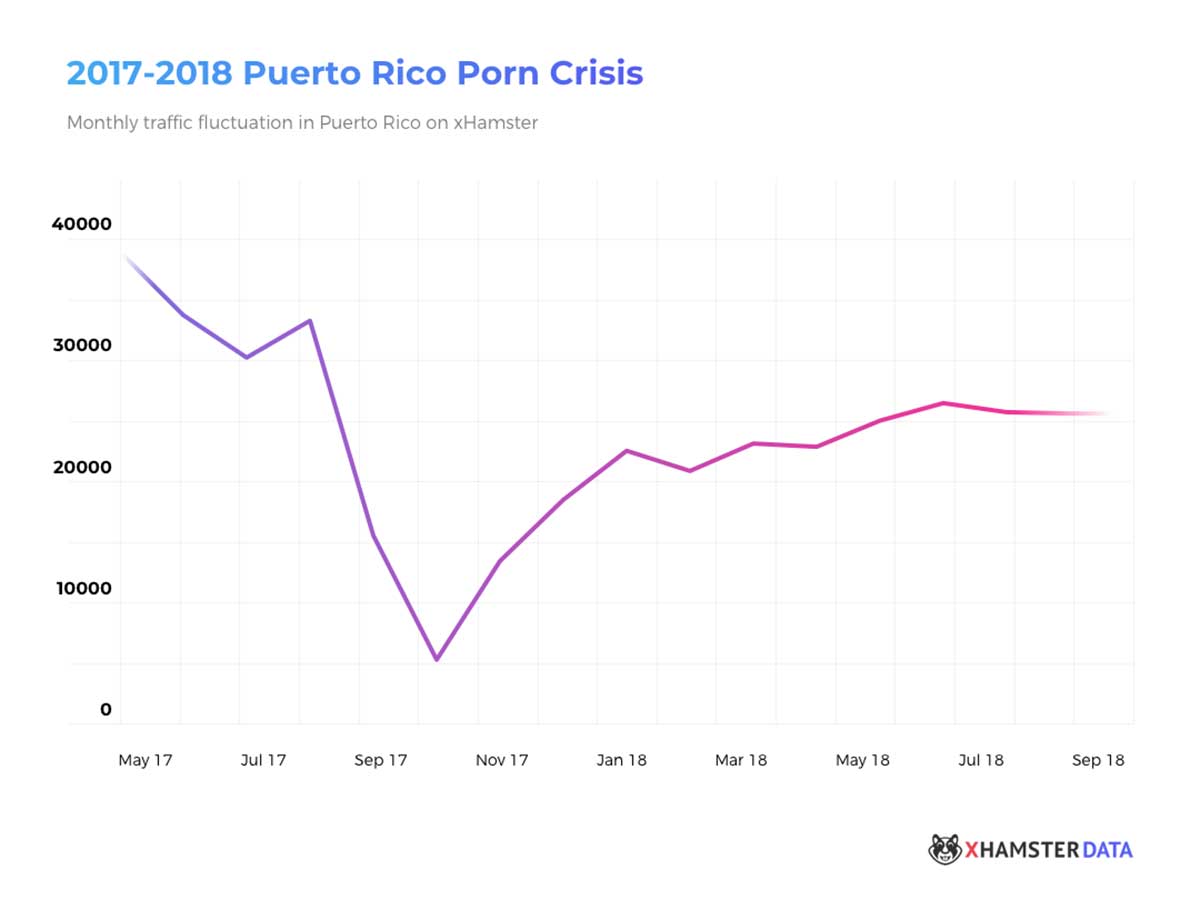
People living in Puerto Rico are not viewing online porn as much as they were before the island was devastated by Hurricane Maria last year.
From an xHamster press release:
A year after Hurricane Maria made landfall, the island of Puerto Rico still lags far behind in power and internet access, according to data from xHamster.
The data shows traffic from the island dropping -74.2% in the aftermath of the storm, then gradually recovering. However, a year later traffic to the site is down by over a fifth, or -20.1%.
"Porn is a unique indicator in a recovery, as it's able to measure not only access to power and the internet, but also privacy" says Alex Hawkins, Vice President of xHamster. "After news sites, adult content is one of the first things that users seek out when they secure regular access to power and internet. But unlike news or government sites, porn can't be accessed in public spaces like a library or shelter, so it gives remarkable insight into when life in a place like Puerto Rico has returned to 'normal'. In this case, we see that the recovery still has a long way to go."
Hawkins notes that other locations that suffered during the 2017-8 hurricane season, like Houston, have fully bounced back or have grown.
"What we're seeing is inconsistent with some of the claims made by officials that show a full recovery in Puerto Rico. It also disproves claims that Puerto Rico's power grid erratic prior to the storm. We're still seeing a drastically different landscape on the Island than what we're hearing on the news."
Joel Thrasymachus DahlSpot on!

Hovertext:
It occurred to me after drawing this that's it's basically a summary of The End of History.
Justice Ruth Bader Ginsburg on Thursday slammed the Senate's Supreme Court confirmation process as a “highly partisan show.”
“The Republicans move in lockstep, so do the Democrats,” she said while speaking Wednesday at George Washington University. “I wish I could wave a magic wand and have it go back to the way it was.”
Ginsburg, the Supreme Court's leading liberal, made her comments in the midst of a bitter confirmation battle over Judge Brett Kavanaugh, whom President Trump Donald John TrumpOver 100 lawmakers consistently voted against chemical safeguards: study CNN's Anderson Cooper unloads on Trump Jr. for spreading 'idiotic' conspiracy theories about him Cohn: Jamie Dimon would be 'phenomenal' president MORE has nominated to replace retiring Justice Anthony Kennedy on the Supreme Court.
If confirmed, Kavanugh would become Trump's second nominee on the court. The first, Justice Neil Gorsuch, was confirmed after Senate Republicans delayed the confirmation proceedings until after the 2016 presidential election. Gorsuch filled the seat opened up by Justice Antonin Scalia's death.
Ginsburg, 85, compared current confirmations to her own in 1993.
“The way it was, was right,” she said. “The way it is, is wrong."
“The atmosphere in '93 was truly bipartisan," she said. "The vote on my confirmation was 96 to 3 even though I had spent about 10 years of my life litigating cases under the auspices of the [American Civil Liberties Union] ACLU and I was on the ACLU board, and one of their general counsels.”
Ginsburg said the White House at the time was nervous about her affiliation with the civil rights group, but she said she didn’t get a single question from a senator about it.
She noted that both Justice Stephen Breyer and Scalia were also confirmed by wide margins in the Senate — Breyer by a vote of 87-9, and Scalia by a vote of 98-0.
“Every Democrat and every Republican voted for him,” she said of Scalia.
“But that’s the way it should be. It’s better than what it’s become, which is a highly partisan show.”
The Swedish election is a reminder of just how far populism has come, but also how a disliked and weakened center holds.

By Ross Douthat

On Sunday the Sweden Democrats, a right-wing party with roots in fascism, scored their highest share yet of the Swedish parliamentary vote — and the mandarins of Europe breathed a sigh of relief, because that higher-than-ever share was only 17.6 percent, and there had been fears that the cleaned-up fascists would reach 25 percent instead.
That such an outcome, in progressive Sweden of all places, came as a relief rather than a shock is a reminder of just how far populism has come, how much the fringes matter in Western politics and how weak the center has become.
But the fact remains that the populists’ performance was a disappointment: Not a majority, not a plurality, not even a plurality of the combined right and center-right vote. The Sweden Democrats won enough votes to rattle an already rattled continental elite, and enough to confirm their country’s rightward turn on immigration, but their ascent is not yet the stuff of which a populist-led governing coalition might be made.
Instead, the biggest story in the Swedish election, as in so many other Western elections lately, was fragmentation and its daughter stalemate — with declining or discredited parties of the center facing off against forces on the right and left that create majorities or near-majorities of opposition, but not of governance.
That’s the scene in Germany and France, where Angela Merkel and Emmanuel Macron are isolated between restive rights and left. (Macron, the great centrist hope, has worse approval ratings than Donald Trump.) It’s basically the scene in Britain, where an ineffectual center-right prime minister, Theresa May, is trying to manage the populism of the right, while a populist of the left, Jeremy Corbyn, is locked in combat with a weakened center-left establishment.
In a somewhat different way, allowing for our presidentialism and durable two-party system, it’s the scene in the United States. A right-wing populist insurgency appeared to take over the Republican Party under Trump, but it turned out to be ill-equipped to run anything larger than Breitbart News. So the Trump administration has mostly been run, ineffectually, by the discredited establishment that Trump defeated.
Meanwhile the left is energized as never in my lifetime, while the center-left seems bankrupt, dazed and paranoid. But the thesis that a populist left can win elections consistently, let alone govern a country that has so far responded to a more ideologically liberal Democratic Party by voting more often for Republicans, has been confirmed only in the imaginations of Jacobin subscribers.
The common thread in all of these Western stories is that if you put together all the voters who have given up on the old centrist parties (in Europe) or the old party establishments (in America), you would have the kind of majority upon which political realignments can be made. But because the people rejecting the establishments don’t begin to agree on why or what they want instead, because some of them are voting for Greens or Communists and others for reformed Fascists (or some for Bernie Sanders and Jill Stein and others for Trump), the establishment forces can find a way to hang on to power.
Thus you get populist shocks like Brexit and the election of Trump, you get figures like Corbyn or Marine Le Pen or the Sweden Democrats as important political actors … but then Le Pen gets clobbered in the runoff, Brexit ends up supervised by its former critics, and Trump’s own appointees take to the pages of this newspaper to explain how they aren’t really letting him run his own show. The center is hated, but whether overtly or covertly it finds some ways to hold.
The question is how long this situation can last. It might be that the current stalemate is just a transitional phase, a necessary step on the path from one order to another, and that at some point a group of politicians will figure out how to channel populist energy into a program or coalition that can make Western countries governable again.
This argument has been advanced frequently and shrewdly throughout the Trump era by the left-wing political theorist Corey Robin, who compares our age to the crackup of New Deal-Great Society liberalism in the 1970s, and argues that a lot of the angst over a supposed “crisis of democracy” is really just anxiety over the end of a particular consensus, a particular center — neoliberal-neoconservative, Reaganite-Clintonite-Blairite — that held for a couple of generations but can’t hold anymore.
“And as that happens,” he writes, “what we see is the founding of a new regime and the creation of new norms.” Robin fervently hopes that this regime will be socialist, and it might be — but it might equally well turn out to be some new right-wing form, of the kind suggested by the nationalists of Eastern Europe, the populist grand alliance uneasily ruling Italy (the one Western European country where the extremes have teamed up against the center), and the campaign but not the presidency of Donald Trump.
Or, for that matter, the new political regime might turn out to be more socialist in an increasingly multicultural America and more right-wing-nationalist in a mass-migration-troubled Europe, with the continents drifting apart ideologically instead of imitating each other.
But all this speculation assumes that the stalemate will end relatively quickly, that with a discredited establishment harassed by not-quite-ready populisms, something has to give. No iron law of history requires that to happen, and all kinds of structural factors in Western societies — our aging populations, our costly and complicated welfare states, our hysterical media environment, the veto points of the United States Constitution and the dysfunctional pseudo-federalism of the European Union — converge to make reform and realignment more difficult than in the past.
Moreover there are plenty of historical precedents for a situation in which a system stalemates or stagnates for generations, where revolts and reform programs founder again and again, where a disliked or despised elite holds on to power for a long time against divided and chaotic forms of populism.
In a recent essay for American Affairs, Michael Lind describes a version of this scenario for our era — a possible Western future in which the presently besieged establishment, “with its near-monopoly of wealth, political power, expertise and media influence, completely and successfully represses the numerically greater but politically weaker working-class majority. If that is the case, the future North America and Europe may look a lot like Brazil and Mexico, with nepotistic oligarchies clustered in a few fashionable metropolitan areas but surrounded by a derelict, depopulated, and despised ‘hinterland.’”
I’m not sure that Lind’s dystopia is more plausible than Robin’s prediction of a reformation and a reinvigorated politics. I do know that both are worth considering: Our present stalemate could well be a prelude to dramatic change, but just because it seems like Western politics can’t go on like this doesn’t mean we won’t.
Follow The New York Times Opinion section on Facebook and Twitter (@NYTopinion), and sign up for the Opinion Today newsletter.
Ross Douthat has been an Opinion columnist for The Times since 2009. He is the author of several books, most recently, “To Change the Church: Pope Francis and the Future of Catholicism.”
You can follow him on Twitter: @DouthatNYT
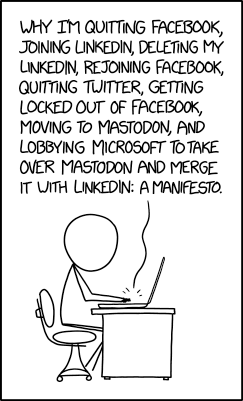
Joel Thrasymachus DahlI've always found it amusing when people post on social media that they're giving up social media. The real way to give up social media is to just go dark on it.

Nancy Crampton-Brophy seemed to have a knack for writing about the murder of spouses.
The Portland, Ore.-based romance novelist wrote books about relationships that were “wrong” but “never felt so right,” often featuring bare-chested men on the cover. In “The Wrong Cop,” she wrote about a woman who “spent every day of her marriage fantasizing about killing” her husband.
In “The Wrong Husband,” a woman tried to flee an abusive husband by faking her death.
And in “How to Murder Your Husband” — an essay — Crampton-Brophy wrote about how to get away with it.
She wrote the post on the blog “See Jane Publish” in November 2011, describing five core motives and a number of murder weapons from which she would choose if her character were to kill a husband in a romance novel. She advised against hiring a hit man to do the dirty work — “an amazing number of hit men rat you out to the police” — and against hiring a lover. “Never a good idea.” Poison was not advised either, because it’s traceable. “Who wants to hang out with a sick husband?” she wrote.
“After all,” Crampton-Brophy wrote in the post, which was made private after inquiries from The Washington Post to the site’s administrators, “if the murder is supposed to set me free, I certainly don’t want to spend any time in jail.”
In real life, she appeared to follow some of her own advice, at least according to police. Rather than hire a hit man, she allegedly pulled the trigger herself.
Crampton-Brophy, 68, was arrested Sept. 5 on charges of murdering her husband with a gun and unlawful use of a weapon in the death of her husband, Daniel Brophy, according to the Portland Police Bureau. She was arraigned Thursday, appearing in blue inmate clothing, and ordered jailed without bail, court records show. She has not filed a plea, and her attorney declined to comment when contacted by The Post.
Police have not revealed the alleged motive.
“It’s a big shock. It’s a big shock,” Brophy’s mother, Karen Brophy, told The Post of her daughter-in-law’s arrest. “But we’re not making any statements.”
The killing puzzled police and those close to Daniel Brophy from the start. Brophy, a 63-year-old chef, was fatally shot at his workplace at the Oregon Culinary Institute on the morning of June 2. Students were just beginning to file into the building for class when they found him bleeding in the kitchen, KATU2 news reported. Police had no description of the suspect.
One day later, Crampton-Brophy wrote an emotional post on Facebook.
“For my Facebook friends and family, I have sad news to relate,” Crampton-Brophy wrote. “My husband and best friend, Chef Dan Brophy was killed yesterday morning. For those of you who are close to me and feel this deserved a phone call, you are right, but I’m struggling to make sense of this right now.”
Daniel Brophy was a beloved chef at the Oregon Culinary Institute. Colleagues considered him the institute’s “resident encyclopedia of knowledge” who had a “creative approach to teaching” and an “offbeat sense of humor,”as they wrote about him in memoriam. He sometimes made cooks who forgot their hats wear sombreros or spiky helmets instead, the Portland Tribune reported. And he liked to lead groups of students on “experimental field trips” into forests, perpetually hunting for new ingredients.
Hundreds of people came to celebrate and mourn him at a candlelight vigil held outside the Oregon Culinary Institute on June 4. Crampton-Brophy came, too.
A tribute to our beloved friend, Chef Dan BrophyTo say we are thankful for the love and support everyone has shown is an understatement. There are no words that can truly describe the legacy that Dan Brophy leaves behind. And we know he's looking down smiling for the kind words, support, love and togetherness the community has shown in his honor. Here's a tribute to our friend, brother, colleague, and Chef Instructor, Dan Brophy. #ForeverBrophy
Posted by Oregon Culinary Institute on Friday, June 8, 2018
But as the weeks went on, neighbors told the Oregonian, something seemed off about Crampton-Brophy. Don McConnell, her neighbor of six years, told the Oregonian that earlier this summer he had a conversation with Crampton-Brophy about her husband’s death, wondering what the motive could have possibly been in the tragedy.
“I said, are [the police] keeping in touch with you?” McConnell recalled asking her.
“She said, ‘No, I’m a suspect,’ ” McConnell told the Oregonian. “I thought she must have been one tough woman to handle that the way she did.”
On Thursday, prosecutors and Crampton-Brophy’s defense attorney said little as the defendant was brought before a judge to hear the charges against her. A judge took the unusual step of sealing a probable cause affidavit in Crampton-Brophy’s case at prosecutors’ request, a spokesman for the Multnomah County District Attorney’s Office told The Post. Police declined to answer questions from The Post about the evidence justifying Crampton-Brophy’s arrest or what led police to suspect her, citing an ongoing investigation.
In Crampton-Brophy’s “How to Murder Your Husband” essay, she had expressed that although she frequently thought about murder, she didn’t see herself following through with something so brutal. She wrote she would not want to “worry about blood and brains splattered on my walls,” or “remembering lies.”
“I find it easier to wish people dead than to actually kill them,” she wrote. “. . . But the thing I know about murder is that every one of us have it in him/her when pushed far enough.”
The couple had been married for 27 years, according to court documents. They had a “fabulous garden” in their backyard, where chickens and turkeys also roamed, Crampton-Brophy wrote on her author website, where she promoted her steamy romance paperbacks. The couple “had our ups and downs,” she wrote on her author page, but there were “more good times than bad.” She said she knew she had fallen for him one night when she was taking a bath and called out for him to join.
“His answer convinced me he was Mr. Right,” she wrote on her author bio. She recalled him saying, “ ’Yes, but I’m making hors d’oeuvres.’
“Can you imagine spending the rest of your life without a man like that?”
Crampton-Brophy appeared to be a productive writer, having published at least seven novels that mostly focused on secret relationships between, as she put it, “rugged men and strong women.” The lead male characters were almost always Navy SEALs.
When it came to Crampton-Brophy’s own marriage, she wrote frequently about it on the Internet, sometimes with a dark sense of humor that her readers appeared to find amusing.
In one now-private 2011 post on See Jane Publish that drew laughs from readers, she wrote: “My husband and I are both on our second (and final — trust me!) marriage. We vowed, prior to saying ‘I do,’ that we would not end in divorce. We did not, I should note, rule out a tragic drive-by shooting or a suspicious accident.”
At the end of the post, she said she loved “the way he can make me laugh when I’m really angry,” and “how, when I least expect it, he can say the perfect thing.”
“But one last word of caution,” she wrote, “if I ever take a swan-dive off a high building, investigate. Investigate. Investigate.”
More from Morning Mix:
Mysterious vending machines sold $2 pens. Officials say they were actually crack pipes.
Missing Oregon hiker was killed in state’s first fatal wild cougar attack, authorities say
Joel Thrasymachus DahlThis makes an excellent point, and is very well written.
I went to war to avenge my brother’s death. But the only person I truly wanted to kill died 17 years ago.
By Joe Quinn
Mr. Quinn is a United States Army veteran.

It has taken me a while to realize something.
Seventeen years ago, I saw a picture of Mohamed Atta for the first time, and my blood boiled from the sound of his voice emanating from the television, as he said over the airplane’s intercom system: “We have some planes, just stay quiet and you’ll be O.K. We are returning to the airport.” Instead, he crashed it between the 93rd and 99th floors of the World Trade Center’s north tower.
My 23-year-old brother, James, was on the 102nd floor.
Staring at that picture of Atta, I would have visions of what my brother’s final moments were like. I would envision my asthmatic brother slowly succumbing to smoke inhalation on the flat, gray corporate rug of his Cantor Fitzgerald office — trapped, climbing upward and afraid for the entire 102 minutes before the tower’s collapse. Glaring at Atta’s photo, I’d imagine my brother’s body buckling, falling, crumpling, burning, melting, and in that moment of imagination, my entire being wanted revenge against the people who did this.
So I joined the Army.
I joined the war. I deployed twice to Iraq and once to Afghanistan.
I learned many things but realized just one.
I learned that deploying for the second time was easier than the first, but each time it’s harder to fully come home.
I learned that I love soldiers. Nothing builds bonds more than living with a group of people in a war zone, getting shot at, not showering for months, roasting our own excrement in burn pits, cracking inappropriate jokes and serving something greater than ourselves.
I also learned how that love turns to heartache when one of those soldiers gets killed, and you pack his gear up in duffel bags to be shipped home to his wife and unborn child. I learned that another family’s losing a brother doesn’t bring my brother back.
But that wasn’t the thing I realized.
In Afghanistan, after an Afghan police officer demanded money from me at gunpoint to get through a checkpoint, I learned of the Kabul government’s widespread corruption. I learned that spending $68 billion on Afghan forces doesn’t buy the essential ingredients of a fighting force: loyalty, courage and integrity. I learned that most generals would always ask for more money, more troops, more time — and more war. It’s like asking Tom Brady what he wants to do on Sunday.
I learned that the definition of insanity is doing the same thing over and over again and expecting a different result. For the past 17 years in Afghanistan, we’ve tried everything: a light footprint, a big footprint, conventional war, counterinsurgency, counter-corruption, surges, drawdowns.
But that wasn’t the thing I realized.
I also learned that those who made the ultimate sacrifice are the very best of America.
I learned to try to live a life worthy of their sacrifice, but perhaps this is a false platitude. We’ll say, “Until Valhalla,” after hearing the news of another brother killed, but perhaps preventing more brothers from dying is just as worthy of their sacrifice.
I also learned to be father. As I hold my son Graham James in my arms tonight, I feel selfish because there are thousands of fathers who never came home to hold their children. I feel selfish because there was a father who came home from war 17 years ago to hold his child in his arms and now that child is going off to fight in the same war.
A hard lesson, but it’s still not the thing I realized.
I learned that Osama bin Laden’s strategic logic was to embroil the United States in a never-ending conflict to ultimately bankrupt the country. “All that we have to do is send two mujahedeen to the furthest point east to raise a piece of cloth on which is written ‘Al Qaeda,’” he said in 2004, “in order to make generals race there to cause America to suffer human, economic and political losses without their achieving for it anything of note ….” Why are we continuing to do what Bin Laden wanted all along?
But that, ultimately, was not the thing I realized.
I learned that every part of me wanted to just stay quiet with my feelings about the war because I was afraid of what people might say. It’s easier to bask in the warm embrace of “Thank you for your service” without questioning what that service was for. One way or another, we were all affected by Sept. 11, which has caused us to view the war through a distorted lens. This is why most of us won’t comment or share or at least have a dialogue about the war.
But the main reason I wanted to stay quiet is because it has embarrassingly taken me 17 years to realize something, and what I realized was this: Seventeen years ago, staring at that picture of Mohammad Atta, I wanted revenge against the people who killed my brother. But what I finally realized was that the people who killed my brother died the same day he did.
I refuse to take Atta’s orders, or Bin Laden’s. I will not “stay quiet.” End the war.
Joe Quinn is a United States Army veteran.
Follow The New York Times Opinion section on Facebook and Twitter (@NYTopinion).
DOCTOR WHO TO LAND ON SUNDAY 7th OCTOBER 2018.
THE WOMAN WHO FELL TO EARTH.
The last time viewers saw the Doctor, she was falling from her TARDIS so it’s about time for the Doctor to land. This time it’s all change, as Doctor Who is moving to Sunday nights, launching on Sunday 7th October.
Never before in the show’s history has an entire series descended to earth on a Sunday. This year marks a brand new era with a new Showrunner, a new Doctor, new friends and a whole host of new monsters – so it’s only fitting that the new Time Lord will land in a new time zone on BBC One.
Chris Chibnall, Showrunner said “New Doctor, new home! Jodie Whittaker’s Doctor is about to burst into Sunday nights — and make the end of the weekend so much more exciting. Get everybody’s homework done, sort out your Monday clothes, then grab some special Sunday night popcorn, and settle down with all of the family for Sunday night adventures across space and time. (Also, move the sofa away from the wall so parents can hide behind it during the scary bits). The Thirteenth Doctor is falling from the sky and it’s going to be a blast.”
Charlotte Moore, Director of BBC Content said: “With Chris Chibnall at the helm and Jodie Whittaker’s arrival as the new Doctor we are heralding a brand new era for the show and so it feels only right to give it a new home on Sunday nights at the heart of BBC One’s Autumn schedule. ”
Showrunner Chris Chibnall has written the first episode of the brand new series which is titled “The Woman Who Fell to Earth”. With the Doctor on her way it’s only a matter of time before viewers can enjoy being transported out of this world this autumn.
Joel Thrasymachus DahlAccurate.

Super Patriotic Dating Simulator, which is now on Kickstarter, is your typical romantic story of an elite spy infiltrating, seducing and then killing members of ISIS.

People eager to spend the waning days of summer frolicking in the waters near a coastal town in northwest France might want to rethink their plans. It isn’t safe, according to local officials, who recently banned swimming and diving in the area.
But the danger threatening visitors to the beaches of Landevennec isn’t a vicious rip current or a shark — it’s a lonely, “lovelorn” male bottlenose dolphin nicknamed Zafar.
For months, Zafar has been known in the Bay of Brest for his unabashed playfulness, even allowing people to hold onto his dorsal fin as he takes them for rides, the Telegraph reported. But the dolphin’s interest in humans now appears to be driven by the need for company of an intimate nature, the French newspaper Ouest-France reported. “He is in heat,” one marine mammal expert told the news site.
Zafar has been seen trying to rub up against swimmers and boats or kayaks, Le Telegramme reported. In other instances, the dolphin prevented a female swimmer from returning to shore (she was later rescued by boat) and lifted another woman out of the water with his nose, according to the French news site.
While his name translates to “victory,” Zafar’s various attempts to satisfy his needs have not only fallen short but prompted Landevennec’s mayor, Roger Lars, to issue a bylaw banning swimming and diving near the village’s shoreline whenever Zafar is seen in the area, Ouest-France reported.
Visitors and locals, Lars said, were becoming “frightened” by Zafar’s behavior, according to Ouest-France.
“I issued the decree to preserve the safety of people,” he said. According to the Telegraph, people are also now “forbidden” to get within about 50 yards of the dolphin.
The “aggressive” and “pushy” antics are not unusual for a dolphin in Zafar’s situation, Elizabeth Hawkins, lead researcher with Dolphin Research Australia, told The Washington Post. Zafar is what researchers call a “social solitary dolphin,” meaning for some reason he has been isolated from other dolphins and is now a “social outcast,” Hawkins said.
The dolphin is “wanting, needing, yearning social contact from cohorts, and that need isn’t fulfilled,” she said. “It can try different dolphin behaviors toward humans to try and get that social fulfillment.”
But, Hawkins added, that’s when “strange behaviors can come about.”
Given how social dolphins are, Hawkins said, the animals seek to form and reinforce bonds, often using sexual behavior. For solitary male dolphins isolated from their society, rubbing themselves on objects or people has been observed as attempts to meet that biological need, she said.
“It’s been observed that dolphins and different whale species will rub themselves against objects with what appears to be some type of sexual satisfaction coming about,” Hawkins said.
According to one chapter of a 2003 book “Marine Mammals: Fisheries, Tourism and Management Issues,” researchers found that of 29 “lone, sociable dolphins,” at least 13 had “periods of misdirected sexual behaviors towards humans, buoys, and/or vessels.”
The way Zafar’s behavior has progressed is also common among these lone dolphins, said Lars Bejder, director of the Hawaiian Institute of Marine Biology’s Marine Mammal Research Program at the University of Hawaii at Manoa.
“The animals slowly become more and more habituated to human activities, which humans then like, but in that process they typically become more and more aggressive, which sounds like exactly what’s happening now,” Bejder told The Post.
In the marine mammal book, it was noted that at least 18 of the lone dolphins had directed aggressive behavior toward people.
No one has been injured by Zafar yet, a fact that has motivated locals such as Erwan Le Cornec to challenge the swimming ban, Le Telegramme reported.
Le Cornec, a specialist in environmental law who enjoys swimming with Zafar, told Le Telegramme he plans to take legal action against the “excessive” decree.
“This animal is not dangerous,” he said. “There have never been any mishaps noted in the natural environment between a dolphin and a human. You just don’t do anything in his presence and don’t go swimming with him if you’re a bad swimmer.”
In an interview with Ouest-France, Le Cornec claimed that the mayor wants to paint Zafar as a “ferocious beast, totally unpredictable, likely to drown people.”
“It will turn the legitimately positive approach that people have to dolphins into a fear of these intelligent animals, and make this fear into a panic and this panic into a real psychosis,” he said.
Lars, the town’s mayor, told Le Telegramme that the decision to impose the ban was made only after consulting marine mammal experts.
Hawkins and Bejder praised the mayor’s actions.
“With an adult dolphin doing this kind of behavior, it can be very insistent, very pushy,” Hawkins said. “It can actually increase the harm to swimmers themselves, and the dolphin male may not mean to inflict harm upon swimmers, but it’s several hundred kilos of a fairly rambunctious animal trying to fulfill a need.”
Bejder said dolphins ramming into humans can lead to a variety of serious injuries, including broken arms, legs and ribs.
The ban also serves to protect Zafar from an unfortunate fate common to solitary dolphins: untimely death at the hands of humans.
Habituation, or becoming used to human contact, can lessen a dolphin’s natural instincts to be aware of potential threats, leaving them vulnerable to getting hit by boats or abused by people, Hawkins said.
“There’s horrible stories of how people have interacted with these animals,” she said, noting examples of people stuffing cigarette butts into a dolphin’s blowhole or pouring beer into their throats.
Based on the description of Zafar’s behavior, Hawkins said it appears the dolphin is already at a “very high level of habituation” and that authorities stepped in at the right time.
By staying away, people can do their part to help save him, Bejder said.
“The best thing you can do for this animal right now is to not interact with it and hope it can resume natural behavior again,” he said.
Isaac Stanley-Becker contributed to this report.
More from Morning Mix:
Louis C.K. performed for the first time, nine months after admitting sexual misconduct
Joel Thrasymachus DahlTOR econ nerds, what do you think?

Who lost Lehman Brothers? Could it have been saved?
As we approach the 10th anniversary of Lehman’s collapse (Sept. 15), these questions won’t go away. The Lehman bankruptcy is portrayed as the pivotal event that converted severe — but familiar — disruptions in financial markets into a full-blown panic. Nothing like it had occurred in the United States since the Great Depression of the 1930s. Stocks fell; unemployment soared. The skeptics argue that, if Lehman had been rescued, the economy would have fared much better.
The officials who handled the Lehman bankruptcy aren’t having it. They contend they did all they could. Lehman was too far gone to be saved, except at exorbitant public expense. That’s the position of former treasury secretary Hank Paulson, ex-Federal Reserve chairman Ben Bernanke and Timothy Geithner, then president of the New York Federal Reserve.
The most biting criticism comes from economist Laurence M. Ball of Johns Hopkins University, who has written an angry book on Lehman (“The Fed and Lehman Brothers: Setting the Record Straight on a Financial Disaster”). Even those who reject Ball’s conclusions will find his analysis highly detailed and clearly written.
He has few doubts. “The truth is that Lehman’s failure could have been avoided, and that policymakers did not need to be particularly clever to achieve that outcome,” Ball writes.
Recall the nature of Lehman’s business.
Like other investment banks — say, Goldman Sachs — it borrowed short-term money, with maturities as brief as one day at low interest rates, and used these funds for lending and investing at (hopefully) higher interest rates and returns. As of Aug. 31, 2008 — two weeks before its bankruptcy — Lehman had about $600 billion in assets (bonds, stocks, other investments) and $572 billion in borrowings. Shareholder equity was $28 billion ($600 billion minus $572 billion).
From these numbers, you can see why Lehman was vulnerable. If its assets fell 5 percent ($30 billion), its stockholders’ equity would be wiped out. If its short-term lenders wouldn’t renew their loans, Lehman’s assets would have been dumped onto markets at distressed prices. Both misfortunes befell Lehman: Its assets lost value, and its short-term lenders deserted.
The Fed could have rescued Lehman by lending it the money needed to replace the fleeing short-term lenders, Ball argues. The response from Paulson and company was: Legally, we couldn’t do it.
The loans probably would have been made under Section 13(3) of the Federal Reserve Act, which permitted the Fed to make emergency loans under “unusual and exigent circumstances.” But the Fed’s freedom was not unfettered; it couldn’t just throw money at the problem. Fed officials felt that there had to be good prospects that the loan would be repaid — and they couldn’t make that finding.
Here’s where Ball’s analysis becomes questionable.
At times, he almost accuses Paulson, Bernanke and Geithner of lying about Lehman. This is unfair and inaccurate. Up until the bankruptcy, they tried to find a private buyer for Lehman. There were no takers; talks with Bank of America and Barclays broke down.
At this point, Paulson seems to have decided — for personal, political and policy reasons — that letting Lehman fail was the least bad alternative. Personally, Paulson despised the label “Mr. Bailout,” which had attached to him after the rescue of Bear Stearns, another investment bank, in March 2008. Politically, Wall Street bailouts were enormously unpopular.
Finally, letting Lehman fail might be good policy. It would discipline speculation. “Too big to fail” would be repudiated. Paulson and many economists seemed to take this view. After Lehman’s bankruptcy, Harvard economist Ken Rogoff wrote approvingly in The Post that the decision showed Wall Street that financial regulators “are not such creampuffs after all.” This reasoning soon disappeared as Lehman’s wider effects became apparent.
Ball also strays in suggesting that rescuing Lehman would have subdued the financial crisis. This seems doubtful. It didn’t happen after the bailout of Bear Stearns; it didn’t happen after Paulson seized Fannie Mae and Freddie Mac. The central causes of the crisis were years of lax credit decisions that left many financial institutions riddled with losses. These couldn’t be wished away.
If Lehman were rescued, runs on other institutions would almost certainly have continued. The decisions were being made under enormous time pressures and incomplete information: the fog of crisis. One way or another, a debacle was unavoidable.
What’s necessary now is to draw the right lessons from this financial calamity. Unfortunately, we’re going in the wrong direction. Reflecting public hostility toward Wall Street “bailouts,” Congress tightened the rules governing Fed lending under Section 13(3) in 2010. This made perfect sense politically — and no sense economically. In some future crisis, the Fed needs the freedom to protect the financial system. Restricting that freedom flirts with chaos.
Read more from Robert Samuelson’s archive.
Joel Thrasymachus DahlShared for the alt-text.

At MSR, we get this question a lot: Can you filter your urine and drink it for rehydration in an emergency situation? Should you? The confusion surrounding this topic is understandable. The internet, survivalist shows, and even history is flush with sensational theories and contradicting claims. So we asked the experts in MSR’s water research lab to use science to set the record straight.
Is it safe to drink your urine?
Many claim that in a survivalist situation, drinking your pee when you’re out of water can save you from succumbing to dehydration. The fact is, this is simply false. Not only will your urine not rehydrate you, it will have the opposite effect and dehydrate you at a faster rate. In fact, these dire moments are perhaps the most dangerous time to imbibe your own brew.
It’s important to remember that urine is your body’s vehicle for eliminating liquid and soluble waste. Though mostly water, urine contains dissolved salts, minerals and trace amounts of toxins from your liver. The more dehydrated you are, the higher the concentration of these pollutants in your pee. If you’re in a survivalist situation, you’re likely extremely dehydrated and the concentrations are very high.
At this desperate point in time, drinking your urine—and putting those pollutants back into your system—can cause a build-up of toxic levels. It’s for this same reason that it’s so dangerous to drink seawater. The more you drink, the faster it dehydrates you. The (very-simplified) science is: too much salt draws water out of your cells through the process of osmosis.
That said, it is possible to drink your urine without ill effects. A healthy person who’s fully hydrated likely wouldn’t be harmed by a couple cups of his own clear cocktail (not golden at this point). Urine is about 95% water. It is not completely sterile of microorganisms, as many sources incorrectly state. But it doesn’t contain any of the harmful microbes that can make you immediately sick—such as those you might ingest from contaminated wilderness water, and which are generally transferred through feces instead.

Can you use a backcountry water filter to make urine drinkable?
So what if you filter it? Again, sorry to burst any bubbles, the answer is no. The dissolved salts, ions and molecules, like urea, that are present in urine are too small for backpacking filters and even purifiers to remove. Other forms of treatment, like UV light or chemical treatments only kill the microbes; they do nothing to rid the water of these other molecular-sized contaminants.
The only way to safely drink urine (such as in a survival situation, as your only water source) is to remove those dissolved contaminants from it, or at least bring them down to a negligible level. There are only two ways to do this. One is reverse osmosis, which uses extremely high pressure to force water through a membrane that literally passes only water (not even salt). The other is through distillation—essentially evaporating out the water molecules and letting them condense again in a different vessel for drinking.
While these methods will isolate the water that’s drinkable, it’s even harder to remove every last trace of urine taste and smell.
Suffice to say, we don’t recommend sipping your spirits—especially in an emergency situation. The courageous act will neither hydrate you nor make you a hardier backcountry soul.
So here’s to science and heading into the backcountry prepared for the worst and all the wiser!
To learn why you should filter natural wilderness water however, head over here.
BURLINGTON, Vt. — In less than 24 hours, Ethan Sonneborn, a Democratic candidate for governor of Vermont, was set to face off against four opponents at a televised forum. He needed to stand out against a crowded primary field and make enough of an impact to overcome his low name recognition. So his opening statement was crucial.
“I want to be almost exclusively focused on the economy in my opening statement, because no other candidate has a monopoly on the economy,” he told his campaign manager, Miles Burgess, and his chief of staff, Alex Yaggy. “Let’s add in a line about raising the minimum wage.”
Sonneborn leaned back into a cozy beige sectional and began to dictate while Burgess took notes on a yellow legal pad.
It was a perfectly normal campaign meeting except in one important way: Sonneborn is 14 years old. And so is his senior staff (although, to be fair, Yaggy will turn 15 on primary day.)
On an overcast Wednesday afternoon, in the waning days of summer vacation, the three boys sat inside doing debate prep at Sonneborn’s house and noshing on banana bread that his mother has set out for them.

And they were dead serious about it. The TV in the den displayed a write-up of the Republican primary debate, which they dissected like the salty, weathered politicos that they are not. As Sonneborn talked, Burgess occasionally offered suggestions while Yaggy pushed the candidate to be more specific when rhetoric got the better of him. “Every politician says jobs and small business are backbones of the economy and you just did it,” he interjects after one particularly gilded line.
“Is this legal?” his campaign website asks rhetorically.
Yep! Unlike most states, Vermont has no age requirement for gubernatorial candidates, only a residency requirement. Sonneborn, who has lived in Bristol for 14 years — his entire life — makes the cut.
Sonneborn declared his candidacy for governor back in August 2017, and then told his parents about it. After the secretary of state consulted with the attorney general, it was decided that he would be allowed to run, but his parents would have to sign a form acknowledging that they knew he was running and didn’t oppose him doing so.
No big! He got their permission.
With that out of the way, Sonneborn had to gather the necessary signatures to actually get on the ballot. Could he do it? Yes he could! A beaming Sonneborn delivered the signatures in May.
With all those hurdles cleared, could Sonneborn . . . actually win the Democratic nomination on Aug. 14?
Probably not. Age aside, he is hamstrung by very low name recognition, a problem that his adult Democratic opponents face as well. But hey, nobody thought a 14-year-old would actually run, let alone land himself on the ballot, let alone participate — and hold his own — against his adult competitors in several candidate forums.
Sonneborn thinks he can do it. “My campaign transcends age,” he said. He possesses a preternatural self-assurance that’s not uncommon among politicians, but certainly is among teenagers who typically navigate the cutthroat politics of high school, not state government.
If he wins, he’ll appear on the general election ballot as the Democratic nominee. Though it’s unlikely that Sonneborn will unseat Republican Gov. Phil Scott this November since the race is considered safely Republican, if he does somehow make it that far, “that’s up to the attorney general,” Vermont Secretary of State Jim Condos said.
In the wake of the Parkland shooting, political observers have been asking whether the subsequent student-led protests would lead to more participation from the youngest generations. Right now, a Washington Post analysis shows that young voters aren’t on track to sway the outcome of the midterm elections.
But one of the most fascinating subplots of the 2018 election cycle is that there are numerous teenagers running for office. Just in Vermont, there’s also Finnian Boardman Abbey, 16, who is running for state Senate. And in Kansas, several teenagers ran for governor, drawing national media attention. These young candidates don’t just want people to vote, they want people to vote for them.
Long before Parkland, Sonneborn was determined to make young people a bigger part of the political process, starting with himself. He’d served as a page in the Vermont state legislature this year, but even then, he had his eye on a much higher office.
When you ask him why he’s running, he’ll tell you it’s “to win.” He doesn’t postulate what would happen if he loses, even if he’s asked repeatedly over the course of several interviews.
But, in addition to his gubernatorial ambitions, Sonneborn, a staunch progressive, wants his campaign to inspire young voters.
“It’s on us to build our own future,” he said. “You’ve got to get involved, you’ve got to vote, you’ve got to knock on doors. It’s how we’re going to make the changes we want to see in the state, in this country, in this world. When we get involved, we make our democracy stronger.”
“I give a lot of credit to Ethan,” Condos said. He’d met Sonneborn and found him to be “a smart young, energetic guy who is engaged in civil discourse. He should be commended for taking an action to try to promote the attitudes of young adults.”
“I think Ethan’s candidacy symbolizes that age doesn’t matter, ideas matter, honesty matters,” said Jack Bergeson, one of the teenagers who ran for governor of Kansas. The two candidates got to know each other over the course of their campaigns; Bergeson even visited Sonneborn in Vermont.
“He has as good ideas as any politicians in our times have. He does care. The issues really do matter to him. If he gets elected, he can make Vermont better than it already is,” Bergeson said.
On Thursday evening, the day after debate prep, Sonnenborn strode into the studio of Channel 17 Town Meeting Television for the Democratic primary forum, decked out in a pressed navy suit and an immaculately tied tie.
His parents, Dan and Jenna, and his 12-year-old sister, Julia, were there. But as the cameras prepared to roll and the small studio audience got settled in, he made quiet small talk with his adult opponents.
Sonneborn aside, the Democratic field is an interesting collection of candidates. There is environmental activist James Ehlers; Christine Hallquist, who used to run the Vermont Electric Cooperative and would be the first transgender woman to become a major party nominee for governor if she wins the primary; Brenda Siegel, a single mother who wants to end the opioid crisis; and state Sen. John Rodgers, who isn’t actually on the ballot and rejects traditional politicking.
Once they go live, Sonneborn’s all business. “I am running to be the change candidate,” he declares. He loves a good rhetorical flourish (“We as a state are only as strong as our weakest link”) and occasionally struggles to come up with them off the cuff, resulting in some lengthy Obama-esque pauses.
But sometimes, his age and his platform align to his advantage, such as when the issue of gun control in Vermont came up. Because when he talked about school safety, he was talking about his own school and his own safety.
“School shooters are not well-regulated militias. People who are stockpiling assault weapons are not well-regulated militias,” he said. “I think we have to move to a system where we put safety first.”
“I think that means we tackle mental-health issues, I think it means we tackle school safety issues, and I think it means we tackle gun issues.”
What was most remarkable was not how his age affected his candidacy, but how it didn’t. Nobody — not the moderator, not his opponents, not audience members who submitted questions — raised the subject or asked him if this was a good idea. It had come up in earlier interviews, but today, Sonneborn was just another candidate.
After the forum, Ehlers, who had delivered many of his talking points in a somber monotone while the cameras were rolling, bounded, beaming, over to Sonneborn’s dad and gave his hand a hearty shake.
Hallquist, who had dutifully stuck to her talking points about education and political divisiveness during an interview with The Post earlier that day, lit up when Sonneborn was mentioned. “It’s been real fun having him on the ballot,” she said.
Sylvia and Cora Burkman, ages 14 and 10, had sat in the audience with their parents and watched Sonneborn debate. “I think it was really cool someone his age was running,” Sylvia said. Despite being the same age, she didn’t think she would vote for him. But she agreed with most of his ideas.
The only person who didn’t seem all that impressed was Julia. She’s just not that into politics.
There are moments, such as when Sonneborn struggles to alight on the right snippet of oratory about minimum wage, health care or education, when it becomes clear that so much of politics these days comes down to churning out consistent rhetoric day after day, tweet after tweet. Sonneborn cites Barack Obama, Robert F. Kennedy and Howard Dean as political role models. All were persuasive orators who inspired masses with their words and signature cadences.

But Sonneborn is also an emblem of what can happen when a young citizen identifies an issue, finds his voice and decides to get involved in the political process. What can happen when they seize on the power of that rhetoric, and those tweets, and Obama-style grass-roots organizing, and insist that others listen. “I’m really inspired by people who are effectively able to build coalitions and who are able to incorporate elements of populism without the nationalism,” he said.
Politics is a system that demands participation and rewards those who show up. Sonneborn decided to participate, and though he probably isn’t going to win, he got pretty far by showing up.
Politics also loves young, fresh faces and ideas. In this particular year, the ecosystem has welcomed youthful, diverse politicians such as the oft-referenced Alexandria Ocasio-Cortez. These candidates are changing narratives and challenging perceptions of who gets to run, who gets elected, and which voters decide the outcome of the race.
Sonneborn is participating. The Parkland kids are participating. The Kansas teens participated. Will they be a blip in America’s history of low youth engagement? Or do they signal a turning point in our politics? We’ll find out in November.
But as Sonneborn sees it, the goal isn’t even that lofty.
“Even if I get one vote, my campaign will have been successful.”
Joel Thrasymachus DahlI tried to share this with my bookmarklett several weeks ago, but it had broken. I emailed TOR about it, and they emailed back yesterday that they fixed it. Came in today to see it and several other share attempts of mine *all* got posted after they fixed the bookmarklett. Sorry for the TOR spam. Although TOR, like all social media, is basically a form of opt-in spam . . .

It has been six days since a dozen boys were rescued from a flooded cave in Thailand, and six days since Elon Musk has been wandering in a Twitter labyrinth of his own making.
The Silicon Valley engineer and billionaire was briefly seen in Thailand last week, hauling a miniature submarine to the mouth of the cave just before an international dive team rescued the boys without it.
Since then, he has been arguing with people who accuse him of shoehorning himself into the drama and imagining hypotheticals in which rescuers had not deemed his hastily built submarine unnecessary and impractical.
This has, inevitably, led Musk into a rhetorical war with people who actually participated in the rescue operation — a war that he drastically escalated on Sunday, when he called one of the cave explorers a “pedo,” prompting the explorer to consider a lawsuit.
If you're already acquainted with Musk and his bizarre entanglement with the Thai cave story, you may skip to the end of this report for a fuller accounting of his baseless pedophilia accusations.
If not, a summary of man and cave follows.
Musk — briefly — is a person who co-founded the e-commerce site PayPal, who later built rocket ships through SpaceX and electric cars through Tesla, and who is alternately hailed as a visionary or derided as a showboater for pitching ideas to begin colonizing Mars next decade, or build highways under Los Angeles, or create a website to rate the credibility of journalists who report on problems at his electric-car company.
The cave saga, on the other hand, was a massive, weeks-long operation to rescue a boys soccer team from a flooded tunnel system, an effort led by the Thai government, carried out with the help of British divers, and watched obsessively by much of the world.
It really had nothing to do with Musk — until one of his Twitter fans suggested, a week and a half into the operation, that he build an invention to help get the boys out.
As Abby Ohlheiser has already chronicled for The Washington Post, Musk accepted the challenge with “a lengthy, live brainstorming process on Twitter,” which ended when he traveled to Thailand with a miniature submarine made from rocket parts, tweeted some photos of the cave, left the device there and went home.
Pretty close. There is a nosecone on the front to protect against rocks impacting fwd air hoses with a hole on the side for hoses to exit.
— Elon Musk (@elonmusk) July 8, 2018
Just returned from Cave 3. Mini-sub is ready if needed. It is made of rocket parts & named Wild Boar after kids’ soccer team. Leaving here in case it may be useful in the future. Thailand is so beautiful. pic.twitter.com/EHNh8ydaTT
— Elon Musk (@elonmusk) July 9, 2018
Hours later, a dive team sans submarine began extracting the children — ultimately successfully. And while Musk's fans lauded his intentions, his submarine drive-by also became the butt of many jokes.
The mockery was fueled, in part, by reports that top rescue officials had considered Musk's submarine impractical for the cave's tight-winding passages.
As Ohlheiser wrote, Musk soon “started a Twitter argument over how much credit he deserved for offering to help save the youths,” during which argument he showed off an email of himself corresponding with one of the British divers and incidentally claimed that the Thai official in charge of the rescue had not been in charge.
Then, three days after the rescue operation was completed, CNN posted an interview with a British spelunker who had helped locate the boys. That spelunker, Vernon Unsworth, called Musk's submarine “a PR stunt.”
“He can stick his submarine where it hurts,” Unsworth told CNN. “It just had absolutely no chance of working. He had no conception of what the cave passage was like.”
Like other critics, Unsworth noted that the flooded tunnel was extremely narrow and twisted. “The submarine, I believe was about five, six feet long. Rigid,” he said. “So it wouldn't have gone around corners or around any obstacles. It wouldn't have made it the first 50 meters.”
Unsworth concluded this portion of the interview by claiming that Musk had been quickly asked to leave the cave during his much-tweeted-about visit.
The interview spread through the weekend — until a Twitter user baited Musk into responding to it, just as he had been lured by another fan into devising his submarine.
— Steven Dengler (@Dracogen) July 15, 2018
In a series of tweets that Musk appears to have deleted while this article was being written, he claimed that he had been repeatedly asked by rescuers to build the sub. He wrote that he was escorted into the cave by Thai Navy SEALS — “total opposite of wanting us to leave.”
He said he had not seen Unsworth — whom he dismissed as “this British expat guy who lives in Thailand” — during his brief guided tour of the cave system and suggested that, therefore, Unsworth had not actually participated in the rescue operation. (Unsworth absolutely and crucially had, per CNN.)
Furthermore, Musk insisted that his submarine (designed in consultation with “cave experts on the Internet,” he wrote) would have worked. He bragged that he would one day pilot it through the now child-free cave system as proof.
And midway through his rant, for some inexplicable reason, he accused Unsworth of sex crimes.
“Sorry pedo guy, you really did ask for it,” Musk wrote, clarifying in a follow-up tweet that he meant “the Brit expat diver” was a pedophile.
[What does Elon Musk's 'pedo' attack mean for Tesla investors?]
Generally confused, some Twitter followers guessed that Musk was dubiously linking Unsworth (who has been mapping the Tham Luang caves for a decade) with Thailand's epidemic of child-sex tourism.
“Bet ya a signed dollar it's true,” Musk wrote late Sunday morning, a few hours before he deleted his tweets — too late to avoid yet another deluge of public criticism.
Condemnation of his remarks seemed universal — a mixture of outrage at the slur against Unsworth, outrage against the implied slur against Thailand, and yet more mockery of Musk.
Another thing about Elon Musk calling one of the people who actually helped in the Thai Cave Rescue a pedo, because he criticised his pointless submarine, is the insinuation that the only reason a Westerner would ever move to Thailand is for sex. Like that's all it has to offer.
— Mark Birrell (@markwbirrell) July 15, 2018
The Guardian, a British newspaper, consulted a legal expert who thought Unsworth had "a cast iron case of libel." The spelunker did not necessarily disagree when reporters asked for his reaction to the pedophile comments.
"I'll take advice when I get back to London," he told 9 News during a celebratory ceremony outside the evacuated gave.
"Legal?" the reporter asked.
"Yeah."
Thai Cave Rescue: British diver Vern Unsworth has told 7 News' @MyleeHogan that he's considering legal action after being referred to as 'pedo guy' by @elonmusk. "It's not finished...I believe he's called me a 'paedophile'...I think people realise what sort of guy he is." #7News pic.twitter.com/jzVUAtraun
— 7 News Sydney (@7NewsSydney) July 16, 2018
The accusation had angered and astonished him, Unsworth told the Guardian. He said Musk, whom he had never met, must have a "bruised ego." And speaking to a gaggle of TV reporters at the ceremony, Unsworth explained:
"I believe he's called me a pedophile. Well." He cleared his throat. "By definition, I mean rescuing 12 young boys, by definition that puts everybody else in the same context."
"I'm not going to make any further comment about him," Unsworth continued. "But I think people realize what sort of guy he is."
"Would you consider taking legal action against him?" a reporter asked, again.
"Yes," Unsworth said instantly. "Yes, it's not finished."
Spokespeople at Musk's companies, Tesla and SpaceX, have not replied to requests for comment on his tweets or the possibility of a libel lawsuit.
James Anderson, one of the largest shareholders in Tesla, told the Guardian that he planned to convey his concerns to the company.
First published Sunday evening, this article has been updated with new information.
More reading
‘A miracle, a science, or what’: How the world came together to save 12 boys trapped in a Thai cave
How Elon Musk used the Thai cave saga to pioneer a new form of viral tourism