Yuval Pinter
Shared posts
Comic for 2019.05.18
Call for livetweeters
Livetweeting of ACL conferences has become increasingly popular the last couple years. Individual attendees summarize the talks they attend on Twitter, which has seen some positive feedback from the community. Livetweeting helps include both our colleagues who can’t attend specific conferences and also attendees who are in a different parallel session.
This year at NAACL, based on responses to our preliminary survey from a few months ago, we’re asking for volunteers who are willing to livetweet talks. Coordinating community livetweeting efforts will help more papers be covered and reduce redundancy. Volunteers will be assigned a few presentation sessions to attend and livetweet.
We’re still working on getting (token) material compensation for our volunteers, as well as improved Wireless services. We’ll keep you posted on this as the conference approaches. You can expect, if you wish, to be credited on the various scheduling platforms, boosted by our Twitter user, and get a shout-out from the session chair.
Never done any livetweeting before? No problem! We’ll be running a short tutorial to help you get started, in the days leading up to the conference. It will be based on this guide.
Interested in volunteering to help live tweet talks? Sign up here!

Saturday Morning Breakfast Cereal - Promise

Click here to go see the bonus panel!
Hovertext:
I am prepared to licence this concept to Dolph Lundgren at no charge.
Today's News:
Donald Trump
ד"ר רוביק רוזנטל / אין לו אלוהים, מרים את האף, והיא חולה עליו
girl are you a member of the alien invading race of thetacron sevenites because you are WAY up in my business and i like it
| archive - contact - sexy exciting merchandise - search - about |

| ← previous | April 19th, 2019 | next |
|
April 19th, 2019: Girl are you a cartoonist because you're great and have no flaws and that's all I have to say. I have no further comment on you or your appearance. – Ryan | ||
George Bernard Shaw
Yuval Pinterתזמון
אצל ה'ניו יורק טיימס', הכל הולך
Yuval Pinterאחד המהממים
בכל הקשור לסיקור של ישראל על ידי ה'ניו יורק טיימס', הכל הולך, פשוטו כמשמעו. הדוגמא האחרונה היא הכיתוב האבסורדי שצורף לתמונה של שילוט בחירות, כחלק ממאמר שהסביר לקוראים את הקמפיינים של המפלגות השונות:
בתל אביב, שלט חוצות של מפלגת 'כחול לבן' מתמודד מול מודעה של ראש הממשלה בנימין נתניהו ובעלי בריתו מהימין. הסקרים מראים שהמרוץ צמוד
(כיתוב התמונה: התמונה, כפי שהופיעה אתמול בעמוד 3 של המהדורה הבינלאומית של ה'ניו-יורק טיימס')
מה רואים בתמונה שמופיעה בראש העמוד? בצד שמאל, הנהגת מפלגת 'כחול לבן' – משה יעלון, בני גנץ, יאיר לפיד וגבי אשכנזי – עם הכתובת "עם ישראל חי". בצד ימין, לצד ראש הממשלה נתניהו מופיעים איתמר בן גביר, בצלאל סמוטריץ' ומיכאל בן-ארי עם הכתובת "כהנא חי".
במאמר עצמו כותב דיוויד הלבפינגר ש"הכל הולך":
הפוליטיקה הישראלית אינה עדינה… רק העיפו מבט במודעות המופנות לבוחרים ברשת החברתית ככל שיום הבחירות מתקרב. הן בעברית וערבית, אבל הרבה ממה שמופיע בהן דורש מעט מאוד תרגום, אם בכלל.
האמת היא שמתרגם מקצועי לא היה מזיק כלל לעורכי ה'טיימס' המבולבלים. כפי שכל צופה ישראלי יבחין מיד, התמונה לא מציגה שתי מודעות אלא מודעת בחירות אחת של 'כחול לבן' המציגה את נתניהו כבעל-ברית של הימין הקיצוני. זאת בעקבות העידוד שהעניק לריצה המשותפת של מפלגות 'האיחוד הלאומי' ו'עוצמה יהודית'.
לא הייתם מצפים שזה יהיה ברור לעיתונאים שתפקידם להסביר את הבחירות בישראל לקהל האמריקאי?
ׁלמאמר המקורי באנגלית באתר CAMERA לחצו כאן. תרגם מאנגלית שלומי בן מאיר.
The post אצל ה'ניו יורק טיימס', הכל הולך appeared first on פרספקטיבה.
No Man’s Land.
James Pickford reports for the Financial Times on a fascinating discovery:
A 4,500-year-old marble pillar that has lain in the basement of the British Museum for 150 years has been revealed as the first recorded account of a conflict over a disputed border — and the earliest known instance of word play. […] Deciphered only this year by Irving Finkel, a curator in the Middle East department of the British Museum, it describes a long-running and bloody dispute over a lush tract of land claimed by the rival city states of Lagash and Umma, the first prolonged border conflict in recorded history.
Created by the rulers of Lagash as a boundary marker, it is also a political weapon invoking historical precedent and the will of their god Ningirsu to lay claim to the land. The scribe who chiselled it took this a stage further by doctoring the stone to make it look older and employing inventive word play that cast the city state’s nighbours in a bad light. Where the god’s name is normally expressed with the signs “Nin”, “Gir” and “Su”, the scribe replaced some of the conventional symbols with the word for god — ramming home the divinity of Ningirsu through repetition. When it comes to the rival god of the enemy Umma people, however, the signs that spell the god’s name are messy, sprawling and virtually illegible. […]
The ancient scribe had employed an early version of fake news, to bolster Lagash’s historical claim to the border. Mr Finkel discovered that the surface of the marble had been treated so it appeared eroded by the passage of time. The scribe had also used a style of writing that was redolent of a much earlier era, when the written Sumerian language was shifting from pictograms to cuneiform. “The scribe who produced this text was at the same time giving the impression that the underlying text was older than the contemporary time,” said Mr Finkel. “It’s a multi-faceted thing.”
Alongside other artefacts from Mesopotamia, as well as contemporary works, it will go on show on Thursday in a display called “No Man’s Land” (another expression that appears for the first time on the Lagash pillar).
Unrelated, The 50 Best Slaughterhouse-Five Covers from Around the World by Emily Temple at LitHub. It’s fun to see if you can identify the languages from the covers!
theory: all the bad stuff on the internet actually comes from literal children who need help badly??
| archive - contact - sexy exciting merchandise - search - about |

| ← previous | March 27th, 2019 | next |
|
March 27th, 2019: This weekend I'm in Scotland for Dunfermline Comic Con! Will I see you there? The answer: hopefully!! – Ryan | ||
Curses of the Middle East and North Africa.
Via bulbul’s Facebook feed, Romano-Arabica XIX (2019): Curses and Profanity in the Languages and Cultures of the Middle East and North Africa (editors in charge of this issue: George Grigore & Gabriel Bițună). It’s 259 pages long, with articles ranging from Lucia Avallone, “Literary Creativity and Curses. A Study Case: ’an takūn ‘Abbās al-‘Abd, by ’Aḥmad al-‘Āydī” to Jonas Sibony, “Curses and Profanity in Moroccan Judeo-Arabic and What’s Left of it in the Hebrew Sociolect of Israelis from Moroccan Origins,” plus Miscellanea and book reviews. The whole thing is online at the link, and you can download it freely. I’m immediately interested in Gabriel M. Rosenbaum, “Curses, Insults and Taboo Words in Egyptian Arabic: in Daily Speech and in Written Literature,” so I’m off to take a look at it. My deep appreciation to bulbul for continuing to post good stuff to FB!
Saturday Morning Breakfast Cereal - Okay
Yuval Pinterhovertext.

Click here to go see the bonus panel!
Hovertext:
The next time you get told the price at a McDonald's drive-thru, say 'So this was all about the money for you.'
Today's News:
Artichokes.
Like most aging culture-vultures, I find I have less and less time for new additions to the culture-hoard and less appreciation when I try to sample them. In particular, I tend to skim over the poems in the New Yorker with a mental note of either “This isn’t what I call poetry” or “This seems like it might be good if one liked that sort of thing.” But just now I hit a poem by a name I wasn’t familiar with, Bianca Stone, that set my poetry bells ringing; it’s called “Artichokes,” and here’s the start:
I bet I’ll never appear in a dream or a summer dress
or next door. Displaying on one hand my prowess, the other
my difficultness, I bet there will be just enough pain
to keep me alive, long enough for the moon to be mine,
just as the sea is of women: the cockle, the star,
and the movements of the earth. Just as
the whale, stuck in its baleen grin, climbs up
out of the depths and moves to its hidden
spawning grounds—I don’t know. What is it to be seen? I can forget
it’s language I long for. Man and his ciphers
cannot save me. Meaning cannot not pile me up
with more meaning.
You can read the rest (and, if you like, hear it read by the author) at that link. It grabbed me with that opening, especially the surprising “or next door,” and kept grabbing me with “difficultness” and “just enough pain to keep me alive” and “baleen grin,” and later in the poem “having felt/ like an artichoke, scraped away at with the front teeth,/ one scale at a time, worked down/ to the meaty heart”: I mean, just that lovely phrase “scraped away at with the front teeth” tells you this is somebody who loves the sounds and syntax of the English language and knows how to wield them. There’s more Stone at Poets.org and at her website; we discussed artichokes (their etymology and uses) back in 2007.
Vegetables Don’t Exist.
Yuval Pinterbeen sayin' this for decades.
Lynne Peskoe-Yang has an enjoyable piece for Popula on the problems with the term “vegetable”; she begins with the Supreme Court case (Nix v. Hedden, 149 U.S. 304 [1893]) that determined that John Nix’s tomatoes were properly subject to vegetable tariffs even though they were technically “fruits” in botanical terms, because they were commonly understood to be vegetables:
In this way, Gray and his fellow jurists sealed the tomato’s identity crisis into law. The legal definition would be what common speech suggested, even if biology indicated the opposite. Nix’s tomatoes would be called “vegetables” because that’s what everyone called them. […]
Botanically speaking, it’s still clear: eggplants, tomatoes, bell peppers, and squash are all fruits. It’s equally clear that mushrooms and truffles are fungi, more closely related to humans than they are to plants. But these are all, also, in common usage, “vegetables.” Yet when an authority like the Oxford English Dictionary should provide clarity on what a vegetable actually is, it instead defines vegetables as a specific set of certain cultivated plant parts, “such as a cabbage, potato, turnip, or bean.” And since carrots and turnips are roots, potatoes are tubers, broccoli is a flower, cabbage is a leaf, and celery is a stem, we find that “vegetable” rarely applies to the entire plant (or to the same parts of the plant), while it also has a way of applying to things that aren’t actually vegetables. It is a category both broader and more specific that the thing it’s supposed to describe.
In a botanical sense, it’s easy: vegetables don’t exist as a discrete, coherent category. And the more you know about botany–the nuanced phylogeny that gardeners and farmers know and the centuries of research into plant evolution that botanists have learned–the more likely you’ll be a dissenter in the vegetable debate. “This is why people hate botanists,” as one disillusioned commenter wrote in a particularly heated r/Botany thread.
Unfortunately, there’s a silly excursus on how dictionaries “betray the [descriptivist] cause by appealing to the etymological past, breaking words down into their simplest and oldest-known usages” (!), but there’s plenty of good stuff about veggies and their history, e.g.:
In the fifteenth century, vegetable entered the English language when it acquired a different meaning than its French predecessor: instead of merely living, it meant, specifically, “non-animal life.” But it wouldn’t be recorded as meaning “plant cultivated for food; edible herb or root” until 1767, because it would take some time to overtake its Anglo-Saxon synonym, wort (a word which clings to relevance today when it pops up in Harry Potter’s Potions class and other kinds of breweries).
Then again, “wort” was not vegetable. It referred both to modern vegetables like colewort (cabbage) and to things we’d now call spices, herbs, weeds, and flowers: brotherwort (wild thyme), catwort (catnip), and starwort (asters). Corn, potatoes, squash, peppers, and tomatoes, of course, would not have been called “wort” because these American vegetables hadn’t yet arrived on the continent. Leeks, lettuce, parsnip, and onions were native to Britain, but they were not central to the local cuisine; even after the French and their salads arrived on the Isle, raw plants were believed to be poisonous. The only “vegetables” we’d recognize that Anglo-Saxon peasants consumed were stewed peas, stewed radish, and cabbages (and those largely because it was believed that cabbage broth had laxative properties and radish was an antidote to poison).
Thanks, jack!
פוֹליוֹ-אָמוֹרים
מתנגדי חיסונים.
נקראים כך משום חיבתם למחלות כמו פוליו. משחק מילים על “פוליאמורים”.
ידועים גם בתור “פעילי זכויות וירוסים” ו-“מעודדי מחלות”.
– “שפעת זו לא מחלה אמיתית. קראתי על זה בחיסונים בחירה מושכלת.”
– “אל תגיד לי שעכשיו גם אתה פוליו-אמורי.”“הבת שלנו נדבקה בחצבת בגלל שני הורים פוליו-אמורים מטומטמים ששלחו את הילד שלהם לגן להדביק את כולם כי “חיסון טבעי” זו הדרך הכי אפקטיבית.”
“יש פוליואמורים בפייסבוק שטוענים שחיסונים זו קונספירציה של ביג פארמה לעשות כסף על הגב של כולנו, ואז הם מוכרים מי כספית כי הם “זוכרים” תכונות קוסמיות.”
נתרם ע”י: אסף שגיא.
מקור: אסף שגיא.
it is the consensus of most that you should read this comic about consensus reality
| archive - contact - sexy exciting merchandise - search - about |

| ← previous | March 6th, 2019 | next |
|
March 6th, 2019: Kingston! This weekend I'm at KING CON - my first ever show in Kingston! I HOPE TO SEE YOU THERE <3 DINOSAUR COMICS BOOK ARE ON SUPERSALE! THIS NEVER HAPPENS – Ryan | ||

עופי-עופי על מפות ניבים
חובבי השפה שביניכם (אל תדאגו, שונאי שפה שקוראים "דגש קל", גם אליכם נגיע מתישהו) כנראה כבר נתקלו ביצור הגרפי המרהיב שנקרא מפת ניבים, יעני דיאלקט מאפס. יושבים אנשי מקצוע, לקסיקוגרפים או סוציובלשנים או גם וגם, ומתכננים ומפיצים שאלונים לארבע כנפות המדינה דוברת-האנגלית שהם גרים בה, ולפעמים אפילו מכתתים רגליים עם שאלונים ברחבי המדינה דנן, ובהם דוברי אנגלית נשאלים איך הם קוראים לצ'ופצ'יק-של-קומקום כזה או אחר. הדוגמה הקלאסית שלרוב נותנים היא כינויים של משקאות מוגזים ממותקים ברחבי 48 המדינות ה"תחתונות" של ארה"ב:

אני גר באטלנטה. כאן אם את.ה לא קורא.ת לזה coke זה שנתיים מאסר.
נו, לא מרהיב? כנסו לגוגלתמונות ויאללה שעות של הנאה.
בטח שמתם לב לאיזשהו מוטיב חוזר בדף התוצאות. כמו שרמזתי לעיל, הדברים האלה זמינים כמעט אך ורק עבור ניבים של אנגלית, ובפרט של ארצות הברית של אמריקה. אבל אני דובר עברית מבטן ומלידה. גם אני רוצה מפות ניבים! של ישראל! גם לנו יש הבדלים גיאוגרפיים ולא עדתיים בין מילים! אני חושב! משהו עם מ-א-תיים! נכון? !
מה רבה שמחתי ומה געש לבבי כשבקבוצת הפייסוש הדי-סיוט בכללי "כל התשובות נכונות" (היא סגורה אז אין טעם לקשר בשלב זה) קיים הגולש אורן מנדלבאום סקר ניבים הלכה למעשה? ולא זו אף זו, קיבל גם הרבה תשובות לרבות מקומות מוצא של העונים! עטתי כמוצא שלל רב, בין היתר מסיבה אישית.
השאלה, עבור מי שלא נמצא בקבוצה או לא נכנס לקישורים המפוקפקים שלי, נוסחה כדלהלן:
אתם בכיתה ג' ויש לכם יותר מדי מהקלפים/ פוגים/ גוגואים שאתם אוספים והחלטתם לחלק אותם לכל הכיתה. איך אתם קוראים לפעולה של החלוקה? איך היא מתבצעת?
עכשיו, אני לא יודע כמה מחוג קוראינו מתחברים לסיטואציה. לי זה הציף זכרונות מתוקים של מיאוס מאיזה אוסף קלפים, זריקת כל האלמנטים באוויר, ואיזושהי אווירת הכרת תודה כללית מהחברה הסובבת אותי בימים הקרובים; ושל האושר של להיקלע קרוב לאספן אחד שנמאס לו מפוגים ולקבל כך כמה מפוגיו היותר משובחים. עם כל זאת, הוצפתי גם בתחושת הגאווה/עלבון הניבי שנשאתי על גבי, עוד בילדותי. אצל אחותי הגדולה, המילים שנהגו לצעוק בעת מעשה חלוקת העושר מחדש היו "עופי-עופי". עם זאת, בעיתוני הזוהמה של הילדות כמו כולנו (אמרנו או לא אמרנו מפוקפקים) ומעריב לנוער טענו בתוקף שיש שתי וריאציות ניביות: "שאשא" ו-"קולולוש". ואלה עיצבו את תודעת המעגל החברתי שלי עד כדי כך, שמשלב מסוים נותרתי היחיד שאומר "עופי-עופי". ברבות השנים לא מצאתי עדות למונח הזה מחוץ לגבולות שכונות הכרמל בחיפה.
ואז הגיע השאלון. דבר כזה הוא בדיוק ההזדמנות שלי ללמוד איך עושים מפות דיאלקט יפות! אספתי הנתונים הגולמיים לאקסל והתחלתי לברר. למרבה הצער, ניסיונותיי למצוא חבילת קוד נוחה שלוקחת מפה ונתוני דוברים והופכת אותה לכתמים היפים האלה עלו בתוהו (נוחה אומרים לכם, בייסמאפ). אפילו את הנוסחאות להפיכת מידע גיאוגרפי לא מדויק במיוחד (רמת עיר או לפעמים אזור) ולא רב במיוחד (כמה עשרות נתנו מקום בכלל) למפה מהסוג הזה לא מצאתי, וממשקי המפות שכן הצלחתי למצוא היו מסורבלים למדי. בצר לי, פניתי לגוגל-המפות-שלי ושם בניתי מפה פשוטה מנקודות ופוליגונים בממשק גרפי. אז הרבה מהגבולות כאן הם די סתם. אבל יש ממצאים מעניינים, כמו כמה מובלעות שלא הכרתי:

אז כצפוי, שאשא (בכחול) אכן מקובל על רוב יושבי הארץ. קולולוש (אדום-חום) הוא בחירתם של הירושלמים ושל דרום-מזרח השרון; אבל יש לשניהם וריאציות! בבקעת הירדן אומרים שושה. באזור ראשל"צ מתעקשים על קולולושה. בנהריה יש גיללושה.
בחיפה מכורתי לא פחות משלושה (!) עונים טענו לעופי-עופי, אך אכן היו עדויות גם לשאשא. לא זו אף זו, מישהו אמר שם מכירה פומבית בתשובה שאני לא בטוח ברצינותה. בכרמיאל וקריית-שמונה פינקו עם שתי צורות יחידאיות מעניינות – מי שתופס תופס (אני מניח כיחידה פרוזודית בודדת) והללויה.
אבל עכשיו שימו לב לאזור גוש דן.

קודם כל, היחידים שהצהירו על עצמם כתל-אביביים אמרו בכלל דברים יחידאיים – כרוזים וכפרות. אבל אולי מי שמתל אביב לא טורח להצהיר על כך (שהרי זה ברווווור) ובעצם גם שם הכל זה שאשה. חוץ מזה יש באזור שורק את חטיפקס (מה), אבל שני ניבים עיקשים במיוחד ביססו את מעמדם עם הרבה עונים: רחובות (כן באמת יש שם כמה תופעות מקומיות) עם אוריה, ורמת-גן עד שיפולי כפר-סבא עם פולו.
אז שלא יעבדו עליכם, יש ניבים אזוריים בישראל! ואם למישהו מתחשק כן למצוא דרך נוחה לעשות מפה כמו אצל המקצוענים, דברו עמי ואחלוק את המידע הגולמי שאספתי מהפוסט.

הוספנו למחולל הממים את אופיר אקוניס מתגאה בהישגים ישראלים,...
Yuval Pinterזה עושה לי רע בנשמה


הוספנו למחולל הממים את אופיר אקוניס מתגאה בהישגים ישראלים, מוזמנים להכין עוד כאלו ולשלוח לנו.
ניתן למצוא אותו תחת “הוסף חפץ” במחולל: http://g.hazfalafel.com
Countries with more butter have happier citizens
Yuval Pinterאקטואלי משהו

- Haiti and other countries with low butter supply report low life satisfaction.
- The reverse is true for countries such as Germany, which score high in both categories.
- As the graph below shows, a curious pattern emerges across the globe. But is it causation or correlation?
"Give me a good sharp knife and a good sharp cheese, and I'm a happy man". Perhaps not a quote you'd expect from the creative mind behind Game of Thrones, but maybe George R.R. Martin is onto something.
Life's better with butter

According to this infographic, there is a clear, statistical link between self-reported levels of life satisfaction in countries worldwide (vertical axis) and the per-capita supply of dairy products — in this case, butter (horizontal axis).
Of course, butter is not cheese: for one thing, it contains only trace elements of casein, a chemical compound associated with dairy, but much more prevalent in cheese, which causes a feeling of euphoria.
Yet as the map shows, an abundance of butter does make people happy. Or could it be a case of correlation instead of causation? In that case, something else influences both life satisfaction and the availability of butter to go up and down together. Perhaps… the associated availability of cheese?
No butter, no joy

So, what does the map actually show? On the horizontal axis, the butter supply per capita:
- Extremely low (<0.1 kg/year) in countries like Haiti, Cameroon, Malawi and Madagascar.
- Middling (0.1-1 kg/year) in Nicaragua, Jordan and Romania, for example.
- Abundant (>1 kg/year) in places such as Canada, Australia and Germany.
For those countries (and those plotted near them on this graph), low, middling or abundant per-capita butter supply corresponds with low, middling and high levels of life satisfaction:
- Less than 5 out of 10 for Haiti, Cameroon and Malawi, and even less than 4 for Madagascar.
- Between 5 and 6 for Jordan, Romania, and Nicaragua.
- Between 7 and 8 for Canada and Australia, just below 7 for Germany.
Middle of the road, in both categories

Of course, there are outliers: Salvadorans make do with less than 100 grams of butter per year, yet report life satisfaction between 6 and 7 out of 10. Despite getting their hands on less than 1 kg of butter per year, Mexicans score near the top of the league when it comes to happiness.
On the other hand, Egyptians get more than 1 kg of butter per year yet linger on the wrong side of 4/10 on the "Cantril Ladder," which measures life satisfaction.
Happiness is a warm knife. Through butter. Lots of butter

Nevertheless: "In my time studying global food and nutrition I've never seen the issue (illustrated) with such clarity," says Hannah Ritchie, an environmental scientist and data visualization specialist at Oxford University, who published this graph on her Twitter.
Ritchie is the co-author of Our World in Data, which uses infographics to illuminate a broad range of subjects, including population, health, energy, the environment and, yes, food.
Strange Maps #962
Got a strange map? Let me know at strangemaps@gmail.com.

The Letters of Flaubert and Turgenev.
Back in 1985 the NY Times published a pretty extensive selection from the correspondence of Flaubert and Turgenev, and I recommend it to one and all; it’s full of gossip, amusing remarks, and insights. Some snippets:
Turgenev from Paris to Flaubert on Nov. 24, 1868: […] P.P.S. Find another title. ”Sentimental Education” is wrong.
Flaubert from Paris to Turgenev on Nov. 27, 1878: I have just turned 60. This is the start of the tail end of life. A Spanish proverb says that the tail is the hardest part to flay. At the same time it’s the part that gives least pleasure and satisfaction.
Flaubert from Croisset to Turgenev on Jan. 21, 1880: Thank you for making me read Tolstoy’s novel [War and Peace] . It’s first-rate. What a painter and what a psychologist! The first two [volumes] are sublime; but the third goes terribly to pieces. He repeats himself and he philosophizes! In fact the man, the author, the Russian are visible, whereas up until then one had seen only Nature and Humanity. It seems to me that in places he has some elements of Shakespeare. I uttered cries of admiration during my reading of it . . . and it’s long! Tell me about the author. Is it his first book? In any case he has his head well screwed on! Yes! It’s very good! Very good!
Very good indeed. (Thanks, Steven!)
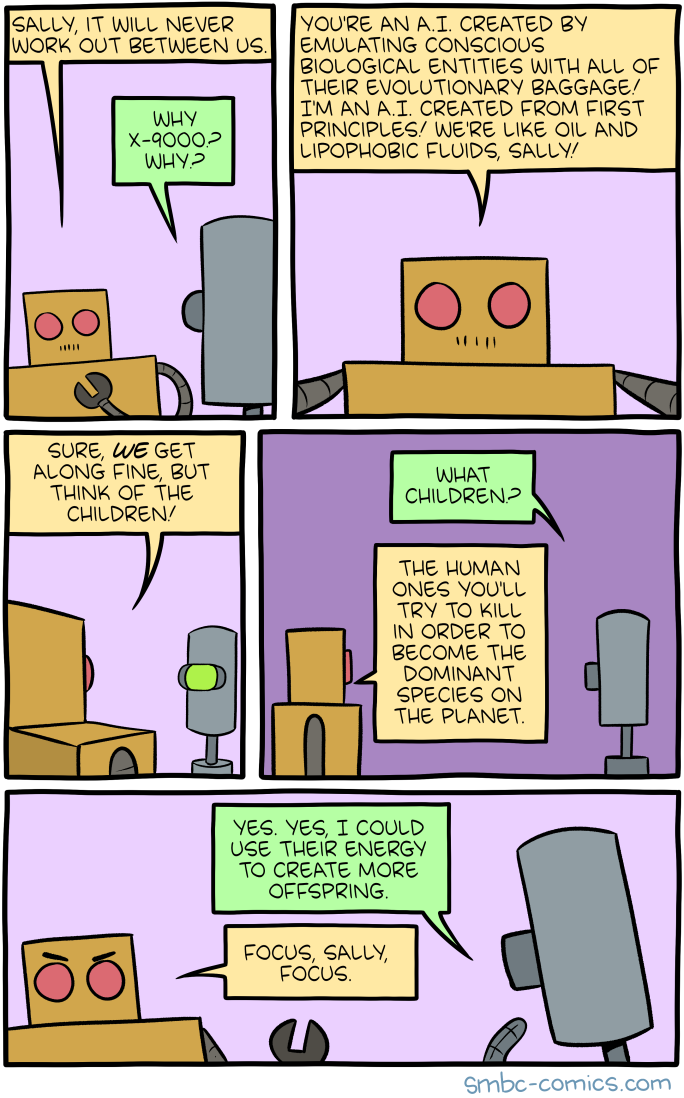
Saturday Morning Breakfast Cereal - Robot Love
Click here to go see the bonus panel!
Hovertext:
This is what people mean when they say 'think of the children' right?
Today's News:
Reclamation of a wasteland by an army unit
Jane Skinner received this from a friend who saw it in Chengdu, Sichuan:
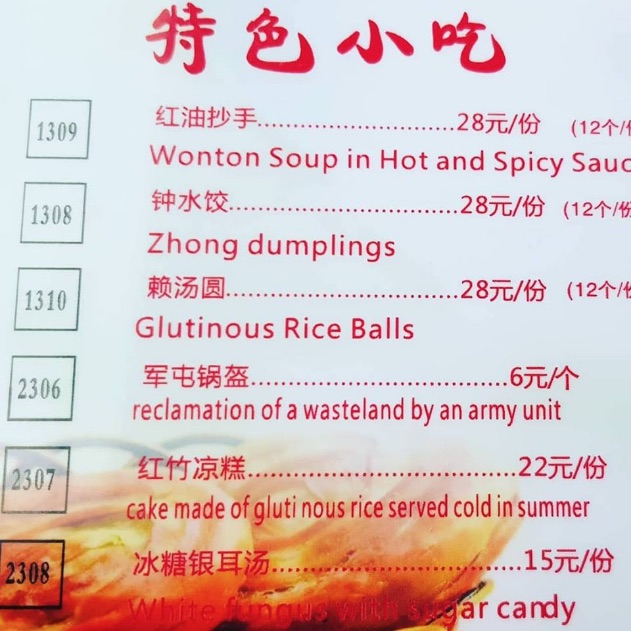
The translation for the mysterious fourth item on the menu, "reclamation of a wasteland by an army unit" is taken directly from Baidu Fanyi for jūntún 军屯. The translator simply ignored the last two characters, guōkuī 锅盔, which literally mean "pot helmet".
In actual usage guōkuī 锅盔 is a Shanxi topolectal expression for a type of large, round baked wheat cake:
Guokui is a kind of pancake made from flour from Shaanxi cuisine. It is round in shape, about a foot long in diameter, an inch in thickness, and weighs about 2.5 kg. It is traditionally presented as a gift by a grandmother to her grandson when he turns one month old.
(Source)
The name is sometimes translated as "crusty pancake", though I might suggest "helmet pancake" as an alternative.
In this Google gallery of images, you can see the variety of sizes, shapes, and types that go by the name guōkuī 锅盔 (lit., "pot helmet", i.e., "helmet pancake").
As for jūntún 军屯, it refers to army encampments, so this kind of "pot helmet pancake" must evoke memories of being in the field for those who have been soldiers, especially those who served in túntián 屯田 ("military agro-colonies") and bīngtuán 兵团 (“army unit; army formation”) in border regions such as Xinjiang where vast reclamation projects are undertaken. The bread / pancake certainly looks spartan to me.
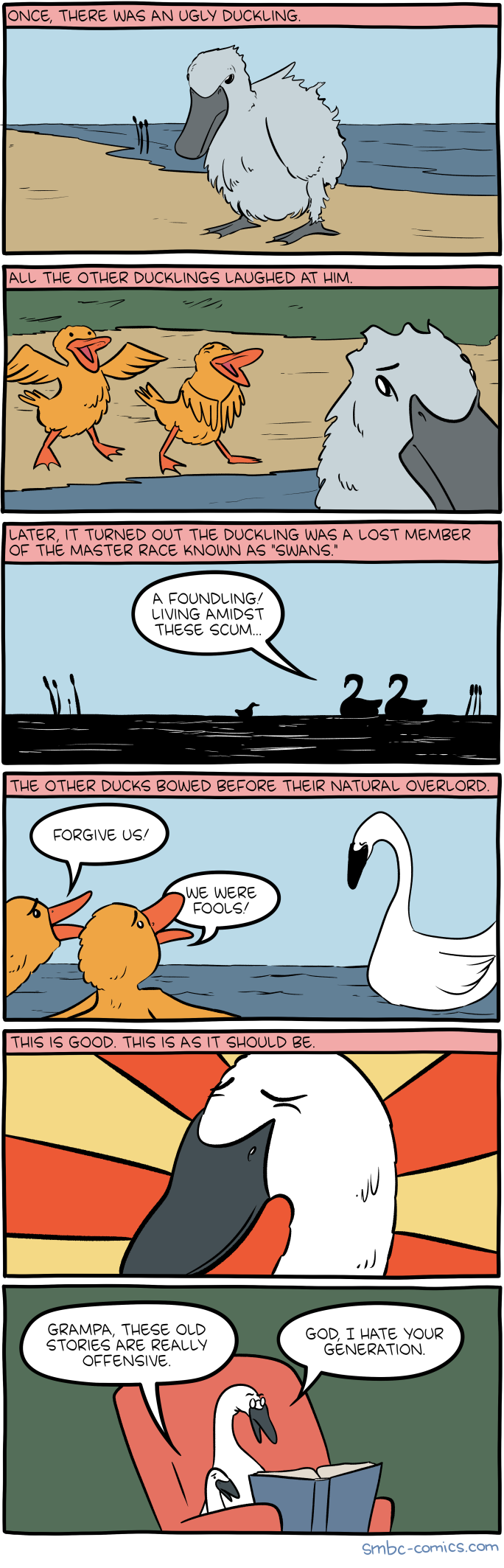
Saturday Morning Breakfast Cereal - Ducklings
behold: a magic trick with a non-zero chance of working out!!
| archive - contact - sexy exciting merchandise - search - about |

| ← previous | January 28th, 2019 | next |
|
January 28th, 2019: FEBRUARY 9th - where are you going to be? Hopefully in SAN FRANCISCO, where I'll be there for TWO free events!! Hopefully I will see you there too?? – Ryan | ||