
Yuval Pinter
Shared posts
02 Sep 14:49
Take #1
by Vered Shwartz
Yuval Pinterנחיה ונראה
I've recently had my first scientific paper published. Some of my family members and friends were truly interested in what I do polite enough to show interest in the result of a year of hard work, and they actually tried to read the paper. Most of them lost it during reading the abstract. Some of them probably gave up reading the title.
This incident was my inspiration for this blog; I actually think that every scientific concept could be explained in a way that non-professionals could understand. I'm still relatively new in my field, and though I'm capable of reading and understanding papers (at least those related to my field of interest), I understand much better when being explained with examples and easy words.
I hope that after this long introduction, I will find the time to write in this blog. I plan to convey my thoughts about some work-related topics and everyday life in the context of computer science. And in a more personal tone, I want to give people a glimpse to what I do, and deprive them of their excuses not to talk about my work ;)
31 Aug 16:32
turns out there are no universal constants, just universal variables that don't get updated too too often
| archive - contact - sexy exciting merchandise - search - about | |||
 |
|||
| ← previous | August 31st, 2015 | next | |
|
August 31st, 2015: This comic is definitely not inspired by my efforts into updated universal constants to be more convenient for me! So let's all stop with this wild allegations of local cartoonists looking into updating universal constants to be more convenient for him, no matter HOW much early success he's had. – Ryan | |||

28 Aug 11:30
to the lobsters in the kitchen, the sinking of the Titanic must've seemed like another event in a long series of events so far outside their natural experience that they can't possibly understand them
Yuval Pinterperfection
| archive - contact - sexy exciting merchandise - search - about | |||
 |
|||
| ← previous | August 24th, 2015 | next | |
|
August 24th, 2015: FUN(?) FACT: there are deep sea lobsters, but they weren't discovered until 2011 and certainly weren't being eaten on the Titanic. OR WERE THEY?? – Ryan | |||
Jarrod Keone Montoya likes this
28 Aug 11:28
Comic for 2015.08.25
Yuval Pinter"שבוע ללא פואנטות"?
New Cyanide and Happiness Comic
Tertiarymatt likes this
25 Aug 10:31
Icelandic: On the Brink?
by languagehat
Yuval Pinterהכרתם את חוק בטרידג'?
Patrick Cox has a “World in Words” segment called “Will Icelanders one day ditch their language for English?” Needless to say, Betteridge’s law of headlines applies, but it’s a fun read:
“When I was growing up, very few people spoke English,” says Gnarr. “With my generation, through TV and music it became necessary to understand English.”
Gnarr’s children speak much better English than he does. They have friends all over the world who they converse with on social media.
“But they don’t speak as good Icelandic as I do,” says Gnarr. “It’s a drastic change in a very short time.”
The conclusion is clear: Icelandic, like everything else, is going to hell in a handbasket. And of course there are the purists who “believe that the best chance for survival would be to resist importing words from English, and to hang on to the language’s archaic and complicated grammar.” Good plan, purists! (Hat tip for the link goes to Trevor.)

22 Aug 10:08
Recommended For You
by Mark Liberman
Yuval PinterYep.
Alexander Spangher, "Building the Next New York Times Recommendation Engine", NYT 8/11/2015:
The New York Times publishes over 300 articles, blog posts and interactive stories a day.
Refining the path our readers take through this content — personalizing the placement of articles on our apps and website — can help readers find information relevant to them, such as the right news at the right times, personalized supplements to major events and stories in their preferred multimedia format.
Spangher describes "Content-Based Filtering", which depends on the distribution of words and word-sequences in the articles you've previously read; and "Collaborative Filtering", which looks at the articles read by other readers who have read some of the same articles that you have. He notes problems with each approach, leading to their new algorithm,
. . . inspired by a technique, Collaborative Topic Modeling (CTM), that (1) models content, (2) adjusts this model by viewing signals from readers, (3) models reader preference and (4) makes recommendations by similarity between preference and content.
He links to the paper that inspired them (Chang Wang and David Blei, "Collaborative Topic Modeling for Recommending Scientific Articles", KDD 2011), and discussed how they've met a "three-part challenge":
Part 1: How to model an article based on its text.
Part 2: How to update the model based on audience reading patterns.
Part 3: How to describe readers based on their reading history.
The solution, in brief, is to use Latent Dirichlet Allocation to place articles in a low-dimensional topic space; to use the Collaborative Topic Modeling method to iteratively adjust article placement based the apparent topic interests of each article's readers; and to use a weighted average of the topic-space position of articles read as "a quick way to calculate reader preferences".
If you're interested in this sort of thing, read all of Spangher's piece, and the 2011 CTM article, and perhaps some of the 272 articles that Google Scholar lists as citing the CTM article.
But whether you're interested in the details or not, you should take note of an increasingly important kind of technology that doesn't have a name, as far as I know. It's emerged from 50 years of research, and 20 years of increasingly-broad application.
These techniques apply to collections of texts that are associated with a number of other features — in the current example it's articles and readers (and maybe dates and places and authors?); it might be web pages with their domain information and link graph; it might be a bibliometric network of authors, affiliations, journals, publishers, articles; it might be a network of twitter authors, times, places, hashtags; or product reviews along with star ratings, author IDs and product descriptions; or the text of open-ended survey responses along with multiple-choice outcomes and subject demographics; or Facebook posts with authors' demographic information and personality-test results; or collections of real-estate listings with locations and prices and sales information; or job listings with information about applicants and outcomes; or . . .
Recommendation systems are just one of many applications. The problems to be solved range from easy to impossible, and the algorithms used range from simple to complex, and from obvious to subtle and surprising. (Sometimes the most subtle and surprising methods are also the simplest…)
There are obvious (and existing) applications in commerce, in medicine, in sociology, in law, in education, in literary studies — given the increasing digitization of communication, it's hard to think of any domain where this kind of technology is not already applied or soon to be applied. Most large companies have at least dipped their toes into this area, and some of them have plunged in enthusiastically. And new companies are springing up like the proverbial mushrooms after a rain.
There are obviously close connections to non-textual problems. The "collaborative filtering" method is content-neutral, so that a music recommendation system using this technique is basically identical to an article recommendation system — but as Spangher observes, there are good reasons to add content-based information to systems based purely on preference networks. For many other applications, combining content analysis with other dimensions of information is essential. And in a large range of cases, the most accessible and useful source of content is text.
Given all of this, it's odd that the technology we're talking about doesn't have a name.
21 Aug 09:20
Is President Sisi a Bulwark Against Terrorism?
by Elliott Abrams
Yuval Pinterלפחות את בלוק הציטוט הראשון
There are very few people nowadays ignoring the growing repression in Egypt. Most recently, a new “counter-terrorism” law was imposed this week–but it snuffs out free speech more than terror. Even the State Department denounced the law: “We are concerned that some measures in Egypt’s new anti-terrorism law could have a significant detrimental impact on human rights and fundamental freedoms,” its spokesman said. The new law punishes as a crime the publication of information that differs with the official version of facts about terrorism, which means you agree with Sisi or you go to jail.
But Sisi maintains a reputation as a man fighting terrorism, whom we should be backing despite his flaws and errors. The problem with this analysis–perhaps better described as a sentiment–is that Sisi’s approach may be incubating terror, not stopping it. Or it may be doing both things.
The link between repression and terror is not a new idea. A 2003 review of terrorism globally by Alan Krueger of Princeton and Jitka Maleckova of Charles University in Prague found that:
Apart from population — larger countries tend to have more terrorists — the only variable that was consistently associated with the number of terrorists was the Freedom House index of political rights and civil liberties. Countries with more freedom were less likely to be the birthplace of international terrorists. Poverty and literacy were unrelated to the number of terrorists from a country….Instead of viewing terrorism as a response — either direct or indirect — to poverty or ignorance, we suggest that it is more accurately viewed as a response to political conditions and longstanding feelings of indignity and frustration that have little to do with economic circumstances.
There is a new interview with Ahmed Maher that reminds us of these points. Maher was a protest leader in Egypt’s rebellion against the Mubarak dictatorship–but not a radical and not part of the Muslim Brotherhood. He founded the April 6 Youth Movement, which advocated democracy in Egypt. He has now been in prison for 20 months, most of the time in solitary confinement. Maher notes that there are thousands of young Egyptians in prison now for political crimes, mixing Brotherhood activists, jihadis, and peaceful protesters who are being radicalized. As has so frequently happened in Egypt, the prisons are an incubator of radicalism and terror. Here are some excerpts from his remarks:
The current regime, structured as it is around the military and security apparatus, is cutting all ties with youth and treating them with hostility. The current regime is under the control of a number of Mubarak’s cronies who want revenge against young people and especially anyone who had a prominent role in the 25 January 2011 revolution – even though most of these youth also rose up against Mohammed Morsi in 30 June 2013, and I was among them.
Of course there are things that maybe I would decide to do differently if I knew the outcome. For example, I think that trusting the military and the Muslim Brotherhood was naïve, because each of them have a plan and their own interests. They each tricked us and broke all their promises. Each of them are authoritarian and think that they have the absolute truth.
Despite the extreme isolation imposed on me, sometimes I am able to speak with some members of the Muslim Brotherhood. In general, they refuse to recognize that they made any mistakes while in power. They are saying that the protests of 30 June 2013 were not due to popular outrage but to a Western Crusader conspiracy against Islam and the Muslim Brotherhood. They are still in denial about what happened. On the whole, I don’t think that there is serious reflection or any flexibility among the Brotherhood. This means that the solution is still far off. How can there be a solution without serious reflection – not just about their practices while in power, but also a reconsideration of the theory itself? This is what they refuse to do. They claim that they did not make mistakes but rather that the world conspired against them.
Prison has really become a breeding ground for extremists. It has become a school for crime and terrorism, since there are hundreds of young men piled on top of each other in narrow confines, jihadists next to Muslim Brotherhood members next to revolutionaries next to sympathizers. There are also a large number of young people who were also arrested by mistake and who don’t belong to any school of thought.
Everyone is suffering oppression and punishment inside the prisons. Everyone is accused of being either a terrorist or a member of the Muslim Brotherhood. This is turning the people arrested by mistake who don’t belong to any movement into jihadists. Moreover, Muslim Brotherhood members are gradually becoming radicalized, since they suffer from inhumane treatment in the prisons. The authorities treat the prisoners like slaves, and this inspires a thirst for revenge, not to mention the undignified treatment that the families face when they visit.
ISIS has exploited the situation. The Arab uprisings are not the cause, but rather the bloody authoritarian regimes that resisted change and resisted democracy, true justice, and concepts of tolerance, co-existence and freedom. This is what gave rise to ISIS and continues to drive it.
ISIS found fertile ground because of Bashar al-Assad’s brutality in Syria, Nouri al-Maliki’s sectarianism in Iraq, Iran’s ambitions in the region, and the oppression and authoritarianism that people are suffering from. So long as authoritarianism and sectarianism exist, you will find extremism as a response.
Extremism found a foothold in Egypt because of Sisi’s brutality and authoritarianism. The more the oppression and authoritarianism increased and the more freedom and democracy vanished, the more justifications ISIS and al-Qaeda have. ISIS is saying that your regimes are corrupt, unjust failures and we’re the alternative. This is a disaster, because injustice generates extremism. For this reason, neither the coalition’s strikes nor Sisi’s raids will stop ISIS. Defeating ISIS requires freedom, democracy, justice and a culture of tolerance, co-existence and acceptance of the other.
Maher offers a reminder about past U.S. policy: “US support for Mubarak over 30 years did not stop the spread of radicalism or lead to stability.” Of course, that remark is a reminder of the famous statement President Bush made in his 2003 speech to the National Endowment for Democracy: “Sixty years of Western nations excusing and accommodating the lack of freedom in the Middle East did nothing to make us safe — because in the long run, stability cannot be purchased at the expense of liberty. As long as the Middle East remains a place where freedom does not flourish, it will remain a place of stagnation, resentment, and violence ready for export.”
Maher’s suggested alternative to support for Sisi: “support for civil, democratic values is the solution. Support for democratic transformation is what will stop the spread of radicalism and jihadism and not the reverse. If authoritarianism and tyranny continue, it will lead to the spread of ISIS’ ideology as an alternative or a reaction.” Repression by Sisi, like repression by Mubarak, is not the antidote to radicalism, jihadis, and terror.
20 Aug 20:24

מן הגורן ומן היקב, ובעיקר מן הארץ
by יובל פינטר
Yuval Pinterאני צריך לכתוב על נושא חדש :(
בחודשים האחרונים הצטברו אצלנו כמה וכמה פניות נרגשות מקוראינו ובהן זוטות לשוניות מהסוג שאנחנו אוהבים, אבל שכבר לא ממש מצדיקות פוסט משל עצמן. הנה, אם כן, פוסט לקט לסיום הקיץ (והאביב, וקצת מן החורף, אבל כמו יין טוב – שגיאות של ״הארץ״ רק משתבחות אצלנו בתיבות הדואר הנכנס).
דוד שלח לי את זה עוד בינואר. מדובר בתרגום לא-זהיר מהיורקאי החדש (או זמני יורק החדשה? כך במקור, כמו שאומרים) להארץ, באופן שמוסיף שלילה והופך את הסמנטיקה של הביטוי. שופופו:
New Yorker:
“Why do babies cry on planes?” he wondered aloud Wednesday night at Madison Square Garden before concluding, “It’s because they are upset gay people are getting married.”
Whatever you think of that joke, there’s no way you saw it coming.
הארץ:
"למה תינוקות בוכים בטיסות?" ציטטו ב"ניו יורק טיימס" את אחת הבדיחות. "כי הם מתעצבנים מזה שהומואים יכולים להתחתן". "מדובר במופע שכולו כישרון והומור חכם שמצחיק בלי להתאמץ", נכתב. "ותגידו מה שתגידו על הבדיחה הזאת, אין סיכוי שלא ראיתם אותה מגיעה".
הקורא הנאמן דן זיהה במהלך המו״מ הקואליציוני (זוכרים?) מופעים מספר של עירוב ביטויים. בכתבה הזו בגלובס מופיע ״להדליק תמרור אדום״, שהוא כמובן עירוב של ״להדליק אור אדום״ ו-״להניף תמרור אזהרה״. כאן בסרוגים תוכלו לקרוא על הציבור הדתי ש״נשכב מתחת לאלונקה״, עירוב של ״נשכב על הרימון״ ו-״נכנס מתחת לאלונקה״, שני ביטויים המעידים על הקרבה.
עוד מדן, עירוב פרוע במיוחד תוצרת ״הארץ״: ״מילא לירוק לבוחרים מהפרצוף, אבל למה מהמקפצה״? נשאיר את איתור המקורות השונים כתרגיל לקורא.
עוד מעוד מדן: ״לעלות פאזה״, הואזן בגל״צ ב-5 באוגוסט אבל הנה דוגמה בכתב ממעריב. הרקע הפיזיקלי הנדרש הוא שפאזה לא עולה אלא משתנה, כלומר ביטוי אחד הוא ״לשנות פאזה״, ואילו מה שעולים בביטויים עם משמעות דומה הוא כיתה, או מדרגה, או רמה. יש גם את ״להחליף דיסקט״, שכמו שינוי פאזה נעדר את הניואנס של שיפור.
והנה מברקו של ישראל שפינדל, טרי טרי מה-19/8. ישראל פנה באמצעות הודעה לדף הפייסוש שלנו ואנו שמחים על הגיוון. מקור השגיאה שמצא הוא ״הארץ״ כמובן, השגיאה עצמה – ריבוי שלילות.
הנה משפט מעניין מתוך טור של ניב הדס ("הארץ"):
"תראו, אני האדם האחרון שמסרב להתרגש מכל מיני כתבות יומן על אנטישמיות חדשה, השוואות בין איראן לגרמניה הנאצית ותחקירים של צבי יחזאקלי משכונה ד' במרסיי"אם ניב הדס הוא האחרון שמסרב להתרגש, התוצאה היא שהוא כן מתרגש (שלילה כפולה שכזאת)?
ומה המשמעות של "האחרון ש…" – האם הוא טוען שהוא האחרון בתור (כלומר סביר שכל אדם אחר בעולם יעשה זאת לפניו) או שהוא האחרון שנשאר בסירובו (אחרי שכולם כבר עשו זאת)? מעניין שכל אחת מהאפשרויות מובילה למשמעות הפוכה של המשפט המלא.
צודק ישראל בנקודתו הראשונה – המשמעות של ״האחרון שיסרב להתרגש״ היא בהחלט שהדס מתרגש, ולא לכך כיוון. יש כאן יתר-שליליזציה. לגבי ״האחרון ש״, כאן כבר אנחנו על קרקע מוצקה יותר. הביטוי הזה קפוא למדי בשימושו, ובעוד שהוא יכול להעניק דו-משמעויות מעניינות של טווח, כאן מטרתו ברורה. משמעותו הבסיסית היא אכן ״האחרון שיעשה משהו אחרי שכולם כבר יעשו לפניו״, ומכאן השגיאה בהיגד כולו.
זהו להפעם. תודות והינדי כובע לכל המשתפים והמשלחים, נתראה בהלקט הבא!
20 Aug 12:54

חייל, מחבל וסכין נפגשים בצומת…
by גדעון שביב
Yuval Pinterוואו, אירים. וואו.
ושוב, חלק מהתקשורת הזרה פשוט לא מסוגלת לדווח בצורה ישירה ועובדתית שפלסטיני ניסה להרוג ישראלי. אם לא היה מדובר במה שכבר מסתמן כתופעה, זה אולי היה מצחיק
פלסטינים מתפרעים לאחר חיסול המחבל שניסה לדקור חייל בצומת תפוח (פלאש 90)
השבוע שוב קיבלנו דוגמא לתופעה המוכרת היטב לקוראי 'פרספקטיבה' – חוסר היכולת של חלק מהתקשורת הזרה לדווח באופן עובדתי על פיגועים של פלסטינים נגד ישראלים.
האירוע שהתרחש השבוע בצומת תפוח לכאורה ברור: פלסטיני חמוש בסכין ניגש אל חייל ישראלי, טען שהוא חש ברע, התנפל עליו בדקירות, פצע אותו ונורה למוות.
רק לכאורה. להלן מקבץ כותרות של כלי תקשורת ברחבי העולם, שמצאו דרכים יצירתיות למדי לתאר את שאירע.
כותרת הניו יורק טיימס חידתית משהו:

תרגום:
פלסטיני נורה למוות במהלך עימות עם המשטרה הישראלית
הכותרת אולי מדויקת, אבל בכל זאת מטעה. ה"עימות" במקרה הזה הייתה הדקירה. דווקא פתיח הכתבה בניו יורק טיימס ברור יותר. מובאת בו "גרסת המשטרה", לפיה הפלסטיני ניגש לשוטרים, טען כי הוא זקוק לסיוע רפואי, וכאשר הונחה להתקרב, שלף סכין והחל לדקור את השוטרים. רק לקראת סוף הכתבה מביא ה'ניו יורק טיימס' גרסה פלסטינית בה נטען כי הם אינם יודעים מה קרה במחסום.
בכותרת של Al-Jazeera שפורסמה גם ב-Yahoo, אין אפילו עימות קודם בין הפלסטיני לשוטרים:
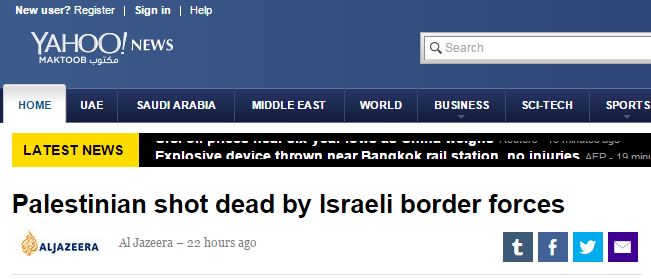
תרגום:
פלסטיני נורה למוות על ידי משמר הגבול הישראלי
אבל את גביע הדיווח המוטעה והמסולף לוקח ה-Irish Times:
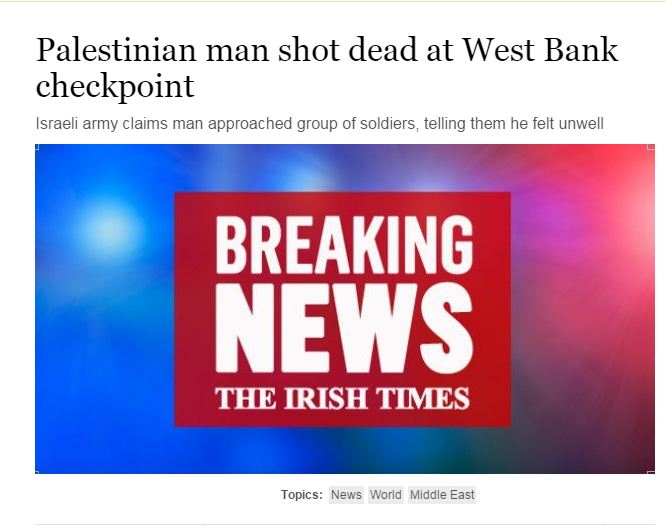
תרגום:
פלסטיני נורה למוות במחסום בגדה המערבית
הצבא הישראלי טוען שהאיש ניגש לקבוצת חיילים וסיפר להם שאיננו מרגיש בטוב
כלומר, לפי הכותרת של ה-Irish Times, מה שבעצם קרה בצומת תפוח, זה שבצהרי יום, באופן שרירותי, הוציא הצבא הישראלי להורג ביריות אדם במצוקה שפנה לחיילים בבקשת עזרה.
חשוב לציין שלא כל כלי התקשורת איבדו את האינטגריטי שלהם. כך למשל דיווחה סוכנות הידיעות AFP באופן מדויק:
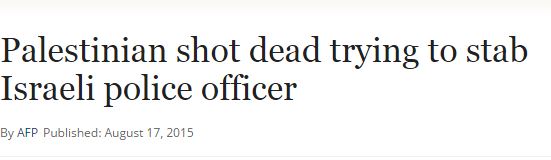
תרגום:
פלסטיני נורה למוות כשניסה לדקור שוטר ישראלי

19 Aug 07:48
"Cuckservative"
by Mark Liberman
Alan Rappeport, "From the Right, a New Slur for G.O.P. Candidates", NYT 8/13/2015:
As Republican presidential candidates offered careful answers to questions about education, immigration and foreign policy at last week’s debate, streams of tweets panned their responses as too soft or disingenuous. Senator Marco Rubio is beholden to corporate interests, one said. Former Gov. Jeb Bush is weak on immigration, crowed another. Many of them were adorned with a cryptic hashtag bearing a new word: “cuckservative.”
Yesterday, Alan Rappeport wrote to me to ask "how and why such language gets popular".
A lightly-edited version of what I wrote back to him:
With respect to the history of that word in particular, I don't have much to add to what you can get from reading Joan Walsh ("The GOP crack-up continues: The raging civil war over the disgusting “cuckservative” slur", Salon 8/2/2015), Milo Yiannopoulos ("‘Cuckservative' is a gloriously effective insult that should not be slurred, demonised, or ridiculed", Breitbart 7/28/2015), and others.
More abstractly, cuckservative is what Lewis Carroll called a portmanteau word, which linguists these days more commonly call a "blend". There are common-sense reasons why such coinages might succeed or fail: the popularity and authority of the inventor and early adopters; the relevance of the referent; the "wordiness" of the coinage; …
"Cuckservative" has some advantages on all three dimensions. According to that 7/28 Breitbart piece (perhaps a questionable source), the process apparently started with the use of cuck, short for "cuckold", as a term for a genre of pornography in which men watch their wives having sex with other men. It was extended figuratively on 4chan to reference "relinquished manliness" and more abstractly "selling out, abandoning principles".
Since con, abbreviating conservative, has at least some limited usage (as in "crunchy con"), it's a natural and effective step to substitute cuck- for con- to form cuckservative, meaning "a conservative who lacks the courage of his convictions".
Apparently this coinage spread originally on white nationalist websites, and has a racial and sexual vibe without being overtly racist or obscene; the outraged reaction to it has paradoxically helped to spread it; and there are apparently many people who feel the sexually and racially charged contempt that it expresses, and want to express and share that contempt.
I haven't checked that origin story, and so you'd be wise to take it with a grain or two of salt pending some lexicographic research that I don't have time for today.
I wasn't able to offer Mr. Rappeport much additional help in figuring out why certain words of this kind become fashionable, while others don't. I did point out the following:
Since lib is a common clipping for liberal, you might think that the same move would work to produce "cuckeral" as an insult for excessively moderate liberals. But even leaving out content-related problems, this doesn't work as a blend. It lacks the shared initial /k/ sound, and more important, the residual -eral lacks enough of a connection back to the original work, unlike –servative.
Compare the widely-used insult "lieberal", blending lie and liberal.
And in response to his further query "Do you find this term to be more clever or unusual or offensive than other political insults? Trying to get a better sense of its growing appeal", I observed that
I mostly see complaints about it, or other meta-discussion, rather than real examples of use.
This might be a reflection of my choices of reading material, but I don't think so.
Among the first 30 google hits, I only see one that's "use" rather than "mention", and it's marginal.
And on the first three pages of Google News hits, I see just three examples of actual use — here , here ( in a comment: "Wow, that was some really hard hitting “Gotcha journalism” from another cuckservative trying to…), and here (in an apparently ironic reference to"the leading publication of cuckservative thought, the National Review")
My impression is that if it weren't for all the people complaining and expressing outrage, it would have remained an occasional usage in a marginal subculture.
19 Aug 07:22


פמינאציות
by מתן

לאישה אין מקום במחנות ריכוז.
שתפו ותהנו (כמו כן, ניתן לשתף מבלי להנות):
18 Aug 18:58
"שרלי הבדו", הגרסה המקומית
by רפי מן
סגנונו הבוטה של השבועון הסאטירי הצרפתי לא היה מאפשר לו להתקיים בישראל, אבל בגיליון החד-פעמי של "שרוליק עבאדי" מנסים עשרות קריקטוריסטים מקומיים להצדיע למגזין ולעובדיו שנרצחו על-ידי מוסלמים קיצונים
18 Aug 07:23
Help wanted in Srinagar
by Victor Mair
Kongish, Singlish, Chinglish, Engrish, Konglish — none of them can beat Indian English:

In case you're wondering what "chowkidar" means, it's a Hindi word for "watchman, caretaker, gatekeeper; one who inhabits a 'chowki' ('police station' or 'guard house')", as Wiktionary informs us. It is also sometimes spelled as "chokedar" or "chokidar".
What I find most interesting about this help wanted ad is that the posted salary for the position of "chowkidar cum sweeper" is a thousand rupees greater than that for a "lecturer chemistry" who must have a M.Sc in chemistry.
[h.t. Geoff Wade]
[Update: Here's some more Indian English that I'm not certain I fully understand]
"India once again ticks of China over South China Sea issue" (8/8/15)
Does "ticks of" mean the same thing as "ticks off"?
Maybe, but the use of "tickled" in the very first sentence of the article makes me wonder:
India has once again tickled China’s soft underbelly, the South China Sea, by taking a position at an international meet earlier this week that territorial disputes in South China Sea should be settled under the UN Convention.
Then, in the next sentence, we have reference to a "red rag", which I suspect means the same thing as "red flag", but I'm not sure:
The latest red rag from India to China has come about at the 5th East Asia Summit foreign ministers' Meeting in Kuala Lumpur wherein V K Singh, the junior foreign minister, reiterated the now well-known Indian position on the South China Sea dispute. Singh told the conference that territorial disputes must be settled through peaceful means "as was done by India and Bangladesh recently using the mechanisms provided under UNCLOS (United Nations Convention on Law of the Sea)".
The author is probably referring to the red cape or cloth used in bullfighting.
17 Aug 09:08
Ralph Waldo Emerson
"In every work of genius we recognize our own rejected thoughts; they come back to us with a certain alienated majesty."
15 Aug 15:28
Comic for 2015.08.06
Yuval Pinterמהאמצע קצת נהרס
New Cyanide and Happiness Comic
lbstopher, personal responsibility and 2 others like this
12 Aug 19:15
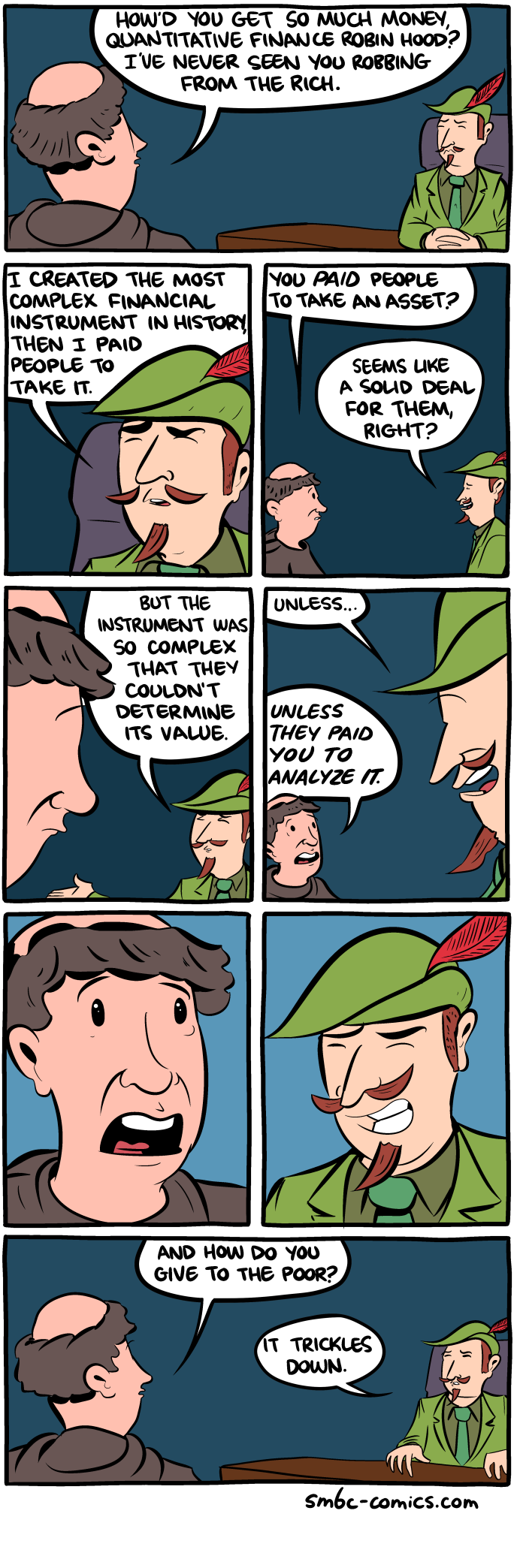
New comic!
Today's News:
Saturday Morning Breakfast Cereal - A New Kind of Robin Hood
by admin@smbc-comics.com
Hovertext: Fortunately, the Sheriff of Nottingham is subject to regulatory capture.
New comic!
Today's News:
12 Aug 13:13
What the fingers want
by Mark Liberman
Whole-word substitutions are a common type of speech error: "Italy" for "Israel", "competent" for "confident", "restaurant" for "rhapsody", "drink" for "breathe". The substituted word is often associated with the target word or with its context, often starts with sounds similar to the target word, and often has similar syllable counts and stress patterns. An even stronger regularity is the syntactic category rule — the substituted word is almost always the same part of speech as the target word. Thus in the speech-error corpus examined by David Fay and Anne Cutler in their 1977 work "Malapropisms and the structure of the mental lexicon", this syntactic category rule held for 95% of all word-substitution errors.
Therefore substitutions like "They provider very good care" for "They provide very good care", or "He resignation yesterday" for "He resigned yesterday", are quite unlikely — in speech. In typing, in contrast, such slips of the finger are very common. I make errors like this all the time, with -ing or -ed or -s or -er or nothing appearing where one of the other choices would be correct. I haven't counted, but I think that my lapsus digitorum of this kind are an order of magnitude more common than the confident-for-competent variety.
And I see this kind of substitution now and then on the web, e.g. here:
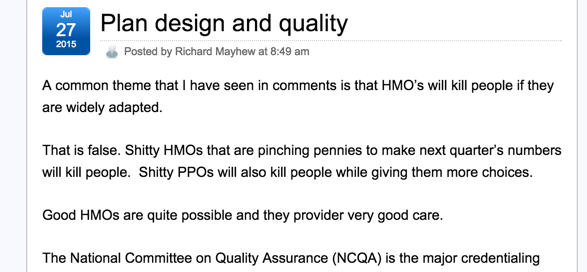
My intuitive impression of what's going on when I do things like this is that my conscious attention has shifted to the following words and phrases, and my fingers — or more properly, the part of my brain that controls my fingers in typing — follows well-worn associative paths that happen not to be the right ones.
But this is more or less what happens with speech errors as well. So why is the mental lexicon for typing apparently organized in a way that doesn't impose the syntactic category rule on substitutions? Apparently the letter-to-letter associations in typing have a power that phoneme-to-phoneme associations in speaking don't.
Probably this is a well-studied issue in the psychology of language. But I don't know the references, and don't have time this morning to look them up, so I'll open the question up to the commentariat.
12 Aug 13:10

אונר"א: חלה עליה בתמותת תינוקות בעזה (אבל אולי בעצם לא)
by גדעון שביב
Yuval Pinterמדהים
מה קורה כשמחברים מחקר לקוי, הודעה מניפולטיבית לעיתונות, וכלי תקשורת עצלנים? כמובן, מגיעים למסקנה שישראל כנראה אשמה בכך שחלה עליה במספר התינוקות שמתים בעזה
תינוק אחד מתוך רביעיה שנולדה לתושבת עזה בביה"ח ברזילי באשקלון, 2008 (פלאש 90)
ביום ראשון פרסמה אונר"א – סוכנות הסעד של האו"ם לפליטים פלסטינים – הודעה לעיתונות, לפיה בפעם הראשונה זה למעלה מחצי מאה, נרשמה עלייה בתמותת התינוקות בעזה (תינוקות המתים במהלך שנת חייהם הראשונה). כדאי לקרוא בעיון את ההודעה:
Jerusalem, 8 August 2015: The infant mortality rate in Gaza has risen for the first time in five decades, according to an UNRWA study, and UNRWA’s Health Director says the blockade may be contributing to the trend…
The number of babies dying before the age of one has consistently gone down over the last decades in Gaza, from 127 per 1,000 live births in 1960 to 20.2 in 2008. At the last count, in 2013, it had risen to 22.4 per 1,000 live births. The rate of neonatal mortality, which is the number of babies that die before four weeks old, has also gone up significantly in Gaza, from 12 per 1,000 live births in 2008 to 20.3 in 2013.
תרגום:
שיעור תמותת התינוקות בעזה עלה בפעם הראשונה מזה חמישה עשורים, לפי מחקר של אונר"א, ומנהל מחלקת הבריאות של אונר"א אומר כי ייתכן שהסגר [על עזה] תורם לתופעה…
מספר התינוקות שמתו לפני גיל שנה ירד בהתמדה במהלך העשורים האחרונים בעזה, מ-127 לכל 1000 לידות בריאות בשנת 1960, ל-20.2 לכל 1,000 לידות בשנת 2008. בספירה האחרונה, בשנת 2013, עלה המספר ל-22.4 לכל 1000 לידות. מספר התינוקות שמתים עד גיל ארבעה שבועות עלה גם הוא באופן משמעותי בעזה, מ-12 לכל 1000 לידות בשנת 2008, ל-20.3 בשנת 2013.
בתקשורת הישראלית, הידיעה לא זכתה לחשיפה רבה, והוזכרה רק במבזקים של ערוץ 7 ורשת ב'. לעומת זאת, בעולם זכתה הידיעה לפרסום נרחב, בין היתר בגארדיאן הבריטי, וכן הופצה על ידי סוכנות הידיעות AFP, אשר דיווחיה הגיעו לתקשורת הישראלית בשפה האנגלית ('הארץ', Times of Israel, Ynetnews). למרבה הצער, ניכר כי בכל הדיווחים הסתמכו בצורה עיוורת על ההודעה לעיתונות של אונר"א, ולא נכנסו לעומק המחקר. מדוע? המחקר חילק את הנתונים אודות תמותת התינוקות למספר קטגוריות שונות, והשווה את הנתונים לשנת 2008:

יוצא כי בין השנים 2008-2013 אכן חלה עלייה של 8.2 ל-1000 בתמותת תינוקות עד גיל חודש, אלא שבמקביל חלה ירידה בתמותת תינוקות של 6.1 ל-1000 מגיל חודש עד גיל שנה. נכון שבשיקלול הנתונים חלה עלייה בתמותת תינוקות של 2.2 ל-1000, אלא שבהודעה לתקשורת של אונר"א, הנתון על הירידה בתמותת תינוקות מעל גיל חודש לא מוזכר כלל, מה שהיה יכול להעניק מבט רחב יותר על הנושא ולאזן את התמונה הכוללת. מכיוון שכלי התקשורת שדיווחו על המחקר הסתמכו ככל הנראה אך ורק על ההודעה לעיתונות של אונר"א ולא על המחקר עצמו, גם אצלם הנתונים החיוביים כלל לא הופיעו.
אלא שהסיפור הרבה יותר חמור ומניפולטיבי, שכן אונר"א לא רק הסתירה נתונים חיוביים, היא גם הציגה את השליליים כהחלטיים יותר ממה שהם באמת. הבלוג Isreallycool נכנס לעומק הנתונים של המחקר, ושם לב למשפט המדהים הבא שמופיע לקראת סוף המחקר, בחלק המנתח את הנתונים:
These estimates are based on small numbers of deaths, and the confidence intervals are wide, so the infant mortality rate could in fact be stable or continuing to decline
תרגום:
ההערכות הנ"ל מבוססות על מספר קטן של תמותות, והרֶוַח בַּר-סֶמֶךְ (confidence intervals) מאוד רחב, כך שייתכן שלמעשה שיעור תמותות התינוקות עדיין יציב או ממשיך לרדת.
במילים פשוטות, החוקרת מודה כי מספר התינוקות המתים עליו ביססה את המחקר, הוא נמוך מדי מכדי לבסס את הטענה לגידול בשיעור התמותה, והיא אפילו מודה כי ייתכן שהנתונים הנכונים הם הפוכים! האם מדובר בזהירות בלבד? כנראה שלא. למבינים בסטטיסטיקה נציין כי הערך-P של הנתונים אודות שיעור התמותה הכוללת הוא 0.61. לאלה שלא מבינים בסטטיסטיקה מדובר במדד שבודק בהכללה את "מידת תקפות הטענה". בדרך כלל כתבי עת מדעיים אוהבים מחקרים שמראים ערך-P של פחות מ-5%. במקרה הזה, הערך-P הוא 61% (וייתכן שזה מסביר מדוע המחקר לא פורסם בשום כתב עת נחשב), מה שאומר שהתוצאות הן למעשה כמעט חסרות משמעות, או כפי שכתבה החוקרת: "ייתכן כי ששיעור התמותה לא השתנה, או ממשיך לרדת".
וכך, צרכני התקשורת קיבלו מידע שעבר שלשה שלבים של עיוות: 1. מחקר לקוי של אונר"א; 2. הודעה לעיתונות מניפולטיבית וחלקית; 3. כלי תקשורת עצלנים שלא טורחים לקרא את המחקר עליו הם הם מדווחים. את המניפולציה צרכני התקשורת לא רואים. כל מה שהם יזכרו זה שישראל הרעה ("הסגר") גורמת ליותר תינוקות עזתים למות.
תודה ל- yoavgo@ ול-Israellycool
12 Aug 12:04

מקור המילה סטוץ הוא בביטוי ביידיש. הביטוי המקורי (ששובש) הוא...
מקור המילה סטוץ הוא בביטוי ביידיש.
הביטוי המקורי (ששובש) הוא ״אס טוט זיך״, שמשמעותו הוא (בתרגום חופשי): ״משהו קורה״.
12 Aug 12:04
Impulse Power
by Doug
Yuval Pinterבגלל הכותרת

Sofía Henao, Cooper Griggs and one other like this
12 Aug 06:38
New comic!
Today's News:
Saturday Morning Breakfast Cereal - A Beautiful Mind
by admin@smbc-comics.com
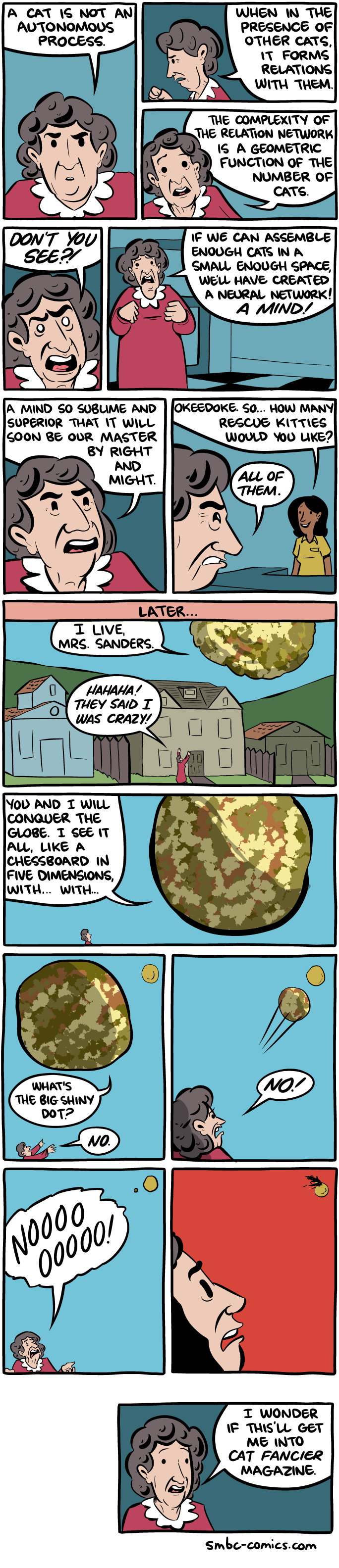
Hovertext: This is as close as I plan to get to making cat jokes.
New comic!
Today's News:
Tickets for BAHFest are zooming! Please buy soon to guarantee a spot!

Albener Pessoa, Tindalostalbot and 11 others like this
09 Aug 17:25
Softy Calais goes ballistic…
by Geoffrey K. Pullum
Yuval Pinterמבריק
Calais in north-western France, and Kent in south-eastern England, have been experiencing weeks of extraordinary chaos. Thousands of desperate migrants from Africa and the Middle East are fighting to get into the Eurotunnel depot where they think they might be able to stow away on trucks that will make the train journey through the tunnel to the immensely desirable destination of Great Britain. The British think the Calais local authorities and the French government have been making only desultory efforts to prevent the migrants from clogging the approach roads, breaching the security fences, delaying train departures, and causing side effects like 24-hour traffic jams on the M20 freeway in Kent. So the headline writers at The Sun went to work, with feghoot based on a song from Mary Poppins:
Softy Calais goes ballistic… Frenchies are atrocious!
One would have to spare a grudging moment of appreciation for this tortured effort at eye-catching summary [if it were not a case of multiple self-plagiarism by The Sun — see footnote at the end].
But incidentally (for this is Language Log, not Asylum-Seeker Log), I have always been irritated by the famous song "Supercalifragilisticexpialidocious." What's wrong is that it's an impossible word. The morphemic structure is fairly obvious:
Super+cali+fragil+ist+ic+ex+piali+doci+ousThe main thing that makes this an impossible word is that the suffix -ic can never be followed in any word by the prefix ex-. Absolutely no word has -icex- in it. But even the spelling tells you that: no word has c pronounced [k] when followed by e (correct me in the comments below if you can find a counterexample).
Of course, supercalifragilistic is a possible word (an adjective; one related abstract noun would be supercalifragilisticity), and expialidocious is a possible word (also an adjective; one related abstract noun would be expialidocity and another would be expialidociousness). It's gluing the two together that loses the possible-word status.
It would be easy to make up morphologically possible but nonexistent English words of this length, but *supercalifragilisticexpialidocious isn't one of them.
[Update: Two or three commenters pointed out that The Sun was plagiarizing itself, drawing on an earlier headline about a soccer match between Caledonian (winners) and Celtic (humiliated losers). The latter team's name is usually pronounced "seltik", so that wouldn't be a counterexample to my claim about c; but the language family name Celtic is pronounced with initial [k], so that is a counterexample; and sceptical in its British spelling (American skeptical) is another. And as several people have pointed out, "soccer" is a counterexample if you don't draw a distinction between c and double c.]
Erroneous01 likes this