
Here are more happy trees.
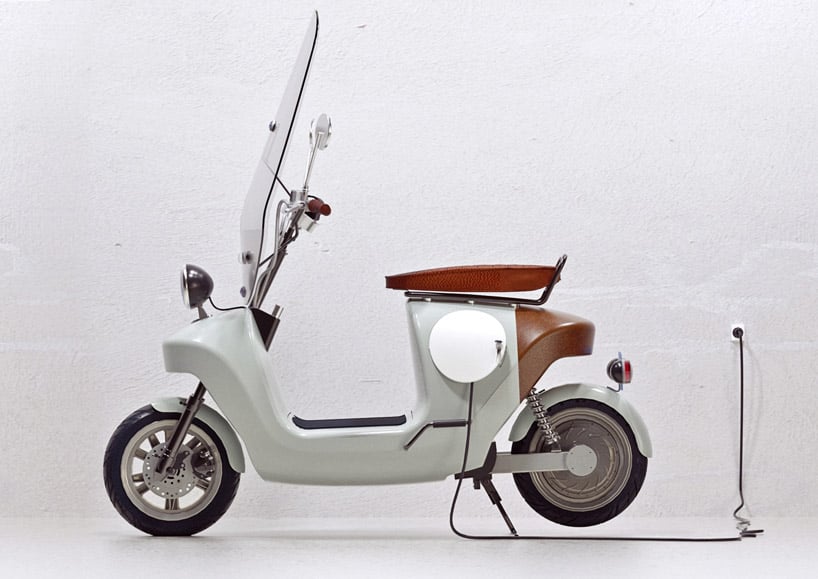
made from a remarkably strong hemp and resin biocomposite, the electric scooter allows for up-to two hours of driving, and can fully re-charge in three.
The post Be.e electric scooter is made from hemp appeared first on designboom.
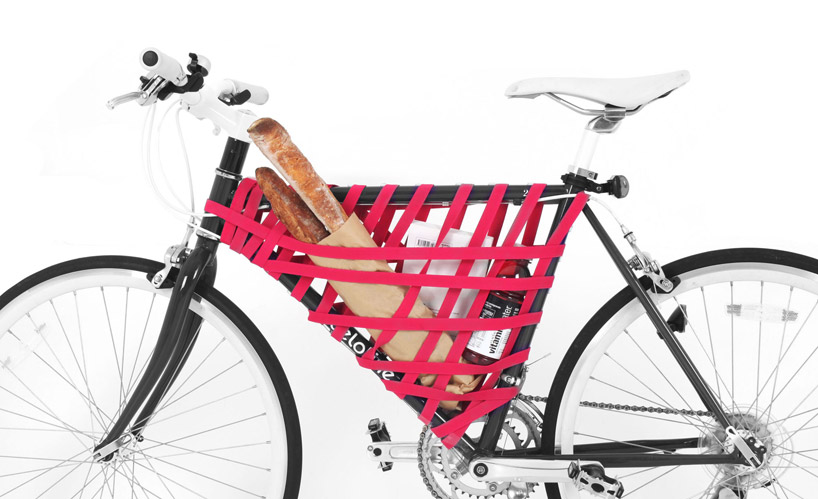
the elastic storage system wraps around any bicycle frame, making transporting goods such as sports equipment, groceries and everyday essentials hassle free.
The post reel elastic bike frame storage system by areum jeong appeared first on designboom.

'taskone' provides a bottle opener, knife, screwdriver, wire strippers, and 18 other tools in the body of a highly protective iPhone case.
The post swiss army knife case makes iPhone a truly all-in-one device appeared first on designboom.
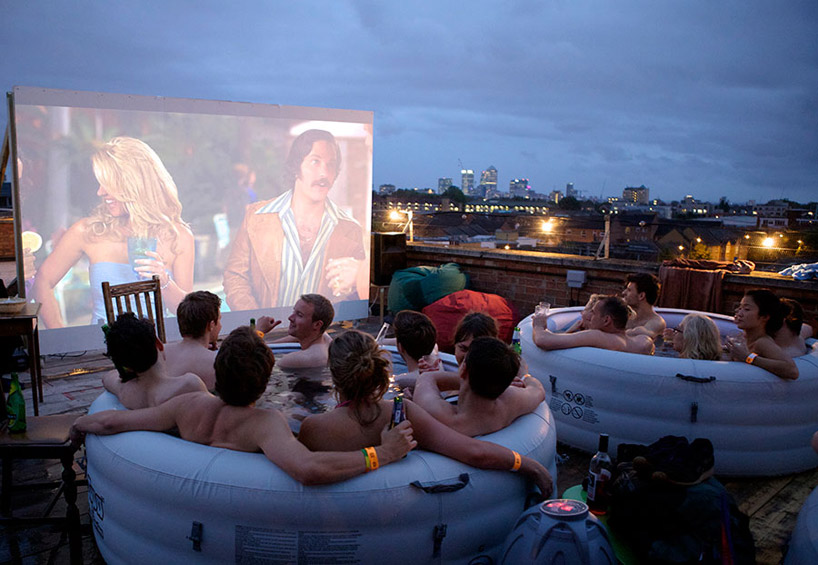
hot tub cinema combines relaxing hot tubs, classic films and trendy spaces across east london.
The post hot tub cinemas pop up across london appeared first on designboom.

hand sprayed with graffiti paint by rub candy, the colorful lines run continuously along the truck's main body.
The post revolver – a colorfully painted cement mixer by rubinetto appeared first on designboom.

built entirely out of LEGO pieces, the CNC machine works on 3 axis, and prints with hot glue.
The post legobot 3D printer made entirely out of LEGO appeared first on designboom.



- there is a sustainable treehouse community
- in the middle of the costa rican rainforest
- people can zipline from house to house
- they have wi-fi ARE YOU SHITTING ME WHY DON’T I LIVE THERE RIGHT NOW
O_O

Another wonderful piece by street artist Seth (previoulsy here and here) recently popped up in Paris. Not sure if it’s still up, but if so you’ll find it at Rue Émile Deslandres, Paris 13. (via street art utopia)
Sofía HenaoGoogle Reader is dead, long live Google Reader!
There is no time to shed tears over the demise of Google Reader; many of you have probably migrated to another stable RSS Reader. This post is a quick shout-out to all our Yanko Design fans that have been busy with stuff, now is a good time to drop all things and quickly transfer ALL your lists and feeds (including Yanko Design) from Google Reader, before they shut doors permanently. We think readers like Feedly are great. They offer easy migration and can automatically transfer all of your feeds for you.
Wired.com had compiled a list of alternate readers for you and you can pick the one that suits you best. We think Feedly will be a good fit since they offer a standalone web version and its own cloud syncing service. If you act now – before Google Reader shuts down – Feedly will allow you to transfer all of your feeds for you and retain that Google Reader look.

*image courtesy Mashable.
We hope to see all our 250,000+ RSS subscribers through the new channels!

-
Yanko Design
Timeless Designs - Explore wonderful concepts from around the world!
Shop CKIE - We are more than just concepts. See what's hot at the CKIE store by Yanko Design!
(Google Reader Is Dead, Long Live RSS was originally posted on Yanko Design)
Related posts:

    
|
Entre todas las cosas con las que Google elige ignorarnos deliberadamente, está la programación de correos de forma nativa para Gmail. Cada uno tendrá su sustituto favorito, pero si tienes un dispositivo Android y utilizas Gmail porque te encanta o porque no te queda otra opción, la nueva app de Boomerang puede aportar un poco de valor ayudándote a programar emails para que se envíen solos en el futuro.


One of the worst aspects of fracturing a bone, other than the excruciating pain and subsequent hospital bill, is the itchy, smelly, plaster cast. Sure, all your friends get to write hilarious things on it, but you end up being the kid in the shallow end of the pool with their arm stuck inside a giant trash bag. Definitely not cool. What if a cast could be functional as well as aesthetically pleasing? Jake Evill, a graduate from the Architecture and Design school at Victoria University of Wellington in New Zealand, has been exploring such a concept and he calls it Cortex.
Evill says that the “Cortex exoskeletal cast provides a highly technical and trauma zone localized support system that is fully ventilated, super light, shower friendly, hygienic, recyclable and stylish.” Patients would first receive an x-ray to pinpoint the nature of the break and would next have their arm scanned to determine the outer shape of their limb. Lastly the Cortex cast would be 3D-printed, with optimized levels of support around the break area to provide a snug fit.
It’s safe to say that with present technology the 3D-printed method would take considerably longer to fabricate than a typical plaster cast, but the idea is intriguing. It reminds me of the present movement to make prosthetic limbs more beatiful and personalized. Read more about Cortex here. (via dezeen)
Sofía HenaoPara las llegadas a altas horas de la noche
Sofía HenaoYa las venden? :|
Banksy, el anticapitalista. Banksy, el pacifista. Banksy, el crítico de nuestro tiempo. Esos epítetos se leen aquí y allá en noticias y críticas sobre la obra del grafitero, cuya identidad es desconocida: dicen que es inglés, dicen que tal vez sea un colectivo de artistas, dicen que comenzó su carrera en 1990. Más allá de las cronologías, Banksy se cotiza día a día como uno de los artistas más vendidos de su generación, apenas superado por Damien Hirst y David Hockney. Sus grafitis hacen referencia a la existencia banal en un mundo capitalista, a la guerra, a las barreras sociales y a la hipocresía de la política. Se ha hecho una imagen de artista rebelde, pues pinta en las paredes que quiere, en los países que quiere, sin pedir permiso a nadie.
Pero esa imagen parece diluirse en las subastas. El 27 de junio, en la subasta de arte contemporáneo que realizó la casa Bonhams en Londres, su grafiti ‘Love is in the air’ fue vendido por US$249.000. Creada en 2006, la obra, que muestra a un joven en actitud de ataque con un ramo de flores en la mano derecha, ha sido replicada en muros de varias ciudades. En esta ocasión, el dibujo fue vendido sobre un lienzo, hecho con esténcil y enmarcado. Como un cuadro cualquiera. Como un cuadro clásico.
El precio del grafiti no superó el de otra de sus obras, ‘Space Girl and Bird’, entregada el 27 de abril de 2007 en US$576.000. Otra tres obras suyas, en grupo, sumaron US$304.000 ese mismo año. En Sotheby’s y Christie’s otros de sus trabajos han obtenidos precios entre US$100.000 y US$300.000. Y si no fuera por la imposibilidad de vender un muro de una calle cualquiera (pese a que meses atrás fue subastado uno en cerca de US$500.000 y luego fue retirado de la venta), Banksy quizá sería uno de los más cotizados, al mismo nivel de Hirst, cuyas obras obtienen millones de dólares y son cada vez más buscadas por coleccionistas y galeristas.
La primera paradoja es, pues, visible: el anticapitalista Banksy se vende mejor que otros artistas que está de acuerdo con dichas prácticas comerciales. La segunda es más matizada: la obra de Banksy, que debía estar en la calle, es vendida en una casa de subastas que desde 1793 se encarga de distribuir obras de artistas clásicos. El grafiti, además, está enmarcado: de ese modo pierde toda esencia, porque si el grafiti no está en la calle no es grafiti: es una pintura más. Los términos entonces cambian; ya Banksy no es quien se escapa a la policía y a las miradas de todos para crear su arte, sino que lo expone como se expondría un cuadro de Rembrandt: en la clásica galería con los clásicos coleccionistas. Banksy no sería así más que un artista que cambió el óleo por el esténcil.
Pero ¿no afecta en ningún sentido el cambio de material? ¿No tiene acaso una fuerte influencia en el significado de la obra el hecho de que sea creada con esténcil? Quizás. Lejos de esas implicaciones, la pregunta debería ser más amplia: ¿cuánto de lo que hace Banksy es en realidad arte? “El arte de Banksy no es más interesante que pinturas kitsch como ‘El mayordomo cantante’ o el retrato reciente de la Duquesa de Cambridge —escribe el crítico de arte Jonathan Jones en su blog de The Guardian—. Sus imágenes son triviales, su política inexperta, su manipulación de la fama sólo otro poco de comercio de tercera categoría”.
El hecho de que las obras tengan precios astronómicos, en algunas ocasiones, guía las tendencias críticas sobre ellas mismas. Sucede así, por ejemplo, con las instalaciones de Damien Hirst: vendidas por millones de dólares —en 2008 su calavera de diamantes fue comprada por US$100 millones, aunque parte de los compradores eran sus propios galeristas—, son relacionadas con el gran arte y la explosión contemporánea. El mismo fenómeno toca a Banksy: su obra es alabada, criticada y censurada de acuerdo con sus precios de venta. “Glorificar a un artista sin dones —continúa Jones— por sus acrobacias cínicas es decir a los jóvenes que el trabajo duro y la educación son irrelevantes: el camino para ser interesante en la Gran Bretaña moderna es ser como Banksy”.
El comentario de Jones se parece, en muchos sentidos, a las palabras de las autoridades de Westminster, Inglaterra, que en 2009 decidieron borrar uno de los grafitis de Banksy argumentando que “si permitimos esto entonces tendríamos que decir que cualquier niño con un esténcil produce arte”. ¿La obra de Banksy va más allá de la mera práctica artística? ¿Es un grito político, un líbelo no más, o también posee esa altura que tiene todo arte de descubrir el mundo? ¿Cuánto de burla existe cuando Banksy vende sus obras a esos precios? ¿Cuánto de revelación de la banalidad del mercado artístico? “Me encanta el modo en que el capitalismo encuentra espacio incluso para sus enemigos”, dijo Banksy en una entrevista con The New Yorker. Quizá esa sea la respuesta más acertada.


Want to pretend you’re Spiderman but can’t afford the suit and the genetic mutation? Argentine artist Leandro Erlich was commissioned by the Barbican in London to install a version of his wildly popular optical illusion that creates the visual effect of instant weightlessness. Using a wall of giant mirrors propped against a huge horizontal print of a Victorian terraced house, visitors are free to climb and jump around as their reflections appear to move freely without the pesky effects of gravity. Titled Dalston House the piece was erected in Hackney just off Dalston Junction on a disused lot that has remained vacant since it was bombed during the Second World War.
The installation opens today and is free to all visitors and will remain up through August 4th. Erlich will also be giving a talk tomorrow starting at 7:30pm. All images courtesy the Barbican. (via visual news)


