Shared posts

13 Jun 12:35

John Rawls: For School Choice, Against the Minimum Wage

by Felix Bungay

[Editor's Note: The following is a guest contribution by Felix Bungay, a student at the University of Cambridge  reading an MPhil in Intellectual History and Political Thought.]

When looking at contemporary liberal political thought, philosophers like Samuel Freeman and John Tomasi like to play up the difference between classical liberals, like Hayek and Friedman, and high liberals, like Rawls and Nagel.

I happen to think there’s more common ground between the two groups than is commonly perceived. Let’s say, to engage in a thought experiment, we locked Rawls, Freeman, Friedman and Hayek in a room and we asked them to come up with some public policy positions. We’ll give them food and water, but they can’t leave the room until they all unanimously agree on a position. What policies (if any) would arise – or would they all just be stuck in the room arguing for eternity?

If I said they would agree to scrap the minimum wage, have a wholly private school system funded by vouchers and scrap most welfare and replace it with a simple negative income tax, would you believe me?

When discussing fair equality of opportunity in A Theory of Justice, Rawls says that the “Government tries to insure equal chances of education and culture for persons similarly endowed and motivated either by subsidising private schools or by establishing a public school system.” Significantly, Rawls himself does not think that the government needs to provide education or necessarily establish a public school system to fulfil the requirements of equal opportunity; a fully private school system is not ruled out. As Samuel Freeman says, Rawls’s “writings imply that a publically funded and regulated but still entirely private education system (for example, a voucher system) would be compatible with FEO.” Milton Friedman would be jumping for joy.

What about the minimum wage then? Well in an interview with PBS, Samuel Freeman said Rawls was opposed to the minimum wage (meanwhile the Economist tells us that Obama’s plan to raise the minimum wage makes him a Rawlsian – that’s poor scholarship): “He [Rawls] thought we ought to get rid of a minimum wage and let the labor market just go as low as it would and let employers just pay two, three dollars an hour if they could and let the government come in and supplement that.”

And what form did Rawls believe this supplement ought to take? Well, he again drew on Milton Friedman and argued for a negative income tax. When discussing the institutions associated with the second principle (chapter 5 of ToJ), Rawls says that “the government guarantees a social minimum either by family allowances and special payments for sickness and unemployment, or more systematically by such devices as a graded income supplement (a so-called negative income tax).”

So while Rawls, Freeman, Friedman and Hayek may not be best buds, there is perhaps more ground for positions associated with the “free market right” to be found in the work of Rawls than either classical or high liberals commonly discuss. Rawls the deregulatory school choice enthusiast is quite a different tale from the one you normally hear.

12 Jun 03:57

A Softer World

09 Jun 23:46

allonsymywaywarddetective: I don’t know if drawings count, but...


allonsymywaywarddetective:

I don’t know if drawings count, but I drew these for a friend of mine who is obsessed with doctor who and llamas. So…yeah. Llamek and Cyberllama.

Today is the last day for the #Doctor Who tumblr tumbler tumblr thingy where you can win a Doctor Who tumbler from the Doctor Who tumblr.

08 Jun 16:52

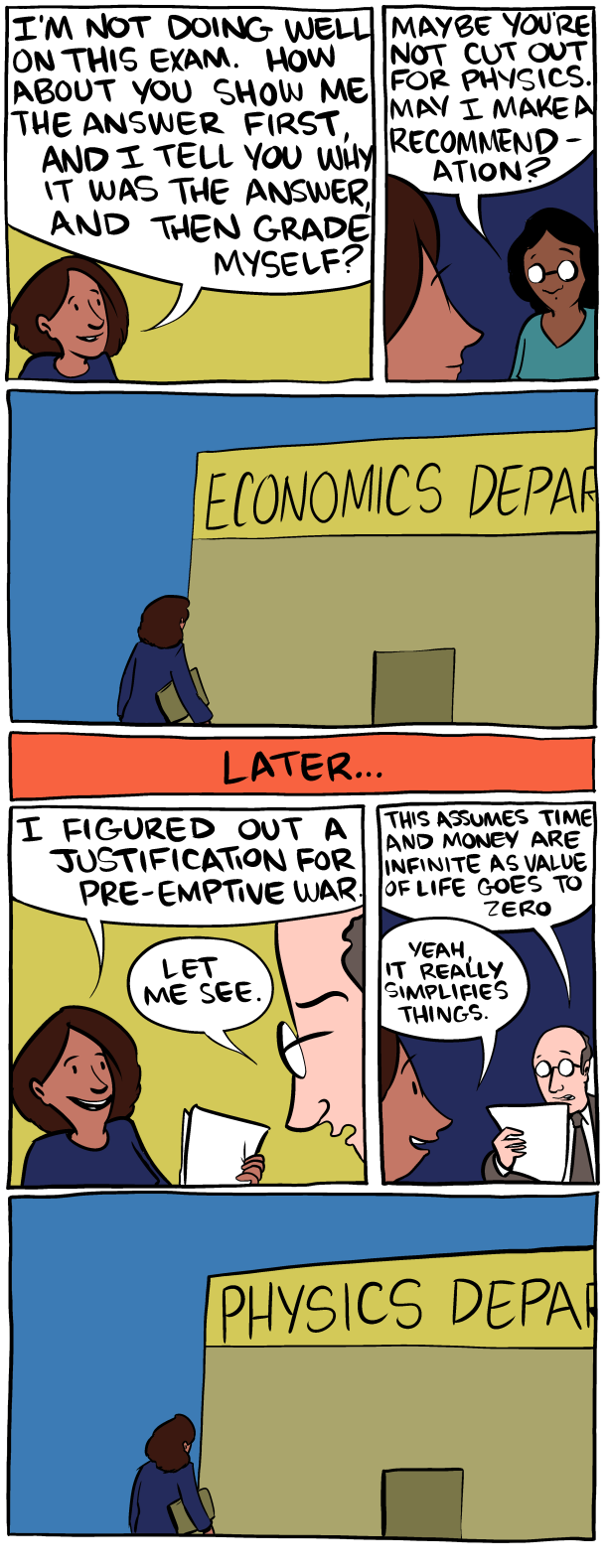
advanced class

quantum_physics_is_a_lie
08 Jun 16:47

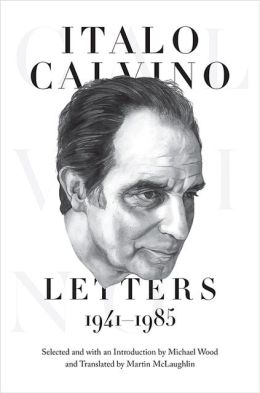
Italo Calvino on Abortion and the Meaning of Life

by Maria Popova

“A human being becomes human not through the casual convergence of certain biological conditions, but through an act of will and love on the part of other people.”

“In the current abortion debate, there is no talk of children. … They never talk about nineteen-year-old fetuses,” lamented SNL’s Nora Dunn in a recent anthology of women writers and entertainers on the choice not to have children. But this sensitive subject was addressed even more eloquently and timelessly by beloved Italian writer, cultural critic, and literary jukeboxer Italo Calvino nearly three decades earlier, just as the second wave of feminism was gathering momentum. In a letter to Professor Claudio Magris from early February of 1975, found in the altogether fantastic newly released tome Italo Calvino: Letters, 1941-1985 (public library), Calvino responds in outrage to Magris’s pro-life article titled “The Deluded,” published in Italy’s premier newspaper, Corriere della sera, on February 3 that year. With a broader meditation on the meaning of life, Calvino makes a passionate yet crisply lucid case for abortion as respect rather than disrespect for life:

Bringing a child into the world makes sense only if this child is wanted consciously and freely by its two parents. If it is not, then it is simply animal and criminal behavior. A human being becomes human not through the casual convergence of certain biological conditions, but through an act of will and love on the part of other people. If this is not the case, then humanity becomes — as it is already to a large extent — no more than a rabbit-warren. But this is no longer a “free-range” warren but a “battery” one, in the conditions of artificiality in which it lives, with artificial light and chemical feed.

Only those people … who are a hundred percent convinced that they possess the moral and physical possibility not only of rearing a child but of welcoming it as a welcome and beloved presence, have the right to procreate. If this is not the case, they must first of all do everything not to conceive, and if they do conceive (given that the margin for unpredictability continues to be high) abortion is not only a sad necessity, but a highly moral decision to be taken with full freedom of conscience. I do not understand how you can associate abortion with an idea of hedonism or the good life. Abortion is a terrifying thing…

In abortion the person who is massacred, physically and morally, is the woman. Also for any man with a conscience every abortion is a moral ordeal that leaves a mark, but certainly here the fate of the woman is in such a disproportionate condition of unfairness compared with the man’s, that every male should bite his tongue three times before speaking about such things. Just at the moment when we are trying to make less barbarous a situation which for the woman is truly terrifying, an intellectual uses his authority so that women have to stay in this hell. Let me tell you, you are really irresponsible, to say the least. I would not mock the “hygienic-prophylactic measures” so much; certainly you will never have to undergo a scraping of your womb. But I’d like to see your face if they forced you to have an operation in the filth and without any recourse to hospitals under pain of imprisonment.

Calvino ends the letter by making his convictions actionably clear:

I am sorry that such a radical divergence of opinion on these basic ethical questions has interrupted our friendship.

Italo Calvino: Letters, 1941-1985 is indispensable in its entirety, a treasure trove of timeless insight on literature and life.

Donating = Loving

Bringing you (ad-free) Brain Pickings takes hundreds of hours each month. If you find any joy and stimulation here, please consider becoming a Supporting Member with a recurring monthly donation of your choosing, between a cup of tea and a good dinner:


♥ $7 / month♥ $3 / month♥ $10 / month♥ $25 / month


You can also become a one-time patron with a single donation in any amount:


Brain Pickings has a free weekly newsletter. It comes out on Sundays and offers the week’s best articles. Here’s what to expect. Like? Sign up.

Brain Pickings takes 450+ hours a month to curate and edit across the different platforms, and remains banner-free. If it brings you any joy and inspiration, please consider a modest donation – it lets me know I'm doing something right. Holstee

08 Jun 16:44

June 08, 2013


WOOH!

08 Jun 16:37

Photo


08 Jun 16:37

season 3 episodes 1/14 - “The Runaway Bride”


season 3 episodes 1/14 - “The Runaway Bride”

08 Jun 16:36

explore-blog: “Violence is never, EVER a choice that the man...


explore-blog:

“Violence is never, EVER a choice that the man should make.”

Patrick Stewart’s infinitely moving account of how his childhood experience shaped his work on ending domestic violence against women, articulately arguing that this is not a “women’s problem” but, rather, its eradication is up to men. Amidst the epidemic of sexual assault on women in the military, Stewart points out the life-warping manifestations of PTSD across the spectrum of violence.

Please consider supporting Refuge, Stewart’s UK charity against domestic violence, and Joyful Heart Foundation, who do remarkable work to end sexual and domestic violence in the U.S.

(The Dish)

07 Jun 17:25

Rawlsian Trash

by Kevin Vallier

I love Rawls more than anyone else on this blog; perhaps a lot more. But sometimes you have to take out the trash and save the baby from the bathwater. So in this post, I’m going to list the Rawlsian positions and arguments I think Rawlsians (and libertarians) should jettison. My goal is to take the next step in explaining why libertarians should take Rawls seriously, following my explanation of Rawls’s project. By separating the bad from the good, I hope to show you a Rawls worth learning from.

Unlike many of my posts, I’m not going to make one sustained argument. I’m just going to give a laundry list of criticisms of quickly summarized Rawlsian arguments. We can talk about the details in the comments.

(1) The Veil Is Too Thick: the veil of ignorance deprives parties to the original position of too much information. I much prefer David Gauthier’s veil, where we know everything about people in our society, but we don’t know who we are. Rawls wanted a thick veil to ensure impartiality, but impartiality doesn’t require selecting principles of justice apart from facts about, say, the talents individuals have. This criticism is standard and much explored by many.

(2) Limited Agreement Behind the Veil/Indeterminacy: Unless we assume, as Rawls does, that parties to the original position are identical in every respect, there are considerations that will lead even these parties to disagree. This generates a lot of indeterminacy early on in the Rawlsian decision procedure. On this, see this.

(3) Principles Aren’t the Object of Justification: I think general principles are too vague to be useful action-guiding norms. How could we hope to determine, say, whether a society complies with the Difference Principle? As I argued in my POD series, it’s rather difficult to do. So it’s better to try to justify rules at a finer grain. It’s easier to determine whether rules are justified because it is easier to measure deviations from them and figure out how to bring social practices into alignment with them.

(4) Constitutional Essentials Aren’t the Object of Public Justification: In the same vein, where Rawls only thinks we have to publicly justify constitutional essentials, I think our first goal should be to publicly justified laws and judge constitutional essentials in terms of how reliably they promote public justification. I draw on related arguments from Jerry Gaus and Jon Quong on this point in their recent books.

(5) Natural Talents Aren’t Collective Assets: individuals can make fair distributive claims based on how they exercise their natural talents. It’s hard to see how such collectivism could be justified in the first place. It seems much more natural to assume that natural talents belong to individuals, and that principles of justice that allow coercing people to use their natural talents to serve others are prima facie suspect. That’s the grain of truth in the self-ownership thesis.

(6) The Political Liberties Are Less Important: Rawls argues that a regime can only be legitimate if the political liberties are guaranteed their fair value. This means that Rawls thinks political liberties are among our most important. But that’s not true. Political liberties aren’t that useful for familiar political science reasons and they’re certainly not more important the civic liberties that allow people to pursue their projects, be loyal to their religious principles, and so on. See J Brennan on this here.

(7) Economic Liberties Are More Important: Rawls only makes freedom of occupation and right to own personal property basic status, along with the civil and political liberties. But there’s just no good justification for excluding other economic liberties, like the right to own private capital. If we’re going to do the whole Rawls ’71 thing, we should learn from John Tomasi (see his posts at BHL and his book here). (Note: giving more economic liberties basic status does not mean they have maximal reach and weight, as they do on some libertarian views.)

(8) The Difference Principle is Wrong Because Maximin Sucks: maximin as the principle of choice in cases of uncertainty is unsound. In the end, it’s too risk averse. So the argument for the DP fails insofar as it is based on maximin. I still like Harsanyi’s early criticism here.

(9) The DP Is Wrong Because Reciprocity Arguments Assume (5): the implausibility of maximin has led many Rawlsians (including Rawls) to offer a reciprocity-based argument for the DP. Basically, the DP is supposed to express the idea the people don’t deserve their natural endowments, and so can’t fairly insist to benefit from them while denying others the right to do the same from them. But (5).

(10) The DP Is Wrong Because It Is Reasonably Rejectable: as Rawls admitted in Political Liberalism and The Law of Peoples, reasonable people can reject the Difference Principle (as I discussed in my last post). Rawls doesn’t think reasonable rejectability means that the DP is not part of the most reasonable conception of justice, but surely there are less problematic conceptions of justice that are more reasonable, such as ones with a sufficientarian distributive principle, which are far more widely endorsed (see David Miller on this).

(11) Full Compliance Is Too Demanding: Rawls is a proponent of ideal theory. Principles of justice can count as valid if they can self-stabilize under conditions of full compliance. In other words, citizens of a well ordered society are presumed not to deviate from complying with coercive institutions based on their self-interest or even their own ideology or principles when they require deviating justice as fairness. Citizens and elected officials, for instance, will follow the law even at serious cost to themselves. But this is not a plausible psychological model on which to base selection of principles of justice. Rawls’s non-ideal critics are right (Sen and Schmidtz are good on this; and yes, the Sen book sucks in general, but it has a few insights).

(12) No Ideal Regime Types: Once we give up on justifying principles, full compliance and determinacy behind a thick veil, the idea that we can formulate ideal regime types as models of justice is implausible. The best we can do is make a series of much more precise arguments about which laws and policies to support. The case for a system of free institutions will arise from the conjunction of these restricted arguments.

(13) No Property-Owning Democracy: given the importance of the economic liberties, the rejection of ideal regime types, and the rejection of the difference principle, there are no good Rawlsian arguments for POD. Plus, even if the case for the two principles is sound, POD fails to satisfy them. See my POD series.

(14) Public Reason Is Misunderstood: public reason should not be restricted to shared reasoning or prioritizing shared reasoning. There’s no good argument for restricting public discourse in this way (as I have argued in print here and here). I’ve argued with a friend that Rawlsian public reason is also a very poor assurance mechanism.

03 Jun 17:21

CNN’s Disgraceful Coverage Of The Protests In Turkey, In One Photo

by Josh Kurp

The image you see above comes from Redditor “manolo88″ who earlier today wrote, “My Turkish friend posted this on Facebook, on the left is Turkish CNN, and on the right is international CNN.” Should you think, as I originally did, that maybe the TV on the left was airing a commercial or digitally manipulated, think again.

Turk here. I can see why you would think that but, nope, this is exactly what it looks like. It was a long documentary about penguins, I think this one and this is just one of the many programs they keep showing while Turkey is burning. Before the penguin show there was a cooking show, if I remember correctly.

They refuse to share atrocities going on in all over Turkey and what little news they do offer either doesn’t pay justice to the gravity of the situation, or consists of airing the speeches of government officials who try to put the blame on the protesters. Turkish brand of CNN really did drop the ball on this one and there is a massive boycott and uproar against them right now, along with other TVs and newspapers that remain quiet. (Via)

In other words:

(Via Reddit)

01 Jun 21:57

Poetic software

by John

From David Jacobs:

Code is like poetry; most of it shouldn’t have been written.

31 May 17:32

triguenaista: problackass: glovesinthesummertime: thechanelmus...


triguenaista:

problackass:

glovesinthesummertime:

thechanelmuse:

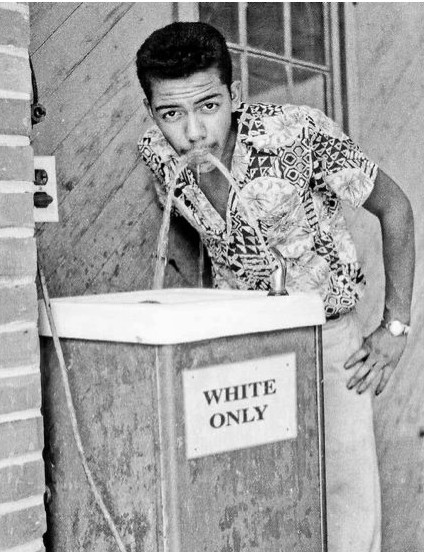
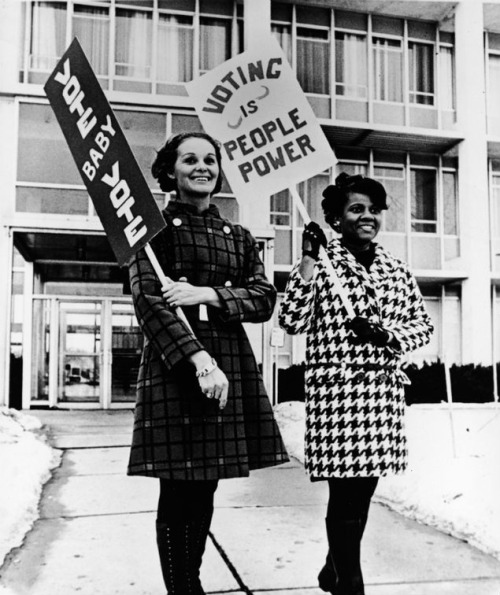
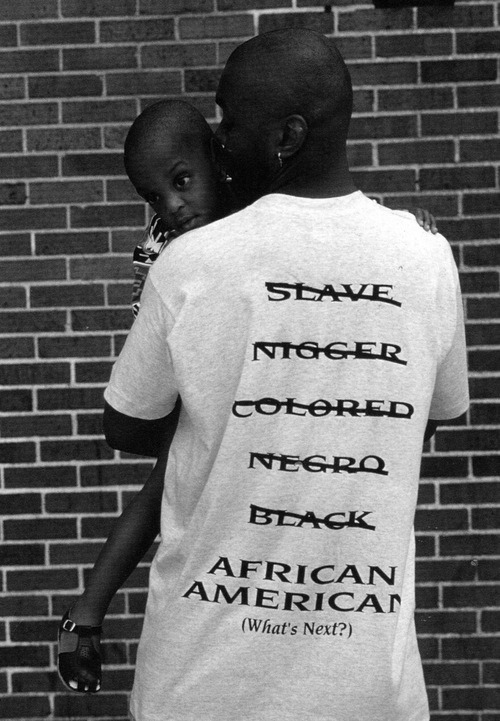
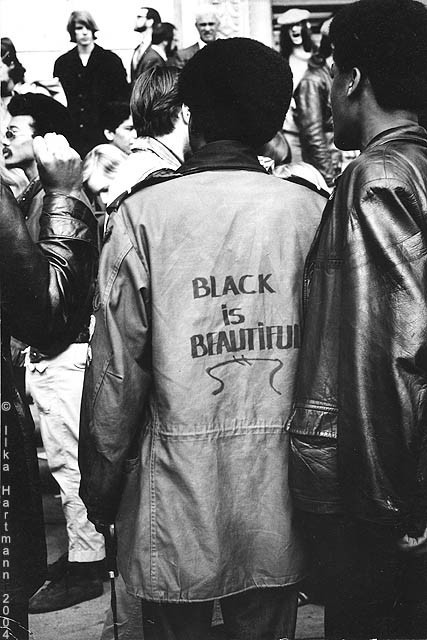
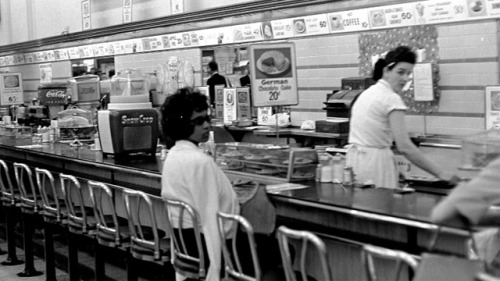
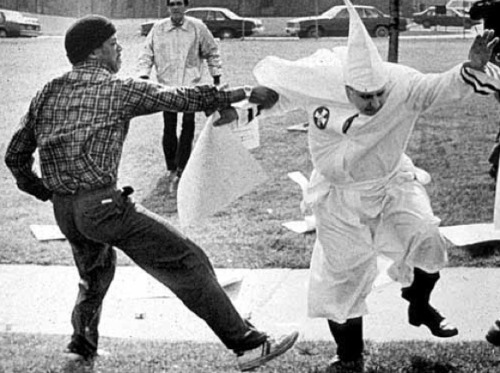
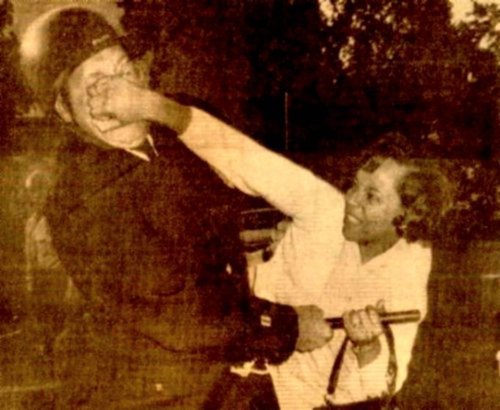
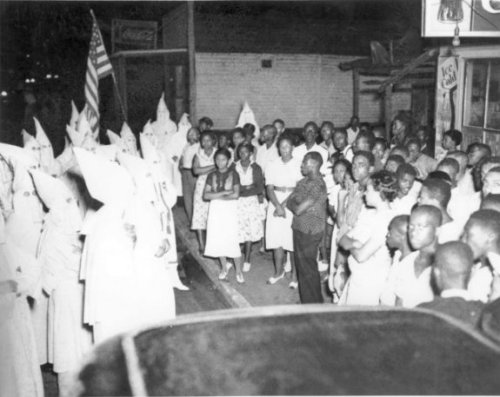
Photos that speak: Fuck your fountain. Fuck your tree. Fuck voter suppression. Fuck your labels. Fuck your stereotypes. Fuck your hatred. Fuck your restaurants. Fuck that dude. Fuck police brutality. Fuck white supremacy. 

I have nothing left to say.

The pictures they don’t show in our US History books.

And two of these pictures aren’t very old either. One was taken in 2012 I think? (Not sure).

31 May 17:31

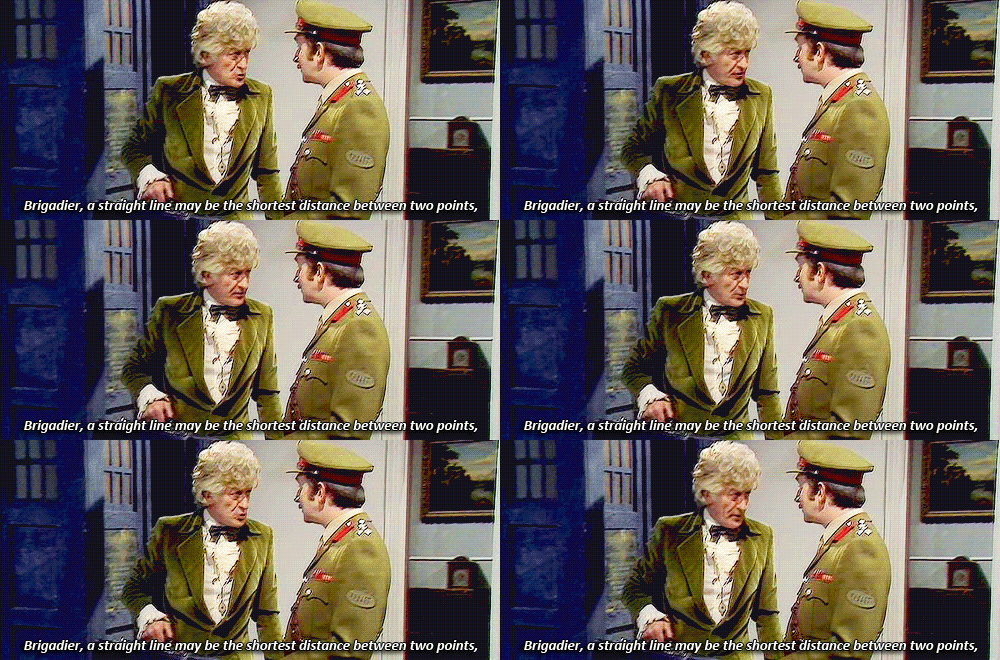
doctorwho: A straight line may be the shortest distance between...


doctorwho:

A straight line may be the shortest distance between two points, but it is by no means the most interesting.

Doctor Who: The Time Warrior

30 May 22:17

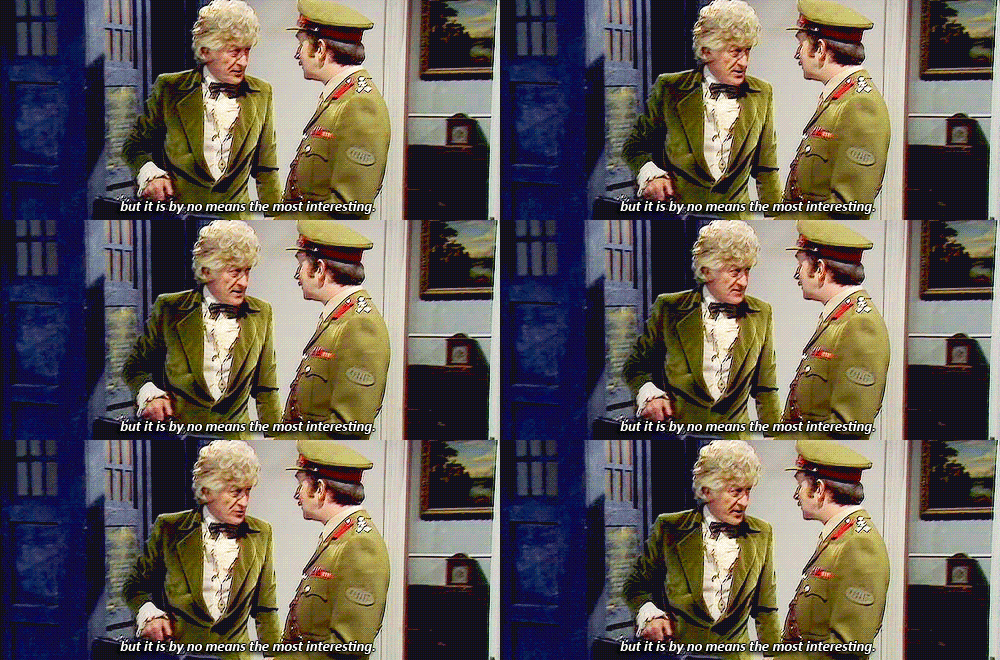
A straight line may be the shortest distance between two points,...


A straight line may be the shortest distance between two points, but it is by no means the most interesting.

Doctor Who: The Time Warrior

29 May 22:46

Social Networks: The Best Thing to Ever Happen to Relationships

by Annie Colbert
Love
Feed-twFeed-fb

Relationships can be challenging, but social networks make connecting with the special people in your life a little bit easier. Connecting and tweeting, Instagramming and poking.

In this comic, illustrator and comedian Teddy Hose breaks down the ways sites like Facebook and Twitter can improve our real-life bonds.

Remember, lovehounds, nothing expresses your feelings like pinning

Image courtesy of Teddy Hose Read more...

More about Comic, Social Networking, Comics, Humor, and Watercooler
28 May 14:29

See the Champions League Final Recreated With Legos

by Stan Schroeder
Marco Almada

Mia san Lego.

Lego
Feed-twFeed-fb

This Saturday, Bayern Munchen won the Champions League final game against Borussia Dortmund 2:1, securing the team's fifth title in Europe's most prestigious football cup

The game was intense, with Arjen Robben scoring for his team in the 89th minute for the victory. Now, you have a chance to watch the shortened version of the match, recreated with Lego bricks, courtesy of The Guardian

The 3:14-minute long video has all the highlights from the game, including the three goals and the celebrations that followed the game

How do you like the video? Share your thoughts in the comments!

Image courtesy of The Guardian Read more...

More about Football, Lego, Watercooler, Videos, and Bayern
25 May 23:44

Photo


19 May 21:32

Photo


18 May 20:16

Sim.


Sim.

10 May 15:33

Why Are We Still Waiting for Natural Language Processing?

by Geoffrey Pullum

Try typing this, or any question with roughly the same meaning, into the Google search box:

Which UK papers are not part of the Murdoch empire?

Your results (and you could get identical ones by typing the same words in the reverse order) will contain an estimated two million or more pages about Rupert Murdoch and the newspapers owned by his News Corporation. Exactly what you did not ask for.

Putting quotes round the search string freezes the word order, but makes things worse: It calls not for the answer (which would be a list including The Daily Telegraph, the Daily Mail, the Daily Mirror, etc.) but for pages where the exact wording of the question can be found, and there probably aren’t any (except this post).

Machine answering of such a question calls for not just a database of information about newspapers but also natural language processing (NLP). I’ve been waiting for NLP to arrive for 30 years. Whatever happened?

In the 1980s I was convinced that computers would soon be able to simulate the basics of what (I hope) you are doing right now: processing sentences and determining their meanings.

To do this, computers would have to master three things. First, enough syntax to uniquely identify the sentence; second, enough semantics to extract its literal meaning; and third, enough pragmatics to infer the intent behind the utterance, and thus discerning what should be done or assumed given that it was uttered.

Take Flying planes is dangerous as an example. The syntactic step includes identifying it as having a singular subject (a gerund-participial clause), accounting for the singular agreement form is. (The distinct sentence Flying planes are dangerous has a plural noun phrase as subject, hence plural agreement on are.)

The semantic step involves (at the very least) noting that Flying planes is dangerous talks about a risky activity. (Again, contrast this with Flying planes are dangerous, which is about aircraft being a danger.)

Pragmatically, however, an utterance often conveys far more than its literal meaning. If Bob has just said “She gets so panicky when her husband is at work,” and Jane responds, “Well, flying planes is dangerous,” you will probably conclude that Bob and Jane know a nervous married woman whose spouse is a pilot, possibly a test pilot, and Jane sees that hazardous job as justifying some level of anxiety. Yet none of this was explicit in the two utterances. Such inferences rely on a complex process of common-sense pragmatic reasoning that we have no idea how to model computationally.

So ignore the pragmatic step; useful work could still be accomplished by a system limited to syntax and semantics. Why do we not find computer programs in general use that can analyze simple questions and provide answers in response? Imagine sending off queries like these, by text or e-mail, to an NLP server:

  • “Can your site be accessed without using Internet Explorer?”
  • “What is the validity period for multiple-entry business visas?”
  • “Do you offer telephone support from the USA?”

Imagine that the machine—not some underpaid message-taker in a Mumbai call center whom you only reach after 10 minutes listening to “The Girl from Ipanema”—could process the questions, look up the answers, and return appropriate responses in a few hundredths of a second. Even if occasionally it replied “Sorry, I didn’t understand the question,” it could still be a boon in the average case.

One company was headed in that direction a few years ago, and had a nascent Wikipedia-based NLP question-answering service up and running in 2008: Powerset. But within a few weeks of its release, Microsoft made them an offer they did not refuse. Now, it seems, the science sleeps with the fishes: www.powerset.com simply redirects to Bing (a plain old keyword-based search engine with which Microsoft is trying to rival Google). Once again there is, to my knowledge, no available system for unaided machine answering of free-form questions via general syntactic and semantic analysis. (Clever ad hoc tweaks make some search engines answer selected simple question forms—try Google on “What is the square root of 1531?”—but don’t be fooled by imitations.)

How could we have drifted into the second decade of the 21st century with absolutely no commercial NLP products? I believe the answer lies in three initially unexpected developments having little to do with NLP. Each enabled a previously near-useless technology to become a useful substitute, reducing the need for the real thing.

Next Monday (May 13, 2013) I’ll discuss the first of those three breakthroughs.

07 May 16:35

UEFA Prize Money - Rhapsody In Blue

by The Swiss Rambler


The Europa League has long been regarded by leading clubs as a poor relation to the far more lucrative Champions League, but Chelsea’s prodigious efforts after parachuting in to the junior competition might just give pause for thought, as they will end up earning more from Europe this season than any other English club.

Although they earned €5 million less than Manchester United from the Champions League after exiting at the group stage, they will receive at least €6.5 million from the Europa League, even if they lose the final. If they repeat last season’s victory in the Champions League, the sum earned will rise to around €9 million.

This means that Chelsea will receive at least €40.9 million (Champions League €34.4 million + Europa League €6.5 million), rising to as much as €43.4 million if they win the Europa League. Of course, the bad news is that this will still be significantly less than last season’s €59.9 million for the Champions League triumph - though the blow will be somewhat softened by money from the UEFA Super Cup (€2.2 million) and the FIFA Club World Cup ($4 million).


The other three English Champions League qualifiers should still be smiling though, as they have all actually earned more money this season, thanks to a substantial increase in the available prize money (around 22%).

Manchester United’s income rose €4.1 million to €39.3 million, though the difference falls to €2.9 million once the €1.2 million they received from dropping down to the Europa League in 2011/12 is taken into consideration. Similarly, Manchester City’s income increased by €5.8 million to €32.4 million, reducing to €4.6 million after deducting last season’s €1.2 million from the Europa League. Finally, Arsenal will receive €34.5 million, which is €6.2 million higher than the previous season.

As an aide-mémoire, the money for UEFA’s two tournament is divided into two parts: (a) prize money based on participation and results; (b) TV (market) pool.


Prize Money – Champions League

Each of the 32 teams that qualify for the Champions League group stages is guaranteed a participation base fee of €8.6 million even if it loses every single game. There is also a performance bonus of €1 million for each victory in the group stage plus €500,000 for a draw. So if a team manages to win all six of its group matches, it will get €6 million on top of the base fee.

If a team qualifies for the first knock-out round (the last 16), it is awarded a further €3.5 million, while there are additional performance prizes for each further stage reached: quarter-final €3.9 million, semi-final €4.9 million, final €6.5 million and winners €10.5 million. So if you go all the way and win the trophy, you would earn a total of €37.4 million (not counting the TV pool share), which is up from €31.5 million in 2011/12.

Prize Money – Europe League


The principle is the same in the Europa League, though the sums involved are much smaller. Each of the 48 clubs involved in the group stages receives a participation base fee of €1.3 million. In addition, there is €200,000 for each win and €100,000 for each draw in the group stage. A new addition this season, presumably to encourage clubs to give their all, is qualification bonuses for teams that progress to the round of 32: group winners earn €400,000 and runners-up €200,000.


Turning to the knock-out stages, clubs competing in the round of 32 will receive €200,000 each, clubs in the last 16 €350,000, the quarter-finalists €450,000 and the semi-finalists €1 million. The Europa League winners will collect €5 million and the runners-up €2.5 million.

That’s now a pretty good incentive, compared to the €3 million paid to Atlético Madrid, the 2011/12 winners. In fact, the winning club could now receive a maximum of €9.9 million, 54% up from last season’s €6.4 million.

Although the Europa League’s 2012/13 prize money is higher as a proportion of the Champions League (26% v 20%), the gap between the two is actually growing (€27.5 million v €25.1 million).


Nevertheless, it can still be a very useful boost to clubs like Chelsea that drop down from the Champions League, especially if they reach the final, which is worth either €6.5 million or €9 million (assuming €2 million for the Europea League TV pool, based on previous years). It does require Stakhanovite efforts on behalf of the playing squad, which may jeopardise their chances in their domestic league, but, as the figures above indicate, it can make a big difference.

TV Pool


In addition to these fixed sums, the clubs receive a share of the television money from the TV (market) pool, which is allocated according to a number of variables. First, the total amount available in the pool depends on the size/value of a country’s TV market, so the amount allocated to teams in England is more than that given to, say, Spain, as English television generates more revenue. Clubs can also potentially do better if fewer representatives from their country reach the group stage, as the available money is divided between fewer clubs.

In the case of the English clubs in the Champions League, the allocation works as follows:

(a) Half depends on the position that the club finished in the previous season’s Premier League with the team finishing first receiving 40%, the team finishing second 30%, third 20% and fourth 10%.

(b) Half depends on the progress in the current season’s Champions League, which is based on the number of games played, starting from the group stages.

However, the 2012/13 allocation for the element based on the previous season’s Premier League finish was changed following Chelsea’s Champions League win as follows: Manchester City (1st) 30%, Manchester United (2nd) 25%, Arsenal (3rd) 15%, Chelsea (5th) 30%. So, the first three clubs lost a portion of their TV pool following Chelsea’s remarkable success.


TV Pool – Allocation

The TV pool allocation methodology can produce some results which seem strange at first glance, e.g. Manchester United and Arsenal were both eliminated at the last 16 stage, but United received €4.3 million more than Arsenal (€23.2 million v €18.9 million). 

This is entirely due to United finishing one place ahead of Arsenal in the 2011/12 Premier League, so receiving 25% of that half of the TV pool (€10.8 million), compared to Arsenal’s 15% (€6.5 million). Of course, both clubs received exactly the same (€12.4 million) for this season’s Champions League progress, which incidentally was more than the €9.3 million for Chelsea and Manchester City, who both went out at the group stage.

Thus, from a purely financial perspective, it is important not just to qualify for the Champions League, but also to qualify in as high a position as possible. Fourth place may be considered a trophy these days, but second or third place are worth even more to the bank balance.

A club’s finances are also boosted if the club finishing fourth fails to win the qualifier for the group stage, as this would mean that the TV pool would then be split between only three teams instead of four. In the same way, it is better financially if the other English clubs do not progress as far as your team.

Note that these calculations assume that the total English TV pool is the same as last season, based on the Sky/ITV deal being more or less the same size, though there are some indications that it might be slightly lower.


However the money is split, there is no doubt that all the English clubs playing in the Champions League have a considerable monetary advantage over the rest of the Premier League, as can be seen by the above analysis of Media revenue from last season – and that was before the 2012/13 increases. As The Clash once sang, it is indeed a “Safe European Home”, at least for a privileged few.

03 May 04:52

We Are All in Drag

by Lori Watson

[Editor's Note: My USD Colleague, Lori Watson, delivered this speech last week. I liked it a lot, and thought BHL readers would appreciate it too.]

 Last week, the Pride organization, a student group at the University of San Diego, put on its 2nd Annual Drag Show. The inaugural event was developed last year, in part to provide an entertaining educational context in which to inform the community about California’s recent inclusion of gender identity and gender expression as protected classes under California discrimination law. The showmet with vehement and outraged criticism; critics argued that allowing such performances was incompatible with the mission of a Catholic university.  Some critics went so far as to suggest that the University of San Diego should no longer be allowed to identify as a Catholic institution of higher education, and claimed that USD had signed on to the “radical homosexual agenda,” whatever that is and despite the fact that though drag shows do take place often in gay identified spaces, drag performance and sexual orientation are separate things.

As the Director of the Women’s and Gender Studies Program at USD, I was asked by the Pride group to give an introductory speech.  Here is what I said:

Imagine this:

You are walking down the street, wearing your brand new purple, silk shirt, feeling good.

The police stop you, and question you: “Where did you get that shirt? Who are your parents? Do you have right to wear that shirt?”

“What?” you ask.

The police ask: “Well, are you the King, the Queen, a member of the royal family?”

“No,” you reply. And you are promptly arrested.

Now this may sound silly to our modern ear, but the situation I’ve just described is based on the Sumptuary laws of Elizabethan England.

Various forms of clothing were forbidden to the lower classes, reserved for Nobles, enforced by law, and punishable by imprisonment.

What was the purpose of such laws? To enforce the class structure, and hence the power structure of that society, through clear regulations as to how one can present oneself in public.

One’s identity, one’s status had to be publically announced through external signs… clothing… and purposefully misleading the public by representing oneself as a member of a higher station, a higher class, was considered both an affront to the natural order and to the political order.

Now, fast forward to 1864…

You are in St. Louis, you have just purchased your first bicycle, a relatively new form of transportation. You are excited to try our your new means of mobility, but wearing a skirt is an inconvenient garment given the way the seat and the pedals work, so you put on a pair of “bloomers.” Since it’s cold, you grab your husbands over-coat, and jump on your bike.

You don’t get far before the police stop you. You are arrested.

Your crime? Dressing in disguise – gender fraud.

Fast forward again to 1978:

You are in Chicago, having brunch with a friend. As you walk out of the dinner, both of you are promptly arrested.

The statute under which you are charged makes it a crime for “any person who shall appear in a public place…in a dress not belonging to his or her sex with intent to conceal his or her sex…”

The rationale for this law?

  • to protect public from fraud
  • aid in the detection of criminals
  • prevent crimes in washrooms
  • prevent inherently anti-social conduct

Fast forward to 1993, in Humboldt Nebraska…

You pick up the paper and read the story of a grizzly rape and murder of a young man named Brandon Teena.

And, though the facts of this case are complex, ultimately the reason Brandon was raped and murdered is that though he was biologically female, he successfully “passed” as a man. His “friends”, those that raped and murdered him, felt tricked…duped. Brandon had “misrepresented” his “true” gender identity, and he needed to be taught a lesson.

What do all these vignettes have in common?

In each case either the law or the prevailing social norms (or both) called for the punishment of an individual for expressing his or her identity in a way the departed from socially acceptable ways of being.

Importantly, those socially acceptable ways of being are often justified in terms of what is “natural” what is “normal” … where “natural” and “normal” are to be read as not deviant.

So, this brings us to the topic of drag shows, and in particular the criticism of this event, and the practice of drag more broadly.

“It’s wrong!” they exclaim! As if the louder and more frequently one says this the more true it becomes.

So, I would like to ask: “What is it that is wrong? And why is it wrong?”

“Well, men dressing in women’s clothes! Women dressing in men’s clothes!

It violates the natural law!

It overturns the natural order of things!

It’s against nature!!”

In response, I invite you to entertain this thought as you watch the performances tonight and as you reflect afterwards…

The folks performing on stage tonight are no more in drag than anyone else in this room.

Let me repeat that thought. Each of you sitting in this theatre tonight is as much in so-called drag as those who will perform here tonight.

Each of you is performing a gender: in your choice of underwear, in your choice of shirt, of pants, of hairstyle, of adornment, of shoes, of deodorant, of whether your wear make-up, of body language, the way you sit, the way you stand, the way you walk, the way you greet you friends… do you hug them? Do you nod at them? And on and on and on…

Ask yourself: what, if anything, do any of these choices or these social signs of gender have to do with your biological sex?

Does wearing high heels make you a woman? Reflect an innate fact of your biology?

Well, not if you are in 17th Century France, in which high-heeled boots were introduced as a form of shoe for Royal men, who were copying Turkish horse riding boots!

Finally, I will ask you to reflect on one further thought as you participate in tonight’s events and in the days and weeks after…

Let’s go back to our story of Elizabethan Sumptuary Laws. Recall my suggestion that the purpose of those laws was to reinforce class structure. Specifically, to reinforce a distinction between those who are entitled to power, privilege and authority and those who are subject to such authority, lacking the necessary power and privilege.

How might we extend this analysis to the cultural enforcement of gendered distinction? Men wear suits, men wear ties… women wear dresses, women wear high heels, women wear make-up.

These gendered differences are sharp, they are pronounced, they are enforced, if not by law any longer then by social opinion, social shame, and social ostracism.

What hierarchy are they preserving?

02 May 16:19

I’m still here: back online after a year without the internet

by Paul Miller
Paul_lede_large

I was wrong.

One year ago I left the internet. I thought it was making me unproductive. I thought it lacked meaning. I thought it was "corrupting my soul."


It's a been a year now since I "surfed the web" or "checked my email" or "liked" anything with a figurative rather than literal thumbs up. I've managed to stay disconnected, just like I planned. I'm internet free.

And now I'm supposed to tell you how it solved all my problems. I'm supposed to be enlightened. I'm supposed to be more "real," now. More perfect.

But instead it's 8PM and I just woke up. I slept all day, woke with eight voicemails on my phone from friends and coworkers. I went to my coffee shop to consume dinner, the Knicks game, my two newspapers, and a copy of...

Continue reading…

30 Apr 04:23

A Softer World

27 Apr 19:22

10 Extreme Airports That Flirt With Disaster

by Matt Hayes

According to the majority of pilots, takeoff and landing are the most dangerous aspects of a flight.  Still, some conditions are riskier than others—but it seems that all the mountain peaks, cliff faces, crowded beaches, and main roads on our list, haven’t managed to discourage the brave pilots who navigate them every day.

Since the topic of the deadliest airline disasters has been covered before, let’s have a look now at the most extreme and hazardous airports around the world.  Fasten your seatbelts:

10 Juancho E. Yrausquin Airport Saba Island

93596163024125748

Getting to this amazingly beautiful Caribbean island can be a bit distressing, thanks to a mere 1300-foot-long runway—only slightly longer than most aircraft carrier runways. The incredibly short runway is surrounded by tall cliffs, and it comes dangerously close to a steep slope which leads directly to the ocean.

For these reasons, it is one of the most dangerous airports in the world. An incorrect assessment of the pilot during the takeoff may take the airplane straight into the abyss. Large planes avoid this airport for obvious reasons, but even for a very small aircraft such as a Cessna, landing seems to be a difficult mission—especially when the weather conditions are bad. At least everybody knows what’s to blame for the constant decrease of tourism in the island.

9 Qamdo Bamda Airport Tibet

Airport-Runway

Qamdo Bamda Airport is the world’s highest airport, perched more than 14,000 feet above sea level. Even more impressive than the airport’s altitude, however, is the nearly 3.5-mile-long runway.  

Having a runway that’s the length of sixty soccer fields may seem a bit excessive, but apparently long runways are crucial to making safe landings at higher altitudes. At sea level, where the approach speed is about 150mph, it may take five thousand feet of runway to stop. But at more than fourteen thousand feet above sea level, the same approach speed will require around twice as runway to bring a plane to a halt.

Traveling at high altitude can in fact be pretty dangerous all round, and travelers should make themselves aware of conditions before they decide to fly in such places

8 Gustaf III Airport Saint Barthélemy

Gustaf-Iii-Airport1

The small airport of Gustaf III, on the Caribbean island of Saint Barthélemy, provides pilots and passengers alike with some fairly grave dangers. The corridor in which the runway has been built is incredibly narrow, and planes come frighteningly close to hitting the slopes of the adjacent upland area, or plummeting into the ocean, every time they land.

This video on youtube clearly shows what you might have to go through if something goes wrong during the landing. The good thing is that—in this instance at least—no one was even slightly injured.

7 Ice Runway Antarctica

Ice-Runway-America-Station-Antartica

The dangers of Ice Runway have more to do with the extreme weather conditions that the pilot has to deal with, rather than the design or position of the airport itself. The Ice Runway is one of three major airstrips used to haul supplies and researchers to Antarctica’s McMurdo Station. As its name implies, there’s no tarmac in sight—just long stretches of meticulously groomed ice and snow.

There is no shortage of space on the Ice Runway, so super-sized aircraft can land with relative ease. The real challenge is making sure that the weight of the aircraft and cargo doesn’t bust the ice or get the plane stuck in soft snow. As the ice of the runway begins to break up, planes are redirected to Pegasus Field or Williams Field, the two other airstrips servicing the station.

6 Courchevel Airport France

Courchevel-Airport-France

The city of Courchevel in the French Alps is one of the most famous ski resorts in Europe, but it seems like the city owes much of its fame to its airport, which is located inside the mountains. Courchevel Airport is not only famous for its incredible height and bizarre location, but also for the fact that it has had a leading role in a James Bond film, Tomorrow Never Dies, which depicted Mr. Bond landing a plane successfully in the extremely dangerous airport.

5 Barra International Airport Scotland

Barere

This is quite possibly the only airport in the world that also serves as a beach. Takeoffs and landings at Barra Airport occur on the same sand that people can stroll along during airport off-hours. And that’s just the beginning: during high tide in the evening, the illumination from the lights of all the cars passing by assist the pilot with his landing. For those who simply want to enjoy a romantic walk along the beach, there are warning signs informing them of all expected upcoming flight arrivals.

Believe it or not, Barra is still an officially recognized international airport by the Air Traffic Organization, and it seems like any kind of logical or critical suggestion would be deemed irrelevant by the authorities. We can only hope that they know better than us!

4 Toncontin International Airport Honduras

Toncont N International Airport Tegucigalpa Honduras

In Tegucigalpa, the capital city of Honduras, we can fly into one of the most dangerous and notorious airports in the world. It has been the subject of scrutiny following several accidents, including a 2008 crash that caused the deaths of five passengers. The airport opened back in 1934, an era when planes were less powerful and didn’t require such lengthy runways.

Toncontin’s runway is just over seven thousand feet long, and it’s situated in a valley surrounded by mountains. What’s even harder to believe—and by far the most hazardous aspect of this airport—is that there’s only one way in and one way out for the planes, which increases the risk dramatically. Despite all these high-risk factors, planes as large as Boeing 757’s land at the airport on a daily basis.

3 Tenzing-Hillary Airport Nepal

Plane-At-Tenzing-Hillary-Airport-Lukla

Lukla Airport, as it was called originally, was later renamed Tenzing-Hillary Airport to honor the first climbers to reach the summit of Mount Everest. Located in Lukla, Nepal, the airport serves thousands of climbers hoping to “conquer” Mount Everest, as well as trekkers wishing to explore the Everest region.

Dangers at this airport include high winds and extreme cloud cover—but these are by no means the scariest aspects. Like Gustaf III Airport, one end of the runway is preceded by high terrain; but instead of a beautiful sandy beach on the other end, there is a two-thousand-foot drop.

There have been several accidents at Lukla airport, most recently on October 12, 2010.

2 Madeira Airport Portugal

Perspec Pista Ne

The two main runways at Madeira Airport were just 5,250 feet long when the airport was first opened back in 1964.

After a horrifying crash in 1977, in which an incoming Boeing 727 smashed through a stone bridge and ended up on the beach, one of the runways was extended by 655 feet. In the early 2000s, the runway was further lengthened by extending it across the beach, supported by columns.

Lengthened or not, the basic approach to Madeira Airport remains tricky to this day, even for the most experienced pilots. Against their better instincts, pilots must first aim the aircraft directly at a looming mountain peak, and then quickly bank to the right in order to avoid crashing into the mountain, in order to put themselves on course for the runway.

1 Gibraltar Airport Gibraltar

Screen Shot 2013-04-26 At 2.35.17 Pm

Gibraltar airport is not only one of the most dangerous airports in the world, but one of the busier ones as well (especially compared to the other risky airports included in this list). No matter how unbelievable this might sound, the corridor of this airport actually passes through the main street of the city.

Vehicles are made to stop every time an aircraft lands or takes off. It’s amazing that there has never been a major accident—and we can only hope it stays that way.

Theodoros II is a budding author and a law graduate. He loves History, Sci-Fi culture, European politics, and exploring the worlds of hidden knowledge. His ideal trip in an ideal world would be to the lost city of Atlantis.

The post 10 Extreme Airports That Flirt With Disaster appeared first on Listverse.

27 Apr 16:33

Before That Woman Dies, I’d Like To Tell Her She’s Going to Hell

by Hemant Mehta

Susan Griffiths died yesterday. She died by drinking poison that knocked her out, put her in a coma, and slowly killed her… all without pain.

It was her choice to drink the mixture. It was either that or eventually succumbing to a painful, debilitating brain disease.

Susan Griffiths (Ruth Bonneville – Winnipeg Free Press)

In her Winnipeg home, they wouldn’t allow her to die on her own terms, so she had to fly to Switzerland to end her life. Lindor Reynolds captured her story beautifully in this article (and accompanying video). Griffiths, an atheist, really was an incredible woman.

There’s a lot of conversation in the local Canadian press about end-of-life care and why Canada should allow people to die with dignity, but the most jaw-dropping response may have come from someone who read Reynolds’ story:

The day after my story about Susan ran, I got a phone call from a distressed man. He wanted me to give him Susan’s number. He was a Christian, he said, and he needed to tell her she’d go to hell if she went ahead with her plans. She was in Europe, I said, and an atheist with no belief in an afterlife. He insisted she was a sinner. I suggested, as gently as possible, that he add Susan to his prayer list. She was already on mine, I said. He said he’d pray she changed her mind. That was his right, I said.

I can’t tell if that gesture is loving or dickish. Maybe it’s both. Either way, I’m grateful to the religious reporter for politely declining his request.

It would be great if Griffiths’ decision could inspire lawmakers in Canada to change their laws. There’s no reason to deny people the opportunity to end their lives as they see fit. Want to require some counseling first? Fine. A few restrictions? Okay. But to deny it completely, especially after seeing what Tony Nicklinson had to go through, is simply barbaric.

(Thanks to Jackie for the link)

14 Apr 17:05

Photo


14 Apr 16:42

The Prank that Changed the Face of Medicine

by Annelie


October 1847
The dean and faculty of Geneva Medical College are facing a dilemma: a woman applied for matriculation. Her name is Elizabeth Blackwell (1821-1910). All other medical schools she had applied to rejected her, reasoning that she is a woman and thus intellectually inferior; and even if she would prove to be of equal intelligence to men, she would represent an unacceptable competition for her male fellow students.

The Geneva Medical College, however, did not give Elizabeth an upfront yes or no. They put the issue up for vote under the stipulation that if but one student voted against her, she would not be admitted. This reads a little like an attempt to show her how very unwelcome she was, and possibly to humiliate her even further. What student in his right mind would vote for a woman to have access to a medical school?

Source: Wikipedia
The students, however, believed it to be a ludicrous joke and decided to have some fun: all one-hundred fifty men voted for Elizabeth.
It was as if the world had been tipped - a female student was to be allowed into the all-male medical domain!

As Elizabeth arrived at the Geneva Medical College, all those boisterous male students suddenly behaved like gentlemen. All that smoking, elbowing, laughing and talking stopped, and students listened attentively. Despite the fact that lectures changed to the better by simply having Elizabeth present, most of her lecturers despised her. She represented a threat to a very old tradition.

Elizabeth Blackwell graduated in 1849 and became the first woman in America’s history to have earned a medical degree. Strangely, she never wanted to be a medical doctor. She wrote that she “hated everything connected with the body, and could not bear the sight of a medical book.”
But Elizabeth yearned for a life independent of husband and children and she was quite provocative in nature. Before pursuing a career in medicine she said, “The idea of winning a doctor's degree gradually assumed the aspect of a great moral struggle, and the moral fight possessed immense attraction for me.”

Elizabeth Blackwell had a profound influence on the history of women in science. Although met with resistance almost everywhere, she set up a practice for women, founded the Women’s Medical College, published books and paved the way for the next generation of female medical doctors (and scientists).

Sources:

 This post was featured on National Geographic and Neatorama
09 Apr 17:50

Leda Paulani: o estado entra no jogo, e é um desastre

by Anthony
A atual Secretária de Planejamento de São Paulo recentemente concedeu entrevista à Folha falando sobre o caso de Pinheirinho e o que ela chama de desenvolvimento urbano pautado pela lógica mercantil.

Em larga escala, concordo plenamente que as cidades brasileiras sempre foram definidas por essa parceria nefasta entre o público e o privado poderoso, mas acho que ela erra tremendamente ao apontar as principais causas e soluções para o caso. A situação nada tem a ver com o fato de trabalho e terra serem mercadoria, como ela comenta na entrevista, mas pela intervenção do estado neste mercado (o conceito de mercantilismo) já que é ele que usa a força e a coerção sobre o planejamento urbano, deixando-nos sem opção. Quanto ao mercado, nenhuma oferta comercial é irrecusável, apesar de usarmos o termo com certa frequência.

Ao criticar as relações de trocas, a Secretária esquece do papel do estado como o principal excluidor do pobre do mercado e ao seu direito à moradia. Como escrevi em uma postagem recente, "O estado não permite o usucapião de terras públicas, determina cerca de 1000 páginas de regras e normas para o cidadão construir sua própria casa, passando por mais de 10 secretarias, além de cobrar impostos e taxas. A construção na favela é crime e moradias para porta de saída da favelas são proibidas."

Assim, como que o peso da propriedade privada seria tão forte, se a propriedade é tão amplamente regulada e, neste caso, se moradores de favelas não tem direito à ele? Aliás, como defender coerentemente a regularização fundiária e o direito à moradia sem defender a propriedade privada ao mesmo tempo? Como dizer que os preços dos imóveis são pautados pelo mercado quando a oferta é limitada por leis que limitam severamente a construção nos centros? E ainda, como dizer que "Se o Estado não entra para reequilibrar o jogo, é um desastre" quando o papel dele sempre foi forte significativo no desenvolvimento urbano das nossas metrópoles? A conclusão de Leda Paulani fica ainda mais esquisita quando vejo que o desfecho comum das comunidades "informais" - favelas - é, justamente, a sua invasão e remoção por tropas do próprio estado, principalmente no caso Pinheirinho.

A lógica mercantil - no seu conceito original, de mercantilismo - deve sim ser quebrada, permitindo que os moradores de favelas finalmente tenham seu direito à propriedade e acabando com o conluio entre mercado imobiliário e estado, gerado unicamente pela captura regulatória sobre o setor. Se a entrada de novos concorrentes no mercado de construção fosse mais simples, pequenas incorporadoras poderiam ter sua vez de crescer, acabando com a dominação de grandes grupos comerciais. Por fim, se a interferência do estado no setor não fosse tão grande, seria irrelevante o investimento das empresas em  alianças com o poder público, já que este em nada poderia ajudá-las. Seguir o caminho oposto, da fé na autoridade estatal ao considerá-lo uma entidade intrinsecamente justa, seria simplesmente ignorar os erros sistematicamente cometidos, independente se foi nesta ou na outra gestão.